Last spring, I made a “garden gnome” out of a terra cotta pot and some acrylic paint. It looked like a sad clown who’d been left in the rain. My neighbor’s four-year-old asked if it was a monster. That gnome sat behind the compost bin for two weeks before I threw it away. The problem wasn’t my lack of artistic talent—it was that I’d followed a tutorial designed for someone with a craft room, not a muddy garden. The paint peeled, the sealant wasn’t waterproof, and the whole thing felt like a school project.
Most garden art DIYs are either so simple they’re boring (painted rocks) or so complicated you need a welding torch. The good ones—the projects that actually look good, survive weather, and feel like art rather than crafts—are rarely the ones you see pinned a million times. The guides never tell you which materials will crack in frost, which glues fail in humidity, or which designs look charming in June but exhausting by August. And they definitely don’t mention that some “easy” projects take three weekends and a level of patience most of us don’t have.
So I’m writing the garden art guide for the rest of us. These 20 projects have all survived at least one full season in my own yard—through rain, sun, frost, and the occasional soccer ball. Most cost under $20. Many use materials you already have. A few are silly (in a good way). All of them can be finished in a single afternoon. If you’ve ever looked at your garden and thought “this needs something,” start here.
1. Silverware Wind Chime From A Thrift Store Tray
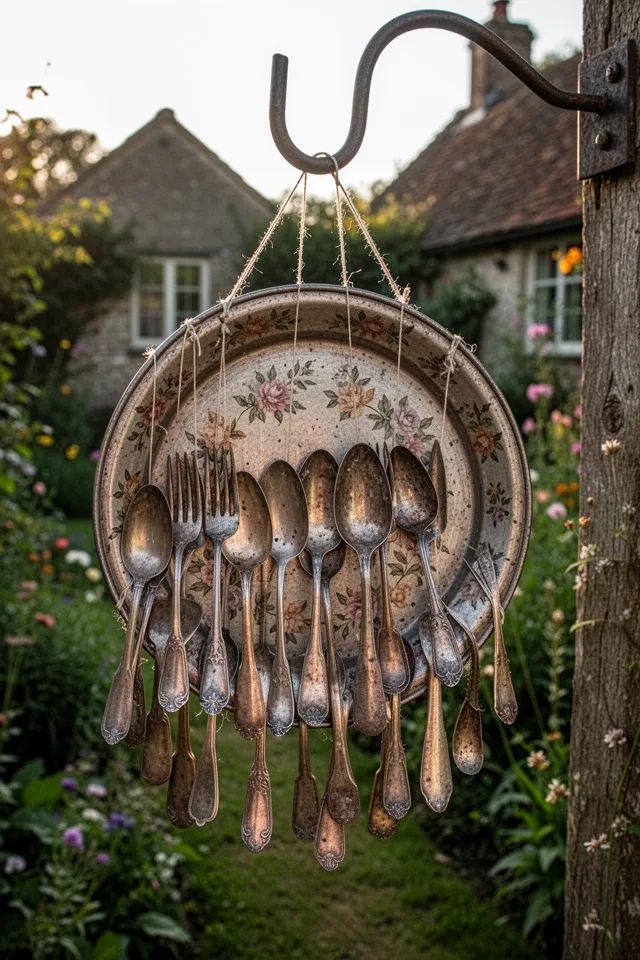
Hit a thrift store for mismatched silverware ($5 for a bag) and a metal tray with a raised edge ($3). Drill small holes around the edge of the tray every 2 inches. Use fishing line to hang spoons and forks from each hole, varying the lengths. Hang the tray itself from a hook. When the wind blows, the silverware clinks against the tray and each other. It sounds like a soft, melodic chime—not the tinny clang of metal wind chimes.
Cost is under $15. The trade-off is that the silverware will rust over time if not sealed. Spray everything with clear outdoor sealer before assembling. Also, the fishing line will degrade in UV after one season. Use 30-pound test monofilament and replace yearly. The version that fails is using plastic utensils—they don’t make sound and look like trash.
Pro tip: Use a spoon and fork as the center dangle instead of a clapper. Tie them back-to-back. They’ll ring against each other with every breeze.
2. Cracked Pot Fairy Garden In A Broken Container
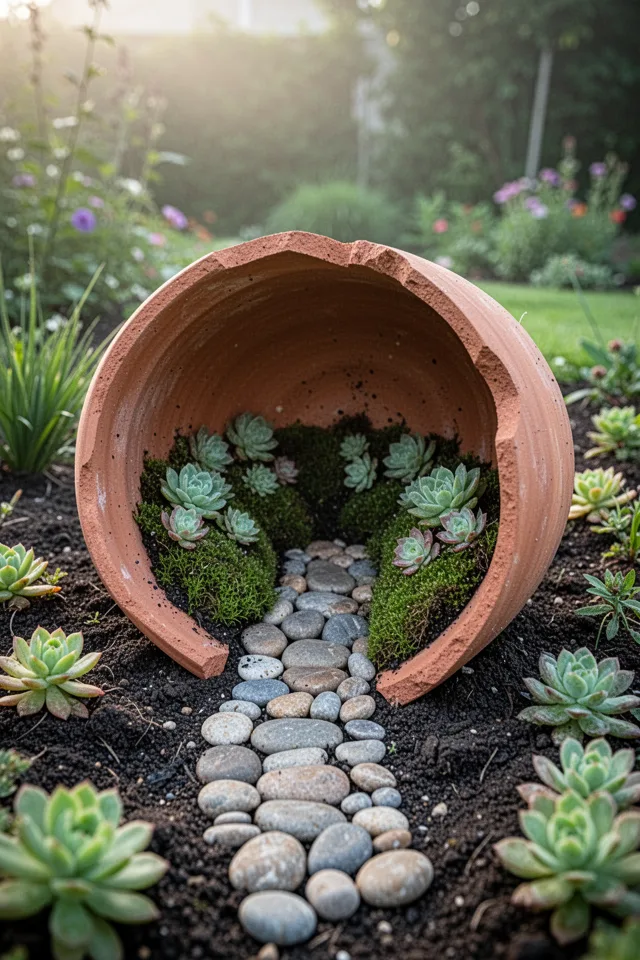
Don’t throw away cracked pots. Use them as “fairy garden” planters. Lay the pot on its side, with the broken edge facing up like a cave opening. Fill the inside with potting soil. Plant small succulents, creeping thyme, or moss. Add a miniature path of pebbles leading into the pot. The broken edge looks like a deliberate ruin, and the plants spilling out soften the break. It’s charming, not precious.
Cost is free if you already have a cracked pot. The constraint is that the pot will continue to degrade in frost. If you live where it freezes, bring the whole thing indoors for winter or accept that it’s a one-season project. Also, make sure the broken edge isn’t sharp. Sand it down or cover with moss. The version that fails is using a plastic pot—it doesn’t break authentically. Terra cotta only.
One thing most guides skip: put a layer of gravel in the bottom of the cracked pot before soil. The broken edge has no drainage, so gravel prevents water from pooling and rotting roots.
3. Mosaic Ball From Old CDs
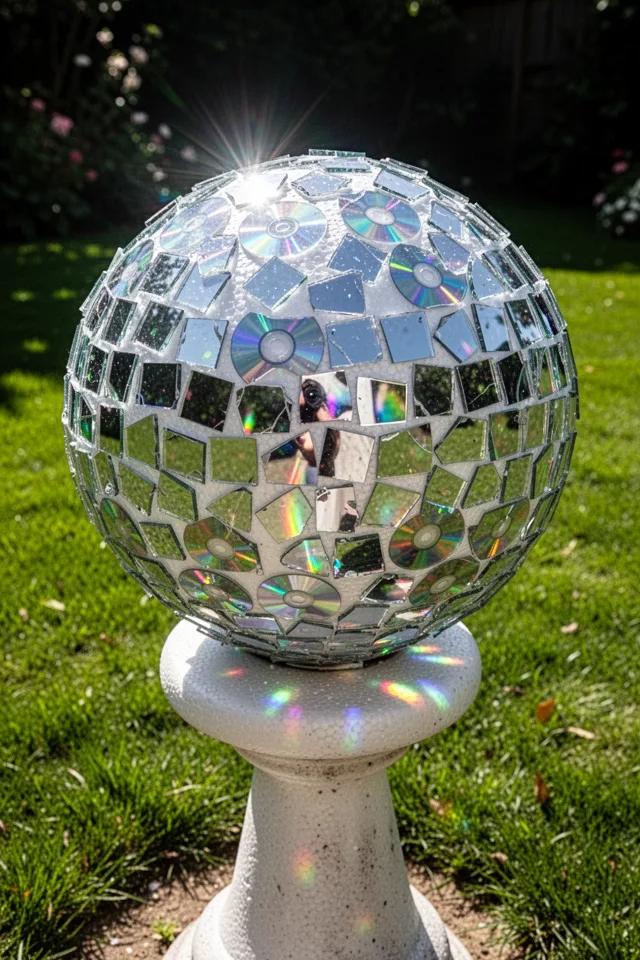
Old CDs are useless—except for garden art. Cut them into small shards with scissors (the foil flakes, but that’s fine). Glue the shards onto a styrofoam ball using waterproof glue, covering the entire surface. Mount the ball on a metal rod or an old lamp stand. In the garden, the CD pieces catch light and throw tiny rainbows around your yard. It’s like a disco ball for nature.
Cost is free (CDs from recycling bin) plus $5 for a styrofoam ball. The constraint is that the CD shards are sharp. Wear gloves and safety glasses. Also, the glue will fail in extreme heat. Use E6000 or construction adhesive, not hot glue. The version that lasts is using a glass globe instead of styrofoam—heavier but permanent. That’s a $15 upgrade.
Pro tip: Leave a small area unglued at the bottom. Drill a hole through the styrofoam and insert a wooden dowel before gluing. The dowel becomes your mounting point.
4. Painted Wooden Spoon Garden Markers
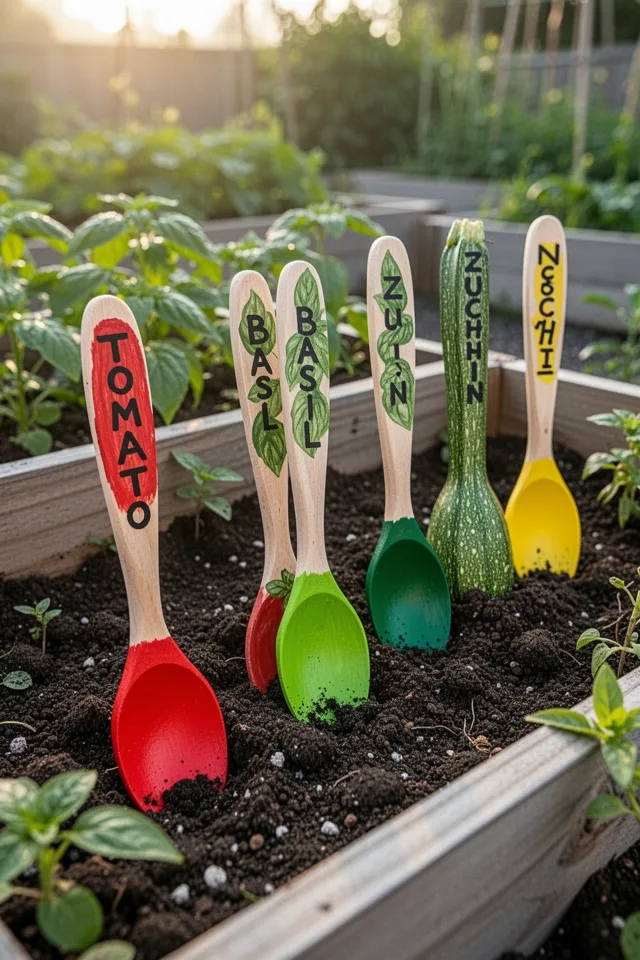
Wooden spoons from the dollar store ($1 for 6) make perfect plant markers. Paint the handle with exterior acrylic paint, writing the plant name with a fine brush or paint pen. Paint the bowl a bright color so you can spot the marker from across the garden. Stick the handle into the soil next to each plant. The spoon bowl acts like a flag. They look whimsical but functional.
Cost is under $10 for a whole garden. The trade-off is that wood rots in soil. The spoons will last one season, maybe two. Seal the bottom inch of the handle with clear nail polish or epoxy to slow rot. Also, the paint will fade in sun. Use UV-resistant paint or accept that you’ll repaint yearly. The version that fails is using plastic spoons—they snap when you push them into hard soil.
Pro tip: Write the plant name on both sides of the handle. That way you can read it no matter which way the spoon twists in the wind.
5. Beach Glass Wind Chime From Driftwood
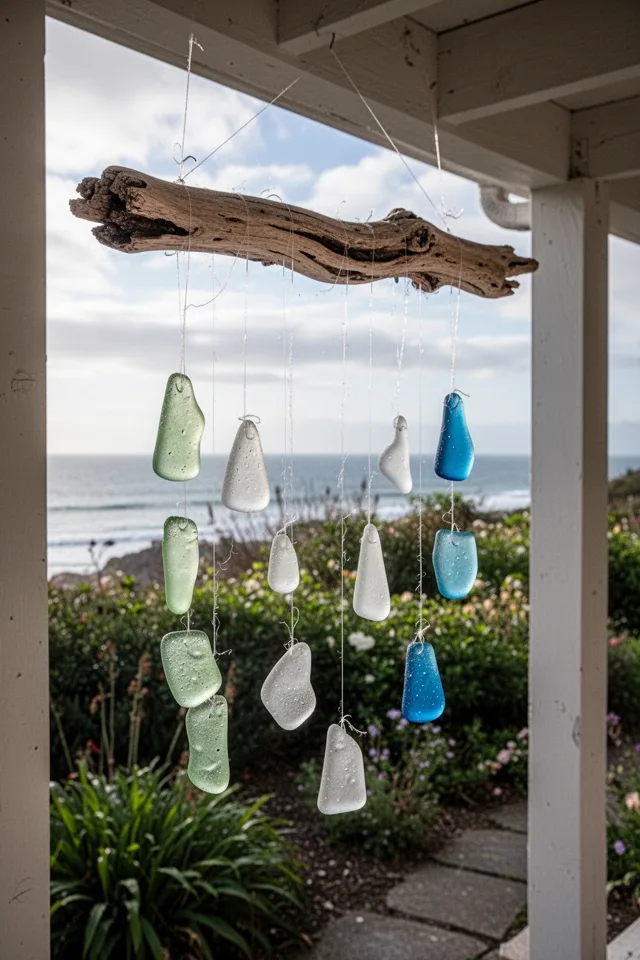
Collect sea glass (or buy a bag of frosted glass gems from a craft store, $8). Find a piece of driftwood about 12 inches long. Drill small holes every 2 inches along the wood. String fishing line through each hole, tie a knot on top, and tie a piece of sea glass to the bottom. Hang the driftwood from two points. The glass catches light and makes a soft clicking sound when the pieces touch.
Cost is under $15 if you buy the glass. The constraint is that glass is heavy. Use 20-pound test fishing line and make sure your hanging points are secure. Also, the driftwood will dry out and crack over time. Seal it with spar urethane before drilling. The version that fails is using sharp-edged glass—sand any edges smooth or buy tumbled glass.
One thing most guides skip: space the glass pieces at different heights. If they all hang at the same level, they won’t touch and you’ll have no sound. Vary the lengths by 1-2 inches.
6. Gazing Ball On A Rebar Stake
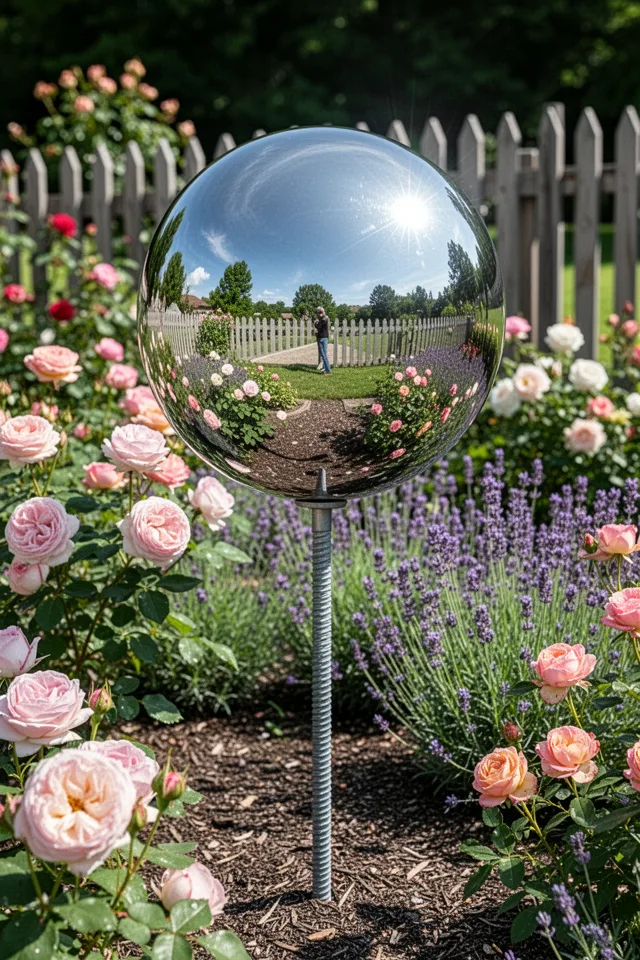
Real gazing balls are expensive. Instead, buy a stainless steel birdbath bowl ($12) or a chrome lamp finial ($8). Drill a hole in the bottom (if not already there) and epoxy it onto a 2-foot piece of 1/2-inch rebar. Drive the rebar into the ground until the ball sits at the right height. The reflective surface catches the garden and creates a focal point. It’s essentially free if you have old stainless bowls.
The trade-off is that the ball will get dirty. Fingerprints, bird droppings, and pollen will dull the reflection. Wipe with glass cleaner weekly. Also, the epoxy will weaken in direct sun over time. Use marine epoxy (for boats) which is UV-resistant. The version that fails is using a plastic ball—it fades and cracks. Metal or glass only.
Pro tip: Place the gazing ball where it will reflect something beautiful—a tree canopy, a flower border, or a bench. Don’t point it at a shed or compost pile.
7. Branch Obelisk From Foraged Wood
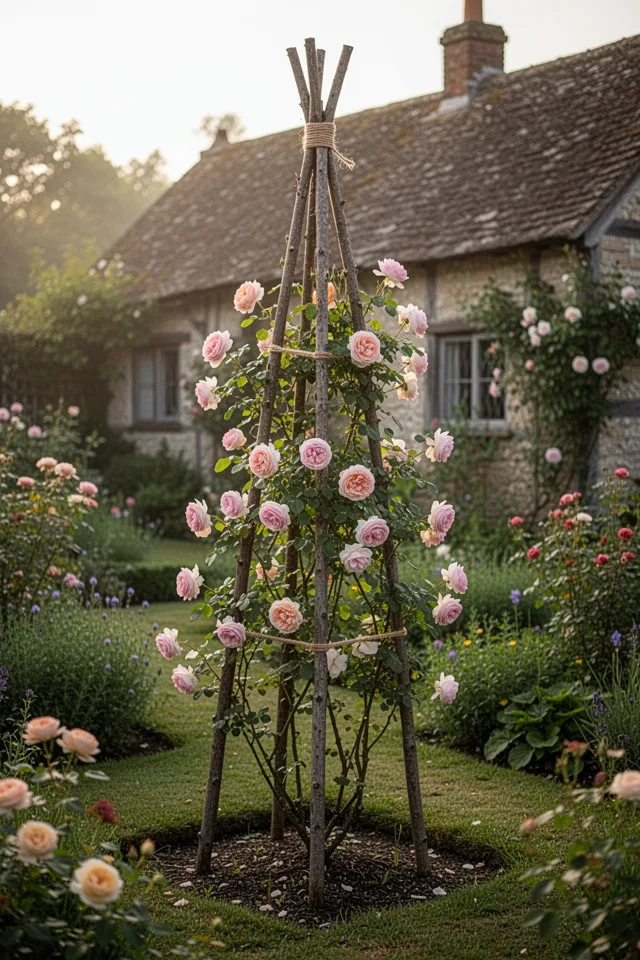
Forage four straight branches, each about 6 feet long and 1 inch thick. Strip the bark if you want (it lasts longer) or leave it for rustic charm. Drive the bottom ends into the ground in a square, about 18 inches apart. Tie the tops together with heavy twine or wire. Add horizontal cross-branches tied between the legs every 12 inches. This becomes a free obelisk for climbing plants or just as sculpture.
Cost is free if you have woods nearby. The constraint is that untreated wood rots in soil. The bottom 12 inches will rot within a year. The solution is to sink the legs into PVC pipes driven into the ground—the pipes protect the wood. Or accept that you’ll replace the obelisk yearly. The version that fails is using green (live) branches—they shrink and twist as they dry. Use dead, seasoned wood only.
Pro tip: Soak the bottom ends of the branches in wood preservative for 24 hours before installing. It’s not non-toxic, so don’t use near edibles. For vegetable gardens, accept yearly replacement.
8. Tin Can Garden Stakes With Punched Designs
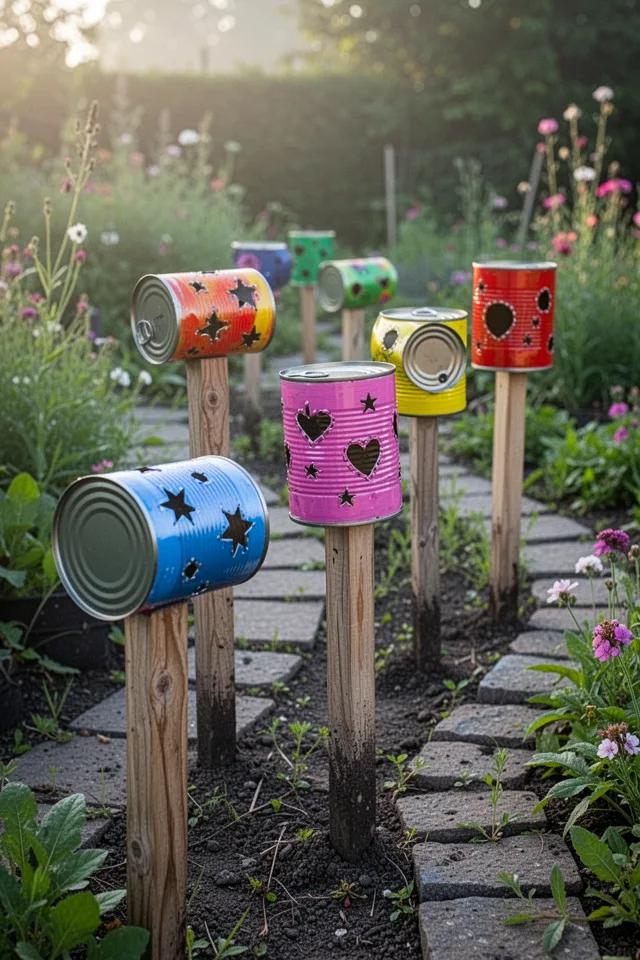
Save tin cans, remove labels, and wash. Use a hammer and nail to punch a pattern of holes (stars, dots, or simple shapes) into the can. Paint the outside with exterior spray paint in bright colors. Screw the can onto a wooden stake (1×1 inch) through the bottom of the can. Pound the stake into the ground along a path or border. The punched holes let light through, creating shadows on the ground.
Cost is under $10 for paint and stakes. The trade-off is that tin cans rust quickly. This is a one-season project, but it’s cheap and easy to remake. For longer life, use aluminum cans (soda cans) and drill holes instead of punching—aluminum doesn’t rust. The version that fails is using cans with paper labels left on—they peel and look terrible. Remove labels completely.
Pro tip: Place a battery tea light inside the can for evening events. The punched patterns will project onto the ground. Remove the tea light when it rains.
9. Stepping Stones From Concrete And Leaves
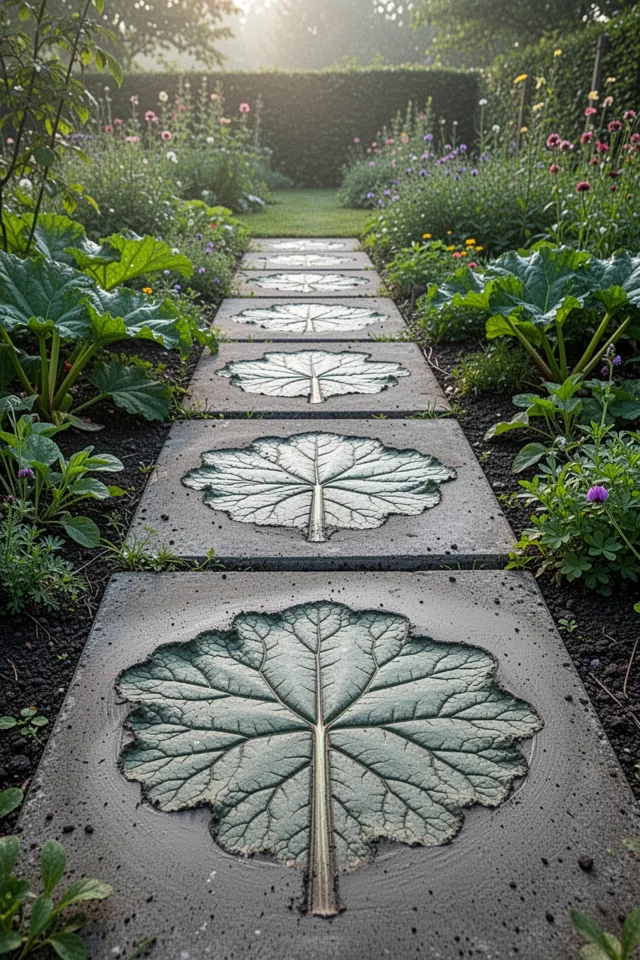
Buy a bag of quick-set concrete ($8). Use a 12-inch round cake pan or a plastic plant saucer as a mold. Mix concrete, pour into the mold, smooth the top. Press a large leaf (hosta, rhubarb, or burdock) face-down into the wet concrete. Let dry for 24 hours, then peel off the leaf. The leaf veins leave a beautiful impression. Repeat to make a path of unique stones.
Cost is under $20 for 5-6 stones. The constraint is that concrete is heavy and the stones can crack if not cured slowly. Keep them covered with plastic for 7 days, misting occasionally. Also, the leaf impression will trap dirt over time. Seal the stones with concrete sealer to make them easier to hose off. The version that fails is using a leaf with thick stems—it leaves a cavity that collects water.
One thing most guides skip: paint the leaf veins with cooking spray before pressing. The leaf will release much more cleanly, and you won’t have concrete stuck in the veins.
10. Painted Gauges And Tools As Sculpture
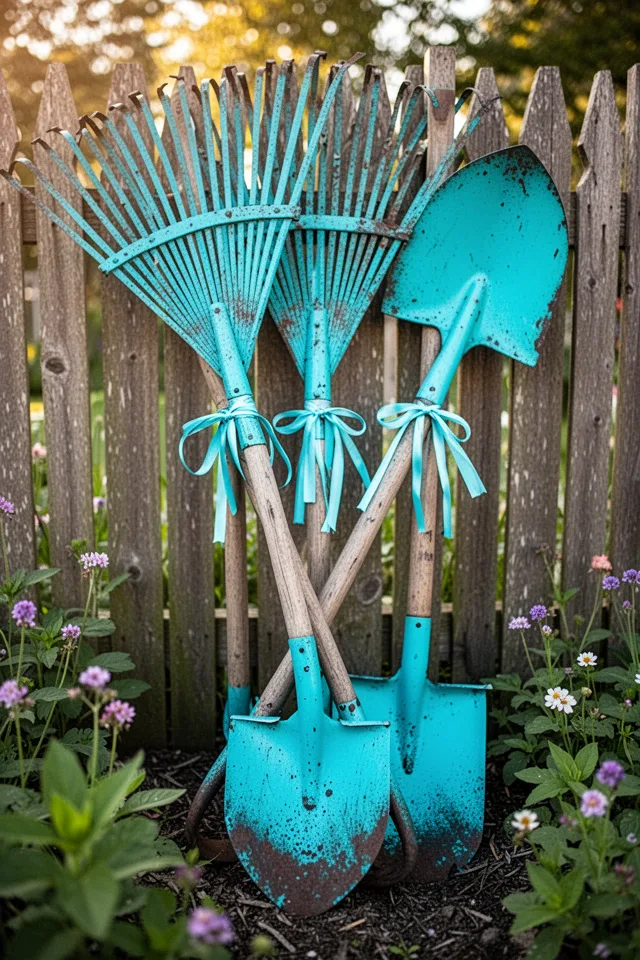
Old, broken garden tools don’t need to be thrown away. Clean off rust with a wire brush. Spray paint the metal heads and wooden handles in a single bright color—turquoise, coral, or sunny yellow. Group several tools together, leaning them against a fence or tied to a post. The uniform color turns junk into intentional sculpture. It’s garden art with zero skill required.
Cost is $8 for spray paint if you already have tools. The constraint is that the paint will chip where tools touch each other. Use a bonding primer first, and accept some wear. Also, wooden handles rot over time. Store the display under a covered porch in winter. The version that fails is using tools with heavy rust—sand them down completely first, or the paint will bubble.
Pro tip: Add a string of battery-operated fairy lights woven through the tool heads. At dusk, they look like glowing sculptures.
11. Terra Cotta Pot Tower Fountain
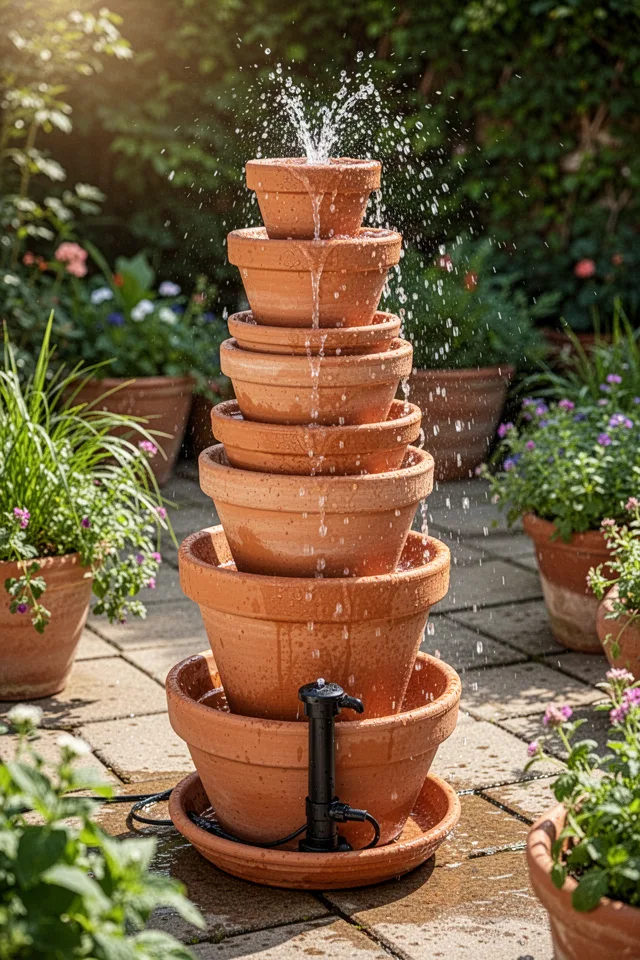
Stack three or four terra cotta pots of decreasing size, largest at the bottom. Drill a hole through the center of each pot’s bottom (use a ceramic drill bit). Run a tube from a small fountain pump ($15) up through the pots, with the tube ending at the top pot. Seal between pots with waterproof silicone. Fill the bottom pot with water, plug in the pump. Water fills the top pot and cascades down through the stack.
Cost is about $40 for pots and pump. The trade-off is that the water will evaporate quickly in summer heat—check daily. Also, algae will grow in the pots. Add a few drops of algaecide or clean weekly. The version that fails is using unsealed pots; water will seep through the clay and stain everything. Seal the inside of each pot with waterproofing spray.
Pro tip: Add a few drops of dish soap to the water. It breaks surface tension and makes the cascading water sheet beautifully instead of dripping.
12. Glass Bottle Border Edging
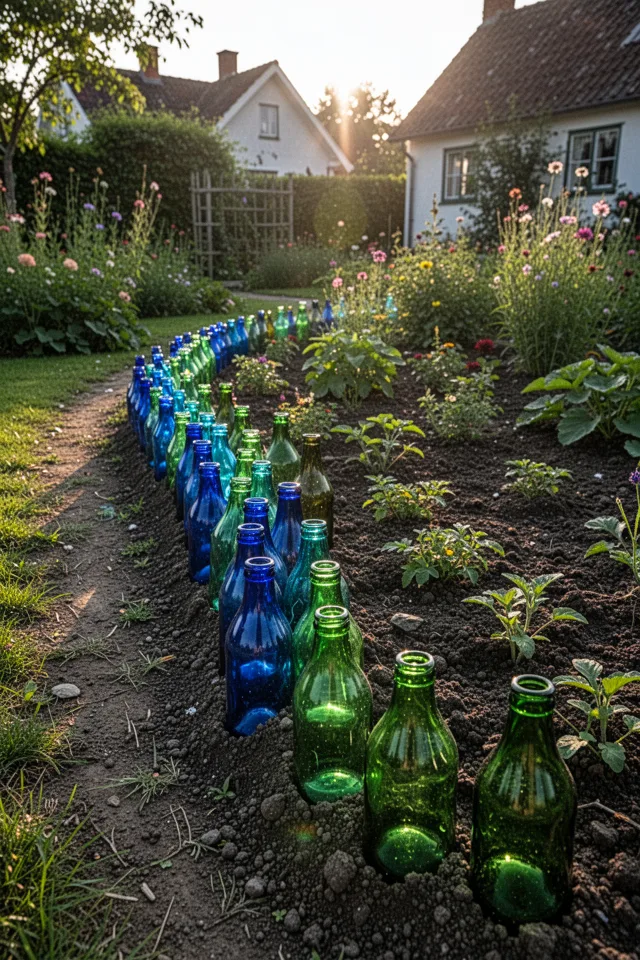
Save glass bottles—beer, soda, wine—in varying shades of blue, green, and amber. Remove labels with hot soapy water. Dig a shallow trench along the edge of a garden bed. Place the bottles upside down in the trench, necks down, buried so just the bottom of the bottle (now on top) is visible. Refill soil around them. The bottles create a gleaming border that catches light and looks like expensive recycled glass edging.
Cost is free if you drink the contents. The constraint is that the bottles will collect dirt and debris. Hose them off occasionally. Also, they can break if hit by a lawnmower. Keep the border away from mowing paths. The version that fails is using clear bottles—they look like garbage. Colored glass only.
Pro tip: Sort bottles by color before installing. A gradient from dark blue to light blue to green looks intentional. Mixed colors look like a recycling bin.
13. Wine Cork Garden Labels
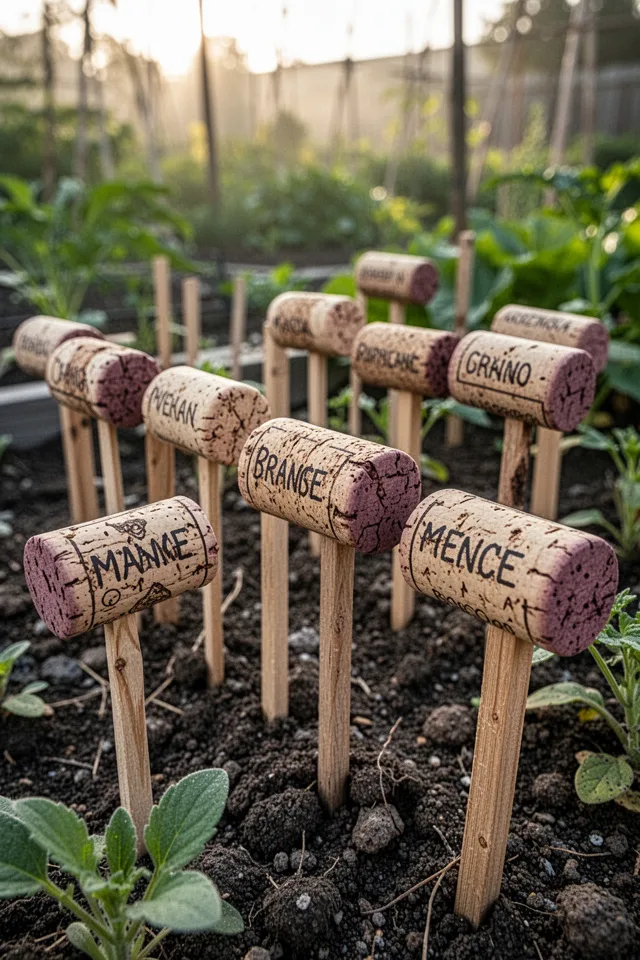
Save wine corks. Cut a slit in the top of each cork (or just write on the side). Glue the cork to the top of a bamboo skewer or a wooden coffee stirrer using waterproof glue. Write the plant name on the cork with a permanent marker. Stick the skewer into the soil. The cork is naturally rot-resistant and looks charming. It’s also a great way to remember which bottle was which.
Cost is free if you have corks. The constraint is that the marker will fade in sun within a season. Use a paint pen for longer life. Also, the skewers will rot. Replace the skewers yearly, but reuse the corks. The version that fails is using synthetic corks—they don’t take ink well and look like plastic.
Pro tip: Write the year on the bottom of the cork. After a few seasons, you’ll have a history of what you planted where. It’s a garden journal in cork form.
14. Hanging Terrariums From Lids
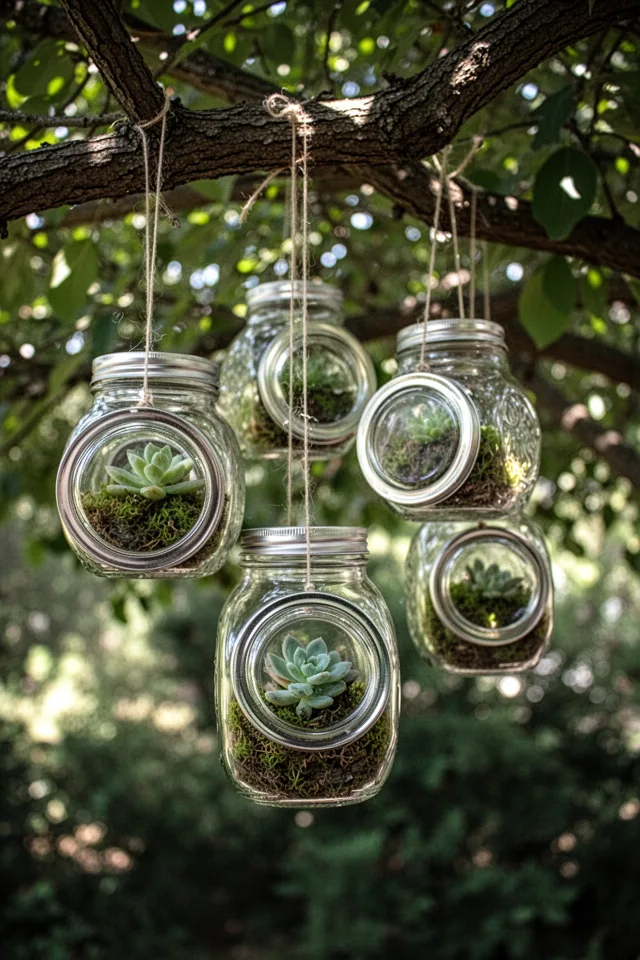
Those old glass jar lids with a metal rim and a glass insert (from canning jars) make perfect mini terrariums. Remove the rubber seal. Fill the glass insert with a small amount of soil, a tiny succulent, and some moss. Replace the metal rim (now acting as a base) and hang the lid upside down from fishing line looped through the rim. The glass faces down, protecting the plant. Hang from a tree branch or porch ceiling.
Cost is free if you have old jar lids. The constraint is that the plants will need watering, and the metal rims will rust. Use stainless steel rims or replace yearly. Also, the terrariums can swing and crack if they hit something. Hang them where they won’t collide. The version that fails is using plastic lids—they don’t hold the glass securely.
Pro tip: Use air plants (tillandsia) instead of soil and succulents. Air plants need no soil, just misting. They’re perfect for hanging terrariums.
15. Bicycle Wheel Trellis
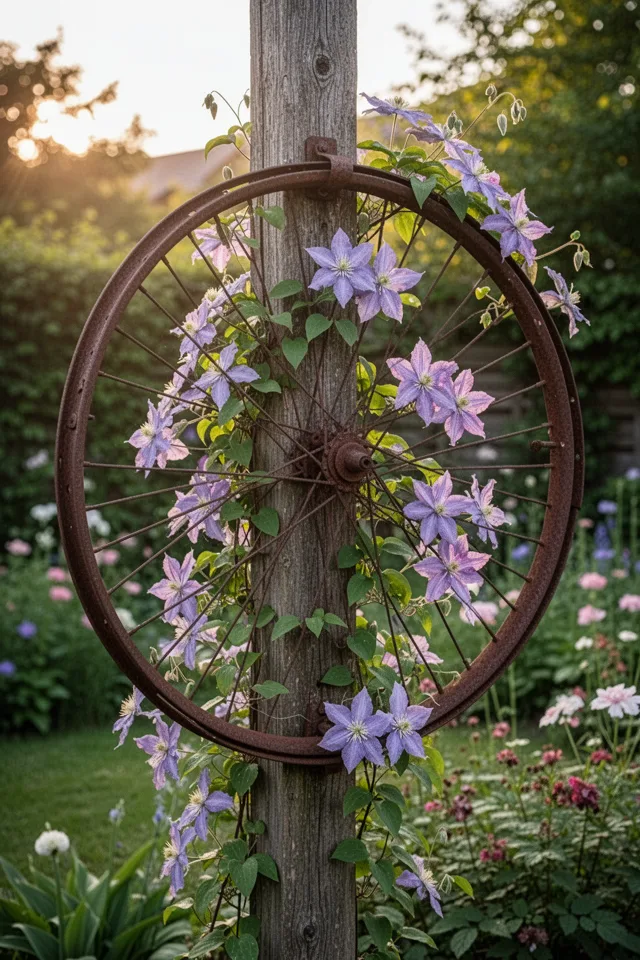
Find an old bicycle wheel (free from a bike shop or dump). Remove the tire and spokes? No—leave the spokes. Mount the wheel horizontally on top of a 6-foot wooden post, secured with screws through the hub. Plant a climbing vine (clematis, morning glory, or hyacinth bean) at the base. Train the vine to grow up the post and spread across the wheel. The spokes provide perfect support, and the wheel becomes a circular frame for the flowers.
Cost is free for the wheel, $10 for the post. The constraint is that the wheel will rust further over time. That’s the look, but if you want to slow rust, spray with clear rust converter. Also, the vine will eventually cover the wheel completely—that’s the point. The version that fails is using a plastic wheel (tricycle wheel). Metal only.
Pro tip: Mount the wheel at an angle, not perfectly horizontal. A slight tilt catches rain and sun better, and the vines will fill the wheel more evenly.
16. Mosaic Pot From Broken China
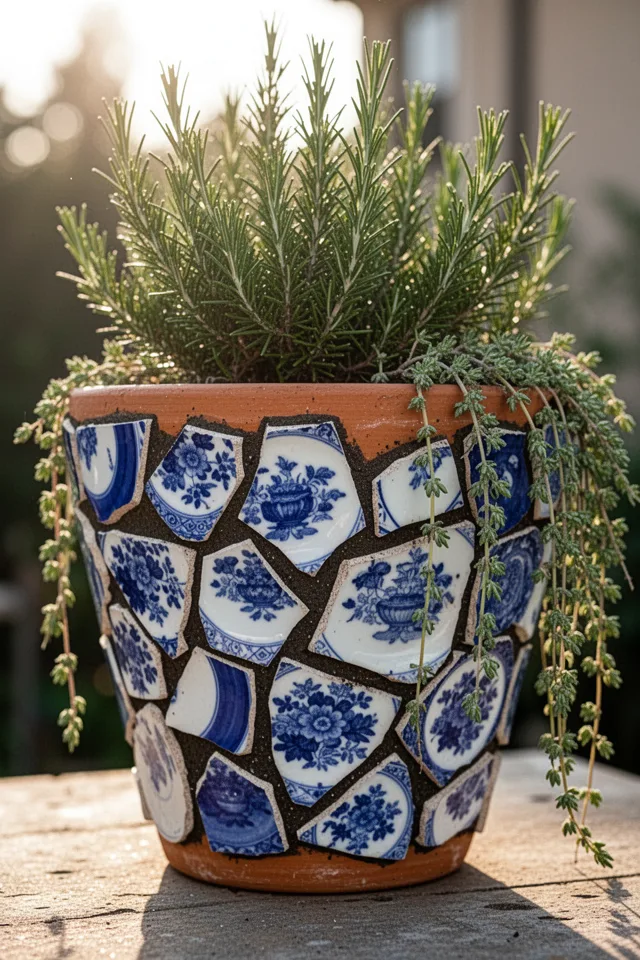
Break an old china plate (thrift store, $2) by wrapping it in a towel and tapping with a hammer. You want pieces about 1 inch across. Spread thinset mortar or outdoor tile adhesive on a terra cotta pot. Press the china pieces into the adhesive, leaving small gaps. Once dry, fill gaps with dark grout, wipe excess, and seal. The result is a heirloom-quality pot that looks like it cost $100.
Cost is under $20. The trade-off is that this project is messy and takes patience. Grout dries fast—work in small sections. Also, the broken edges are sharp. Wear gloves. The version that fails is using indoor grout; it will crack in frost. Use outdoor polymer grout. And seal the entire pot with a tile sealer afterward.
One thing most guides skip: paint the terra cotta pot white before gluing. Any gaps between the china pieces will show white instead of orange clay. Much cleaner look.
17. Rain Chain From Old Keys
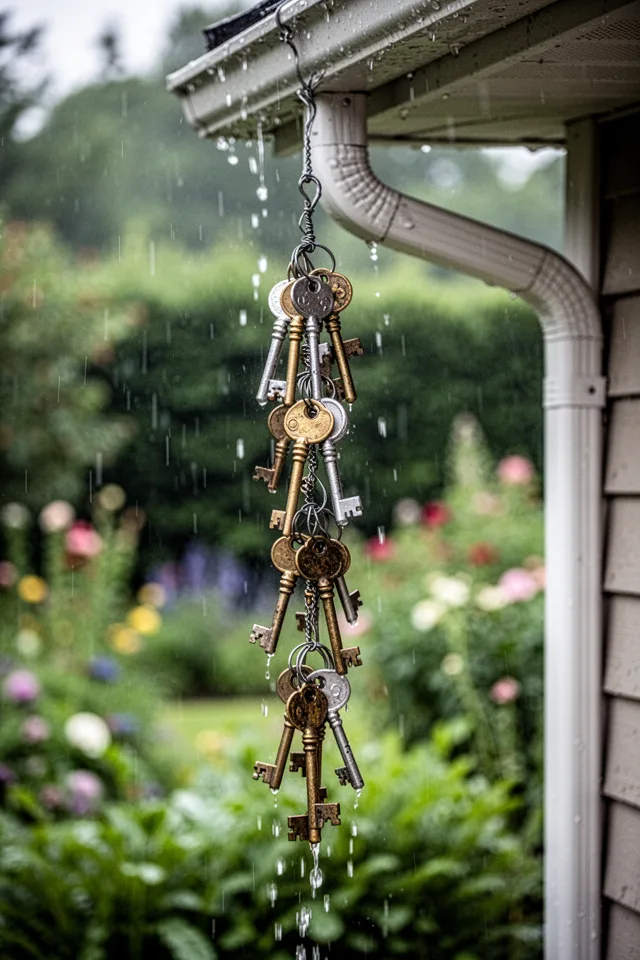
Gather old keys—thrift stores sell bags of them for $5. Drill a small hole at the top of each key if not already there. Link the keys together using small jump rings or wire, forming a chain about 6 feet long. Hang the chain from your gutter downspout. When it rains, water flows down the chain instead of splashing. The keys make a soft clinking sound and look like steampunk jewelry for your house.
Cost is under $15. The constraint is that steel keys rust. Use brass or nickel-plated keys, or spray steel keys with clear sealer. Also, the chain can swing in wind and hit the house. Add a small weight at the bottom (a heavy washer) to keep it steady. The version that fails is using aluminum keys—they’re too light and don’t conduct water well.
Pro tip: Add a small bell or a glass marble at the bottom of the chain. The water will drip onto it and make a more pleasant sound than keys on concrete.
18. Painted Rain Boots As Planters
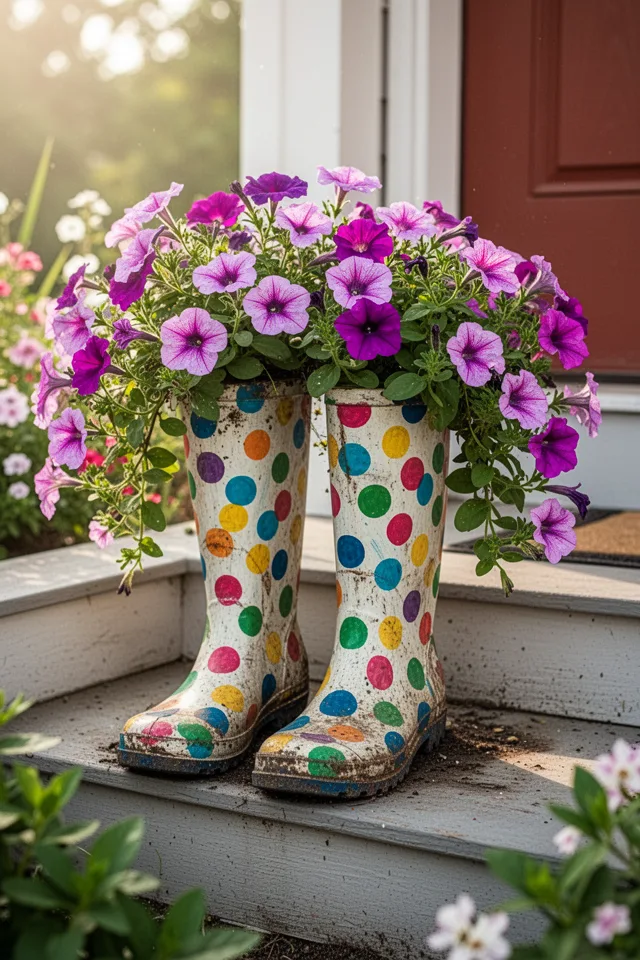
Old rain boots with holes (or just outgrown) become perfect planters. Drill a few drainage holes in the soles if they don’t have holes already. Paint the boots with exterior acrylic paint in any pattern—stripes, polka dots, or solid bright colors. Fill with potting soil and plant trailing flowers like petunias or sweet potato vine. Place them on porch steps or at the garden entrance. The boots look playful and unexpected.
Cost is free if you have old boots, $5 for paint. The constraint is that rubber boots get hot in sun and can cook roots. Place them where they get afternoon shade, or plant heat-tolerant succulents. Also, the paint may peel. Use a rubber-bonding primer first. The version that fails is using boots with holes in the toes—soil will wash out when you water.
Pro tip: Fill the bottom 3 inches of the boot with packing peanuts before adding soil. It improves drainage and makes the boot much lighter to move.
19. Cinder Block Succulent Wall
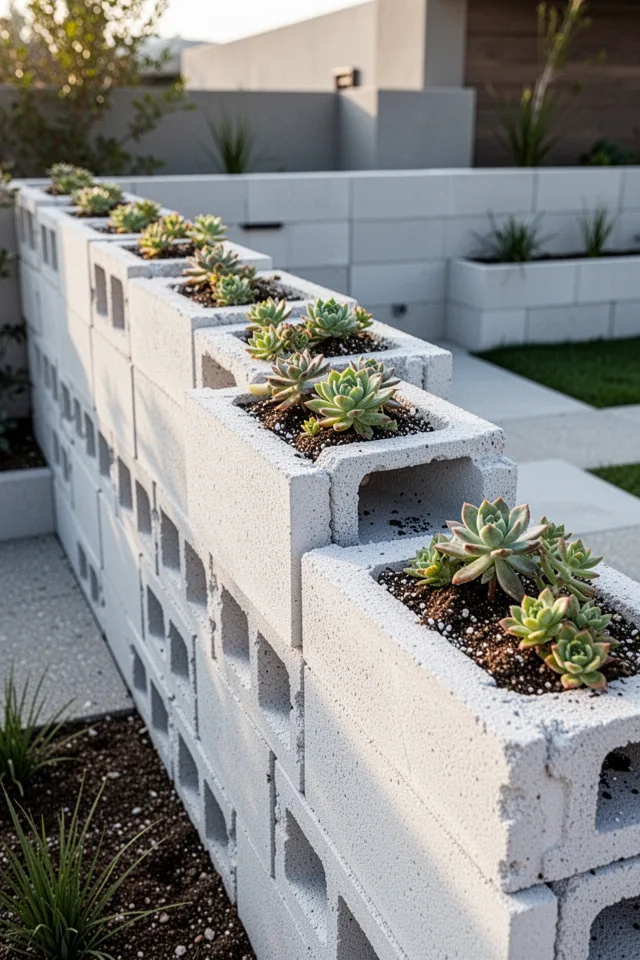
Cinder blocks are $2 each. Stack them in a low wall (2 blocks high, 5 blocks long). The holes in the blocks are perfect planting pockets. Fill each hole with cactus/succulent potting mix. Plant a small succulent in each—hens and chicks, sedum, or echeveria. The concrete absorbs heat and releases it slowly, which succulents love. The wall becomes a living sculpture.
Cost is about $30 for 10 blocks plus plants. The constraint is that cinder blocks are heavy and need a stable base. Dig a shallow trench and fill with gravel before stacking. Also, the blocks will leach alkaline minerals into the soil. Use acid-loving plants? No—succulents like alkaline conditions. Perfect match. The version that fails is painting the blocks before planting—the paint seals the concrete and reduces breathability. Paint after planting or leave raw.
One thing most guides skip: fill the holes only 3/4 full with soil. The remaining space allows you to water without overflow. Succulents don’t need deep roots.
20. Silverware Garden Markers With Charms
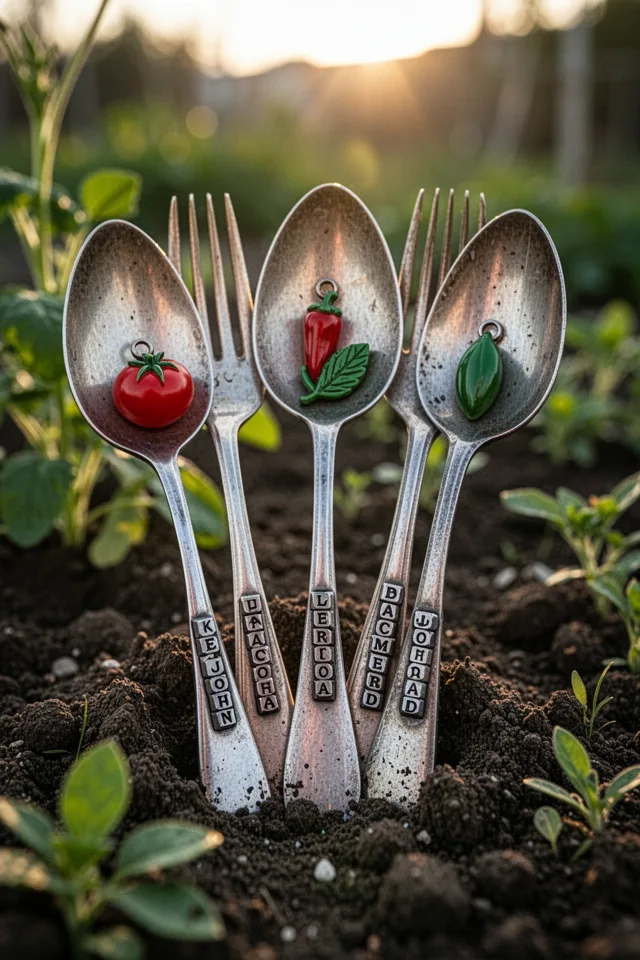
Take old silverware (thrift store, $5 for a bag). Use metal letter stamps ($10) to stamp the plant name into the handle. For a simpler version, write with a paint pen. Attach a small charm (a tomato for tomato plant, a chili for pepper) to the spoon bowl using a jump ring. Stick the handle into the soil. These are the most charming plant markers you’ll ever own, and they’ll last forever.
The trade-off is that stamping metal requires a hard surface and a hammer. Practice on a scrap spoon first. Also, the silverware will tarnish outdoors. Some people like the patina; if you don’t, spray with clear sealer. The version that fails is using plated silverware—the plating flakes off. Solid stainless steel works best.
Pro tip: Use a bench block or a piece of railroad track as your anvil. A regular hammer will work, but a metal stamping hammer ($15) is easier on your wrists.
Garden art shouldn’t feel like a chore. The best projects are the ones that make you smile when you walk past them—the silverware chime clinking, the cracked pot fairy garden spilling over, the bottle border glowing at sunset. You don’t need skill or expensive materials. You need a willingness to try something that might look a little silly, and the knowledge that even a “failed” project can become a story.
If you’re overwhelmed by 20 options, start with the silverware wind chime. It costs almost nothing, takes an hour, and will make you feel like a garden artist. Plus, every time the wind blows, you’ll hear it and remember that you made that. The second project? The painted rock stepping stones. They’re practical, beautiful, and you’ll use them every time you walk through the garden.
Remember this page when you’re standing in your garden at dusk, the fairy lights are glowing, the gazing ball is reflecting the last rays of sun, and you realize that the best garden art isn’t bought—it’s made. And you made it. That feeling is worth every bit of chipped paint and crooked letter.