I’ll never forget the month after I installed those cheap plastic fairy lights and a mass‑produced metal bench from a big‑box store. By August the lights had bleached to a sickly orange, and the bench developed a rash of rust spots that stained the paving stones underneath. That’s when I realised most garden decor advice is written for a photo shoot, not for a real yard that bakes in the sun, gets hammered by rain, and has a dog who digs. The pretty version always works on Day One. The honest version has to survive Year Three.
Conventional lists tell you to “add plants” and “use neutral colours” as if those are ideas, not ingredients. They skip the part where a cedar planter turns silver after one season, or that a copper birdbath looks spectacular for six months and then develops a splotchy patina you either love or hate. They avoid talking about trade‑offs because they want everything to feel easy. But easy decor ages badly, and fake materials feel hollow the minute you touch them.
This article is different. Every idea here is something I’ve lived with, maintained, or regretted — and then fixed. I’ll tell you what it costs, what wears out, what looks better after a year, and what you should absolutely skip. You’ll get fifteen specific, tested recommendations that go one layer deeper than the usual advice, along with honest trade‑offs and a clear sense of where your money and effort actually make a difference.
1. Layered Gravel Path with Steel Edging
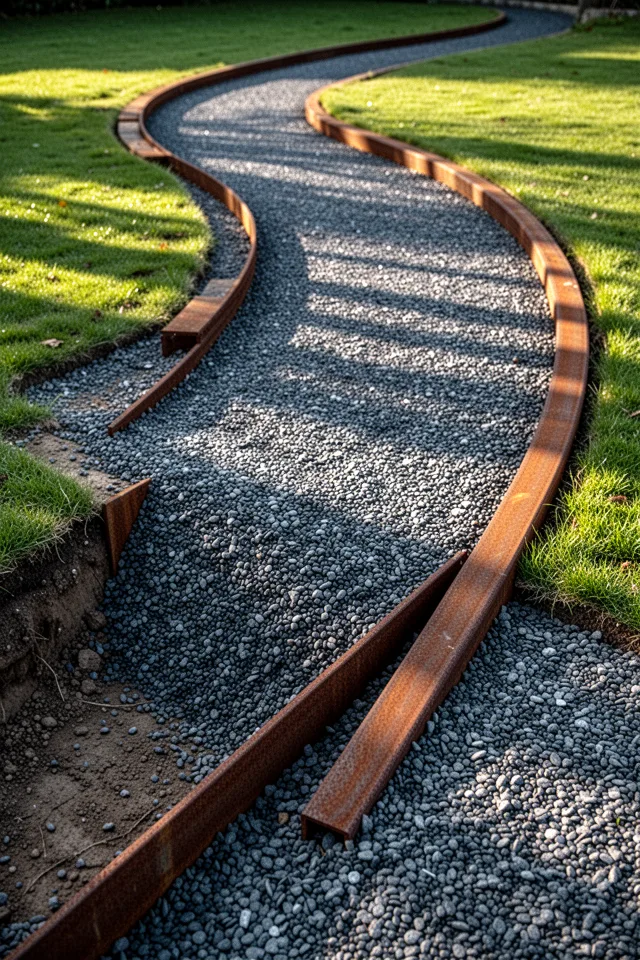
Most gravel paths I see are a single pour of stone on dirt. They shift, they spread, and within two months they look like a construction site. The version that holds up requires two layers: four inches of crushed angular stone (¾ inch) as a base, then two inches of rounded pea gravel on top. The angular base locks together and drains; the pea gravel on top is comfortable to walk on and doesn’t migrate as badly. You still need steel edging — the black, 1/8‑inch, powder‑coated kind, not the flimsy landscape strips that bend in the first rain. Push the edging two inches below ground level so the mower can run over it.
Here is the honest truth: gravel shifts no matter what you do. You will have to top it up every other year. But the sound of it crunching underfoot, and the way it holds heat so the path feels dry even after a shower — that’s worth the maintenance. This is a weekend DIY project if you rent a plate compactor. Budget around $80 to $150 for a 20‑foot run, depending on gravel prices in your area.
The angular base layer is the difference between a path that disappears into the lawn and one that fights you every spring.
2. Galvanized Steel Planter with Intentional Weathering
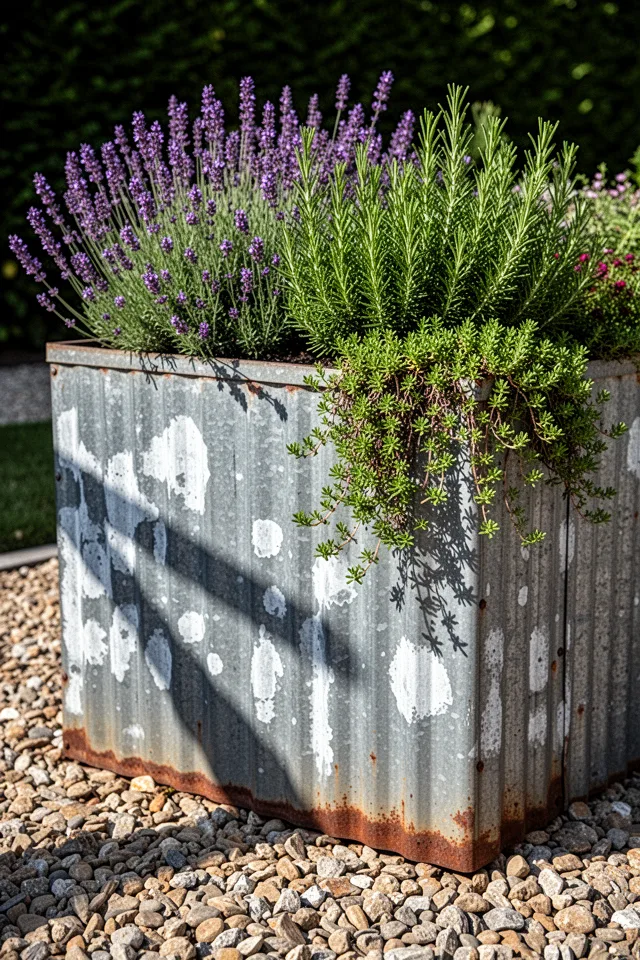
Galvanized steel planters are everywhere now, and most look brand‑new for about three weeks. Then the surface changes — unevenly — and people panic. The trick is to buy the one that’s already allowed to weather, or to accelerate it yourself with a diluted vinegar spray. The spotty white bloom (zinc carbonate) that develops is protective; it’s not rust. The planter will last decades if it doesn’t sit in standing water.
The real win here is weight. Galvanized steel is heavy enough to stay put in a windstorm but light enough to move with a furniture dolly. Line the inside with landscape fabric and a thin layer of gravel for drainage, and use a potting mix that doesn’t stay wet. Do not put it directly on a wooden deck unless you want rust rings. Set it on bricks or a shallow saucer. This is a $200‑plus commitment for a large one (24×48 inches), but it will outlast a teak planter by a decade.
Embrace the spotty bloom. That white patina is not a flaw; it’s the proof the planter is forming its own armour.
3. Wrought Iron Trellis with Climbing Roses (But Know the Rust)
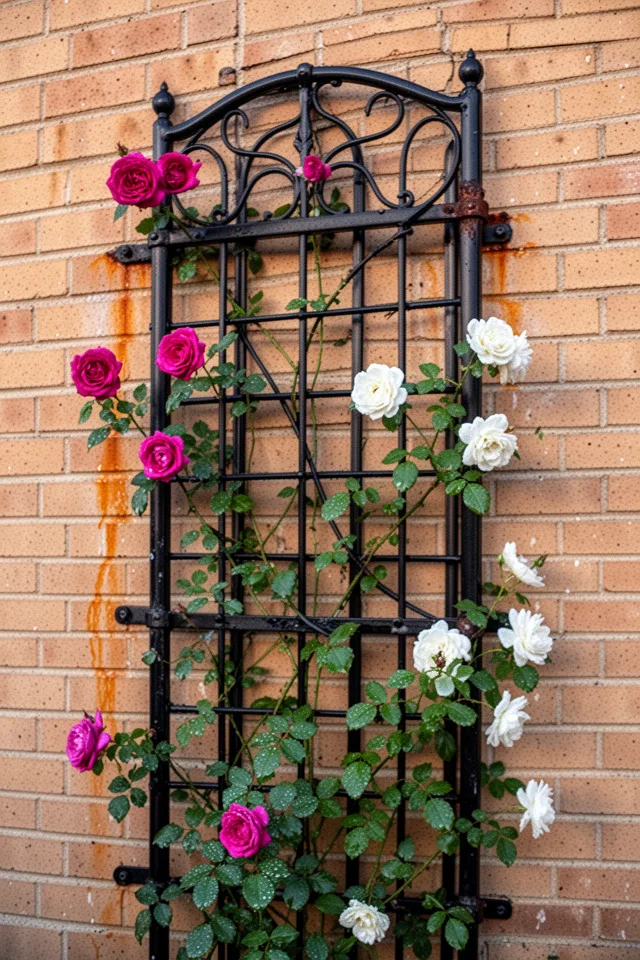
Everyone loves the vision of a rose‑covered trellis. The reality is that most wrought iron trellises sold today are cheap mild steel with a powder coat that chips. Once the coating breaks, rust starts at those chipped points. You have two options: buy real wrought iron (heavy, expensive, usually custom) or plan to repaint the cheap version every two years. I did the cheap version and regretted it until I switched to a zinc‑rich primer and a topcoat designed for outdoor metalwork.
Position the trellis at least two inches off the wall to let air circulate behind the blooms. If you attach it flush, moisture gets trapped and the rust accelerates behind the leaves where you can’t see it. The roses themselves are fine with a bit of iron oxide; it won’t hurt them. But your wall might stain. Budget $60 to $90 for a mid‑range trellis, plus another $30 for primer and paint. The real cost is the maintenance time — two hours every spring.
If you can’t reach every weld to paint it, don’t buy it. That spot will be your first rust bubble.
4. Outdoor Rug on Gravel (Not on Deck)
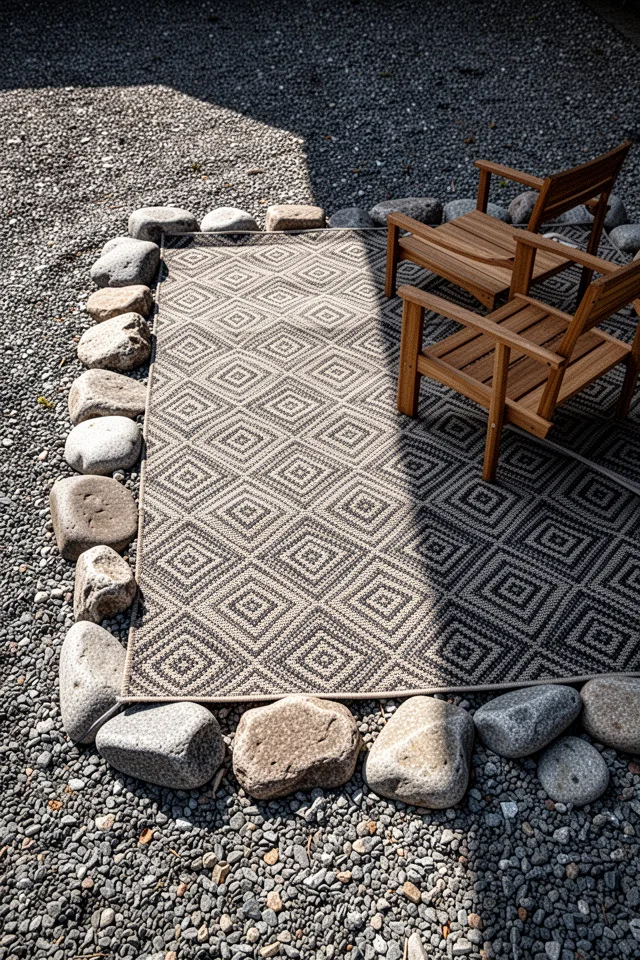
Outdoor rugs are sold for decks, but on wood they trap moisture and cause rot. On a gravel base, they drain instantly. The gravel itself provides a firm, even surface that doesn’t grow algae the way wood does. The key is to use a rug with an open weave — not a solid backing — so water passes through. Polypropylene rugs fade in direct sun after two seasons; buying a light colour extends the life because dark pigments absorb more UV.
One thing almost no one mentions: the rug will slowly walk itself out of position if you don’t anchor it. I use flat river stones that match the gravel, laid on each corner and one in the middle. They look intentional and they keep the rug from turning into a twisted mess after a windy afternoon. Cost wise, a decent 5×7 rug runs $70 to $120. The stones are free if you already have a gravel path, or $10 for a bag of decorative river rocks.
Gravel is the only base that lets an outdoor rug dry out before mildew sets in. Decking is a gamble.
5. Upcycled Wooden Spool Table
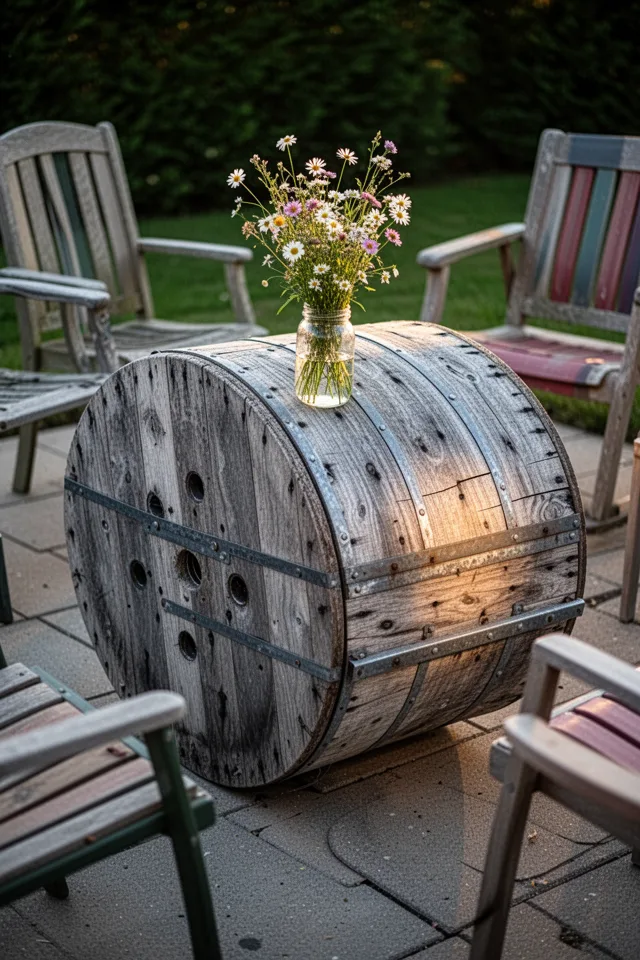
Old cable spools are free or nearly free from electrical supply companies, and they make the best outdoor tables I’ve ever used. They’re heavy, stable, and have a built‑in shelf underneath (the lip of the spool). The wood is usually untreated pine, which will grey beautifully. But the metal bands around the perimeter will rust and stain the wood if you don’t seal them. I sanded the bands and coated them with a clear marine varnish. That solved the rust problem for three years so far.
The trade‑off is size. A standard spool is about 36 inches across and 24 inches tall — perfect for a drinks table, but too low for a dining surface. You can raise it by adding a wooden disk on top, but then it looks like a wedding cake. Leave it low and pair it with deep‑seated chairs. Cost is basically zero if you source a spool. A marine varnish will run you $15. This is the single most cost‑effective piece of garden decor I own.
A free spool table beats a $300 outdoor coffee table in durability and character every time. Just seal those metal bands.
6. Warm LED String Lights — Not the Blue Kind
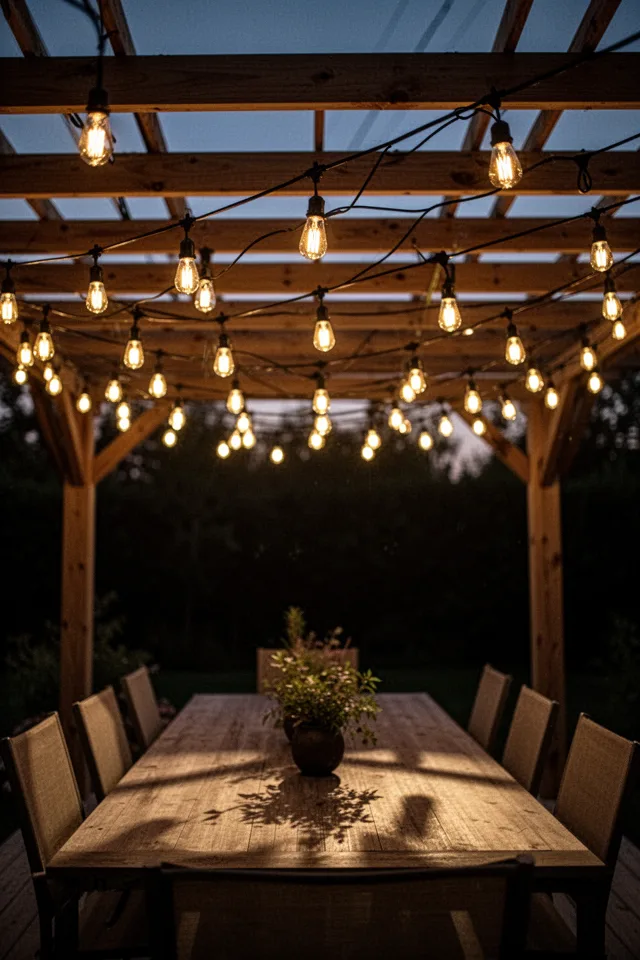
The most common outdoor lighting mistake is buying LED string lights with a colour temperature above 3000K. Those cool‑white bulbs (often labelled “daylight” or “bright white”) make a garden look like a parking lot. I made that error once and swapped them within a week. The warmest LEDs — 2200K to 2700K — mimic the glow of old incandescent bulbs. They make skin look good, food look appetising, and the garden feel intimate.
But heat is a real problem with LED drivers. The little black boxes that plug into the wall get hot enough to soften asphalt in direct sun. Mount the driver on a shaded surface or enclose it in a ventilated box. Also, the wires themselves are often too thin for long runs. If you’re spanning more than 30 feet, buy a commercial‑grade set with thicker gauge wire (18 AWG or higher). This is a $40 to $100 investment depending on length and quality. The cheap $15 sets will die within a year — I’ve buried three of them.
Color temperature is not a detail; it is the entire mood. Do not buy anything labeled “daylight” for a garden.
7. Terracotta Pots Buried to the Rim
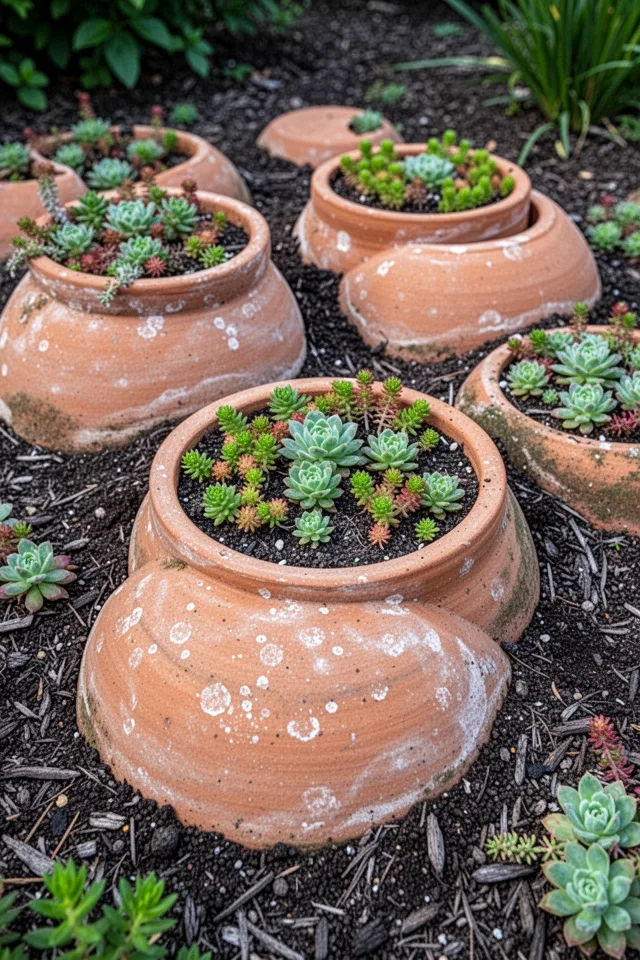
If you want the look of embedded planters without the expense of in‑ground ceramic, bury standard terracotta pots. The soil insulates the roots from temperature swings, and because the pot itself is mostly underground, it doesn’t crack as easily from freeze‑thaw cycles. I use inexpensive 10‑inch and 12‑inch pots from the garden centre. The unglazed clay breathes, which helps with drainage, and the white efflorescence that appears after a few seasons actually makes them look older and more natural.
The catch: you must drill drainage holes in the bottom if they don’t have them already, and you need to remove the pots in winter if you live where it freezes hard. Buried pots freeze from the sides, not the bottom, but the clay can still crack if water gets trapped inside. I lift mine, store them upside down in the shed, and the plants go into the garden beds for the winter. That’s extra work, but the look is worth it. Cost is about $6 to $15 per pot.
Burying terracotta makes the garden look like it emerged from the soil itself, not like you bought everything at a shop last weekend.
8. Vintage Watering Can as Planter
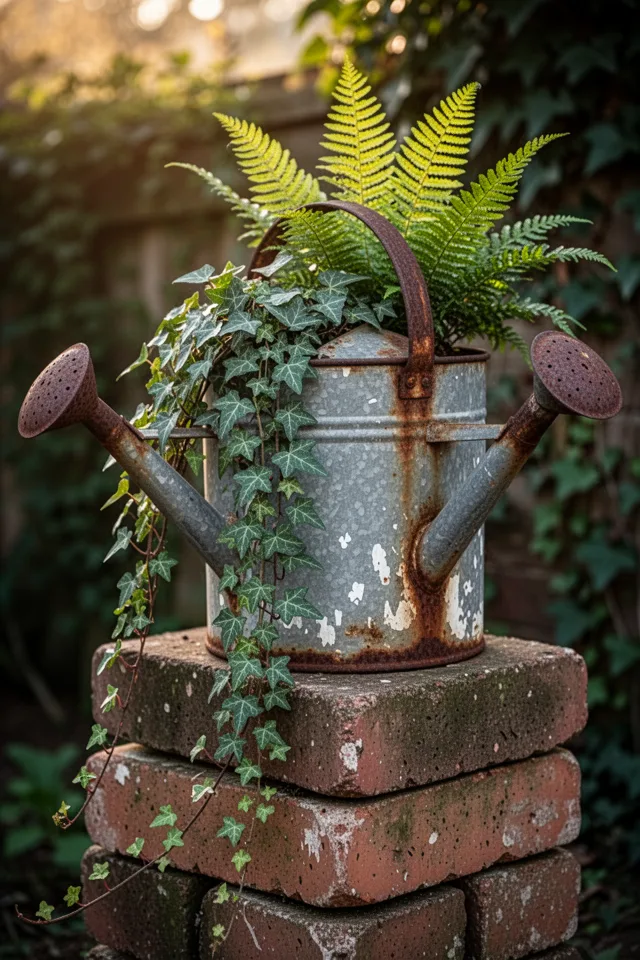
I found a crumbling watering can at a flea market for $8, and it became one of my favourite garden accents. The key is not to restore it — leave the rust and the flaking paint. A too‑clean vintage piece looks like a prop. The faded, worn surface signals that it has a history. But you have to line the inside with a plastic container or at least a thick plastic bag with drainage holes, because the galvanised metal will eventually corrode through with constant moisture.
A practical trade‑off: this is a small planter. Even a large watering can holds only a few quarts of soil, so it dries out fast in summer. I plant it with drought‑tolerant succulents or trailing ivy, and water it every other day during a heatwave. In winter, I bring the whole thing into an unheated garage because freezing water inside the spout can split the metal. Cost is $5 to $20 if you’re patient at flea markets. New “vintage‑style” cans are $30 but lack the real patina.
Don’t paint over the rust. That rust is the reason it looks authentic instead of like a craft store reproduction.
9. Boulder Grouping with Creeping Sedum
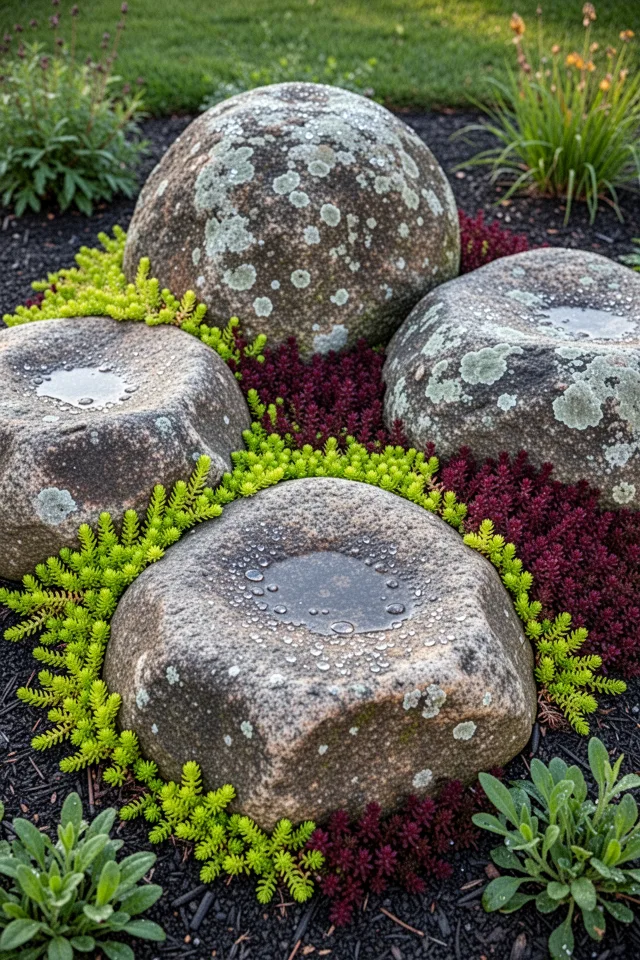
Boulders are expensive and back‑breaking, but they are the single best anchor for a garden that feels permanent. A grouping of three stones — one large, two smaller — creates a natural focal point that doesn’t rely on flowers that come and go. The trick is to bury at least a third of each boulder so it looks settled, not placed on top of the soil like a giant egg. I rented a hand truck with a strap and rolled the stones into position. It was a full morning of work for three boulders.
Sedum thrives in the thin soil pockets around boulders because it’s a rock plant by nature. It doesn’t need deep roots, and it withstands the heat that radiates off the stones in summer. One thing to watch: the grass will try to creep under the boulders, and you’ll have to weed‑whack around them. Also, children and dogs treat boulders as climbing structures, so make sure they’re stable. Cost for three medium boulders from a landscape supplier: around $100 to $200 delivered. It’s a one‑time expense that lasts indefinitely.
Boulders are not decor; they are permanent geology. Place them as if they’ve been there since the last ice age.
10. Hammered Copper Birdbath (Embrace the Tarnish)
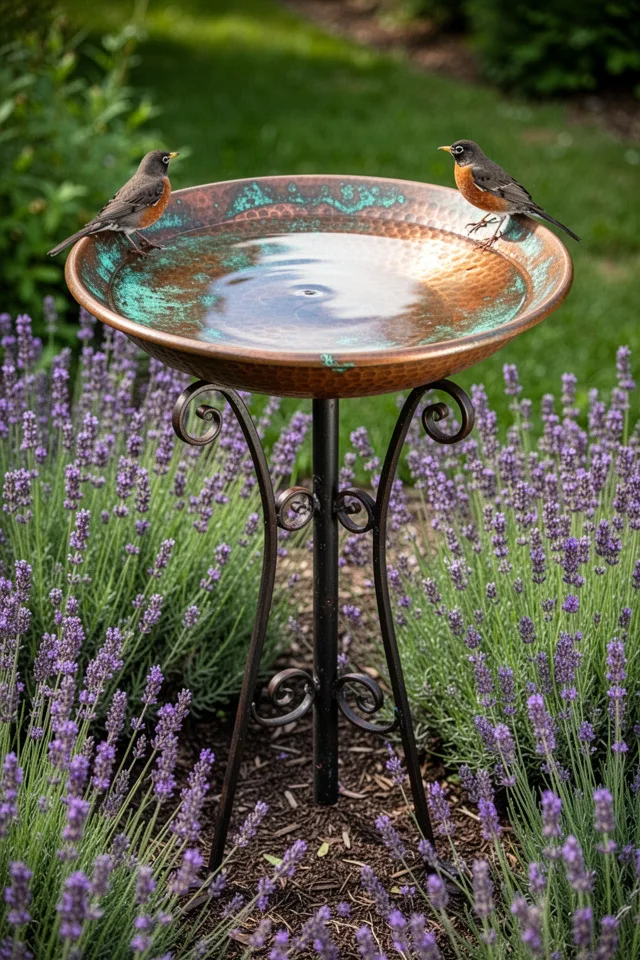
A copper birdbath starts as a stunning, almost gaudy orange‑gold. Within a year, it begins to darken and develop that greenish patina that people either obsess over or hate. I love it, but only because I didn’t fight it. The mistake people make is trying to keep it shiny with chemical polishes — those erode the metal and create an uneven mess. Let the copper do what copper does. It will become a soft, varied green over five years, and that’s when it looks best in a garden.
The practical downside: birds are messy. The water gets slimy, and the copper bowl needs a good scrub every week during summer to prevent mosquito larvae. Use a stiff brush and plain water — no soap, because the runoff can harm the copper finish. Also, the bowl will hold heat on a hot day, so place it in partial shade. A solid hammered copper birdbath runs $80 to $150. Avoid the thin copper‑coated steel ones; they rust through in two years.
The patina is not a defect. It is the finish that $300 of chemical aging cannot replicate. Let it grow.
11. Cedar Fence Slat Screen
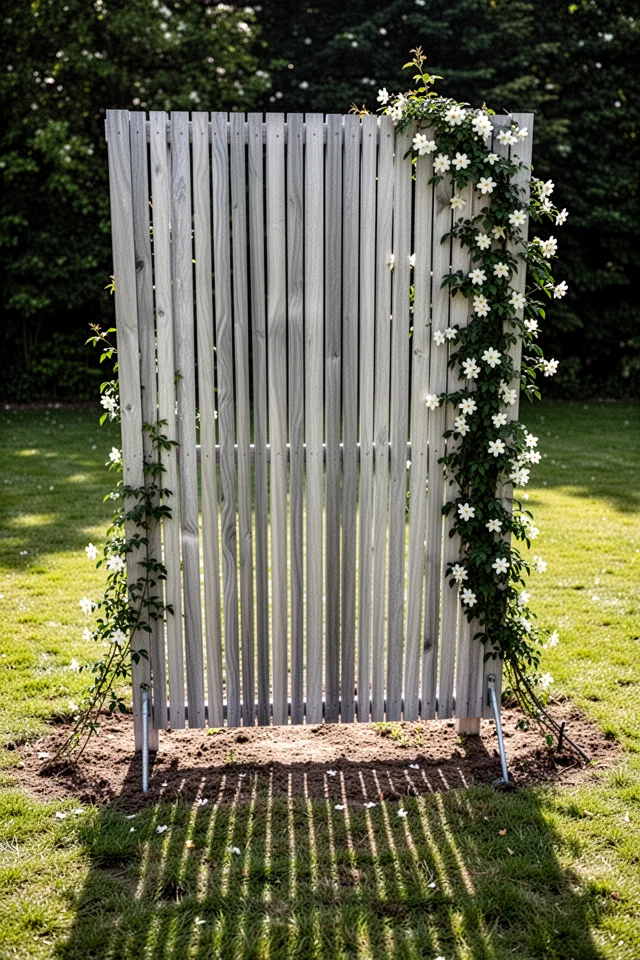
Privacy screens from lumberyards are often pressure‑treated pine that weathers into a splotchy brown. Cedar is worth the premium because it turns silver evenly and smells good when it gets wet. I built a simple slatted screen with 1×4 cedar, leaving a one‑inch gap between each slat. The gaps let wind pass through, so the screen doesn’t act like a sail and topple over. I also used stainless steel screws — regular ones rust and bleed black streaks down the wood.
Here’s the honest trade‑off: in direct sun, cedar fades to silver in about three months. Some people sand it and oil it to keep the warm honey colour, but that’s a twice‑a‑year chore. I let it silver, and now it looks like a piece of coastal furniture. The screen also casts sharp shadows that shift throughout the day, which is a beautiful effect on a patio. Total material cost for a 4×6 screen is around $60 to $80. You’ll need a circular saw and a drill.
Cedar silvering is not decay; it’s the wood developing its own weatherproof complexion. Leave it alone.
12. Poured Concrete Stepping Stones with Leaf Impressions
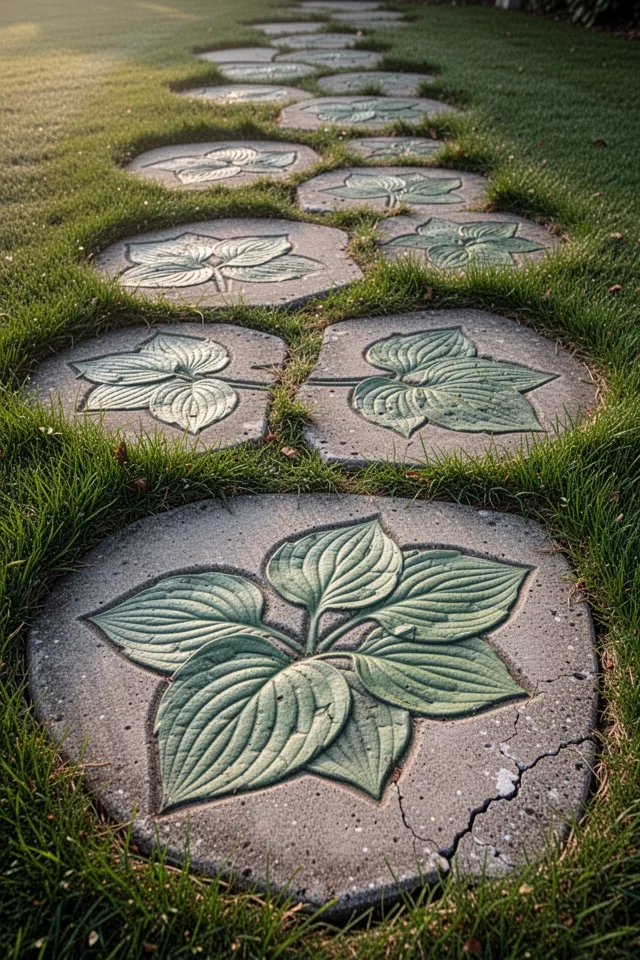
Precast stepping stones are fine, but they all look alike. Poured concrete with a leaf impression is easy to do yourself, and the result is one‑of‑a‑kind. You mix a bag of quick‑set concrete in a bucket, pour it into a shallow cardboard box (about two inches high), then press a large leaf — rhubarb, hosta, or even a fern frond — into the surface. Peel the leaf off after an hour, and you have a permanent fossil.
The biggest mistake is making the stones too thin. If you pour less than two inches, they will crack when you step on them. Also, don’t embed the leaf too deep — just press until the veins show. The leaf will rot away or you can pull it out while it’s still soft. Seal the stone with a concrete sealer to prevent moss growth in the leaf impression, which turns it into a permanent dark stain. A bag of concrete is about $5 to $8, enough for three or four stones. This is a satisfying weekend project for under $30 total.
A concrete leaf imprint costs pennies and gives you a stone that no one else on your street will have. It’s the definition of personal.
13. Outdoor Mirror on a Shaded Wall
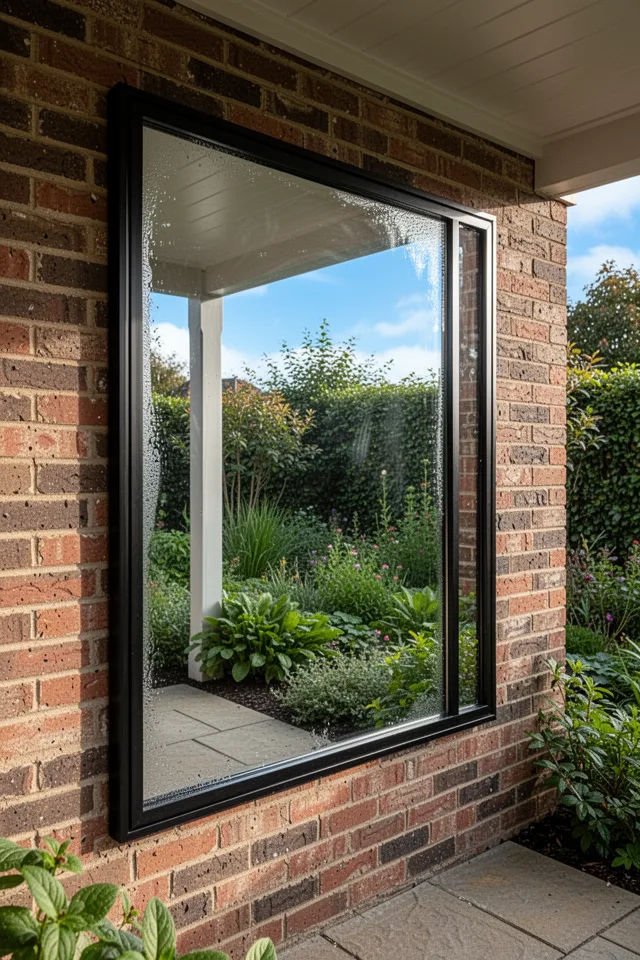
An outdoor mirror tricks the eye into thinking a small garden is twice as deep. But most mirrors sold for outdoor use are not really weatherproof — the silvering on the back reacts with moisture and peels off. I learned this the hard way with a cheap $40 mirror that looked like a ghost within six months. The solution is a mirror specifically manufactured for outdoor use, with a sealed back and a rust‑proof aluminium frame. Or you can take an indoor mirror and seal the back edge with silicone caulk, but that’s a temporary fix.
The mirror works best on a north‑facing wall or under an overhang where it never gets direct rain. Full sun will heat the aluminium frame and eventually weaken the seal. Also, condensation forms on the glass in humid weather, obscuring the reflection. That’s normal — it clears as the day warms. Wipe it with a microfiber cloth; avoid ammonia‑based cleaners that can attack the seal. A proper outdoor mirror costs $80 to $150 for a 20×30 size. It’s worth the investment because a de‑silvered mirror looks terrible.
If the mirror isn’t specifically labeled for outdoor use, assume it will fail within a year. The cheap ones always do.
14. Hanging Glass Terrariums (With Realistic Breakage Risk)
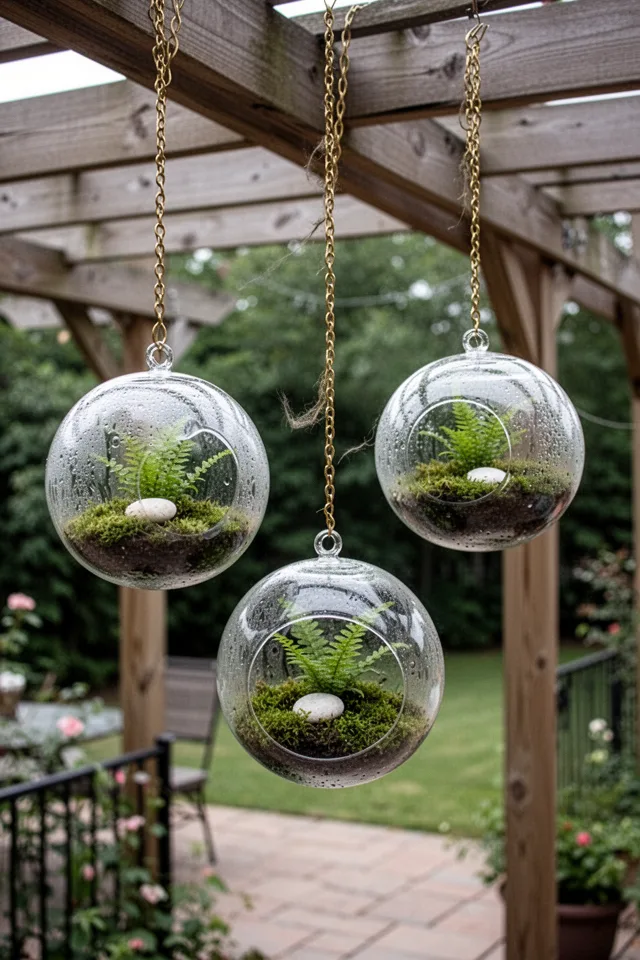
Hanging terrariums are beautiful, but they are also fragile glass objects suspended in a place where wind, children, and ladders exist. I have broken two. One fell because the knot in the macrame hanger slipped; the other cracked when a gust of wind slammed it against a window frame. If you are going to do this, use the thickest glass you can find (borosilicate or heavy‑walled soda‑lime) and test the hanging hardware with a weight twice the terrarium’s full weight.
The plants inside need very little water — a misting every two weeks is often too much. Overwatering leads to mouldy moss and stagnant water that breeds fungus gnats. I use a layer of activated charcoal below the soil to keep the air fresh. And place them where you won’t walk under them every day; you will eventually knock one with your head. A good hanging terrarium kit runs $25 to $45. Replacement glass globes are about $15 each. Budget for at least one breakage per year if you hang them at head height.
A hanging terrarium is a temporary object. Enjoy it while it lasts, and don’t cry when it falls. Glass is fragile, gravity is patient.
15. Fire Pit Ring with Built‑In Seating
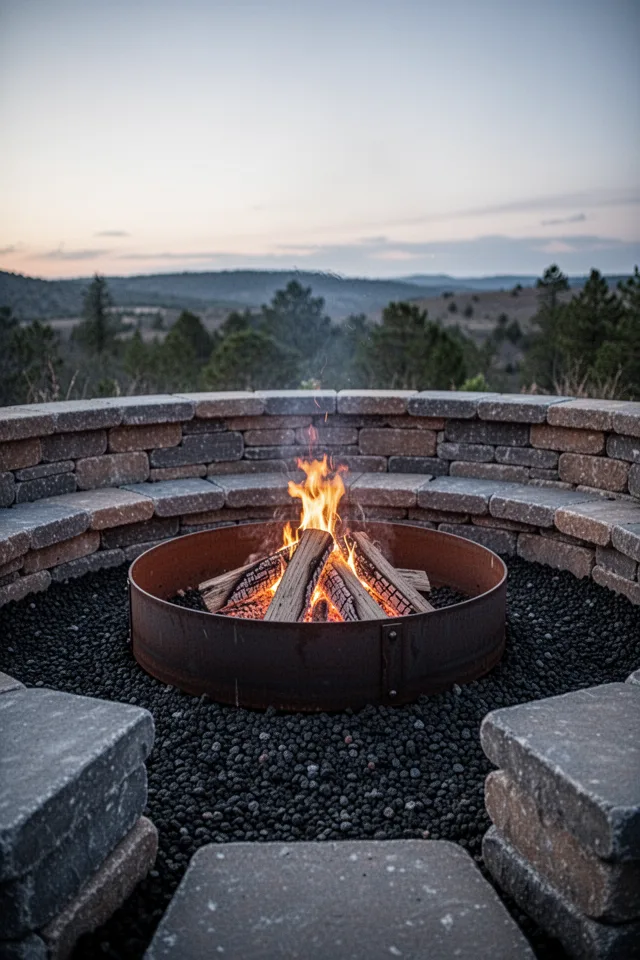
Store‑bought fire pits with mesh screens and spark guards are fine, but a simple open ring with a built‑in stone seat feels like an ancient gathering space. I built a seating wall from dry‑stacked field stone — no mortar — so the heat from the fire can escape through the gaps without cracking the stones. The ring itself is a 36‑inch steel fire ring from a welding supplier, about $50. The lava rocks inside cost another $20. The stone seating was free from a local farm that was clearing a field.
The trade‑off is smoke direction. Without a wind screen, the smoke follows whatever breeze there is, and someone will always be in the hot seat. Position the ring so the prevailing wind blows smoke away from the primary seating direction. Also, the lava rock will turn black and dusty after a few fires; you have to refresh it every year. And never put the ring on grass — it will scorch a permanent circle. Set it on a gravel pad or stone patio. Total cost for the ring, lava rock, and stones: around $100 if you source the seating stone locally.
A dry‑stacked stone seat around a fire ring creates a social circle that no set of chairs can match. But watch the wind.
Conclusion
The common thread through all fifteen ideas is a simple truth: good garden decor doesn’t stay perfect. It weathers, shifts, fades, and sometimes breaks. The difference between a garden that feels alive and one that feels staged is how well you accept that change. Every piece you bring outside will have a conversation with the elements — the sun will bleach it, the rain will mark it, the cold will test it. That’s not a flaw. That’s the material becoming honest.
If I had to recommend one place to start, it would be the Cedar Fence Slat Screen (number 11). It’s cheap, it’s satisfying to build, and it teaches you everything about how wood weathers, how wind interacts with structure, and how shadows shape a space. Plus it gives you an immediate sense of enclosure and privacy for under $100. From there, let your eye move to the ground — the layered gravel path or the buried terracotta pots — and then upward with the warm string lights.
Remember this: the best garden decor is the thing that looks better after a year of rain and sun than it did the day you installed it. That’s the test. If it passes, you’ve built something worth keeping. If it doesn’t, you’ve learned what to skip next time. Go outside and touch the things that are already there — the gravel, the rust, the silvered wood — and let them tell you what belongs next.