
I stood in my own bathroom one Tuesday morning, holding a hair dryer in one hand and a styling brush in the other, trying to balance them both while I fumbled for a drawer that refused to open more than six inches because the cabinet door behind it was already ajar. That tiny, defeated moment—when you realize you are losing the war against clutter in a room smaller than most closets—is exactly where this article begins. The problem isn’t that you own too much. It’s that every conventional storage solution was designed for bathrooms with actual square footage.
The usual advice—add shelves, use baskets, buy a mirrored cabinet—falls short because it doesn’t account for the specific miseries of a small bathroom: the way humidity warps cheap pressboard, the impossible gap between the toilet and the wall, the sink counter that somehow attracts every tube and bottle like a magnet. You need fixes that survive steam, fit awkward geometry, and don’t look like a dorm room after the first week.
This list isn’t a roundup of Pinterest screenshots. Every idea here is something I’ve installed, lived with, or watched fail in someone else’s bathroom. I’ll tell you what works, what breaks, and where the real trade-offs live. Some ideas cost under $20. Others are a commitment. All of them pass the wet-hands test.
1. Magnetic Strip Inside the Cabinet Door
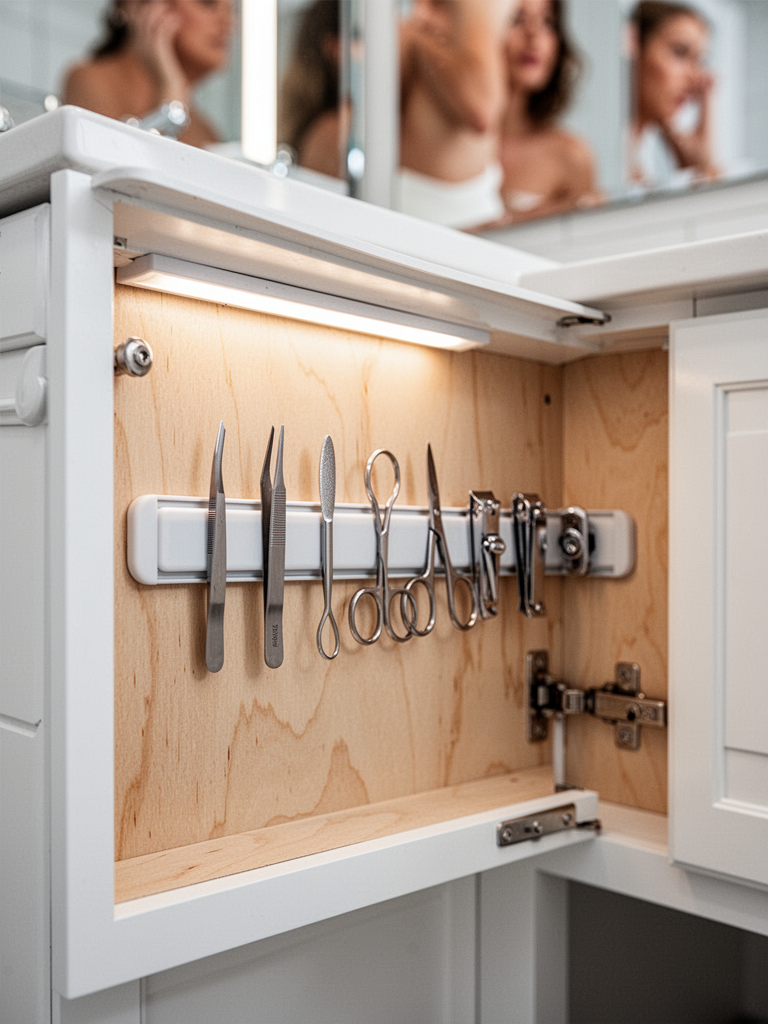
Here is the honest truth: most small bathrooms have a vanity cabinet with one shelf and a cavern of wasted vertical space. The back of the door is prime real estate that everyone ignores. A magnetic strip—the kind you would install in a kitchen for knives—works beautifully for metal grooming tools. I bought a 12-inch one for under $10, peeled the adhesive backing, and stuck it to the inside of the cabinet door. It holds tweezers, cuticle scissors, a small razor, and a metal nail file. Everything is visible, reachable, and dry.
One trade-off: the adhesive on the backing rarely survives the first six months in a damp bathroom. I replaced the stock tape with a small strip of heavy-duty outdoor mounting tape, and it has held for three years without sagging. Also, be careful with the magnet strength—you don’t want to struggle to pry scissors off every morning. A ceramic bar magnet (not the cheap flexible rubber kind) is worth the extra few dollars.
If you store anything with a metal blade, the magnetic strip is the single fastest decluttering move under $15.
2. Tension Rod Under the Sink for Spray Bottles
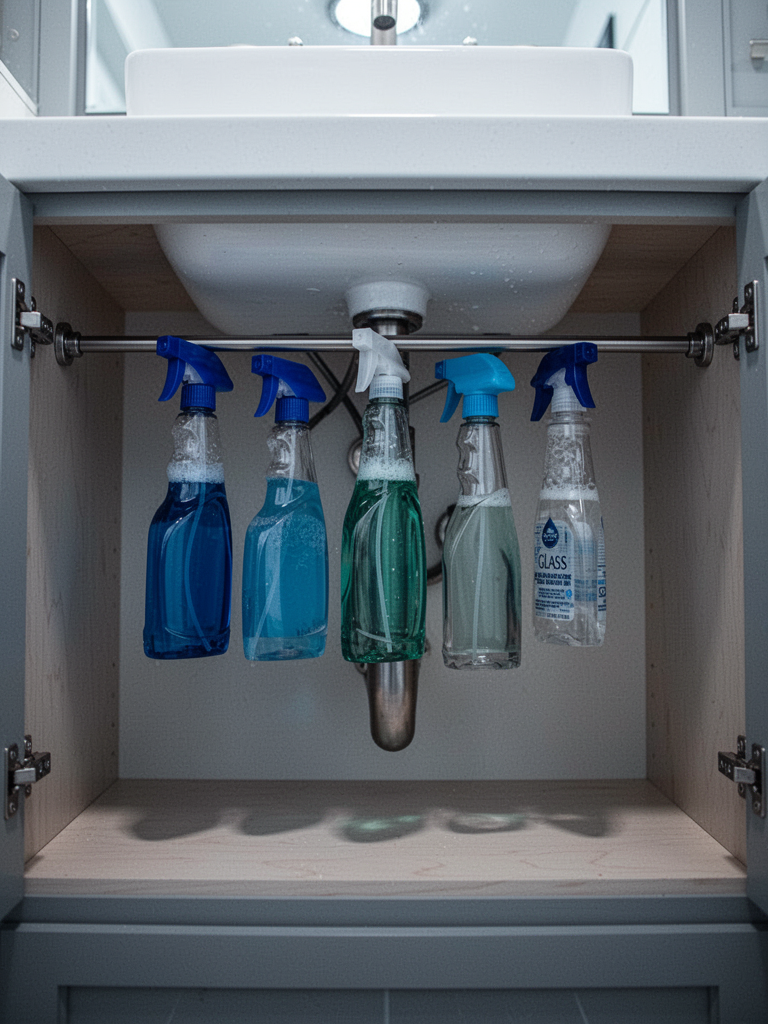
The space under a small bathroom sink is a nightmare of pipes, angled corners, and wasted volume. You can stack bins, but you’ll always be pulling out three things to reach the one in back. A simple tension rod—the kind meant for shower curtains—can change the game. Install it horizontally across the cabinet, then hang spray bottles by their triggers. They dangle upside down, which also means the nozzle never clogs from dried liquid.
I used a 26-inch rod that cost about $8. It took thirty seconds to twist into place, no tools. The trick is to choose a rod with rubber ends that grip tightly—cheap plastic ones slip when the bottles swing. I would avoid hanging anything heavier than a 24-ounce bottle; full glass sprayers can bend the rod over time. This hack works best for the three or four cleaners you actually use, not a collection of half-empty supplies.
The rod changes the entire geometry of that impossible under-sink space—it turns dead air into a vertical rack.
3. Over-the-Toilet Shelf That Actually Fits
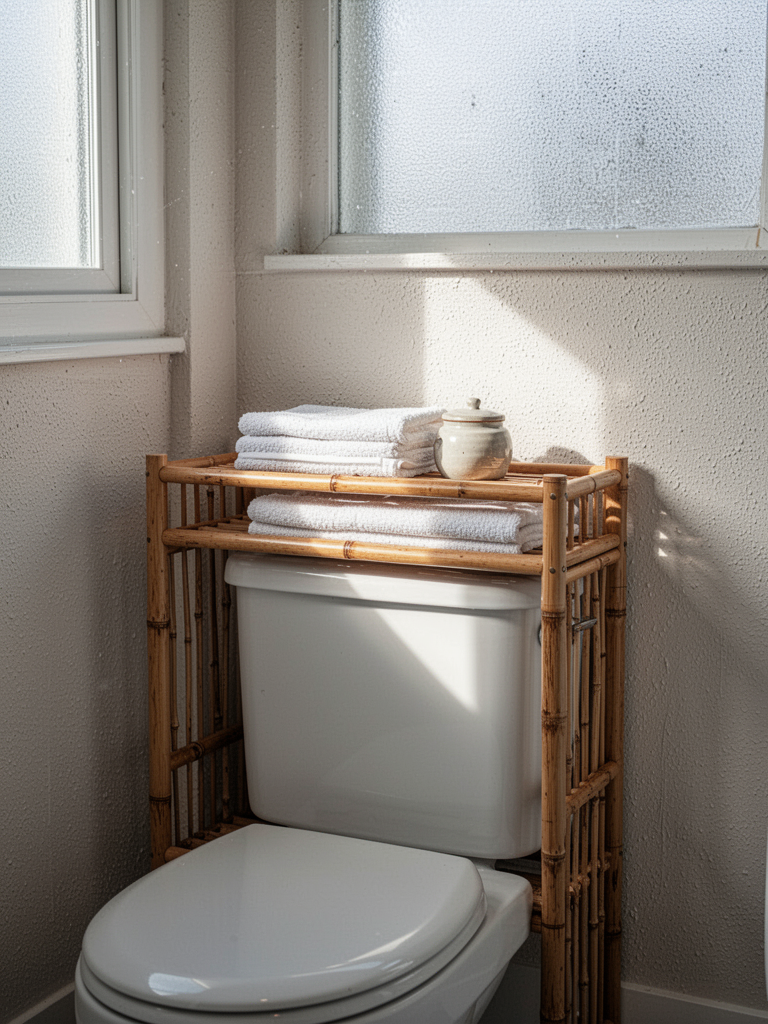
The standard over-the-toilet metal rack is a crime against design—wobbly, rust-prone, and never the right width. I spent two years with one that wobbled every time I reached for a roll of toilet paper. Then I found a bamboo shelf unit that comes in multiple widths, so you can actually measure the gap between your toilet tank and the wall. That fit—being able to slide the unit flush without a gap—eliminated the wobble.
Bamboo does well in bathrooms because it resists humidity better than pine or MDF. But it will still silver if it stays wet—so keep a small gap between the shelf and the tank wall for airflow. Cost is around $40 to $80 depending on size. The version I have uses diagonal brackets that don’t interfere with the toilet lid opening. One caution: if your toilet has the flush button on top of the tank, measure twice to make sure the shelf sits low enough.
A shelf that wobbles is worse than no shelf. Measure the exact width and buy one that fits like furniture, not an afterthought.
4. Tiered Lazy Susan for Deep Vanity Cabinets
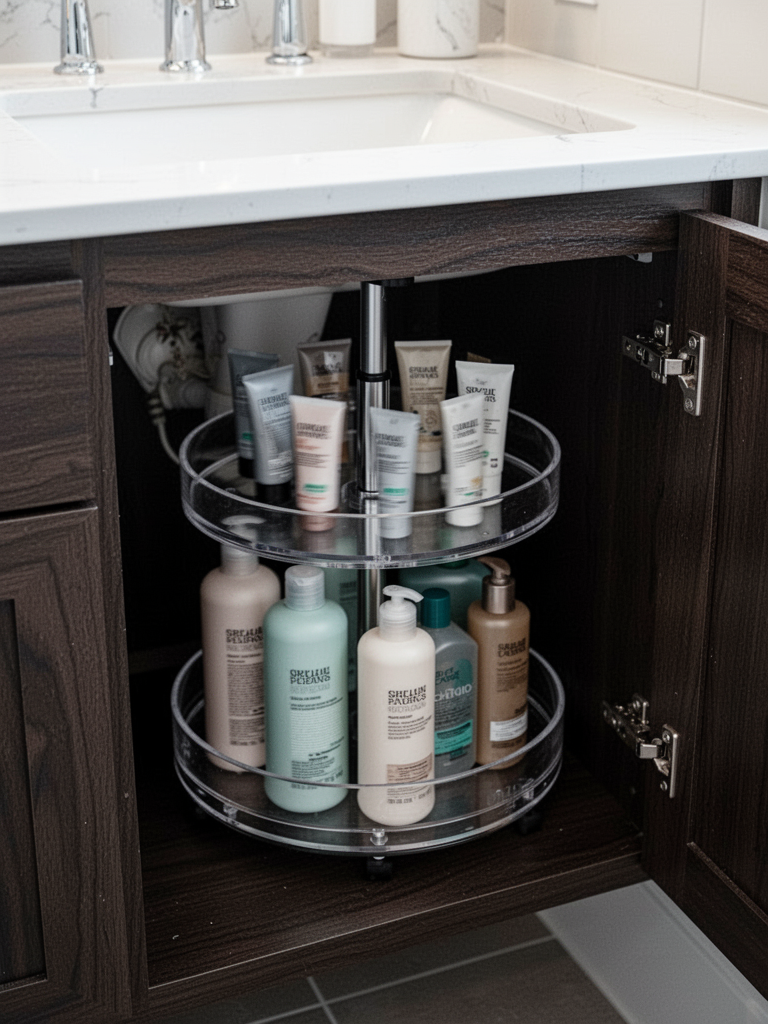
Deep vanity cabinets are black holes. You put something in the back, and it stays there until you move out. A tiered lazy Susan changes that. I use a clear acrylic two-tier model that cost about $20. The top tier is slightly smaller in diameter, so both layers spin independently. The clarity of the acrylic is key—you can see what is on the bottom tier without lifting the top.
One thing most guides skip: check the height clearance under your sink pipe before buying. If the pipe protrudes low, the top tier might not rotate fully. I had to trim about an inch off the top tier’s spindle with a hacksaw. It still works, just slightly less gracefully. The acrylic scratches over time if you slide metal bottles across it, but it’s still easier to clean than a tangle of bottles. I would avoid the wood or metal versions—they cost more and usually have lower weight capacity.
This isn’t glamorous, but it is the difference between using what you own and re-buying it because you forgot it existed.
5. Wall-Mounted Magnetic Rail for Metal Tubes
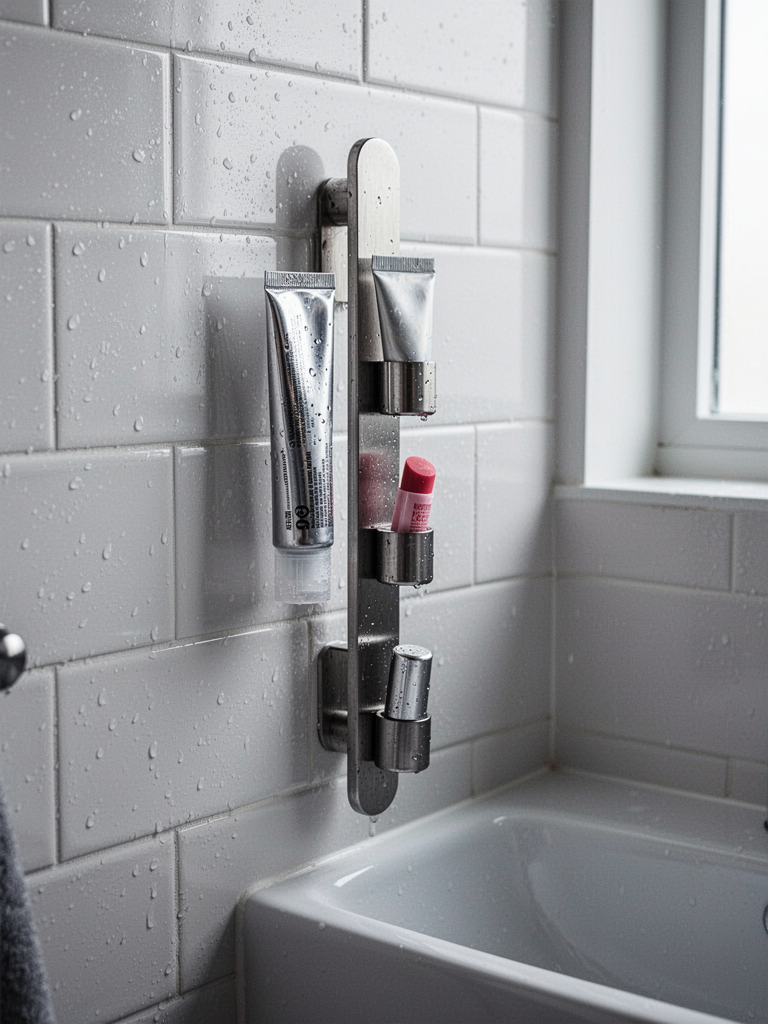
Most toothpaste and hand cream tubes have metal necks—and if you can’t find the cap, you probably threw it away months ago. A magnetic rail mounted vertically on the wall beside the sink solves this elegantly. I use a simple kitchen spice rail meant for magnetic jars, but I mounted it vertically. The tubes hang by their necks, upside down. Gravity pulls the contents toward the opening, so you never have to squeeze the last inch out.
The rail cost about $12 and took five minutes to install with the included anchors. The catch: not every tube is magnetic. Some brands use plastic necks. Test with a fridge magnet before committing. Also, if you have heavy ceramic tubes or glass jars, this won’t work. I keep it to toothpaste, hand cream, and cuticle cream. The vertical orientation frees up counter space completely. The rail does show water spots, but a quick wipe with a towel after brushing takes care of it.
Upside-down tube storage is one of those ideas that feels clever until you realize it’s just common sense—but the rail makes it permanent.
6. Corner Shelf That Actually Dries
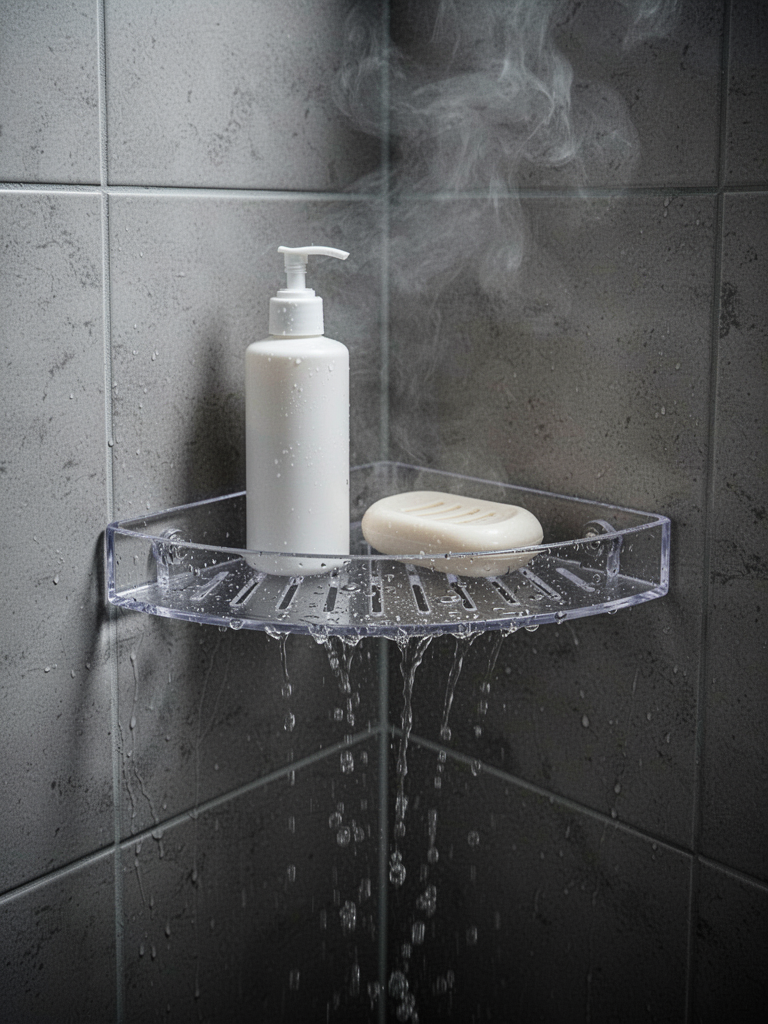
The number of corner shelves that trap water and breed pink mold is staggering. I have thrown away three cheap wire racks that rusted within a year. Finally, I installed a solid acrylic corner shelf with drainage slots and a visible tilt. It is not the cheapest option—around $25—but it has a proper lip that directs water to the slots, and the slight forward tilt (built into the bracket) means nothing pools.
The transparent acrylic looks invisible against most tile, so it doesn’t add visual clutter. One downside: the adhesive brackets that come with many acrylic shelves are notorious for failing in hot showers. I replaced the included double-sided tape with a marine-grade epoxy, which has held for two years. I would also avoid putting heavy glass bottles on it—the acrylic can bow. Stick to plastic or aluminum bottles under 16 ounces.
If you can’t tip the shelf slightly forward, you are building a pond, not a shelf.
7. Clear Over-the-Door Pockets for Toiletries (Not Shoes)
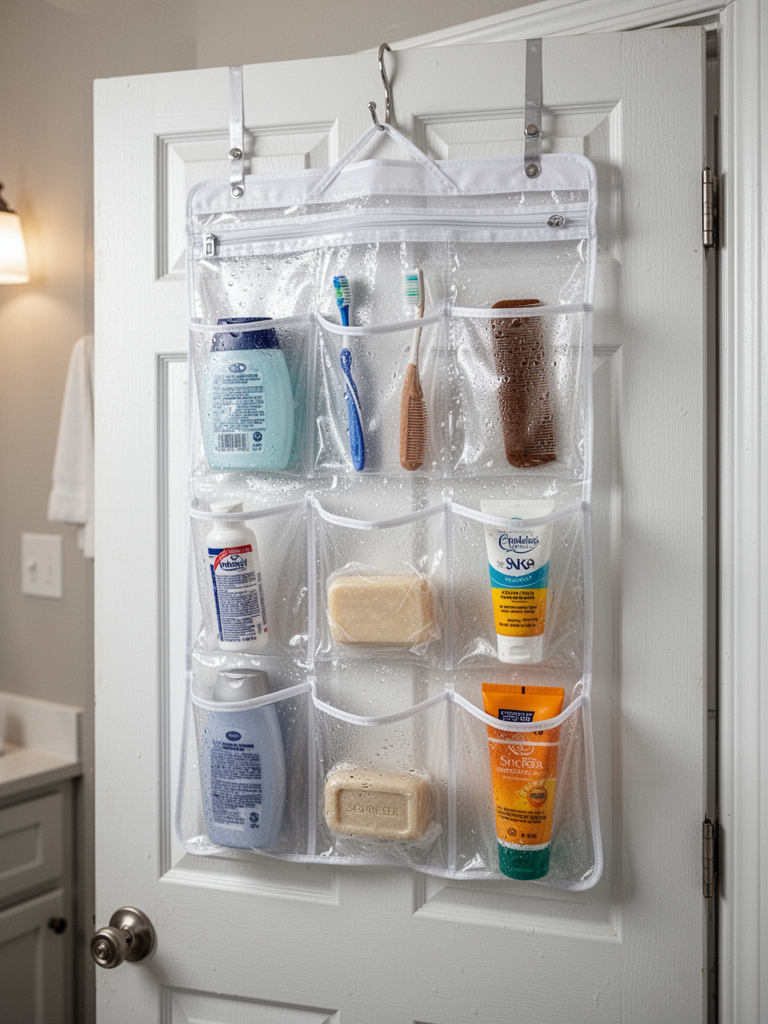
You’ve seen the over-the-door shoe organizer hack before, but most people use the fabric version, which gets musty fast. I use a clear vinyl model designed for bathroom use—the pockets are PVC, not cloth, so they don’t absorb moisture. I mounted it on the back of the bathroom door. It holds all the toiletries my family of four uses daily: travel-size shampoos, conditioners, sunscreen, disposable razors, and floss packs.
The trade-off is honesty. The vinyl does fog over time from steam, but a wipe with a vinegar solution clears it. The pockets can’t hold heavy bottles—they will sag the rod and warp the opening. Stick to items under 8 ounces. Also, the hooks that go over the top of the door may scratch paint if you open and close the door aggressively. I added small adhesive felt pads under the hooks. Total cost: about $15. For the amount of storage gained, it is one of the highest-return hacks.
Fabric over-the-door organizers in a bathroom are a science experiment for mold. Go clear vinyl or go home.
8. Slim Rolling Cart for the Toilet-and-Wall Gap
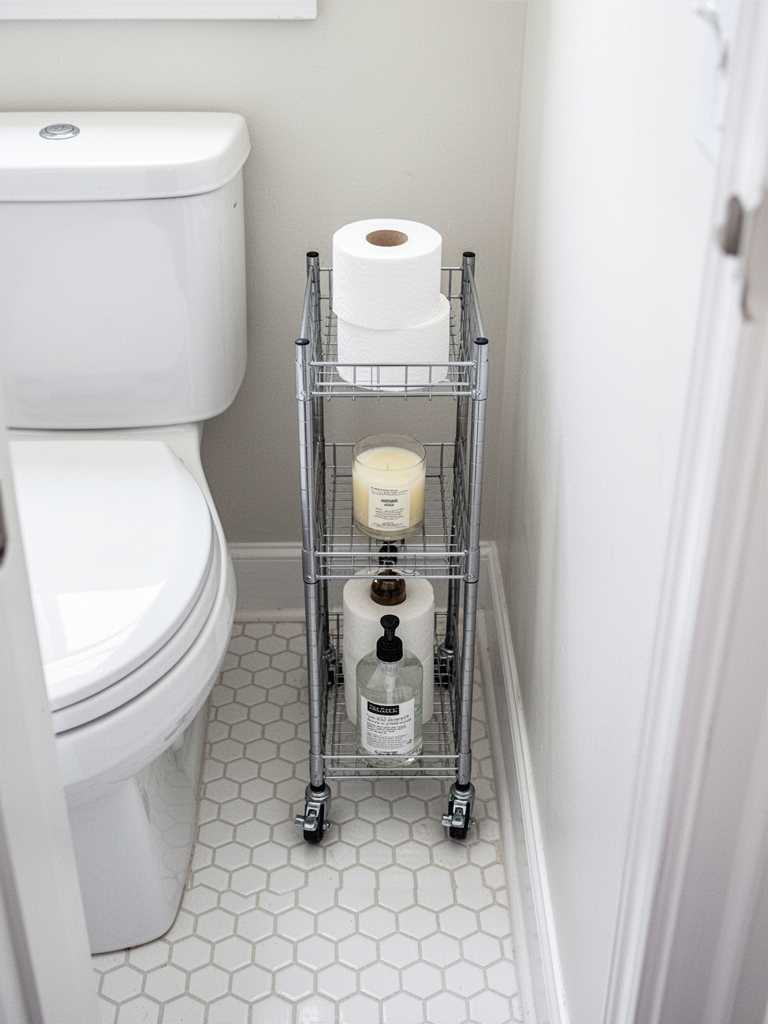
The gap between the toilet and the wall is usually 4 to 7 inches—space that does nothing except collect dust bunnies. A narrow rolling cart can turn that into three vertical shelves. I bought a wire cart that is exactly 5.5 inches wide, with three tiers and locking casters. It holds extra toilet paper, cleaning wipes, and a scented candle. The casters mean I can pull it out for cleaning the floor, but the locks keep it steady when I slide past it.
The wire—if it is chrome or coated—holds up to shower steam, but the cheap black-coated carts will show rust at the weld points within a year. Pay the extra $10 for stainless or plated steel. Cost range: $25 to $45. The key measurement is the height—make sure the top tier sits below the toilet tank lid so you can still lift the lid for maintenance. Also, the cart will collect hair and dust more than you expect. A monthly wipe-down is necessary.
A cart that doesn’t lock will slowly migrate toward the toilet until you trip on it every morning. Locking casters are not optional.
9. Hooks Inside the Shower Door for Loofahs and Brushes
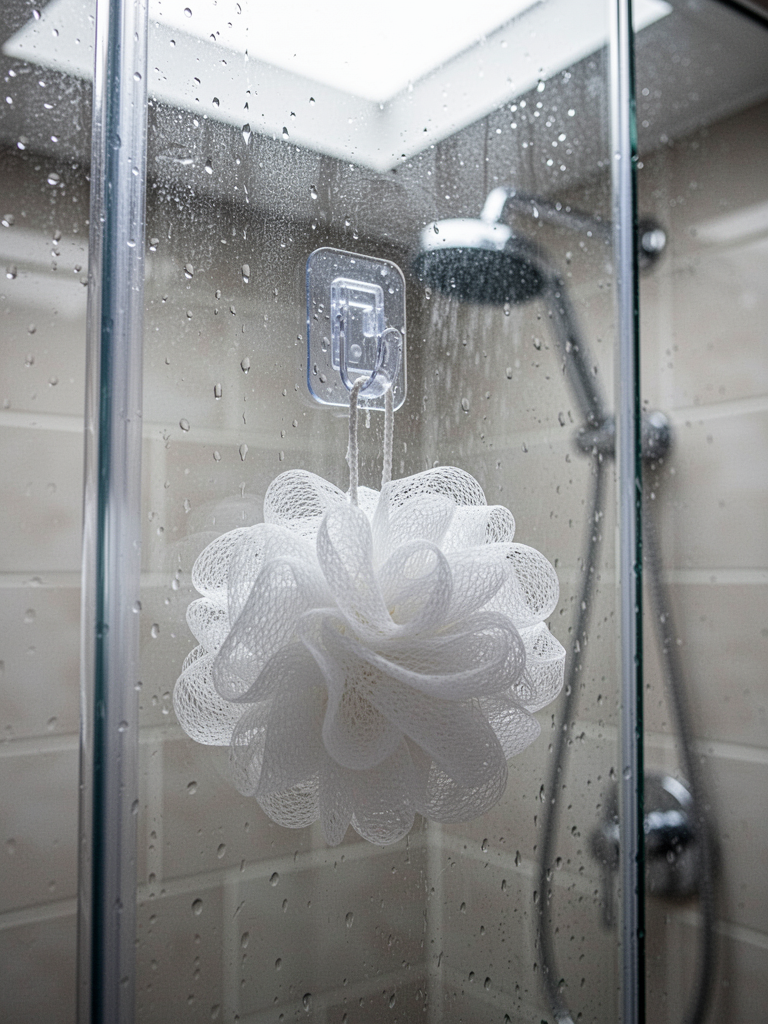
Shower caddies that sit on the floor take up precious foot room and collect soap scum. Hanging a loofah on a hook inside the shower door keeps it off the ground and lets it dry faster, reducing bacterial growth. I use clear adhesive hooks designed for wet environments—rated for high humidity and temperature swings. They cost about $8 for a pack of six.
Here is the problem: most adhesive hooks will fail within two months in a steamy shower. The adhesive softens, the hook sags, and one morning you find the loofah on the floor. I have tried every brand. The ones that work have a gel adhesive pad that you press firmly onto completely dry glass (clean with alcohol first) and then let cure for 24 hours without moisture. Even then, after about six months, they may need replacement. If you want a permanent solution, drill a small ceramic hook into the tile or frame. But if you rent, the adhesive hooks are worth the maintenance cycle. Just buy extra packs.
If you don’t let the adhesive cure for a full day before your first shower, you are wasting your money.
10. Wall-Mounted Hair Dryer Holder with Cord Wrap
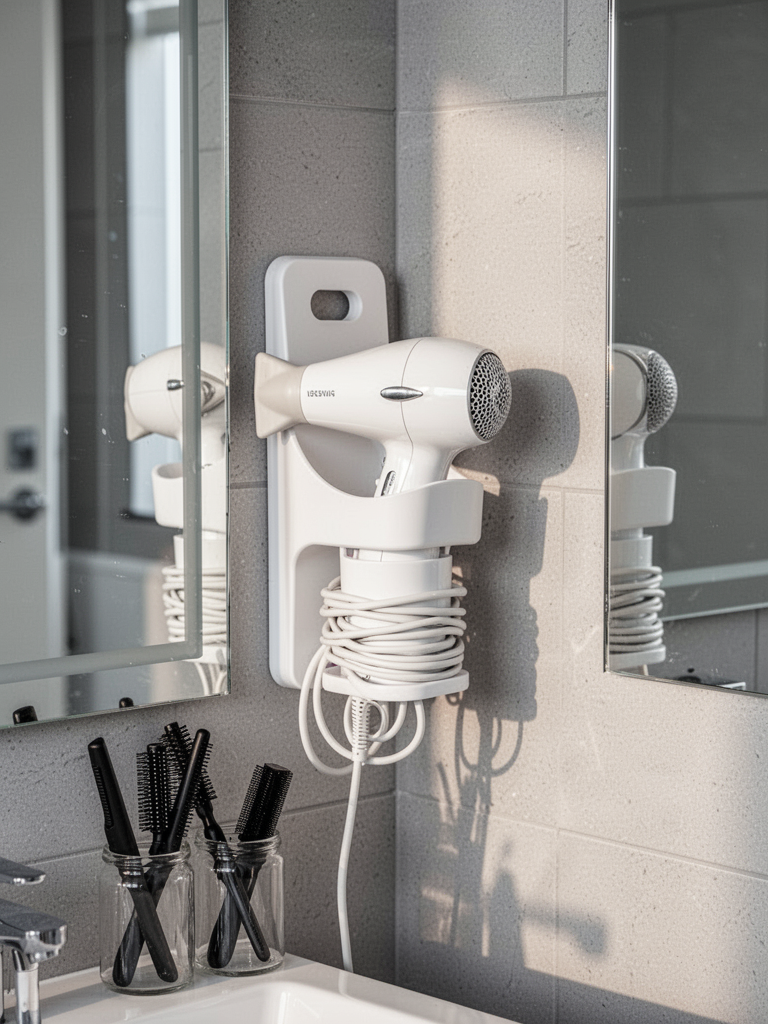
Hair dryers are the largest single-item clutter source in most small bathrooms. They get shoved into drawers where the cord tangles, or draped over towel bars where they fall off. A wall-mounted holder that cradles the dryer securely and wraps the cord around the base solves both problems. I bought one that also has a small shelf for a brush or comb. Installation took a screwdriver and ten minutes. Cost around $20 to $30.
One note: the plastic ones look cheap after a few years—the glossy finish gets scratched. I would pay more for a matte or textured version. Also, check that the opening is wide enough for your dryer model. Some holders are made for compact travel dryers, not full-sized ones. Measure the handle diameter before buying. The cord wrap caddy is a lifesaver because it keeps the cord organized without a separate wrap; this is the one that works. My only regret is not installing it closer to an outlet. Plan your placement with the cord path in mind.
If you have to coil your dryer cord every time you use it, you will eventually just leave it hanging. The wrap caddy removes that friction.
11. Mason Jars Screwed into a Bottom Shelf
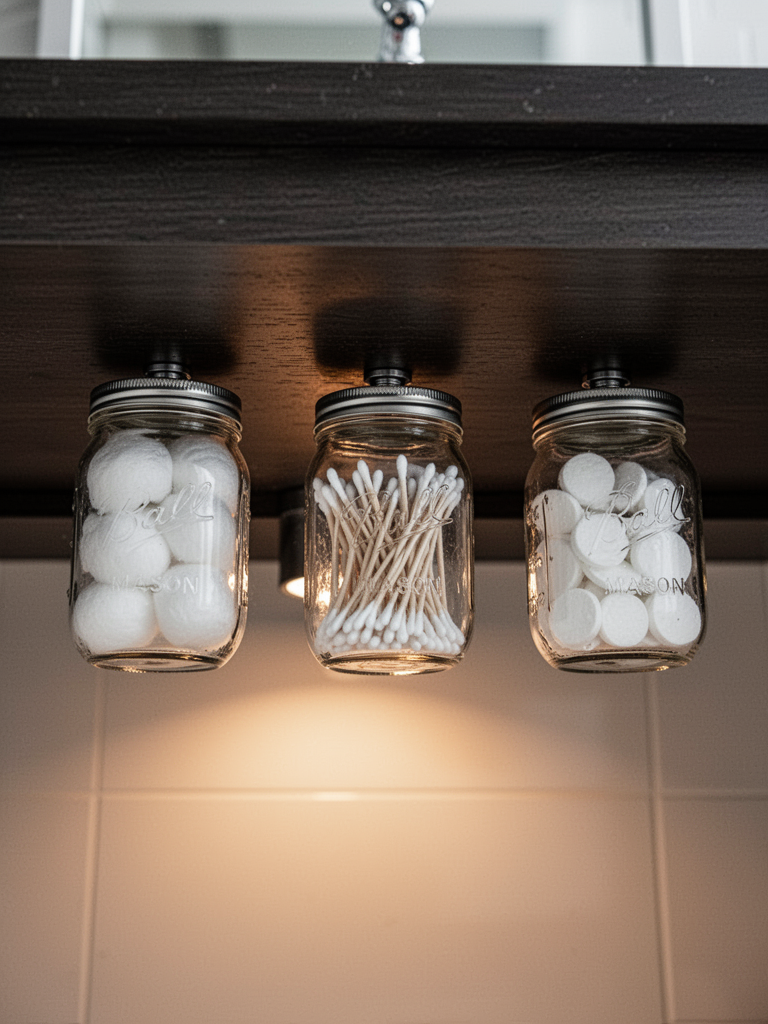
This is one of those ideas that sounds like a Pinterest craft until you actually try it. I took the lids from three mason jars and screwed them into the underside of a vanity shelf (make sure the screws don’t penetrate through the top). Then I filled the jars, twisted them into the lids, and suddenly I had three hanging containers using zero floor or shelf surface. The jars are completely removable for cleaning.
The trick is the jars must be lightweight. I use them for cotton balls, makeup rounds, and Q-tips. Anything heavier—like bottles of lotion—will sag the lids over time. Also, the jars can swing slightly if bumped. I solved that by using wide-mouth jars with a larger lid surface for better grip. Cost: about $5 for the lids (if you already have jars), plus a few screws. The visibility is amazing—I can see exactly how many cotton balls are left at a glance. The downside: you lose the shelf top’s ability to hold flat items under the jars. But in a small bathroom, vertical hanging trumps horizontal stacking.
This hack turns the dead air below your shelf into usable volume. Just keep the jars small and the screws shallow.
12. Slim Pull-Out Drawer for a Narrow Gap
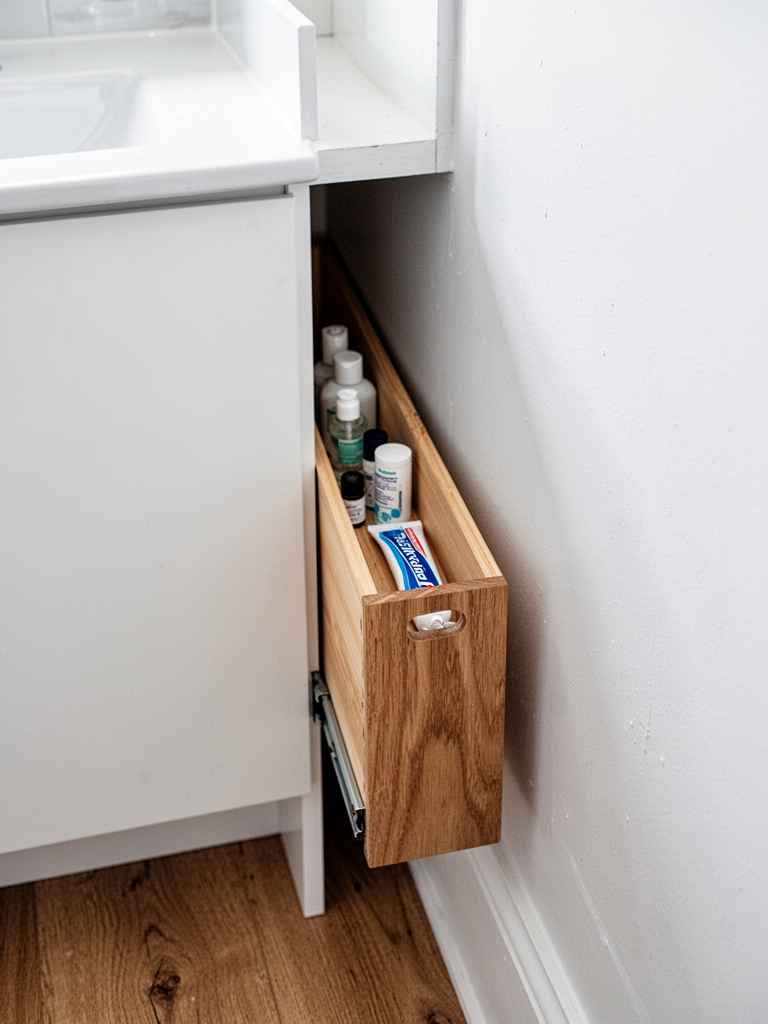
Every small bathroom has at least one narrow gap—between the vanity and the wall, or beside the pedestal sink. It’s usually 3 to 6 inches wide and completely useless. A custom pull-out drawer unit can turn that into storage for spare rolls, cleaning tablets, or styling tools. I built one myself from a sheet of 1/4-inch plywood on casters—cost about $15 in materials and an hour of time. But you can buy ready-made units online.
The version that actually holds up over time uses full-extension drawer slides, not just wheels. Wheels will wobble and tip when you pull the drawer out fully. I installed a simple plastic handle cutout. The drawer holds about ten travel-size bottles or two rolls of toilet paper standing upright. The finish matters—if the wood is raw, it will absorb moisture and warp. I sealed mine with a waterproof polyurethane. Cost for a pre-built solution runs $30 to $60. The biggest constraint: you need about 4 inches of depth behind the gap for the drawer to slide back into. Measure the depth to the wall first.
Gaps that look too narrow for storage are actually the most valuable—they are one-of-a-kind dimensions nobody else uses.
13. Above-the-Door Shelf for Extra Towels
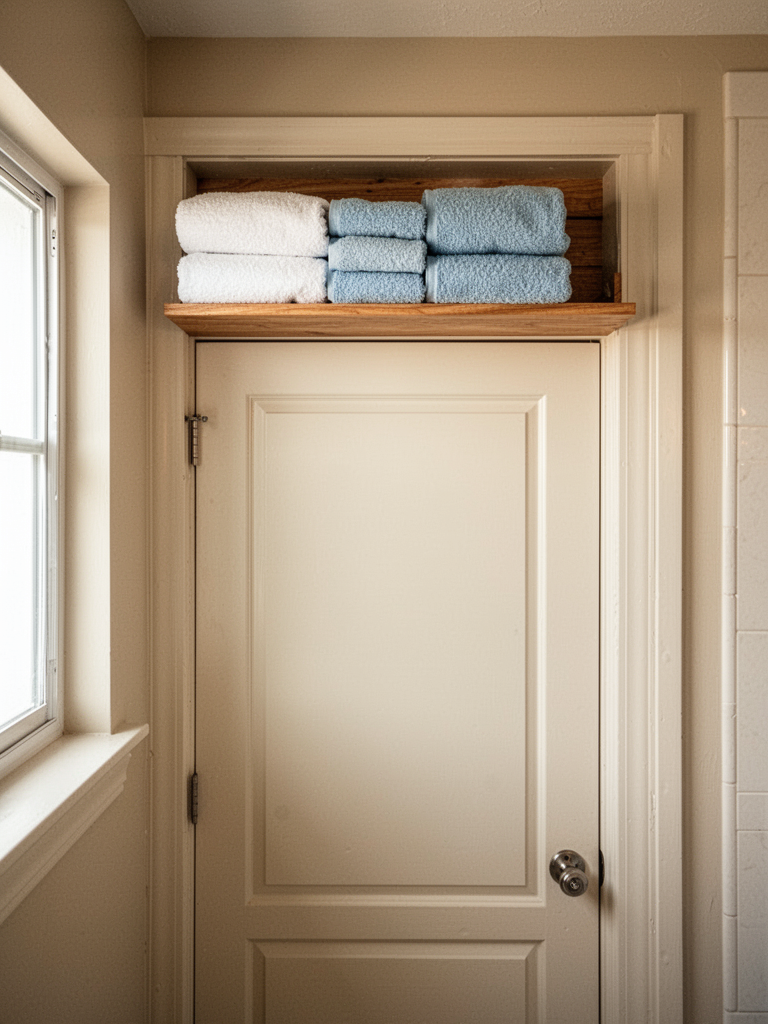
If you have a standard 80-inch door, there is usually 10 to 12 inches of empty wall above it before the ceiling. That is prime dead space for a narrow shelf. I installed a floating shelf that is only 6 inches deep—just enough for folded towels or a decorative basket. It put three folded bath towels up there, out of the way, but within arm’s reach when I step out of the shower.
The catch: you need to make sure the shelf does not interfere with the swing of the door. Some doors open wide enough to hit a shelf mounted directly above. I mounted mine about 2 inches above the door trim, which cleared the swing by a safe margin. The shelf cost $15 and used two concealed brackets. I painted it to match the trim, so it blends in. The towels do get a bit dusty if you don’t rotate them every couple of weeks. But for a small bathroom with no linen closet, this is a game-changer. Cost: under $25.
The space above your door is invisible until you look for it—then suddenly it is the most obvious spot for towels you never had room for.
14. Magnetic Spice Rack for Small Bottles on Tile
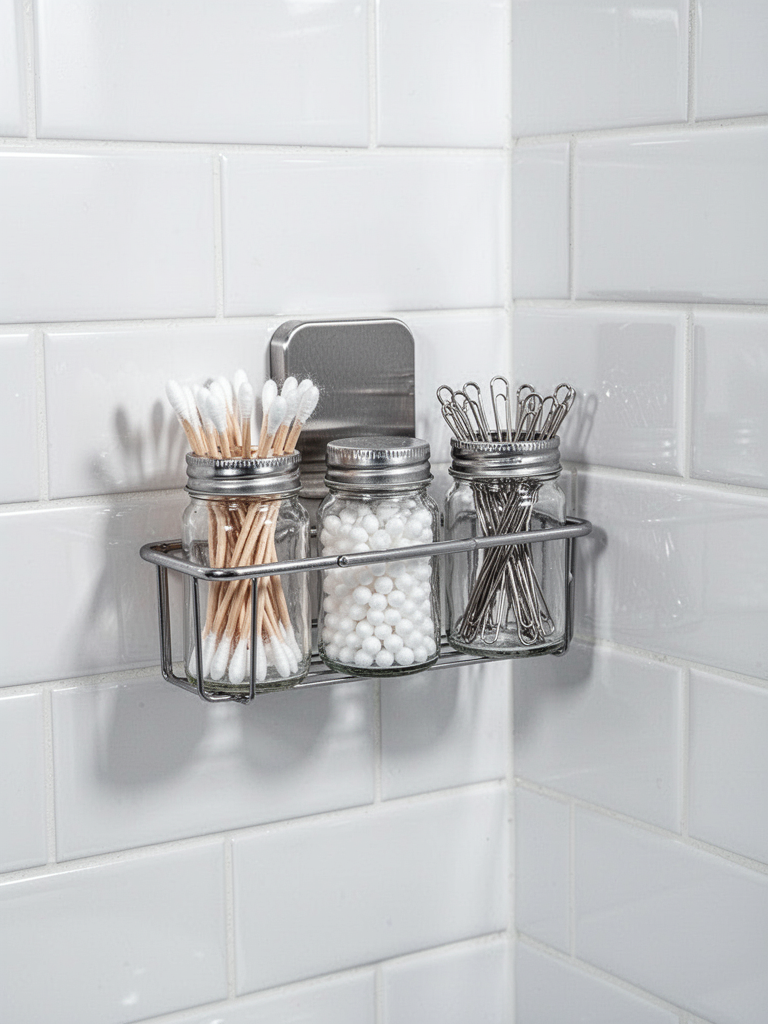
If you have metal or magnetic backing on your tile (or you install a metal plate behind the tile), a magnetic spice rack can hold small glass jars of bathroom items. I use a slim magnetic rack originally meant for kitchen spices. It holds three small jars for cotton balls, bobby pins, and cotton swabs. The jars are clear glass with metal lids, so they stay put. The rack attaches to the tile via a strong neodymium magnet built into the back of the rack.
The limitation: not all tile is magnetic. You need either metal tile, a magnetic backing board, or you can install a small metal strip on the wall. I applied a thin magnetic steel sheet behind my tile during a remodel, but if you don’t have that, you can mount the rack with adhesive instead. The look is sleek and minimal. The jars are easy to remove and refill. Cost for the rack is around $10 to $15. One caution: the jars must be lightweight—full glass bottles might drop. I also coat the inside of the magnets with a clear silicone bump to prevent scratching the tile.
A magnetic rack on tile turns your wall into a display that is also functional—but only if you test the magnetism first.
15. Pedestal Sink Skirt with Hidden Storage
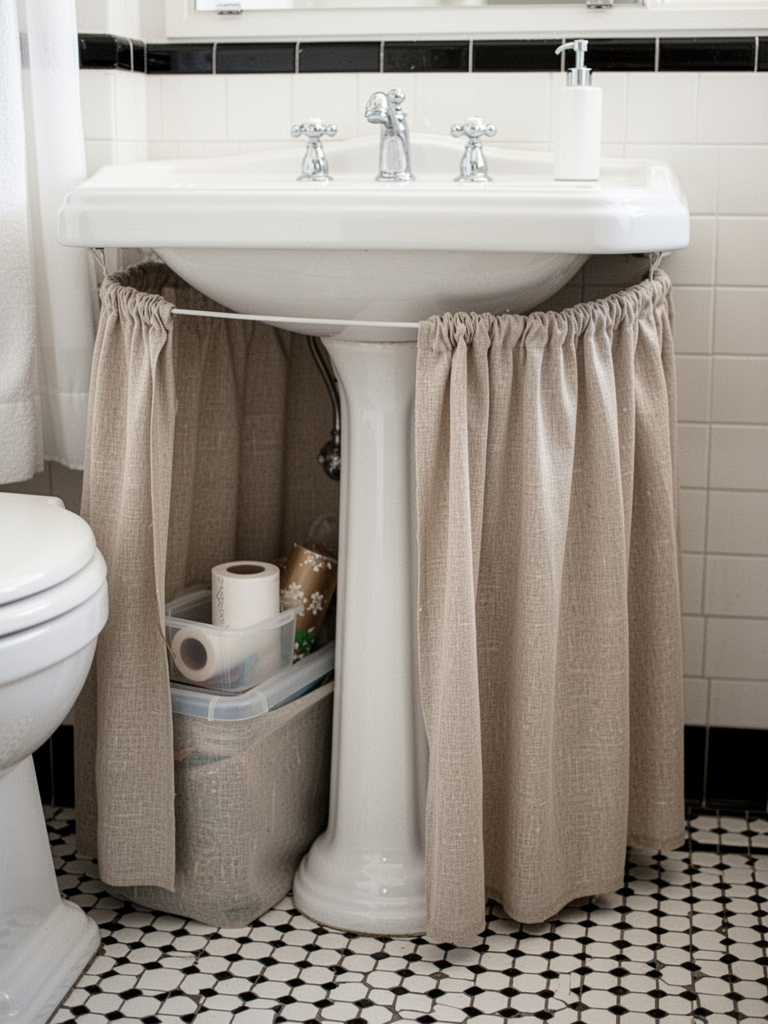
Pedestal sinks are beautiful and space-efficient, but they offer zero storage. The exposed plumbing underneath is an eyesore and wasted volume. A fabric skirt—essentially a custom-fit shower curtain for the sink base—creates a hidden storage area. I made mine from a linen curtain panel and elastic, but you can buy pre-made sink skirts. Behind it, I store a small bin of cleaning supplies, a step stool, and a spare towel.
The fabric needs to be moisture-resistant—linen or cotton canvas treated with a waterproofing spray, or a polyester blend. I also added a weighted hem to keep it from blowing up when the fan is on. The skirt does not interfere with the plumbing, and I can still access the shut-off valves by pulling the skirt aside. The downside: the space behind the skirt can get dusty, and if your bathroom is very humid, the fabric may start to smell if not aired out. I wash the skirt every three months. Cost: about $20 for a pre-made skirt, or $15 in materials if you sew. The visual transformation—from bare ugly pipes to a crisp skirt—is worth the effort.
A skirt does not have to look frumpy—use a heavy linen with a tight weave and it will read as intentional, not a cover-up.
Conclusion
Every small bathroom storage solution forces a trade-off. You can maximize space, but you’ll give up visual simplicity. You can prioritize humidity resistance, but the materials will cost more. You can install permanent fixtures, but you’ll have to drill holes. The core decision is this: are you willing to measure, customize, and accept that some solutions require maintenance? If the answer is yes, then start with the under-sink tension rod and the over-door clear organizer—those two cost under $30 combined and will immediately reduce daily friction.
If I had to pick one idea to recommend first, it would be the tension rod under the sink. It works in almost any cabinet, costs less than a lunch out, and delivers immediate relief from the bottle avalanche. The others—the pull-out drawer, the magnetic rail, the above-door shelf—require more thought and measurement, but they reward you with permanent order.
The best small bathroom is not the one with the most gadgets. It is the one where every square inch has been considered, where nothing is lost, and where you can reach what you need without muttering. That is the standard I live by now. I hope this list helps you find your own version of it.