You know the moment. You’ve picked a cool, moody gray for the walls, maybe even a charcoal sofa. Then you look down. The floor is beige. Or builder-grade oak. And suddenly the whole room feels like it’s wearing someone else’s shoes. Gray floors are the obvious fix—but most of the advice out there is either Pinterest fantasy (all pale ash and no life) or contractor-grade drab. I’ve been through three gray floor installs in my own home, and I can tell you: the difference between a gray floor that anchors a room and one that makes it feel like a waiting room is about a thousand small decisions most guides skip.
The problem isn’t the color. Gray is remarkably versatile. The problem is that most people treat it as a neutral default instead of a specific material choice with real physical behavior. Wood grays differently from tile, which grays differently from poured concrete. The undertones shift with light. The maintenance changes with texture. And what looks minimalist in a showroom can feel sterile or cold at home. Conventional advice tells you to “go with what you love.” That’s not advice. That’s a shrug.
This article is the opposite of a shrug. I’ve lived with, installed, and failed with fourteen different gray floor treatments. Some surprising. Some contrarian. Some that only work if you’re ready to fight with your contractor. Each one comes with a real trade-off—a thing it’s bad at, a thing it demands, a reason you might regret it. No soft-pedaling. No “just add plants.” Just the kind of honest, material-specific advice you’d get from a friend who has already made the mistakes so you don’t have to.
1. Polished Concrete with a Warm Gray Sealer
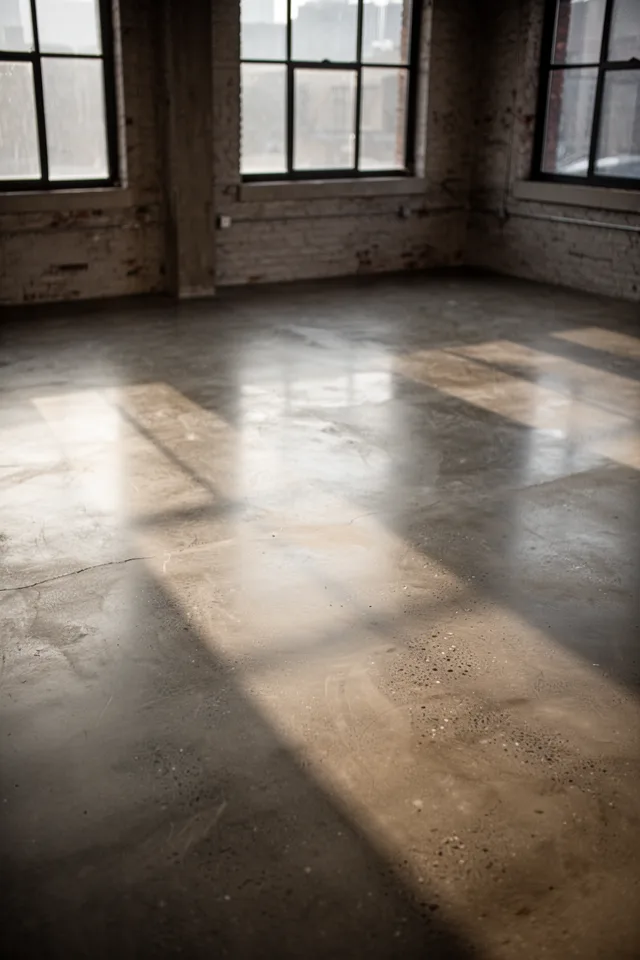
Polished concrete gets a bad rap for being cold and clinical. That’s because most people use a cool-toned gray sealer that pulls blue. In daylight, it looks like a parking garage. In warm evening light, it looks dead. The fix is a sealer with a brown or taupe undertone—something that sits in the greige family. I used a product called Lithocrete Warm Gray on a slab in my sunroom, and the difference is night and day. The floor has subtle mica flecks that catch sun, and the surface stays cool underfoot in summer but doesn’t feel sterile.
The honest trade-off: concrete is loud. It echoes like a gymnasium unless you layer rugs. And if you drop a glass, it’s gone. But for radiant heat systems, it’s unbeatable—the thermal mass holds warmth and releases it slowly. Cost runs around $4 to $8 per square foot for polishing if the slab is already in good shape. If you’re starting from bare concrete, budget $10 to $15. Not cheap, but if you’ve got a slab, it’s the most durable floor you’ll ever own.
Pro tip: Ask your contractor for a “low sheen” polish, not full gloss. Gloss shows every dust bunny and stretches of sunlight look harsh. A satin polish hides more and feels less like a grocery store.
2. Large-Format Porcelain Tile in Charcoal Slate
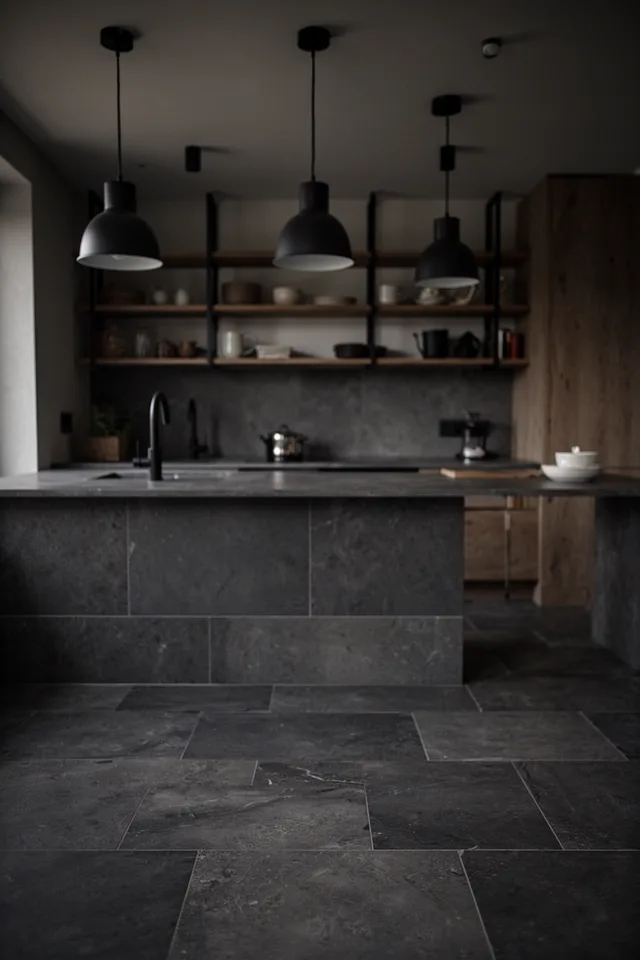
This is the floor that makes other people ask, “Is that real slate?” until they get close enough to see the rectified edges. Large-format porcelain in a deep charcoal—not black, not medium gray—reads like solid rock. I installed this in my entryway and laundry room. It handles wet shoes, muddy paws, and bleach spills without flinching. The grout line is almost invisible if you use a matching charcoal grout and keep it tight (1/16 inch).
One thing most guides skip: real slate is porous, unstable, and hell to maintain. Porcelain gives you the look without the constant sealing. But the downside is installation cost. Large tiles require a completely flat subfloor—any dip or hump cracks them during setting. That means floor leveling compound, which adds $2 to $4 per square foot. Total installed cost: $8 to $15 per square foot. Also, the floor is hard. You will want a cushioned mat at the kitchen sink. But for durability, nothing beats it.
Pro tip: Order two extra boxes and store them in your basement. Matching dye lots after a year is nearly impossible. You will need them when a tile chips or you reconfigure a room.
3. Engineered Hardwood in Weathered Gray
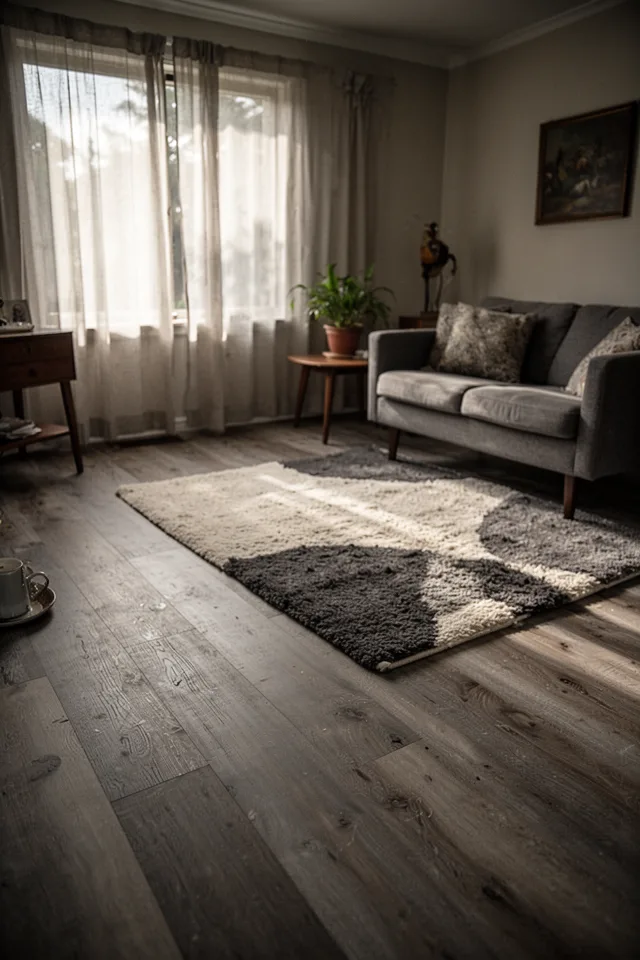
Weathered gray is the most forgiving color I’ve ever lived with. It doesn’t show pet hair, dust, or the inevitable scuffs from dragging furniture. My engineered oak floor in this finish has a wire-brushed texture that catches light in a way that makes the room feel bigger without looking cold. It’s a factory-finished product, so the polyurethane is baked on—way more durable than a site-finished job. I’ve had it for four years, and the only wear is near the back door where the dog enters, which I can patch with a little touch-up pen.
The version that actually holds up over time has a thick wear layer—at least 4mm of real wood on top. Cheap engineered floors with a 1mm veneer can’t be refinished. If you’re spending $5 to $9 per square foot (typical for good engineered), make sure the wear layer is thick enough. Also: gray hardwood can feel flat if the stain is too uniform. Look for planks with moderate color variation—like a hand-scraped or rustic grade. It hides life better.
Pro tip: Avoid gray floors with a whitewash base. They yellow over time in direct sunlight. A true weathered gray has a brown undertone and stays neutral.
4. Wide-Plank Pine with a Gray Stain and Wire Brushing
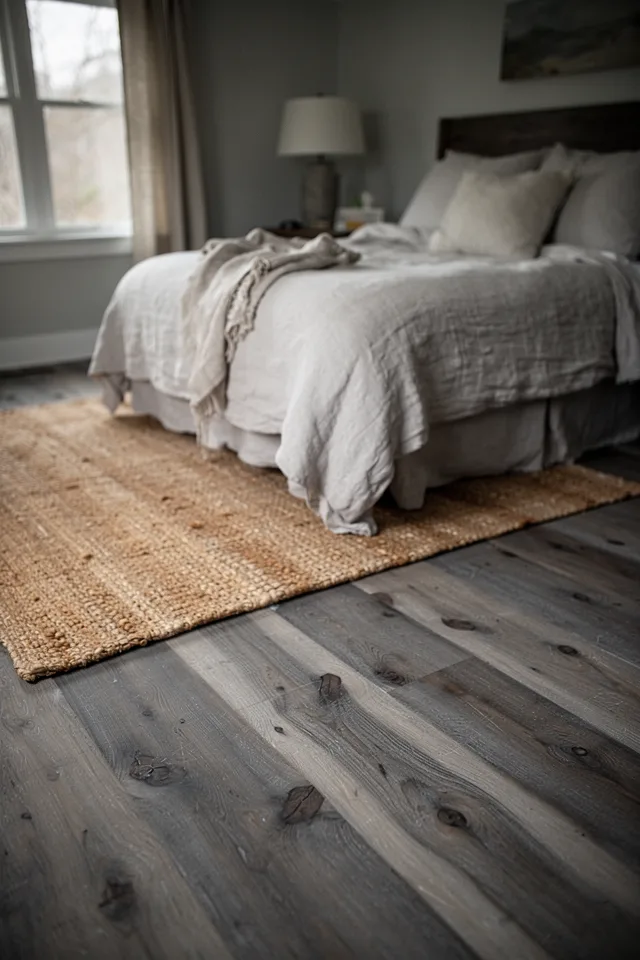
Pine is the budget-friendly gray floor that actually looks good if you do it right. The trick is wire brushing before staining. That mechanical process removes the soft spring wood, leaving the hard grain ridges. When you apply a gray stain, those ridges hold more color and create a two-tone effect that reads as expensive—like reclaimed barn wood. I did my study in this. Total material cost for the pine (select grade, not knotty) was around $2.50 per square foot. The stain and wire brushing added labor but still came in under $6 installed.
Here is the honest truth: pine is soft. It dents. A dropped fork leaves a mark. But if you embrace that—if you want a floor that ages, not one that stays pristine—pine has charm. The gray stain helps mask the dents because they just become part of the texture. You also need to seal it well (three coats of water-based polyurethane) or the gray will fade to a muddy yellow within a year. Don’t skip the sanding between coats. Cost under $5 per square foot for DIY, $8 to $10 installed.
Pro tip: Use a water-based polyurethane, not oil-based. Oil-based amberizes over time and will turn your cool gray into a weird greenish-brown. Water-based stays clear.
5. Gray Terrazzo Tile in Large Hexagons
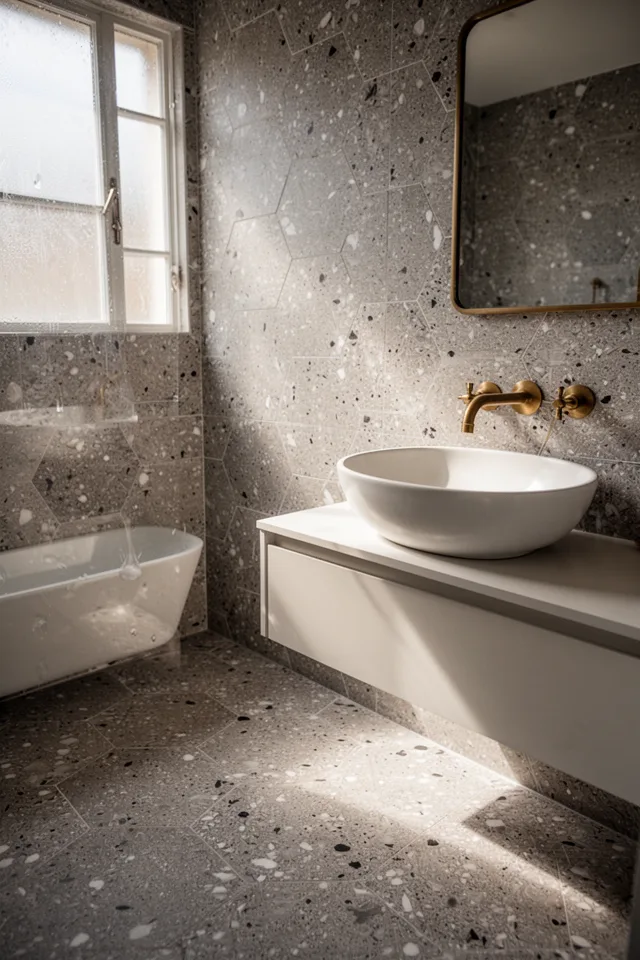
Terrazzo is having a moment, but the small-chip version that looks like confetti gets old fast. What works long-term is a large hexagon tile in a warm gray base with mostly white and charcoal aggregates—no pink or blue chips. I put this in a powder room and it’s the only floor in my house that makes me smile every time I walk in. The hexagon shape adds geometry without being as trendy as the fish-scale trend. It’s also inherently slip-resistant because of the surface texture, which matters in a bathroom.
The downside: terrazzo tile is expensive to install. The material runs $8 to $15 per square foot, and installation requires a pro who knows how to handle the brittleness. If the subfloor flexes, the tiles crack. Also, the grout lines in hexagon tiles are many—plan on a full day of grouting if you DIY. But the maintenance is easy: sealed properly, it’s water-resistant and doesn’t stain. I’ve had no issues with red wine or coffee spills. Cost around $12 to $20 per square foot installed.
Pro tip: Use a light gray grout (not white) with terrazzo. White grout shows dirt immediately and fights with the pattern. A grout that blends into the base color makes the floor feel continuous.
6. Gray Luxury Vinyl Plank with Realistic Wood Texture
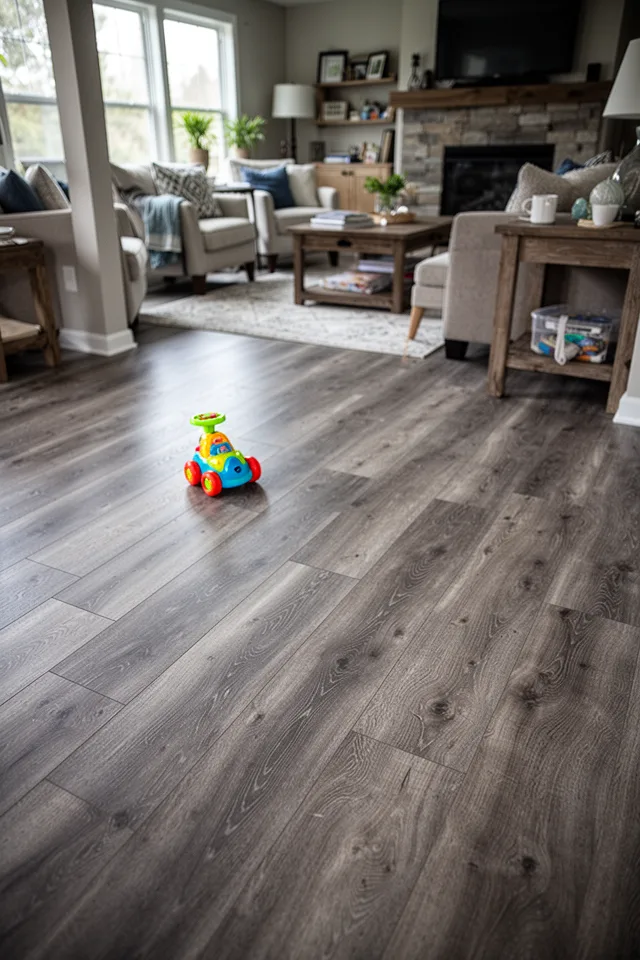
Luxury vinyl plank (LVP) has come a long way. The good stuff—with a thick wear layer (20 mil or more) and a rigid core—looks and feels almost like real wood. I installed a gray-washed oak LVP in my basement, a space that gets weekly flooding from a sump pump failure. The vinyl didn’t care. It’s waterproof, warm underfoot, and not cold like tile. The realistic grain texture is printed, but with a visible emboss, it fools the eye more than you’d expect. Cost: $3 to $6 per square foot for materials, plus installation if you don’t DIY (click-lock is easy but requires a perfectly clean subfloor).
The trade-off: LVP can feel plasticky under bare feet if you get the cheap stuff. The cheap stuff also has a glossy finish that looks fake. You want a matte, low-gloss product. Also, the click-lock joints can separate over time in rooms with temperature swings. Use an expansion gap and a good underlayment. One more thing: some gray LVP has a pink undertone in certain light. Buy a sample and look at it at all times of day before committing. Around $80 to $120 per box (20 sq ft).
Pro tip: Avoid vinyl plank with a beveled edge on every side. Micro-bevels on the long edges only—square ends—look more like real wood and are easier to clean.
7. Gray Cork Tiles with a Natural Wax Finish
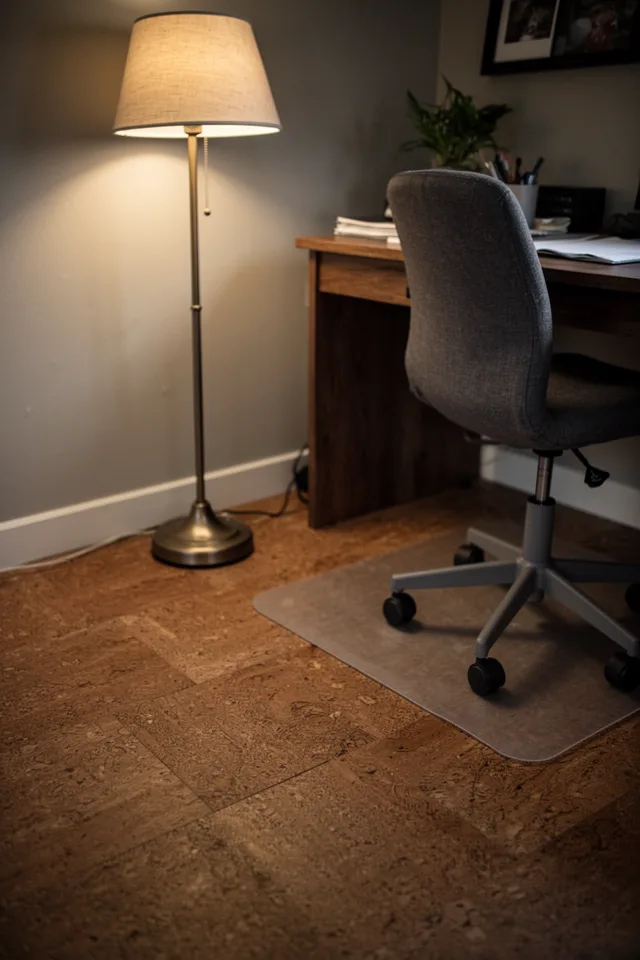
Cork is the unexpected gray floor that people underestimate. I put gray-stained cork tiles in my home office and I’ve never regretted it. It’s warm underfoot—like standing on a yoga mat—and it absorbs sound. The gray color is achieved through a stain that penetrates the cork, then sealed with a natural wax. The result is a tone that looks like elephant skin: soft, not flat. Cork is also renewable (bark harvesting doesn’t kill the tree), which matters to me.
Here’s what nobody tells you: cork dents. Hard. A heavy desk leg will leave a permanent divot. Use furniture coasters, wide desk feet, or a protective mat. Also, cork can fade in direct sunlight. In my office, which gets eastern morning light, the color has held fine for three years. In a south-facing room, you might see bleaching. The cost is moderate: $4 to $7 per square foot for tiles, plus adhesive. Installation is DIY-friendly if you use click-lock planks (more expensive but easier). The wax finish requires reapplication every two years—a half-hour job.
Pro tip: Buy cork tiles with a pre-applied UV inhibitor to slow fading. And always keep a few extra tiles in storage—cork dye lots vary and matching later is nearly impossible.
8. Gray Marmoleum in a Tone-on-Tone Mosaic
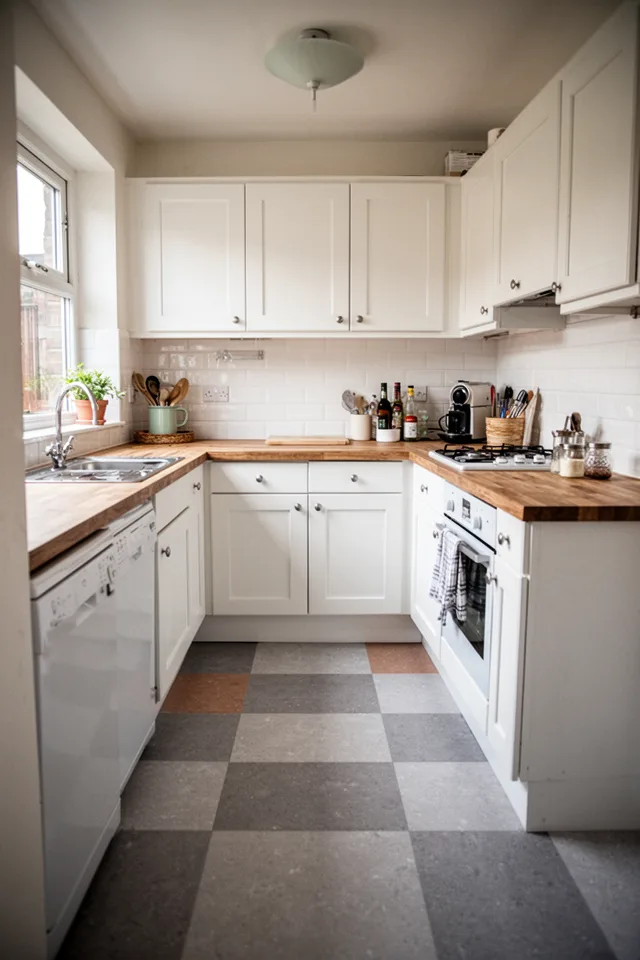
Marmoleum (linoleum made from natural materials) is making a comeback, but the solid sheet versions look like a gym floor. The trick is using a tone-on-tone mosaic pattern—very small squares of two different grays, set at a 45-degree angle. It reads as gray from a distance but has subtle movement. I did this in a rental kitchen and got compliments from people who thought it was artisan tile. Cost is around $5 to $8 per square foot installed, which is cheap for a natural floor that lasts 25+ years.
Marmoleum has real personality. It smells like linseed oil for the first few weeks (fades eventually). It’s softer underfoot than tile and warm. But it’s sensitive to moisture—standing water can discolor it. In a bathroom or laundry room, you’d need to seal the seams weekly. That’s a pain. Also, marmoleum scratches more easily than vinyl. But scratches can be buffed out or touched up. The material is compostable at end of life, so it’s a genuinely green choice. Trade-off: pattern alignment during installation is tricky. Hire a pro who has worked with marmoleum before.
Pro tip: Order marmoleum in sheets, not tiles. Tiles have more seams where moisture can get in. A sheet installation with welded seams is better for higher-traffic areas.
9. Gray Slate Tile with a Honed Finish
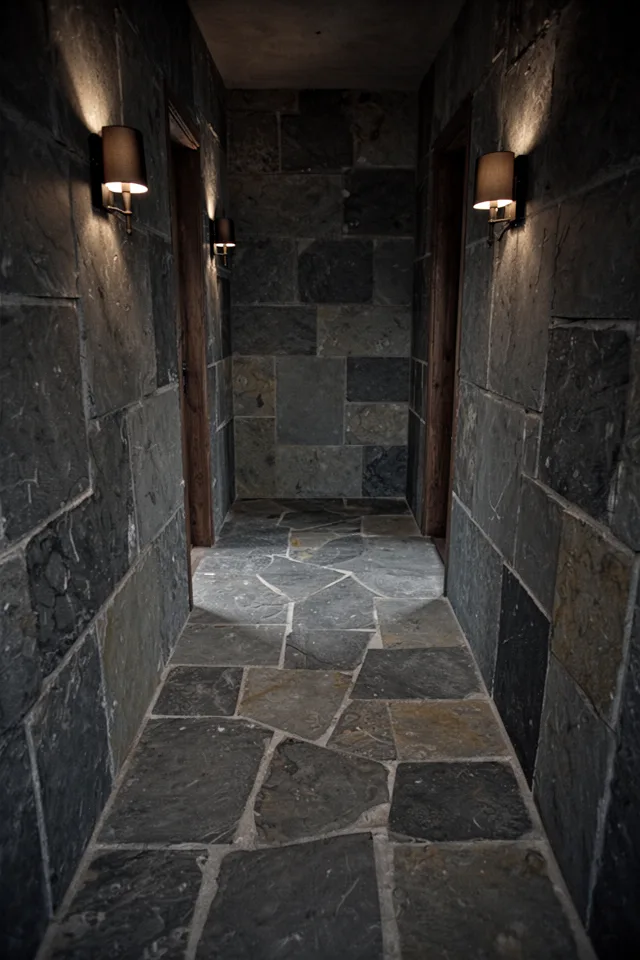
Slate is the original gray floor. But the common flamed or cleft finish (rough, textured) catches dirt and feels harsh under bare feet. The less-common honed finish—ground smooth but not polished—gives you the depth of real stone without the high-gloss trouble. I used honed Indian slate in a hallway connecting my kitchen and mudroom. It’s dark, moody, and incredibly durable. Water spots dry without staining. Mud wipes off. It feels cool and solid in a way that synthetic floors can’t mimic.
The honest problems: slate is heavy. Your subfloor needs to be reinforced if it’s wood-framed. And it’s expensive: $10 to $20 per square foot installed. But if you take care of it (annual sealing with a penetrating sealer), it lasts forever. One thing that ages badly: slate can flake if it’s low-quality. Always buy from a reputable stone yard, not a big-box store. Test a tile for hardness by tapping it—if it rings, it’s good. If it thuds, it’s fractured. Slate is not for the impatient. It’s for people who want a floor that feels like it’s been there for centuries.
Pro tip: Seal slate with a matte penetrating sealer, not a glossy coating. Glossy sealer on slate looks like cheap resin art. You want the stone to breathe.
10. Gray Carpet Tiles with a Tweed Pattern
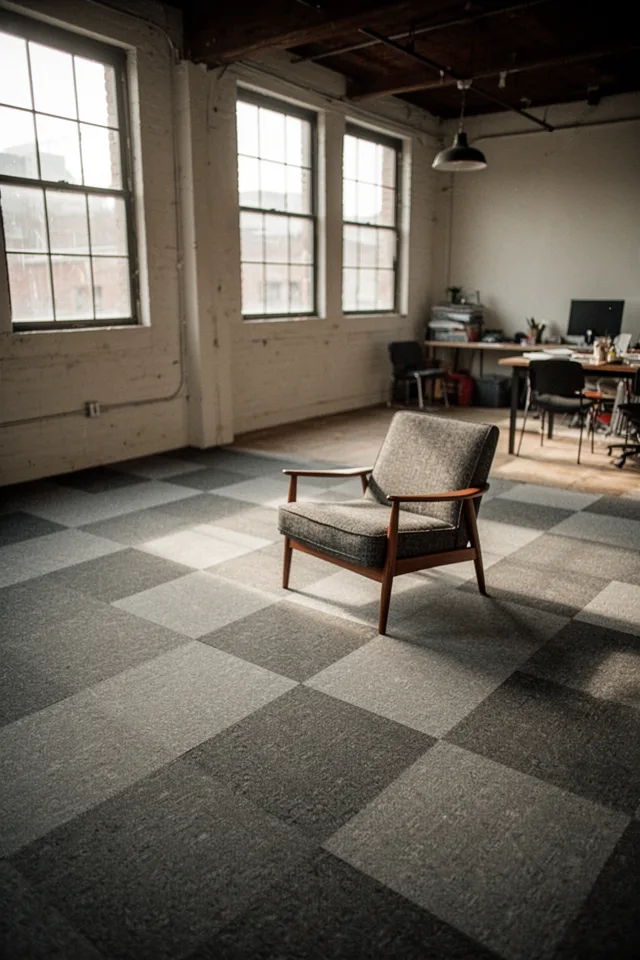
Carpet tiles are not just for offices. The modern versions—with dense loop pile and tweed patterns—can create a floor that looks like a woven textile, not a fuzzy blanket. I used a brand called Flor in my media room, alternating two gray tweeds to make a subtle harlequin pattern. It’s soft underfoot, great for acoustics, and if a kid spills red juice, I can swap out the affected tile in seconds. No cleaning company needed. You can even cut the tiles to create custom shapes—I made a near-oval area rug effect without a rug.
The downside: carpet tiles show wear patterns over time in high-traffic lanes. The loop pile can snag if you have pets with claws. And they collect dust—vacuuming is not optional. But for rooms where you sit on the floor (media rooms, yoga space, kids’ play area), they’re unbeatable. Cost: $3 to $8 per square foot, depending on brand. Installation is peel-and-stick, so you can do it yourself in an afternoon. I’d avoid them in kitchens or dining rooms—carpet and food don’t mix.
Pro tip: Buy one extra carton and store it in a closet. If a tile gets damaged, you want an exact dye-lot match. Also, rotate the pattern every six months to even out wear.
11. Gray Microcement Over Existing Tile
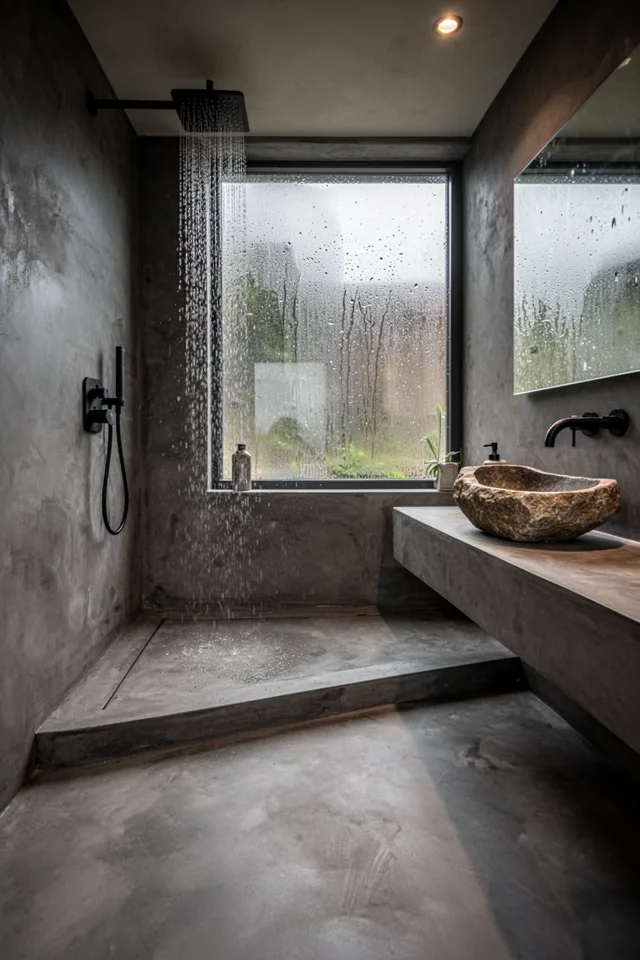
Microcement is a thin-coat cementitious overlay that you apply directly over old tile or concrete. It creates a seamless, monolithic gray floor with no grout lines. I did this in my master bathroom over outdated 1980s square tiles. The contractor troweled on three layers, then sealed with a matte polyurethane. The result is a floor that looks like poured concrete but is only 3mm thick. It’s waterproof if properly sealed, and it can be applied to shower floors, too. Cost: $8 to $15 per square foot installed.
The catch: microcement is not DIY-friendly. The application requires skill—the trowel marks need to be even, the layers thin. If it’s too thick, it cracks. And the surface can be slippery when wet unless you add a textured aggregate or use an anti-slip additive. Also, microcement scratches over time in high-traffic zones. In my bathroom, it’s held up for two years without issue, but a friend did it in a kitchen and regretted it after a year—dropped pots and pans chipped the surface. Great for bathrooms, walk-in closets, or low-traffic entries. Not for kitchens.
Pro tip: Use two coats of matte sealer (not satin) and reapply every two years. Microcement is beautiful but high-maintenance—own that upfront.
12. Gray Chevron Parquet in Stained Oak
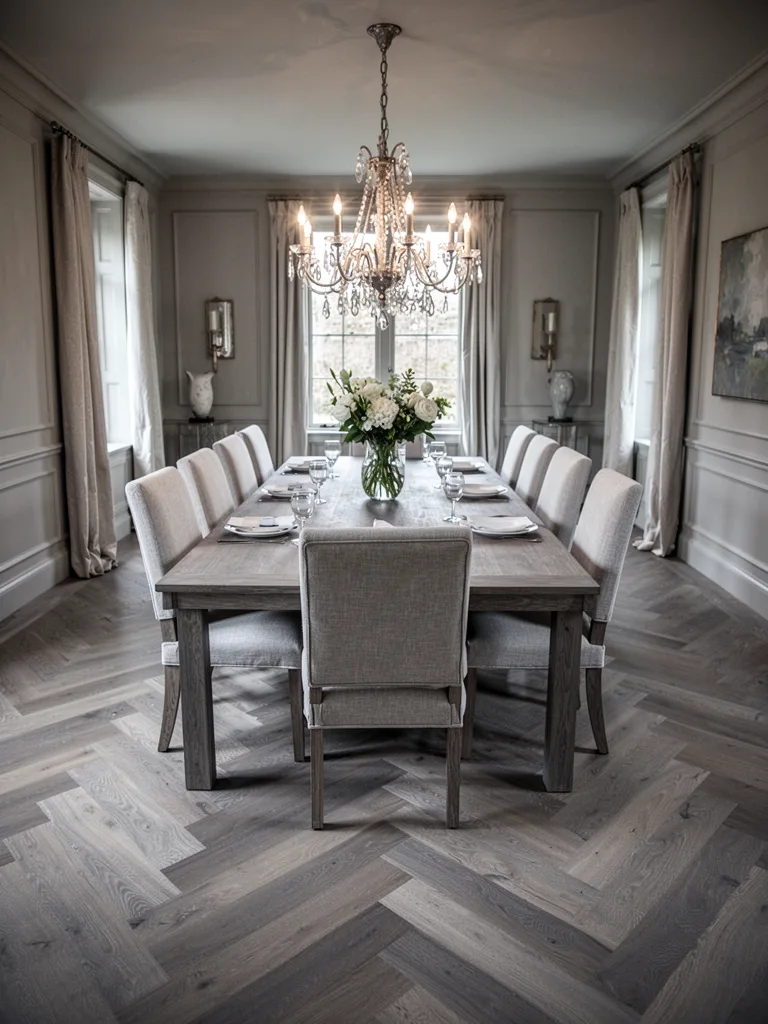
Chevron parquet is having a revival, but most people install it in natural oak or a dark walnut. Gray-stained chevron is the unexpected version that looks both modern and timeless. I installed this in my dining room and it instantly elevated the space—the angled planks create a sense of movement that makes the room feel larger. The gray stain works because it’s neutral enough to not compete with the table or art, but the pattern gives the floor presence. Cost: $12 to $20 per square foot installed for real chevron oak (not engineered).
The version that actually holds up over time is solid oak, 3/4-inch thick, nailed down. Engineered chevron can work but requires a very flat subfloor. The downside: gray stain on oak can look uneven if the wood has natural color variation. You need a professional finisher who knows how to apply a consistent stain. Also, chevron pattern is notorious for gapping in dry climates—allow the wood to acclimate for at least two weeks before installation. This is a $200-plus per square meter commitment, but it’s the kind of floor you pass down.
Pro tip: Order 15% extra for waste—chevron pattern creates a lot of offcuts. Also, use a site-applied, water-based finish instead of prefinished planks for a seamless surface.
13. Gray Brick Tile in Herringbone Pattern
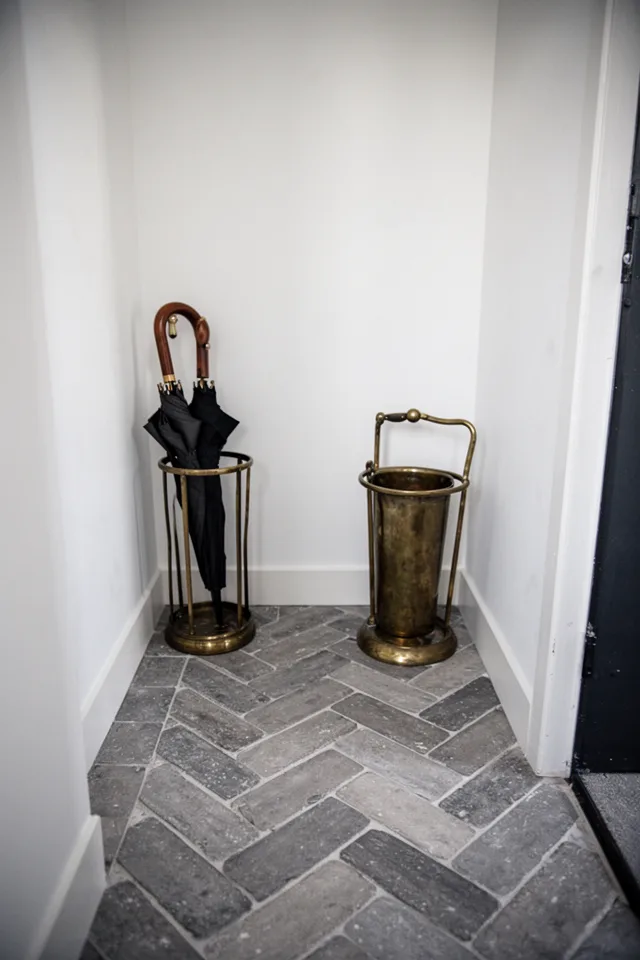
Brick tile—the long, narrow rectangle that looks like a brick slice—adds a structural, almost architectural feel to a gray floor. I used a charcoal gray brick tile in a herringbone pattern for my entryway. The repetitive geometry makes a small space feel intentional. It’s also tough: I’ve dragged suitcases over it without a scratch. The grout lines are thin (1/8 inch) which keeps the pattern tight. Cost: $7 to $12 per square foot installed.
One thing most guides skip: brick tile is a pain to keep clean in a herringbone pattern because you’re constantly sweeping across the angle. The grout is recessed, so dust settles. Use a dark gray grout to hide it. Also, the thin bricks can break during cutting—buy extra. This works best in small spaces where the pattern can be appreciated up close. A large room might feel visually busy. Trade-off: the brick texture collects dirt, but it hides scratches better than smooth tile. This is a $200-plus commitment for a small entry.
Pro tip: Use a matte finish brick tile, not polished. Polished brick tile looks like a cheap ceramic imitation. The tumbled matte finish shows wear more gracefully.
14. Gray-Stained Edge-Grain Bamboo
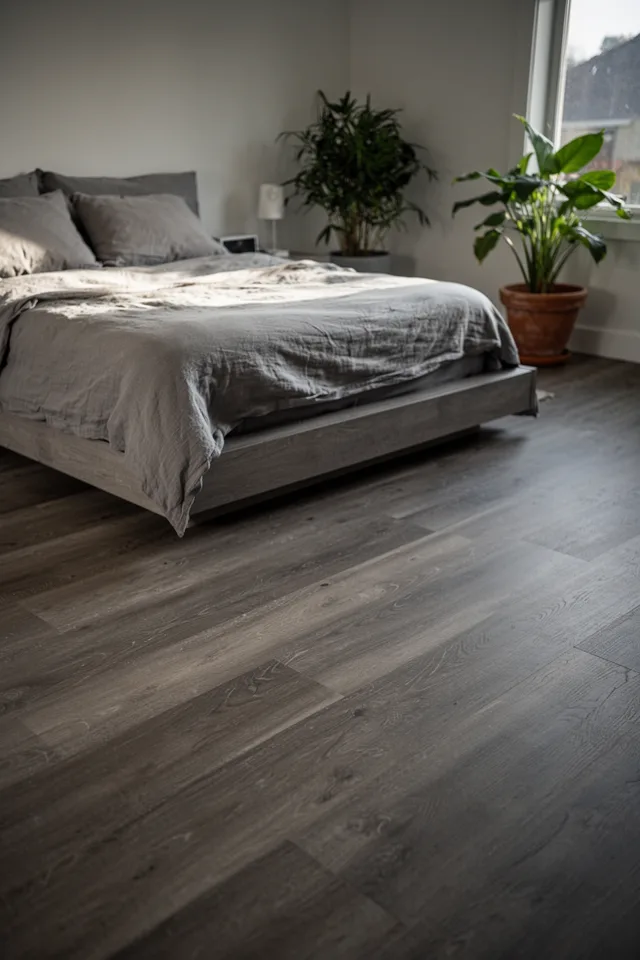
Bamboo is polarizing. Cheap strand-woven bamboo looks like plastic straws glued together. But edge-grain bamboo (where the strips are layered side by side) has a clean, linear look that takes gray stain beautifully. I used this in a guest bedroom that gets heavy sun. Bamboo is harder than oak and doesn’t expand or contract as much, so it’s stable in dry rooms. The gray stain I chose has a slight charcoal cast, not brown-gray, which makes the room feel cool and airy. Cost: $4 to $7 per square foot for materials.
The honest truth: bamboo is not wood. It’s grass. It can dent if you drop something heavy, and it doesn’t refinish well—once the wear layer is gone, you’re pulling it up. But for the price, it’s an excellent gray floor for low-traffic bedrooms or offices. One more thing: cheap bamboo can be soft and scratch easily. Look for “carbonized” which is heat-treated for hardness. And always check the formaldehyde content; some bamboo products are glued with questionable adhesives. Go for a CARB 2 or better rating. Under $200 for a standard bedroom.
Pro tip: Bamboo flooring should be acclimated in the room for at least 10 days before installation. It’s more sensitive to humidity than expected.
Here’s the bottom line: gray floors are not a trend that’s fading—they’re a permanent tool in the design toolbox. The mistake is treating gray as a colorless nothing. It’s not. It’s a specific material choice that interacts with light, texture, and use in ways you have to live with to understand. What I’ve learned from these fourteen floors is that the best gray is one that looks different at 8 a.m. than it does at 8 p.m. It has depth, sometimes visible grain, sometimes a slight variation that keeps it from being boring.
If I had to recommend one place to start: pick whichever material feels most honest to your real life. If you have kids and pets, go with the charcoal porcelain tile or the gray LVP. If you want warmth and character, weathered engineered hardwood or the stained wide-plank pine. If you’re a renter or prone to change, carpet tiles give you flexibility. Every floor in this list has a trade-off—there is no perfect. But the right one feels like it was always meant to be there.
You don’t need to transform your space. You just need one good decision about what you walk on every day. Gray can be that decision—if you stop treating it as a color and start treating it as a material. That’s the real inspiration.