Last summer, I watched my carefully tended tomato plants collapse under the weight of their own fruit. I’d used those flimsy wire cones from the garden center—the ones that come in a three-pack for $10. By August, every single plant had toppled, the cages rusted at the base, and I spent an hour tying fallen branches to stakes with old t-shirt rags. The tomatoes were fine. The support system was a joke. The worst part? I knew better, but I’d been lazy.
Most tomato support advice is either useless (“just use a cage”) or over-engineered (build a $200 cattle panel arch). The guides never talk about what actually works in a 4×8 raised bed with limited space, or what you can build with materials from a hardware store for under $20. They don’t mention that determinate and indeterminate tomatoes need completely different structures, or that the Florida weave fails if your posts aren’t sunk deep enough. And they certainly don’t warn you that some DIY supports will slice your plant stems or rust out in one season.
So here’s the real guide. These 15 tomato support ideas have all survived full seasons in my own raised beds—through heavy rain, windstorms, and the specific chaos of August when plants are six feet tall and loaded with fruit. I’ve noted what works for determinate vs. indeterminate, what costs under $10, and what will make you curse every time you try to harvest. If you only build one of these, your back will thank you and your tomatoes will stay off the ground.
1. The Concrete Mesh Cylinder
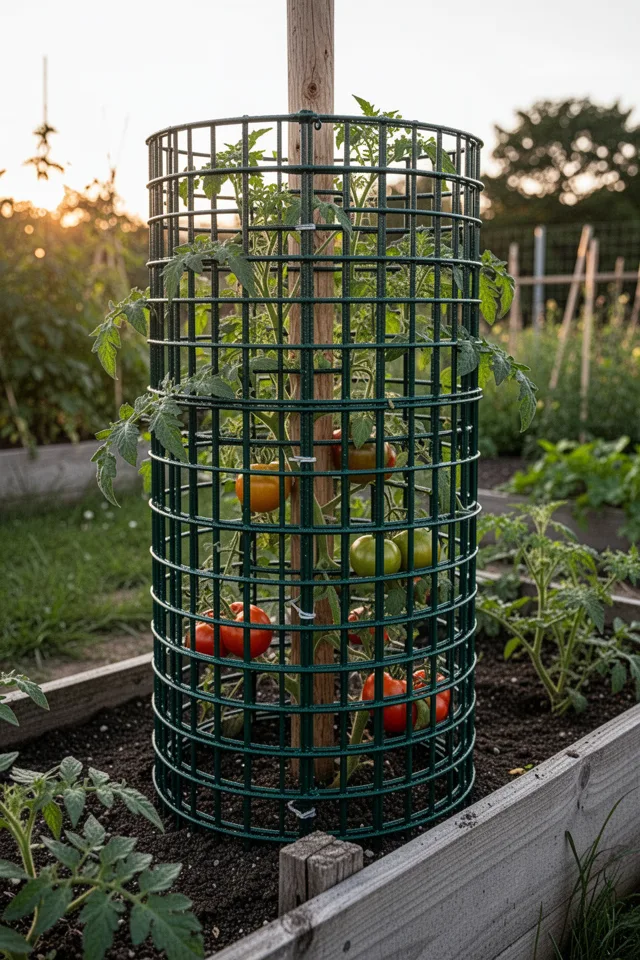
Forget store-bought cages. Buy a roll of concrete reinforcing mesh (6×6 inch grid, 5 feet tall) from a hardware store. A 50-foot roll costs around $80, but you’ll get 10 to 12 cages from it—under $8 per cage. Cut 5-foot sections with bolt cutters, roll each into a cylinder about 18 inches in diameter, and wire the ends together with tie wire or zip ties. These cages are indestructible, tall enough for indeterminate tomatoes, and the 6-inch grid gives you easy access to reach inside for harvest.
The trade-off is weight and assembly. Concrete mesh is heavy and has sharp edges. Wear gloves and long sleeves. Also, the cages need to be anchored or they’ll tip in wind. Drive a 3-foot rebar stake next to each cage and wire the cage to it. The version that fails is using the 4-inch grid mesh—it’s too tight to reach through, and pruning becomes impossible. Stick with 6-inch squares.
Pro tip: Spray paint the cages dark green before installing. Bright silver mesh stands out like a construction zone. Green disappears into the foliage. One can of spray paint covers 5 cages.
2. The Florida Weave With T-Posts
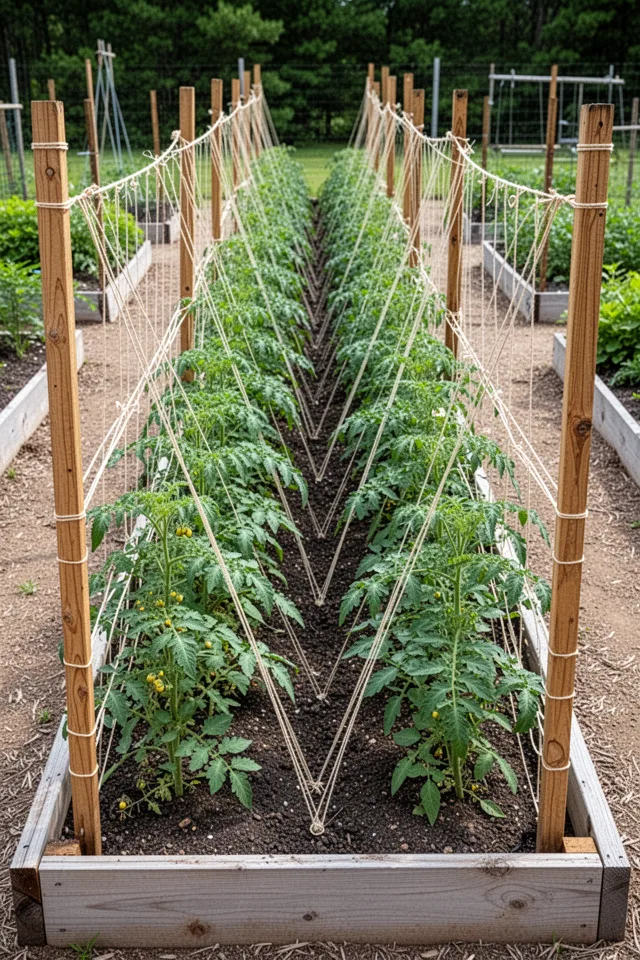
The Florida weave is the best support for rows of indeterminate tomatoes, but most tutorials use flimsy wooden stakes that pull out of the ground. The right way: drive 6-foot T-posts (metal fence posts) at each end of the row and every 8 feet in between. Sink them 18 inches deep using a post driver. Then run twine on both sides of the plants, weaving each plant between the twine strands. Add new twine layers every 8 inches as the plants grow.
Cost is about $15 per T-post, so a 16-foot row with 4 posts runs $60. That’s not cheap, but the posts last forever. The trade-off is that you can’t grow anything else in that row—the posts and twine block access. Also, the weave takes 5 minutes per layer once you get the rhythm. The version that fails is using wooden stakes; they rot or pull out. T-posts are non-negotiable.
One thing most guides skip: use polypropylene baling twine, not garden twine. Baling twine doesn’t stretch or rot in rain. A 20,000-foot roll costs $25 and lasts for years.
3. The Bamboo Teepee For Dwarfs
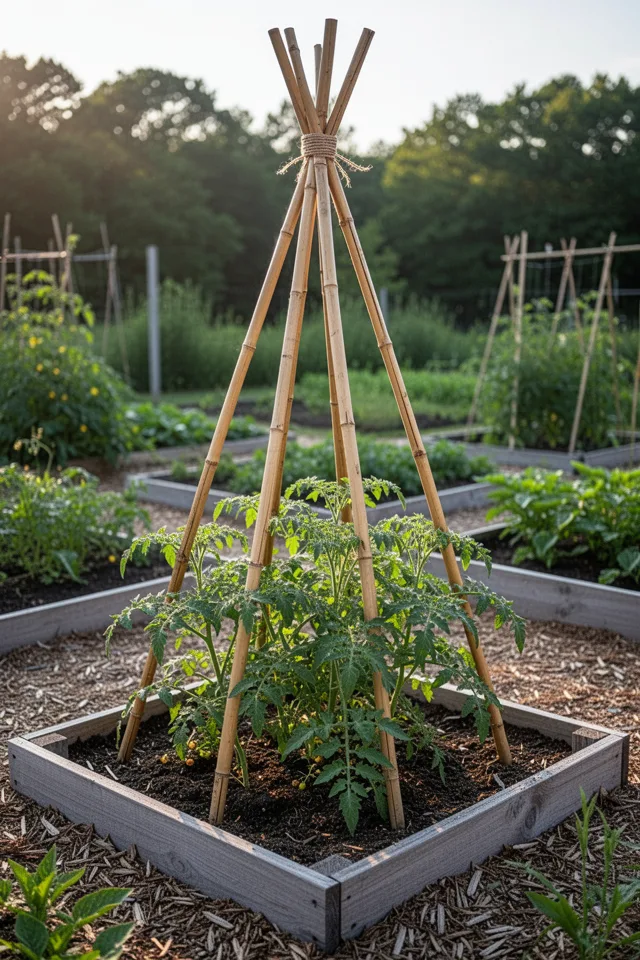
For determinate (bush) tomatoes or smaller varieties, a bamboo teepee is perfect. Buy 6-foot bamboo poles (10 for $20) or cut your own from a friend’s grove. Drive four poles into the ground in a square, angle them inward, and tie at the top with heavy twine. Plant the tomato at the base. As it grows, guide branches through the gaps between poles. The open structure allows air circulation and easy picking.
Cost is $8 to $15 per teepee. The constraint is that bamboo rots in moist soil after one season. The poles will last longer if you seal the bottom 12 inches with exterior wood sealer or spar urethane ($10 a can). Also, teepees tip over in wind if not driven deep enough. Sink poles at least 10 inches into the ground. The version that fails is using green, fresh bamboo—it shrinks and cracks as it dries. Use cured, dried bamboo only.
Pro tip: Wrap the twine at the top in a figure-eight pattern around each pole, not just a simple loop. The figure-eight locks the poles in place and prevents sliding.
4. The Cattle Panel Arch For Two Beds
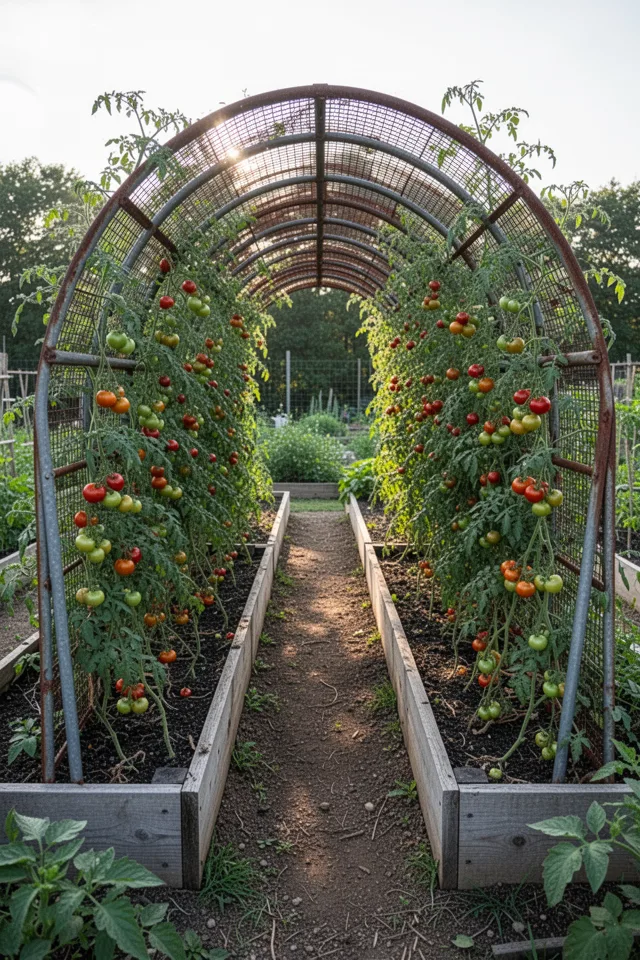
If you have two raised beds separated by a path, a cattle panel arch is the most productive use of space. Buy a 16-foot cattle panel (about $25 at farm supply stores). Bend it into an arch over the path and wire each end to T-posts sunk into the beds. Plant indeterminate tomatoes at the base of each side. Train main stems up the grid. The tomatoes grow up one side and down the other, and the arch becomes a tunnel of fruit.
Cost is about $60 total for the panel and four T-posts. The trade-off is that harvesting requires standing under the arch and looking up—neck strain is real. Also, the arch takes up vertical space that might shade neighboring plants. Position it so the arch runs north-south to minimize shading. The version that fails is using a panel with 4-inch squares (pig panel). Tomato branches won’t fit through; use cattle panel with 6×8 inch openings.
One thing most guides skip: plant marigolds and basil at the base of the arch. They repel pests and fill the space under the tomatoes. Double duty from the same square footage.
5. The Single Stake With Velcro Tape
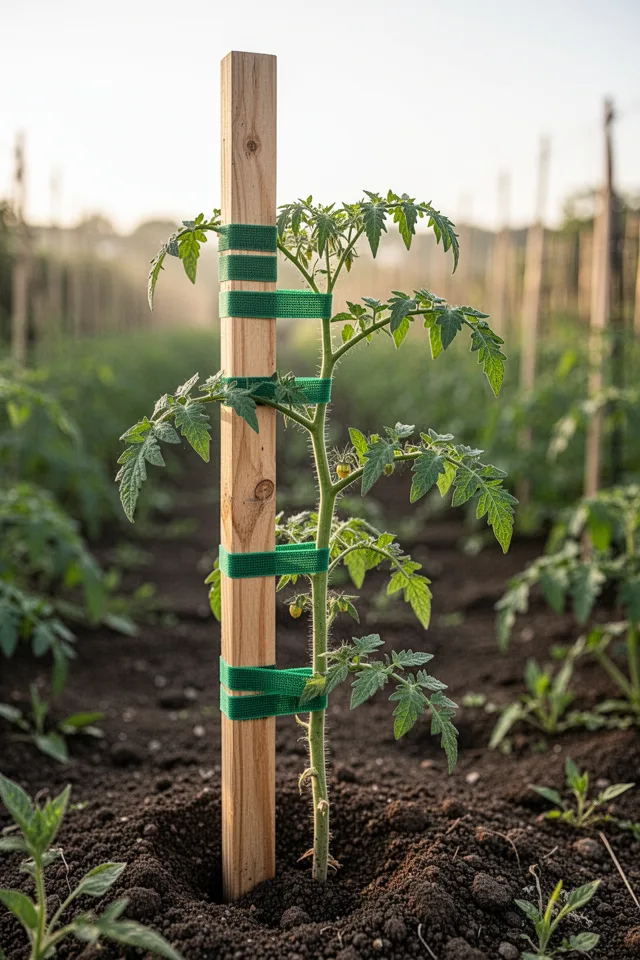
The simplest support is also the most effective for small spaces: one stake per plant. Use 7-foot hardwood stakes (oak or locust) or 3/4-inch rebar. Drive the stake 12 inches deep, 6 inches from the plant. Prune the tomato to a single main stem (suckers removed), and tie the stem to the stake every 8 inches using velcro plant tape. The velcro expands as the stem thickens, so it won’t cut into the plant.
Cost is $3 to $5 per stake. The trade-off is that you must be diligent about pruning. If you skip a week, you’ll have multiple stems and the stake won’t hold them. Also, rebar rusts but lasts forever; wood stakes rot in 2-3 seasons. The version that fails is using twine to tie stems—it cuts into the plant. Velcro tape is $8 for a 50-foot roll and reusable.
Pro tip: Paint the top 6 inches of your stakes bright orange or red. You’ll avoid impaling your eye when you bend over. Not a joke. I’ve done it. It hurts.
6. The Ladder Trellis From Salvaged Wood
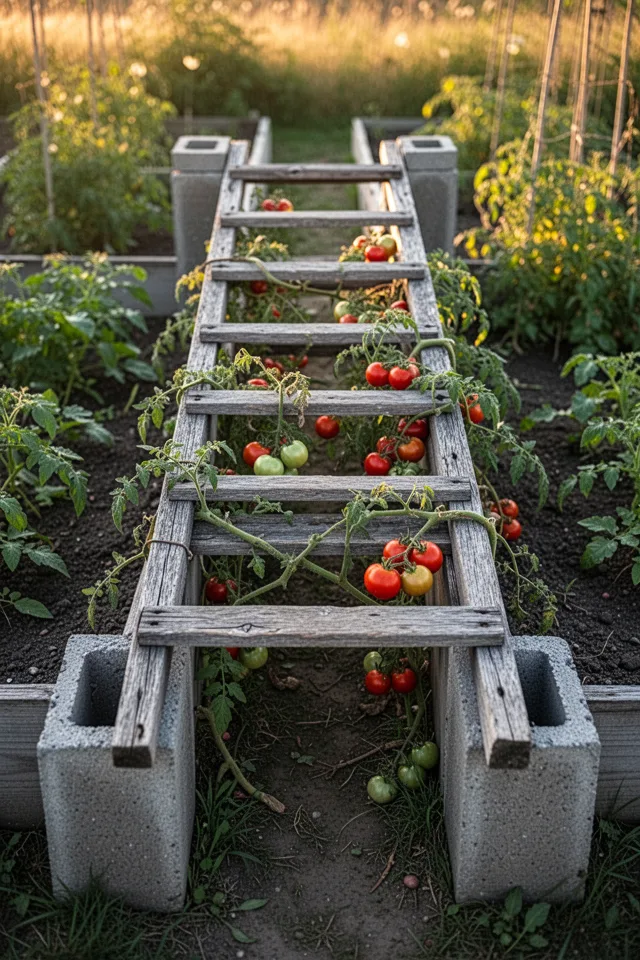
Find an old wooden extension ladder—the kind with wide rungs. Thrift stores or garage sales often have them for $10. Cut it to length if needed, then lay it horizontally across your raised bed, supported by cinder blocks or bricks at the corners. The ladder becomes a horizontal trellis. Weave tomato branches between the rungs as they grow. The wide rungs support heavy fruit without sagging.
The constraint is that ladders are heavy and require two people to position. Also, the wood may be rotten. Inspect carefully—if the rungs flex when you stand on them, don’t use it. The version that works beautifully is using an aluminum extension ladder (lighter, won’t rot). Aluminum ladders cost $30 used but last forever and don’t absorb moisture. Just don’t leave it where it can get stolen.
One thing most guides skip: sand the rungs lightly before using. Old ladders have splinters that will tear tomato stems. 5 minutes with 120-grit sandpaper prevents weeks of damage.
7. The Spiral Stake For Pots And Small Beds
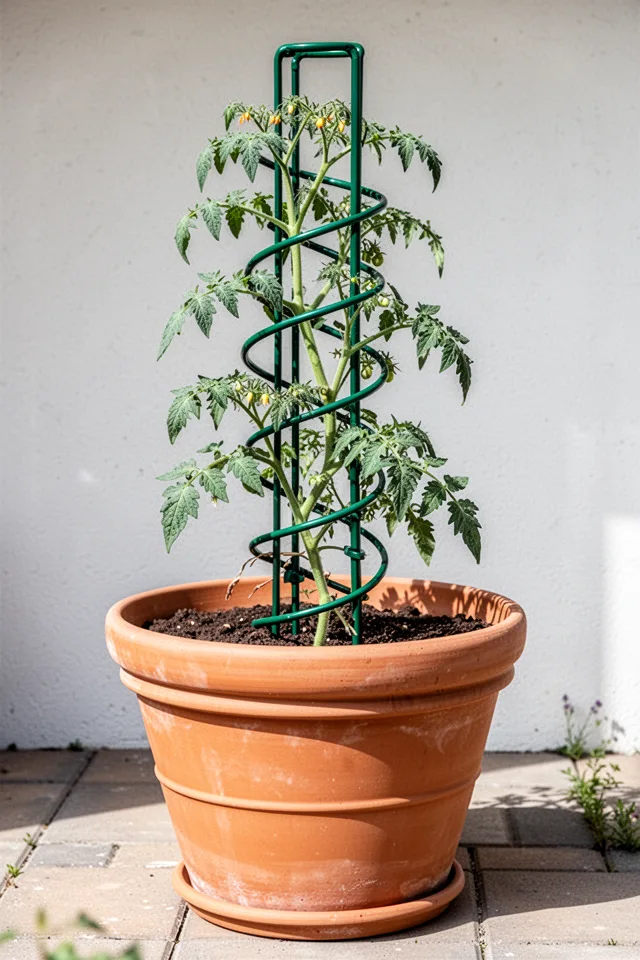
For container tomatoes or very small raised beds, spiral stakes are surprisingly effective. These are 4-foot metal stakes with a spiral coil at the top. You simply guide the main stem through the spiral as it grows. No tying required. The spiral holds the stem in place and supports the weight. They’re designed for indeterminate tomatoes and work beautifully for patio plants.
Cost is $8 to $12 per stake. The trade-off is that spiral stakes only support the main stem. You still need to prune suckers aggressively, and side branches will flop. For cherry tomatoes (which have thinner stems), the spiral works great. For beefsteaks, the weight can pull the stem down. The version that fails is using plastic-coated stakes—the coating cracks and rusts underneath. All-metal stakes last longer.
Pro tip: Install the spiral stake at planting time, not when the plant is already 2 feet tall. Trying to thread a large plant through the spiral will snap branches. Start early.
8. The PVC String Grid For Raised Beds
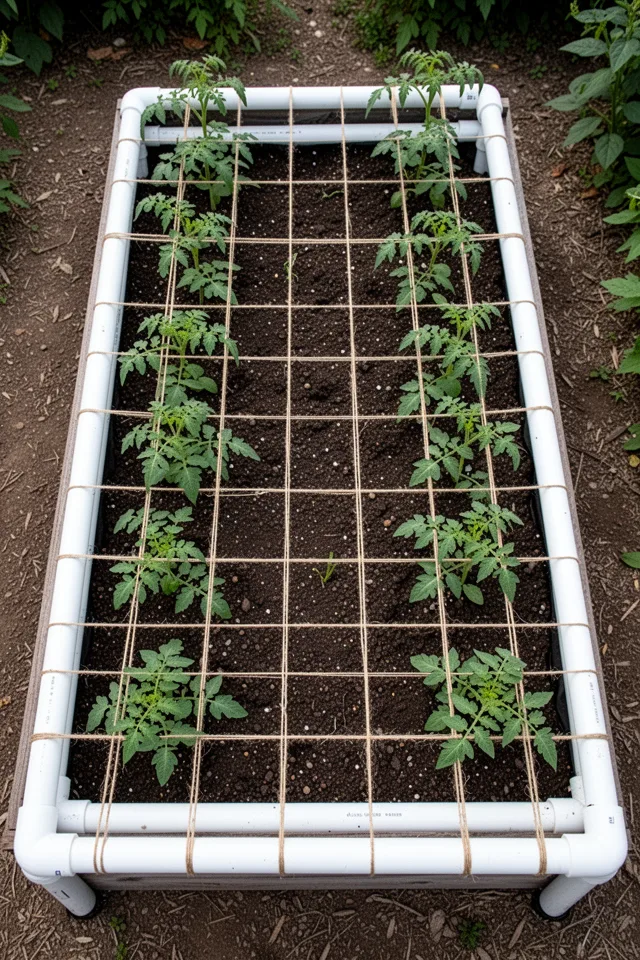
Build a simple frame from 1/2-inch PVC pipe that sits on top of your raised bed, like a box without a bottom. At each joint, add a T-fitting facing upward. Run twine horizontally and vertically across the top of the frame, creating a grid with 6-inch squares. As tomatoes grow, weave them through the grid. The structure holds plants upright without any staking of individual plants.
Cost is about $30 for a 4×8 bed. The constraint is that the twine grid needs to be re-tensioned every few weeks as plants push it upward. Use a trucker’s hitch knot so you can tighten without retying. Also, PVC can warp in hot sun. Use schedule 40 PVC (thicker) and spray paint it with UV-resistant paint ($8). The version that fails is using 1/2-inch PVC for a bed wider than 4 feet—it flexes. Use 3/4-inch for larger spans.
Pro tip: Add screw eyes to the PVC fittings to anchor the twine. Drill small holes and screw in cup hooks. The twine won’t slip off the smooth PVC that way.
9. The Fencing Stake Triangle
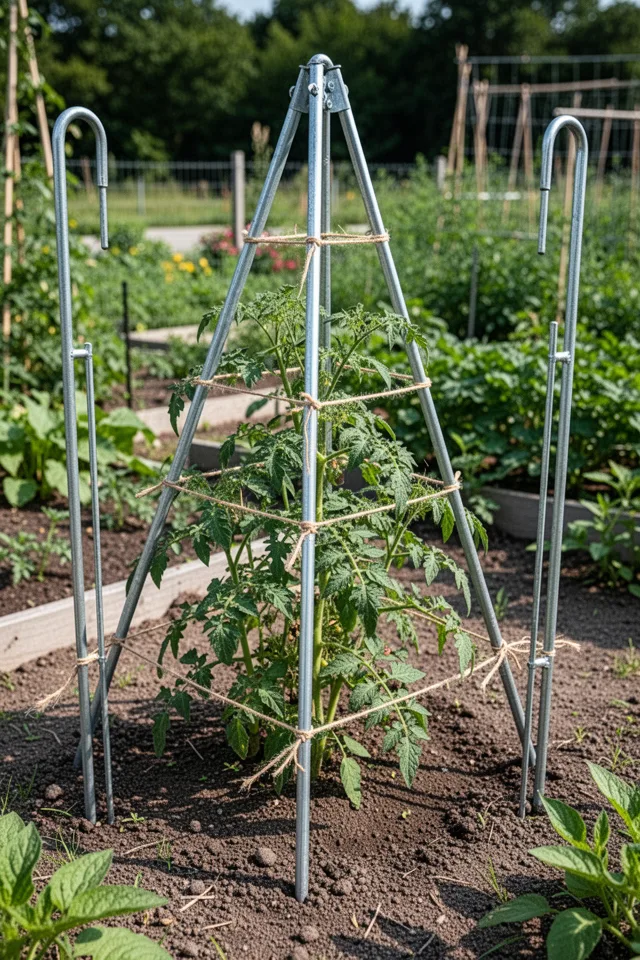
Buy 4-foot metal fence stakes (green-coated, $4 each at hardware stores). Drive three stakes into the ground around a tomato plant, spaced evenly in a triangle. Run twine around the outside of the stakes at 12-inch intervals, creating three horizontal rings. The plant grows inside the triangle, supported by the rings. This is like a homemade cage that you can customize for each plant.
Cost is $12 per plant for stakes, but you reuse the stakes year after year. The trade-off is that you need to add the twine rings as the plant grows. Start with a ring at 12 inches, then add at 24 and 36. The rings should be loose—tight rings will strangle branches. The version that fails is using wooden stakes; they rot and break. Metal stakes are worth the extra $2 each.
One thing most guides skip: pound the stakes in at a slight outward angle, not vertical. The outward lean creates a wider base and prevents the triangle from collapsing inward under fruit weight.
10. The Tomato Ladder From Wood Scraps
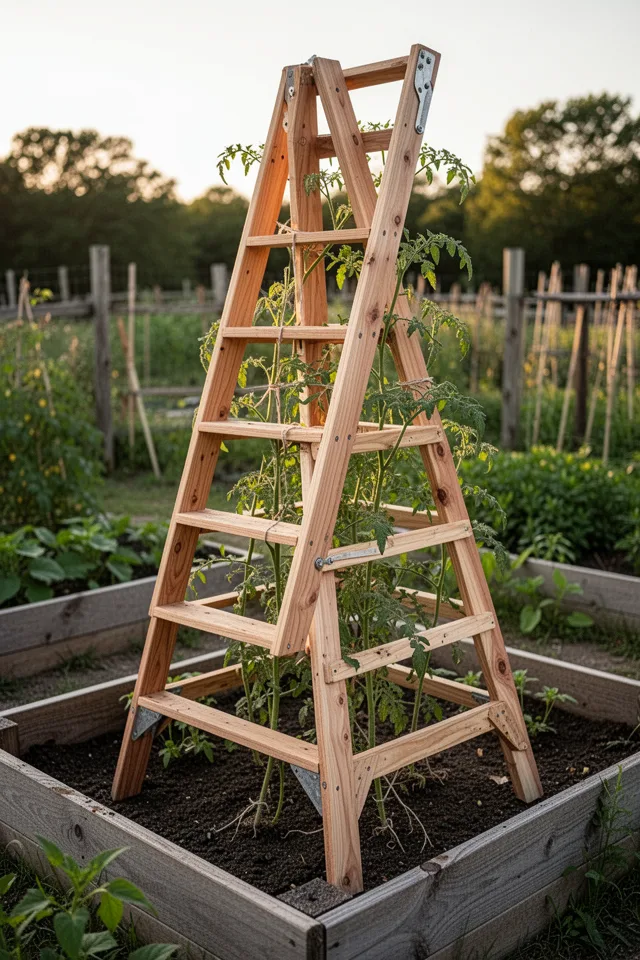
Build a simple A-frame ladder from scrap wood. Use two 6-foot 1×2 boards for the legs, and attach 1×2 rungs every 8 inches using screws or nails. The legs are tied together at the top with a bolt, and the base spreads 24 inches. Set this over a tomato plant and tie the main stem to the rungs as it grows. The ladder can be stored flat by removing the top bolt.
Cost is essentially free if you have scrap lumber. The constraint is that untreated wood will rot in 2-3 seasons. Use cedar, redwood, or pressure-treated lumber (wait a year before using around edibles to let chemicals off-gas). Also, the ladder needs to be anchored or it will tip. Drive a short stake next to each leg and wire them together. The version that fails is using plywood for rungs—it delaminates in rain. Solid wood only.
Pro tip: Round the corners of each rung with sandpaper. Sharp corners will bruise tomato stems when the wind blows. Ten minutes of sanding saves weeks of plant stress.
11. The Remesh Panel Lean-To
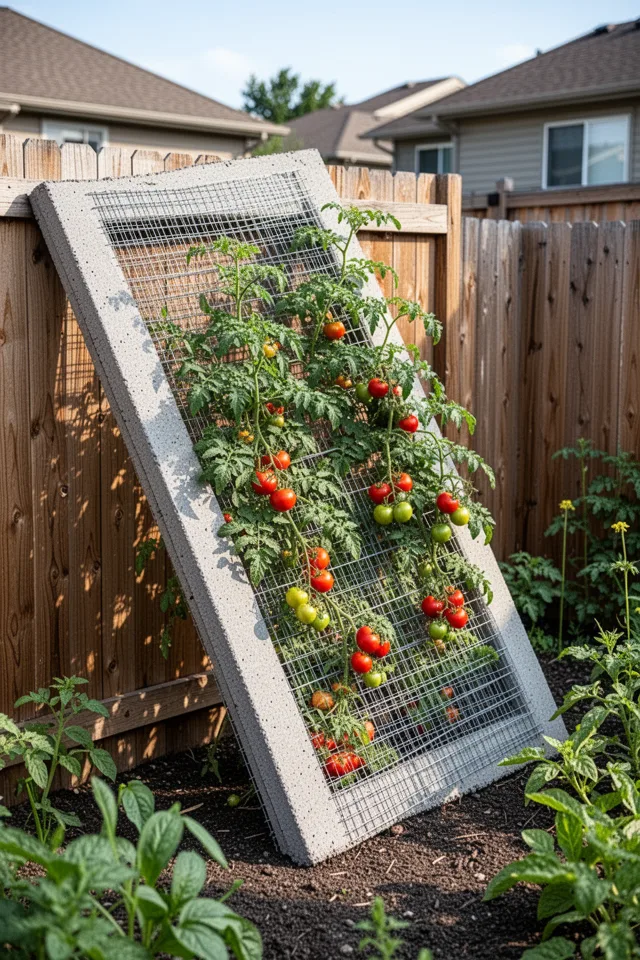
If you have a fence or wall, lean a section of concrete remesh (the same mesh from idea #1) against it at a 45-degree angle. Anchor the bottom edge with stakes or heavy rocks. Plant tomatoes at the base of the mesh and weave them through as they grow. The angled panel catches sun better than a vertical stake and keeps fruit off the ground. This is the lowest-effort support for tomatoes against a structure.
Cost is about $8 for a 5-foot section of mesh. The constraint is that the panel will slide down the fence over time. Screw a 2×4 ledger board to the fence at the desired height, and rest the top of the panel on it. Also, the bottom edge can slice through stems if the panel shifts. Cover the bottom edge with foam pipe insulation (split lengthwise) for $2. The version that fails is using chicken wire—it’s too flimsy.
Pro tip: Paint the mesh white if your fence is white. The reflection from the white paint boosts light to the lower leaves. Dark mesh absorbs light. White reflects.
12. The Clothespin And String Suspension
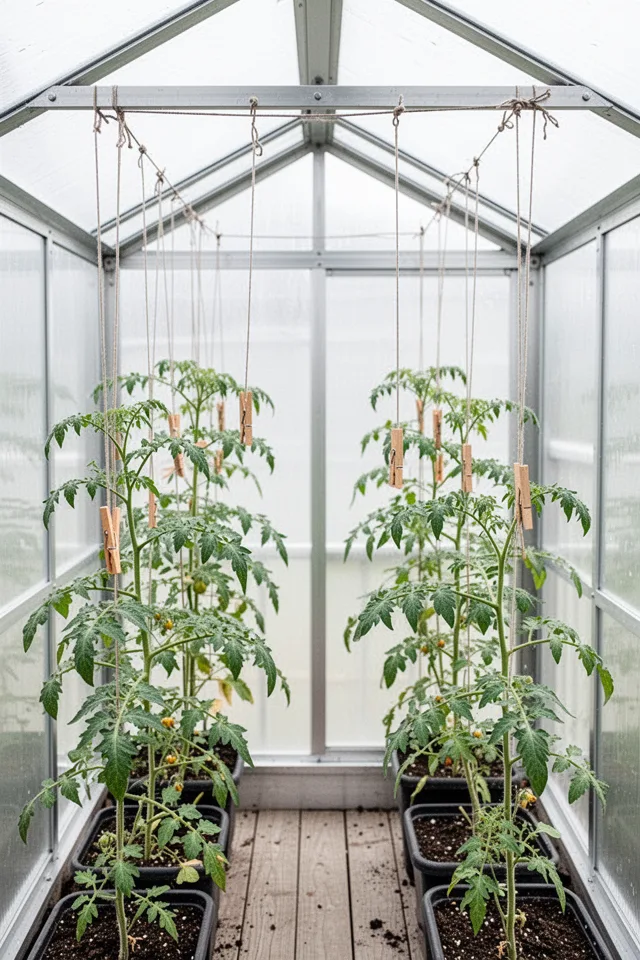
For greenhouses, high tunnels, or even a sturdy porch ceiling, use the “string and clip” method. Run a wire or heavy string horizontally overhead. Drop a vertical string for each plant, tied to the overhead wire. Use a tomato clip or a clothespin to attach the plant stem to the vertical string. As the plant grows, wind the stem around the string or add more clips. The plant hangs vertically, saving space and getting maximum light.
Cost is about $20 for string and clips for 10 plants. The constraint is that your overhead structure must be strong—a fully loaded tomato plant can weigh 20 pounds. Don’t hang from a flimsy porch trellis. Use 12-gauge wire and secure into joists. Also, you need to prune aggressively to a single stem. The version that fails is using plastic clips that degrade in UV; use metal tomato clips or wooden clothespins.
One thing most guides skip: leave 3 feet of extra string at the bottom so you can lower the plant as it grows. Commercial greenhouses lower the string weekly. You can too.
13. The Palette Trellis For Small Spaces
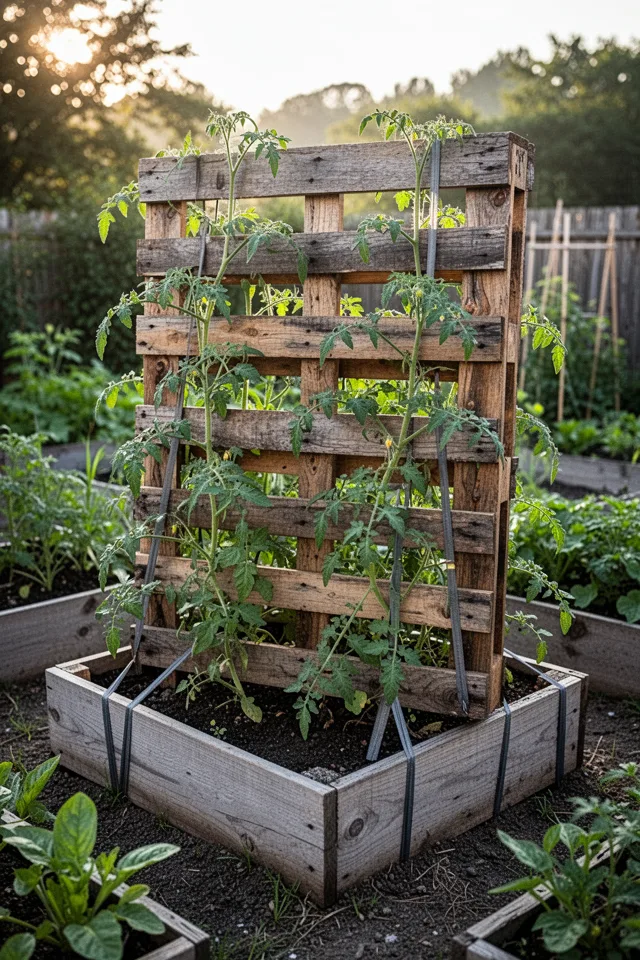
Free wooden pallets are everywhere. Stand one upright on its edge in your raised bed, with the slats vertical. Drive two stakes into the bed and wire the palette to them so it doesn’t tip. The gaps between slats are perfect for weaving tomato branches. This is essentially a free trellis that takes 10 minutes to install. For small raised beds, it’s a game-changer.
The constraint is that pallets are often treated with chemicals. Look for pallets stamped “HT” (heat treated) and avoid “MB” (methyl bromide). Also, the wood may have splinters. Sand the edges where plants will rub. The version that fails is using a pallet that’s falling apart. Inspect for rot and loose nails. A sturdy palette can last 2-3 seasons outside before rotting.
Pro tip: Paint the palette white to reflect light onto lower leaves. It also looks much nicer than raw pallet wood. A quart of exterior white paint costs $10 and covers 5 palettes.
14. The Old Birdcage Repurposed
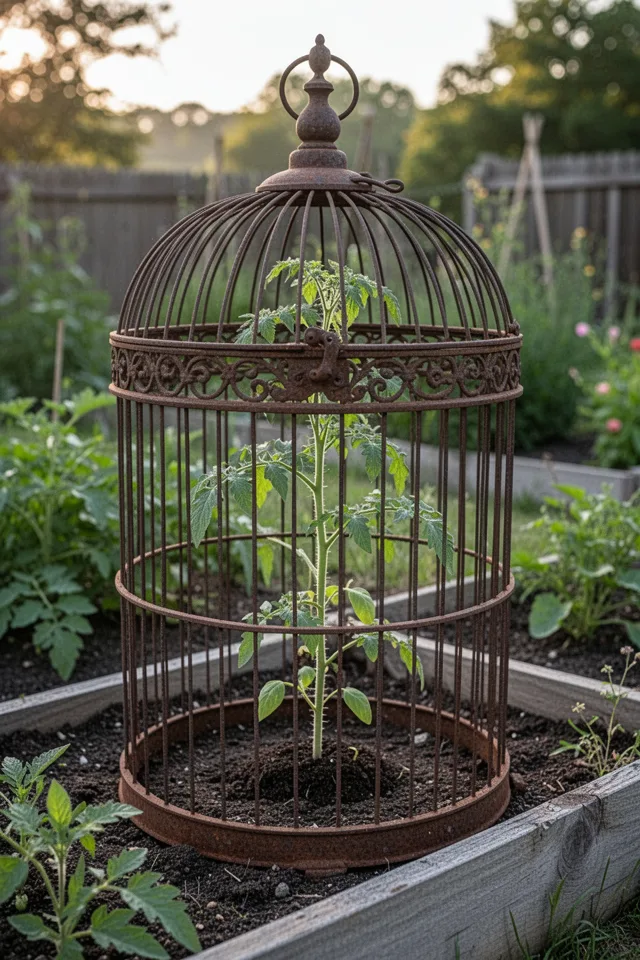
Look for old metal birdcages at thrift stores or estate sales (often under $10). Remove the bottom tray and any interior perches. Place the cage over a young tomato plant. The bars act as a cage, and the plant will grow up through the top door if you leave it open. This is completely unnecessary but delightfully charming. It works best for determinate or cherry tomatoes that stay under 4 feet.
The constraint is that birdcages have narrow bar spacing. If the spacing is less than 2 inches, you won’t be able to reach in to harvest. Look for cages with wide spacing (old parrot cages are perfect). Also, the metal may be rusty. Sand and spray paint with rust-inhibiting paint before using. The version that fails is using a cage with sharp points or decorative scrolls that will scratch plant stems.
Pro tip: Hang a second birdcage upside down from a shepherds hook and grow a tomato up into it from below. Two cages create a tomato sphere. I’ve done it. It’s ridiculous and wonderful.
15. The Cattle Panel Foldable A-Frame
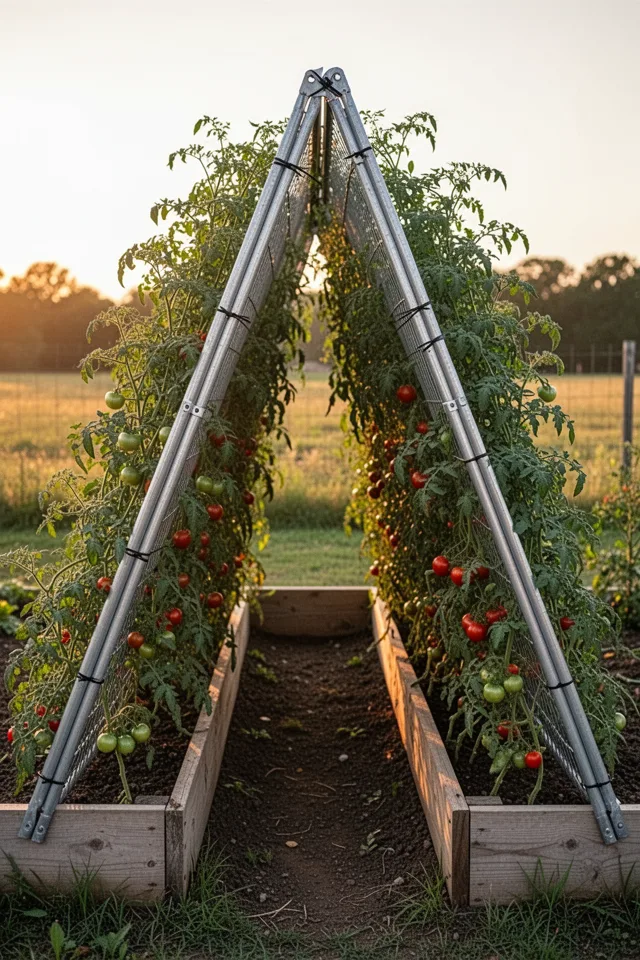
Take two 8-foot cattle panels (or cut 16-foot panels in half). Hinge them together at the top using heavy zip ties or wire, creating an A-frame that spans your raised bed. The bottom edges rest on the ground on either side of the bed. Plant tomatoes on both sides of the A-frame. The plants grow up the grid, and the open center allows air circulation and easy harvesting from inside the A-frame.
Cost is about $40 for two 8-foot panels. The trade-off is that this structure is huge—8 feet tall and 6 feet wide. It’s for dedicated tomato beds only. Also, the panels are heavy. You’ll need two people to position them. The version that lasts is securing the bottom edges with rebar stakes driven through the grid into the ground. Otherwise, the whole thing can tip over in wind.
One thing most guides skip: plant a few climbing beans or cucumbers on the A-frame too. They’ll fill the lower space while tomatoes climb higher. Succession planting at its best.
Tomato supports are not one-size-fits-all. The concrete mesh cylinder is the best all-around solution for most gardeners—cheap, durable, and tall enough for indeterminate varieties. The Florida weave is ideal if you’re growing a long row of plants. And the single stake with velcro tape is perfect for small spaces and container gardens. The A-frame and cattle panel arch are for dedicated tomato lovers with room to spare.
If you only build one this season, build the concrete mesh cylinders. They cost less than $10 per plant, last for years, and you can store them by nesting them inside each other. Pair them with velcro tape for tying, and you’ll never have a collapsed tomato plant again. And for the love of gardening, throw away those flimsy wire cones. They’re not worth the metal they’re made from.
Remember this page when you’re standing in your garden in August, looking at 6-foot tomato plants loaded with fruit, all neatly supported and easy to harvest. That’s the feeling of a support system that works. It’s not fancy. It’s not expensive. It’s just smart, and now you know how to build it.