Last July 3rd, I spent six hours stapling red, white, and blue bunting to my porch railing. By 4 PM on the 4th, the cheap nylon fabric had faded to pink, gray, and periwinkle. A gust of wind ripped one section loose, and a kid tripped over the trailing end. My patriotic porch looked like a parade float that had been through a war. The worst part? I’d seen the same sad bunting on every other block—everyone had bought the same big-box store decorations, and everyone’s porch looked identical and exhausted.
Most patriotic decor advice is a race to the bottom of the same cheap products: plastic flags that crack, inflatable Uncle Sam that deflates by noon, and those horrible wire flag-shaped things that rust after one rain. The guides never mention what survives July heat, what you can store without turning into a tangled mess, or how to make a porch feel festive without looking like a party supply store exploded. And they certainly don’t address the awkwardness of decorations that feel performative rather than genuinely welcoming.
So here’s the guide I wish I’d had. These 18 patriotic porch ideas have all survived at least one July 4th on my own porch—through 90-degree heat, sudden thunderstorms, and the chaos of a dozen kids with sparklers. I’ve noted what fades, what rusts, what blows away, and what actually looks good on the 5th of July too. Some ideas cost under $10. A few are $50 investments that’ll last for years. All of them avoid the obvious clichés that make your porch look like every other porch on the street.
1. Clothespin Flags From Scrap Wood
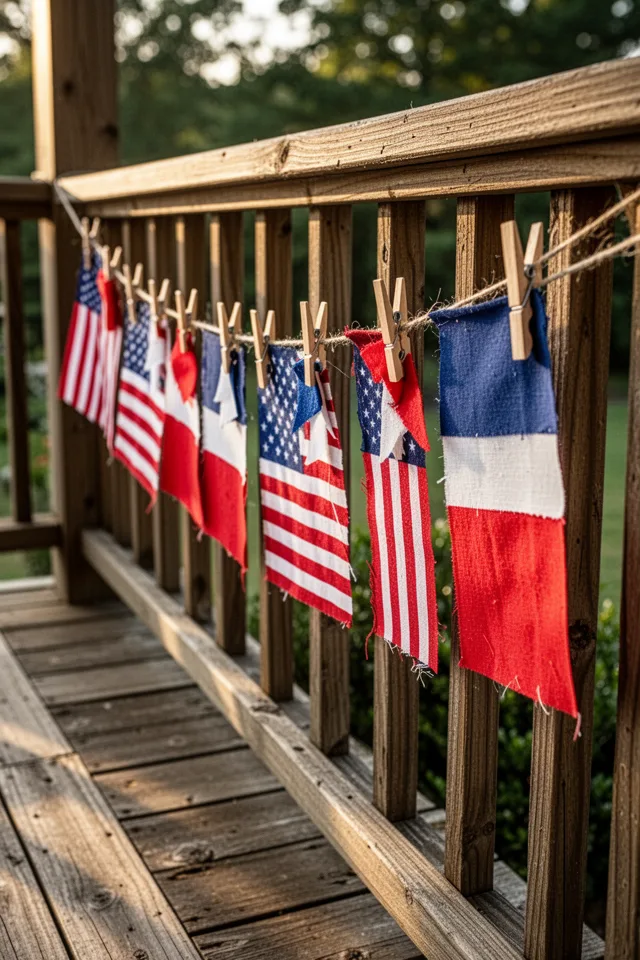
Forget plastic flags on sticks. Instead, buy a bag of wooden spring clothespins (50 for $5). Cut scrap fabric—old sheets, leftover quilting cotton, even denim—into 2-inch triangles. Glue a triangle to the top of each clothespin using tacky glue. Clip the clothespins to a length of jute twine or fishing line stretched across your porch. You can arrange them in a repeating red-white-blue pattern or go random. The result looks like a handmade bunting that actually has character.
Cost is under $10 if you have scrap fabric. The trade-off is that wooden clothespins will eventually split in humidity. Store them indoors when not in use. Also, the glue can fail in direct sun—use outdoor-grade craft glue or E6000. The version that ages badly is using plastic clothespins; they get brittle and snap. Wood looks better and lasts longer if you seal it with a clear spray sealer before gluing.
Pro tip: Let kids decorate the clothespins with star stickers or small painted dots before adding the fabric. They become an activity and decor in one. Just don’t use glitter—it ends up on every surface of your porch for weeks.
2. Galvanized Bucket Flag Planters
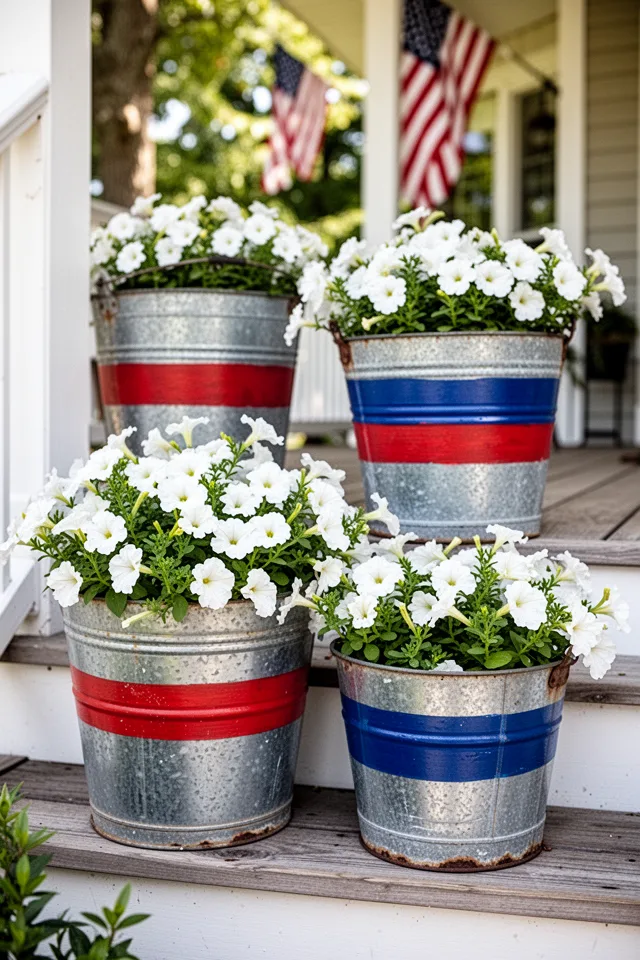
Skip the plastic flag planters that crack by August. Buy small galvanized buckets ($4 each at a hardware store) and paint a 3-inch band around the middle using exterior red or blue paint. Fill with white flowers—petunias, calibrachoa, or sweet alyssum. Group three buckets together: red band, white flowers, blue band. The buckets themselves become the patriotic element, and the flowers do the rest. After July, peel off the paint (or let it wear naturally) and use the buckets for fall mums.
Cost is about $20 for three buckets plus paint and flowers. The constraint is that galvanized metal gets hot in direct sun and can cook plant roots. Drill three small drainage holes in each bucket bottom, and place them where they get afternoon shade or use a double-pot method (plastic pot inside the bucket). Also, the paint will scratch. That’s part of the rustic look, but if you want clean lines, use vinyl sticker bands instead of paint—$5 for a roll of red and blue outdoor vinyl.
One thing most guides skip: spray the inside of the buckets with clear waterproof sealant before planting. Galvanized metal reacts with acidic soil and can turn flowers yellow. The sealant prevents that for the entire summer.
3. Flag From Painted Pallets (Vertical)
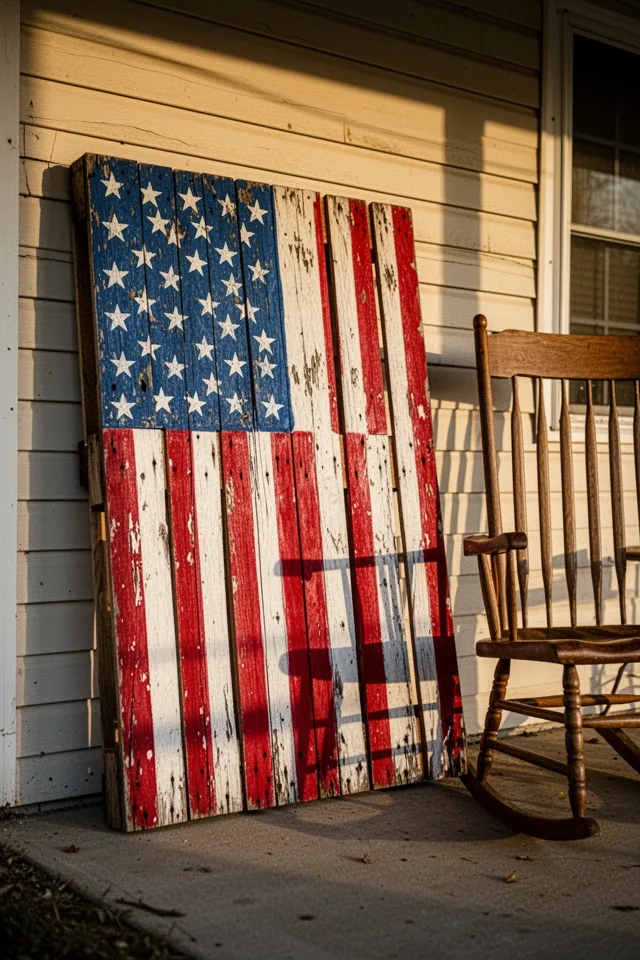
Free pallet + exterior paint + a weekend = a flag that costs almost nothing and looks great for years. Find a pallet with slats that are relatively straight. Sand it lightly. Paint the entire thing white as a base. Then tape off stripes with painter’s tape and paint the red stripes. For the blue field, paint a rectangle in the top left corner. Add stars using a star-shaped sponge or by painting dots and connecting them. Prop the pallet against your porch wall or hang it horizontally.
Cost is under $20 for paint and tape (pallet free). The trade-off is weight. A full pallet is heavy—40 to 60 pounds. You’ll need two people to move it, and it can’t hang on standard hooks. Prop it against the wall and secure with a bracket at the top to prevent tipping. Also, pallets often have splinters and rough edges. Sand thoroughly and wear gloves. The version that fails is using a pallet that’s been treated with chemicals (marked “MB” for methyl bromide). Look for “HT” (heat treated) pallets only.
Pro tip: Paint the stars using a stencil made from a cardboard box. Cut out a star shape with a craft knife. Hold the stencil in place and dab paint with a sponge. Perfect stars every time, zero freehand skill required.
4. Birthday Candle Jars For Evenings
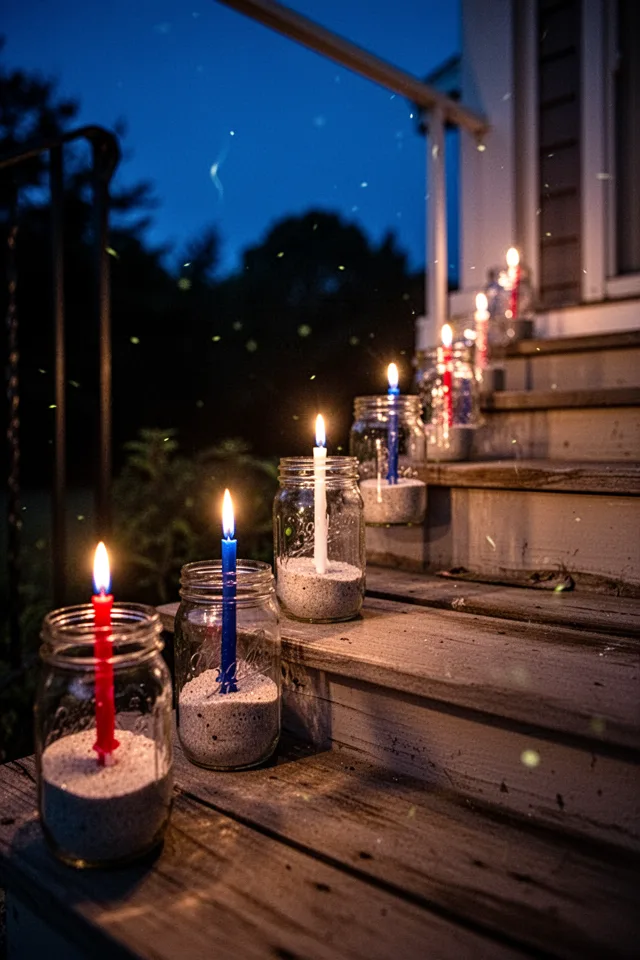
For evening celebrations, skip the citronella candles and make these. Fill mason jars or any glass jars with an inch of sand or small pebbles. Stick a standard birthday candle (red, white, or blue) into the sand. Light them at dusk. Birthday candles burn for about 15 minutes—perfect for a fireworks viewing or evening gathering. They’re cheap, safe (they extinguish themselves), and the colored flames (use special color-flame birthday candles for extra wow) look magical.
Cost is under $10 for 100 birthday candles and sand. The constraint is that birthday candles are tiny and will blow out in any breeze. Use a hurricane jar or place them in a wind-sheltered spot. Also, the sand can get wet and clump; store jars indoors between uses. The version that fails is using regular candles in jars—they burn too long and the jar gets dangerously hot. Birthday candles are low and cool.
The honest truth: this is a 30-minute decoration. Light them just before guests arrive. By the time the fireworks start, they’ll be done. That’s the point—no lingering fire hazard to worry about.
5. Bandana Bunting That Holds Up
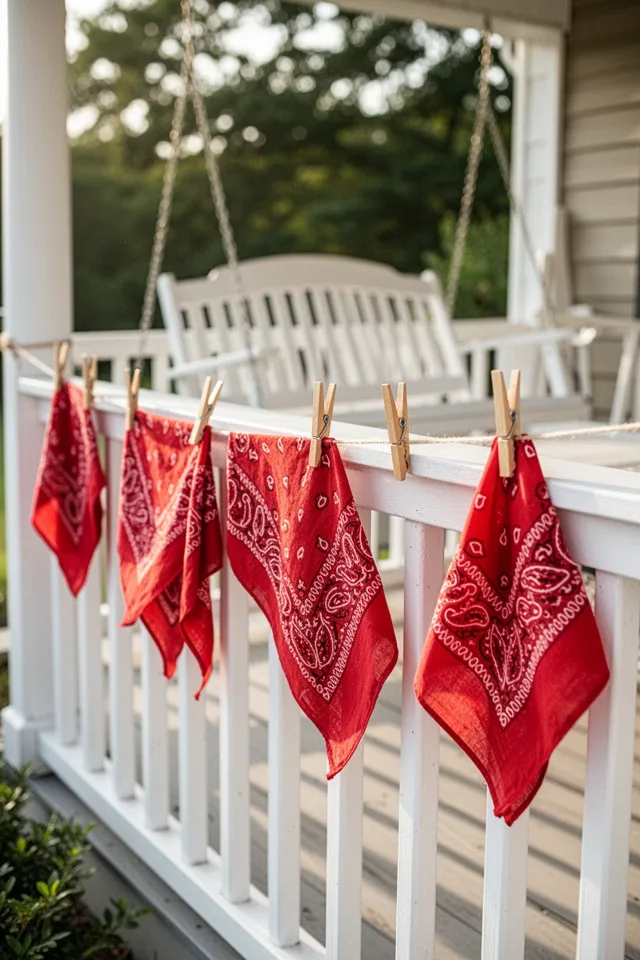
Fabric bunting is great, but most patriotic fabric is cheap poly that fades and frays. The solution: red bandanas. Buy a pack of 100% cotton red bandanas (12 for $15 online). Fold each in half diagonally into a triangle. Clip them to a length of cotton clothesline or jute twine using wooden clothespins. The cotton holds dye better than poly, and the fabric weight means it hangs straight instead of curling. Plus, bandanas have a classic, slightly rustic look that reads as authentic, not mass-produced.
Cost is about $20 for 12 bandanas and twine. The constraint is that red dye still fades eventually. After two Julys, your bandanas will be pinkish. The fix is to wash them in vinegar water before first use—vinegar sets the dye. Also, bandanas are heavy; your string needs to be sturdy. Use cotton clothesline, not embroidery floss. The version that fails is using cheap poly bandanas from a party store—they’re thin, see-through, and fade in one weekend.
Pro tip: Intersperse plain white cotton handkerchiefs (10 for $10) between the red bandanas for a red-white-red pattern. The white adds contrast and makes the red pop.
6. Chalkboard Sign With Countdown
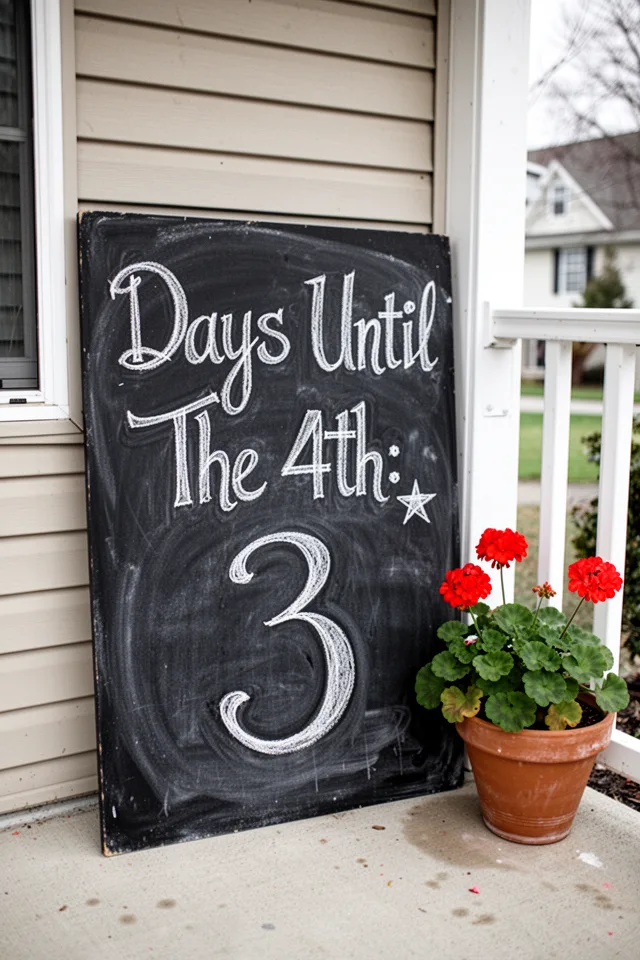
Make a chalkboard sign that builds anticipation starting July 1st. Buy a 12×16 inch chalkboard from a craft store ($10) or paint a piece of plywood with chalkboard paint ($8). Write “Days Until The 4th:” at the top, then update the number each morning. On July 4th, change it to “Happy Independence Day!” with a hand-drawn flag. The sign becomes an interactive element that neighbors and delivery drivers will check daily.
The constraint is that outdoor chalkboards need weather protection. Rain will wash away your writing instantly. Use chalk markers (waterproof once dry) instead of regular chalk, or place the sign under a covered porch. Also, direct sun fades chalk marker ink within two days. Position the sign in shade. The version that ages well is using a glass-front frame over the chalkboard—it protects from rain and you can write on the glass with window chalk. That’s a $15 upgrade.
One thing most guides skip: write the numbers in reverse order on July 1st (4,3,2,1) so kids can erase the previous day’s number and write the new one. It becomes a morning ritual.
7. Painted Rock Patriotic Paperweights
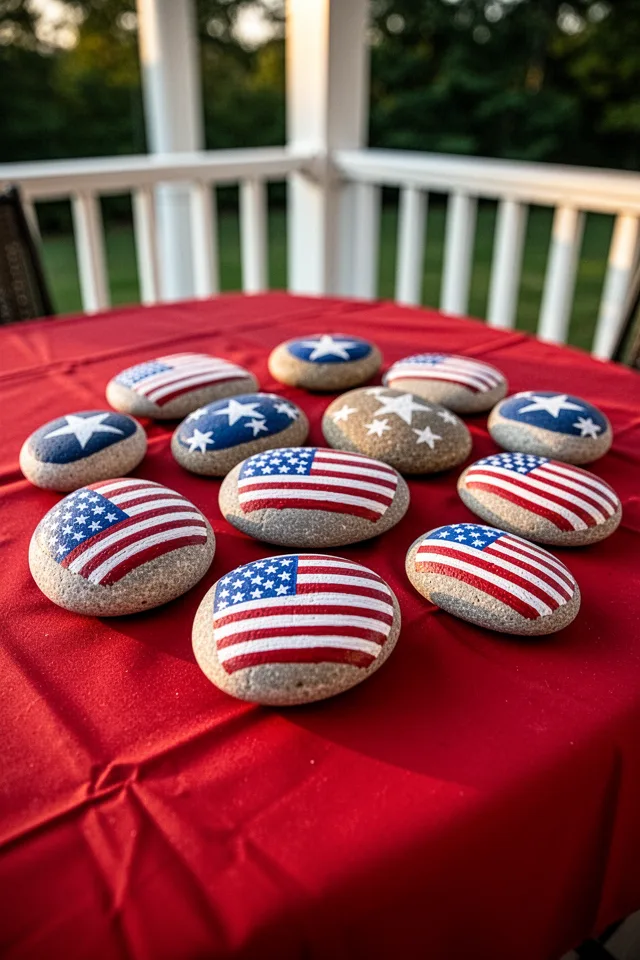
Gather smooth river stones (free from a creek or landscape supply). Clean them, dry them, and paint with acrylic paint in red, white, and blue designs—tiny flags, single stars, stripes, or abstract color blocks. Once dry, seal with outdoor clear spray sealer. Use them as paperweights on your outdoor table to hold down napkins or tablecloths. They also work as garden markers or just scattered on a table as decor.
Cost is under $10 for paint and sealer. The constraint is that acrylic paint chips off rocks if they’re handled roughly. Use outdoor-grade paint (like FolkArt Outdoor) and apply two coats of sealer. Also, don’t leave them in standing water—the paint will bubble. The version that fails is using cheap craft paint without sealer; it will peel within a week. The version that lasts is using automotive enamel spray paint, but that’s $12 a can and requires adult supervision.
Pro tip: Write the year on the back of each rock in permanent marker before sealing. These become keepsakes. By the 10th year, you’ll have a collection of painted rocks from every July 4th.
8. Vintage Quilt As Porch Backdrop
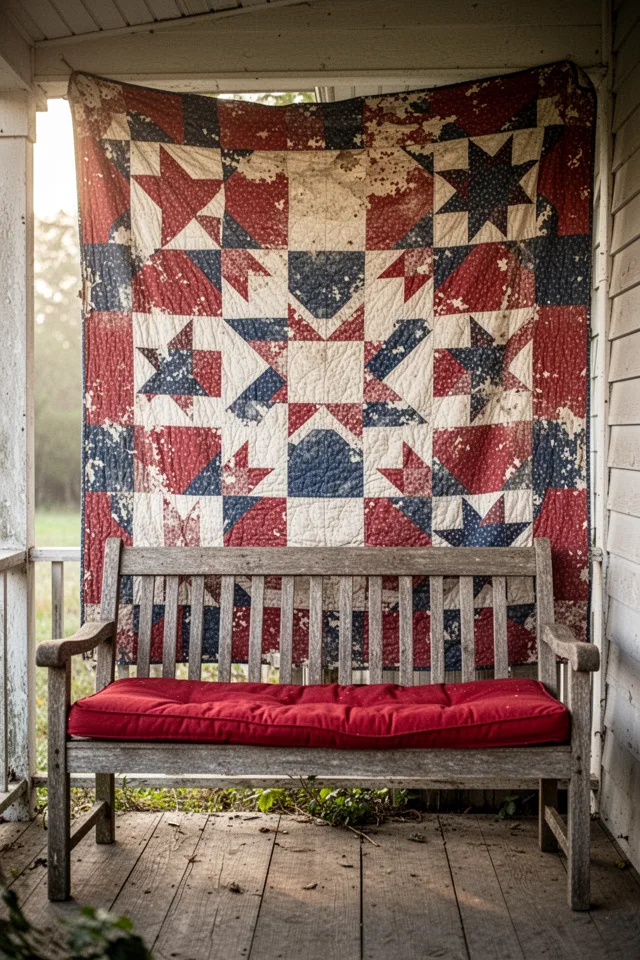
Instead of a new flag banner, find a vintage patriotic quilt at a thrift store or estate sale ($10 to $25). Hang it on your porch wall or over the back of a bench using large spring clamps. The quilt adds texture, warmth, and genuine Americana that no plastic decoration can match. It’s also a conversation starter. After July, you can use the same quilt for fall (if it has browns) or store it for next year.
The constraint is that old quilts are fragile. Sun will fade and weaken the fabric. Hang it in a covered porch where it won’t get direct rain or intense afternoon sun. Also, moths love old cotton quilts. Store it in a sealed plastic bin with cedar chips after July. The version that fails is using a new quilt from a big box store—they’re made of cheap poly blends and won’t have the same character. The age is the point.
One thing most guides skip: wash vintage quilts in cold water with mild soap before hanging. They often smell musty. Line dry in the shade. Never machine dry—the heat will shatter old cotton fibers.
9. Silverware Flag In A Plant Pot
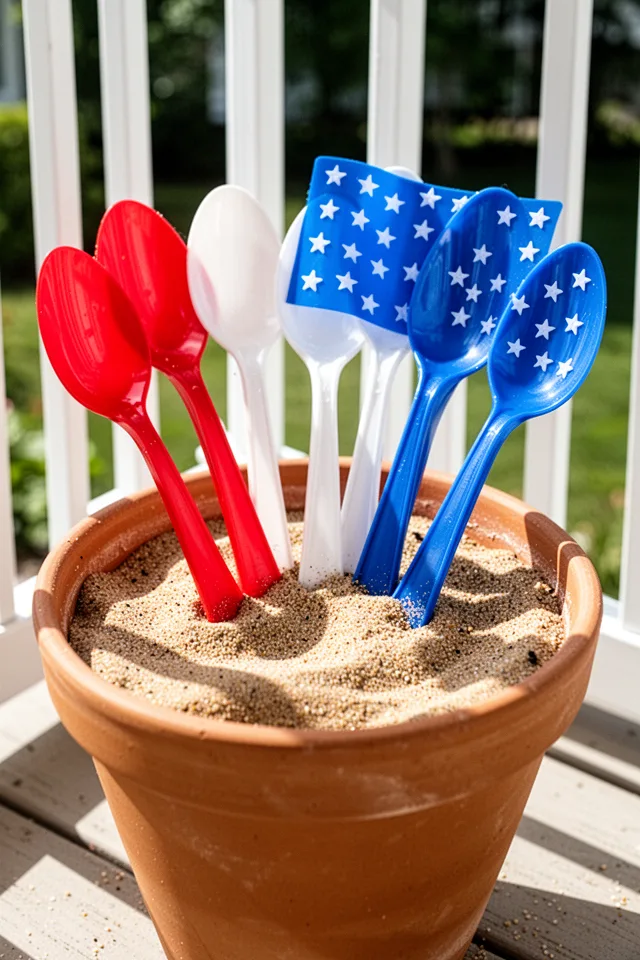
This is silly and wonderful. Buy a pack of red, white, and blue plastic spoons (100 for $8). Fill a terracotta pot with sand or floral foam. Arrange the spoons handle-down in a semicircle fan shape, using the spoon bowls as the “flag.” Group blue spoons in the top left corner for the field, white spoons as stars (just place them among the blue), and red and white spoons in alternating stripes for the rest. It’s a pop-art flag that kids love and adults will photograph.
The constraint is that this is not weather-resistant. One rain will ruin the paper spoons? Wait—plastic spoons are fine in rain, but the sand will get wet and the spoons will tilt. Use floral foam instead of sand; foam holds them straight even when wet. Also, the spoons will fade in a week of sun. This is a one-day decoration for the 4th itself. The version that fails is using paper spoons—they wilt immediately. Plastic only.
Pro tip: Hot glue the spoon handles together inside the pot for extra stability. A ring of glue around the bundle keeps the spoons from splaying outward. Let dry before inserting into the foam.
10. Flag Door Mat From Paint And Stencil
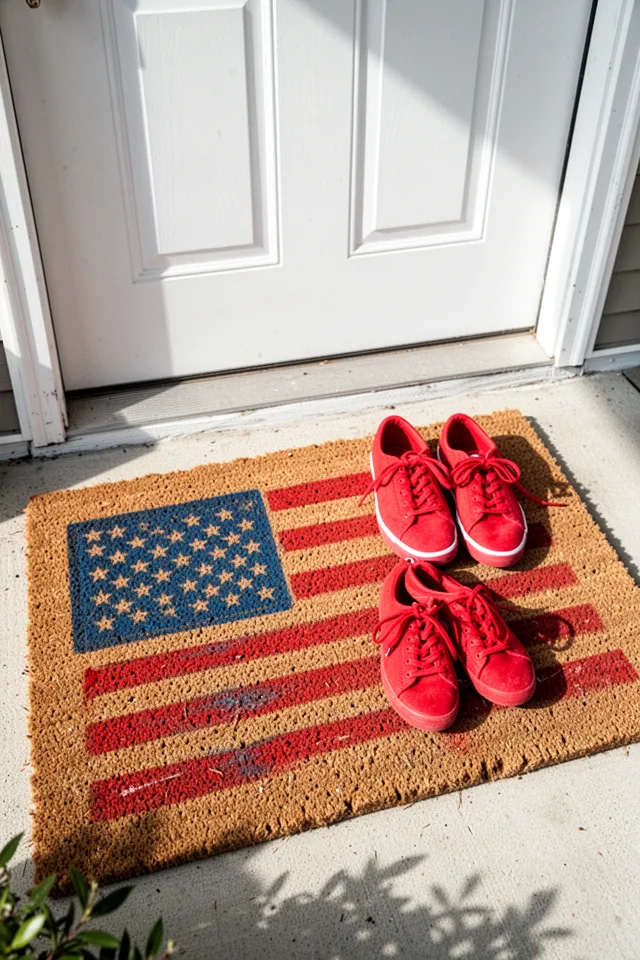
Buy a natural coir door mat ($15). Use a large star stencil and painter’s tape to create a flag design—stripes across the bottom, a blue rectangle with stars in the top corner. Use exterior spray paint or brush-on outdoor acrylic. The coir takes paint well. The result is a custom doormat that costs $25 total instead of $60 for a pre-made patriotic mat.
The constraint is that coir is rough and sheds. Paint will crack along the lines of the coir fibers. Apply two thin coats instead of one thick coat. Also, the mat will be slippery when wet. Place it under a covered porch or accept that it’s for decoration, not heavy foot traffic. The version that fails is using a rubber or synthetic mat—paint peels right off. Coir is the only material that holds paint well.
Pro tip: After painting, let the mat dry for 48 hours, then spray with clear outdoor sealer. It locks the paint in and makes the mat last through the whole summer instead of fading by the 5th.
11. Mason Jar Citronella Candles With Flags
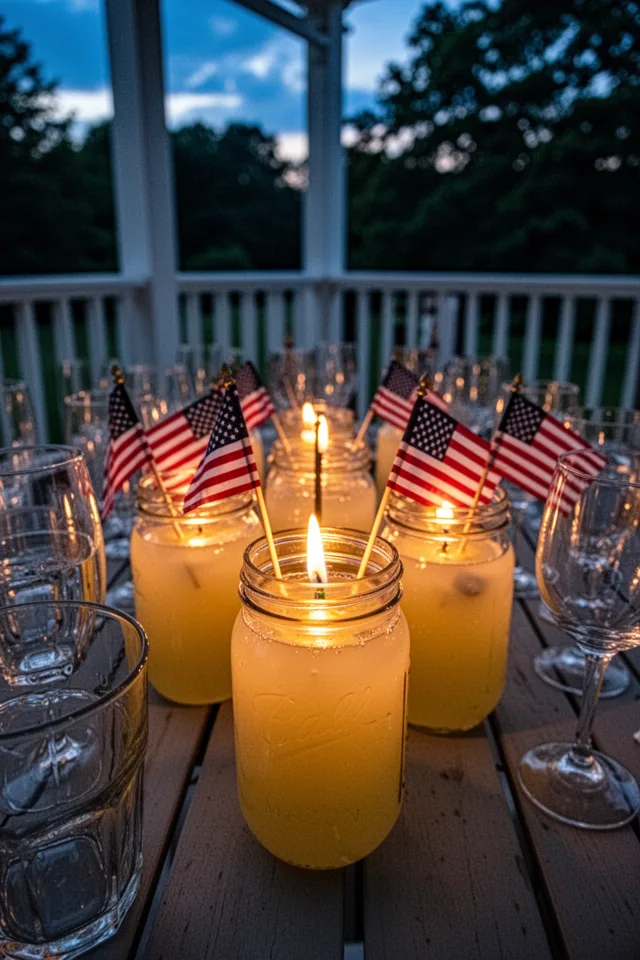
Make your own citronella candles in mason jars (cheaper than buying them, and you control the look). Buy citronella gel wax ($10 for a bag), wicks ($5), and mason jars. Melt the wax according to package instructions, pour into jars, add wick. Before the wax sets, stick mini flag toothpicks (100 for $8) into the top edge of the wax, leaving the flags exposed. When the candle burns, the flags stay above the flame and add a festive touch.
The constraint is that gel wax burns hotter than paraffin. The flags will eventually singe if the flame gets too high. Keep the wick trimmed to 1/4 inch to keep the flame low. Also, never leave these unattended—the flags are paper and could ignite if the flame flares. The version that fails is using real wax and embedding the flags fully—they’ll burn immediately. Flags must be at the edge, above the wax line.
One thing most guides skip: add 10 drops of lemon eucalyptus essential oil to each candle along with the citronella. It doubles the bug-repelling power and smells less like a campground.
12. Tin Can Luminarias With Punched Stars
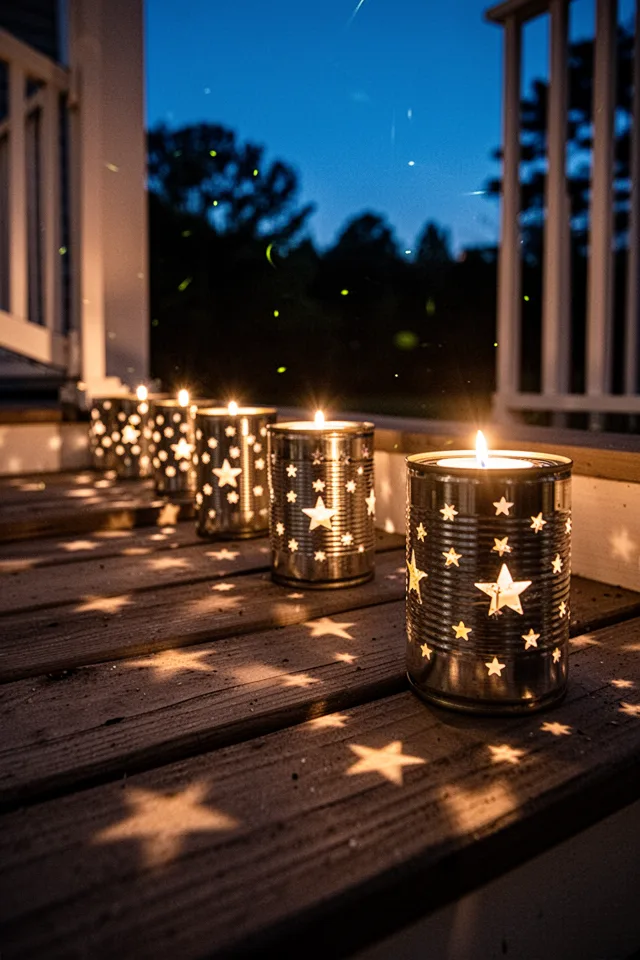
Save tin cans (soup, beans, tomatoes). Remove labels, wash, and dry. Fill with water and freeze overnight. The ice keeps the can from denting when you punch holes. Use a hammer and a nail (or a star-shaped metal punch if you have one) to punch a pattern of stars into the can. Let the ice melt, dry the can, and place a battery tea light inside. Line them along your porch steps or walkway. The light shines through the star holes and projects star patterns on the ground.
Cost is free except for tea lights ($10 for 24). The trade-off is that punching holes in tin cans is tedious and the edges are sharp. File every hole with a metal file or sandpaper. Also, the cans will rust after a single rain. This is a dry-weather-only decoration or a one-night (July 4th) project. The version that lasts is using aluminum cans (soda cans) instead of tin—they don’t rust, but they’re thinner and the holes can tear. Practice on a few first.
Pro tip: Use a 16-penny nail and a hammer. The larger nail creates a bigger hole that lets out more light. Standard finishing nails make pinholes that barely glow.
13. Painted Window Stars From Wax Paper
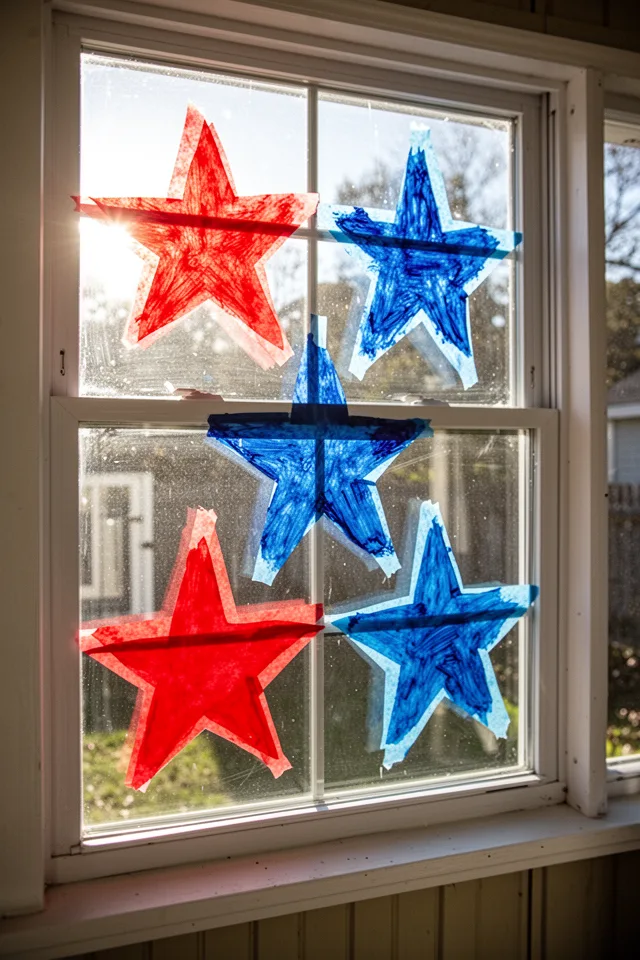
For a non-permanent window decoration, make wax paper stars. Cut wax paper into star shapes (freehand or using a stencil). Color them with red and blue translucent paint (the kind used for stained glass projects) or with permanent markers. Tape them to the inside of your porch windows. When the sun hits, the stars glow like stained glass. Remove after July 4th with no residue.
Cost is under $10 for wax paper and markers. The constraint is that wax paper is flimsy. Use a double layer (two stars glued back-to-back with a thin layer of glue) for stiffness. Also, the paint or marker may bleed through to the window if the star gets wet. Tape only the edges, not the middle. The version that fails is using crayons—they melt in the sun and leave waxy residue on the glass. Markers or paint only.
Pro tip: Use a hole punch to add small hanging loops at the top of each star, then hang them on clear suction cups. They look like they’re floating in the window instead of just taped flat.
14. Flag From Painted Ladder And Blankets
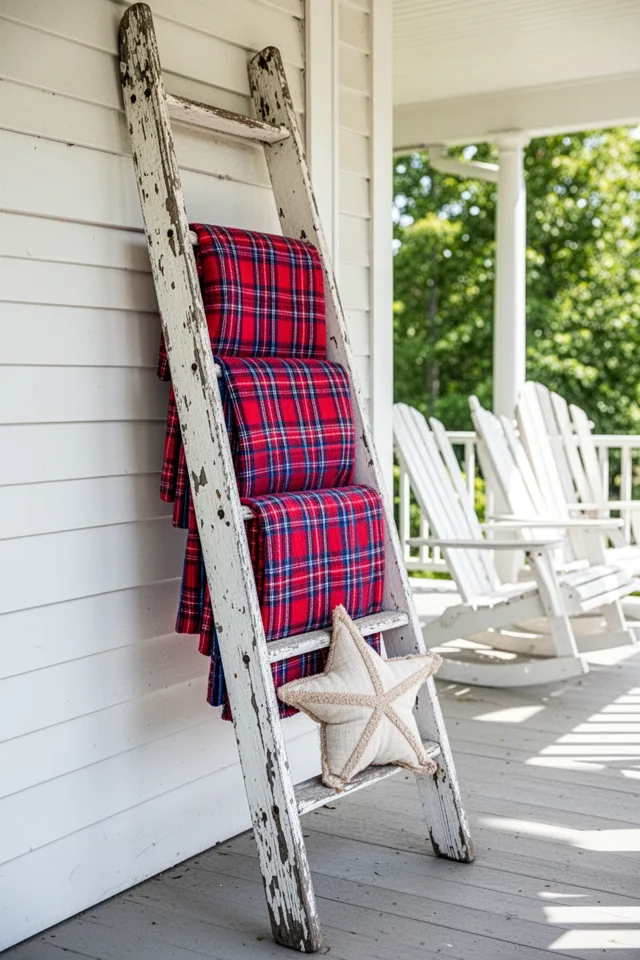
Lean an old wooden ladder (or a new one from a hardware store, $20) against your porch wall. Paint it white. Drape red and blue blankets or throws over the rungs in an alternating pattern—red, white (the ladder itself shows through), blue, white, red. Add a star-shaped pillow or a star decal on the bottom rung. The ladder becomes a sculptural flag that also stores your outdoor blankets for cool July evenings.
Cost is about $30 for a ladder if you don’t have one plus paint. The constraint is stability. A leaning ladder can slip if bumped. Secure the top with a hook screwed into the porch wall, or place heavy potted plants at the base of the ladder to weigh it down. Also, blankets fade in sun. Use inexpensive fleece blankets ($5 each) and replace them every couple of years. The version that fails is using a metal ladder—it looks industrial, not patriotic. Wood only.
Pro tip: Fold the blankets so the edges don’t hang past the rungs. Long dangling corners look messy and become tripping hazards. Neat, tight folds read as intentional.
15. Bicycle Basket Flag Arrangement
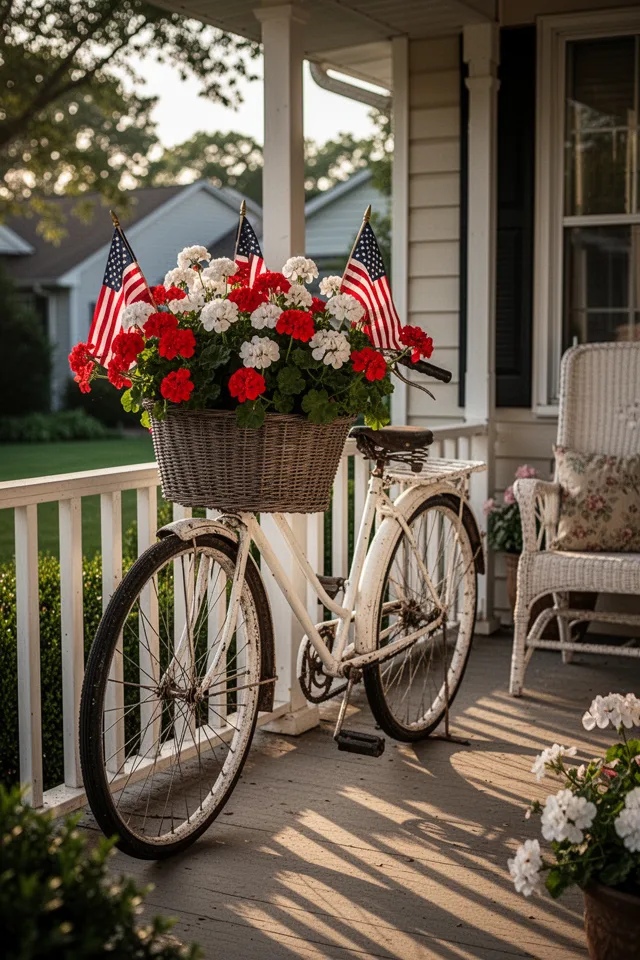
If you have an old bicycle, turn it into a porch decoration. Park it near your front door. Fill the basket with red and white flowers (geraniums, petunias). Tuck small stick flags (sold at dollar stores, 10 for $1) into the flowers. Add a blue ribbon tied to the handlebars. The bike becomes a whimsical, nostalgic focal point that neighbors will remember. No bike? Use a child’s wagon or a red wagon.
Cost is essentially free if you have the bike, plus $10 for flowers and flags. The constraint is that the bike will rust if left out in rain. Place it under a covered porch or be prepared to bring it inside after the 4th. Also, flowers need watering. Use a plastic liner inside the basket to hold moisture, and water daily. The version that fails is using fake flowers—they look sad and dusty within a week. Real flowers are worth the extra attention.
One thing most guides skip: spray the bicycle chain and any metal parts with clear rust-inhibitor spray before putting it outside. Even under a covered porch, humidity will cause rust. $8 can save your bike.
16. Ribbon Lanterns From Dowel And Tissue
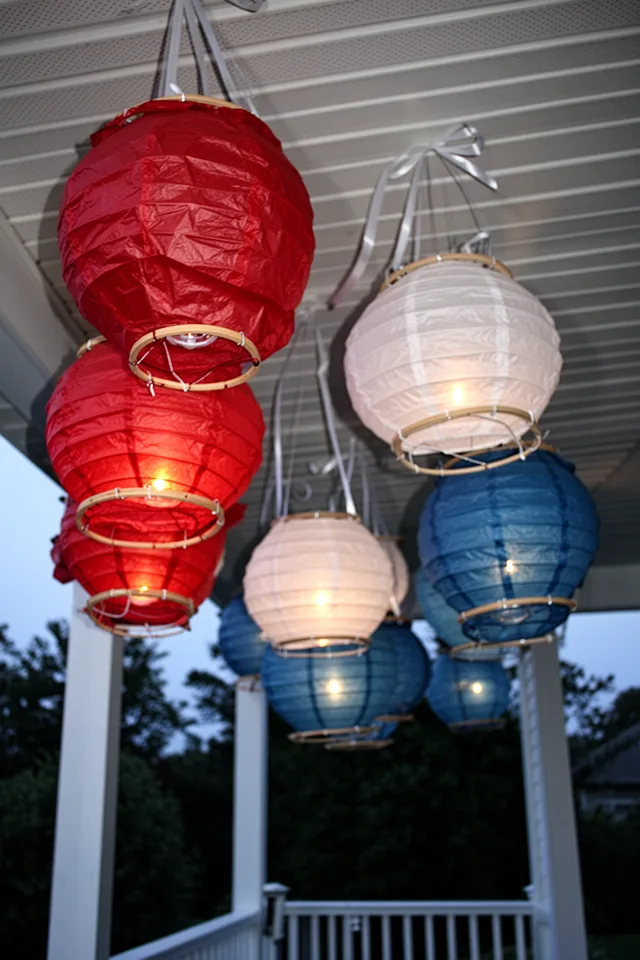
Make your own paper lanterns using wooden dowels (1/4 inch) and tissue paper. Build a cube frame with dowels glued at the corners. Wrap the frame with red, white, or blue tissue paper, securing with glue stick. Insert a battery-operated tea light or a small LED puck light inside. Hang from the porch ceiling with white ribbon. The tissue diffuses the light beautifully, and the homemade quality adds charm that store-bought lanterns lack.
Cost is about $15 for dowels, tissue paper, and lights to make three lanterns. The constraint is that tissue paper tears easily and is not weather-resistant. These are for dry evenings only, or for a covered porch that never gets rain. Also, the dowel frames can warp in humidity. Use bamboo skewers instead—they’re thinner and more moisture-resistant. The version that fails is using hot glue to assemble the frames; it melts in summer heat. Wood glue only.
Pro tip: Spray the finished tissue paper lanterns with clear acrylic sealer. It stiffens the paper slightly and adds a layer of moisture resistance. They’ll still tear, but they won’t wilt in humid air.
17. Fire Cracker Painted Pots
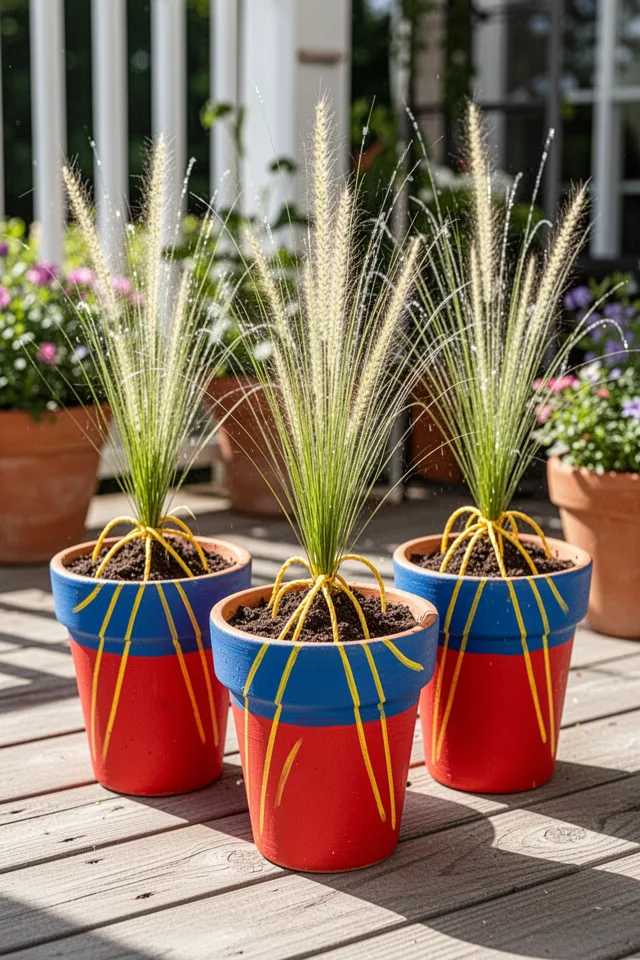
Paint terracotta pots to look like firecrackers. Paint the entire pot red. Once dry, paint a 1-inch blue band around the top rim. Use yellow paint to draw wavy “fuse” lines from the blue band up to the rim. Plant something tall and spiky in each pot—ornamental grass, dracaena spike, or even green onions. The plant becomes the “fuse.” Group three pots on your porch steps for a playful, non-flag patriotic look.
Cost is about $20 for three pots and paint. The constraint is that terracotta is porous; the paint may bubble or peel after repeated watering. Seal the pots with a clear spray sealer before painting, and again after painting. Also, the painted design will fade in sun. Store the pots indoors after July, or accept that they’ll need repainting each year. The version that fails is using plastic pots—paint adheres poorly and peels in sheets.
Pro tip: Use a pencil to draw the fuse lines before painting. Freehand yellow paint is harder to control than it looks. Pencil first, then trace with a small brush.
18. Yarn-Wrapped Wreath In Patriotic Colors
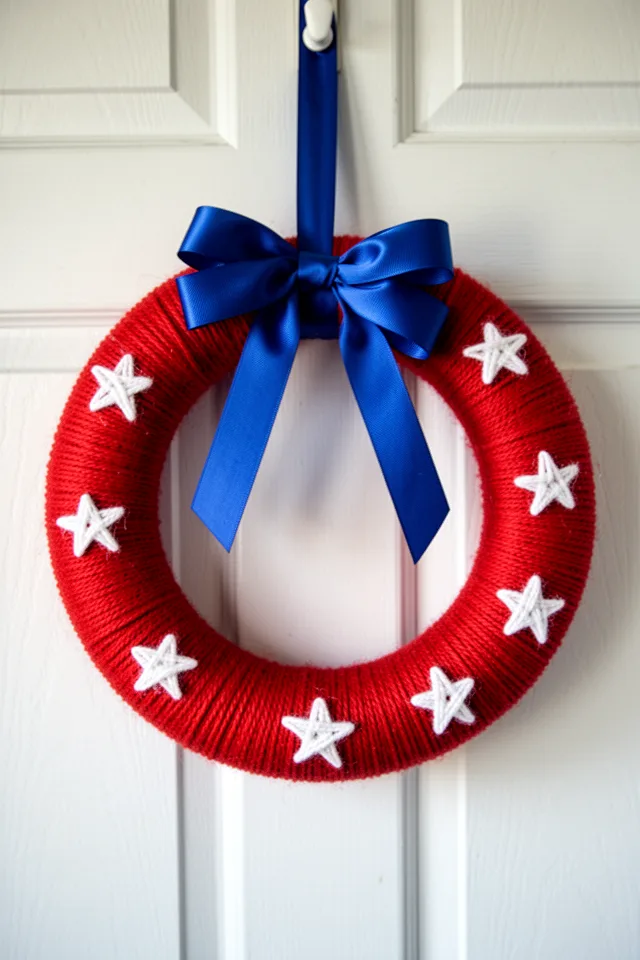
Forget grapevine wreaths wrapped in plastic flag ribbon. Make a yarn-wrapped wreath that’s soft, tactile, and genuinely beautiful. Buy a foam wreath form ($5) and wrap it completely in red yarn (one skein, $3). Use a blue grosgrain ribbon to make a large bow at the bottom or top. Cut small stars from white felt or use white yarn to stitch star shapes onto the red background. The yarn absorbs light instead of reflecting it, giving the wreath a cozy, matte finish.
The trade-off is that yarn wreaths are dust magnets. After a month on a porch, they’ll look fuzzy and gray. Clean with a lint roller or a vacuum with a brush attachment. Also, direct sun will fade red yarn to pink within one summer. Use UV-resistant acrylic yarn (sold for outdoor projects, $6 per skein) or plan to remake the wreath every year. The version that fails is using wool yarn—it felts in humidity and shrinks.
One thing most guides skip: wrap the foam wreath in a thin layer of quilt batting before adding yarn. It gives the wreath a plush, pillowy look that ordinary wrapped foam lacks. Batting is $2 at a craft store.
You don’t need to make your porch look like a flag factory exploded. The best patriotic decor is the kind that feels personal, handmade, and slightly imperfect. The bandana bunting, the painted rock collection, the ladder with blankets—these are the things that make neighbors stop and say “I love what you’ve done,” not “oh, you also bought the same inflatable eagle from the same big box store.”
If you’re wondering where to start, make the clothespin flags. They cost under $10, take an evening with a glue gun, and involve your whole family. Hang them on a piece of twine across your porch railing. That single, simple project will give you more joy and more compliments than any expensive inflatable ever could. And when July 5th comes, you can take them down, put them in a ziploc bag, and use them again next year.
Remember this page the next time you’re sitting on your porch as the sun goes down on July 4th, firecrackers popping in the distance, and you realize that the best decorations aren’t the ones you bought—they’re the ones you made with your own hands, and the memories you made while making them. That’s the real independence day spirit.