I killed every plant in my front yard rock garden. Twice. The first time, I threw down landscape fabric, dumped a load of river rock, and stuck in a few succulents that promptly rotted in the winter rain. The second time, I tried to copy a desert look from Arizona—in the Pacific Northwest. The rocks looked great. The plants looked miserable. My neighbor asked if I was going for “lunar landscape.” That was the low point.
Most rock garden advice assumes you either live in a desert or have unlimited time to weed between boulders. The guides never talk about the specific constraints of a small front yard—the narrow strip between sidewalk and house, the shade from a porch, the way rocks heat up and cook plant roots in summer. They certainly don’t address the awkwardness of a rock garden that looks like an afterthought rather than a deliberate design. And the photos are always of massive Alpine landscapes, not the 15×10 foot plot most of us actually have.
So I’m writing the rock garden guide for the rest of us. These 18 designs have all worked in my own small front yards (yes, plural—I’ve moved and started over). Each idea respects the constraints of small spaces: foot traffic, foundation plantings, utility access, and the reality that you still want color and texture, not just a pile of gravel. Some use almost no plants at all. Others are mostly plants with rocks as accents. All of them can be done for under $200, most for under $50. And none of them will make your neighbors ask if you’re going for a moonscape.
1. The Dry Creek Bed That Doubles As Drainage
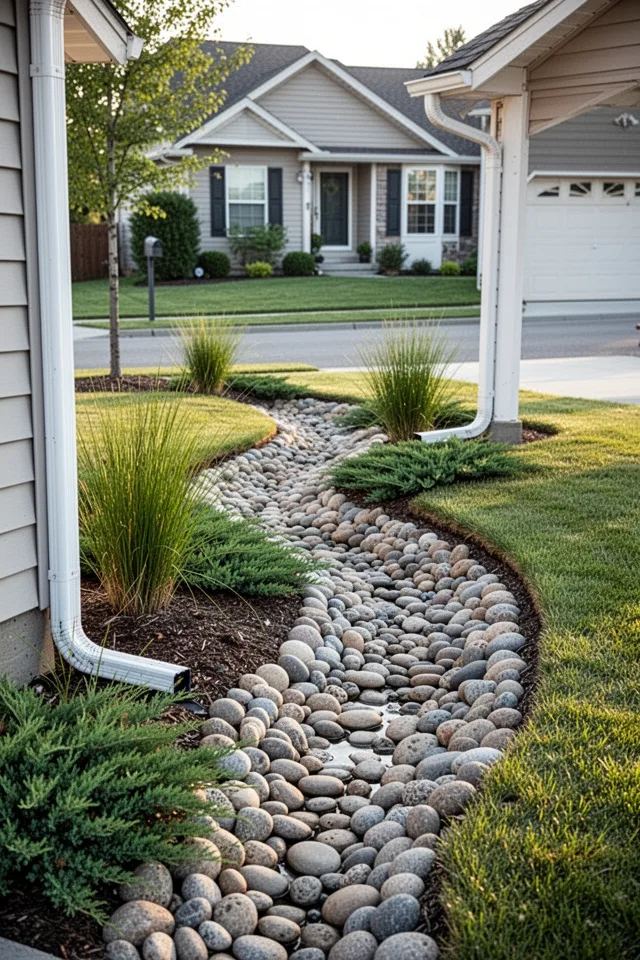
If your front yard has a drainage problem, work with it. Dig a shallow swale from your downspout to the street or a rain garden, then line it with landscape fabric and fill with 2-3 inch river rocks in graduated sizes—small at the edges, larger in the center. The creek bed directs water away from your foundation and looks intentional. Plant drought-tolerant natives along the edges to soften the look. It’s functional and beautiful.
Cost is about $60 for rocks for a 15-foot creek bed. The trade-off is that leaves and debris collect in the rocks. You’ll need a leaf blower or a rake weekly in fall. Also, the creek bed can become a mosquito breeding ground if water pools. Ensure proper slope (1 inch of drop per 8 feet). The version that fails is using rounded pea gravel—it shifts and washes away. Use angular river rock or drain rock.
Pro tip: Line the creek bed with a layer of larger rocks at the bottom before the small rocks. The gaps create reservoirs for water to percolate slowly, preventing washout during heavy rain.
2. The Boulder Cluster With Low Mounding Plants
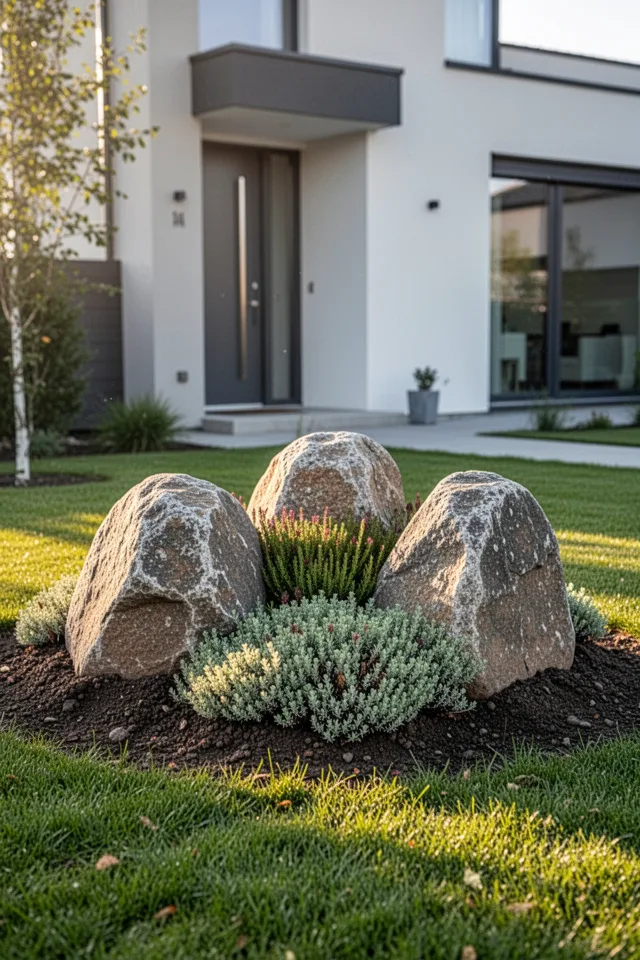
Don’t scatter rocks randomly. Group them in odd numbers—three or five—and bury the bottom third of each boulder so they look like they’ve always been there. Space them 6-12 inches apart. Plant low, mounding perennials like creeping thyme, sedum, or dwarf oregano between and around them. The plants soften the hard edges, and the rocks provide heat and drainage that these sun-lovers crave.
Cost is the most variable part. Boulders run $50-$150 each at a landscape supply yard. But you can find free ones from construction sites (ask permission) or buy smaller “outcrop” stones for $10 each. The trade-off is that boulders are heavy. You’ll need a hand truck or several friends. Also, placement is permanent—change your mind? You need heavy equipment. The version that works for small yards is using “chopped” boulders (flat on the bottom) so they sit stable without sinking.
One thing most guides skip: Rotate the boulders to show their best face. One side is usually more weathered and textured. Take your time. A boulder can look completely different from each angle.
3. The Gravel Patio With Flagstone Steppers
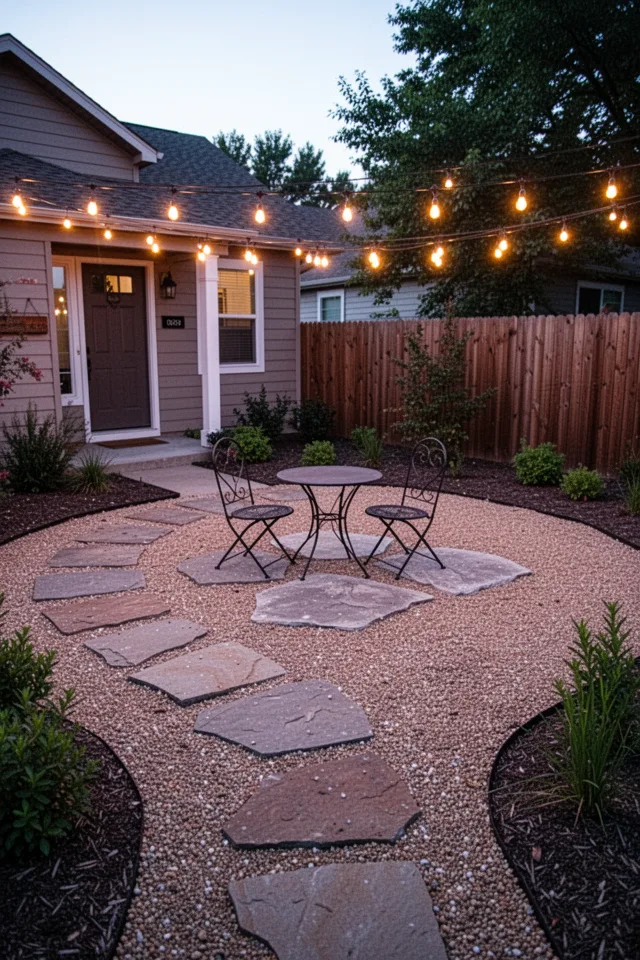
If your front yard is too small for a lawn, turn part of it into a gravel patio. Excavate 4 inches, lay landscape fabric, add 3 inches of crushed granite or pea gravel, then set flagstones on top as a stable surface for furniture. The gravel drains, never needs mowing, and feels Mediterranean. The flagstones prevent chair legs from sinking. Plant pots with herbs or flowers around the edges for lushness.
Cost is about $100 for a 10×10 area (fabric, gravel, a few used flagstones). The trade-off is that gravel migrates—onto the sidewalk, into your house. Use a metal edging to contain it. Also, weeds will eventually grow through the fabric. Spot-treat with vinegar or pull them. The version that fails is using rounded pea gravel—it shifts underfoot and is impossible to walk on in heels. Decomposed granite or crushed bluestone compacts.
Pro tip: Rent a plate compactor for $40 to compact the gravel. Without compaction, your chairs will wobble and the gravel will feel like walking on loose sand.
4. The Succulent Carpet Between Stepping Stones
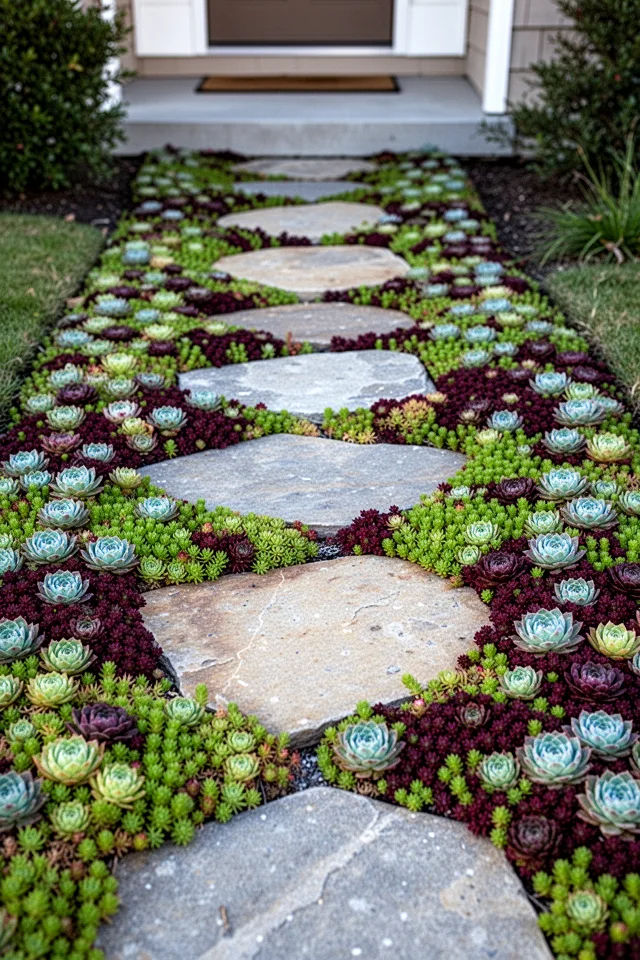
Instead of grass or gravel between stepping stones, plant a carpet of cold-hardy succulents. Sedum album, Sedum spurium, and sempervivum (hens and chicks) tolerate foot traffic, spread quickly, and stay under 3 inches tall. Set your stepping stones 8-12 inches apart (center to center). Plant the succulents in the gaps. Within one season, they’ll fill in completely. The result is a lush, no-mow path that looks like a tapestry.
Cost is about $30 for a flat of sedum (covers 10 square feet). The constraint is that succulents need full sun to thrive. This won’t work in a shaded front yard. Also, they need well-draining soil. If your yard has clay, amend with coarse sand before planting. The version that fails is planting in deep shade—the succulents stretch and rot. For shade, use creeping thyme or Irish moss instead.
Pro tip: Set the stones so their tops are 1/2 inch above the soil level. The succulents will grow right up to the stone edges, making the path look embedded rather than plopped on top.
5. The Raised Mound With Dwarf Conifers
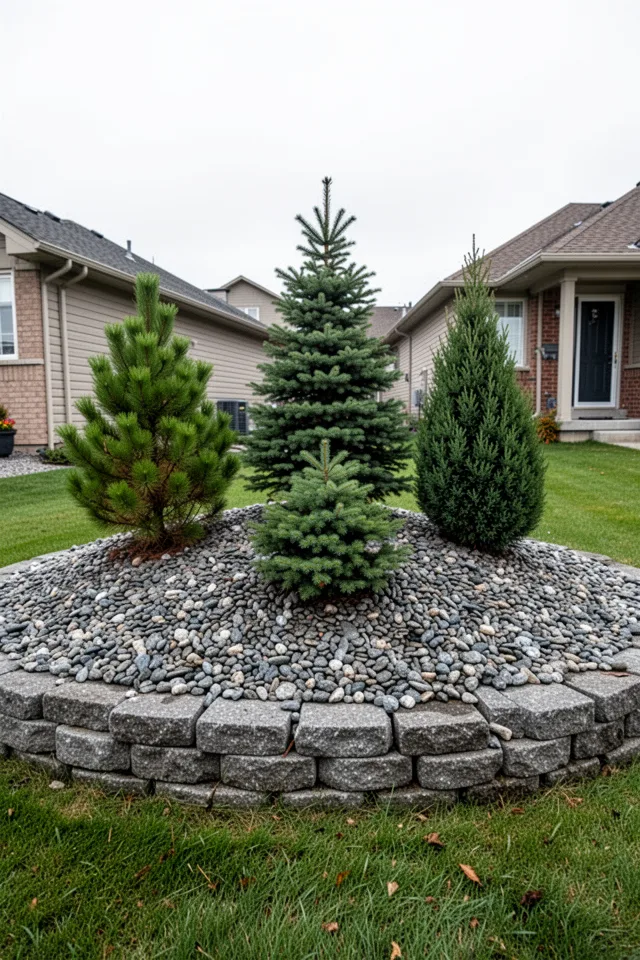
Flat rock gardens look like parking lots. Add topography. Bring in soil to create a low mound (18 inches high, 6 feet across). Plant the mound with dwarf conifers—these stay small for 10-15 years. Cover the rest of the mound with 2-inch river rock or crushed gravel. The conifers provide year-round structure and green. The mound adds visual interest to an otherwise flat front yard.
Cost is about $50 for soil, $60 for three small conifers, $40 for rocks. The trade-off is that dwarf conifers eventually outgrow their space. Read the tag—a “dwarf” may grow to 6 feet in 10 years. Plan for that. Also, the mound will settle over time. Add more soil after the first winter. The version that fails is using standard-sized conifers. They’ll overwhelm a small yard within 5 years.
Pro tip: Plant the conifers off-center on the mound, not at the top. An off-center planting looks natural; a top-centered planting looks like a cake decoration.
6. The Monochromatic Gravel Garden
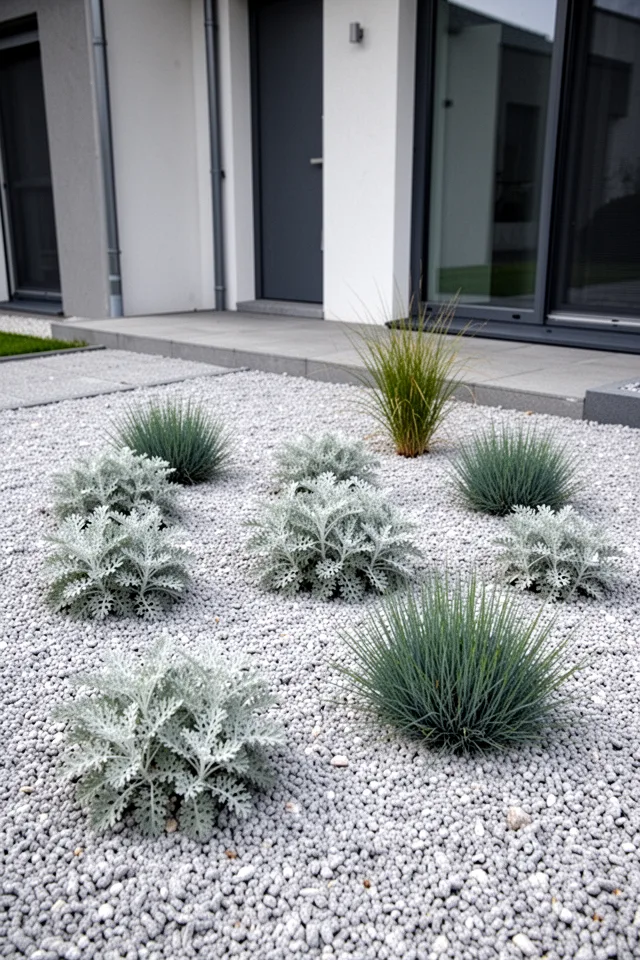
Sometimes the most lush look comes from restraint. Choose a single color of gravel—pale gray, buff, or white—and use it everywhere. Then plant drifts of silver and blue-green foliage plants: artemisia, lamb’s ear, blue fescue, and sedum. The monochrome palette makes the textures pop. The plants look lush against the neutral rock. This is a high-design look that costs less than you’d think.
Cost is about $100 for gravel for a 10×15 front yard. The constraint is that you need to commit to the palette. No random flower colors. A stray pink petunia will ruin the effect. Also, weeds show up instantly against pale gravel. Stay on top of weeding. The version that fails is using mixed gravel colors—it looks like a construction site. Pick one color and stick with it.
One thing most guides skip: use a gravel color that matches your house’s trim or your sidewalk. Pale gray gravel next to a gray sidewalk disappears and makes the plants float. High contrast (white gravel, dark house) is more dramatic but shows dirt faster.
7. The Shade Rock Garden With Foam Flowers
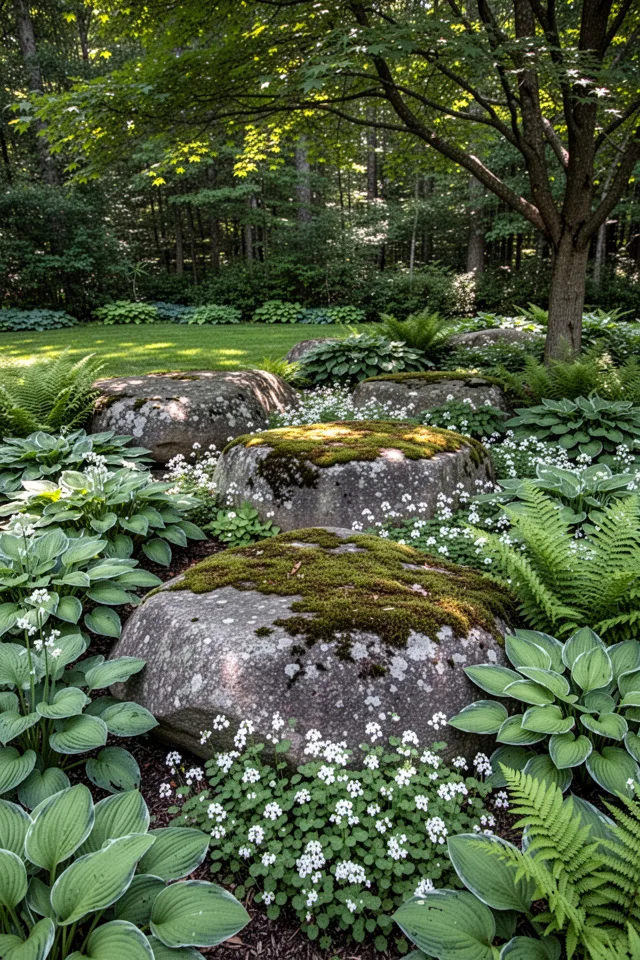
Rock gardens don’t need full sun. For shady front yards, use large, flat rocks (flagstone or blue stone) as anchors. Plant shade-loving perennials around them: foamflower (Tiarella), hosta, ferns, and heuchera. The rocks stay cool and provide a microclimate for moisture-lovers. The moss that naturally grows on the rocks makes the garden look established. This is the rock garden for people who thought they couldn’t have one.
Cost is about $40 for a few flat rocks (check Craigslist for free flagstone). The constraint is that shade rock gardens can look messy if not edited. Stick to 3-4 plant species repeated. Also, slugs love hostas in shade. Use slug bait or choose slug-resistant plants like ferns and foamflower. The version that fails is using small, round rocks in shade—they look like a riverbed, not a garden. Flat rocks only.
Pro tip: Brush plain yogurt or buttermilk onto the rocks to encourage moss growth. The lactic acid promotes moss spores. Within a year, you’ll have a velvety green surface.
8. The Potted Rock Garden For Renters
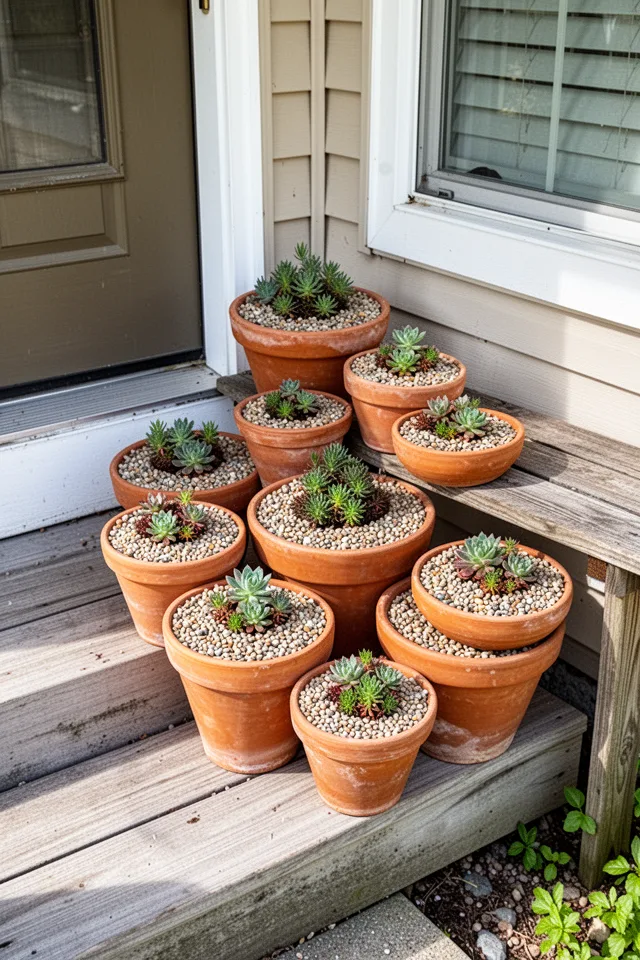
Renters can’t dig up the front yard. But you can create a rock garden entirely in pots. Use shallow, wide pots (azalea pots or bulb pans) to mimic the spread of alpine plants. Fill with a gritty succulent mix, plant small sedums, sempervivums, or dwarf conifers, then top-dress with pea gravel or small crushed granite. Cluster the pots on a bench, steps, or even the ground. When you move, the whole garden moves with you.
Cost is about $50 for 5-6 pots and plants. The constraint is that pots dry out faster than ground soil. Water weekly, or more often in heat waves. Also, terra cotta pots crack in frost. Use plastic or fiberstone pots if you’re in a freezing climate, or bring them indoors for winter. The version that fails is using deep, narrow pots—alpine plants have shallow roots and will rot. Shallow and wide is the rule.
Pro tip: Use a mix of pot colors—terra cotta, gray, and white—to create visual interest. All one color looks like a nursery display. Vary heights and shapes too.
9. The River Rock Swirl Around A Tree
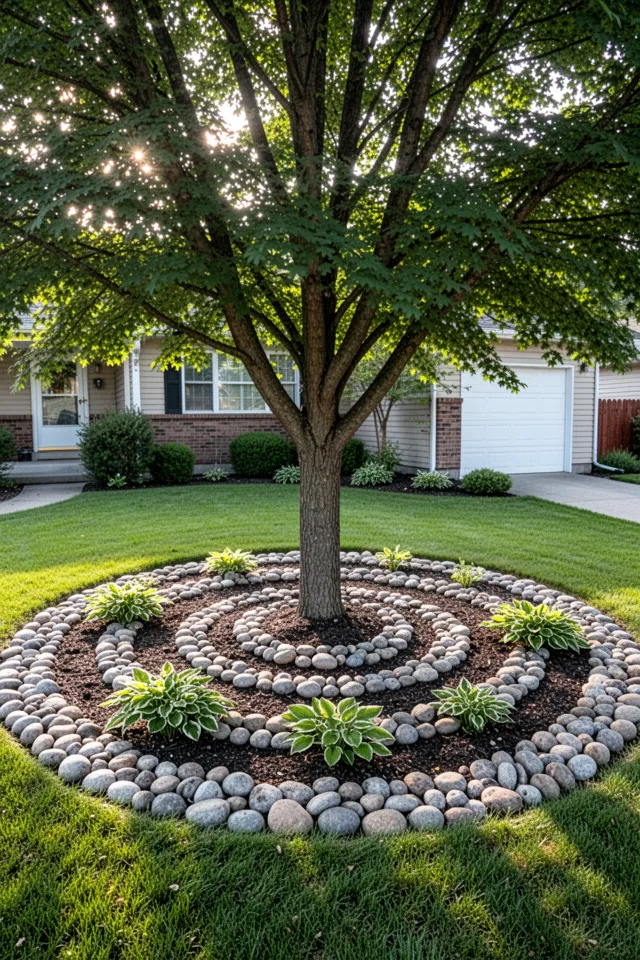
Grass struggles to grow under trees (root competition, shade). Replace it with a rock swirl. Mark a 4-6 foot circle around the tree trunk. Remove grass, lay fabric, and arrange river rocks in a swirling pattern—not a boring solid circle. Use larger rocks along the outer edge, smaller toward the center. Leave a few open pockets for shade-loving plants. The swirl draws the eye and solves the “bald patch under tree” problem.
Cost is about $40 for rocks. The constraint is that tree roots are close to the surface. Don’t dig more than 2 inches deep or you’ll damage roots. Lay fabric directly over the existing soil, then add rocks. Also, don’t pile rocks against the trunk—it can cause rot. Leave 3 inches of bare soil around the trunk. The version that fails is using a solid color of rock; the swirl needs contrast in rock size, not color.
One thing most guides skip: add a few stepping stones within the swirl so you can reach the tree for pruning without walking on the rocks. Stepping stones also break up the swirl visually.
10. The Gravel And Ornamental Grass Border
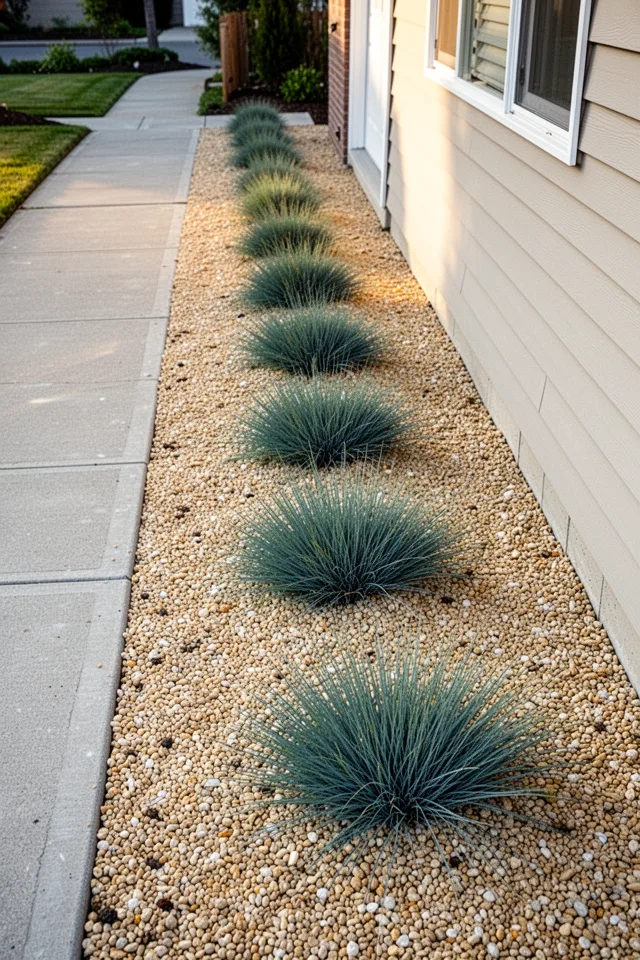
Narrow side yards and foundation strips are hard to plant. The traditional approach (a line of shrubs) often gets too wide. Instead, cover the entire strip with 2 inches of pea gravel or crushed shell. Plant clumps of ornamental grass every 3-4 feet—blue fescue, Japanese forest grass (for shade), or little bluestem. The grasses provide height and movement. The gravel is zero maintenance. It looks intentional and clean.
Cost is about $50 for gravel for a 20-foot strip. The constraint is that grasses need full sun to look good (blue fescue turns green in shade). For north-facing strips, use sedges (Carex) instead. Also, the grass clumps will expand over time. Plan for 18 inches of width per clump. The version that fails is using a single grass species; repetition creates rhythm. Use one species repeated, not a collection.
Pro tip: Cut back the grasses to 3 inches in late winter. Fresh new growth looks best in spring. Leave the seed heads over winter for visual interest and bird food.
11. The Alpine Trough Garden
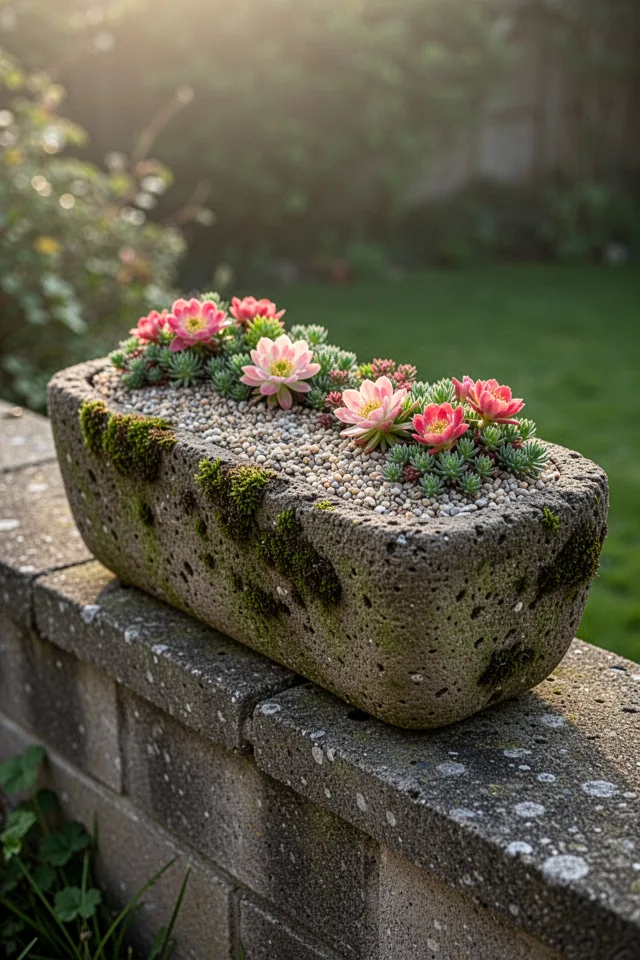
If you have limited ground space, go vertical with a trough garden. Buy a concrete trough (or make one from hypertufa—a mix of cement, peat moss, and perlite). Drill drainage holes. Fill with gritty alpine mix. Plant miniature rock garden plants like saxifrage, lewisia, and dwarf sedum. Top-dress with fine gravel. The trough sits on a wall, a pedestal, or even the ground. It’s a rock garden in miniature.
Cost is about $30 for a pre-made trough or $15 for hypertufa supplies. The constraint is that troughs need excellent drainage. Elevate the trough on small feet (brick pieces) so water can exit. Also, they dry out fast. Water frequently, but don’t let them sit in water. The version that fails is using a container without drainage holes—alpine plants rot within weeks.
Pro tip: Age a new concrete trough by painting with plain yogurt and keeping it moist in the shade. Within a month, moss and lichen will grow, making it look 50 years old.
12. The Black Lava Rock And Lime Green Sedum
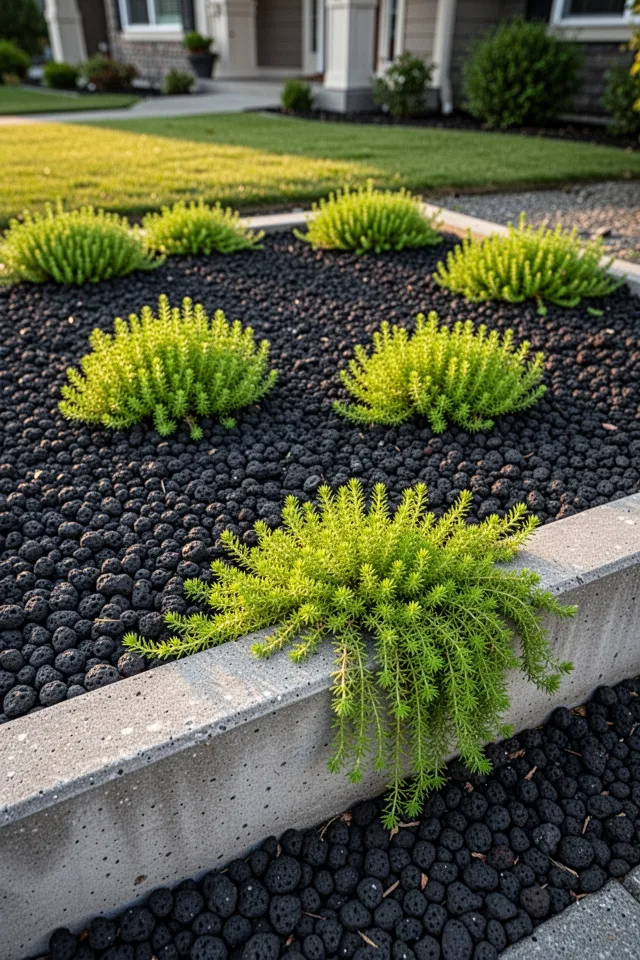
For a contemporary look, use black lava rock as your primary ground cover. The dark color recedes visually, making plants stand out. Plant bright, chartreuse sedum ‘Angelina’ in large drifts. The lime green against black is electric. Add a few upright elements like black mondo grass or a dark-leaved heuchera. This is the rock garden for people who think traditional rock gardens are too beige.
Cost is about $10 per bag of lava rock; you’ll need 5-6 bags for a 50 square foot area. The constraint is that black lava rock absorbs heat and can cook plant roots in full sun. Use it only in areas that get afternoon shade, or plant heat-tolerant succulents. Also, the black color fades to dark gray over a few years. That’s fine—it’s still dark. The version that fails is using red lava rock, which looks like a barbecue pit.
Pro tip: Edge the black rock with a steel or aluminum border. Black rock blends into dark soil and mulch, so without a distinct edge, it looks like a shadow on the ground. A metal edge defines it.
13. The Railroad Tie And Gravel Terrace
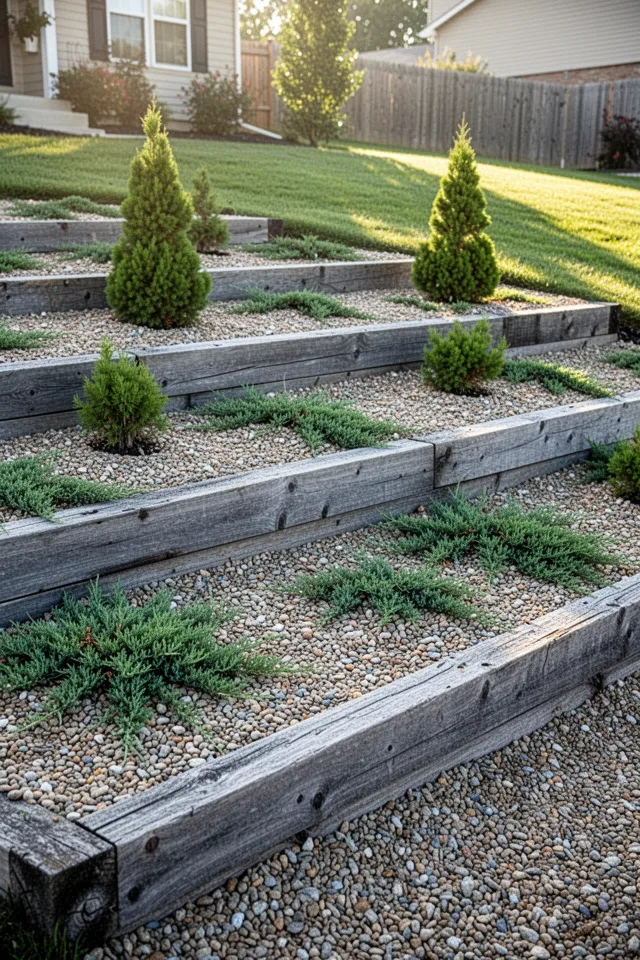
Sloped front yards are hard to plant and hard to mow. Terrace them with railroad ties (or landscape timbers) and fill the terraces with gravel. Plant low-maintenance evergreens like creeping juniper and dwarf spruce on each level. The gravel stops erosion, the ties create structure, and the evergreens provide year-round green. It turns a problem slope into a designed feature.
Cost is about $40 per railroad tie (used ones are cheaper but check for creosote). For a small slope, 3 ties and gravel run $150. The constraint is that used railroad ties often leach creosote, which is toxic. Don’t use them near vegetable gardens or where kids play. Use new landscape timbers instead (treated pine, $15 each). The version that fails is using ties without anchoring them—they roll downhill. Drive rebar through the ties into the ground.
One thing most guides skip: backfill behind each tie with crushed stone before adding gravel on top. The stone provides drainage and prevents the tie from rotting against wet soil.
14. The White Garden With Marble Chips
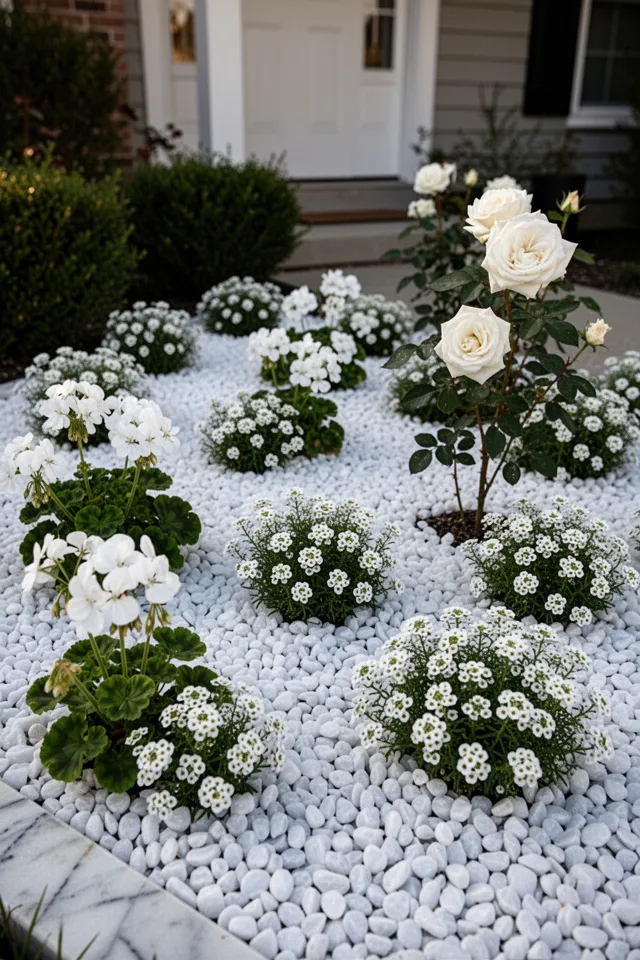
White marble chips are expensive ($15 per bag) but they create a dramatic “moon garden” effect. Use them sparingly—as a 3-foot wide border along the walkway, or as a bed under a white-blooming tree. Plant only white flowers: alyssum, geraniums, candytuft, or white roses. The white-on-white-on-white is luminous at dusk. It’s a rock garden for romantic minimalists.
The trade-off is that white marble shows every bit of dirt, leaf, and bird dropping. You’ll be blowing leaves off weekly. Also, the chips are sharp to walk on. Use them only in beds, not on paths. The version that fails is using crushed white limestone—it dissolves over time and turns muddy. Marble chips are harder and last longer.
Pro tip: Plant night-blooming jasmine or moonflower alongside the white garden. The flowers open at dusk and release fragrance, turning the white garden into an evening experience.
15. The Fairy Rock Garden For Kids
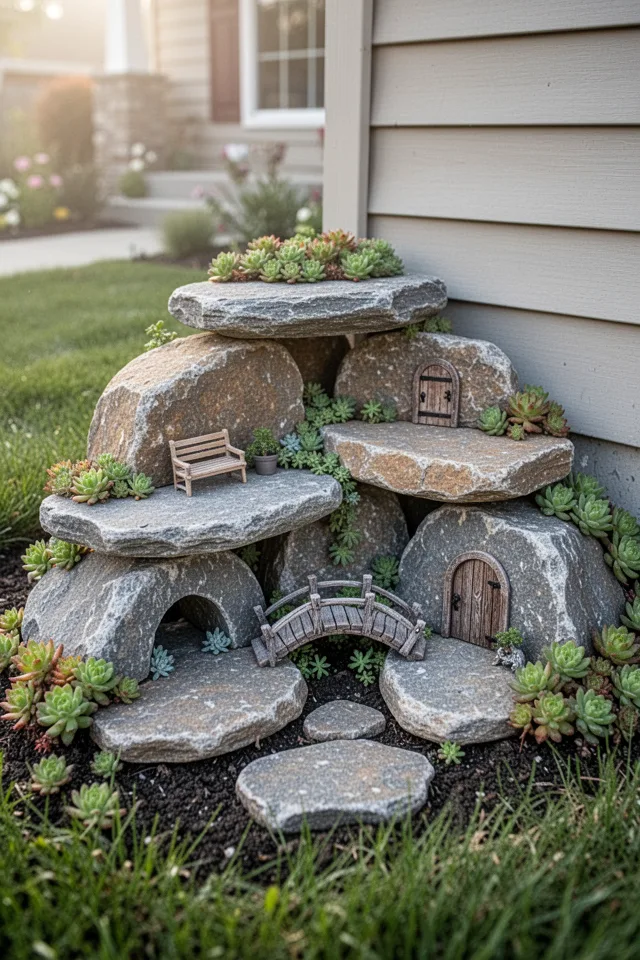
If you have young kids (or are young at heart), create a miniature rock garden specifically for play. Use flat schist or slate pieces to build tiny “houses” and “caves.” Plant tiny-leaved plants like Irish moss, miniature sedums, and thyme. Add fairy-sized accessories (benches, doors, bridges) from craft stores. The rocks provide structure, the plants soften it, and the whole thing invites imagination. It’s a garden that tells a story.
Cost is about $30 for rocks and accessories. The constraint is that small accessories will disappear or break. Glue them down with outdoor adhesive, or accept that you’ll replace them. Also, the plants need to tolerate some foot traffic (tiny fairy feet are fine, but real kid feet may crush them). The version that fails is using large, heavy rocks that are too big for tiny hands to rearrange. Kids want to move things.
Pro tip: Leave a small jar of “fairy dust” (glitter or colored sand) next to the garden. Kids can sprinkle it on paths. It adds magic and keeps them engaged all summer.
16. The Sea Shell And Crushed Coral Driveway Border
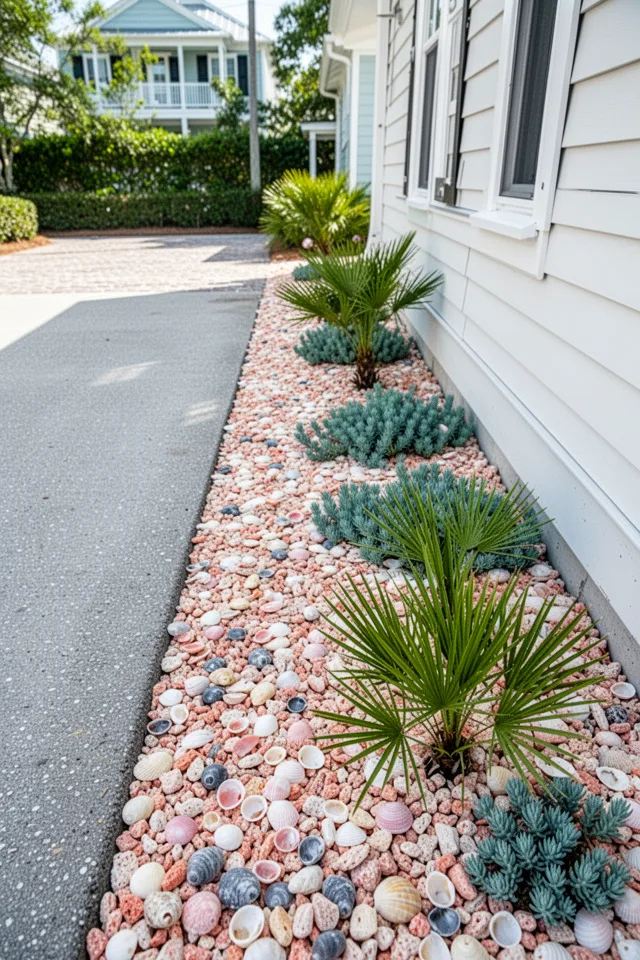
For a coastal feel without the beach, use crushed coral (sold as chicken grit) and mixed seashells as your rock garden mulch. The shells are alkaline, so pair them with plants that like high pH: lavender, sedums, rosemary, and palms like sabal minor. The shells reflect light and create a textural crunch underfoot. It’s a rock garden for people by the ocean—or people who wish they were.
Cost is about $20 for a 10-pound bag of crushed coral (feeds 5 square feet). The constraint is that shells will eventually break down into sand, especially in foot traffic. Use this in low-traffic beds only. Also, the alkalinity can harm acid-loving plants like azaleas. Keep it away from them. The version that fails is using fresh shells from the beach—they smell like fish as they decay. Buy commercially cleaned shells.
Pro tip: Rinse the shells and coral with a hose after installation. Dust and debris cloud the look. A good rinse reveals the true colors—pale pinks, creams, and pearly whites.
17. The Lava Rock And Air Plant Feature
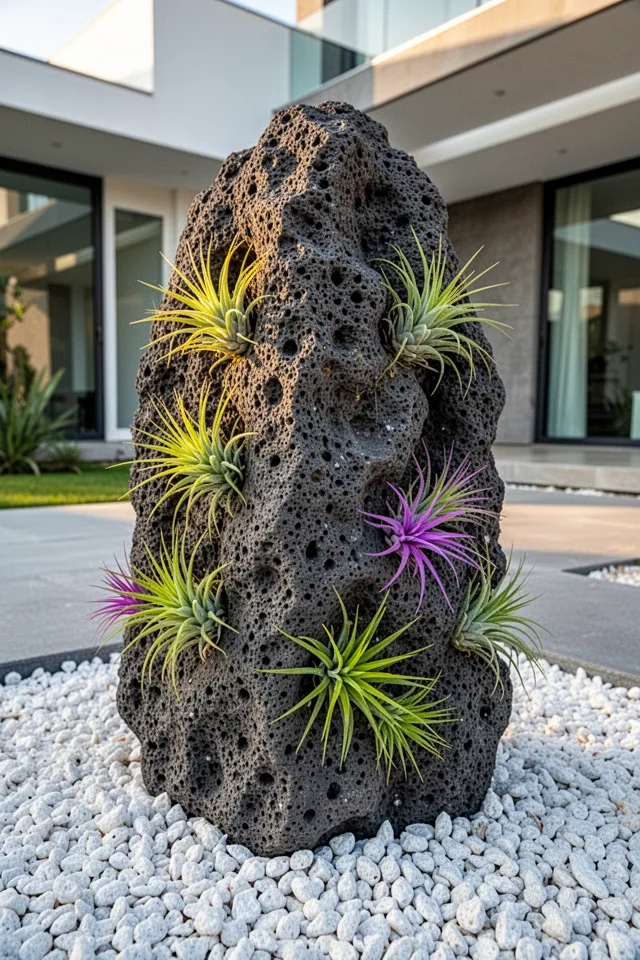
Air plants (tillandsia) don’t need soil. They absorb moisture from the air. So you can create a rock garden that’s literally a rock with plants on it. Find a large, porous lava rock (landscape supply, $15). Use silicone adhesive to attach air plants to the rock in crevices. Place the rock on a bed of contrasting gravel. Mist the air plants weekly. It’s living sculpture.
The constraint is that air plants need humidity. In dry climates, they’ll crisp up. Mist daily or place a small humidifier nearby. Also, the silicone can show. Use a small amount and tuck it behind the plant. The version that fails is using non-porous rock like granite—nothing to glue to. Lava rock’s holes provide natural anchor points.
Pro tip: Soak the whole lava rock in a bucket of water for an hour every two weeks. The rock absorbs water and releases humidity slowly, keeping air plants happy without daily misting.
18. The Tumbled Glass And Ground Orchid Combo
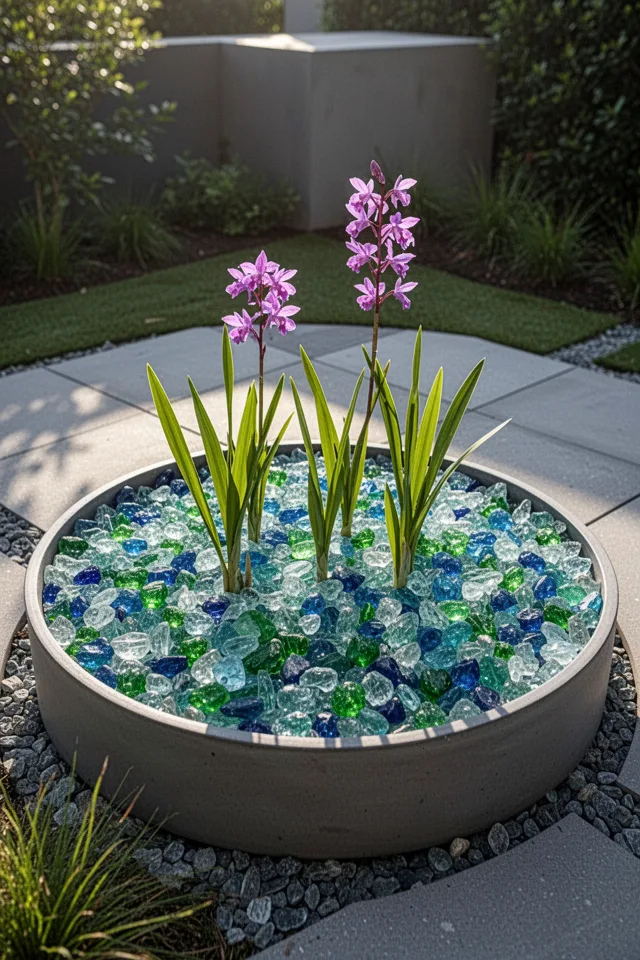
For a truly unexpected rock garden, use tumbled glass instead of rock. Recycled glass mulch (sold at landscape suppliers) is made from crushed bottles, tumbled smooth. It comes in colors—cobalt blue, emerald green, amber. Plant ground orchids (Bletilla) or other bold perennials directly into soil below the glass. The glass won’t fade, won’t wash away, and creates a jewel-like surface. It’s expensive, but for a small feature bed, it’s worth it.
Cost is about $15 per 5-pound bag (covers 2 square feet at 2 inches deep). For a 3-foot circle, you need about $40 of glass. The constraint is that the glass is slippery underfoot. Don’t use it on paths or where people walk. Also, it gets hot in sun. Plant heat-tolerant species. The version that fails is using crushed glass that isn’t tumbled—sharp edges will cut you and plant roots. Tumbled only.
Pro tip: At dusk, shine a low-voltage uplight through the glass bed. The glass glows from within, looking like a bed of embers or gemstones. Absolutely magical.