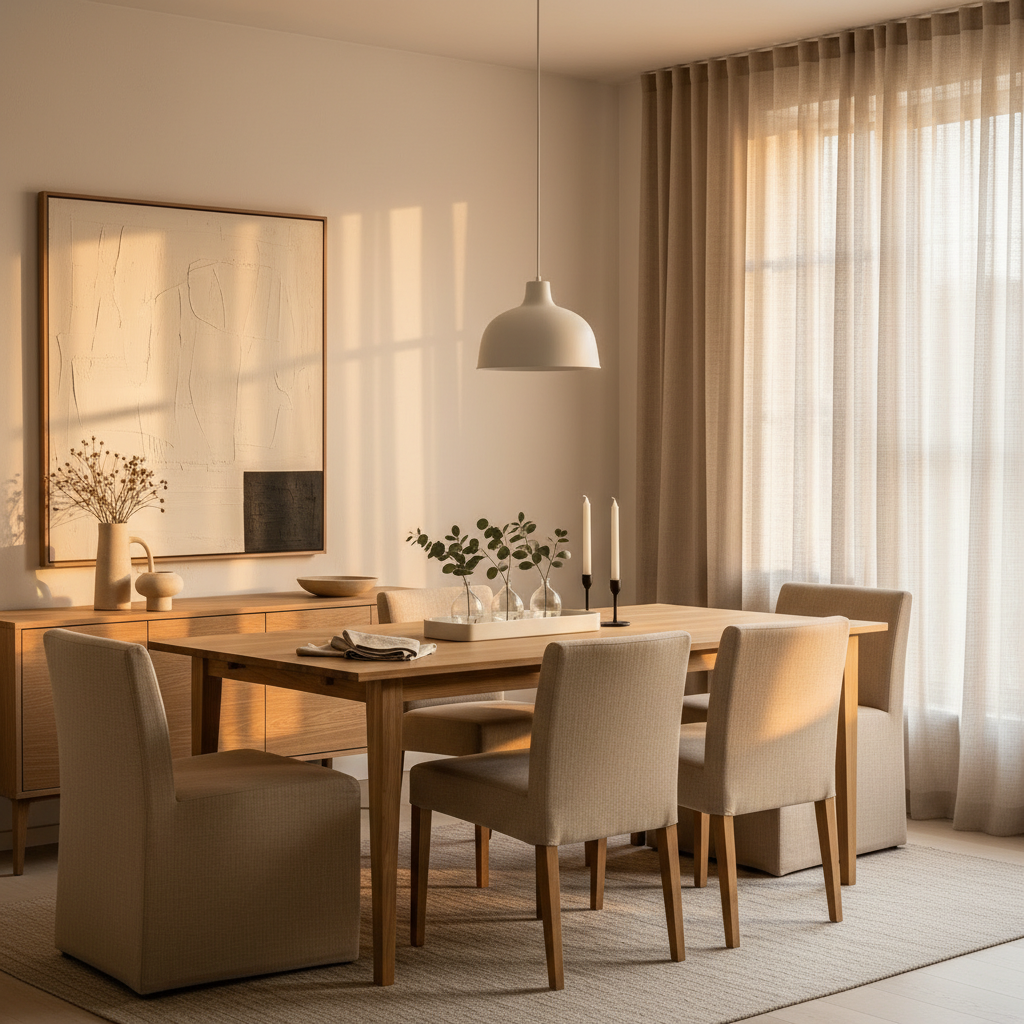
I grew up twenty minutes from the Atlantic, so I know the difference between a beach house and a beach-themed bedroom. The difference is that one smells like salt spray and feels like sand between the floorboards, and the other has a starfish decal on the wall and a “life is better at the beach” sign. Most coastal bedroom advice is the second one. It is Hobby Lobby nautical, not real seaside living. Real coastal style is weathered, imperfect, and practical. It survives humidity. It does not try too hard. And it certainly does not involve rope-wrapped mirrors.
The problem with most coastal design articles is they treat “beach” as a color palette (blue and white) instead of a way of handling materials. They ignore the real constraints of beachside living: the salt air that corrodes metal, the humidity that swells wood, the sand that gets everywhere. And they forget that the best coastal bedrooms are not themed. They are just rooms that happen to be near water — rooms that feel open, rested, and a little bit worn by the elements.
These twenty-five ideas come from actual beach houses, not Pinterest mood boards. I have lived with driftwood furniture that fell apart, with jute rugs that smelled like a wet dog, with white bedding that turned yellow from sunscreen. The ideas here are the ones that survived. Some are cheap. Some are investments. All of them will make your bedroom feel like a place where you could hear gulls if you listened hard enough, even if you are landlocked in Ohio. Let us get specific.
1. Limewashed Wide-Plank Pine Floors That Weather Gracefully
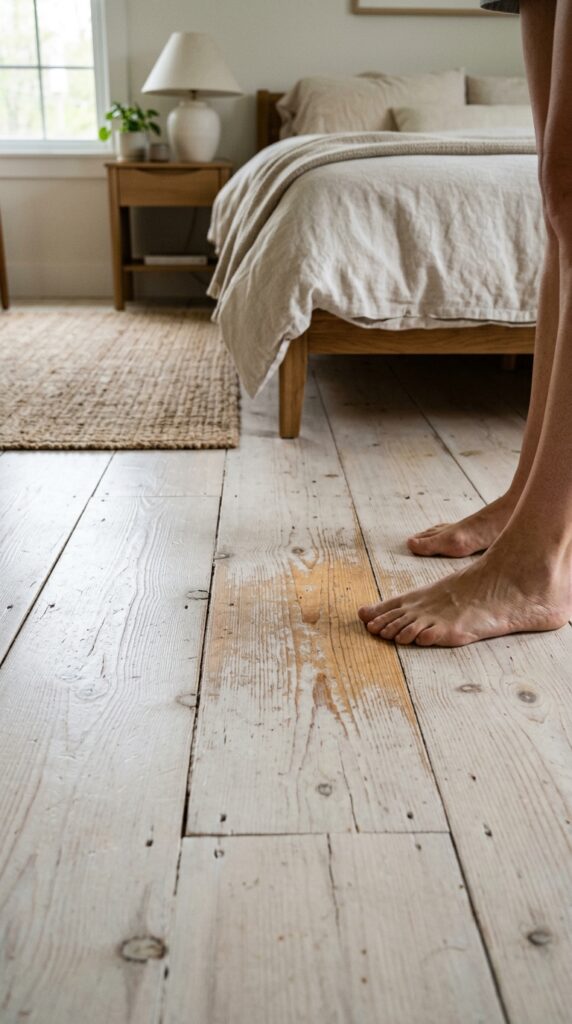
Dark floors absorb light and show every speck of sand. Glossy floors reflect too harshly. Limewashed wide-plank pine is the coastal sweet spot. The white pigment reflects light without glare, and the limewash finish is porous enough that it does not show scratches. I limewashed my bedroom’s existing pine floors using a DIY mix of white latex paint thinned with water (three parts water to one part paint), and the result looks like a beach cottage that has been there for a century.
The process is messy and requires sanding first. If you are not willing to sand an entire floor, skip this. Budget $50 for limewash materials per room if you DIY, or $500+ for professional application. The trade-off is that limewash is not durable like polyurethane. It will wear away in high-traffic areas — but that wear looks intentional in a coastal bedroom. Do not use this in a rental or if you want perfect floors. Imperfection is the feature.
Limewashed floors need resealing every two to three years with a matte wax. Skip the wax and they will powder slightly underfoot — fine for bare feet, bad for socks.
2. Shiplap On One Wall, Not All Four
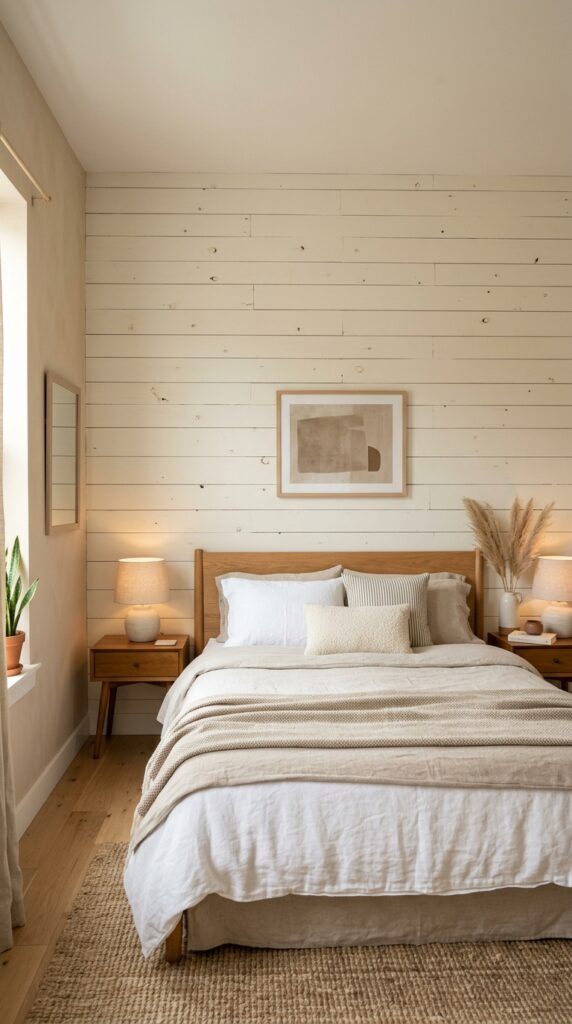
Shiplap on every wall turns a bedroom into a sauna. Shiplap on one accent wall adds texture without claustrophobia. I installed real pine shiplap on the wall behind my bed, painted it the same white as my trim, and left the other walls a warm sandy beige. The room gained coastal character without feeling like a farmhouse. The horizontal lines also make the ceiling feel higher.
Do not buy MDF shiplap from a big-box store. It has no grain, no character, and swells if humidity gets high. Real pine shiplap costs more ($2 to $4 per square foot) but breathes and ages. If you cannot install real wood, use nickel gap plywood — it looks similar and is more stable. Budget $150 to $400 for a single wall. The trade-off is that shiplap collects dust on the horizontal ledges. You will need to dust it with a vacuum attachment regularly. Also, it is a pain to remove if you change your mind.
Leave a 1/8-inch gap between boards for expansion in humid weather. Caulk the gaps with paintable latex caulk after painting. Tight boards will buckle by summer.
3. Unbleached Linen Drapes That Filter Light Like A Dune Grass
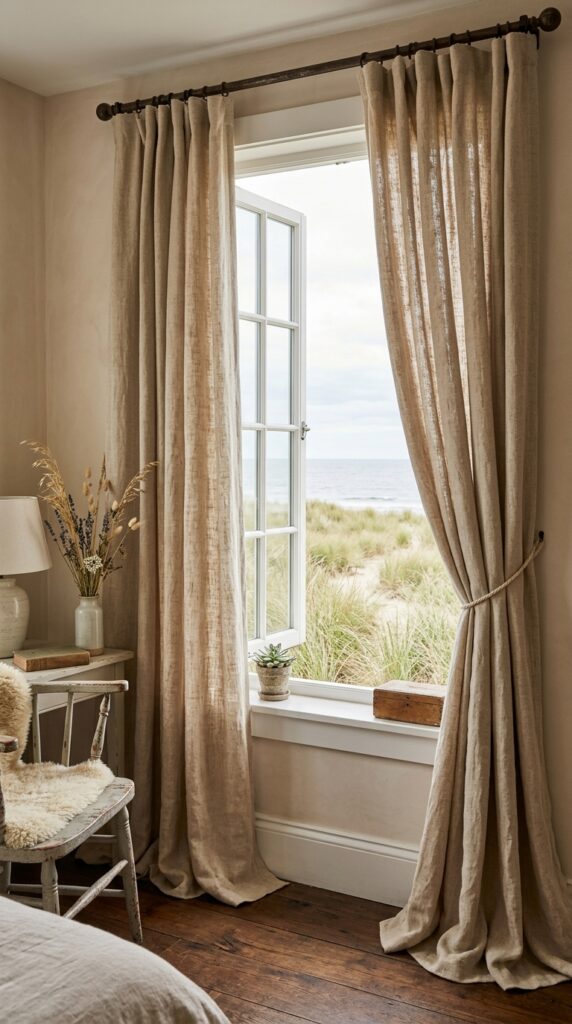
White sheers are too pristine for a coastal bedroom. Unbleached linen — the color of sand or dried sea grass — filters light into a warm, golden glow. I replaced my white sheers with unbleached European flax linen panels, and the quality of light changed completely. Morning sun comes through as soft and honeyed, not harsh. The fabric has visible slubs and a slight stiffness that softens with each wash.
Real linen is expensive. A pair of 84-inch panels costs $80 to $200. Cheap “linen-look” polyester is not the same — it does not filter light the same way and feels plastic. The trade-off is that linen wrinkles aggressively and requires ironing or steaming if you want a crisp look. I embrace the wrinkles as part of the coastal aesthetic. Also, linen fades in direct sun. Rotate the panels every six months for even fading. Budget $100 to $250 for a quality pair.
Hang linen curtains so they just kiss the floor — no puddling. Puddling collects dust and sand. Coastal bedrooms need easy-to-clean floors, not fabric pools.
4. A Dresser With Rope Pulls Instead Of Metal Hardware
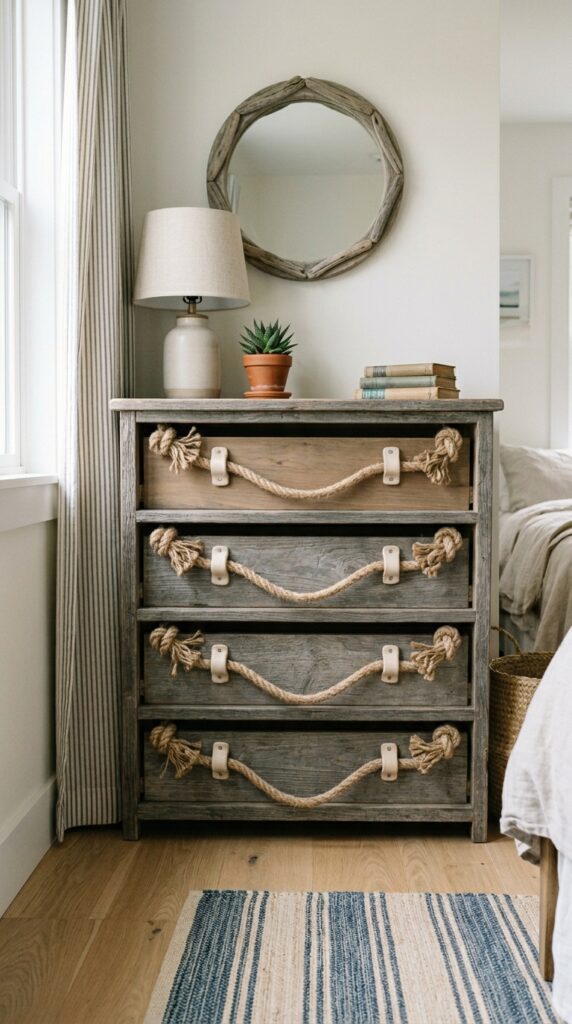
Metal drawer pulls in a coastal bedroom eventually corrode from salt air. Rope pulls do not. I replaced the brass handles on my dresser with natural jute rope threaded through simple ceramic guides, and the dresser now looks like it belongs on a boat. The rope is soft under your fingers and develops a nice patina over time. It is also cheap to replace when it frays.
You need ceramic or wooden pull bases with holes on each side. Thread marine-grade jute or cotton rope through, tie a knot on the inside of the drawer, and trim. Budget $10 to $30 for a set of 6 to 8 pulls, plus $5 for rope. The trade-off is that rope frays and gets dirty. Replace it every year or two. Also, rope pulls are harder to grip with wet hands than metal. Keep a small towel nearby.
Soak the jute rope in water and let it dry before installing. This pre-shrinks the rope so it does not loosen later. Otherwise, your knots will slip within weeks.
5. A Cluster Of Sea Glass In A Shallow White Bowl
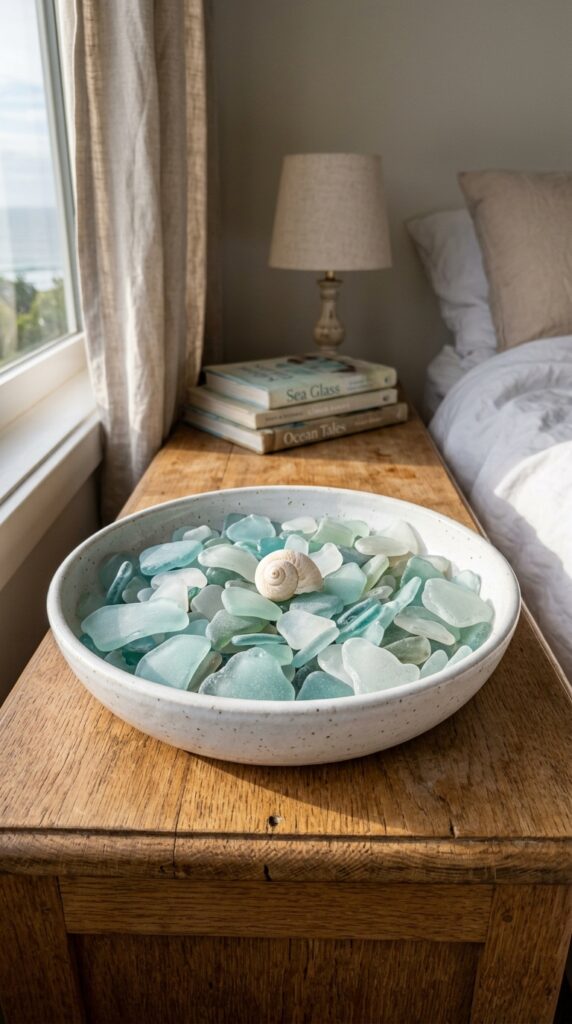
This is the only “decorative” coastal item I will recommend because it is not bought — it is found. A bowl of real sea glass that you or someone you love actually collected from a beach has authenticity that no store-bought item can match. I keep a bowl of glass from my childhood beach on my nightstand, and every time I see it, I smell salt water. That is the coastal feeling you want.
If you do not have access to a beach with sea glass, buy it from a reputable source that sells authentic beach-found glass (not tumbled glass from a craft store — it looks too perfect). Budget $10 to $30 for a small collection. The trade-off is that a bowl of glass collects dust. Rinse it every few months. Also, do not mix sea glass with shells that have sharp edges — they will scratch the glass. Keep them separate.
Place the bowl where it catches morning light but not direct afternoon sun. Direct sun can fade the color of some sea glass over years. Indirect light keeps the glow.
6. A Mirror Framed In Untreated Driftwood
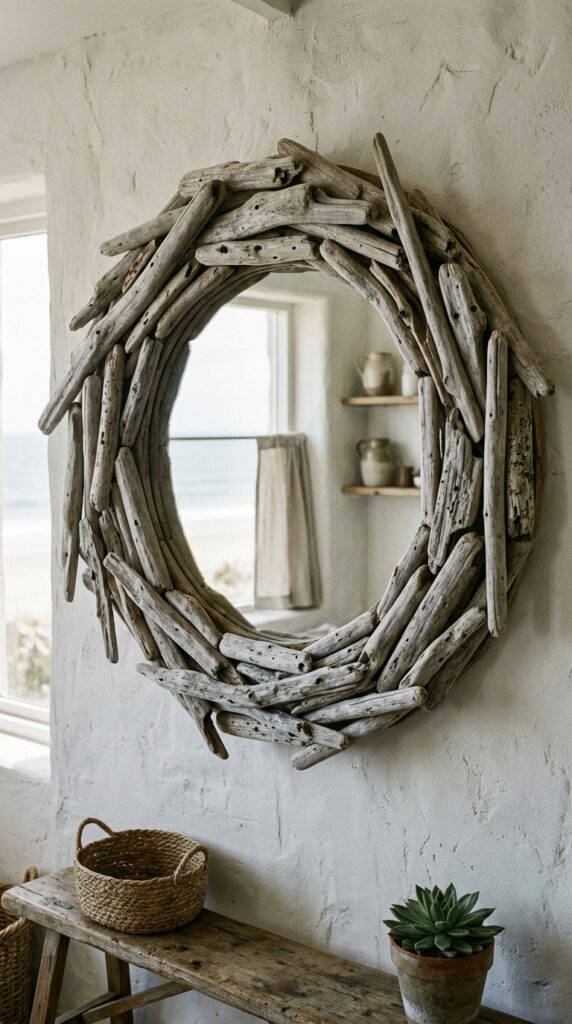
Driftwood looks like what it is: wood that has been tumbled by the sea. A driftwood-framed mirror brings that texture into your bedroom without looking like a souvenir shop. I built my own by collecting driftwood over a year, cutting pieces to rough length, and gluing them to a plywood backing around a plain mirror. The result is imperfect, asymmetrical, and the most commented-on object in my bedroom.
You can buy driftwood mirrors for $100 to $400, but they are often made from artificially weathered wood (kiln-dried and wire-brushed) that lacks the smoothness of real driftwood. Collect your own if you live near a coast — check beach regulations first; some prohibit taking driftwood. Treat the wood for bugs by baking it at 200°F for two hours before bringing it inside. Budget $20 to $50 for supplies if DIY, or $80 to $200 for a real one from a coastal artisan.
Do not seal driftwood with polyurethane. The matte, weathered surface is the whole point. Sealing makes it shiny and ruins the coastal feel. Accept that it will shed tiny fibers.
7. White-Washed Bamboo Blinds Instead Of Fabric Shades
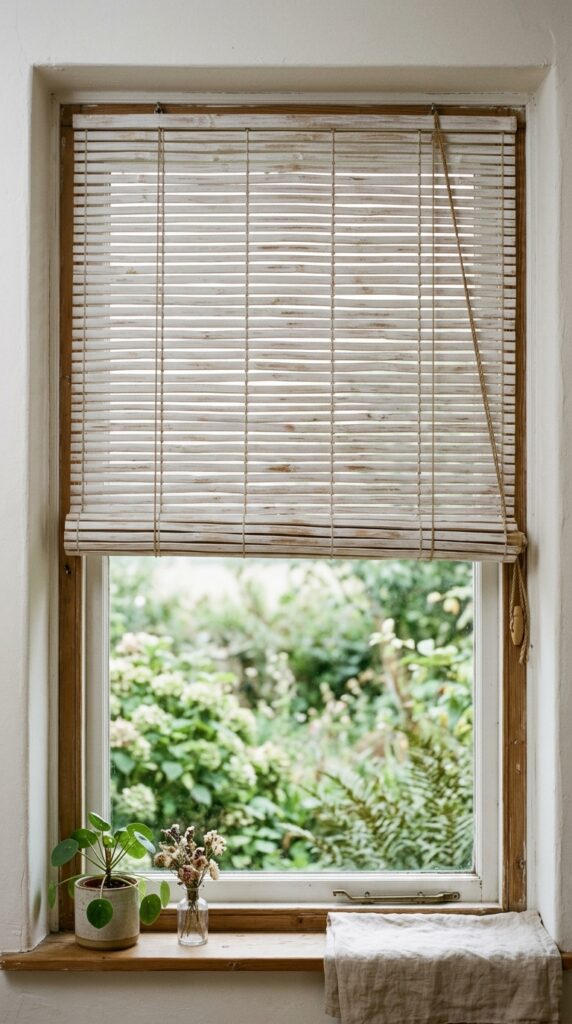
Fabric roman shades absorb humidity and mold. Bamboo blinds breathe. I installed white-washed bamboo blinds on all my bedroom windows, and they have survived two humid summers without warping or mildewing. The white wash softens the bamboo’s natural yellow tone, making it read as coastal rather than tropical. The light that filters through the slats is striped and gentle.
Cheap bamboo blinds are held together with hot glue that fails in humidity. Look for blinds with stapled or sewn construction and natural fiber cords (not plastic). Budget $40 to $100 per window. The trade-off is that bamboo blinds do not black out light — they filter it. If you need total darkness for sleep, layer them with blackout curtains. Also, dust accumulates between the slats. Vacuum with a brush attachment monthly.
Size bamboo blinds an inch wider than your window frame on each side to prevent light gaps. The slats never lay perfectly flat, so oversizing is essential.
8. A Seagrass Rug That Hides Sand And Salt
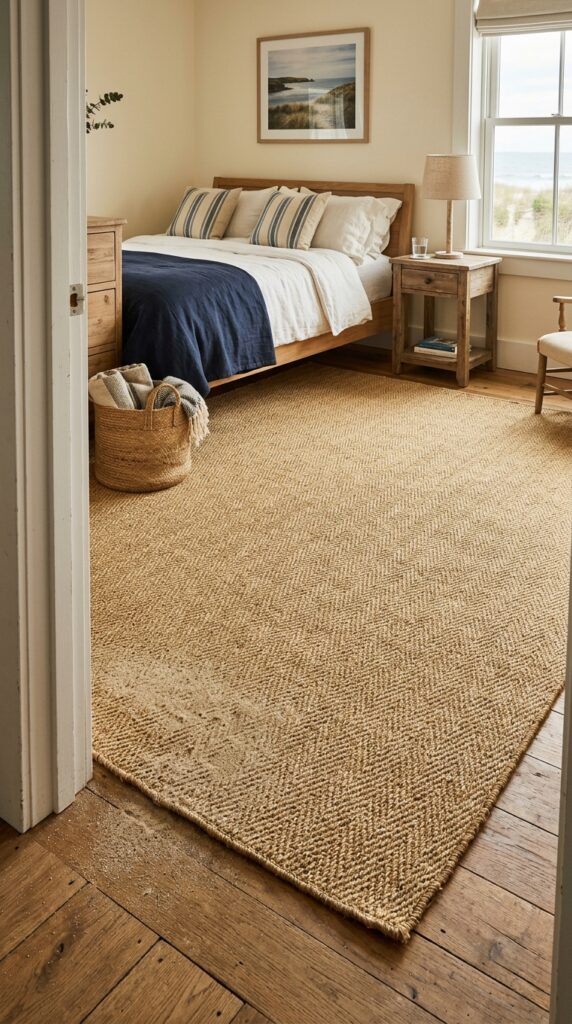
Wool rugs get musty in humidity. Cotton rugs stain from sand and salt. Seagrass rugs are the coastal champion. The fibers are naturally moisture-resistant, and the golden-tan color hides sand completely. I have a seagrass rug in my beach cottage bedroom, and after two years, it still looks new. Sand falls through the weave rather than sitting on top, and a quick vacuum restores it.
Seagrass is rough — almost like burlap. It is not soft under bare feet. If you want soft, layer a sheepskin on top. Also, seagrass cannot be wet-cleaned. Spot clean with a damp cloth only; water leaves dark marks. Budget $100 to $300 for a 5×8 or 6×9 rug. The trade-off is that seagrass is not available in many colors. You get variations of tan and gold. If you need color, look elsewhere.
Do not use a rug pad with seagrass. The rug needs to breathe. A solid rubber pad traps moisture and causes mold. Use a breathable felt pad if you must, but seagrass stays put without one.
9. A Hurricane Lantern With A Real Candle (Not LED)
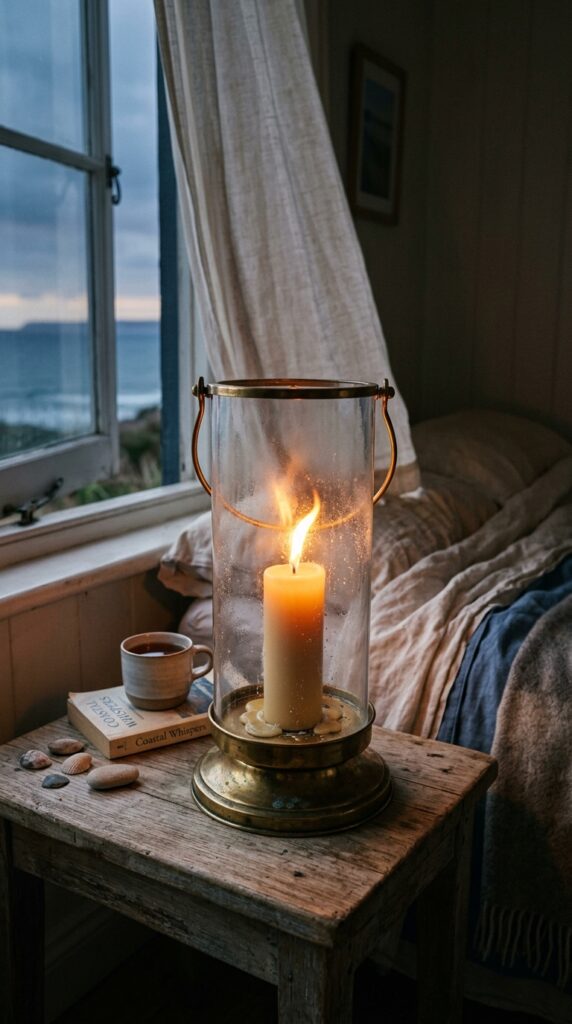
LED candles are practical. Real candles are atmospheric. A hurricane lantern — designed to protect a flame from wind — allows you to have an open flame near an open window without fear. I keep one on my nightstand and light it for an hour before sleep. The flicker is hypnotic, and the glass throws soft reflections around the room. No battery-operated candle has ever made me feel the same way.
Look for a lantern with a heavy glass globe and a metal base that does not wobble. Glass should be at least 1/8 inch thick. Budget $20 to $60 for a good hurricane lantern. The trade-off is that real candles require attention. Blow them out before sleeping. Keep them away from curtains. Also, soot will accumulate on the glass over time. Clean with warm soapy water weekly. If you are forgetful or have pets, use flameless — but know you are sacrificing romance for safety.
Use beeswax candles. They burn cleaner than paraffin, last longer, and smell faintly of honey. The warmer flame color is also closer to beach sunset light.
10. Dried Beach Grass In A Simple Glass Bottle
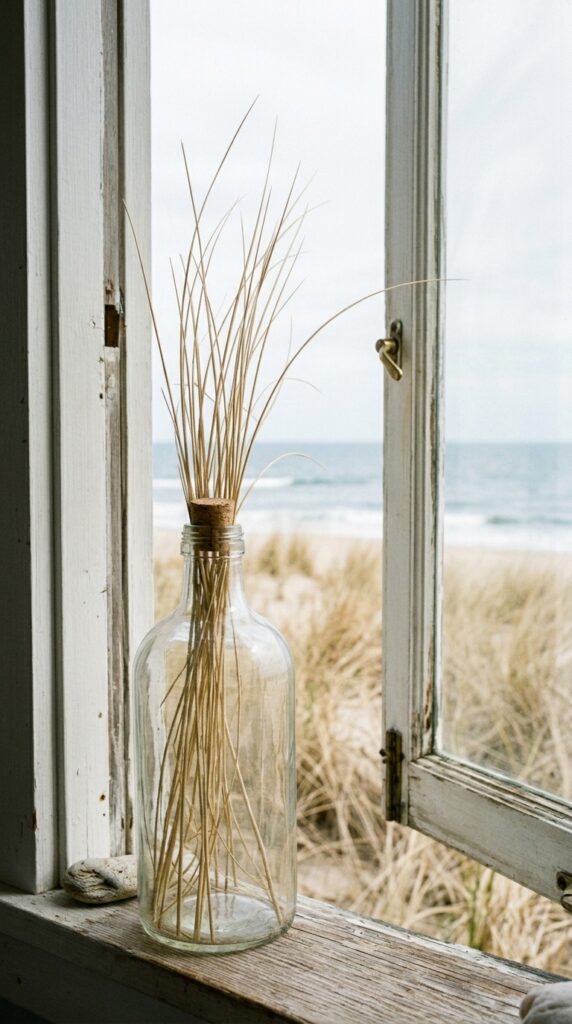
Forget floral arrangements. Dried beach grass — salt-tolerant grasses like sea oats or dune grass — captures the coastal landscape better than any flower. I collected a bundle of dried grass from a friend’s beach property (check local regulations; protected dunes prohibit cutting), placed it in a simple recycled glass bottle, and it has lasted for two years without any maintenance. The grass fades from gold to pale beige over time, which only makes it look better.
If you cannot harvest your own, buy dried pampas grass or bunny tails and dye them pale gold. Avoid brightly colored dried flowers — they look unnatural. Budget $0 to $30. The trade-off is that dried grass is brittle. Do not touch it or move it often. It will shed small pieces. Also, it is a fire hazard near candles. Keep at least two feet away from open flames.
Spray dried grass with a clear, matte aerosol sealer to reduce shedding and prevent fading. One light coat from 12 inches away does not change the look but adds durability.
11. A Bed Frame In Weathered Oak Or White Oak With A Lime Finish
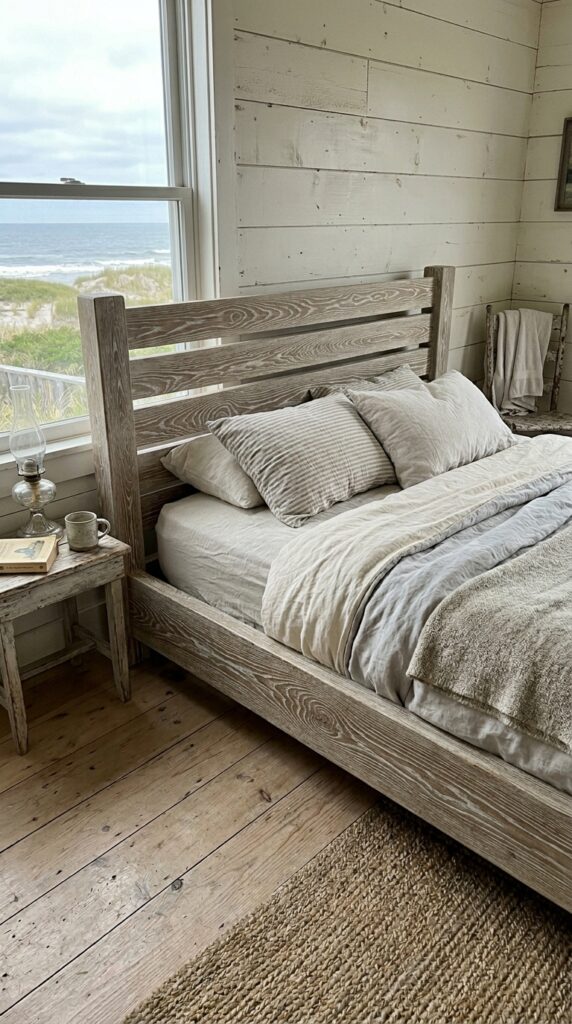
Dark walnut and cherry read as formal, not coastal. Weathered oak — gray, matte, with visible grain — reads as beach. I built a simple platform bed from white oak and finished it with a lime wash that I mixed myself (calcium hydroxide powder and water). The result is a bed that looks like it has been bleached by the sun. It never looks dirty because the color hides dust.
You can buy pre-weathered oak beds for $500 to $2,000. DIY is cheaper but requires woodworking skills. The trade-off is that lime-finished oak is porous and can stain from water or oil. Use coasters. Also, the finish will wear over time, especially at the headboard where you lean. That wear looks intentional in a coastal bedroom. Budget $200 to $600 for materials if DIY, or $600+ for pre-made.
If you cannot find weathered oak, buy unfinished white oak and apply a whitewash stain followed by a matte water-based polyurethane. The polyurethane adds durability without gloss.
12. A Nubby Cotton Blanket In Fisherman’s Rib
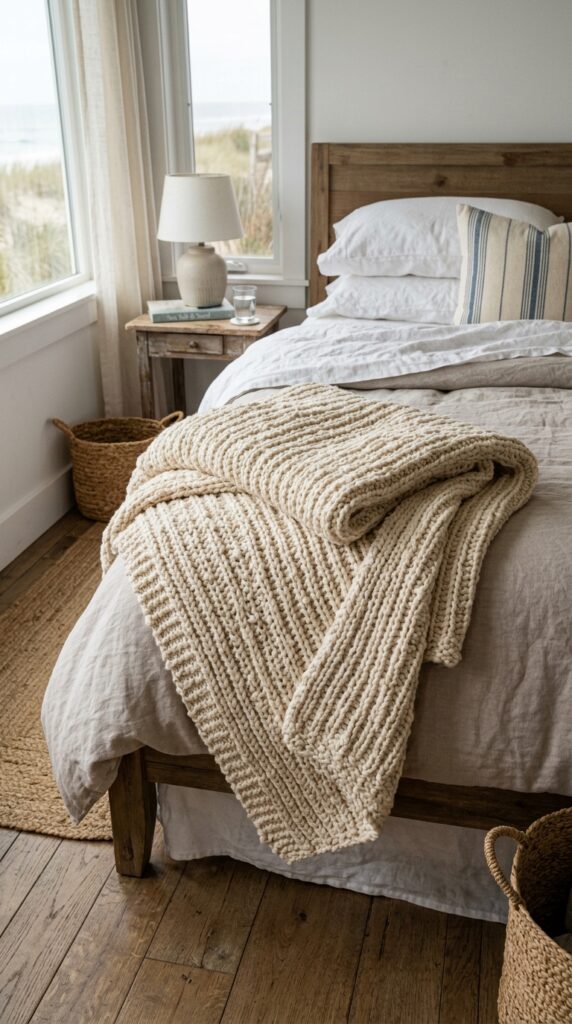
Wool is too warm for beach bedrooms. Acrylic feels cheap. A cotton knit blanket in a fisherman’s rib or waffle weave is the coastal sweet spot: breathable, textured, and substantial without overheating. I have a 100% cotton chunky knit blanket that I use as a top layer in summer and a middle layer in winter. The nubby texture catches light and adds visual interest without color.
Look for cotton knit blankets labeled “breathable” or “summer weight.” Avoid blends with polyester — they trap humidity. Budget $40 to $120. The trade-off is that chunky cotton knits stretch out of shape over time. Wash in cold water and lay flat to dry. Do not put them in a dryer. Also, they snag easily on jewelry or rough nails. Be careful.
Fold the blanket asymmetrically at the foot of the bed. A perfect hospital corner kills the casual coastal vibe. Let it drape unevenly, like a towel left on the sand.
13. Interior Door Painted A Faded Aqua Or Soft Tidepool Green
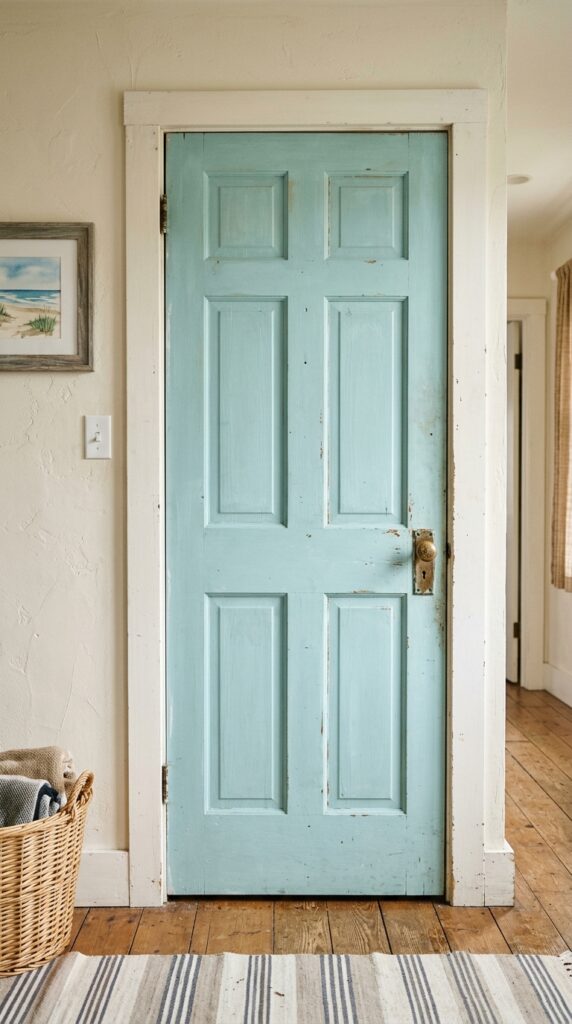
A pop of coastal color on a door — not a wall — is restrained and effective. I painted my bedroom door a faded aqua (a custom mix of Benjamin Moore’s “Beach Glass” with extra white), and the room gained instant coastal character without feeling themed. The color is soft enough that it does not dominate, but it catches your eye every time you walk in.
Avoid bright turquoise or navy. Those read as pool party, not beach house. Look for colors with gray undertones: faded aqua, tidepool (green-gray), or driftwood blue. Budget $20 for a sample quart of paint. The trade-off is that painting a door is tedious — you need to remove the hardware, tape the hinges, and apply at least two coats. Also, a painted door shows scratches and nicks more than stained wood. Touch up every year. If you rent, skip this.
Use a matte or eggshell finish on the door. Glossy doors reflect light and look modern, not coastal. Matte absorbs light and looks softer, older, more weathered.
14. A Large Canvas Of A Stormy Sea In Muted Blues And Grays
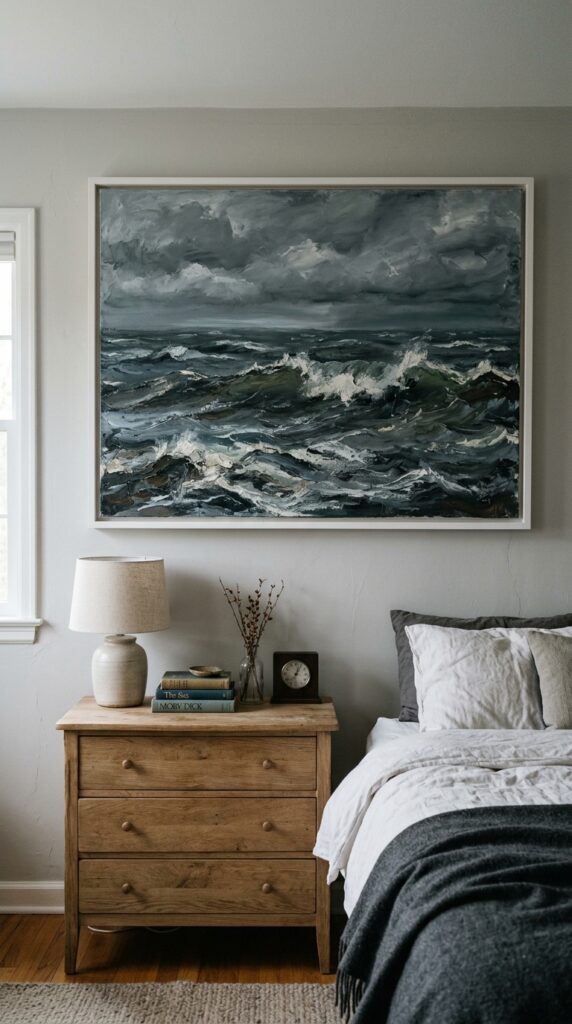
Coastal art does not have to be cheerful. In fact, cheerful beach art — sailboats, sunsets, smiling dolphins — usually looks like a hotel lobby. A moody seascape in muted blues and grays feels sophisticated and real. I have a 36×48 inch canvas of a stormy sea above my dresser, and it anchors the room. The painting is dark enough to be dramatic but soft enough to be calming.
You can find affordable canvas prints of classical seascapes (Turner, Homer, or contemporary artists) for $50 to $200. Original art costs more. The trade-off is that a dark painting needs a light wall to stand out. Hang it on a white or beige wall, not a dark one. Also, avoid glossy prints — matte or canvas texture only. Glossy reflections kill the mood.
Hang the painting so its center is at 57 inches from the floor — standard gallery height. Too high and it floats. Too low and it competes with furniture.
15. A Wicker Or Rattan Pendant Lamp Over The Bed
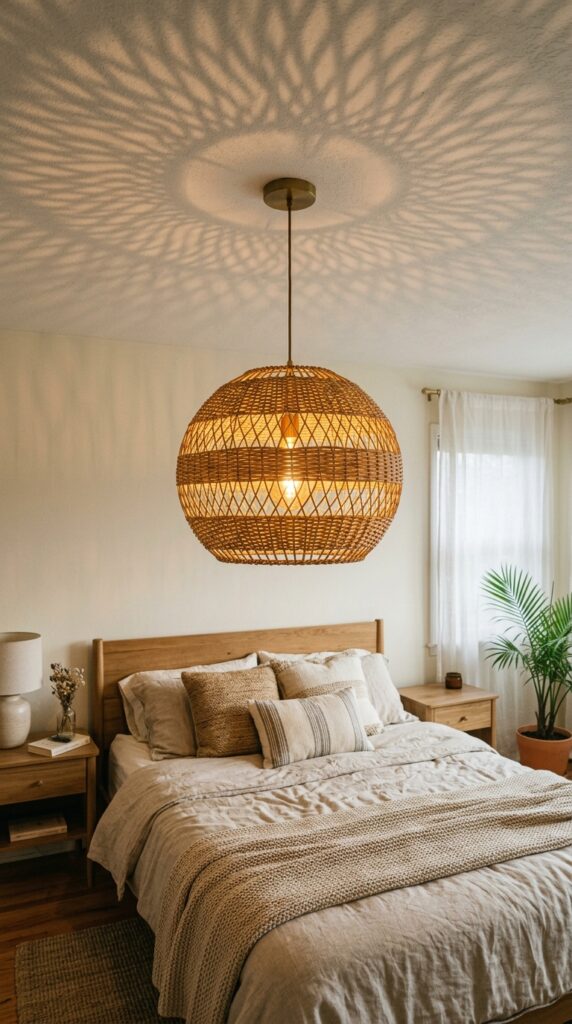
A fabric drum shade is too predictable. A wicker or rattan pendant adds texture and casts beautiful patterned shadows. I installed a 16-inch wicker pendant over my bed, and the light it throws onto the ceiling is like a natural canopy. The shade is open-weave enough that the bulb is visible, so use a low-wattage, warm bulb (2200K).
Wicker pendants are surprisingly affordable: $40 to $150. The trade-off is that they collect dust in the crevices. Clean with a vacuum brush attachment or compressed air. Also, wicker can sag over time if the humidity is very high. In coastal climates, look for rattan (more durable) or sealed wicker. Do not hang a wicker lamp in a room with a ceiling fan — the breeze will make it swing.
Hang the pendant so the bottom is 60 to 66 inches from the floor — high enough that you do not hit your head when standing on the bed, low enough that the light stays intimate.
16. Sand-Colored Linen Sheets That Hide Beach Dust
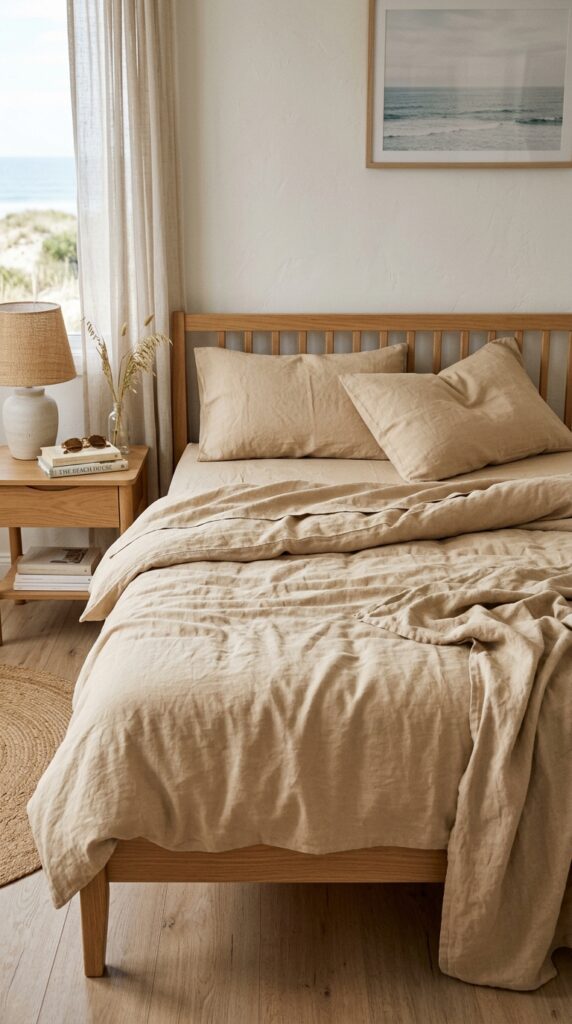
White sheets in a coastal bedroom are a mistake. They show every speck of sand, every drop of sunscreen, every bit of beach dust. Sand-colored linen sheets hide all of it. I switched from white to sand-colored linen two years ago, and my stress about keeping the bed clean vanished. The color is warm and neutral, and it looks even better when it is slightly faded.
Linen is ideal for coastal bedrooms because it breathes, dries quickly, and resists mildew. Look for 100% linen in shades like “sand,” “dune,” or “oatmeal.” Budget $100 to $250 for a queen set. The trade-off is that linen is expensive and wrinkles immediately. If you want crisp, smooth sheets, buy percale cotton in a sand color instead. But for coastal authenticity, the wrinkles are part of the look.
Wash linen sheets with a cup of white vinegar in the rinse cycle. Vinegar removes salt residue and keeps the fabric soft without the coating that fabric softener leaves behind.
17. A Concrete Or Terrazzo Vase With A Single Branch
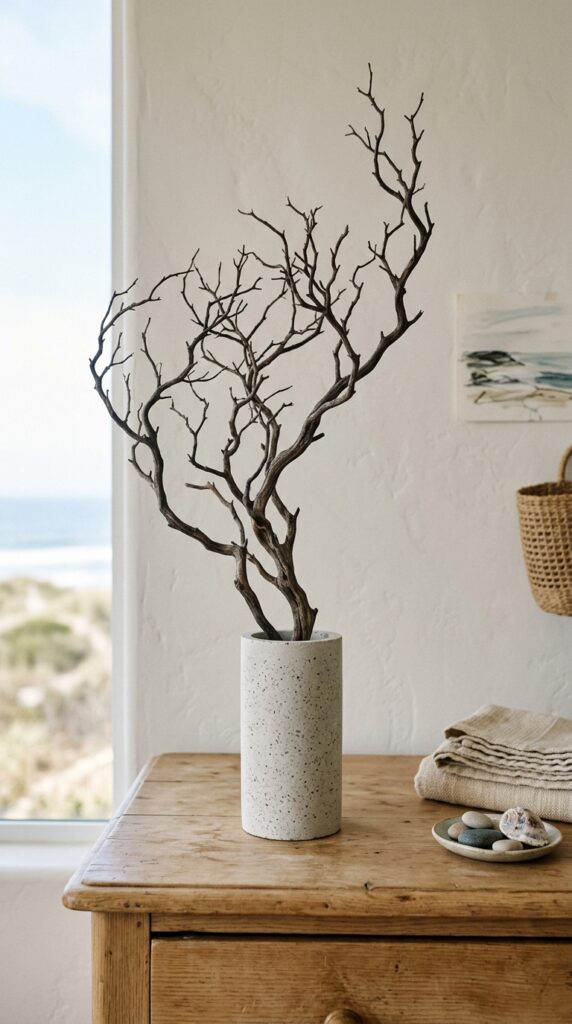
Ceramic vases are fine. Concrete or terrazzo vases feel coastal because they echo the materials of beachside architecture — boardwalks, piers, patios. I have a small concrete vase on my dresser holding a single piece of manzanita wood. The grey of the concrete and the brown of the wood are the only colors. The arrangement is almost severe, but it balances the softness of the linen and seagrass in the room.
Concrete vases are heavy and can scratch wood surfaces. Put a felt pad underneath. They are also porous — they will absorb water, so use dried branches only or seal the interior with wax. Budget $20 to $60 for a concrete vase, $10 for a branch. The trade-off is that concrete can crack if dropped. Handle carefully.
If concrete feels too industrial, try terrazzo — it has small chips of marble or glass embedded in cement, which catches light and feels more refined. Similar price point.
18. A Rope-Wrapped Bench At The Foot Of The Bed
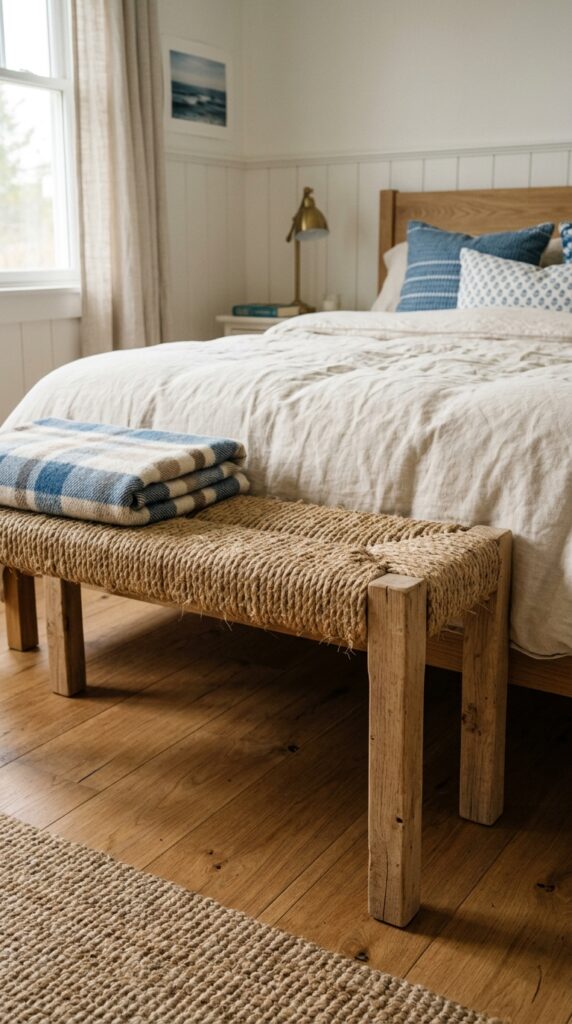
A bench at the foot of the bed is practical for putting on shoes or laying out clothes. A rope-wrapped bench adds coastal texture without screaming “beach theme.” I built a simple bench from 2x4s and wrapped the seat with manila rope, securing it with staples underneath. The rope is comfortable to sit on (surprisingly) and hides stains and spills.
You can buy rope-wrapped benches for $80 to $200, or DIY for $30 to $50 in materials. The trade-off is that rope collects dust and can be uncomfortable in shorts if the rope is rough. Sand the rope lightly with fine-grit sandpaper to soften it. Also, rope will fray at the ends over time. Use a lighter to melt synthetic rope fibers (if using nylon) or apply clear glue to natural rope ends.
Choose manila rope for a natural, tan color. Sisal rope is scratchier and sheds more. Cotton rope is softer but stains easily and mildews. Manila is the coastal champion.
19. Open Pine Shelves With Visible Nail Holes
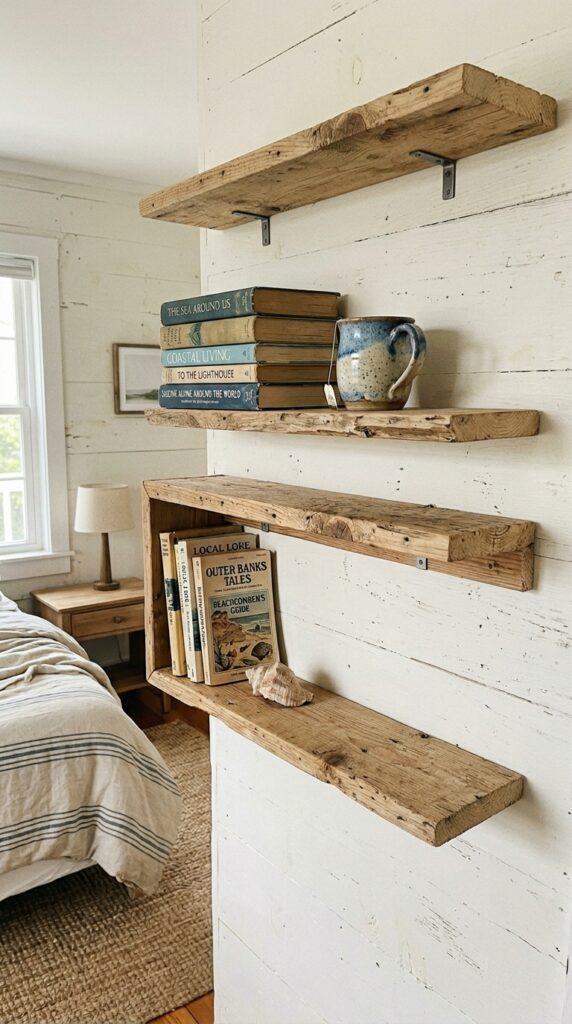
Perfect, painted MDF shelves belong in a suburban kitchen. Imperfect, unfinished pine shelves belong in a coastal bedroom. I installed two shelves made from rough-sawn pine, leaving the nail holes visible and the edges slightly uneven. I did not sand them smooth. The texture and imperfection are the point. They hold a few books and a mug, and they look like they have been there for decades.
Buy common pine boards at a lumber yard. Ask for “rough sawn” or use 2x10s and distress them yourself with a hammer and a nail set. Budget $15 to $40 per shelf, plus $10 for brackets. The trade-off is that unfinished pine is soft and dents easily. That is fine — dents add character. But do not put anything heavy on them. Also, pine can warp over time. Use brackets at least every 24 inches to prevent sagging.
Do not seal or stain the pine. Let it age naturally. Over time, it will develop a gray patina that looks exactly like driftwood. Sealing prevents that natural aging.
20. Canvas Beach Tote Hanging On A Wall Hook As Decor
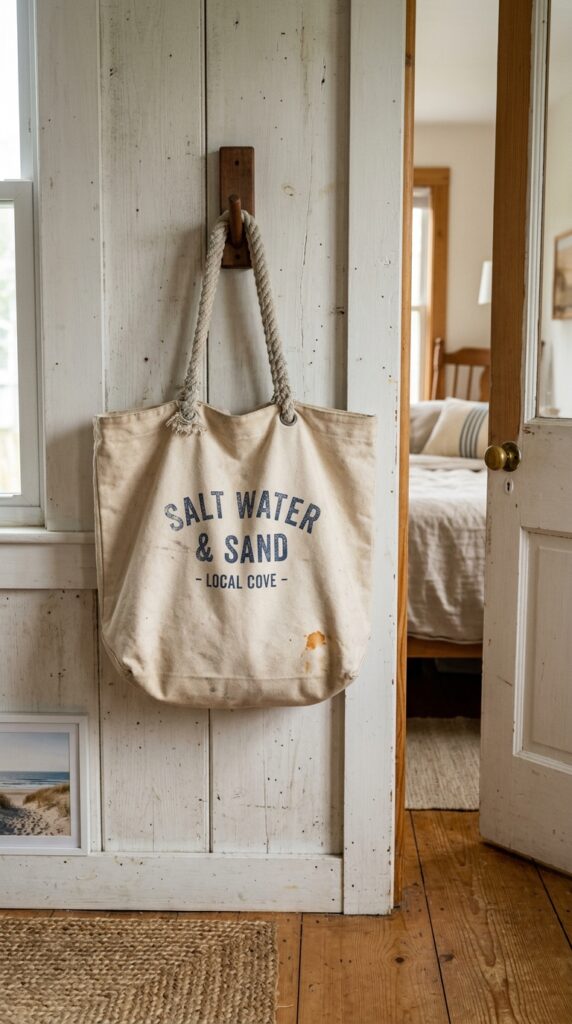
Most coastal decor is fake: starfish that were never alive, shells that were bought in bulk, signs that say “beach please.” A real canvas beach tote hanging on a hook is the opposite of fake. It is a tool that also looks good. I keep my LL Bean Boat and Tote on a hook by the door, and it serves as both decor and my actual beach bag. The faded canvas and salt stains are earned, not painted on.
You do not need to buy a new tote. Use the one you already have. If you do not have one, buy a simple natural canvas tote for $20 to $50. The trade-off is that an empty tote on a wall can look like you forgot to put it away. Keep it slightly crumpled, not perfectly flat, to signal that it is in use. Also, rotate it occasionally so it does not develop permanent creases.
Hang the tote on a simple wooden peg or a brass hook. Plastic hooks ruin the aesthetic. The hook should be functional and discreet, letting the tote be the object.
21. A Sparse Garland Of Real Shells, Not Perfect Ones
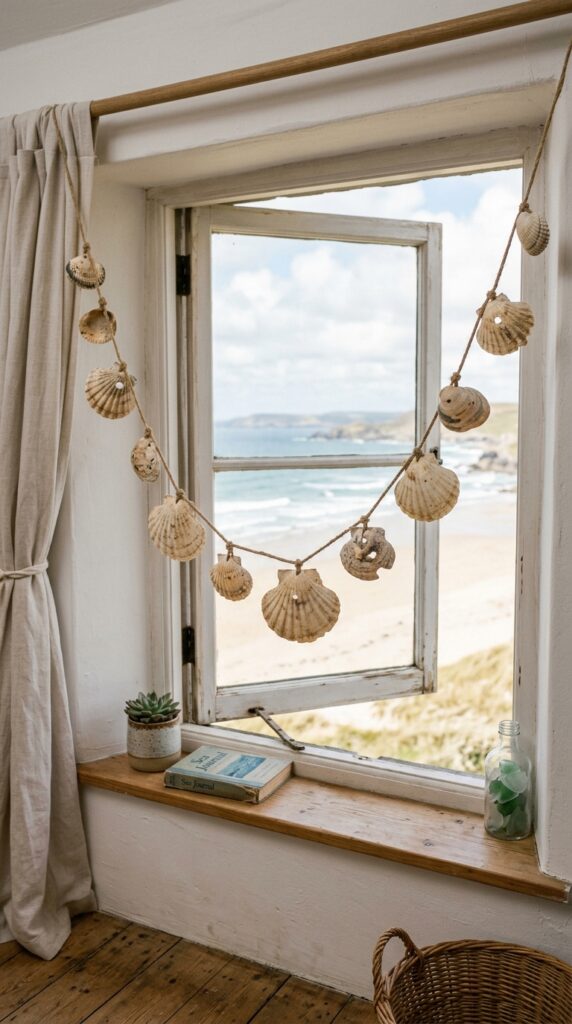
The worst shell decor is the dense, perfectly matched garland from a craft store. The best is a sparse strand of shells you actually found. I drilled small holes in a dozen scallop shells I collected over a summer (using a Dremel and a mask — shell dust is toxic), strung them on jute twine, and hung the garland across my window. There are gaps between the shells. Some shells are broken. It looks like a child made it, and that is exactly why it works.
If you do not have access to a beach, buy a small bag of mixed, imperfect shells from a coastal shop. Avoid bags of identical shells. Budget $5 to $20. The trade-off is that real shells smell like low tide when they get wet. Keep them away from humidifiers. Also, shells are brittle — the garland will shed pieces over time. Accept that as part of the coastal impermanence.
Seal the shells with a clear matte spray before stringing. This prevents them from crumbling and reduces the fishy smell if they get damp. One light coat is enough.
22. A Nubby Woven Laundry Basket In Seagrass Or Water Hyacinth
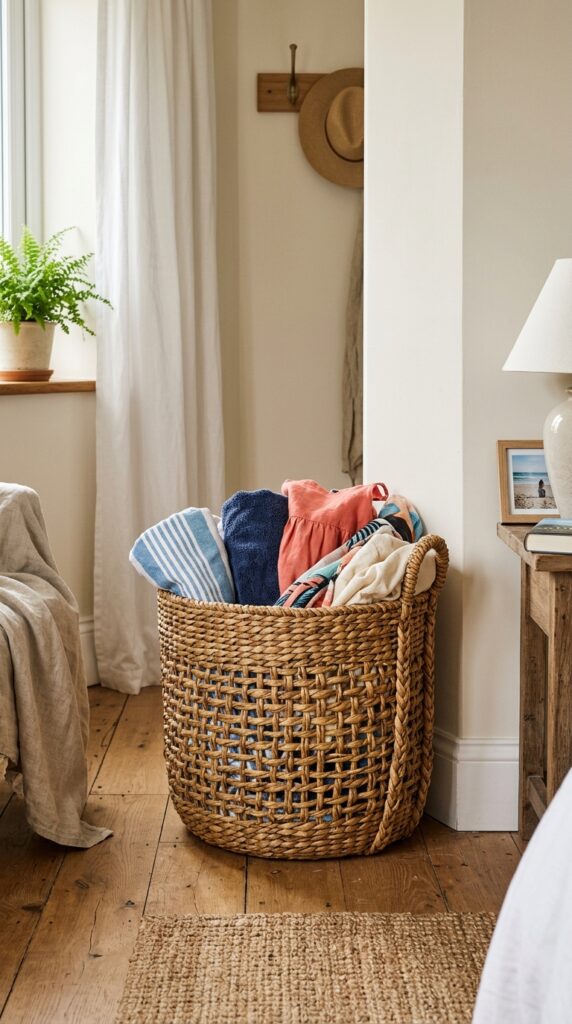
Plastic laundry baskets are ugly. Wicker or seagrass baskets are beautiful and breathe — important for damp beach towels that would mildew in a plastic bin. I have a large water hyacinth basket in my bedroom corner, and it holds all my beach laundry without looking like a laundry basket. The weave allows air circulation, so towels do not develop that sour smell if left damp for a day.
Look for baskets with a lid if you want to hide the contents, or open-top for easy access. Budget $40 to $120. The trade-off is that woven baskets are not waterproof. Do not put wet swimsuits directly inside — let them drip dry in the shower first. Also, seagrass baskets can mold if left damp. Air them out in the sun occasionally. If you live in a very humid climate, choose plastic-coated wicker instead.
Line the bottom of the basket with a thin cotton sheet that you can wash. The liner catches sand and salt, keeping the basket clean. Wash the liner weekly.
23. Beadboard Ceiling Painted The Same White As Trim
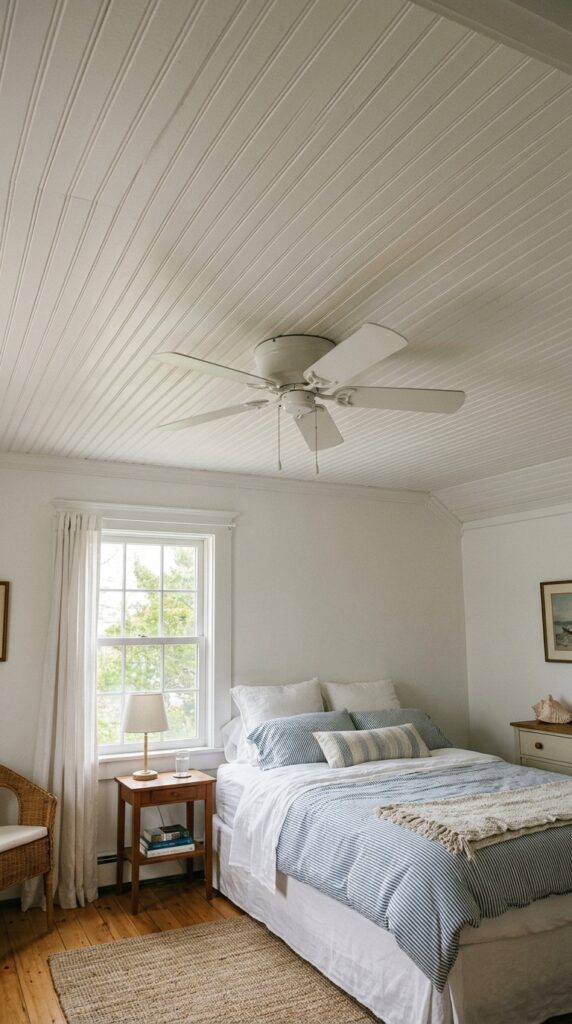
Sheetrock ceilings are boring. Beadboard ceilings are classic coastal. I installed beadboard on my bedroom ceiling — it was a massive project — and the room now feels like a screened porch in the best way. The beadboard adds texture without color, and the grooves cast small shadows that soften the room acoustically. The ceiling feels lower, which in a coastal bedroom is a feature (cozier) not a bug.
Beadboard is available in 4×8 sheets with a tongue-and-groove edge. You will need a helper and a nail gun. Budget $200 to $500 for a small bedroom, plus a weekend of labor. The trade-off is that beadboard ceilings are permanent and a pain to remove. If you change your mind, you are looking at demolition. Also, beadboard traps dust in the grooves. Vacuum the ceiling with a brush attachment every few months.
Paint the beadboard before installing it. Painting after installation is a nightmare — the grooves make cutting in around edges nearly impossible. Two coats on the ground, one touch-up after.
24. Two Old Wooden Oars Leaning In A Corner
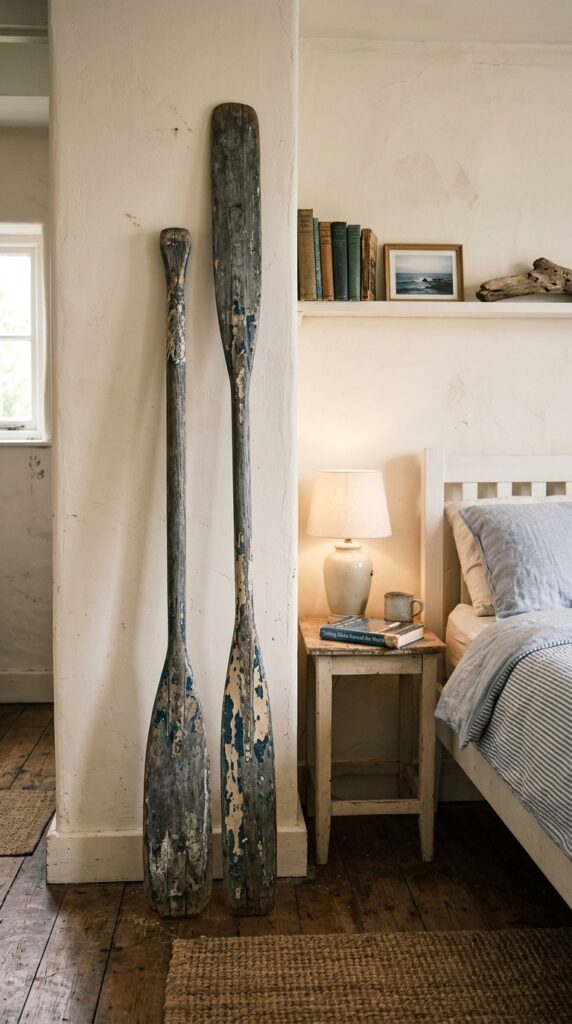
This is the only “decorative” coastal item that I will defend. Oars leaning in a corner are not trying to be art. They are just oars that happen to be in your bedroom. I found a pair of old wooden oars at a flea market for $20. They lean in the corner near my door, and they are the most authentic coastal object in the room. The paint is chipped, the wood is split at one blade, and they smell faintly of lake water. Perfect.
Do not buy new oars. Do not hang oars on the wall like a sports trophy. Do not paint them white. Old, beat-up, wooden oars only. Budget $10 to $50 at antique stores or flea markets. The trade-off is that oars take up floor space. Lean them in a corner that does not block traffic. Also, they can shed splinters. Sand any rough spots with fine-grit sandpaper before bringing them inside.
Do not seal the oars. The weathered gray surface is the whole point. Sealing makes them look like they are trying too hard. Let them continue to age naturally.
25. A Ceiling Fan With Wicker Or Bamboo Blades
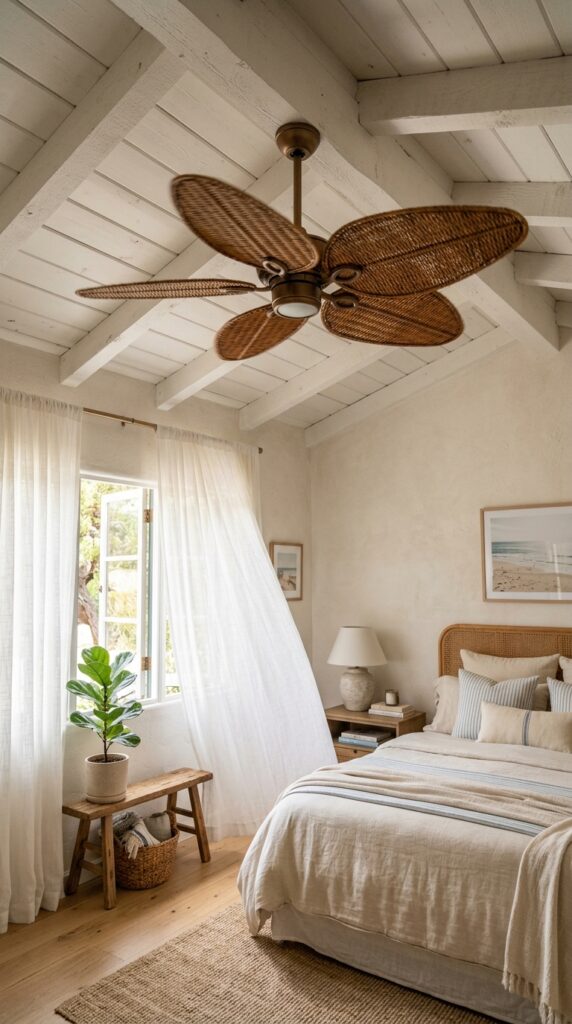
A coastal bedroom needs a ceiling fan for air circulation, especially near the ocean where humidity is high. But standard white or wood-blade fans look suburban. Fans with wicker or bamboo blades look like they belong. I replaced my basic fan with a wicker-blade model, and now the fan is a design feature instead of an eyesore. The blades move air quietly and the natural material fits the beach vibe.
Wicker-blade fans cost $150 to $400. The trade-off is that the blades are harder to clean than flat wood blades — dust settles into the weave. Use a vacuum with a brush attachment or a compressed air canister. Also, wicker blades can warp in extreme humidity. Look for fans with blades made from natural rattan (more durable) or synthetic wicker (less authentic but more practical). Budget $200 for a quality mid-range model.
Install the fan with a dimmer switch for the light kit and a separate speed control. Coastal evenings call for slow-moving blades and very dim light. Separate controls give you that flexibility.