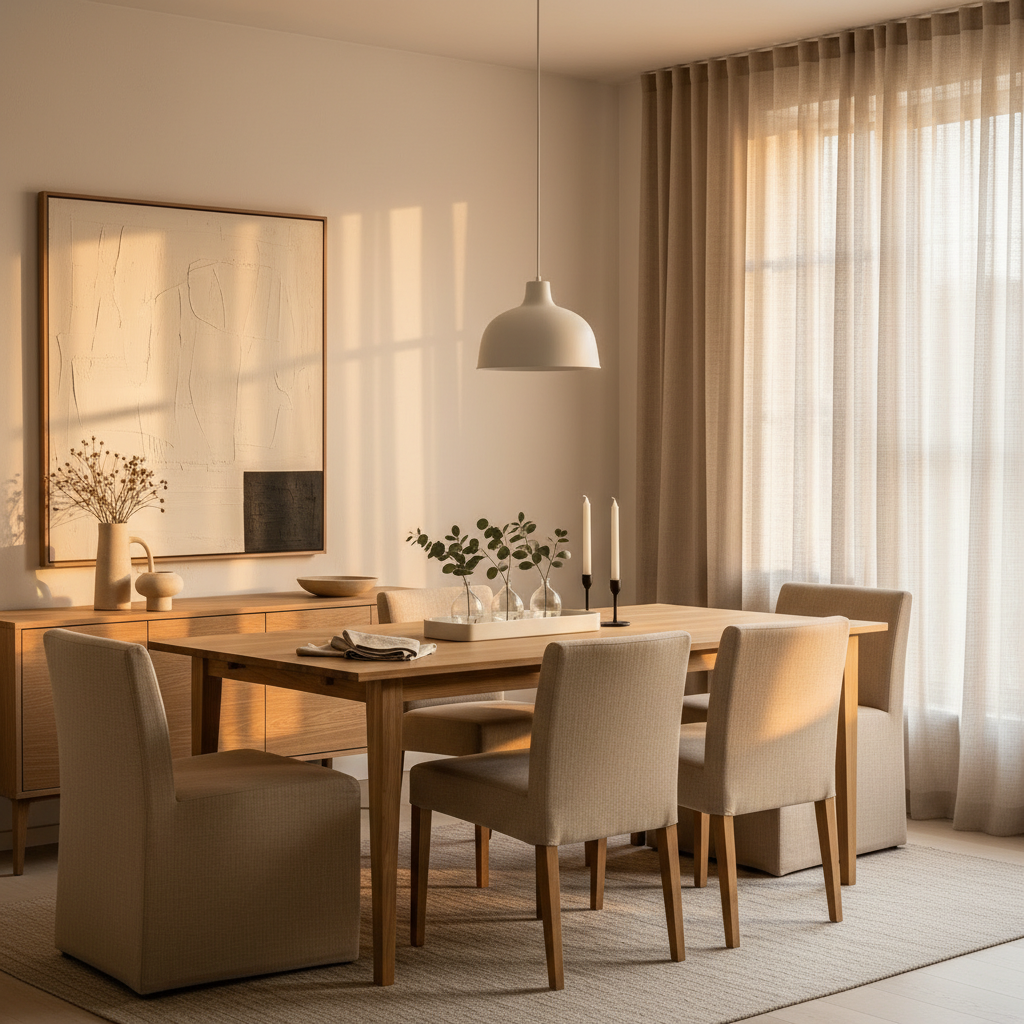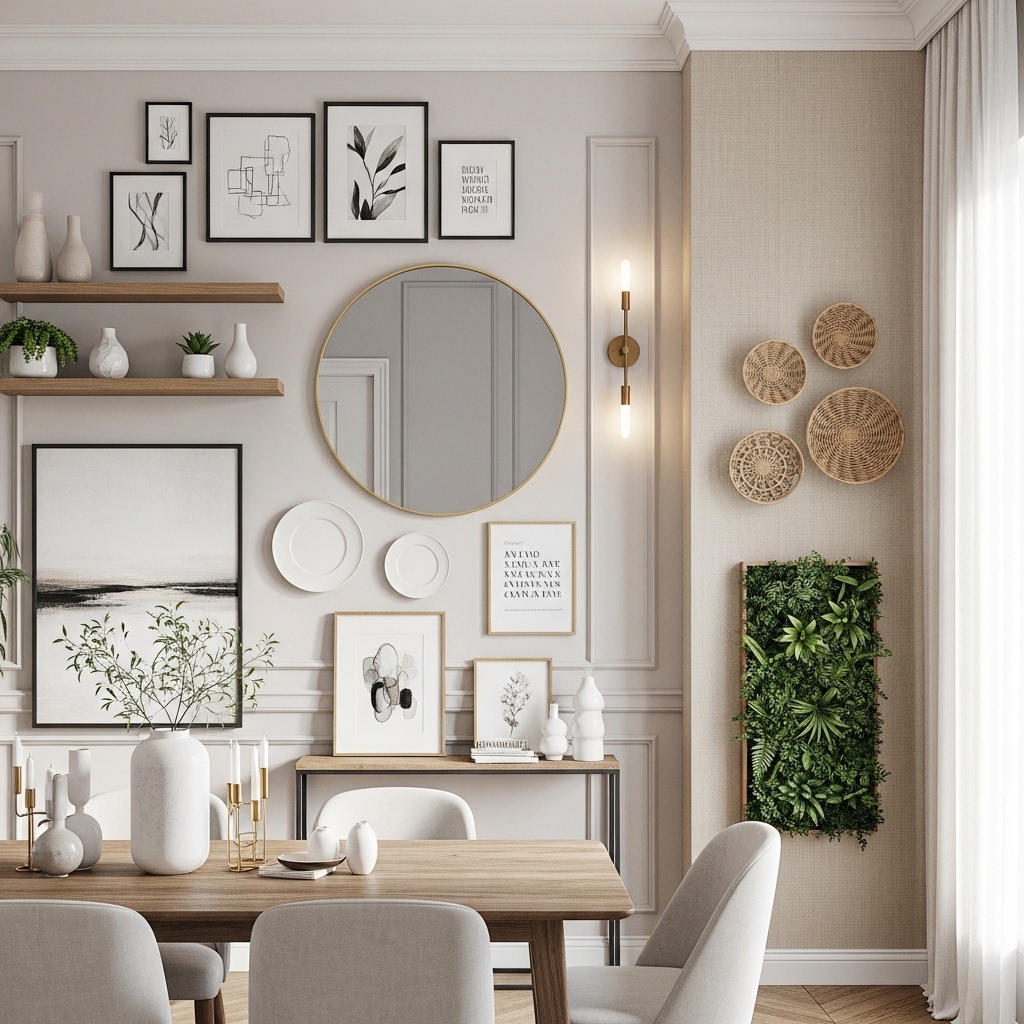
The word “cozy” has been abused into meaninglessness. I have seen it attached to sterile white bedrooms with a single knit throw, to minimalist concrete boxes with one candle, to rooms so aggressively beige they feel like a sedated waiting room. Real coziness is not an aesthetic. It is a physical sensation — the feeling of a room holding you rather than displaying you. I learned this after years of chasing “warm” in all the wrong places: the scratchy wool blanket that looked great but felt like burlap, the overhead dimmer that just made the room seem sick, the upholstered headboard that my cats destroyed in three weeks.
Most cozy bedroom advice is either useless (“add soft lighting”) or aspirational (“install a fireplace you cannot afford”). They never tell you that a room feels cozy when it has layers of texture you want to touch, when the light pools in corners instead of flooding from above, when there is a place to sit that is not the bed, when the temperature stays even, when the sounds outside are muffled. These things are not expensive. They are just specific. And most guides do not get specific.
These twenty-five ideas come from my own mistakes and the fixes that actually worked. I have lived with each of them, repaired them, or thrown them out and started over. Some cost under twenty dollars. A few cost real money. All of them pass the test: would I want to be in this room on a rainy Sunday afternoon with nowhere to go? That is the only standard that matters. Let me show you what I learned.
1. Floor-To-Ceiling Books On A Simple Wooden Ledge

Books are the original cozy technology. A room with books on the wall feels inhabited, intellectual, and warm in a way that no amount of throw pillows can replicate. I installed three long, shallow ledges made from common pine boards (under $15 each) and filled them with paperbacks I had already read. The trick is to not overstyle them. Let the books lean. Let some be stacked horizontally. The imperfections make it feel like a room where someone actually lives, not a catalog page.
The trade-off is that open bookshelves collect dust. You will need to dust them every two weeks, or you will develop a sneeze. Also, if you live in an earthquake zone, anchor the ledges into studs. A pile of books on your head at 3 AM is not cozy. Budget $40 to $100 for lumber and brackets. One thing most guides skip: space the ledges so the tallest book on the lower shelf does not block access to the shelf above. Leave at least 12 inches between ledges.
Do not buy books by the yard for decoration. Real coziness comes from books you have actually read or intend to read. Fake books look exactly like what they are.
2. Sheepskin Or Faux Sheepskin Rugs By The Bed
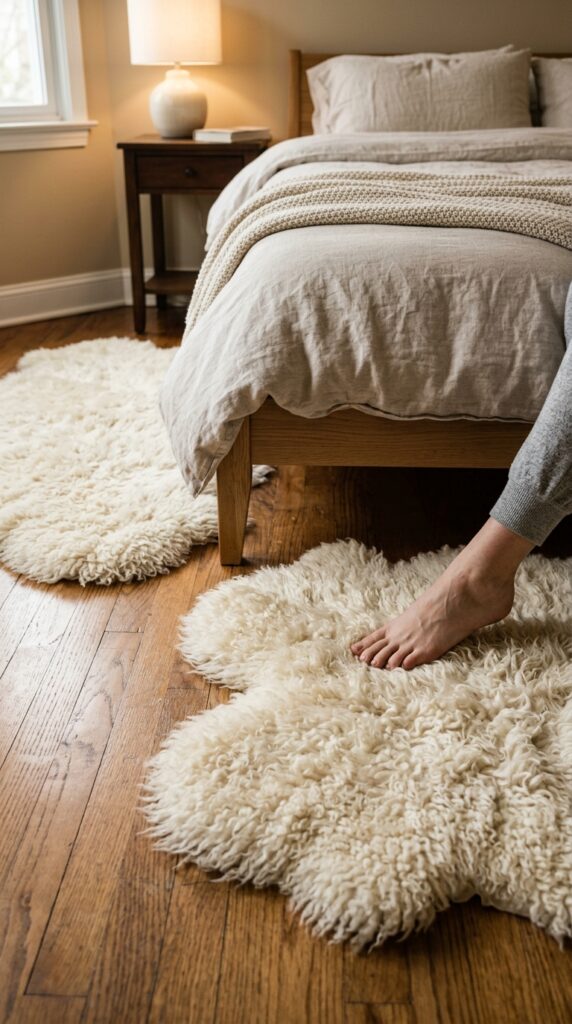
There is nothing cozier than stepping out of bed onto something soft and warm. A sheepskin rug — real or high-quality faux — transforms the first moment of your morning from a shock to a comfort. I put a sheepskin on my side of the bed three years ago, and now I cannot imagine morning without it. The texture under bare feet is the difference between dragging yourself out of bed and rolling out gently.
Real sheepskin ($60 to $150) is softer, lasts longer, and regulates temperature better than faux. But it requires special cleaning (hand wash with wool-specific detergent, air dry) and can develop bald spots over years of use. Faux sheepskin ($20 to $50) is washable in a machine but flattens and looks sad after a year. The trade-off is real. I have both: real on my side, faux on the guest side. The real one still looks good after three years. The faux one looks tired. Budget accordingly.
Do not put a sheepskin rug directly on carpet. It slides and looks like a floating island of fluff. Hardwood or tile only. If you have carpet, skip this idea.
3. A Real Himalayan Salt Lamp (Not The Fake Plastic Kind)
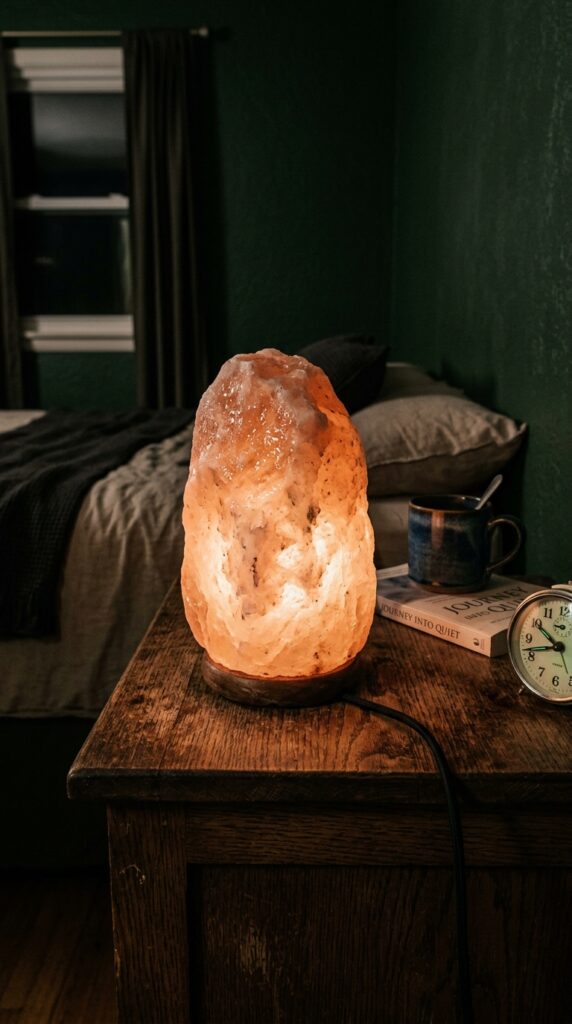
Salt lamps became a cliché for a reason: the light they produce is genuinely cozy. The warm, dim, orange-pink glow is unlike any LED or incandescent bulb. I resisted buying one for years because of the hype, then found a real one at a thrift store for $8. Now I understand. The light is so soft that it does not disturb sleep if left on all night, but it provides enough illumination to move around safely.
Here is the honest truth: most “salt lamps” on Amazon are plastic with an orange bulb. They weigh nothing. A real salt lamp weighs five to fifteen pounds and feels cool to the touch. The fake ones are useless for the light quality. Budget $30 to $80 for a real salt lamp of medium size. The trade-off is that real salt lamps sweat in humid weather — they attract moisture from the air and can leave a puddle on your nightstand. Put it on a coaster or a small dish. Also, salt lamps can crumble if you drop them. Handle carefully.
Leave the salt lamp on for a few hours each day to keep it dry. If you never turn it on, it will weep moisture and the bulb socket can corrode.
4. Fully Upholstered Bed Frame In A Soft, Nubby Fabric
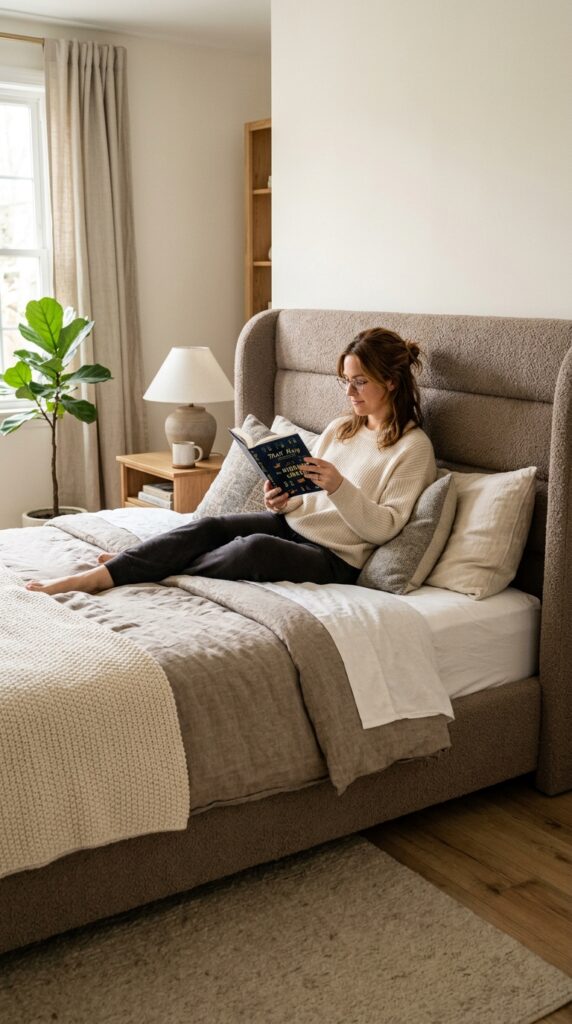
Wood bed frames look nice. Upholstered bed frames feel cozy. The fabric absorbs sound, softens the room acoustically, and gives you a soft place to lean. I swapped my wooden bed for a fully upholstered one in a heathered wool-blend fabric, and the bedroom went from echoey to hushed. The difference is most noticeable when you are lying down and the world outside gets quieter.
A fully upholstered bed costs more than a wooden one — expect $400 to $1,200 for a quality piece. Cheap ones use thin foam and fabric that pills within months. Look for high-density foam and performance fabrics (wool blends, Crypton, or indoor-outdoor fabrics that feel soft but resist stains). The trade-off is that an upholstered bed is harder to clean than wood. Dust settles into the fabric. You will need a vacuum with an upholstery attachment every few weeks. Also, if you have pets, choose a fabric that does not trap hair — wool blends are better than velvet.
Test the fabric before buying. Rub it with your palm. If it feels scratchy against your cheek, it will feel scratchy when you lean against it for an hour. Cozy is tactile first, visual second.
5. Thick Cushion On A Window Seat Or Deep Sill
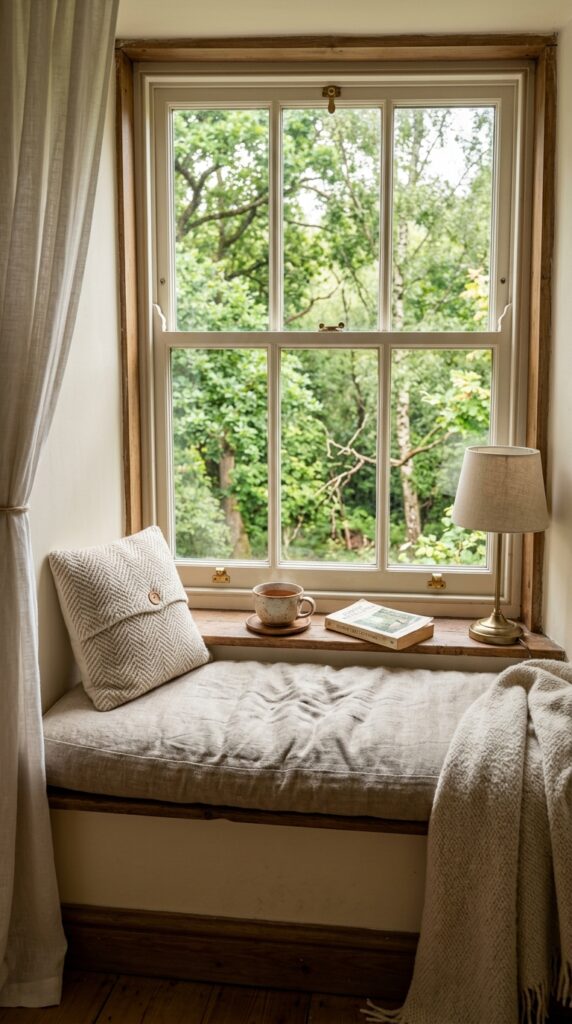
If you have a window sill deeper than eight inches, you have the bones of the coziest spot in the house. I added a custom foam cushion to my bedroom window sill (12 inches deep, 48 inches wide) and suddenly had a reading nook that cost under $100. The cushion is four inches thick — any thinner and it feels like a bench, not a seat. Any thicker and it gets unstable.
You can order custom-cut foam online and have a local seamstress make a simple cover, or buy a pre-made window seat cushion in standard sizes. Budget $50 to $150. The trade-off is that direct sunlight will fade and degrade foam and fabric over time. Use UV-protectant fabric or accept that you will replace the cushion every few years. Also, a window seat is only cozy if the window itself is not drafty. If you feel cold air, add weatherstripping first.
Add a small hook on the wall next to the window to hold a reading blanket. A blanket within arm’s reach turns a window seat from a perch into a destination.
6. Three Layers Of Bedding: Sheet, Quilt, And Chunky Blanket
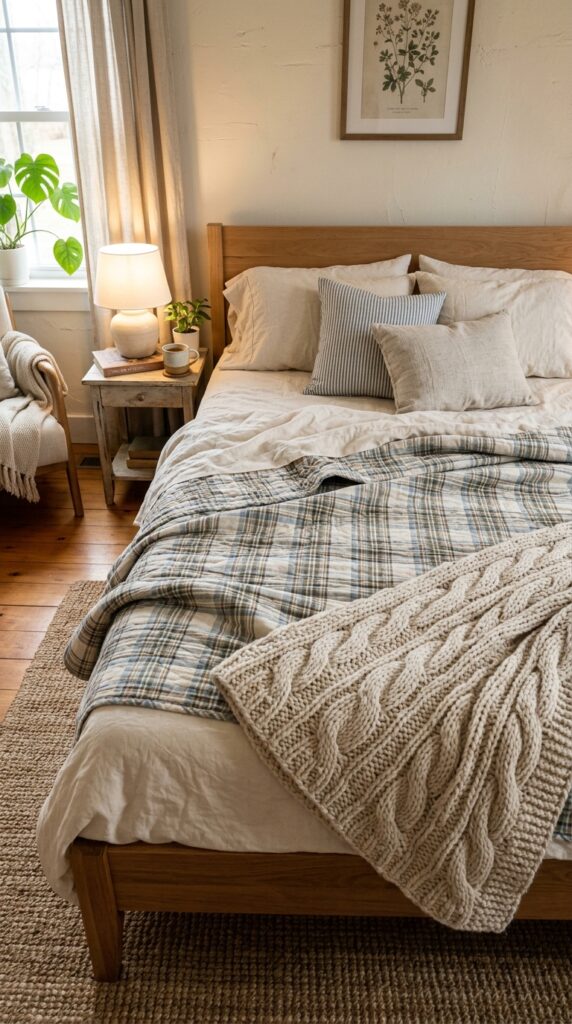
A single duvet looks like a hotel. Layered bedding — sheet, lightweight quilt, and a textured blanket — looks like a home. I started layering after realizing that a heavy duvet was either too hot or too cold, with no in-between. Now I sleep with a sheet, a thin cotton quilt, and a wool blanket that I add or remove as the temperature shifts. The visual layering also makes the bed look deeper and more inviting.
The key is using different textures: smooth sheet, matte quilt, chunky blanket. Do not use all the same material. Cotton sheet, linen quilt, wool blanket. Or flannel sheet, cotton quilt, chenille throw. Budget $50 to $200 for the quilt and blanket depending on quality. The trade-off is that making the bed takes longer — three layers means more smoothing and folding. But the visual payoff is worth the extra sixty seconds in the morning.
Fold the top blanket asymmetrically — one corner pulled down, the other tucked. Symmetry is for hotels. Asymmetry is for homes where people actually sleep.
7. Paper Lantern Pendant Light Hung Lower Than Expected
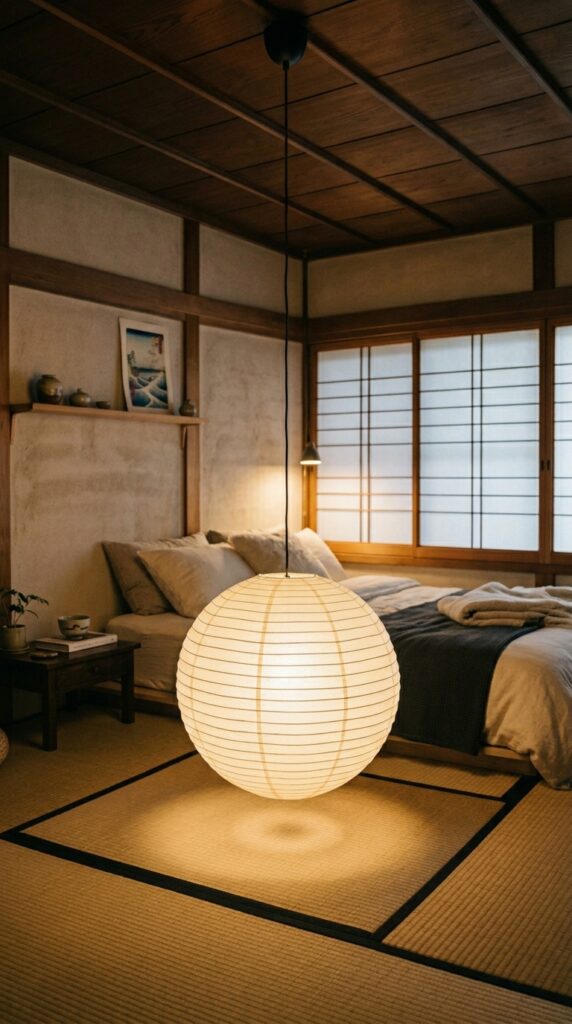
Most ceiling lights are mounted too high. They throw light onto the ceiling, not into the room. A paper lantern hung low — at chest level or slightly higher — creates a pool of warm, diffused light that feels like being under a cloud. I replaced my overhead fixture with a simple paper lantern on a longer cord, lowering it to 60 inches from the floor. The light is now soft enough to read by without glare.
Paper lanterns are fragile. A stray basketball or a tall friend will shatter it. Hang it in a low-traffic area, such as above a bed or in a corner. Also, paper lanterns collect dust and cannot be cleaned easily. Replace them every year or two. Budget $20 to $50 for the lantern and a longer cord kit. This is an easy DIY if you are comfortable with basic electrical work (turning off the breaker first). If not, hire someone for $100.
Use an LED bulb with a color temperature of 2200K to 2400K. Paper lanterns already diffuse light; a warm bulb makes the glow feel like candlelight.
8. Warm White Fairy Lights Draped Behind A Headboard
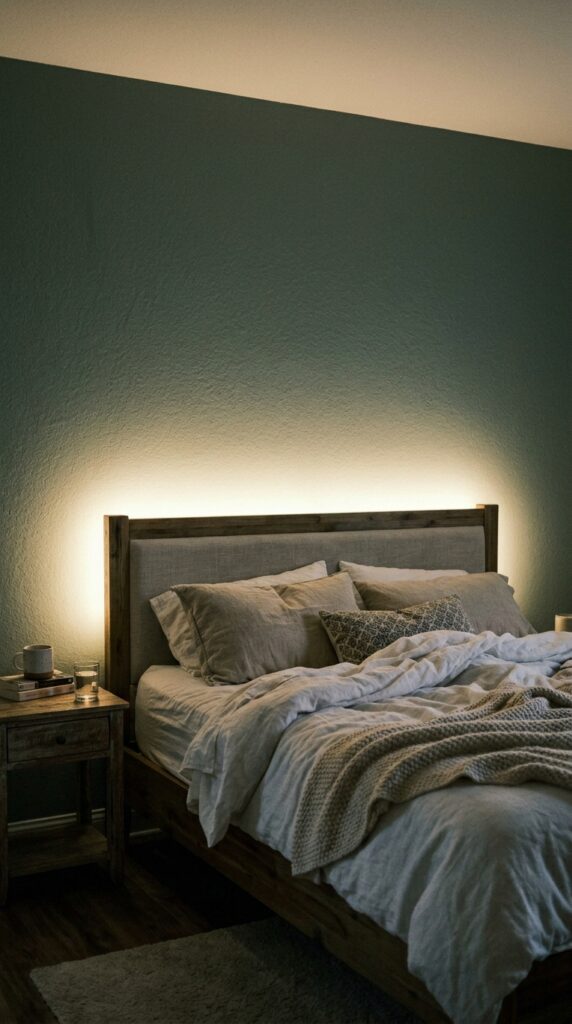
Fairy lights are the easiest cozy upgrade, but only if you do them right. The wrong way: bright white, draped in perfect geometric patterns, plugged into a visible outlet. The right way: warm white (2200K), on a thin copper wire, draped casually behind a headboard or along a curtain rod so the bulbs are not directly in your eyes. I put a strand behind my upholstered headboard, and the wall behind the bed now has a soft, starlit glow.
Look for lights with a remote or a timer. Turning them off from bed matters. Also, battery-operated strands avoid visible cords but need new batteries every few weeks. USB-powered strands are a good compromise. Budget $10 to $30. The trade-off is that cheap fairy lights fail — one bulb goes out and the whole strand dies. Spend a little more on a strand with replaceable bulbs or a reputable brand. Do not leave them on unattended for hours; the transformer boxes can get warm.
Drape the lights so they fall in loose S-curves, not straight lines. Organic curves look like magic. Straight lines look like a college dorm.
9. A Heavy Cotton Canopy That Blocks Drafts
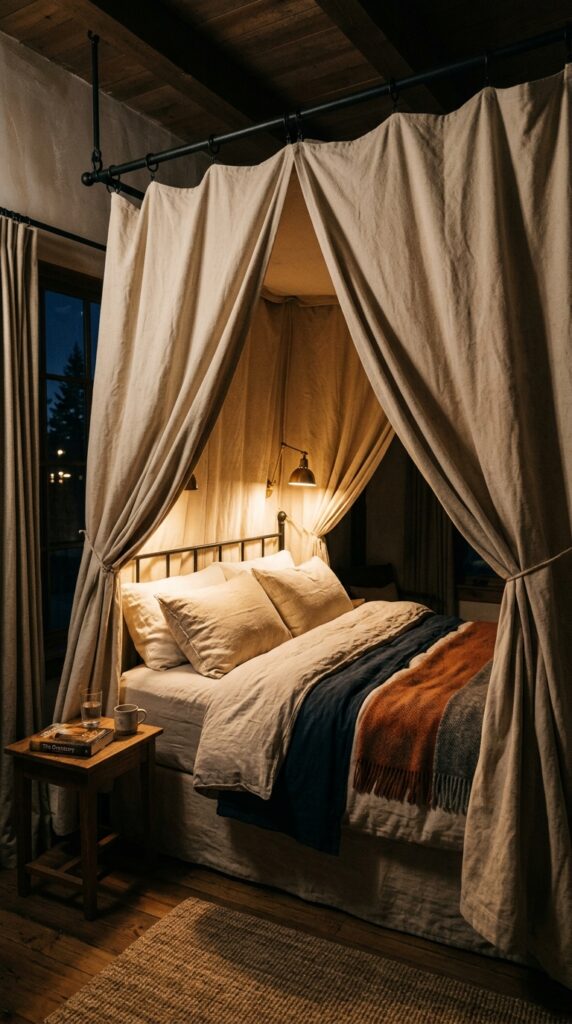
Sheer canopies are romantic. Heavy cotton canopies are cozy. I live in an old house with drafty windows, and a heavy cotton canopy around my bed dropped the perceived temperature by several degrees. The fabric traps body heat and blocks air movement. I built a simple frame from electrical conduit and draped unbleached cotton duck fabric over it. The result is a bed that feels like a cabin in the woods, even in the middle of the city.
This is not a sheer, floaty look. It is substantial and a little rustic. The fabric should be 100% cotton, unbleached or in a dark color. Avoid synthetics — they do not breathe and will trap moisture. Budget $50 to $150 for fabric and $30 for conduit or a premade canopy frame. The trade-off is that a heavy canopy makes the bed feel smaller and darker. If you are claustrophobic, skip it. Also, the fabric needs to be washed occasionally, which is a hassle with a large piece.
Leave the foot of the canopy open for airflow. A fully enclosed canopy will get stuffy and humid within an hour. Fresh air is cozy; stagnant air is not.
10. An Electric Blanket Under Your Fitted Sheet
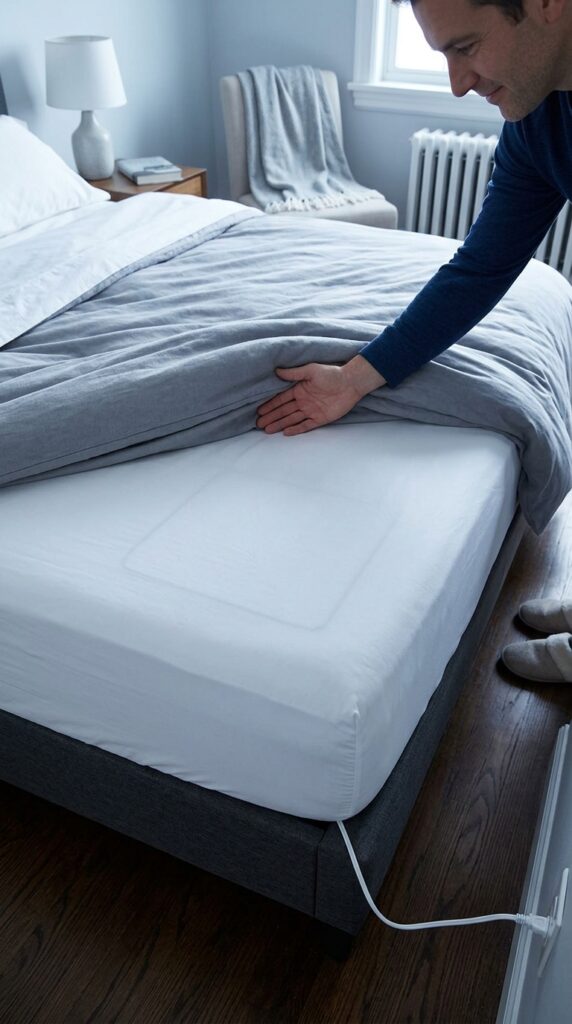
Nothing says cozy like getting into a pre-warmed bed. I resisted electric blankets for years because they seemed like something from a grandparent’s house. Then I bought one on a whim, and I will never go back. A modern electric blanket placed under your fitted sheet (not on top) heats the mattress to a gentle warmth that makes climbing into bed a pleasure, not a shock.
Look for a blanket with dual controls (if you share a bed), automatic shut-off (usually after 10 hours), and preheat function. Budget $60 to $150. The trade-off is that electric blankets can fail after a few years — the wires break from folding or washing. Wash them rarely and according to instructions. Also, some people find the sensation of sleeping on electric wires uncomfortable. Place the blanket under a mattress pad for a buffer. Do not use one if you have memory foam that is sensitive to heat; it can soften the foam.
Turn the blanket on 20 minutes before bed, then turn it off when you get in. Sleeping with it on all night is unnecessary and can make you overheat. The residual warmth lasts long enough.
11. A Door Sweep And Draft Stopper For The Bedroom Door
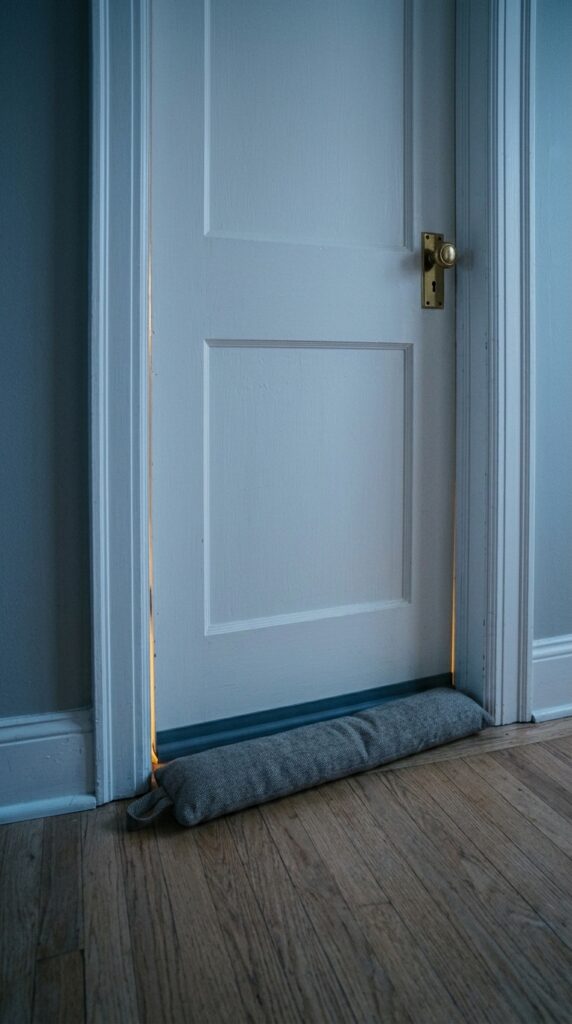
Cozy is partly about temperature control, and the biggest heat leak in most bedrooms is the gap under the door. I installed a rubber door sweep on the bottom of my bedroom door (under $15, fifteen minutes with a screwdriver) and added a fabric draft stopper for good measure. The difference in how warm the room stayed at night was immediate. No more cold air sneaking in along the floor.
A door sweep is a permanent solution that requires drilling small holes into the bottom of the door. If you rent, use a removable adhesive draft stopper instead — a foam strip that sticks to the door bottom. Fabric draft stoppers (the tube-shaped ones) are cute but less effective because they shift. Use both: sweep for the gap, fabric for the aesthetic. Budget $10 to $40 total. One thing most guides skip: check the gap under your door before buying. Some doors have very low clearance; you may need a thinner sweep.
A door sweep also blocks sound. A cozier bedroom is a quieter bedroom. The same seal that stops cold air also stops the sound of the TV in the next room.
12. A Large Cork Board Covered In Personal Ephemera
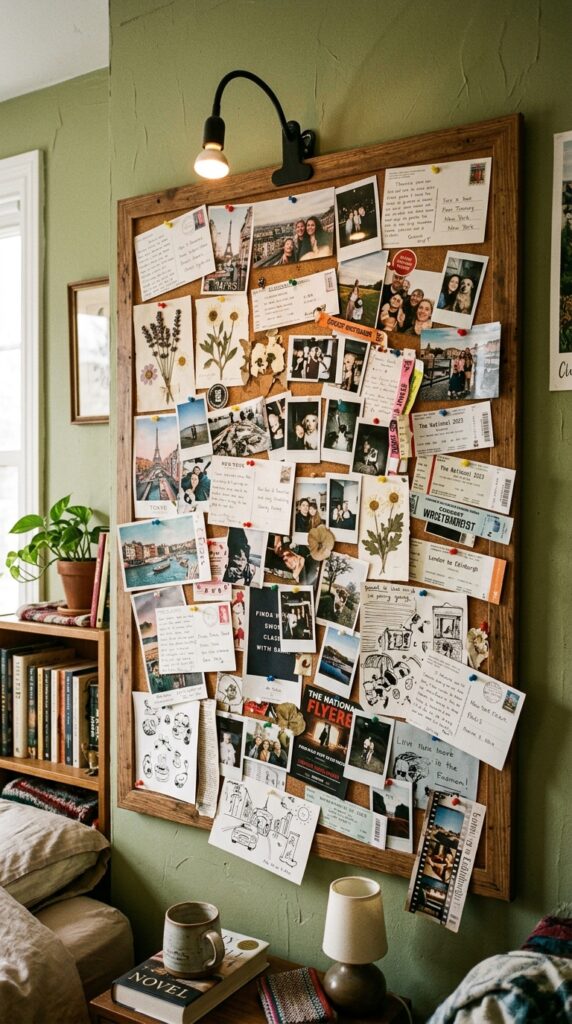
Minimalism is not cozy. A room that shows no signs of your life feels like a display. A cork board covered in things you love — photos, postcards, a pressed leaf from a hike, a concert ticket — signals that this room belongs to someone. I have a 24×36 inch cork board above my desk, and I add to it whenever I find something worth remembering. The board is messy, overlapping, and chaotic. That is the point.
Do not try to make it look curated. The best cork boards look accumulated, not arranged. Use colorful push pins (brass looks better than plastic). Avoid putting anything too precious directly in sunlight — photos will fade. Budget $20 to $50 for the board and $5 for pins. The trade-off is that an open cork board collects dust. Blow it off with a hairdryer on cool every few months. Also, it can look cluttered to some people. If you prefer clean lines, this is not for you.
Leave a few empty spaces on the board. A board that is completely full has no room for the next memory. Cozy is about possibility, not completion.
13. A Real Hot Water Bottle With A Fabric Cover
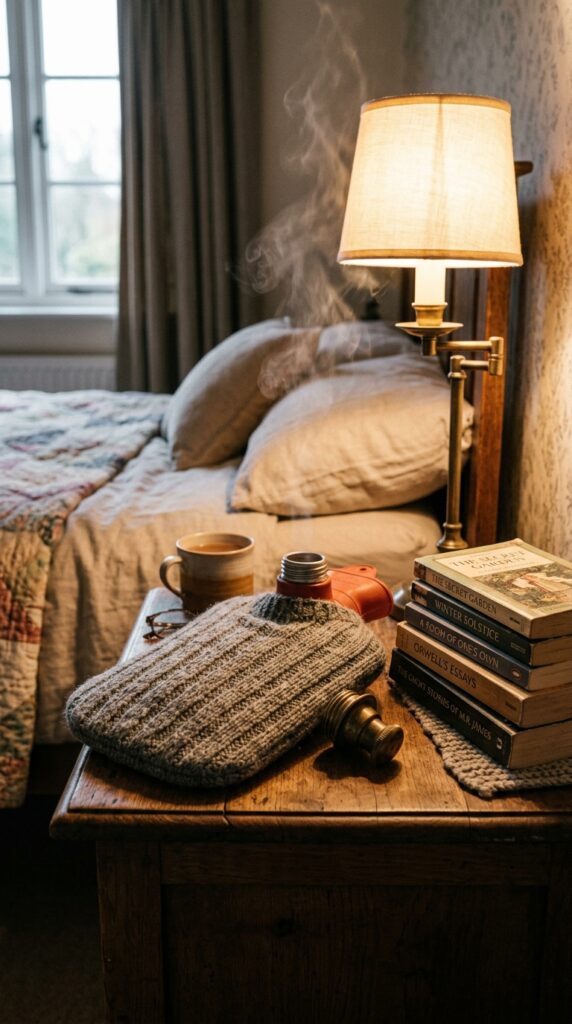
An electric blanket is efficient. A hot water bottle is ritual. I started using one on nights when I did not want to heat the whole bed, just a spot for my feet or my lower back. The process — boiling water, filling the bottle, wrapping it in the cover — feels like a small ceremony of self-care. And the heat lasts for hours, radiating gently from a single point.
Real hot water bottles cost $15 to $30. Do not buy the cheap plastic versions that crack at the seam. Look for natural rubber (latex) bottles with a wide mouth for easy filling. Fabric covers are sold separately ($10 to $20) or you can knit your own. The trade-off is that hot water bottles require maintenance. Rinse and dry them thoroughly after each use to prevent mold. The rubber will eventually degrade after a few years. Also, never use boiling water — let it cool for a minute. Too hot can rupture the bottle or burn your skin.
Fill the bottle only two-thirds full. The air gap allows the bottle to conform to your body. A completely full bottle is hard and uncomfortable.
14. A Single Armchair Pulled Into The Corner With A Reading Lamp
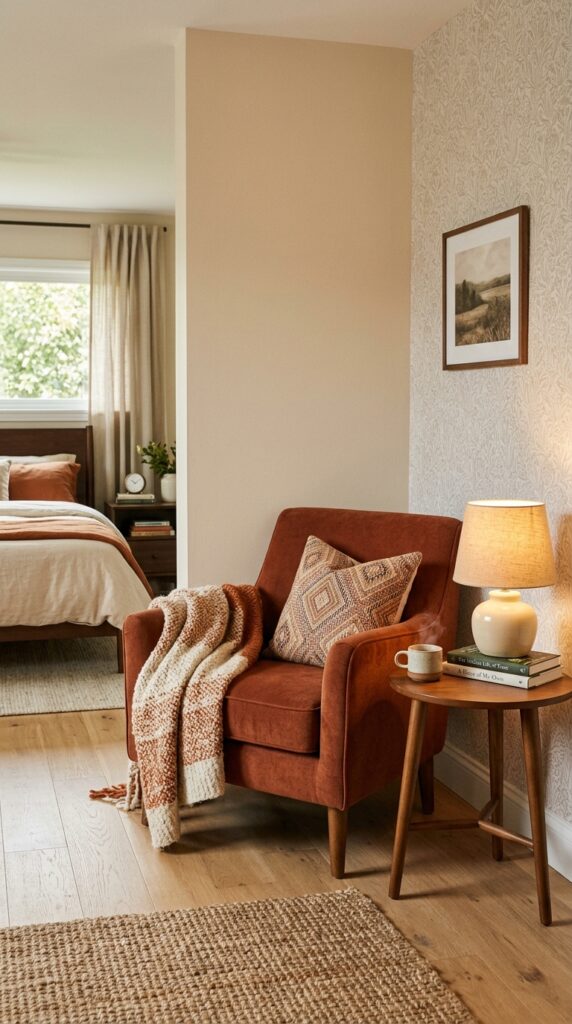
A bedroom with only a bed to sit on feels temporary. Add one chair — just one — in a corner, and the room becomes a place where you can read, put on shoes, or just exist without lying down. I added a secondhand armchair in a warm rust velvet, pulled it diagonally into the corner, and added a small table and lamp. Now I have a spot for morning coffee that is not my pillow.
The chair should be comfortable enough to sit in for an hour. Test it before buying. Avoid chairs with low backs or hard wooden arms. Budget $50 to $200 for a vintage chair, or $200 to $500 for a new one. The trade-off is floor space. In a very small bedroom (under 100 square feet), a chair might be too much. Consider a small bench at the foot of the bed instead. Also, a chair will collect clothes. Be disciplined, or it becomes a pile, not a sanctuary.
Angle the chair at 45 degrees to the corner, not parallel to the walls. A diagonal placement invites you in. A chair pushed straight against the wall looks like time-out.
15. A Smaller Rug Layered Over Wall-To-Wall Carpet
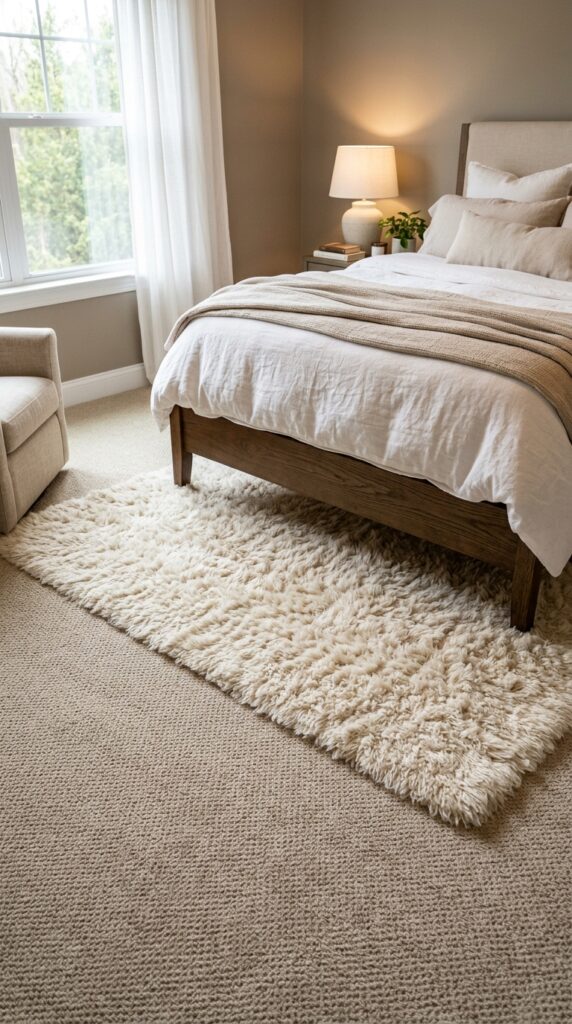
Wall-to-wall carpet is often beige and boring. A smaller rug layered on top breaks up the monotony and adds a zone of extra softness. I put a thick shag rug over the builder-grade carpet in my bedroom, and the area near the bed became noticeably more comfortable. The layering also lets you add color or pattern without replacing the entire floor.
The key is contrast: if your carpet is low-pile and neutral, choose a high-pile rug in a different color or texture. If your carpet is already patterned, use a solid rug. Do not try to match exactly — that looks like a mistake. Budget $50 to $150 for a 5×7 rug. The trade-off is that rugs on carpet shift and slide. Use a nonslip rug pad designed for carpet (grippy on both sides). Also, vacuuming two layers is annoying. You will need to move the top rug occasionally to clean underneath.
Position the layered rug so it extends at least 18 inches from the foot of the bed on each side. A small rug floating in the middle of the carpet looks like an island. Make it anchor the bed.
16. A Screensaver Of A Crackling Fire On Your TV
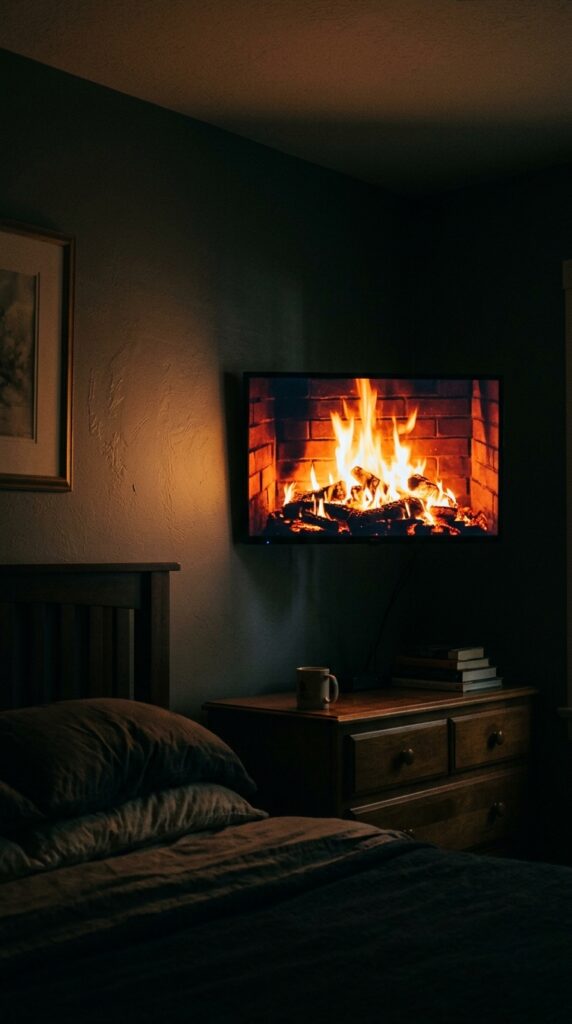
A real fireplace is the coziest thing in the world. Most of us do not have one. A high-quality fireplace video on a TV is the next best thing. I put a 4K fireplace video on my bedroom TV every winter evening, and the flickering light and crackling sound create an atmosphere that is surprisingly convincing. The room feels warmer, even though the temperature has not changed.
YouTube has endless fireplace videos for free. But the ads will ruin the mood. Pay for an ad-free version or buy a dedicated fireplace DVD or download. For the best effect, turn off all other lights, set the TV’s brightness to 50% (so it does not overpower the room), and use external speakers for the sound. Budget $0 to $10. The trade-off is that a TV is not a fireplace. If you are sensitive to screens in the bedroom, skip it. Also, the flickering can trigger migraines in some people.
Choose a fireplace video with a dark background, not a bright hearth. The contrast between the dark room and the flames is what makes it work. A bright video looks like a TV, not a fire.
17. A Low Coffee Table Or Ottoman For Laptops And Tea
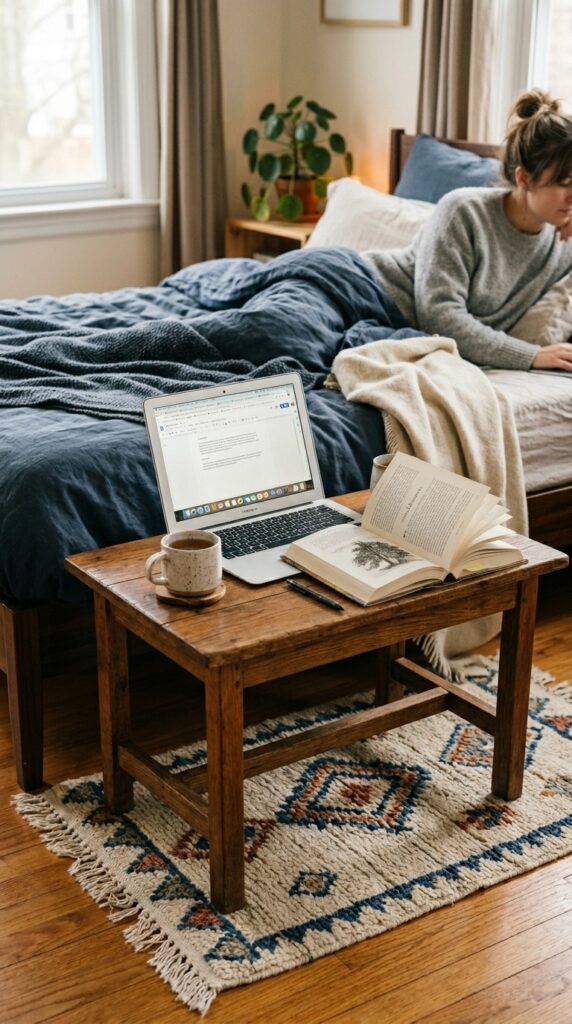
Cozy bedrooms invite you to stay in bed all day. A low table at the foot of the bed gives you a surface for coffee, a laptop, or a puzzle without getting up. I built a simple low table from plywood and hairpin legs (total cost $40). It is 16 inches tall, 24 inches wide, and 18 inches deep. From bed, I can reach everything without straining. The room now has a clear zone for lounging.
Do not use a standard coffee table (usually 18 inches). It will be too tall. The ideal height is 14 to 16 inches, measured from the floor. Also, the table should be narrow enough to walk around — 18 inches deep maximum. Budget $30 to $100 for a low table or ottoman. The trade-off is that a table at the foot of the bed blocks the walking path. In a small room, it might be in the way. Measure before committing.
If you use a laptop on the low table, get a lap desk to protect your thighs from heat. The table height is good, but laptop fans need airflow that a blanket blocks.
18. Bulbs Below 2400K In Every Fixture
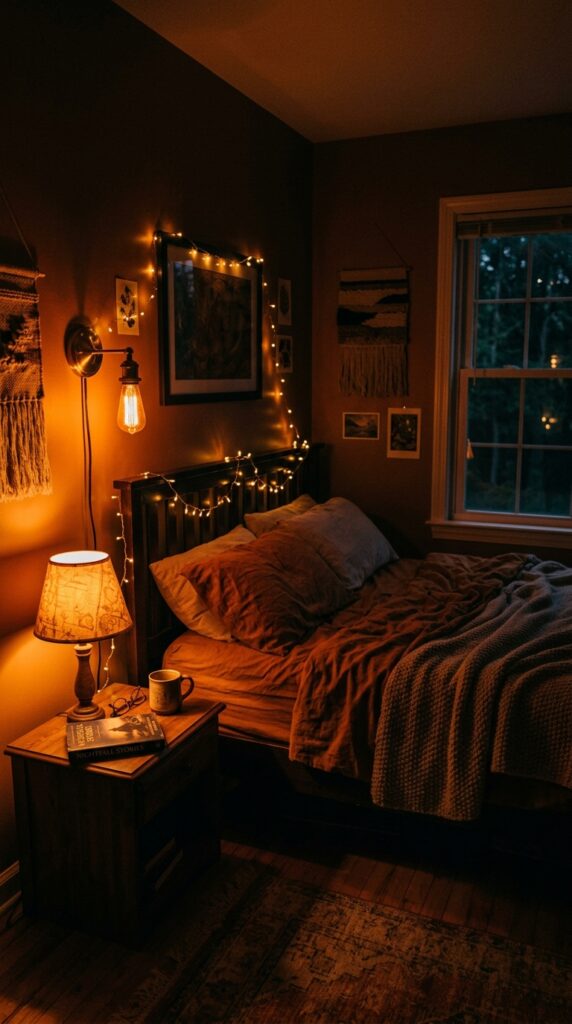
This is the single most impactful cozy upgrade you can make, and it costs under $50. Replace every bulb in your bedroom with ones rated 2400K or lower (2200K is even better). Standard “warm white” bulbs are 2700K, which still has a yellow tint. 2200K is the color of a candle flame. I replaced all my bulbs — overhead, lamps, sconces — with 2200K LEDs, and the room transformed overnight. The light is so warm that my body automatically relaxes.
You will need to buy bulbs online; most stores do not carry 2200K in stock. Look for “extra warm white” or “candlelight” LEDs. Expect to pay $10 to $20 per bulb. The trade-off is that 2200K bulbs are dimmer than standard bulbs. A 60-watt equivalent at 2200K feels more like 40 watts. You may need more fixtures or higher wattage. Also, these bulbs are not good for tasks that require color accuracy (like makeup). Keep one higher-temperature bulb in a closet or bathroom for those tasks.
Do not mix color temperatures in the same room. A 2700K lamp next to a 2200K sconce will make the 2700K look blue by comparison. Consistency is key.
19. A Small Pothos Or Ivy Trailing From A High Shelf
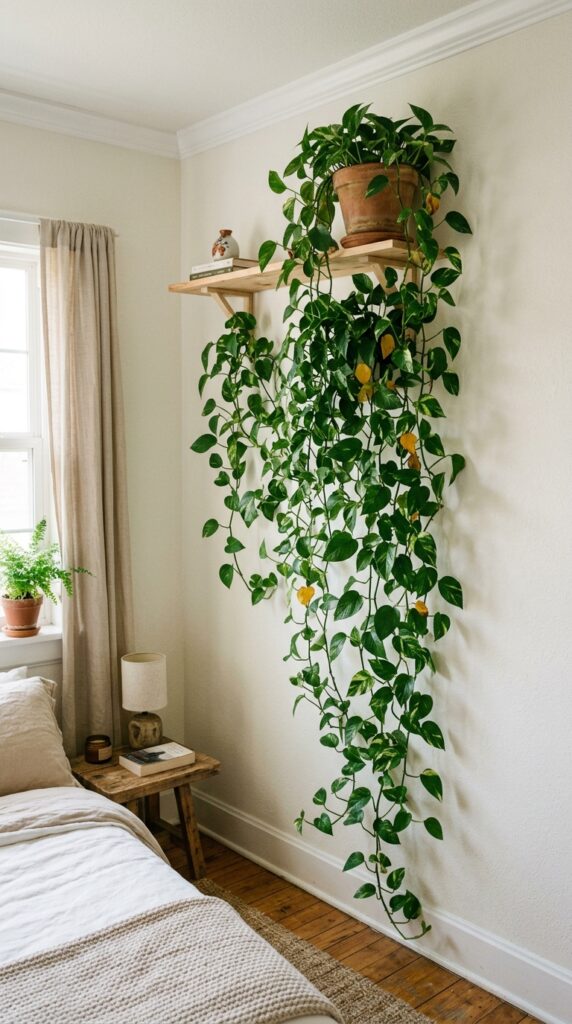
Plants are not a cliché when they are used this way: one single trailing plant from a high shelf, allowed to grow wild. I have a golden pothos on a shelf near the ceiling, and its vines hang down past my window frame. The green softens the corner and adds a living texture that no fake plant can replicate. The plant requires almost no care — water it every two weeks, trim it once a year.
Choose a plant that trails naturally: pothos, philodendron, string of pearls, or ivy. Avoid plants that grow upright — they will just look like a plant on a shelf. Budget $10 to $30 for the plant, $5 for a pot, and $0 for propagation from a friend. The trade-off is that trailing plants can get leggy or brown at the ends. Trim them regularly. Also, they collect dust on the leaves. Wipe them down every few months. And if you have cats, research toxicity — pothos is toxic to cats.
Rotate the pot every month so the plant grows toward the light evenly. A lopsided trailing plant looks accidental. A symmetrical one looks intentional.
20. A Large Piece Of Fabric As A Temporary Wall Treatment
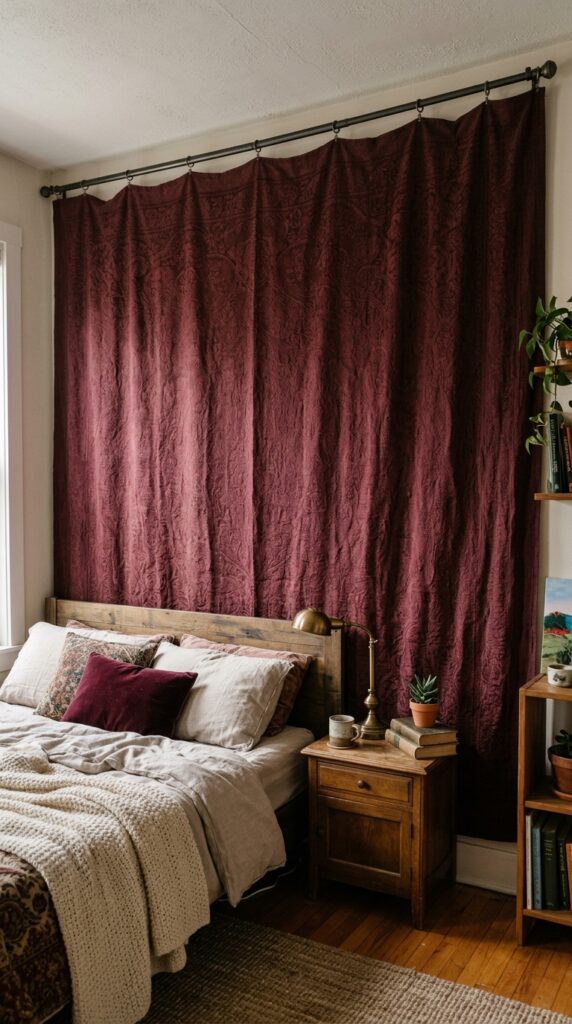
Renters cannot paint. But you can hang fabric. I bought a 50×80 inch piece of heavy cotton fabric in a deep burgundy, installed a tension rod near the ceiling, and clipped the fabric to it with curtain rings. The fabric softens the entire room acoustically and visually. It also hides a wall I hated. Best of all, it comes down without a trace when I move.
Choose fabric that is heavy enough to drape well (cotton duck, velvet, or linen). Avoid thin polyester — it looks cheap and wrinkles badly. The fabric should extend from near the ceiling to near the floor. Budget $30 to $100 for fabric and $15 for a tension rod. The trade-off is that fabric collects dust. Vacuum it with an upholstery attachment every few months. Also, fabric can fade in direct sunlight. If your wall gets strong sun, use UV-protectant fabric or accept that it will fade.
Clip the fabric so it has gentle folds, not a flat sheet. The folds add shadow and depth. Flat fabric looks like a bedsheet nailed to the wall.
21. A Collection Of Unglazed Clay Pottery On A Dresser
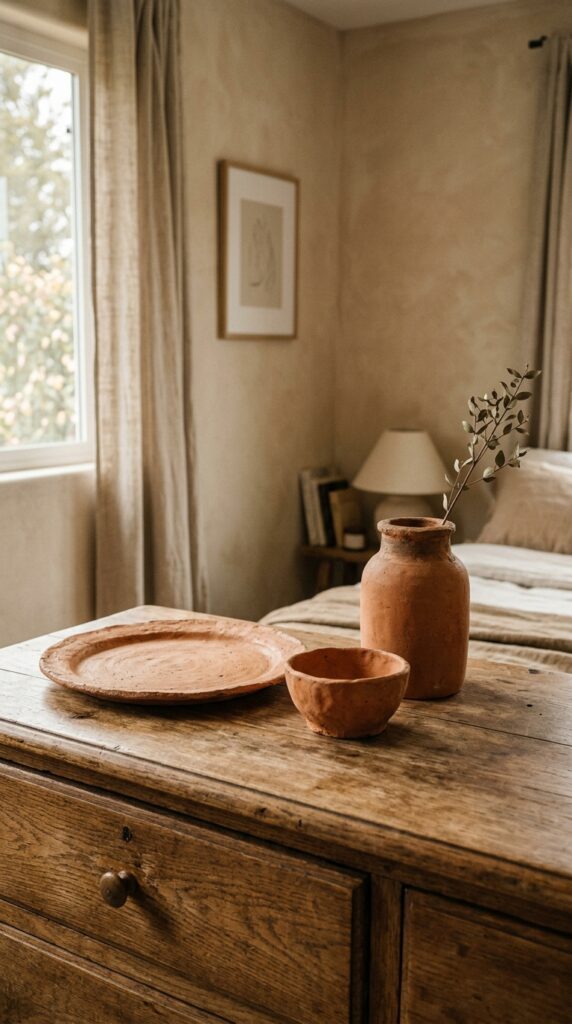
Glazed ceramics are shiny and reflective. Unglazed clay is matte, warm, and absorbs light rather than bouncing it. I replaced my shiny ceramic catch-all bowl with an unglazed terracotta bowl, and the change in the room’s texture was noticeable. The clay feels cool and slightly rough under your fingers. It adds an earthy, grounded quality that glossy finishes cannot match.
Unglazed clay is porous. It will stain if you spill liquid on it. Use it only for dry items like keys, jewelry, or dried flowers. To clean, wipe with a dry cloth or very slightly damp cloth — no soap. Budget $10 to $50 per piece at craft fairs or pottery studios. Mass-produced unglazed pottery is available online but often looks too perfect. Handmade is better. The trade-off is that unglazed clay can be fragile and can absorb oils from your hands over time, darkening in spots. That is part of the charm.
Group pottery in odd numbers (three or five). Even numbers look like a set. Odd numbers look collected. The slight asymmetry is what feels cozy.
22. A Ceiling Painted One Shade Darker Than The Walls
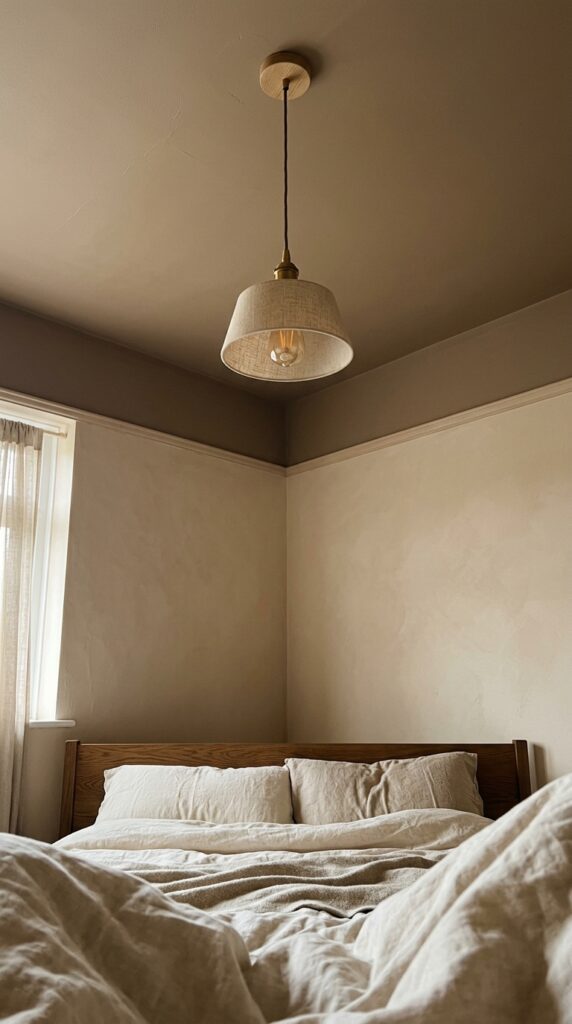
White ceilings bounce light and make a room feel larger. That is the opposite of cozy. A ceiling painted one shade darker than the walls draws the room inward, making it feel like a cocoon. I painted my bedroom ceiling a warm taupe that was two shades darker than my wall color, and the room immediately felt more grounded. The effect is subtle enough that guests do not notice, but the room feels different — smaller in a good way.
You do not need a dramatic dark ceiling. Just one or two shades darker than the walls. Use the same paint color as the walls but have the store tint it darker, or buy a separate color from the same family. Budget $30 to $60 for a quart of paint. The trade-off is that painting a ceiling is a miserable job. Your neck will hurt. Your arms will ache. Hire someone ($150 to $300) or accept the pain. Also, a darker ceiling makes the room feel shorter. If your ceiling is already low (under 8 feet), this might make it feel claustrophobic.
Use flat or matte paint on the ceiling. Any sheen will reflect light and ruin the absorbing effect. Flat paint disappears, which is exactly what you want.
23. A Fabric Bedside Caddy That Hangs From The Mattress
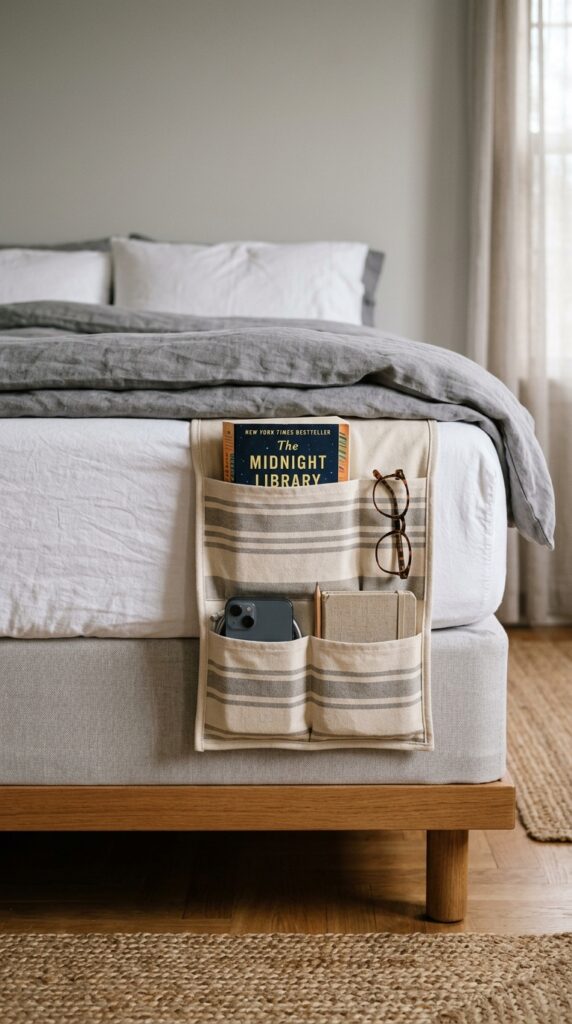
Not every bedroom has room for nightstands. A fabric bedside caddy that slips between the mattress and box spring gives you storage without taking up floor space. I used one for years in a tiny apartment, and it held everything I needed at arm’s reach: glasses, phone, lip balm, a small book. The caddy is not luxurious, but it is deeply practical, and practicality is cozy when space is tight.
Look for caddies with rigid dividers so the pockets do not collapse. Soft, unstructured caddies are frustrating — you cannot find anything. Also, make sure the caddy has a flap that goes between the mattress and box spring long enough to stay in place (at least 12 inches). Budget $10 to $30. The trade-off is that a caddy is not beautiful. It looks like what it is: a storage solution. If you have room for a real nightstand, get a nightstand. If you do not, a caddy is a lifesaver.
Wash the caddy every few months. It collects dust and crumbs from your bed. A dirty caddy is not cozy; it is just dirty.
24. Blackout Curtain Liners Behind Your Regular Curtains
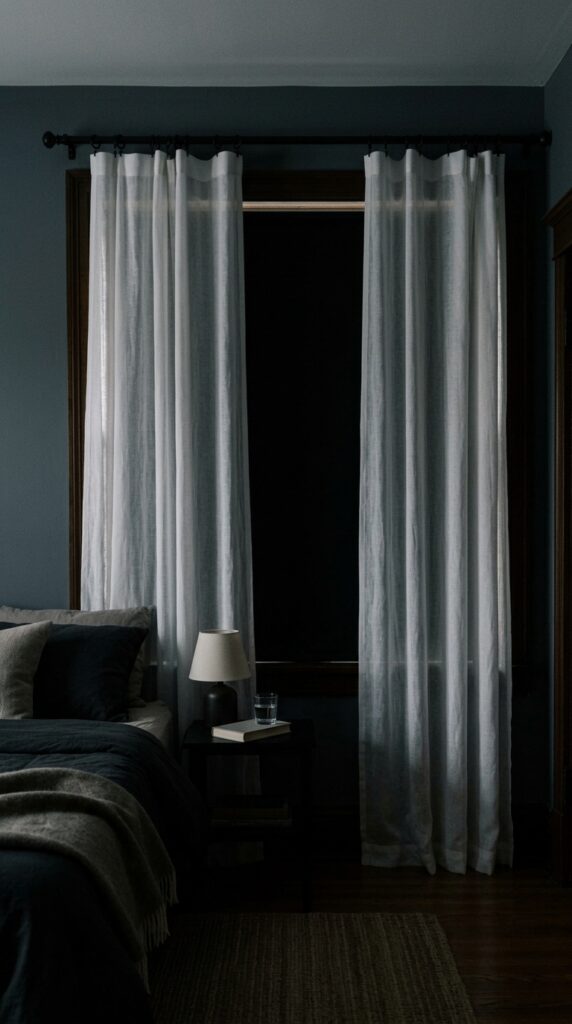
Cozy bedrooms need the option of total darkness. Blackout curtains often look heavy and military. The solution is blackout liners behind your existing curtains. I bought inexpensive blackout liners (under $20 per panel) and hung them on the same rod behind my sheer curtains. From inside the room, you still see the sheers. From outside, you see the liners. But the room is dark enough for a nap at 2 PM.
Blackout liners also insulate. They keep heat in during winter and out during summer. The temperature regulation alone makes them worth the cost. Budget $15 to $40 per window for liners. The trade-off is that two layers of curtains look thicker and can overwhelm a small window. Use a double rod or ring clips that allow you to hang both layers from one rod. Also, blackout liners are often made from polyester that can off-gas initially. Air them out before hanging.
Buy liners with grommets or tabs that match your existing rod. If your rod is too thick, you may need ring clips. Measure before buying.
25. A Pillow Spray With Lavender And Chamomile
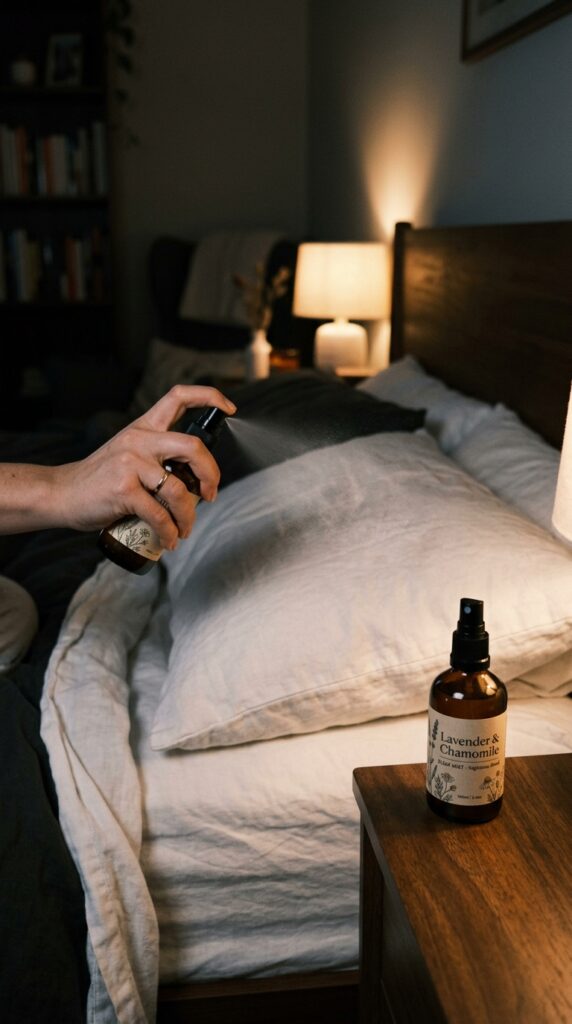
This is the smallest idea on the list and the one that costs the least. A pillow spray with lavender and chamomile creates a sensory cue that tells your brain: sleep is coming. I make my own with distilled water, witch hazel, and essential oils (10 drops lavender, 5 drops chamomile). Two spritzes on each pillow before bed, and the scent lingers just long enough to help me drift off. It is not about the smell itself. It is about the ritual.
You can buy pre-made pillow sprays for $10 to $25. DIY costs about $5 for a year’s supply. The trade-off is that essential oils can stain light fabrics. Use a fine mist spray and do not oversaturate. Also, some people are sensitive to lavender. Test with one spray on a corner of the pillowcase first. And never spray near your eyes. This is a small pleasure, but it is the kind of small pleasure that makes a room feel like yours.
Do not spray directly onto a pillow with a memory foam topper. The oils can break down the foam. Spray the pillowcase only, and let it dry for 30 seconds before lying down.
Twenty-five ideas, and the through-line is this: coziness is not a style. It is a collection of sensations — warmth underfoot, soft light that does not glare, a place to sit that is not the bed, the smell of lavender, the sound of a room that does not echo. Start with the light bulbs. Switch every bulb in your bedroom to 2200K or 2400K. That single change costs under $50 and will do more than any throw pillow. Then add one texture: the sheepskin rug, the upholstered bed, the heavy linen bedding. Then one ritual: the pillow spray, the hot water bottle, the fireplace video. You are not decorating. You are building a room that wants you to stay. And that is the whole point.