
I learned the hard way that a bedroom vanity can become a clutter magnet disguised as a good idea. My first attempt was a cute little table from a big-box store with a flip-up mirror and one shallow drawer. Within three weeks, it held fourteen lipsticks without caps, three crumpled receipts, a coffee mug ring, and the kind of dust that seems to appear only on black lacquer. The mirror was too small to see my full face without leaning. The stool wobbled. And yet I kept calling it “my vanity” like the word alone would make it feel special.
Most advice about bedroom vanities is either aspirational nonsense or a shopping list of expensive brands you can’t touch before buying. They show you pristine white marble with one single peony and a crystal bottle, then tell you to “add a tray.” That is not a solution. That is a photograph. Real luxury in a bedroom vanity has nothing to do with price tags and everything to do with how it survives your actual morning — the half-closed eyeliner, the spilled setting powder, the low winter light that makes everything look gray.
So I wrote what I wish I had read before my first attempt. Twenty-five ideas that go deeper than “buy a nice mirror.” Each one comes from living with it, repairing it, or deciding it was a mistake. Some are expensive. Some are under fifty dollars. All of them have a point of view. You will not find “add a plant” or “use neutral colors” as a standalone idea here. Those are ingredients, not ideas. Let’s get specific.
1. The Backlit Mirror That Makes Morning Skin Look Better
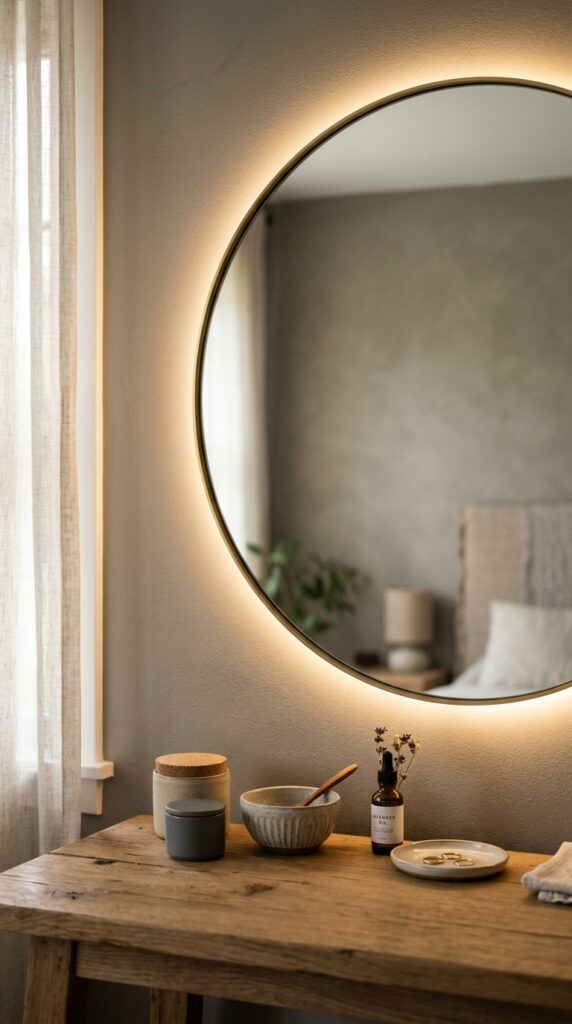
Front lighting from an overhead fixture makes every pore and shadow look like a crime scene. Side sconces can leave half your face in darkness. But backlighting — a strip of LEDs behind the mirror — bounces light outward and forward in a way that softens everything. I installed a 36-inch round mirror with a 3000K LED kit behind it, and the difference was immediate. My skin looked less tired. Makeup application became more accurate because there were no confusing shadows under my eyes.
The trade-off is installation. If you are not comfortable running low-voltage wire behind drywall, hire someone. Cheap adhesive LED strips from Amazon will fall off within six months when the adhesive dries out. I learned this when I found the strip dangling behind the mirror like a sad glow worm. Spend the extra money on a hardwired kit or at least aluminum channel tape. Budget around $120 to $250 for a decent backlit mirror, plus another $80 to $150 if you need an electrician.
Backlighting hides the mirror’s edge reflections against the wall, which makes the room feel larger and less cluttered. That alone is worth the installation hassle.
2. Venetian Plaster Wall Behind The Vanity
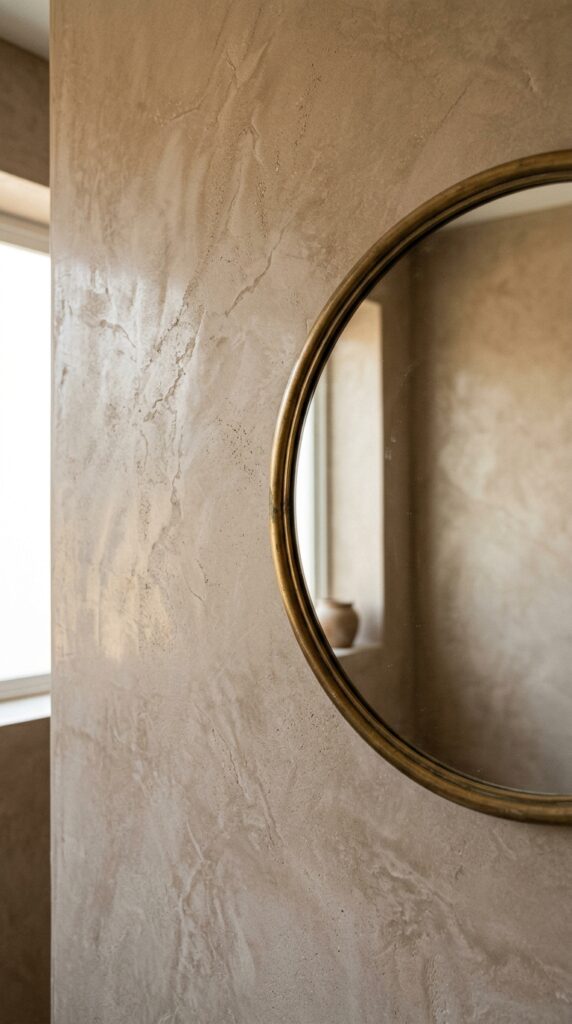
Paint is flat. Wallpaper can peel at the edges behind a vanity where moisture and heat collect. Venetian plaster, however, ages like old stone — it gets better. I applied a lime-based plaster to the wall behind my dressing table two years ago, and it has survived spilled toner, a knocked-over candle, and the general humidity of a bedroom with a bathroom attached. It wipes clean without staining. More importantly, it catches light in a way that makes the whole corner feel intentional rather than slapped together.
Here is the honest truth: this is not a weekend project if you want it to look right. The application requires three thin layers and burnishing with a trowel. You will make a mess. Budget around $150 for materials for a small accent wall, or pay a professional $600 to $1,000. Do not buy the premixed tubs from hardware stores — they look like gritty paint, not real plaster. Order from a company that sells authentic lime or clay plasters. The texture should feel cool and slightly porous, not plastic.
Venetian plaster reflects light differently throughout the day. Morning light makes it look soft and matte. Afternoon sun brings out a subtle sheen. That is the luxury of real depth.
3. A Custom-Height Vanity For Standing Or Sitting
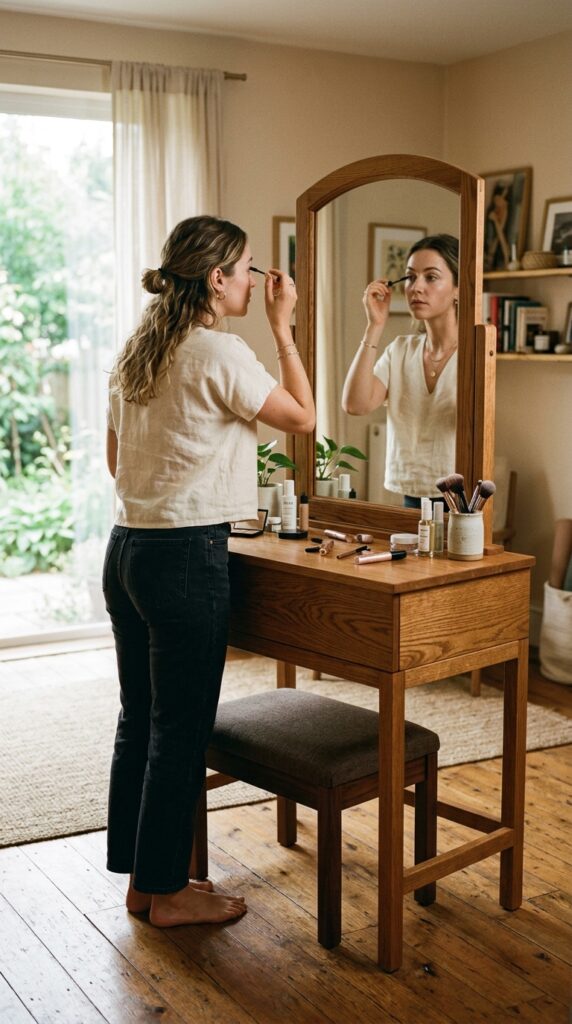
Standard desk height is 29 to 30 inches. That is designed for typing, not for looking closely at your face in a mirror while standing. Every prefab vanity I have owned made me hunch or crane my neck. Then I built a simple standing-height vanity at 40 inches using IKEA cabinet legs and a butcher block top. The difference in my morning posture was immediate. I can lean in slightly without bending my spine. My back stopped complaining.
If you sit to do your makeup, measure from your seated elbow height to the floor and subtract one to two inches. Most people need around 26 inches. The point is that standard furniture dimensions are averages. You are not an average. Customizing the height costs nothing if you buy adjustable legs (around $40 to $80) or build your own base. One thing most guides skip: if you raise the vanity height, raise the mirror height too. The mirror’s center should be at your eye level when standing or sitting in your typical posture.
A vanity at the wrong height will make you resent using it, no matter how beautiful the marble. Comfort is the first luxury. Everything else comes second.
4. Antiqued Mirror Top That Softens Reflections
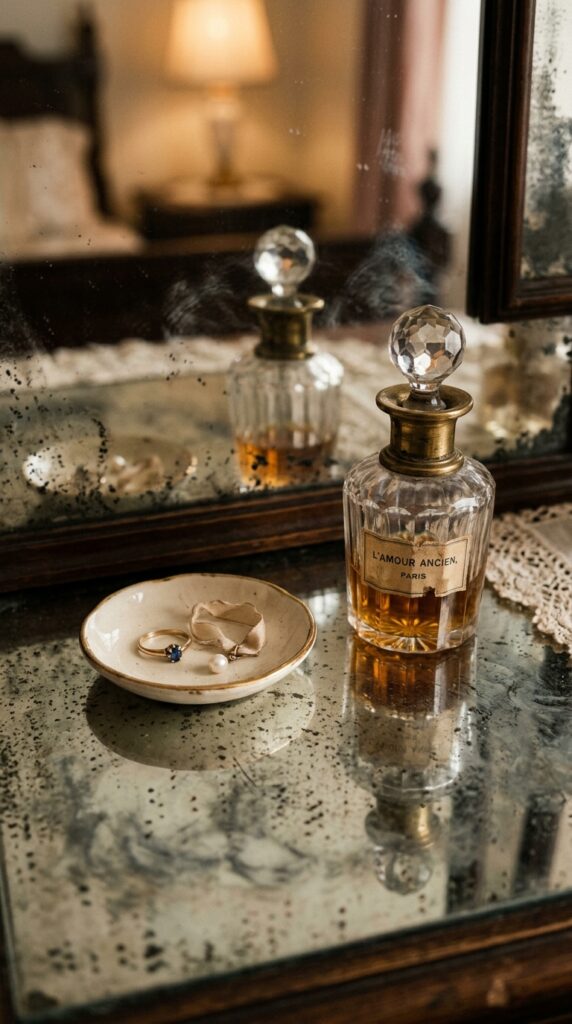
Clear mirror tops on vanities show every fingerprint, dust speck, and water ring within seconds. They scream “I just cleaned this and already it looks dirty.” Antiqued mirror — the kind where the silvering is intentionally distressed — hides real life. I bought a piece of antiqued mirror cut to size for my vanity surface, and it changed everything. The soft, uneven reflections make the items on top look like a still life rather than a mess. Coffee rings disappear into the dark spots.
The catch is that cheap antiqued mirror looks fake — too uniform, too gray. Real aged mirror has variation: some areas darker, some lighter, with a warm brown or gold undertone depending on the backing. You can buy genuine antiqued mirror glass for around $50 to $150 per square foot, or you can DIY by spraying a standard mirror with a mixture of water and muriatic acid (do this outside with serious ventilation). I paid $180 for a 24×36 inch piece from a specialty glass supplier. Worth every penny.
Antiqued mirror tops work best on vanities that don’t hold daily-use items. If you use it as a true surface for makeup and brushes, put a clear glass or acrylic protective layer on top. The soft reflection is lovely, but the distressed finish can catch powder and liquid.
5. Integrated Jewelry Drawer With Valet Tray Lining
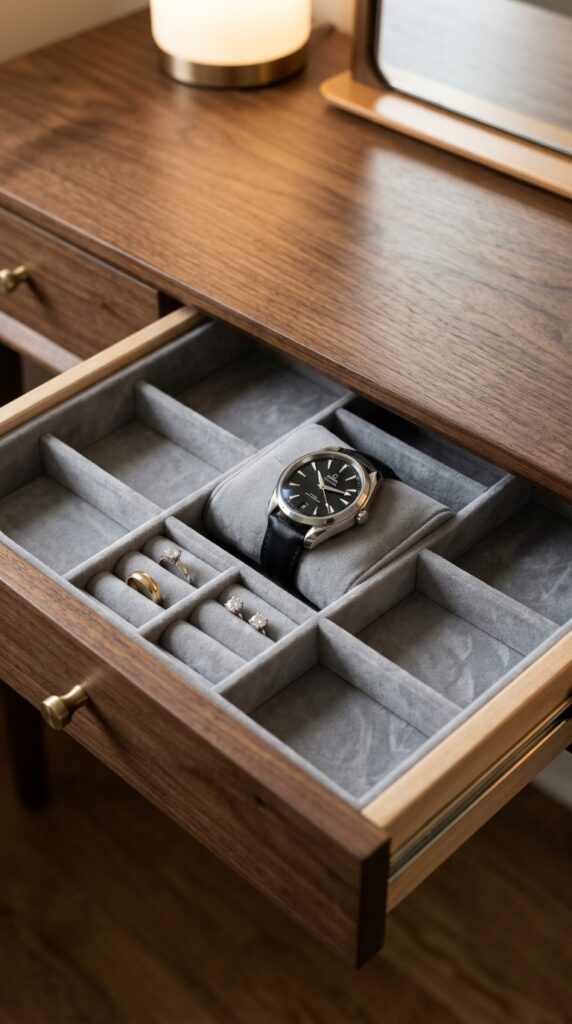
Jewelry boxes take up surface space. Trays get knocked over. The most luxurious solution is a shallow drawer built directly into the vanity top, just below the surface. I retrofitted a standard drawer by removing the front and installing a shorter one with a velvet liner from a jewelry supply company. Now my everyday rings, watch, and small earrings live in their own compartments, invisible until I slide the drawer open.
You do not need a custom carpenter for this. Many prefab vanities have a false front or a shallow upper drawer that you can modify. Measure the interior dimensions, then buy a pre-cut felt or velvet liner with adhesive backing (under $25). For compartments, use adjustable wood dividers or buy a modular insert from a company that makes gun cases or tool organizers — the same grid system works perfectly for jewelry. Just avoid foam that crumbles over time. Velvet or pigskin suede lasts.
The valet drawer should be no deeper than two inches. Anything deeper and you will lose small items in the dark corners. Shallow and wide is the move.
6. Swing-Arm Magnifying Mirror Mounted To The Wall
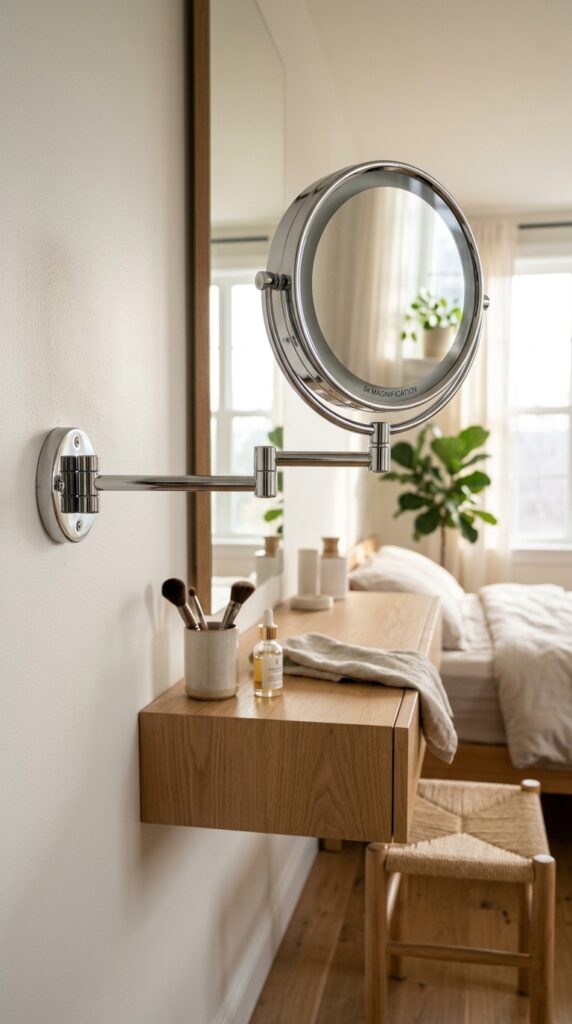
Standalone magnifying mirrors are countertop bullies. They take up a four-inch circle, tip over when you reach for something behind them, and collect dust around their weighted base. I threw mine away after it fell into my sink for the third time. A wall-mounted swing-arm mirror solves every problem. I installed one beside my main mirror, positioned so it swings directly in front of my face when I lean forward slightly.
Look for a model with two joints — one at the wall plate and one where the arm meets the mirror head. Single-joint arms droop over time. Also check that the mirror head locks into position; some cheap ones spin freely, which is maddening when you are trying to pluck a single eyebrow hair. Budget $40 to $120. The metal ones hold up better than plastic. My chrome version from a hotel supply company has survived three years of daily swinging.
Mount the swing-arm mirror so that the center hits your eye level when you are seated in your normal posture. Do not guess. Sit down, mark the wall, then mount.
7. A Marble Slab Backsplash, Not Just A Countertop
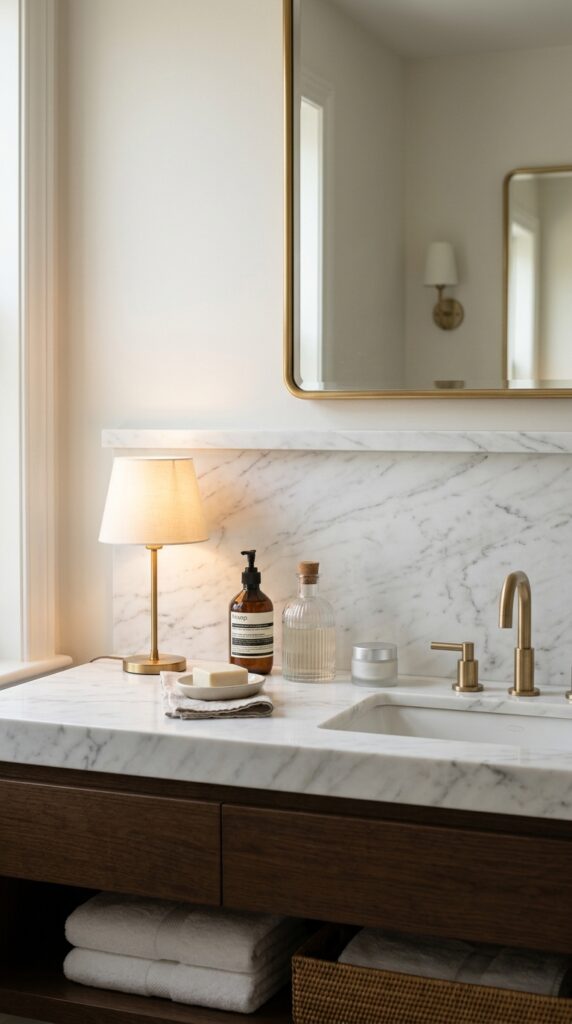
Everyone puts marble on the counter. Almost no one extends it up the wall behind the vanity. That missed opportunity leaves a four-inch backsplash or painted drywall that collects toothpaste splatter and hairspray residue. I took a remnant piece of Calacatta marble and had a fabricator cut a 24-inch tall backsplash that runs the full width of my vanity. It cost an extra $200, but now I can wipe the entire surface — counter and wall — with one pass of a cloth.
The trade-off is weight and installation. A full slab backsplash needs proper adhesive and may require anchoring if it is tall. Do not use standard construction adhesive; use marble epoxy. Also, if your wall is not perfectly flat (and most are not), the marble will rock or show gaps. Hire a stone fabricator to template the wall first. Budget around $300 to $600 for material and installation for a typical vanity width. And seal the marble every six months, or every drop of red nail polish will leave a ghost.
If a full marble slab backsplash feels too expensive, use a 12-inch high piece of marble tile arranged in a herringbone pattern. Same protection, half the cost. Just seal the grout lines aggressively.
8. Vintage Persian Runner Underneath The Vanity
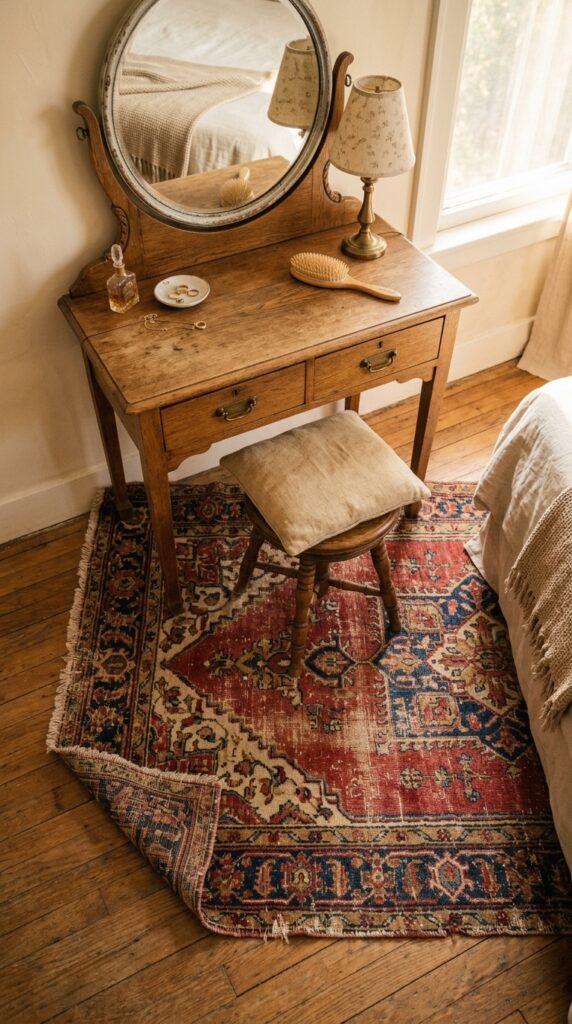
A bare floor under a vanity feels cold and unfinished. A synthetic rug looks like exactly what it is. But a vintage Persian runner — even a small one — adds a layer of warmth that changes the whole energy of the corner. I found a 2×4 foot runner on Facebook Marketplace for $60, with faded reds and a small worn spot near one end. That worn spot is now hidden under the stool, and the rug makes my feet happy every morning.
Do not buy a new Persian-style rug. The new ones are stiff, smell like chemicals, and have no soul. Vintage wool rugs have a softness and flexibility that comes from decades of use. Look for small sizes (2×3, 2×4, or 3×5) because full-size runners are expensive and unnecessary. Check thrift stores, estate sales, or online auctions. Expect to pay $50 to $200 for a small vintage piece. One warning: wool rugs shed for the first few months. Vacuum frequently, and accept that you will find wool fibers on your socks. That is the trade-off for real material.
Put a nonslip rug pad underneath. Vintage rugs have no backing and will slide on hardwood floors. A good pad costs $15 and prevents a face-plant when you lean forward to check your mascara.
9. Sculptural Stool In Bouclé Fabric
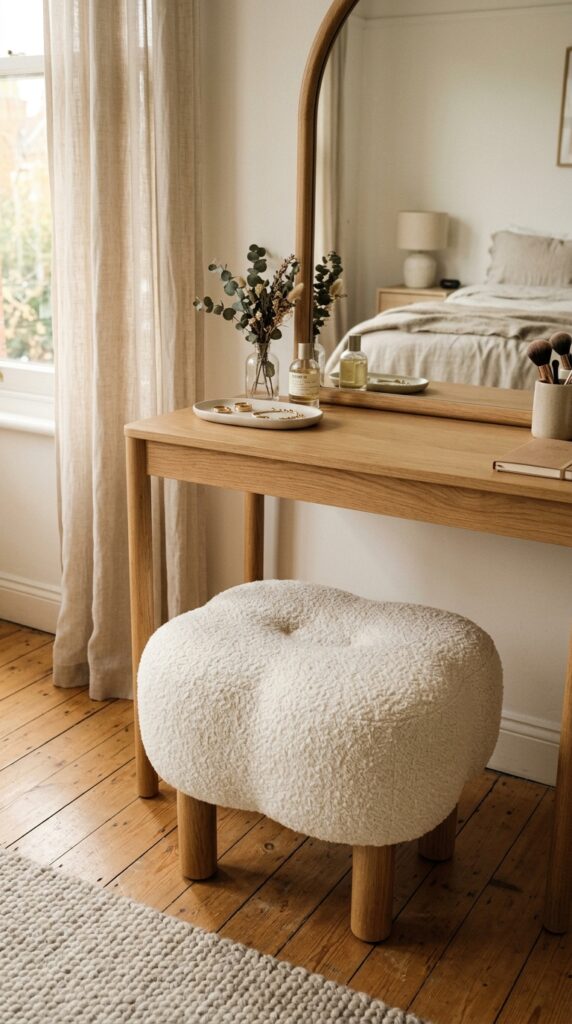
The stool at your vanity gets sat on every single day. It should be more comfortable than a wooden dining chair and more interesting than a plain upholstered cube. Bouclé fabric — that nubby, looped wool or cotton blend — feels expensive under your thighs and hides stains surprisingly well because the texture breaks up the surface. I bought a secondhand bouclé stool from a design resale site and had it re-stuffed with higher-density foam. Now it is the most comfortable seat in my bedroom.
Do not buy a bouclé stool with a white or cream fabric unless you are okay with visible soil over time. Even with careful habits, body oils and makeup transfer will darken the fabric. Go for oatmeal, taupe, or a heathered gray. Also, bouclé is not a fabric for households with cats who scratch. The loops pull easily. Budget $150 to $400 for a well-made stool. Skip the $60 versions — they use polyester loops that flatten within weeks and feel like a cheap sweater.
Test the stool height before buying. Your thighs should be parallel to the floor or slightly angled down. Too high and you will hunch. Too low and you will strain your neck looking up at the mirror.
10. Wall-Mounted Floating Vanity With No Visible Hardware
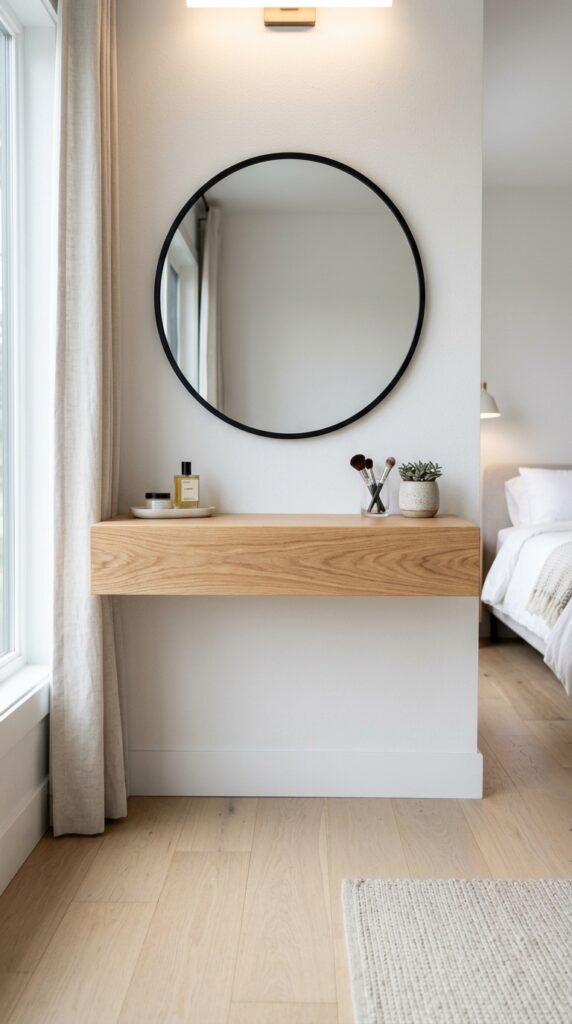
A vanity on legs looks like furniture. A floating vanity looks like architecture. I switched to a wall-mounted design using a heavy-duty French cleat system, and the difference is striking. The floor underneath stays completely open, which makes the room feel larger and makes cleaning effortless — no more dust bunnies hiding behind legs. The illusion is that the vanity is a permanent fixture, not an afterthought.
The catch is weight and wall strength. You cannot mount a floating vanity to drywall alone. You need to locate studs or install a plywood backer board behind the drywall. My vanity is solid walnut and weighs about 60 pounds empty; with products on top, it is closer to 75. I used three heavy-duty French cleats rated for 200 pounds total. If you rent or cannot cut into your wall, this is not the idea for you. Budget $200 to $600 for the vanity top and brackets, plus another $50 for proper anchors if you cannot hit studs.
Leave a one-inch gap between the back of the floating vanity and the wall. That small shadow line makes the floating effect convincing. Flush mounting looks like a mistake.
11. Crystal Or Glass Knobs On Every Drawer
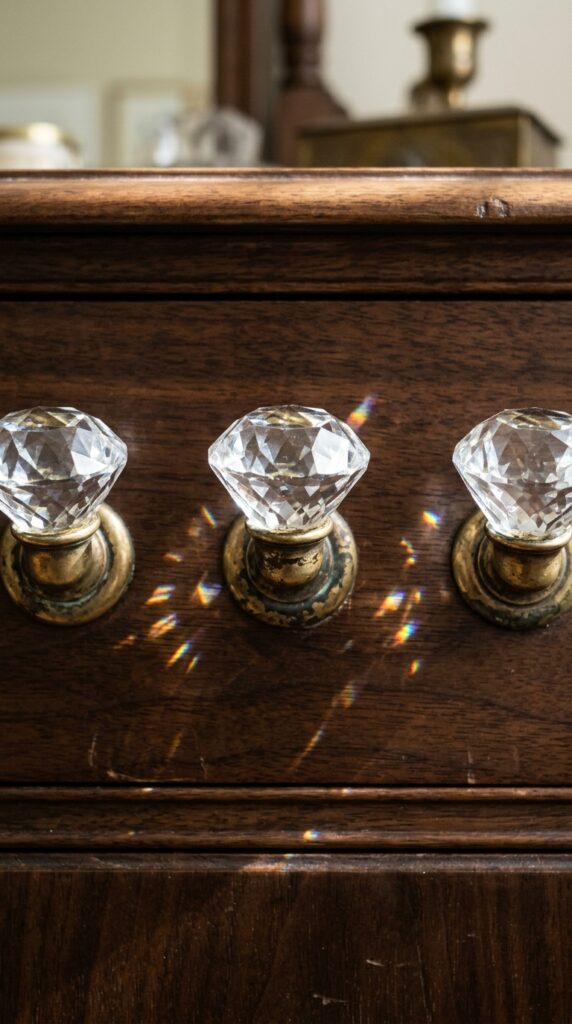
Hardware is the jewelry of a vanity, and most people settle for generic brushed nickel or black matte pulls from a multipack. Crystal knobs cost more per piece, but they change how the whole piece feels. I replaced the standard knobs on my vintage dresser-turned-vanity with faceted crystal knobs from a small hardware company. Every time I open a drawer, the light catches the facets. It is a small pleasure, but that is exactly what luxury means — delight in the details.
Avoid plastic “crystal” knobs. They look cloudy and scratch easily. Real lead crystal or thick glass has weight and clarity. Expect to pay $8 to $25 per knob. For a six-drawer vanity, that is $50 to $150 — not cheap, but you can do it gradually. Start with the top drawer, then add more over time. Also, consider mixing metals: crystal with unlacquered brass or aged bronze feels more interesting than crystal with polished chrome.
Crystal knobs show every fingerprint. Wipe them with a microfiber cloth weekly. The smudges are worth it for the sparkle.
12. A Solid Travertine Perfume Tray
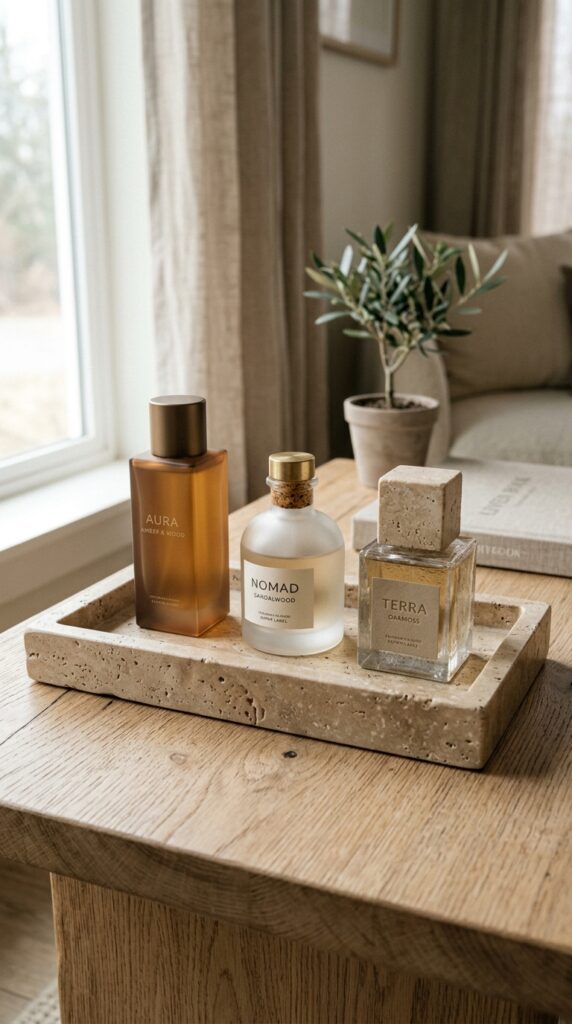
Marble trays are everywhere. Travertine trays are rarer and, in my opinion, better. The natural pitting and matte finish of honed travertine hide water rings and dust better than polished marble. It also has a warmer, more organic feel that pairs well with both dark wood vanities and white painted ones. I bought a 12×8 inch travertine tray from a stone surplus shop for $35, and it has become the anchor of my vanity surface.
The downside is weight. A solid travertine tray of any size will weigh five to ten pounds. That is good for stability — it will not slide when you reach for a bottle — but bad if you need to move it frequently. Also, travertine is more porous than marble. Seal it with a penetrating stone sealer before using it. Otherwise, a spilled drop of perfume oil will leave a dark stain that never comes out. Budget $30 to $100 depending on size and finish. Do not buy the composite fake travertine; it feels like plastic and chips at the edges.
Use felt pads on the bottom of the tray. Travertine can scratch a polished wood vanity surface if you slide it around. A few dollars in felt prevents a hundred-dollar repair.
13. Dimmable Sconces Flanking The Mirror
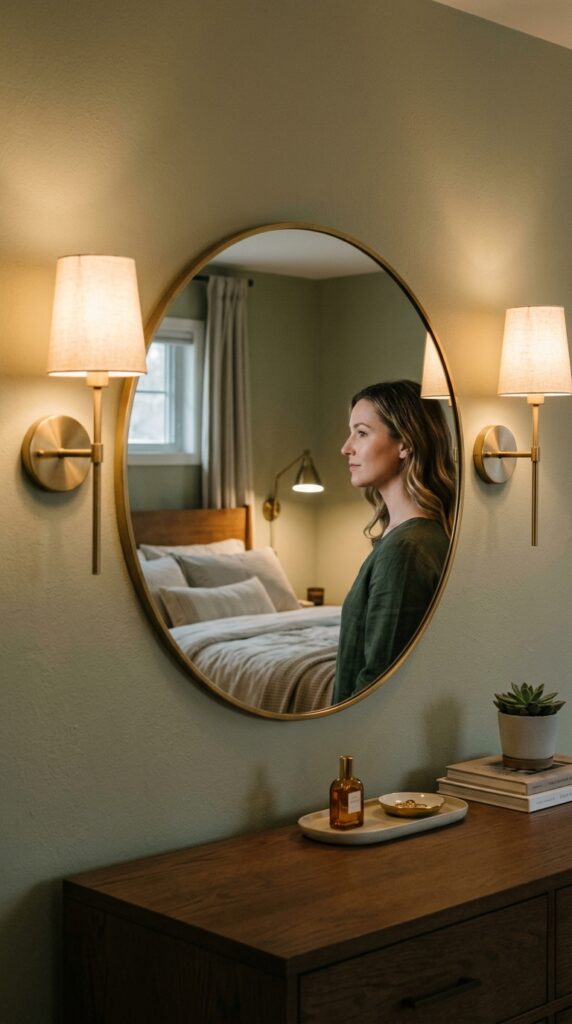
Overhead lighting is the enemy of good makeup. A single overhead fixture casts shadows under your eyes and chin. Two sconces placed at eye level on either side of the mirror create cross-lighting that eliminates shadows almost completely. I installed hardwired sconces with dimmer switches, and now I can go from bright task lighting at 100% to a soft, flattering glow at 40% for evening touch-ups.
The installation is invasive if your walls are not already wired. You will need an electrician unless you are comfortable cutting into drywall and running wire from a nearby switch. An alternative: plug-in sconces with cord covers painted to match your wall. They look less polished but cost a fraction of the price. Budget $100 to $300 per sconce for hardwired, or $40 to $80 each for plug-in. Do not skip the dimmer. Full-bright sconces are harsh; a dimmer gives you control over the mood.
Position the sconces so the center of each shade is at your seated eye level, about 42 to 48 inches from the floor. Too high and the light angle becomes unflattering. Too low and they glare into your eyes.
14. High-Gloss Lacquered Finish On The Vanity Surface
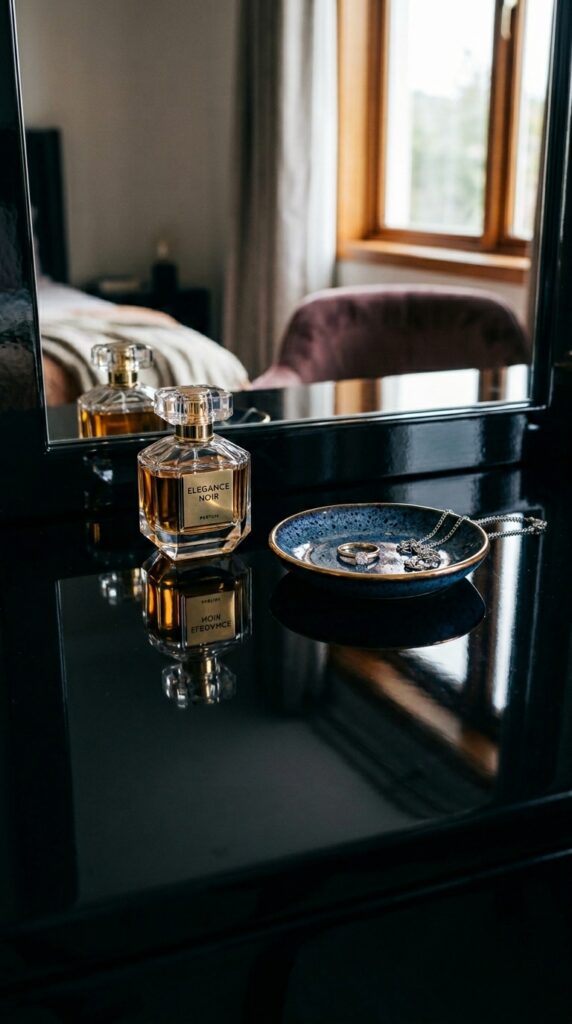
Matte finishes are safe. Lacquer is a statement. A high-gloss lacquered vanity surface has a depth and reflectivity that makes everything on top look like it is floating. I refinished an old IKEA Malm dresser with black automotive lacquer (using a sprayer and a respirator), and the result stopped people in their tracks. It is not subtle. It is not forgiving. But it is luxurious in a way that wood grain cannot match.
Here is the reality: lacquer shows every fingerprint, every dust speck, every water ring. You will become obsessive about cleaning it. If that sounds exhausting, skip this idea. Also, applying real lacquer is a professional-level finish. Do not attempt with brush-on products from a hardware store — they will look streaky and sad. Hire a furniture finisher ($300 to $800 for a vanity top) or buy a pre-lacquered piece. High-gloss polyester finishes are more durable than traditional nitrocellulose lacquer but cost more. This is a $200-plus commitment for materials alone if you DIY with a spray setup.
Lacquered vanities belong in bedrooms with controlled humidity. Too much moisture makes the finish blush (turn cloudy). Too little and it can crack. Keep a small humidistat nearby.
15. Hidden Charging Drawer With Wireless Pad
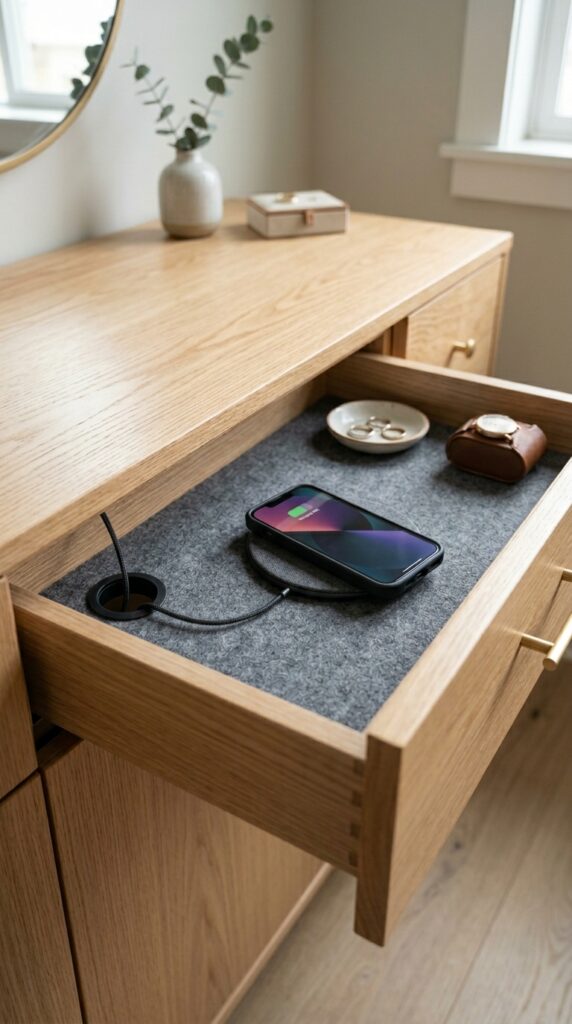
Nothing kills the luxury vibe faster than a tangle of white charging cables snaking across your vanity. The solution is a charging drawer — a shallow drawer with a wireless pad built in and a small hole drilled in the back for cables to reach a power strip. I converted the top drawer of my vanity by adding a $20 wireless charging puck and a $15 grommet. Now my phone charges out of sight while I get ready.
You need a drawer that is at least one inch deep for the wireless pad to fit under the drawer bottom. If your drawer is shallower, mount the pad on top of the drawer bottom and cover it with a thin leather or felt mat. Also, wireless charging generates heat. Do not put the pad directly on wood without a small air gap or a heat-dissipating mat. Budget $30 to $80 total. This is a thirty-minute DIY project that improves your vanity more than almost any other sub-$50 upgrade.
Drill the cable pass-through hole in the back corner of the drawer, not the center. You want the cable to drop straight down behind the vanity, not get pinched when you close the drawer.
16. Brass Or Chrome Step Stool For High Shelves
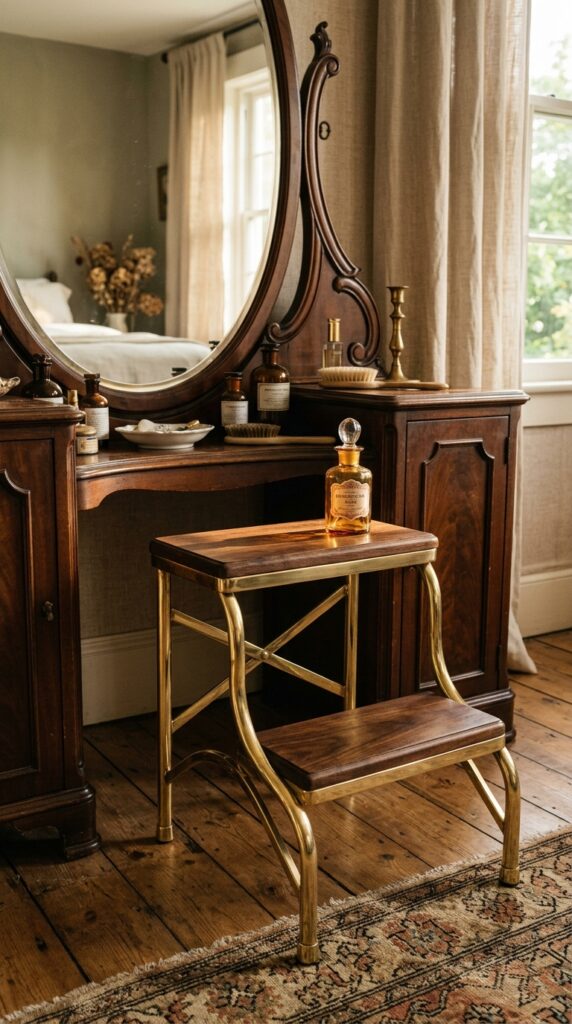
High shelves above a vanity look great in photos. In real life, they are useless unless you are six feet tall. I installed floating shelves at 72 inches high above my vanity, then bought a small brass step stool to reach them. The stool cost $80 from a restaurant supply company, and it has become one of my favorite objects in the room. It is functional, yes, but the brass and wood are also genuinely beautiful.
Do not buy a plastic step stool or a folding one with visible mechanics. Those belong in a garage. Look for a vintage wooden step stool with brass hardware, or a new one made from solid wood and metal. The stool should be heavy enough that it does not slide when you step on it. Budget $60 to $200. One trade-off: a permanent step stool takes up floor space. If your vanity area is tight, use a folding step stool that hangs on a wall hook when not in use, but choose one with leather straps, not plastic clips.
Position the step stool so it is within arm’s reach of the vanity but not in the main walking path. Next to the vanity leg or under a floating shelf works best.
17. Custom-Cut Glass Shelf Above The Vanity
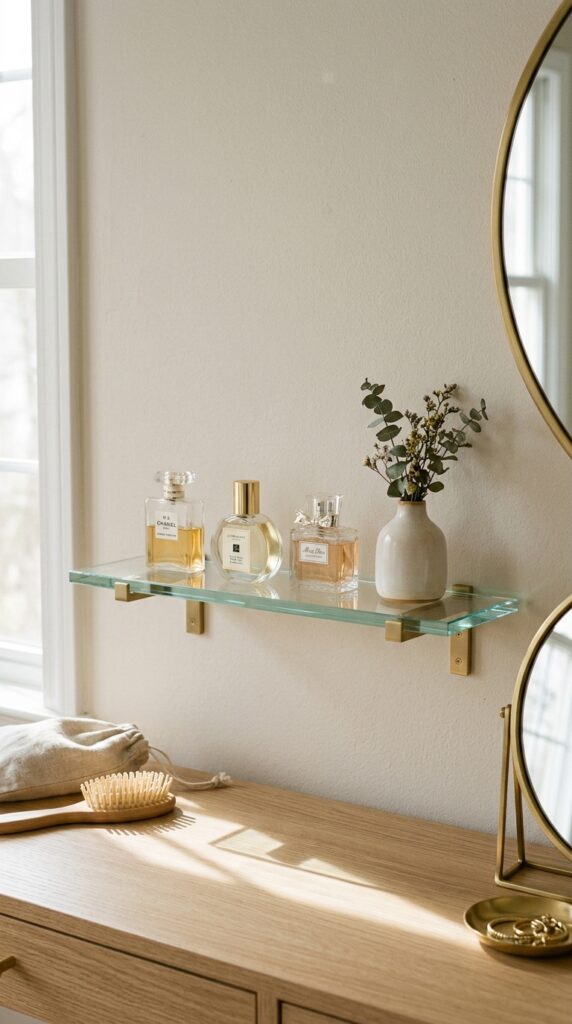
Wood shelves above a vanity can feel heavy and oppressive, especially in small bedrooms. Glass shelves disappear. I had a local glass shop cut a 3/4-inch thick tempered glass shelf to fit the width of my mirror, then mounted it on brushed brass brackets. The result is a floating display that adds storage without visual weight. Perfume bottles look like they are hovering in midair.
Tempered glass is mandatory here. Regular glass will shatter if you knock a bottle against the edge. Tempered is five times stronger and breaks into small pebbles instead of daggers if it fails. Expect to pay $50 to $120 for a custom-cut tempered shelf, plus $20 to $40 for brackets. Do not use adhesive brackets — they fail over time. Drill into studs or use heavy-duty toggle bolts. Also, glass shows every water spot and fingerprint. Clean it with a streak-free spray weekly or accept the smudges.
Leave at least 16 inches between the glass shelf and the vanity surface below. Anything less feels cramped and makes it hard to reach items on the vanity without bumping your head.
18. Valet Drawer With Lined Compartments For Daily Items
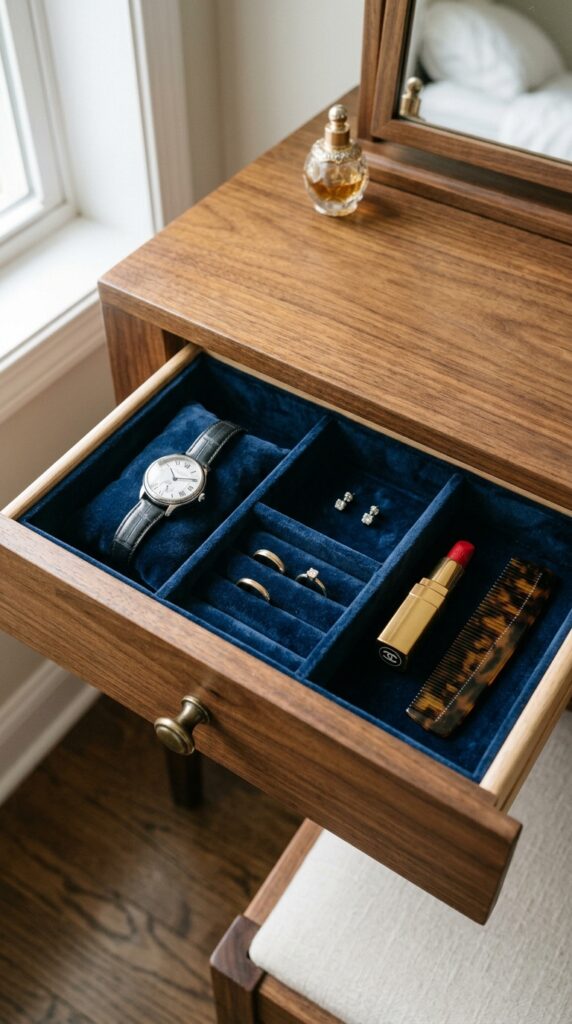
A valet drawer is different from a jewelry drawer. A valet drawer holds the things you use every single morning: your watch, your wedding ring, the lipstick you wear daily, your glasses. It is the difference between rummaging through a cluttered tray and sliding open a perfectly organized compartment. I added a shallow valet drawer to my vanity by modifying a standard drawer with removable dividers and a pigskin suede liner.
You can buy pre-made valet drawer inserts for around $40 to $80, or you can make your own using 1/4-inch plywood and adhesive velvet. The key is compartments sized for specific items: a long narrow one for a watch, a square one for rings, a wide one for a phone. Do not make the compartments too tight — you want to be able to reach in without tipping adjacent items. This project costs $20 to $100 depending on how custom you go. The luxury is in the experience, not the expense.
Line the drawer with pigskin suede instead of velvet if you can find it. Suede is more durable, easier to clean, and feels even more luxurious under your fingers. Velvet flattens over time.
19. Full-Length Mirror On The Adjacent Wall

A vanity mirror shows you your face. A full-length mirror on the adjacent wall shows you your whole self — how the outfit works, whether the hem is straight, whether the earrings balance your shoulders. I placed a simple arched full-length mirror next to my vanity, and it changed how I get dressed. No more walking to the hallway closet mirror in socks.
The key is placement. The full-length mirror should be within two steps of the vanity stool, not across the room. It should lean against the wall or hang with its bottom no more than two inches from the floor (so you can see your shoes). Avoid mirrors with thick, ornate frames next to a modern vanity — the clash reads as indecisive. A slim metal frame or frameless design works with almost anything. Budget $80 to $300 depending on size and frame. One warning: a full-length mirror doubles the visual clutter if your room is messy. It reflects everything, including the pile of laundry you meant to put away.
Angle the full-length mirror slightly toward the vanity, not straight out into the room. This lets you see your outfit while you are still seated at the vanity, a small convenience that adds up every single day.
20. Pedestal Vanity With A Single Central Leg
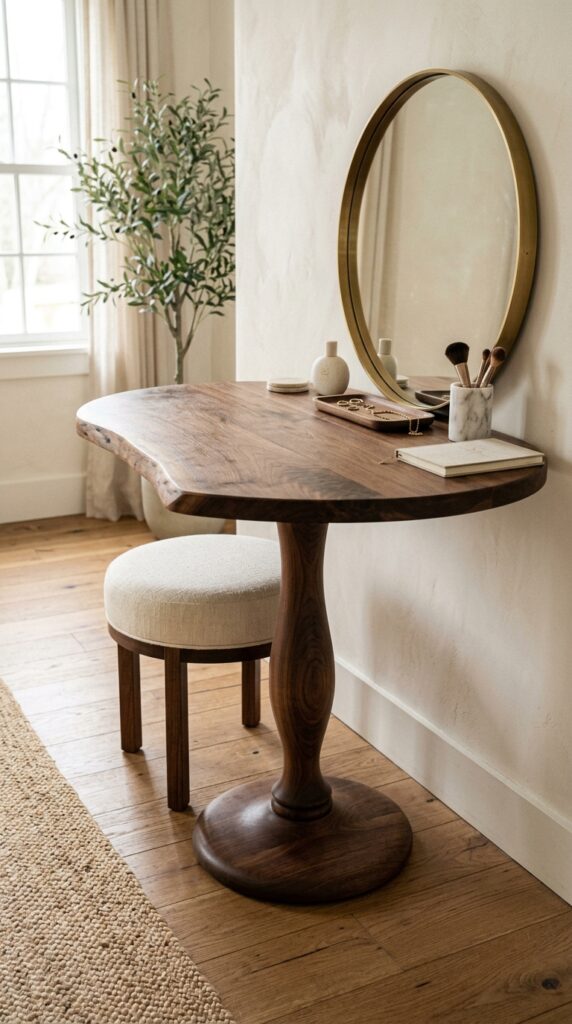
Traditional four-leg vanities waste space. The legs block your feet and make it impossible to slide a stool all the way under. A pedestal vanity — with one central column — solves this completely. I found an antique pedestal table at an estate sale for $150 and converted it into a vanity by adding a mirror and a small drawer underneath. Now I can slide my stool in flush, and there is nothing to trip over when I stand up.
Pedestal vanities are harder to find than standard dressers. Look for small round or oval dining tables with a central pedestal base — they work perfectly. The top should be at least 24 inches in diameter to hold a mirror and daily items. The catch is stability. A pedestal base can wobble if the floor is uneven. Use felt shims under the base. Also, most pedestal tables do not have drawers. You will need to add a small drawer or rely on nearby storage. Budget $100 to $400 for a vintage piece, or $500+ for a new one. This is a furniture hunt, not an Amazon order.
A pedestal vanity works best in a corner or against a wall, not floating in the middle of the room. The single leg makes it visually light, but you still want the back against something solid for the mirror to lean against.
21. Caned Drawer Fronts For Texture And Breathability
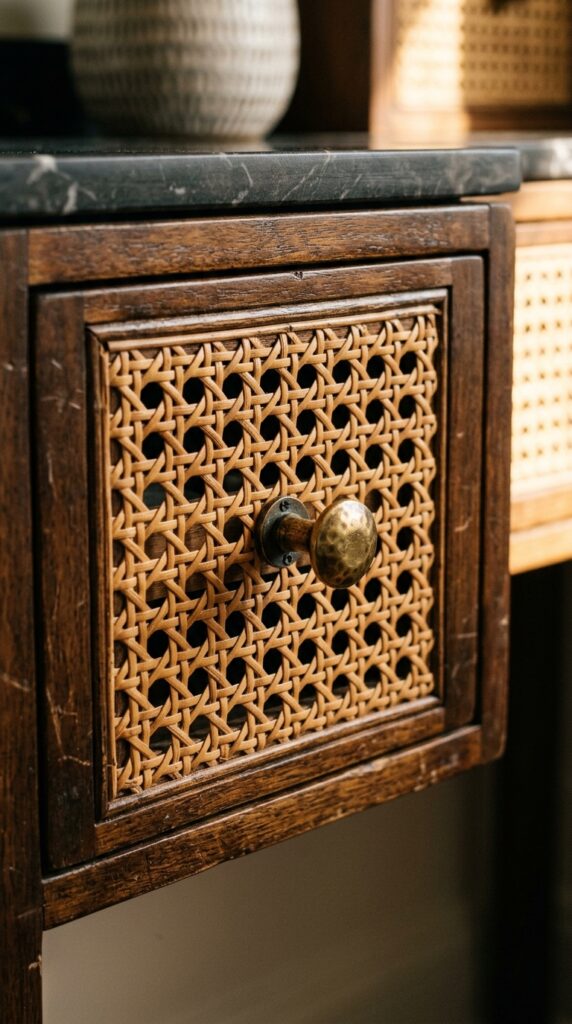
Solid wood drawer fronts are predictable. Cane webbing is unexpected and textural in a way that feels both old-world and fresh. I replaced the solid drawer fronts on a plain white vanity with pre-woven cane panels, and the effect was transformative. The cane adds a handmade quality and lets you see a hint of what is inside the drawer — not enough to look messy, just enough to feel airy.
Caned drawer fronts are surprisingly practical. They do not show fingerprints. They hide small scratches. And because cane is breathable, they prevent musty smells from developing in drawers that hold fabric items like scarves or gloves. The downside is that cane is fragile. Do not put caned drawers in a high-traffic area where they might get kicked or bumped. Also, cane darkens over time to a beautiful amber patina, but only if you keep it out of direct sunlight. UV light makes it brittle and pale. Budget $20 to $50 for a pre-woven cane sheet, plus $15 for a spline and glue. This is a moderate DIY project — cutting the recess and routing the groove takes patience.
Seal the cane with a clear matte spray after installation. Unsealed cane absorbs moisture and can warp in humid bedrooms. Two light coats from a rattle can solve the problem.
22. Marble Tray With Gold Handles For Corralling Small Items
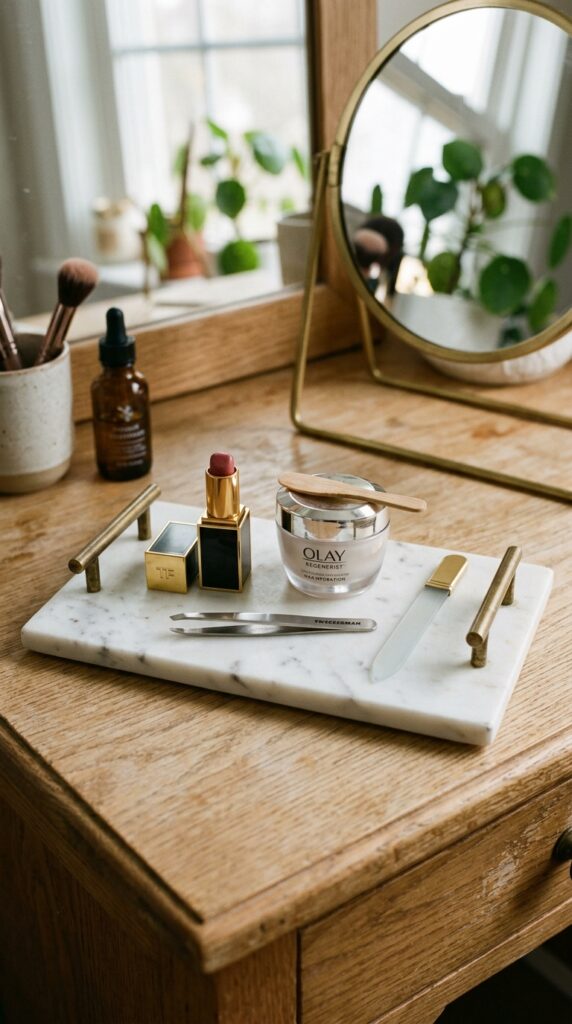
A tray is not a tray. It is a border. It tells your eyes and your hands that everything inside this boundary belongs together. I have tried leather trays (they stain), acrylic trays (they scratch), and wood trays (they warp). Marble with brass handles has been the winner. The weight keeps it from sliding, the handles make it easy to move for cleaning, and the marble itself is easy to wipe down.
Do not use a marble tray as a catch-all for everything. Limit it to five or six items max. More than that and the tray becomes just another clutter zone. Also, choose a tray with low sides (under an inch high) so you can reach items without lifting over a wall. Budget $40 to $120 depending on size and marble type. Carrara is cheaper and grayer; Calacatta is whiter and more expensive. Both work. Just avoid synthetic marble composite — it feels like plastic and stains in weird patterns.
Put small felt pads on the bottom of the tray even if the tray already has them. Marble-on-marble or marble-on-wood will scratch over time from microscopic grit. An extra layer of felt is cheap insurance.
23. Wallpapered Alcove Behind The Vanity
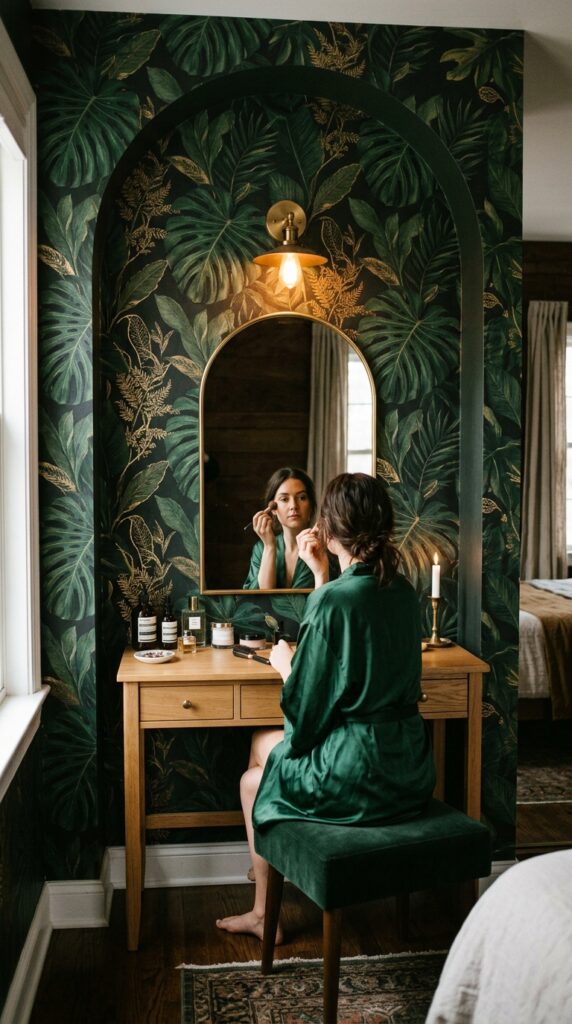
Most people put wallpaper on an entire wall or not at all. The more interesting move is to wallpaper only the alcove or the wall area directly behind the vanity — a framed zone that visually anchors the whole setup. I pasted a deep green botanical wallpaper on the wall behind my mirror, stopping at the edges of an imaginary rectangle about six inches wider than the vanity on each side. The effect is like a piece of art that you sit inside.
Wallpaper behind a vanity takes a beating. Hairspray, perfume mist, and accidental splashes will land on it. Choose a vinyl or vinyl-coated wallpaper that you can wipe clean. Paper-based wallpapers will stain and bubble within months. Also, avoid small busy patterns — they make the space feel chaotic when you are trying to focus on your reflection. Large-scale patterns or subtle textures work best. Budget $50 to $150 for a single roll, plus $20 for paste and tools. Installation is fiddly around outlets and mirrors. Hire a pro if you have never hung wallpaper before.
If you are renting, use removable peel-and-stick wallpaper. Test a small piece first to make sure it comes off cleanly. Some brands leave residue that landlords will notice.
24. Freestanding Armoire Converted To A Vanity
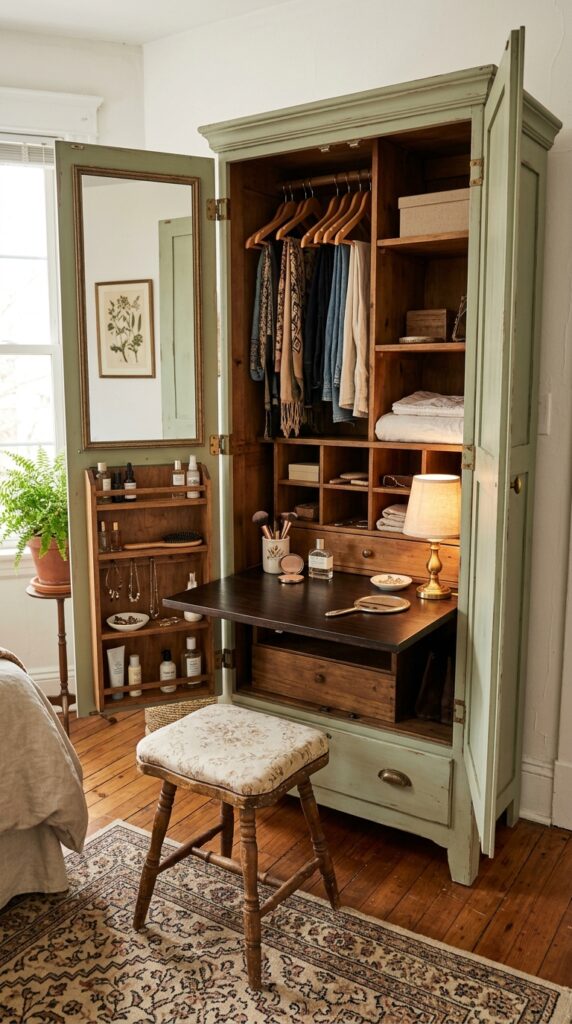
This is the ultimate space-saving luxury for small bedrooms. An armoire vanity closes up completely, hiding all your products and mirror behind closed doors. I found a solid oak armoire at a salvage yard for $200 and converted it by adding a mirror to the inside of the left door, shelves to the right door, and a pull-out writing surface where the hanging rod used to be. When guests come over, I close the doors and the room looks like a normal bedroom, not a beauty counter.
The conversion is not trivial. You need to remove any interior hardware, patch holes, add lighting inside (battery-operated puck lights work), and install a mirror that can handle the door’s weight. Also, the pull-out surface needs sturdy slides rated for at least 50 pounds. Expect to spend $100 to $300 on materials beyond the armoire itself. The payoff is a vanity that takes up zero visual space when not in use. One trade-off: you must leave enough clearance in front of the armoire to open the doors fully. Measure twice before committing.
Add a small magnetic latch to keep the doors from swinging open on their own. Nothing ruins the illusion like a vanity that announces itself with a creak.
25. A Heated Towel Rack Within Arm’s Reach
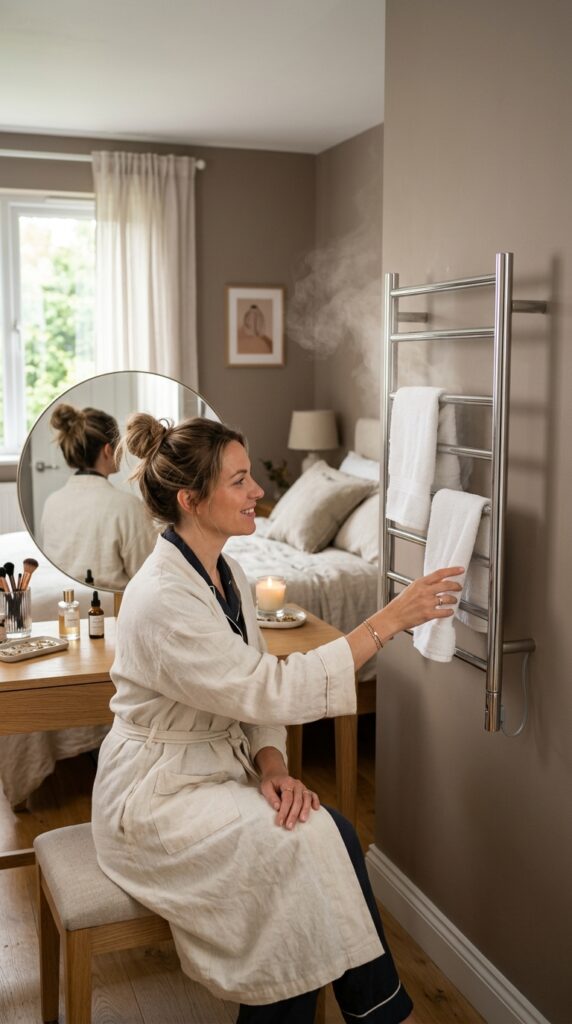
This is the most unexpected idea on the list, and the one that feels most like a real luxury. A heated towel rack in the bedroom — not the bathroom — means you have a warm, dry towel waiting for you after washing your face or before applying moisturizer. I installed a small electric rack on the wall next to my vanity, wired to a timer switch. Every morning, I set it to turn on 20 minutes before I wake up. The towel is never cold.
Hardwired heated towel racks cost $150 to $400 plus installation ($200 to $500 for an electrician). Plug-in versions exist but the cord looks terrible. This is not a cheap idea, and it requires a dedicated electrical circuit if your existing one is already loaded. The version that actually holds up over time is stainless steel or brass with a powder-coated finish. Avoid chrome-plated cheap racks — the plating peels within two years. Also, the rack will get hot enough to burn skin if left on high for hours. Use a timer or a smart plug. And do not hang damp towels on a rack in the bedroom — the humidity will warp your wood vanity.
A heated towel rack in the bedroom sounds excessive until you experience it once in winter. Then it becomes non-negotiable. This is the idea I recommend for anyone who already has everything else.
Twenty-five ideas, but you only need two or three to change how your bedroom vanity feels. The difference between a vanity that works and one that fights you is almost never about budget. It is about choices: the height that fits your body, the mirror that lights your face evenly, the material that ages instead of degrading. Start with the backlit mirror and the adjustable height. Those two will carry the heaviest weight. Then add one texture — the travertine tray, the bouclé stool, the vintage runner — and see how the room shifts. You are not building a display case. You are building a place where you start every day. Make it worth showing up to.