I remember the first vintage bathroom I tried to assemble — a clawfoot tub I found on Craigslist, a pedestal sink from a salvage yard, and a lot of optimism. It looked less charming and more like a salvage yard had sneezed. The problem wasn’t the individual pieces; it was that I had no framework for how they should talk to each other. Old things need a reason to belong together beyond just being old. Without that, you get a room that feels curated by a hoarder with good intentions.
Most advice online either romanticises the idea without the reality — yes, that vintage faucet will drip, and no, that salvaged mirror won’t have perfect silvering — or it tries to make everything look like a Pottery Barn catalog from 2012. Real vintage charm comes from restraint, from letting the old things breathe, and from knowing exactly what you’re willing to tolerate. You can’t just buy old and call it done. You have to understand how materials age, what survives moisture, and what will eventually feel like a prop in your own house.
This article skips the obvious. Every idea here is something I’ve either lived with, installed, or watched age in real bathrooms. Some work best in small spaces, some require a plumber, and a few are best left as inspiration — but all of them have real character. None of them are generic. And none of them will look like you ordered them from a catalog.
1. A Salvaged Pedestal Sink That Actually Belongs
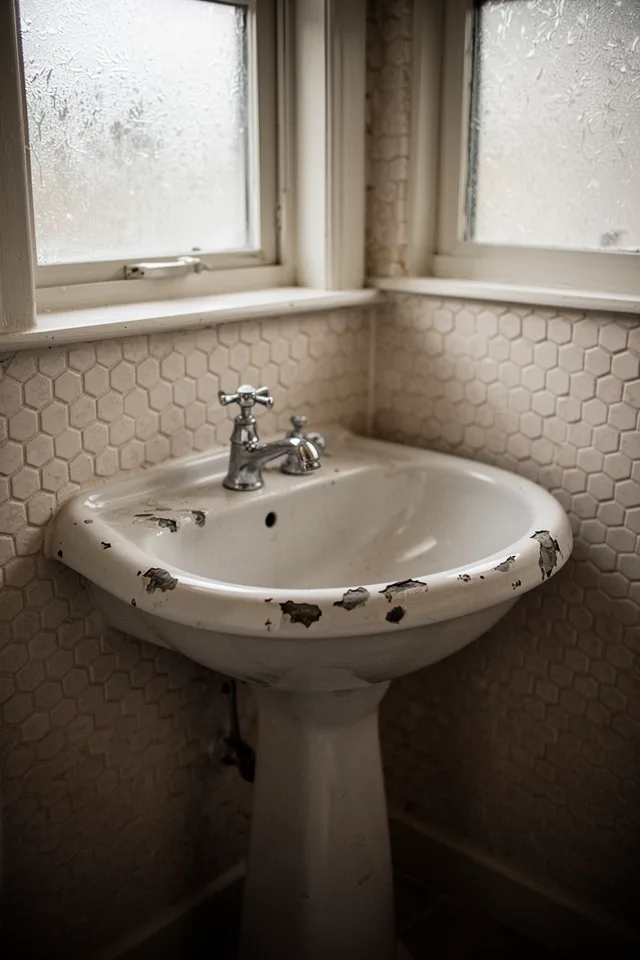
The cheap reproduction pedestal sinks you can buy at a big-box store look fine for about three years. Then the paint starts to yellow, the casting looks hollow when you tap it, and the proportions feel slightly off — too tall, too slim, no presence. A real salvaged pedestal sink from the 1910s or 1920s has a weight you can feel just by looking at it. The porcelain is thick. The curves are generous. And the best part? It already has scars. A chip here, a hairline crack there — it tells a story without screaming for attention.
Here is the honest truth: installing a salvaged pedestal sink is not a weekend DIY unless you’re comfortable with drain alignment and wall brackets. The drain holes often don’t match modern plumbing centres. You’ll likely need a flexible supply line or a local plumber who isn’t afraid of old hardware. Expect to spend around $150 to $300 on the sink itself from an architectural salvage yard, plus another $100 to $200 on a new faucet that matches the era without looking like a museum replica. The trade-off? You will never see another bathroom with the same sink.
A true salvage sink with honest wear beats a fake “aged” reproduction every time — the patina is earned, not sprayed on.
2. The Medicine Cabinet With Original Mirror Silvering
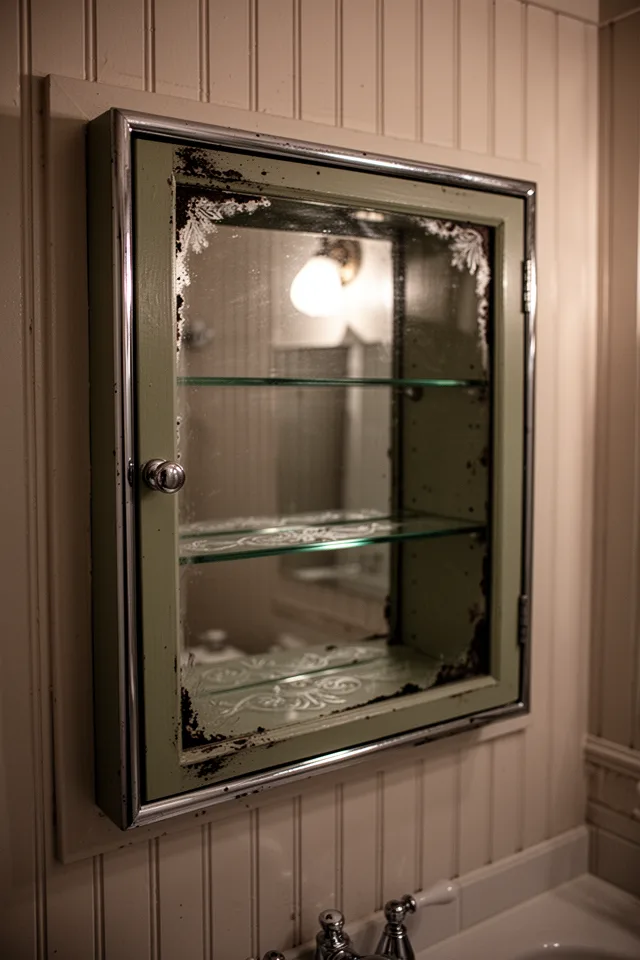
Most people want a perfect mirror in their bathroom. I want the opposite. A vintage medicine cabinet with original silvering that has started to cloud at the edges or darken in patches gives a bathroom an immediate sense of history. It’s not a flaw — it’s the whole point. The glass is often thicker than modern mirrors, the frame is solid metal, and the mechanism of the latch feels satisfyingly heavy. I have one in my own bathroom that is over a hundred years old. The silvering looks like a topographic map of the years.
One thing most guides skip: these cabinets are often narrower than modern ones. A typical 1920s medicine cabinet is about 14 inches wide, which means it does not hold a lot. You have to edit. That is actually a good constraint. It forces you to keep only what you actually use. The cost is surprisingly accessible — expect $60 to $120 from a salvage dealer, sometimes less if you dig through the back of a shop. The real work is fitting it into a wall opening, which may require framing adjustments. But once it’s in, it outlasts everything else in the room.
Let the cloudy silvering stay. It is not damage; it is the mirror earning its name.
3. Clawfoot Tub With a Gooseneck Faucet (And the Reality of Floor Loading)
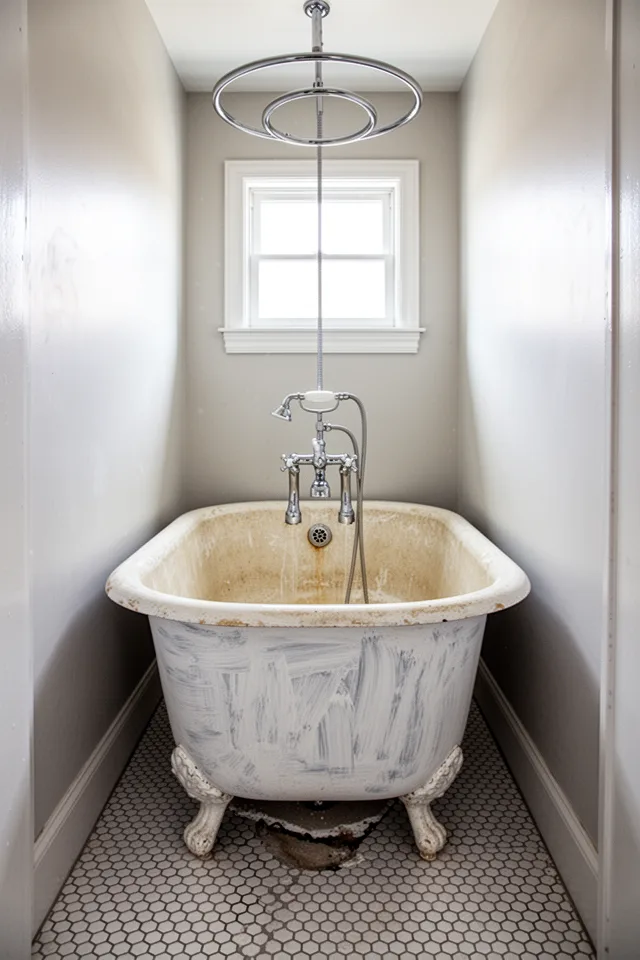
No article about vintage bathrooms escapes the clawfoot tub, but here is the detail nobody tells you: these things are absurdly heavy. An actual cast-iron tub from the 1920s weighs around 350 pounds empty. Filled with water and you, you are looking at over half a ton on that floor. If your bathroom is not on a concrete slab, you need to check the joist loading. I have seen a clawfoot tub installed on a subfloor that was not reinforced — within a year, the tile cracked in a line from the front foot to the wall. That is not charm. That is a mistake.
If you do it right, it is one of the best things you can put in a bathroom. The soak depth is unmatched. The look is timeless. But you must reinforce the floor, and you must accept that cleaning around the feet is a minor inconvenience that will occasionally test your patience. Expect to pay $400 to $1,000 for a salvage tub in decent shape, plus another $200 to $400 for a period-appropriate gooseneck faucet and feet. Do not cheap out on the feet — the modern zinc alloy ones rust and look flimsy within months.
If you cannot reinforce the floor, do not install a cast-iron clawfoot tub. Buy a lightweight acrylic reproduction and save yourself the heartbreak of a cracked tile floor.
4. Retro Subway Tile With Black Grout — Not the White Grout You’re Told to Use
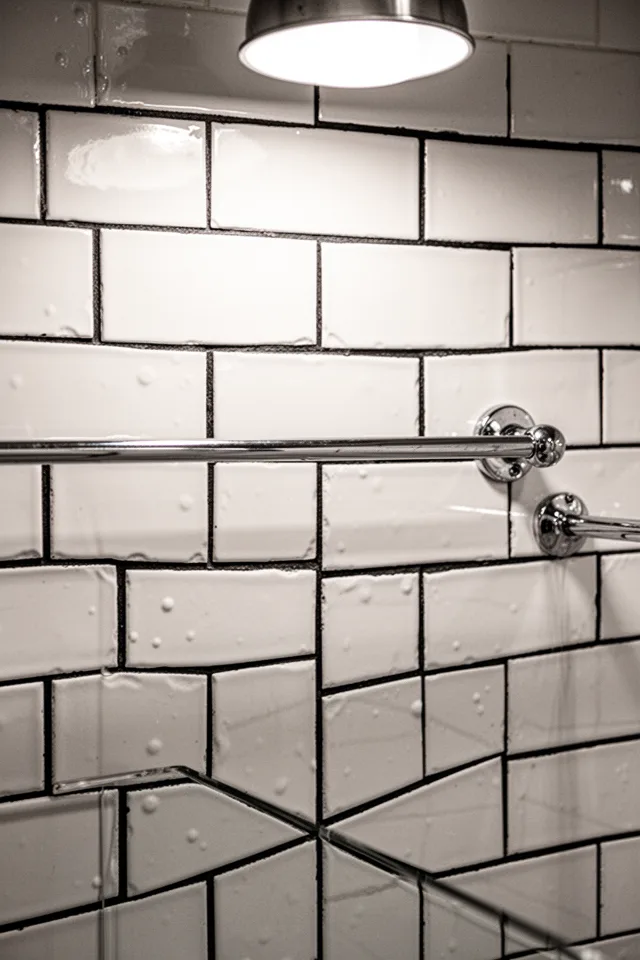
Subway tile with white grout is fine. It is safe. It is also the most predictable choice in home renovation — and within two years, that white grout near a sink or shower will develop a faint yellow or grey stain that no amount of scrubbing fixes. The alternative is black grout. It works with subway tile the way a dark frame works on a white photograph. It highlights the pattern, hides dirt, and gives the whole wall a bold, architectural feel that reads as vintage without being costume-y.
The downside: black grout shows efflorescence — white chalky residue — more obviously than lighter grout, especially in the first few weeks. You have to seal it properly and wipe it down after the first few showers. Also, any minor cracking in the grout stands out starkly. That said, if you use a high-quality epoxy grout (around $40 per bag), you will not have cracking issues. The tile itself should be a classic 3×6 with some variation — avoid machine-perfect tiles. Look for “handmade” or “zellige-adjacent” tiles that have slight edges and tiny bubbles. They cost about $8 to $12 per square foot, but the imperfections are the whole point.
White subway tile with white grout is a blank wall. White subway tile with black grout is a statement. Make the statement.
5. A Repurposed Sideboard That Becomes a Vanity (With Plumbing Inside Furniture)
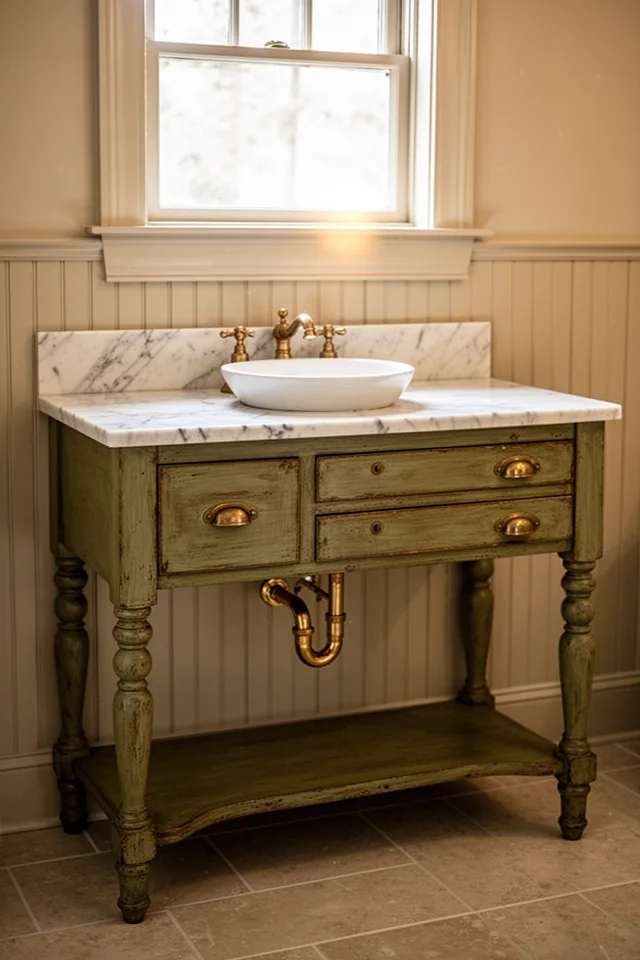
Using an old sideboard or dresser as a bathroom vanity is not a new idea, but most people execute it wrong. They buy a mid-century teak credenza and throw a vessel sink on top, and it looks like a cheap hotel designed by someone who watched too many Pinterest videos. The right piece for a bathroom vanity has specific features: solid wood construction (not veneer), a top surface that can be cut for a sink without structural compromise, and enough interior height to accommodate drain pipes. A sideboard with a drawer section on top and cabinet doors below is ideal — the drawers hide the unsightly plumbing, and the cabinet doors allow access.
The real friction here is moisture. Wood and humidity are not natural friends. You must seal the interior with a marine-grade varnish or epoxy to prevent swelling and mold. The countertop needs to overhang slightly to protect the wood’s top edge. And you must accept that the original piece will show wear — paint may chip near the sink, the finish may dull. That is the point. The cost of the sideboard varies wildly — $200 to $800 at an antique fair, more if it’s a known maker. The sink, faucet, and countertop installation will run another $300 to $600. The trade-off? You get a vanity that absolutely nobody else has, with real drawers and real character.
Do not use a veneered piece. Solid wood can handle a bathroom; glue and thin wood slices cannot. Check the back panel — if it’s particle board, walk away.
6. Antique Glass Knobs on Everything That Opens
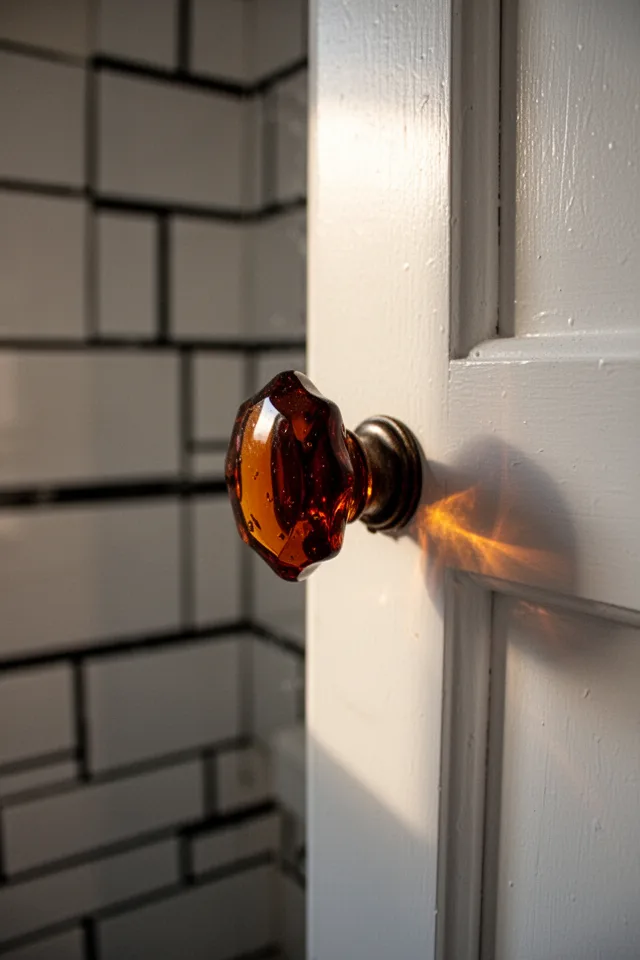
This is the cheapest way to add vintage character to a bathroom, and it takes about an hour. Swap all your standard knob-and-pull cabinet hardware for antique glass knobs. They come in clear, milk glass, amber, and even green. The faceted ones catch light like tiny jewels. The milky ones look like you found them in a grandmother’s sewing drawer. I have seen a basic IKEA vanity transformed into something that looks original to a 1920s house just by changing the knobs.
You can buy genuine vintage glass knobs at salvage shops for $3 to $8 each if you are patient enough to dig through bins. Reproduction glass knobs cost around $2 to $5 each online, and they look nearly identical. The only difference is the weight — vintage ones are solid glass, reproductions are sometimes thinner or have a slight mold line. But honestly, for a bathroom, the reproductions hold up fine. Just make sure the screw size matches your cabinet holes (standard is 8-32 thread). The main constraint? They are slippery when wet. If you install them on a cabinet that gets splashed often, keep a towel nearby. Minor, but real.
Glass knobs cost under $20 for a whole vanity. They do more for a room’s character than any $200 piece of decor. Do not skip this.
7. Wallpaper Only on the Ceiling (Not the Walls)
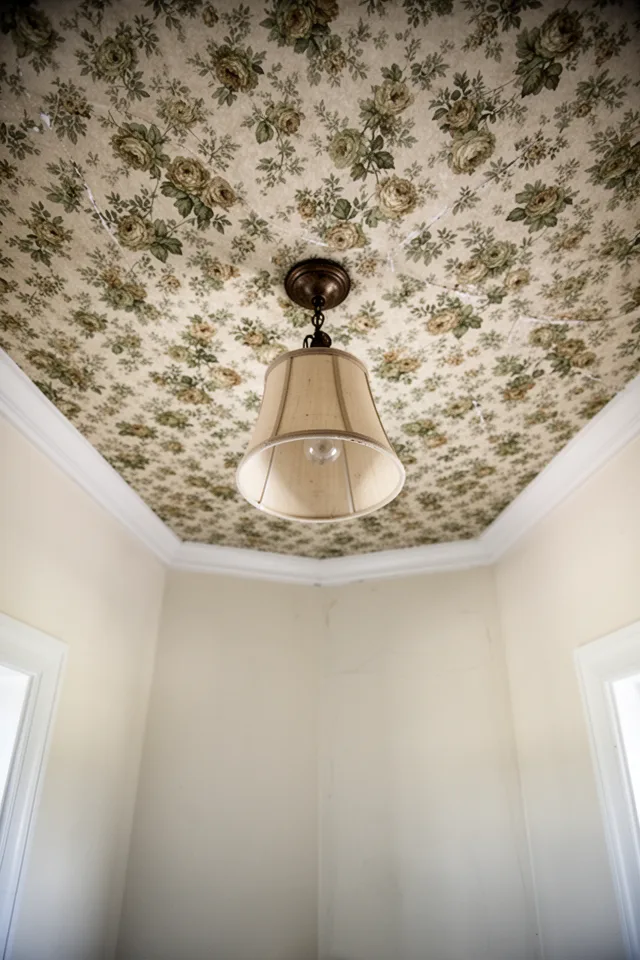
Putting wallpaper on the ceiling of a small bathroom is one of those ideas that sounds like a design magazine contrivance until you actually do it. Then it becomes your favourite thing in the house. The ceiling is the least-used surface in a bathroom — it does not get splashed, it does not collect grime, and it is never touched. So you can use a delicate wallpaper that would be a nightmare on a wall near a sink. Vintage reproduction florals, geometric art deco patterns, or even authentic 1920s wallpaper if you can find it.
The trick is to choose a pattern that is visible from standing height but not overwhelming. You want it to feel like a discovery — you notice it only when you look up. The cost is modest: one to two rolls of wallpaper ($30 to $80 total) and paste. Installation on a ceiling is slightly more awkward than on walls because you are working overhead, but it is a one-day job for two people. The trade-off is that if you ever want to remove it, the process is messy and may require retexturing the ceiling. But honestly, a well-chosen vintage ceiling paper can stay for decades.
Ceiling wallpaper is high-impact, low-maintenance. Nobody touches it. Nobody splashes it. It just sits there being beautiful while you brush your teeth.
8. The Pull-Chain Toilet (Only If You Understand the Trade-Offs)
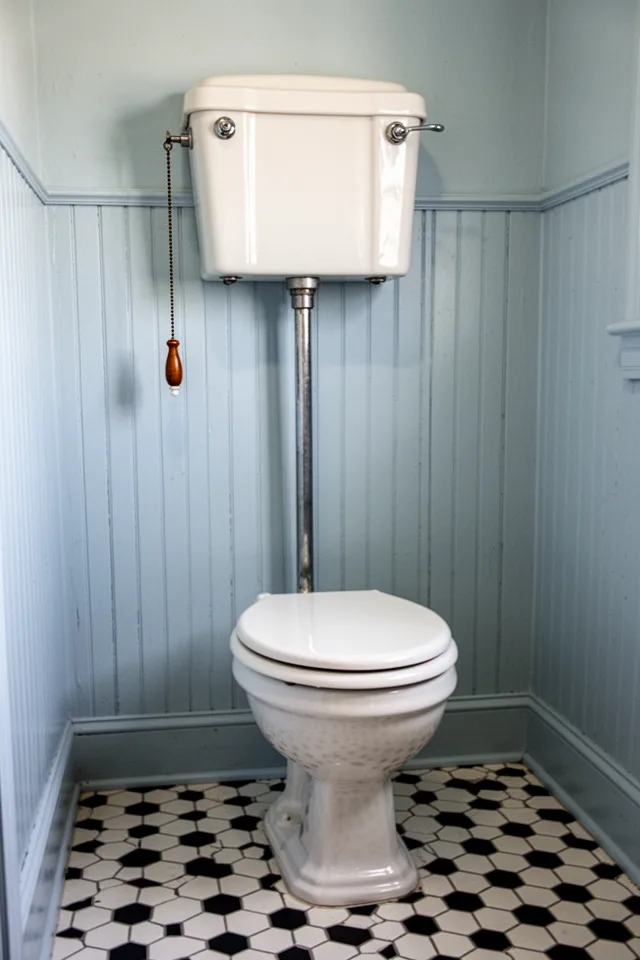
I am going to be honest: a pull-chain toilet is a terrible idea for a primary bathroom. They are harder to clean, the chain can break, and the flush mechanism is less efficient than a modern toilet. But for a powder room or a guest half-bath? It is an absolute conversation piece that makes everyone smile. The high tank creates a dramatic vertical line, and the act of pulling the chain adds a ritual that no push-button toilet can match.
The realistic version: you can buy reproduction high-tank toilets for around $500 to $900. Salvage ones are cheaper ($200 to $400) but may need full rebuilding — the internal mechanisms wear out, and replacement parts are not always easy to find. If you go salvage, have a plumber who specializes in older fixtures. The water consumption is typically 1.6 gallons per flush on modern reproductions, which is legal in most places. The trade-off that nobody talks about: the chain can be noisy, especially at night. If you value silence, this is not for you. But if you value charm over stealth, it’s worth every clatter.
A pull-chain toilet in a guest bath is a party trick. In a master bath, it becomes a Tuesday annoyance. Choose your room wisely.
9. Framed Vintage Botanical Prints — With One Humidity Rule
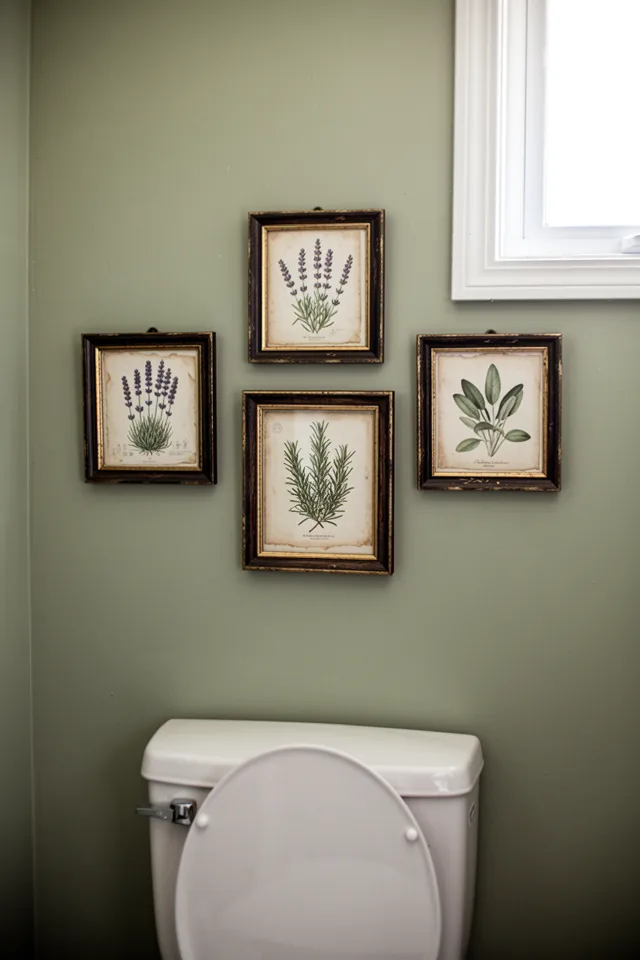
Framed artwork in a bathroom is a risk. Humidity cycles cause paper to buckle, glass to fog, and frames to warp. But vintage botanical prints, especially those from old science textbooks or field guides, have a surprising tolerance for imperfect conditions. The paper is often thicker, the ink is stable, and a certain amount of wave actually adds to the aged look. I have a pair of 1920s botany prints in my own bathroom that are now visibly wavy. They look better for it.
The rule: never put the artwork directly above a shower or a tub where steam concentrates. Keep it on a wall that is at least three feet from a direct moisture source. Use a frame with a back that allows air circulation — no foam core seals. And consider prints on a mat so the glass does not touch the paper (condensation forms on glass first). You can find original vintage prints at flea markets for $5 to $20 each. Reproduction prints are under $15. The investment is tiny. The payoff in personality is huge.
Botanical prints love a bathroom. They were drawn in damp, bright rooms anyway. A little steam is a homecoming.
10. A Vintage Sink With Exposed Pipes (On Purpose)
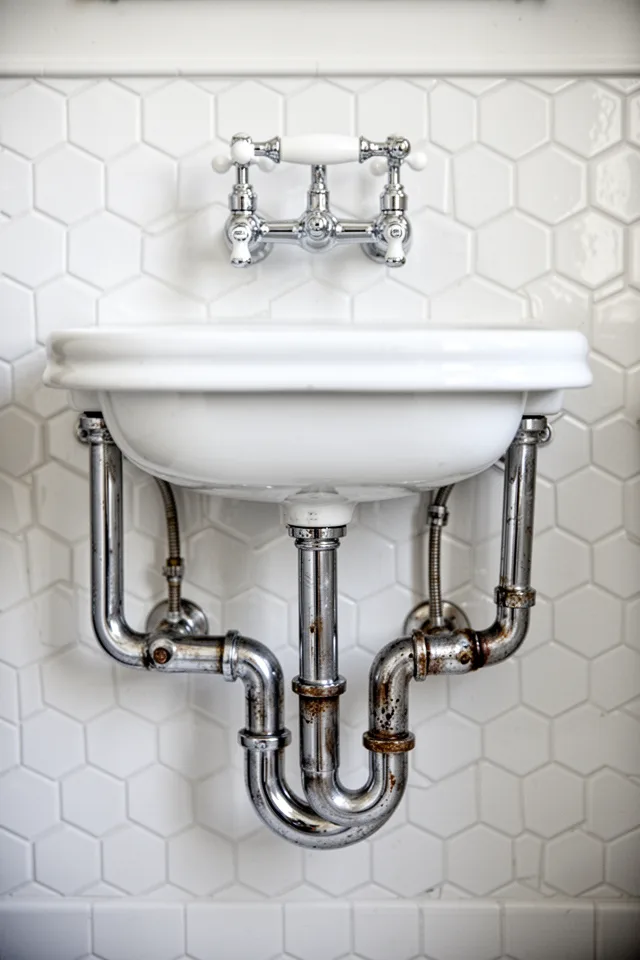
Most people hide plumbing because they think it is ugly. I think that is a missed opportunity. Exposed pipes on a vintage sink — especially if the pipes are chrome or brushed brass — add a mechanical honesty that a skirted vanity cannot match. There is a reason old-school bar sinks and butler’s pantries left the plumbing visible. It looks intentional. It looks clean. And it makes the sink look like a tool, not a piece of furniture.
The practical side: exposed P-traps are less likely to clog because there are no tight bends. They are also easier to clean — you can wipe down the entire pipe. The catch is that they can be uglier if you do not do them right. Use chrome or brass pipe, not PVC. Pay attention to centering. If the pipes are crooked, it looks like a mistake. If they are aligned and symmetrical, they look like architecture. Cost for a proper exposed trap set with wall flanges runs $40 to $80. The sink itself can be a $100 salvage find. The entire setup is under $300 and takes a single morning to install if your wall rough-in is in the right spot.
If you cannot make the pipes look symmetrical, do not expose them. Measured alignment is the only thing separating intentional design from accidental mess.
11. A Crystal Chandelier in the Bathroom (This One Actually Works)
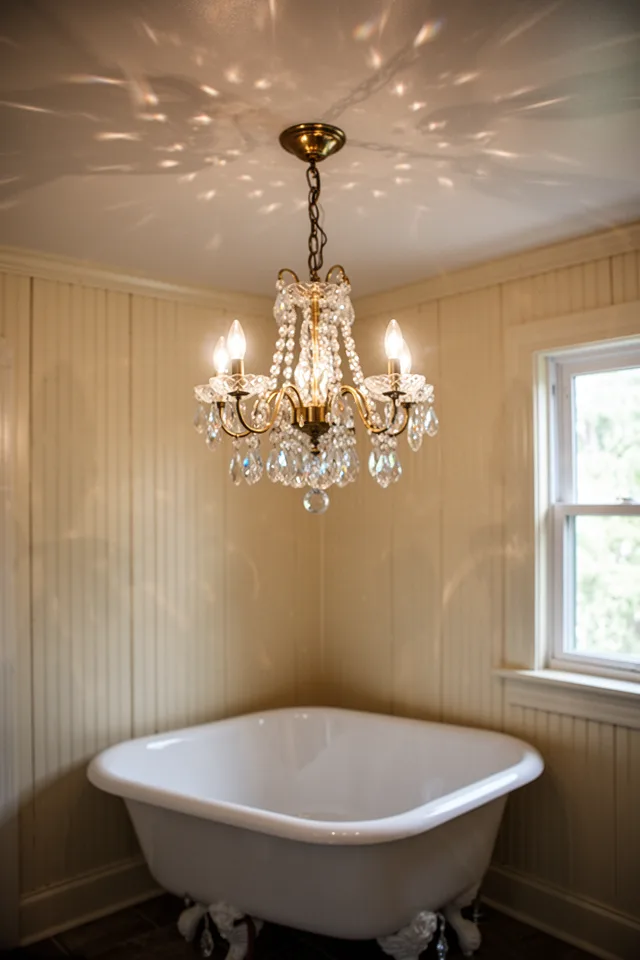
I once walked into a bathroom with a crystal chandelier and thought it was ridiculous. By the time I left, I wanted one. The key is scale. A massive crystal chandelier in a small bathroom looks like a wedding cake fell from the ceiling. A small fixture — 18 to 24 inches in diameter, with real cut crystal, not plastic — adds exactly the right amount of unexpected luxury. It catches morning light beautifully and makes even a basic bathroom feel special.
The constraints: you need a ceiling height of at least eight feet to avoid hitting your head when you lift your arms. You also need the fixture to be rated for damp locations — many antique chandeliers are not. You can retrofit them with damp-rated sockets, but that costs $50 to $100 in parts. The chandelier itself can be found at salvage shops for $80 to $200. Rewiring adds another $100 if you do it yourself, more with an electrician. The trade-off is cleaning the crystals, which need to be wiped down occasionally to prevent dust buildup. But a few minutes of maintenance every few months is a small price for the way the room glitters.
A small chandelier in a bathroom is not for everyone. But for those who want it, nothing else comes close. Just keep it out of direct steam paths and use damp-rated sockets.
12. Reclaimed Wood Shelves With Vintage Iron Brackets
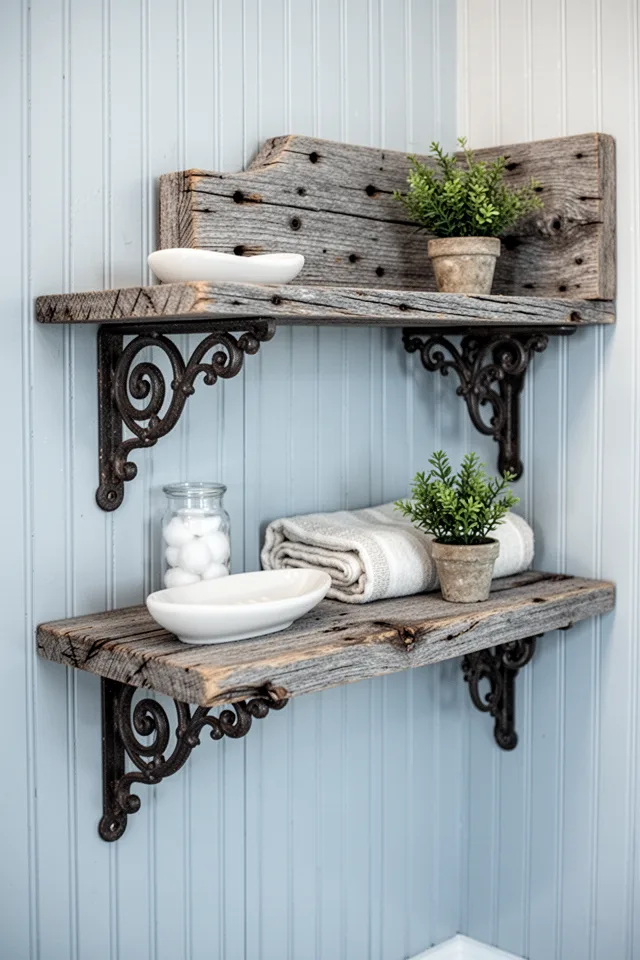
Reclaimed wood shelves are everywhere, but most of them look like they were cut from a pallet last week. The version that actually holds up over time uses wood that has dried for decades — old barn beams, floor joists from demolished houses, or shipping crate planks. These woods are stable. They do not warp or shrink as much in a humid bathroom. And they have a surface that cannot be faked: oil stains, nail holes, saw marks that are not distressing but authentic use.
The brackets matter more than the wood. Vintage iron brackets from the early 1900s have a texture and weight that modern reproductions lack. Look for scroll patterns, cast iron with subtle rusting, or simple industrial L-brackets. Expect to pay $10 to $30 per bracket at salvage shops. The wood can be free if you have access to a demolition site, or $20 to $40 per plank from a reclaimed lumber yard. The total for a two-shelf setup: around $60 to $100. The installation requires a stud finder and a level. That is the easy part. The harder part is accepting that the wood will silver and change color over time — and that this is a feature, not a bug.
Do not seal reclaimed wood with polyurethane. It will trap moisture and look plasticky. Use a matte oil or nothing at all. Let the wood breathe.
13. Vintage Checkered or Hexagon Floor Tile (The Real McCoy, Not Vinyl)
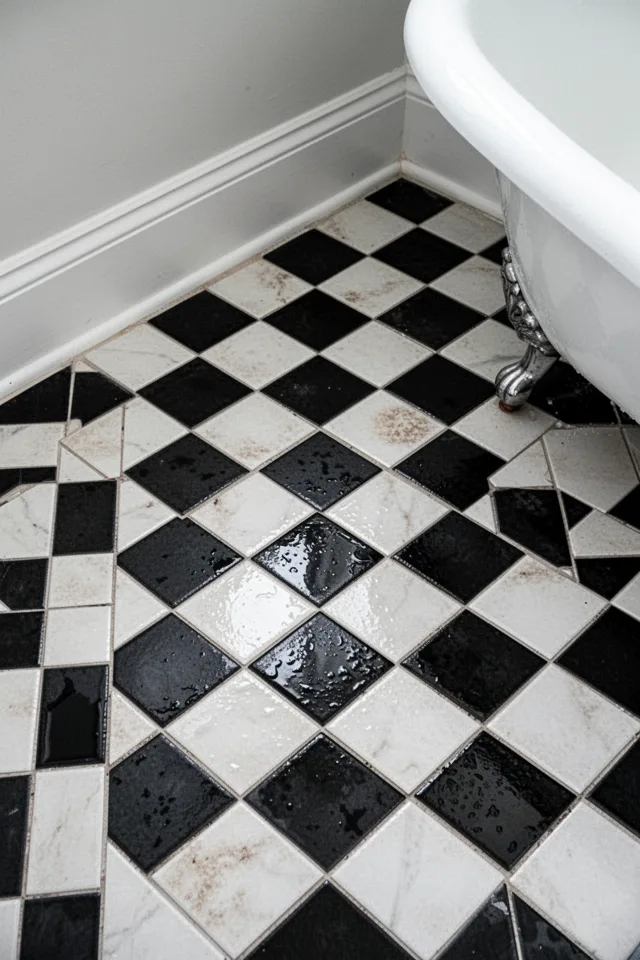
A black and white checkered floor or hexagon mosaic is the most recognisable vintage bathroom floor pattern, and for good reason. But the vinyl versions and peel-and-stick sheets do not cut it. The real thing — ceramic or porcelain tile in a basketweave or hexagon pattern — has a three-dimensional quality that flat sheet goods cannot replicate. The light hits each tile at a slightly different angle. The grout sits below the surface. It feels solid underfoot. In the winter, it is cold, which is the one downside. But that is what bath mats or radiant heat are for.
The honest constraint: installation is slow. Small tiles mean many lines to grout. A 40-square-foot bathroom floor can take a full weekend with a tile saw and a patient partner. The material cost is about $5 to $10 per square foot for basic black and white ceramic hexagon tiles — more for handmade versions. The true expense is labor if you hire out: expect $800 to $1,500 for installation and materials. But the result lasts forever. I have seen original 1920s hexagon floors that are still in perfect condition after a gentle clean. That is the kind of investment that outlives every other trend in the room.
Do not use vinyl to fake a hexagon floor. The real thing is hard to install but impossible to regret. Fake it and you will always know.
There you have it — thirteen vintage bathroom ideas that actually work, with the realities attached. None of them are perfect. All of them require a little acceptance. But that is exactly what makes a bathroom feel like yours instead of a catalog page.
If I had to recommend a starting point for most people, it would be the medicine cabinet with original mirror silvering. It is affordable, relatively easy to install, and its effect on the room’s character is disproportionate to its size. That one change — replacing a modern mirror cabinet with a hundred-year-old one — will make you notice every other surface in the bathroom differently.
Pick one idea, not three. Live with it for a season. If it works, add the next. Vintage style is not a checklist. It is a conversation between you and the room. The room should do most of the talking.