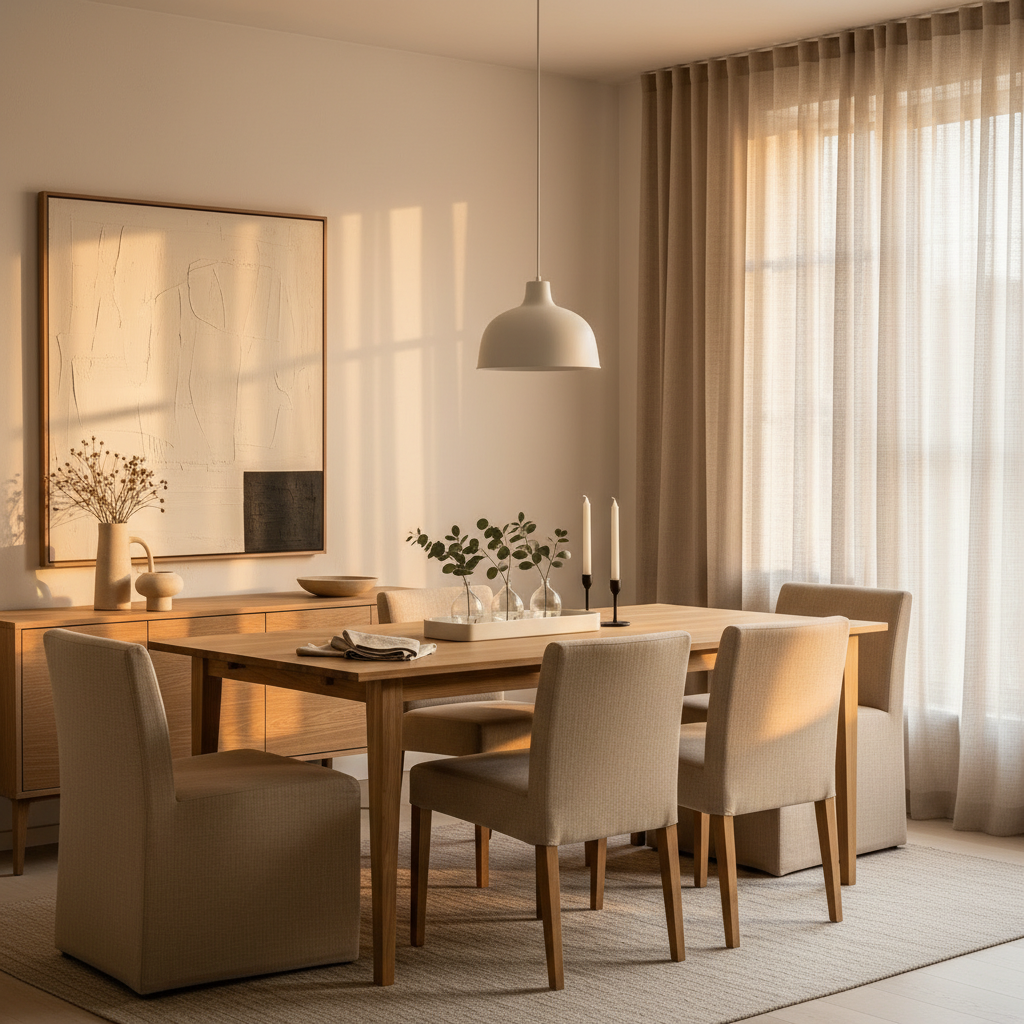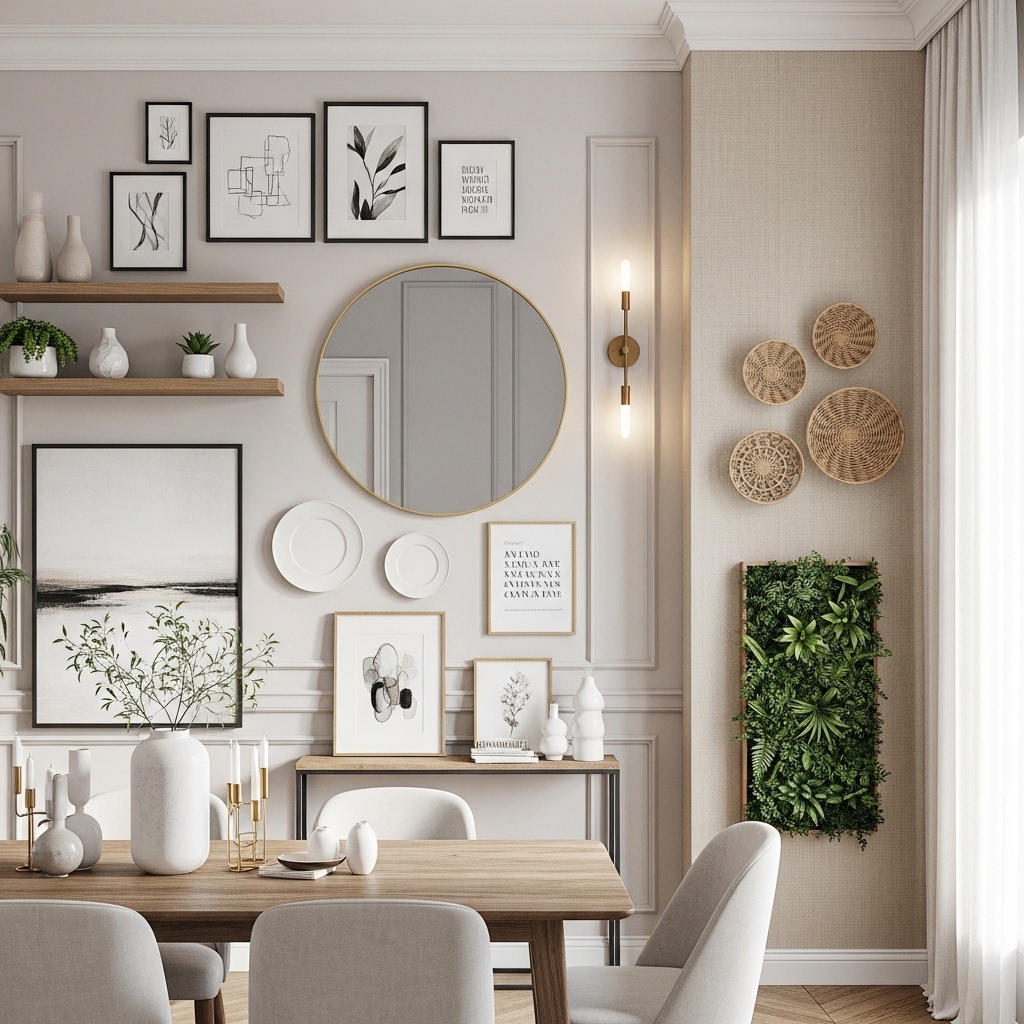
The first time I hung curtains in my dining room, I bought cheap polyester panels in a shade called “warm ivory.” Within a month, the hem started to curl, the color looked grey in afternoon light, and every time someone walked past, the fabric rippled in a way that reminded me of a cheap office partition. I wanted a room that felt grown-up but not stiff, warm but not cluttered. What I got was a lesson in how much curtains matter—and how many ways they can go wrong.
Most advice on dining room curtains is either too generic or too precious. “Choose a fabric you love” doesn’t tell you that linen will crease in two hours and velvet will collect dust like a magnet. “Go for floor-length” ignores that half the time the rod is too low or the panels drag on the floor. The real problem is that no one talks about what survives real life: the kid who pulls on the fabric, the afternoon sun that fades everything, the curtain rod that sags under too much weight. That’s the stuff that matters.
I’ve lived with almost every approach in this list—in my own home, in rentals, and in friend’s houses I helped style. Some ideas became instant favorites. Others taught me what not to do. Every section includes a specific trade-off I’ve experienced, a cost range to expect, and material details that age well or don’t. If you’re ready to move past the Pinterest fantasy, here are fourteen dining room curtain ideas that actually work when you have to live with them.
1. Unlined Linen Panels for Effortless Light
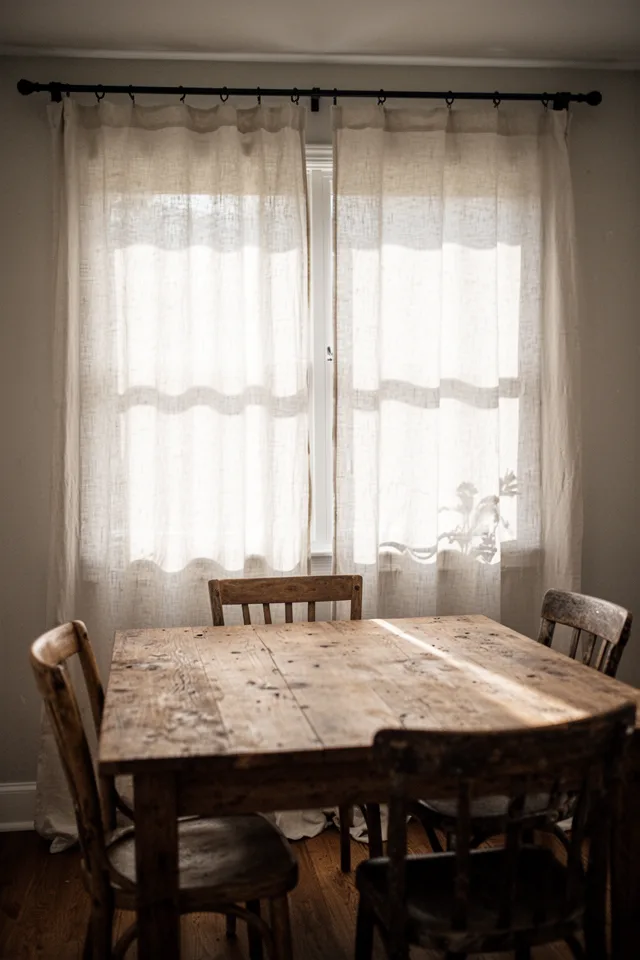
Unlined linen is my go-to for dining rooms that get good natural light but need some softening. The fabric is never fully opaque—it filters light into a diffuse glow that flatters everything on the table. In my own house, I hung a pair of 108-inch panels in a natural oatmeal colour. The first month, I loved how the light moved through them. The second month, I noticed they needed steaming after every laundry cycle. Linen wrinkles like a permanent protest against perfection, and that’s either charming or frustrating depending on your tolerance.
The real issue is privacy. If your dining room faces a busy street, unlined linen at night becomes a stage for your silhouette. I’ve solved this by layering a separate sheer panel behind—but that doubles the cost and the rod complexity. For under $80 per panel, you get a fabric that feels expensive and ages into a soft patina. Just don’t expect it to look crisp after a week. Accept the rumpled look, or add a second liner.
Linen won’t win the fight against wrinkles. But if you let it live, it gives you a room that breathes.
2. Heavy Velvet for Dinner Party Drama
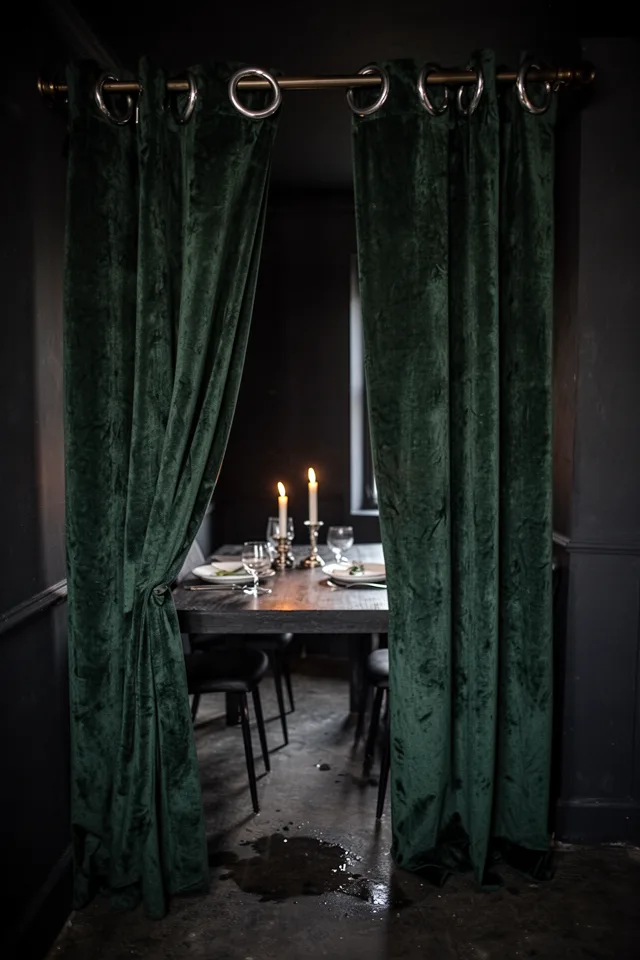
Velvet is the goth queen of curtain fabrics—dramatic, dense, and absolutely unforgiving. I used a deep burgundy velvet in a former dining room that had poor insulation. The curtains added warmth, both thermal and visual. But they also added weight. My first rod, a standard 1-inch diameter, bowed under the load within three months. I upgraded to a 1.5-inch steel rod with heavy-duty brackets, and that solved it. That upgrade cost around $90. The velvet panels themselves? About $150 each for decent quality.
The trade-off is maintenance. Velvet collects dust, pet hair, and smells. You can’t toss it in the wash. Dry cleaning every year is a must, which adds about $40 per panel. But when the light hits those folds during a dinner party, nothing else gives that same sense of occasion. Just don’t hang velvet in a dining room that doubles as a playroom—it will show every fingerprint within a week.
If you want curtains that command attention, velvet delivers. Just be ready to treat them like a fancy coat.
3. Double Rods with Sheer and Opaque Layers
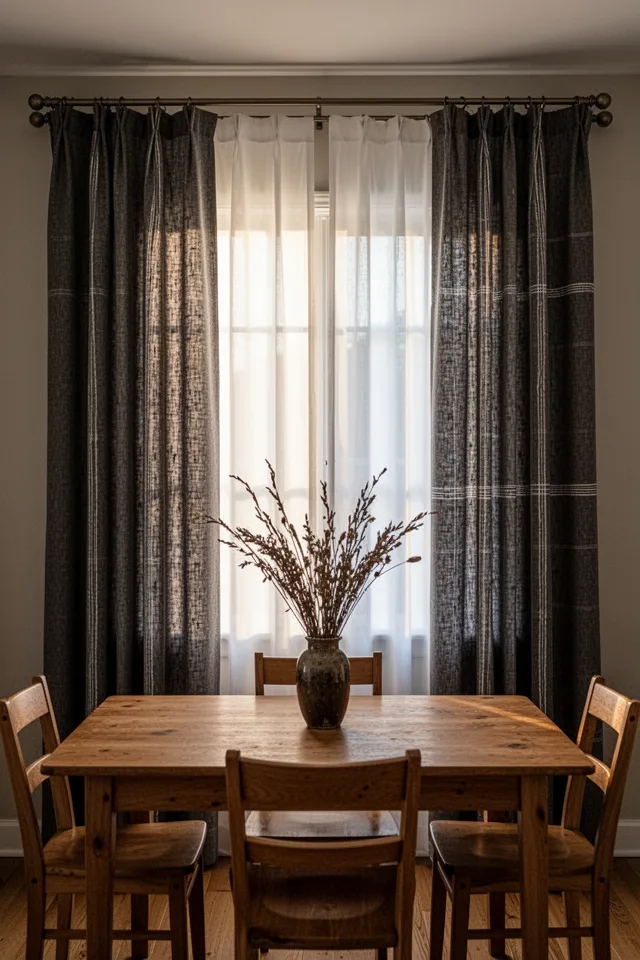
The double-rod approach is the most practical solution I’ve found for dining rooms that serve both daytime and evening functions. You get sheer privacy during the day, blackout capability at night. In my current dining room, I have a double rod with off-white sheer panels on the inside and a pair of deep olive cotton panels on the outside. The olive fabric has a subtle cross-weave that adds texture without shouting.
But here’s the friction: two rods means two curtain pulls, and that extra step is annoying if you’re walking through the room multiple times a day. I installed a simple cord-and-pulley system (about $25 on Amazon) that lets me open both layers with one motion. Also, the sheer panels need washing more often because they catch dust. The opaque panels hide dirt better. Cost-wise, good double rods start around $60. Budget for four panels total—expect to spend $250 to $400 for a decent set.
Double rods are the Swiss Army knife of curtains. Add a pull cord and you’ll actually use both layers.
4. Pinch Pleat Panels with a Custom Rod
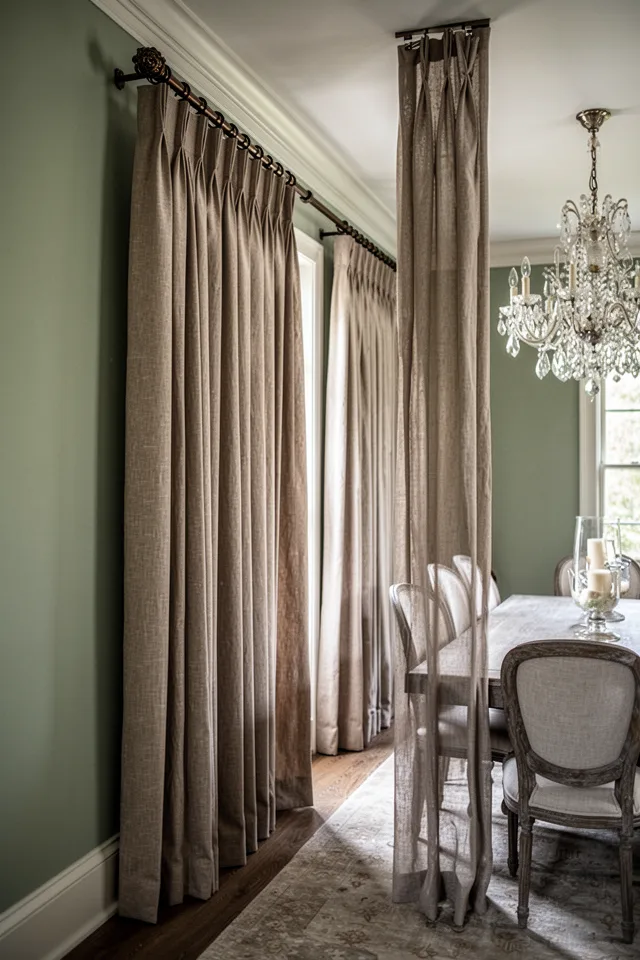
Pinch pleats are the classic tailored look that never goes out of style—but only if you do them right. I’ve seen too many pinch pleat curtains that look sloppy because the pleats weren’t sewn evenly or the panels were too narrow. The key is fullness: you need at least 2.5 times the window width in fabric. That means for a 48-inch window, you want 120 inches of fabric across the two panels. Most ready-made pinch pleat curtains are too skimpy. I paid a local seamstress to custom-make mine for a 60-inch window. It cost $200 for fabric and labor, plus $80 for a sturdy wooden rod with heavy brackets.
The trade-off is that pinch pleat curtains don’t work well with standard spring-tension rods. You need a proper rod with rings or hooks. Also, the pleats trap dust. Vacuum them with a brush attachment every few weeks. But that crisp, architectural look is worth it for a formal dining room. If you’re the type who likes things neat, this is your curtain.
Pinch pleats demand respect. They won’t forgive a cheap rod or skimpy fabric.
5. Cafe Curtains for Lower-Half Privacy
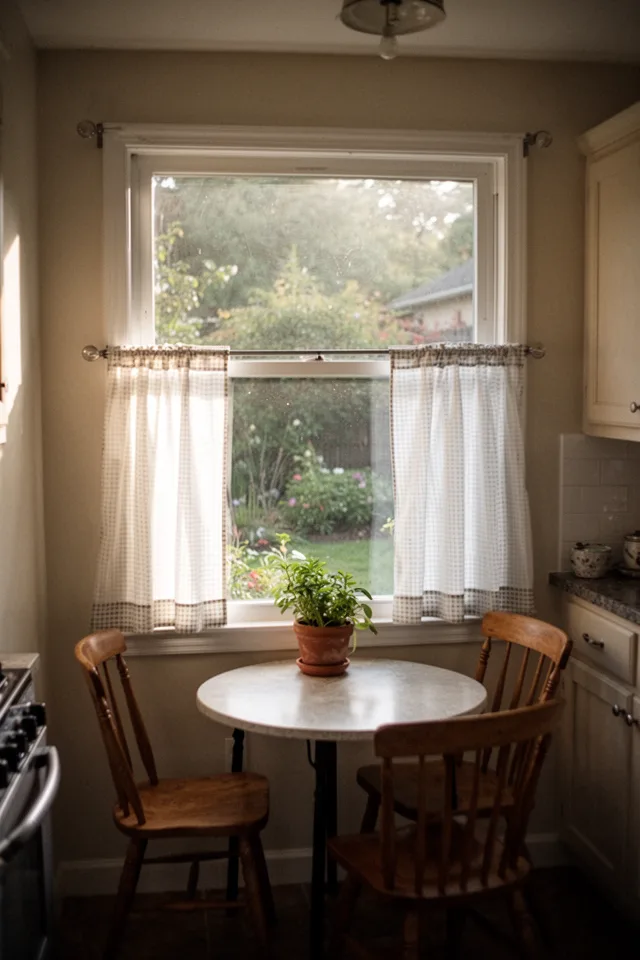
Cafe curtains are an underrated solution for dining rooms where the view matters but you need privacy at table height. I first tried them in a rental with a ground-floor dining room that looked directly onto a sidewalk. I mounted a tension rod at the midpoint of the window and hung linen cafe panels. Suddenly, I could sit at dinner without feeling like I was on display, but I still had the upper half of the window letting in light and showing the sky.
The catch is that cafe curtains only work if you have a single window that isn’t too wide. For a large picture window, they look odd—like a half-dressed room. Also, the curtain rod itself becomes visible. If you dislike seeing hardware, this isn’t for you. Cost is low: about $25 for the rod and $25–$40 for the panels. I’d buy one size wider than the window for proper gathering.
Cafe curtains are the compromise you need when you want light, view, and privacy all at once.
6. Roman Shades with Linen or Velvet Simplicity
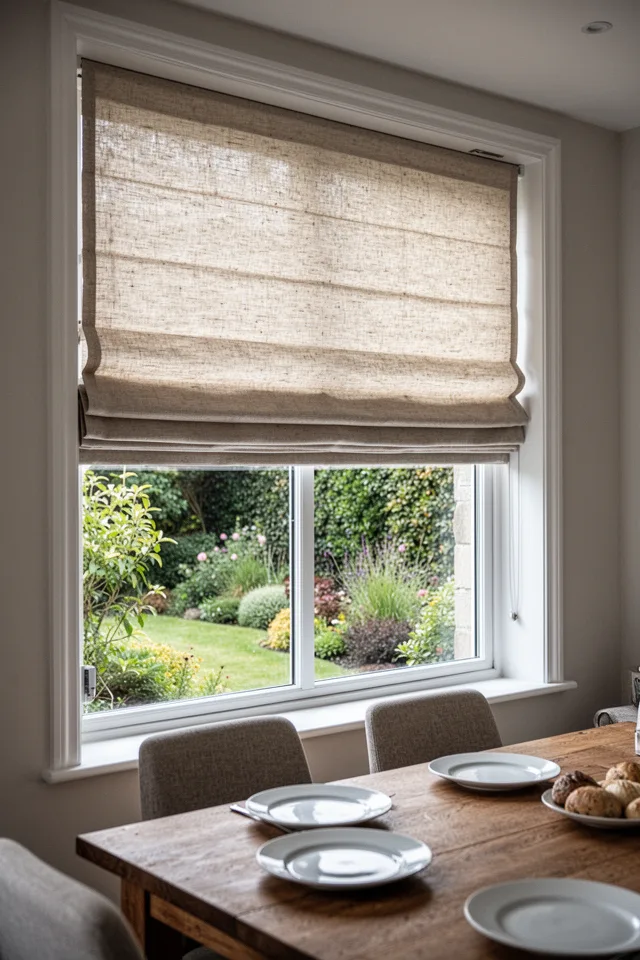
Roman shades offer the cleanest look of any window treatment—no fabric pooling, no rods, no hardware fights. I had roman shades in my last apartment’s dining nook, custom-made from a heavy oatmeal linen. They looked flawless when down, and when raised, the folds stacked neatly at the top, never blocking the window. The problem is that roman shades are expensive for what they are. A decent custom shade for a 36-inch window runs $150–$250. Ready-made ones exist but often have flimsy linings that sag after a year.
Also, roman shades are a pain if you have kids or pets. The lift mechanism can get stuck if you pull crookedly. Dry clean only. And they don’t provide full blackout unless you pay for a separate blackout liner. For dining rooms where you want minimal visual clutter, they’re hard to beat. Just be prepared to spend.
Roman shades are the minimalists dream—until the cord tangles. Treat them with care and they’ll last a decade.
7. Curtains with Contrasting Trim or Ribbon
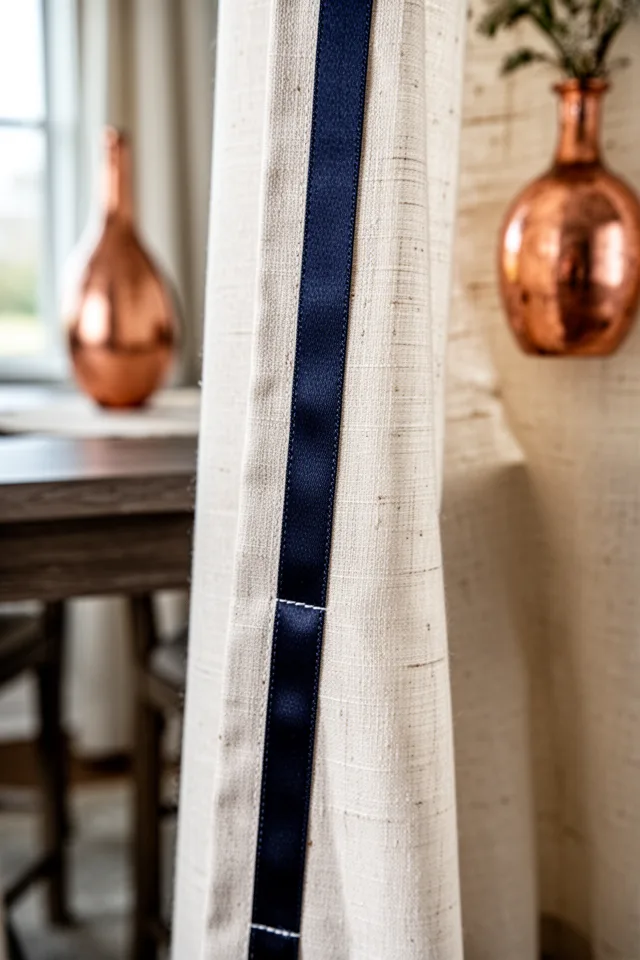
Adding contrast trim is one of the few details that makes mass-market curtains look custom. I sewed a ribbon of deep indigo onto the inner edge of my living room curtains (also works in dining). It cost me $12 for the ribbon and an hour of hand-stitching. The effect is subtle but noticeable when the curtains are open—the trim peeks out from behind the main fabric, adding a line of unexpected color.
The catch is that trim only works with solid curtains. On patterned fabric, it fights for attention. Also, if you don’t sew, you’ll pay a tailor about $40–$60 per panel. And some synthetic trims fade quickly in direct sun. I learned that the hard way with a metallic ribbon that went bronze after six months. Stick with cotton or silk ribbon, and test a small piece in the window before committing.
Trim is the cheapest way to make a curtain look intentional. Just avoid anything shiny near a sunny window.
8. Blackout Curtains for Media and Meal Time
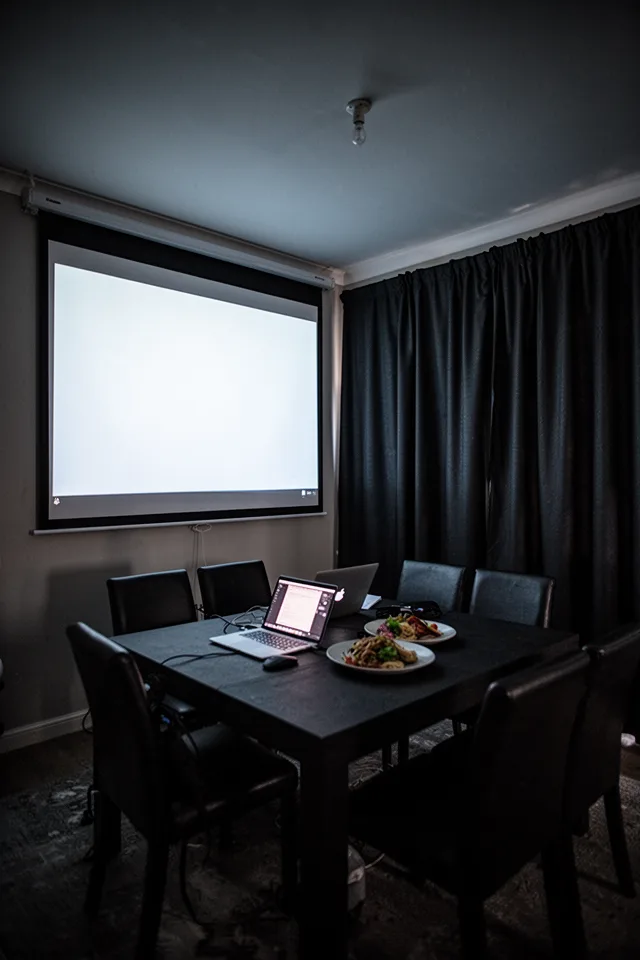
If your dining room doubles as a home theater or you have a south-facing window that turns dinner into a squinting competition, blackout curtains are the practical choice. I installed a set of thermal blackout panels in my dining nook when I moved into a house with afternoon glare. They work. The room goes dark enough to use a projector. They also help insulate—the temperature difference was noticeable in winter.
But blackout curtains have a distinct cheapness problem. Many have a shiny, rubberized backing that looks awful when backlit. I’ve found that fabric-based blackout curtains with a matte finish are worth the premium—about $80–$120 per panel. Also, they’re heavy, so the rod must be strong. Avoid grommet-style blackout curtains if you can; the grommets let light leak through. Instead, use rod-pocket or pinch-pleat styles.
Blackout curtains are a tool, not a decoration. Buy the ones that look opaque even from the back.
9. Bamboo / Reed Shades for Texture and Warmth
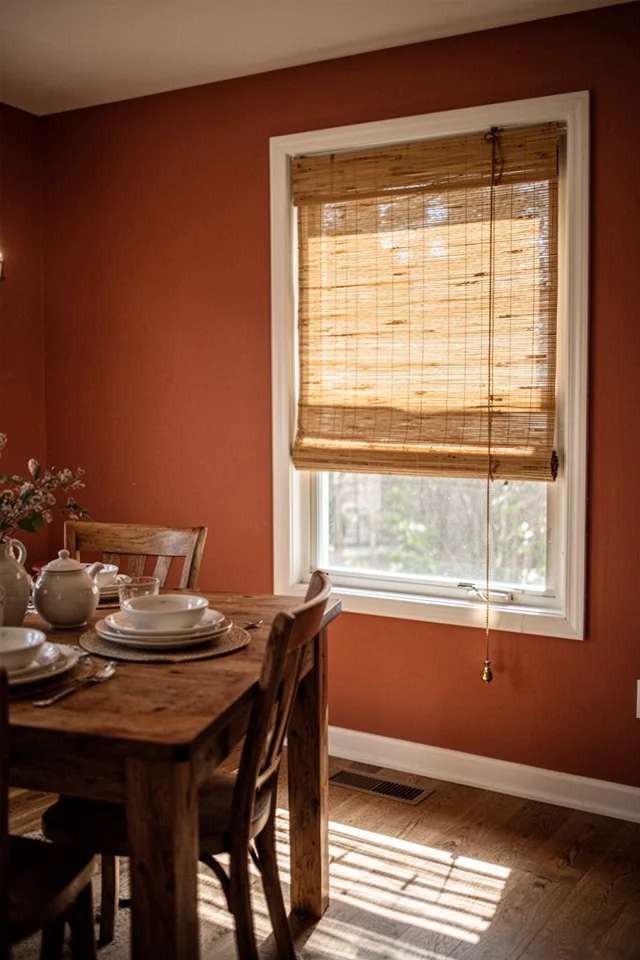
Bamboo and reed shades bring an organic texture that softens a room without blocking all light. I had bamboo shades in a bohemian-style dining room with a lot of plants. They looked incredible. The natural material added warmth, and the dappled light felt alive. But bamboo has downsides: it expands in humidity (my shades got wavy in summer), and it doesn’t provide privacy at night unless you layer it with another treatment. Also, some bamboo shades have a backing cloth that separates after a year.
Cost is moderate: $50–$100 per shade depending on size. They’re easy to install with basic brackets. The real trade-off is that they’re not great for formal rooms—they lean casual and slightly rustic. If your dining style is more farmhouse or boho, go for it. For a sleek modern space, skip them.
Bamboo shades are like a good pair of jeans: comfortable, warm, but not appropriate for black tie.
10. Curtains Hung from a Ceiling Track
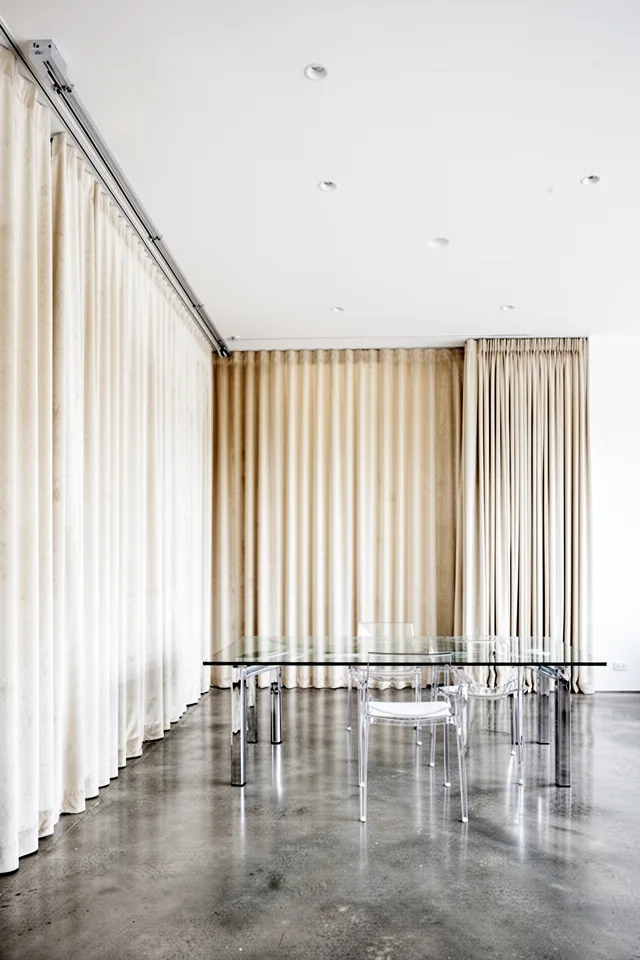
Ceiling tracks are the secret weapon for rooms where you want curtains to disappear into the architecture. I installed a white ceiling track in my own dining room after failing to find a rod that didn’t visually clutter the space. The track cost $30 for a 6-foot length, plus $40 for the end stops and gliders. The panels hang from simple hooks, gliding silently. The visual effect is that the curtains seem to grow from the ceiling—no rod, no rings.
But ceiling tracks require precise installation. You need to locate ceiling joists or use heavy-duty anchors. If your ceiling is textured popcorn, the track will look ugly. Also, you’ll need custom-length panels that just kiss the floor, because the track pulls the curtains straight down. I had to hem my panels myself. Cost for a standard window: around $100 for hardware plus $200+ for panels. That said, this is one of those small investments that makes a room feel grown-up.
Ceiling tracks make your room look taller and cleaner. They’re worth the extra installation headache.
11. Asymmetrical One-Panel Drape
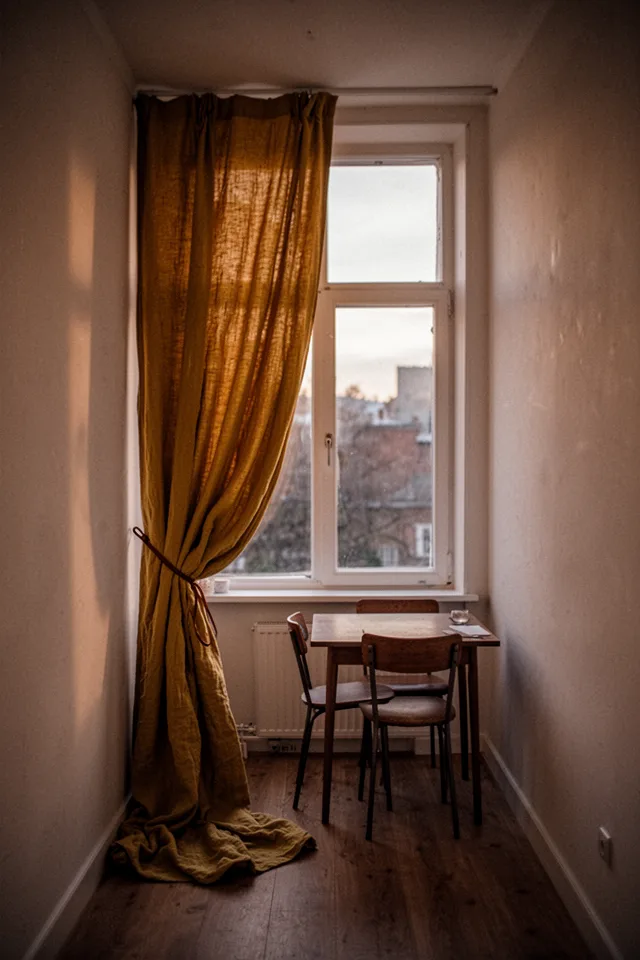
Sometimes symmetry is overrated. I tried an asymmetrical one-panel drape in a rental dining room where the window was off-center and the wall space was tight. Instead of fighting it with two narrow panels, I hung one wide panel on the side with more wall clearance. It looked intentional, like a painting that was casually leaned against the wall. The key is to use a panel that’s wide enough to gather fully—I used a 90-inch wide panel for a 42-inch window.
The trade-off: you lose the ability to close both sides fully. If you need total privacy or light control, this is not your solution. But for a room that sees moderate use, it’s a quirky, charming look. And it’s budget-friendly—one panel instead of two. Expect to spend $50–$80 for a quality single panel and rod.
Asymmetry works when the room has other symmetrical elements to balance it. Don’t do this on a chaotic wall.
12. Curtains with Contrast Hardware
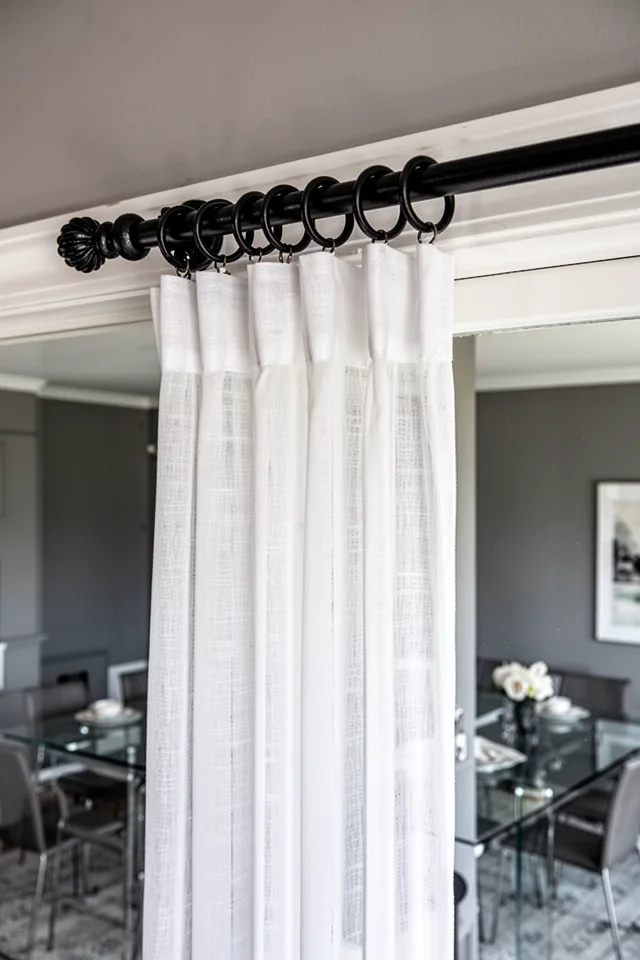
Hardware is not an afterthought. The rod, rings, and finials can either anchor a room or annoy you every time you look at them. I once used a brushed nickel rod with warm-toned curtains—the mismatch in undertones made both look wrong. For contrast, I now prefer matte black or dark bronze against light fabrics. It creates a strong horizontal line that adds structure. A simple set of 1-inch black rings can be bought for under $15.
One mistake: overdoing it. Contrast hardware works best when it’s the only metallic element in the room. If you have a chrome chandelier and a gold mirror, adding a black rod creates visual noise. Match the hardware finish to other metal accents in the room, or go neutral (matte black goes with almost everything). Cost for a decent rod: $30–$60. Rings: $10–$20. Worth it.
Hardware is the jewelry of your curtains. Spend a little extra on the rod and rings—they’re what you touch daily.
13. Embroidered or Printed Curtains
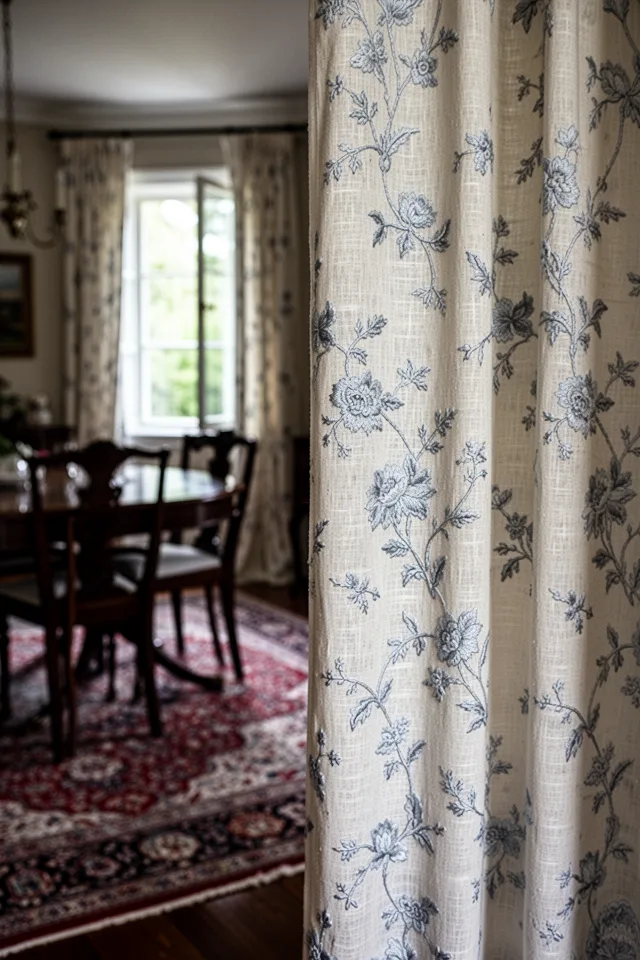
I have a complicated relationship with patterned curtains. They can instantly give a room personality, but they also date quickly. I bought a pair of embroidered linen panels in a botanical motif two years ago. At first, people complimented them. Now I’m a little tired of looking at the same leaves. The issue is that pattern is high-commitment. If you redecorate the room, the curtains may not adapt.
My advice: choose a pattern that’s large-scale and subtle in contrast. Avoid tiny all-over prints like small florals—they look like wallpaper and can feel suffocating. Embroidery is safer than print because the texture adds depth. Cost varies wildly: $80–$300 per panel depending on complexity. Dry clean only. If you’re someone who likes to change things up often, stick to solids and add pattern through accessories.
Embroidered curtains are like a statement necklace: wear them when you want attention, but know they’ll be the star of the room.
14. Layered Curtains with a Valance
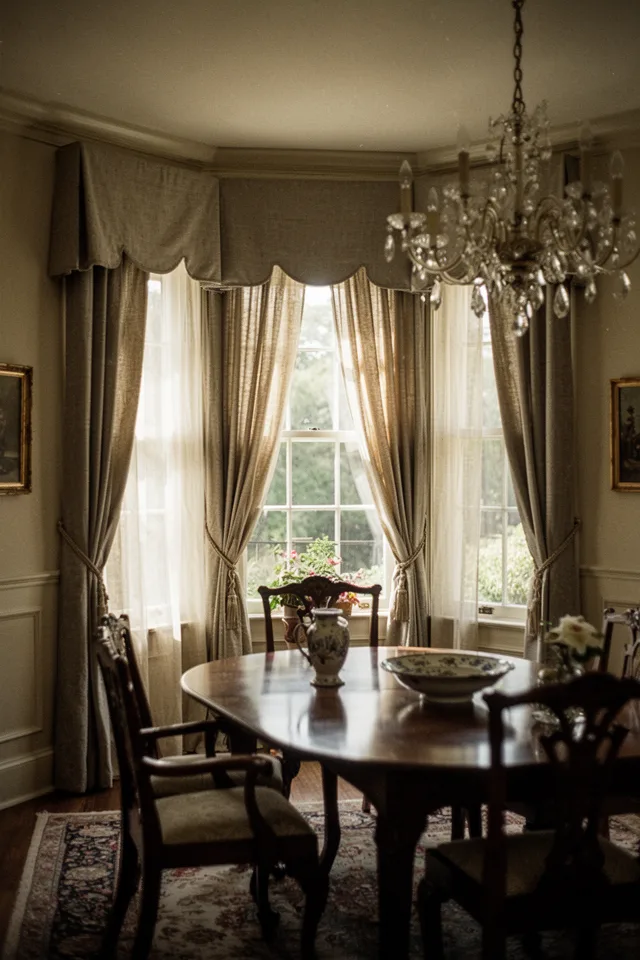
Valances are out of fashion in minimalist circles, but they have a place in formal dining rooms where you want to hide the curtain rod and soften the top of the window. I used a valance in my grandmother’s dining room during a refresh. It matched the floral wallpaper and gave the room a proper finished look. The issue: valances collect dust on top like nothing else. You will need a step stool and a vacuum attachment every month.
The modern take is to use a simple, flat valance in a solid color, not a ruffled or scalloped one. That keeps it from looking like a 1990s time capsule. Layering a valance over panels adds more fabric at the top, which can make a low ceiling feel shorter. Use this only in rooms with ceilings at least 9 feet high. Cost for a valance set: $30–$60. Combined with panels, you’re looking at $150–$250 total.
Valances are the return of an old trend. Use them sparingly and only in rooms that can handle the formal energy.
Conclusion
The dining room curtain you choose is one of the few design decisions you’ll interact with twice a day, every day. That’s a lot of time to live with something that sags, fades, or collects dust in a way that drives you mad. The real question is not which one is prettiest—it’s which one fits how you actually use the room. Do you eat by candlelight? Do kids yank at fabric? Does the window face a street full of passersby? Answer those honestly, and the right curtain becomes obvious.
If I had to pick one starting point for most people: unlined linen panels on a ceiling track. They’re forgiving, affordable, and they make any dining room feel lived-in and warm without trying too hard. Add a blackout liner if you need it, or keep it simple and embrace the wrinkles. That’s the kind of curtain that survives a busy life without demanding constant attention.
The best curtain is the one you forget is there until someone tells you how good the room feels. That’s the real goal.