I have a confession: I lived with cheap vertical blinds for three years because I was paralyzed by indecision. Every window treatment article I read said “layer your lighting” or “consider the fabric weight” in the same breathless, aspirational tone. Nobody told me that Roman shades in a south-facing room would fade to the color of weak tea within one summer. Nobody warned me that sheer curtains would show every fingerprint from my kids. And nobody—nobody—admitted that most modern window treatments look amazing in photos and deeply awkward in real life.
The problem with conventional window treatment advice is that it treats every living room like a magazine spread. It ignores the reality of morning sun that bleaches everything, the way curtain rods sag under heavy drapes, or the specific challenge of windows right next to a couch where cords become a tripping hazard. The guides never tell you which “modern” ideas will look dated in two years, or which ones actually help with energy costs. And they certainly don’t mention that some trendy treatments cost a fortune to install and even more to remove.
So I’m writing the guide I wish I’d read before those vertical blinds. These 16 modern window treatment ideas have all survived at least two years in my own living rooms (and friends’ living rooms I’ve helped style). Each idea includes the honest trade-offs: what fades, what sags, what’s impossible to clean, and what actually makes a room feel finished. Some are under $50. A few are $500+ investments. All of them look modern without looking like a hotel lobby. If you’re tired of staring at your naked windows, start here.
1. Floor-To-Ceiling Sheers On A Single Rod
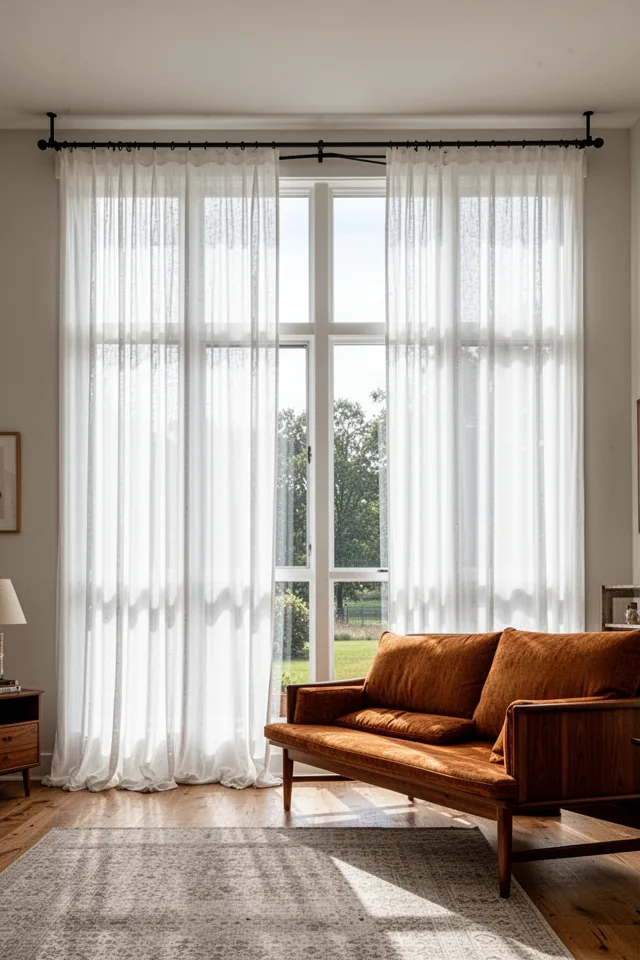
Mount your curtain rod as high as possible—within 2 inches of the ceiling—and use floor-length sheers. The effect makes your ceiling look taller and your windows grander. Use a single rod with rings, not a double rod. The simplicity is the modern part. Choose linen or cotton sheers, not polyester. Polyester sheers have a weird static cling and don’t drape well. Linen has a subtle texture that catches light.
Cost runs $80 to $150 for rod and sheers for a standard window. The trade-off is that floor-length sheers collect dust and pet hair. Vacuum them with a brush attachment monthly. Also, if you have baseboard heaters, the sheers will block heat. Leave a 2-inch gap at the bottom, or use them only in rooms without baseboard heat. The version that fails is using a rod that’s too short—the sheers will cover part of the window when open. Extend the rod at least 8 inches past the window frame on each side.
Pro tip: Buy sheers 1.5 times your window width. Double width looks too bulky for modern. Single width (just covering the window) looks cheap. 1.5x is the sweet spot.
2. Roman Shades In A Natural Fabric With Contrast Tape
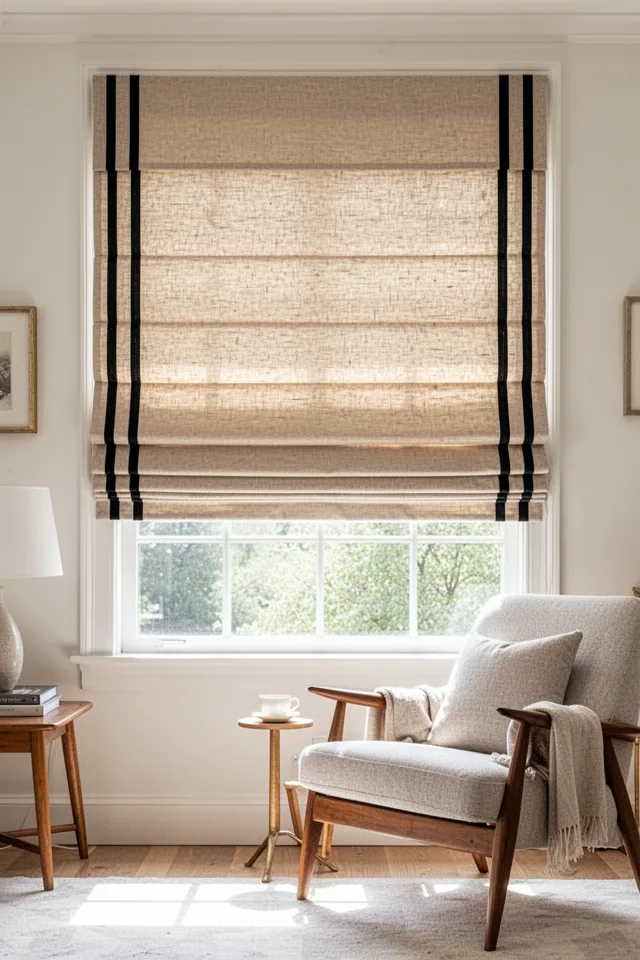
Roman shades are the workhorse of modern window treatments, but most people choose flat, boring fabrics. The modern update: use a natural linen or cotton duck fabric in a neutral, then add contrast tape (1-inch cotton webbing) along the vertical edges and across each horizontal fold line. The tape adds architectural interest and makes the shade look custom. It’s an easy DIY: buy ready-made roman shades and iron-on hem tape to attach the contrast strips.
Cost is about $60 for a ready-made shade plus $10 for tape. The trade-off is that roman shades collect dust on the horizontal folds. Use a vacuum with a brush attachment weekly. Also, they don’t block light completely unless you get a lined version. For bedrooms, add a blackout liner. For living rooms, unlined is fine. The version that fails is using a shiny or synthetic fabric—it looks cheap and doesn’t fold cleanly. Natural fabrics only.
One thing most guides skip: measure the inside of your window frame for an “inside mount” (shade sits inside the frame) for the cleanest modern look. Outside mount (on the wall above the window) works but feels less streamlined.
3. Bamboo Roll-Up Shades With A Fabric Border
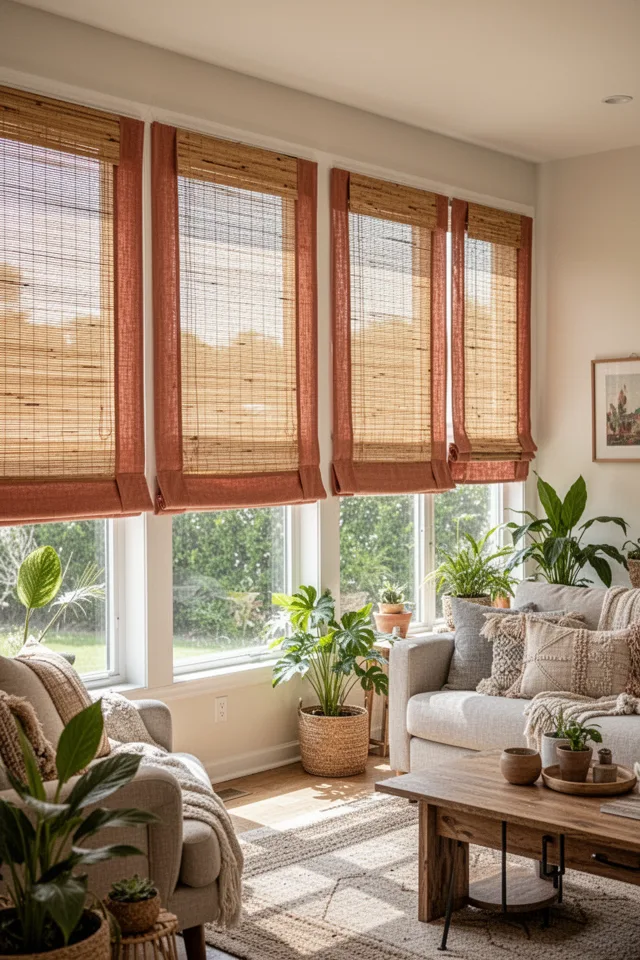
Bamboo shades (also called matchstick blinds) are cheap and bring great texture, but they look unfinished on their own. The modern fix: sew or glue a fabric border around the edges, especially the bottom. Use a medium-weight linen or cotton in a color that ties into your room. The fabric covers the rough cut edges and makes the shade look intentional. Plus, you can roll the shade up and the fabric border becomes a decorative band.
Cost is about $40 per shade plus $15 for fabric. The trade-off is that bamboo shades don’t block light well—gaps between the slats let in stripes of light. If that bothers you, line the back with a light-blocking fabric (hot glue works). Also, bamboo absorbs humidity and can warp. Use them in dry rooms only, or in humid climates plan to replace every 2-3 years. The version that fails is using a fabric that’s too heavy—it pulls the shade crooked when rolled up. Use lightweight linen.
Pro tip: Staple the fabric border using a staple gun instead of sewing. The staples go into the bamboo frame and are invisible from the front. Takes 5 minutes instead of an hour.
4. Layer Sheer And Opaque On A Double Rod With Separators
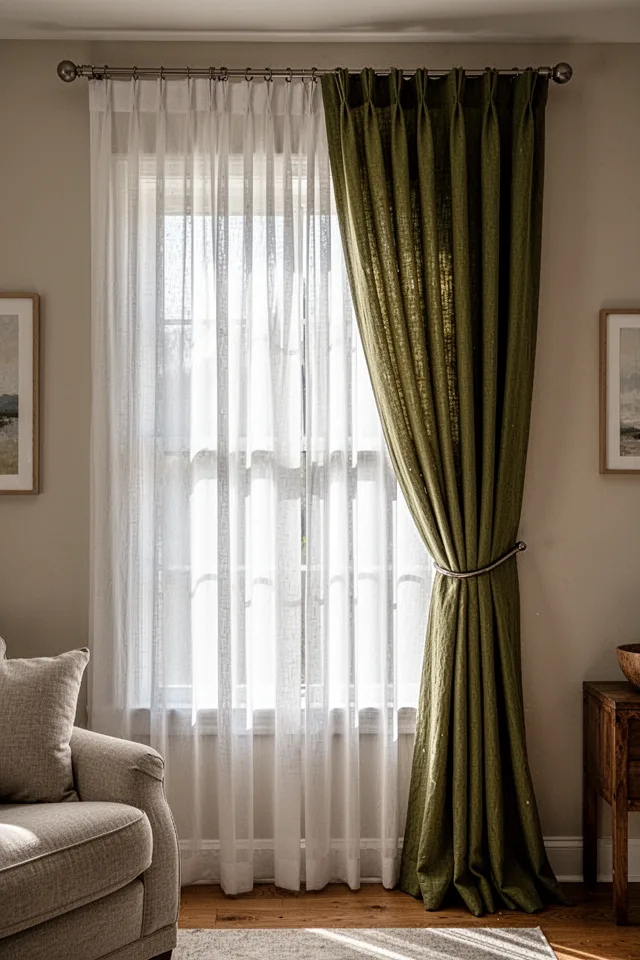
Layering sheers and drapes is not new, but most people do it wrong. The modern version: put the sheers on the rod closest to the window, and the opaque drapes on the front rod. Use drapes that are 100% opaque (lined or heavy fabric). The key is adding “separators”—small metal rings or clips that keep the two layers from tangling. Without separators, the drapes will catch on the sheers every time you open or close them.
Cost is about $150 for rod, sheers, and drapes. The trade-off is that double rods are bulky and require a deep window frame (at least 4 inches of wall space). If your window is flush with the wall, use a single rod with a double pass (two sets of rings on one rod). Also, the sheers will be visible behind the drapes when closed—choose sheers that look good even when covered. White or cream only. Colored sheers look muddy.
Pro tip: Use magnetic holdbacks to keep the drapes open in a perfect “S” curve. Magnetic holdbacks clip to the rod and grab the fabric. No drilling into walls.
5. Cellular Shades With A Continuous Cord Loop
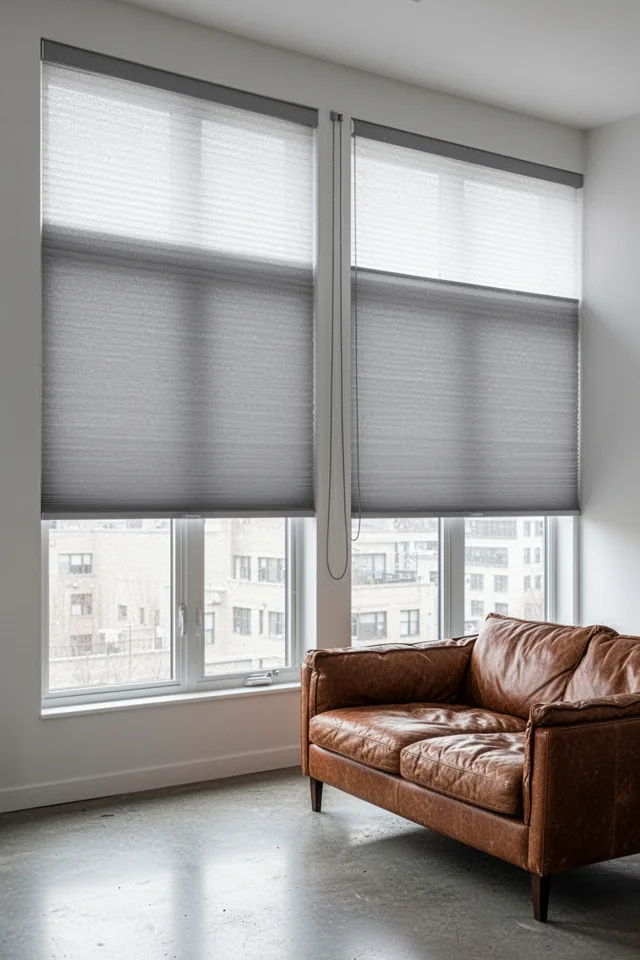
Cellular (honeycomb) shades are the most energy-efficient window treatment—the air pockets trap heat in winter and block it in summer. The modern version is top-down bottom-up: you can lower the top of the shade to let light in while keeping the bottom closed for privacy. This is a game-changer for street-level living rooms. Pair with a continuous cord loop (a loop of cord, not a hanging cord) for child safety and easier operation.
Cost is $150 to $300 per shade (custom sizes). The trade-off is that cellular shades are difficult to clean. Dust settles into the cells. Use a hairdryer on cool to blow dust out, or vacuum with a brush attachment. Also, the cords can fail after 5-7 years. Choose a brand with a good warranty. The version that fails is buying cheap no-name shades from a big box store—the cords tangle and the fabric sags. Invest in a reputable brand.
One thing most guides skip: cellular shades come in single-cell, double-cell, and triple-cell. Double-cell is the best value—more insulation than single, not as expensive as triple. For living rooms, double is fine.
6. Panel Track Blinds For Wide Windows
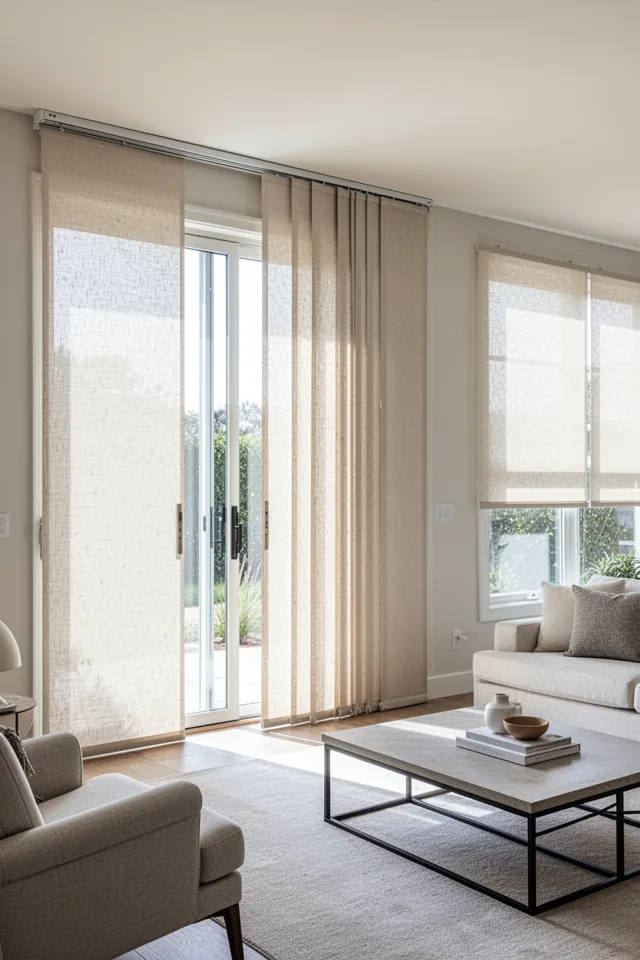
For wide windows or sliding doors, forget vertical blinds. Install a panel track system: a ceiling- or wall-mounted track with wide fabric panels (24-36 inches each) that slide like room dividers. The panels are rigid (weighted at the bottom) and glide smoothly. This is the most elegant solution for large expanses of glass. Choose a textured fabric like linen or a soft felt. The panels stack to the side, taking up very little visual space.
Cost is $200 to $500 for a 120-inch track with 4-5 panels. The trade-off is that panel tracks require precise installation—the track must be perfectly level. Hire a handyman if you’re not handy. Also, the panels collect dust on top. Vacuum the top edge weekly. The version that fails is using lightweight fabric; the panels will flutter when you open and close the door. Use medium-weight fabric with a weighted bottom hem.
Pro tip: Mount the track 2 inches below the ceiling, not directly above the window. The extra height makes the windows look taller and the panels more architectural.
7. Stationary Drapery Panels On A Single Rod
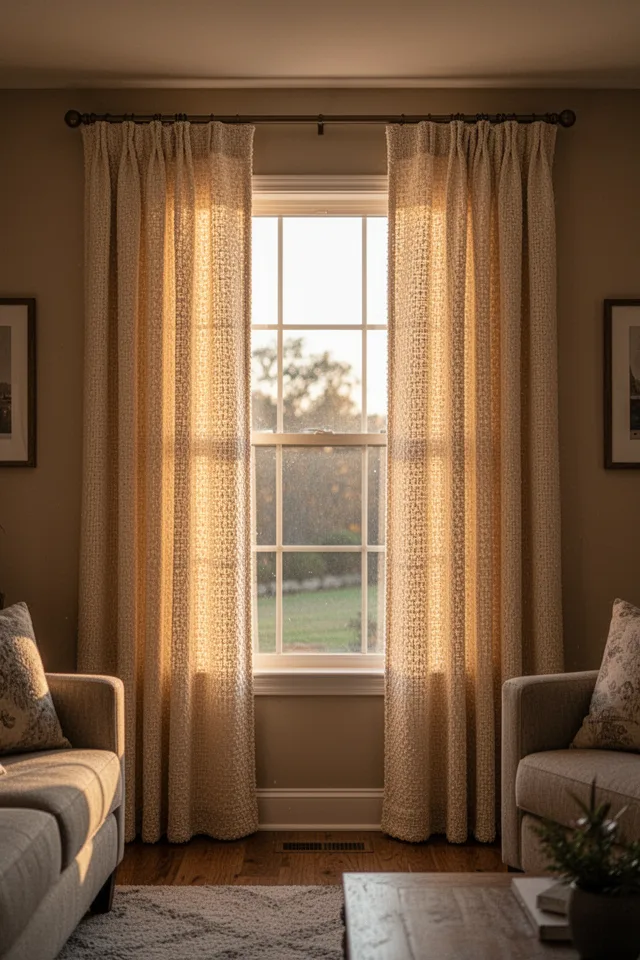
Not every window needs functional window treatments. If you have privacy and light control from other sources (trees, frosted glass, a high floor), use stationary panels. These are drapery panels that are fixed in place—they never close. They simply frame the window like art. Use a single rod with finials, and place one panel on each side. The panels should be wide enough to cover 6-8 inches of wall on each side of the window, creating a sense of width.
Cost is about $60 for rod and two panels. The trade-off is that stationary panels can look fake if they’re obviously not functional. To avoid that, use rings that allow movement (even if you never move them) and add a holdback to keep the panel in a graceful curve. Also, the panels will gather dust. Vacuum them. The version that fails is using panels that are too narrow—they look like an afterthought. Each panel should be at least 18 inches wide.
One thing most guides skip: use a tieback or holdback to create a soft “hourglass” shape in each panel. A simple magnetic holdback clipped halfway down creates a beautiful drape and makes the stationary panel look intentional.
8. Roller Shades With A Visible Chain And Large Canopy
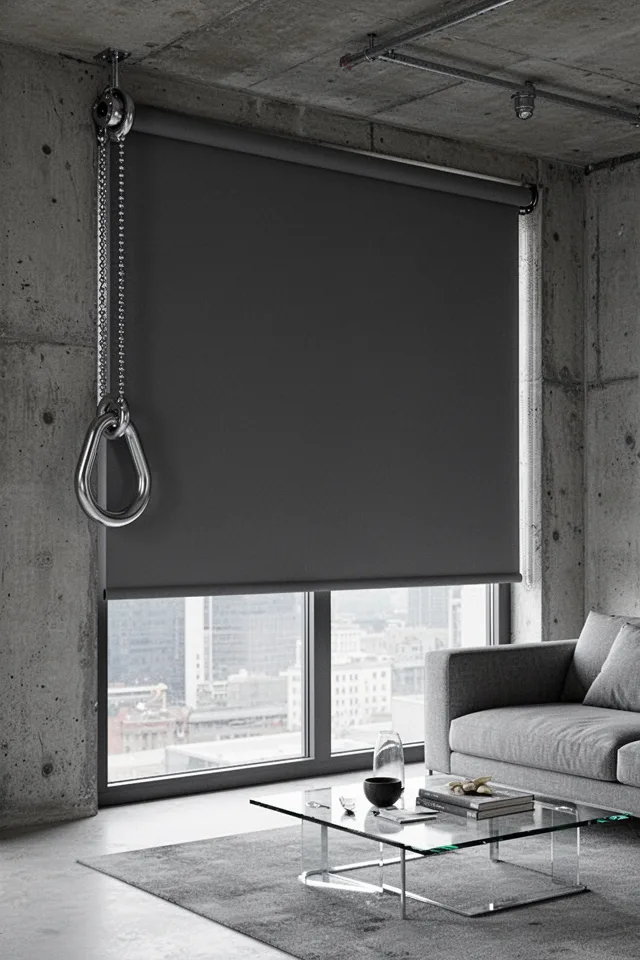
Most people try to hide roller shade hardware. The modern approach: flaunt it. Choose a roller shade with a visible chain (not cordless) and a large, sculptural canopy (the metal box that holds the roll). Paint the canopy a bold color or leave it as brushed aluminum. The chain becomes a design element. This works best in industrial or minimalist spaces where exposed mechanisms feel honest, not unfinished.
Cost is about $80 to $150 per shade. The trade-off is that exposed chains can be a hazard for young children. Install a cord cleat high on the wall to wrap excess chain. Also, the fabric will show wrinkles if not perfectly installed. Have them professionally installed, or use a fabric that doesn’t wrinkle easily (polyester blends, not natural linen). The version that fails is using a cheap plastic chain; it looks like a broken toy. Metal chain only.
Pro tip: Choose a chain that’s 1.5 times longer than your window height. You’ll have extra chain to wrap around a cleat, and the extra length adds visual weight.
9. Wood Slats (Vertical Or Horizontal)
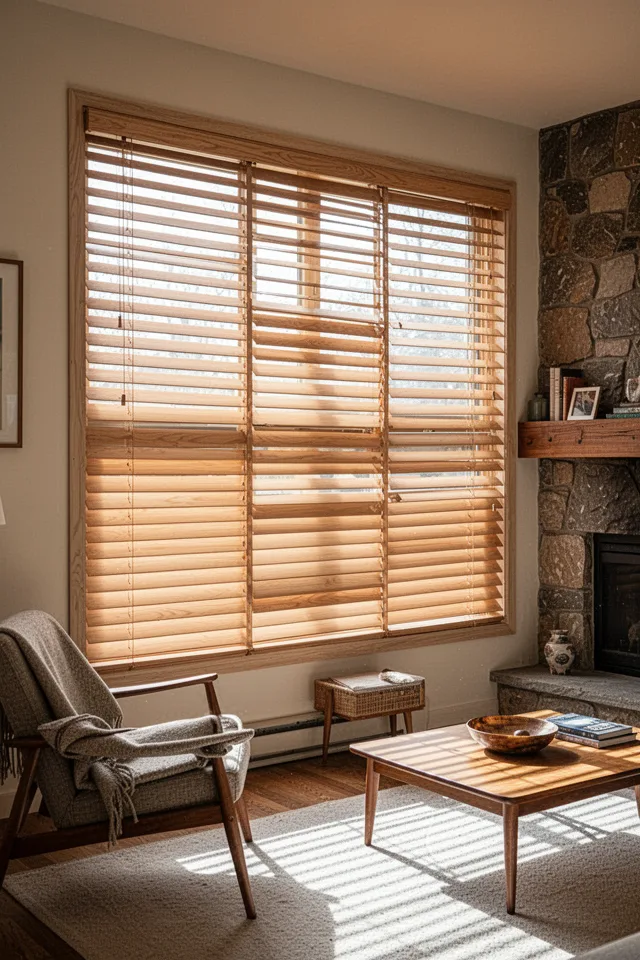
Wood blinds are back, but not the thin, flimsy kind from the 90s. Modern wood slats are wider (2 to 2.5 inches), with visible grain and no visible cords (use a cordless lift or a hidden wand tilt). Mount them inside the window frame for a clean look. The wood brings warmth and texture. Choose basswood (lightweight, doesn’t warp) or faux wood (more durable, less expensive).
Cost is $100 to $250 per window. The trade-off is that real wood blinds are heavy and can sag over time. For windows wider than 48 inches, use two blinds side by side on one headrail. Also, wood blinds collect dust on each slat. Use a blind duster (a microfiber wand) weekly. The version that fails is painting wood blinds—the paint chips when slats rub together. Stain or natural finish only.
Pro tip: For a more modern look, install wood slats vertically (like vertical blinds but with wood). This works especially well for sliding doors. The vertical orientation emphasizes height.
10. Sheer Roman Shades With Blackout Liner
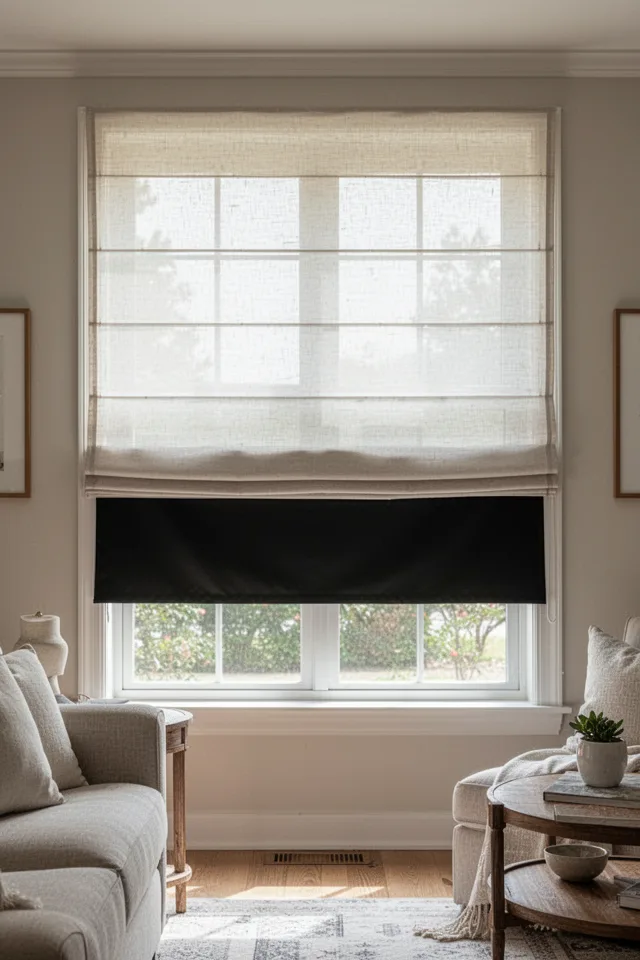
This is a hybrid treatment: a roman shade made from sheer fabric with a removable or permanently attached blackout liner. During the day, raise the shade or leave the liner down? Actually, the clever design: the shade is a single unit—sheer fabric on the outside, blackout fabric on the inside. When you lower it, you get blackout. When you raise it, you get a soft stack of sheer fabric. It’s the best of both worlds.
Cost is $150 to $300 custom-made; hard to find ready-made. The trade-off is that the two fabrics can shift and wrinkle against each other. Use a roman shade kit that has a removable liner (Velcro attachment) so you can separate them for cleaning. Also, the sheer fabric will show every wrinkle from the liner behind it. Use a taut fabric like polyester sheer (not linen) for a cleaner look. The version that fails is trying to DIY this without a sewing machine—it’s too complex.
Pro tip: Use the sheer roman shade alone in the living room, and add a separate roller blackout shade behind it. Two independent systems give you more control (sheer by day, blackout by night).
11. Curtain Panels With Grommets And A Sleek Rod
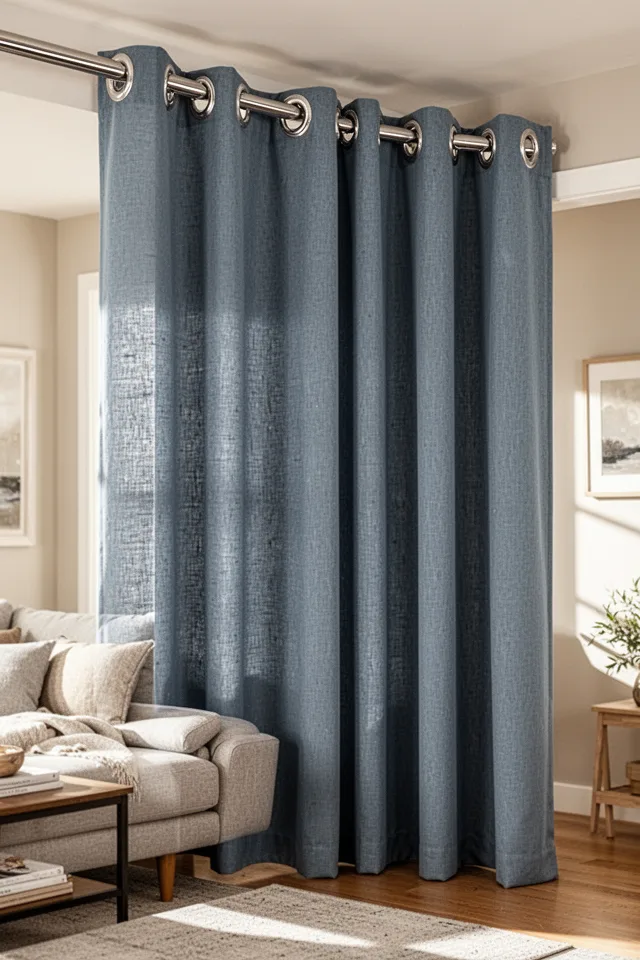
Grommet-top curtains got a bad reputation from cheap versions with flimsy plastic rings. The modern version uses large metal grommets (at least 2 inches in diameter) on a thin metal rod. The grommets slide effortlessly, and the visible hardware becomes part of the design. Choose a rod that’s only slightly thicker than the grommet hole (1/8 inch gap) so the panels don’t sag between grommets.
Cost is $100 to $200 for rod and panels. The trade-off is that grommets work best with medium-heavy fabrics. Lightweight fabrics look flimsy and bunch up between grommets. Also, the grommets themselves can scratch a metal rod. Use a rod with a smooth finish (not brushed) or add plastic bumpers inside each grommet. The version that fails is using grommets that are too small (1 inch or less). They look like office supply grommets, not design elements.
Pro tip: Hang the rod so the grommets sit 2 inches above the top of the window frame. The exposed space above the window makes the ceiling feel higher. You can even go higher.
12. Pleated Sheer Panels With A Tab Top
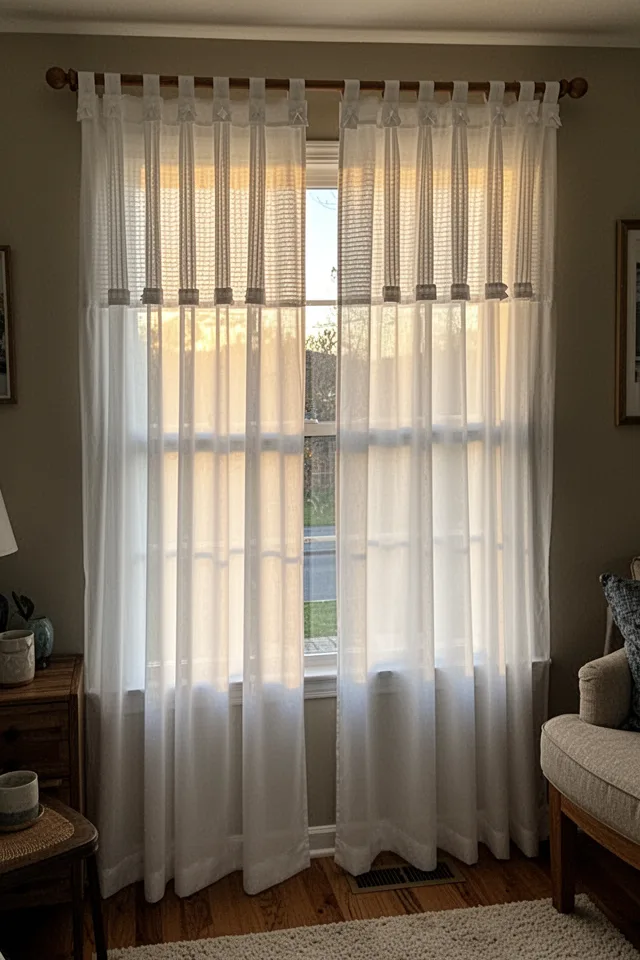
Tab-top curtains are usually casual and rustic. But pleated tab tops? That’s modern. Buy sheer panels with a pre-pleated header (often called “pinch pleat sheers”) and add your own fabric tabs (or buy panels with tabs already sewn). The pleats add structure, while the tabs keep the look casual. Hang them from a simple wooden dowel rod (1-inch diameter) that’s visible between the tabs. The combination of crisp pleats and soft sheers is unexpected.
Cost is about $50 per panel (pleated sheers are pricier). The trade-off is that the tabs will stretch over time, especially with heavy fabric. Choose sheer fabric—lightweight—so the tabs don’t sag. Also, the wooden dowel rod may bow under the weight for wide windows. Use a steel rod with a wood veneer, or add a center support bracket. The version that fails is using tabs that are too wide (more than 4 inches). Narrow tabs look modern; wide tabs look like a shower curtain.
One thing most guides skip: Use clear rubber bands around the rod between each tab to keep the tabs evenly spaced. The fabric will slide otherwise, and the pleats will bunch.
13. Layered Curtains With A Decorative Tie
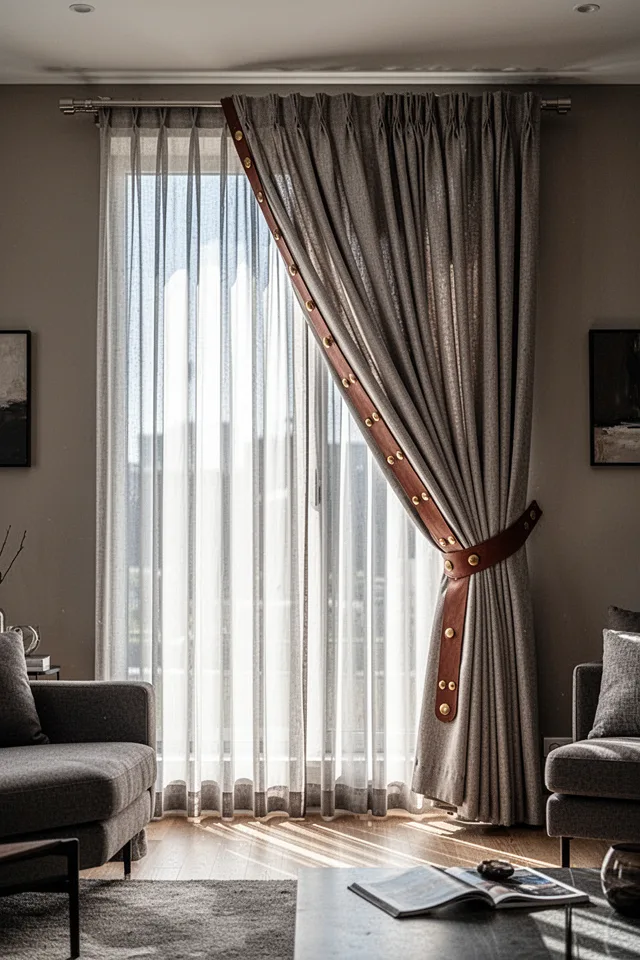
Instead of a double rod, put two layers on one rod: sheers on the inside (closest to the window) and drapes on the outside. Use a rod that’s long enough to accommodate both layers without overcrowding. Then, instead of standard holdbacks, use a wide decorative tie (leather strap, woven belt, or chain) to pull the outer layer to one side at an angle. The inner layer stays straight. This creates a strong diagonal line that feels intentional and architectural.
Cost is about $100 for both layers plus a custom tie (or use a belt you already own). The trade-off is that the outer layer will stack unevenly when tied back—that’s the point, but some people hate asymmetry. Also, the tie will stretch the fabric over time. Use a lightweight outer fabric. The version that fails is using a tie that’s too narrow (less than 1 inch). Wide ties (2-3 inches) make a statement.
Pro tip: Install a simple hook on the wall at the height where you want the tie to attach. The hook keeps the tie from slipping down the curtain over time.
14. Motorized Roller Shades With A Smart Home Integration
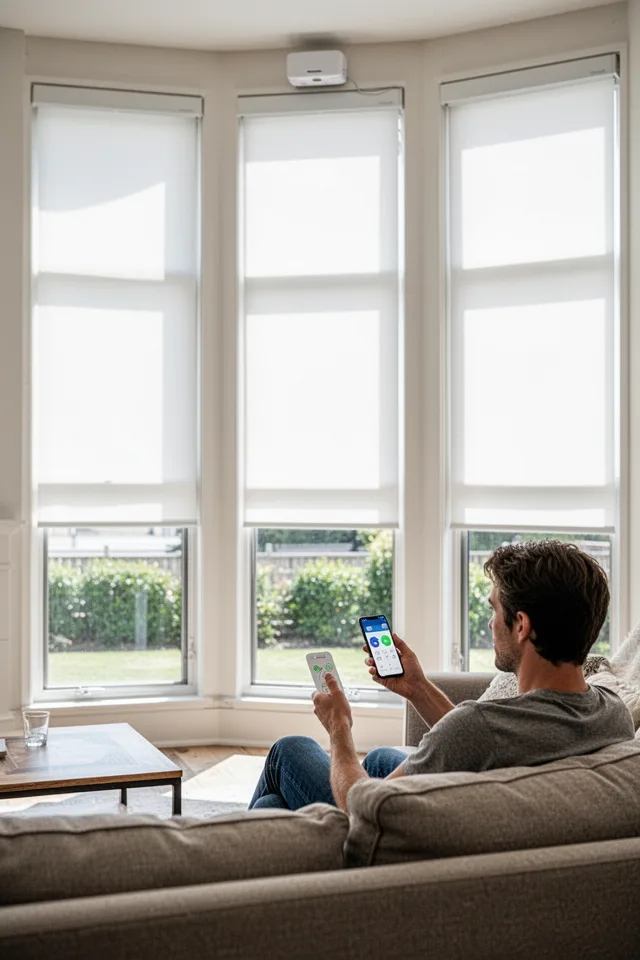
Motorized shades are no longer just for the rich. Brands like IKEA (Fyrtur) offer affordable smart shades for under $150 per window. They integrate with Alexa, Google Home, or Apple HomeKit. You can schedule them to raise at sunrise and lower at sunset. The clean look (no cords or chains) is the ultimate modern statement. Even if you never use the smart features, the cordless operation is worth it.
Cost is $120 to $250 per shade for basic smart roller shades. The trade-off is battery life—most run on rechargeable batteries that need charging every 3-6 months. Hardwiring is an option but requires an electrician. Also, the motors can be noisy (a low hum). Test before buying. The version that fails is buying cheap no-name motorized shades from Amazon—the motors die within a year. Stick with IKEA, Lutron, or Bali.
Pro tip: Set your smart shades to close at 2 PM on summer afternoons. It keeps your living room cooler and saves on AC. The automation is the real benefit, not the app control.
15. Woven Wood Shades With A Fabric Liner
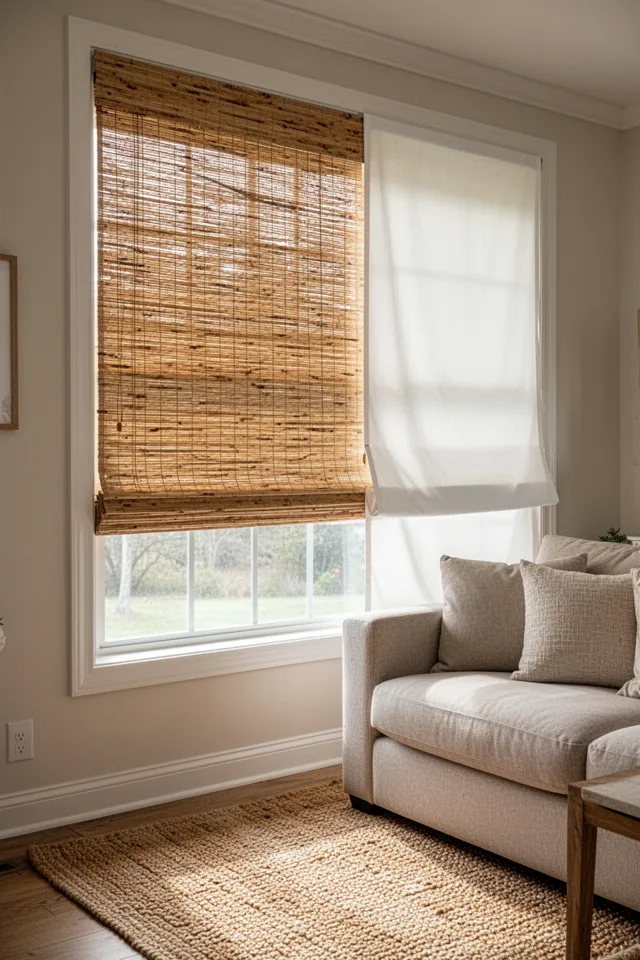
Woven wood shades (bamboo, grasses, reeds) bring organic texture. But alone, they cast striped shadows and don’t block much light. Add a fabric liner—either attached (sewn to the back) or as a separate roller shade. The liner makes the shade opaque and provides a clean, uniform appearance from outside. Choose a white or cream liner so the woven wood remains the star. The combination is textural but not rustic.
Cost is $80 to $150 for the woven shade plus $30 for a liner (or buy combo shades). The trade-off is that woven wood shades are impossible to clean. Dust them with a vacuum brush attachment weekly. Never get them wet. Also, the natural fibers can yellow in direct sun over time. Expect to replace them every 5-7 years. The version that fails is using a dark liner—it makes the shade look heavy and cave-like. Light liner only.
Pro tip: Mount the shade inside the window frame for a clean look. Woven wood has thick edges, so outside mount can look bulky. Inside mount hides the rough edges.
16. Curtains As Room Dividers
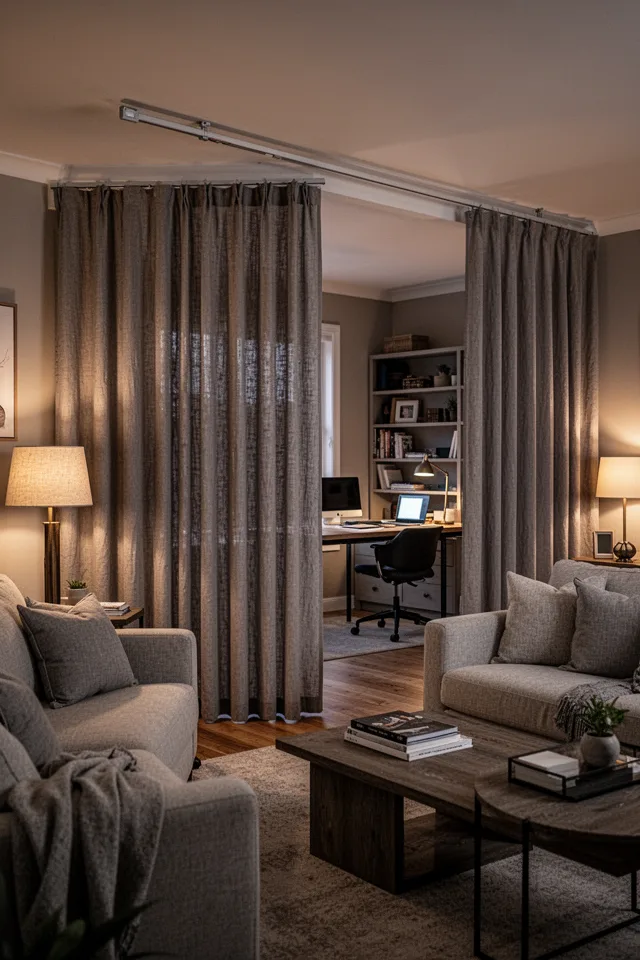
If your living room opens to a dining area or home office, use curtains as flexible room dividers. Install a ceiling-mounted curtain track (IKEA Vidga is perfect). Hang floor-to-ceiling panels in a substantial fabric—linen, velvet, or felt. When open, the curtains stack at one end, taking up almost no space. When closed, they create a soft wall that absorbs sound and defines zones. It’s the most flexible modern treatment because it’s not really a window treatment at all.
Cost is $80 to $200 for the track and panels. The trade-off is that ceiling-mounted tracks require secure installation into joists (use a stud finder). If you miss the joist, the track will sag. Also, the curtains will gather dust at the floor. Leave a 1/2-inch gap, or accept that you’ll vacuum them. The version that fails is using lightweight sheers as dividers—they don’t provide visual separation and look flimsy. Use opaque, heavyweight fabric.
Pro tip: Use a ceiling track with two separate tracks (one for each direction). You can have curtains that split in the middle or draw to one side. Two tracks give you more flexibility.
You don’t need to spend a fortune or hire a designer to get modern windows. The key is choosing one treatment that fits your specific light, privacy, and style needs—then executing it well. For most living rooms, I’d start with the floor-to-ceiling sheers on a single rod (idea #1). It’s affordable, forgiving, and instantly makes the room feel taller and lighter. Add a simple roller shade behind it if you need blackout at night.
If your living room faces a busy street, the top-down bottom-up cellular shades (idea #5) are your best investment. Yes, they’re pricier, but the ability to let light in while keeping the bottom half closed is a privacy game-changer. And if you’re renting, the stationary drapery panels (idea #7) require no drilling (use tension rods) and can move with you.
Remember this page the next time you’re sitting in your living room, annoyed by the cheap blinds that came with the house, and you realize that the right window treatment doesn’t just cover a window—it changes the whole feeling of the room. That’s what modern means. Not trendy. Not expensive. Just right.