I’ve decorated for exactly one VBS where the “Illumination Station” ended up looking like a yard sale of broken Christmas lights and a single sad lamp from someone’s garage. The kids called it “the dark corner.” That stung. The problem wasn’t effort—we had plenty of volunteers. It was that every online idea we found was either too expensive, too fragile, or required electrical skills nobody possessed. One Pinterest board suggested drilling holes in acrylic and backlighting it. We didn’t own a drill that worked.
Most VBS decoration guides assume you have a craft budget of several hundred dollars and a team of people who can solder. Real VBS coordinators have $50, a folding table, and whatever the church basement already contains. The advice rarely answers the real questions: What glows brightly enough to actually read by? What won’t shatter when a six-year-old trips into it? What can be packed flat and stored for next year? And how do you make “light” feel intentional without looking like a fire hazard?
So I’m writing the guide I needed before that sad lamp incident. These 17 ideas are for actual churches—the kind with mismatched chairs, a carpet that’s seen juice spills, and volunteers who show up tired. Every project costs under $30, most under $15. Some use materials you probably already have. I’ve tested each one for durability, brightness, and the specific ways kids find to break things. If you’re looking for the version that survives a five-day VBS without constant repair, start here.
1. Solar Jar Lanterns From The Dollar Store
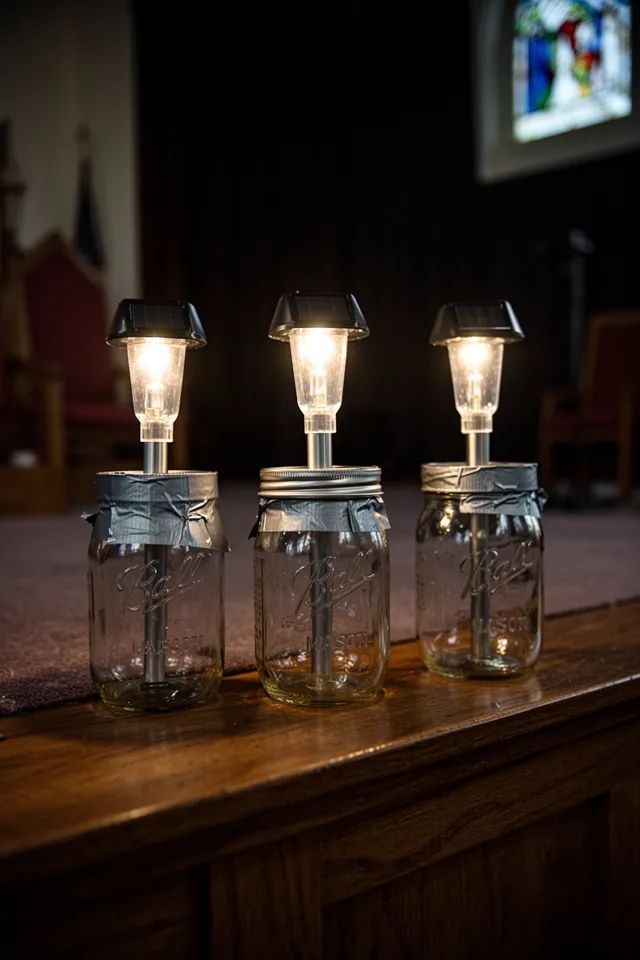
Buy a pack of cheap solar pathway lights from the dollar store—the kind with a spike and a plastic top. Remove the spike, flip the light upside down, and tape or glue the plastic top into the inside of a mason jar lid. The solar panel faces outward through the glass. During the day, set the jars in a sunny window. At VBS, they glow for hours without batteries or extension cords. No fire risk. No outlets needed.
Cost is around $10 for four jars and four solar lights. The trade-off is brightness. Dollar store solar lights are dim—enough for atmosphere, not for reading. Use them as accent lights along a path or around a focal point. Also, the solar panels need direct sun to charge fully. Cloudy week? You’ll get two hours of faint glow. Upgrade to $3-per-light garden solar lights for triple the brightness, which adds $12 but is worth it for a main station.
Pro tip: Paint the inside of the jar with translucent frosted glass spray paint. It diffuses the light and hides the solar unit. Costs $7 at a craft store and makes the jars look intentional instead of like a science project.
2. Glow Stick Crowns That Last All Week
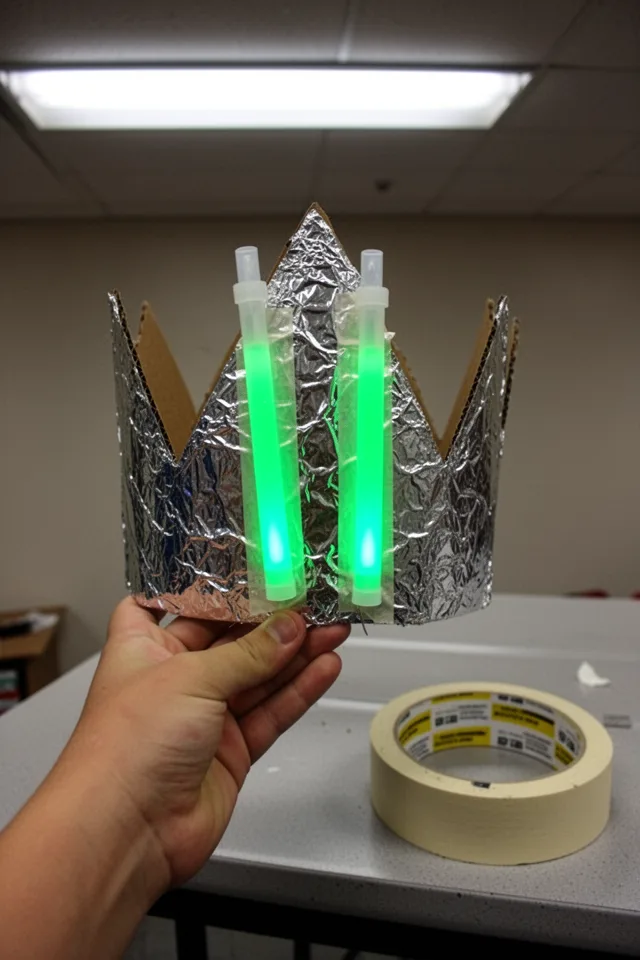
For a “children of light” moment, glow stick crowns are a hit. But fresh glow sticks every day will blow your budget. The trick is to buy glow stick bracelets in bulk (100 for $10 online) and use zip ties to attach them to cardboard crowns covered in aluminum foil. The foil reflects the light upward, making it appear brighter. Kids wear them for the evening, then you collect and store the glow sticks in a ziploc bag. Most will still glow faintly the next day. After three days, they’re done—but that’s three uses per stick instead of one.
The constraint is that glow sticks are single-use by design. Expect to replace them after 48 hours of total glow time. Also, the aluminum foil tears easily. Cover the cardboard with foil, then cover the foil with clear packing tape. That adds $2 but makes the crowns survive multiple kids. And never let kids chew on glow sticks—the liquid isn’t toxic but tastes terrible and will ruin your evening.
One thing most guides skip: store glow sticks in the freezer between uses. The cold slows the chemical reaction. A frozen glow stick that’s been used for an hour can be revived for another hour the next day. Tested this myself. It works.
3. Foam Core Light Blocks
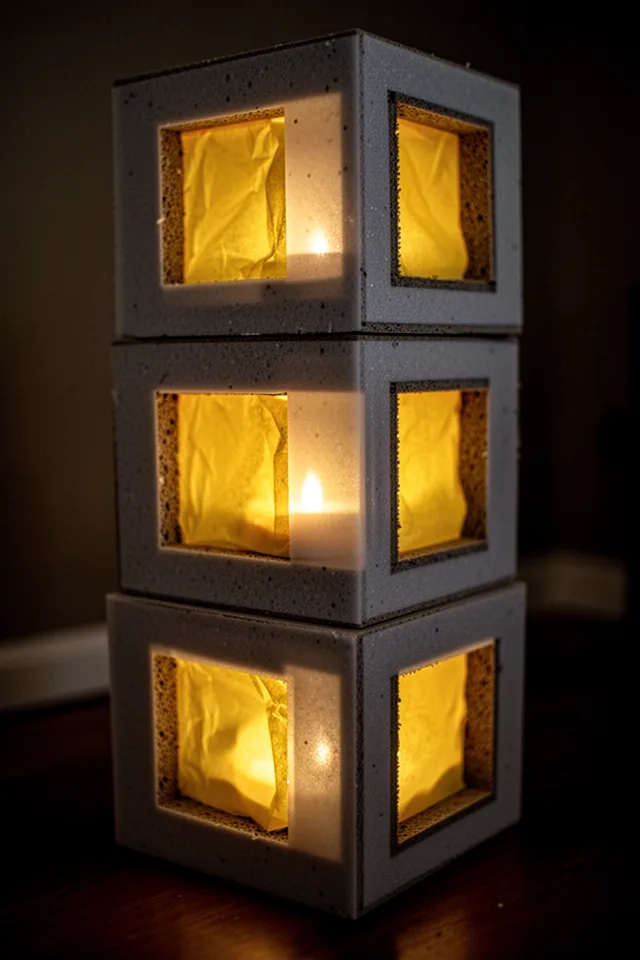
Foam core board is cheap ($3 per sheet), lightweight, and easy to cut. Cut 12-inch squares, then cut a smaller rectangle or circle out of the center of each square. Glue yellow or orange tissue paper over the hole from the back. Tape a battery-operated tea light behind each hole. Stack the squares to look like glowing building blocks, or lean them against a wall like illuminated bricks. The tea lights run for 48 hours on one set of batteries.
Cost per block is about $2 plus the tea light ($1 each in bulk). The trade-off is stability. Foam core is flimsy; a stack taller than three blocks will wobble. Glue the blocks together with hot glue to form a permanent sculpture, or mount each block on a small wooden base. Also, the tissue paper will tear if touched. Cover the front with a sheet of clear acetate or lamination film for an extra $0.50 per block. That makes them kid-proof.
The version that actually holds up: replace the foam core with corrugated plastic board (the stuff political yard signs are made of). It costs twice as much—$6 per sheet—but it won’t bend, tear, or absorb moisture. You can even hose it off.
4. Luminarias From Lunch Bags
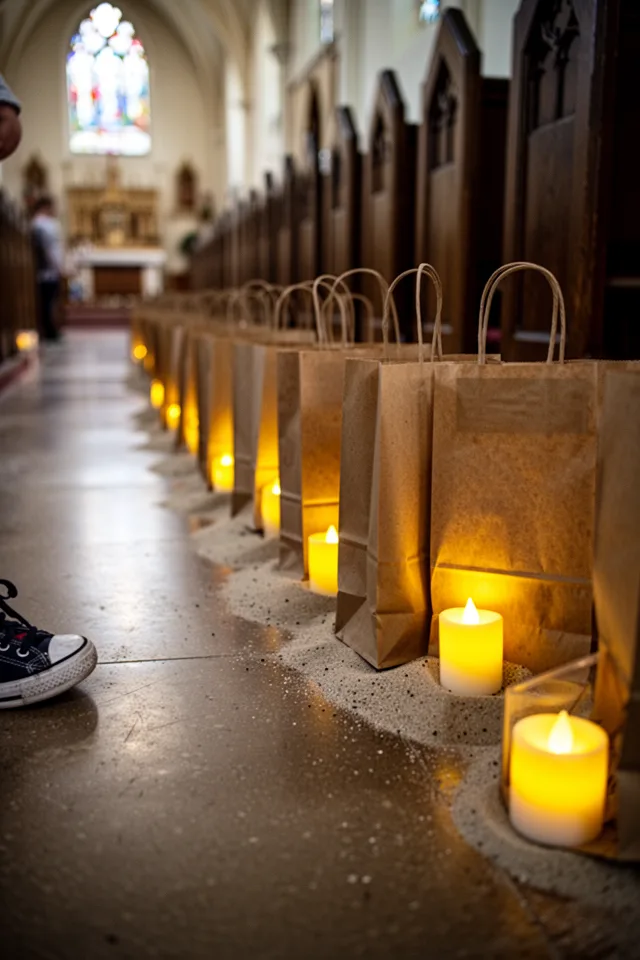
Classic luminarias work for VBS because they’re cheap, safe, and dramatic. Use standard brown paper lunch bags (100 for $5). Cut a simple star or cross shape in the front of each bag with a craft knife. Put a cup of sand or pebbles in the bottom (for weight), then place a battery-operated tea light on top. The light shines through the cutout shape. Line a hallway or the edges of your stage. The effect is surprisingly beautiful.
The constraint is that paper bags tear easily. Kids will kick them, sit on them, accidentally step through them. The version that survives VBS is using heavy-duty paper gift bags (the kind with reinforced bottoms) or laminating the paper bags with clear contact paper. That adds about $10 but reduces tears by 90%. Also, never use real candles in paper bags indoors. That’s a fire marshal violation. Battery tea lights only.
Pro tip: Instead of cutting shapes, punch holes with a standard hole punch in a pattern—dots, stripes, or a simple border. The light comes through as tiny pinpricks, which looks magical and takes one-tenth the time of cutting stars.
5. Tissue Paper Stained Glass Windows
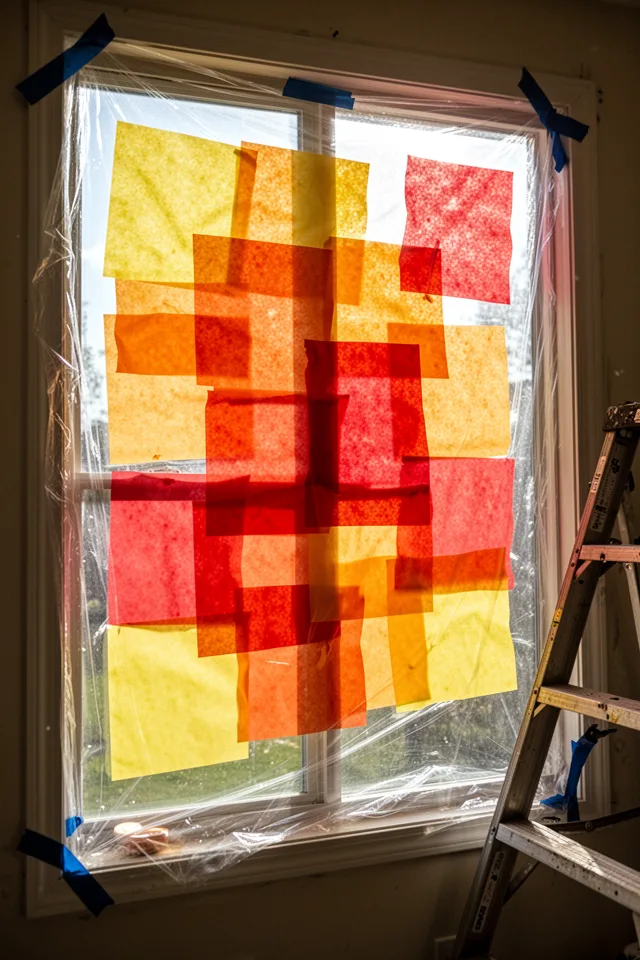
If your VBS room has windows, turn them into “illumination stations” with faux stained glass. Tape a sheet of clear plastic (from a painter’s drop cloth or a cheap shower curtain liner) over the window frame. Cut tissue paper into 2-inch squares. Brush a thin layer of liquid starch onto the plastic, press the tissue paper squares onto it, overlapping slightly. Brush another layer of starch over the top. When dry, it looks like stained glass and lets light through beautifully.
Cost is under $15 for a shower curtain liner and a pack of tissue paper. The trade-off is that this installation is not removable. It will peel off the plastic eventually, but that’s fine for a week. The real constraint is that tissue paper fades in direct sun. After five days of strong sunlight, the reds will turn pink. That’s fine—it still looks like stained glass, just softer. Also, don’t use glue instead of starch. Glue dries hard and cracks; starch dries flexible.
One thing most guides skip: use a hairdryer on low heat to speed up drying. Starch takes hours to air dry. Ten minutes with a hairdryer and you’re ready for the next layer.
6. LED Fairy Light Curtain From PVC Pipe
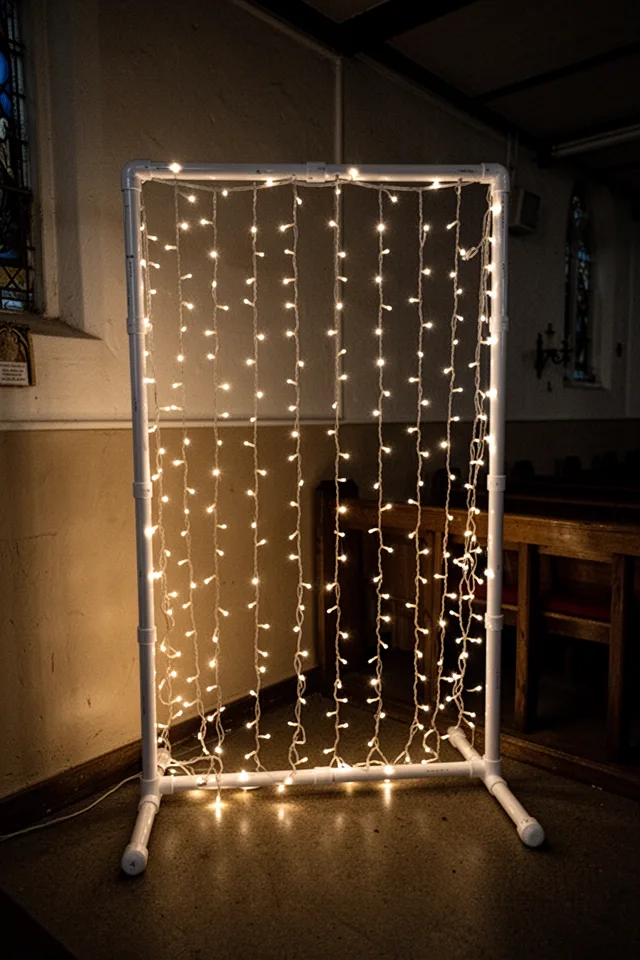
A backlit focal point doesn’t require expensive backdrops. Build a simple frame from 1/2-inch PVC pipe—three 10-foot pipes cut into sections, assembled with corner fittings. Drape a net of LED fairy lights over the front. Plug into an extension cord. The result is a glowing curtain that defines your Illumination Station instantly. Total cost: PVC about $15, fittings $8, lights $20.
The trade-off is that PVC is ugly white plastic. Spray paint it black or gold before assembly ($5 for spray paint). Also, the frame needs a wide base to avoid tipping. Use T-joints to create feet that extend 18 inches on each side, or weight the bottom with sandbags. The version that fails is using battery-operated fairy lights. They die after four hours. Plug-in lights only for a full day of VBS.
Pro tip: Zip tie the fairy light net to the PVC frame instead of just draping it. Kids will pull on the lights. Zip ties keep everything in place and cost $2 for a bag of 100.
7. Aluminum Foil Moon And Stars
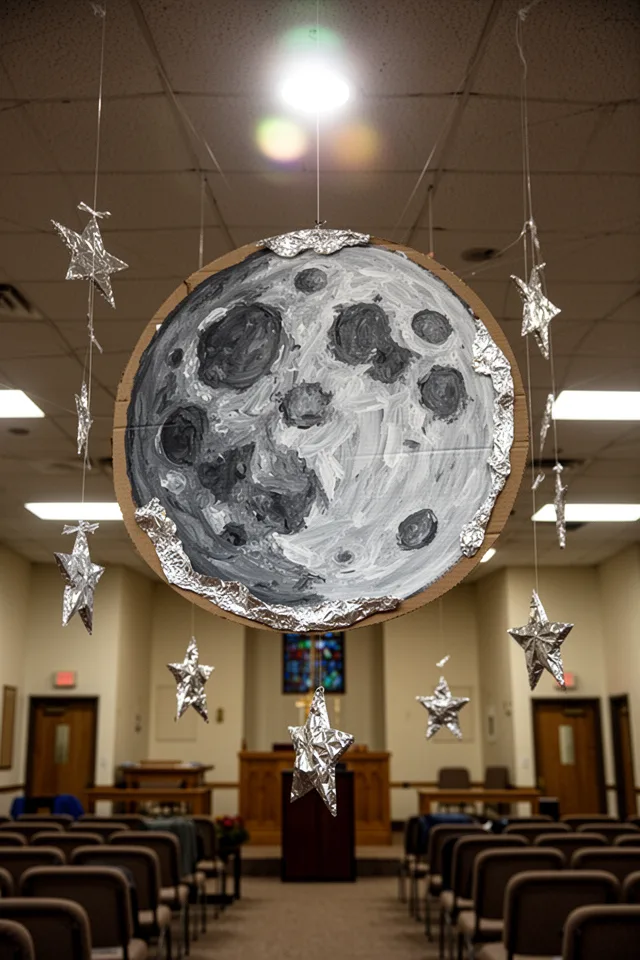
Sometimes “illumination” means reflecting available light, not generating it. A foil moon catches every light source in the room and throws sparkle around. Cut a 24-inch circle from cardboard. Crumple aluminum foil into balls, then flatten them slightly and glue them to the circle in overlapping layers. The crinkled surface catches light from all angles. Hang from the ceiling with fishing line. Add smaller stars cut from foil-covered cardboard.
Cost is under $10—just foil, cardboard, and glue. The trade-off is that this project eats time. Crumpling and gluing foil to a 24-inch circle takes two hours. Use a team of volunteers. Also, the foil tears easily if kids touch it. Hang it high enough that only adults can reach, or accept that you’ll be doing foil surgery daily. The version that holds up is using foil tape (HVAC tape) instead of crumpled foil—it’s stiffer and won’t tear, but it’s $15 per roll.
One thing most guides skip: paint the cardboard black before adding foil. That way, any gaps between foil pieces don’t show white cardboard. It looks more professional for zero extra effort.
8. Paper Lanterns From Pastry Dough Boxes
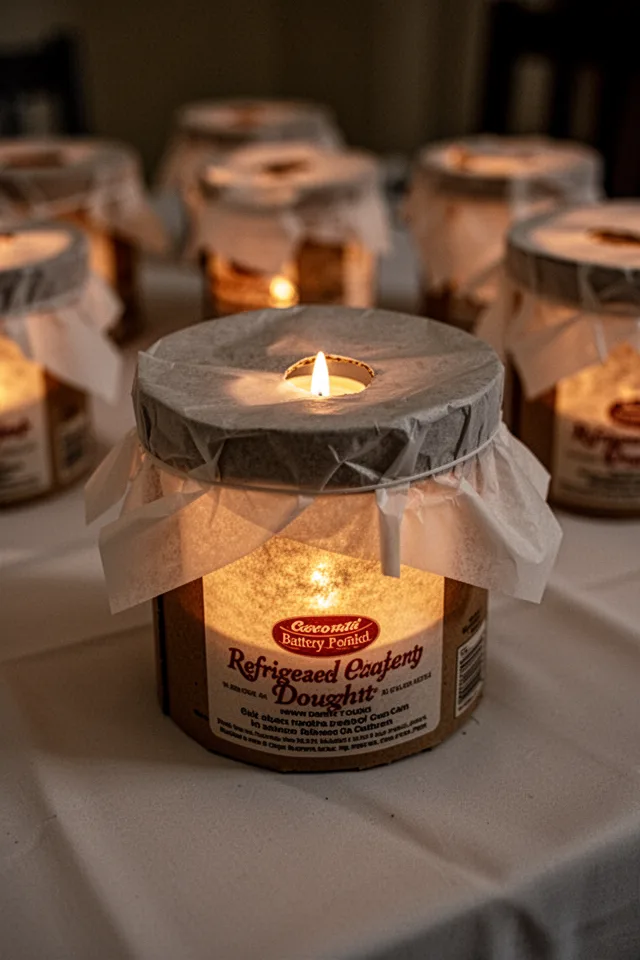
Don’t buy paper lanterns. Save round cardboard containers—the kind that hold crescent rolls, cinnamon rolls, or oatmeal. Remove the metal ends if present. Cut a small hole in the top for light to escape. Wrap the outside with white tissue paper secured with glue stick. Place a battery tea light inside. The cardboard diffuses the light beautifully, and the cylinder shape stands on its own. Plus, they’re free.
Cost is essentially zero if you’ve been saving containers. The constraint is that the tissue paper wraps are fragile. One bump and you have a torn lantern. The fix is to wrap the tissue paper over the cardboard, then brush on a mixture of equal parts white glue and water. It dries stiff and translucent, like a real paper lantern. That adds 10 minutes of drying time but makes them kid-resistant. Also, don’t use this with real candles—cardboard burns.
Pro tip: Use a hole punch to create patterns in the cardboard before wrapping. The light shines through the holes as bright dots. A constellation punch pattern looks amazing.
9. Glow-In-The-Dark Pathway Stars
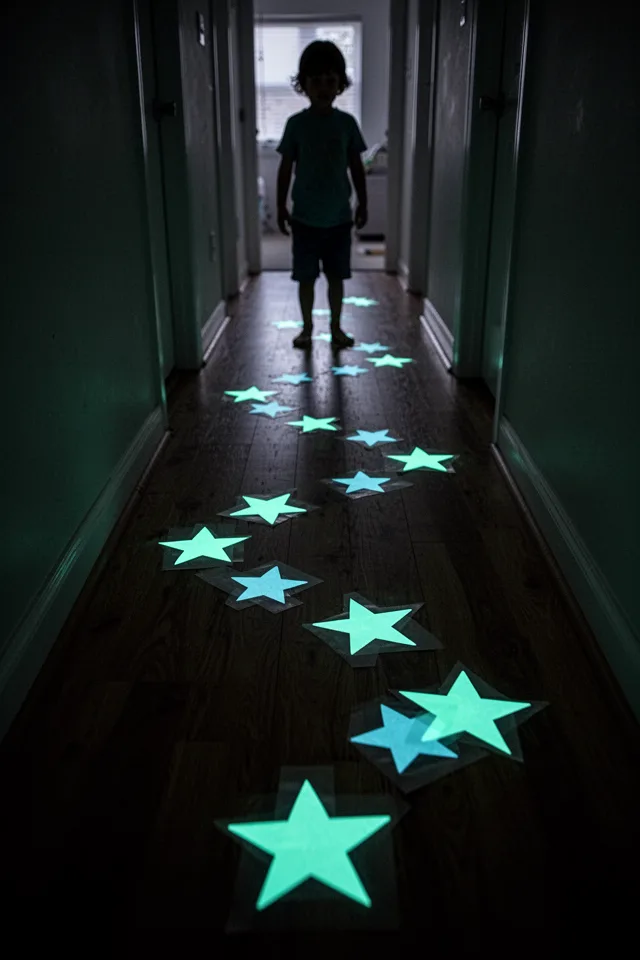
For a low-cost, zero-electricity illumination idea, glow-in-the-dark stars on the floor are hard to beat. Buy a roll of glow-in-the-dark tape or a sheet of glow-in-the-dark sticker stars ($10 for a large pack). Stick them to the floor in a path leading to your Illumination Station. During the day, they look like gray dots. After the lights go down, they glow brightly enough to follow. No tripping over cords, no fire risk.
The trade-off is that glow-in-the-dark materials need to be “charged” by bright light. If your room is dimly lit all day, the stars will be faint. Shine a bright flashlight or work light on them for five minutes before dark, and they’ll glow for hours. Also, floor stickers take a beating from feet. Use glow tape instead of individual stars—tape adheres better and won’t peel up at the edges. Test on your floor first; some surfaces (like unfinished concrete) won’t hold any sticker.
The honest truth: glow-in-the-dark works best in a completely dark room. If you have emergency exit lights or streetlights coming through windows, the glow will be barely visible. Control your ambient light first.
10. Clear Plastic Bottle String Lights
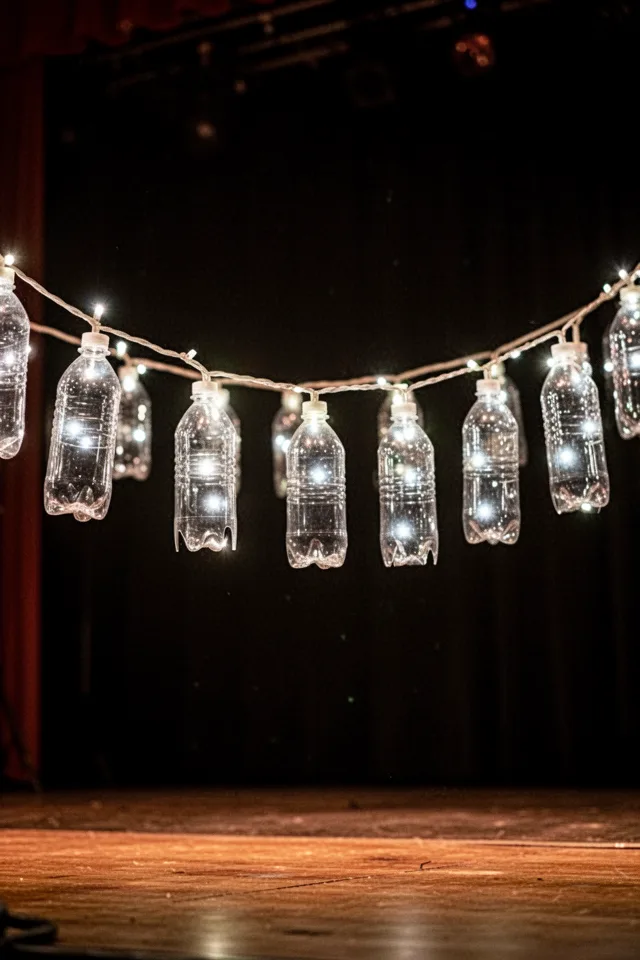
Take a string of standard LED fairy lights (the kind with small bulbs, not micro LEDs). Collect clear plastic water bottles—16.9 oz size works best. Cut the bottom off each bottle with scissors or a craft knife. Slide the bottle over a bulb so the bulb sits inside the bottle near the neck. The plastic diffuses the light into a soft orb that looks like a giant bubble. String them across your stage or entryway.
Cost is the lights themselves ($10 for a 50-bulb string) plus free bottles. The constraint is that cut plastic has sharp edges. File every cut edge with sandpaper or a nail file, or wrap the cut edge with electrical tape. Also, the bottles will slip off the bulbs if the string moves. Secure each bottle with a small dot of hot glue where it meets the wire. The version that fails is using colored bottles or cloudy plastic—it blocks too much light. Clear only.
Pro tip: Add a drop of yellow or orange food coloring to a half-inch of water inside each bottle before sliding it on. The light turns golden and looks much warmer. Just don’t let the water touch the bulb—keep it in the bottom of the bottle.
11. Reflective Mylar Curtains
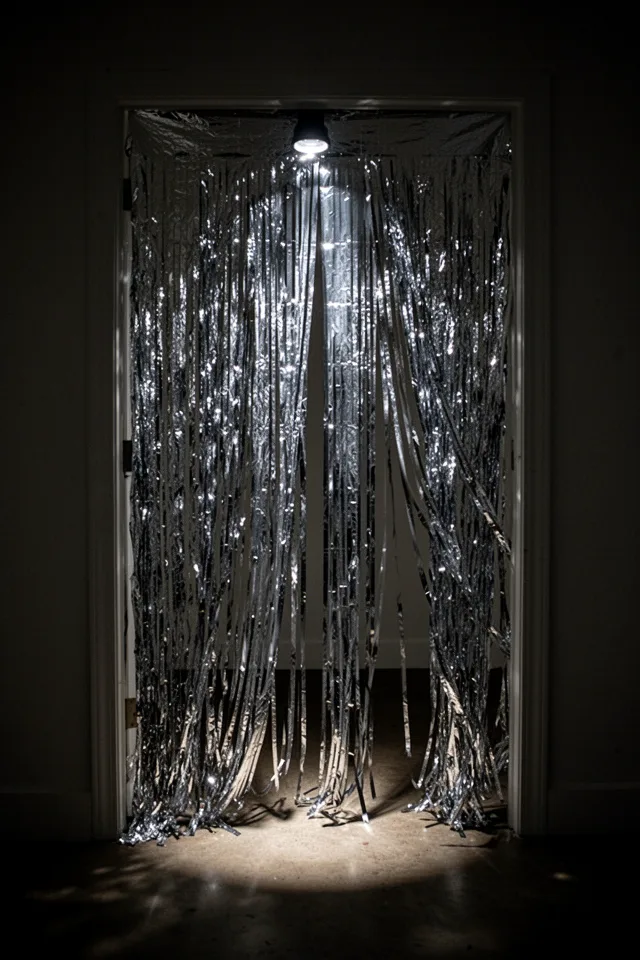
Emergency blankets are $2 each and are made of reflective mylar. Cut one into 2-inch wide strips, leaving the top edge intact. Tape or staple the top edge to a doorway or between two chairs. When light hits the mylar strips, they shimmer and reflect like a disco ball. Move the light source (even a flashlight) and the whole curtain dances. It’s the cheapest way to make a small amount of light feel like a lot.
The constraint is that mylar is crinkly and loud. Every time someone walks through the curtain, it sounds like a potato chip bag. If your VBS is in a quiet space, this will be distracting. The fix is to weigh down the bottom of each strip with a small washer or coin taped on, which reduces movement. Also, mylar tears easily. Replace the curtain daily if kids will touch it, or hang it out of reach. A better alternative is mylar fringe roll from a party store ($8 for 50 feet)—it’s less noisy.
One thing most guides skip: shine a fan on the mylar curtain from the side. The movement catches light from multiple angles and creates a “water ripple” effect that looks magical. No fan? A volunteer with a piece of cardboard works too.
12. Christmas Tree Light Wreath
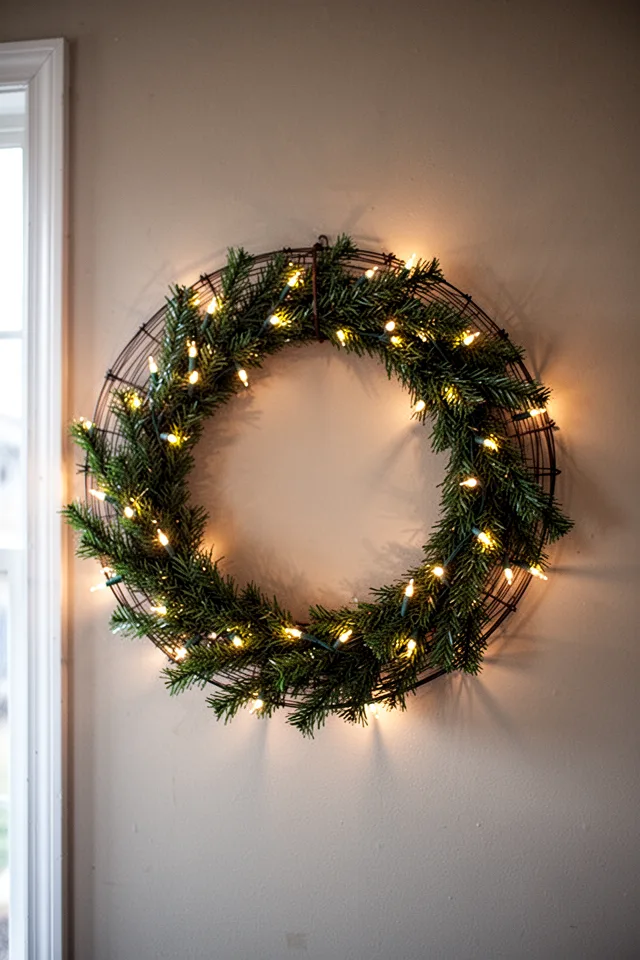
Christmas lights are dirt cheap in July—clearance racks have them for $3 a strand. Buy a wire wreath form ($2 at a craft store), wrap it with cheap green garland or even just green fabric strips, then weave a strand of lights through. Hang on the wall behind your Illumination Station leader. It reads as a “halo” or “crown of light” and costs under $10.
The constraint is that most clearance Christmas lights are incandescent, which get hot. After four hours, the bulbs will be warm enough to melt plastic garland. Use LED Christmas lights instead—they cost $8 but run cool. Also, the wire form is light and will spin on the wall hook. Secure it with two hooks, one at the top and one at the bottom, or use a small piece of double-sided tape on the back to keep it from rotating.
Pro tip: Spray paint the wire form gold before adding garland. The gaps between the garland will catch the light and look intentional instead of like a cheap craft project.
13. Flashlight Shadow Puppet Screen
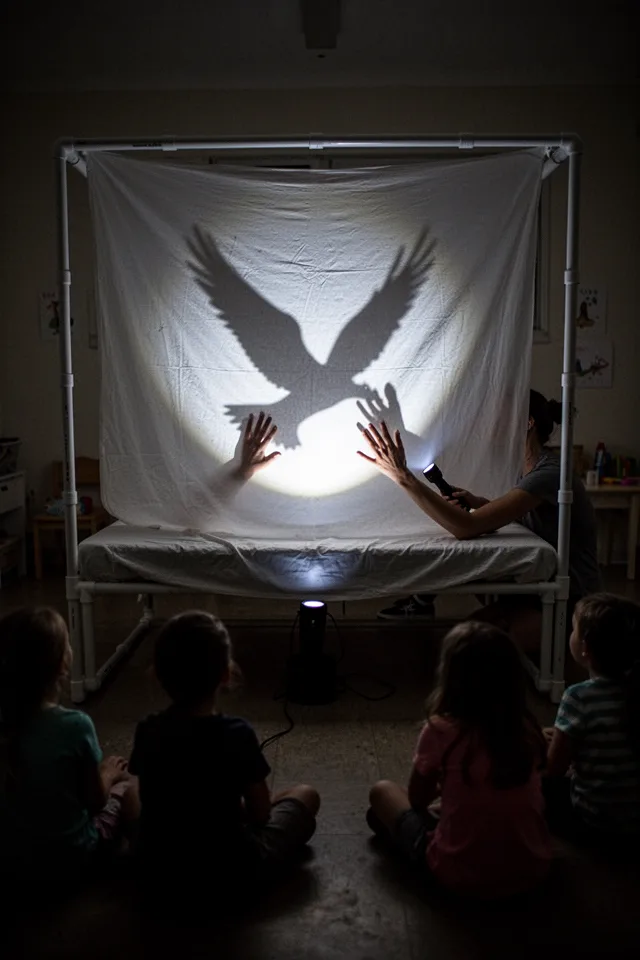
For an interactive Illumination Station, set up a shadow puppet screen. Stretch a white bedsheet over a PVC frame (same frame as idea #6). Shine a bright flashlight or work light from behind. Volunteers or older kids can use their hands or simple cardboard cutouts to tell the Bible story as shadows. The light itself becomes the main attraction.
Cost is a used sheet ($2 at a thrift store) and a bright LED flashlight ($10). The trade-off is that the shadow is only clear if the light is close to the puppeteer and the puppeteer is close to the sheet. You need about three feet of space behind the screen. Also, the sheet will wrinkle, and wrinkles ruin the shadow clarity. Staple the sheet to the frame taut, like a canvas. The version that fails is using a thin sheet that lets light through; use a heavy cotton sheet or a white vinyl tablecloth.
One thing most guides skip: practice the shadow shapes before VBS. A bunny is easy. A shepherd with a staff is harder. Print simple templates and have volunteers trace them onto cardboard, then cut them out. Puppet on a stick is more reliable than hand shadows.
14. Painted Mason Jar Candle Holders
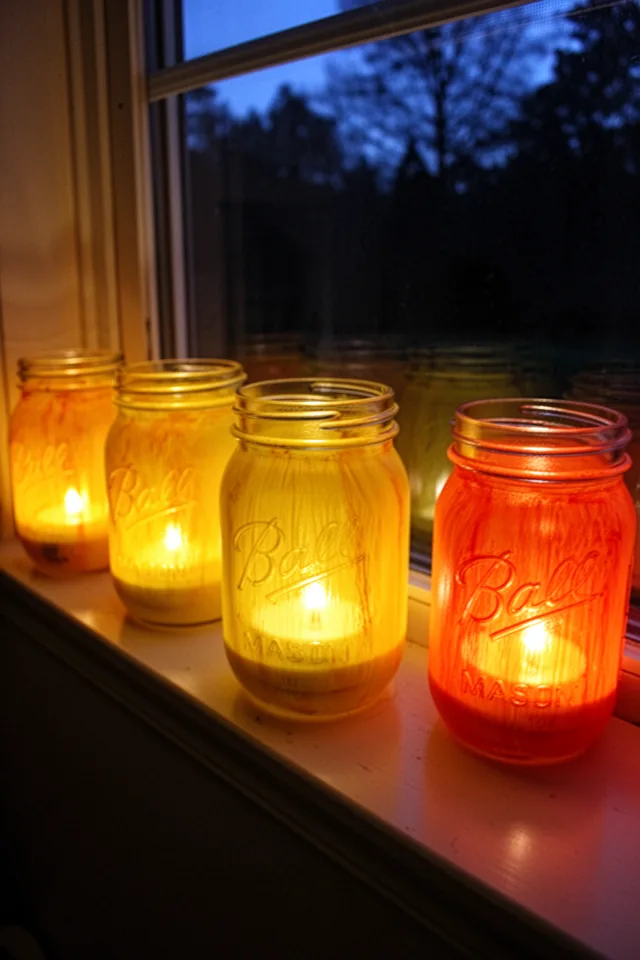
Mason jars are everywhere. Paint the outside with translucent glass paint (sold at craft stores for $5 per bottle) in yellows, oranges, or pale amber. One bottle covers six jars. Place a battery tea light inside. The painted glass diffuses the light into a warm, candle-like glow without any fire risk. Group them on tables or line a stage edge.
The constraint is that glass paint takes 21 days to fully cure. If you’re painting the week before VBS, the paint will be tacky and will scratch off. The solution is to use acrylic paint mixed with a few drops of dish soap (that’s the DIY “glass paint” recipe). It dries in an hour but isn’t waterproof. For a one-week VBS indoors, it’s fine. Also, don’t paint the inside of the jar—the tea light’s heat can make the paint smell. Paint outside only.
The version that actually holds up: frosted glass spray paint. One quick coat, dries in 15 minutes, looks like expensive milk glass. Costs $8 per can, covers 10 jars. Worth it for the time savings alone.
15. Church Supply Closet Lamp Revival
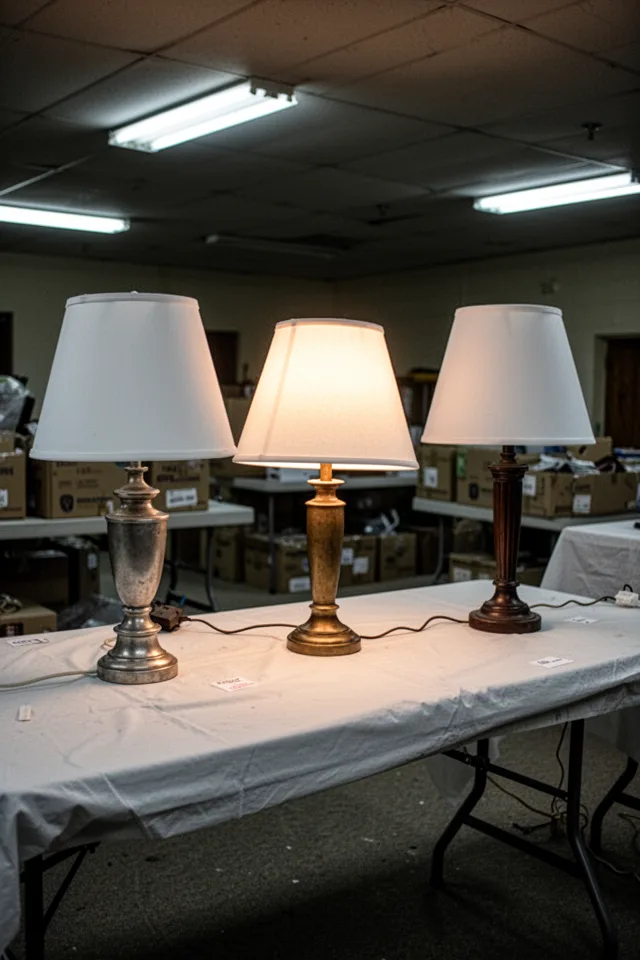
Before you buy anything, raid the church supply closet. There are almost certainly old table lamps, floor lamps, or clip-on reading lights that nobody uses. Gather them, dust them off, and replace any burnt-out bulbs with warm white LEDs (2700K). Remove any dated shades or replace them with plain white drum shades from a thrift store ($2 each). Group them together on a table or the floor. The mishmash becomes a “light collection” that feels intentional and costs nothing.
The constraint is that old lamps often have frayed cords or broken switches. Test every lamp before VBS. If a cord is frayed, don’t use it—fire hazard. You can buy replacement lamp cords for $5 at a hardware store and rewire in 10 minutes, but that might be beyond your volunteer skills. Also, clip-on lights get hot. Use LED bulbs only, which stay cool enough to touch. The version that fails is using halogen bulbs—they’re fire risks around kids.
Pro tip: Use a permanent marker to write “VBS Illumination Station” on a piece of painter’s tape and stick it to the base of each lamp. That way the lamps don’t get re-absorbed into the closet for next year’s VBS.
16. Foil Pan Spotlight Reflectors
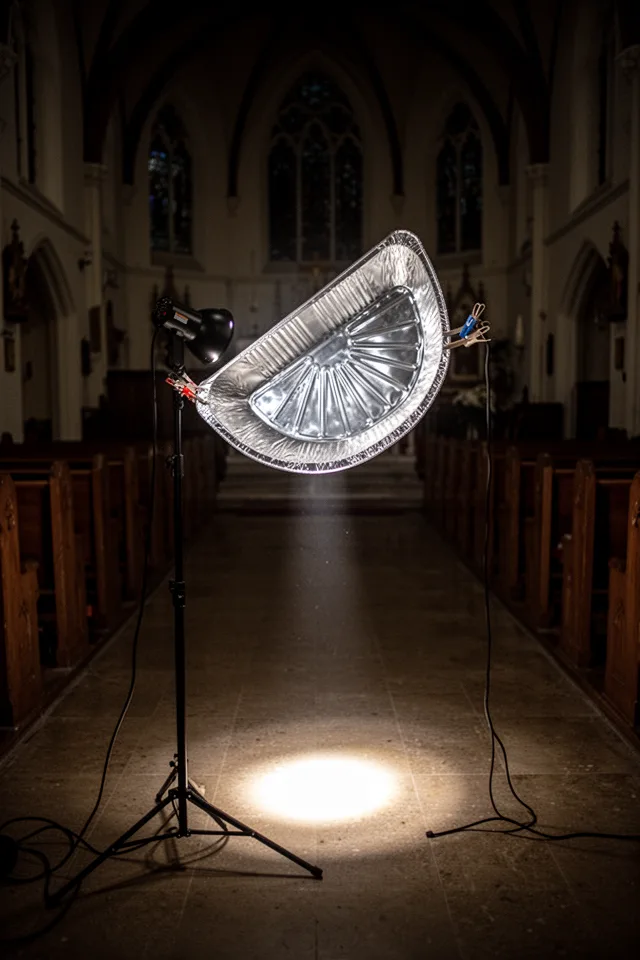
If you have a work light or a clamp light but need a more focused beam, make a reflector from a disposable foil pan. Cut the pan in half, then curve it into a parabolic shape around the light bulb. Use binder clips to attach it to the light fixture’s reflector (or directly to the bulb guard if safe). The foil pan directs the light into a tight spot, creating drama and focus on your Illumination Station.
Cost is $2 for a foil pan. The constraint is that this is a fire hazard if the bulb gets hot. Use only with LED bulbs that stay cool. Never use with incandescent or halogen. Also, the foil will crease and lose its shape if moved. Once you bend it into shape, don’t touch it. The version that works better but costs $8 is a clamp-on aluminum reflector from a hardware store—it’s designed for this and won’t crease.
One thing most guides skip: line the inside of the foil pan with white copy paper before shaping. The paper diffuses the light slightly, removing the harsh “headlight” look while still focusing the beam. Just keep the paper away from the bulb.
17. Light Bottle Centerpieces
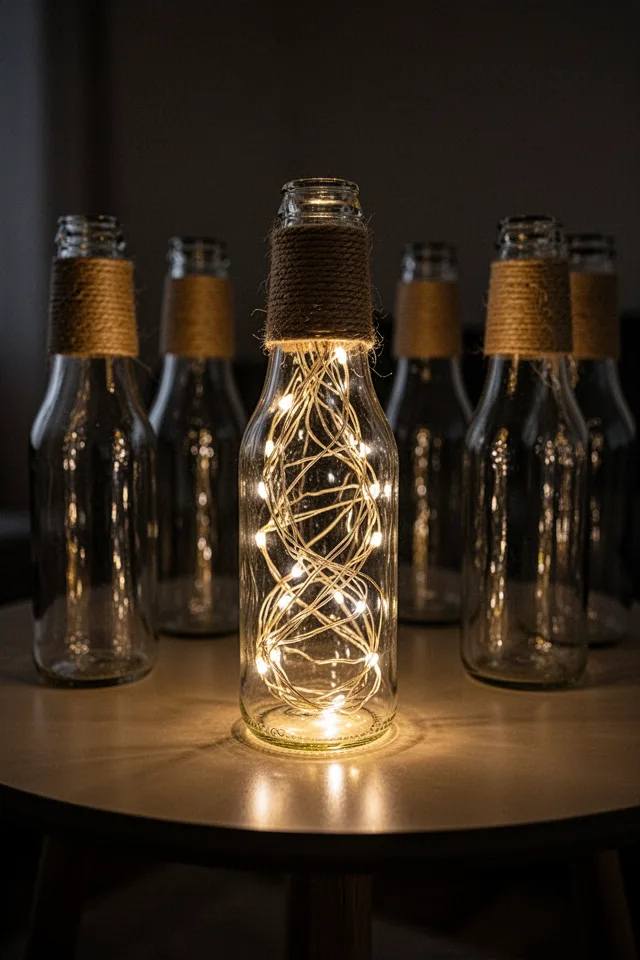
Save glass soda bottles—the tall, narrow kind. Remove labels with hot soapy water (goo gone for stubborn residue). Push a strand of micro LED fairy lights (the wire-thin kind with a small battery pack) into the bottle, leaving the battery pack outside. The lights fill the bottle with a soft, even glow. Group three bottles on each table as centerpieces. They look like expensive restaurant decor for about $2 per bottle.
The constraint is that micro LED strands are delicate. The wire breaks if bent sharply. Coil the lights gently before inserting, and don’t force them. Also, the battery packs die after 24 hours of continuous use. For a week of VBS, you’ll need to replace batteries daily (two AAA per bottle). That adds up. The version that’s cheaper long-term is buying USB-powered micro LEDs and running them from a power bank or a multi-port USB hub. $15 for the hub, $1 per bottle for USB lights.
Pro tip: Fill the bottle halfway with clear glass gems or white aquarium gravel before adding the lights. The gems diffuse the light upward and weigh the bottle down so it doesn’t tip when kids bump the table.
You don’t need all 17. In fact, pick three that fit your space and your volunteer skill level. The solar jar lanterns are the easiest win—they work anywhere with sunlight, cost almost nothing, and have zero fire risk. If you have electricity access, the PVC frame with fairy lights gives you the biggest visual impact for the lowest effort. And if you’re truly broke, the church closet lamp revival costs nothing and might surprise you.
Here’s my direct recommendation for most VBS coordinators: start with the glow-in-the-dark pathway stars (idea #9) plus the luminarias from lunch bags (idea #4). That’s under $20 total, creates a literal path to your station, and sets the mood without requiring any electrical work. Add the bottle centerpieces (idea #17) if you have a few extra dollars and want table decor that kids won’t destroy.
Remember this page when you’re standing in your dark church hallway on the first night of VBS, the kids are gasping at the glowing stars on the floor, and a volunteer whispers “this looks amazing.” That’s the moment you’ll know you didn’t just decorate. You created an experience. And you did it without breaking the budget or your back.