Last June, I painted a generous square of chalkboard paint on my kitchen wall near the coffee station—right where everyone grabs a mug first thing. Within a week, the cheerful “Good morning” had turned into a ghostly smear of coffee rings, a to-do list half-erased by a five-year-old’s sleeve, and the words “buy more eggs” written in three different hands. The problem wasn’t the chalkboard itself. The problem was that I treated it like a Pinterest decoration instead of a tool that actually has to live through Tuesday mornings, humidity, and the inevitable moment someone uses a permanent marker by accident.
Most chalkboard content you’ll find online is either aspirational farmhouse fluff or overly manicured seasonal art that looks gorgeous for exactly the three minutes before anyone walks through the door with muddy shoes. The advice rarely answers the real questions: What happens when chalk meets 80% humidity? Which surfaces hold up to daily wiping without ghosting? Where does a chalkboard actually make life easier versus just adding another thing to dust? And why do so many of these ideas feel awkward and forced after the first week?
So I’m not going to tell you to slap chalkboard paint on a random wall and call it a day. I’ve lived with chalkboards in my kitchen and entryway for three years, through summer produce seasons, school drop-off chaos, dinner parties, and one very regrettable attempt at a chalkboard backsplash. These fifteen ideas are the ones that survived real life—plus a few failures that taught me what to avoid. Each one includes the cost, the trade-off, and the specific conditions where it actually works.
Idea #1: The Strip On Your Spice Rack Inventory
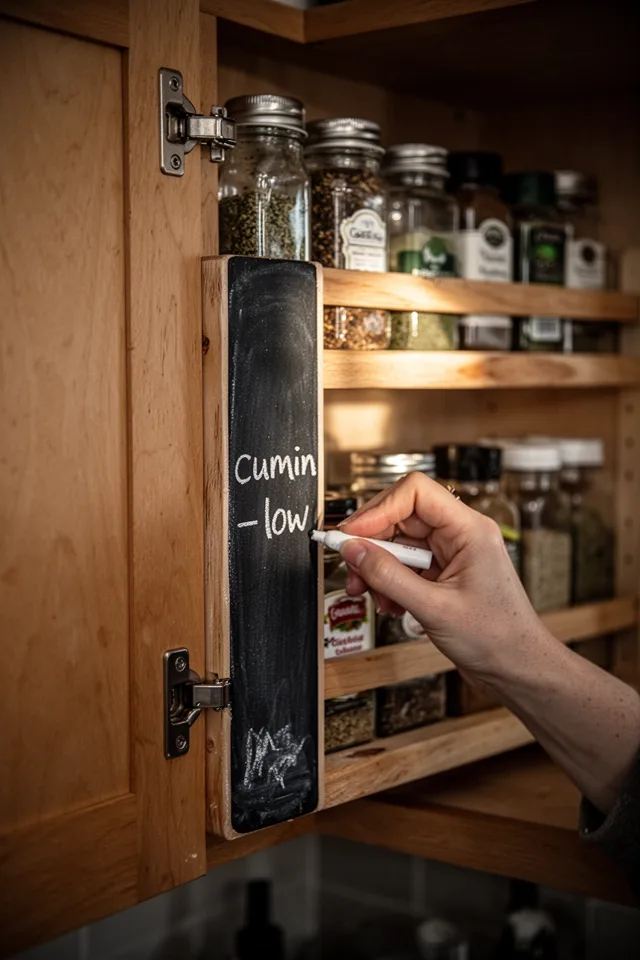
Here is the version of a chalkboard that actually saves you from buying a third jar of smoked paprika. Instead of a large board that becomes visual clutter, take a 2-inch wide strip of chalkboard contact paper or a cut piece of thin chalkboard board and attach it vertically to the front of each spice shelf inside your cabinet. When you notice cumin is low, you write “cumin” right there. When you restock, erase it. No app, no separate grocery list, no forgetting what you meant by “the red spice.”
Cost is under $15 for the contact paper, but here is the honest truth: the adhesive on cheap chalkboard contact paper fails within six months in a warm kitchen. Spend the $25 on a roll with heat-resistant adhesive or use real 1/8-inch chalkboard board cut to size and attached with double-sided mounting tape. The trade-off is that you lose about half an inch of shelf depth, which matters on narrow spice shelves. Test with a piece of cardboard first.
Pro tip: Use a fine-tip chalk marker for spices because the writing stays crisp for weeks. Wet-erase chalk markers won’t smudge when you reach past them. Just don’t use regular chalk—it powders onto the jars and looks terrible.
Idea #2: The Farmer’s Market Run Sheet
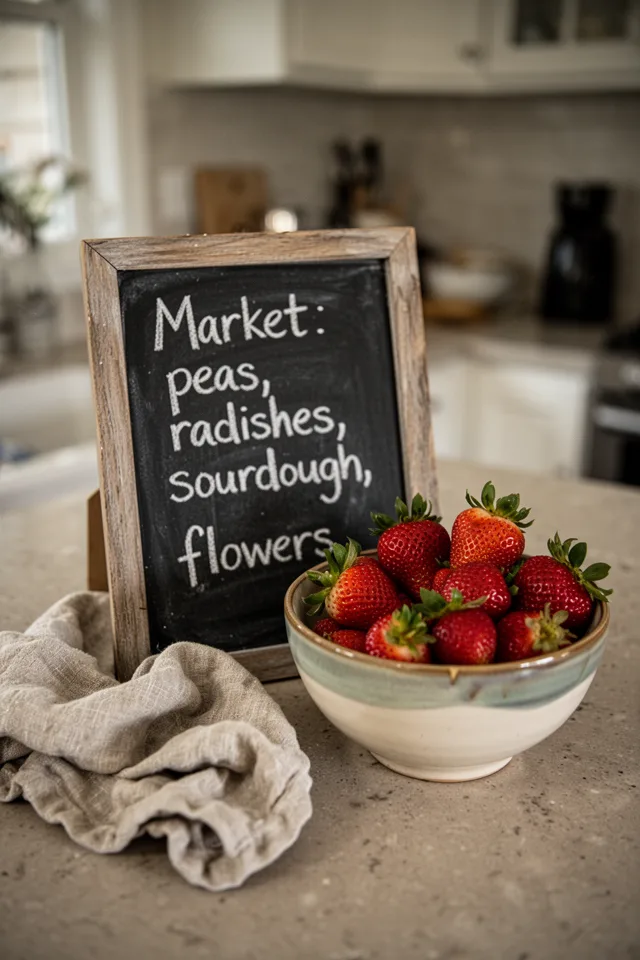
June means weekly farmer’s markets, and weekly farmer’s markets mean walking home without the one thing you actually needed because you got distracted by the jam samples. A dedicated 8×10 inch chalkboard kept near your keys or purse solves this without the friction of pulling out your phone every three minutes. Write the week’s market list on Sunday night. Snap a photo with your phone before you leave, because you will forget the board itself.
This works best on a board that lives on a small easel or leans against a canister. The cost is roughly $20 to $40 for a decent framed chalkboard with a smooth surface. Avoid the rough, gritty ones marketed as “authentic”—they eat chalk and are impossible to clean. The real constraint: if you live somewhere with high humidity, the chalk will absorb moisture and become impossible to erase cleanly after three or four days. Switch to a liquid chalk marker in July and August.
The version that actually holds up over time is a porcelain steel board with a chalk-friendly finish. It erases completely with a damp cloth even after a month of writing, and magnets stick to it. Run you about $50, but it’s the last one you’ll buy.
Idea #3: The Inside Of The Pantry Door Grocery Grid
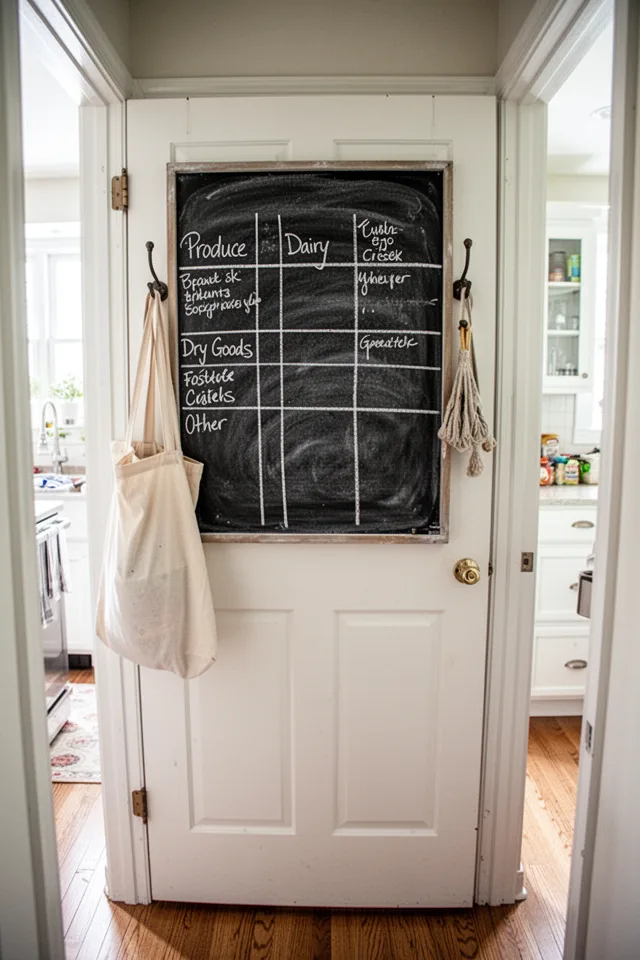
This is the most useful chalkboard I have ever installed, and I will defend it against anyone who calls it cliché. A 24×18 inch board on the inside of your pantry door becomes the central nervous system of your kitchen. The trick is the grid. Draw permanent lines with a paint pen or thin strips of washi tape, then label the columns: Produce, Dairy + Eggs, Pantry, Freezer, Other. When you finish the peanut butter, you write it under Pantry before you even put the empty jar in the recycling.
Cost is around $60 to $90 for a decent board plus installation hardware. The real friction point is the door swing. If your pantry door opens outward into a tight hallway, an 18-inch deep board will hit the door frame. Measure twice, then measure again. Also, standard chalkboards are heavy; use a french cleat or screws into the door’s frame, not just adhesive strips. I used adhesive first and found the board on the floor two weeks later with a cracked corner.
One thing most guides skip: Write the date next to each item when you add it. That way you know the yogurt you added three weeks ago is probably science experiment territory now.
Idea #4: The Entryway Shoe Size Tracker
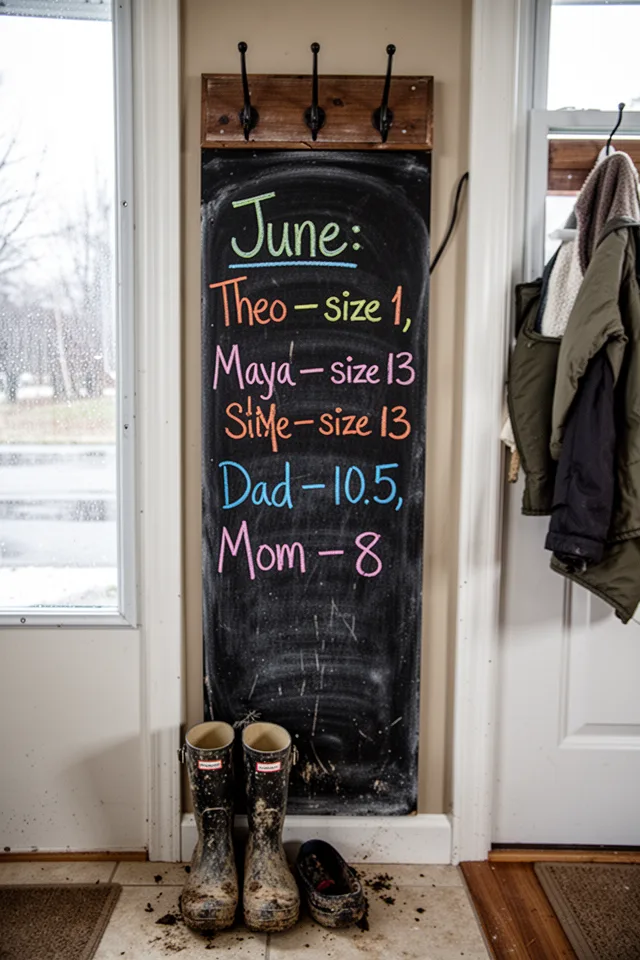
If you have growing kids, you know the dance: hand-me-downs, seasonal shoe swaps, and the inevitable moment you buy new sneakers two sizes too small because you guessed. An entryway chalkboard with a running shoe size tracker eliminates the guesswork. Update it every June before back-to-school shopping and again in December. Write each person’s name and their current size. When Grandma asks what size to buy for a birthday, you point to the board.
This is a $15 to $25 project using a small framed chalkboard from a craft store. The trade-off is that entryways collect dirt, dust, and humidity from wet shoes and umbrellas. Regular chalk will turn into mud if someone brushes against it with a damp coat. Use a chalk marker for the permanent sizes and update with regular chalk for temporary notes. And keep a felt eraser on a hook next to it—no one will walk back to the kitchen for one.
The version that ages badly: any chalkboard near a door that gets direct afternoon sun. The chalk fades to invisibility in two days. Put this on a north-facing wall or inside a cabinet door if your entryway is a sun trap.
Idea #5: The Coffee Station Daily Quote That Actually Gets Changed
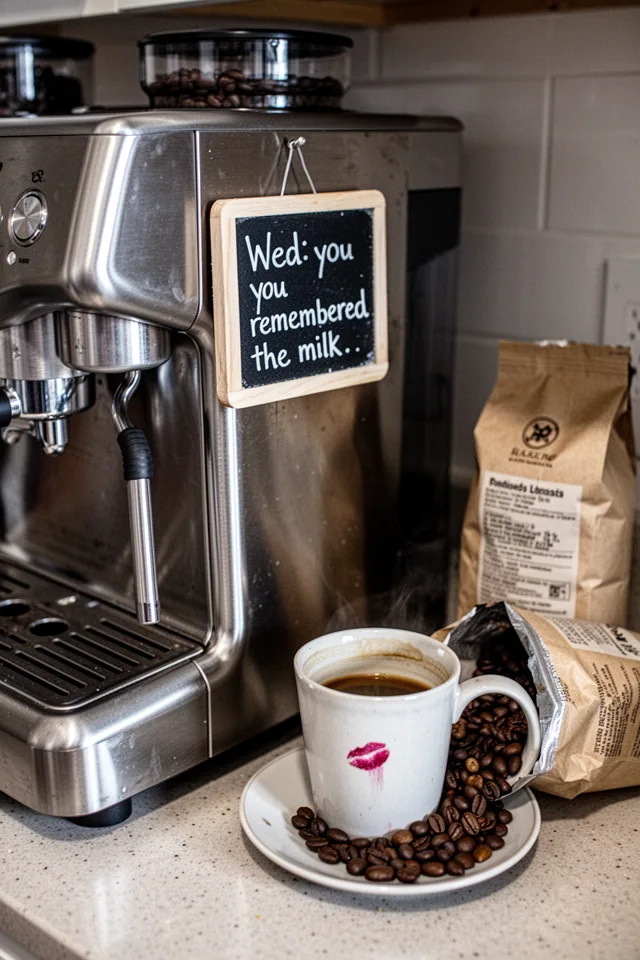
Most “daily quote” chalkboards become a museum of stale inspiration—the same “live laugh love” remnant from last Christmas. The only version that survives daily life is one that is so small and so integrated into a routine that you actually rewrite it. A 4×6 inch magnetic chalkboard on the side of your coffee maker or fridge works because you stand there waiting for coffee to brew. You have thirty seconds. Write something stupid. Write “don’t forget the dentist.” Write a single word: “Thursday.”
Cost is under $10 for a set of magnetic chalkboard sheets or a small magnetic frame. The real constraint: magnetic sheets have almost zero holding power on textured fridges or stainless steel that isn’t magnetic. Test with a fridge magnet first. If it slides, use a suction cup board on a tile backsplash instead. And never use a wet-erase marker on a magnetic sheet—it absorbs the liquid and stains permanently.
The one that works: chalkboard tape. A 2-inch strip across the front of your coffee maker’s water tank. Write “fill me” when it’s low. Functional, ugly, and perfect.
Idea #6: The Herb Pot Labeling System
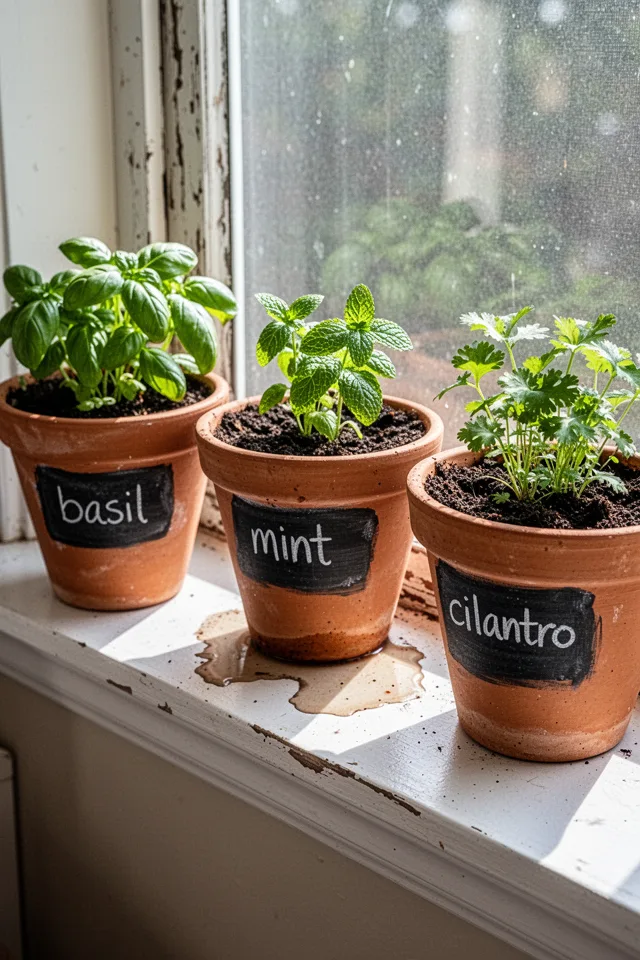
Chalkboard paint on terra cotta pots is not a new idea, but the way most people execute it fails within a month because they paint the wrong surface. You need to paint a small, flat area—not the curved belly of the pot where chalk will rub off every time you move it. Use painter’s tape to mask a 2×3 inch rectangle on the front of the pot. Apply two coats of chalkboard paint with a foam brush, letting it dry overnight between coats.
Cost is about $15 for a small jar of chalkboard paint and a brush. The trade-off is that terra cotta is porous, so the paint may bubble or peel after repeated watering if water sits against the painted area. Keep the label on the dry side of the pot and don’t submerge it. A better but more expensive alternative is to buy white ceramic pots with a chalkboard label built in—those run $12 to $20 per pot but last for years without peeling.
Here is the honest truth: chalk on terra cotta outdoors lasts about a week before rain erases it. Keep these pots inside on a windowsill or under a covered porch, and they’ll hold up fine. Outdoors? Use a paint pen instead of chalk.
Idea #7: The Mudroom Bench Back Reminder Strip
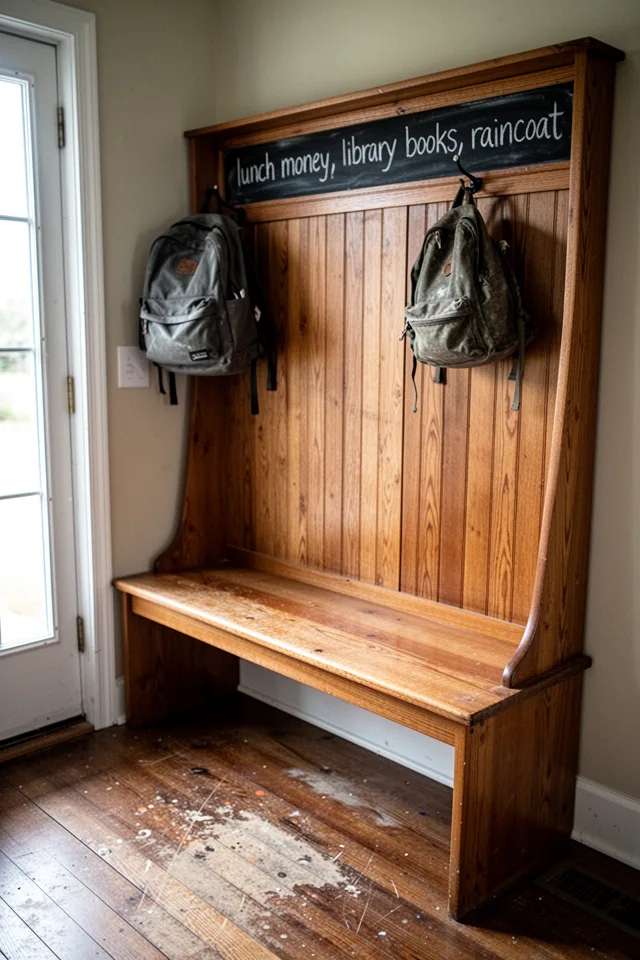
Entryway chalkboards fail when they’re too far from the point of action. A bench back strip is exactly where you need it—at eye level while you’re putting on shoes. Cut a 4×24 inch piece of chalkboard board or use a pre-made adhesive strip. Mount it along the top of your mudroom bench backrest or directly onto the wall at sitting height. The function is simple: the three things you need to remember before walking out the door.
This is a $30 to $50 project if you buy a pre-cut board. The real friction is that bench backs get bumped constantly. If you use a thin board, it will crack the first time someone slings a heavy backpack into it. Use 1/4-inch thick board or mount a metal chalkboard (porcelain steel) which is more impact-resistant. Also, bench area chalk absorbs denim dye from wet jackets—you’ll get blue smears on your board. Use white chalk markers only and wipe weekly with a damp cloth.
The version that becomes awkward: a strip longer than 24 inches. Kids can’t reach the far end, and it collects clutter of old reminders. Keep it short enough that you’re forced to edit ruthlessly.
Idea #8: The Fridge Door Produce Expiration Tracker
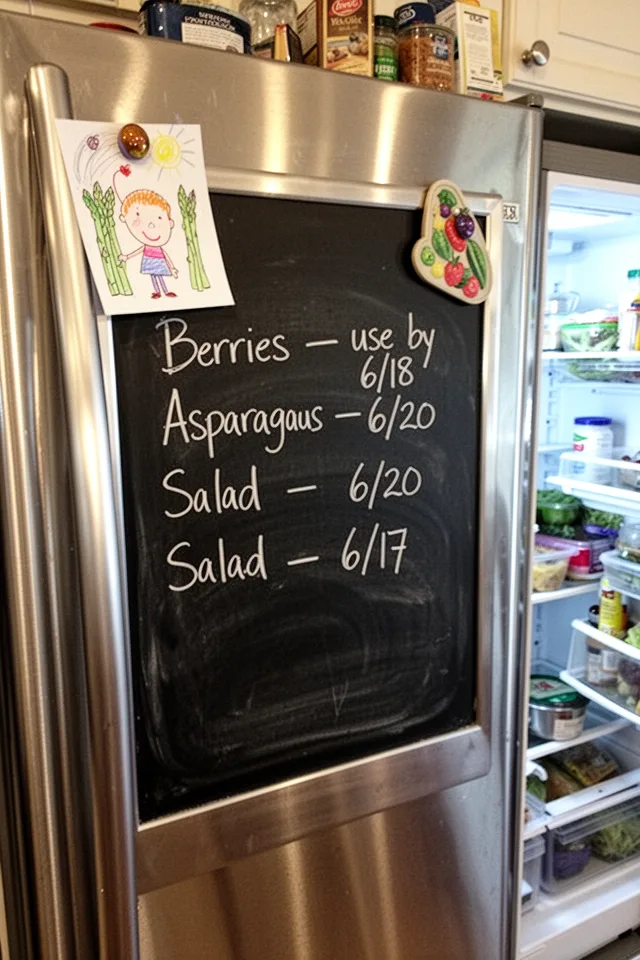
June means berries, stone fruit, and the heartbreak of finding a moldy peach at the back of the crisper. A dedicated produce expiration tracker on the fridge door saves money and guilt. Use a full-size magnetic chalkboard panel (around 12×18 inches) and write the date you bought each item next to its use-by estimate. Check it every morning while the coffee brews.
Cost is around $20 to $35 for a magnetic chalkboard panel. The trade-off is that magnetic panels are usually flexible vinyl, which means they warp over time and don’t hold chalk as well as rigid boards. The better version is a thin steel sheet cut to size with chalkboard paint on top—more expensive (around $60) but lies flat and erases cleanly for years. Also, never use chalk markers on a flexible magnetic panel; the ink seeps into the vinyl and leaves permanent ghosts.
One thing most guides skip: write the purchase date, not the use-by date. “Strawberries 6/15” tells you they’re five days old. “Use by 6/20” assumes you remember when you bought them. Dates are absolute; estimates are forgotten.
Idea #9: The Canister Lid Label That You Can Rewrite
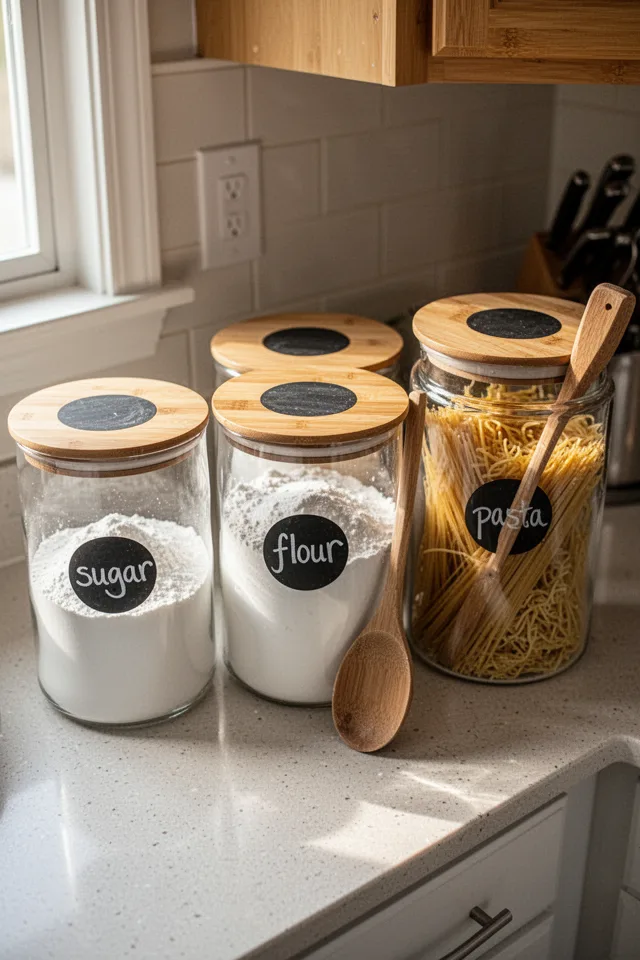
Decanting dry goods into pretty canisters looks lovely until you can’t remember which jar has the all-purpose flour versus the bread flour. Chalkboard stickers on the lids solve this with zero visual clutter. Buy a sheet of round or rectangular chalkboard labels (about $8 for 50) and stick one onto the center of each lid. Write the contents with a fine-tip chalk marker. When you refill the canister with a different ingredient, wipe the label with a damp cloth and rewrite.
The friction point: adhesive labels on lids get handled constantly. Oil from your fingers breaks down the adhesive over time, and the edges will curl after about three months. The upgrade is chalkboard paint applied directly to the lid—a $15 investment that lasts years. But test first: some bamboo and plastic lids won’t hold paint without a primer. The version that feels fake is using chalkboard labels on the front of clear canisters. You see the contents, so the label is redundant. Put it on the lid, where it matters when you’re looking down into the jar.
Pro tip: Write the expiration date of the dry good on the bottom of the canister with a permanent marker. The lid label tells you what it is; the bottom tells you when to toss it.
Idea #10: The Stair Riser Weekly Check-In
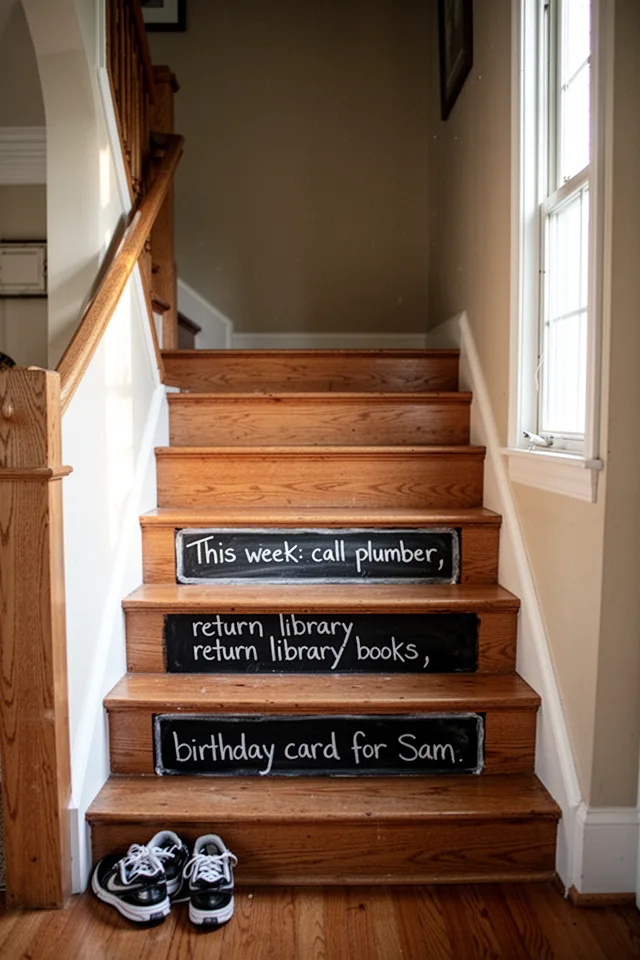
If your entryway stairs are the path you take every single day, the riser of the bottom step is prime real estate for a chalkboard that you cannot ignore. Paint a 6×12 inch rectangle on the riser using chalkboard paint. Write your weekly top-three priorities there. You will see it every time you go up or down. You cannot avoid it. That is the point.
Cost is under $20 for paint and tape. The trade-off is brutal: stair risers take a beating from vacuum cleaners, shoes kicking the riser, and the general abuse of a traffic zone. Chalkboard paint on wood scratches easily. Within six months, the bottom inch of your writing will be a scuffed mess. The version that survives is using a thin sheet of metal or hardboard covered in chalkboard paint, then mounted flush into the riser with countersunk screws. That’s a $40 to $60 project but will last for years. Also, never use a stair riser chalkboard in a home with a robot vacuum—it will erase your list every single morning.
The honest assessment: this looks cool for about two months, then becomes a scratched-up eyesore unless you protect it with a piece of acrylic or a very light touch. I’d only recommend it for stairs that see light traffic or a basement staircase.
Idea #11: The Water Bottle Filling Station Strip
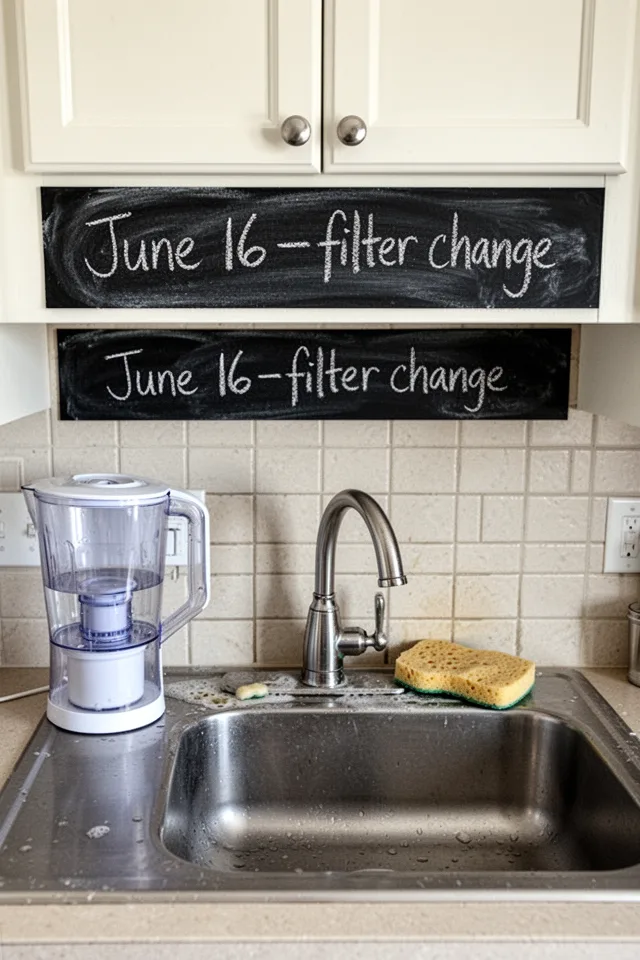
Water filter pitchers, soda makers, and reusable bottles all share a problem: you forget to change the filter or refill the bottle until it’s too late. A narrow chalkboard strip mounted on the cabinet above your sink or on the fridge door near the water dispenser becomes the brain for hydration maintenance. Write the date you changed the filter. Write “fill bottles tonight” before bed. Write “lemon + cucumber” for tomorrow’s infused water.
This is a $10 to $20 idea using chalkboard tape or a small magnetic strip. The constraint is moisture. Above the sink, steam from hot water and random splashes will turn chalk into paste. Use a chalk marker instead of traditional chalk, and seal the edge of the tape with clear nail polish to prevent water from creeping underneath and loosening the adhesive. Without that seal, the tape will peel within a month.
The version that ages badly: any chalkboard surface directly behind a faucet that gets splashed daily. Move it to the side of the cabinet or the inside of a door. Water is the enemy of everything chalk.
Idea #12: The Kitchen Island End Panel Message Board
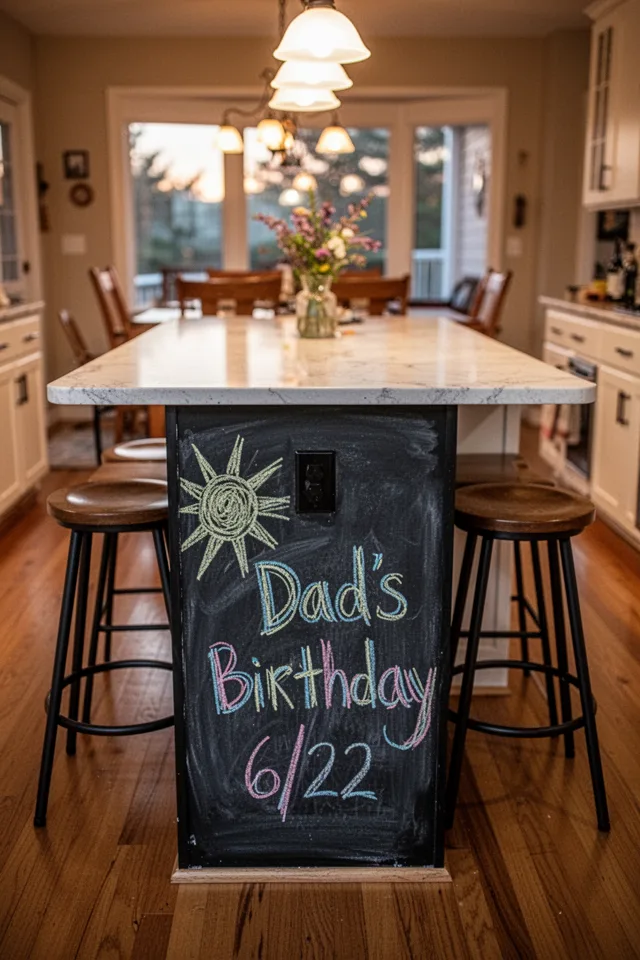
Kitchen islands are the natural gathering point, but the end panel is usually dead space. Painting it with chalkboard paint turns it into a family message board that doesn’t compete with your countertops. The ideal location is the end panel facing your dining table or living room—not the side facing the work zone. This becomes the place for reminders, kid art, and the daily dinner menu.
This is a $30 to $50 project depending on the size of your end panel and the quality of paint. The material constraint: most island end panels are MDF or particleboard, which absorb chalkboard paint unevenly. You’ll need a primer made for slick surfaces first, then two to three coats of chalkboard paint. Skip the primer and you’ll get a blotchy, streaky surface that never erases cleanly. Also, consider the height. If you have young kids, paint from 18 inches up to 48 inches so they can reach. If you only want adults writing, start at 36 inches.
The version that feels fake: a perfect, pristine chalkboard on an island that never gets smudged or partially erased. Real chalkboards look used. Embrace the ghosts of old messages—it makes the space feel lived-in, not like a showroom.
Idea #13: The Porch Door Daily Schedule
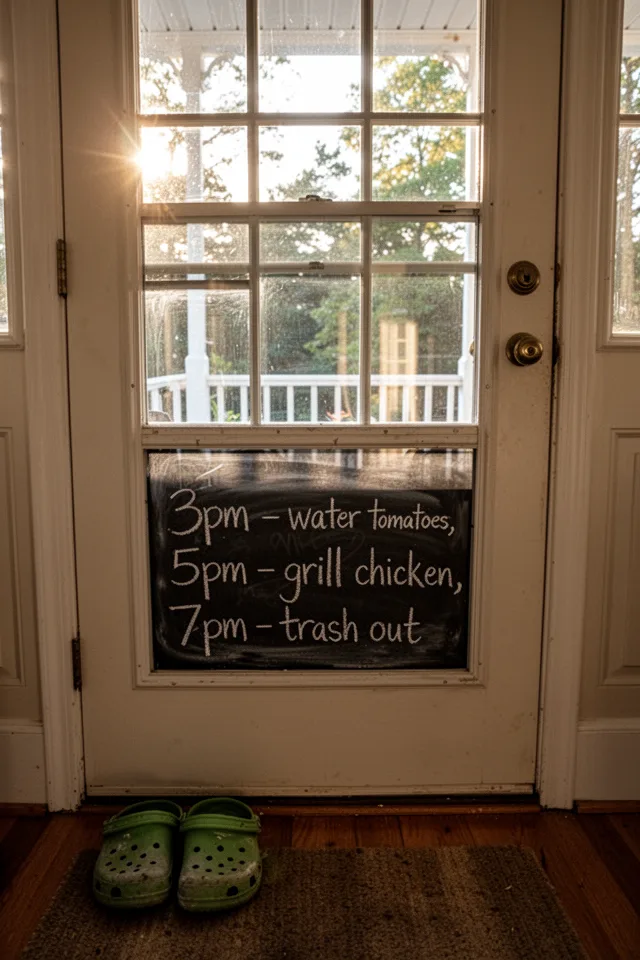
If you have a door with a glass panel that leads to a porch or patio, the lower half of the glass is often obscured anyway. Chalkboard decals designed for windows turn that useless space into a daily schedule board that you see every time you head outside. Write the day’s tasks in the morning. Cross them off as you go. The satisfaction of erasing a completed task is real.
Cost is around $15 to $25 for a set of window chalkboard decals. The trade-off is significant: direct sunlight bakes the decal adhesive within a few months, and heat causes the decal to shrink and crack. This works only on doors that are shaded or have a storm door protecting them. Also, cleaning the glass underneath after you remove the decal is a nightmare—the adhesive residue requires Goo Gone and a lot of elbow grease. Consider this a seasonal project that you replace every summer rather than a permanent installation.
One thing most guides skip: write with a window chalk marker, not regular chalk, on glass. Regular chalk scratches the glass over time. Window chalk wipes off cleanly with a dry cloth and won’t leave micro-scratches.
Idea #14: The Baking Station Ingredient Substitution Board
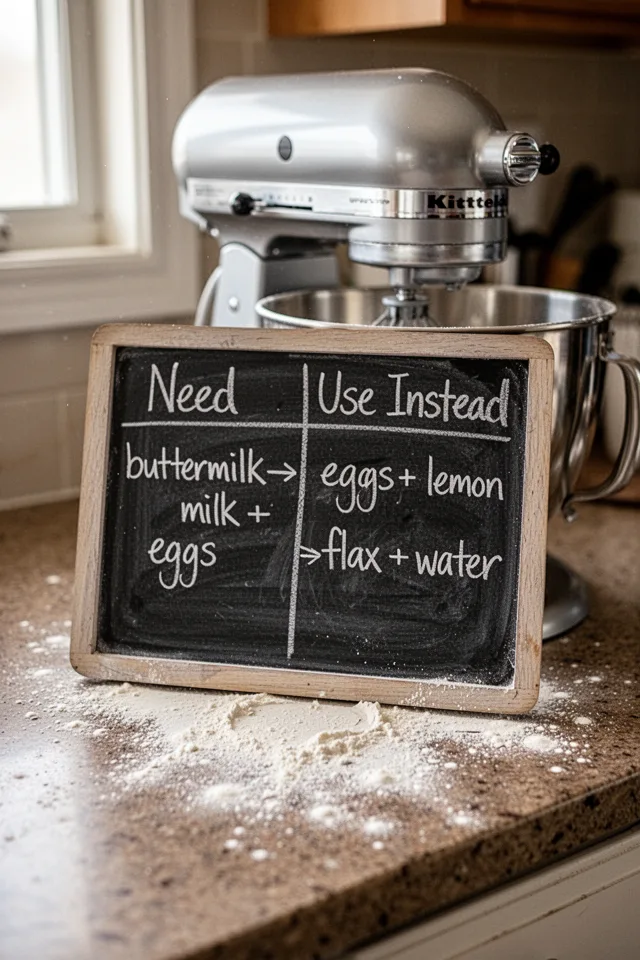
Every baker knows the panic of realizing you’re out of buttermilk halfway through mixing. A permanent substitution board near your baking station solves this by putting the answers in plain sight. Write your most-used swaps once and leave them. Update only when you discover a new one that works. This is not a daily-update board—it’s a reference tool that lives in your peripheral vision.
Cost is under $20 for a small framed board or a sheet of chalkboard sticker cut to size. The real constraint is space. Most baking stations are tight on counter real estate. A board that sits flat against the backsplash or hangs on the inside of a cabinet door above the mixer works better than a standalone easel that gets knocked over. And use a chalk marker for the permanent substitutions; regular chalk will dust into your mixing bowl every time you pass by.
The version that becomes awkward: including substitutions you never actually use. Keep it to five or six essentials. You don’t need to write “yogurt for sour cream” every time—you remember that one. The board is for the swaps you always forget.
Idea #15: The June Berry Harvest Counter
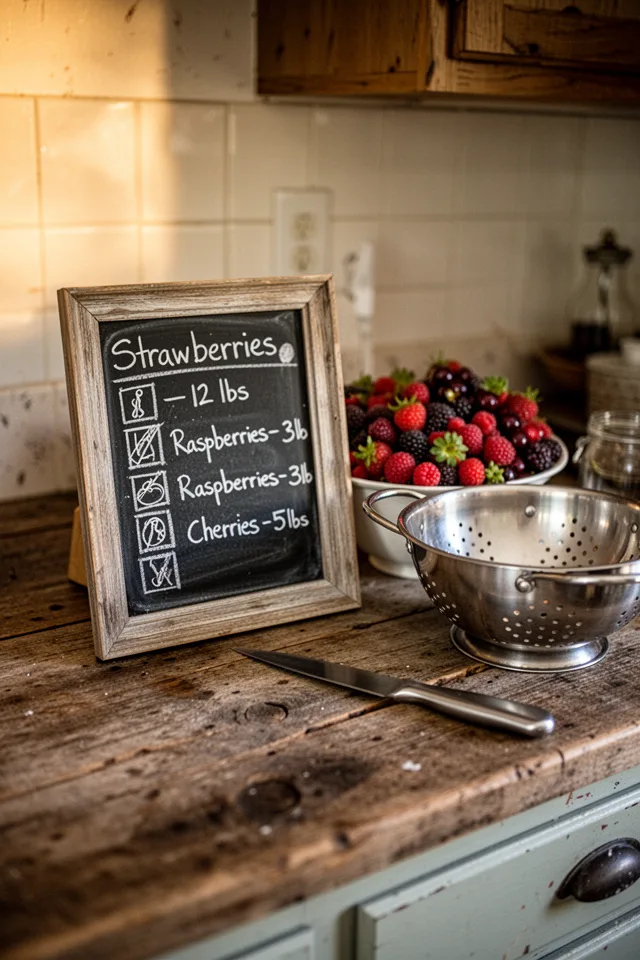
June is berry season, and if you pick your own or belong to a CSA, you know how easy it is to lose track of how much you’ve processed. A dedicated harvest counter chalkboard turns the annual berry glut into a satisfying tally. Write each fruit and add a tally mark every time you freeze a pint or bake a pie. By the end of the month, you’ll have a real record of the season’s abundance—and a gentle reminder to stop picking when you hit 20 pounds.
This is a $10 to $25 project using any small chalkboard. The beautiful thing is that it has a natural lifespan: June ends, you take a photo of the board, erase it, and store it until next year. The trade-off is that berry juice stains chalkboard surfaces permanently if you wipe it with a wet cloth while the juice is still fresh. Keep a dry felt eraser for the chalk itself, and wipe berry spills immediately with a damp paper towel—but don’t rub the chalk area. Or use a removable chalkboard sticker on a cutting board that you can wash separately.
The reason to remember this page: a chalkboard is not decor. It’s a tool. The tools that survive are the ones that solve a specific, recurring annoyance in your daily path. Pick one annoyance. Install one board. Then ignore every other chalkboard idea until that one becomes invisible. That’s when it’s working.
You don’t need fifteen chalkboards. You need one or two that are placed exactly where your memory fails you. The inside of the pantry door saves you from duplicate spice purchases. The mudroom bench strip stops you from forgetting the raincoat. The fridge tracker keeps June’s berries out of the compost. Start with the spot in your kitchen or entryway where you currently stick a crumpled post-it note that falls behind the toaster. Put a chalkboard there. Live with it for a month. Then decide if you need another.
If you’re like most people, the answer is one. Maybe two. The rest of these ideas are not a shopping list—they’re a menu. Pick the single annoyance that costs you the most time or money, and solve that one first. For most families, that’s the pantry door grocery grid. It’s under $100, it works with any decor because it’s inside a door, and it saves you from the specific hell of standing in the grocery store trying to remember if you have eggs.
That’s the real test of a good chalkboard idea: not how it photographs in June, but whether it still feels useful in December when you’re exhausted and the last thing you want to do is pick up a piece of chalk. The ideas here passed that test. The ones that didn’t are already painted over with regular wall paint, and I’m not sorry about it.