I once bought a macrame wall hanging from a trendy website, hung it over my bed, and called my room “boho.” It was not boho. It was a single macrame wall hanging in an otherwise beige apartment. The room had no personality, no layers, no evidence that a human with actual taste lived there. Boho is not a shopping list. It’s an attitude. And that attitude requires patience, not a credit card.
The conventional “boho bedroom” advice is a disaster of fast fashion. They tell you to buy a fake Persian rug, a mass-produced dreamcatcher, and some “tribal” print pillows from a big-box store. The result looks like a costume, not a home. Real boho is about accumulation over time—pieces you found at a flea market, a blanket your friend brought back from Morocco, a lamp you rewired yourself. It’s not supposed to look like you bought everything last week.
I’ve been slowly building my boho bedroom for six years. I’ve made every mistake: the cheap tapestry that faded in six months, the rattan that unraveled, the “vintage” rug that was actually a new rug dyed to look old and smelled like chemicals. These 25 ideas are what survived. They’re about texture, layering, and the kind of personality that comes from real choices, not a Pinterest board. Some things are expensive (real vintage rugs). Some are nearly free (a branch from the yard). All of them require you to trust your eye.
1. The Real Moroccan Rug (Not The Target Version)
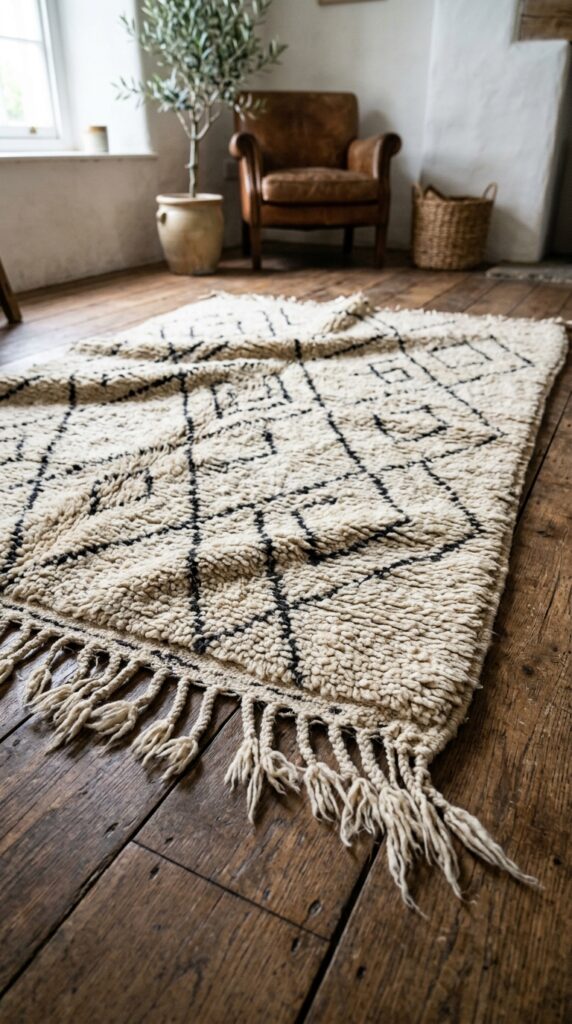
A fake Moroccan rug is flat, synthetic, and sheds plastic fibers. A real one is wool, hand-knotted, and slightly imperfect. I saved up for two years and bought a real Beni Ourain rug from a vintage dealer online. It cost $400, which felt insane. Six years later, it’s the best thing I own. The wool is thick enough to sit on. The pattern is asymmetrical in a way that fakes can’t replicate. It’s been stepped on, spilled on, and vacuumed hundreds of times. It looks better now than when I bought it.
The trade-off is price and maintenance. Real wool rugs need to be dry cleaned or professionally washed. You can spot clean, but a full wash is $100–$200. Also, wool rugs shed for the first year. I vacuumed every other day. It was worth it. Cost: real vintage Moroccan rug $300–$800, new reproduction $150–$300 (but feels fake).
Look for “Beni Ourain” on Etsy from sellers in Morocco. Read reviews carefully. A real one will have a wool that smells like sheep (in a good way). A fake smells like chemicals.
2. The Macrame That’s Handmade (Not Factory)
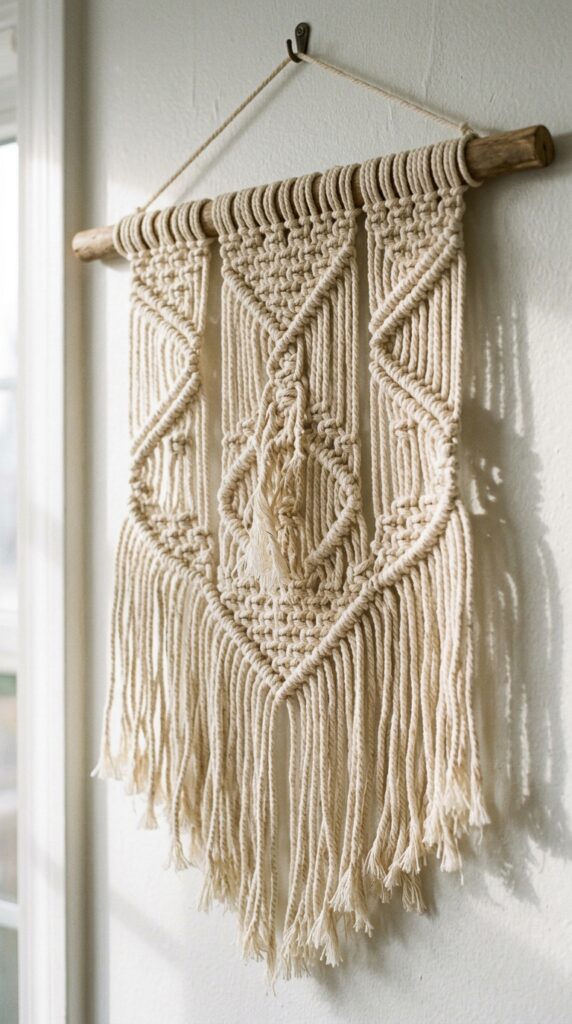
Factory macrame is too perfect. The knots are uniform, the fringe is laser-cut, and it looks like what it is: a machine-made object designed to look handmade. I bought a macrame piece from an artist on Etsy for $60. The knots are slightly irregular. The fringe is uneven. There’s a small knot where she tied off a new piece of rope. Those imperfections are the beauty. I’ve had it for three years. It’s yellowed slightly from sunlight, which made it look even better.
If you’re crafty, make it yourself. Macrame cord is $10 for a roll. YouTube tutorials are free. I made a small plant hanger and it took two hours. The imperfect result is more boho than anything you can buy. Cost: handmade $40–$100, DIY $10–$20.
Don’t buy macrame that’s pure white. Look for unbleached cotton or cream. Pure white looks too new. Cream looks like it’s been there for years.
3. The Layering Of Textures (Not Colors)
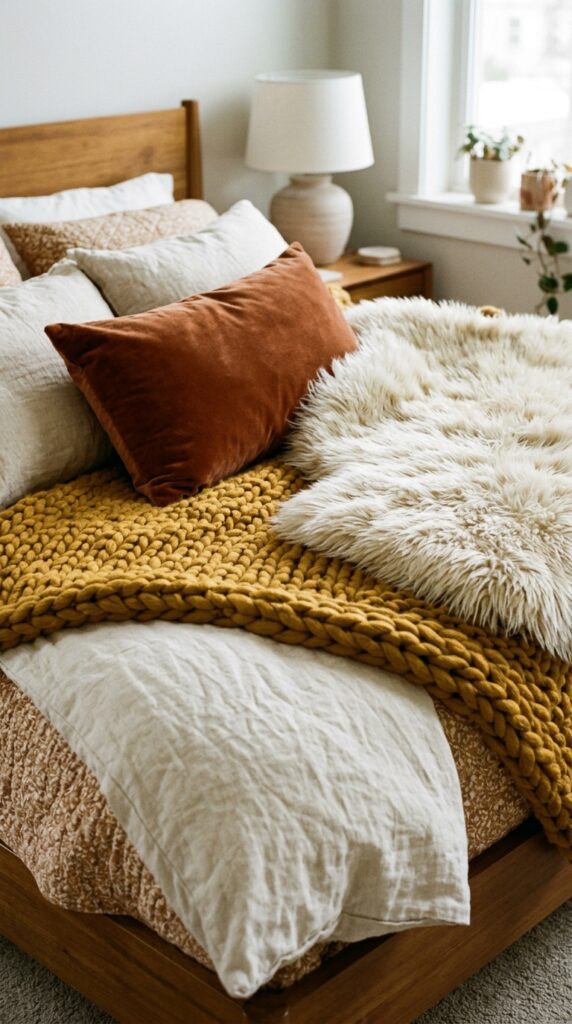
Boho is about texture, not color. You can have a room that’s all cream, beige, and brown, but if you have six different textures, it will look rich and layered. I have linen, wool, velvet, cotton, and faux fur on my bed. The colors are all within the same warm palette. The texture difference is what you notice. Run your hand over the bed—linen is crisp, wool is nubby, velvet is soft, fur is fluffy. That tactile variety is the soul of boho.
The mistake is buying everything in the same texture. A linen duvet with linen pillows and a linen throw is not boho—it’s a linen catalog. Mix rough with smooth, shiny with matte, thick with thin. Cost: linen duvet $80–$150, wool blanket $50–$100, velvet pillow $20–$40, faux fur throw $30–$60.
Limit yourself to two patterns maximum. The rest should be solid textures. Too many patterns look chaotic. Too many solids with different textures look intentional.
4. The Vintage Furniture Mix (No Matching Sets)
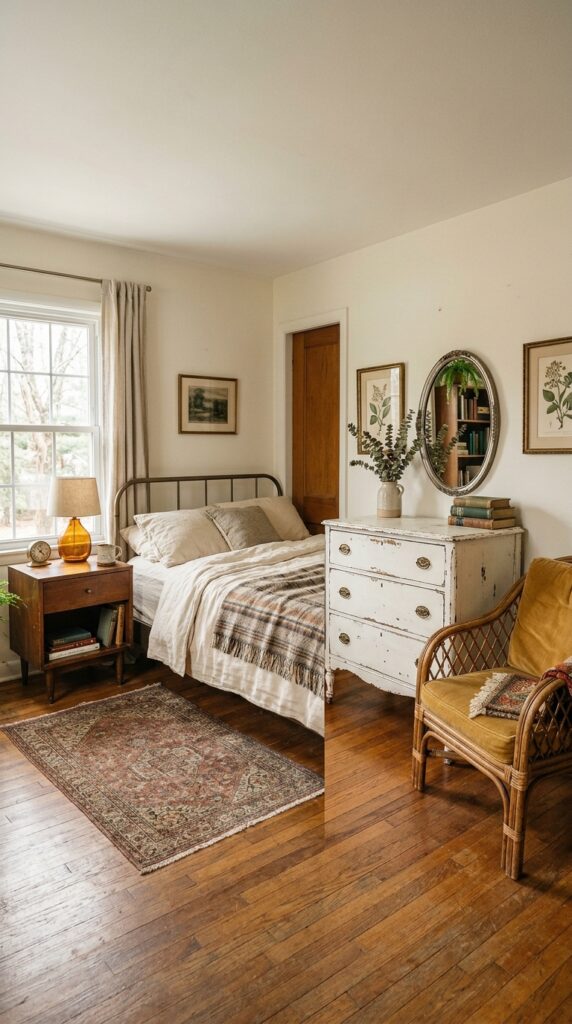
Matching bedroom sets are the enemy of boho. I have a nightstand from a 1960s estate sale, a dresser my grandmother painted white in the 1970s, and a chair I found on the curb. None of them match. But they all have similar warmth—the wood tones are complementary, the hardware is brass, and everything shows some wear. The lack of matching gives the room personality. It looks like I’ve been collecting for years, because I have.
The challenge is that mismatched furniture can look like a thrift store if you’re not careful. The unifying element should be scale, color, or material. My pieces are all roughly the same height. They all have visible wood. They all have a slightly worn finish. That’s the thread. Cost: thrifted $10–$100 per piece.
Paint mismatched furniture the same color if you want unity. But choose a color that’s not white—terra cotta, sage green, or navy. Same color, different shapes, instant cohesion.
5. The Hanging Plant That Actually Thrives (Not The Sad One)
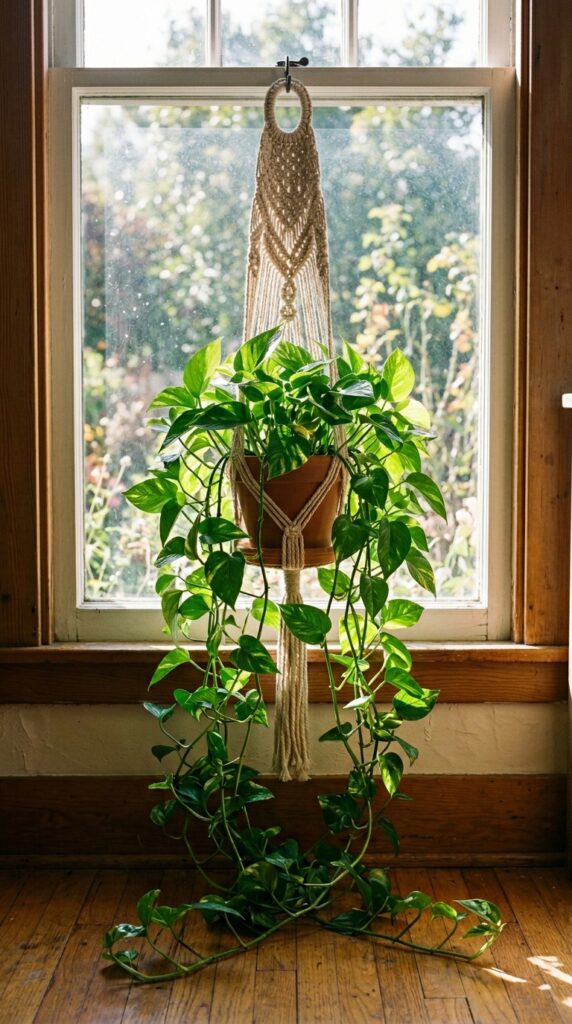
A sad, half-dead plant is not boho. It’s neglect. Pothos is the only hanging plant I trust. It thrives on neglect—water when the leaves droop, indirect light, occasional fertilizer. I have three pothos plants hanging at different heights. The vines are now 6 feet long. They trail down the wall like green waterfalls. The plant cost $12. The macrame hanger was $15. The effect is priceless. People ask if they’re real. They are, and they’re nearly impossible to kill.
If you can’t keep pothos alive, use dried hanging plants. Dried eucalyptus or dried lavender in a hanging bundle requires no water, no light, and never dies. It also smells good. Cost: pothos plant $10–$20, macrame hanger $10–$20, dried eucalyptus $15–$30.
Water your pothos in the sink, not in the hanger. Take the whole plant down, water it, let it drain, then rehang. Otherwise, water will drip on your floor.
6. The Pattern Mixing Rule (One Floral, One Geometric)
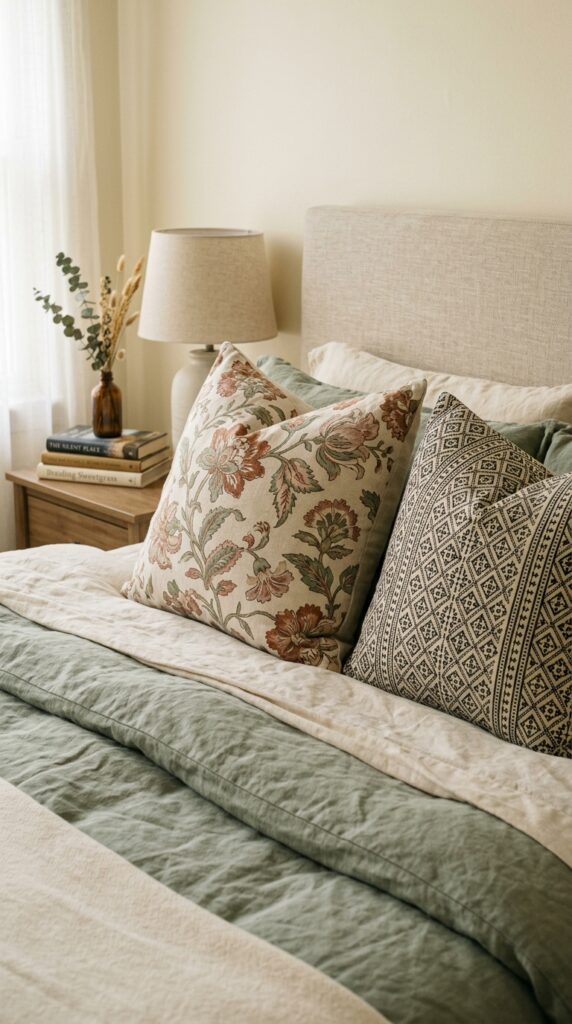
Pattern mixing is the hardest boho skill to learn. The rule that works for me: one large-scale pattern (floral, botanical, or abstract) and one small-scale pattern (stripe, check, or geometric). Put them on pillows or a throw. Keep everything else solid. I have a large floral pillow (rust and sage) and a small geometric pillow (black and cream diamonds). The rest of the bed is a solid cream duvet. The patterns talk to each other without shouting.
The mistake is using two patterns of the same scale. Two small patterns look like a mess. Two large patterns fight for attention. Also, keep the color palette limited. If both patterns share at least one color, they’ll work. Cost: patterned pillows $20–$50 each.
Test pattern mixing by laying the pillows on a solid surface and stepping back 10 feet. If you can’t distinguish the patterns at that distance, they’re too similar. Choose again.
7. The Cane Headboard (Real Cane, Not Printed)
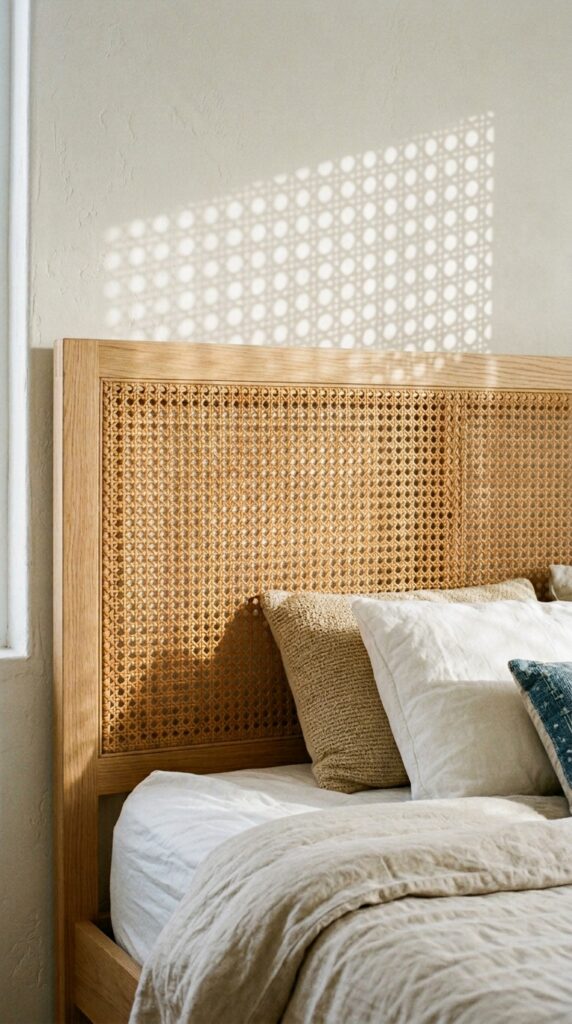
Cane headboards are everywhere now, but most are printed MDF with a fake cane pattern. Real cane is woven rattan. You can see through it. It has texture. I bought a vintage cane headboard on Facebook Marketplace for $60. The webbing had a small hole—I patched it with a piece of rattan from a craft store. The headboard is now my favorite thing in the room. The light that comes through the webbing in the morning is magical.
Real cane is fragile. Don’t lean on it hard. A child or a pet could punch through it. Also, cane dries out and cracks. I rub it with linseed oil once a year. If you buy new, look for “real rattan webbing.” Cost: vintage $50–$150, new real cane headboard $200–$400, fake printed $100–$200 (avoid).
To clean cane, vacuum with a soft brush attachment. Never use water. Water makes cane swell and then crack as it dries. Dry dust only.
8. The Rattan Anything (Baskets, Mirrors, Furniture)
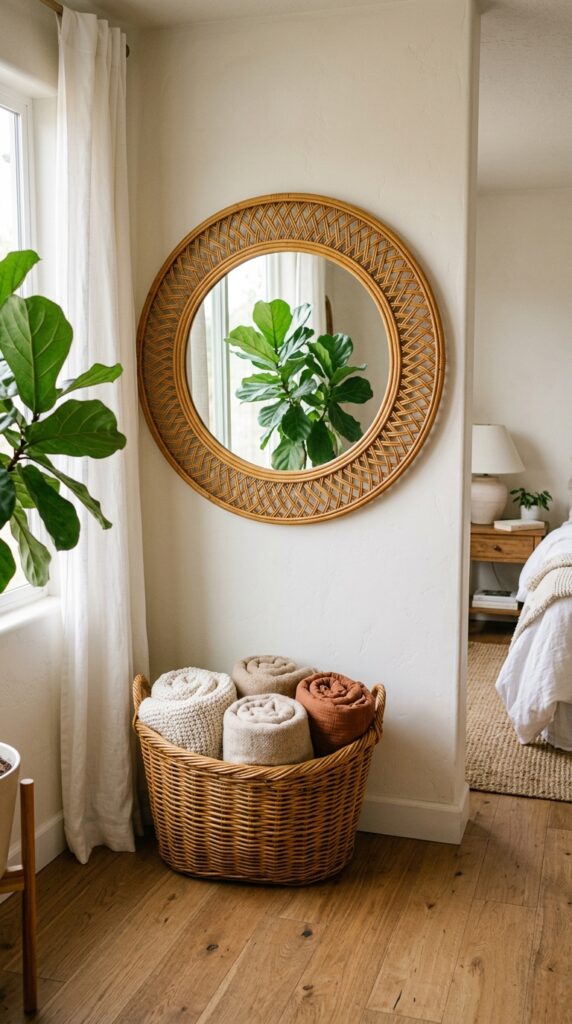
Rattan is the quintessential boho material. It’s light, warm, and textural. I have a round rattan mirror ($40 on sale), a rattan laundry basket ($25), and a small rattan side table ($30 from a thrift store). The pieces are different shades of honey. They don’t match exactly, which is fine. Rattan connects everything to nature. It also hides dust well—the woven texture disguises what a flat surface would show.
The downside is that cheap rattan is brittle. I bought a rattan shelf from a discount store that cracked within a month. The pieces from the thrift store (older, real rattan) are still perfect. Look for vintage rattan. It’s better made. Cost: new rattan mirror $30–$80, vintage rattan basket $10–$30.
Don’t put rattan in direct sunlight. The sun will bleach it unevenly. If you want a faded look, put it in the sun intentionally. But know that it will keep fading.
9. The Fairy Lights Behind Sheers (Not Bare)
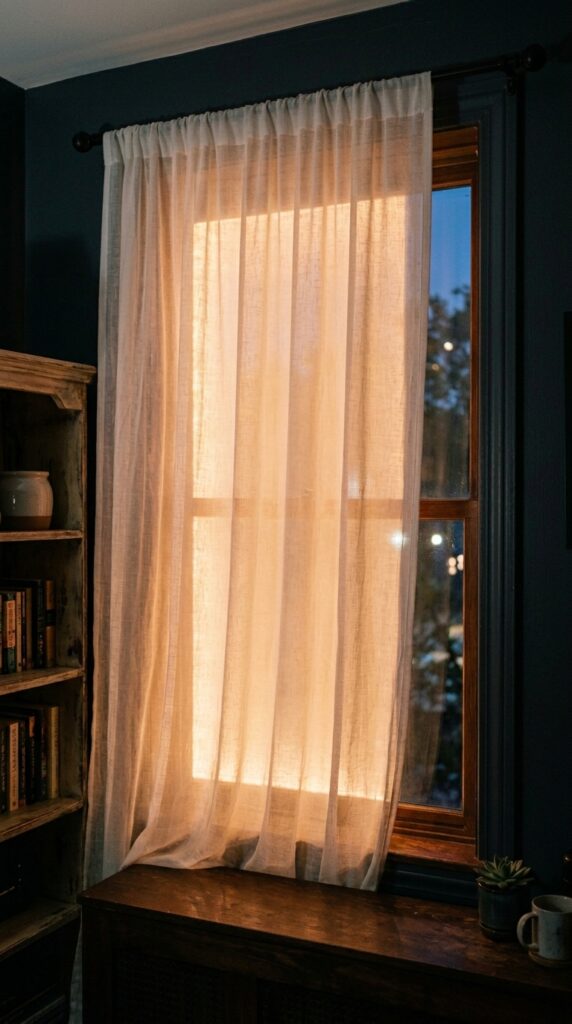
Bare fairy lights look like a college dorm. Lights behind a sheer curtain look like magic. I strung a 20-foot strand of warm fairy lights behind a white linen curtain. The fabric diffuses the light into a soft, even glow. The individual bulbs disappear. The effect is a glowing wall of light. I turn them on in the evening instead of overhead lights. The room feels like a dream.
The practical downside is that the lights get dusty. Every few months, I unplug them and wipe the bulbs with a dry cloth. Also, cheap fairy light strands die after a year. I buy ones with replaceable bulbs or LED strands that are rated for 20,000 hours. Cost: fairy lights $15–$30, sheer curtain $20–$40.
Use a remote control plug for the fairy lights. You can turn them on from bed without getting up. A $10 remote outlet is life-changing for mood lighting.
10. The Floor Cushions (Moroccan Style)
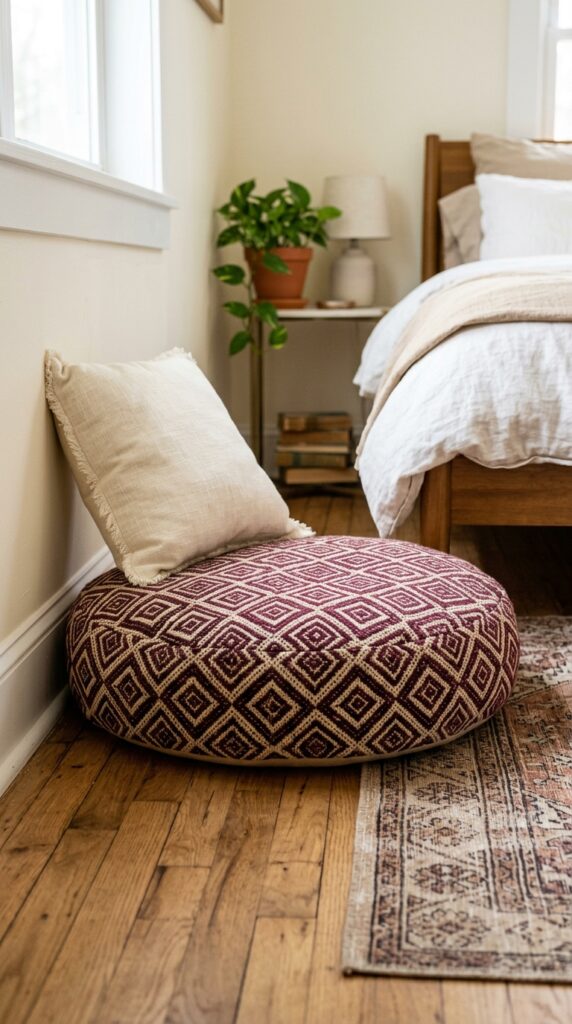
Floor cushions are the boho alternative to chairs. I have two large Moroccan-style floor cushions in a corner by the window. They’re filled with shredded foam, so they mold to your shape. I sit on them to read, to drink coffee, to put on shoes. When guests come over, they gravitate to the floor cushions. The cushions cost $40 each. They’re covered in a cotton blend with a woven pattern. The covers are removable and washable—essential for floor cushions.
The foam compresses over time. After two years, my cushions were flat. I bought a bag of foam filling for $15 and restuffed them. Now they’re good as new. Cost: floor cushion $30–$60, foam refill $10–$20.
Put a small tray next to the floor cushions to hold a mug or a book. A tray on the floor is a table. Without it, everything ends up on the carpet.
11. The Tapestry As A Headboard (Not On The Ceiling)
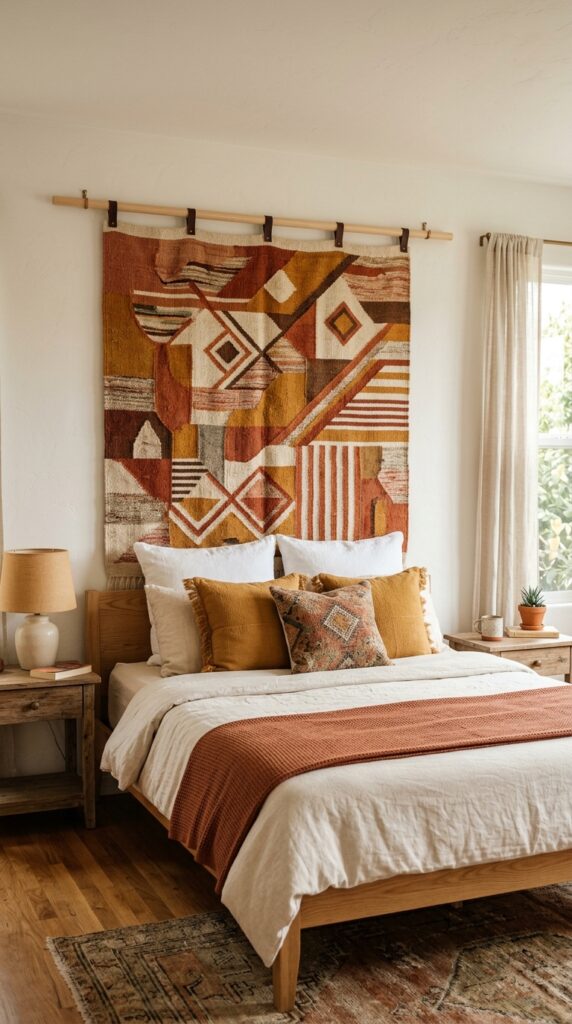
Putting a tapestry on the ceiling is a dorm room move. Putting a tapestry on the wall behind your bed is a boho headboard. I bought a 60×80 inch woven tapestry from a vintage shop online for $35. It’s wool and cotton, with a simple geometric pattern in earth tones. I hung it on a wooden dowel with curtain rings. The tapestry is softer than a wood headboard, warmer than a painted wall, and cheaper than both. It also absorbs sound, which makes the room quieter.
The tapestry gets dusty. I take it down once a year and shake it outside. You can also vacuum it with the upholstery attachment. Don’t wash it unless it’s labeled washable—most are not. Cost: tapestry $30–$80, wooden dowel $5–$10.
Choose a tapestry that’s wider than your bed by at least 12 inches on each side. A tapestry that’s the exact width of the bed looks like a placemat.
12. The Dried Pampas Grass (But Know It Sheds)
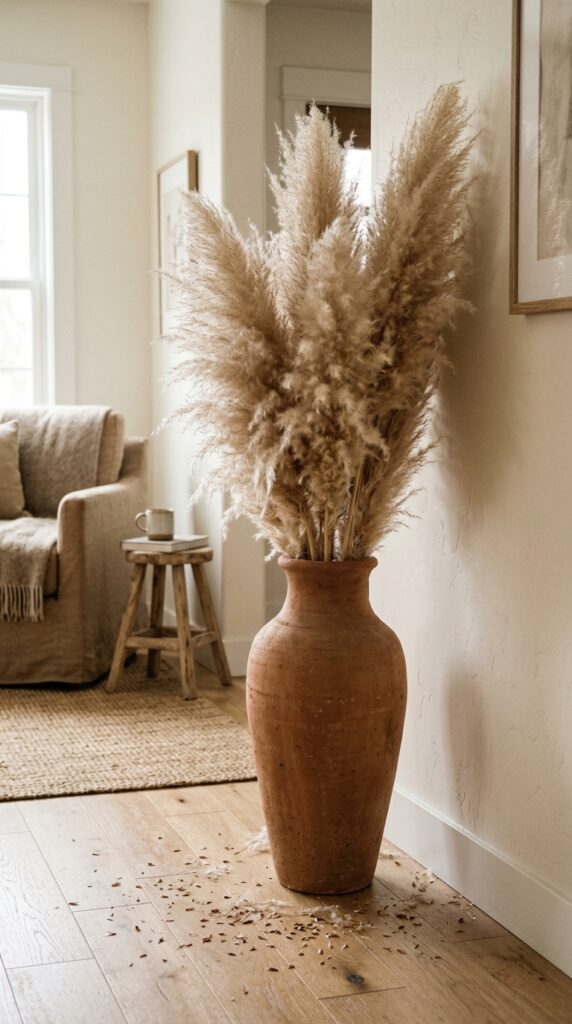
Dried pampas grass is beautiful and it sheds everywhere. The fluff gets on your clothes, your floor, your bed. I wish someone had told me this before I bought three giant stems. I kept them because they look incredible—tall, fluffy, and architectural. But I vacuum around the vase every day. If you have allergies, skip pampas. If you have a cat, your cat will destroy it (mine did).
The solution is to spray the pampas with hairspray or a clear craft sealant. It helps the fluff stay attached. I sprayed mine twice. It still sheds, but less. Or choose dried bunny tails or dried wheat—they shed less and look similar. Cost: dried pampas $15–$30 per stem, terracotta vase $20–$40.
Shake new pampas outside before bringing it into your bedroom. You’ll be shocked how much fluff comes off. Do it over a trash can.
13. The Clay Bead Garland (Handmade From Africa)
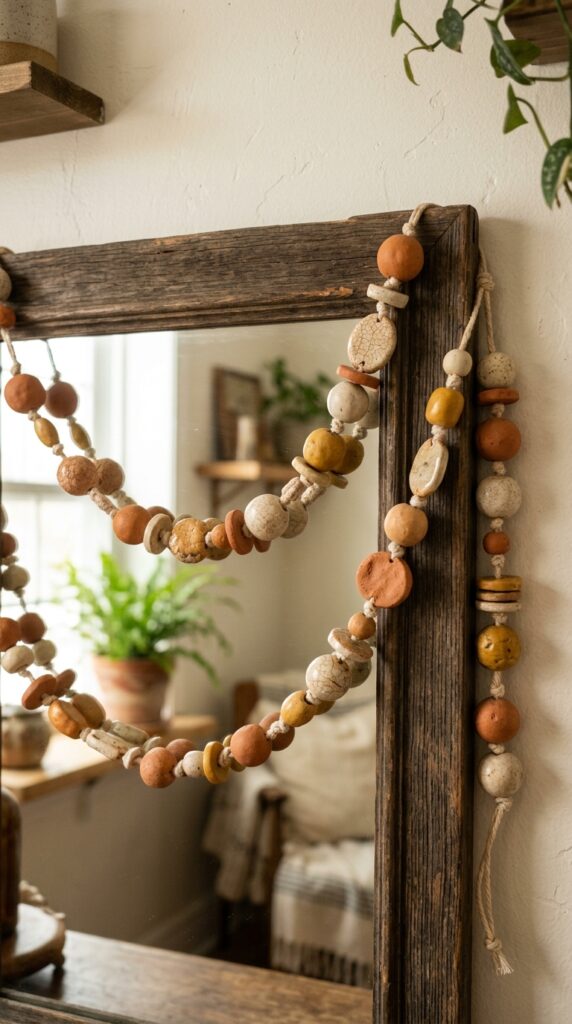
Clay bead garlands from West Africa are the perfect boho accessory. They’re handmade by women’s cooperatives. The beads are uneven, the colors vary, and each one is slightly different. I bought a three-strand garland from an Etsy fair trade shop for $25. It hangs over my mirror. The beads click gently when the breeze moves them. Mass-produced bead garlands from chain stores are uniform and perfect—and therefore boring. The imperfections are the beauty.
The garland is fragile. The beads can crack if dropped. I’ve lost three beads over two years. I keep the extras and restring it occasionally. Cost: fair trade clay bead garland $20–$40, mass-produced $10–$15 (less good).
Hang the garland somewhere where it won’t be brushed against. Doorways are a bad idea. Above a mirror or across a window frame is better.
14. The Woven Basket Wall (Arranged As Art)
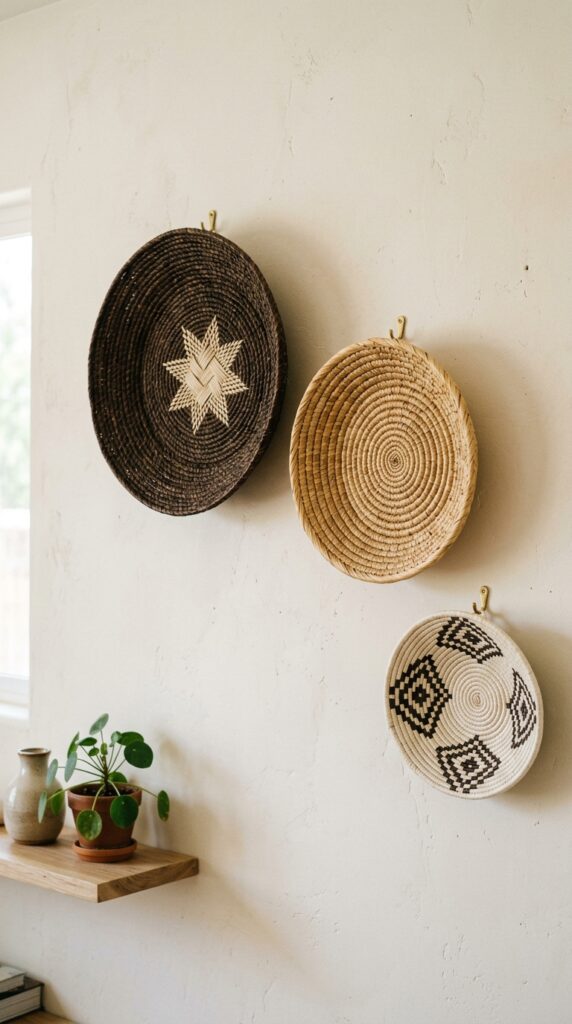
Baskets on the wall are a boho classic. The trick is to avoid looking like a Pier 1 display. I collected baskets from thrift stores, flea markets, and travels. Each one is different—different weave, different shape, different origin. I arranged them in a loose cluster on one wall. The baskets themselves are the art. The wall says “I travel” without being a travel cliché.
Don’t buy a matching set. Matching baskets look like you bought them from a catalog. The beauty is in the variation. Also, don’t hang them in a perfect line. Stagger them. Let one overlap another slightly. Cost: thrifted baskets $5–$20 each, new baskets $15–$40 each.
Use a paper template to plan your basket wall. Trace each basket onto kraft paper, cut out the circles, and tape them to the wall. Move them around until it looks right. Then hang the nails.
15. The Cotton Fringe Throw (On The End Of The Bed)
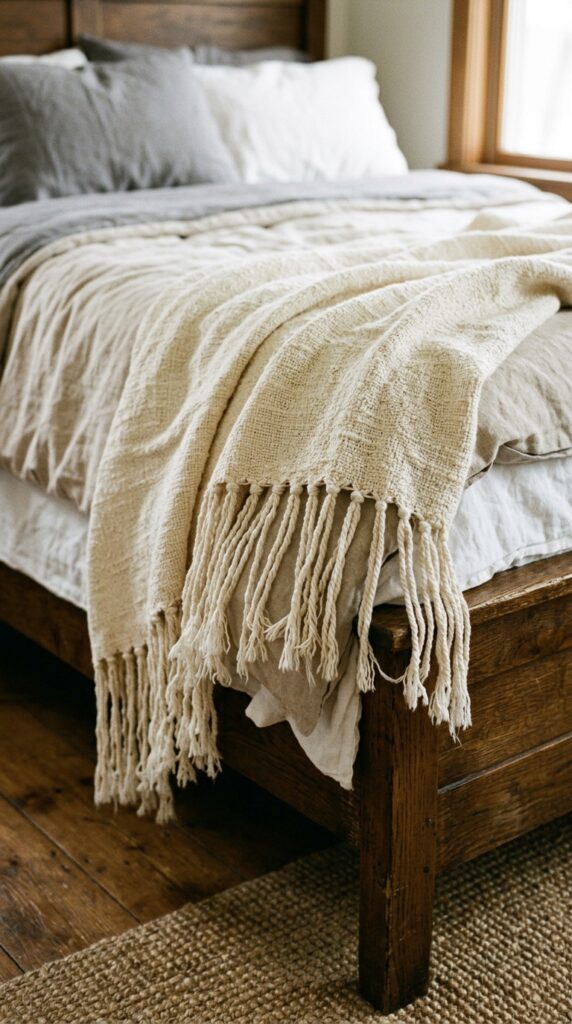
A fringe throw is the easiest way to add boho texture. I have a cream cotton throw with 4-inch fringe that I bought from a market vendor for $25 (online, similar is $30–$50). It lives at the end of my bed. The fringe is slightly uneven—some strands are longer than others—which is how you know it’s handmade. The throw is lightweight, so it works in summer as a cover and in winter as an extra layer.
The fringe tangles in the washing machine. I put the throw in a mesh laundry bag and wash on delicate. Air dry. The fringe also gets pulled by cats or vacuum cleaners. I’ve trimmed a few stragglers with scissors. Cost: cotton fringe throw $30–$60.
Drape the throw so the fringe hangs off the edge, not on top of the bed. Fringe on a flat surface looks messy. Fringe in the air looks intentional.
16. The Mismatched Bedside Lamps (Same Scale, Different Shape)
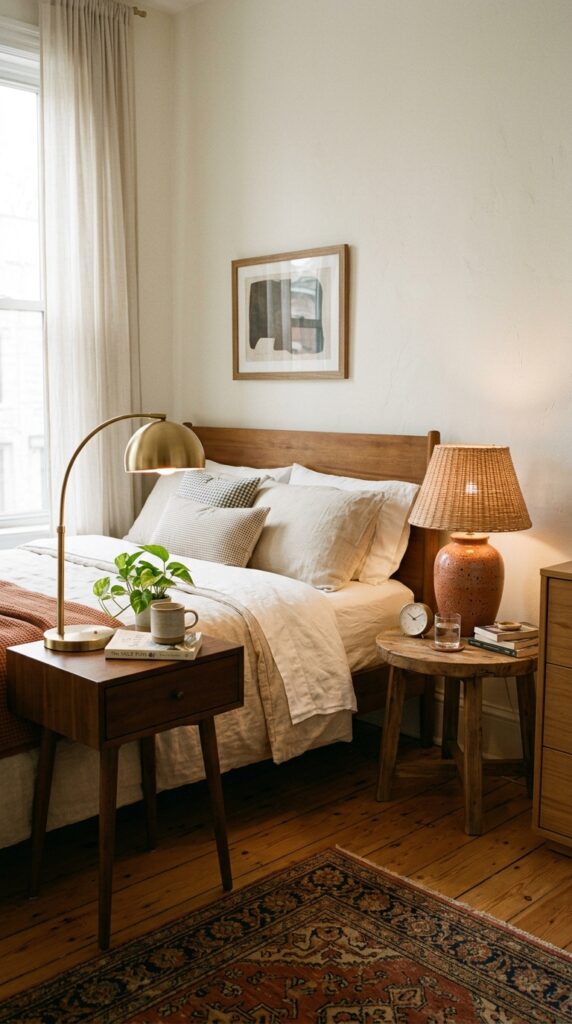
Matching lamps are too predictable. I have a brass arc lamp on one side of the bed and a ceramic lamp with a woven shade on the other. They’re different shapes, different materials, but the same height and similar warmth. The asymmetry feels curated, not accidental. The rule is: same height, same bulb temperature (2700K), same visual weight. Beyond that, anything goes.
The challenge is finding two lamps that feel balanced. A massive heavy lamp on one side and a tiny delicate lamp on the other won’t work. I brought my phone to thrift stores and took photos of each lamp, then compared them side by side. Cost: thrifted lamps $10–$30 each, new mismatched lamps $30–$80 each.
If the lamps are different heights, put the taller one on the side where the bed is farther from the wall. Visual balance is about perceived weight, not actual measurements.
17. The Wooden Bead Garland On Lamp Pull
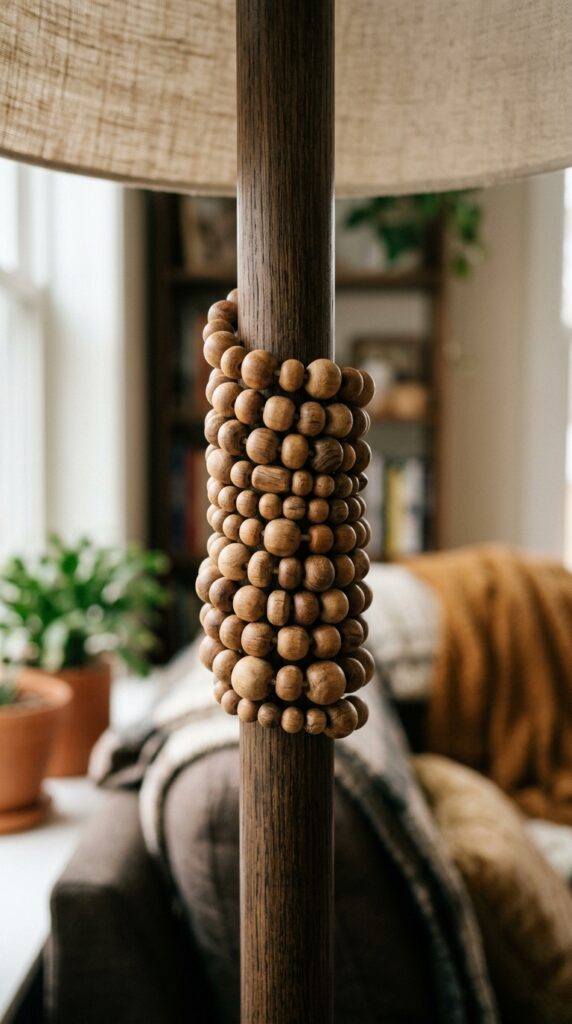
This is a tiny detail that makes a difference. I have a sandalwood bead garland wrapped around the pole of my floor lamp. It adds texture, a faint woody smell, and a bit of visual interest. The beads are strung on elastic, so I just wrapped them around. They cost $8 on Etsy. Every time I turn on the lamp, I see the beads and smile. Boho is in the small things.
Don’t overdo it. One garland per lamp. Not three. Not on every lamp. Also, sandalwood loses its scent after a few months. Rub the beads with sandpaper to refresh the fragrance. Cost: wooden bead garland $8–$15.
Choose sandalwood for scent, or choose painted beads for color. I prefer sandalwood because the natural brown matches everything and the smell is calming.
18. The Vintage Quilt (Not New)
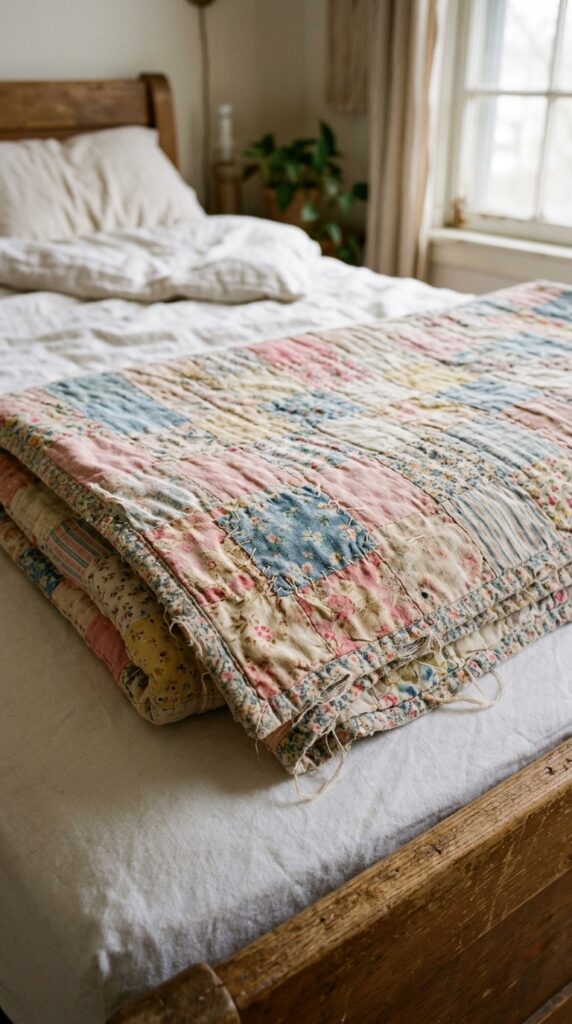
A new quilt is stiff and flat. A vintage quilt is soft, thin, and full of character. I bought a 1950s patchwork quilt on Etsy for $65. It has a small stain that I can’t remove, and a few patches where the fabric wore through. I love those imperfections. The quilt is lightweight—perfect for summer—and it adds a sense of history to the room. New quilts from stores try to look vintage with “faded” prints, but they don’t feel the same.
Vintage quilts can be fragile. I wash mine in cold water on a delicate cycle and air dry. The stitches are old; some have come loose. I repaired them with a needle and thread. Cost: vintage quilt $50–$150, new quilt $30–$100 (but feels flat).
Store a vintage quilt in a cotton pillowcase when not in use. Plastic storage traps moisture and can cause mildew. Cotton breathes.
19. The Ottoman With Ethnic Print (As Extra Seat)
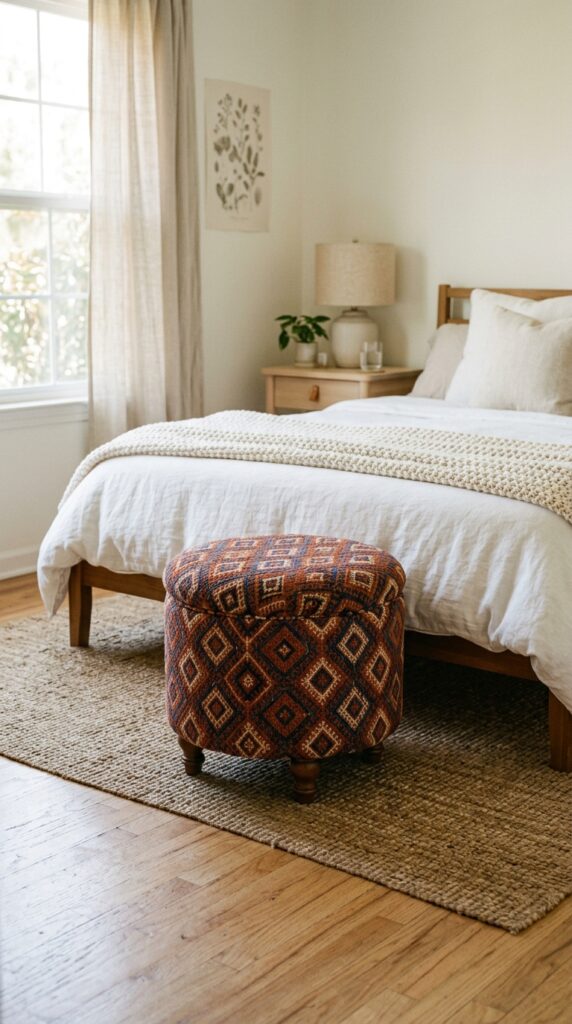
An ottoman with an ethnic print (ikat, suzani, mudcloth) is the boho version of an accent chair. I have a small round ottoman at the foot of my bed. The fabric is a mudcloth-inspired pattern in rust and cream. The ottoman is where I sit to put on shoes, where guests sit when they visit, and where I put a tray of tea. The pattern is the only bold pattern in the room, so it stands out.
Choose an ottoman with a removable cover so you can wash it. Feet and shoes will dirty the fabric. Also, round ottomans are better than square—no corners to bruise your shins. Cost: ethnic print ottoman $50–$100.
If you can’t find an ottoman you love, buy a plain ottoman and a piece of ethnic fabric. Upholster it yourself with a staple gun. It’s an afternoon project and costs half as much.
20. The Ceramic Incense Holder (For Palo Santo)
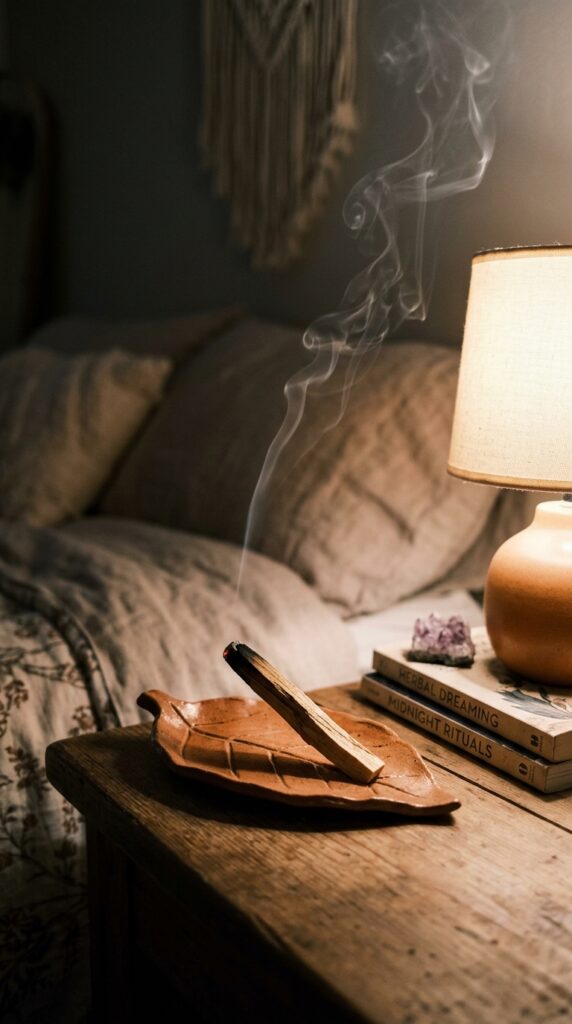
Boho is sensory. Scent matters. I burn palo santo (not incense sticks) in a handmade ceramic holder. The smoke is thin and woody, not overpowering. The ritual of lighting it, blowing it out, and letting the smoke drift through the room signals the transition to evening. The holder itself is a small ceramic piece I bought from a potter for $15. It’s imperfect—the glaze dripped on one side—and that’s why I love it.
Don’t burn palo santo for more than 60 seconds. The smoke becomes acrid. Also, keep it away from curtains and bedding. Use a ceramic holder with a catch tray for ash. Cost: palo santo sticks $10–$20, ceramic holder $10–$25.
Buy palo santo from a sustainable source. Overharvesting is a problem. Look for “ethically sourced” or “certified sustainable” on the label.
21. The Display Of Crystals (On A Tray, Not Scattered)
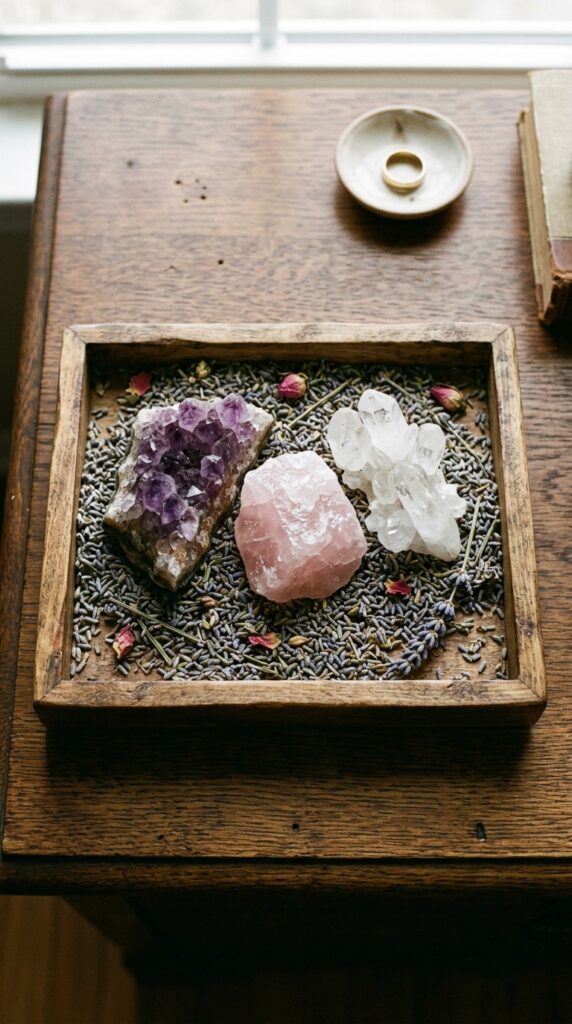
Crystals are boho, but scattered crystals on a dresser look like a rock collection from a child’s pocket. Keep them on a tray. I have a small wooden tray with a piece of dried lavender as a bed, and three raw crystals on top. The tray contains the visual chaos. The crystals are real—not the polished ones from gift shops, but raw ones with uneven surfaces. The imperfections make them interesting.
Crystals collect dust. Wipe them with a dry cloth every month. Also, don’t put them in direct sunlight—some crystals (amethyst, rose quartz) fade. Cost: raw crystals $5–$20 each, tray $10–$20.
Learn the difference between real and fake crystals. Real crystals are cold to the touch and have inclusions. Fake ones are warm and perfect. Your boho room deserves real ones.
22. The Ladder Blanket Rack (Leaning, Not Mounted)
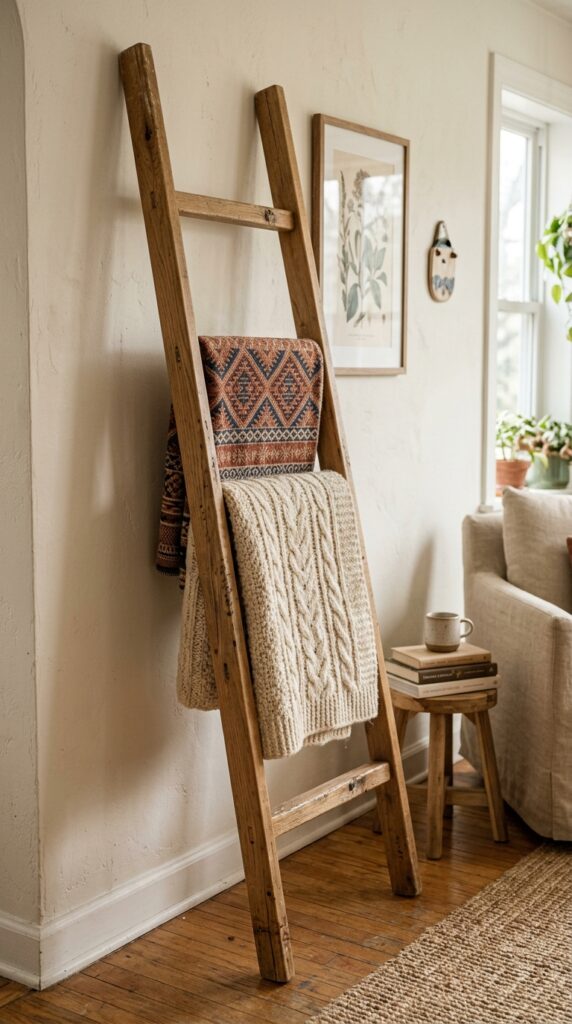
A blanket ladder is the most efficient way to store extra blankets in a boho room. It leans against the wall, takes up 12 inches of floor depth, and keeps blankets off the floor. I bought a simple oak ladder from a hardware store ($30) and sanded it lightly. I drape two blankets on it—one chunky knit, one woven cotton. The ladder itself is a textural object. The blankets are both storage and decor.
Don’t overload the ladder. Two blankets is enough. Three looks like a pile. Also, make sure the ladder doesn’t slide. I added rubber stoppers to the feet. Cost: wooden ladder $30–$60.
If you don’t have a ladder, use a wooden pallet leaning against the wall. Same effect, often free from behind a grocery store. Sand it first.
23. The Global Textile On The Wall (Suzani Or Kilim)
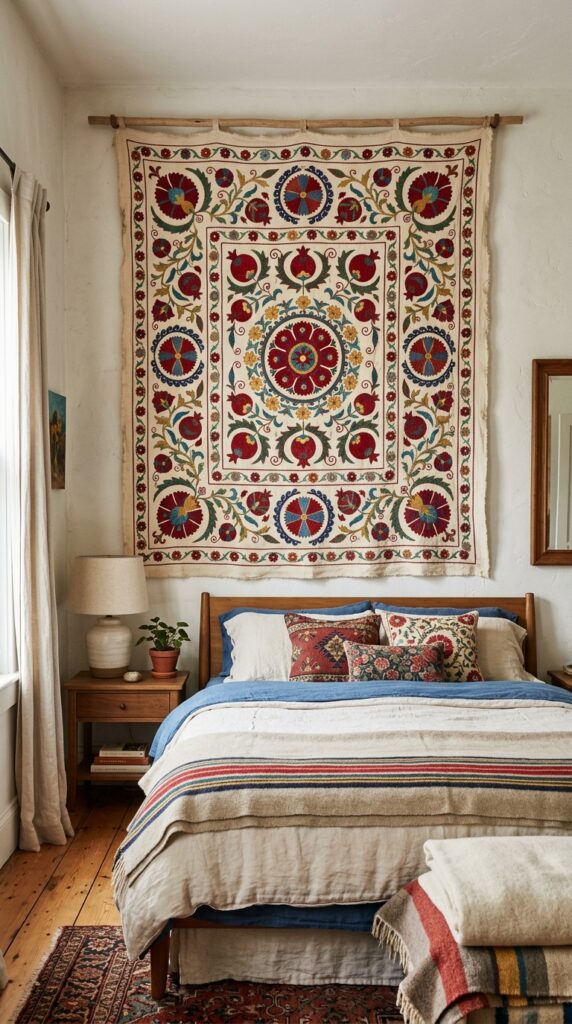
A suzani (Uzbekistan embroidery) or a kilim (flat-woven rug) hung on the wall is the ultimate boho statement. It’s not a tapestry from Urban Outfitters—it’s an actual textile from Central Asia or the Caucasus. I bought a small suzani on Etsy for $120. It’s 5×4 feet, hand-embroidered, and has a small stain and a pulled thread. Those imperfections are the history. It hangs over my bed as a headboard replacement. Every time I look at it, I see new details in the stitching.
These textiles are expensive and fragile. Keep them out of direct sunlight to prevent fading. Vacuum them with a screen attachment (a piece of window screen over the fabric protects the threads). Don’t wash them. Cost: small suzani $80–$200, large kilim $150–$400.
Hang a suzani with a wooden dowel and clip rings, not with nails through the fabric. The nail holes would damage the textile. Rings let it hang freely.
24. The Mix Of Wood Tones (No Matching)
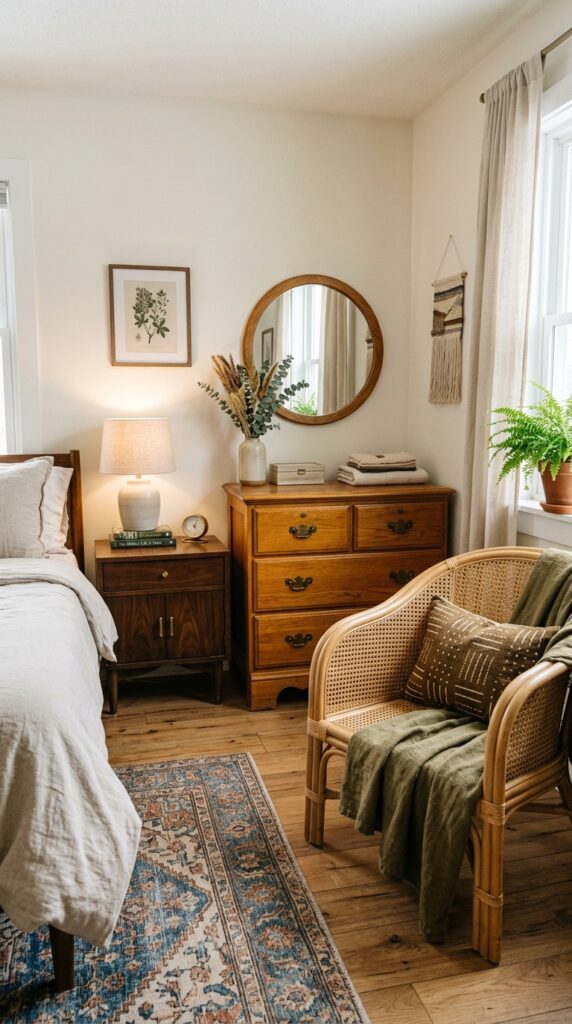
Traditional design says all wood should match. Boho says mix them. I have walnut, oak, and rattan in the same room. The key is that they all have warm undertones. No grey wood (which looks cold), no bleached wood (too pale). Warm woods—cherry, walnut, oak, teak, rattan—all work together. The eye sees the warmth, not the mismatch.
The only rule: avoid three different woods in a straight line. Break them up with textiles or plants. I have a plant between the walnut nightstand and the oak dresser. The green leaf breaks the visual line. Cost: free (use what you have).
If a piece of wood furniture has the wrong tone, sand it and apply a new stain. A walnut stain can turn pine into a warmer tone. It’s a weekend project.
25. The Personal Travel Souvenirs (Not Generic)
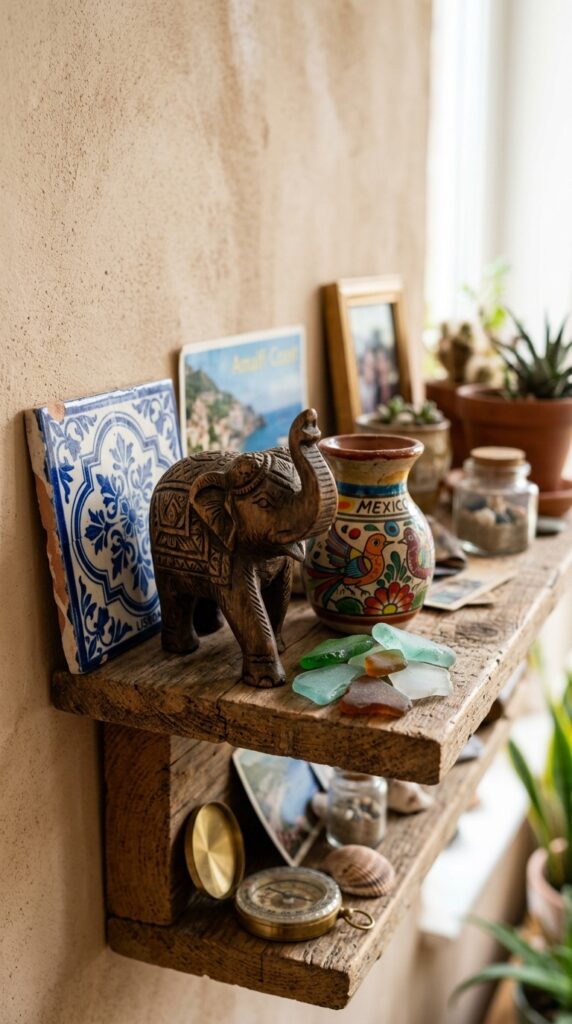
The most important boho rule: your room should look like you, not like a catalog. I have a shelf of souvenirs from trips I actually took: a ceramic tile from Lisbon, a carved box from Marrakech, a piece of sea glass from a beach in Maine. None of them were bought from a “boho decor” section. They’re real. They have memories attached. When people ask about them, I have a story. That’s personality.
If you haven’t traveled, make your own souvenirs. A pressed flower from a walk, a rock from a favorite park, a drawing you made. The point is authenticity. Don’t buy fake vintage postcards from Amazon. Go find something real. Cost: free (things you already own) to whatever you spend on travel.
Group souvenirs together on a single shelf or tray. Scattered around the room, they look like clutter. Together, they look like a collection.
The core decision of a boho bedroom is choosing authenticity over convenience. You cannot buy a boho room from one website in one afternoon. Boho takes time—years of collecting, editing, and living with your things. The room should tell your story, not the story of a trend. If a piece doesn’t mean anything to you, it doesn’t belong in your boho bedroom.
If you do one thing from this list, start with the textiles. Buy one real vintage rug or one hand-embroidered suzani. Build the room around that piece. Then add layers slowly—a macrame here, a floor cushion there. Let the room grow with you. And for the love of good taste, skip the fake pampas grass unless you enjoy vacuuming every day.
A boho bedroom is not a style. It’s a reflection. And the most beautiful reflection is the one that’s honest. Now go find something real to hang on your wall.