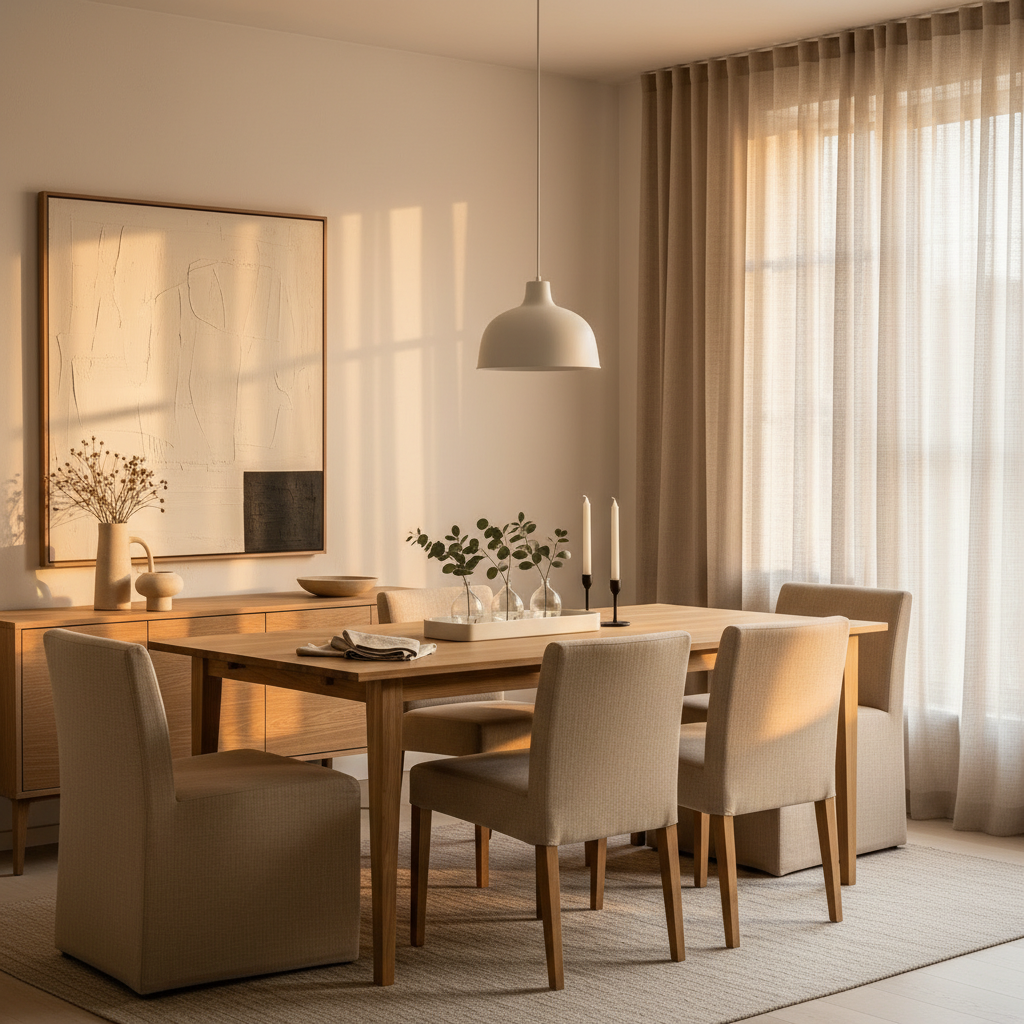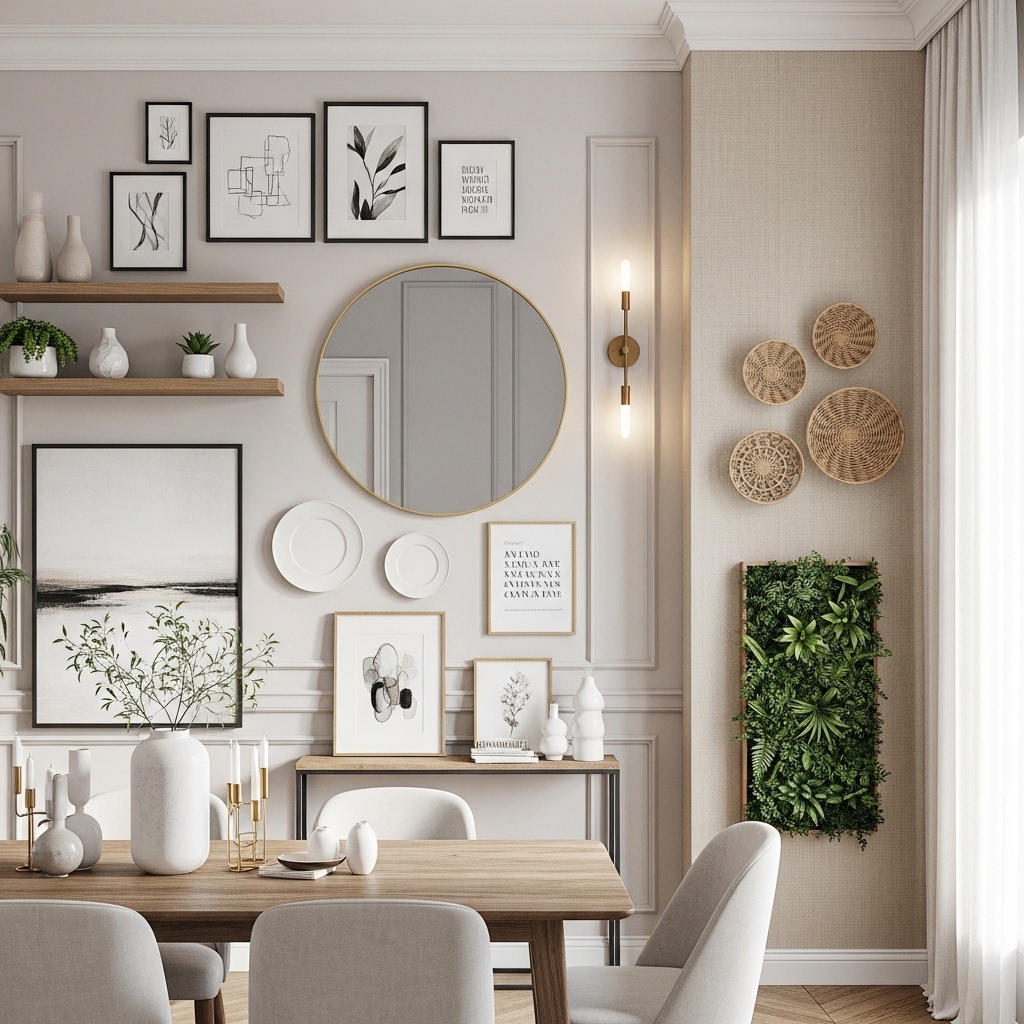
Your bedroom should feel like the one place where you can actually breathe. Not a showroom. Not a Pinterest board come to life that looks lovely for twelve seconds and exhausting for the remaining 8,760 hours of the year. The truth is, a bedroom refresh doesn’t require gutting the space, hemorrhaging money, or committing to trends that’ll feel dated by next spring. What it does require is intention—a willingness to look at what you have, identify what’s draining the room (that too-bright overhead light? those tired gray walls?), and layer in changes that make you want to actually spend time there.
I’ve spent years helping people transform their bedrooms from afterthoughts into proper retreats. The best ones share common threads: they feel personal without being chaotic, they’re comfortable before they’re Instagram-perfect, and they work with your lifestyle instead of against it. Whether you’re a renter with limited options, a parent sharing a wall with a toddler’s room, or someone who’s finally ready to upgrade from college-era furniture, there’s a path forward. These twenty-five ideas aren’t prescriptive—they’re a menu. Mix and match them. Break the “rules.” The goal is a bedroom that looks fresher, feels calmer, and actually wants you to come home to it.
1. Warm Earthy Foundation
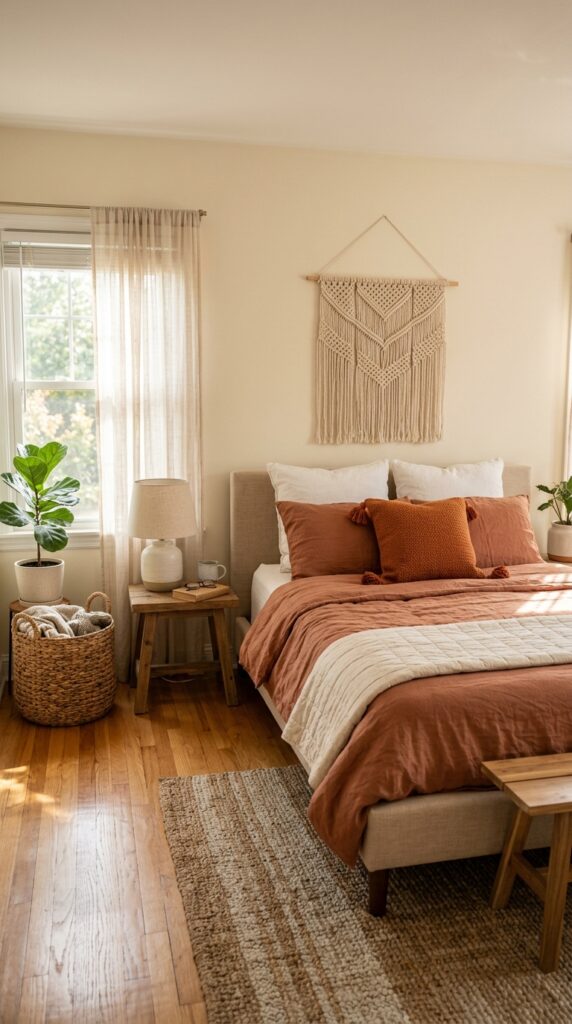
Stop fighting your room’s natural light. Warm earthy tones—terracotta, ochre, warm sand, rust—don’t just complement natural light; they amplify it. This isn’t about painting your walls burnt orange (unless you want to), but rather anchoring your palette in warm neutrals that don’t fight sunny rooms or make dim rooms feel dingy.
Swap out any cool-toned bedding for warm linen in cream, oatmeal, or soft terracotta. Layer in textures: a chunky knit throw, a quilted coverlet, a few naturally dyed pillows. The trick here is resisting the urge to match everything. Real warmth comes from subtle variation—cream linen paired with a slightly deeper sand-toned quilt, warm white curtains, maybe a muted gold-framed mirror. One watch-out: warm tones can feel heavy if you’re painting every wall. Consider keeping just one wall or a lower-wall treatment (wainscoting, a painted dado rail) and letting the rest stay lighter. This works especially well in smaller bedrooms where you want coziness without claustrophobia.
2. Statement Headboard Wall
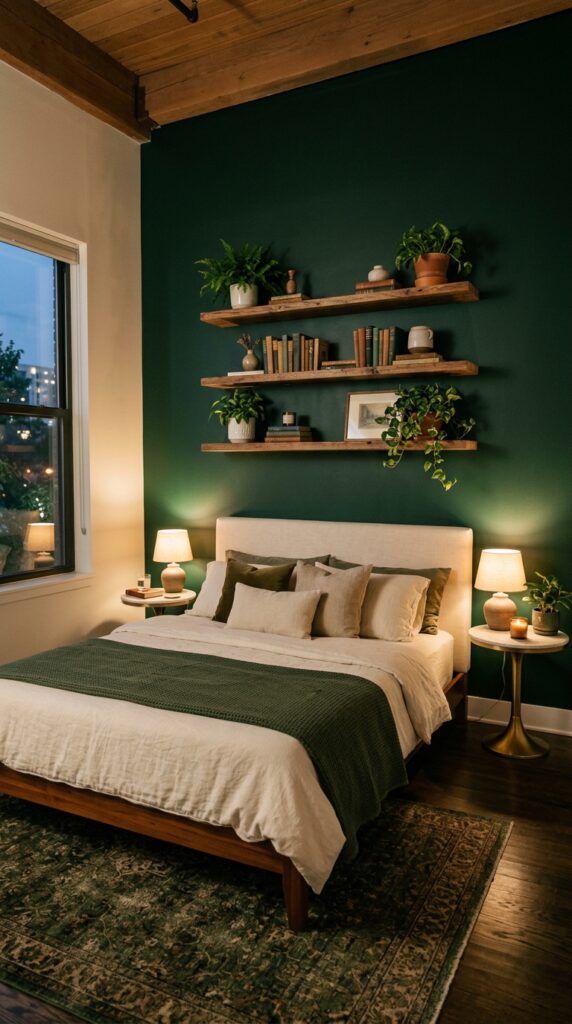
A headboard wall doesn’t have to be elaborate or expensive. Sometimes it’s just paint—a single wall behind your bed in a deeper, richer tone than the rest of the room. Deep forest green, warm charcoal, dusty blue, even terracotta. This immediately anchors the room and makes your bed feel intentional rather than like it’s just floating there.
The beauty is that you’re only committing to painting one wall, which feels manageable even for renters (most landlords forgive a single accent wall, especially if you’re painting over it with white when you leave). Pair your statement wall with simple, warm bedding—lighter tones pop against the darker background—and resist the urge to overcomplicate it with heavy curtains or busy patterns. The wall should be the star. This works best if your room gets decent natural light; if it’s a north-facing cave, go softer with your accent color.
3. Linen Everything
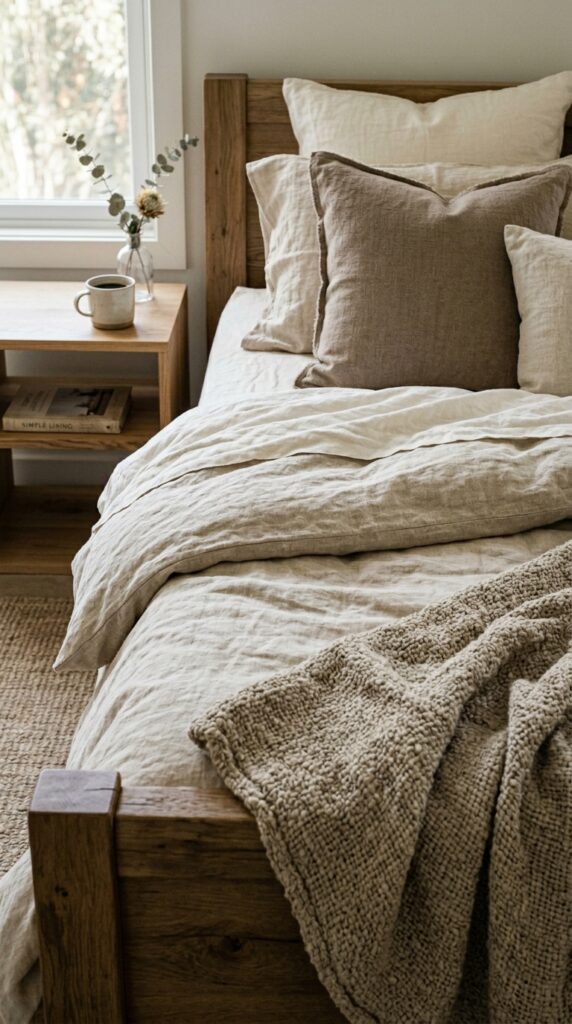
Linen is the only natural fabric that gets better with age and washing—it softens, wrinkles in the right way, and never looks stiff or precious. If your current bedding is that satiny-looking polyester or cheap cotton, this single swap will transform how your room feels and how you sleep.
You don’t need to overhaul everything at once. Start with linen sheets (your skin will thank you, especially in warmer climates), then add a linen duvet cover. The wrinkled, slightly rumpled look is literally the point—if you’re trying to make linen look like ironed perfection, you’re working against it. Layer in linen pillows, throws, and even curtains for a cohesive, textural look that whispers rather than shouts.
The trade-off: linen wrinkles easily and feels rumpled fresh from the wash. If that bothers you, this won’t be your fabric. But most people who switch to linen never go back—the breathability and natural texture become addictive. Buy midweight linen (not gossamer-thin, not heavy as canvas) in neutral tones, and let it age into character.
4. Layered Lighting Design
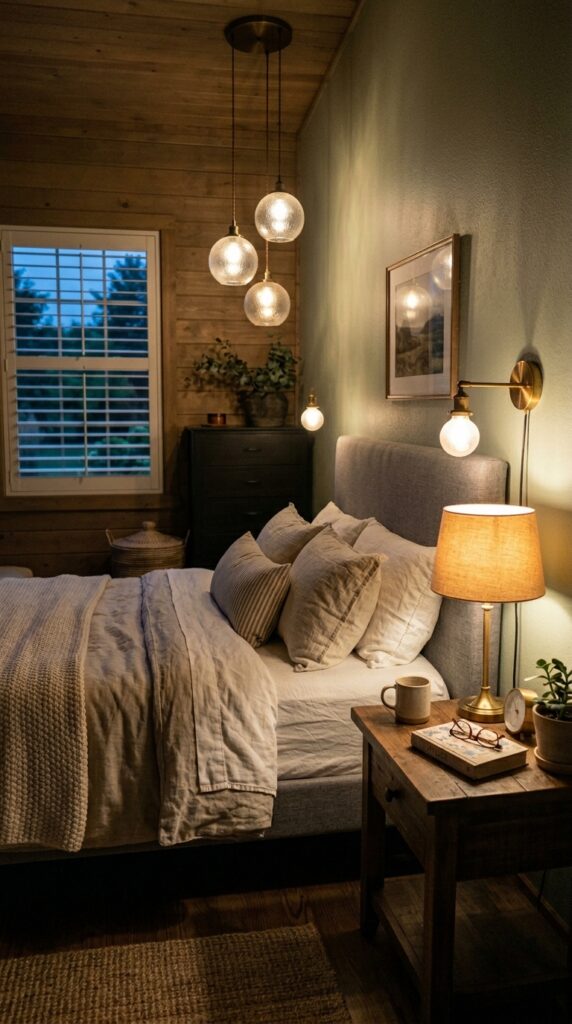
That single overhead light is your enemy. It’s harsh, unflattering, and makes you want to leave the room as soon as possible. Real bedroom lighting happens in layers: ambient (soft, indirect), task (for reading), and accent (because mood matters).
Start by ditching the ceiling fixture or at least putting it on a dimmer. Add bedside table lamps with warm-toned shades—ceramic, linen, or paper work beautifully. Layer in a wall sconce or two if your layout allows it. The magic happens when you can turn off the overhead light completely and instead live in the softer world created by multiple lower-level sources. If you’re renting and can’t modify the ceiling, a good table lamp and a floor lamp in opposite corners will do the trick.
Choose warm bulbs (2700K color temperature) across all sources—this doesn’t just look better, it actually helps your circadian rhythm wind down at night. Avoid anything with harsh white (5000K+) unless you’re using it specifically for getting ready in the morning. Good lighting is honestly one of the highest ROI improvements you can make. People notice it immediately, and you feel it every single evening.
5. Low-Profile Furniture
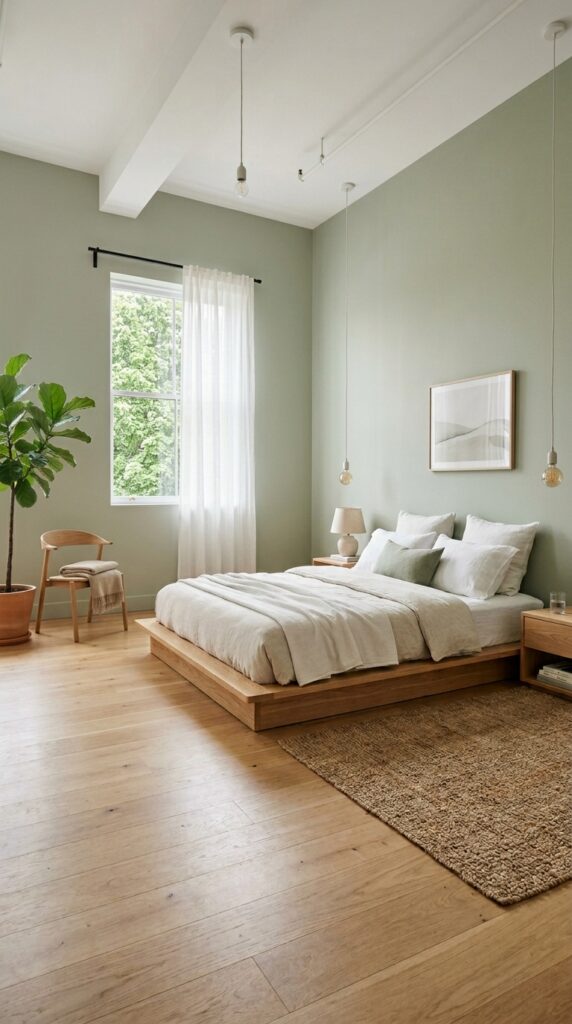
Tall furniture—four-poster beds, looming dressers, towering nightstands—visually shrinks a bedroom. Low-profile pieces do the opposite. A platform bed that sits closer to the floor, a long dresser rather than a tall one, nightstands that don’t tower above your head: these all make rooms feel more spacious and grounded.
This is especially critical in smaller bedrooms or rooms with lower ceilings. If your ceilings are on the short side and you’re currently sleeping on a bed with a thick box spring underneath, raising that mattress platform off the floor is a free win. Low furniture also creates a more relaxed, zen vibe—think Japanese design aesthetic. If you’re replacing pieces, prioritize a platform bed (which you can build yourself fairly easily or find affordable versions online) and wide, low dressers.
One practical note: if you’re short or have mobility issues, low furniture isn’t your friend. Know your own needs here. For everyone else, lower is typically better for the visual feel of a room.
6. Textured Accent Wall
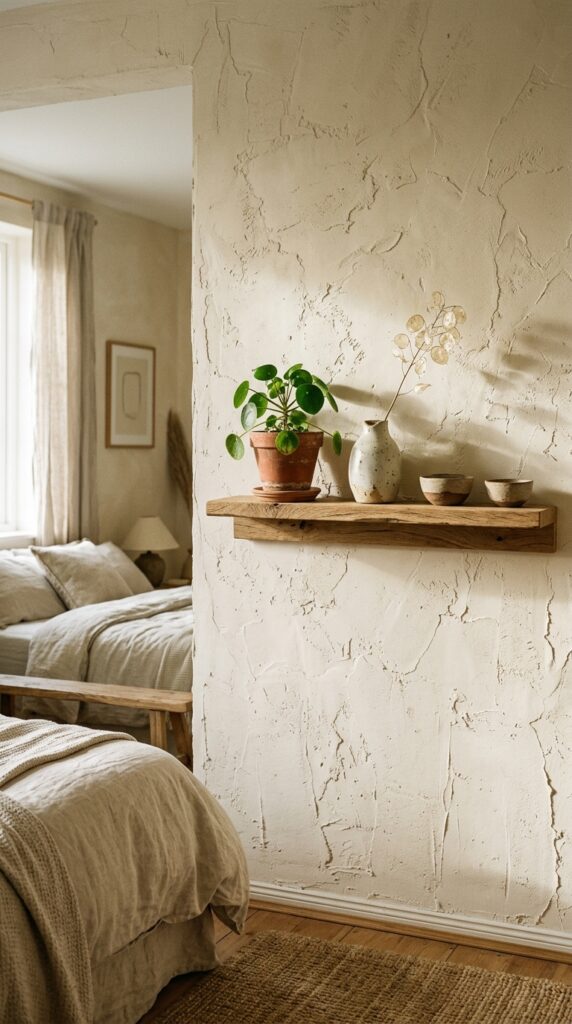
Paint with texture is the secret weapon of spaces that feel expensive but aren’t. A textured plaster finish, limewash, or even a subtle wallpaper pattern applied to one wall gives you depth and visual interest without the commitment of full wallpaper or the drama of a bold color.
The beauty is that textured walls look better in imperfect light—they create shadow and movement. If your room is very small or very plain, a single textured accent wall immediately elevates the space. You can go super subtle (barely-there plaster) or more pronounced (limewash with visible brushstrokes). Pair it with simple furnishings so the wall can breathe.
The catch: textured walls are harder to clean than smooth walls and can be tricky to patch if damaged. They’re also trickier to paint over later, so commit to the color choice. In rental situations, this might not be your move. But for owners, a textured wall is a beautiful, relatively inexpensive upgrade that completely changes how a room photographs and feels.
7. Natural Wood Accents
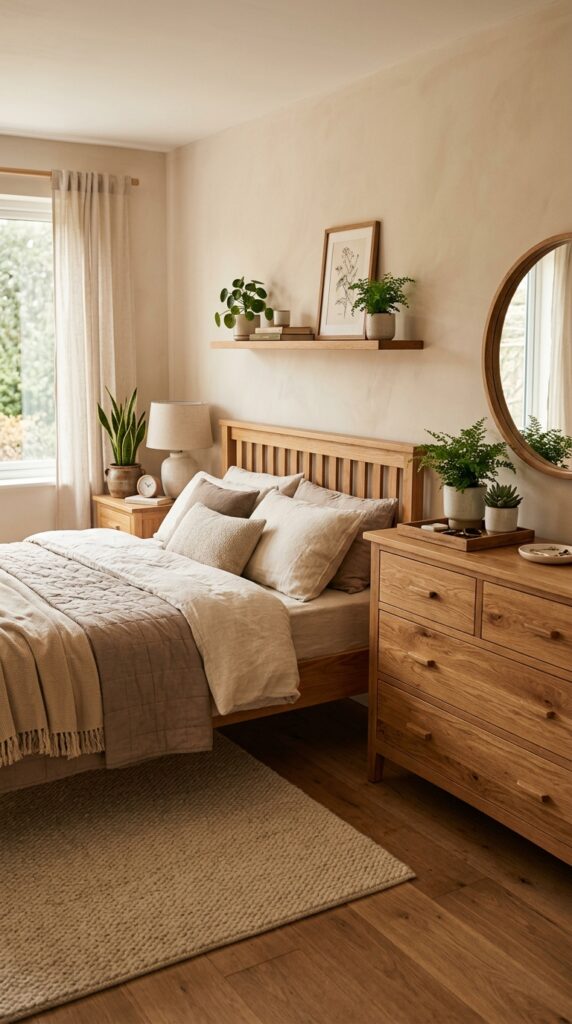
There’s a reason natural wood is having a major moment—it’s warm, it ages beautifully, and it instantly makes a room feel less sterile. If your bedroom is currently filled with white IKEA particleboard and gray upholstery, introducing natural wood (oak, walnut, pine, ash) immediately shifts the energy toward something more grounded and livable.
Start with what you already have: can you see the wood underneath that white paint? If you’re buying new pieces, look for solid wood or high-quality plywood at various price points. You don’t need everything to match—mixing two or three wood tones (say, light oak and darker walnut) actually looks more intentional than everything matching perfectly.
Natural wood also pairs beautifully with every other material—linen, leather, brass, rattan, stone. It’s a team player. The trade-off is that real wood costs more than particleboard, scratches more easily, and requires occasional maintenance. But if you’re planning to stay in your space for more than a few years, it’s worth the investment.
8. Renter-Friendly Peel-and-Stick Wallpaper
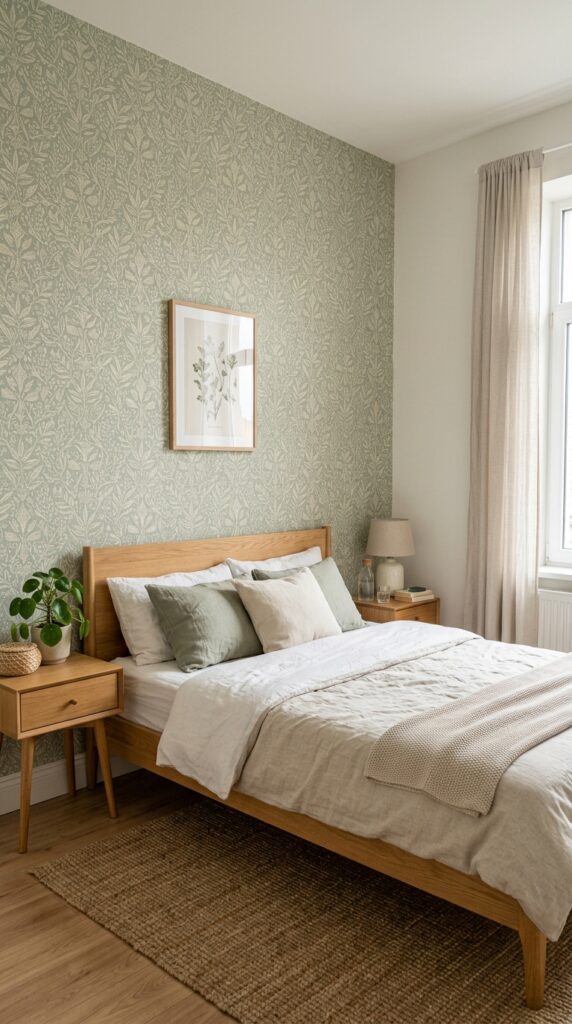
If you’re renting and can’t paint, quality peel-and-stick wallpaper has gotten genuinely good. This isn’t the flimsy stuff from twenty years ago—modern versions are durable, come in beautiful patterns and colors, and actually stick. The commitment is real but removable, which makes all the difference.
Apply it to one accent wall or even all walls. Patterns that work best in bedrooms are subtle—small-scale geometrics, botanical prints, tone-on-tone textures rather than busy florals that feel overwhelming when you’re staring at them from bed. Keep the rest of the room simple so the wall is the focus. Installation requires patience and a steady hand (or recruit a friend), but it’s absolutely doable without professional help.
The obvious catch is that peel-and-stick wallpaper is temporary—which is the whole point if you’re renting, but also means it won’t last forever in an owner-occupied home. Quality matters; cheap versions won’t last or will damage paint when you remove them. Invest in the good stuff, follow application instructions carefully, and don’t use it in high-moisture areas like ensuite bathrooms.
9. Window Treatments That Actually Fit
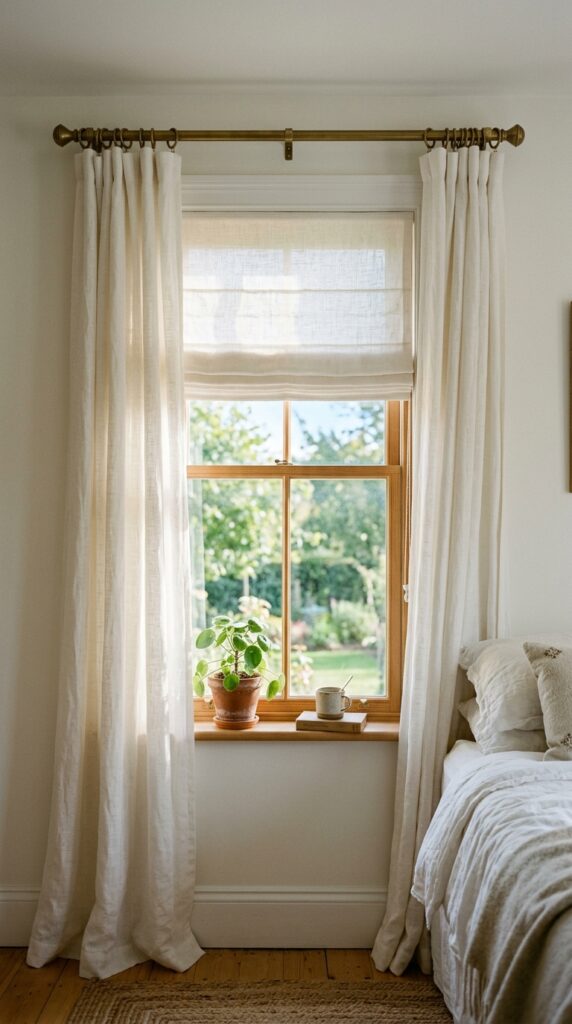
Most bedrooms have tragic window treatments: either no curtains at all or heavy drapes that look like they were selected by a hotel chain in 1997. Good window dressing is simple: it should fit your window properly, let you control light when you want to sleep, and complement your overall aesthetic.
Measure your windows carefully (width and height), then invest in curtains that actually reach the ceiling or at least the top of the frame and puddle slightly at the floor. Linen, lightweight cotton, or linen blends work beautifully and feel natural. Pair them with a simple rod in brass, wood, or matte black depending on your style. For light control, add Roman shades in a neutral tone—they’re functional without being fussy.
If you’re renting and can’t modify the walls, adhesive rods are your friend. The combination of beautiful fabric and proper fit makes windows look expensive and intentional. Avoid heavy velvet or over-patterned treatments unless your style genuinely leans that direction; most bedrooms look better with something quieter that lets the room’s other elements shine.
10. A Chair or Reading Nook
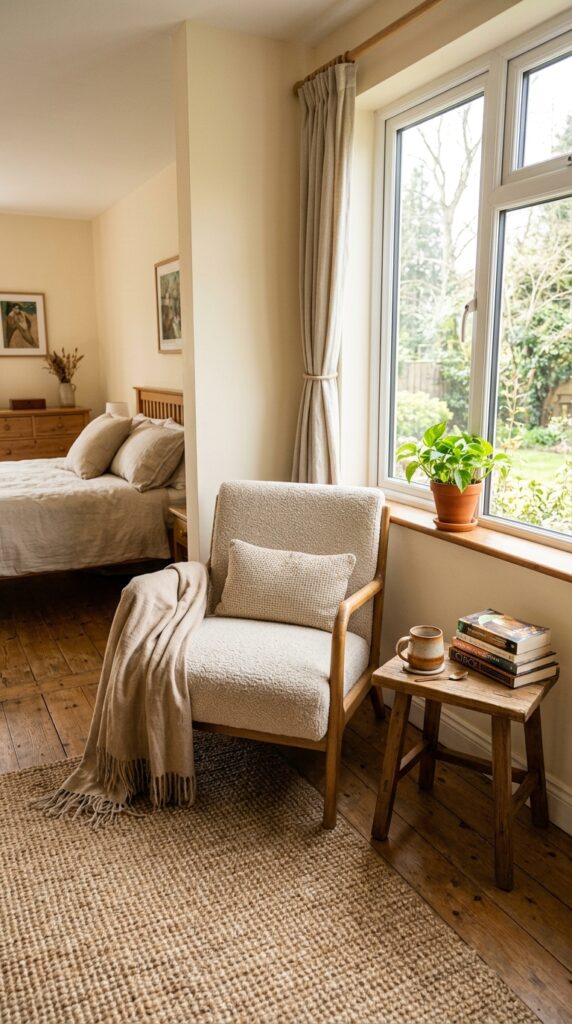
A bedroom doesn’t have to be all bed. If you have even a little extra floor space, a chair transforms the room from a purely functional sleep zone into an actual retreat. It signals that this room is for more than just collapsing at night—it’s for reading, thinking, sitting with your coffee, being alone.
The chair doesn’t need to be fancy or expensive. A secondhand wooden frame upholstered in linen or boucle, a midcentury recliner, even a simple Windsor chair works. Pair it with a small side table, a throw blanket, and a reading light, and you’ve created a micro-world within the room. If floor space is tight, even a single accent chair in one corner reads as intentional and luxurious.
This is especially valuable if you have a small bedroom—it’s a way to make the space feel like it offers more than just sleeping. Psychologically, it makes a big difference.
11. Minimal Art and Styling
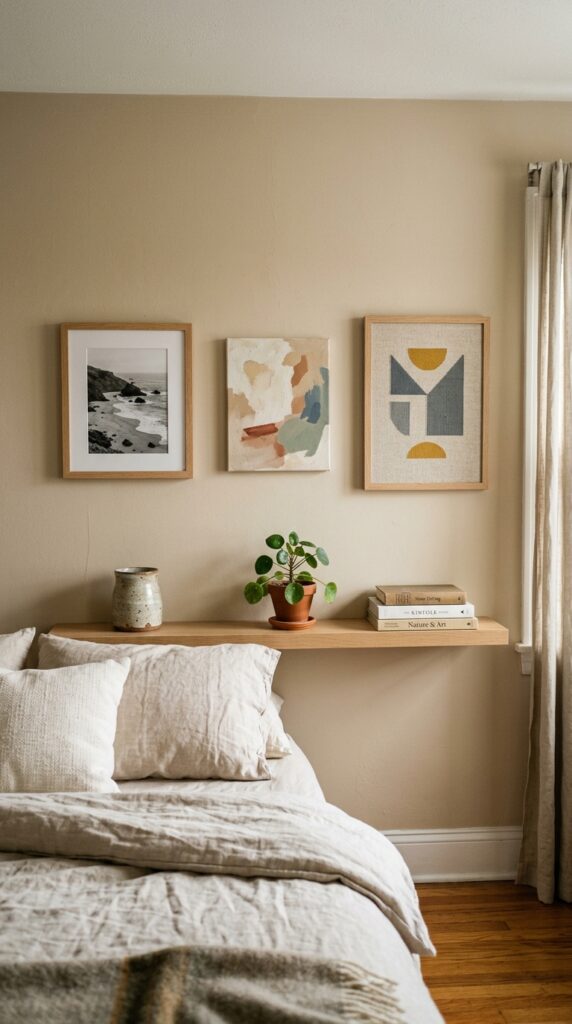
Less is more, especially in a bedroom. While other rooms can handle busy gallery walls and styled shelving, bedrooms look better when they’re calm. Choose maybe two or three art pieces that genuinely resonate with you, then give them space to breathe.
Avoid trends in bedroom art—florals, motivational quotes, oversized abstract pieces—unless they genuinely fit your life. Instead, opt for work that calms you: a black and white photograph, a subtle landscape, a textile that feels tactile, even an oversized print of something you love. Keep frames simple (wood, natural metal) and colors muted or monochromatic.
If you’re not an art person, consider other focal points: a simple floating shelf styled with three or four beautiful objects, a mirror with an interesting frame, or even just leaving wall space completely blank. White wall space is underrated. Your bedroom isn’t a gallery—it’s a place to rest.
12. Quality Throw Pillows and Blankets
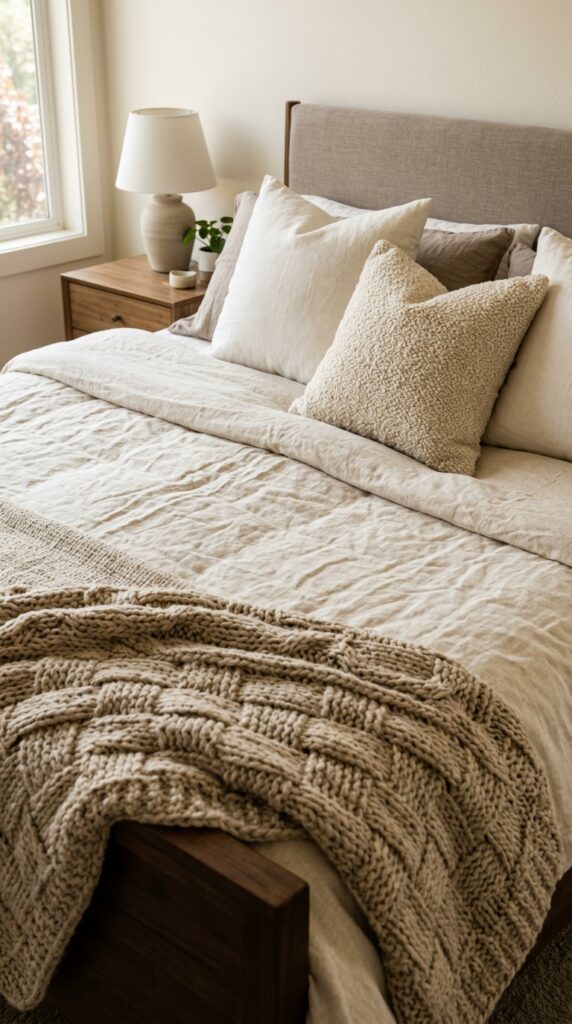
Throw pillows and blankets are where you can have actual fun with texture and subtle color without committing to permanent changes. Invest in good ones: natural fiber covers (linen, cotton, boucle), not poly blends. Skip the decorative square standard, and instead go for two larger pillows for sleeping and one smaller accent pillow in a different texture.
Layer in a chunky knit throw or a quilted blanket draped over the foot or side of the bed. These aren’t decorative—they’re actually used. Real styling looks lived-in, not staged. Mix textures: pair smooth linen with boucle or chunky knit. Keep colors cohesive (warm neutrals, muted tones) so it looks intentional rather than chaotic.
This is also an affordable way to refresh seasonally. Swap out a cream throw for a warmer terracotta one in winter, add lighter textures in summer. The joy of pillows and blankets is that they’re the most changeable element of your bedroom.
13. Calming Scent and Sound
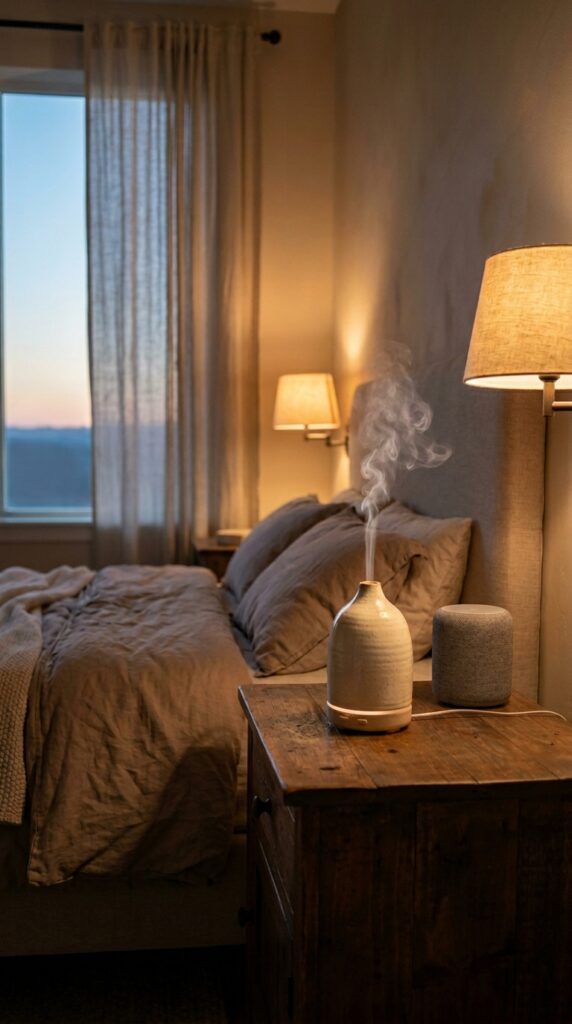
You can’t see scent or hear silence, but they completely shape how a space feels. A bedroom should sound quiet (or gently filled with ambient sound like a white noise machine or soft music) and smell clean and subtle, never perfume-y or cloying.
Invest in a good diffuser if scent matters to you—use natural essential oils in calming scents like lavender, cedarwood, or chamomile, but sparingly. You shouldn’t smell it the moment you walk in; it should be almost subliminal. For sound, consider a white noise machine if you live in an urban area or a noisy building, or just keep the room quiet. Soft music or ambient soundscapes work beautifully as background texture, especially if you’re wind-down before sleep.
The trade-off: strong scents can trigger headaches or asthma in some people, and white noise isn’t for everyone. Know your own sensory preferences. If your partner is smell-sensitive or a light sleeper, this is a conversation to have.
14. Mirrors and Reflection
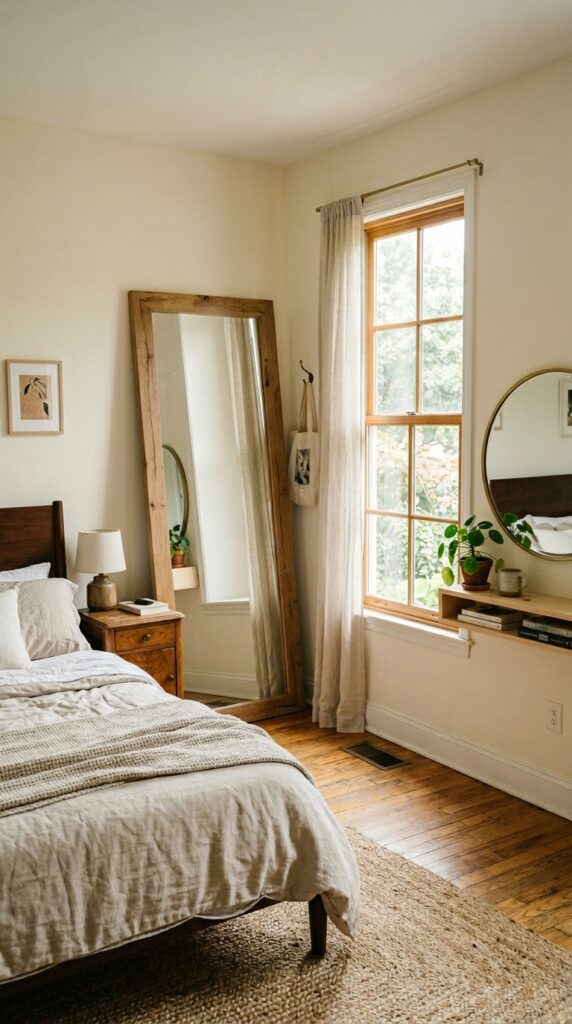
A mirror positioned to reflect light from a window is the cheapest, easiest way to make a small bedroom feel bigger and lighter. Lean a large mirror against the wall opposite your window, and suddenly your room reads as twice as bright and twice as spacious.
Beyond function, mirrors also add visual interest and break up blank walls. Look for frames in natural wood, brass, or simple metal rather than ornate gold or plastic. Round mirrors soften a room; rectangular ones feel more modern and clean. Place mirrors strategically: opposite a window if you can, or on a wall that catches the most light.
The main thing to avoid: placing a mirror so it’s the first thing you see when you wake up (creepy) or so it reflects clutter directly back at you (defeats the purpose). Think about sightlines and what the mirror will actually show.
15. Plants and Greenery
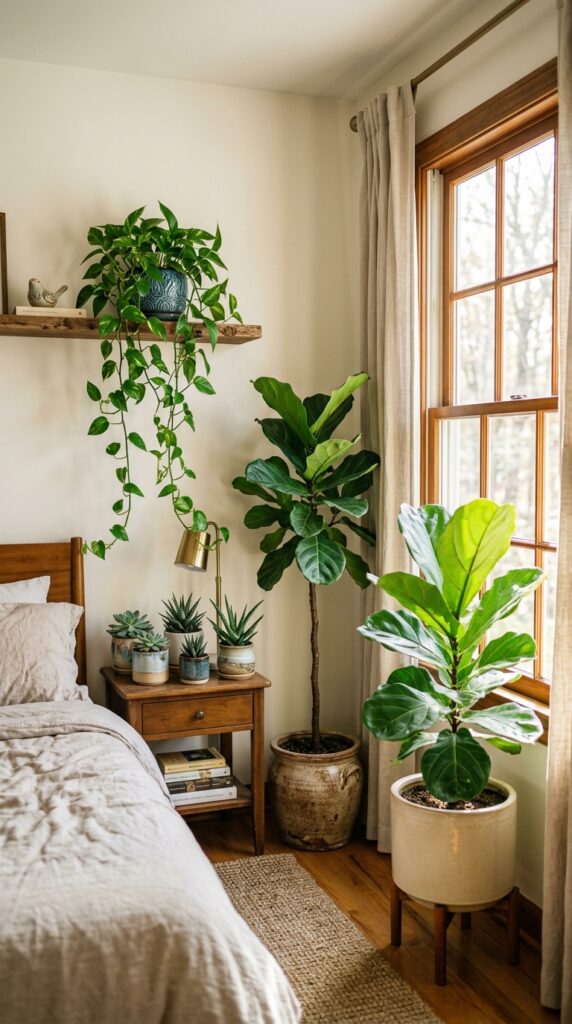
Plants are a non-negotiable bedroom upgrade. They improve air quality, add life and texture to a room, and give you something living to care for. Even if you’ve killed every plant you’ve ever touched, there are plants for you: pothos, snake plants, ZZ plants, and cast iron plants are genuinely difficult to kill.
Start with one or two large plants (a ficus, a monstera) and layer in smaller ones on nightstands or shelves. Group them in odd numbers for visual interest. Water them once a week, rotate them occasionally, and let them be actual plants—spotty, a bit wild-looking—rather than perfectly manicured showpieces.
Plants also give you an excuse for natural light; you’ll keep your curtains open to care for them, which naturally brightens your room. If you have zero natural light, choose shade-tolerant plants or accept that you’ll need a grow light.
16. Weighted Blanket for Comfort
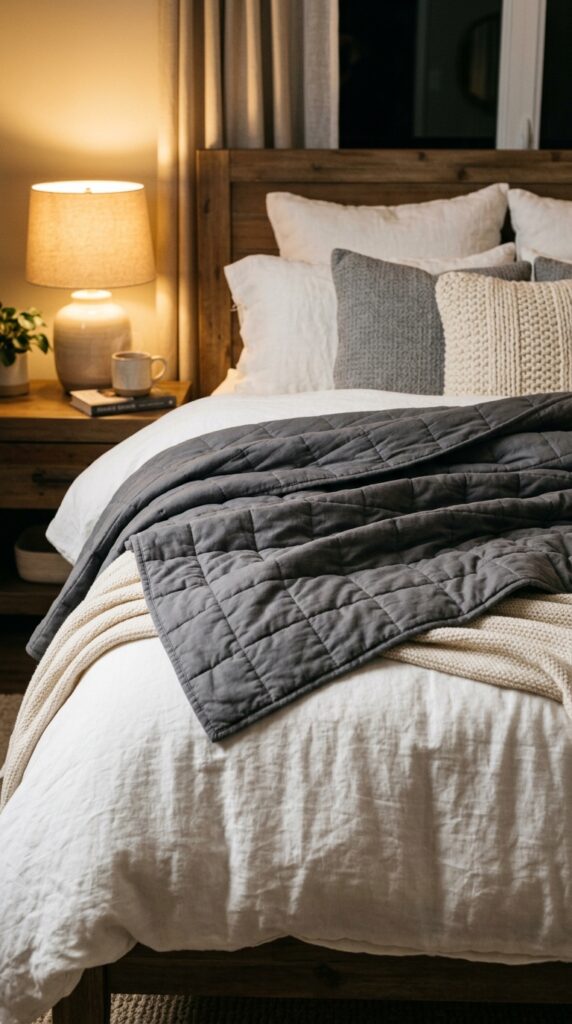
A weighted blanket is one of those purchases that sounds silly until you actually own one, and then you wonder how you lived without it. The even pressure genuinely helps some people sleep better and feel calmer. Whether it’s placebo or science, the effect is real.
Layer it over your regular duvet or quilt so it’s part of the aesthetic, not a separate thing. Choose a weight appropriate for your body (roughly 10 percent of your body weight is the guideline) and a cover in a natural fabric you actually want to touch. A weighted blanket in linen or cotton beats one in polyester or fleece every single time.
The catch: they’re expensive (good ones are $150+), and not everyone finds them helpful. If you have back problems or run very hot, they might not be your move. But if you struggle with sleep or anxiety, this is worth trying at a friend’s house first before committing.
17. Underbed Storage Solutions
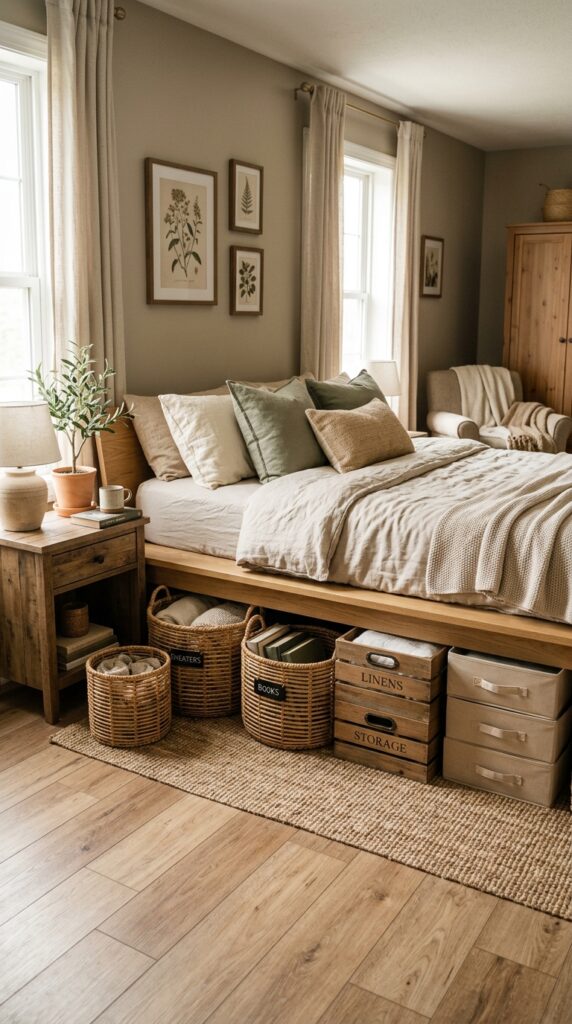
Your bedroom probably doesn’t have enough storage, and that mess underneath the bed isn’t doing you any favors. Underbed storage that’s organized and beautiful transforms dead space into functional asset.
Invest in rolling storage boxes, woven baskets, or wooden bins that fit under your bed. Seasonal items (winter clothes, extra quilts, holiday decorations) are ideal candidates. Label them or take a photo so you know what’s where without having to peek. The key is making sure what’s stored under the bed is actually useful and not just “stuff we’re ignoring.”
If your bed is very low, underbed storage might not be realistic—but that’s also why low beds are great. They force you to be intentional about what you keep in the room.
18. A Fresh Paint Color That Actually Works for You
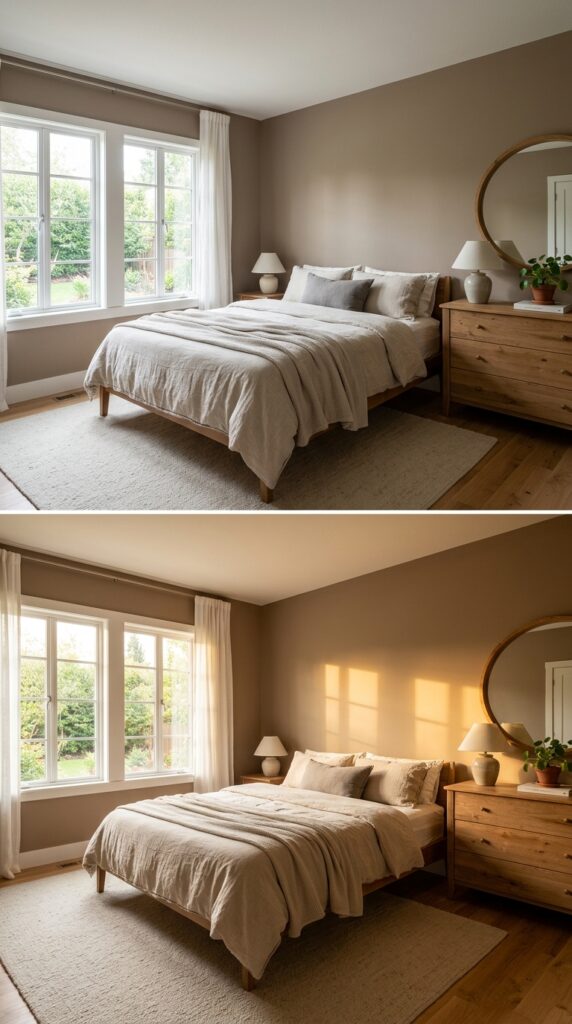
If your walls are still that beige-gray the landlord painted them, it’s time to change. Paint is the biggest impact change you can make for the least money (assuming you’re not paying someone to do it for you).
Choose a color that actually calms you. Blues and greens are universally soothing; warm neutrals feel cozy; muted pastels work if they’re truly muted. Avoid pure white (sterile) or anything too trendy-bright. Paint one wall if you’re cautious, or commit to all four if you’re ready. Test your color with samples on multiple walls at different times of day—natural light changes how colors read.
The formula that almost always works: walls one shade, trim one shade lighter, accent wall (if desired) one shade deeper. This creates a cohesive, intentional look without being boring. And remember: you can always repaint. It’s not a lifetime commitment.
19. Proper Mattress and Pillow Investment
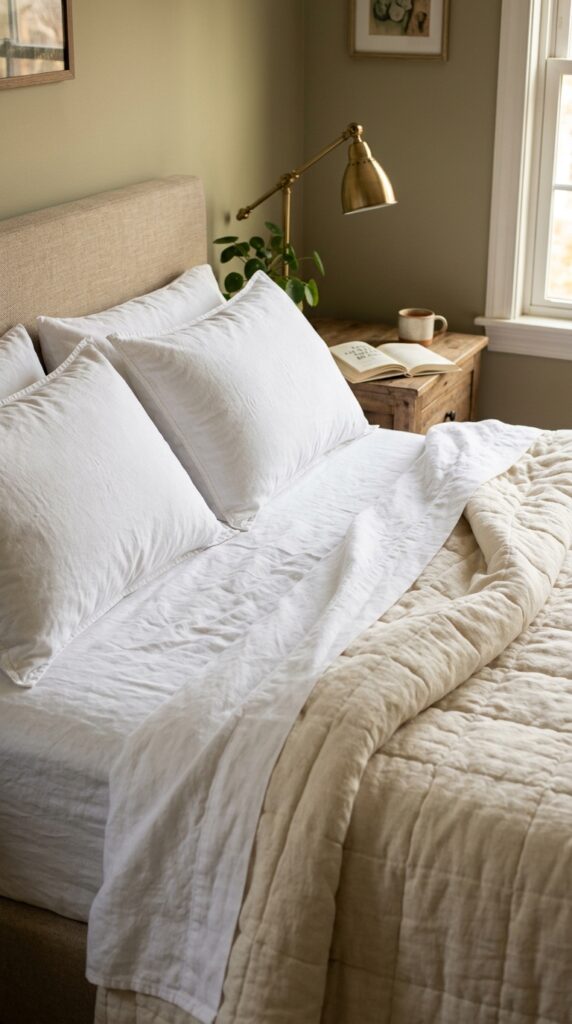
You spend a third of your life in bed, and yet most people sleep on a mattress that’s older than their car and pillows that feel like rocks. This is the area where cutting corners literally costs you sleep and health.
A good mattress lasts 7-10 years and should support your spine properly. A good pillow is one that actually supports your neck, not flattens it after one night. These aren’t areas to buy the cheapest option available. Test mattresses in person, read reviews from actual users (not marketing speak), and invest in longevity.
Same goes for sheets: quality cotton or linen sheets actually improve how you sleep, and they last longer than cheap ones. A good pillow from a reputable brand beats five cheap pillows. This is one area where spending more actually translates to better sleep.
20. Dimmable Bulbs Throughout
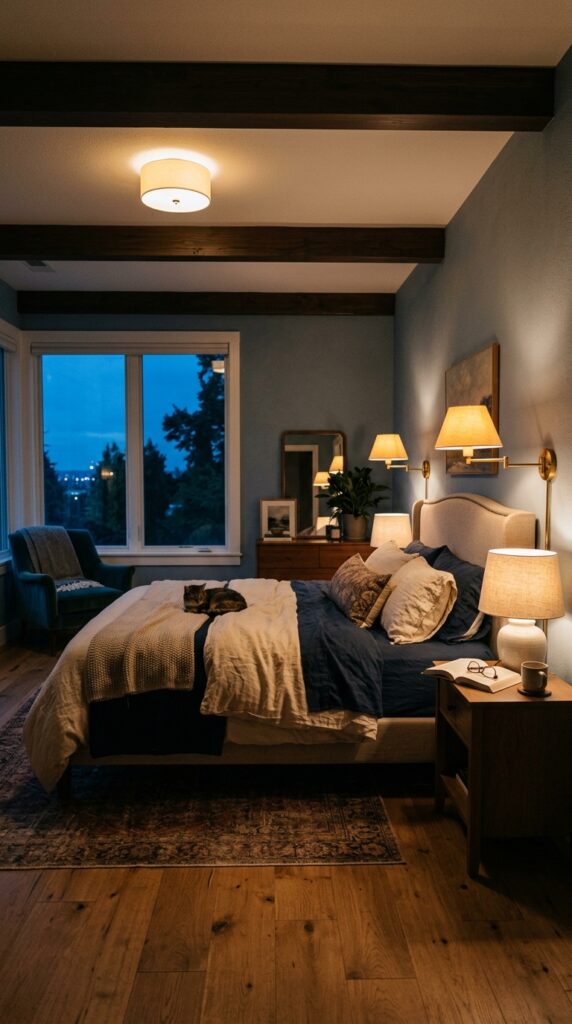
You already know overhead lights are harsh, but what about your bedside lamps and other fixtures? Make sure every bulb in your bedroom is dimmable and warm-toned.
This isn’t about expense—dimmable warm bulbs cost maybe a dollar more than regular ones. But the difference in how your room feels at 50 percent versus 100 percent brightness is enormous. You can keep the same fixtures and lamps but control the ambiance through bulb choice.
Buy bulbs in 2700K color temperature (warm white) and make sure they’re dimmable. Test them in your fixtures before fully committing. Once you’re living in a room where you can control light intensity throughout the evening, you’ll never go back.
21. Floating Shelves for Minimal Storage
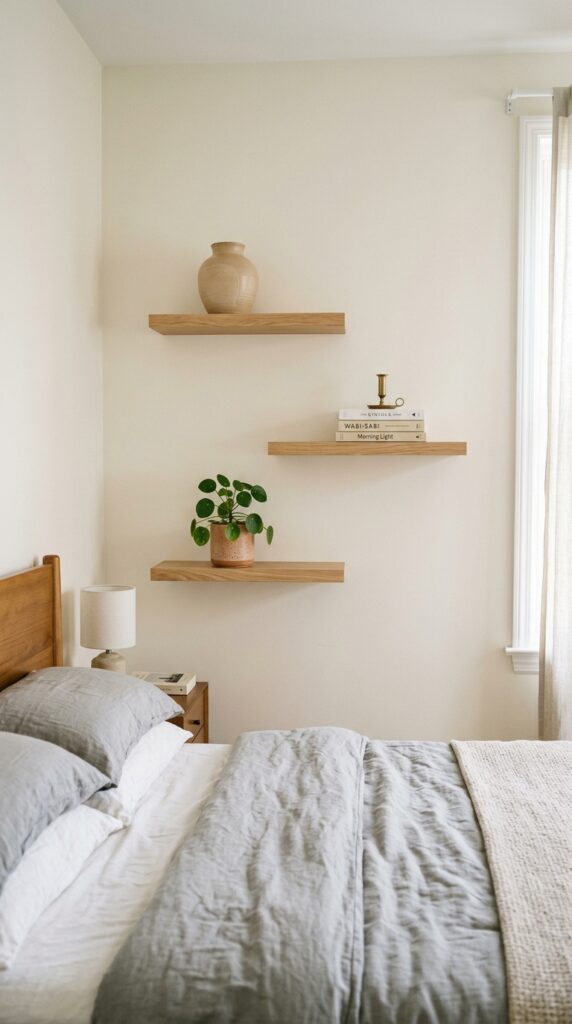
Floating shelves are the perfect compromise between open storage and actual function. They’re renter-friendly (removable), affordable, and visually cleaner than a dresser or cabinet.
Install them at different heights for visual interest, and style them with intention: books, a plant, one beautiful object, then space. Floating shelves are easy to style badly—resist the urge to cram them. Three objects per shelf is plenty. Use them for things you actually use or genuinely love, not just storage overflow. If a shelf becomes a catchall for junk, it defeats the purpose.
For renters, adhesive shelves exist, though they’re less sturdy than mounted ones. For permanent homes, good shelves installed properly can hold a surprising amount of weight while looking light and airy.
22. A Cohesive Fabric Palette
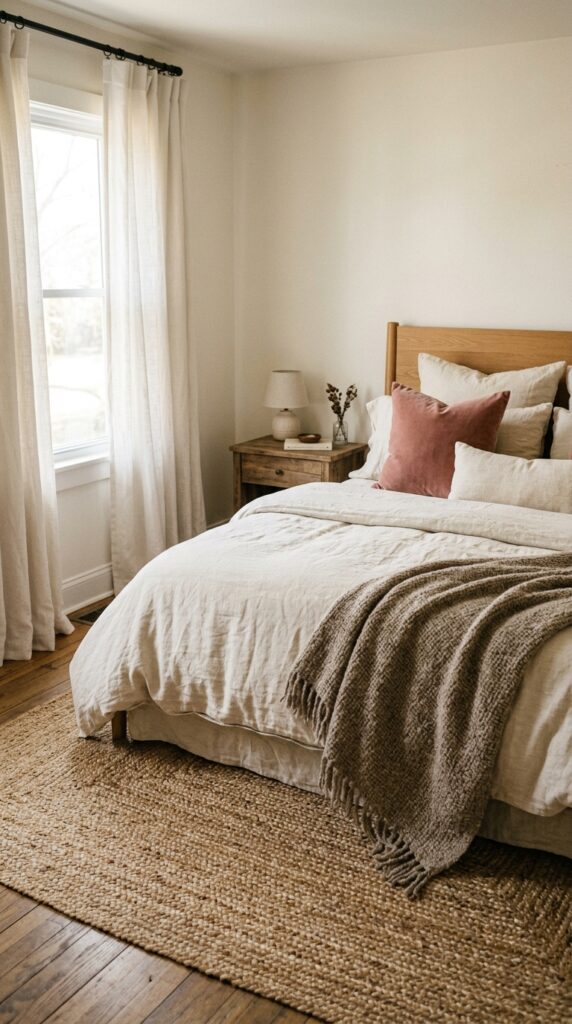
Your bedroom doesn’t need to be monochromatic, but it does need a coherent fabric story. Choose two or three neutral colors (warm white, cream, taupe, soft gray) and layer in different textures: linen, cotton, wool, maybe a touch of velvet or boucle.
This creates richness without chaos. Your eye reads it as intentional rather than like you just bought whatever was on sale. A cream linen duvet, a taupe wool throw, and cream linen curtains with cream velvet accent pillows create luxury through coherence, not through price tags.
When adding a new textile piece (throw blanket, new pillows), ask yourself if it fits the existing palette before buying. This discipline makes a room feel collected rather than chaotic.
23. A Bedroom That Reflects Your Life
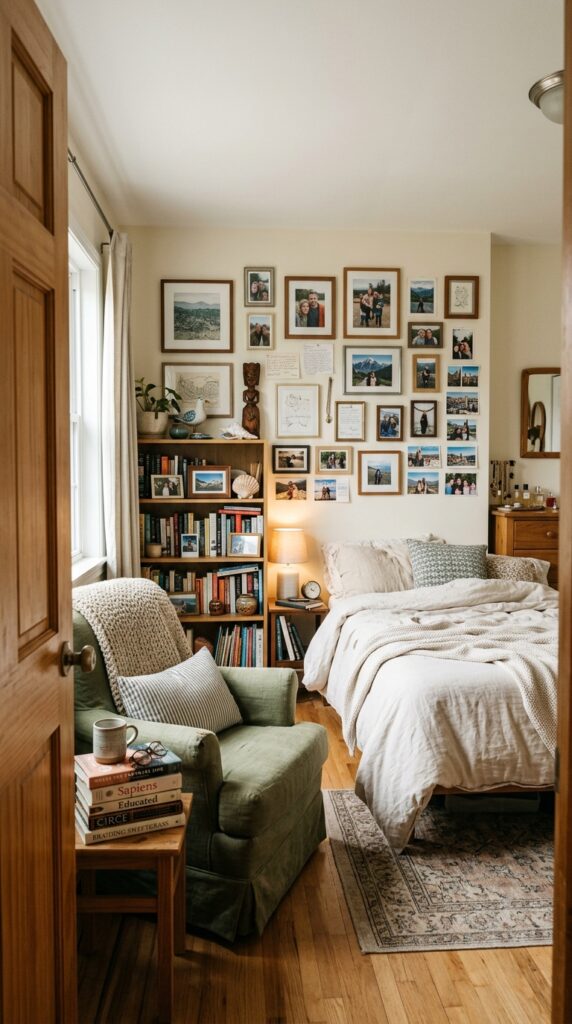
The most beautiful bedrooms are the ones that look like actual people live in them. Not Pinterest boards. Not hotel rooms. Real homes where the person sleeping there likes being awake.
If you love reading, make it visible: a stack of books on your nightstand, a shelf of favorites, a reading chair. If you’re a night person, own it—bright task lighting and a setup that supports you being awake and alert at 11 p.m. If you’re into art or photography, display work that genuinely moves you rather than generic corporate prints. If you have a partner, make space for both of your personalities and needs.
A bedroom that actually reflects who you are will feel better, look better, and make you happier every single day than one designed according to someone else’s rules. This is your space. Make it yours.
24. Sound Absorption for Better Sleep
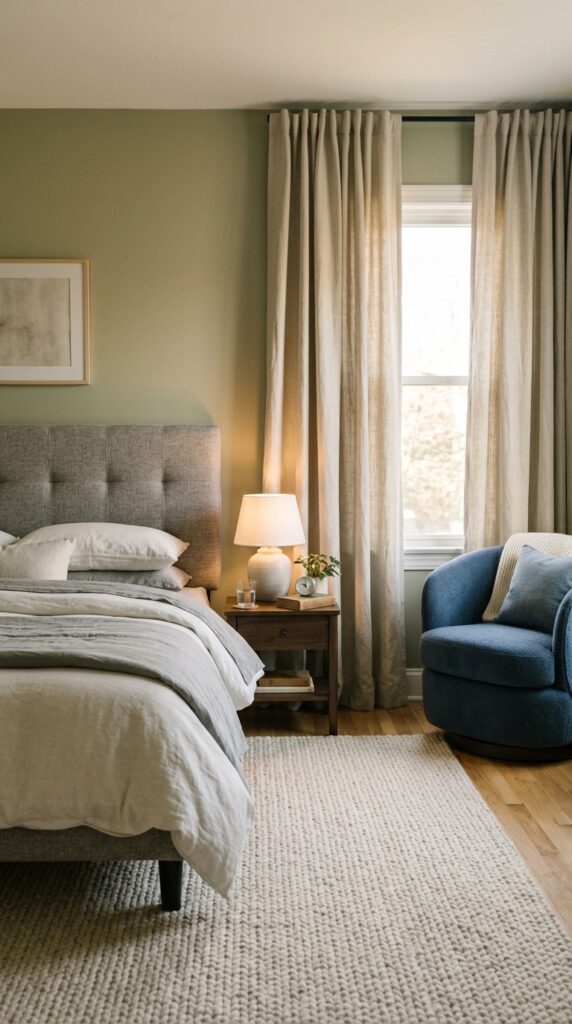
Hard surfaces—bare hardwood, drywall, windows—bounce sound around. If your bedroom echoes or feels acoustically harsh, layering in sound-absorbing materials makes an actual difference in how the room feels.
Heavy curtains, plush area rugs, upholstered furniture, and fabric wall treatments all help absorb sound. A padded fabric headboard isn’t just pretty; it actually deadens the acoustics of the room. If you live in an apartment and can hear neighbors’ sounds, these additions genuinely help. If you snore or your partner does, strategic soft furnishings help contain the sound. It’s not a perfect solution, but it’s part of the puzzle.
This is especially important if your bedroom is also your work-from-home space, since acoustic quality affects how you sound on video calls and how fatigued you become sitting in an echo-y room.
25. A Regular Refresh Rhythm
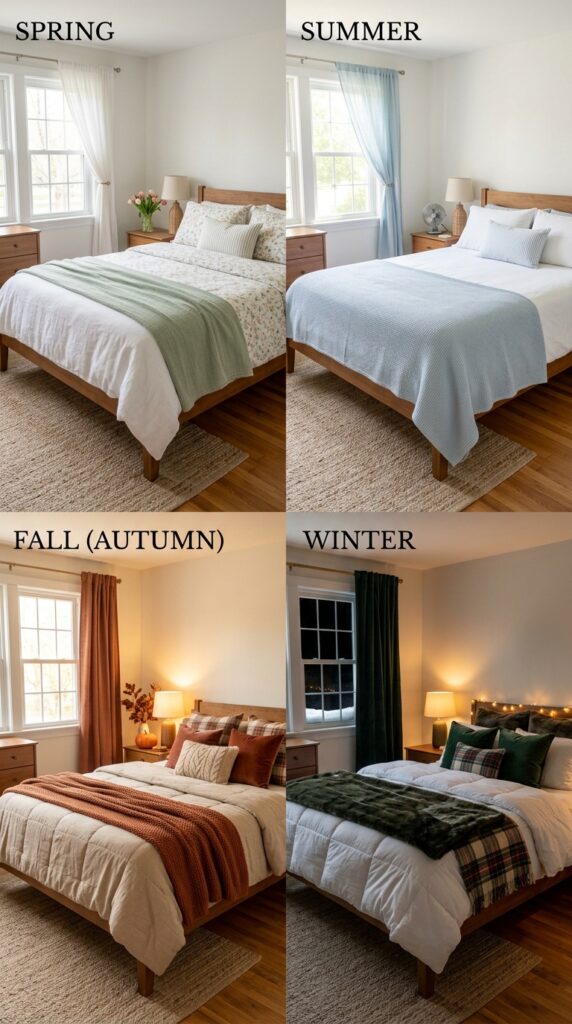
Your bedroom doesn’t have to stay exactly the same year-round. Seasonal swaps—throw blankets, pillow textures, even wall art—keep a space feeling fresh without requiring major renovations.
In summer, strip back to linen sheets and lightweight textiles. Open your curtains wider. Use lighter, brighter accent pillows. In winter, layer in chunky knits, heavier throws, warmer colors. Swap art seasonally if you have multiple pieces. Change your reading light intensity based on daylight hours. These small shifts cost nothing but time and keep your room from feeling stale.
Schedule a 15-minute “bedroom refresh” quarterly: check that everything is functioning properly, swap out tired pillows, reorganize surfaces, maybe rearrange furniture if it’s serving the space less well than it used to. A well-maintained bedroom ages beautifully.
Conclusion
Your bedroom is the most intimate room in your home. Unlike living rooms designed for impressions or kitchens optimized for function, bedrooms exist purely for you. They’re not a performance space. They don’t need to photograph well for Instagram (though there’s nothing wrong with that). They need to feel right—calm, personal, comfortable, and genuinely yours.
The best bedroom refreshes aren’t about following trends or copying someone else’s aesthetic. They’re about honest assessment: What actually makes you happy when you walk in? What drains the space? What small change would make you want to linger longer? Sometimes it’s paint. Sometimes it’s better lighting. Sometimes it’s just permission to make the space less “perfect” and more human.
Start small if you want. Paint one wall. Invest in better bedding. Add a chair. Each change compounds, and soon you’ll have a bedroom that doesn’t just look fresher—it feels fresher. A space that supports good sleep, good rest, and the quiet moments that fill your life. That’s not interior design. That’s building a refuge.