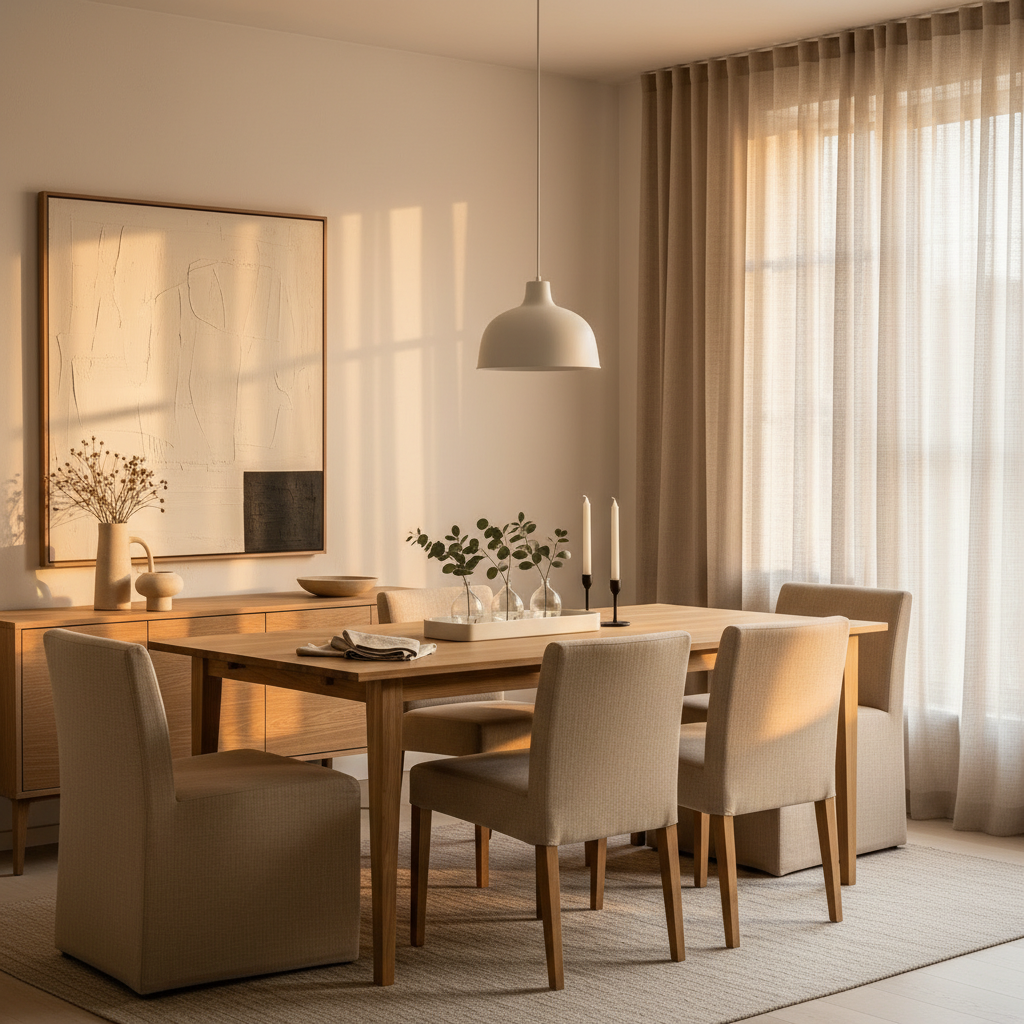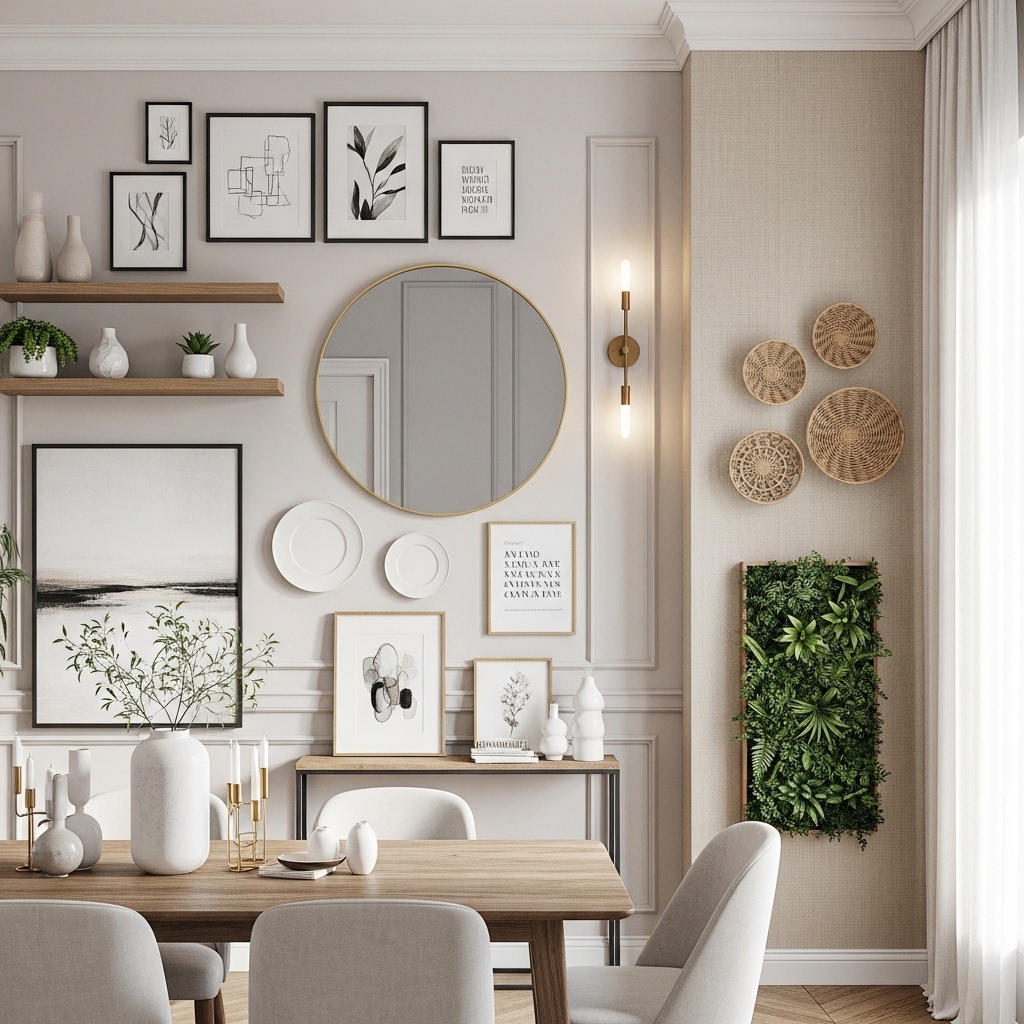
You bought the matching set. The cushions are plump, the umbrella is tilted just so, and the whole thing looks like a catalog page. But two weeks in, you notice something: no one sits out there. The metal gets too hot by noon. The cushions collect pollen like a filter. And the table is too small for a pizza box and two drinks, let alone a real meal. That moment—when a patio looks perfect but feels useless—is exactly where this article starts.
Most patio advice skips the hard part. It tells you to buy string lights and a fire pit and call it a day. But string lights look sad when they sag, and fire pits smell like regret if you sit downwind. The internet is full of aspirational photos that ignore rain, rust, and the way a low sun makes white furniture blinding. I’ve lived through all of it. I’ve bought the wrong rug, the wrong table, the wrong everything. This list is not a roundup of pretty pictures. It’s 18 ideas that actually survive summer—your summer, with its bugs, its heat, your actual budget.
1. The Ground That Won’t Fight You: Decomposed Granite
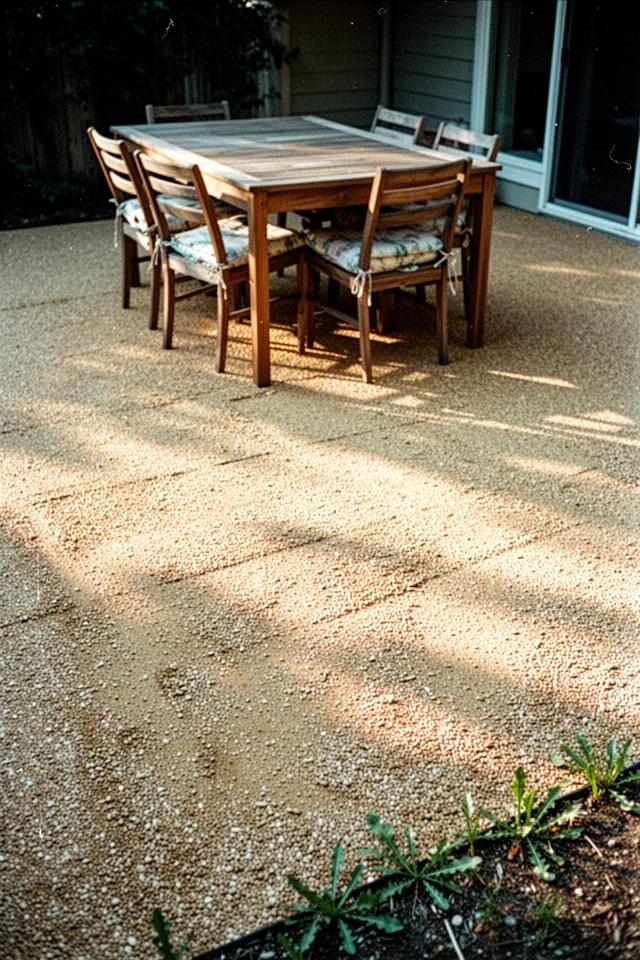
I ripped out my first patio—concrete pavers that shifted and grew moss—and replaced it with decomposed granite. Best decision I ever made. DG is crushed stone that packs down hard enough to walk on in heels but drains instantly. No standing water. No cracked slabs. It shifts slightly underfoot in a way that feels more like a garden path than a parking lot. The color is warm—kind of a dusty gold—and it gets softer as it ages.
The trade-off? It spreads. You need an edging border—steel or stone—or it will migrate into your lawn after every heavy rain. And it’s dusty when dry, especially if you use the fine-grade stuff. Go with “¾-inch minus” or “crusher fines.” A 50-pound bag costs about $8, and you’ll need maybe 20 to 30 for a 10×10 area. Rent a plate compactor. Your knees will thank you.
Decomposed granite is the only patio surface that gets better-looking the more you walk on it.
2. The Sofa That Doesn’t Need to Be Stored Every Night
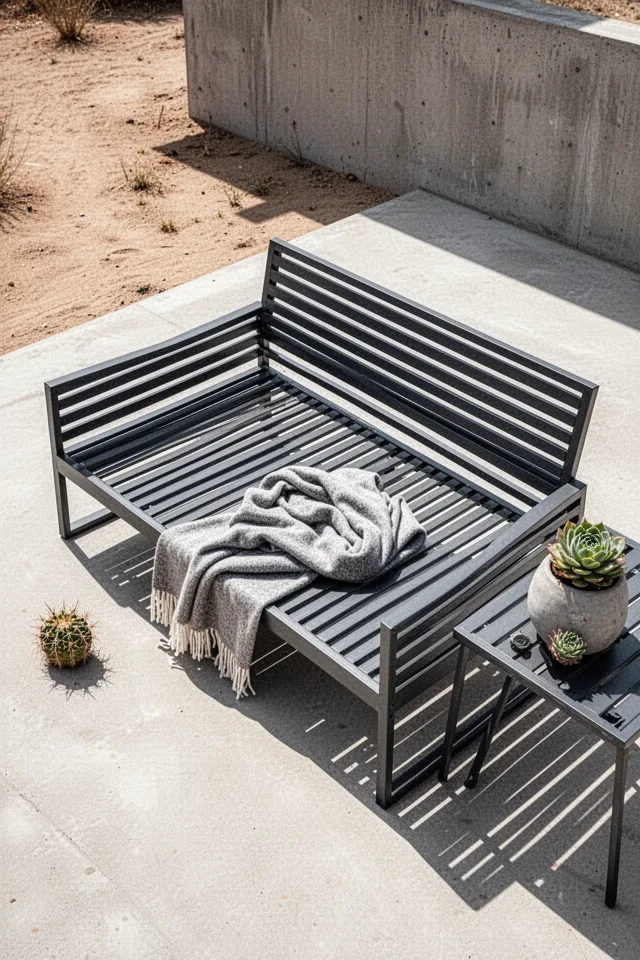
Here is the honest truth: outdoor cushions are a racket. They mildew, they fade, they hold water like a sponge, and they look terrible after one season. I switched to a fully cushioned sofa made of synthetic wicker with quick-dry foam. Still hated it. Now I use a solid aluminum frame sofa with woven vinyl strapping—like the stuff on old-school deck chairs but thicker. No cushions at all. You sit on the straps. It dries in five minutes. It never needs to be covered.
Is it as soft as a cushioned sofa? No. But throw on a couple of outdoor pillows—the kind with removable, machine-washable covers—and it’s perfectly comfortable for an evening. And you don’t have to drag anything inside when the rain starts. This is a $200-plus commitment if you buy new, but used ones show up on Facebook Marketplace for under $100 because people don’t know what they’re missing. Look for “sunbrella strapping” or “vinyl weave.”
Cushions are for inside. The best outdoor sofa is one you can hose off and forget.
3. Stop Buying Fire Pits. Get a Chiminea.
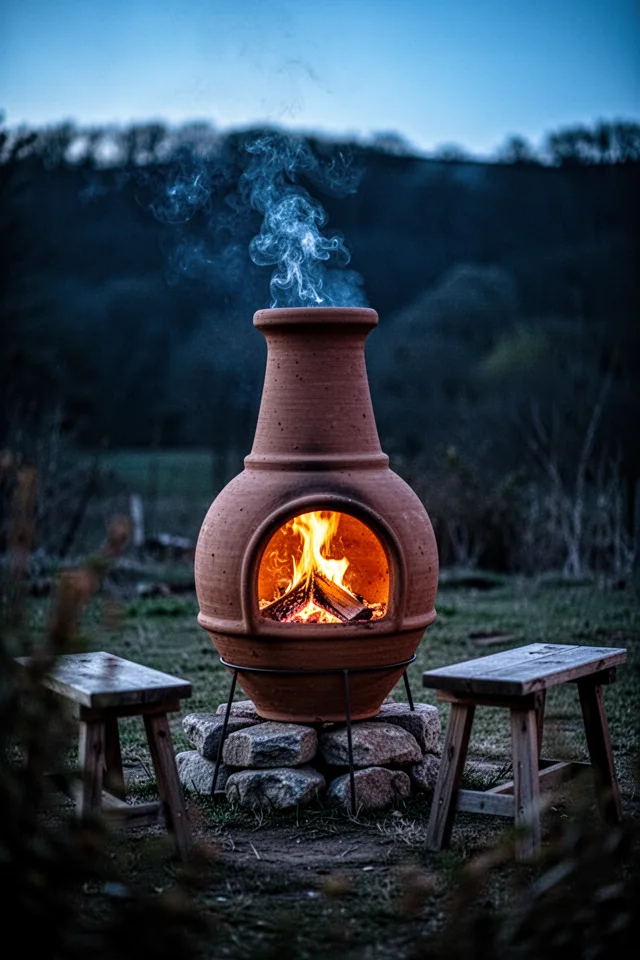
Everybody buys a fire pit. Then they discover it heats only the side of your face, fills the whole patio with smoke, and takes up the space of a small car. I’ve owned both. The chiminea is better. It’s a freestanding, potbellied fireplace that funnels smoke up and away. You can sit right in front of it—within two feet—and feel heat evenly. The fire burns small but hot, so you use less wood. And it looks like a real piece of garden architecture, not a prop.
The catch: clay chimineas crack. Buy a cast-iron or steel one instead. They cost around $150 to $250, but they last ten years. Also, you need a stable base—pavers or gravel—because they’re top-heavy. And don’t try to cook in it. Chimineas are for heat and mood, not s’mores. For that, get a separate little grill.
A chiminea gives you actual warmth, not just a photo op. Fire pits are for photos.
4. The Only Shade That Works in Real Life: A Shade Sail on a Friction System
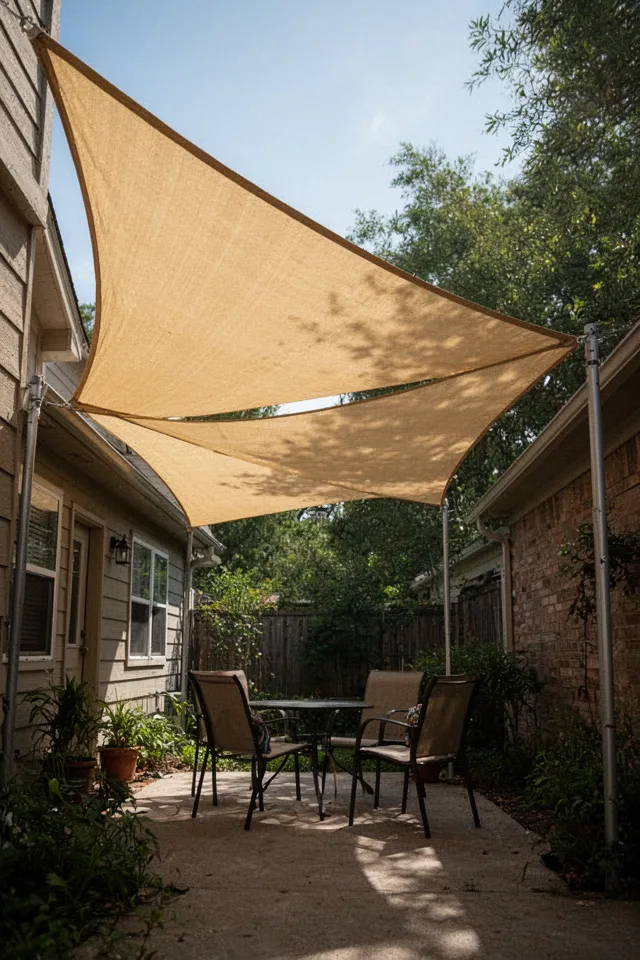
Umbrellas are useless in wind. Cantilever ones wobble. Fixed awnings are expensive and permanent. I spent two summers fighting with a cheap umbrella that flipped inside out every Tuesday. Now I use a shade sail attached to three points—one on the house, two on telescoping poles that I can move. The trick is to not tighten it completely. A slight dip lets wind pass over without ripping the fabric. When the sun moves, I shift the poles. Whole setup cost about $80–$120, fabric included.
The material that survives UV best is high-density polyethylene (HDPE) in a light color—not the dark green stuff that cooks you. Light beige or cream reflects heat. It will fade over two or three years, but that’s fine. Replace the fabric for $30. One thing nobody tells you: shade sails work best in morning or late afternoon. At noon, the shade is directly underneath, so you need a bigger sail than you think.
Don’t fight the wind. Give your shade sail some slack. It’ll last twice as long.
5. The Outdoor Rug That Won’t Slide, Curl, or Blow Away
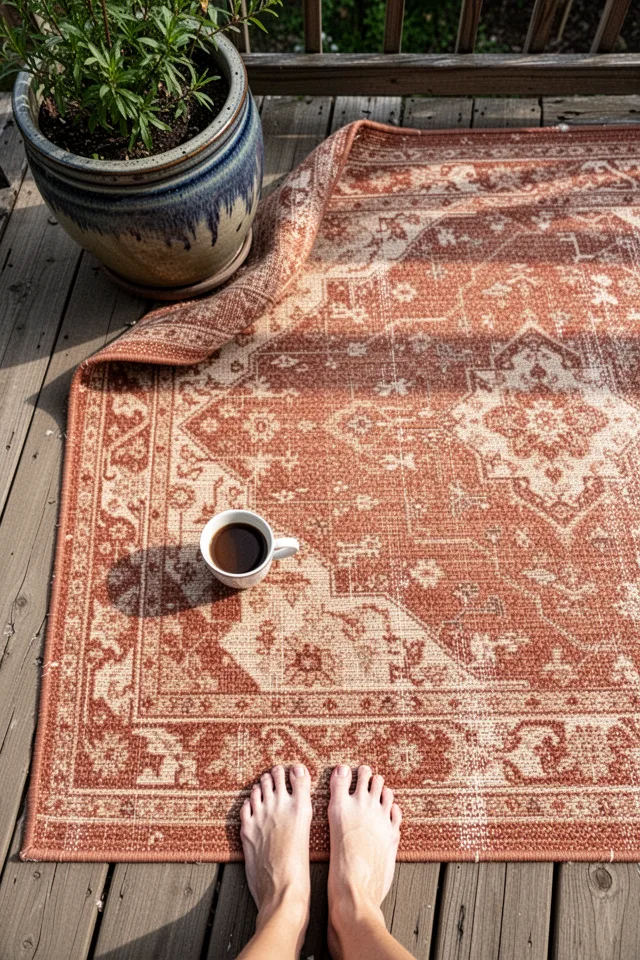
Most outdoor rugs are garbage. They’re made of polypropylene that looks like a car mat, and they slide the first time you walk on them. The version that actually holds up is a flat-weave cotton or recycled PET rug with a latex backing. But even that needs help. Buy a roll of rug gripper tape—the kind used for indoor stairs—and apply it to the concrete or wood underneath. It’s not perfect in heavy wind, but it stops the rug from shifting when you push your chair back.
One thing nobody talks about: outdoor rugs trap moisture underneath. If you have a wooden deck, lift the rug every few weeks and let the wood breathe, or you’ll get rot. On concrete, it’s fine. Colors that look good for more than one season are terracotta, navy, or ivory—stay away from black or white, which show every bit of pollen. Expect to spend $50–$100 for a 6×9. And don’t bother with a rug pad. The tape works better.
An outdoor rug is just a stain you can roll up. Buy something you don’t mind replacing in two years.
6. The Coffee Table That Stores Everything You’re Embarrassed About
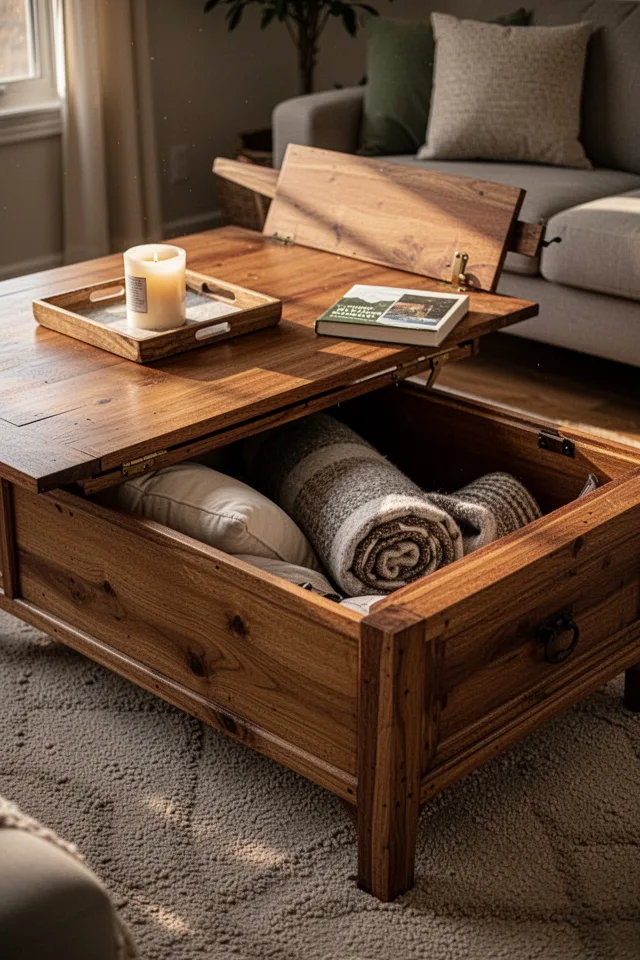
Every patio ends up with a pile of stuff—coasters, bug spray, a deck of cards, mismatched cushions. The trick is not to put it away, but to give it a home inside your table. I found a teak storage trunk that doubles as a coffee table. The top lifts up, and inside I keep everything that would otherwise sit on the table and look like a yard sale. When guests come, close the lid. Instant clean.
The material matters: teak and eucalyptus resist moisture, but they need oiling every year or they’ll turn grey. I actually prefer the grey—it softens the look. Avoid anything with a painted finish; it will peel in the sun. Price range: $150–$300 for a decent one. If that’s too steep, use a galvanized metal toolbox from a hardware store for $40. Paint it or let it rust. It looks industrial and cool, and it’s waterproof.
A coffee table that opens is a guest’s best friend and your mess’s worst enemy.
7. How to Keep Bugs Away Without a Citronella Candle in Sight
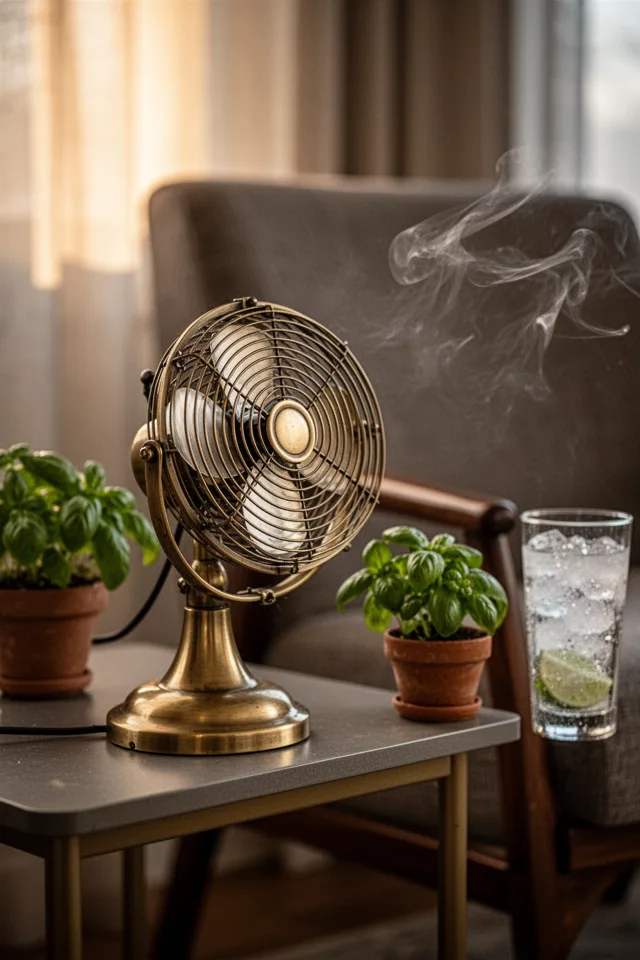
Citronella candles smell like a laundry mistake and barely work. I’ve tested them side by side with a simple fan: the fan wins every time. Mosquitoes are weak fliers. A modest tabletop fan creates enough turbulence to keep them away from a two-person seating area. And it cools you, too. I use a rechargeable clip-on fan that I strap to the umbrella pole. It runs six hours on a charge, costs $30. Essential oils like lemon eucalyptus are okay, but the fan is the real MVP.
The trade-off: a fan won’t work in dead calm on a windless day? Wait, it creates its own wind. The problem is if you have a large area—over 8×10 feet—you’ll need two fans. And they’re noisy. Some people hate the hum. But I’ll take a hum over welts. Also, you can’t run extension cords through wet grass safely. Get a battery-powered one. Charge it after use.
A $30 fan will do more for your summer evenings than a whole shelf of candles.
8. The Unsung Hero: A Concrete Bench From the Hardware Store
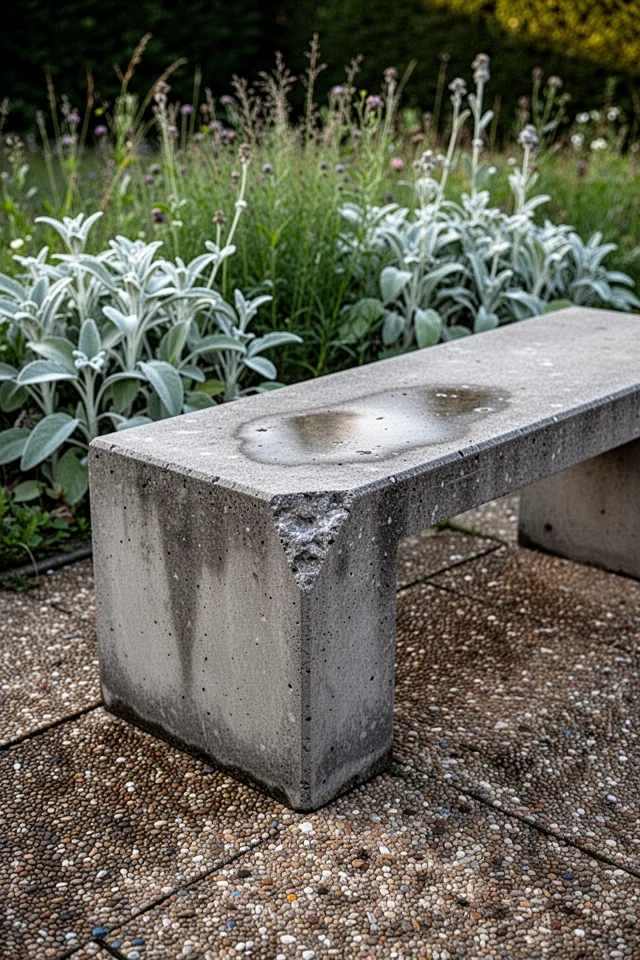
Forget expensive outdoor seating that looks delicate. I bought a plain concrete bench from a landscape supply place for $180. It weighs about 400 pounds. It will outlive my house. It stays cool in the shade, warms up slowly in the sun, and never needs maintenance. I put it at the edge of the patio, facing the garden. It’s the most-used seat on the property, mainly because it’s always there—no cushions to dry, no covering to remove.
The catch: concrete is rough. Sit on it directly and you’ll feel it through thin pants. I keep a couple of flat, stackable outdoor pillows nearby—the kind with ties. Or I stretch out a blanket if I’m staying longer. Also, concrete stains. Red wine, coffee, anything acidic will leave a mark. Seal it with a concrete sealer every couple of years, or just accept the stains as character. I accept them.
A concrete bench is furniture you never have to think about. Most furniture requires thinking.
9. The Only Table That Works for a Tiny Patio: A Bistro Fold-Out
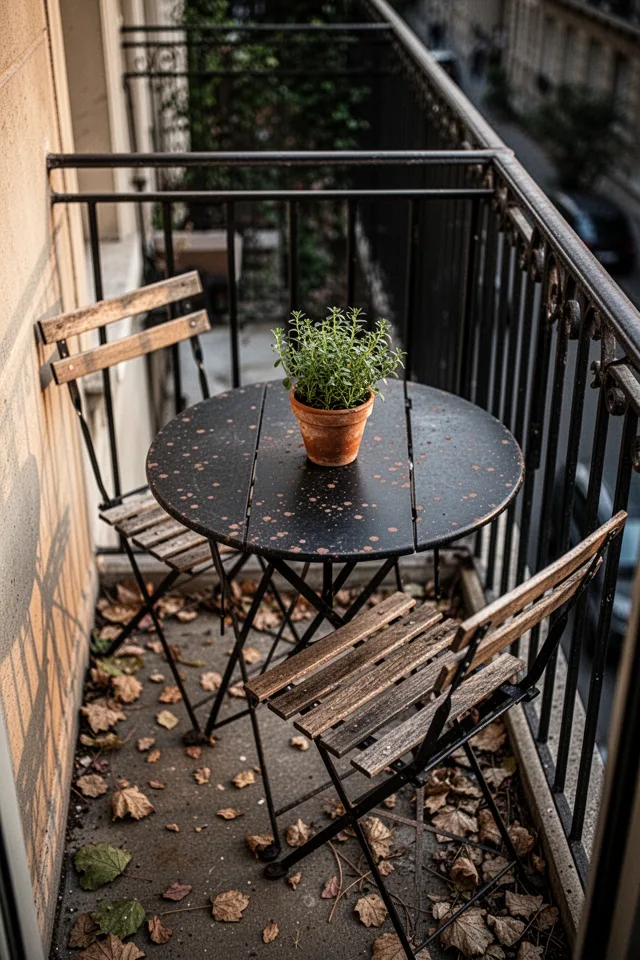
I spent a year on a balcony so small that a standard table would have blocked the door. The answer is a folding bistro table that attaches to the railing or hangs on the wall. I use a heavy-duty cast-iron one that folds flat when not in use. It’s 24 inches wide—just enough for two plates and two glasses. It takes ten seconds to set up. When it rains, I fold it up and bring the chair inside.
The material matters here: cast iron or powder-coated steel, not aluminum, which is too light and will tip. Expect to pay around $80–$130. The one mistake people make is buying a “folding” table that doesn’t lock firmly in place. Look for a locking mechanism. And if your railing is wood or composite, check the attachment—some are only for metal railings. Measure twice.
If your patio doubles as a walkway, you need furniture that disappears. A folding bistro table disappears.
10. Planters That Look Like They’ve Been There for Decades
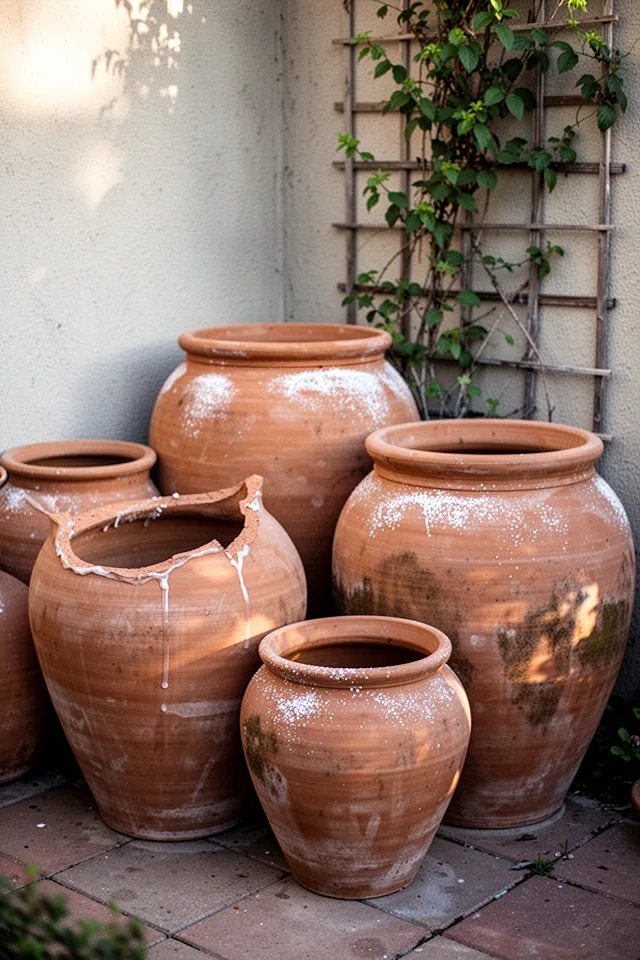
New terracotta pots look fake. The bright orange color screams “home improvement store.” The trick is to leave them outside for a winter. Rain and frost will soften the color, and algae will grow on the shady side. I also rub a little yogurt into the surface to speed up the patina—it sounds weird but it works. In a year, they look like they came from a Roman ruin.
The downside: terracotta breaks. It cracks in freeze-thaw cycles, especially if the soil is damp. Use fiberstone or glazed ceramic if you live in hard freeze zones. But honestly, a cracked pot with a repair looks better than a perfect one. I keep a tube of exterior epoxy handy. Cost: $10–$40 per pot for unglazed terracotta. Don’t buy the super cheap ones—they crumble. Pay $20 for a good one.
A perfect pot is a lie. A weathered pot tells a story. Aim for the story.
11. The Light That Whispers Instead of Shouting: Low-Voltage Path Lights
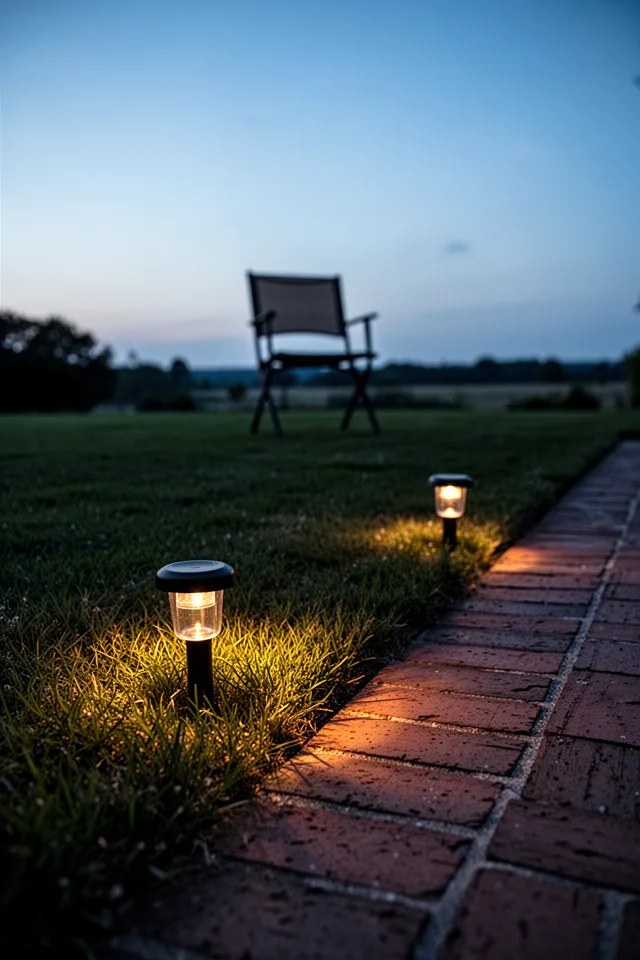
String lights are the default, but they’re also the problem: they illuminate everything from above, flattening the space and making it feel like a party. Path lights do the opposite. They guide the eye, create pockets of shadow, and make the patio feel bigger. I use low-voltage LED brass path lights with a warm 2700K beam. They cost about $25 each, plus a transformer. Installation takes an afternoon. The result is a patio that glows rather than blares.
The trade-off: wiring. You have to bury the cable, which means digging a shallow trench. Or you can use solar path lights, but most solar lights are dim and inconsistent. I tried a dozen solar models—only one brand (I’ll spare the name) lasted a full summer. If you want real light, go hardwired low-voltage. Also, avoid blue-white LEDs. Look for “warm white” or “amber.” Your patio will look like a bar, not a hospital.
Good patio lighting shows you where to go without showing you everything. Bad lighting reveals the dirty grill.
12. A Drink Holder That Actually Stays Put: The Stake Table
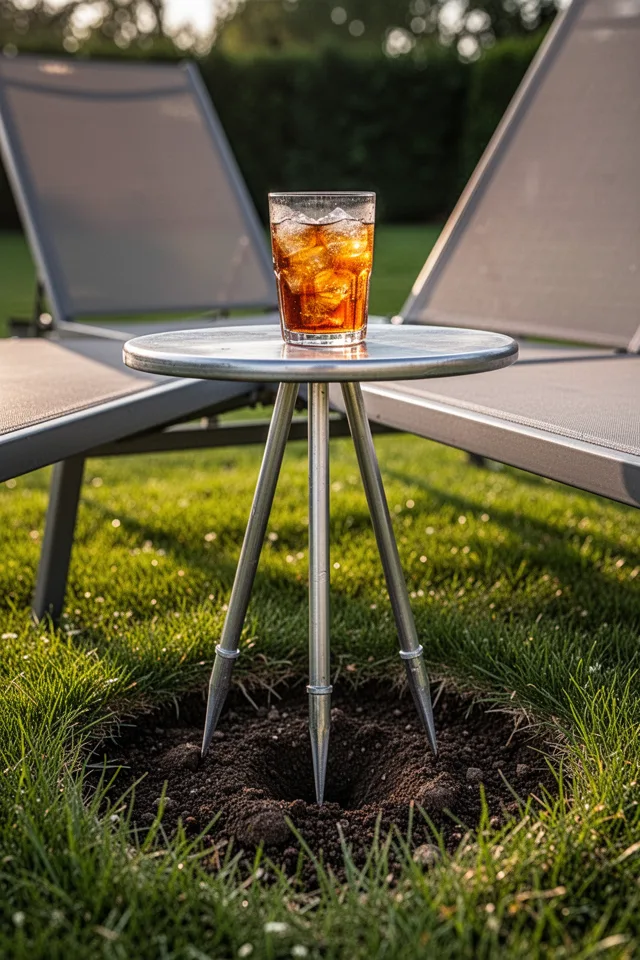
Side tables are the most unstable pieces of patio furniture ever made. They tip when you set down a drink. They blow over. I stopped using traditional side tables and bought a stake table—a metal table with legs that you push into the ground. It’s stable because it’s literally planted. I have one next to each chair. They hold drinks, books, a phone. They cost about $30 each. They take ten seconds to install. When I mow, I pull them out.
One catch: they only work if you have soil or mulch underfoot. On concrete, they’re useless. For hard surfaces, use a weighted base plant stand or a cast-iron pedestal table. But if you have grass or gravel, stake tables are the best $30 you’ll spend. The metal will rust eventually—that’s fine. It adds patina. Buy black or dark grey to hide the rust.
If your drink can’t survive a gust of wind without assistance, your side table is wrong.
13. Privacy Without a Wall: Tall Grasses in Movable Pots
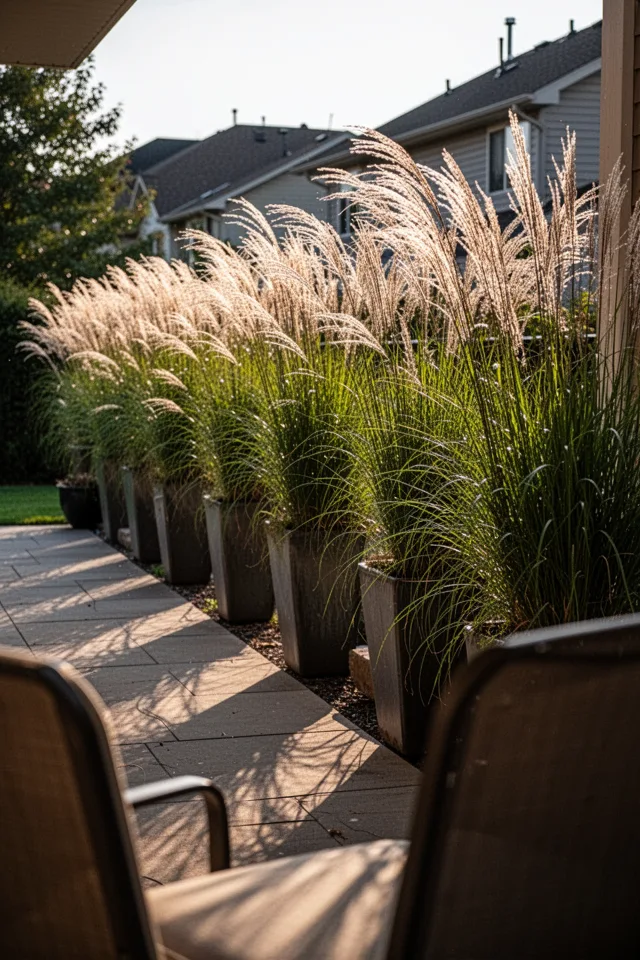
Fences are expensive and permanent. I rented a house where a fence wasn’t allowed. So I used 24-inch-deep pots and planted miscanthus grass. In one season, they grew to six feet tall. They screen the neighbor’s view without blocking the breeze. And because they’re in pots, I can rearrange them depending on where the sun is or where I need privacy. They also sway in the wind, which adds movement and sound. You hear the leaves rustle—it’s calming.
The downside: grasses need water. In pots, they dry out fast in summer—I water them every other day. And they die back in winter, leaving ugly stalks. Cut them down in early spring. Cost: $40 per pot, $15 per plant. For a quick fix, try bamboo—but choose clumping, not running, or it will take over your yard. Also, bamboo sheds leaves constantly. I prefer grasses for less mess.
The best privacy screen is one that moves. Static fences are boring. Grasses breathe.
14. The Surface That Stays Cool: Slate Tile on a Concrete Patio
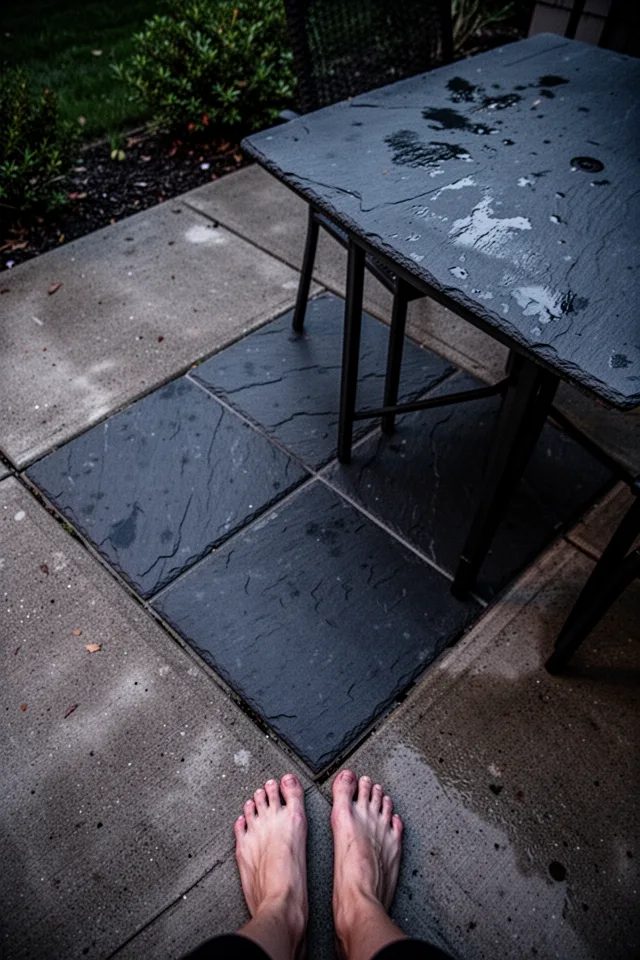
Concrete absorbs heat all day and radiates it at night. I had a concrete patio that was unusable until 10 PM in July. Then I installed a 4×4-foot section of natural cleft slate tiles (about $5 per square foot) right under the dining table. Slate stays cool because it’s dense and doesn’t absorb as much heat. You can feel the difference with your bare feet. The irregular surface also gives better traction when wet.
The catch: slate is heavy and requires a mortar bed or at least outdoor adhesive. You need to cut it with a wet saw. It’s a weekend project. And it’s not perfectly smooth—you won’t want to walk on it barefoot if you’re sensitive. But for an accent area, it works brilliantly. Alternative: use large-format porcelain tiles that look like slate but are lighter. But porcelain can be slippery when wet. Natural slate has a better grip.
If your patio is too hot to walk on by 3 PM, you’ve chosen the wrong surface. Slate fixes that.
15. The Seating Material That Ages Better Than Teak: Powder-Coated Steel
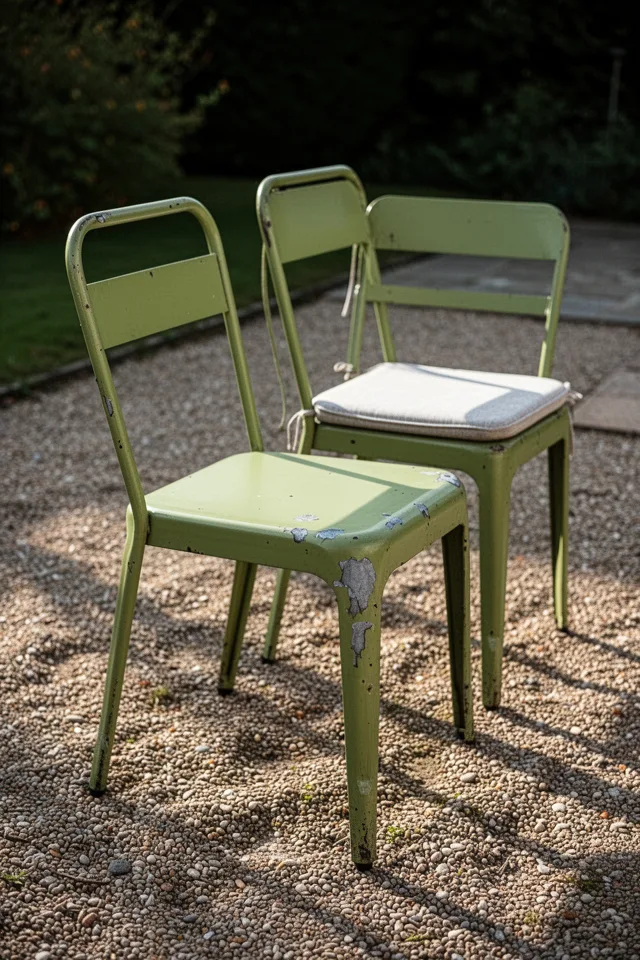
Teak is nice, but it cracks, it splinters, and it needs oiling. I replaced my teak dining chairs with powder-coated steel chairs from a French farmhouse supplier. That was eight years ago. The steel hasn’t rusted through anywhere (just a few chips), the color has softened to a nice weathered green, and they weigh enough that they don’t tip. The coating is baked on at the factory, so it doesn’t peel like spray paint.
The trade-off: steel can get hot in direct sun. Keep it in partial shade, or add a thin cushion. Also, chips happen—you’ll get a rust spot. Touch it up with a matching automotive paint (cost: $8). Do that once a year and it’ll last forever. A set of four chairs runs about $300–$500. Compare that to teak chairs at $200 each that need treatment every season. The steel wins on value.
Teak is a flirt. Powder-coated steel is a commitment.
16. A Phone Dock That Won’t Destroy Your Electronics
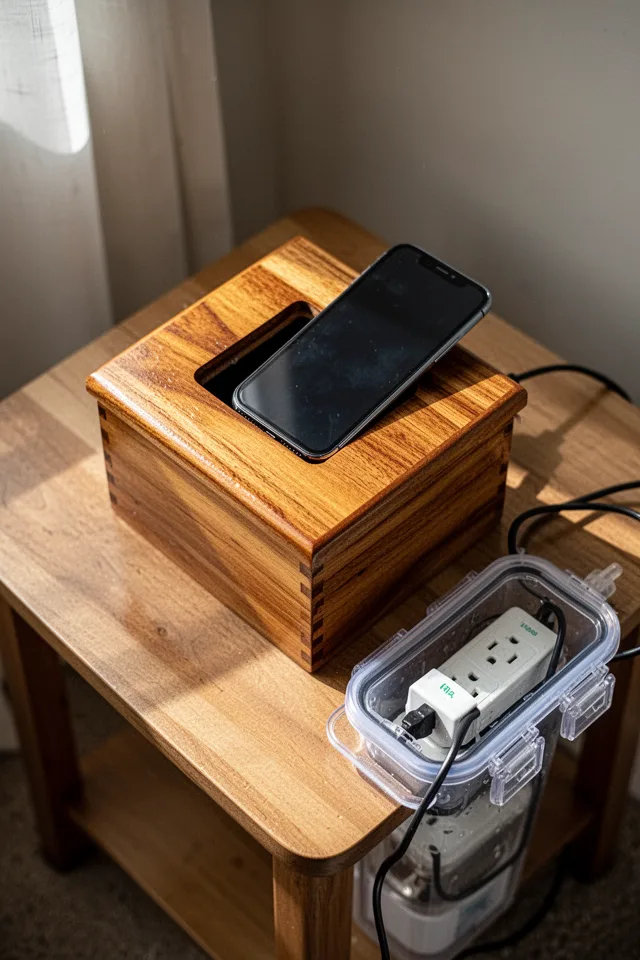
Every patio needs a place to put a phone that isn’t on a table where a drink can spill. I made a simple cedar box with a slot in the lid. The phone slides in vertically, the cord goes down into the box, which houses a weatherproof outlet. The box keeps the phone dry even if it rains (as long as the lid is closed). It also keeps the cord out of sight. Total material cost: $15 in cedar scraps and a $10 outdoor outlet cover.
You don’t have to build it. You can buy a teak phone stand with a built-in cable channel for about $35. The key is to have a dedicated dry, elevated place for electronics. Moisture on a patio table will find its way into your charging port. Also, avoid leaving phones in direct sun—the screen overheats and the battery degrades. A shaded dock is a cheap fix.
Your phone doesn’t belong on the same surface as your lemonade. Give it a home.
17. The Only Cushion Worth Buying: Quick-Dry Foam With a Drainage Slot
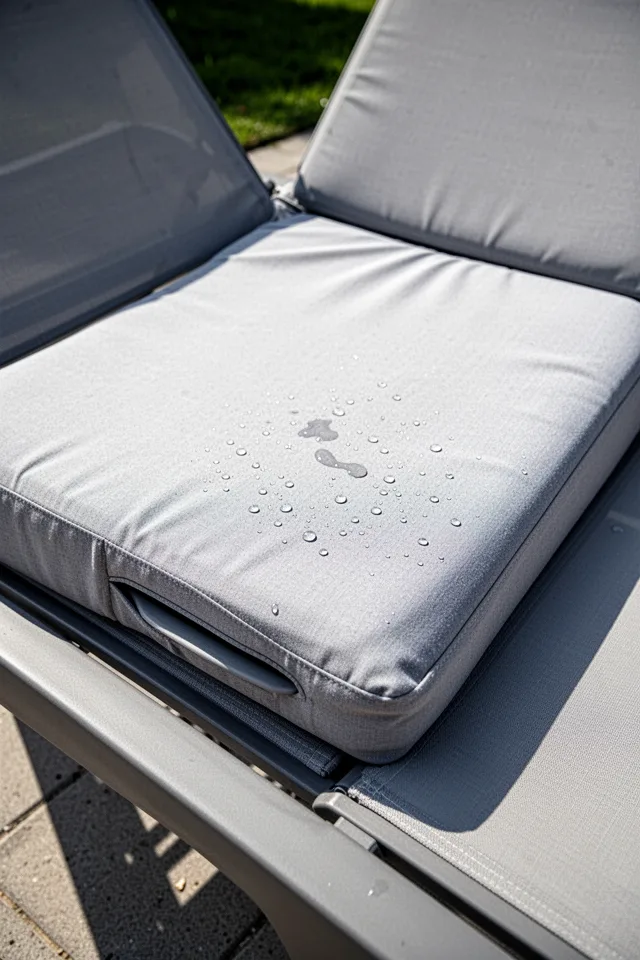
Most outdoor cushions are filled with polyurethane foam that absorbs water and turns into a soggy brick. The first time I left one out overnight, I had to wring it out. Never again. Now I buy cushions made of “quick-dry” foam—open-cell polyurethane that has drainage channels molded into the bottom. Water runs right through. You can hose them off, leave them in a thunderstorm, and they’re dry in an hour.
The fabric matters, too: solution-dyed acrylic (Sunbrella is the gold standard) resists fading, mold, and stains. A good cushion will cost $60–$100 per chair cushion. Yes, that’s steep. But a cheap cushion will look like a disaster in one season. The trade-off is that quick-dry foam is less plush than conventional foam. It’s firmer. I actually prefer it—it doesn’t sag. Buy cushion covers separately so you can wash them. Look for a zippered, machine-washable cover.
A cushion that stays wet is unusable. A cushion that dries fast is worth every penny.
18. The Fire Crackle Without the Hassle: A Gel Fuel Tabletop Firepit
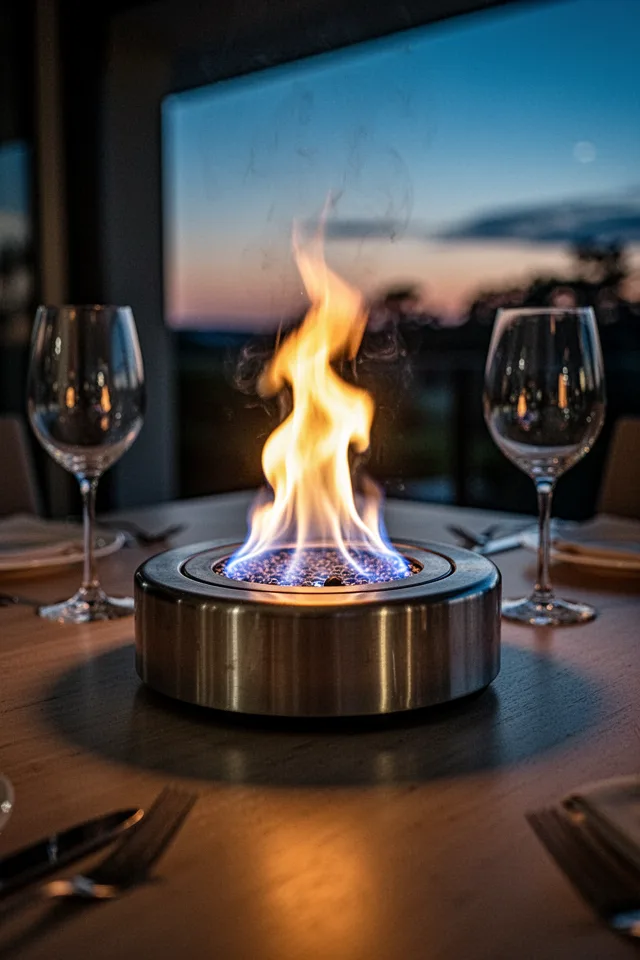
I love the idea of a wood fire, but I hate the smell in my hair, the smoke in my eyes, and the ash on the table. Gel fuel fire pits solve all of that. They use a can of gel (isononanoic acid, basically) that burns for two to three hours with no smoke, no sparks, and no soot. You put the can in the base, light it, and you have a real flame. It’s warm enough to take the chill off a small group. I use one on my dining table to extend dinners into the late evening.
The downside: gel fuel is not cheap. A 12-pack of cans runs about $25–$30, and each can lasts maybe 2.5 hours. That’s for ambiance, not for a full party. Also, the flame is smaller than a wood fire—no roaring blaze. But for a couple sitting at a bistro table, it’s perfect. Look for a firepit with a windscreen; otherwise, even a light breeze will blow the flame out. Cost of the unit: $40–$80. Good for small patios or balconies.
If you want a real fire without the campfire aftermath, gel fuel is the hack. It’s clean. It’s instant. It’s enough.
And there it is—18 ideas that are not Pinterest dreams but things I’ve actually used, broken, and kept. The core decision you need to make is whether you want a patio that performs or a patio that photographs. If you want performance, start with the ground (decomposed granite or slate), then the seating (no-cushion aluminum or powder-coated steel), then the shade (a sail that breathes). My opinion? Most people should start with the stake tables and the battery fan. They solve the two most common complaints—no surface for your drink and bugs—for under $60 combined. Everything else is icing. But the icing matters too. Just choose it slowly, with your hands, not your scroll. Because the best patio is the one you actually use, every night, until the season ends and you miss it.
I wrote this because I’ve made every mistake. You don’t have to. Now get outside and sit in your imperfect, slightly dusty, wonderfully real place.