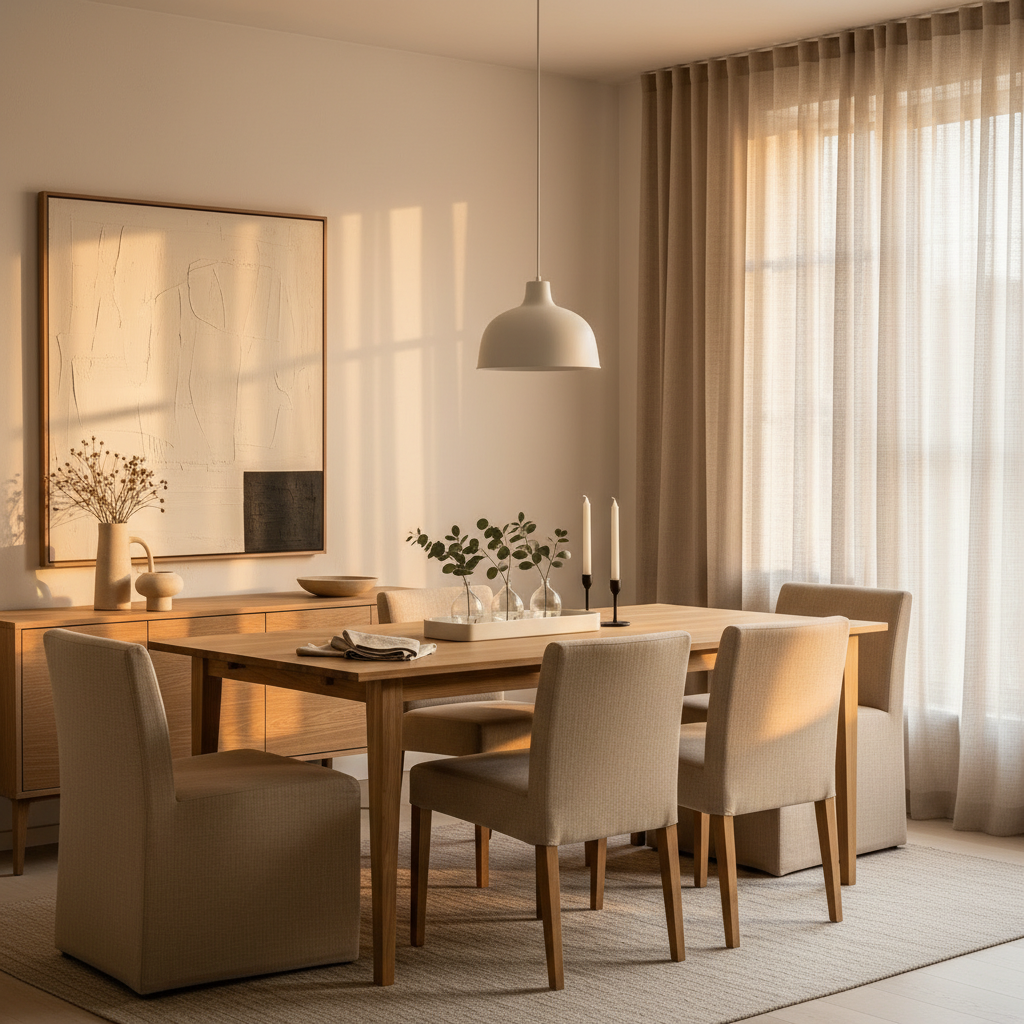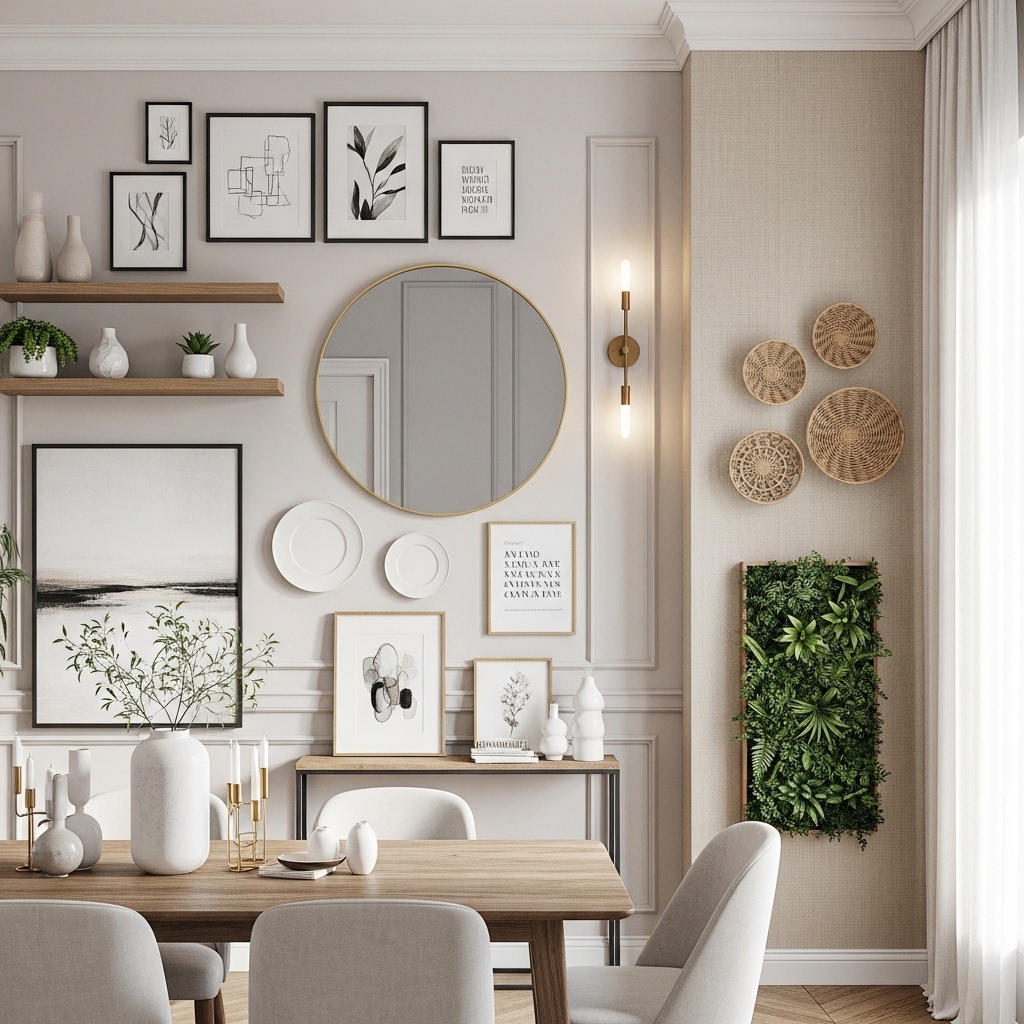
Your bedroom should feel like a deliberate retreat, not an afterthought of mismatched furniture and whatever paint color came with the apartment. But here’s the tension: comfort and style aren’t guaranteed to live together. You can have a perfectly curated Instagram room that feels cold, or a cozy nest that reads as chaotic. The trick is choosing decor decisions that actually serve your life—your sleep schedule, your natural light, whether you have a cat who sheds, how much time you realistically spend tidying.
This guide moves past generic “add plants” advice and digs into 25 concrete ideas that work independently or layered together. Some are budget-friendly. Some require investment. Some work brilliantly for renters; others are permanent commitments. The goal is giving you enough options to build a bedroom that’s distinctly yours—one where you sleep better and feel something when you walk in.
1. Invest in Layered Lighting (Not Just Overhead)
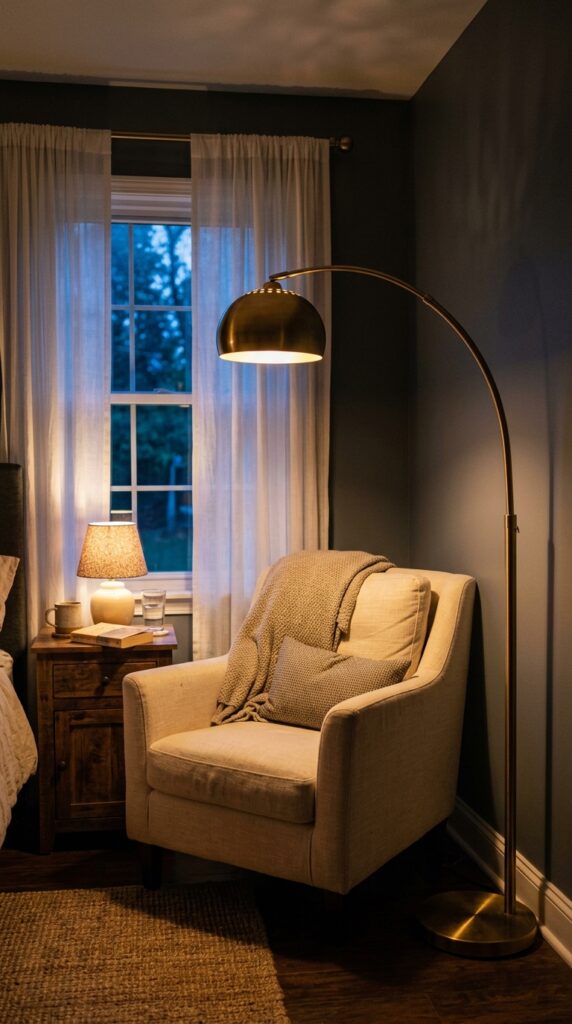
Overhead lights are the enemy of bedroom ambiance. A single ceiling fixture will either feel hospital-bright or too dim—there’s rarely a middle ground. Instead, layer three or four light sources at different heights and temperatures.
Invest in a decent floor lamp (brass or wood, nothing plastic-y), a smaller ceramic or glass table lamp for the nightstand, and consider subtle wall sconces on either side of the bed if you’re not renting. The magic happens when you can control zones. Reading light separate from getting-ready light separate from winding-down light. Warm bulbs (2700K color temperature) are non-negotiable—they’re cheaper than therapy and actually help you sleep. One thing to watch: make sure at least one light source isn’t directly in your line of sight when you’re lying in bed. Backlit or diffused light through fabric, ceramic, or frosted glass always feels better.
This setup costs more upfront than a lamp-and-ceiling-fixture combo, but you’ll use it every single night. Worth it.
2. Choose Your Wall Color First (And Make It Count)
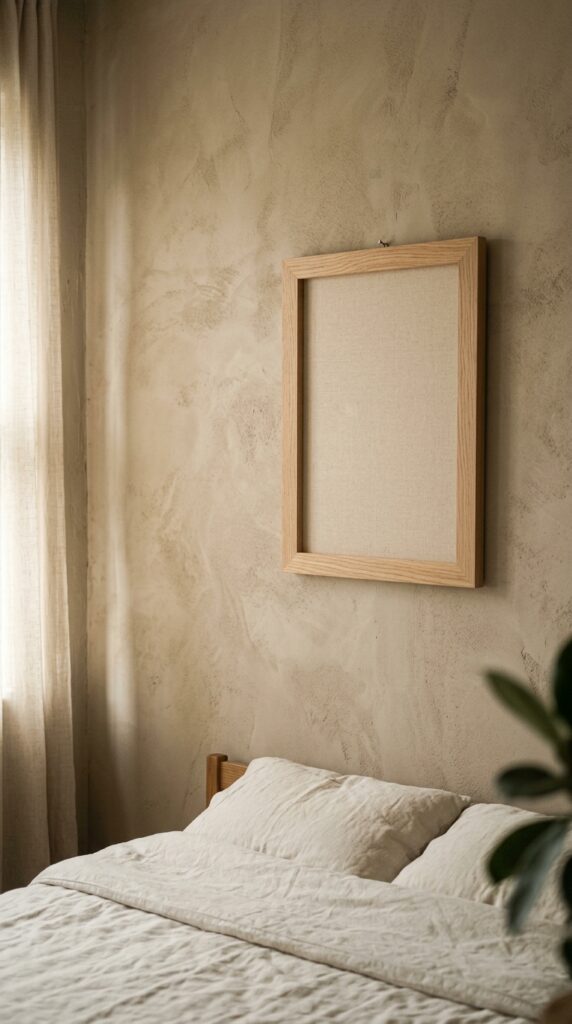
Neutral doesn’t mean beige—and beige, especially cool beige, will make your room feel flat and dated faster than you’d think. Real neutrals have warmth baked in: warm greiges, soft clay tones, barely-there sage, or even a very pale warm gray. These absorb and reflect light in a way that makes the room feel intentional without demanding constant visual attention.
Paint is also the cheapest major decision you’ll make, yet it shapes everything else. Once you’ve chosen a wall color, your bedding, art, and accessories should play off that undertone. If you pick a warm taupe, jewel tones and brass feel right. If you lean cool-gray, softer blues and silver fixtures sing. The old rule still holds: matte or eggshell finishes look more sophisticated than satin in bedrooms. They hide imperfections and feel less plastic-y. One warning: sample large swatches and look at them at different times of day. That perfect-looking paint chip can read completely different at 3 p.m. versus 8 p.m.
3. Layer Textiles for Actual Comfort (Not Just Aesthetics)
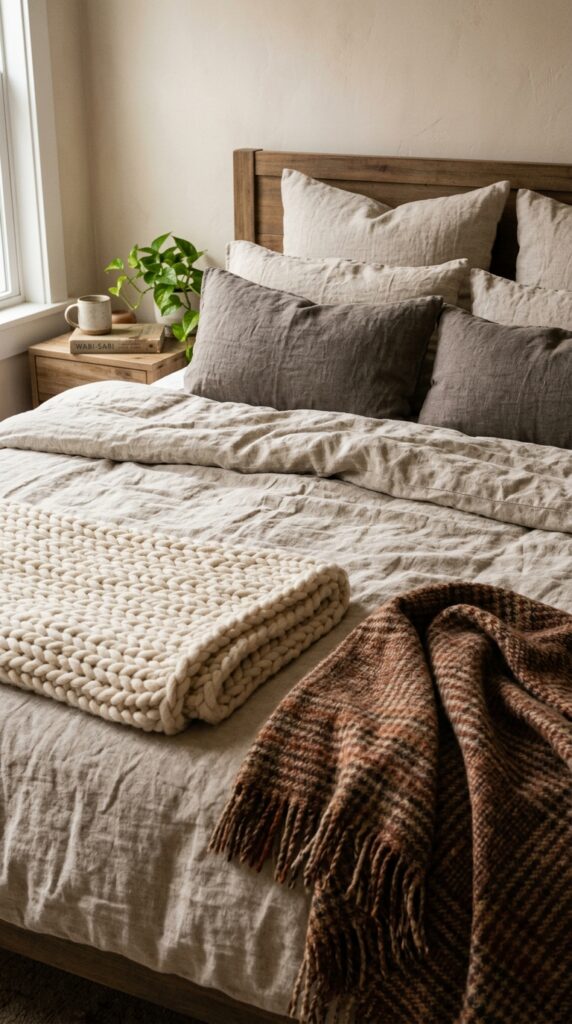
Bedding is where people compromise most. They choose a thread-count because it’s what they’ve heard, then feel disappointed when the sheets don’t actually feel good. Skip the marketing. Instead, prioritize: a duvet cover in linen or cotton sateen, sheets in 100% cotton (long-staple if your budget allows), and an actual wool blanket for temperature regulation.
Linen is wrinkled, and that’s the point—it softens with washing and never feels synthetic. Cotton sateen (not satin, which is slippery) has a subtle sheen and genuine luxury feel. Wool regulates temperature in a way that synthetic materials simply don’t, even if you run hot. Buy fewer pieces in better fabrics rather than a whole closet of mediocre stuff. Your bed is where you spend eight hours a night. This isn’t where to pinch pennies. One constraint: linen requires a looser, more relaxed aesthetic to feel intentional rather than neglected.
4. Create a Small Reading Nook or Window Seat
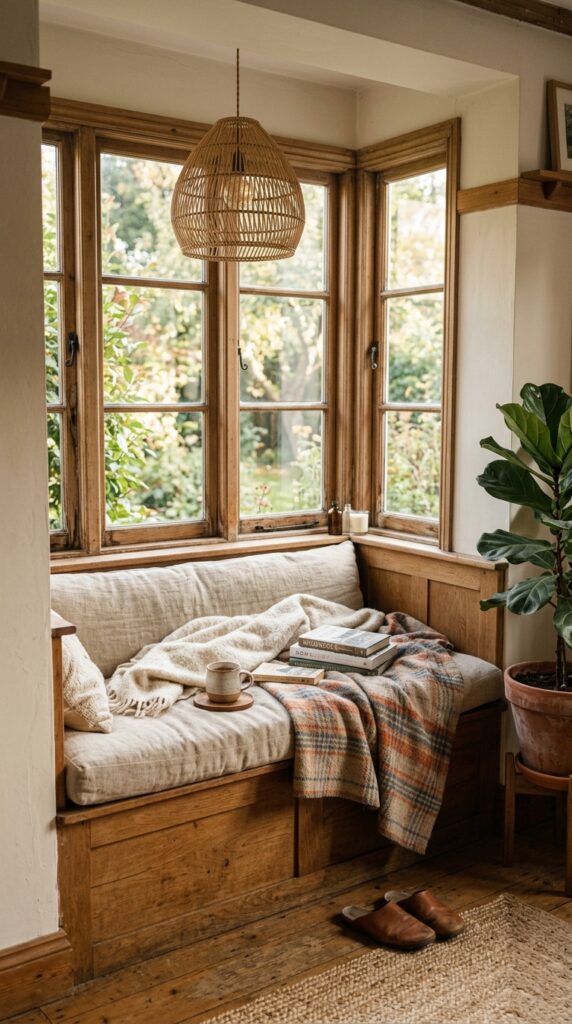
Even in a small bedroom, carve out one spot that isn’t the bed. A window seat, a small armchair in a corner, or even a low stool with a floor lamp nearby signals to your brain that this room has texture and purpose beyond sleeping.
This doesn’t require a window—a corner works just as well. The key is making it functionally comfortable: a cushion thick enough that you’ll actually sit there for more than two minutes, a side table for tea or a book, and light that works for reading. Natural materials like wood, linen, and rattan make this feel organic rather than forced. One thing to watch: if your room is small, a bulky armchair can eat space. Consider a lightweight rattan or wooden chair you can move, or a simple cushioned bench that doubles as storage.
5. Install or Style a Headboard (Real or Faux)
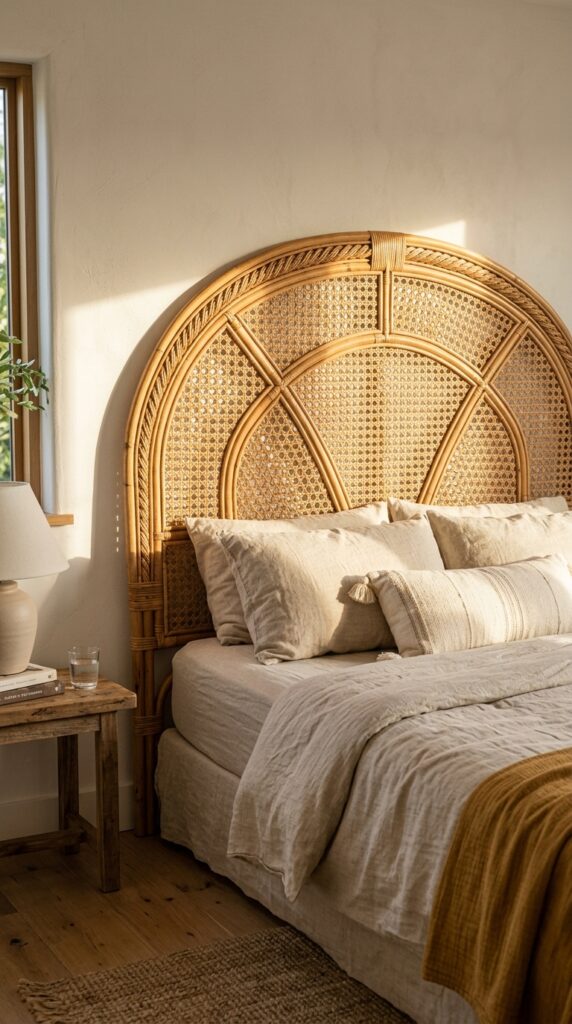
A headboard anchors the whole room visually and functionally. It doesn’t have to be a statement piece—sometimes the most sophisticated option is subtle. But it should exist. Without one, a bed floats in a room like furniture that hasn’t made up its mind yet.
Options range across budgets: a simple wooden frame, upholstered fabric, woven rattan or wicker, or even a temporary solution like fabric wall-mounted between two nails (a genuinely renter-friendly hack). The headboard also solves a practical problem: it prevents your pillows from disappearing between the wall and mattress, and gives your bed the visual weight it needs to anchor the room. If your room is small or your walls are already busy, go minimal. If you have a statement wall, a bold headboard can feel redundant. One practical note: upholstered headboards collect dust and pet hair. Easier to maintain: woven, wood, or metal frames.
6. Use Mirrors Strategically (Not Just to Make Space Appear Bigger)
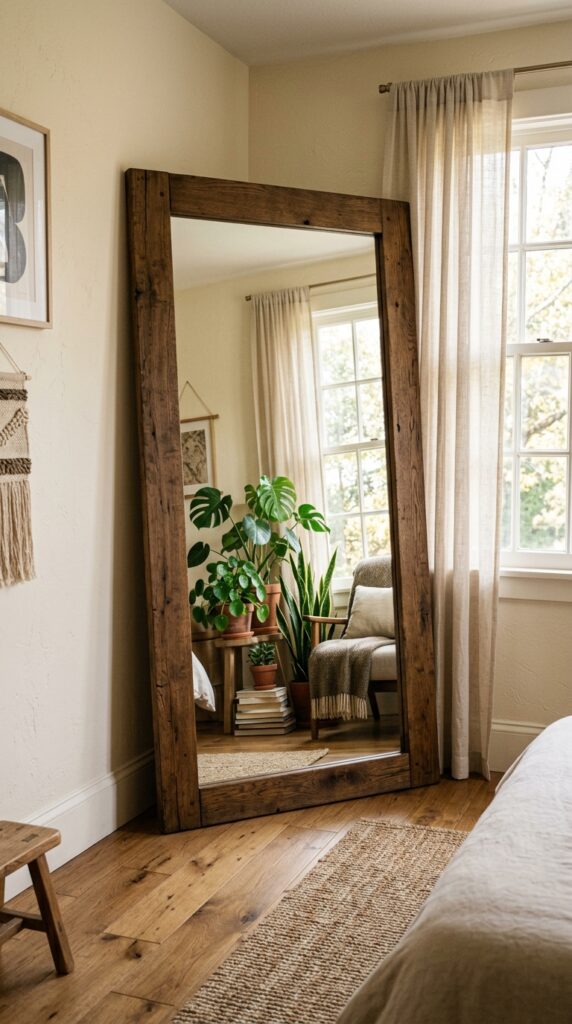
Yes, mirrors expand visual space. But their real job is light architecture. A strategically placed mirror opposite a window bounces natural light around the room, making everything feel brighter and more awake without adding another fixture.
Lean a large mirror against the wall rather than hanging it—less commitment, works for renters, and you can move it seasonally if light patterns change. Frame materials matter: wood feels warm, metal feels modern, but cheap frames read cheap no matter how nice the glass is. This is one place a simple investment genuinely pays off. One constraint: if your room faces north or gets very little natural light, a mirror can’t fix bad lighting. It just reflects what’s already dim. Pair it with better light sources rather than relying on the mirror alone.
7. Add Texture Through Wall Treatments (Beyond Paint)
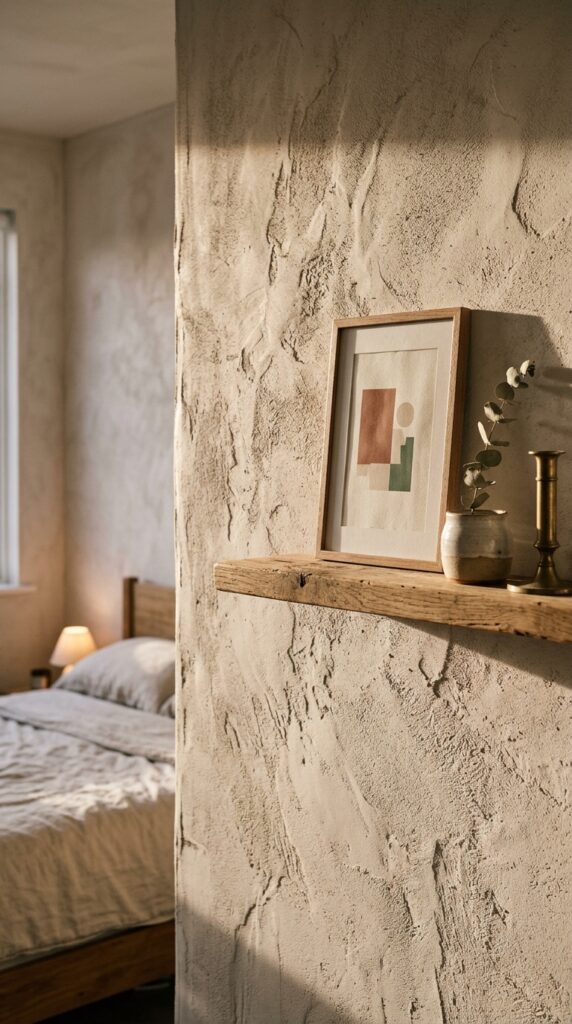
Paint is base level. Real dimension comes from texture. Plaster, shiplap, wallpaper with pattern or raised surface, or even a large fabric wall hanging stretched and mounted completely changes how a room reads—and how it photographs, if that matters to you.
Plaster feels more sophisticated than shiplap in most modern rooms and hides imperfections better. Textured wallpaper (grasscloth, linen-texture, or embossed patterns) adds visual interest without feeling cartoonish. Fabric wall coverings are renter-friendly if you use proper temporary adhesive strips. The trick: texture works best on one accent wall or as a full-room treatment. Three walls with texture and one plain reads chaotic; one textured wall with the rest painted reads intentional and designed. Watch out for very deep or dark textures in small rooms—they can feel oppressive rather than cozy.
8. Commit to One Accent Color (Done Right)
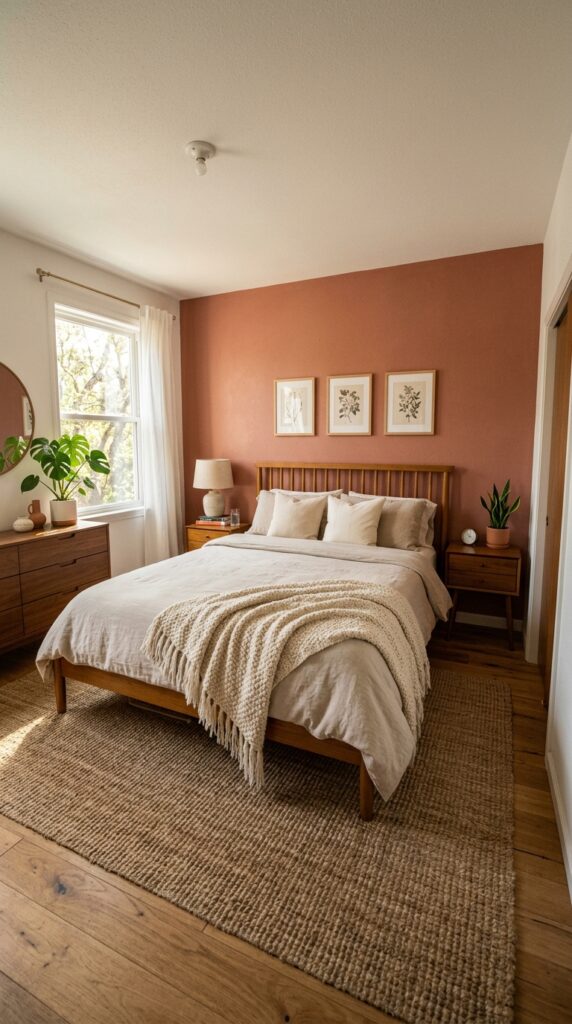
The fear of color keeps a lot of rooms stuck in beige purgatory. But committing to one real color—not a barely-there blush, but an actual tone with presence—is what separates a curated bedroom from a generic one.
The key word is one. Pick your accent color and use it meaningfully: a painted wall, a velvet throw, a set of cushions, a piece of artwork. That color should repeat at least twice in the room so it feels chosen rather than accidental. Terracotta is warm and works beautifully with oak wood and brass. Sage green sits comfortably against linen and warm whites. Navy is formal but grounding and pairs well with rattan or natural fiber rugs. One thing to watch: very saturated or bright colors (think primary red, electric teal) can feel loud in a small bedroom and may make it harder to sleep. Lean toward muted, dusty versions of your chosen hue.
9. Upgrade Your Rug (Size and Material Both Matter)
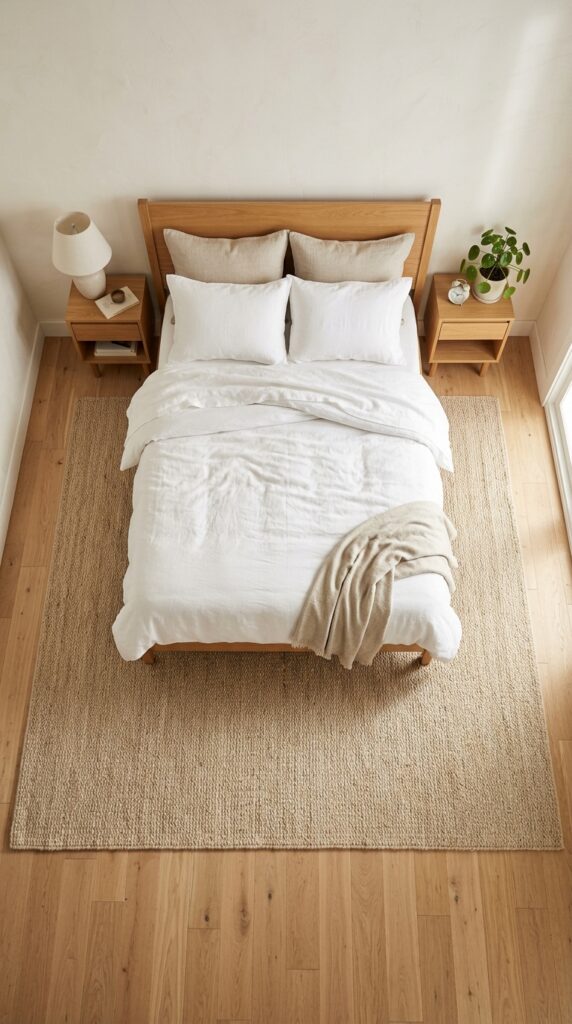
A rug that’s too small is worse than no rug at all. The classic mistake: buying a rug that only fits under the nightstands or just the foot of the bed, leaving everything feeling disconnected. The rule is simple—your rug should extend at least 18–24 inches beyond the sides of the bed on both sides, and beyond the foot. That means most standard bedrooms need a 9×12 or 8×10 rug to do the job properly.
Material determines how it actually feels underfoot. Jute is beautiful, affordable, and sustainable, but scratchy—keep it layered with a softer accent rug or save it for rooms where you’re not barefoot constantly. Wool is the gold standard: durable, naturally stain-resistant, and genuinely soft. Cotton flatweaves are easy to clean and work well in kids’ rooms or smaller spaces. One thing to watch: very pale rugs in high-traffic areas will show dirt. Either embrace the maintenance or go a shade or two darker than you think you want.
10. Style the Nightstand Like a Mini Vignette
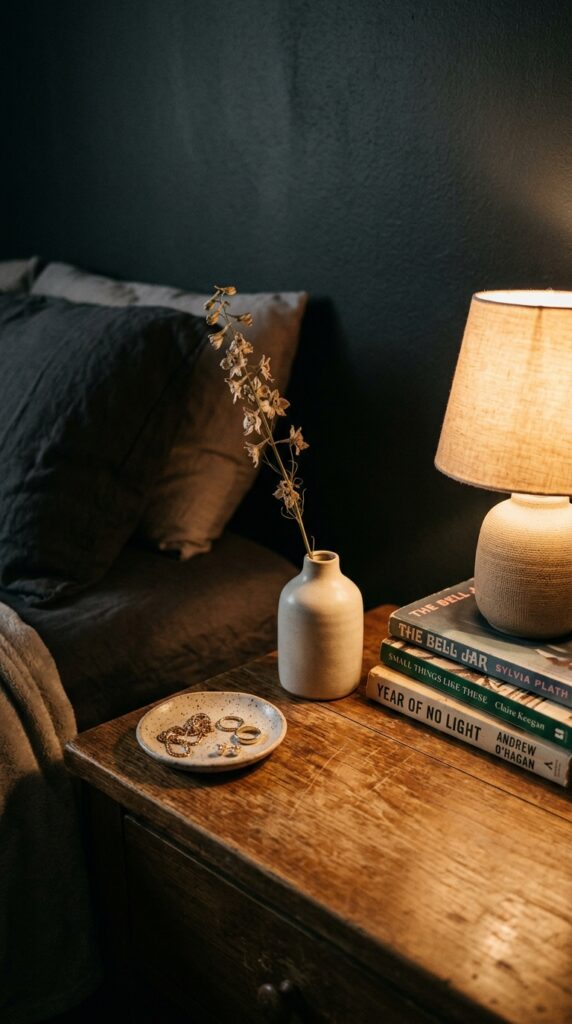
The nightstand is a functional surface that most people abandon to chaos—phone chargers, water glasses, seventeen receipts, and a book from three years ago. But it’s also one of the first things you see in the morning and last things you see at night. It deserves ten minutes of intention.
The styling formula that consistently works: one lamp, two to three books stacked (spine-out), one small vessel (ceramic, glass, or brass), and one living or dried element. That’s it. Resist the urge to add more. The constraint actually helps—it forces you to choose only what’s genuinely beautiful or useful. If you have two nightstands, they don’t need to match exactly, but they should share something: material, color tone, or scale. One practical note: if you use your phone at night, hide the charging cable. A small woven or leather cord organizer makes the difference between “curated” and “chaos with books.”
11. Hang Curtains High and Wide (Not Where the Rod Fits)
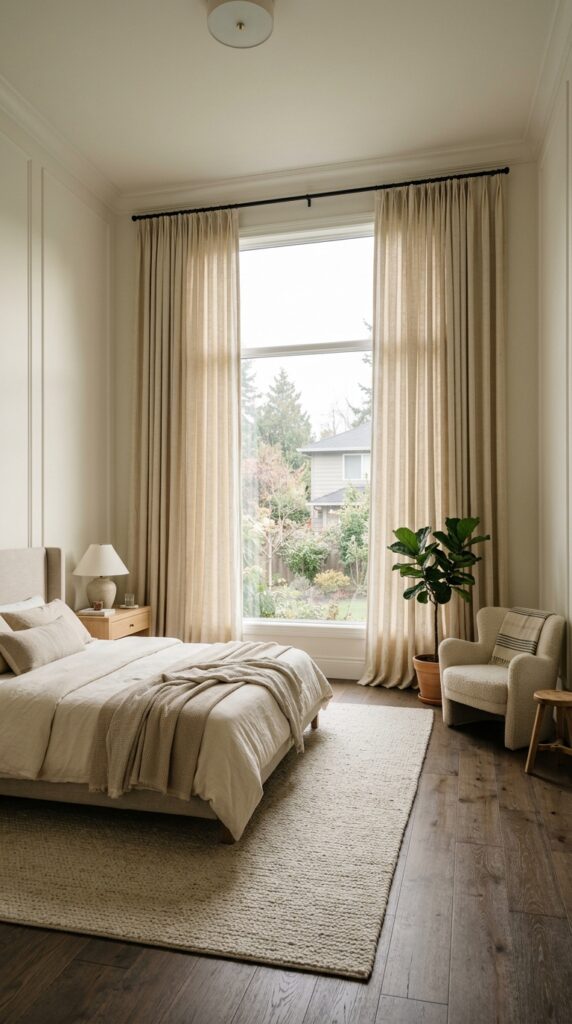
This is one of the most impactful and underused tricks in bedroom styling, and it costs almost nothing extra. Most people mount curtain rods directly above the window frame—which makes the window look smaller and the ceiling look lower. Instead, mount your rod six to eight inches below the ceiling line (or higher if you can) and let the curtains extend at least six to eight inches wider than the window on each side.
The result is immediate. The room feels taller, the windows look larger, and the light—even in rooms that don’t get much—reads as more generous. Floor-length curtains that just graze or pool slightly on the floor complete the effect. Linen or cotton in a tone close to your wall color makes the curtains feel architectural rather than decorative. Blackout lining can be added behind without affecting the aesthetic. One thing to watch: if your ceilings are low (under 8 feet), this trick still works but you need a rod very close to the ceiling, not halfway up.
12. Introduce Natural Materials for Warmth
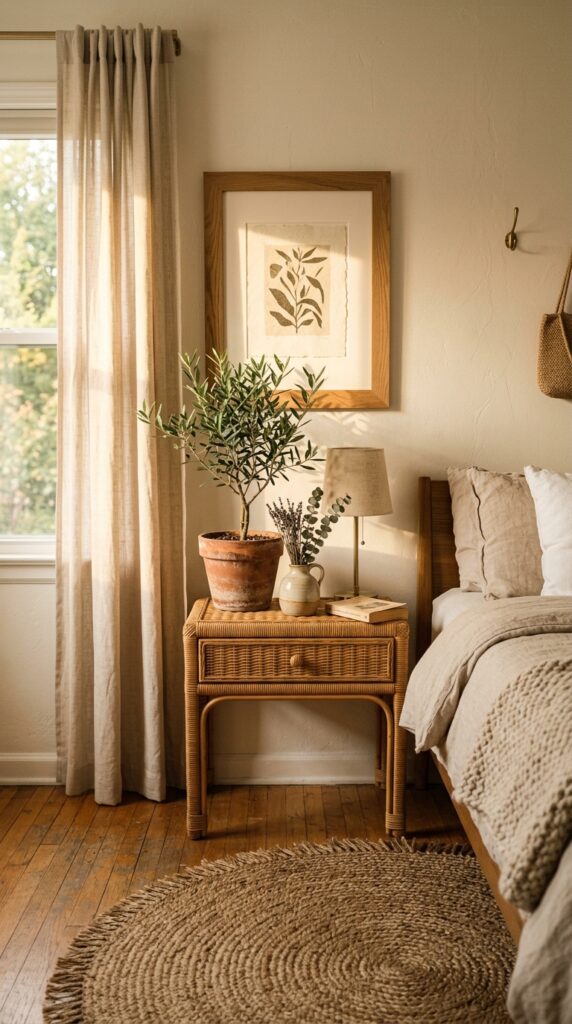
A room full of synthetic materials—plastic frames, polyester bedding, laminate furniture—has a certain flatness that’s hard to pinpoint but easy to feel. Natural materials have variation, age, and tactile richness that manufactured surfaces can’t replicate.
You don’t need to go full rustic farmhouse to get the benefit. Pick two or three materials and let them show up consistently. Oak or walnut wood for furniture and frames. Rattan or wicker for accent pieces (a small tray, a pendant lamp, a small shelf). Ceramic or terracotta for vessels. Linen and cotton for textiles. Brass for hardware and lamp bases. These materials have inherent warmth and complement each other naturally—so mixing them never really goes wrong if you keep the palette restrained. One constraint: natural materials sometimes require more care. Rattan can dry out in very low humidity; wood needs occasional oiling; linen wrinkles constantly. Know what you’re signing up for.
13. Make the Bed the Visual Anchor With Thoughtful Pillow Layering
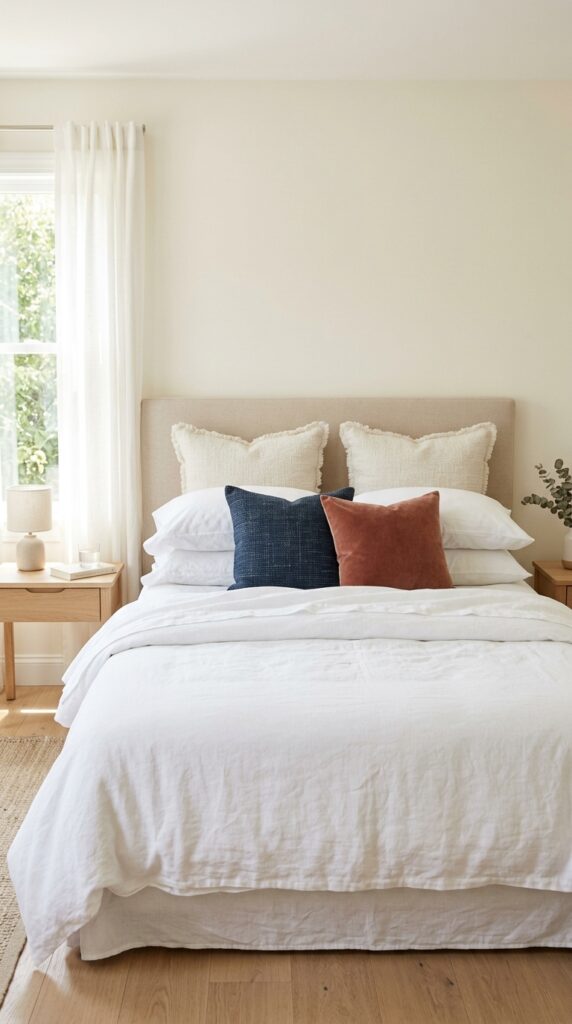
Pillows are how most people style a bed, but the approach often goes wrong in one of two directions: too many decorative pillows that no one uses, or a bare bed with two sleeping pillows that looks like a hotel room without the art. Neither works.
The sweet spot for most bedrooms: two Euro squares at the back (covered in a tone slightly different from your duvet), your actual sleeping pillows in front, and two to three accent cushions in a mix of textures. Velvet, boucle, and linen all play well together if they share a color story. One pattern pillow is usually enough—too many compete. A rule worth remembering: the more textured and casual your bedding style, the fewer cushions you need. Heavy linen with a knit throw is already doing a lot. Don’t pile fourteen cushions on top of it. And if you genuinely hate making the bed, keep the pillow count to what you’ll realistically deal with each morning.
14. Add Artwork That Means Something (Not Just Fills Space)
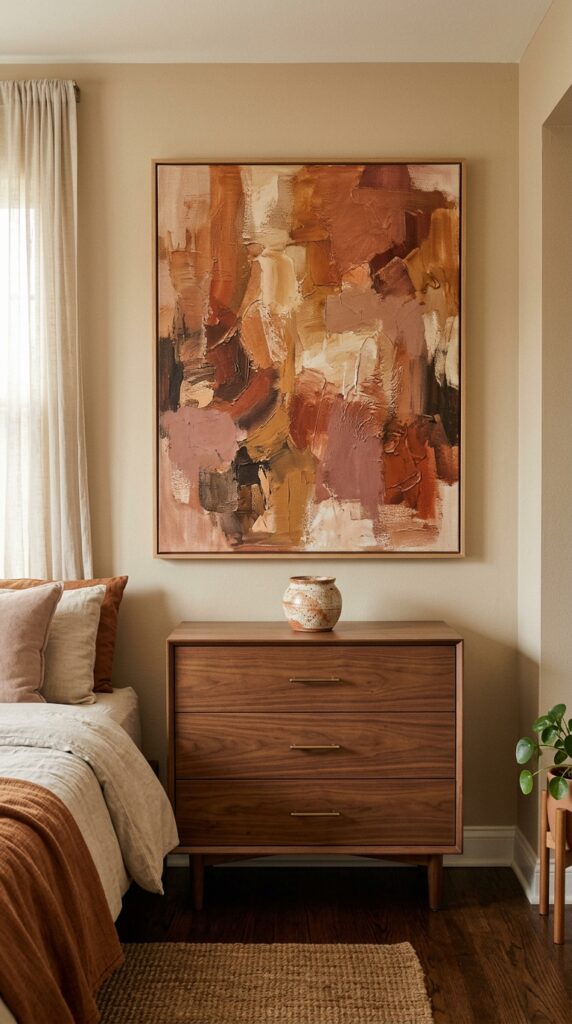
Art in bedrooms often becomes an afterthought—something framed quickly to fill a wall. But art is the one element that can make a bedroom feel personal in a way that furniture and textiles can’t. It signals something about who actually lives there.
Size matters more than most people realize. One large piece reads more sophisticated than a cluster of small pieces in most bedrooms—unless the gallery wall is truly well-curated. Hang art at eye level (center of the artwork at around 57–60 inches from the floor), not floating near the ceiling. If you’re placing art above a headboard, keep a gap of about six to ten inches between the headboard and the bottom of the frame. That said, if you hate repainting walls or can’t commit to drilling, removable adhesive strips hold surprisingly well for lighter frames—just be honest with yourself about the weight limit.
15. Declutter Storage Into Furniture That Works
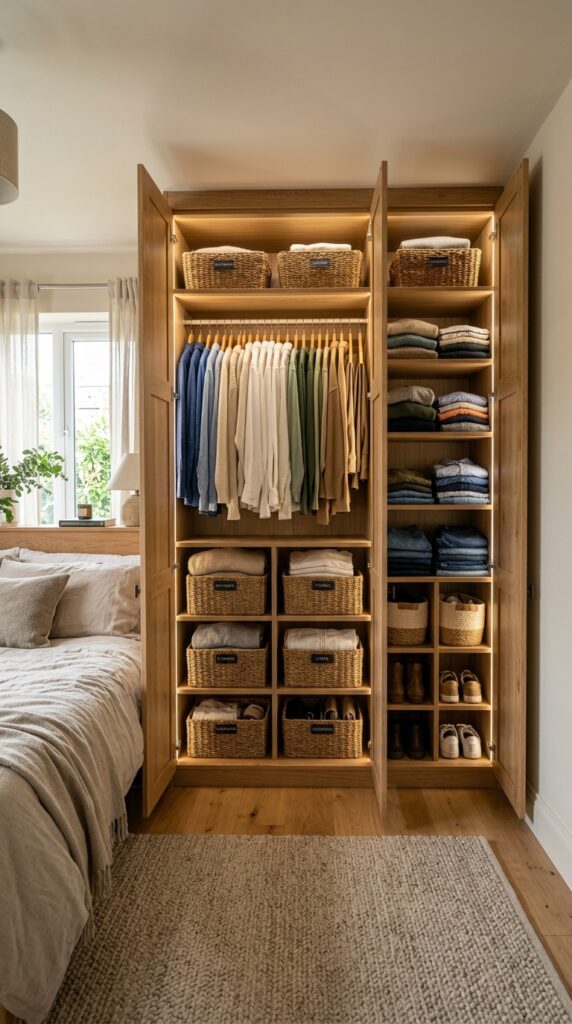
Clutter is the single fastest way to undermine every good decorating decision you’ve made. The problem in most bedrooms isn’t having too many things—it’s having storage that doesn’t actually work for how you live.
Assess your storage honestly. If you have a closet that’s overflowing, a dresser that won’t close, and things living on the floor, no amount of beautiful pillows will save the room. Start with furniture that stores generously: a bed with built-in drawers underneath, a wardrobe with adjustable shelving rather than fixed rods, an ottoman at the foot of the bed with a hidden interior. Woven baskets on open shelving keep things accessible but visually quiet. One designer trick: keep surface storage (dressers, shelves) to about 70% capacity so the room always reads as calm rather than crammed. Skip this if you love maximalism—but own that choice rather than defaulting to clutter.
16. Try Dark Walls for a Cocoon Effect
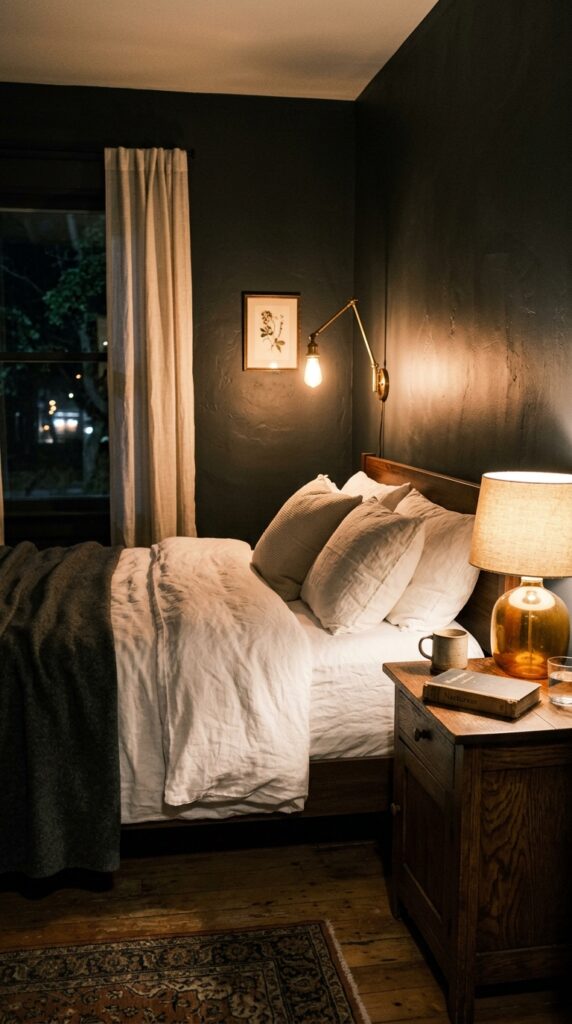
Dark walls in a bedroom are genuinely underrated, and the fear around them is mostly unfounded. When done right, a deep charcoal, forest green, or inky navy makes a bedroom feel like a proper retreat—enveloping, warm, and intentionally different from the rest of the house.
The trick is in the pairing. Dark walls need light bedding (crisp white linen, cream cotton) so the contrast does the work visually. They also need warm light—this is not the place for cool-toned bulbs, which will make the room look cold and slightly grim. Brass, warm wood, and terracotta accents work beautifully against dark backdrops. One thing to watch: dark walls in rooms with limited natural light can feel genuinely oppressive if you’re not layering warm lighting properly. If your room faces north or has small windows, test a large sample before committing. Small rooms actually handle dark colors better than many people expect—the “small rooms need light walls” rule is more myth than gospel.
17. Use Plants Without Overdoing It
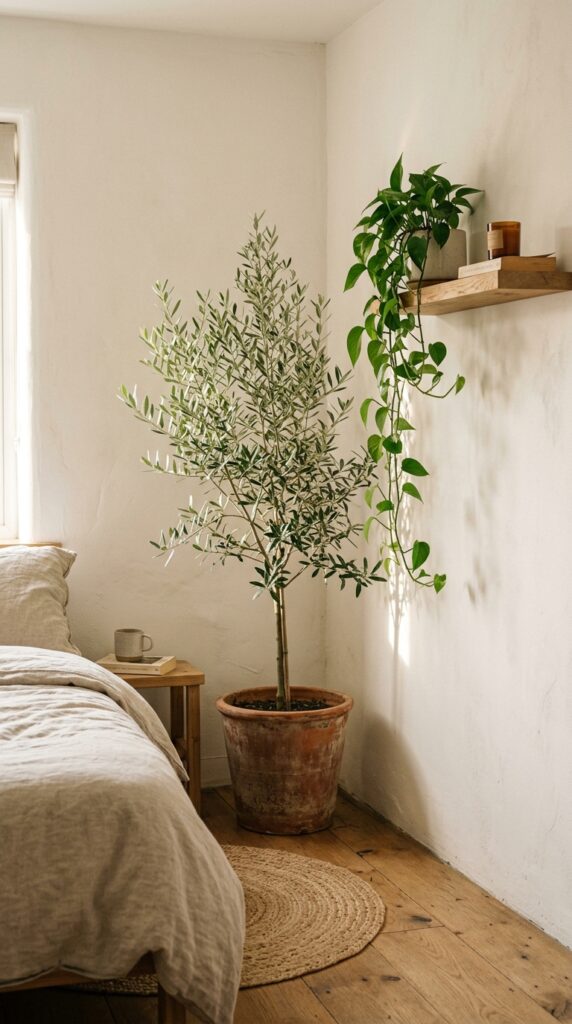
Plants in bedrooms have become so ubiquitous that a poorly placed fiddle-leaf fig has started to feel like a cliché rather than a design choice. That said, real greenery does something that artificial plants can’t—it genuinely softens a room and adds an organic quality that’s hard to fake.
The rule: choose plants that actually work for your specific light conditions. Most bedrooms don’t have the high, direct light that many popular plants need. Pothos, snake plants, and peace lilies genuinely thrive in lower-light conditions. One large plant makes a stronger statement than six small ones scattered everywhere. If your bedroom faces south and gets strong afternoon light, a fiddle-leaf or olive tree can work beautifully. Skip fussy plants if you travel a lot—there’s nothing worse than coming home to a dead fiddle-leaf and a mess of dried leaves on your rug.
18. Style a Dresser or Low Console as a Focal Point
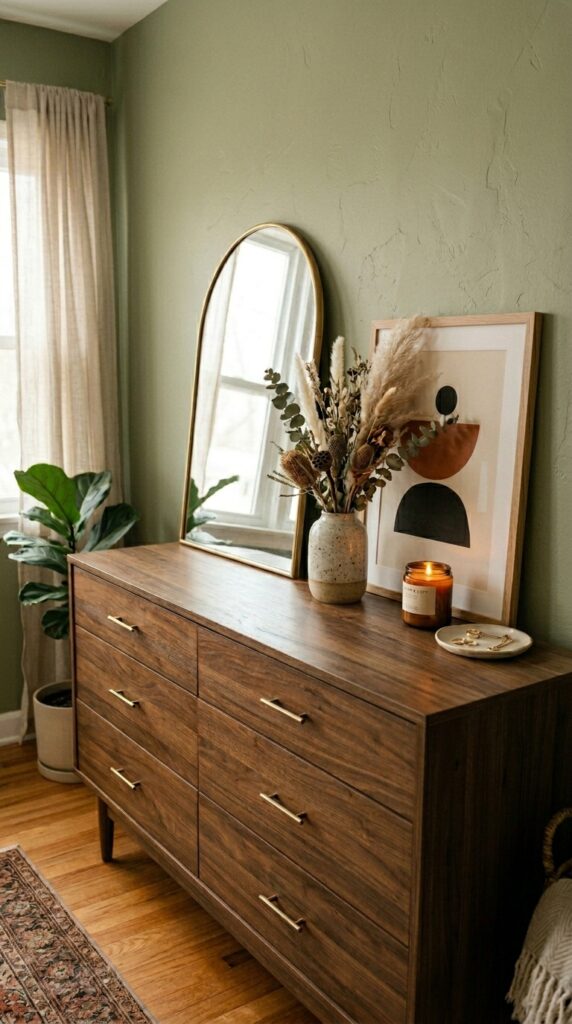
The dresser is typically the most neglected surface in a bedroom. It holds things but rarely does anything aesthetically. With very little effort, it can become one of the most beautiful vignettes in the space.
The formula: start with something tall (a leaning mirror or a piece of art), add something with organic texture (dried stems, a small plant), something that holds jewelry or small objects (a ceramic dish, a small tray), and one candle or lamp. Keep the palette tight—everything on the surface should share a color story with the rest of the room. What you’re avoiding is the dresser becoming a drop zone for random objects. Once the styling is set, it’s actually easier to maintain because you know exactly what belongs there. That said, if you genuinely don’t have time to maintain a styled dresser, keep it brutally minimal—one object only, everything else inside.
19. Layer in Brass or Warm Metal Accents (Sparingly)
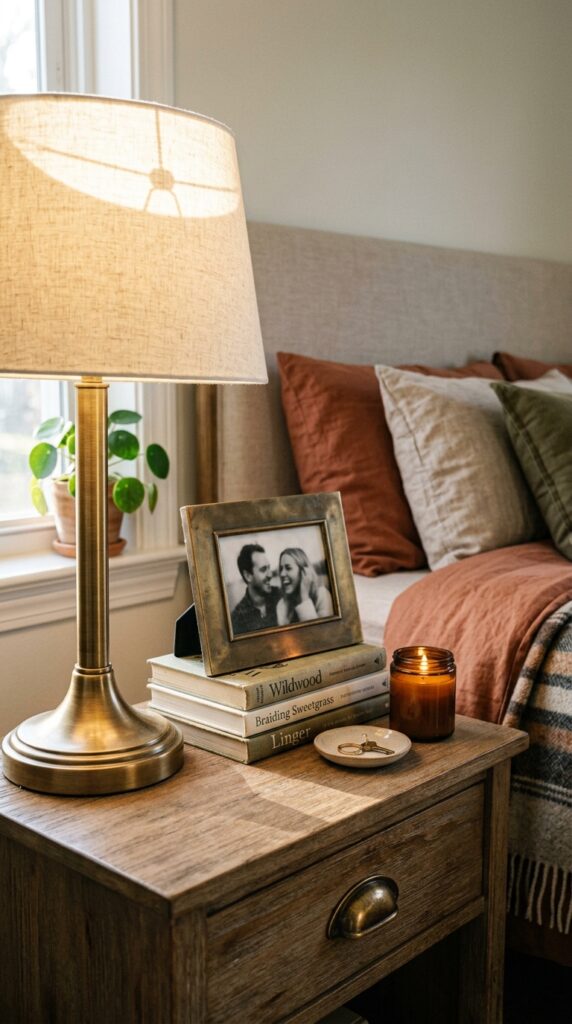
Warm metals—brass, aged gold, bronze—do something that cool metals (chrome, nickel) don’t in bedrooms. They read as warm, organic, and slightly vintage, which complements the soft textiles and natural materials that make a bedroom feel comfortable.
The key word is sparingly. A brass floor lamp, a brass picture frame, and brass drawer pulls is enough. You don’t need brass candle holders, brass curtain rings, brass wall art, and a brass mirror all at once—that tips from curated into overwhelming. Brushed or aged brass is more forgiving than polished—it doesn’t show fingerprints as readily and has a more sophisticated finish. One designer note: mixing warm metals is actually fine and looks more natural than matching everything exactly. Brass plus bronze plus aged copper reads collected and intentional. Brass plus chrome does not.
20. Create Visual Calm With Matching Wood Tones
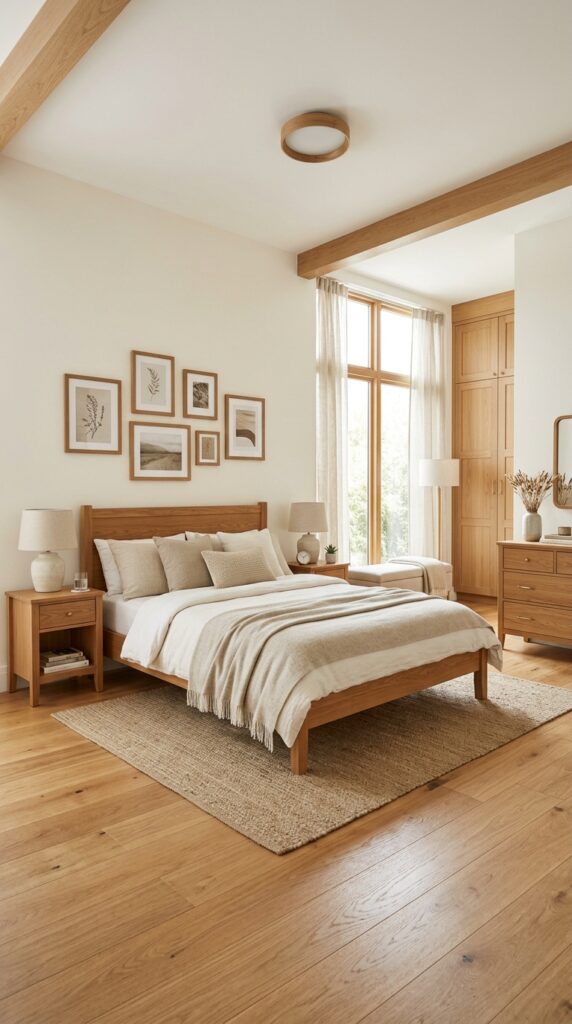
One of the quietest design decisions you can make in a bedroom is keeping your wood tones consistent. This doesn’t mean identical—it means in the same family. All warm oak, all dark walnut, all cool ash. When you mix warm and cool wood tones randomly (pine nightstand, espresso dresser, blonde oak bed frame), the room reads as assembled rather than designed, even if every individual piece is beautiful.
If you’re buying new furniture, this is easy to manage. If you’re working with existing pieces in mixed tones, the workaround is distraction: layer enough textiles, rugs, and wall art that the wood tones become secondary rather than the primary thing you notice. Alternatively, paint or stain the outlier piece if it’s something you own rather than rent. It’s worth the effort. Consistent material tones create visual calm—a bedroom that feels restful to spend time in without knowing exactly why.
21. Add Scent as the Final Design Layer
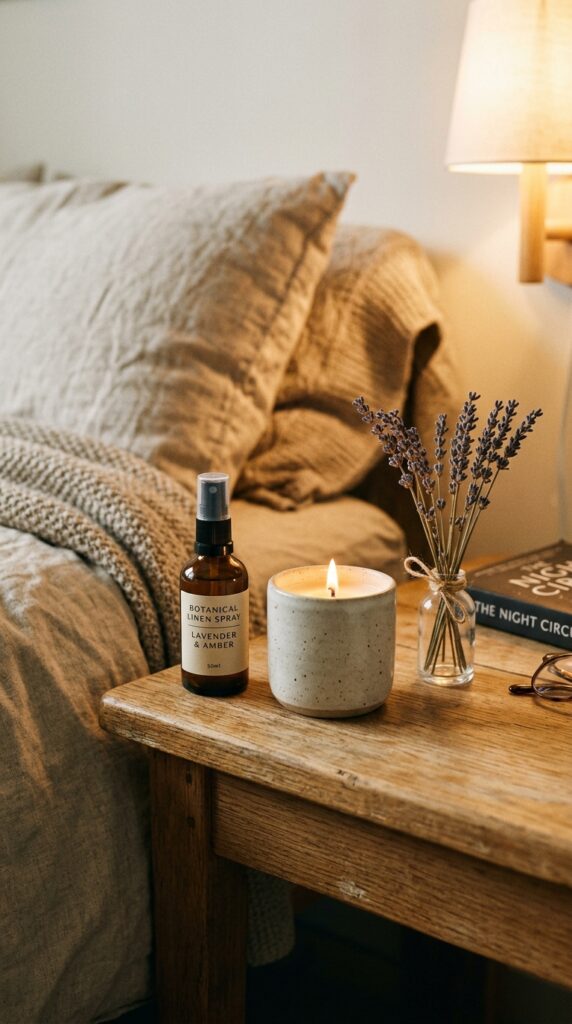
Scent is the most underused tool in bedroom design because it’s invisible and therefore overlooked. But it’s one of the first things you register when walking into a space, and it has a direct line to mood and memory in a way that wall color doesn’t.
This doesn’t require expensive candles (though a good soy or beeswax candle in a quality ceramic vessel is genuinely worth the money). Linen spray is the most practical option for daily use—a few spritzes on clean bedding before you make the bed creates a subtle, pleasant association with your bedroom every time you lie down. Dried herbs (lavender, eucalyptus) add scent passively and look beautiful. One thing to watch: avoid synthetic fragrance sprays that smell aggressive or chemical. Opt for essential oil-based options and err toward subtle. Your bedroom should smell like clean sheets and a hint of something natural—not a department store.
22. Try a Platform Bed for a Low, Grounded Aesthetic
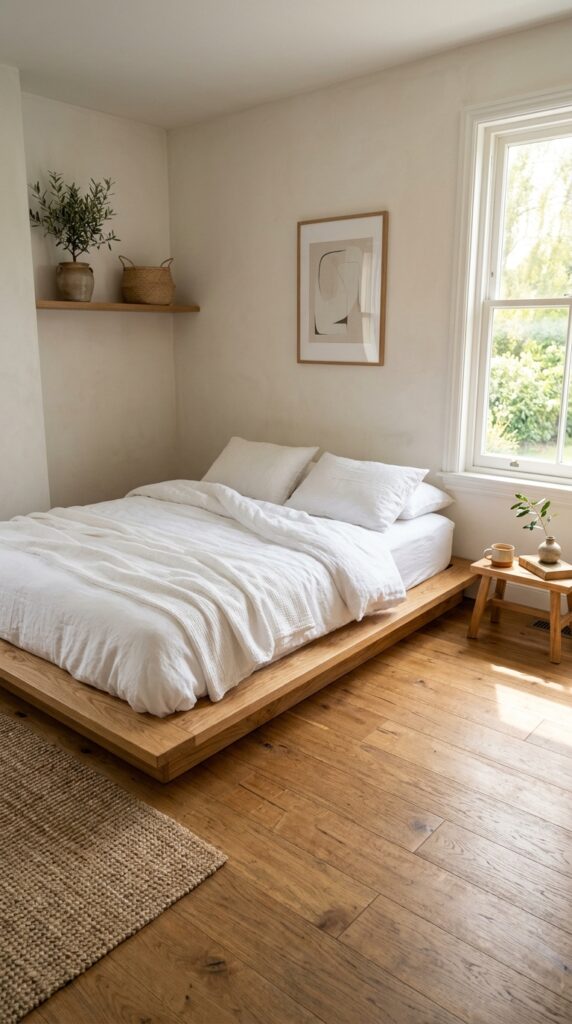
Platform beds have a quietly sophisticated effect that higher frames don’t. By sitting lower to the ground, they make the ceiling feel taller, they feel inherently calm and deliberate, and they give a room an almost Zen-like groundedness that’s harder to achieve with a box-spring-height frame.
They work especially well in rooms with high ceilings or in minimalist aesthetics where you want the floor and rug to play a bigger visual role. The trade-off: low beds can be harder to get in and out of if you have mobility concerns, and they make under-bed storage functionally harder to access. If storage is a priority, platform beds with integrated drawers solve this but add bulk. One practical note: on warm wood floors, a low platform bed makes the rug selection even more important—you have less visual break between the floor and the bed, so the rug needs to do real work.
23. Curate Your Shelf Styling (Fewer, Better Things)
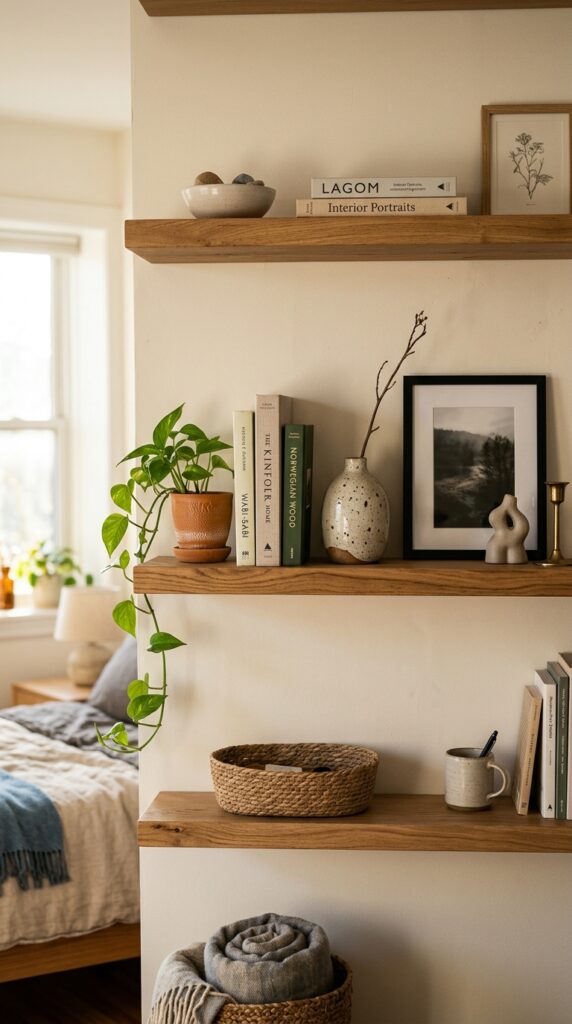
Open shelving in a bedroom is a calculated risk. Styled well, it adds personality and warmth. Styled poorly, it’s visual clutter that will quietly stress you out every time you see it. Most people err on the side of too much rather than too little.
The edit is everything. Each shelf should have a clear visual anchor (a larger object or stack of books), a secondary element (smaller ceramic, a small plant, a candle), and breathing room. The 70% rule applies here too—leave at least 30% of shelf space visually open. Books should be organized by color or size rather than pure chaos, unless you intentionally curate that chaotic-library look. One constraint: if you’re someone who buys things impulsively and never throws anything away, open shelves will work against you. Closed cabinetry is the better choice. There’s no shame in it.
24. Rethink the Symmetry of Your Furniture Layout
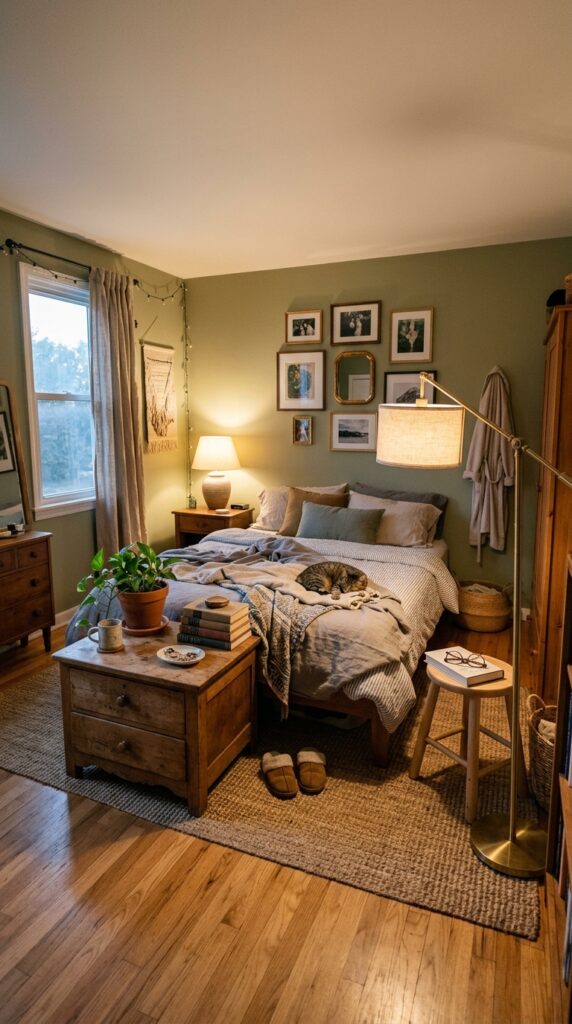
Perfectly symmetrical bedrooms—matching nightstands, matching lamps, centered bed on a centered wall—can feel generic rather than designed. That’s not to say symmetry is wrong. It’s that many people default to it without thinking about whether it actually serves the room.
Try a slightly asymmetrical approach: one large nightstand on one side, a smaller stool or wall-mounted shelf on the other. A floor lamp on one side replacing a second table lamp. The bed pushed slightly off-center to create more breathing room on one side. This looks more intentional and interesting, especially in rooms where strict symmetry would make the layout feel cramped. One caveat: if you share the space with a partner, asymmetry only works if both sides still function well. Aesthetics come second to practicality when two people are fighting over the same amount of nightstand space.
25. Invest in One Statement Piece That Does the Heavy Lifting
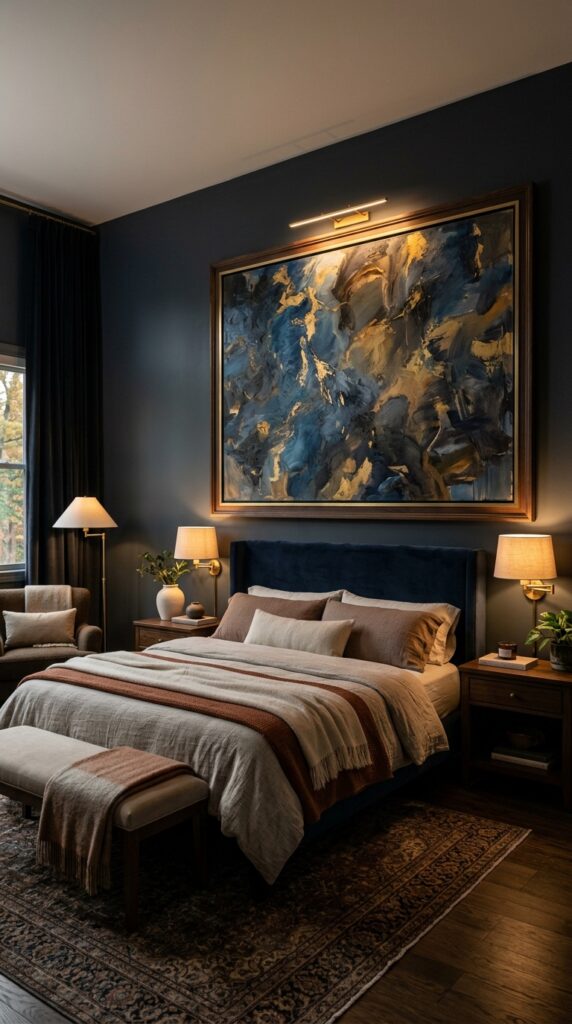
Every room needs a visual anchor—something your eye goes to first and stays with for a moment. In a bedroom, this can be a sculptural pendant light above the nightstand area, an oversized artwork above the bed, an unusual headboard, or a beautiful vintage dresser. One strong, deliberate choice.
The key is restraint everywhere else. If you have a dramatic woven pendant light, your other lighting can be quieter. If you have a large statement artwork, the wall needs nothing else. A great statement piece actually simplifies your decorating decisions because it sets the tone for everything around it. Budget-wise, it also makes more sense to spend well on one hero piece and stay economical on secondary items than to spread the budget evenly across everything and end up with a room that has no focal point. One last thing: buy the statement piece first. Decorate around it. Don’t try to find something that fits a room you’ve already finished.
Conclusion
Decorating a bedroom well isn’t about following every trend or buying everything at once. It’s about making a series of deliberate choices—each one considered, each one serving your actual life—that add up to something that feels genuinely yours. The ideas in this guide range from a fifteen-minute nightstand refresh to committing to dark walls, because not everyone is in the same place with their space, their budget, or their willingness to repaint.
What you’ll hopefully take away is this: the most beautiful bedrooms aren’t the most expensive ones. They’re the most considered. A linen duvet, warm light, one great piece of art, and a rug that’s actually big enough will outperform a room full of expensive furniture arranged without intention every single time. Start with what bothers you most, fix that, then move to the next thing. Small, well-made decisions compound into a room you’re genuinely glad to come home to.