Some mud kitchens are practical. Some are clever. And then there are the ones that make you stop scrolling because they’re just genuinely, ridiculously adorable. The kind you’d happily leave set up in the garden year-round because they look like they belong in a children’s book illustration. That’s what this list is about. These aren’t the rough-and-tumble pallet builds, though those have their charm too, these are the ones with scalloped trim, dusty pastel paint, tiny copper pots, and chalkboard menus that look hand-lettered by a fairy godmother. The lovely thing is that “cute” doesn’t have to mean expensive or fussy. With the right paint color, a few thoughtful styling details, and a willingness to lean into the whimsy, you can turn even the most basic build into something that genuinely makes you smile every time you walk past. Twelve ideas below, all unapologetically charming.
1. The Buttercream Bakery Kitchen
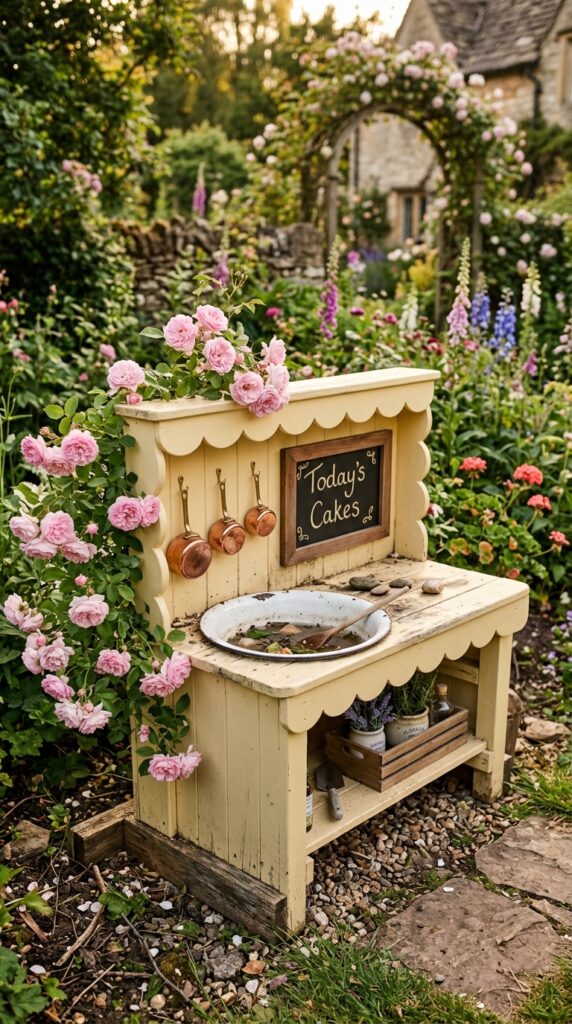
Painting a mud kitchen in soft buttercream yellow with a scalloped trim instantly transforms it into something that belongs in a Beatrix Potter illustration. The trick to making it look cute rather than cheesy is restraint with the styling, one chalkboard sign, a few real copper miniature pots, and that’s it. Skip the plastic play food entirely, it kills the aesthetic immediately. Use real wooden spoons, vintage tin cups, and small ceramic bowls. The scalloped trim takes about an hour to cut with a jigsaw using a paper template, and honestly it does more for the overall cuteness than any other single detail. One thing to watch: bright yellows can read as garish in harsh midday sun, so test the paint chip in your actual outdoor light before committing. Sweet, storybook, and weirdly grown-up at the same time.
2. The Tiny French Bistro
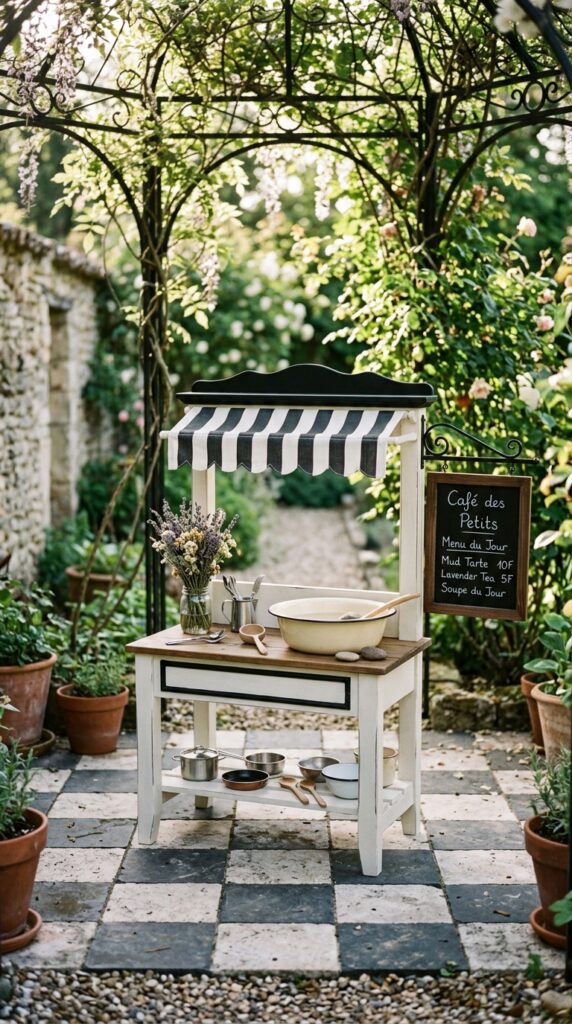
There’s something so charming about a child’s mud kitchen styled like a tiny Parisian cafe. The base is simple, a basic wooden kitchen painted in chalky white with crisp black trim, but the magic is in the details. Add a small striped fabric awning above the counter (a thrifted dish towel works beautifully), a chalkboard menu with the day’s “specials” written in playful handwriting, and a tiny bouquet of lavender or rosemary in a glass jar. Style the surface with one little wooden cutting board, a tin of “sugar” (sand), and maybe a child-sized rolling pin. The constraint with this style is upkeep, the white paint shows every smudge and the styling falls apart fast, so it works best for older kids who play more gently. Otherwise, you’ll be re-styling daily.
3. The Cottage Garden Kitchen
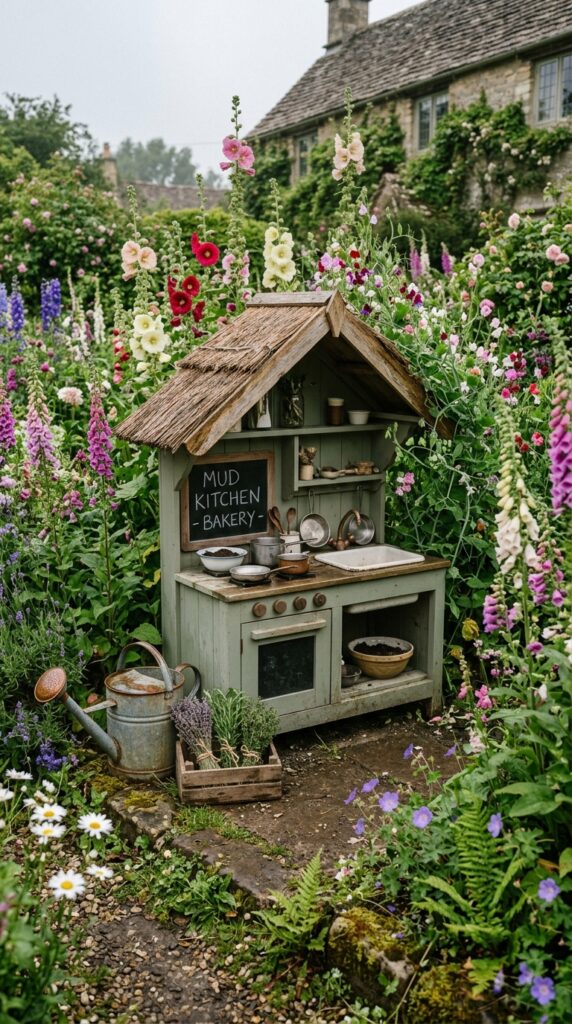
When the kitchen lives among real flowers, the styling does itself. Plant the surrounding area with a cottage garden mix, hollyhocks, foxgloves, sweet peas, anything that grows tall and falls over things, and let the kitchen become part of the planting. Paint it a soft, plant-friendly green like sage or dusty olive so it tucks into the garden rather than fighting it. A small wooden “roof” with overhanging eaves adds that fairytale cottage feeling without much extra build. The kids end up using real petals and herbs in their “cooking,” which feels lovely and connects them to the garden. The watch-out: flowers attract bees, so this isn’t ideal if anyone in the family has allergies. Otherwise, it’s the most genuinely magical setup on the list.
4. The Pastel Color Block
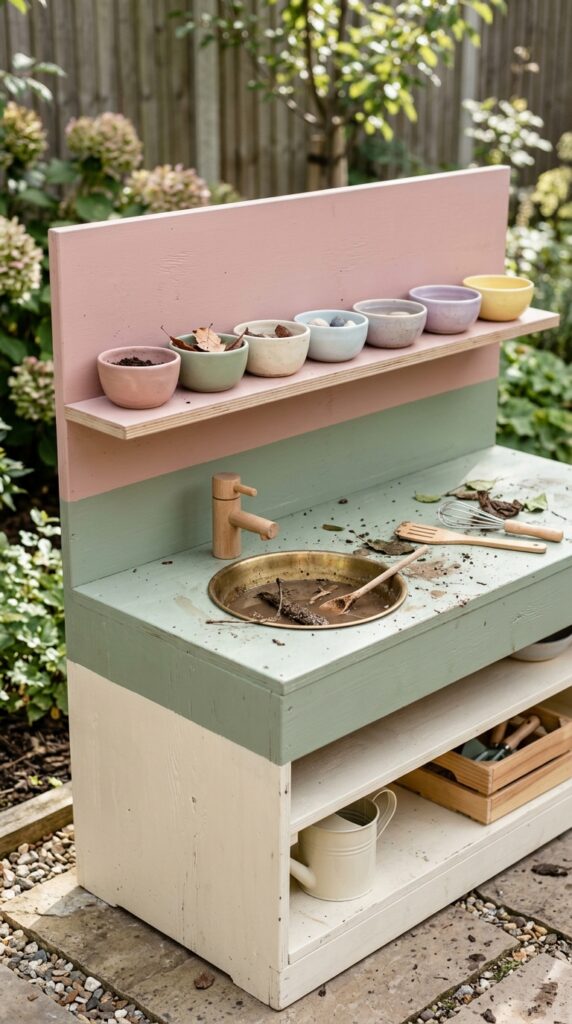
For a more contemporary take on “cute,” skip the cottage florals and go for pastel color-blocking instead. Paint different sections of the kitchen in three coordinating muted shades, a dusty pink upper panel, sage green middle, chalky cream base, and the whole thing reads as both childlike and design-forward. This style ages beautifully because it doesn’t rely on themed accessories that go out of fashion. Use a brass or copper basin for warmth against the pastels. Watch out for color overload though, three shades is the sweet spot, four or more starts to feel chaotic. Stick to one cohesive palette family (all dusty, all muted, all chalky) rather than mixing brightness levels. Sweet, modern, and weirdly sophisticated for a mud kitchen.
5. The Strawberry Patch Kitchen
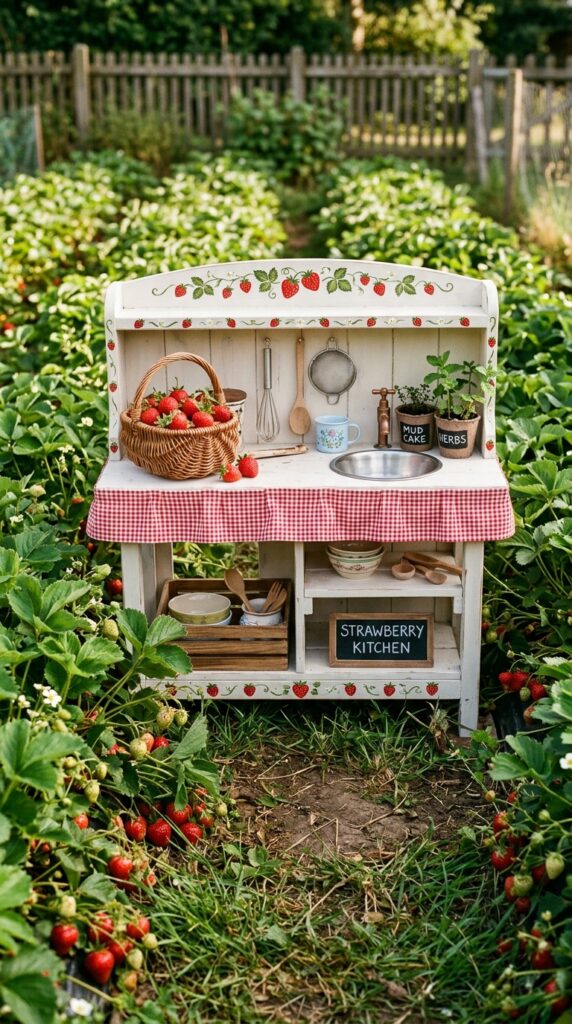
Theming a kitchen around a specific fruit or flower might sound twee, but it lands beautifully when it’s connected to something growing in your actual garden. A strawberry-themed kitchen placed beside a real strawberry patch lets kids “harvest” and “cook” their own ingredients, which makes the play infinitely more engaging. Keep the styling simple, white paint base with small hand-painted red strawberry details along the trim, a gingham fabric edge, and a small basket for collecting berries. Skip mass-produced themed decals, they look cheap immediately. Hand-painted details look so much better even if they’re imperfect. The trade-off: this works for one specific season really well, and feels slightly off in winter. Best as a summer setup that gets stored away when the berries are done.
6. The Mushroom Cottage Kitchen
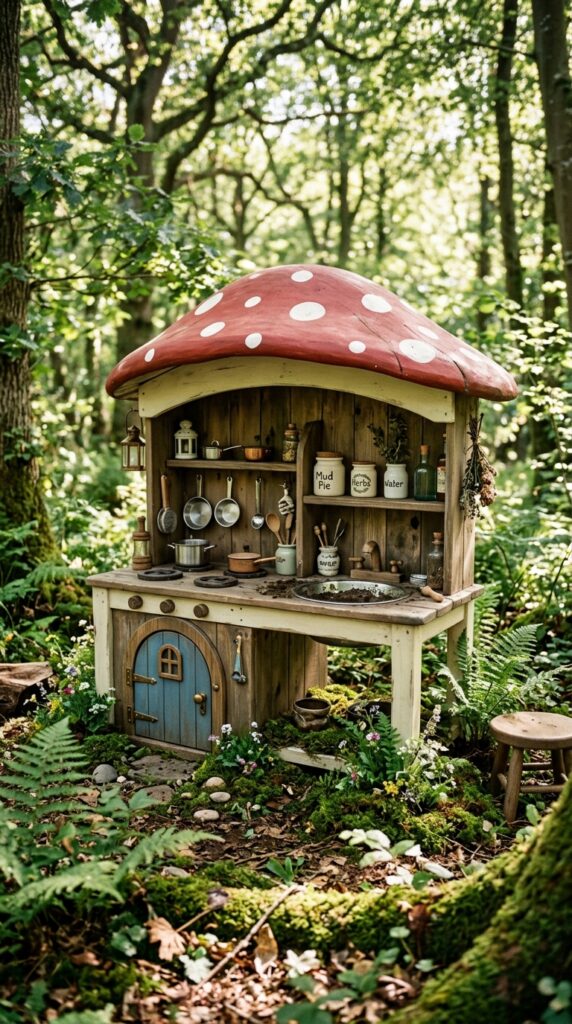
This is unapologetically over-the-top, and that’s the entire appeal. A mushroom-style roof, a curved red cap with white painted dots, transforms an ordinary kitchen into a tiny fairy cottage. Build the roof from a half-circle of plywood mounted on top, painted red with white spots done freehand (perfection ruins it, lean into the wobble). The rest of the kitchen stays simple cream or pale wood so the roof gets to be the star. Surround the base with ferns, moss, and small pebbles to lean into the woodland aesthetic. The catch: this style is genuinely childlike, so it doesn’t double as a stylish garden feature the way some of the more muted options do. But for kids under seven, it’s pure magic. Pick this if you want to commit fully to whimsy.
7. The Vintage Tea Party Kitchen
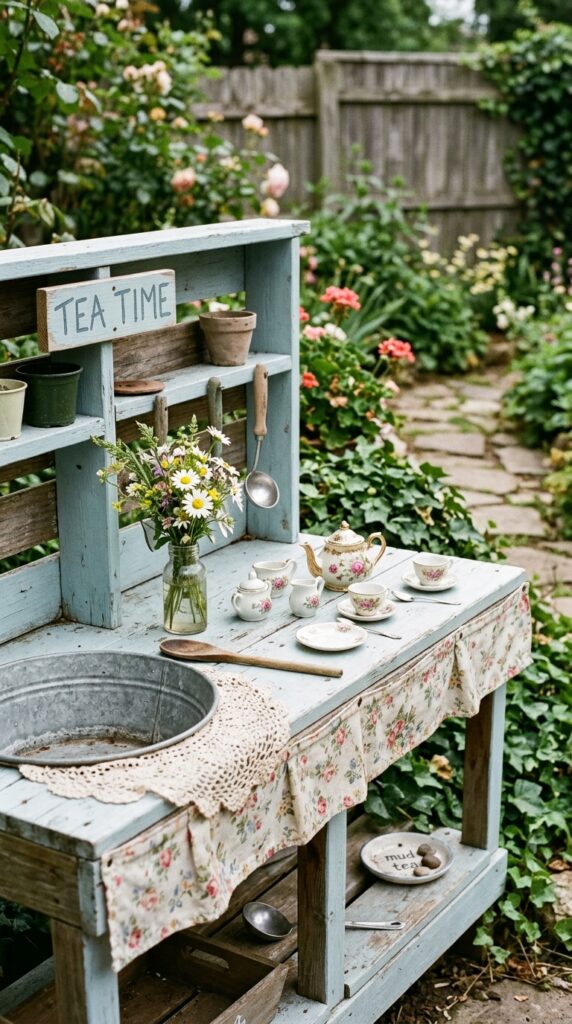
A tea party theme lands beautifully for kids who love delicate, ritualized play. Paint the kitchen in a soft chalky pale blue or dusty rose, add a strip of pretty floral fabric as trim along the counter edge (just stapled on the underside), and style it with a vintage child’s tea set picked up from a thrift store for a few dollars. A tiny lace doily under the basin, a small vase of wild daisies, and a chalkboard menu with “today’s tea” written on it complete the look. The constraint: ceramic tea sets break, so this works best for slightly older children who handle things gently. For toddlers, swap in a wooden tea set instead. Nostalgic, gentle, and genuinely sweet without being saccharine.
8. The Boho Macrame Kitchen
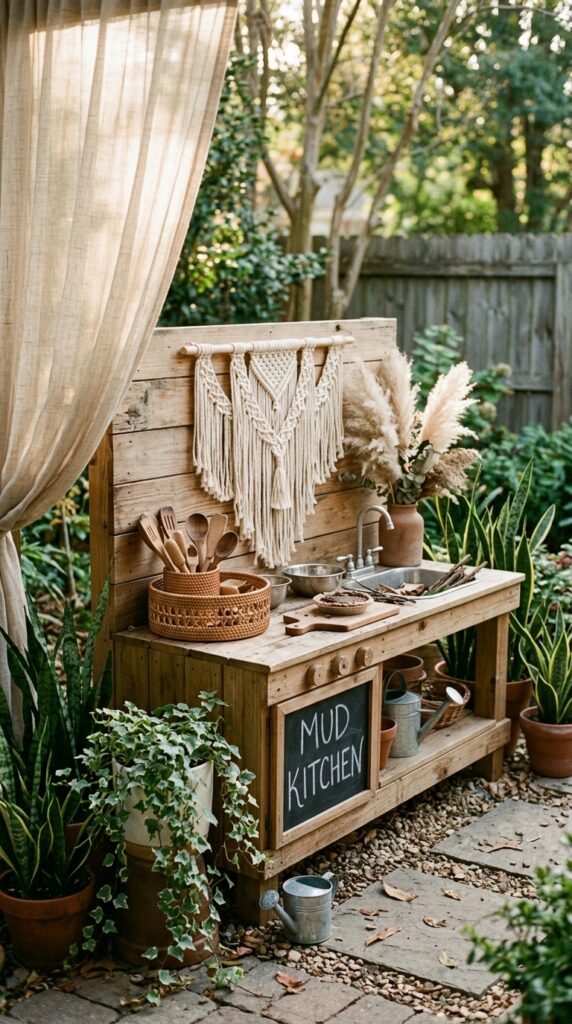
For parents who love a bohemian aesthetic, a mud kitchen leans into that beautifully with natural wood tones and macrame details. Skip paint entirely and let the raw or lightly stained wood speak for itself. Add a small handmade macrame wall hanging above the counter (Etsy has them for under fifteen dollars, or you can DIY one in an afternoon from cotton rope). Style with woven rattan baskets for storage, terracotta pots, and dried pampas grass or eucalyptus in clay vessels. The whole thing reads as warm, layered, and grown-up while still being a kid’s space. The watch-out: macrame doesn’t love rain, so position it under shelter or take it inside in bad weather. Earthy, soft, and a refreshing break from primary colors.
9. The Pumpkin Patch Kitchen
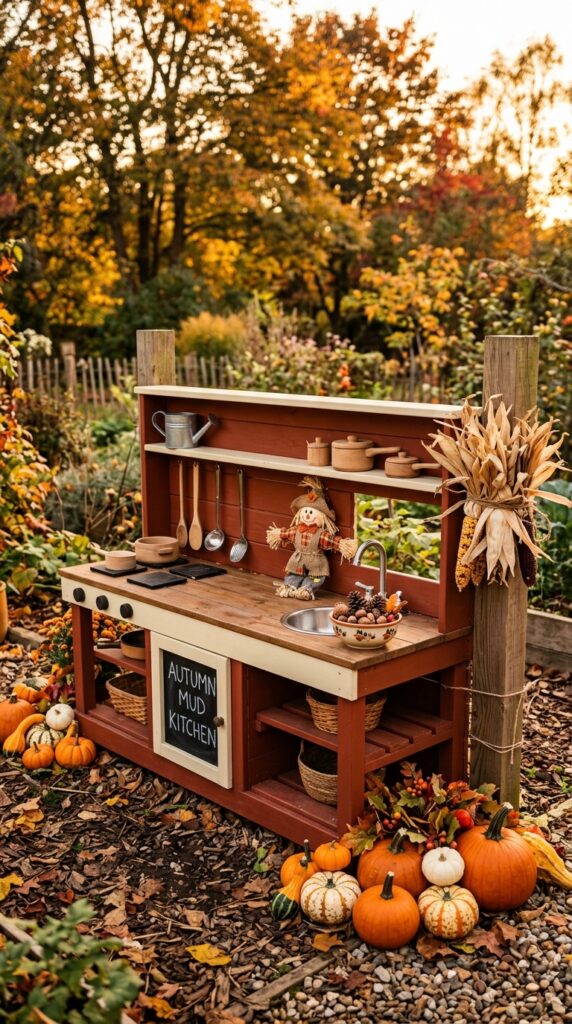
A seasonally themed kitchen feels especially magical in autumn, when the whole garden is shifting color. Paint the kitchen in warm autumn tones, deep terracotta, burnt orange, or rich cream, and style it with mini pumpkins, dried corn husks, and bowls of acorns and pinecones. The kids end up making “pumpkin soup” with collected leaves, which is exactly the kind of imaginative seasonal play that makes mud kitchens worth building in the first place. The trade-off: this is a seasonal styling rather than a year-round look, so you’ll want to refresh it in spring with different elements. Or commit to making seasonal styling part of the fun, the kitchen becomes a tiny stage that changes with the year. Genuinely lovely in October.
10. The Watermelon Stand Kitchen
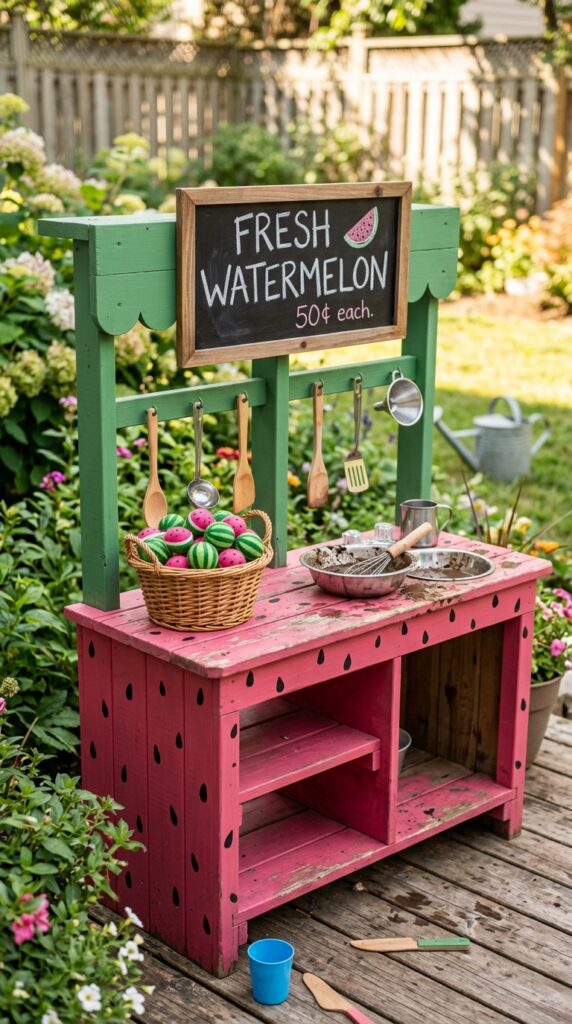
Pure summer joy in mud kitchen form. Paint the lower half of the kitchen in deep watermelon pink with small black painted “seeds” scattered across, and the top half in fresh green with a chalkboard sign above reading “Watermelon Stand” or “Fresh Slices.” It’s unapologetically themed and absolutely delightful for kids age three to seven. Style with a tiny basket of small green and pink ball ornaments or felted “watermelons” to keep the theme going. The constraint: this is summer-specific and feels weird in November, so plan to repaint or restyle seasonally. Best for families who lean into seasonal decorating and don’t mind a refresh every few months. Cheerful, summery, and basically guaranteed to make kids squeal when they first see it.
11. The Lavender Field Kitchen
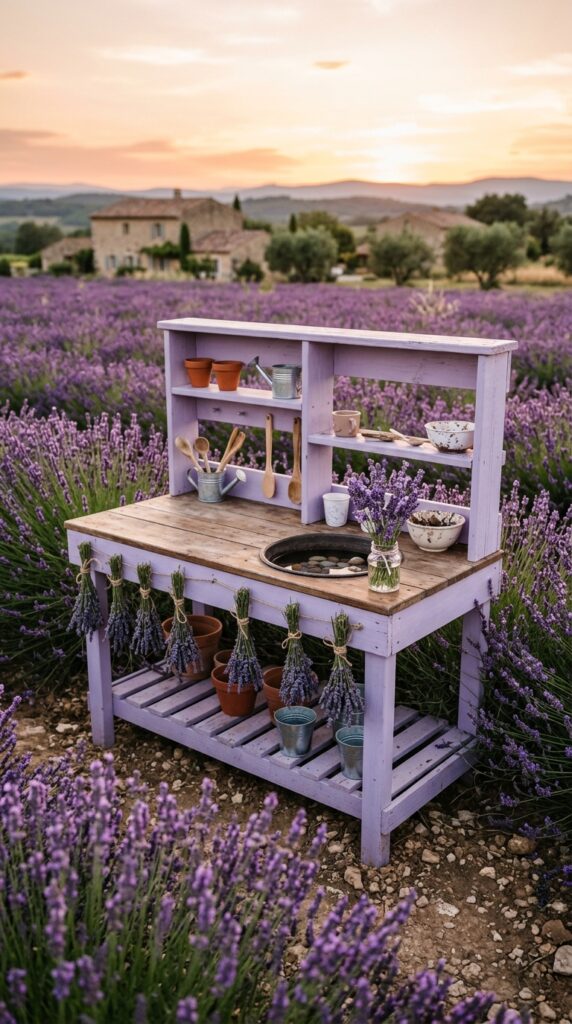
If you grow lavender, building the kitchen right in the middle of the lavender patch creates the most heavenly play space imaginable. The scent alone makes spending time out there genuinely lovely for everyone, kids and adults included. Paint the kitchen in a soft chalky lavender shade to echo the surrounding plants, and style with dried lavender bundles tied with twine, hung along the counter edge. The kids end up using fresh lavender in their “cooking,” which smells incredible and is genuinely calming. The catch: lavender attracts bees, so this won’t suit families with bee anxiety or allergies. For everyone else, it’s one of the most sensory-rich setups you can build. Quietly magical.
12. The Tiny House Kitchen
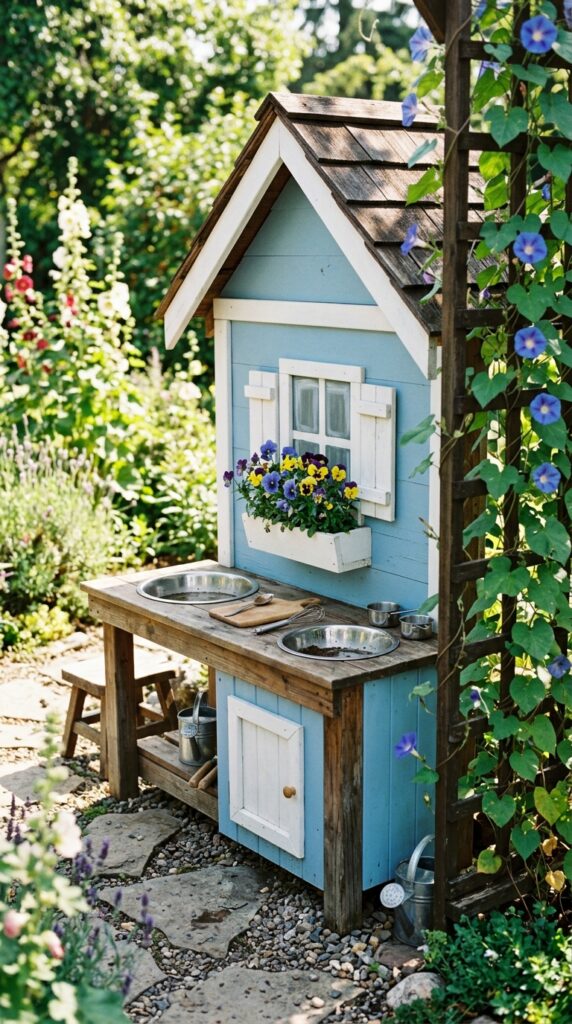
Going full miniature house mode is the maximum cuteness option, and it’s surprisingly achievable. Build a basic kitchen, then add a peaked roof on top (just two angled boards meeting at a point), paint a faux window with shutters on one side, and add a small painted door panel below the counter. A real window box with pansies under the painted window sells the whole illusion. The kids think it’s actually a tiny house and incorporate that into their play, “going inside,” “answering the door,” cooking dinner for imaginary visitors. The trade-off: this is the most labor-intensive build on the list, expect a full weekend. But the result is genuinely the cutest thing in any garden it lives in. Worth every hour.
There’s a particular pleasure in building something beautiful for someone small, and that’s really what these cute mud kitchen ideas are about. They’re not just functional play spaces, they’re tiny stages where childhood happens in soft pastel colors and chalkboard menus and the smell of crushed lavender on small fingers. The lovely truth is that “cute” doesn’t require talent or a big budget, it just requires a willingness to lean into whimsy a little, to paint something a color that makes you smile, and to add the tiny detail (the scalloped trim, the chalkboard sign, the bundle of dried herbs) that turns a wooden box into a storybook. If something here sparked an idea, the buttercream bakery, the mushroom cottage, the lavender patch, just start. Pick the one that delighted you most and build it this weekend. We share heartfelt, design-conscious project ideas like these every week here, the kind that respect your taste and your budget. Bookmark us, share this with a friend who needs a Saturday project, and go build something genuinely lovely.