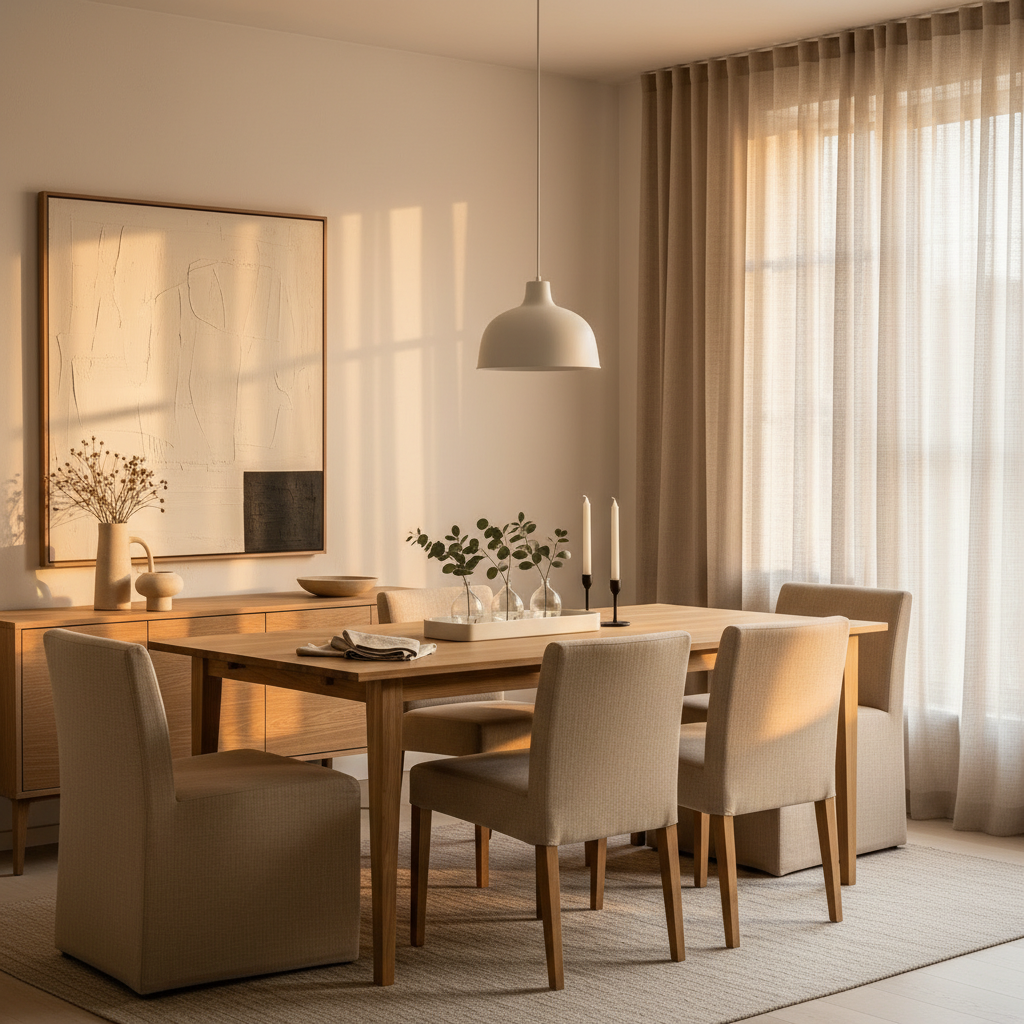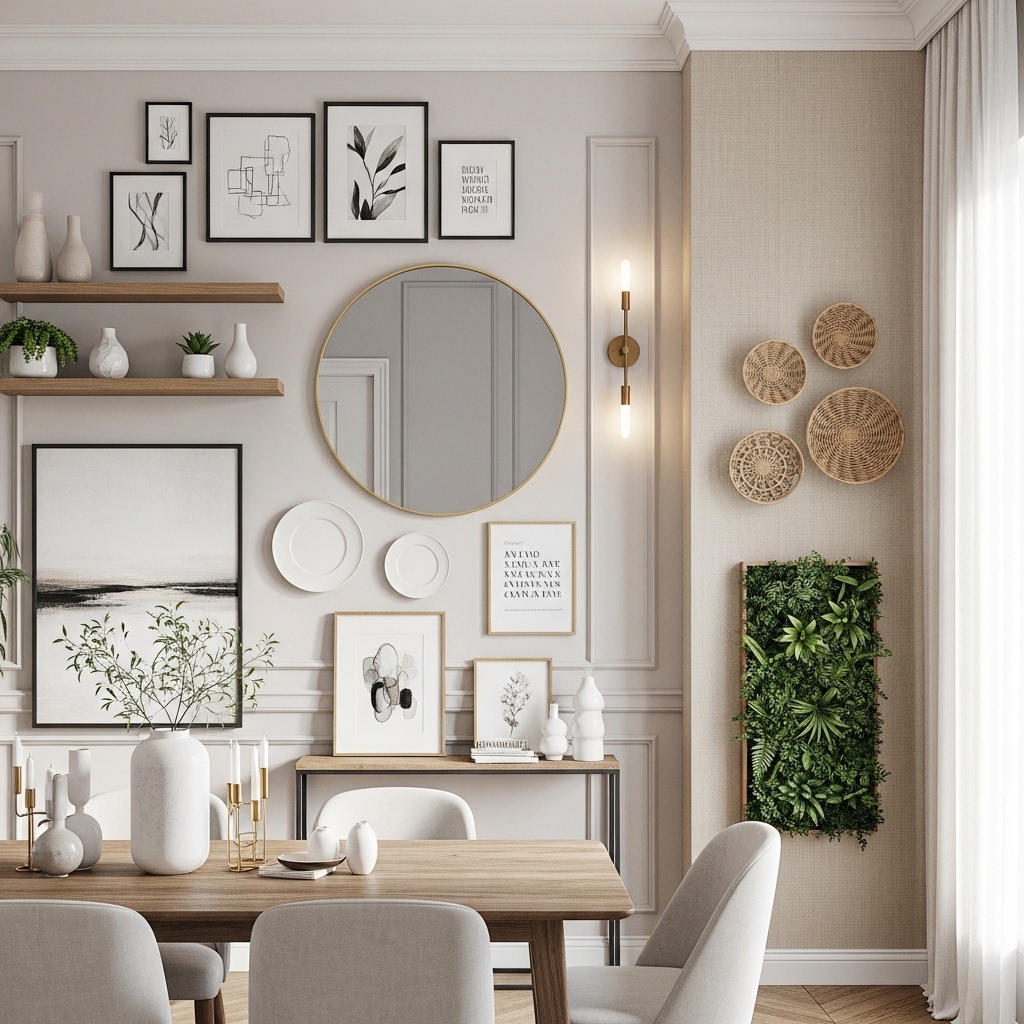
There’s a version of coastal decor that looks like a beach gift shop exploded in your home — plastic starfish, navy-and-white stripes on everything, a wooden sign that says “EAT, DRINK, AND BE SALTY.” Then there’s the version that actually makes you feel like you’re somewhere near the water, where the light is soft, the air feels unhurried, and the whole room seems to exhale.
This guide is about the second version.
Coastal dining rooms are having a serious moment right now, but not the kitschy nautical kind. We’re talking about spaces that borrow from the shore — its texture, its quietness, its layered neutrals, its affinity for natural materials — without feeling like a themed restaurant. Whether you’re working with a beachfront cottage or an urban apartment that just needs to breathe, these twelve ideas will give you a real starting point. Not a mood board. A plan.
1. The Bleached Wood Table as Your Foundation
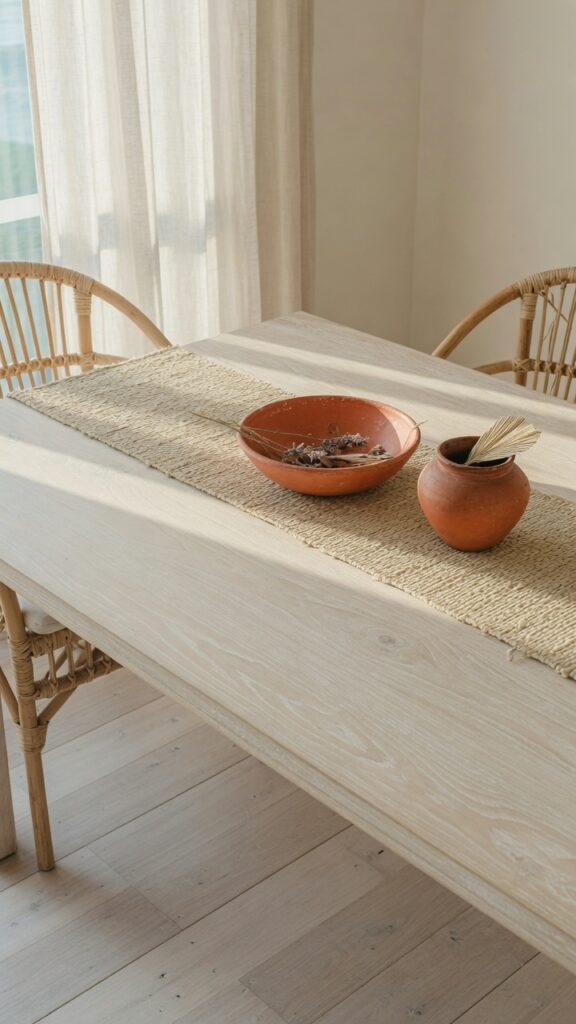
If you only do one thing, make it this. A bleached or whitewashed wood dining table sets the entire tone of a coastal room before you hang a single thing on the wall. It reads as organic without being rustic, light without being cold, and it plays nicely with almost every other material you’ll bring in later.
White oak and reclaimed pine both work beautifully here. If you’re buying new, look for pieces with a matte, almost chalky finish — high-gloss wood immediately kills the coastal feeling. If you’re working with a table you already own, a diluted whitewash with a dry-brush technique can transform a dark walnut piece for under fifty dollars and an afternoon of effort.
One thing to watch: bleached tables show everything. If you have young kids or use the table daily without a runner, you’ll either need to accept the natural patina or seal the surface with a hardwax oil finish that maintains the pale look while offering protection. Style it simply — a low dried botanical centerpiece and a few unglazed ceramic vessels are all it needs. Less is genuinely more with a table this textured.
2. Rattan Chairs That Don’t Feel Dated
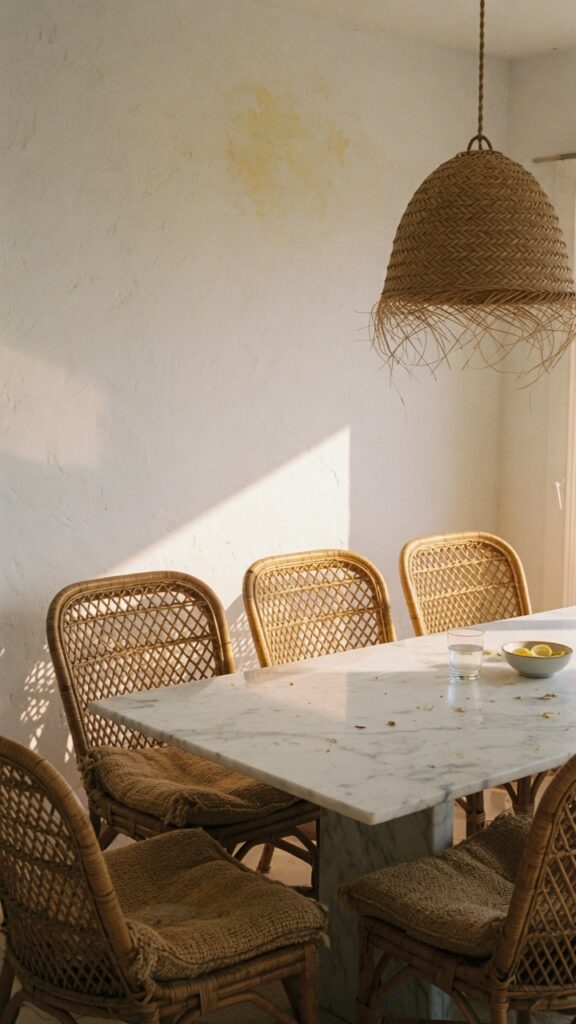
Rattan went through a rough decade where it became synonymous with outdated conservatories and your grandmother’s sunroom. Now it’s back, and this time it’s doing serious design work. The key is in how you use it — not as nostalgia, but as texture.
For a dining room, choose rattan chairs with clean lines and a slightly higher back. Avoid the full peacock-chair silhouette unless your room can genuinely handle that level of drama. Low-profile curved designs work better in modern coastal rooms. Pair them with a marble or stone table rather than more wood, or you risk the whole room reading like a thatched beach bar.
Add linen or undyed jute cushions for comfort — rattan without padding is fine for twenty minutes, not a two-hour dinner. If you’re renting and can’t paint, rattan does more heavy lifting than any wall art for creating coastal atmosphere on its own. Mixing one or two rattan chairs with painted wooden ones also works beautifully if full-set commitment feels like too much.
3. The Wave of Sea Glass Colour
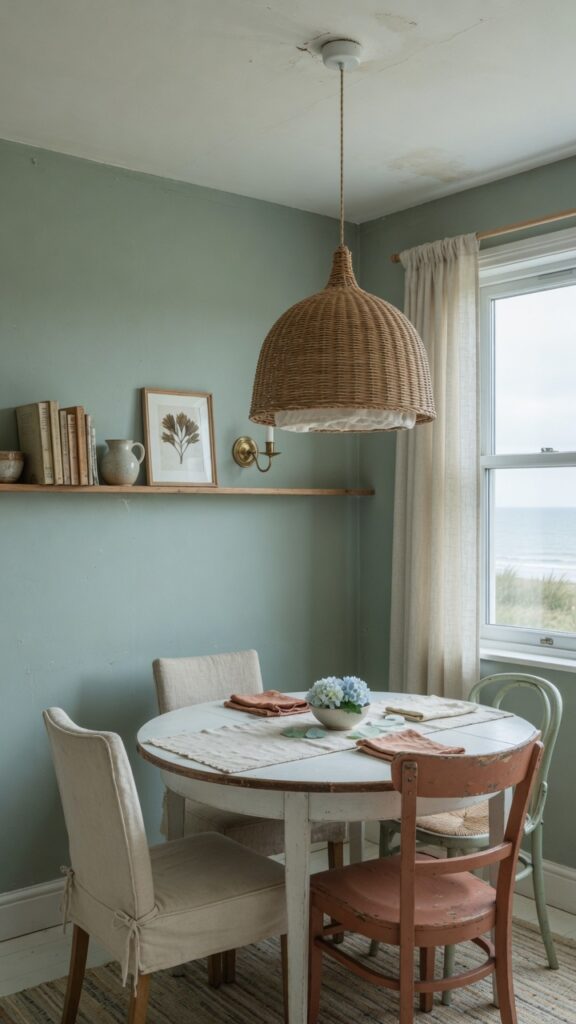
Sea glass colours — those soft, weathered tones of pale green, frosted aqua, faded coral, and cloudy sage — are the most underused tool in coastal decor. Everyone reaches for navy blue or bright white, and while those can work, they tend to feel more nautical than genuinely coastal. There’s a difference.
True sea glass tones have been knocked back by salt and sun. They’re never saturated. Think of the colour as something that’s been outside for years. For a dining room wall, a sage with cool grey undertones or a pale aqua that leans almost grey in north-facing light will give you that quiet coastal mood without shouting about it.
If your room faces south and gets strong direct light, go a touch darker than you think you need — these shades wash out quickly in sun. North-facing rooms hold the grey undertones beautifully all day. Pair with warm natural materials like rattan, linen, and unfinished wood to keep the room from tipping cold. A flat or matte finish is non-negotiable. Eggshell kills the entire effect.
4. Woven Pendant Lights That Do the Heavy Lifting
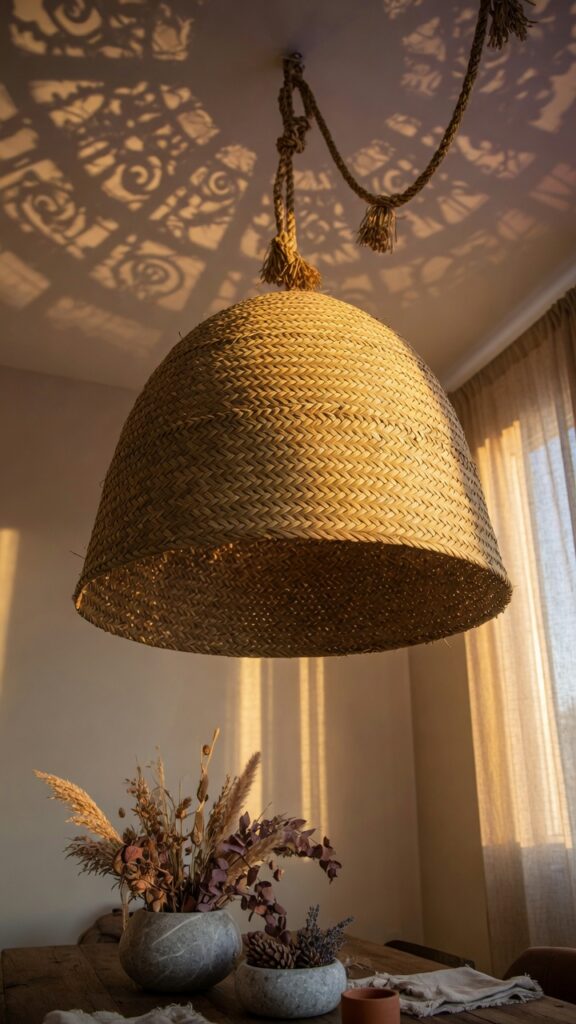
A woven pendant light is probably the single fastest way to coastal-ify a dining room without touching the walls or the floor. Seagrass, jute, abaca, and rattan shades all do the job. What separates a good one from a cheap one is the quality of the weave and the scale — always size up. Most people underestimate how large a pendant needs to be to feel intentional over a dining table.
The rule of thumb: your pendant diameter should be roughly half the width of your table, and the bottom of the shade should hang about 30 to 34 inches above the tabletop. Go lower and it feels claustrophobic. Go higher and it loses its intimacy. Both mistakes are common.
One constraint worth naming: woven pendants trap dust aggressively. If you’re in a high-humidity coastal area or cook with the dining room door open, a closed weave will be easier to maintain than an open one. That said, the shadow play a loosely woven shade casts on the ceiling at dinner is genuinely beautiful and worth a little extra cleaning.
5. Layered Linen Textiles for Softness
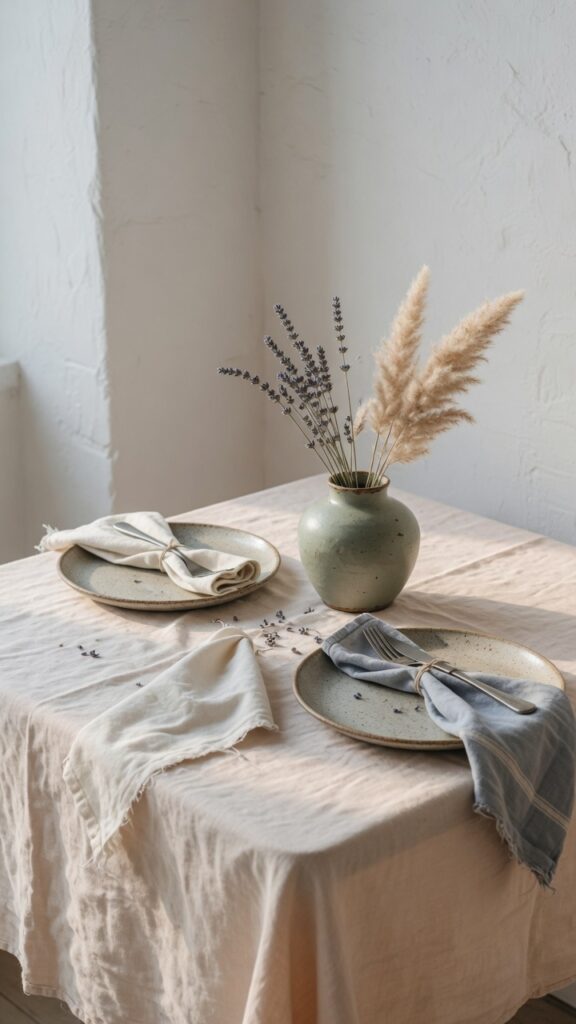
Raw, undyed linen is one of those materials that costs almost nothing and immediately elevates a table. The slight wrinkle, the visible texture of the weave, the way it softens under natural light — it does everything a coastal dining room needs a textile to do. Skip the polyester tablecloths entirely. They photograph well in showrooms and look sad at home.
For a full coastal linen layer, start with a loose tablecloth in natural or off-white, then add napkins in a slightly different tone — dusty blue, faded terracotta, or a warm sand. The slight mismatch reads as curated rather than careless. Combine with stone or matte ceramic tableware for a full effect.
One honest note: linen wrinkles constantly and takes a specific kind of person to embrace that. If you hate visual disorder, a tightly woven cotton-linen blend gives you some of the texture with a little more composure. Works particularly well for people who actually use the dining room daily rather than just for guests.
6. A Statement Wall in Limewash or Plaster Finish
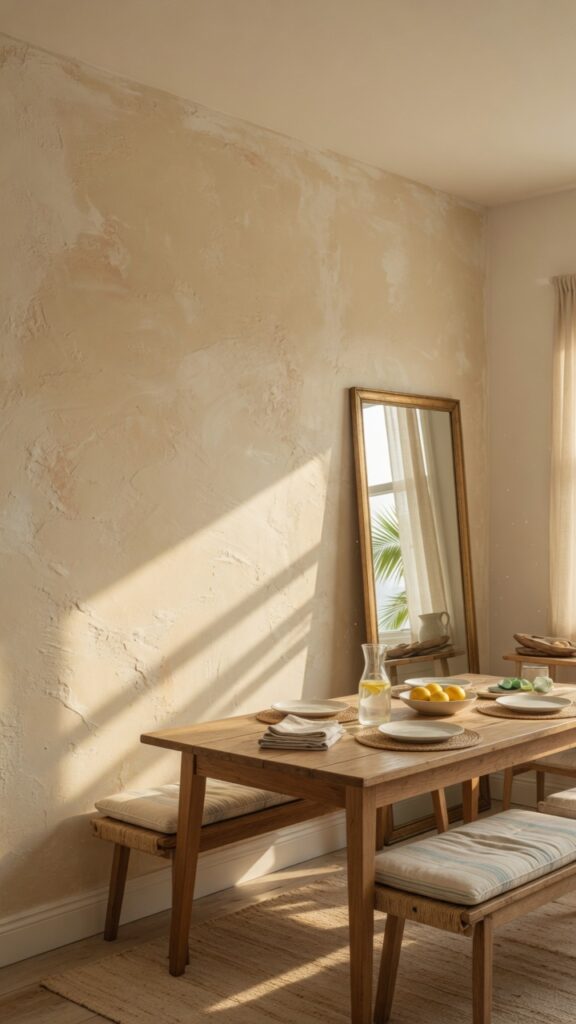
Limewash paint is having a prolonged cultural moment, and honestly it deserves it — especially in coastal rooms. Unlike regular paint, which sits flat on the surface, limewash soaks into the wall and creates this layered, almost mineral depth that looks like old Mediterranean plaster. It makes walls feel like they’ve been there for a hundred years, in the best possible way.
Applied to a single dining room wall, it becomes an anchor for the entire space — something to orientate furniture against, something that makes the room feel designed rather than just decorated. Sandy whites, pale ochres, and warm stone tones all work. Avoid cool greys with limewash; they can feel tombstone-adjacent.
This is not a renter-friendly option — fair warning. But if you own your home and hate repainting, limewash is actually more forgiving over time than flat paint. It ages gracefully, and touch-ups blend naturally. Pair it with a brass-framed mirror or a single oversized piece of abstract art in ocean tones and leave the wall otherwise alone. It earns the restraint.
7. Mixing Metals: Brass and Brushed Nickel Done Right
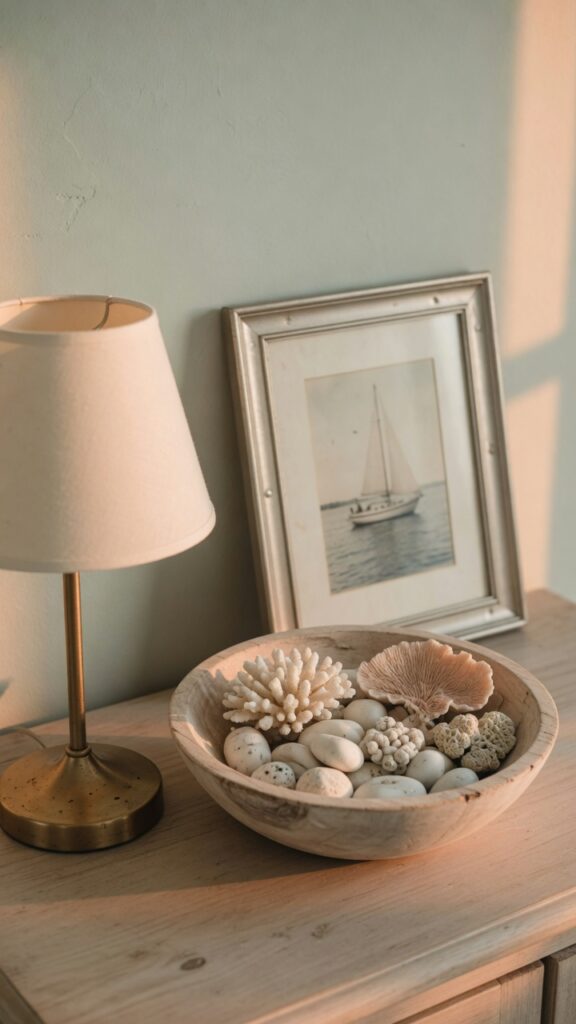
The old rule — never mix metals — was always wrong, and coastal interiors prove it every time. The right combination of warm brass and cooler brushed nickel or aged silver actually adds the same kind of depth that layering different blues does in a beachside painting. It keeps the eye moving without feeling chaotic.
In a coastal dining room, brass works beautifully for light fixtures, cabinet hardware, and decorative objects. Brushed nickel or silver-toned metals can come in through frames, chair legs, or tableware. The ratio matters: lean about 70% toward one metal and use the other as an accent, or the room will start to feel visually restless.
Avoid polished chrome entirely in coastal rooms. It reads too modern and too cold. Unlacquered brass that oxidises slightly over time is ideal — it develops a patina that actually fits the weathered aesthetic you’re going for. One small tip: if your light fixture is brass, let your dining chairs have silver-toned legs. The contrast grounds the room without competing.
8. Open Shelving with Curated Coastal Objects
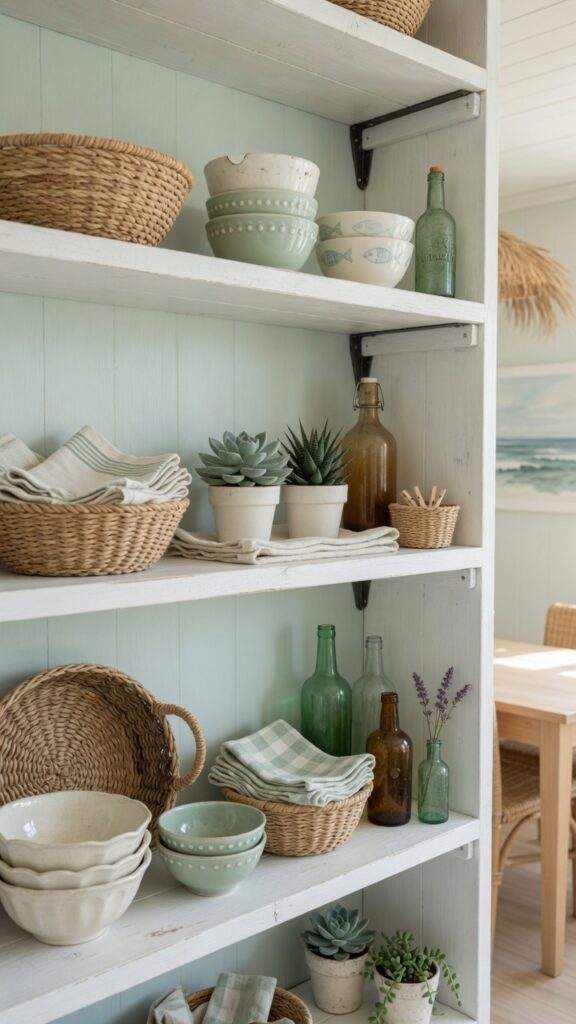
Open shelving in a dining room is polarising for good reason. Done wrong, it becomes a dust-collecting display of everything you couldn’t find space for elsewhere. Done right, it tells a visual story and gives the room personality you genuinely can’t buy off the shelf — no pun intended.
For coastal open shelving, the edit is everything. Keep the palette disciplined: whites, creams, naturals, and one or two soft accent tones. Mix textures aggressively — woven baskets next to smooth ceramics next to rough-glazed pottery. Leave actual breathing room on each shelf. Negative space is not wasted space.
Objects that work: weathered glass bottles, shells with real sculptural interest (not the souvenir bag variety), handmade ceramic pieces, stacked linen, driftwood fragments, and small plants. Objects that don’t: decorative plates with anchor motifs, anything with the word “beach” on it, and uniform matching sets of anything. Skip this entirely if you genuinely hate dusting. It is a commitment.
9. Jute and Sisal Rugs Under the Table
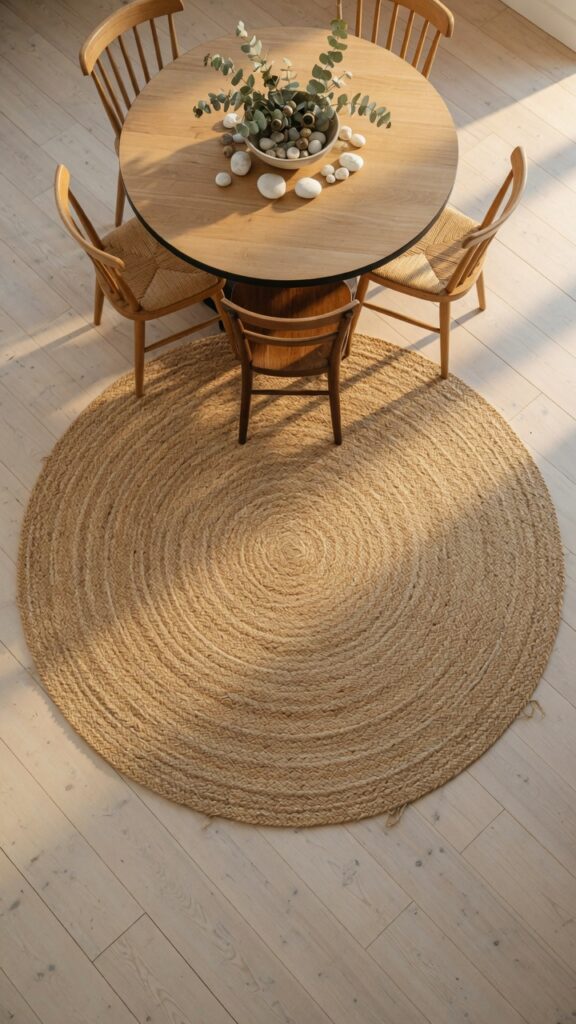
A dining room without a rug feels unfinished. A dining room with the wrong rug — a shaggy high-pile or a dark Persian — feels like two different rooms colliding. For coastal spaces, jute and sisal are the obvious answer, and they’re obvious for good reason: they’re durable, natural, affordable, and their texture does exactly what a bleached wood floor or pale tile can’t do on its own.
Go large. The rug should be big enough that all four chair legs sit on it even when pulled out from the table — a common mistake is sizing down and ending up with chairs perpetually catching on the edge. For a standard rectangular six-seater table, a 8×10 rug is usually the minimum.
One real-world constraint: jute is not great with moisture. If your dining room opens onto an outdoor space and humidity is high, or if you have young children who spill regularly, a sisal or seagrass weave will hold up better than jute over time. Neither is particularly soft underfoot, so if someone in the household goes barefoot constantly, add a flat woven cotton layer on top for comfort.
10. Coastal Gallery Wall Without the Clichés
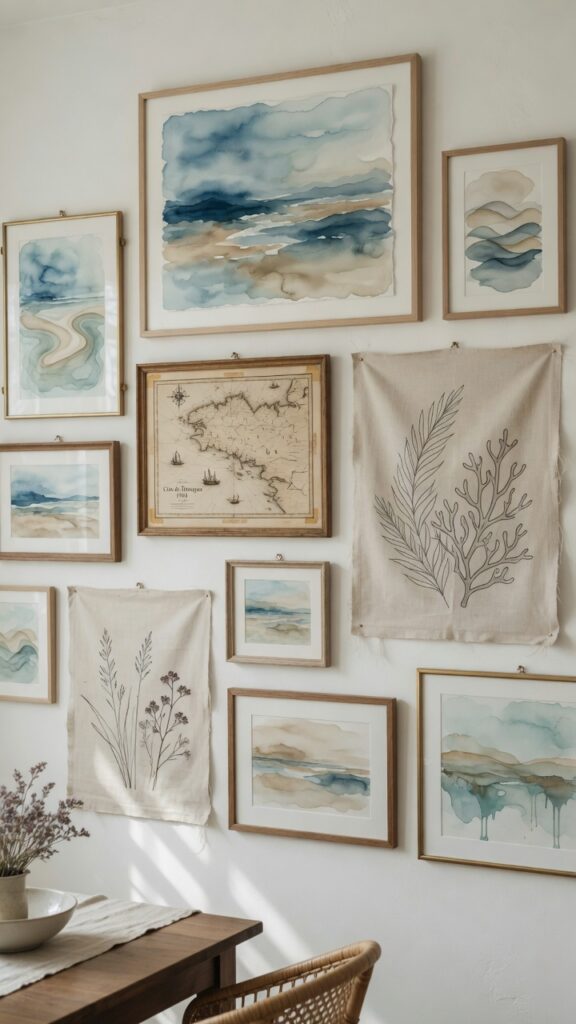
Gallery walls fail in coastal rooms when they become a collection of every beach-themed print the person could find online. Anchors, “life is better at the beach,” watercolour crabs — you know the look. The alternative is to pull together a wall that feels coastal through colour and texture rather than through literal iconography.
Think abstract watercolours in ocean-adjacent tones, aged botanical prints, antique maps, or simple linen canvases with minimal mark-making. The coastal feeling comes from the palette — dusty blues, warm creams, faded ochres, and a little soft green — not from subject matter. You can build a deeply coastal gallery wall without a single seashell in sight.
Mix frame styles deliberately. Natural wood and thin brass together work well. Avoid matching frames across every piece — it makes the wall feel like a retail display. Vary sizes significantly, and anchor the composition with one larger piece before filling in around it. If you share the space with a partner who finds gallery walls visually overwhelming, a single large piece framed in natural oak achieves the same effect with half the commitment.
11. Bringing In Organic Shapes Through Ceramics
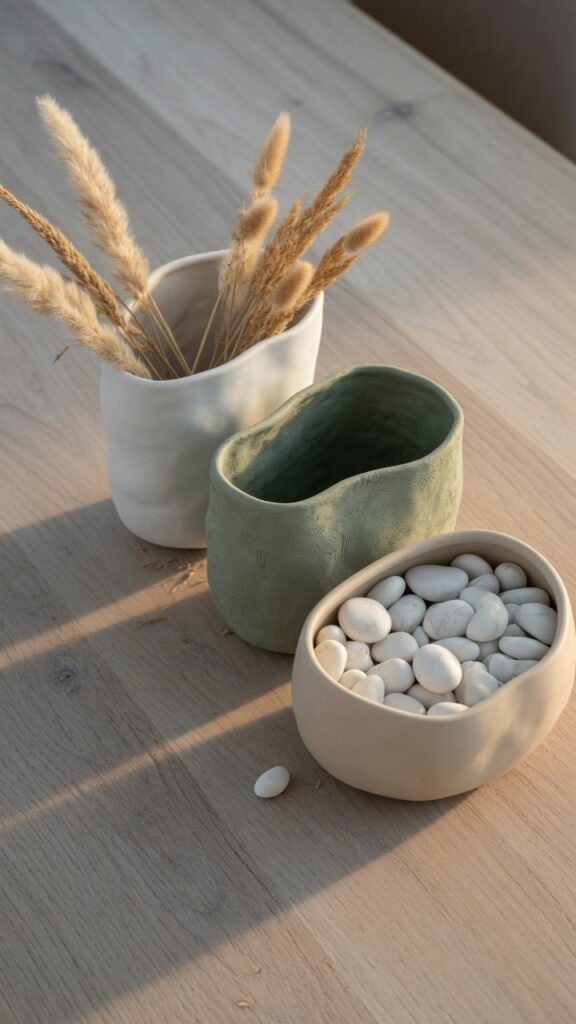
Organic shapes — irregular, imperfect, clearly made by human hands — are one of the quietest ways to bring coastal sensibility into a dining room. The ocean doesn’t make straight lines. Neither should your decor.
Handmade ceramics in matte glazes are the easiest entry point. Look for vessels with slightly uneven rims, visible throwing marks, or a glaze that breaks differently across the surface. Stack a few at different heights as a centrepiece. The palette should stay tight: white, sandy beige, dusty sage, and the occasional piece in soft terracotta. No cobalt blue fish plates.
These work equally well in small and large rooms, which is rare for a decor element. In a smaller dining room, three small ceramic pieces grouped tightly create the same effect as a large arrangement in a bigger space. The only real constraint is cost — genuinely handmade ceramics add up quickly. Markets, pottery studios, and smaller independent online makers are worth exploring before jumping to boutique retail.
12. Sheer Curtains and the Architecture of Light
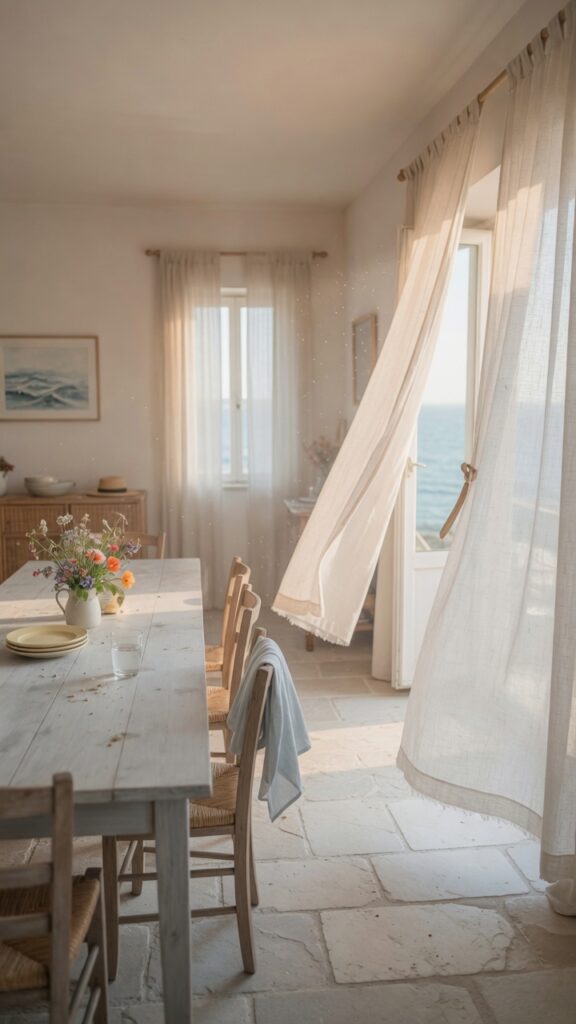
Nothing transforms a dining room into a coastal space faster than the quality of its light, and nothing manipulates light as elegantly as a floor-to-ceiling sheer curtain in undyed linen. Not voile, not polyester — linen. The difference in how it moves, how it diffuses light, and how it drapes is significant and visible.
Hang the rod as high as possible — ideally at ceiling height, or within a few inches of it — regardless of where your actual window sits. This elongates the room visually and makes the light feel like it’s coming from the whole wall rather than a single aperture. Let the curtains pool very slightly on the floor for that unhurried, coastal-house feeling.
One practical note: linen sheers offer almost no privacy and very little light blockout. If your dining room is street-facing or you use it in the evenings with the lights on, layer a light roller blind behind the sheers for functionality without sacrificing the aesthetic. That layered look — sheer linen over a clean roller — is actually more visually interesting than sheers alone, and it solves the problem quietly.
Coastal decor, done well, is really just a philosophy about restraint and material honesty. It’s about choosing things that feel like they were shaped by nature rather than manufactured for trend cycles. The twelve ideas here aren’t a checklist — you don’t need all of them. Pick four or five that genuinely resonate with how you actually live in your dining room, and let those do the work.
The most important thing we hope you take away today is this: coastal style isn’t about the ocean as a theme. It’s about the ocean as a feeling — unhurried, layered, textured, and quietly beautiful. Get the materials right, respect the light, and the room will find its own rhythm. Come back whenever you’re ready to go deeper into any of these directions. There’s always more to explore.