I have a love-hate relationship with concrete. Love the look—that solid, gray, industrial texture that somehow feels both modern and ancient. Hate the reality of mixing it, the way it cracks if you look at it wrong, and the fact that every “easy” concrete tutorial I followed left me with a lumpy, dusty mess that crumbled within weeks. My first concrete project was a set of garden stepping stones that looked like fossilized pancakes. My second was a planter that cracked in half the first time it froze. I nearly gave up.
Most concrete DIY content falls into two traps: either it requires specialized molds and expensive materials, or it produces results that are technically concrete but ugly as sin. The guides never tell you which mix to use for which project, how to cure concrete so it doesn’t crack, or what to seal it with so it survives winter. They certainly don’t warn you that some “concrete” projects are actually cement, sand, and prayers—and that the wrong ratio will turn your centerpiece into a pile of dust. And the photos? Always perfect. Never a hairline crack in sight.
So I’m writing the concrete guide I needed after those fossil pancakes. These 20 projects have all survived at least two seasons in my own home and garden—through freeze-thaw cycles, heavy rain, and the occasional drop onto a tile floor. I’ve included the exact mix ratios that work, the molds that don’t stick, and the sealers that actually prevent cracking. Some projects use quick-set cement (under $10). A few require a full bag of concrete mix ($15–$20). All of them can be completed in a weekend. If you’ve been intimidated by concrete, start here.
1. Concrete Leaf Casting For Birdbaths Or Bowls
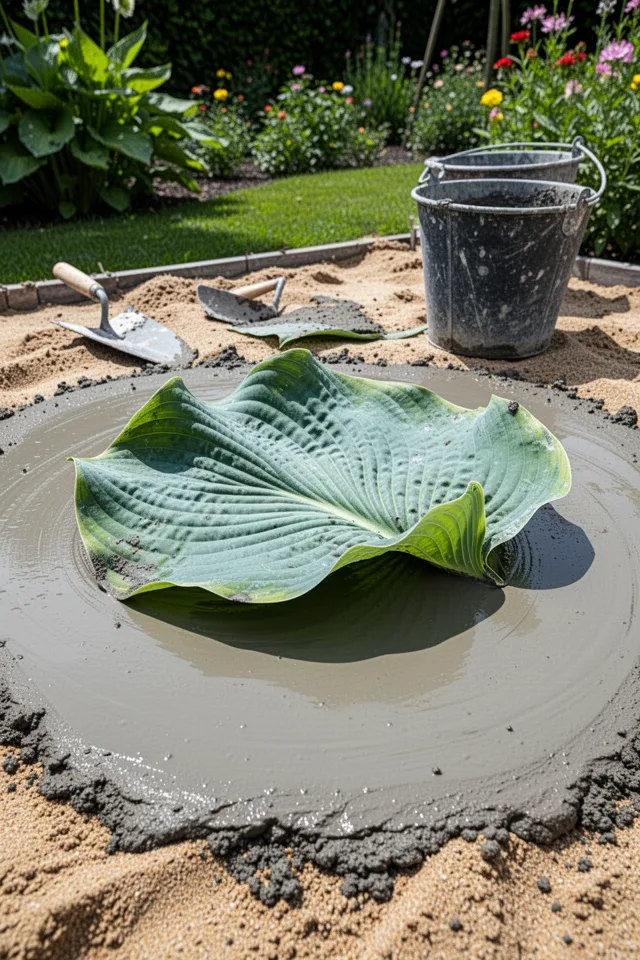
Find a large, sturdy leaf—rhubarb, gunnera, or even a giant hosta. Make a bed of damp sand in a shallow box or on the ground. Press the leaf face-down into the sand, curving the edges up slightly. Mix a batch of quick-setting concrete (follow package directions, on the dry side). Trowel a 1/2-inch layer of concrete onto the back of the leaf, making sure to cover the edges. Let cure for 24 hours, then peel off the leaf. You have a leaf-shaped bowl or birdbath. Costs under $10 per leaf.
The trade-off is that thin concrete (1/2 inch) is fragile. The leaf bowl will crack if dropped or if water freezes inside it. Use it as a decorative bowl indoors or as a birdbath in mild climates. For durability, add a second layer of concrete after the first sets (total 1 inch thick). The version that fails is using a leaf that’s too thin—it will tear when you peel it. Thick, fleshy leaves only.
Pro tip: Rub vegetable oil on the leaf before applying concrete. The oil makes the leaf peel off cleanly without sticking. Skip this, and you’ll be picking leaf bits out of concrete for an hour.
2. Hypertufa Planter From Peat, Perlite, And Cement
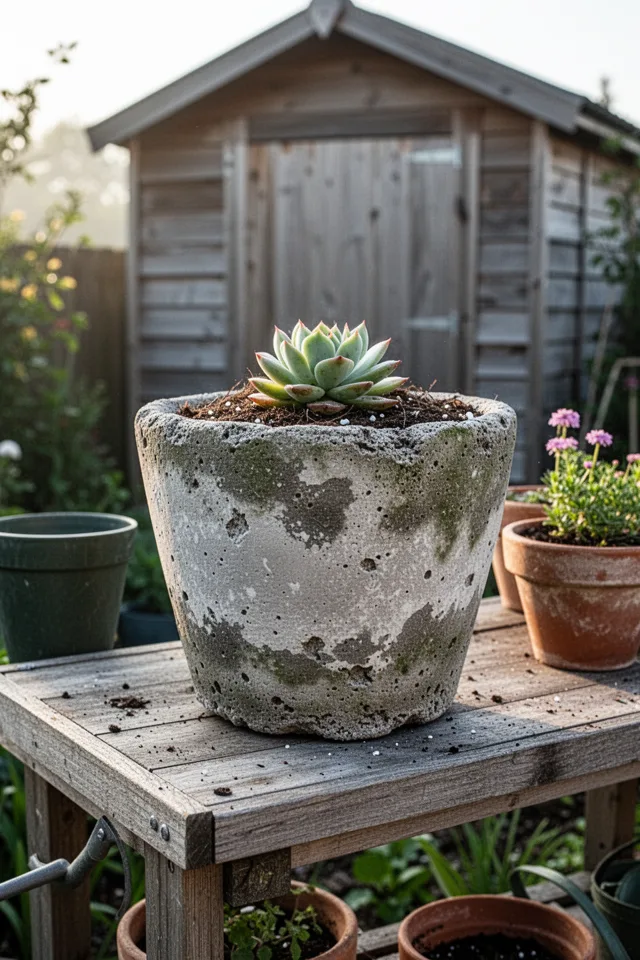
Hypertufa is a lightweight, porous concrete that looks like old stone troughs. Mix 1 part Portland cement, 1 part peat moss, and 1 part perlite (by volume). Add water slowly until the mix feels like cottage cheese—it should hold together when squeezed. Pack the mix into a mold (use two plastic containers: one inside the other to create walls). Let cure for 48 hours, then unmold. The planter is porous, so plants won’t rot. Costs about $15 for enough mix for 2-3 medium planters.
The trade-off is that hypertufa is fragile. It chips and scratches easily. Seal it with a concrete sealer for durability. Also, the peat moss will absorb water and expand, potentially cracking the planter over time. Use sphagnum peat moss (long fibers) rather than fine peat. The version that fails is using too much water—the mix will be soupy and will shrink-crack. Dry mix is better.
Pro tip: “Age” your hypertufa planter by brushing it with plain yogurt and keeping it damp in the shade. Moss will grow within a month, making it look like an antique garden treasure.
3. Concrete Candle Holders From Toilet Paper Rolls
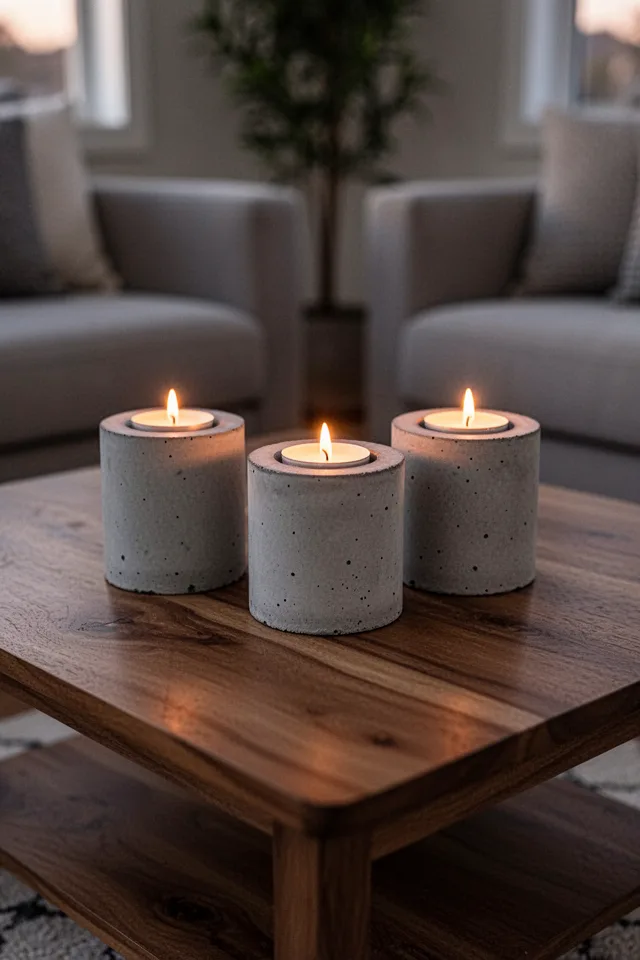
Save toilet paper and paper towel rolls. Cut them into 2-inch sections. Use packing tape to seal one end of each roll. Mix a small batch of quick-set concrete and pour it into the rolls, filling to the top. Tap the rolls to remove air bubbles. Let cure for 24 hours, then peel away the cardboard. Sand the top edge smooth. These are perfect for tea lights or small votives. A 10lb bag of mix makes dozens.
The trade-off is that concrete candle holders can get hot. Use battery tea lights only—real candles can crack the concrete. Also, the cardboard may leave a rough texture. Sand with 120-grit paper. The version that fails is using rolls that aren’t taped well—the concrete will leak out the bottom. Double-tape and put the rolls in a muffin tin for backup.
Pro tip: Add a drop of blue or black concrete dye to the mix for a dramatic dark holder. Regular concrete dye is $6 and lasts for dozens of projects.
4. Concrete Stacked Cinder Block Shelf
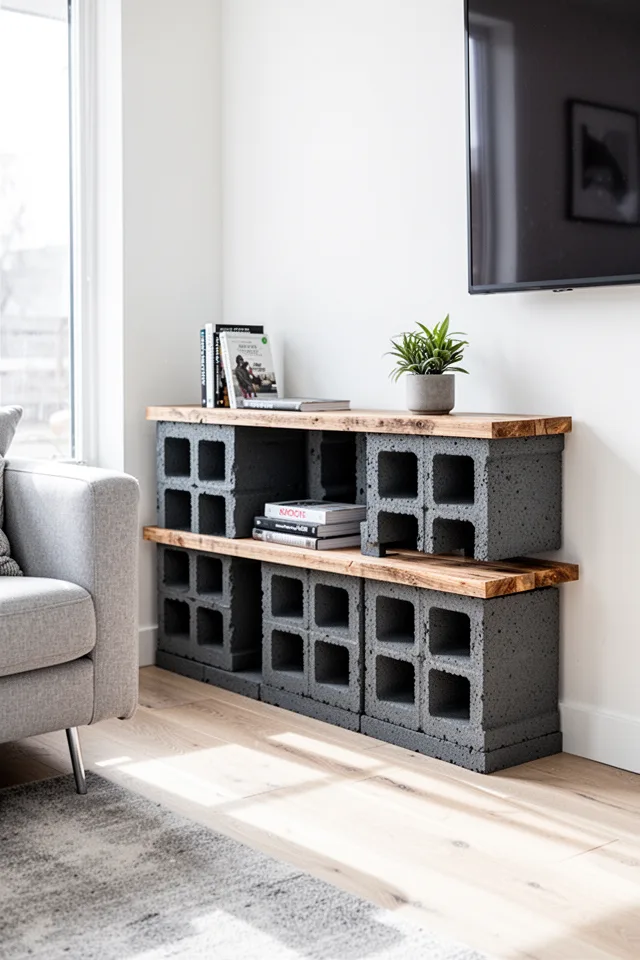
Cinder blocks are concrete, and they’re cheap ($2 each). Stack them in a stable configuration—two blocks side by side, then two more on top, offset like bricks. In the cavities, insert wooden planks (2×12 cut to length) to create additional shelving. The blocks themselves become industrial-style end tables or bookshelves. Paint the blocks for a finished look, or leave them raw for true brutalist style. A 6-block shelf costs $12.
The trade-off is that cinder blocks are heavy and rough. They’ll scratch floors. Put felt pads underneath. Also, the cavities collect dust. Vacuum them occasionally. The version that fails is stacking blocks more than three high without anchoring them. They can tip. For safety, use construction adhesive between layers or anchor to the wall.
Pro tip: Use a masonry drill bit to drill holes in the top blocks, then insert metal rods as bookends. The rods slide into the concrete and hold books upright. Very modern.
5. Concrete Dipped Plant Pots
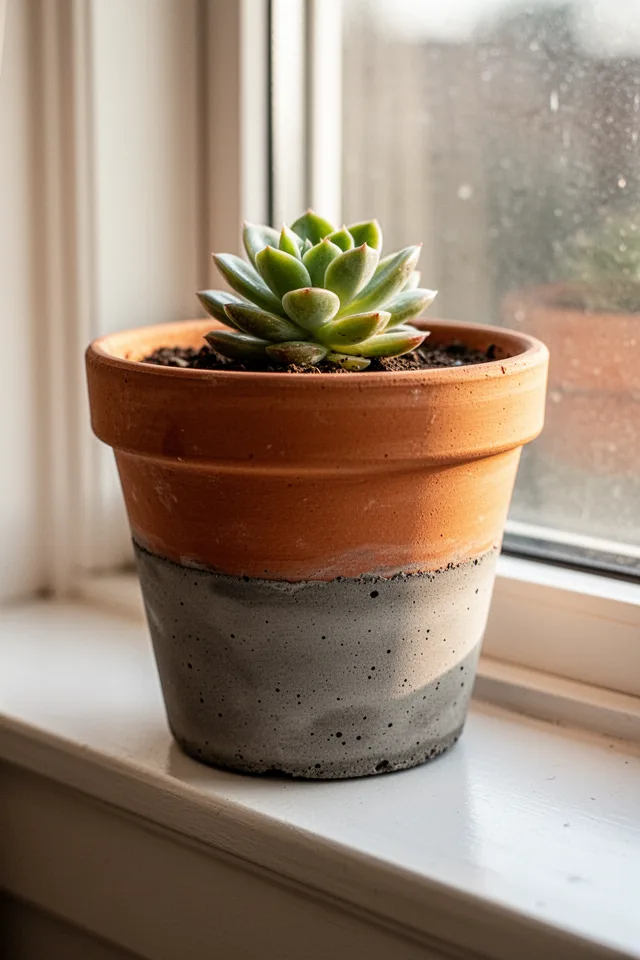
You don’t have to cast a whole pot from concrete—dip an existing pot instead. Mix a thin concrete slurry (1 part cement, 1 part water, plus a dash of bonding agent). Hold a clean, dry terra cotta pot upside down and dip the bottom 2-3 inches into the slurry. Let it drip dry, then set upright to cure. The concrete coating looks like stone. The pot is still lightweight. You can dip just the bottom, or the whole thing.
Cost is under $5 for enough slurry for 5-6 pots. The trade-off is that the concrete dip can crack if the pot flexes. Terra cotta is brittle but doesn’t flex much. Use plastic pots instead—they flex less. Also, the dip will chip if banged. The version that fails is dipping the rim—it will look sloppy. Dip the bottom third only for a clean, modern look.
Pro tip: Add a bonding agent (sold at hardware stores) to the slurry. Without it, the concrete may peel off the smooth terra cotta. Bonding agent costs $5 and makes the difference between a permanent coating and a temporary one.
6. Concrete Hand Prints For Garden Memories
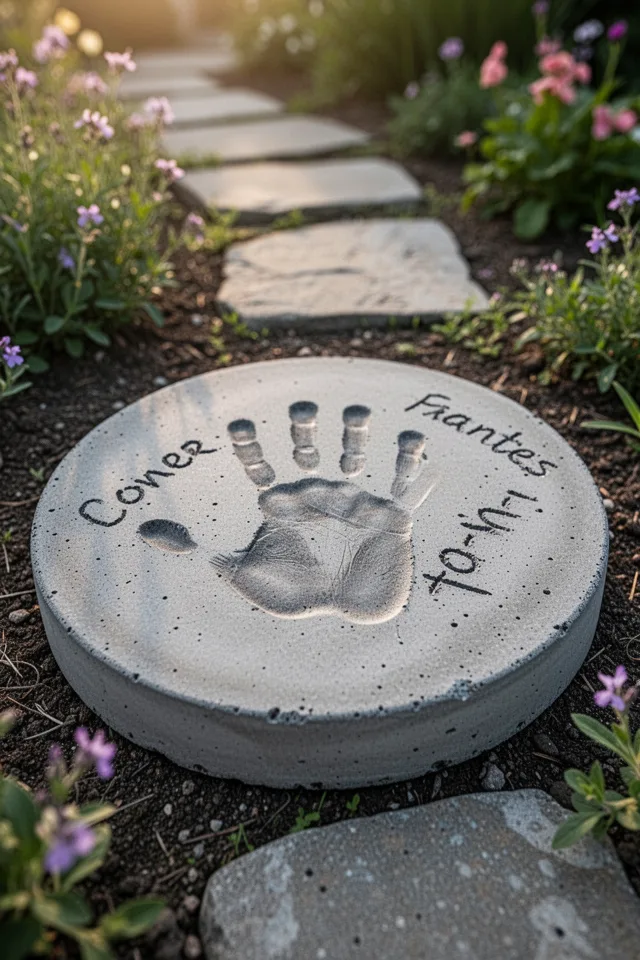
Mix a bag of quick-set concrete. Pour into a shallow cardboard box or a plastic saucer to create a round or square stone about 1.5 inches thick. Let the concrete set for about 30 minutes (until it’s firm but still impressionable). Press a hand (or a paw) firmly into the surface. Let cure fully for 48 hours, then peel away the mold. Use a permanent marker or a small stick to write names and dates before the concrete fully hardens.
Cost is about $5 per stone. The trade-off is that the handprint will trap dirt and water. Clean it with a hose occasionally. Also, the edges of the stone will be sharp if you don’t sand them. Use a rubbing stone or sandpaper after curing. The version that fails is pressing too early—the concrete will be too soft and the print will fill back in. Wait for the right firmness (like a firm cheesecake).
Pro tip: Coat the hand with a thin layer of vegetable oil before pressing. The concrete won’t stick to the skin, and you’ll get a cleaner impression. Wash immediately after pressing.
7. Concrete Hexagonal Coasters
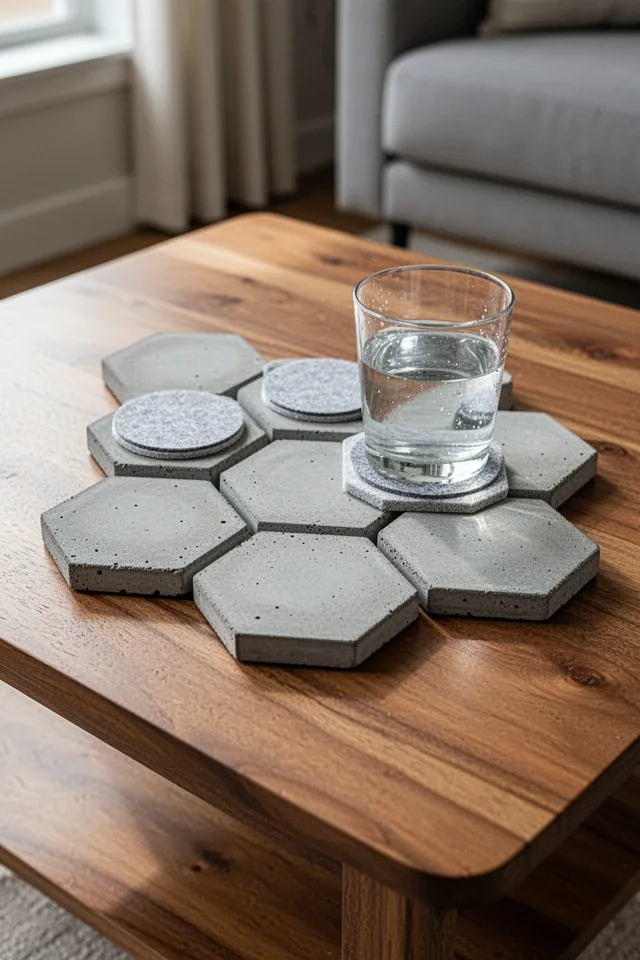
Silicone hexagonal ice cube trays (the large ones, about 3 inches across) make perfect concrete coaster molds. Mix a small batch of cement (not concrete—no aggregate). Pour into the tray, tap to remove bubbles, and let cure for 24 hours. Pop them out of the mold. Sand the edges smooth. Seal with concrete sealer. Each tray makes 6-10 coasters. A bag of cement ($10) makes dozens.
The trade-off is that concrete is porous and will absorb condensation from cold drinks, leaving dark rings. Sealer helps, but you’ll still get stains over time. Consider them as decorative coasters or use them under dry items only. The version that fails is using regular concrete mix with gravel—the stones will scratch your table. Use cement only (Portland cement without aggregate).
Pro tip: Add a few drops of white acrylic paint to the water before mixing for a whiter coaster. Pure cement dries dark gray. White cement exists (more expensive), but white paint is cheaper.
8. Concrete Sphere Garden Ornaments
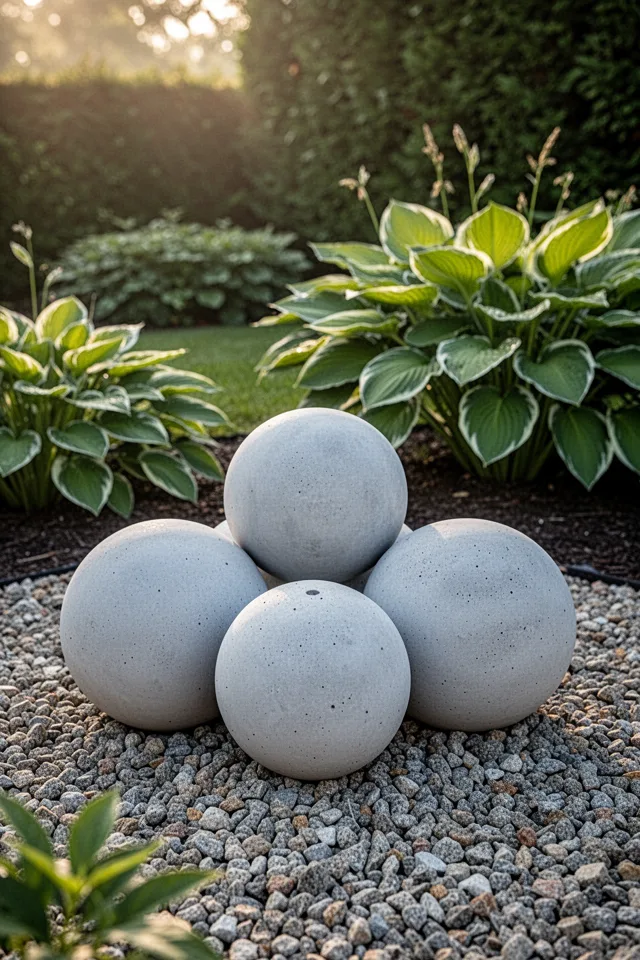
Use plastic Christmas ornaments or acrylic fillable balls as molds. Cut a small hole in the top of the ornament. Mix a soupy concrete (more water than usual) and pour it in using a funnel. Let cure for 48 hours, then crack the plastic mold off (it will break—that’s fine). Sand any seams. The result is a perfect concrete sphere. Make several sizes and group them. They look expensive but cost under $5 each.
The trade-off is that the concrete will shrink slightly as it cures, leaving a small flat spot at the bottom (where the concrete settled). Place that side down. Also, the spheres are heavy—an 8-inch sphere weighs 8-10 pounds. The version that fails is using a mold with a small opening—you can’t get the concrete in. Use ornaments with at least a 1.5-inch opening.
Pro tip: Add a loop of wire into the concrete before it sets. Once cured, you can hang the sphere from a stand or shepherd’s hook. A hanging concrete ball is unexpected.
9. Concrete Birdbath From A Umbrella Base And Bowl
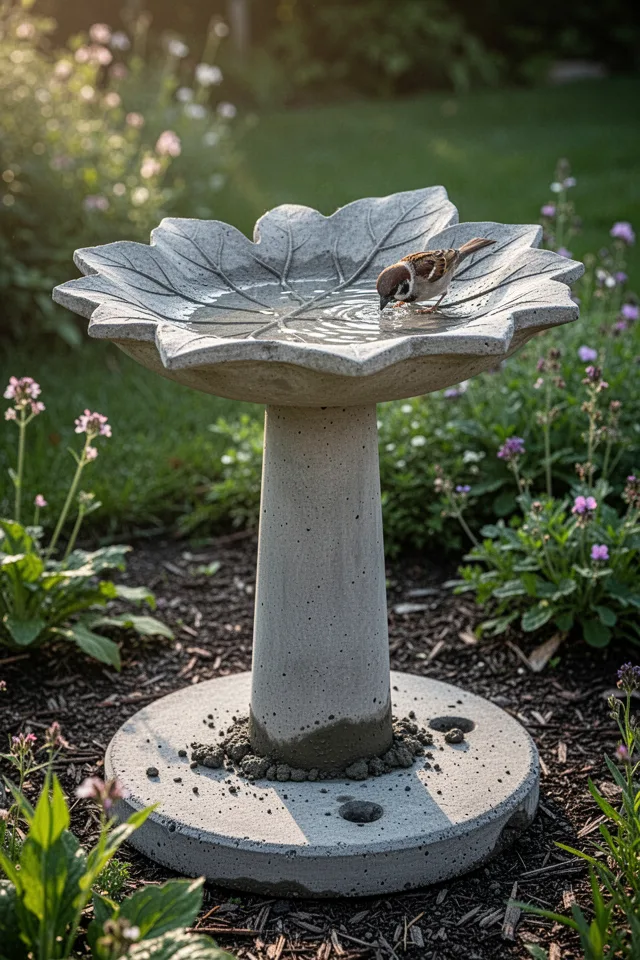
Buy a plastic umbrella base (the kind you fill with sand or water) from a thrift store ($5). Instead of sand, fill it with concrete to make it heavy and permanent. Then cast a concrete leaf bowl (idea #1) and set it on top. You may need to add a concrete “cap” on the pedestal to support the bowl. Let everything cure separately, then attach with construction adhesive. Total cost under $20.
The trade-off is that the birdbath will be extremely heavy (50+ pounds). Place it where you want it permanently. Also, the leaf bowl may not be perfectly level. Use shims of concrete or stone to level it. The version that fails is using a metal umbrella base—they rust and the concrete won’t bond. Plastic only.
Pro tip: Paint the concrete birdbath with a masonry paint in a color that matches your garden. Dark gray hides algae better than light gray. Or leave it natural.
10. Concrete Numbered House Stones
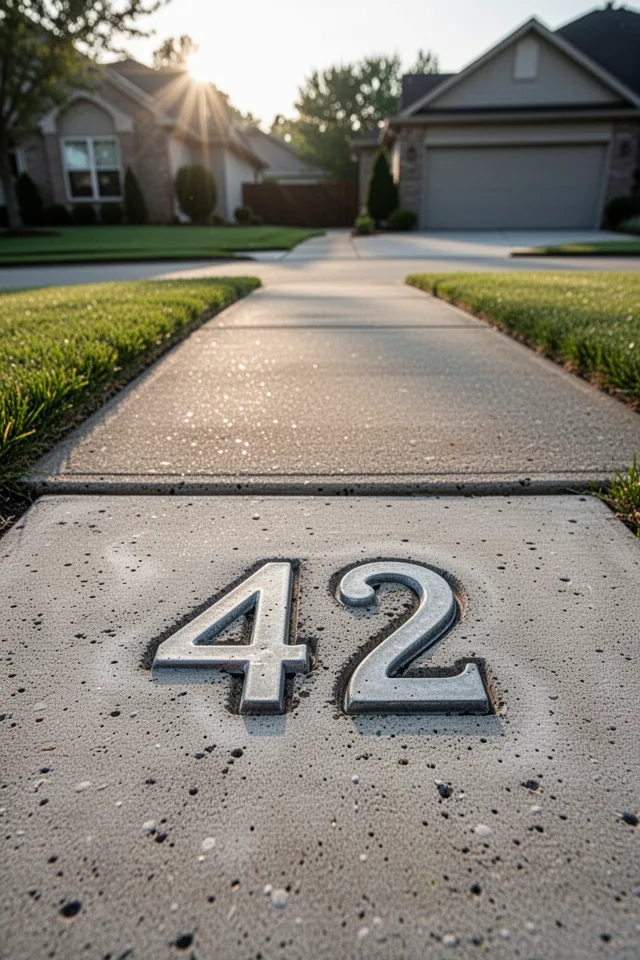
Make custom house number markers for your front walkway. Pour concrete into a shallow rectangular mold (use a small baking pan or a silicone mold). Before the concrete sets fully (about 30 minutes), press metal house numbers (from a hardware store, $1 each) into the surface. Let cure, then unmold. You can also embed small stones or glass around the numbers for decoration. A set of 2-3 stones costs under $20.
The trade-off is that the numbers may shift during curing. Tape them to popsicle sticks to keep them aligned. Also, the concrete will weather over time, making the numbers harder to read. Use a dark concrete dye in the mix for contrast, or paint the recessed numbers after curing. The version that fails is using adhesive numbers on top of cured concrete—they’ll peel. Embedded numbers are permanent.
Pro tip: After curing, rub a dark wax or oil into the recessed numbers. It darkens them and makes them pop against the gray concrete. Renaissance wax works perfectly.
11. Concrete Bookends From A Cardboard Mold
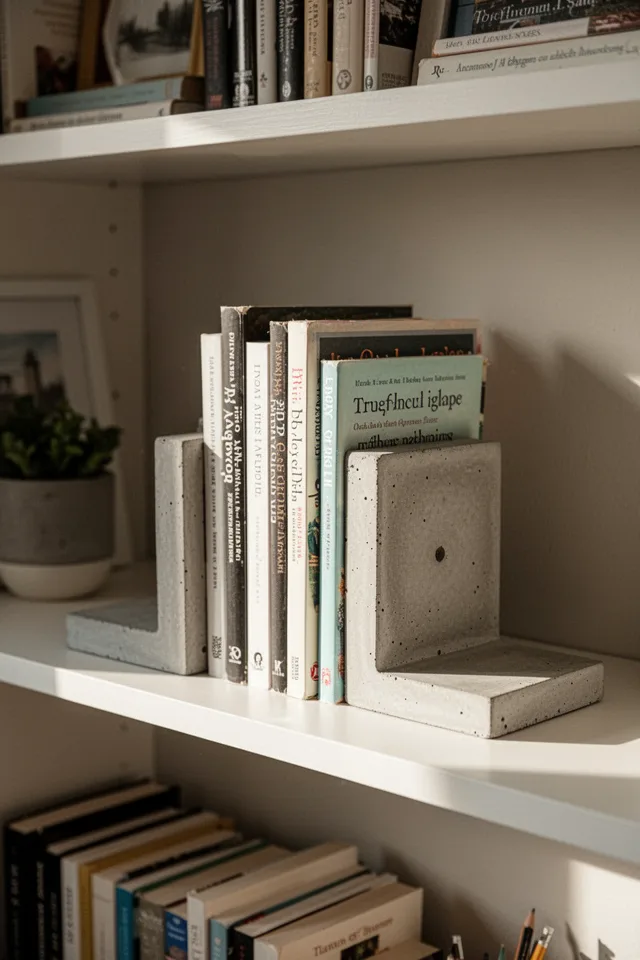
Make an L-shaped mold from cardboard. Cut two pieces: a 6×4 inch base and a 6×4 inch back (the vertical part). Hot glue them together inside a slightly larger box to hold the shape. Pour concrete into the L-shaped cavity. Tap to remove bubbles. Let cure for 48 hours, then tear away the cardboard. Sand the edges smooth. You now have a pair of brutalist bookends that cost under $5.
The trade-off is that the cardboard mold may bulge under the weight of the concrete. Reinforce the outside with duct tape or use a plastic container as the outer mold. Also, the concrete may have air bubbles on the surface. Use a vibrator (or tap the mold vigorously) to release them. The version that fails is making the bookends too thin—less than 1 inch thick will snap. Aim for 1.5 inches.
Pro tip: Add a few short pieces of rebar or wire mesh inside the concrete for reinforcement. Bookends take a lot of pressure. Reinforcement prevents cracking over time.
12. Concrete Icicle Ornaments For Winter
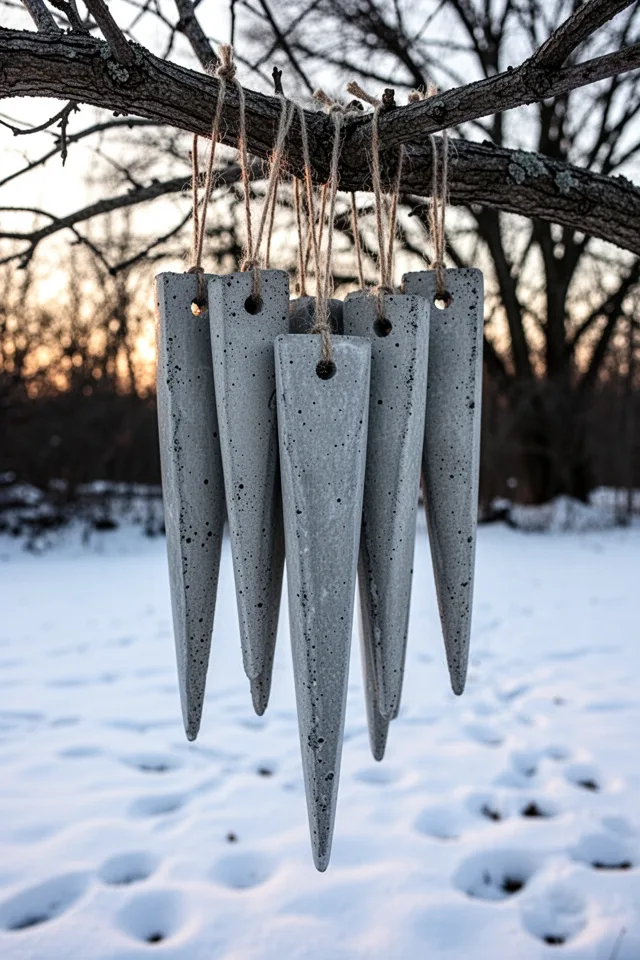
Make icicle molds by rolling heavy paper into cone shapes and taping the seams. Stand the cones upright in a container filled with sand (to hold them steady). Mix a wet concrete slurry and pour into the cones. Insert a loop of wire or a paperclip at the top for hanging. Let cure for 48 hours, then tear off the paper. Sand any rough edges. Hang from tree branches or a porch ceiling. They look like frozen stone icicles.
Cost is under $10 for a dozen icicles. The trade-off is that these are heavy—each icicle weighs 6-8 ounces. Use strong twine and secure branches. Also, the paper mold will get soggy and may deform. Use waxed paper or parchment paper inside the cone to prevent sticking. The version that fails is making them too thin (less than 1/2 inch at the thick end). They’ll snap in wind.
Pro tip: Add a few drops of silver mica powder to the concrete mix. The mica gives the icicles a subtle shimmer, like real ice in sunlight.
13. Concrete Edge Restraint For Garden Beds
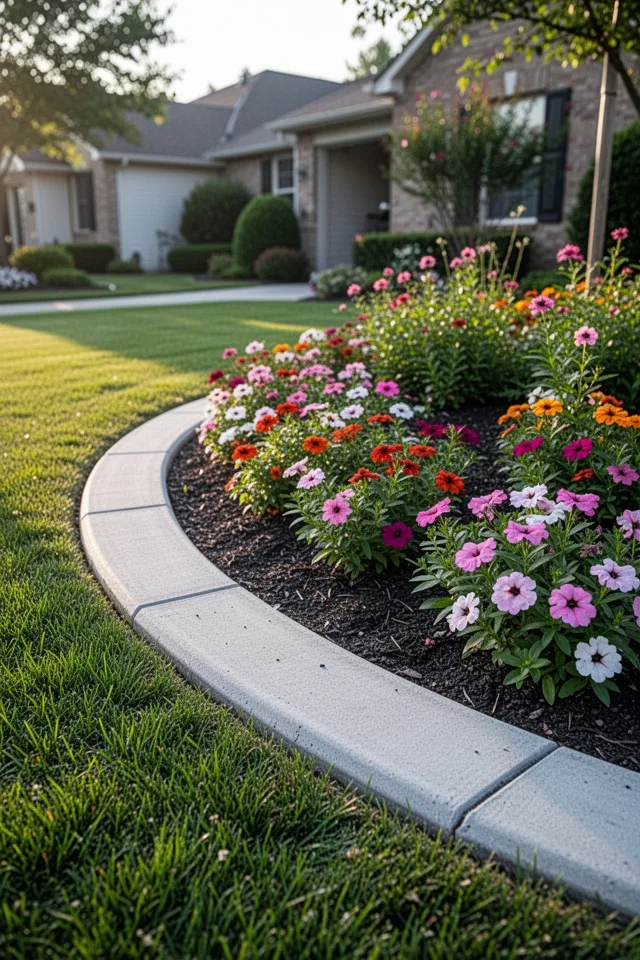
Instead of plastic or metal edging, pour a concrete curb. Dig a shallow trench (4 inches wide, 4 inches deep) along your garden border. Build a simple form from 1×4 lumber, staked into place. Mix concrete and pour into the form. Smooth the top with a trowel. Let cure for 48 hours, then remove the form. The concrete edging will last forever, won’t heave out of the ground, and creates a crisp line between lawn and bed.
Cost is about $30 for a 20-foot border. The trade-off is that this is permanent. If you change your garden layout, you’ll need a jackhammer. Also, the concrete can crack over time if the ground freezes. Add wire mesh reinforcement and use air-entrained concrete (for freeze-thaw resistance). The version that fails is pouring concrete too thin (less than 3 inches deep). It will crumble.
Pro tip: Before the concrete sets, press decorative stones or glass into the top surface. The edging becomes a mosaic feature, not just a functional border.
14. Concrete Charcuterie Board
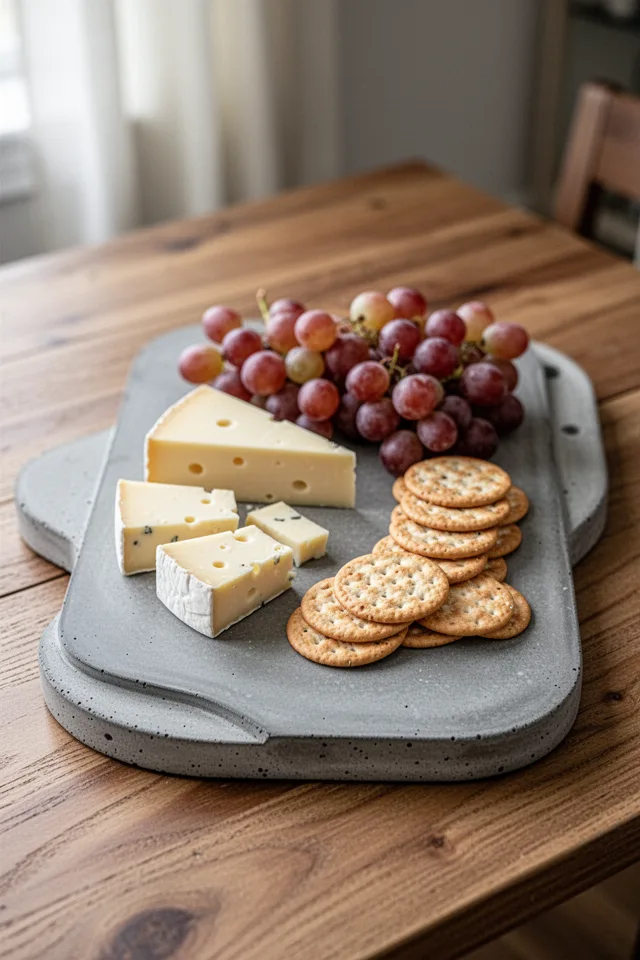
Concrete serving boards are surprisingly chic. Use a silicone baking mold (a large rectangular one) or make a form from melamine board. Mix a very smooth concrete (cement and fine sand only, no aggregate). Pour into the mold, tap out bubbles, and cure for 48 hours. Unmold, sand smooth, and seal with food-safe concrete sealer. The board is heavy, stable, and looks incredible with food on it.
Cost is about $15 for the mold and materials. The trade-off is that concrete is porous and can stain from oils and acids (cheese, wine). Use a high-quality food-safe sealer (like beeswax-based sealer) and reapply monthly. Also, the board can scratch your table. Add felt feet. The version that fails is using regular concrete mix—the pebbles will scratch your knives. Use cement and fine sand only (a “mortar mix”).
Pro tip: Before sealing, rub the board with mineral oil (like a cutting board) to bring out the color. Mineral oil darkens concrete to a warm charcoal and fills microscopic pores.
15. Concrete Rings For Napkins Or Curtains
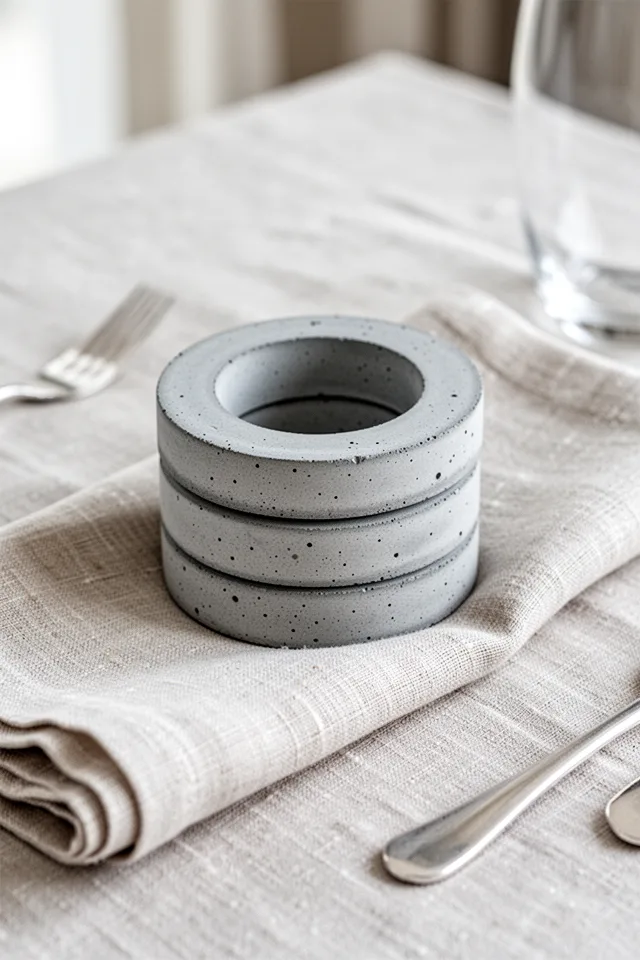
Use PVC pipe as a mold. Cut a 2-inch length of 1.5-inch diameter PVC pipe. Cap one end with tape. Pour concrete into the pipe. Before it sets, insert a smaller pipe (1-inch diameter) into the center to create the ring hole. Let cure, then slide the ring off the PVC. Sand smooth. These make modern napkin rings, or you can make larger rings (3-inch diameter from 3-inch PVC) as curtain rings.
Cost is under $10 for a set of 8. The trade-off is that the rings are heavy—a concrete napkin ring weighs more than a metal one. That’s fine for napkins, but for curtains, make sure your rod can support the weight. The version that fails is using a center pipe that’s too tight—it will get stuck. Wrap the center pipe in plastic wrap before inserting.
Pro tip: Add a drop of blue pigment to the mix for a subtle ocean-blue ring. White napkins against blue concrete is stunning.
16. Concrete-Filled Terra Cotta Pot Feet
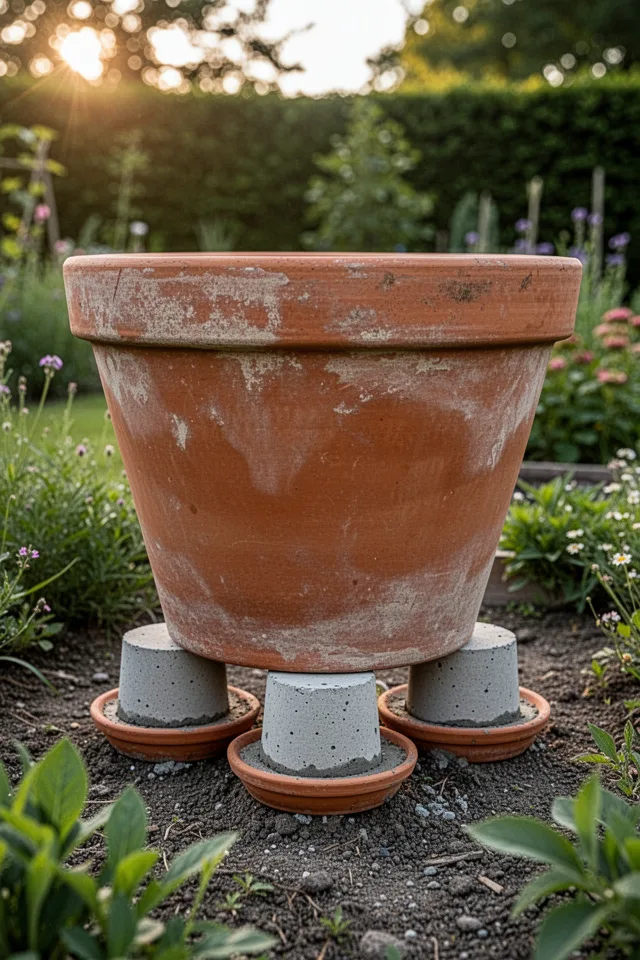
Instead of buying pot feet, make them. Use small terra cotta saucers (4 inches diameter) as molds. Mix concrete and fill the saucers to the brim. Let cure for 24 hours. The concrete will pop out easily (terra cotta is non-stick). Flip them over—the smooth concrete side becomes the foot. Use three feet per large pot to elevate it for drainage and airflow. Costs pennies.
The trade-off is that the concrete feet will absorb water and may stain your patio. Place them on a layer of gravel or use a plastic saucer underneath. Also, the feet can slide on smooth surfaces. Glue a small piece of rubber shelf liner to the bottom. The version that fails is using saucers with a glaze—concrete won’t stick, but it also won’t release easily. Unglazed terra cotta only.
Pro tip: Before the concrete sets, press a small screw eye into the top of each foot. You can tie the pot to the feet with wire, preventing tipping in wind.
17. Concrete Wind Chime From Cast Shapes
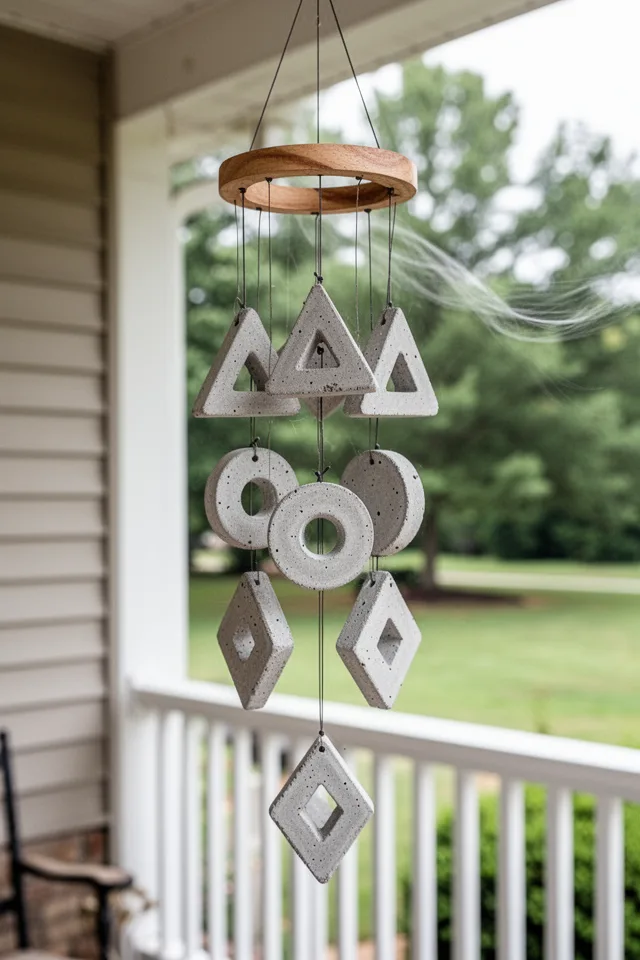
Use small silicone candy molds (shapes like stars, diamonds, and circles) to cast concrete pieces. Mix a fine concrete (cement and sand only) and pour into the molds. Insert a small wire loop or a paperclip into each piece before it sets for hanging. After curing, string the pieces onto fishing line at different lengths, then attach the lines to a wooden ring or a piece of driftwood. The concrete pieces will clink softly against each other.
Cost is about $15 for molds and materials. The trade-off is that concrete is quiet—pieces don’t ring like metal. The sound is more of a soft tap. If you want more sound, embed small metal washers into the concrete pieces. Also, the pieces may chip against each other. The version that fails is using shapes that are too thin (less than 1/4 inch). They’ll crack when they hit each other.
Pro tip: Seal the concrete pieces with a glossy sealer. The sealer creates a harder surface that produces a brighter tap sound than raw concrete.
18. Concrete Succulent Planters From Broken Toys
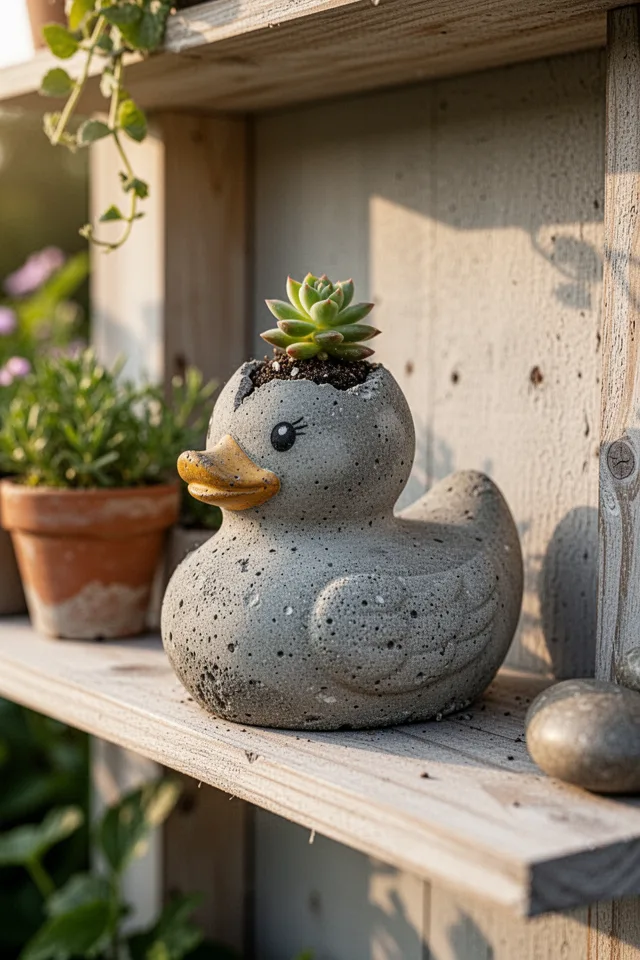
Before throwing away broken plastic toys (dinosaurs, animals, action figures), turn them into planters. Cut a hole in the top of the toy. Coat the inside with vegetable oil. Pour concrete into the toy, filling it completely. Let cure for 48 hours. Then crack the plastic toy off (it will break—that’s fine). You now have a concrete replica of the toy, with a cavity in the top for a small succulent. It’s weird, wonderful, and costs nothing.
The trade-off is that the plastic mold is single-use—you destroy it to get the concrete out. Use toys you were going to throw away anyway. Also, the concrete may not capture fine details (like scales on a dinosaur). Use a very fluid concrete mix (add a plasticizer or a drop of dish soap). The version that fails is using a toy with undercuts (arms wrapped around). The concrete will lock in place.
Pro tip: After unmolding, drill a small drainage hole in the bottom of the planter using a masonry bit. Succulents need drainage, even in concrete.
19. Concrete Patio Stones With Fossil Impressions
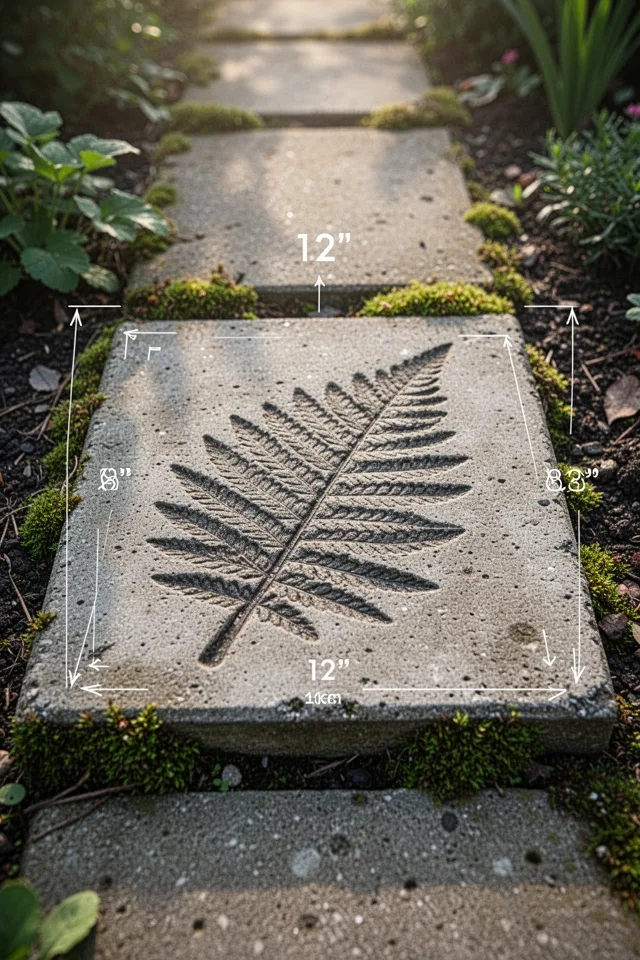
Make your own “fossil” stepping stones. Pour concrete into a square mold (a cake pan or a simple wood form). Let it set for 30 minutes. Press leaves, ferns, or even small shells into the surface. Remove the objects carefully. The impressions will remain. You can also press in real fossils if you have them. Let cure fully, then unmold. These stones look like archaeological finds.
Cost is about $5 per stone. The trade-off is that the impressions will trap dirt and water. Clean them with a hose and a soft brush. Also, thin leaves (like ferns) work better than thick leaves (like hosta). Thick leaves leave blobby impressions. The version that fails is pressing too early—the concrete will be too soft and the impression will fill back in. Wait until the surface is firm but can still be dented with a finger.
Pro tip: Paint a thin layer of dark acrylic paint into the impressions, then wipe the surface clean. The paint stays in the recesses, making the “fossil” highly visible.
20. Concrete Pendant Lights
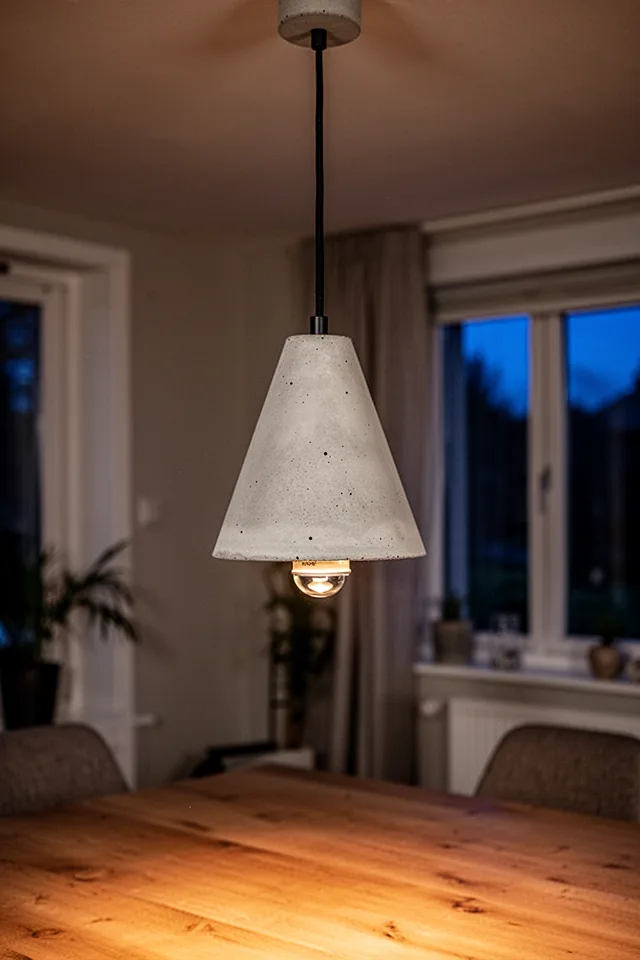
This is the most advanced project on the list, but it’s doable. You need a silicone mold for a pendant light shade (available online for $30). Mix a high-strength concrete (add acrylic fortifier). Pour into the mold, insert a light socket (removed from an old lamp) into the concrete before it sets, with the cord exiting the top. Let cure for 72 hours. Unmold, sand, and seal. Wire the socket to a pendant cord kit. You now have a designer concrete light for under $50.
The trade-off is that the shade is heavy—about 3-4 pounds. Your ceiling box must be rated to support that weight. Use a metal ceiling box, not plastic. Also, the concrete will get warm but not hot (LED bulbs only). Never use incandescent or halogen. The version that fails is using a mold without a release agent. The concrete will bond to the silicone. Use mold release spray.
Pro tip: Before pouring, brush a thin layer of black concrete dye onto the inside of the mold. The outside of the shade will be gray, but the inside (visible when the light is on) will be a dramatic dark color.