
Last summer, I spent an entire Sunday making a “beachy” wreath from dollar store supplies—plastic starfish, bleached rope, and a foam ring. By Tuesday, the rope had unraveled, the starfish looked like a science experiment, and my front door smelled faintly of melted glue and regret. That wreath hung there for three weeks before I finally threw it in the bin, feeling equal parts embarrassed and annoyed. The problem wasn’t the idea of summer DIY. The problem was that I’d followed advice from someone who had never lived through a humid July with actual humans walking past the door.
Most summer DIY content falls into two traps: either it’s so precious that one spill ruins it, or it’s so basic that it adds nothing to your home except another surface to dust. “Add a bowl of lemons” is not an idea. Neither is “buy some throw pillows.” Real summer decorating should handle iced tea condensation, afternoon sun that fades everything, and the chaos of kids home from school. It should feel lighter without feeling temporary.
So I’m writing the guide I needed last June. These 19 ideas are not Pinterest fantasies. They’re projects I’ve made, wrecked, remade, and in some cases kept for three summers running. Each one includes the cost, the specific failure mode, and the conditions where it actually works. You’ll find real friction here—what rusts, what fades, what gets awkward when you have company. If you only do three of these, your home will feel like summer without looking like a beach shop threw up in your living room.
1. Cedar Shade Sails For Renters
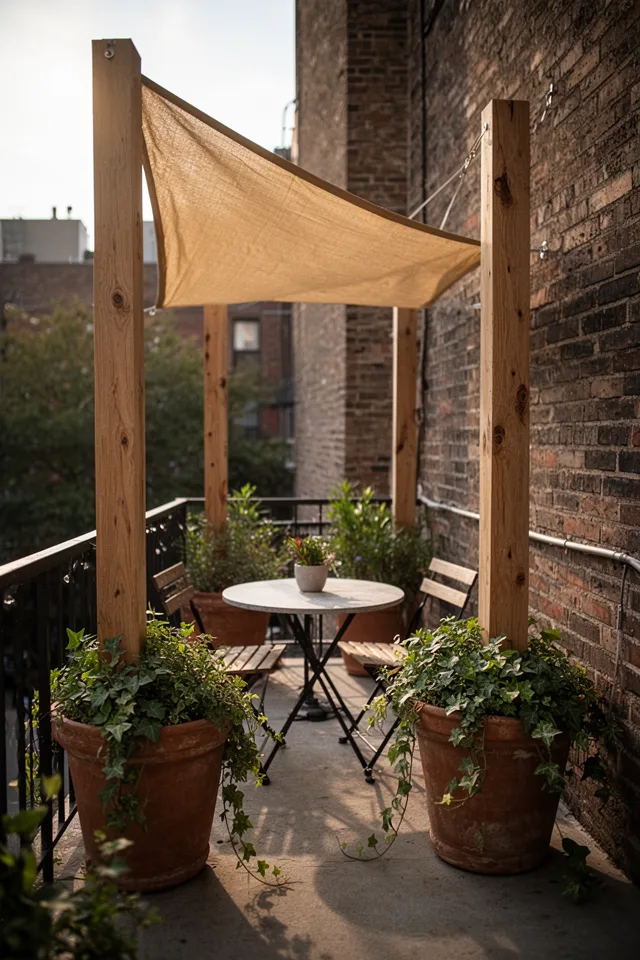
If you rent, you cannot drill into eaves or install permanent posts. But you can buy two 8-foot cedar fence posts, set them in heavy-duty planter pots with quick-set concrete, and attach a shade sail between them and your building’s exterior wall using removable adhesive hooks rated for outdoor use. This gives you real shade without a single hole. The cedar silvers beautifully over time, and the whole thing breaks down in an hour when you move.
Cost is around $120 to $180 for two posts, pots, concrete, a 10×10 foot sail, and heavy-duty Command outdoor hooks. The trade-off is weight. Each pot will weigh over 60 pounds once the concrete cures. If your balcony has a weight limit, this isn’t for you. Also, the sails themselves get dirty quickly in pollen season. Hose them off monthly, and take them down before any storm with wind over 20 mph—they become actual sails.
Pro tip: Buy a shade sail with curved sides, not straight. The curve keeps the fabric taut and prevents the annoying flutter that drives you insane on breezy afternoons. Straight edges flap. Curves hold.
2. Linen-Wrapped Cushions That Actually Wash
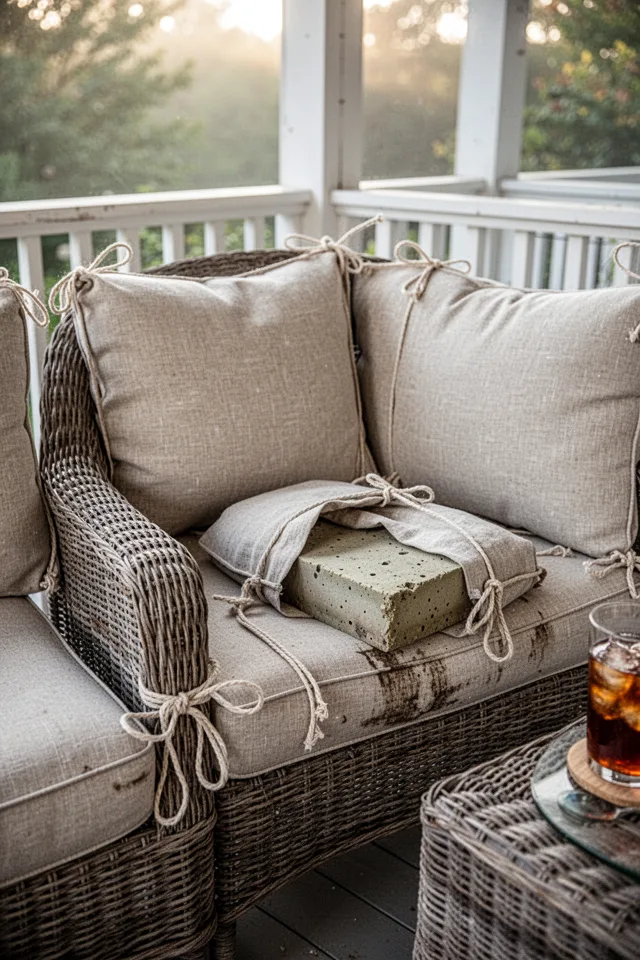
Outdoor cushion covers are expensive, they fade, and zippers break. Instead, buy inexpensive foam cushions from a craft store and wrap them like presents using washed linen fabric from the remnant bin. Cut the fabric large enough to overlap on the bottom, then fold and tie the corners with cotton rope or leather cord. No sewing. When the cushions get dirty, unwrap, wash the linen, and re-wrap.
Cost runs $15 to $30 per cushion depending on foam and fabric size. The real constraint is the fabric’s behavior in humidity. Linen absorbs moisture and takes forever to dry. If your porch is uncovered, use outdoor poly fabric instead—it’s around $10 per yard and doesn’t mildew. Also, the tied corners look charming for about two weeks, then they loosen and look sloppy. Use a dab of fabric glue under the knot to keep it secure.
The version that ages badly: any light-colored linen on a porch that gets direct afternoon sun. It will be bleached to a weird yellowish-gray by August. Stick to oatmeal, undyed, or a very pale blue that fades gracefully.
3. Iced Tea Station Tray With Drainage
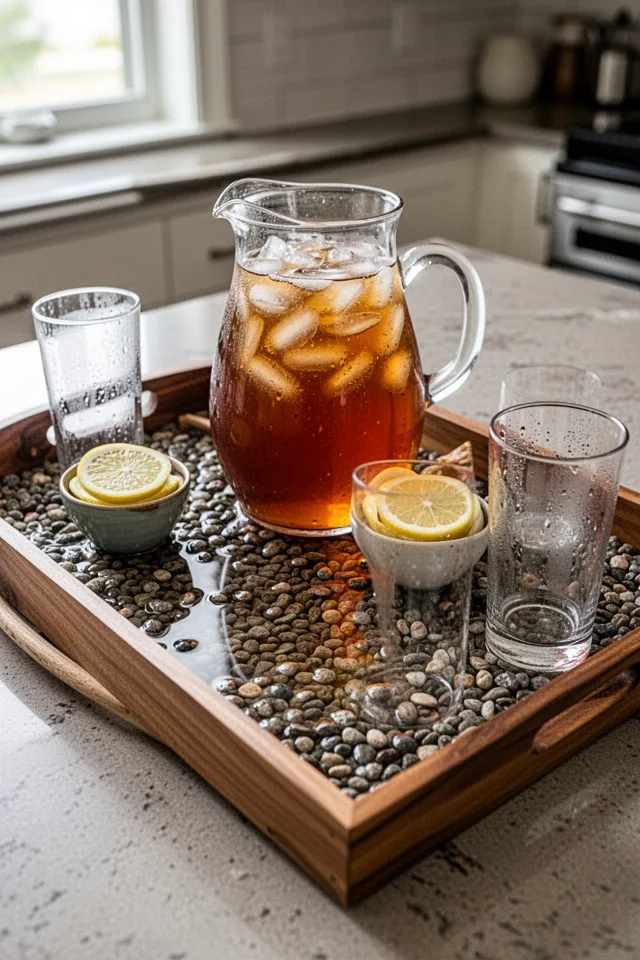
The problem with an iced tea station is the condensation. It pools under the pitcher, soaks your counter, and creates a sticky mess. The fix is a tray filled with a 1-inch layer of small pebbles or glass gems. The pitcher sits on top, condensation drips down into the stones, and the water evaporates without spreading. You can also nestle spoons and lemon wedges right into the pebbles.
Cost is under $25 for a basic tray and a bag of pebbles. The friction: the tray itself gets grimy. Every few days, dump the stones into a colander, rinse both, and let everything air dry. If you skip this, the water goes stagnant and smells like a fish tank. Also, don’t use decorative sand—it turns into mud and sticks to the pitcher base. Pebbles are self-cleaning by comparison.
One thing most guides skip: line the bottom of the tray with a thin layer of activated charcoal before adding the pebbles. It absorbs odors and keeps the water from going funky for twice as long. Under $10 on Amazon.
4. Clothespin Curtains For Rental Kitchens
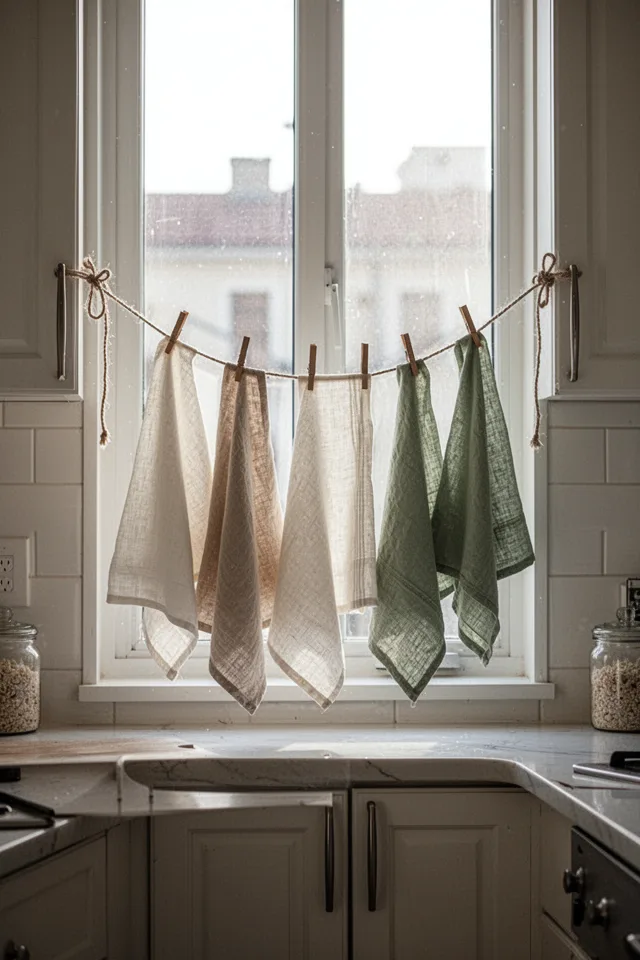
Summer light is beautiful until it’s blasting directly into your kitchen at 6 AM. If you can’t drill for curtain hardware, string a cotton rope between two existing anchor points—cabinet handles, a window latch, even heavy Command hooks. Then clip linen dish towels or lightweight cotton napkins to the rope with wooden clothespins. Instant cafe curtains that you already own.
Cost is essentially zero if you have towels and clothespins. The trade-off: this looks charming for exactly the first week. Then the towels sag, the clothespins slip, and the whole thing looks like a laundry accident. The version that holds up is using tension rod clips designed for string lights—they clamp onto the rope and hold fabric firmly. Those are $10 for a pack of 20. Also, choose towels with a loop or fold the top edge over a piece of stiff wire to keep them from drooping.
The honest truth: this is a temporary solution for the hottest weeks of summer, not a permanent look. Embrace the impermanence. Swap the towels every few days and treat it like a living installation.
5. Dried Flower Bundles From Weeds
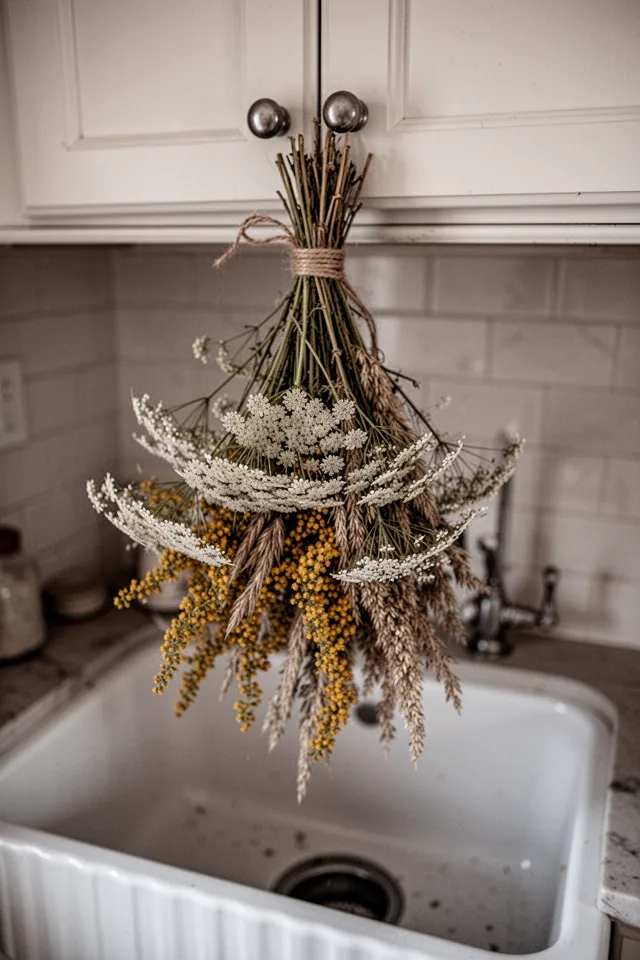
You don’t need a cutting garden. Walk any roadside in June and you’ll find queen anne’s lace, yarrow, wild grasses, and goldenrod that dry beautifully. Cut them on a dry morning, strip the lower leaves, bundle with twine, and hang upside down in a dark, airy closet for two weeks. What emerges is a soft, moody arrangement that costs nothing and looks better than anything from a craft store.
Cost is zero if you forage. The constraint is timing. Cut after a rain and the flowers will mold. Cut in high humidity and they’ll never fully dry. You need three consecutive dry days. Also, goldenrod and ragweed look similar—one dries nicely, the other gives you a sinus headache. Learn the difference before you bring a bundle inside. And never hang drying flowers in a kitchen or bathroom; steam ruins them.
The version that feels fake: adding spray paint or dye to dried weeds. The whole point is the natural fade to bone and wheat. Let them be what they are. Painted dried flowers look like a middle school art project.
6. Mason Jar Bug Repellent Candles
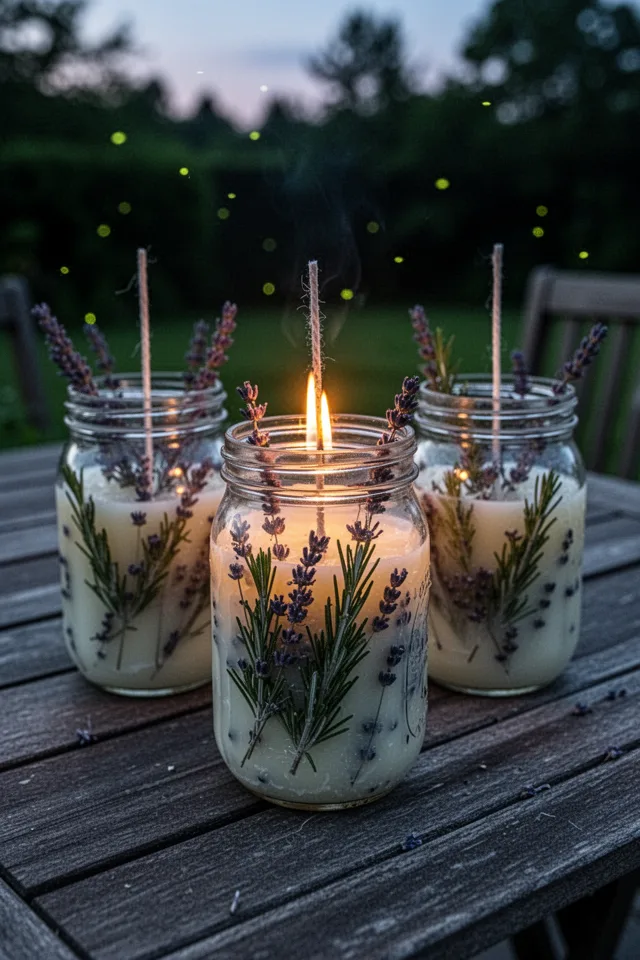
Citronella candles are ugly and barely work. Make your own using soy wax, essential oils of citronella, lemongrass, and eucalyptus, plus dried herbs like lavender and rosemary from your garden. Pour into mason jars with cotton wicks. They look like something from a fancy garden shop but cost a fraction of the price. And they actually repel mosquitoes better than the green bucket candles because the essential oils are fresher.
Cost is around $25 to start—$15 for a bag of soy wax flakes, $10 for a set of essential oils. Jars and herbs are free if you save pasta sauce jars and grow herbs. The trade-off: these candles have a shorter burn time than commercial ones because soy wax is softer. Each jar burns for about 15 hours. Also, the essential oils lose potency over time. Make them in small batches and use them within two months. Store leftover wax in a sealed bag in the fridge.
Pro tip: Add a few drops of vanilla essential oil to the mix. It doesn’t repel bugs, but it rounds out the sharpness of the citronella and makes the candle smell genuinely pleasant instead of like a chemical factory.
7. Sheet Music Fan Blades
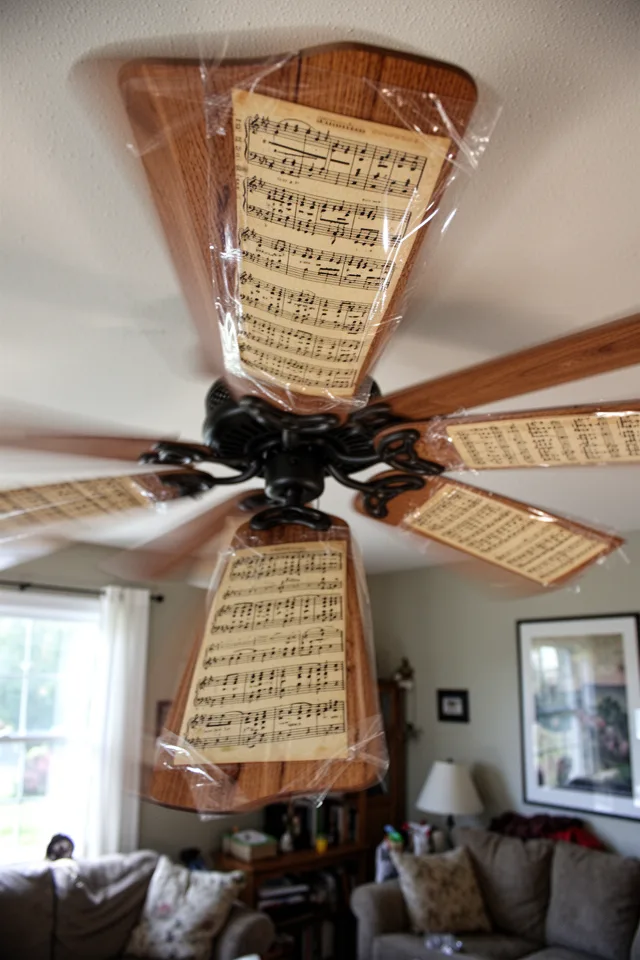
Ceiling fans are practical but ugly. Cover each blade with pages from an old sheet music book or a damaged paperback. Cut the paper to size, wrap it over the top and bottom of the blade, and secure the edges with clear packing tape on the underside only (so the top looks clean). When you turn the fan on, the pages ripple slightly and catch the light. It’s whimsical without being precious.
Cost is under $10 if you already own books you’re willing to cut up. The constraint is balance. If the paper isn’t evenly distributed or the tape adds weight to one side, the fan will wobble. Use the thinnest paper possible—sheet music or dictionary pages work best. And never do this on a fan that isn’t perfectly balanced already. A wobbly fan plus paper is a noise machine. Also, the paper will yellow faster than the rest of the room. That’s part of the look, not a flaw.
One thing most guides skip: this is a fire hazard if your fan has exposed light bulbs that get hot. Only do this on fans where the blades are far from any heat source. LED bulbs only, no incandescents.
8. Slatted Wood Cooling Rack For Pots
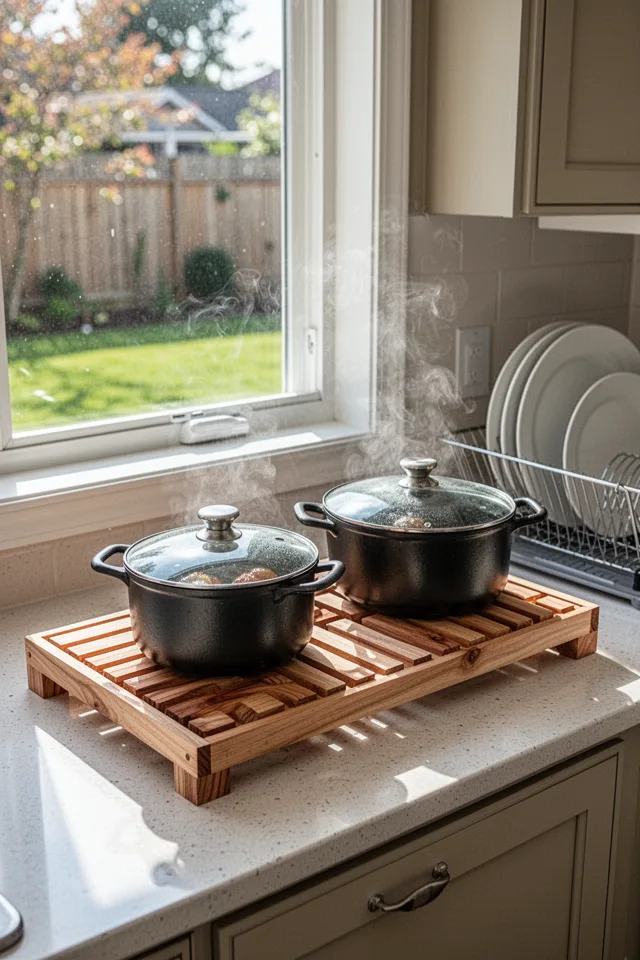
Hot pots on a counter leave marks. Hot pots on a trivet are fine, but trivets are boring. Make a slatted cooling rack from cedar fence pickets cut into 12-inch lengths and screwed to two parallel runners. The gaps let air circulate under the pot, cooling it faster and preventing trapped moisture. Leave the cedar unfinished; it will darken slightly with heat and look better over time.
Cost is roughly $20 for a single cedar picket (makes two racks) plus screws. The trade-off: the rack is bulky. You need counter space to store it when not in use. The solution is to make it just big enough for your largest pot—eight inches square is plenty. Also, cedar is soft, so heavy cast iron pots will leave slight indentations in the wood. That’s character, not damage. But if you’re precious about your surfaces, use maple or birch instead.
Pro tip: Drill a hanging hole in one corner and mount a small hook inside a cabinet door. The rack stores flat and disappears until you need it. No counter clutter.
9. Rope Basket For Beach Gear
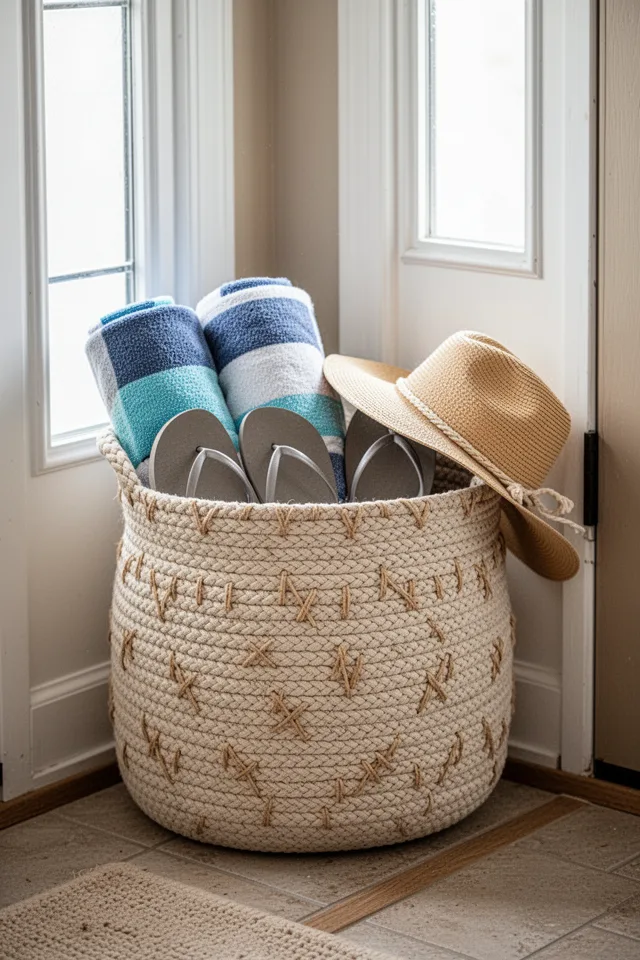
Buy 50 feet of 1/4-inch cotton rope, a needle, and heavy-duty thread. Coil the rope into a flat circle, stitching each layer to the one below with a simple whipstitch. Once the base is the size you want, start stacking the coils to build the walls. This takes about two hours of TV-watching time. The result is a soft, flexible basket that costs $15 to make instead of $80 to buy.
The trade-off is durability. Cotton rope absorbs moisture and dirt. Use this basket indoors only—for towels, mail, or produce. If you put sandy beach gear in it, the sand works into the rope and you’ll never get it out. Also, the basket will sag over time as the stitches loosen. The fix is to use upholstery thread and stitch tightly, then add a second pass of stitching in the opposite direction. That doubles your time but triples the lifespan.
The version that actually holds up: jute rope instead of cotton. Jute is rougher on your hands while you stitch, but it resists mildew and keeps its shape longer. It’s also usually cheaper—about $10 for a 100-foot roll.
10. Tassel Garland From Fabric Scraps
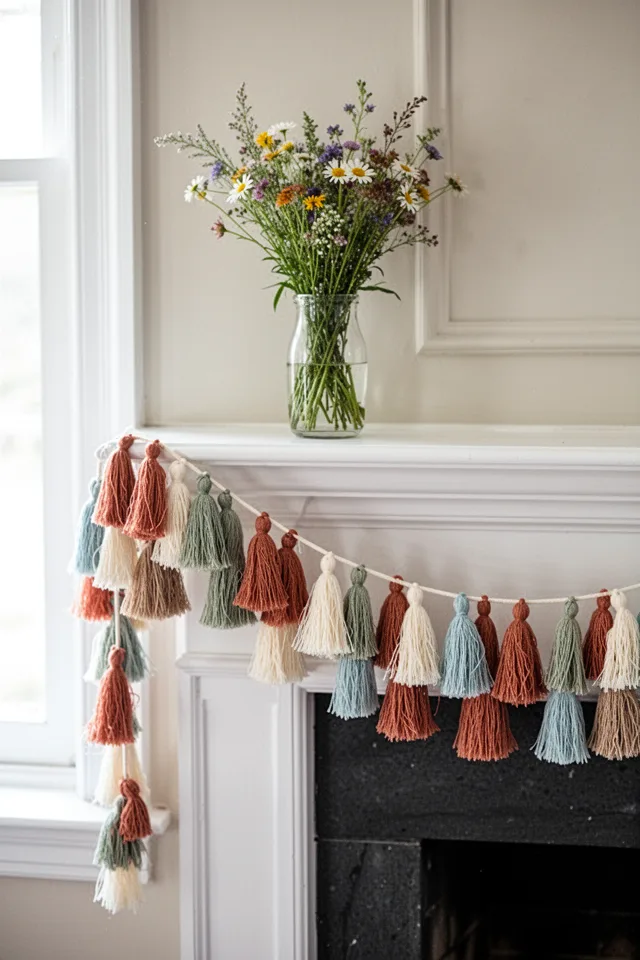
Instead of buying a $40 garland that looks like every other garland, raid your fabric scrap bin. Cut 3×4 inch rectangles, fringe the bottom half, roll from the top down to the fringe, and tie with a piece of thread to form a tassel. String them onto cotton cord with a knot on each side. An hour of cutting and rolling gives you a custom garland that matches your exact color palette.
Cost is free if you have scraps. The constraint is that lightweight fabrics like lawn cotton make sad, floppy tassels. Use linen, quilting cotton, or even old chambray shirts. And don’t mix too many colors—stick to three maximum or it looks like a kid’s birthday party. The version that ages badly is using hot glue instead of thread to secure the tassels. Glue hardens and cracks within a year. Thread holds forever.
Pro tip: Dip the finished tassels in diluted starch and let them dry hanging over a dowel. They’ll hold their shape instead of collapsing into limp noodles. Costs nothing and makes a huge difference.
11. Chalk-Painted Terra Cotta Coolers
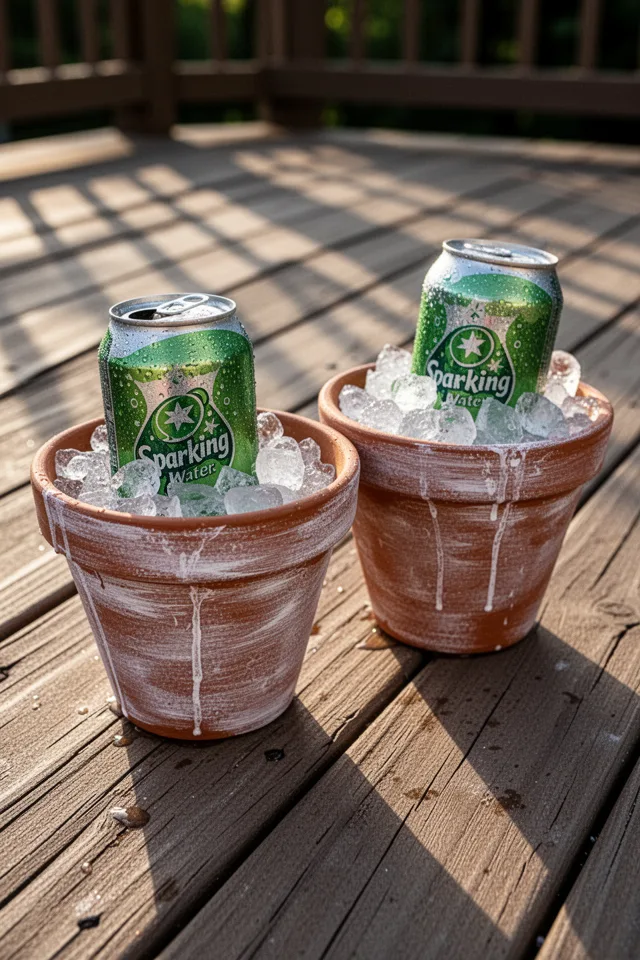
Regular terra cotta is porous and absorbs water, which makes it perfect for keeping drinks cool without a cooler. Paint the outside of a 6-inch pot with white chalk paint (just the outside, not the rim or interior). Fill with ice, add drinks. As the ice melts, the water soaks into the clay and evaporates through the painted surface, creating a natural cooling effect. The pot stays cool to the touch and the drinks stay cold for hours.
Cost is under $15 for a pot and a small jar of chalk paint. The trade-off: the pot will eventually crack from the freeze-thaw cycle if you leave ice in it overnight. This is for a single afternoon, not long-term storage. Also, the chalk paint will get water spots, which some people hate and I think look like honest use. If you want perfection, seal the paint with a matte acrylic spray, but that reduces the evaporative cooling.
The honest truth: this is a party trick, not a daily solution. It works beautifully for a barbecue. It’s a disaster for your kitchen counter because the wet pot leaves a ring. Use it outside only.
12. Cork Trivet From Wine Corks
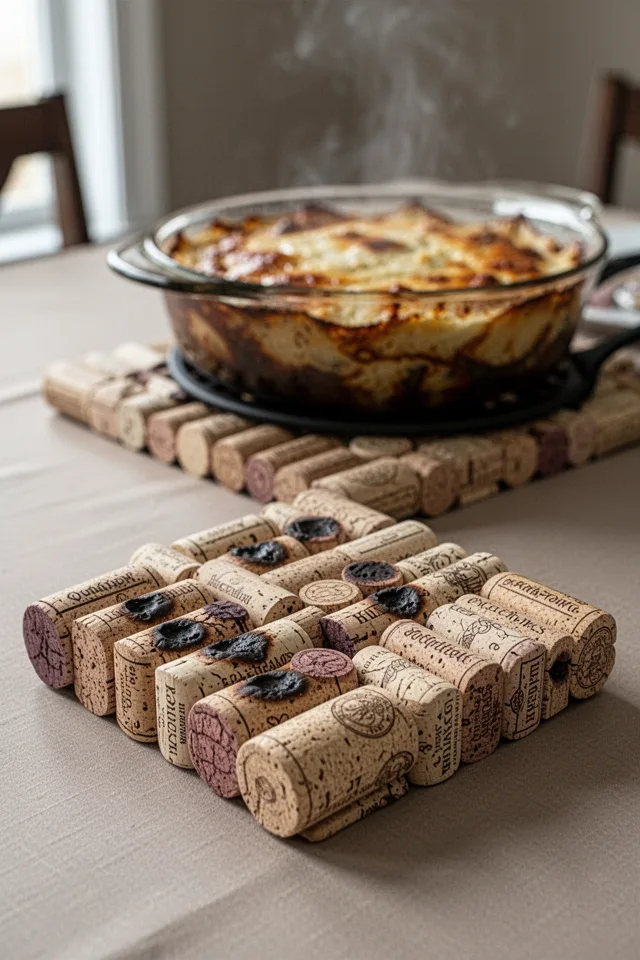
Save your wine corks for a year, or ask a bar for a bag. Arrange them in a single layer, all standing on end like soldiers, inside a square baking pan. Pour wood glue over them, let it seep into the gaps, and weigh it down with a heavy book overnight. The result is a heatproof trivet that looks like an organic mosaic. Each cork is slightly different, so the pattern is unique.
Cost is free if you have corks. The constraint is that this trivet is heavy and bulky. It’s not for everyday use—it’s for serving at dinners. Also, hot pots will char the cork over time, which is fine if you like a rustic look but terrible if you want it to stay pristine. The version that holds up is sealing the top surface with a thin layer of clear wax, but then it’s not as heat-resistant. Pick your battle.
One thing most guides skip: synthetic wine corks don’t work. They don’t absorb glue and they melt under heat. Use only real cork. Squeeze a cork—if it compresses, it’s real. If it’s hard, it’s fake.
13. Painted Rug On A Flatweave
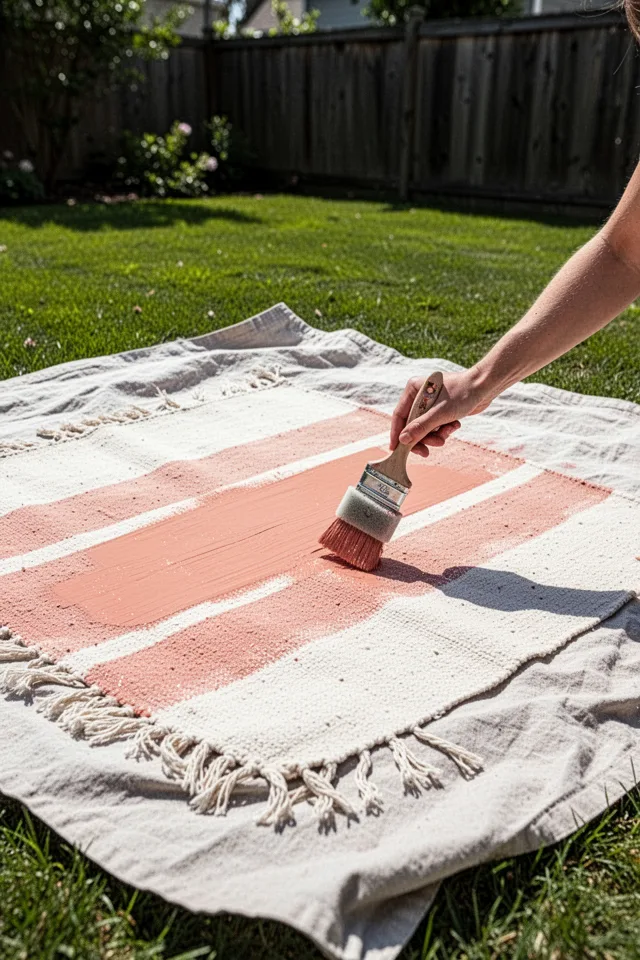
Flatweave cotton rugs are cheap—around $30 for a 4×6. But the colors are usually boring. Paint your own using exterior latex paint diluted with fabric medium. Tape off stripes, zigzags, or simple geometric shapes. Paint with a dense foam roller, let dry for 48 hours, then heat-set with an iron on low (put a cloth between the iron and paint). The result is a custom rug that costs half what a designer version would.
The trade-off: this rug is now hand-wash only. No machine washing, or the paint will crack and peel. Spot clean only. Also, the paint makes the rug stiffer, so it doesn’t lay as flat as before. Weigh down the corners with furniture for a few days. The version that becomes awkward is using interior paint—it will flake off the first time someone walks on it. Exterior paint has flex and durability.
Pro tip: Test your paint and fabric medium ratio on a scrap of the same rug material first. Different cotton weaves absorb paint differently. You want the paint to soak in, not sit on top like plastic.
14. Branch Curtain Rod
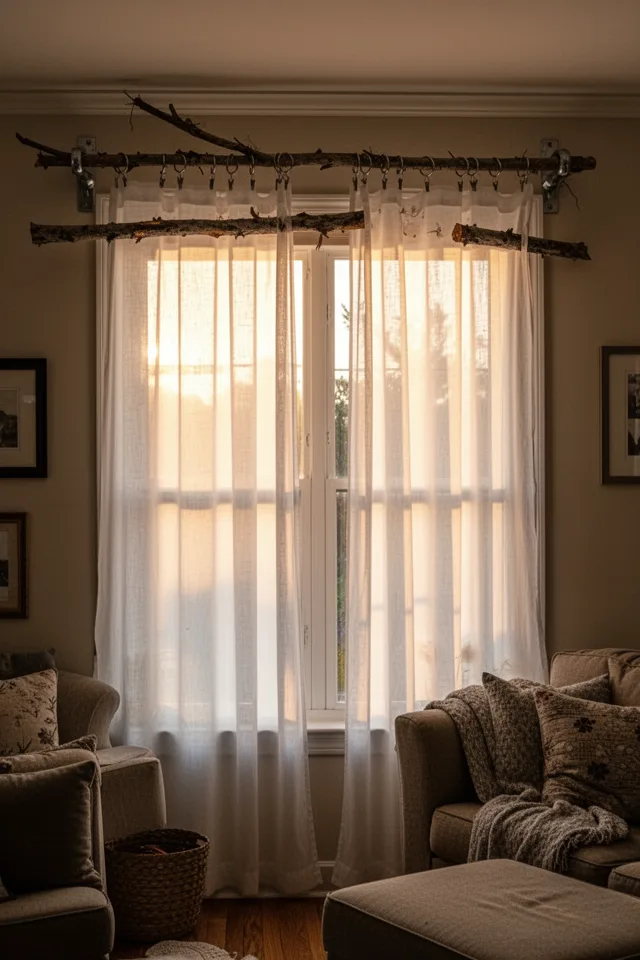
Find a fallen branch that’s relatively straight, about an inch thick, and longer than your window by six inches on each side. Strip the bark if you want a smooth look, or leave it for texture. Sand any rough spots, then seal with matte polyurethane (or leave unfinished if you like the rustic feel). Rest it on curtain rod brackets. Hang ring clips directly onto the branch.
Cost is under $20 for brackets and clips. The branch is free. The constraint is that the branch will eventually dry out and may crack or warp. If you seal it with polyurethane immediately after cutting, it stabilizes. If you skip that step, expect it to bow slightly over the summer. Also, heavy curtains will bend a thin branch. Use lightweight sheers only. The version that ages well is a branch from a fruit tree—cherry or apple—which has tighter grain and warps less.
One thing most guides skip: never use a branch that’s been on the ground for more than a week. It will be full of bugs. Cut your own from a live tree that’s been pruned, or collect a fresh fall immediately after a storm.
15. Herb Drying Rack From A Ladder
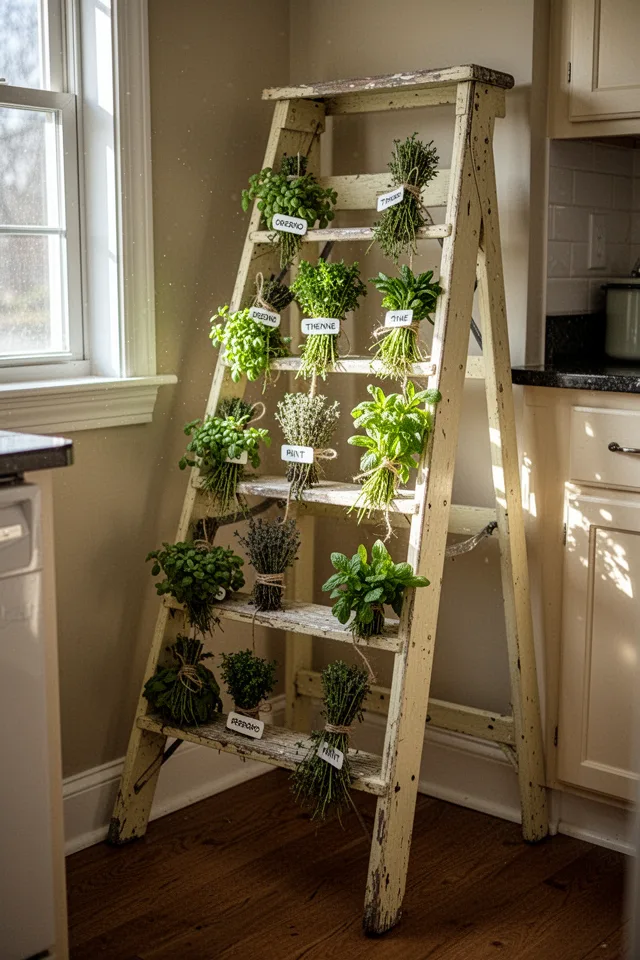
Old wooden step ladders are easy to find at garage sales for $5. Open it, place it in a corner, and tie herb bundles to the rungs with twine. The angled legs create a natural drying rack that takes up almost no floor space. When the herbs are dry, you can leave the ladder as a sculptural object or fold it and store it away.
The constraint is stability. A lightweight ladder will tip over when you hang too many bundles. Weight the back legs with a sandbag or position the ladder so the back rests against a wall. Also, herbs need airflow; don’t pack the rungs too tightly or they’ll mold. Leave at least two inches between bundles. The version that fails: using a metal ladder. Metal heats up in sun and cooks the herbs, destroying their oils.
Pro tip: Write the herb names on the rungs themselves with a chalk marker instead of using tags. The marker wipes off with rubbing alcohol when you’re done, and you never lose a label.
16. Fabric-Wrapped Cords

Summer means spending more time on porches and patios, which means dragging chargers and extension cords outside. Those black plastic cords are ugly and get hot in the sun. Wrap them in 1/2-inch cotton bias tape. Cut a length of tape, wrap it around the cord in a tight spiral, and secure the ends with a dot of fabric glue. The result is a cord that looks like textile art and stays cool to the touch.
Cost is under $10 for a few rolls of bias tape. The trade-off is that wrapped cords are less flexible. You can’t coil them tightly anymore. Also, the tape will fray at the ends after a few months. The fix is to dip the cut ends in clear nail polish before wrapping. And never wrap a cord that gets hot during normal use—laptop power bricks are fine, but space heater cords are not. The glue could melt.
The honest truth: this is purely aesthetic. It doesn’t make the cord work better. But if you’re looking at the same ugly black cord every day for three months, it’s worth the hour it takes to wrap it.
17. Seashell Wind Chime From Driftwood
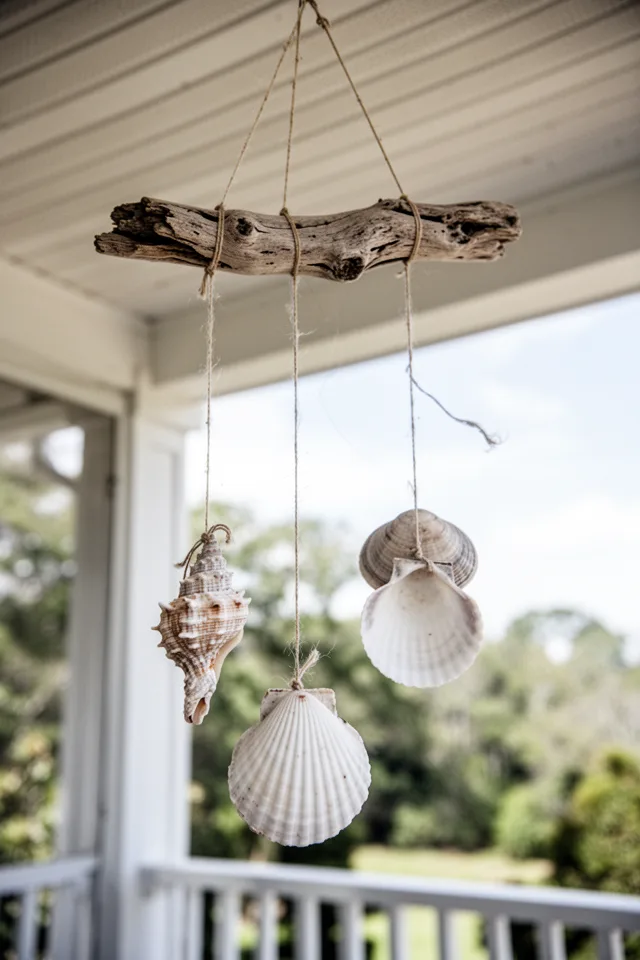
Collect a flat piece of driftwood and a handful of shells with natural holes (or drill tiny holes with a diamond bit). Tie fishing line to the driftwood at three points for hanging, then tie more lines from the driftwood to each shell at varying lengths. Hang the whole thing from a porch ceiling hook. The shells clink softly against each other in the breeze, and the sound is gentle—not clanging like metal chimes.
Cost is under $15 for fishing line and a hook. Everything else is free if you live near a beach. The constraint is that shells are brittle. A strong wind will slam them together and crack the edges. Use thicker shells like clams and whelks, not thin scallops. Also, the fishing line will degrade in UV light after one summer. Replace it each year. The version that lasts uses waxed cotton cord instead, but it’s not invisible like fishing line.
Pro tip: Soak the driftwood in a bucket of water for a week before using it. This leaches out the salt, which otherwise attracts moisture and makes the wood rot. Change the water daily.
18. Canvas Drop Cloth Pillows
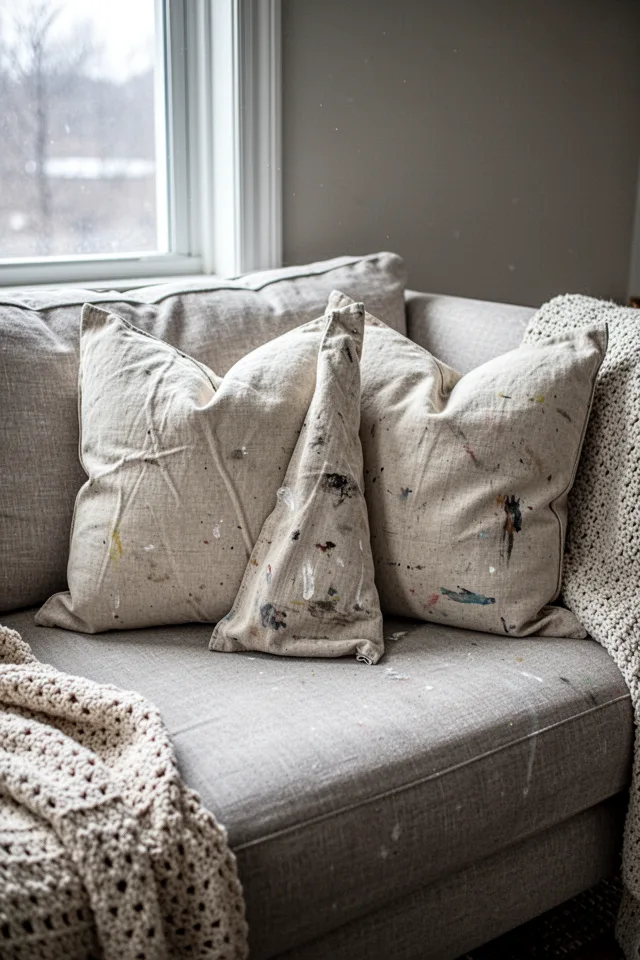
A 4×15 foot canvas drop cloth from the paint store costs $20 and makes four 18-inch pillow covers. Cut the fabric, sew a simple envelope back (no zippers, just overlapping flaps), and stuff with pillow inserts. The fabric is heavy, durable, and has a natural texture that looks expensive. Leave it undyed, or tea-stain it for a warmer tone.
The trade-off is that raw canvas is stiff and scratchy at first. Wash it twice with fabric softener before sewing, or expect your guests to complain. Also, the fabric wrinkles like crazy. Some people love the rumpled look; others find it sloppy. The version that becomes awkward is using a drop cloth that actually has paint on it. That’s fine for a studio but looks like you’re squatting in a renovation. Wash it first or buy a clean one.
One thing most guides skip: canvas shrinks dramatically. Pre-wash and dry your fabric on high heat before cutting, or your pillow covers will be two inches too small after the first wash.
19. Screened Candle Lanterns From Cans
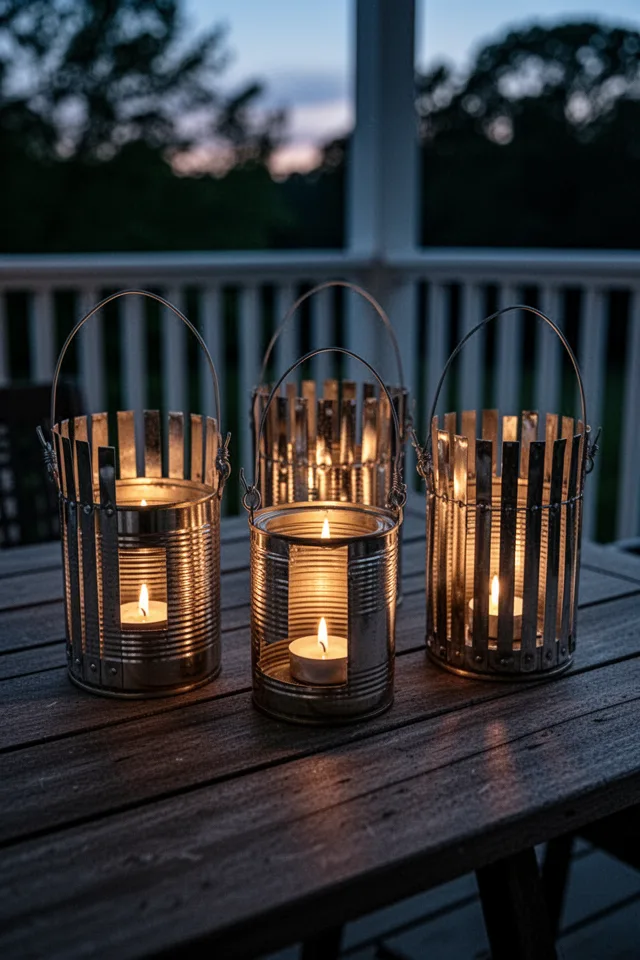
Save three tin cans, remove labels, and use a can opener to remove the top lid. Then use a metal ruler and a permanent marker to draw vertical lines from the top edge down about halfway. Cut along the lines with tin snips, then gently bend each strip outward to form a cage. Punch two holes near the top opposite each other, thread wire for a handle. Place a tea light or small votive inside. The holes in the cage let light out and keep wind from blowing out the flame.
Cost is under $10 for the wire and a pack of tea lights. Cans are free. The constraint is sharp edges. File every cut edge with a metal file or sandpaper, or you will cut yourself every time you pick one up. Also, the cans will rust after a few weeks of outdoor use. This is a one-summer project. Coat the inside and outside with clear spray enamel to get two summers instead of one. The version that fails is using a can that held tomatoes or anything acidic—the residue reacts with the metal and smells terrible when heated. Wash thoroughly with dish soap and dry completely.
Pro tip: Use a hammer and a nail to punch decorative star patterns into the uncut lower half of the can. When the candle is lit, the stars project onto your table. Takes five extra minutes, looks magical.
You don’t need to make all 19. In fact, you shouldn’t. Summer DIY fatigue is real, and nothing kills the mood like a half-finished project sitting on your dining table for three weeks. Pick the three ideas that solve actual problems in your home. The rope basket if your entryway is a disaster. The branch curtain rod if your rental blinds are hideous. The painted rug if you’ve been staring at that beige rectangle for five years.
If you want my opinion on where to start: the shade sail for renters. It changes how you use outdoor space more than any other project here, and it costs less than a decent patio umbrella. No other summer DIY gives you that much relief from heat for that little money. Everything else is decoration. The shade sail is a quality-of-life upgrade.
Remember this page when you’re sitting in your own backyard at sunset, drink in hand, and you realize you made that happen with your own hands and about $30 worth of supplies. That’s the feeling summer DIY should give you. Not perfection. Not Pinterest. Just the quiet satisfaction of a space that works better because you touched it.