I once slept on an inflatable mattress in my own guest room because my mother-in-law had taken the bed and I couldn’t face the memory foam topper that smelled faintly of laundry detergent and regret. The sheets were hospital corners tight. There was one flat pillow. The only light came from an overhead fixture with a pull chain. I lay there thinking: I have made every guest who has ever stayed here miserable, and they have been too polite to tell me.
Most guest bedroom advice is written by people who host twice a year and call it a “retreat.” They tell you to buy monogrammed towels and a scented candle. They don’t mention the real friction: guests are too polite to ask for a second blanket, they won’t mess with a complicated thermostat, and they will absolutely sleep with the closet door cracked open if the room feels unfamiliar. The conventional wisdom misses the point entirely. Your guest room is not a hotel lobby. It is a place where someone you love is going to feel slightly vulnerable, away from their own pillow, and every small failure of hospitality gets amplified at 2 AM.
So I wrote the guide I wish I’d had before my sister spent a week on a bed that squeaked every time she breathed. These 25 ideas are the ones that survive real guest stays—through different sleep schedules, forgotten phone chargers, and the awkwardness of someone who runs hot while you run cold. Some are cheap (under $10). Some require a drill. All of them come from actual hosting, not a photoshoot. I’ll tell you what feels fake, what breaks, and what actually makes a guest feel like you thought about them before they arrived.
1. The Empty Drawer Test (Leave One Completely Bare)
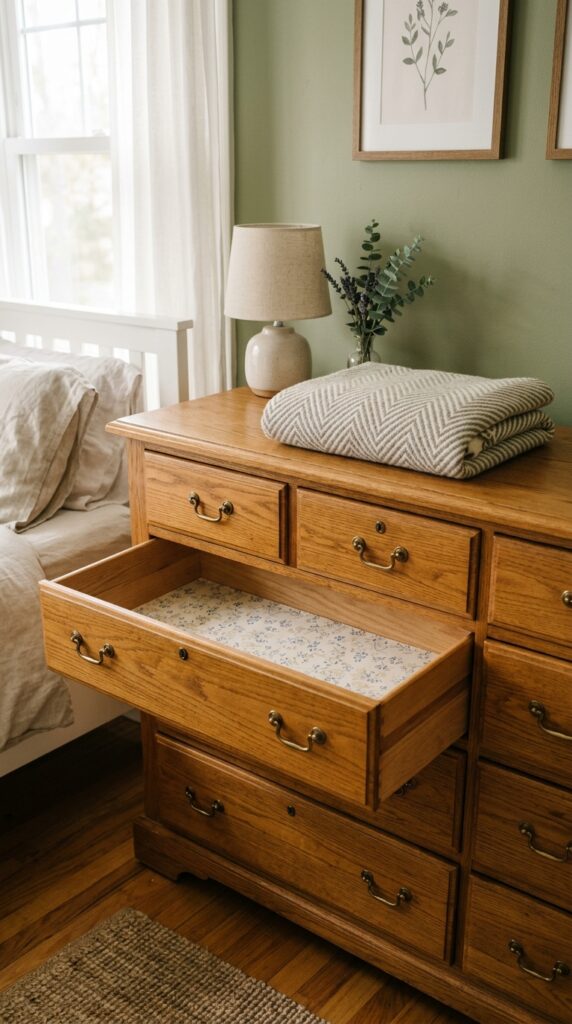
Open a drawer in your guest dresser right now. Is it full of your old sweaters? Random cables? Wrapping paper from 2019? Guests will not empty a drawer to use it. They will live out of their suitcase on the floor. The fix is brutal but simple: clear one entire drawer and leave it empty. Line it with fresh paper. That’s it. One drawer signals “you are allowed to exist here.” I learned this after watching my cousin unpack her entire suitcase onto a chair because she didn’t think she could touch my things.
The friction is real because we all use guest room closets for overflow storage. Pick the smallest drawer. Move your stuff to a bin in the basement. The cost is zero, but the emotional labor of admitting you’ve been using guest storage is surprisingly high. Do it anyway.
Put a phone charger in that empty drawer. Not a cheap one—a decent six-foot cable with a wall brick. Your guest forgot theirs. They will weep with gratitude.
2. The Blanket At The Foot (Not In The Closet)
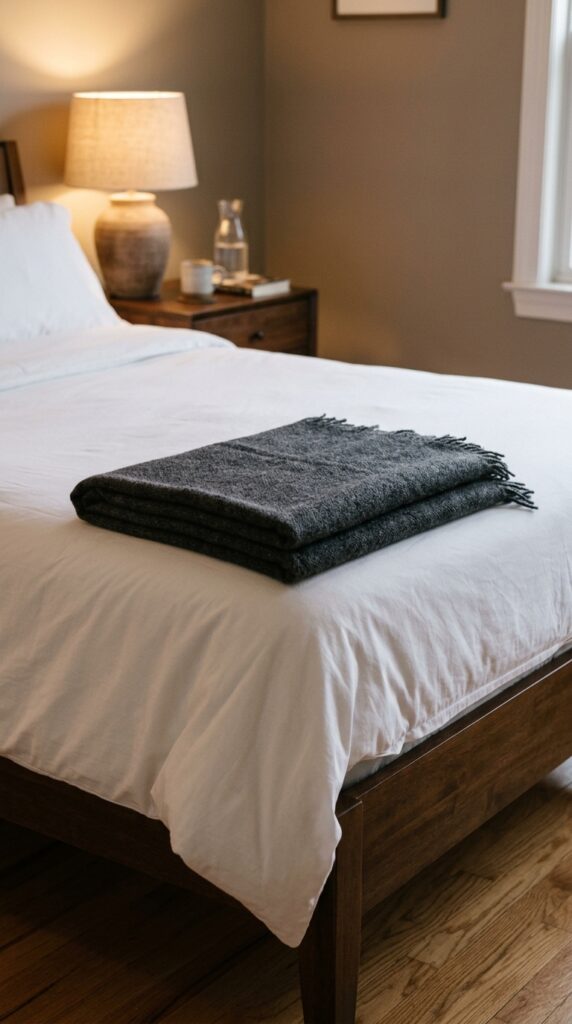
A folded blanket at the foot of the bed is not decor. It is a message: you are allowed to be cold, and you are allowed to fix it without asking. I used to keep extra blankets in the closet. Every single guest slept cold because they didn’t want to rummage through my things. Now I fold a medium-weight blanket across the foot of the mattress. It’s visible before they get into bed. Some guests push it to the side. Some pull it up at 3 AM. Both are fine because they didn’t have to have an awkward conversation.
Choose a blanket that’s not precious. Avoid mohair or anything dry-clean-only. Your guest will spill tea on it eventually. I use a cotton waffle weave that costs $40 and washes at 60 degrees. The version that fails: a thin decorative throw that’s not warm enough to actually use. That’s just a prop. Cost: $30–$80 for a usable blanket.
Test the blanket yourself. Lie down in the guest bed on a cool night and see if the single duvet is enough. Then add the foot blanket. You’ll know in twenty minutes if it works.
3. The Two-Pillow System (Hard And Soft)
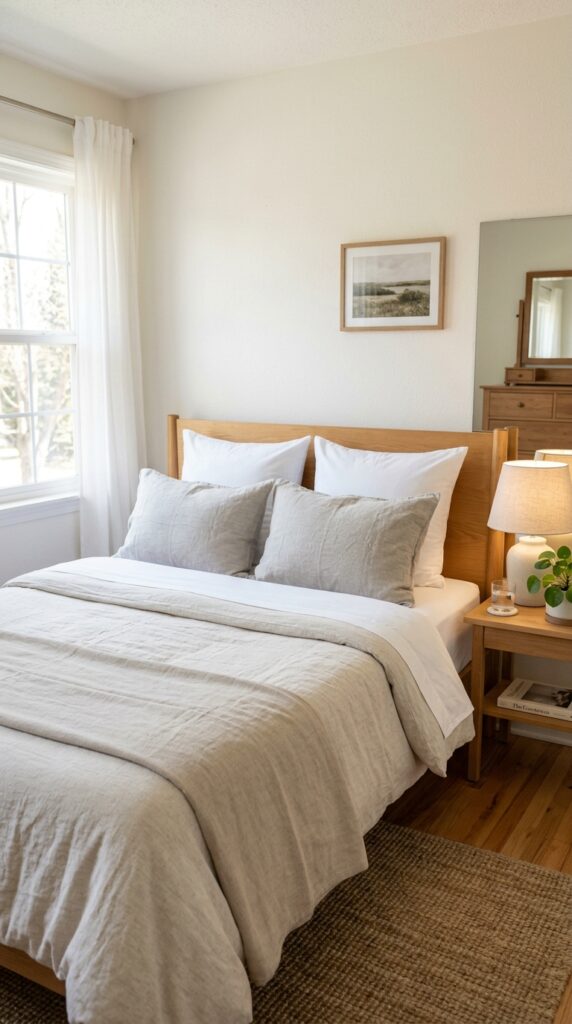
One pillow type guarantees half your guests sleep badly. I keep two firm pillows (memory foam, about $25 each) and two soft pillows (cheap polyester fill that squishes flat). Guests self-sort within ten seconds. The firm pillows go under the head; the soft ones go under the knees, or get hugged, or get tossed aside. I’ve watched a hundred people make this choice unconsciously. The only wrong answer is a single type.
Replace the soft pillows every year. They go flat and lumpy faster than you think. The firm pillows last three to four years if you rotate them. Also, use pillow protectors under the cases. Guests sweat. It’s fine. But you don’t want that soaking into the pillow itself. Cost for a full set of four pillows: $60–$120. Protectors: $10–$20 each.
Keep an extra set of pillowcases in the drawer with the charger. When a guest stays multiple nights, offer fresh cases mid-stay. They will think you are a wizard.
4. The Window That Opens Fully (Test It Before They Arrive)
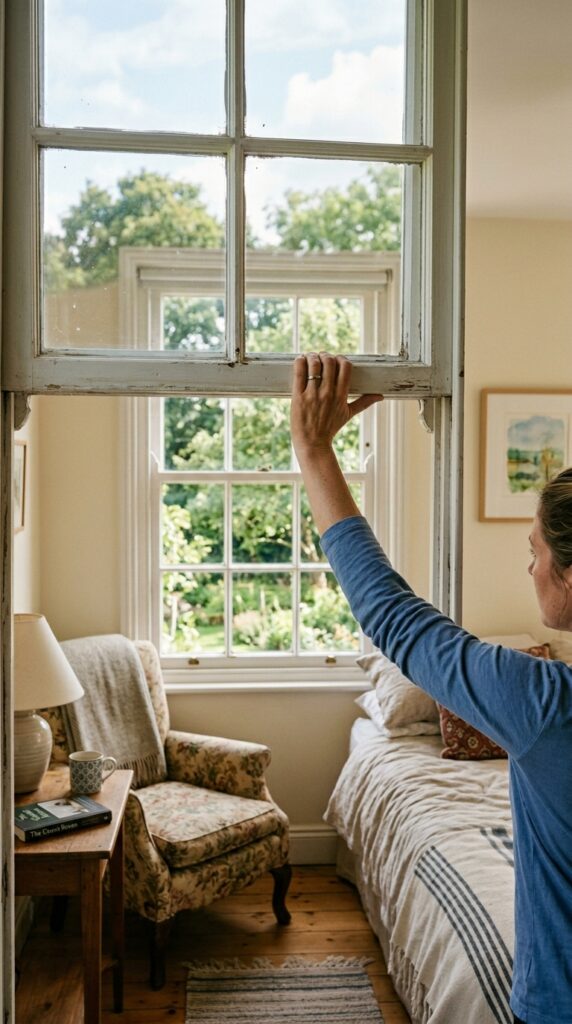
You run your house at 68 degrees. Your guest runs hot at night and wakes up drenched at 2 AM. They will not ask to open a window if it looks painted shut. Go into your guest room right now and try to open the window. Not “does it theoretically open”—actually put your hands on it and push. I did this and discovered the previous owners had painted over the sash. It took twenty minutes with a utility knife to free it. Now I check before every guest.
If the window opens but falls back down, get a tension rod or a window prop stick. A window that slams shut at 3 AM is worse than no window at all. Cost to fix a painted window: $5 for a utility knife and patience. A window prop stick: $10 or make one from a wooden dowel.
Add a screen if there isn’t one. An open window with bugs is not a kindness. Magnetic screens that pop in and out cost $15 and save your guest from mosquito bites.
5. The Not-Too-Nice Towel Rule
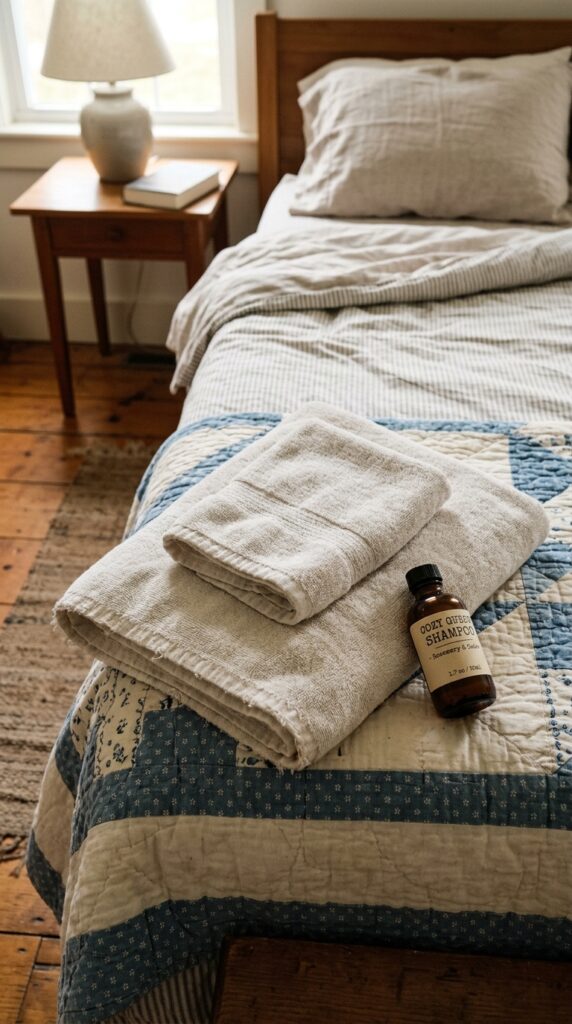
Brand new fluffy towels feel amazing in a store and make guests anxious in your house. They don’t want to stain them with makeup or drip coffee on them. I learned to buy good-quality but not precious towels for the guest bath—the kind that cost $10–$15 each, not $40. Dark colors are better than white because white shows every mascara smear. I use charcoal grey. Guests relax visibly.
The trade-off: dark towels eventually fade unevenly. After about 30 washes, they look patchy. Replace them every two years. Also, never use fabric softener on guest towels. It reduces absorbency. Your guest will feel like they’re drying off with a waterproof sheet. Cost: $30–$60 for a set of four bath towels, four hand towels.
Hang two bath towels, not one. Couples fight over the single towel. Two towels says “I know how relationships work.”
6. The Ugly Nightlight That Saves Their Ankles
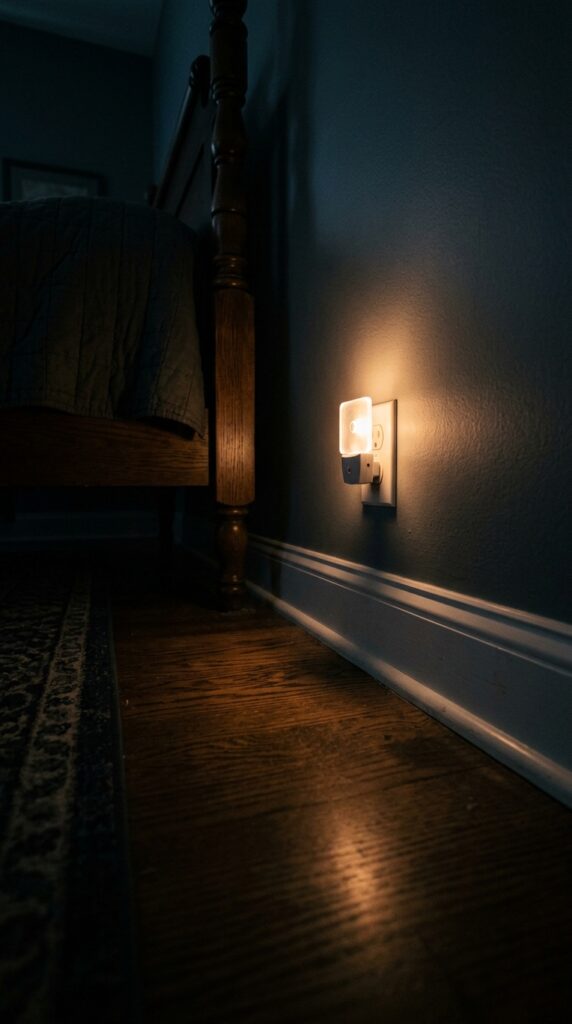
Your guest will wake up at 3 AM to pee. They will not know where the light switch is. They will walk into your doorframe. Put a nightlight in the hallway outside the guest room and one in the guest bathroom. Not the fancy decorative kind that casts shadows—a simple $8 plug-in that produces a warm, even glow. I use the ones with a sensor so they turn on automatically at dusk. My brother-in-law, who has terrible night vision, once sent me a text at 7 AM that just said “thank you for the nightlight.”
The only failure mode: nightlights that are too bright. Avoid the blue-white LED versions that feel like an airport runway. Look for “warm white” or “soft glow.” Also, position them low enough that the light doesn’t shine directly into the bedroom when the door is open. Cost: $8–$15 each.
Test the path from bed to bathroom in complete darkness yourself. Walk it with your eyes closed. Wherever you stub your toe, add a light.
7. The Single-Serving Coffee Station (Not A Full Machine)
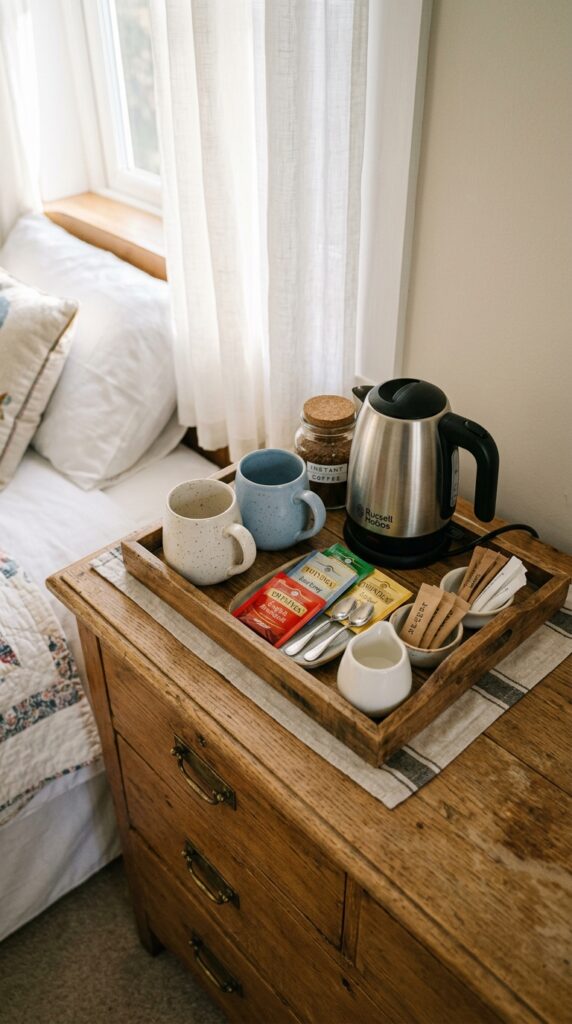
A full espresso machine in a guest room is excessive and intimidating. No coffee at all is rude. The middle ground is a small electric kettle ($25), good instant coffee (yes, good instant exists—try the Japanese brands), and a few tea bags. Guests can make a cup without leaving the room or figuring out your complicated machine. I add a small ceramic creamer pot and a bowl of sugar cubes. The whole setup fits on a $15 tray.
The thing most guides skip: a mug warmer. If your guest makes tea and gets distracted, a $12 mug warmer keeps it drinkable for an hour. Also, include a small trash can nearby for used tea bags. Otherwise they’ll balance them on the saucer and spill. Cost for full station: kettle $25, mugs $10, instant coffee $8, tea $5, tray $15, mug warmer $12. Total under $80.
Put a bottle of water and a glass next to the coffee station. Some guests don’t drink caffeine. The water says “I thought of you anyway.”
8. The Chair That Isn’t Precious
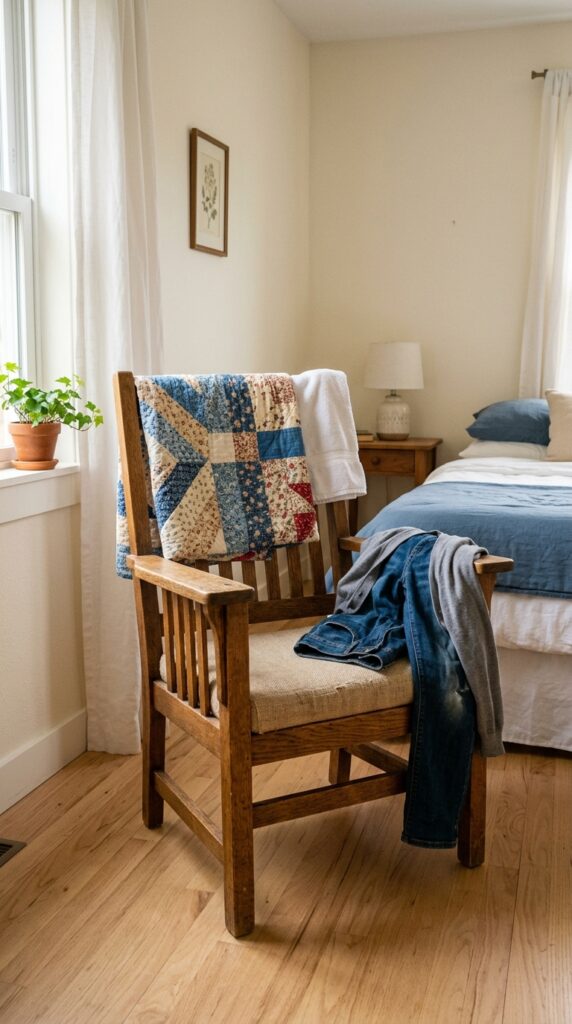
Every guest room needs a chair. Not for sitting—for the pile of clothes that don’t go in the drawer because the guest is only staying two nights and unpacking feels like too much commitment. If you don’t provide a chair, the clothes go on the bed, then on the floor, then you find a sweater under the radiator in June. I use a sturdy secondhand wooden chair with a washable cushion. It’s ugly enough that no one worries about hurting it. That’s the secret: a chair that looks like it can handle a pile of jeans.
Avoid upholstered dining chairs with thin legs. They tip when you pile a coat on the back. Avoid velvet. Avoid anything that requires special cleaning. Cost: thrifted chair $20–$50, new simple side chair $80–$150.
Put a small hook on the back of the bedroom door. Some guests prefer to hang a jacket or a damp towel there. It costs $3 and saves your chair from becoming a coat rack.
9. The Thermostat Note (Write It Down)
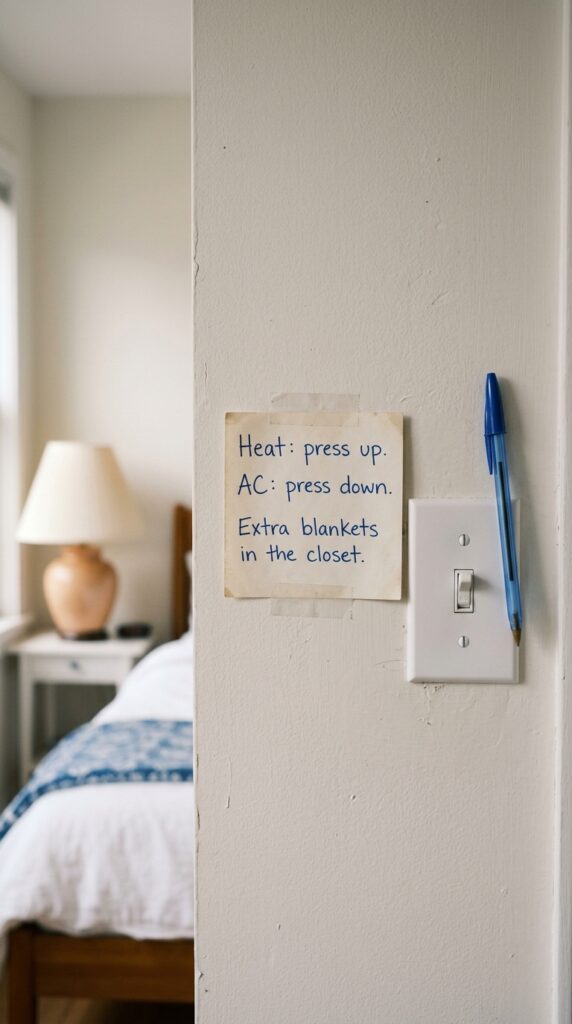
Your guest will not touch your thermostat unless you tell them they can. Even then, they will freeze or sweat because they don’t know how your particular system works. I write a single index card: “Heat: turn dial to the right. AC: left. Please adjust as you like. You won’t break it.” I tape it near the light switch. The number of guests who have thanked me for this is absurd. People are terrified of unfamiliar HVAC systems.
The version that fails: a verbal explanation when they arrive. They forget. They don’t want to ask again. Write it down. Also include the WiFi password on the same card. Two birds. Cost: free, unless you buy nice cardstock, which is $5 and feels fancier.
If you have a smart thermostat, put a sticky note over the scheduling button. Nothing ruins a guest’s sleep like the heat turning off at 10 PM because of your “energy savings” setting.
10. The Blackout Curtains That Aren’t Hideous
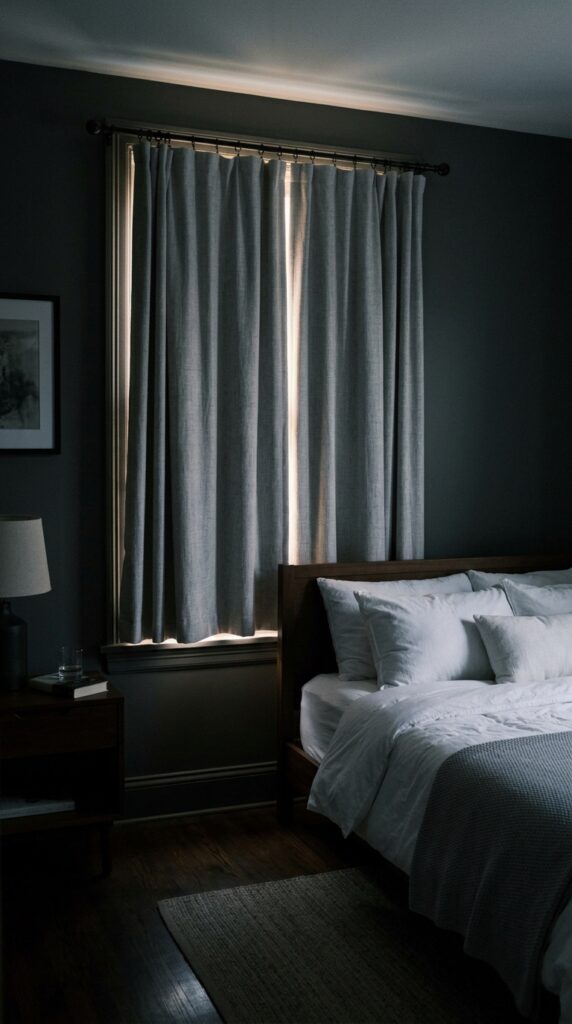
Blackout curtains are non-negotiable for any guest who works nights, has a hangover, or is jet-lagged. But the cheap ones from the drugstore have that horrible shiny backing that smells like chemicals and crinkles like a trash bag. I buy blackout curtains with a foam backing (not PVC) in a matte finish. They cost more—about $40–$60 per panel versus $15—but they don’t stink and they hang like normal fabric.
Install them so they overlap the window frame by at least three inches on each side. The light leaks around the edges are what wake people up. I also use a blackout roller shade underneath the curtains for total darkness. That’s a $150 commitment for the pair, but it’s the only way to block light completely. If you can’t do that, at least test the curtains on a sunny morning. Lie on the bed at 7 AM. If you see light, your guest will too. Cost: basic foam-backed $40–$80 per window, total blackout system $150–$250.
Write “curtains close this way” on your note card. Some guests won’t touch unfamiliar curtain hardware. Show them a photo of the rod and how it works.
11. The Bathroom Caddy That Says You Know
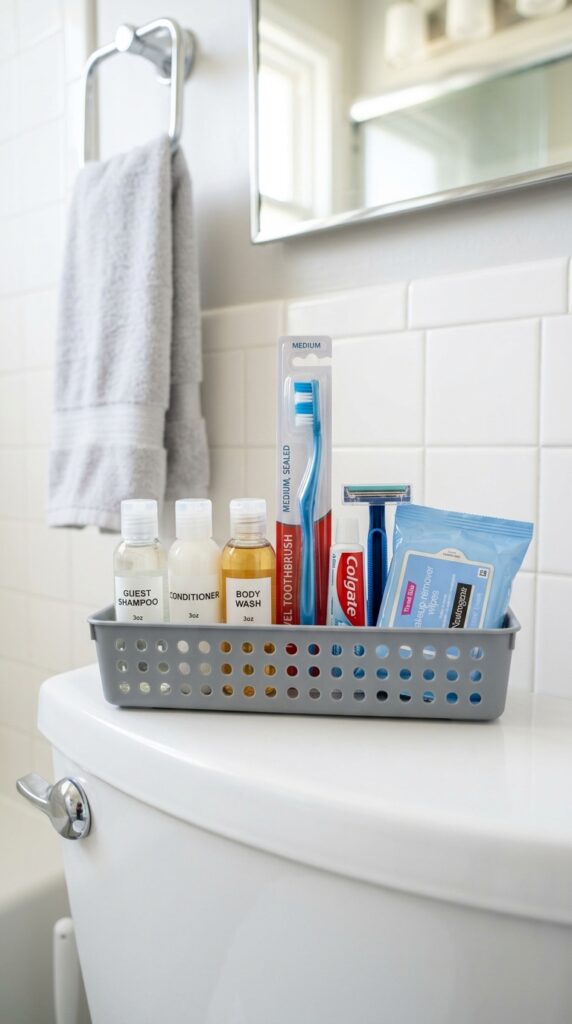
Your guest forgot something. It’s always something. A caddy with travel-sized essentials costs $15 to stock and saves them from using hand soap as shampoo. I include: shampoo, conditioner, body wash, a new toothbrush (the $1 kind), travel toothpaste, a cheap razor, cotton rounds, and makeup wipes. I do not include expensive brands. I do not include anything that looks like a hotel freebie. The message is “we’ve all been there,” not “we’re trying to be the Ritz.”
The failure mode: letting the caddy get stale. Replace the toothbrush every six months even if unopened. Toss any half-used bottles from previous guests. Cost to stock: $20–$30. Refill cost: $10 per year.
Add a small box of tampons and pads. Even if your guests are all men, someone’s partner will need them eventually. It costs $5 and makes you look like a saint.
12. The Bare Floor Patch (For Suitcases)
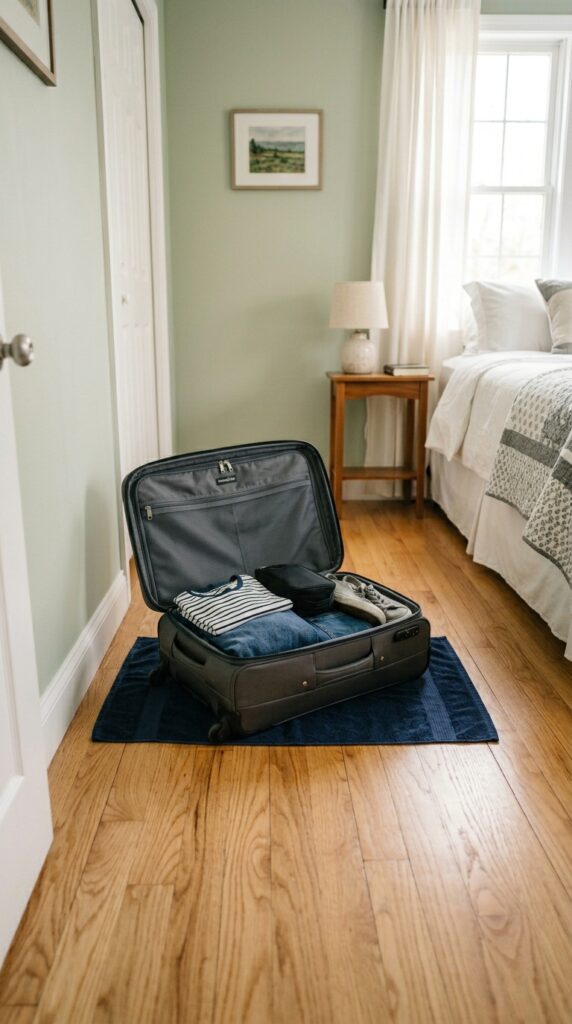
Most guest rooms have furniture arranged so that the only place for an open suitcase is on the bed. Then the guest has to unpack fully or live out of a zippered bag on an unstable surface. Leave a clear patch of floor at least 30×30 inches. No chair, no plant, no lamp. Just floor. I mark this visually with a small rug. Guests put their suitcase there without being told. It’s one of those invisible courtesies they never mention but absolutely notice.
The constraint: this is harder in a very small room. If you can’t spare the floor space, get a folding luggage rack ($25–$40) that stands next to the dresser. It’s not as good as floor space, but it’s better than the bed. Cost: free if you rearrange; $40 for a luggage rack.
Put a mat under the suitcase area if you have hard floors. The wheels scratch. A $10 rubber-backed mat saves your floor and keeps the suitcase from sliding.
13. The Extra Trash Can (With A Lid)
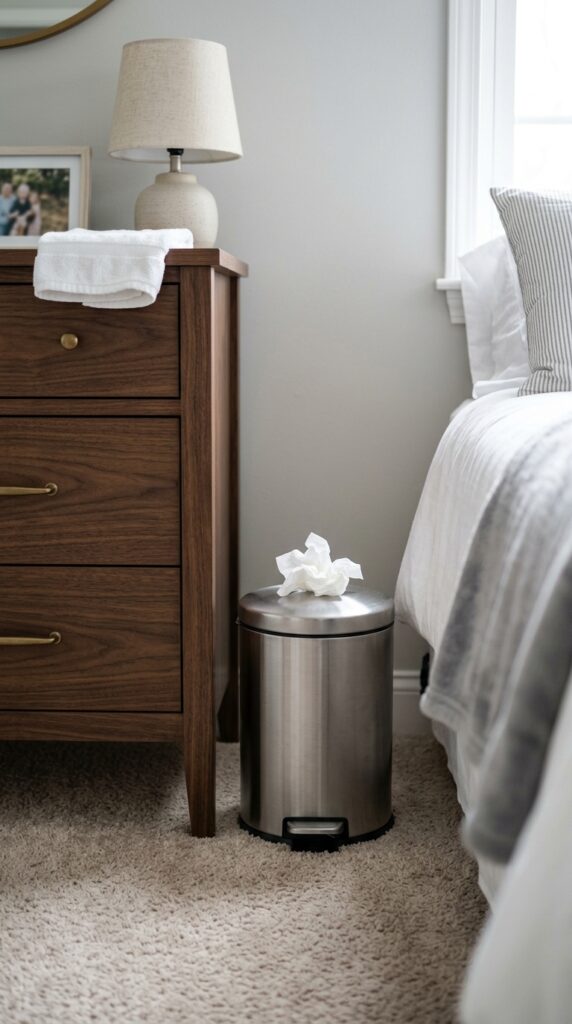
You have a trash can in the bathroom. Your guest will produce trash in the bedroom—tissue, candy wrapper, the tag from a new shirt. Without a can, it goes on the nightstand, then the floor. I put a small lidded can next to the dresser. The lid is essential for used tissues or anything private. No one wants to see your guest’s used floss. Cost: $15–$30 for a small lidded can.
Empty it after every guest. The worst hosting moment I ever had was finding a week-old apple core in the guest trash when my mother-in-law arrived. She didn’t say anything. I wanted to die. Cost of shame: free, but don’t do it.
Line it with a small bag, not a grocery store plastic sack that shows through. The little bags from the dollar store cost $2 for a roll of 50.
14. The Full-Length Mirror (Not Just A Small One)
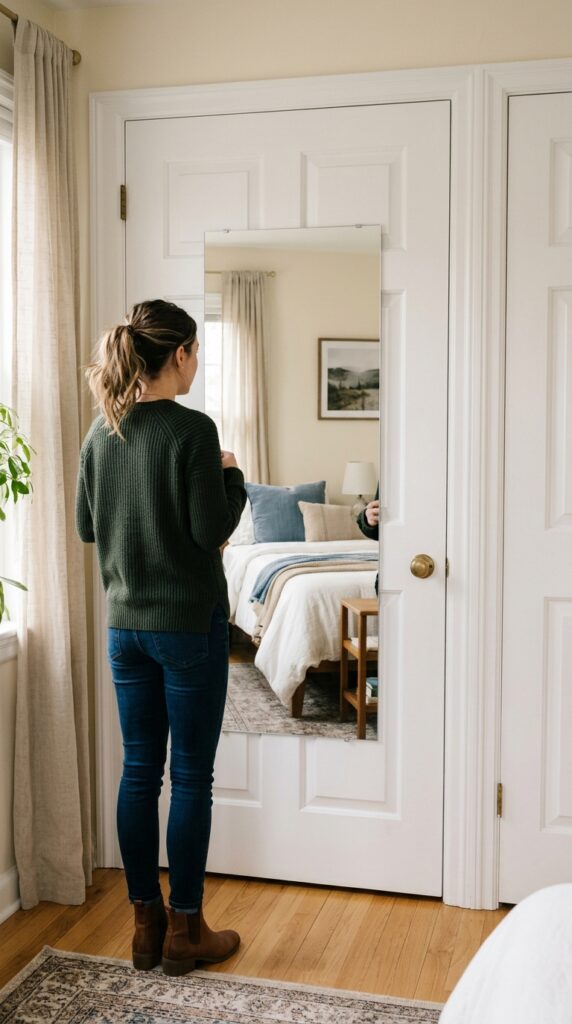
A small mirror over the dresser is useless for checking an outfit. Your guest will either not see their shoes, or will crane their neck, or will give up and ask you “does this look okay?” The fix is a full-length mirror. It doesn’t have to be expensive. I bought a $25 frameless one from a hardware store and mounted it on the back of the closet door. Now guests can check their whole look without asking for a second opinion.
The only rule: mount it at the right height. The bottom of the mirror should be no more than six inches from the floor. If it’s higher, short guests see only their torso. Mark the spot with a guest’s height in mind. Cost: $25–$80.
Test the mirror by standing in front of it in your guest’s likely outfit—jeans and a t-shirt. If you can’t see your waistband, it’s too high.
15. The Sound Machine Option (Not A Fixture)
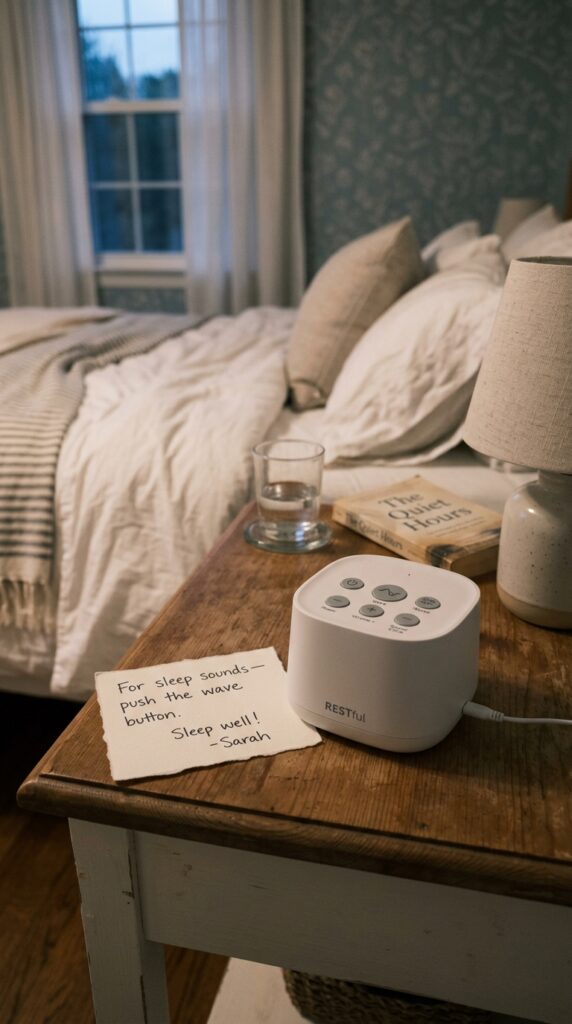
Some people need white noise to sleep. Others hate it. The wrong move is a built-in sound machine or a fan that can’t be turned off. The right move is a small portable white noise machine on the nightstand with a note: “Optional. Push the wave button if you want it.” I bought a $25 one that runs on USB and has a timer. Half my guests use it. The other half ignore it. Both groups are happy because they had a choice.
The sound that fails: city noises (traffic, rain) that some people find stressful. Stick to “white noise” or “brown noise” settings. Also, include earplugs in the bathroom caddy for the light sleepers who don’t want any machine. Cost: sound machine $20–$40, earplugs $5 for a pack of 10.
Test the volume yourself from the next room. If you can hear it through the wall, it’s too loud. Place it away from shared walls.
16. The Water Carafe That Doesn’t Leak
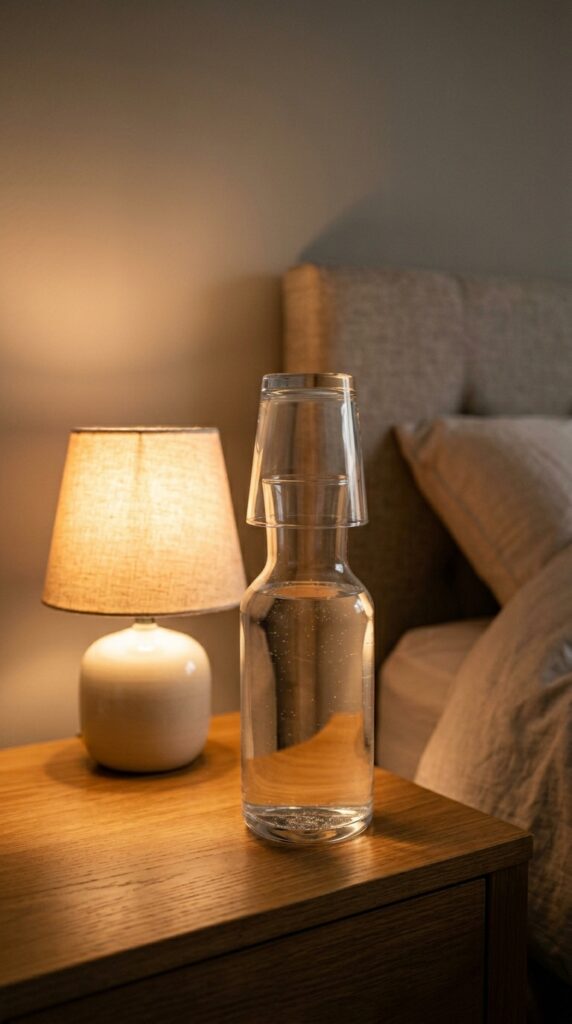
A carafe of water on the nightstand is a classic hotel gesture that actually works. But most carafes leak from the spout when you pour. I’ve soaked three books this way. The version that works: a carafe with a wide mouth and a separate tumbler that sits on top like a lid. The tumbler catches drips. I use a $15 glass set from a kitchen supply store. No fancy design. It just holds water and doesn’t spill.
Refill it before every guest. Stale water from last month is not hospitality. Cost: $10–$25.
Add a tiny vase with a single flower next to the carafe. It’s silly but guests notice. The flower doesn’t have to be real—a dried lavender stalk works for months.
17. The Hangers That Work With Everything
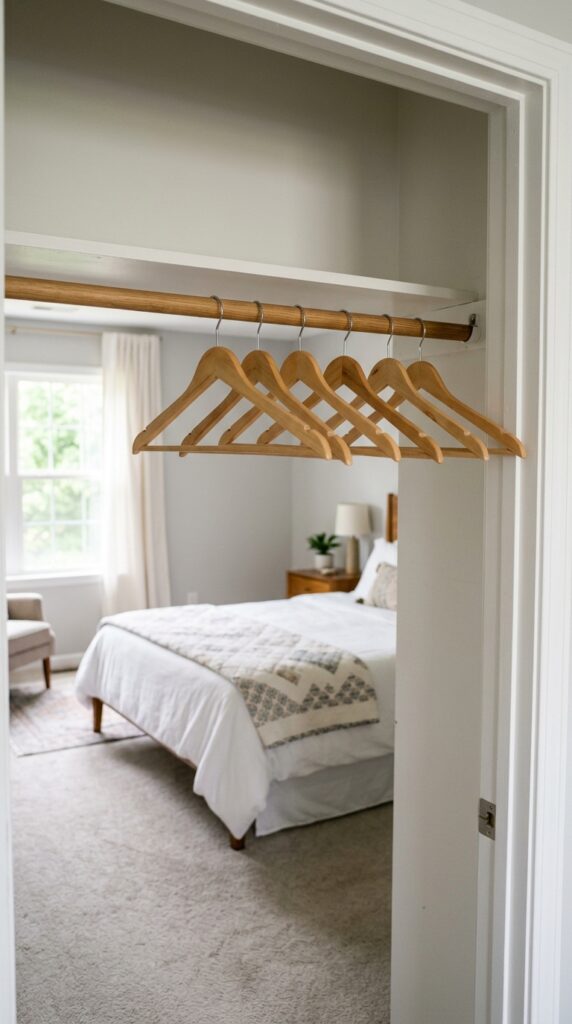
Wire hangers from the dry cleaner are awful. Velvet hangers are worse—they shed black fuzz on white shirts. I use plain wooden hangers with notches for straps. They cost about $2 each. Put six in the guest closet. That’s enough for a long weekend. Do not fill the closet with your own stuff. An empty closet with good hangers says “this space is yours.” A full closet with two wire hangers says “I didn’t think about you.”
Also add a few clip hangers for skirts or pants. And one lightweight plastic hanger for wet swimsuits (wood gets ruined by moisture). Cost: wooden hangers $12–$20 for six, clip hangers $5 for two.
Leave a steamer in the closet. Not an ironing board—no one irons anymore. A $30 handheld steamer. Your guest’s wrinkled shirt will thank you.
18. The Fan That Moves Air (Silently)
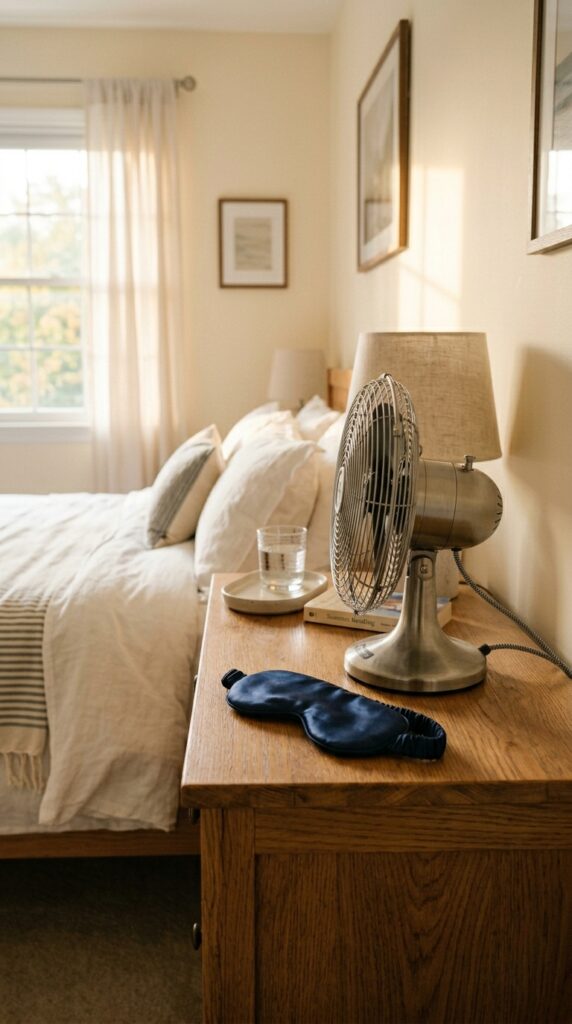
A ceiling fan is great. But you don’t have one. So put a small table fan on the dresser, pointed at the bed. Not a plastic $10 box fan that sounds like a helicopter—a decent metal fan with a whisper setting. I use a 12-inch Vornado ($60). It moves air without keeping anyone awake. Some guests run it for the breeze. Others run it for the white noise. Either way, they can sleep at their preferred temperature.
The failure: fans that oscillate and click. Every oscillation mechanism eventually clicks. I set mine to stationary. Also, clean the blades before each guest. Dust blowing in someone’s face is unforgivable. Cost: $40–$100 for a quiet fan.
Put a sleep mask next to the fan. Some people want total darkness and moving air. That combo is a luxury hotel level of guest care.
19. The Books You’ve Actually Read
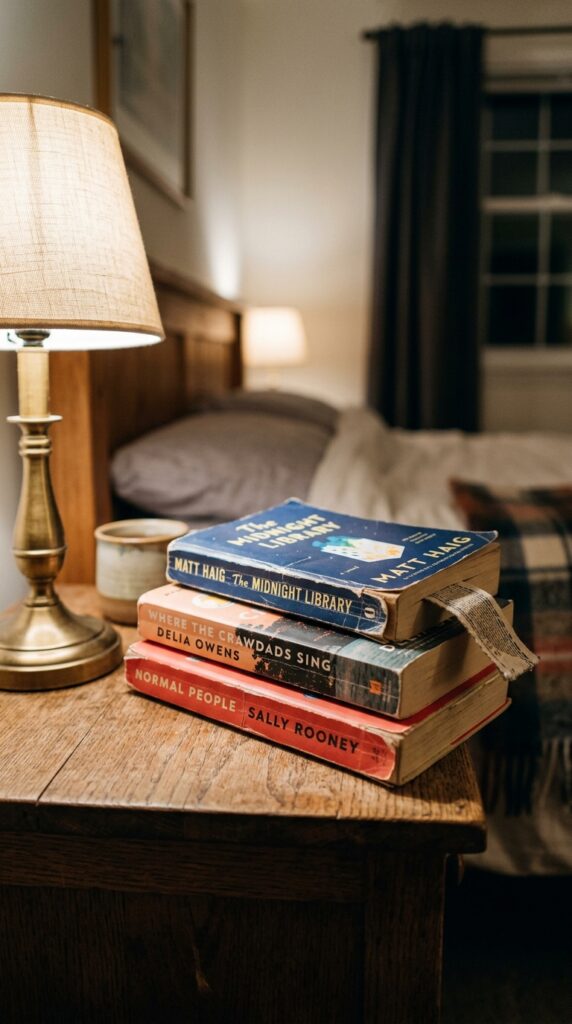
Never put decorative coffee table books in a guest room. They say “I bought this for the cover.” Instead, leave three paperbacks you’ve actually read and enjoyed. The wear on the spine shows they’re not props. Guests will pick them up. They might start reading. They might ask you about the book at breakfast. That’s the point. I rotate mine based on who’s coming—light mysteries for my aunt, essays for my brother, a thriller for anyone.
Include a bookmark. Not a fancy one—a receipt or a playing card works. And leave a small notebook and pen for guest notes. Some people like to write down a thought before sleep. Cost: free (your own books) or $5–$15 from a used bookstore.
Write a short note on the first page of the top book: “Loved this one. Hope you do too.” It’s a tiny connection that decor can’t fake.
20. The Ottoman With Storage (And No Sharp Corners)
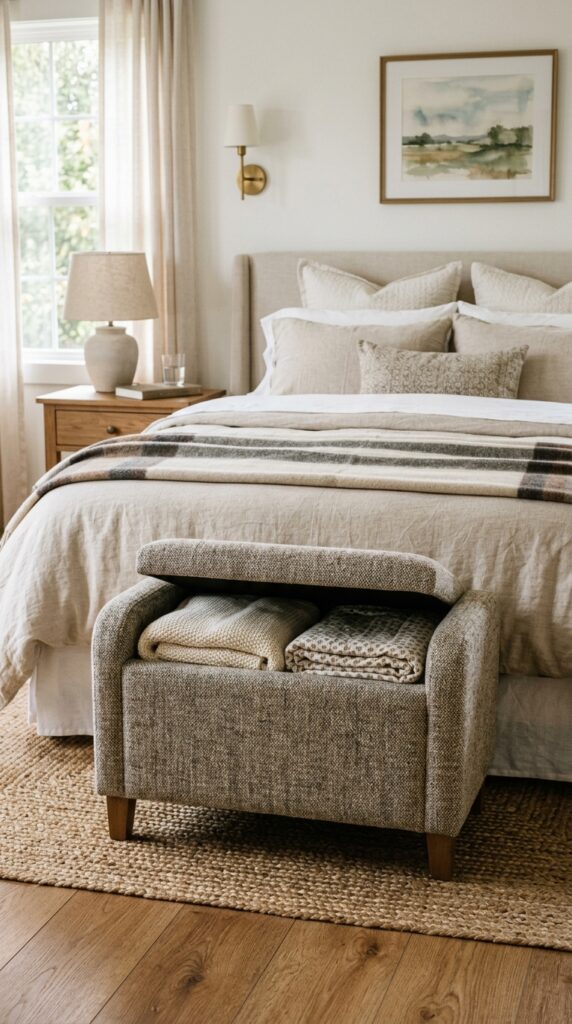
A storage ottoman at the foot of the bed does three things: gives a place to sit while putting on shoes, holds extra blankets, and softens the room. The version that fails is the one with sharp wooden corners that shins find in the dark. Look for rounded edges and a fabric that doesn’t show every stain. I use a navy blue tweed ottoman from a big-box store ($80). It’s been stepped on, sat on, and used as a suitcase stand. It looks fine after three years.
Fill it with blankets and nothing else. If you put random storage in there, you’ll forget and a guest will find your tax returns. Cost: $60–$150.
Test the ottoman’s weight before buying. A lightweight one will slide across the floor every time someone sits down. You want something that stays put.
21. The Outlet With USB Built In
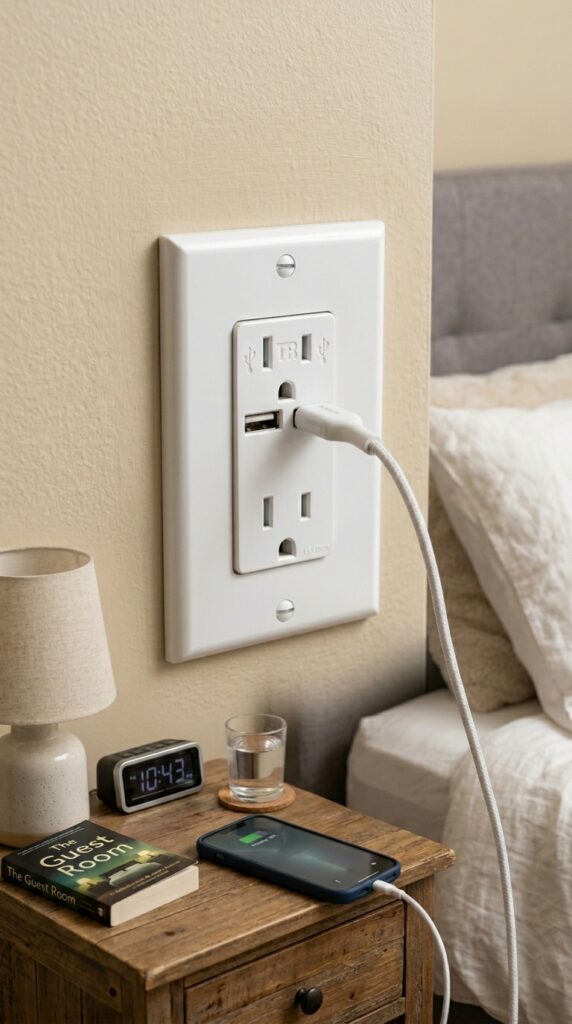
A guest should not have to crawl under the bed to find an outlet. Replace the standard outlet next to the bed with a USB outlet ($15–$20). It takes ten minutes and a screwdriver. Now your guest can charge a phone without a brick. I did this on both sides of the bed. The number of people who have said “oh thank god” is in the dozens.
If you rent and can’t change the outlet, use a power strip with USB ports and mount it to the nightstand leg with zip ties. Not as clean, but functional. Cost: USB outlet $15–$25, power strip $12.
Turn off the breaker before you touch the outlet. I didn’t once. I’m fine. Don’t be me.
22. The Unscented Everything Rule
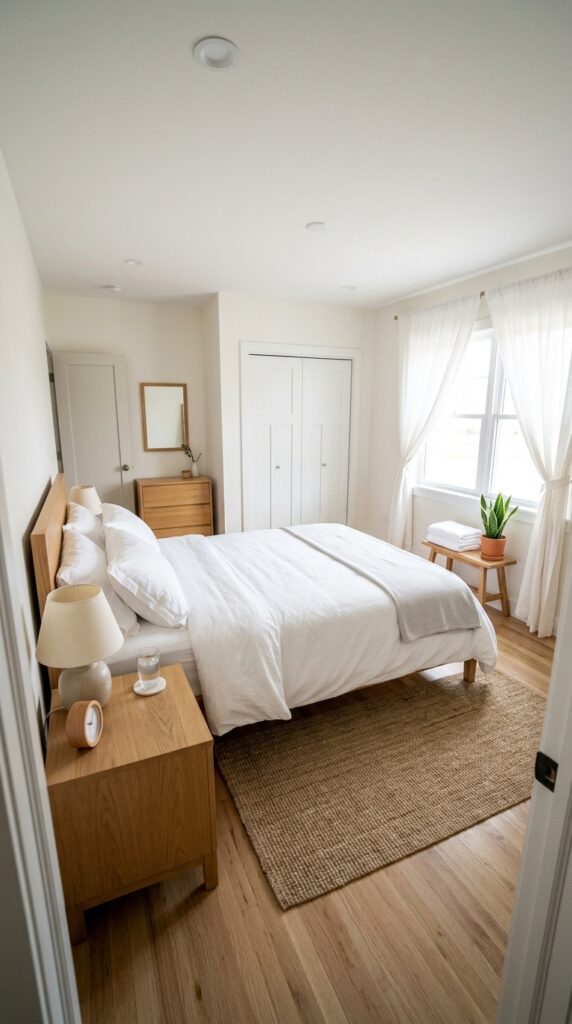
Scented candles, plug-in air fresheners, and lavender sachets are a gamble you will lose. Someone is allergic. Someone gets migraines. Someone just hates the smell of “vanilla dream.” I removed every fragrance from my guest room. I wash sheets in unscented detergent. I don’t use dryer sheets. The room smells like nothing. That is the correct smell. If a guest wants fragrance, they’ll bring their own or open a window.
The exception: a very mild, natural scent like a eucalyptus bunch in a vase. Real plants smell different than chemicals. But even then, I warn guests. Cost: free (unscented detergent is the same price as scented).
If you must have a candle, leave it unlit with a box of matches nearby. The guest chooses. That’s the difference between hospitality and imposition.
23. The Clip-On Reading Light
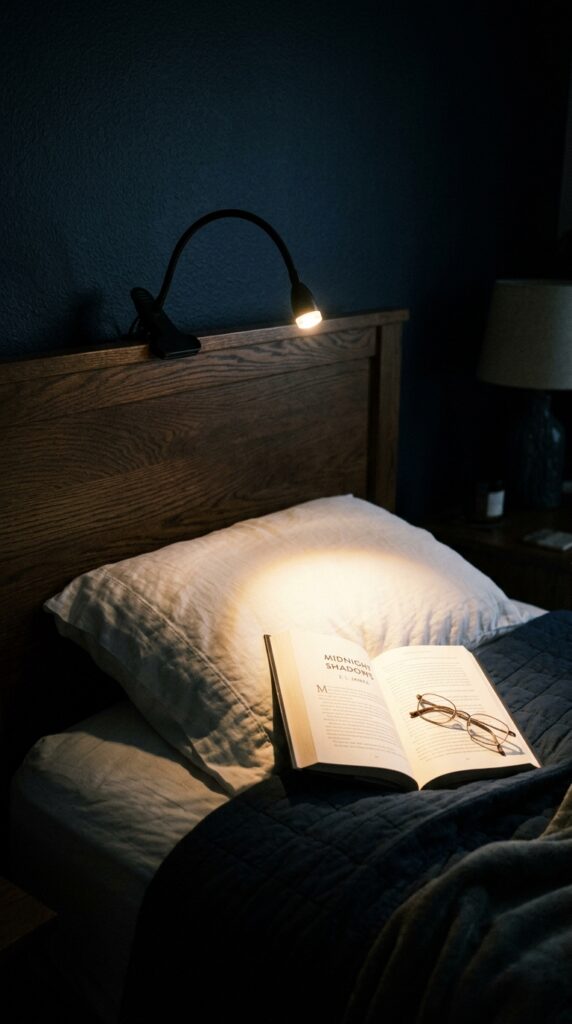
Not everyone wants to read under the overhead light. A clip-on reading light with a flexible neck costs $15 and clips to the headboard. Your guest can read without getting up, without disturbing a partner, and without fumbling for a lamp. I use a rechargeable one that lasts about 10 hours per charge. I leave it clipped to the headboard with a note: “Read in bed. Press the button.”
The failure: lights that are too bright or too cold. Look for “warm white” and “dimmable.” Also, cheap ones have plastic clips that break. Spend $20 instead of $10. Cost: $15–$30.
Charge it between guests. A dead reading light is worse than no reading light because it’s a promise broken.
24. The Little Sign That Says “Welcome” (Cheesy But Effective)
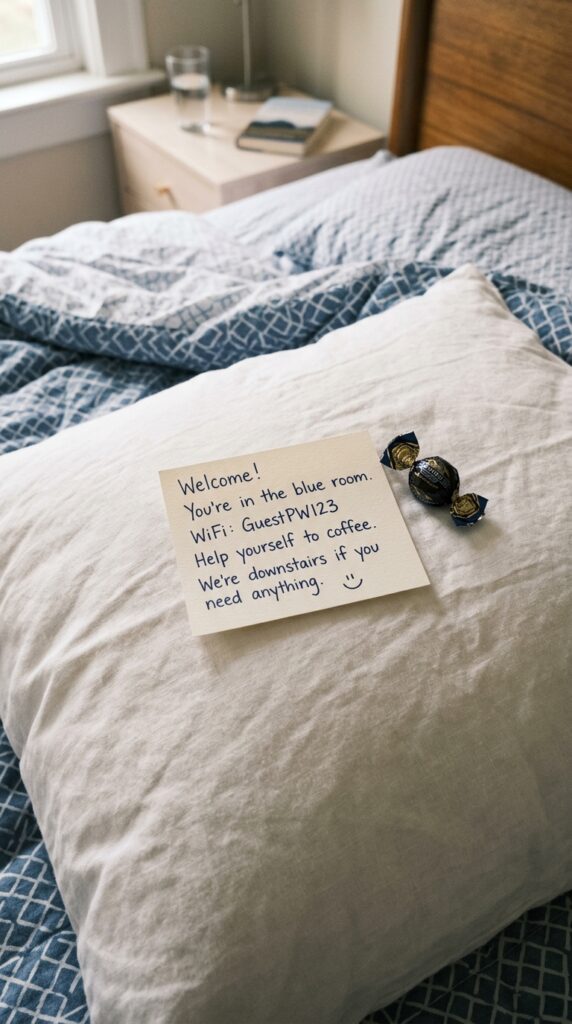
A welcome note is not decor. It’s information. Write down: WiFi password, where to find extra towels, what time you typically eat breakfast, your phone number in case of emergency. I put mine on the pillow with a small piece of chocolate. It’s cheesy. It works. Guests stop wandering around looking for the bathroom light switch at 11 PM.
Don’t laminate it. Don’t frame it. Handwrite it fresh for each guest. It takes 90 seconds and it tells them you thought about them specifically. Cost: free (paper from printer).
Add a small map of the house layout if you have a weird floor plan. “Your bathroom is the second door on the left” saves a lot of confused hallway wandering.
25. The One Thing They Didn’t Pack
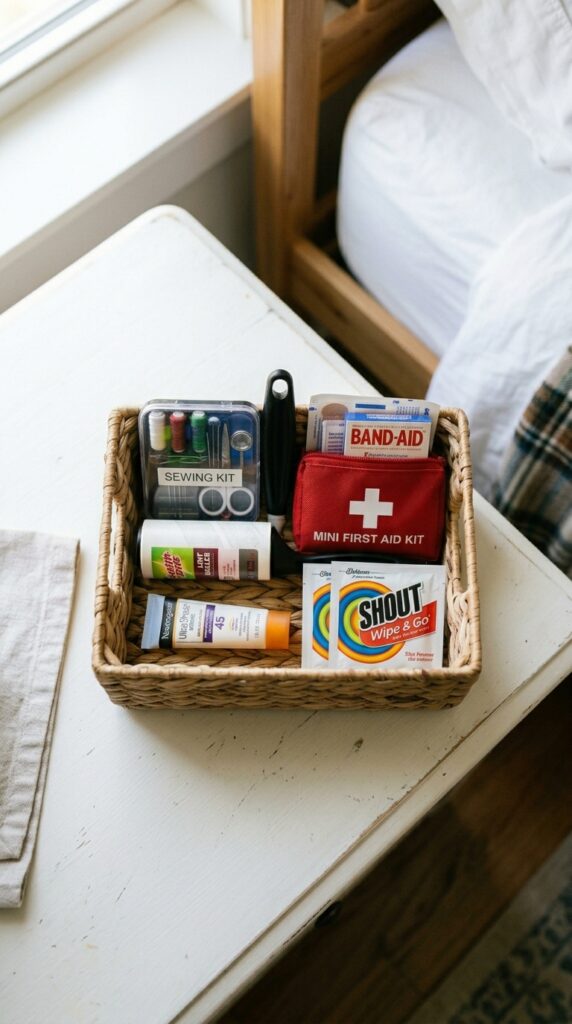
A basket of “you forgot this” items costs $20 to assemble and will save someone’s trip. I include: a sewing kit (the free one from a hotel, but you can buy a $5 one), a mini lint roller, a few bandages, a small tube of sunscreen, stain remover wipes, and a spare phone charging cable. No one uses everything. But the guest who spills red wine on their shirt at dinner will literally hug you.
The constraint: keep it small. A giant basket is intimidating. A small one on the dresser says “just in case.” Replace the sunscreen every season (it expires). Check the bandages for stickiness. Cost to assemble: $15–$30.
Add a pair of cheap flip-flops in the basket in sizes medium and large. If your guest forgot shower shoes or wants to walk to the backyard, you’re a hero. $5 at a drugstore.
The core decision of a great guest room is simple: do you want to look like a good host, or do you want your guests to actually sleep well? The first is about aesthetics. The second is about empathy. These 25 ideas lean hard toward empathy—the empty drawer, the visible blanket, the note on the thermostat. None of them are expensive. Most of them are free. But they require you to think like someone who is slightly uncomfortable and too polite to say so.
If you do only one thing from this list, start with the two-pillow system and the extra blanket at the foot of the bed. Those two address the most common guest complaints—wrong pillow firmness and wrong temperature—and they cost under $50 combined. Do them this week. Your next guest will sleep better, and they might never tell you. That’s fine. Hospitality is invisible when it works.
You are not running a hotel. You are running a place where someone you care about feels less alone in the dark. That is the whole point. Now go clear out that drawer.