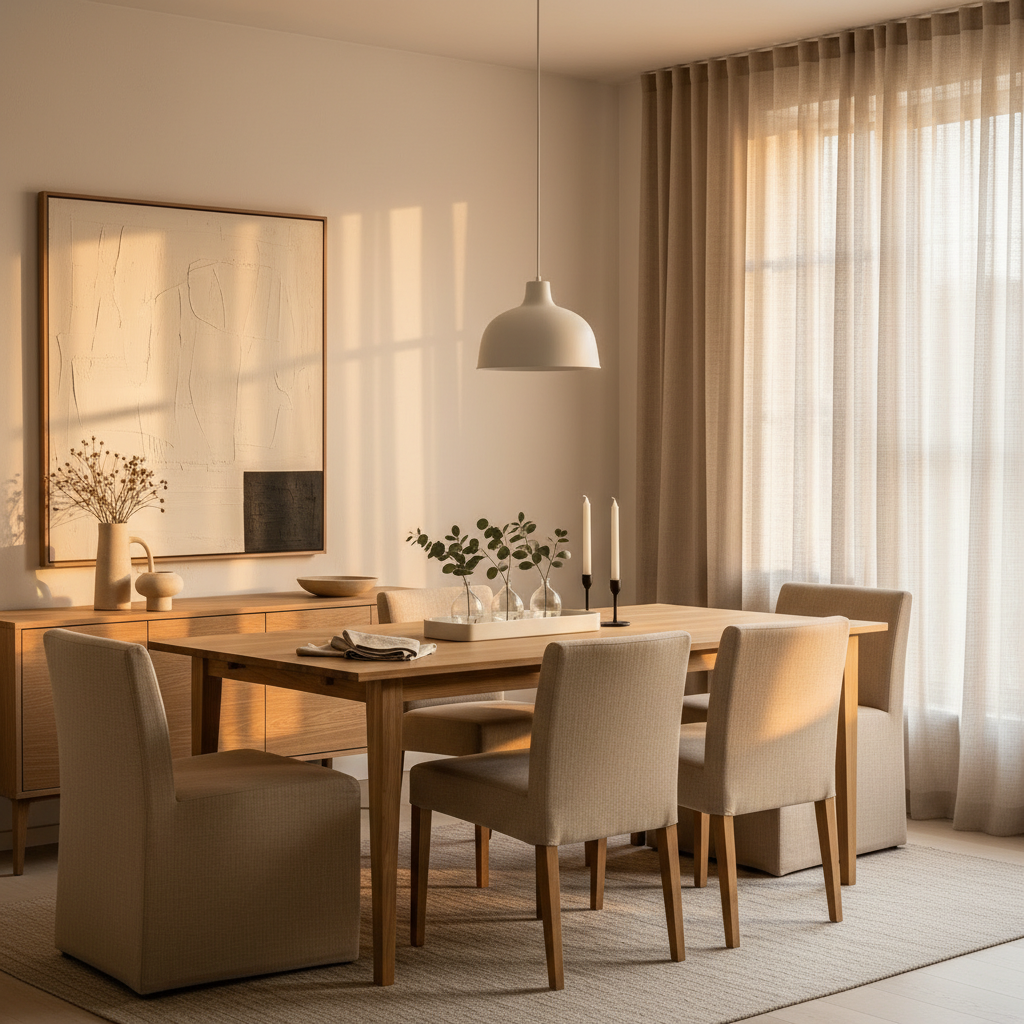
It was February, my radiator was making a sound like a trapped metal bird, and I was trying to feel “cozy” under a single flat sheet because the only blanket I owned was technically a summer quilt. I had candles on every surface, but they were unscented because I’m a coward, and the room still felt like a dentist’s waiting room. That was the year I learned that cozy is not a product you buy. It’s a set of conditions you engineer—and I had engineered exactly none of them.
Most “cozy bedroom” advice is just a shopping list for people who have never been cold in their lives. They tell you to add a sheepskin rug (great, now vacuum it twice a week when it sheds) and a “warm” paint color (as if beige has a temperature). They never mention that the wrong kind of fairy lights makes a room feel like a dormitory, or that too many textured pillows just means you spend ten minutes removing them before you can sleep. Cozy isn’t about accumulation. It’s about subtraction and intention.
I’ve lived through the full spectrum of failed coziness—from a room so cluttered with “hygge” that I couldn’t find the floor, to a minimalist box that felt like a holding cell. These 25 ideas are the ones that actually worked. Some cost nothing (rearranging furniture, turning off the overhead light). Some require a small investment in wool or dimmers. All of them have been tested against real winter nights, real insomnia, and the specific misery of a room that should feel safe but doesn’t. Let’s fix that.
1. Three Light Sources, One Dimmer (And No Overhead)
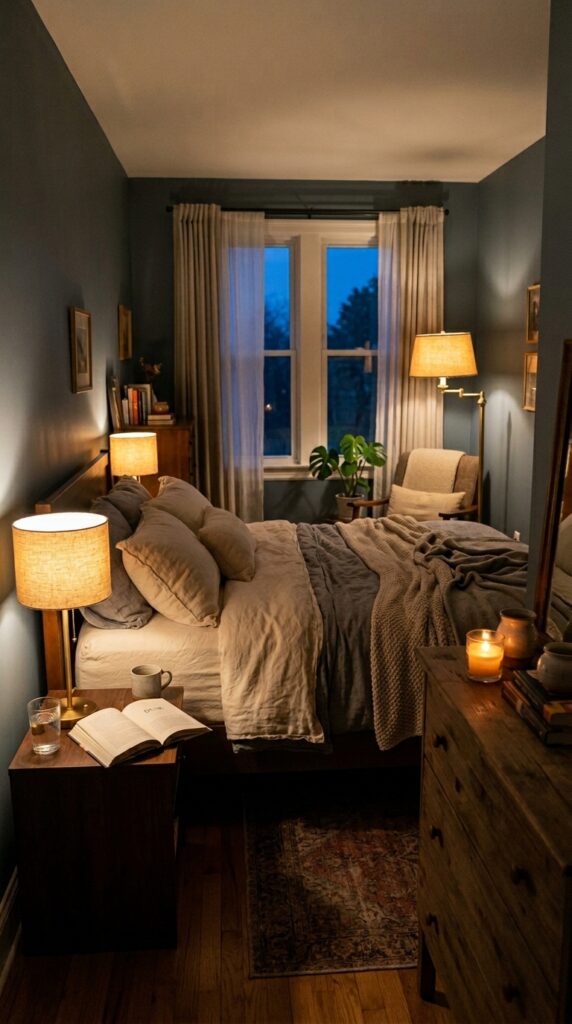
The single worst enemy of a cozy bedroom is a ceiling-mounted overhead light. It casts shadows under your eyes and makes every surface look flat. I removed the bulb from my overhead fixture five years ago and never looked back. Instead, I use three lamps—one on each nightstand and one in the corner. All of them are on a dimmer switch (plug-in dimmers cost $12 each). At night, I turn them to about 40%. The room feels like a cave in the best possible way.
The trade-off: you need outlets. If your room is old and has one outlet, use a power strip with a long cord tucked along the baseboard. Also, the lamps should have fabric shades, not metal or glass. Metal shades direct light downward and create harsh pools. Fabric diffuses. Cost: lamps $20–$60 each, plug-in dimmers $12–$15, power strip $10.
Put one lamp on a smart plug set to turn on at sunset. Coming home to a pre-lit cozy room is a psychological cheat code.
2. The Wool Blanket That Breathes (And Doesn’t Itch)
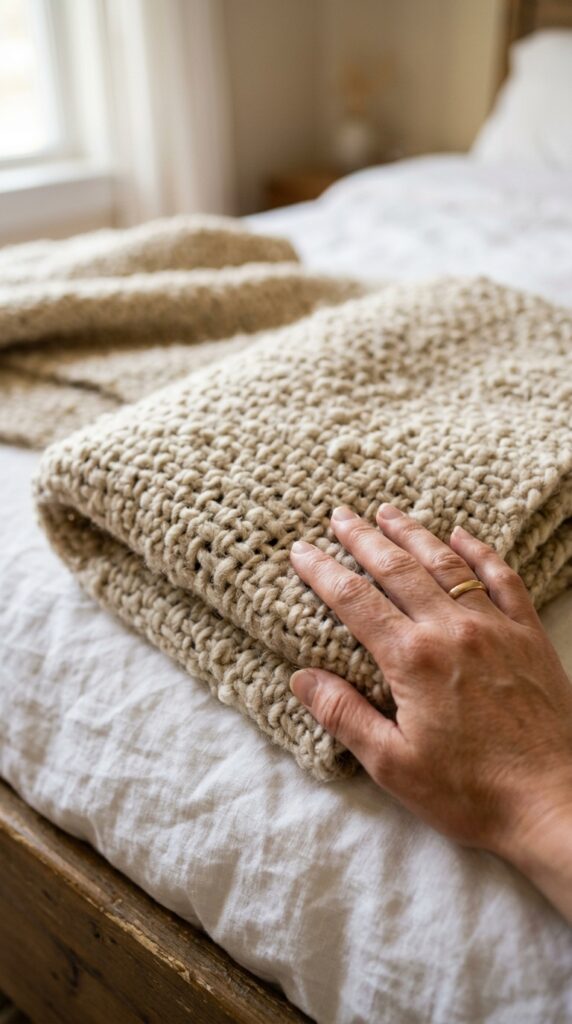
Acrylic blankets trap sweat. Down duvets are too hot for half the year. Cotton is cool but not warm. Wool is the Goldilocks fabric—it breathes, wicks moisture, and stays warm even if it gets damp. But most people remember their grandmother’s scratchy wool army blanket and run. Modern merino or lambswool blankets are soft. I bought a chunky knit wool throw for $80 and it changed my winter sleep. I use it alone in autumn and under a duvet in deep winter.
The catch: wool requires careful washing. Machine wash on cold, delicate cycle, lay flat to dry. Never put it in a dryer unless you want a doll blanket. Also, moths love wool. Store it in a cedar chest or with lavender sachets during summer. Cost: $60–$150 for a decent wool blanket.
Test wool blankets in person before buying if you can. “Superwash” merino is usually soft. “100% virgin wool” with no label is often the itchy kind.
3. The Candle That Isn’t Lying To You
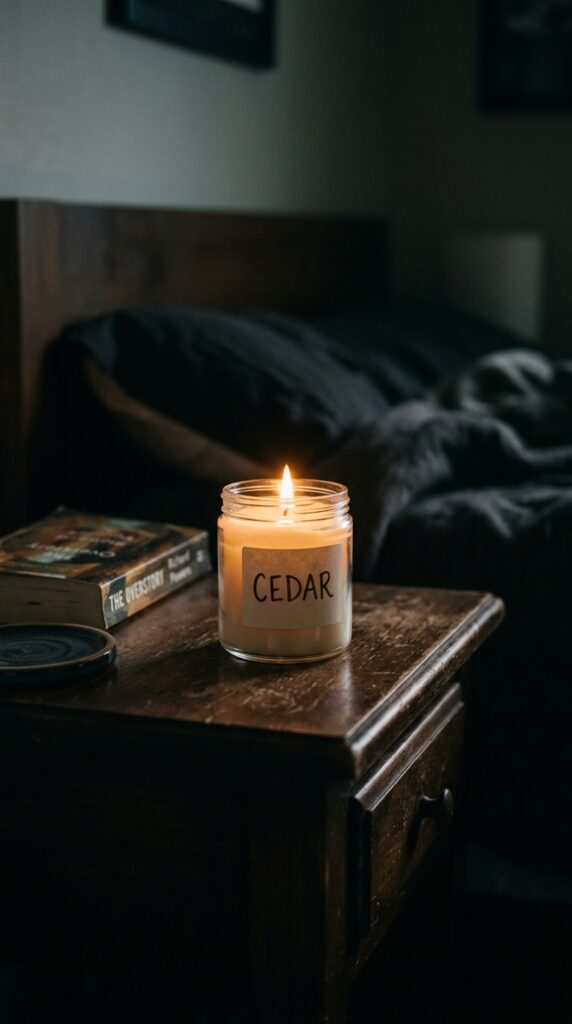
Most candles promise “cozy cabin” and deliver “chemical fireplace.” I stopped buying anything with a name like “Winter Soul” or “Fireside Embrace.” Now I buy single-note candles: cedar, sandalwood, beeswax, or unscented beeswax. The simpler the smell, the less likely it is to trigger a headache. My favorite is a plain beeswax candle that smells faintly of honey and nothing else. It burns longer and cleaner than paraffin.
Never burn a candle for more than four hours. The wax gets too hot and the scent turns bitter. Also, trim the wick to 1/4 inch before each burn, or you’ll get black smoke on your walls. I learned this after a sad streak appeared above my dresser. Cost: beeswax candle $15–$30, wick trimmer $8.
A candle warmer lamp is better than burning if you want scent without smoke. $20 on Amazon. The wax lasts twice as long.
4. The Bed Moved Away From The Wall (Counterintuitive, Try It)
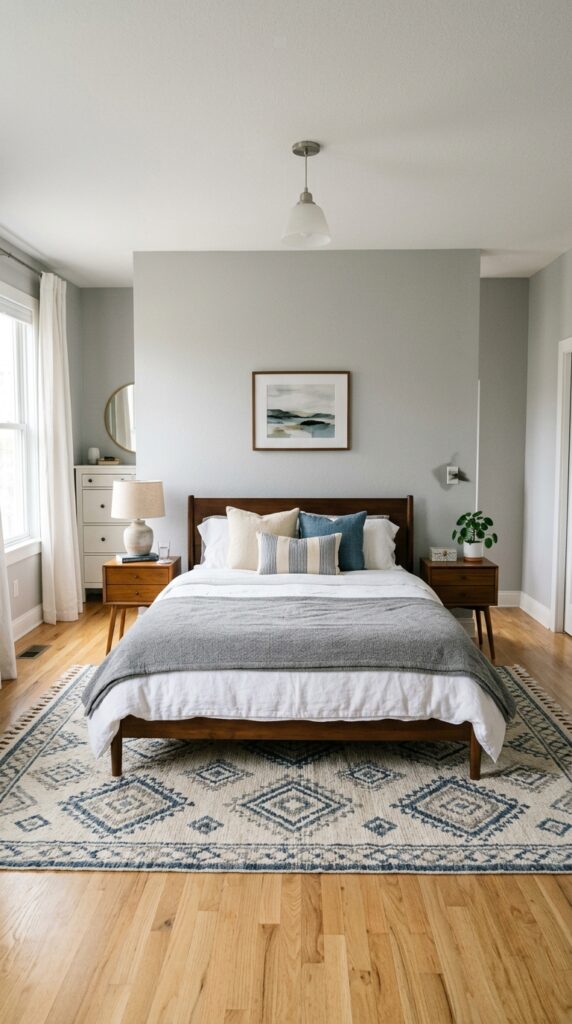
Everyone shoves the bed against the wall to save space. That’s exactly what makes a room feel cramped. I pulled my bed six inches away from the wall—just enough to create a shadow line behind the headboard. The air can circulate. The bed feels like a freestanding object rather than a mattress wedged into a corner. It also makes the room feel deeper because your eye travels behind the bed.
The friction: you lose those six inches of floor space elsewhere. For a very small room, this might not work. But try it for a week. If you hate it, push it back. Cost: free, just some muscles and maybe a rug to cover the new gap behind the bed.
If you pull the bed away, you’ll need to clean behind it. Use a vacuum attachment once a month. The dust bunnies back there are real.
5. The Heavy Curtains That Muffle Sound
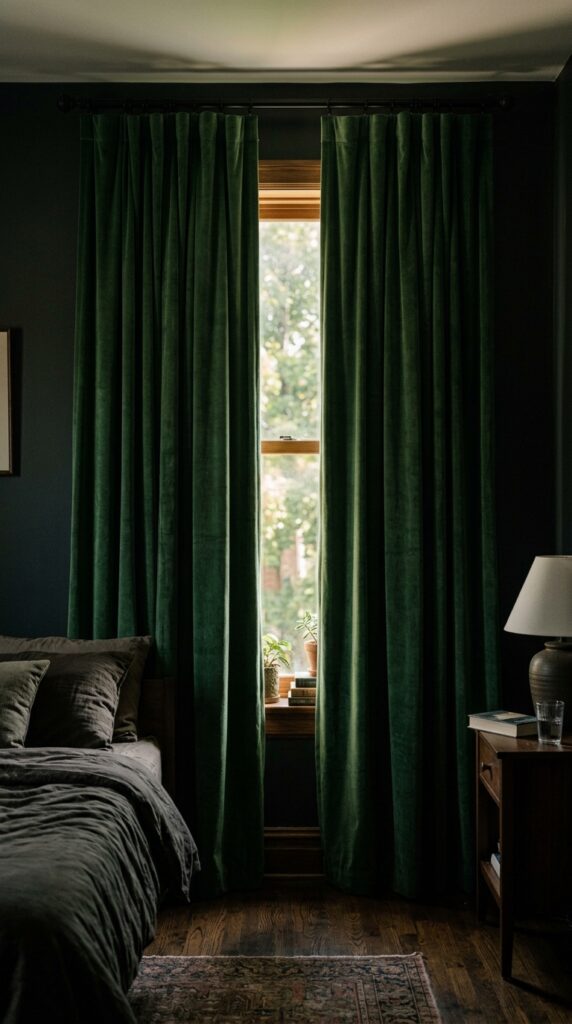
Cozy is partly about sound. Traffic, neighbors, your own refrigerator humming—these kill the sense of retreat. Heavy curtains (velvet, thick cotton, or lined linen) absorb sound like nobody’s business. I installed floor-length velvet panels in a deep olive green. The room got noticeably quieter. Not soundproof—just softer. The difference is most obvious when you close them and the world outside feels half a block farther away.
Heavy curtains are a pain to wash. Dry clean only, or spot clean with a damp cloth. I vacuum mine with the upholstery attachment twice a year. Also, they collect dust. If you have allergies, choose a washable cotton velvet instead of polyester velvet. Cost: $80–$200 per panel for good velvet.
Layer heavy curtains over sheer ones. The sheers diffuse daylight when you want privacy but not darkness. The heavies come out at night.
6. The Rug That Covers The Cold Floor (At Least 8×10)
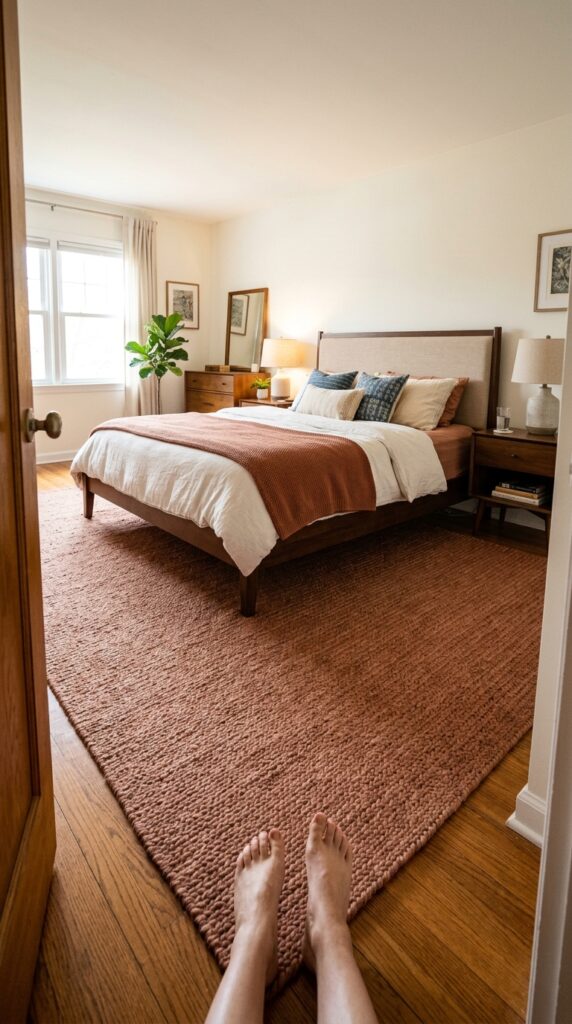
A small rug next to the bed is not enough. You need a rug that goes under the bed and extends at least two feet on all sides. When you get out of bed in the morning, your feet should land on rug, not cold wood or tile. I bought an 8×10 wool rug for my bedroom. It cost $300, which hurt, but it instantly made the room feel 10 degrees warmer. The visual effect also anchors the bed and makes the room feel intentional.
The trade-off: large rugs are hard to clean. Wool is stain-resistant but not stain-proof. I use a rug pad underneath (adds $40) to prevent slipping and add cushion. Vacuum weekly. Spot clean spills immediately with a damp white cloth. Never rub—blot. Cost: $150–$500 depending on material and size.
For rentals, buy a used wool rug from Facebook Marketplace. People sell them for $50 when they move. Steam clean it yourself for $30 at a hardware store rental.
7. The Bookshelf Facing The Bed (Not The Wall)
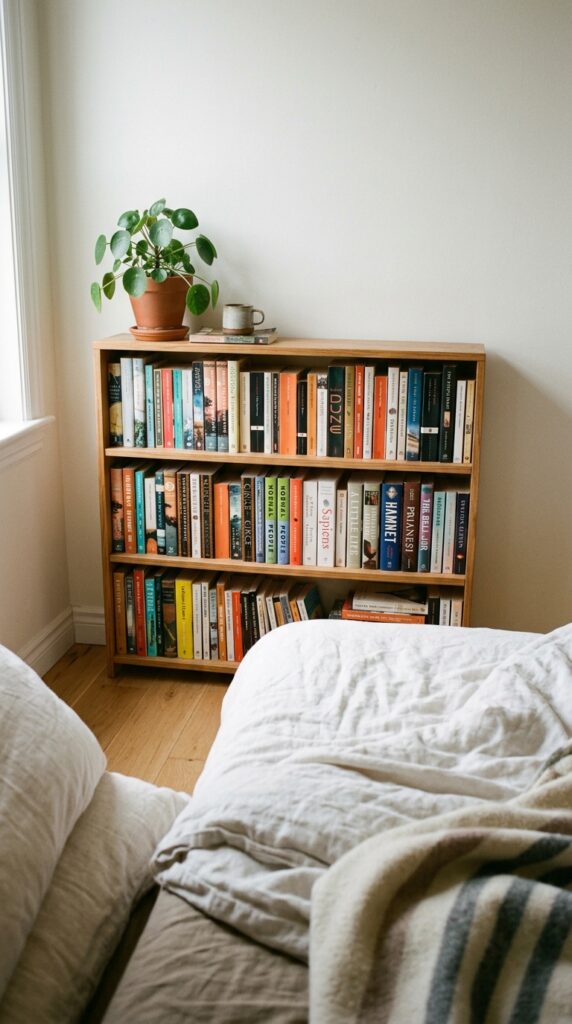
Most people put bookshelves against the wall, spines facing out. That’s fine for storage. But if you place a low, long bookshelf at the foot of the bed, facing the mattress, you create a visual anchor and a sense of enclosure. I use a 48-inch-wide, 30-inch-tall shelf. From the bed, I see the spines. It feels like I’m in a library. The shelf also blocks the view of the door, which makes the bed feel more private.
This only works if your room is wide enough. You need at least three feet between the foot of the bed and the shelf. Also, dust the books regularly—they collect more dust when facing upward. Cost: shelf $60–$150, books from used store $2 each.
Don’t use a tall bookcase. It creates a wall that closes in the room. Keep it below window sill height.
8. The Dark Accent Wall (Behind The Bed Only)
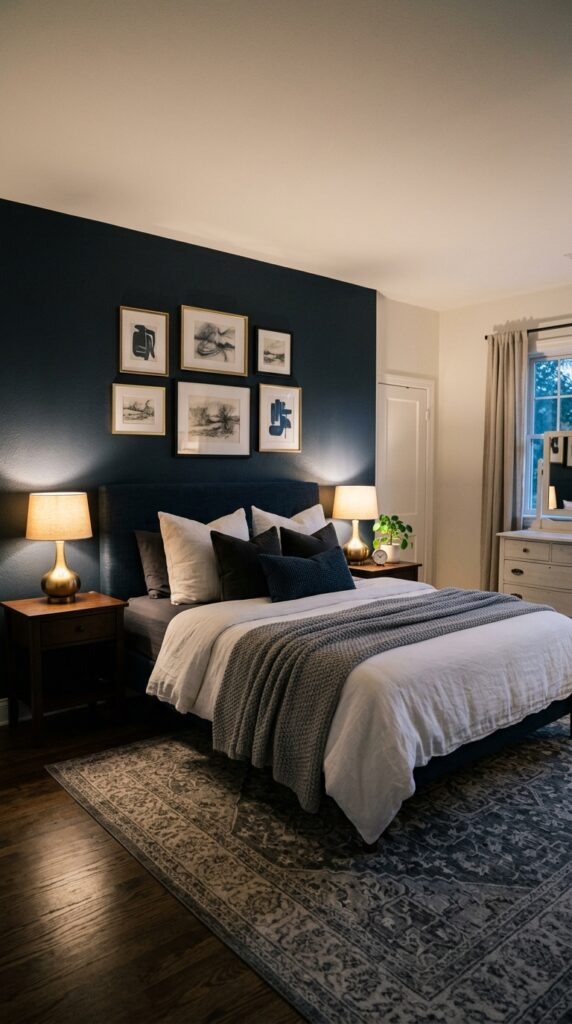
People are afraid of dark paint in bedrooms. They shouldn’t be. A dark wall behind the bed makes the room feel bigger, not smaller, because it pushes the visual weight backward. I painted the wall behind my headboard in Benjamin Moore’s “Hale Navy.” The room instantly felt like a cocoon. The trick is to only paint one wall. Four dark walls is a cave. One dark wall is a focal point.
The constraint: dark paint shows every scuff and dust streak. I use a matte finish, which hides imperfections but can’t be wiped clean easily. Eggshell is better for durability but shows roller marks. Also, dark walls need good lighting. Without a lamp aimed at the wall, the dark just looks black. Cost: one gallon of paint $40–$60, supplies $20.
Test the dark color on a poster board taped to the wall for a week. It looks different in morning, noon, and evening light. I almost painted a wall “midnight” that looked purple at sunset.
9. The Textured Pillow That’s Actually Comfortable
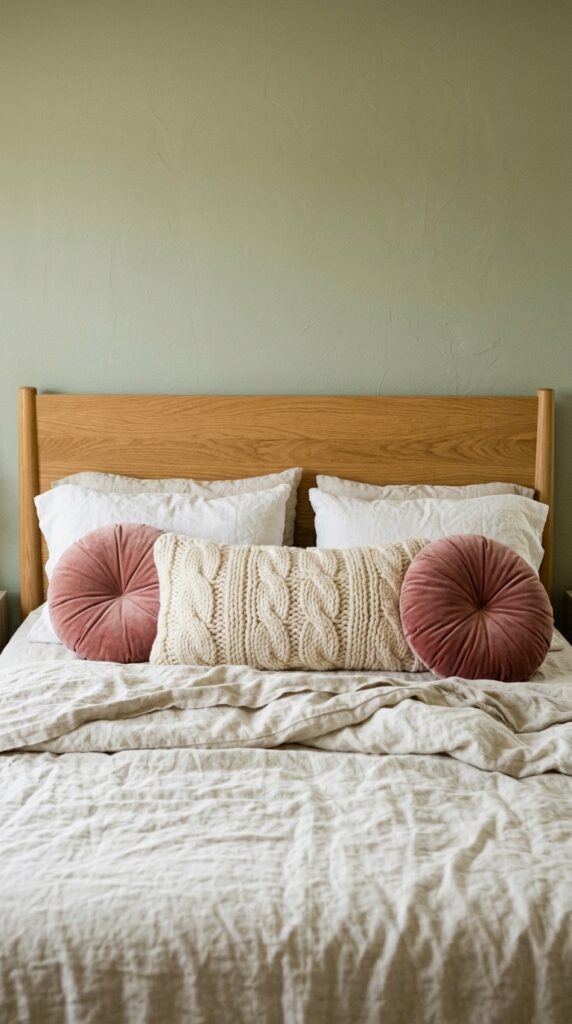
Too many decorative pillows make a bed annoying to sleep in. Too few make it look flat. The sweet spot is three functional pillows (two for sleeping, one for leaning) plus one textured pillow that you actually want to touch. I use a chunky knit cotton pillow that doubles as a backrest for reading. It’s washable. It’s soft. It’s not there to be art—it’s there to be used.
Avoid sequins, beads, or anything that feels like craft supplies. Avoid “velvet” that’s actually polyester and feels like a Halloween costume. Stick with natural fibers: cotton, linen, wool, or actual silk. Cost: $20–$50 per pillow.
Remove all decorative pillows before you sleep. Pile them on the chair. Making the bed in the morning takes 30 seconds. Cozy is for waking hours, not for fighting a pillow in your sleep.
10. The Phone Out Of Bed (Hardest One)
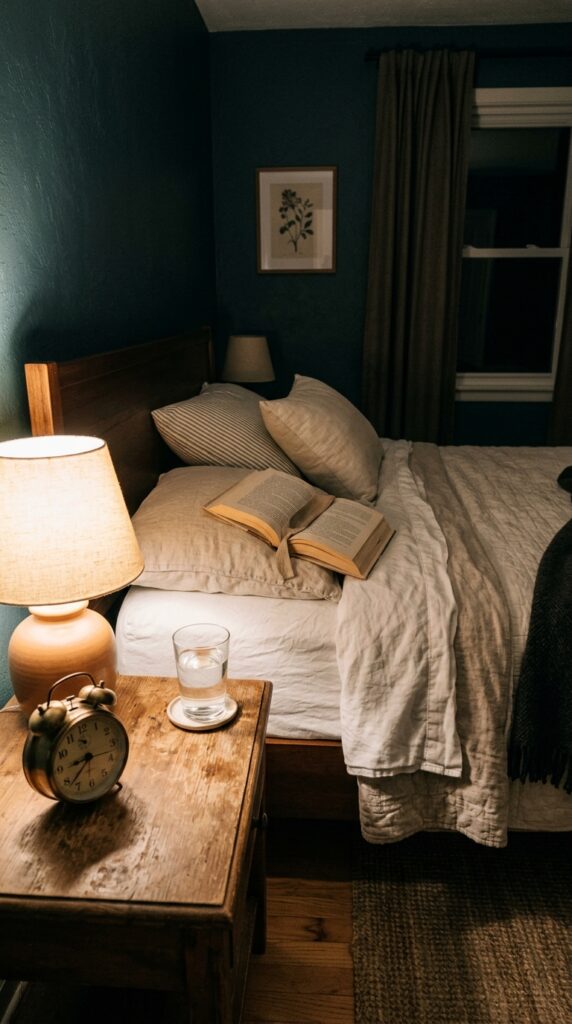
This is the least decorative and most effective cozy tip. Your phone in bed is the opposite of cozy. It’s work emails, doom scrolling, and blue light that tricks your brain into thinking it’s noon. I bought a $15 alarm clock and started charging my phone in the bathroom. Within three nights, I was sleeping better. Within a week, I looked forward to getting into bed because there was nothing to do except read or sleep.
The friction is real. Your phone is your alarm, your podcast machine, your safety blanket. I kept mine in the room for two more weeks because I was anxious. Then I ripped the bandage off. Now I use a sunrise alarm clock that wakes me gently. Cost: alarm clock $15–$40, willpower free but scarce.
If you absolutely need your phone for sleep sounds, put it face-down on the nightstand, enable Do Not Disturb, and set the screen to grayscale. Grayscale kills the dopamine loop.
11. The Warm-Colored Sheets (Not White)
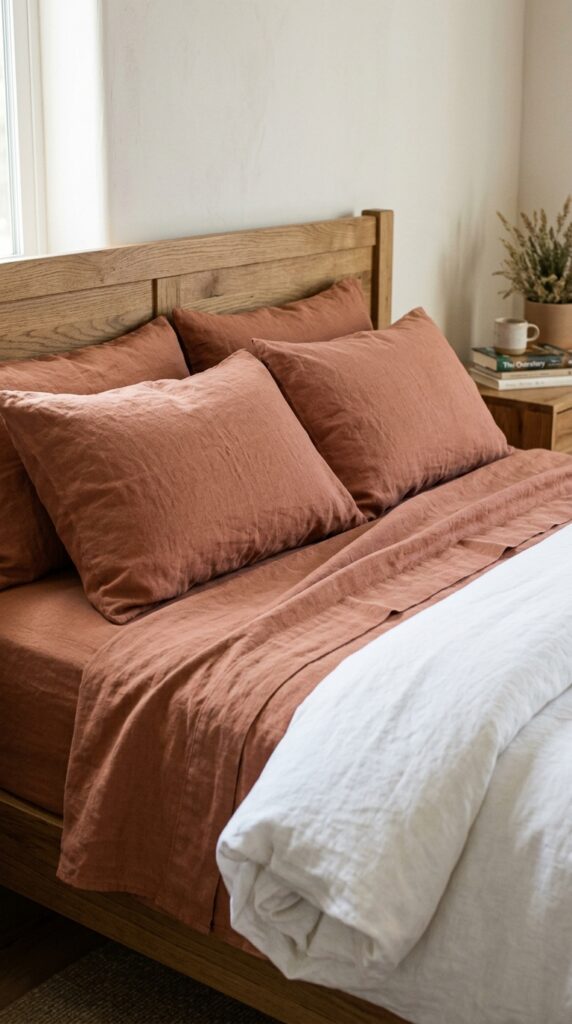
White sheets look crisp in hotels. In a bedroom, they look cold. I switched to sheets in a warm, dusty rose color—think terracotta, ochre, or warm taupe. The room felt five degrees warmer instantly. Color theory is real: warm tones reflect warm light. White reflects blue daylight, which makes a room feel clinical.
But warm-colored sheets show stains more than white. You’ll see every coffee drip and bodily fluid. Use a color-safe bleach alternative and wash in hot water. Also, the color fades over time. My terracotta sheets are now a pale peach after two years. That’s fine—they still look warm. Cost: $40–$100 for a queen set.
Buy two sets of the same color. When one fades unevenly, rotate them. The fading looks intentional if the whole set ages together.
12. The Space Heater With A Thermostat (Not Just A Switch)
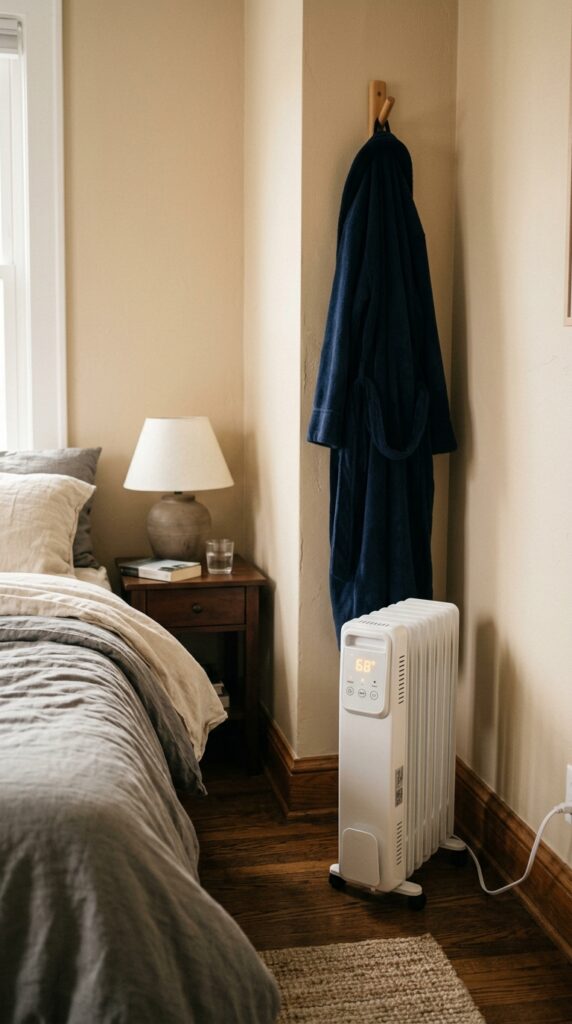
Your central heating is on someone else’s schedule. A space heater with a thermostat gives you control. I use an oil-filled radiator style—no fan, no noise, just gentle radiant heat. It has a dial thermostat that clicks on and off to maintain the temperature. I set it to 66 at night and 68 in the morning. The room stays consistently warm without the dry blast of forced air.
The safety rule: plug it directly into a wall outlet, never a power strip. Keep it three feet from curtains or bedding. And oil-filled radiators take 20 minutes to heat up—they’re not instant. That’s actually good because they hold heat after turning off. Cost: $50–$100 for a good oil-filled radiator.
Put the heater on a smart plug set to turn on 30 minutes before your alarm. You wake up to a warm room without running it all night.
13. The Fairy Lights (Behind Something, Never Bare)
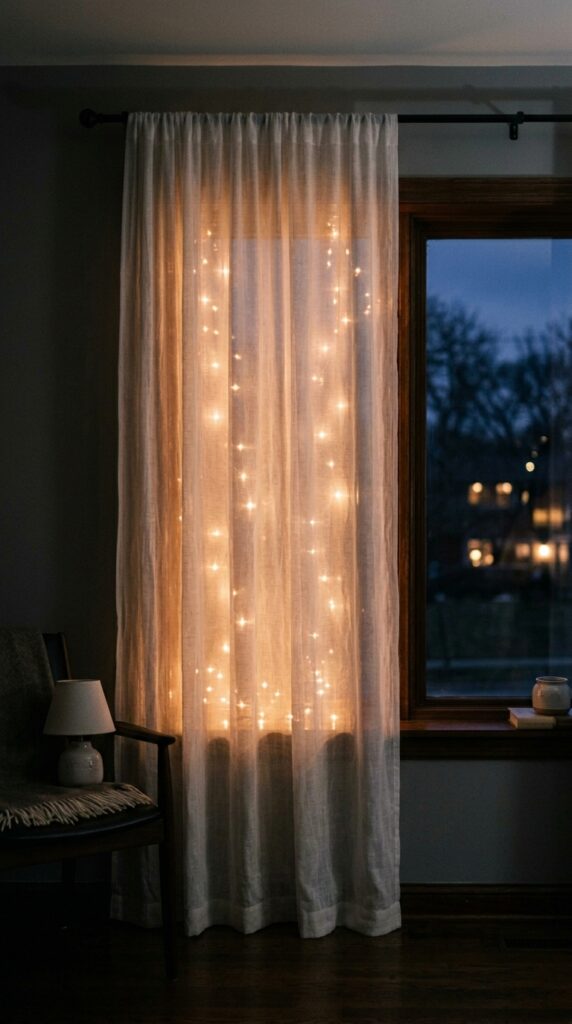
Bare fairy lights strung across a wall look like a freshman dorm. I learned this the hard way. The grown-up version is to hide the lights behind something sheer: a curtain, a piece of frosted acrylic, or inside a glass vase. I strung a strand behind a white linen curtain. The light diffuses through the fabric, creating a soft glow with no visible bulbs. It looks like fireflies behind a screen.
Use warm white (2700K) only. Cool white or colored lights turn your bedroom into a carnival. Also, get lights with a remote control or timer. Crawling behind furniture to unplug them gets old fast. Cost: lights $15–$30, remote $5 extra.
Battery-operated fairy lights on a timer are safer and easier. One set of AAA batteries lasts about 100 hours. No cords across the floor.
14. The One Art Piece That Makes You Breathe
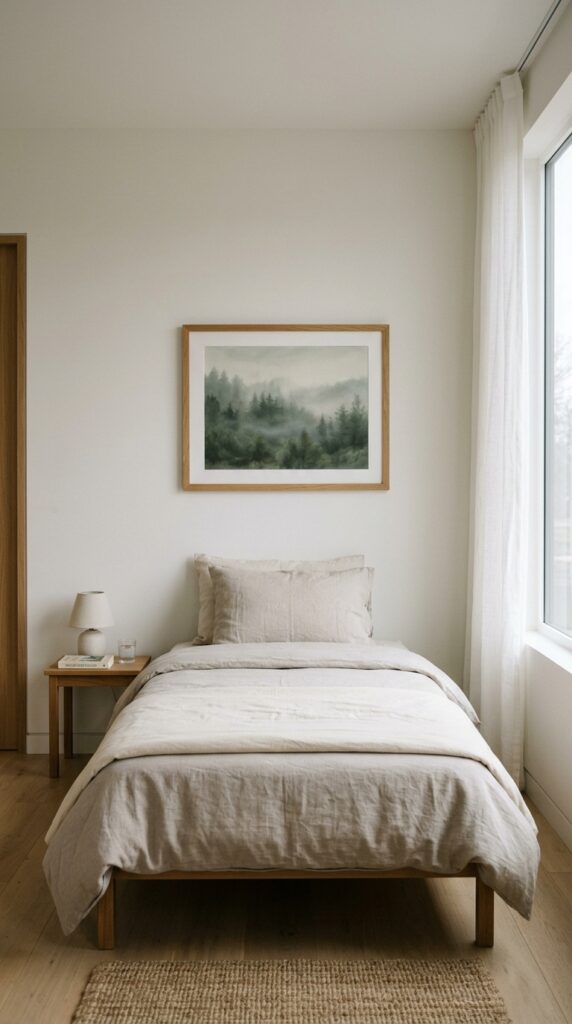
Cozy is not about maximalism. A room with too many art pieces feels busy, not warm. I took down all my gallery walls and hung one large painting that genuinely calms me. It’s a watercolor of a quiet lake at dawn. I look at it before sleep and feel my shoulders drop. The key is to choose art with a low-contrast, muted palette. High-contrast art (bright reds, bold blacks) is stimulating, not relaxing.
Print a photo you took on a calming vacation. Or buy a digital download for $5 and frame it. The frame matters more than the art—a cheap frame ruins the effect. I use a simple wood frame with a mat. Cost: art $5–$50, frame $30–$80.
Hang the art at eye level when you’re sitting in bed. That’s lower than standard gallery height. You want to see it easily from the pillow.
15. The Sound Of Water (Small Fountain)
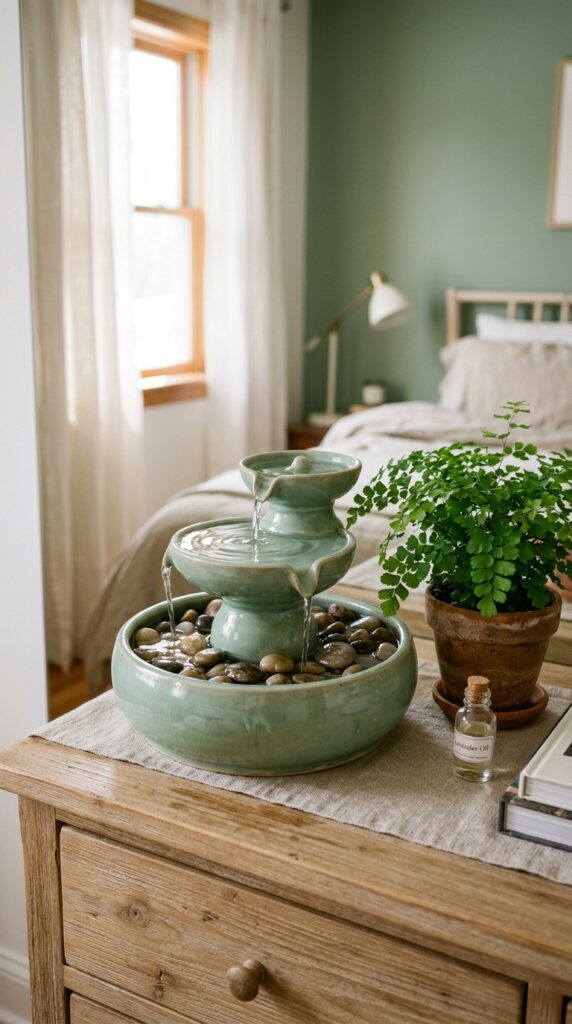
White noise machines are effective but mechanical. A small tabletop fountain makes the sound of actual moving water—gentle trickling, not static hiss. I bought a ceramic fountain for $40. It holds about a quart of water. The sound is so calming that I’ve fallen asleep to it for two years. It also adds humidity to dry winter air, which is a bonus.
The maintenance: you need to refill it every three days (evaporation). Clean it with vinegar and water once a month to prevent algae. If you let the water run out, the pump burns out. I learned this the expensive way. Also, the trickling sound might annoy a partner who likes silence. Test it together. Cost: $30–$80.
Buy a fountain with a submersible pump (the pump sits in the water, not outside). They’re quieter and last longer. Avoid anything with exposed LED lights—they always break.
16. The Window Seat (Or A Pillow Stack)
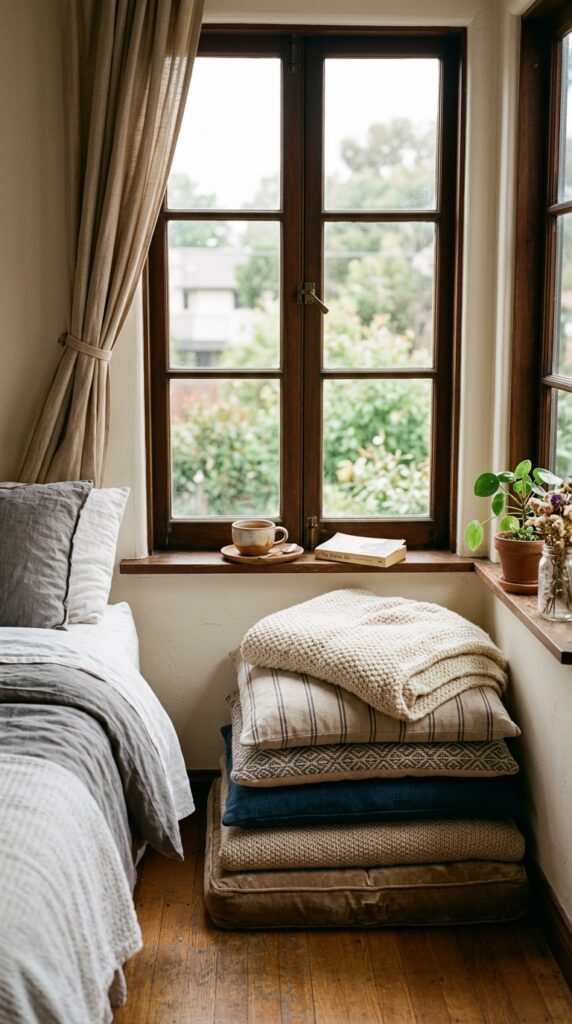
A cozy bedroom needs a place to sit that isn’t the bed. Not for guests—for you, at 3 PM when you want to read in natural light. I don’t have a built-in window seat, so I made one with three floor cushions and a lumbar pillow stacked against the wall under the window. It cost $45. I sit there every morning with coffee. It changed how I use the room.
If you have radiators under the window, skip this—you’ll block heat. Also, floor cushions need fluffing. I beat mine against the wall once a week. Cost: floor cushions $15–$30 each.
Use a yoga mat folded in half under the cushions if you have hard floors. It adds cushioning and stops the cushions from sliding apart.
17. The TV Removed From The Bedroom (Controversial)
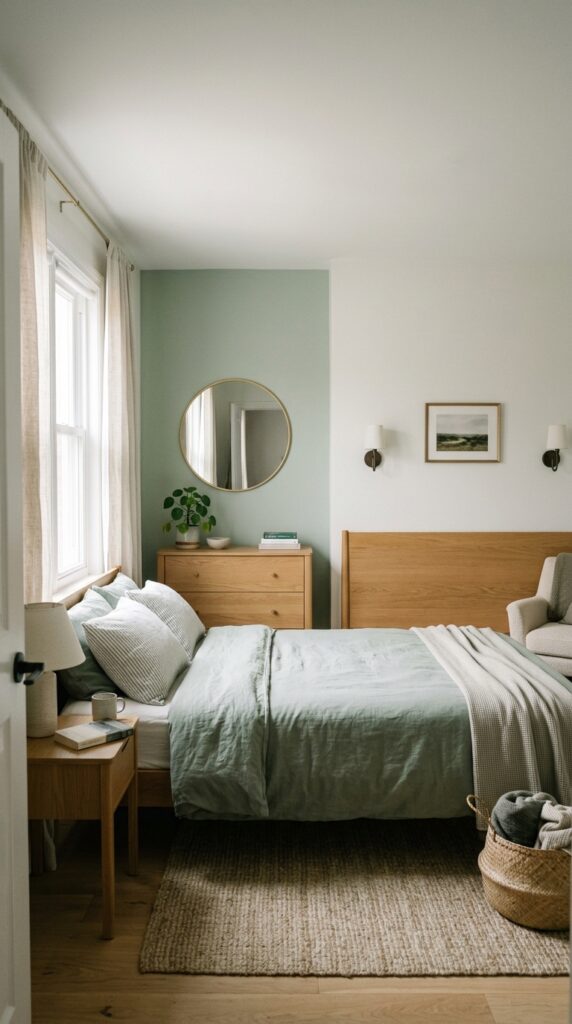
A TV in the bedroom is the enemy of cozy. It’s a blue-light-emitting, content-binge-enabling rectangle that tricks your brain into staying awake. I removed mine three years ago. The first week was hard. I watched shows on my phone (bad). Then I started reading again. Now I fall asleep faster and wake up less often. The bedroom became a place for sleep and sex and reading—not for watching the news at 11 PM.
If you can’t remove it entirely, at least get a TV cover that looks like art. There are canvas covers that slide over the screen. It’s a compromise. Or limit yourself to one show per night, ending an hour before sleep. Cost: free to remove, $50–$150 for a decorative cover.
Put the TV on a smart plug set to turn off at 10 PM. Even if you want to watch, you can’t. The external constraint works better than willpower.
18. The Cedar Blocks For The Closet (Smell And Calm)
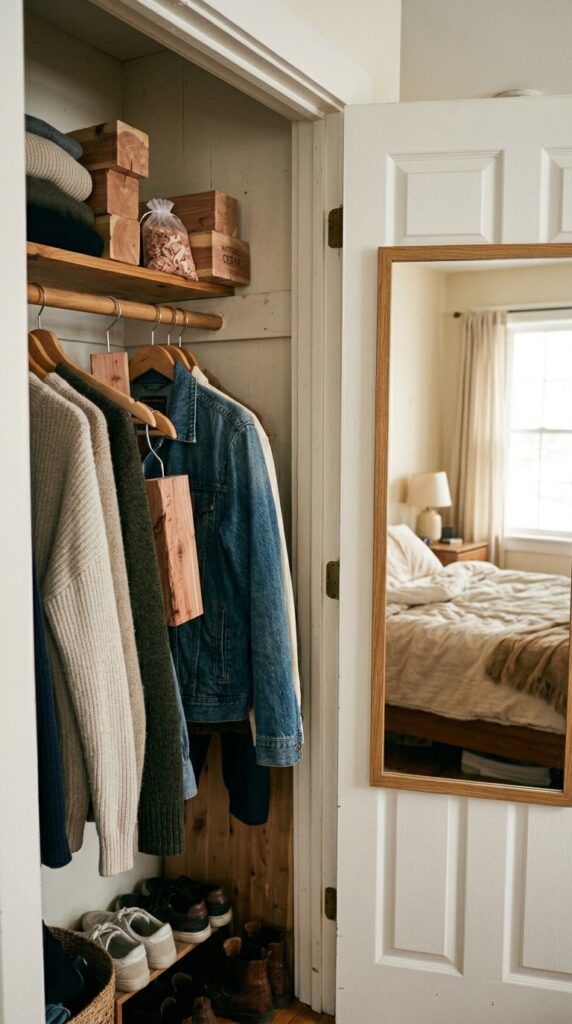
A cozy bedroom includes the closet. If your closet smells like musty clothes or dryer sheets, you smell it every time you open the door. I bought a pack of unfinished cedar blocks ($12 for six) and put them on every shelf and hanging rod. The smell is subtle—woody, warm, slightly sweet. It also repels moths naturally. No chemicals, no headaches.
Cedar loses its scent after about three months. Sand the blocks lightly with sandpaper to refresh them. Or buy cedar oil and reapply. I sand mine twice a year. Cost: $10–$20 for a pack of blocks, sandpaper $5.
Don’t buy cedar chips in a bag. They’re messy and lose scent faster. Solid blocks last years with occasional sanding.
19. The Sleep Mask That Doesn’t Leave Lines
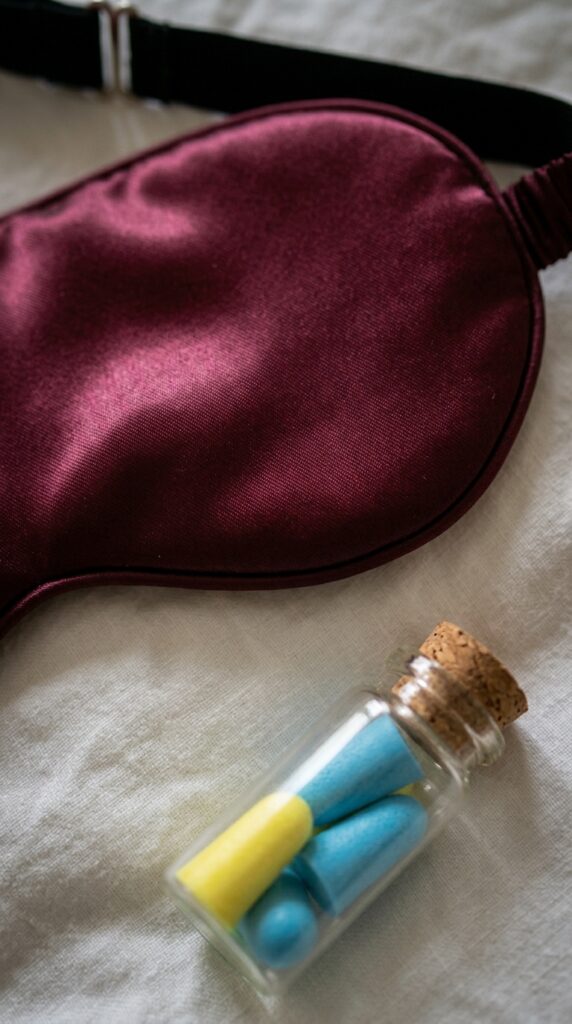
Even with blackout curtains, light leaks in. A good sleep mask is the difference between waking at 5 AM and sleeping until 7. But cheap masks leave red lines on your face and fall off during the night. I spent $25 on a silk mask with a deep eye cup (so your eyelashes don’t touch the fabric). It stays on all night and leaves no marks. The strap is adjustable and doesn’t tangle my hair.
Wash the mask every two weeks. Silk requires hand washing or a delicate bag in the machine. The cheaper satin masks are polyester and made me sweat. Cost: silk mask $20–$40, satin mask $8–$15 but lower quality.
Buy two masks so you have one while the other dries. Also, keep a spare for guests. They’ll feel weird about asking, but they’ll use it.
20. The Warm Floor By The Bed (Rug Or Slippers)
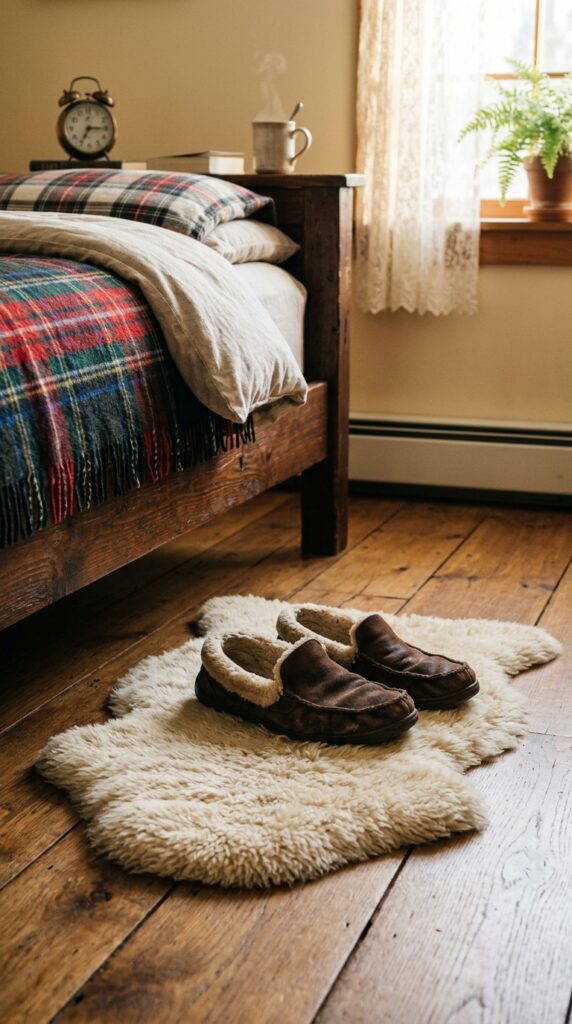
Cold feet in the morning is the opposite of cozy. You need either a rug right where your feet land, or dedicated bedroom slippers. I have both. A small sheepskin rug ($40) lives on my side of the bed. My feet touch something soft and warm before they touch the floor. I also have shearling slippers ($35) for walking to the bathroom. The combination means I never have the “ugh the floor is cold” moment.
The trade-off: sheepskin sheds. I vacuum mine weekly. Also, slippers wear out. My shearling ones got flat after a year. I replaced the insoles for $8 instead of buying new ones. Cost: sheepskin rug $30–$60, slippers $20–$50.
If you have a partner, buy two separate small rugs, one on each side. A single large rug means one person gets cold feet stepping off the edge.
21. The Window Cracked Open (Even In Winter)
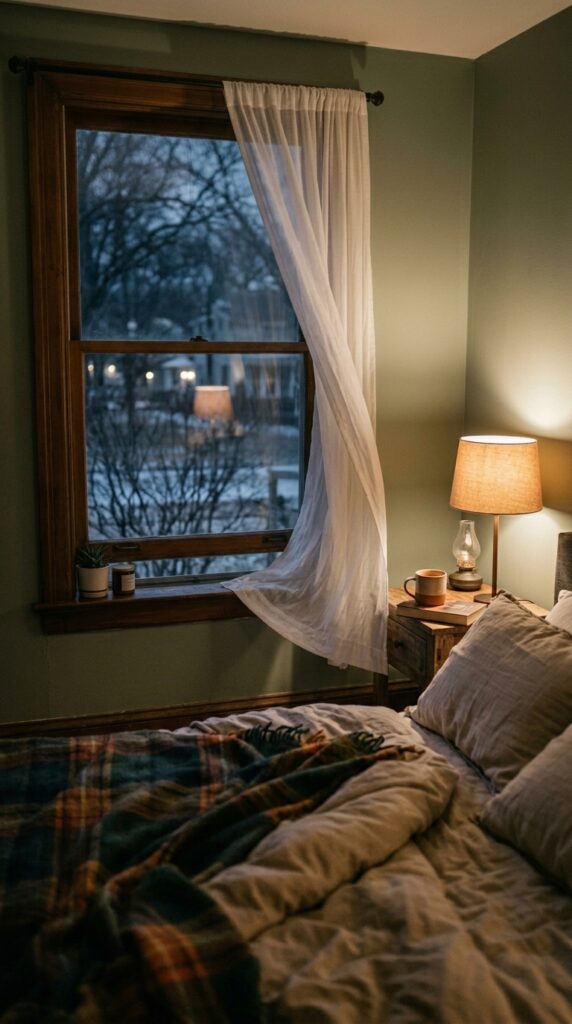
Stuffy air is not cozy. I crack my bedroom window open about an inch every night, even in February. The fresh air lowers the CO2 concentration (which affects sleep quality) and brings in the smell of outside. The room stays warm enough with the heater on, but the air moves. I sleep better. I wake up less groggy.
The risk: noise from outside, pollen, or security. I live on a quiet street, so it’s fine. If you can’t crack a window, get an air purifier with a HEPA filter. It’s not the same, but it helps. Also, open the window wide for ten minutes every morning regardless—that airs out the moisture from your breath. Cost: free.
Use a window lock that allows a one-inch gap. They’re $5 at a hardware store and prevent the window from being opened further from outside.
22. The Upholstered Headboard (Not Wood)
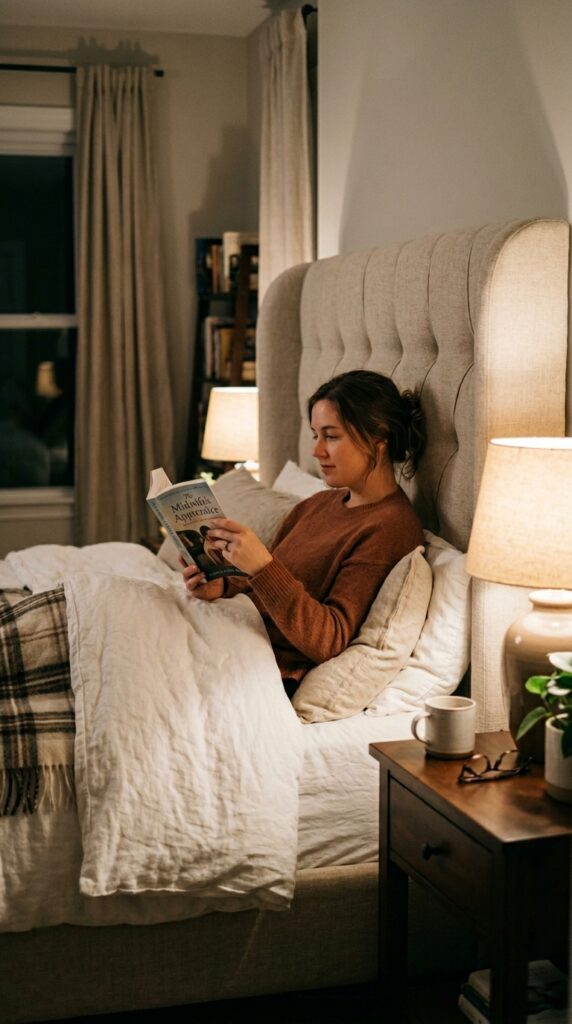
Wood headboards look nice but feel hard. When you want to sit up in bed and read, you need something soft behind your back. I switched from a wooden slatted headboard to an upholstered linen one. The difference is immediate. I can lean for an hour without a pillow behind my head. The fabric also absorbs sound, making the room quieter.
The problem: upholstered headboards stain. I bought a washable slipcover for mine ($30). I take it off every three months and wash it. Without a cover, you’re looking at professional cleaning. Also, cats love to scratch linen. My cat destroyed my first one. Now I have a velvet headboard (less scratchable) with a slipcover. Cost: headboard $150–$400, slipcover $30–$60.
Make your own by attaching foam and fabric to a plywood board. Cost $60. YouTube has tutorials. It’s easier than you think.
23. The Small Clutter Correction (One Surface Clear)
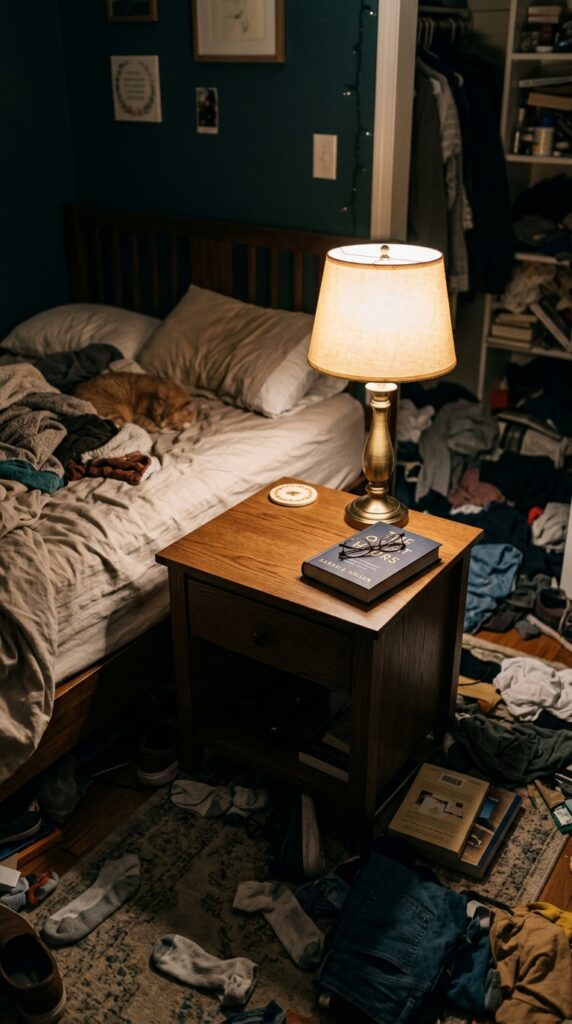
Cozy is not the same as tidy. You can have a pile of laundry on the chair and still feel cozy. But visual clutter near your head—on the nightstand—directly affects your ability to relax. I keep exactly three things on my nightstand: a lamp, the book I’m reading, and a coaster for my water glass. That’s it. No phone, no mail, no random charging cables. When I look over before sleep, my eye rests on nothing.
The constraint: this requires discipline. I have a small basket under the nightstand for things I need to keep in the room but don’t want to see. The basket is messy, but it’s out of sight. Cost: free, or $10 for a basket.
Clear your nightstand every morning while your coffee brews. Takes 30 seconds. Future you will thank you at 11 PM.
24. The Single Plant That Survives Low Light
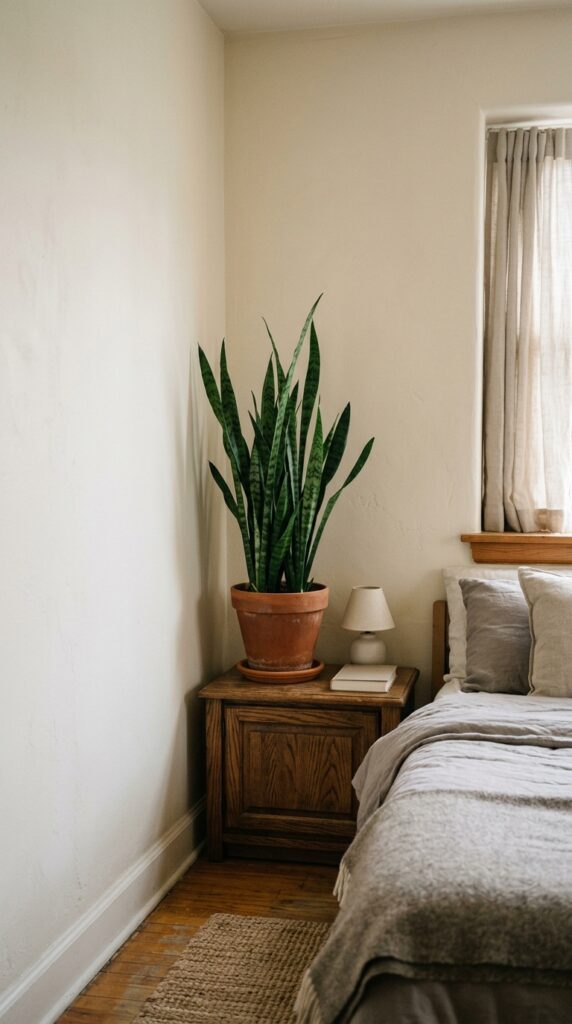
Plants make a room feel alive. But most bedrooms don’t have enough light for ferns or fiddle leaf figs. I killed three “easy” plants before finding the snake plant (sansevieria). It thrives on neglect and low light. I water it once a month. It’s grown two feet tall. The green vertical lines add life without demanding attention. One plant is enough. More than three and you’ve got a jungle.
Other low-light options: ZZ plant, pothos, or cast iron plant. Avoid succulents—they stretch and die in low light. Also, avoid fake plants. They collect dust and look dead in a different way. Cost: snake plant $15–$30, pot $10–$20.
Wipe the leaves with a damp cloth once a month. Dust blocks light and makes the plant look sad. Also, it’s oddly meditative.
25. The Evening Ritual (Not The Decor)

All the decor in the world won’t make a room cozy if you don’t have a ritual that signals “now I am resting.” My ritual is simple: at 9 PM, I turn off the overhead lights, turn on the bedside lamp, make a cup of herbal tea, and read for an hour. No screens. No work. The room becomes cozy because of what I do in it, not because of the throw pillows. Find your version. It could be stretching, journaling, or listening to an audiobook.
The room supports the ritual, not the other way around. So start with the ritual. Then add the soft lighting, the warm blanket, the plant. Cost: free, plus the cost of tea.
Set an alarm on your phone labeled “cozy time.” When it goes off, you stop what you’re doing and begin the ritual. External cues work better than internal will.
Quick Windup
The core decision of a cozy bedroom is choosing between accumulation and subtraction. Most people try to add their way to coziness—more pillows, more candles, more textures. But the rooms that actually feel warm are the ones that have removed the friction: the overhead light, the phone, the clutter on the nightstand, the cold floor by the bed. Cozy is not a shopping list. It’s a set of conditions you remove.
If you do one thing from this list, start with the lights. Put every lamp on a dimmer and stop using the overhead fixture. That single change will shift the entire mood of the room within seconds. Then add the ritual—the tea, the book, the window cracked open. The decor comes last.
A cozy bedroom does not judge you for having a messy closet or a pile of laundry. It just holds you gently while you sleep. That’s the whole point. Now go dim your lights.