Flower bed borders don’t have to drain your savings to look intentional. I’ve watched neighbors spend a small fortune on powder-coated metal edging only to rip it out three summers later because the rust bled into their mulch or the lines felt too sterile against their cottage-style plantings. Rocks, on the other hand, age beautifully. They settle, they weather, they pick up moss in the shaded spots and bleach softly in full sun. The trick is knowing which rocks to use, how to arrange them, and where to source them without paying landscape-supply markup. Whether you’re working with a tight backyard in a rental, a sprawling country garden, or a narrow strip along a city sidewalk, there’s a rock border style here that’ll work for you. None of these require special tools, contractor quotes, or a weekend of backbreaking labor. Just a wheelbarrow, decent gloves, and a little patience.
1. The Classic River Rock Single Row
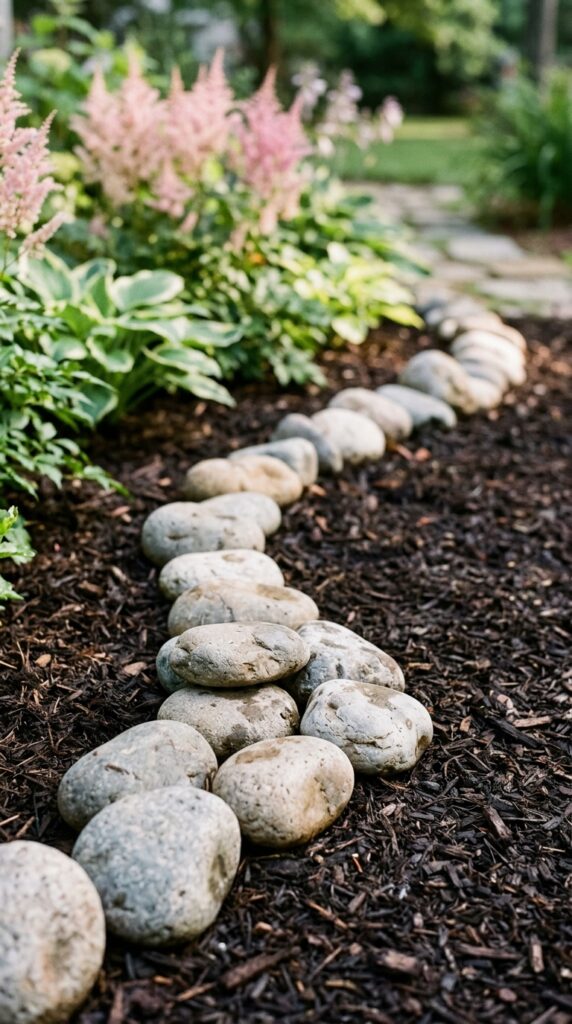
This is the gateway border for anyone nervous about overcommitting. A single row of smooth river rocks reads clean without screaming “landscaped.” Source your stones from a local quarry or even a creek bed (check local rules first—some areas require permits). Aim for fist-sized pieces in a tight color family, not a rainbow mix, which tends to look chaotic. Lay them with a slight offset rather than perfectly straight, because nature doesn’t draw with a ruler. Dig a shallow trench about two inches deep so the rocks sit partially embedded, otherwise they’ll roll into your lawn the first time you mow. One thing to watch: skip this if you have aggressive groundcovers like creeping Jenny, which will swallow the rocks within a season. Quietly elegant, low effort, and timeless.
2. Stacked Fieldstone for a Cottage Feel

If you want your border to feel like it’s been there for decades, stack rather than line. Fieldstones—those flat-ish, irregular rocks you’d find tumbling out of an old farm wall—are perfect for a low dry-stack border, maybe six to ten inches high. Look for them at demolition sites, on Facebook Marketplace under “free,” or from farmers clearing fields. The trick is varying the stone sizes and tucking smaller pieces into the gaps so the wall reads solid even when it isn’t mortared. Lean each course slightly back toward the bed for stability. Skip this if your soil heaves badly in winter, because freeze-thaw cycles will shift unmortared stone. But in milder climates? It ages like good leather. Cottage charm without a cottage budget.
3. White Marble Chip Edging
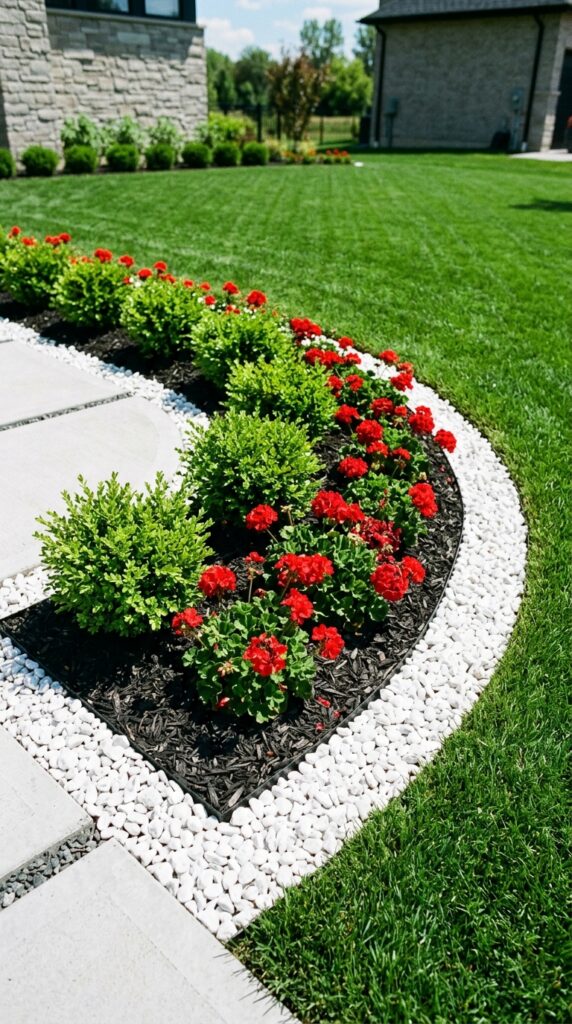
White marble chips give you that crisp, almost architectural look for surprisingly little money—usually under twenty dollars a bag at most garden centers. They work especially well in front yards where you want definition that pops against dark mulch or rich green lawn. Spread them in a band about four to six inches wide along the bed’s edge, ideally over landscape fabric to keep weeds from threading through. Here’s the trick: contain them with a thin metal or recycled rubber edge strip, otherwise they migrate everywhere, especially after heavy rain. One thing to watch: marble can yellow over time in areas with lots of oak or maple leaves, since tannins stain. If your beds are under heavy tree cover, choose a different stone. Otherwise, it’s a sharp, low-fuss choice that makes plants look styled.
4. Pea Gravel Strip with Steel Edge

Pea gravel walks the line between casual and architectural, and pairing it with a thin steel edge takes it from “garden path leftover” to genuinely designed. The gravel itself runs about eight to twelve dollars per bag and covers more ground than you’d expect. Steel edging—if you buy raw, untreated strips and let them weather—develops a beautiful patina that reads modern-rustic. Lay landscape fabric under the gravel to prevent weeds, and pour it about an inch and a half deep, no more, or it gets sloppy underfoot. This works best for renters who want a designed look without permanence, since the whole setup pulls up cleanly. Skip it if you walk barefoot through your beds, because pea gravel and bare feet are not friends. Sharp, modern, and quietly upscale on a beer budget.
5. Mixed Cobblestone Mosaic
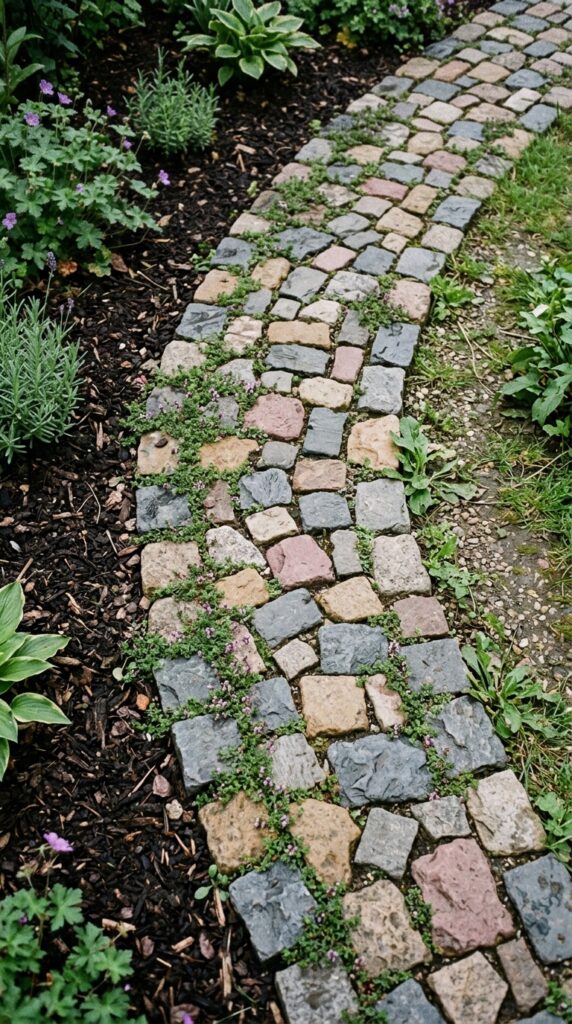
This one rewards patience but costs almost nothing if you’ve got access to a rocky property or a friend with a stone pile. Think of it as a horizontal mosaic—you’re fitting cobblestones together puzzle-style to create a wider band that feels intentional rather than tossed. Sort your stones by rough size first, then dry-fit before setting them into a shallow sand bed. Pack sand or stonecrust between the pieces to lock them in. The variation in color and shape is what gives it personality, so resist the urge to make everything uniform. One thing to watch: this style isn’t friendly to lawnmowers, so plan for hand-trimming along the edge. Pair it with sprawling herbs like thyme or oregano for that storybook garden feel. Worth every minute.
6. Painted River Rock Accent Row
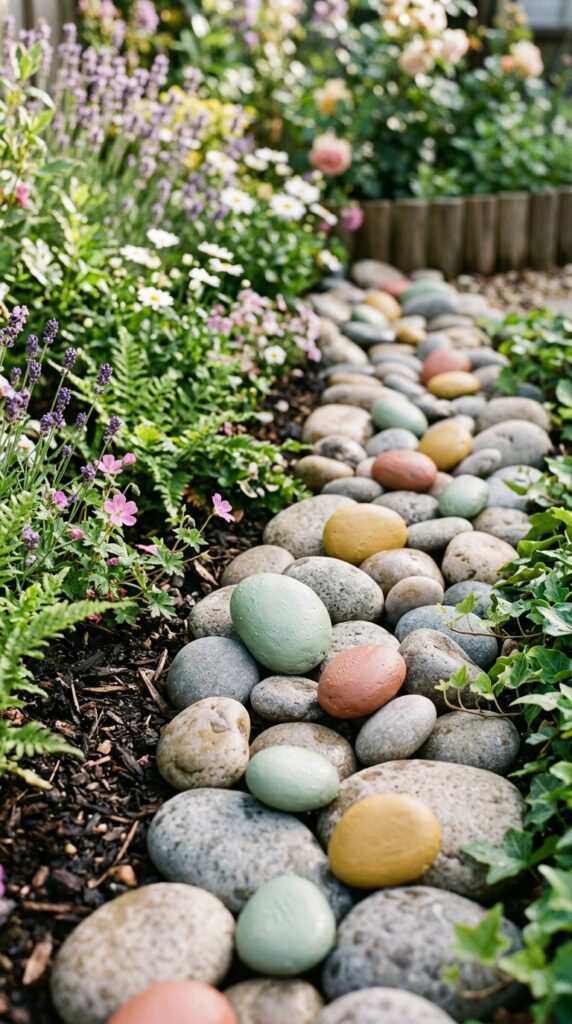
Hear me out before you picture tacky ladybug rocks. Done with restraint, painted accent stones add personality without screaming kindergarten craft project. The key is a tight, muted palette—think dusty sage, faded ochre, or chalky terracotta—not primary colors. Use exterior matte paint, not glossy, and apply a clear matte sealer so the color holds up through weather. For every painted stone, lay six to ten naturals around it, so the accents whisper rather than shout. This is especially fun for a kids’ garden or a reading nook border where personality matters more than formality. Skip this if your aesthetic leans strictly traditional or minimalist—it will read fussy. But for boho, eclectic, or cottage-style yards, it adds the kind of detail that makes guests stop and smile.
7. Tumbled Slate Shards
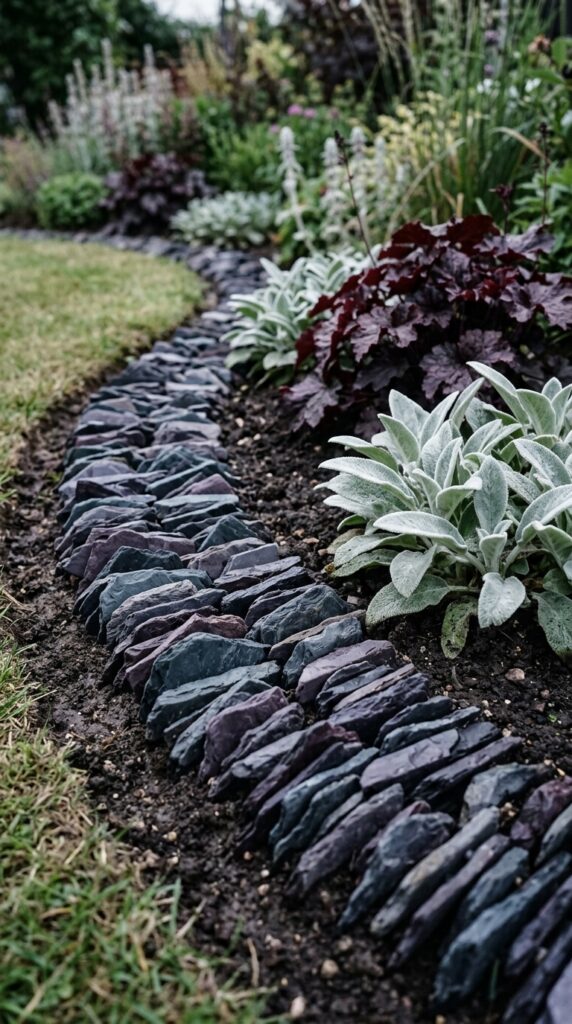
Slate has this incredible ability to make even a basic flower bed look intentional and slightly mysterious. The dark, almost violet tones of tumbled slate shards bring out the colors of silver and burgundy foliage in a way other stones just can’t. Set the pieces vertically rather than flat, pressing them into the soil so about two-thirds of each piece shows. This gives you a textured, almost scaled-fence effect that’s surprisingly architectural. Source from a stone yard’s “broken pile” or leftover roofing slate from a builder—often nearly free. One thing to watch: slate can be sharp, so wear thick gloves and keep this border away from high-traffic kid zones. Pair it with cool-toned plants for full effect. Moody, modern, and unexpectedly elegant for the price.
8. Beach Pebble Border with Driftwood Anchors
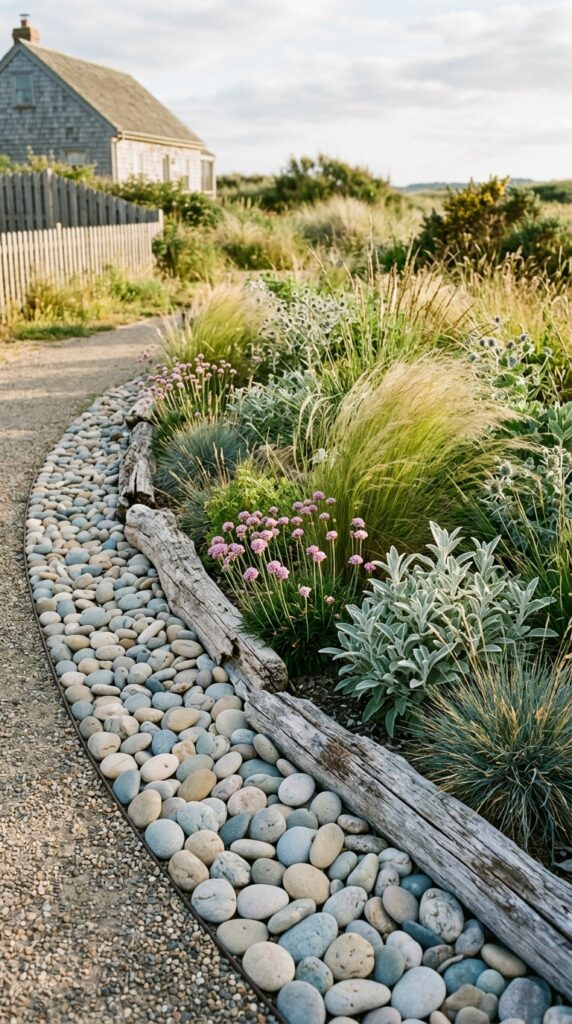
If your garden style leans coastal, breezy, or just intentionally relaxed, this one’s magic. Smooth beach pebbles in pale, sun-bleached tones create a soft, almost foamy border, and adding a few weathered driftwood pieces as horizontal anchors gives it structure without rigidity. Source pebbles from a landscape yard (don’t take them from public beaches—it’s often illegal) and pick up driftwood from coastal trips, river walks, or even local arborists who’ll often give away interesting wood for free. Arrange the driftwood at irregular intervals, almost like punctuation marks. Skip this if you want something formal or symmetrical, because the whole point is gentle imperfection. Best paired with airy, wispy plantings like grasses, sedum, and sea lavender. Effortless, coastal, and quietly poetic without trying too hard.
9. Lava Rock Statement Border
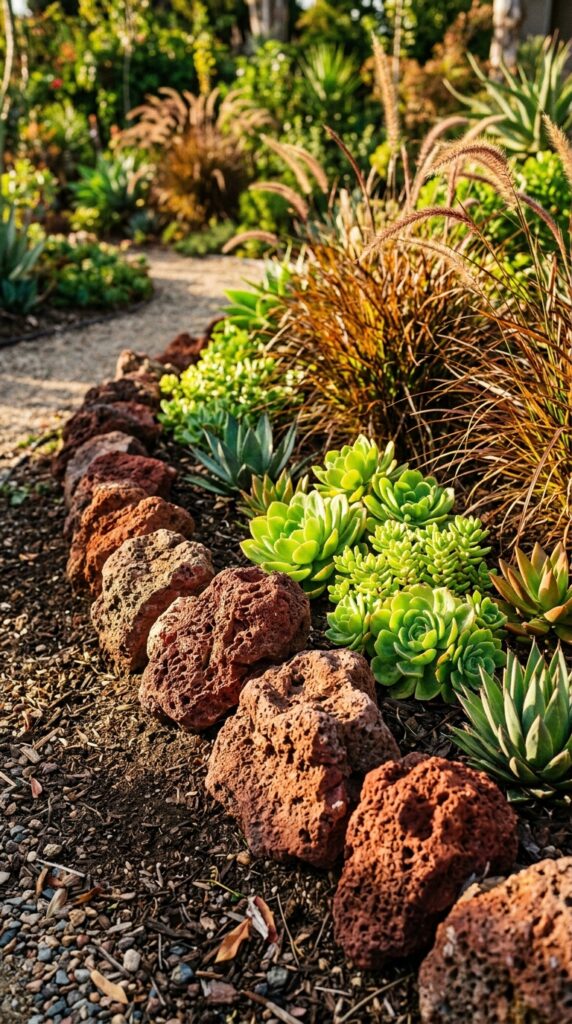
Lava rock is the rebel of the rock world. Its deep rust and brick-red tones bring serious warmth and texture that no other stone can match, and a single bag costs almost nothing. It works beautifully with desert-style, xeriscape, or modern southwestern plantings—think agave, sedum, ornamental grasses. Lay it about two inches deep over landscape fabric, since lava rock is porous and won’t compact like gravel. Here’s the trick: keep the border narrow, maybe four to five inches wide, because lava rock in large fields can feel overwhelming and aggressively colored. One thing to watch: the rocks can fade slightly over many years of UV exposure, and they’re tough on bare feet and lawnmower blades. But for sheer impact per dollar? Hard to beat. Bold, warm, and unapologetically textural.
10. Layered Two-Tone Border
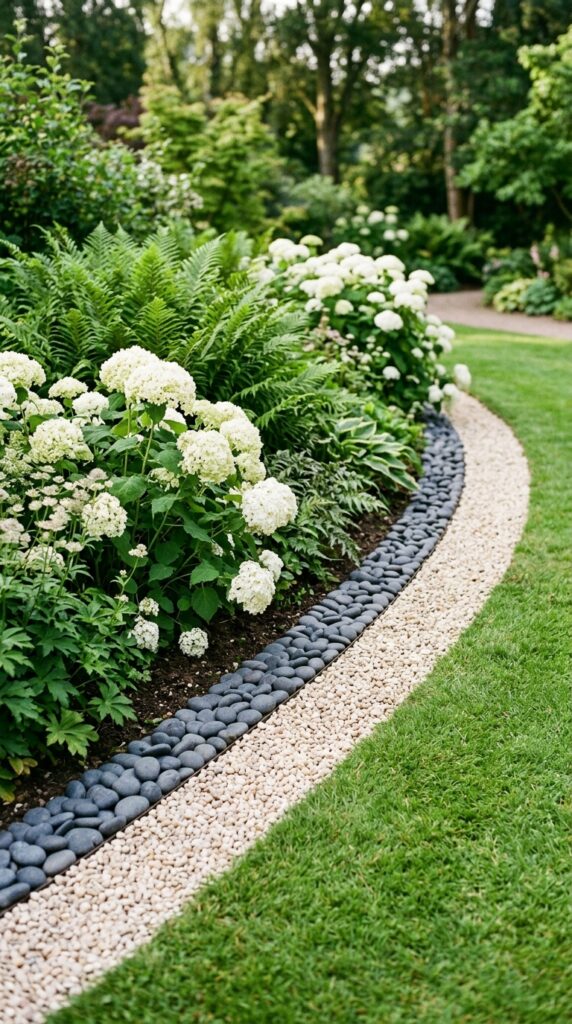
Two stone types, two textures, one cohesive border—this trick instantly makes a flower bed look professionally designed. Pair a darker, larger stone (like charcoal river rock) on the inside edge with a lighter, finer material (cream pea gravel, crushed limestone) on the outside, or vice versa. The contrast does all the work. Keep each band fairly narrow, about three to five inches, so the proportions stay tight. Use a hidden edge strip between them to prevent the materials from mixing over time, which ruins the whole effect. Skip this if your bed is heavily curved or irregular, since the layered look reads best on gentle, sweeping lines. Best for front yards or formal back garden zones where you want polish. Subtle, sophisticated, and quietly expensive-looking for a fraction of what it should cost.
11. Mossy Rock Border for Shade Gardens
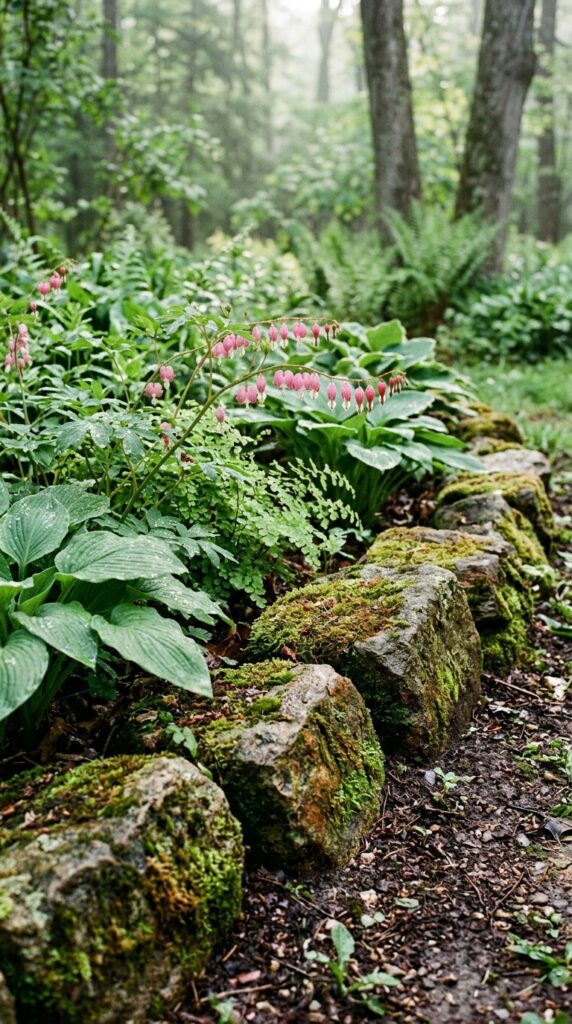
For shaded beds where sun-loving stones look out of place, mossy fieldstones are the answer. The trick is encouraging the moss rather than fighting it—and if your rocks don’t have moss yet, you can speed things up with a buttermilk-and-moss slurry painted onto the stones in damp shade. Use larger rocks here, maybe head-sized or bigger, placed in irregular clusters rather than a tight line. This mimics how rocks actually appear in woodland settings: scattered, settled, partly buried. Pair with ferns, hostas, hellebores, and anything that thrives in low light. One thing to watch: this style only works in genuinely shaded, humid beds. In full sun, the moss dies and you’re left with dry, lonely-looking boulders. But in the right spot? Pure forest-floor magic.
12. Recycled Brick and Rock Combo
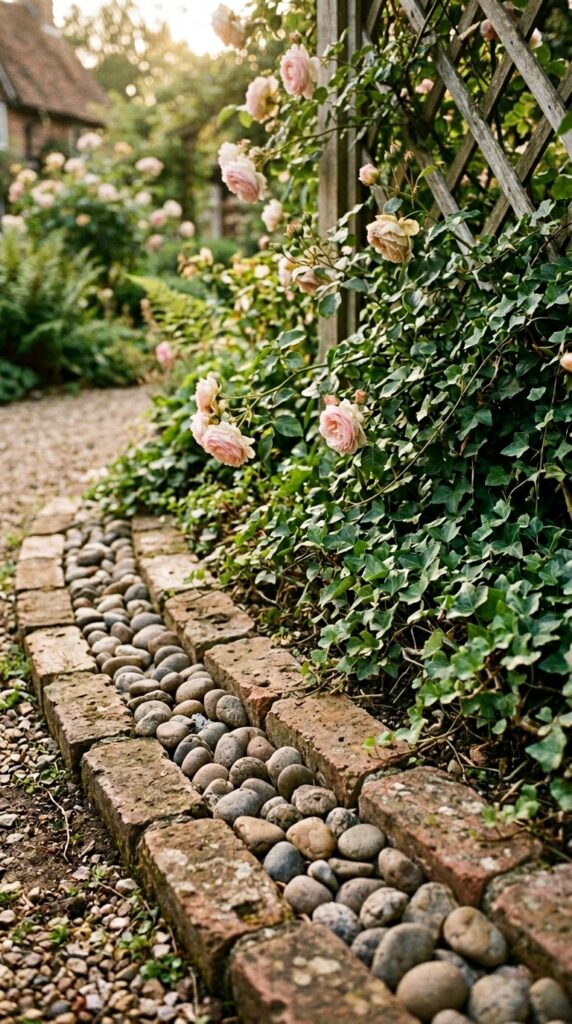
Don’t sleep on the magic of combining materials, especially when one of them is salvaged. Reclaimed brick paired with small river rocks gives you the structure of a hard edge with the softness of natural stone—and the whole thing costs almost nothing if you score the bricks from a demo site or local “free” pile. Lay the bricks end-to-end, slightly tilted into the soil for stability, then tuck small rocks into any gaps and along the front edge as a finishing touch. The mixed materials read collected and intentional, not pieced-together. This works especially well in older homes or cottage-style gardens where matchy-matchy materials would feel out of place. Skip this if your home is sharply modern. But for character-rich properties? It’s the kind of detail that makes a garden feel like it has stories.
Final Thoughts
A good rock border isn’t about spending money—it’s about paying attention. The difference between a flower bed that looks thrown together and one that looks designed often comes down to choices most people overlook: stone size consistency, color palette restraint, the slight offset of a row, the willingness to dig a trench instead of just dumping rocks on bare soil. Every idea here can be done in a weekend, mostly with materials you can source for free or for the price of a couple of takeout meals. The goal is borders that feel like they belong to your garden, not like they were imported from a catalog. Whether you ended up drawn to the moody slate, the cottage fieldstones, or the bright marble chips, the best border is the one that fits your space, your climate, and the way you actually live with your garden. Save this article, come back when you’re ready to dig in, and remember—we cover smart, budget-friendly home and garden ideas like this every week. Happy bordering.