
There’s something deeply calming about the desert. Maybe it’s the uncluttered landscape, the honest palette of ochre and sand and slate, or the way afternoon light hits exposed rock at an angle that makes everything look like ancient architecture. If you live in a dry climate—or simply love the visual language of the desert—bringing those principles into your home can transform it into something that feels grounded and intentional. Desert rock landscaping, when translated thoughtfully, isn’t about creating a barren space. It’s about curating warmth, texture, and restraint in equal measure. The desert teaches us that beauty doesn’t require excess; it requires intention. Whether you’re working with a small urban apartment or a sprawling property in a hot, arid region, these twelve ideas give you a real framework for creating spaces that feel both modern and deeply rooted in the landscape around them. Let’s get into it.
1. Desert Rock Color Palettes for Indoor Walls
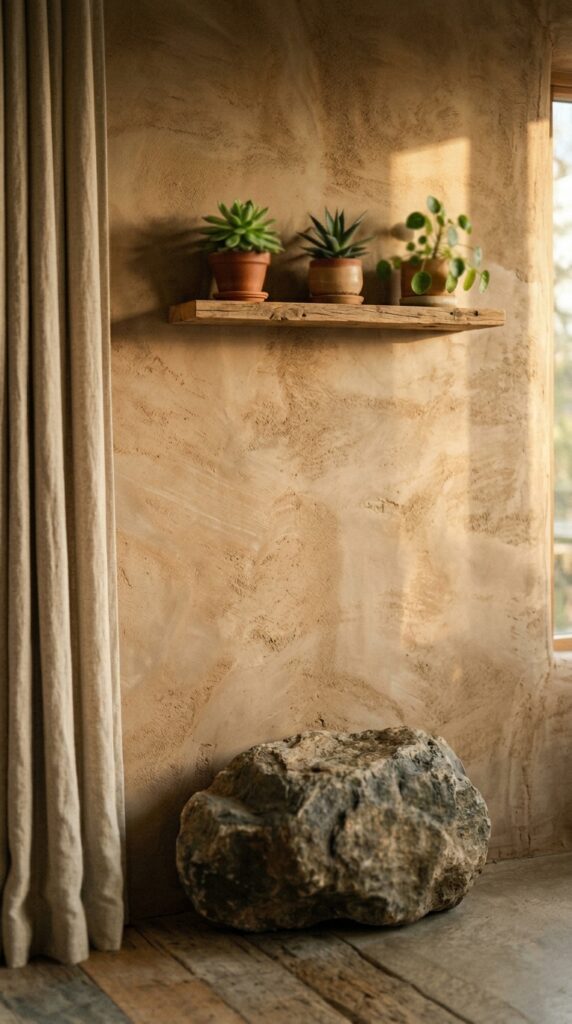
The first move is always color. Walk into a desert landscape and you’re not seeing primaries—you’re seeing a conversation between earth tones, warm neutrals, and unexpected pops of deep plum or rust. Start by choosing your base: warm caramel, soft taupe, or pale ochre works beautifully as a primary wall color. These aren’t beige in the corporate, sad-office sense; they’re nuanced, slightly complex hues that shift depending on the light. The trick is avoiding anything too yellow or too gray. Look for undertones of rust, clay, or umber. Pair this with a deeper accent tone—burnt sienna, dusty terracotta, or warm charcoal—on one wall, not as a dramatic statement wall but as a grounding element. If painting feels like a big commitment, a textured plaster finish in these tones adds dimension and mimics natural stone in a way flat paint simply cannot. One caveat: these warm neutrals can feel heavy in north-facing rooms. Counterbalance with plenty of natural light and lighter textiles, or you’ll end up with a space that feels more cave than desert.
2. Stone and Rock Accent Features Indoors

This is where desert landscaping philosophy becomes interior design. Source large, interesting rocks or boulders—these don’t have to be expensive geological specimens. Many garden supply stores carry beautiful pieces, or you can work with a local stone supplier to curate a collection that speaks to your space. Position them as focal points: beside a bed, anchoring a living room corner, or flanking an entryway. The key is restraint. Three to five significant stones arranged with intentional negative space around them feels considered; a cluttered pile reads as a quirky hobby, not a design statement. Group by tone—all warm grays with a single deep charcoal—or by texture, mixing smooth river rocks with rougher volcanic stone for contrast. One practical note: these pieces are heavy. Make sure your flooring can handle the weight, and plan placement before committing. The payoff, though, is genuine. A well-placed stone feature conveys thought and intention at a fraction of what most statement furniture costs.
3. Natural Material Furniture and Textiles
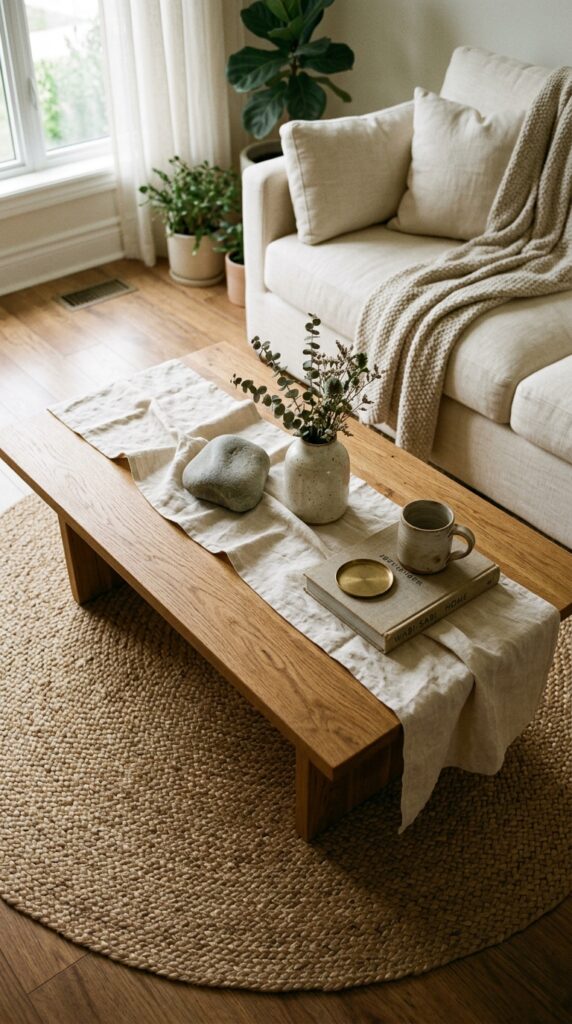
Furniture should whisper, not shout. Choose pieces in natural materials that echo desert geology: warm oak or light walnut tables, linen upholstery in cream or soft taupe, jute rugs with visible weave. A low-profile wooden bench with clean lines feels more desert-inspired than anything with ornate legs or high-gloss lacquer. Textiles are your opportunity to layer warmth and texture without color chaos. Mix linen, raw cotton, and wool in complementary neutral tones—a chunky knit throw in cream over a taupe sofa, a jute rug layered with a finer flat-weave runner in pale sand. These combinations feel intentional and grounded. Avoid anything overly polished; the desert aesthetic prefers matte, natural finishes across every surface. Here’s an honest word: light-colored natural fiber rugs require real maintenance. They’re worth it if you’re committed to the look, but skip them if you share the space with kids or pets and hate cleaning. Opt for darker tone natural fibers instead—they carry the same tactile quality without the anxiety.
4. Sculptural Rock Arrangements as Decor
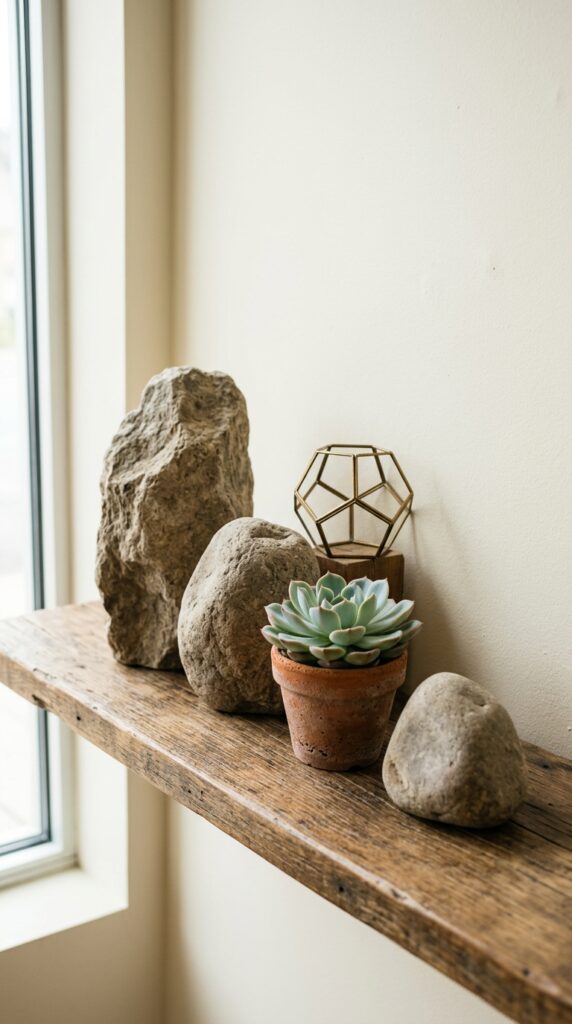
Think like a curator. Rocks are decor, full stop. Find three to five pieces that genuinely interest you—smooth river stones, pieces with interesting striations, or rocks in warm grays and taupes that pick up the colors in your walls. Arrange them on shelves or a console table with real intention. The rule of odds applies: groups of three or five feel more dynamic than symmetrical pairs. Space them out; don’t crowd them. Pair rocks with ceramics in neutral tones, small brass or iron sculptures, or a single potted succulent. The goal is visual interest without tipping into clutter. This approach works particularly well in bedrooms, where the calming effect of natural arrangements can feel almost meditative. In entryways, a curated rock collection signals taste and intention from the moment someone walks in. One practical consideration: rough-textured stones gather dust faster than smooth ones. If you’re not someone who dusts regularly, lean toward smoother, more refined specimens that wipe clean easily.
5. Arid Plant Styling with Rock Elements
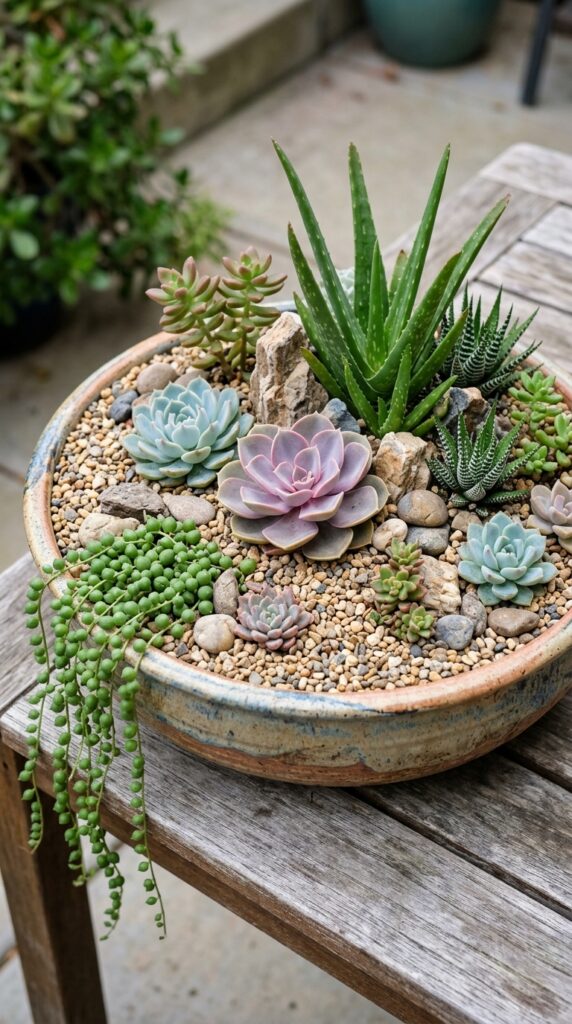
If you’re bringing the desert indoors, desert plants belong in the room. But don’t just plop a single succulent in a mass-market pot and call it a day. Create miniature landscape compositions instead. Use a shallow ceramic vessel, fill the base with a layer of fine gravel in warm gray or tan tones, then arrange small succulents—echeveria, sedum, aloe—asymmetrically among small rocks. This mimics actual desert landscaping and creates real visual depth. Mix plant heights and textures: a tall columnar cactus beside trailing string of pearls and chunky rosette echeveria creates rhythm that a single species arrangement never achieves. Choose planters in matte ceramic, terracotta, or concrete; glossy finishes undermine the whole aesthetic. Group these arrangements in clusters of three—on a windowsill, a console table, or a floating shelf. Real talk: succulents need bright light. Put them in your brightest windows. If you have a north-facing apartment, skip the cacti and choose arid-tolerant alternatives like snake plants or ZZ plants, which have the same sculptural quality and actually thrive in lower light.
6. Textured Wall Treatments Inspired by Desert Geology
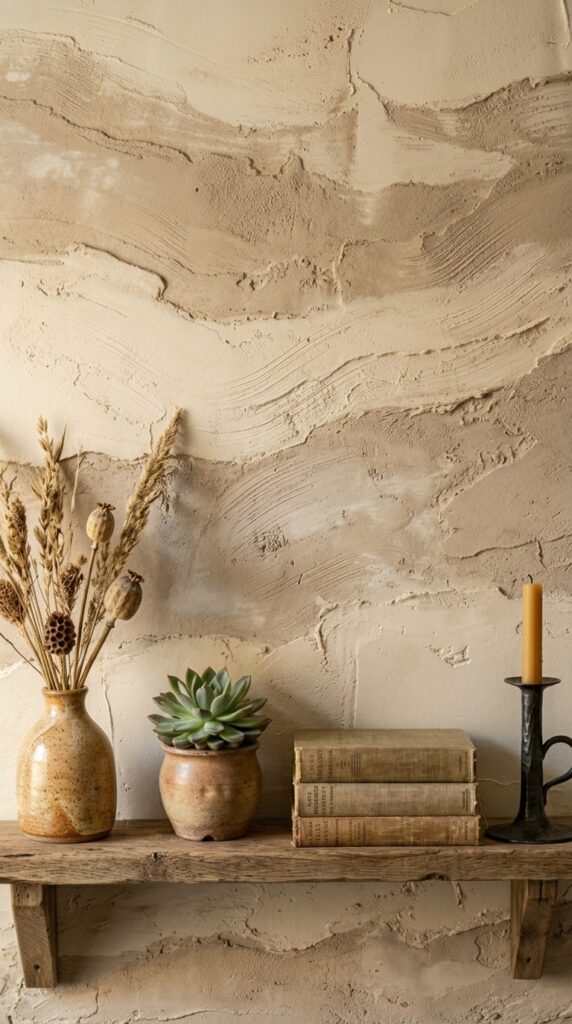
Flat paint is functional, but textured walls feel architectural. Venetian plaster, limewash, or troweled plaster finishes evoke natural stone without being literal about it. You’re aiming for depth—where light and shadow play across the surface throughout the day. A warm cream base with slightly darker tones brushed or troweled on creates the effect of geological layering, and the process is genuinely forgiving because imperfection reads as authenticity. The wall looks alive; it shifts subtly depending on the angle of light. For renters or the DIY-averse, peel-and-stick textured wallpaper now comes in convincing stone-like finishes. It won’t have the real depth of plaster, but it’s a valid option for getting the look without permanent commitment. One warning worth taking seriously: textured walls are significantly harder to paint over later and can collect dust in crevices. Choose smooth-textured plaster finishes for rooms that see a lot of cooking activity, and save the dramatically rough stone effects for bedrooms and living rooms where they’re easier to maintain.
7. Desert-Inspired Outdoor-Indoor Flooring Continuity
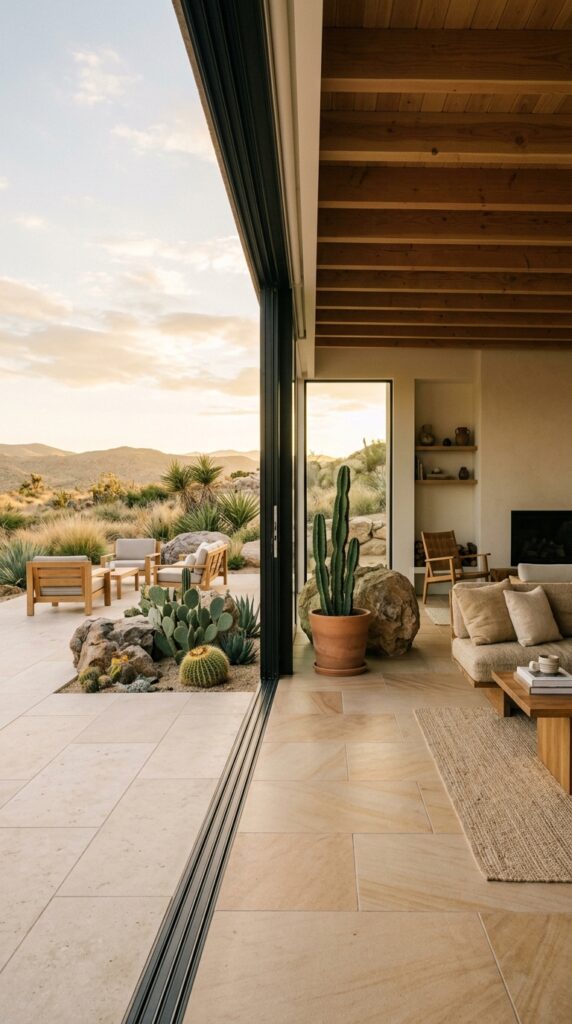
One of the most powerful things you can do in a dry-climate home is blur the line between inside and outside. Use large-format tiles or stone slabs in warm sandstone, travertine, or pale limestone that carry through from your interior flooring to your exterior patio or terrace. When the visual language is continuous, the home feels exponentially larger. This works especially well with glass sliding panels or bifold doors that disappear when open. Choose a matte finish on the stone rather than polished—polished floors look beautiful in photos but feel cold and clinical underfoot in real life, and they show every scuff and smudge. Large-format tiles—ideally 60x60cm or bigger—reduce grout lines and create that seamless landscape feel. If natural stone is outside the budget, high-quality porcelain tiles in stone-look finishes have become genuinely impressive and are far more durable and water-resistant. Just make sure the indoor and outdoor tiles are from the same collection so the tonal match is exact.
8. Rock Garden Principles Brought Into Entryways
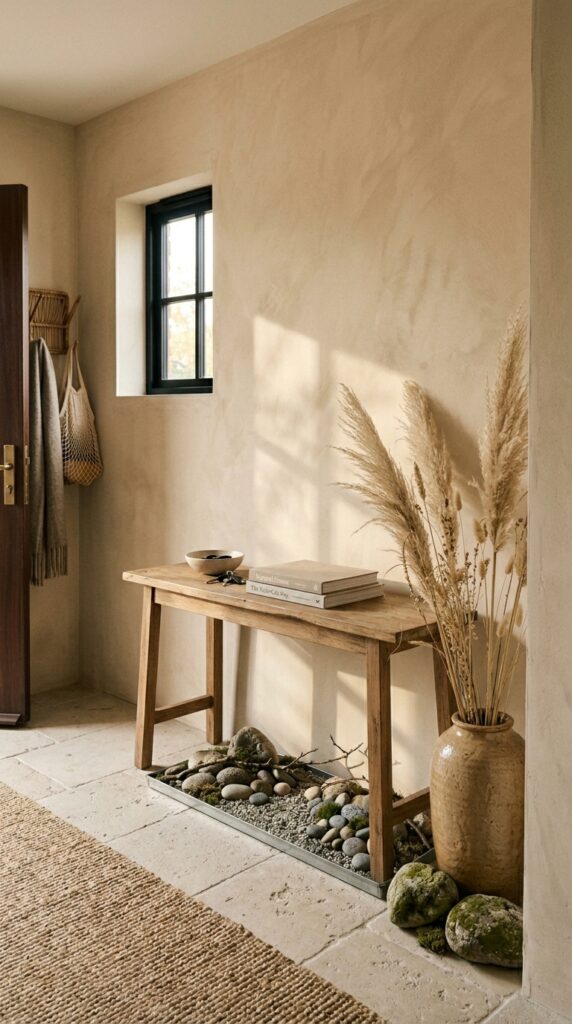
The entryway sets the tone for the entire home, and yet most people treat it as an afterthought. A desert rock approach here is both distinctive and functional. A low console table in warm oak or natural walnut, a limewash wall behind it in pale terracotta or warm cream, and below the table: a shallow tray or flat-bottomed dish filled with a layer of fine gravel and a few carefully chosen stones. It sounds simple because it is. The magic is in the proportions and the restraint. Add a single tall vessel—ceramic, raw clay, or unfinished terracotta—holding dried desert grasses or bleached driftwood branches. Nothing more. This kind of entryway styling takes about twenty minutes to assemble and creates a genuinely memorable first impression. If you share the entryway with other people and it tends to get cluttered fast, keep a designated basket for shoes and bags so the styled surface can stay intact. The rock arrangement grounds the whole entry even when the rest of the space is chaotic.
9. Dry Creek Bed Landscaping for Outdoor Spaces
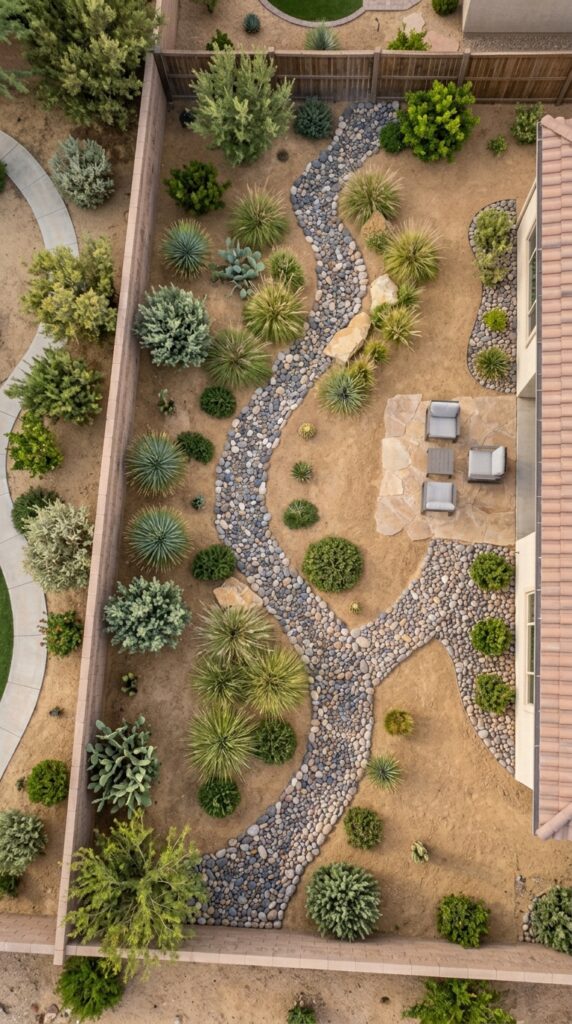
A dry creek bed is one of the most functional and visually compelling things you can introduce into an arid outdoor landscape. In dry climates, it solves a real problem—directing occasional stormwater runoff—while creating a dramatic naturalistic feature year-round. The key to making it look designed rather than accidental is in the stone selection and placement. Use two or three sizes of river rock: large anchor boulders placed occasionally along the edges, mid-size stones forming the main channel body, and finer gravel filling the gaps. The creek should curve gently, never in a perfectly straight line. Plant ornamental grasses—blue fescue, Mexican feather grass, or desert muhly—at intervals along the banks, and add low-growing desert shrubs like salvia or brittlebush for seasonal color. Edge the surrounding area in decomposed granite rather than bark mulch, which breaks down fast in heat and looks ragged by summer’s end. One consideration: if dogs have access to your yard, they will inevitably redistribute your carefully placed rocks. Plan accordingly.
10. Boulder Placement as Outdoor Focal Points
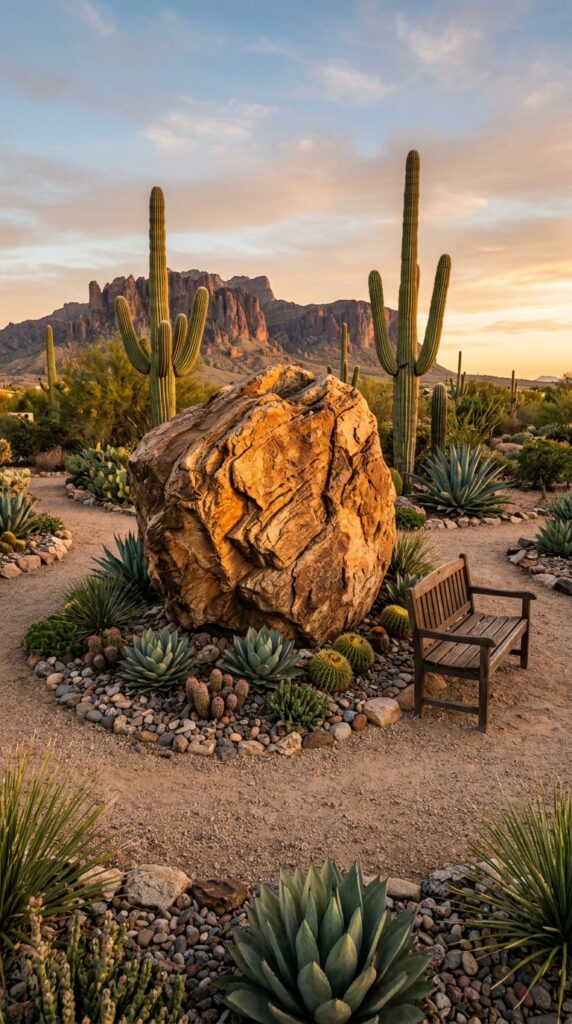
Single, dramatic boulders are the punctuation marks of desert landscaping. One well-chosen, well-placed boulder can do more for an outdoor space than an elaborate planting scheme. The mistake most people make is buying rocks that are too small. In an open landscape, a boulder that looks substantial at the nursery will feel lost once it’s in the ground surrounded by sky. Go bigger than you think you need. Choose stones in warm amber, rust, or sand tones that echo the color of your region’s soil and architecture. Placement matters enormously: the rock should look like it belongs, as though it simply emerged from the ground rather than being dropped there. Partially bury the base—at least a third of the stone should be below the soil line—so it looks anchored rather than placed. Surround the base with fine gravel and low-growing succulents that radiate outward naturally. Add a simple wooden bench nearby, angled toward the boulder rather than away from it, so the stone becomes a point of contemplation. That framing detail alone elevates the composition considerably.
11. Decomposed Granite Groundcover Design
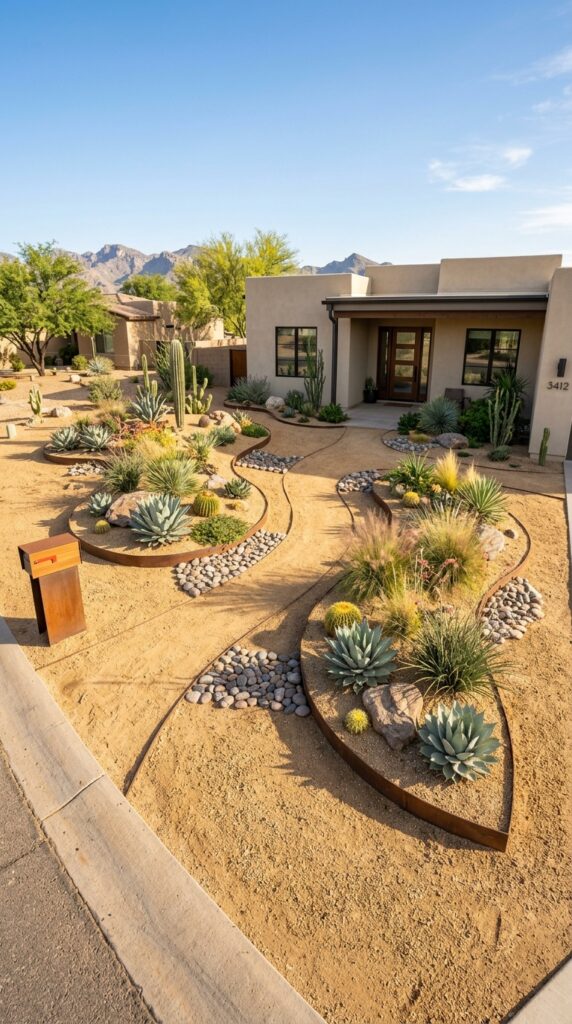
Decomposed granite—DG, in landscaping shorthand—is the unsung hero of desert landscapes. It’s practical, drought-tolerant, and when well-designed, genuinely beautiful. The warm golden and tan tones of quality DG create a cohesive ground plane that makes everything planted in or around it look intentional. It suppresses weeds, doesn’t require water, and manages heat better than concrete or bark. The design approach that separates good DG installations from mediocre ones is the use of organic, curved planting beds edged with low-profile metal borders. Avoid rigid geometric shapes; desert landscapes flow naturally, and your planting beds should too. Use different grades of gravel within one design—finer DG for pathways, coarser gravel around boulder placements—to create texture variation across the ground plane. One real caveat: DG tracks into the house on shoes. Use a proper boot scraper and doormat at every entrance, and consider a transition strip of flat stone directly outside your door that you can hose down easily. It’s a minor inconvenience for a landscape that requires almost no ongoing maintenance.
12. Layered Desert Rock Garden Design
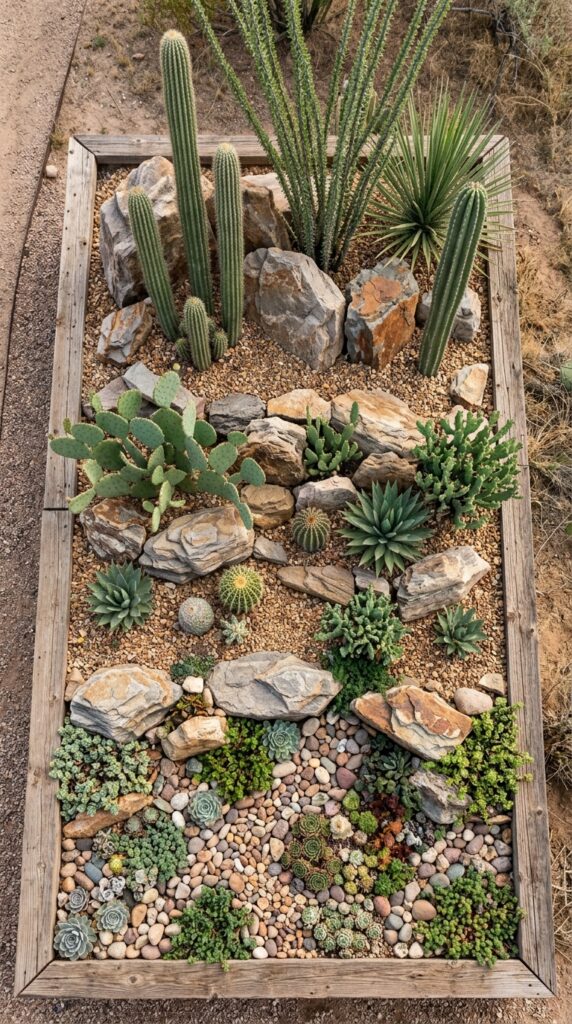
The layered rock garden is where all of these individual ideas culminate. Think in tiers: tall structural plants at the back—columnar cacti, tall agave, desert willow—mid-height plants in the middle zone, and low groundcover succulents spreading across the foreground. Rocks operate at every layer, framing the taller specimens at the base, creating visual clusters around mid-height plants, and threading through the groundcover as textural elements. The key is variety in both stone size and plant form. If everything is the same height or the same stone size, the composition feels monotonous. Introduce one or two large statement boulders in the mid or back zone as anchors, and use progressively smaller stones toward the front. Choose a coherent color palette for your stone—all warm tones or all cool gray tones—and let the plants provide the color variation. The layered approach also solves a practical problem: it creates drainage levels that desert plants love, since most despise sitting in water. Build your raised beds with excellent drainage at the base and your plants will thrive with minimal intervention.
Hats Off
If you’ve made it this far, you already understand something that a lot of people miss when they think about dry-climate landscaping: the desert is not a blank space waiting to be filled. It’s a fully realized design system, one that rewards restraint, values texture over color, and uses rock and light as primary materials rather than afterthoughts. Every idea in this guide can be adapted to a balcony, a backyard, an entryway, or an entire property. The scale changes; the principles don’t. Start with one thing—a color palette, a single boulder, a layered succulent arrangement—and build from there. Desert design is patient by nature. It doesn’t ask you to do everything at once. It asks you to do each thing thoughtfully, and then leave space for the light to do the rest. That’s a philosophy worth carrying indoors and out.