There’s something about a thoughtfully planted front yard that does more than just look pretty. It tells you something about the people who live there. Maybe it’s the way the lavender brushes against your knees on the way to the door, or how the hydrangeas seem to glow at dusk. Whatever it is, a well-designed flower bed has this quiet way of pulling the whole house together, even when the siding is dated or the porch could use a fresh coat of paint.
I’ve spent a lot of time staring at front yards (occupational hazard), and the ones that stop me aren’t always the most expensive. They’re the ones with intention. A clear color story, a sense of rhythm, plants that know where they’re supposed to be. So if you’re staring at a patchy strip of mulch wondering where to start, this list is for you. Twelve ideas, each with its own personality, plus the small details that actually make them work in real life, not just on Pinterest.
1. The Cottage Garden Mash-Up
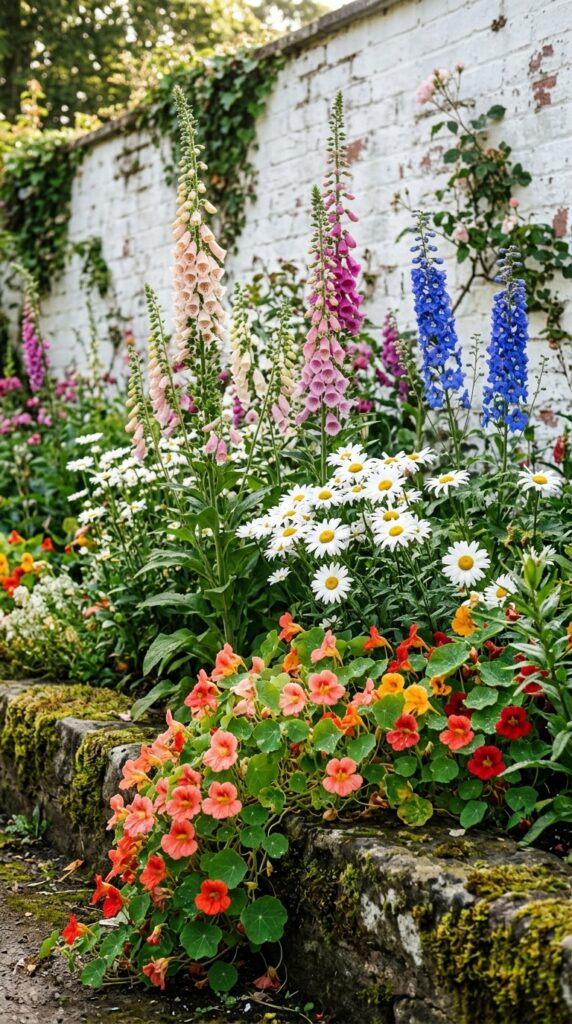
If you love the idea of “controlled chaos,” this is your lane. Cottage gardens look effortless, but the trick is layering. Tall plants in the back, mid-height bloomers in the middle, and creeping ground cover up front. Mix at least three flower shapes (spires, daisies, clusters) so the eye keeps moving instead of glazing over.
A few things that actually help: stick to a loose color palette, even if the plants vary wildly. Pinks, whites, and soft purples play nice together without looking like a fruit salad. Add one or two repeating plants to anchor the wildness. Lamb’s ear or catmint works beautifully because they soften every harsh edge they touch.
One watch-out: cottage gardens need real maintenance. Deadheading, dividing, the occasional brutal prune. If you travel a lot in summer, this style will punish you.
The cottage look rewards patience and a slightly heavy hand with the watering can.
2. Modern Monochrome in White
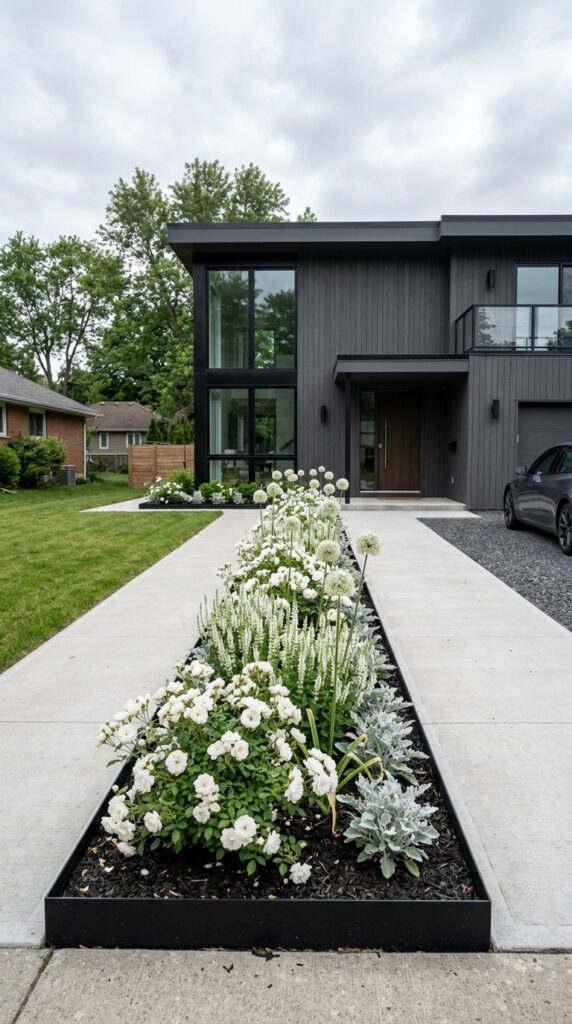
Single-color flower beds sound restrictive until you actually see one. White against dark siding or charcoal stone is genuinely cinematic, especially at twilight when the blooms practically glow.
Here’s the trick: when you commit to one color, texture has to do all the heavy lifting. Pair smooth-petaled roses with feathery astilbe, then throw in something architectural like white alliums or calla lilies. The contrast between leaf shapes (broad, spiky, lacy) is what keeps it from feeling flat or, worse, like a funeral arrangement.
Skip this idea if your home is already pale. White-on-white reads as washed out unless you have dark mulch or black edging to give it some bones.
A monochrome bed is the closest thing front yard landscaping has to a little black dress.
3. Drought-Tolerant Mediterranean Mix
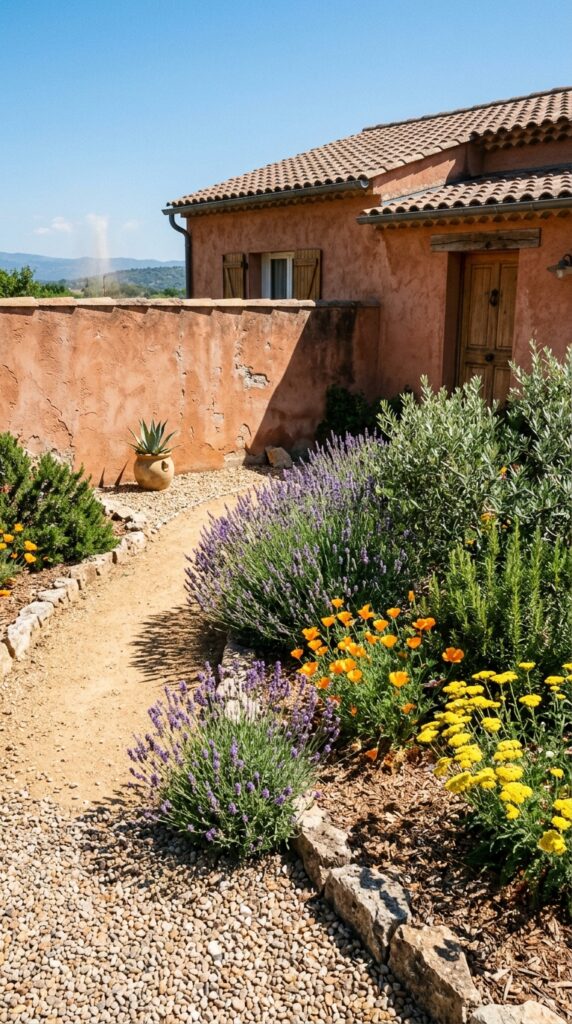
If your summers are hot and your hose hates you, this is the move. Mediterranean plants thrive on neglect, which I mean as the highest compliment. Lavender, rosemary, sage, and yarrow give you texture, scent, and pollinators without the daily babysitting.
Two practical tips: use gravel or decomposed granite instead of bark mulch. It looks more authentic, drains better, and reflects light in a way that makes silvery foliage pop. Also, plant in odd-numbered clusters of three or five, not single specimens scattered around. Density is what makes this style read as intentional.
Watch out for overwatering. These plants rot in soggy soil faster than you’d believe.
If you’ve killed every plant you’ve ever owned, start here.
4. Layered Hydrangea Border
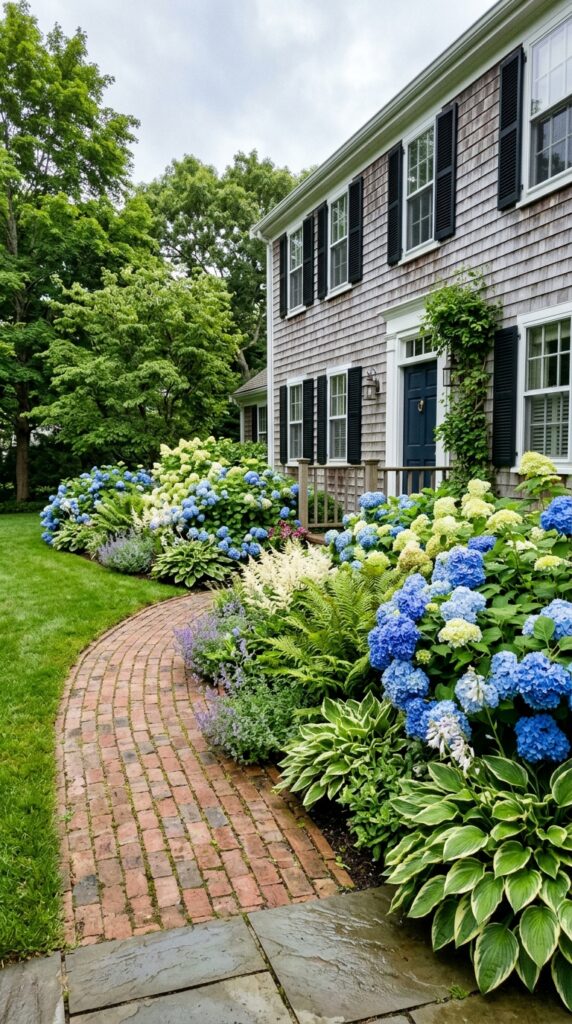
Hydrangeas are the dependable friend of curb appeal. They show up, they bloom huge, and they make everything around them look better. A row of them along the front of a house is almost cheating, honestly.
For the best look, mix two hydrangea varieties: a mophead for drama and a panicle (like ‘Limelight’) for height and a longer bloom window. Tuck shade-loving companions like hostas and heuchera between them so the bed doesn’t go bare in early spring before the hydrangeas leaf out.
The catch is sunlight. Most hydrangeas hate full afternoon sun, especially in hot climates. North-facing or east-facing beds are ideal. South-facing beds will need afternoon shade or you’ll be watching crispy brown blooms by July.
Plant once, look great for fifteen years. That’s the deal.
5. Wildflower Meadow Strip
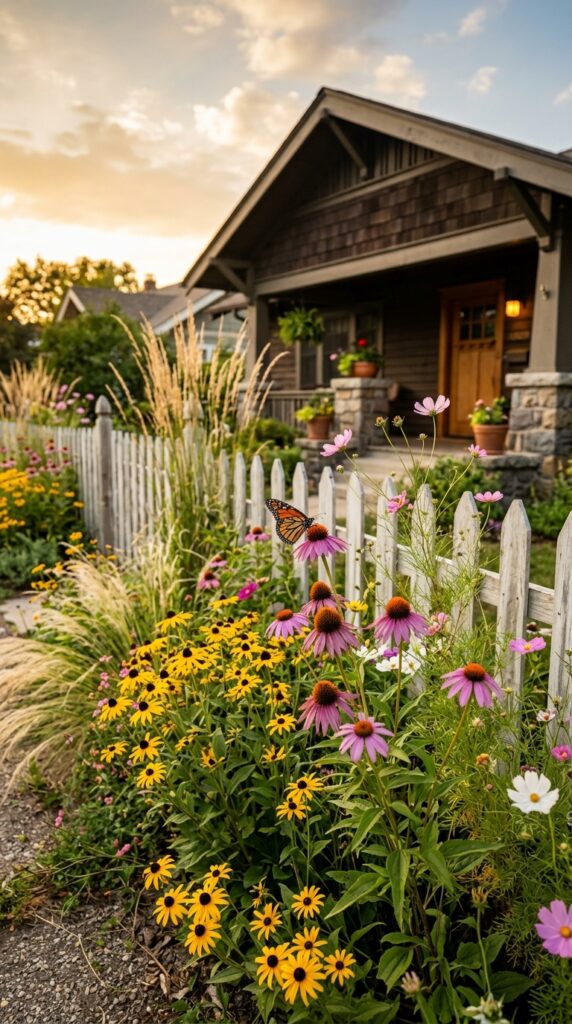
Wildflower beds aren’t lazy gardening. They’re a different kind of intentional. Done well, they hum with bees and butterflies and look incredible from June through October. Done poorly, they look like you forgot to mow.
The difference comes down to two things: a defined edge and a structure plant. Even the wildest meadow looks deliberate when it’s contained by a clean line of stone, steel edging, or a low boxwood hedge. And one repeating tall element (ornamental grass, joe-pye weed) gives the eye something to land on.
One real talk: native wildflowers self-seed aggressively. Some will take over if you let them. Plan to thin and edit every spring or accept the chaos.
Pollinators will move in. So will your appreciation for a slightly messy front yard.
6. Symmetrical Boxwood and Bloom Formal
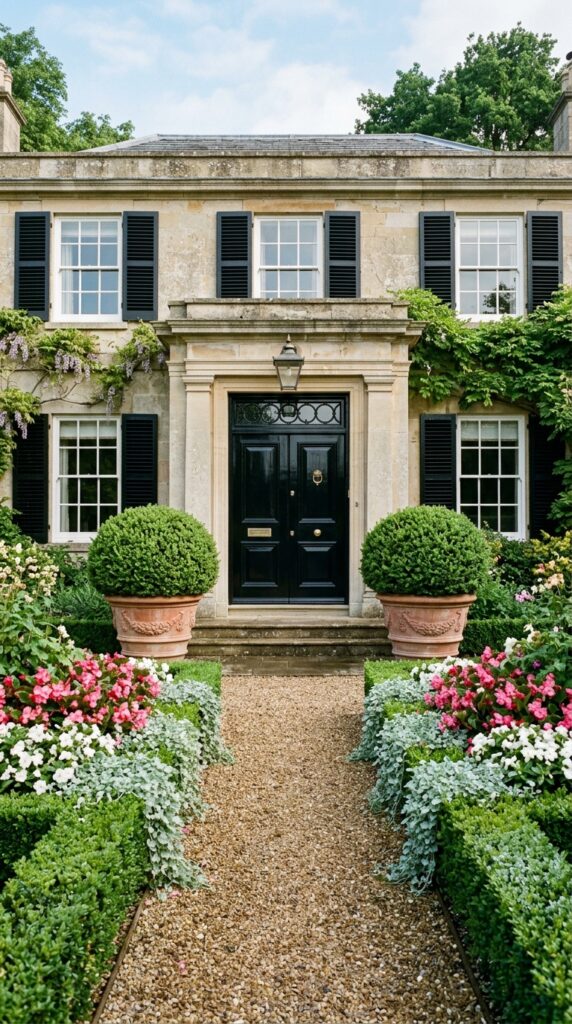
There’s a reason symmetrical plantings have been around for centuries. They make a house look composed, no matter what’s going on with the architecture. If your front entry feels chaotic or off-balance, twin flower beds with matching plants can fix it almost instantly.
The formula is simple: clipped evergreens (boxwood, yew, or holly) for year-round structure, plus seasonal flowers in the same color on both sides. Switch out the bloomers three or four times a year — pansies in spring, begonias in summer, mums in fall, miniature evergreens at Christmas.
The honest downside is upkeep. Symmetry shows every flaw. One dead plant on the left and the whole effect collapses. You’ll need to be a slightly attentive gardener.
For traditional homes, nothing else looks this polished.
7. Curving Mixed Perennial Bed
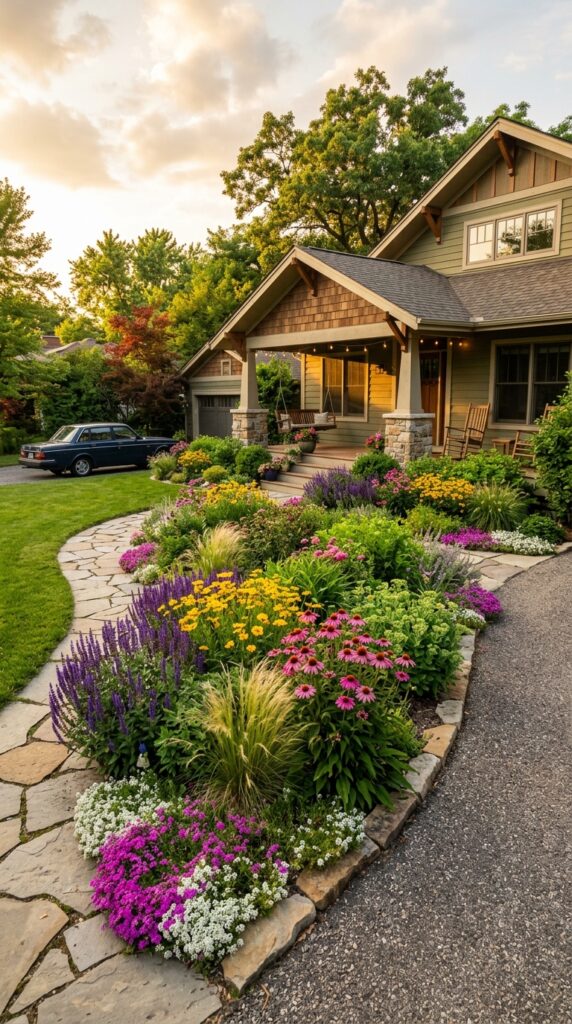
Straight rectangular beds will always look fine. But a curved bed? That’s where front yards start to feel designed. The eye follows the curve, and suddenly your walkway has a sense of movement instead of just being a sidewalk to the door.
Plot the curve with a garden hose first, lay it on the ground and adjust until it looks right from the street. Make the curve gentle and generous, not zigzag. Plant in drifts of three to seven of the same plant rather than singles. Drifts read as organized; singles read as confused.
The trade-off: curved beds eat more lawn. If you have a small yard, you might lose more grass than you want.
A bed that curves invites people in. It’s body language for “welcome.”
8. Shade-Loving Foliage Focus
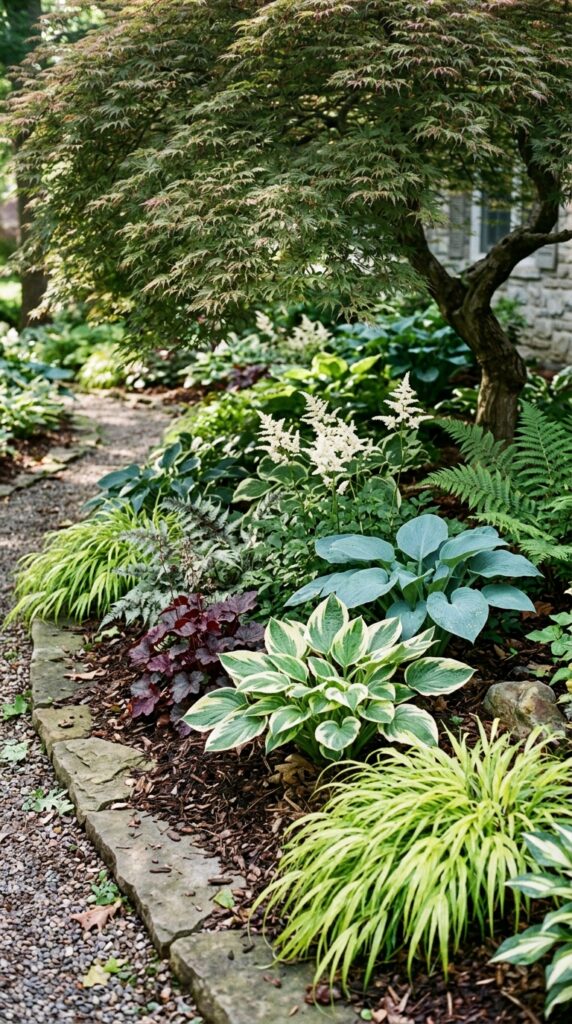
Not every front yard gets sun, and that’s actually a gift if you lean into it. Shade gardens have a calmness that sun-blasted beds can’t match — all those layered greens, the cool textures, the way light filters through.
Forget about flowers as the main event. In shade, foliage does the heavy lifting. Pair plants with wildly different leaf sizes and colors: massive hosta leaves next to feathery ferns, dark burgundy heuchera against chartreuse forest grass. The contrast keeps it interesting even without a single bloom.
Watch out for slugs. They love shade gardens and will turn your hostas into lace overnight if you don’t stay on top of them. Crushed eggshells or copper tape around the bed actually helps.
A good shade bed feels like a small, secret forest at your front door.
9. Pollinator Power Bed
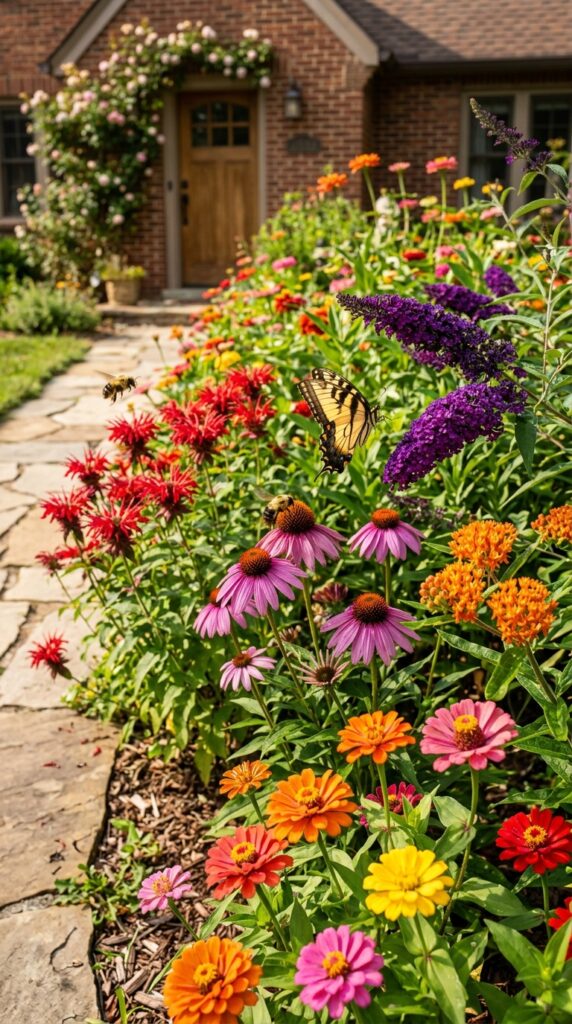
A pollinator bed is one of those rare design moves that’s good-looking and genuinely useful. Bees, butterflies, and hummingbirds need help right now, and the right plants turn your front yard into a tiny ecosystem.
Stick with native species when you can. They support local pollinators much better than ornamental hybrids, which often look pretty but produce no usable nectar. Plant in clusters so pollinators don’t waste energy hunting for the next bloom. And include something that flowers in early spring, mid-summer, and fall so the bed stays in service for as long as possible.
The thing nobody mentions: bee balm and butterfly bush can spread aggressively. Cut them back hard each fall.
It’s a working garden disguised as a beautiful one. The bees will thank you, even if your neighbors don’t notice.
10. Rock Garden With Alpine Color
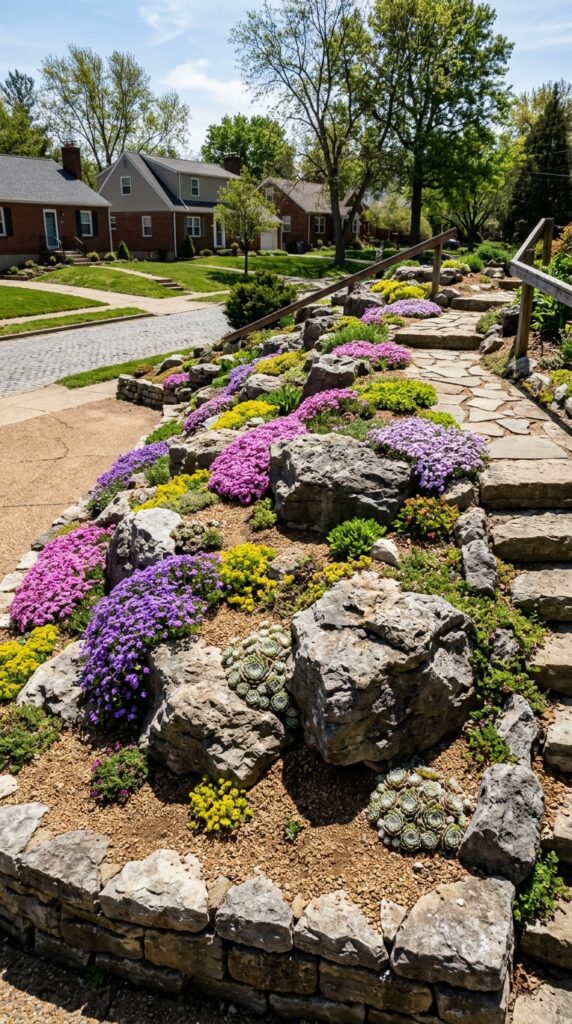
Rock gardens get a bad reputation, mostly because a lot of them look like someone gave up halfway through. But a well-designed one is striking and basically immortal. If your front yard slopes or has poor soil, this might be the smartest direction.
The key is rock placement. Use stones of varying sizes, bury about a third of each one so they look like they emerged from the earth, and group them in odd numbers. Tuck low-growing alpines into the crevices: creeping phlox, sedum, thyme, and aubrieta all thrive in lean, gritty soil and bloom in waves of color.
Avoid the common mistake of using too-small rocks. Pebbles and gravel scattered around look like a parking lot.
Once it’s in, this kind of bed almost takes care of itself.
11. Edible-Ornamental Hybrid Bed
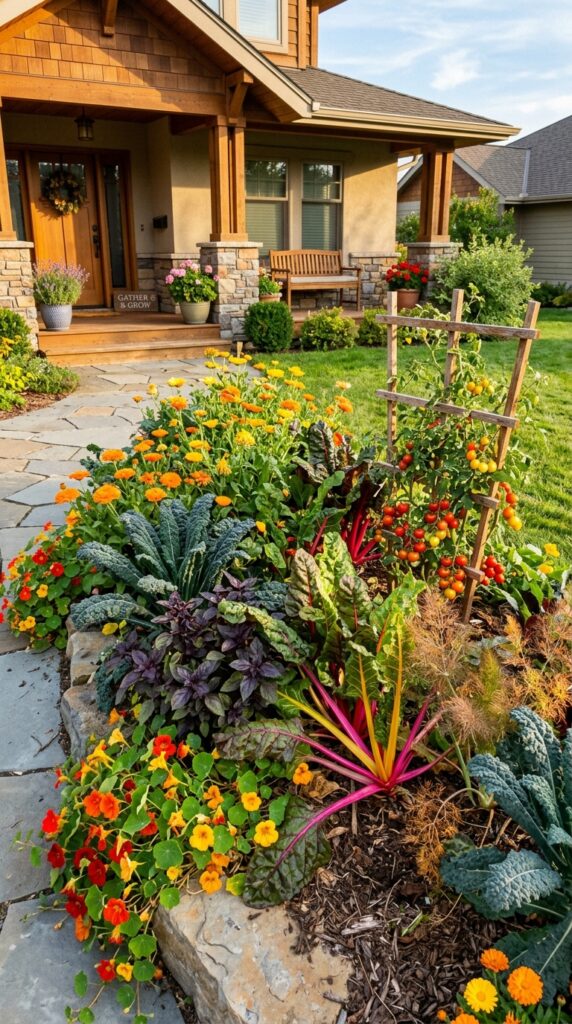
Front yards don’t have to be purely decorative. Edible-ornamental beds — sometimes called potager-style — pack flowers and food into the same space, and when done thoughtfully, they look incredible. Rainbow chard alone is prettier than most ornamentals.
Mix structure with softness. Use compact edibles like dwarf blueberries, herbs, and leafy greens as the main planting, then weave in marigolds, nasturtiums, and calendula for color (all three are also edible, by the way). Keep the bed tidy with neat edging because edibles can read as messy fast.
Skip this if you live somewhere with strict HOA rules or aggressive deer. Both will end your project quickly.
There’s something deeply satisfying about cutting dinner from your front yard while the neighbors compliment the marigolds.
12. Evergreen Backbone With Seasonal Pops
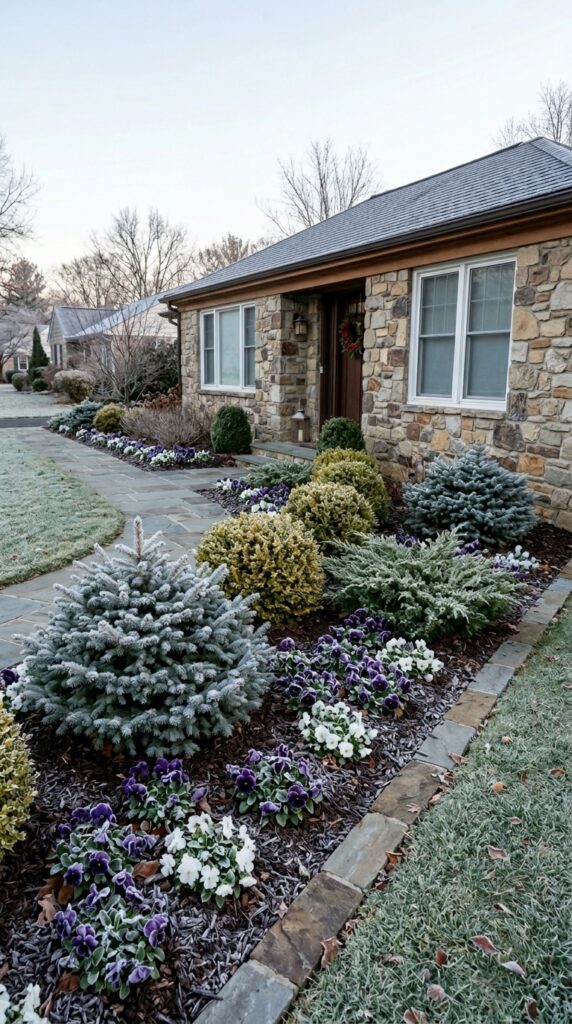
If you want curb appeal in February as much as June, this is the strategy. An evergreen backbone gives your front yard structure all year, and seasonal flowers become the accessories instead of the entire wardrobe.
Pick three evergreens with different shapes and shades: a tall conical one, a rounded mid-height one, and a low spreader. Mix textures (needled spruce against glossy holly against soft yew) so it doesn’t read as one big green blob. Then layer in seasonal color: tulips and daffodils in spring, annuals in summer, mums in fall, and ornamental cabbage or winterberry for cold months.
The honest cost: evergreens are slow growers, and the good ones aren’t cheap. But they earn their keep across decades.
A yard with structure looks intentional even when nothing is blooming.
A front yard flower bed isn’t really about the plants — it’s about how you want your home to feel from the curb. Welcoming, polished, wild, low-key, totally over the top. There’s no wrong answer, only the version that suits your house, your climate, and how much weeding you actually feel like doing on a Saturday.
If there’s one thing I hope you take from this, it’s that the best front yards aren’t perfect. They’re considered. A clear color story, a few plants you genuinely love, an edge that looks finished, and a little bit of evergreen so February doesn’t feel like a punishment. That’s it. That’s the whole secret.
Bookmark this page, screenshot the ideas that spoke to you, and come back when you’re knee-deep in soil with dirt under your fingernails. We’re always adding new design guides, real-life decor tips, and the occasional opinionated rant about mulch. Whatever you plant, plant it like you mean it.