There’s a particular kind of magic that happens when you get the flower bed along your house just right. It softens the architecture, hides the awkward foundation line where siding meets soil, and frankly, makes coming home feel like a small event. I’ve spent more weekends than I’d like to admit kneeling in mulch, second-guessing my plant choices, and learning the hard way that not every Pinterest-perfect bed translates to real life. Some of these ideas are for the gardener who wants drama and is willing to deadhead twice a week. Others are for the renter who needs something low-commitment and still beautiful. A few are for those of us who just want the mailman to compliment our yard once in a while. Whatever camp you’re in, the goal here is the same: a flower bed that feels intentional, suits your house, and doesn’t make you cry every August. Let’s get into the twelve I keep coming back to.
1. The Classic Cottage Border
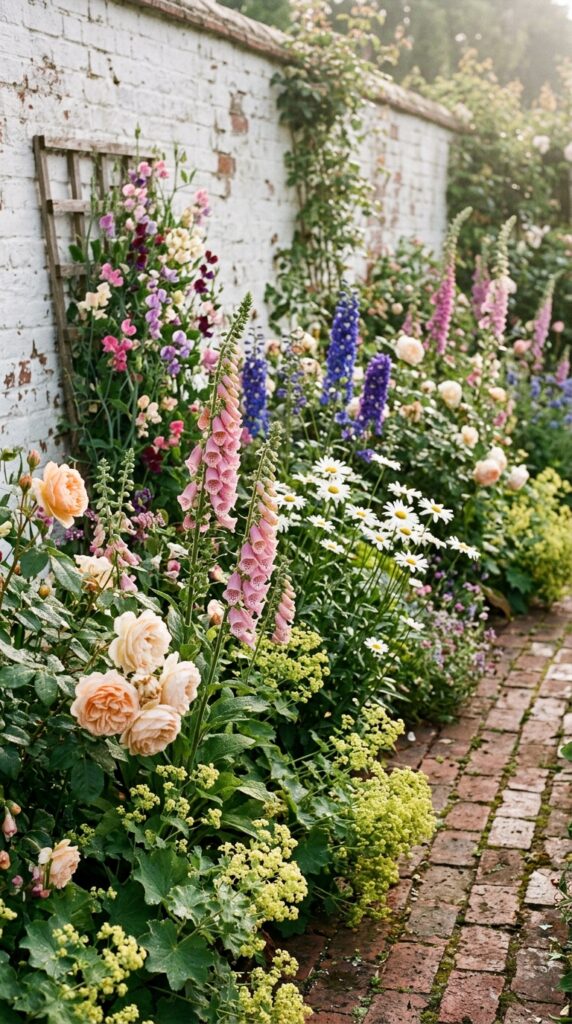
The cottage border is the flower bed equivalent of a well-worn linen shirt: timeless and forgiving. The trick is layering heights so nothing looks lonely. Plant tall delphiniums or hollyhocks at the back against the wall, mid-height roses or salvias in the middle, and let alyssum or lady’s mantle tumble over the edge. Mix in self-seeders like foxgloves and poppies so the bed evolves on its own each year. One thing to watch: cottage beds look effortless but actually require ruthless deadheading, or they tip into “abandoned” territory fast. Skip this style if you travel a lot in summer. The payoff, though, is a bed that feels like it’s been there for fifty years even if you planted it last spring.
2. The Monochrome White Garden
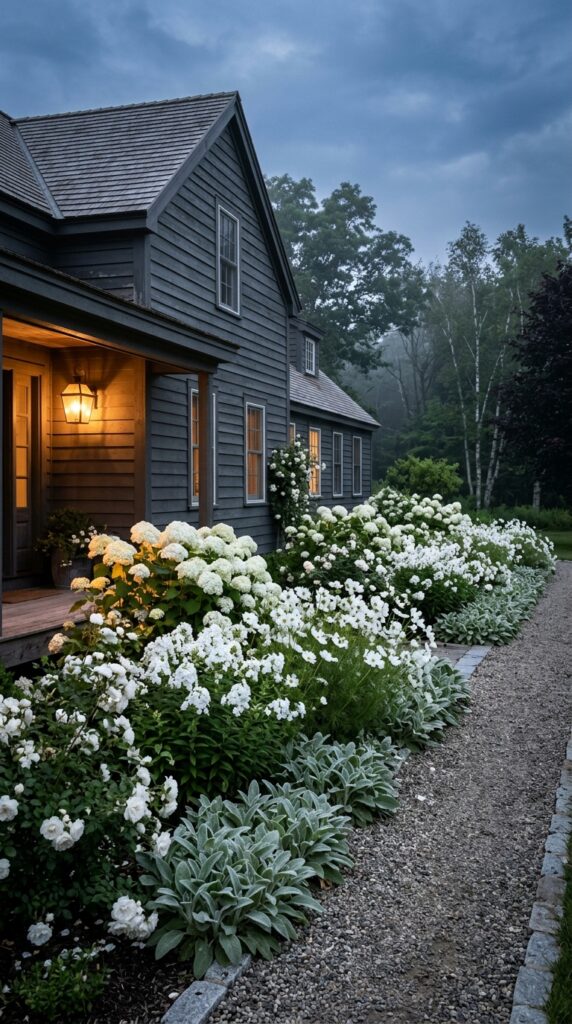
A white garden is one of those choices that sounds boring on paper and stops people in their tracks in person. Against a dark house, white flowers practically glow at dusk, which is when most of us are actually home to enjoy the yard. Pair white blooms with silver foliage like artemisia or lamb’s ear so the bed has texture even when nothing is flowering. Stagger bloom times: tulips in spring, peonies and roses in early summer, phlox and Japanese anemones in late summer, snowdrops in late winter. The constraint here is honest: white shows brown edges immediately, so you’ll be deadheading more than you would with forgiving yellows or pinks. Worth it for the moonlit-garden effect.
3. The Drought-Tough Mediterranean Bed
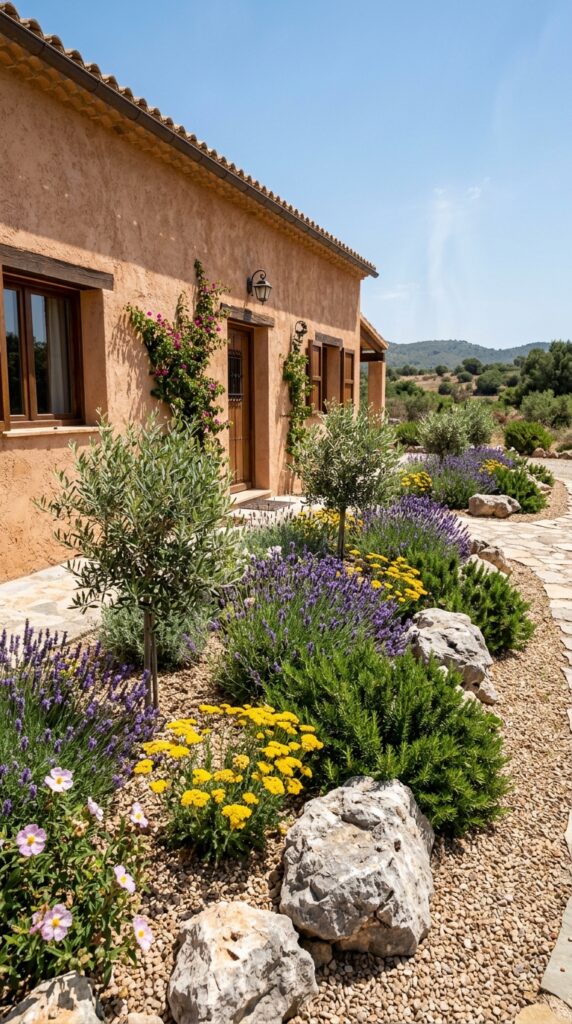
If you’re tired of watering, this is your bed. A Mediterranean-style planting leans on lavender, rosemary, santolina, sea holly, and sedums, plants that genuinely prefer to be ignored. The aesthetic is silvery, structured, and sun-baked, which suits stucco and adobe homes perfectly but also softens the boxy modern builds. Use pea gravel or crushed limestone instead of bark mulch; it reflects light, keeps roots cool, and looks the part. Tuck in a few terracotta pots for height. Here’s the trick: these plants hate wet feet more than they hate drought, so amend heavy clay soil with grit before planting or you’ll lose the lavender by year two. Once established, this bed asks for almost nothing.
4. The Modern Grass and Perennial Mix
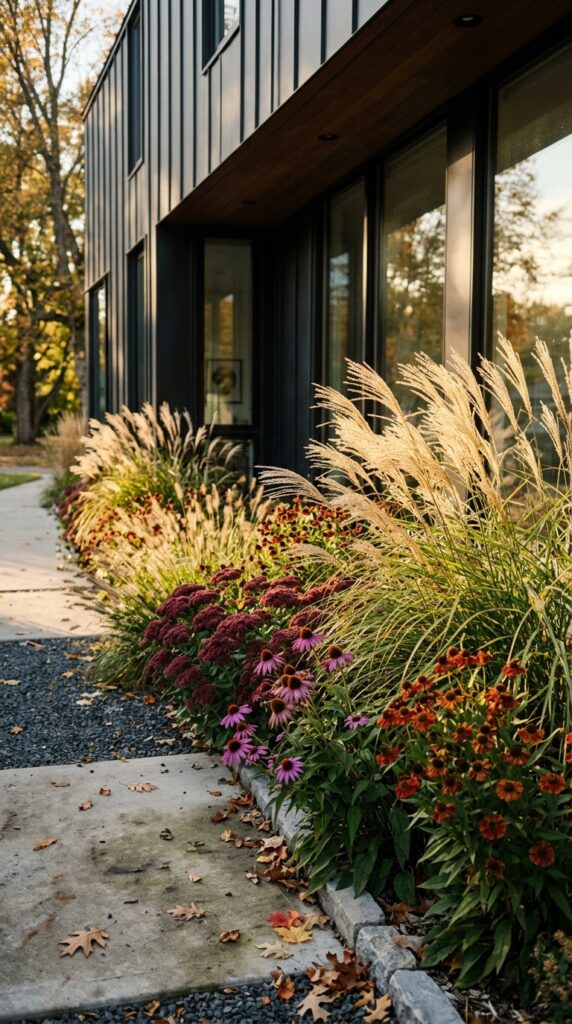
Ornamental grasses changed how I think about flower beds along houses. They give you year-round structure, movement on windy days, and that gorgeous backlit glow in October when most beds are dead. Pair tall grasses with prairie-style perennials: echinacea, rudbeckia, sedum, helenium. The texture contrast is what makes it work, soft seed heads against bold daisy shapes. Keep the color palette tight, three or four hues max, or it starts to look chaotic. One watch-out: grasses look terrible in late winter before you cut them back, so plan to do that in February or you’ll spend two months staring at brown clumps. The reward is a bed that genuinely earns its keep in every season.
5. The Foundation Evergreen With Seasonal Pops
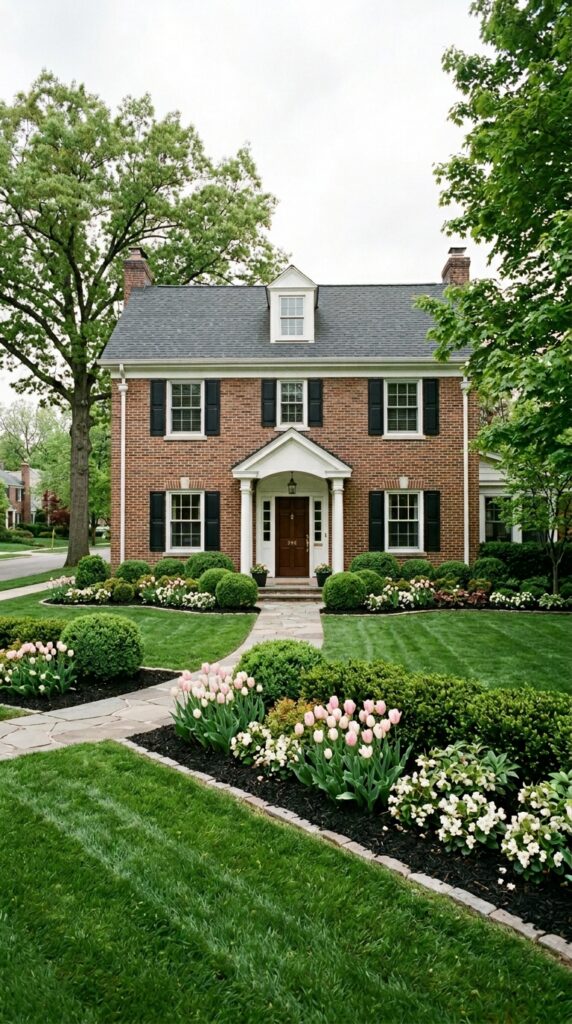
This is the bed for people who want their house to look “done” without committing to high-maintenance gardening. The bones are evergreen: boxwood, dwarf yew, holly, or inkberry, clipped or natural depending on your formality preference. Then you tuck in seasonal flowers in just two or three pockets, swapping them out as the year goes. Spring tulips, summer begonias or impatiens, fall mums, winter pansies. Don’t go overboard with the swaps; three pockets is plenty, and more starts to look fussy. Skip this if you hate any kind of pruning, because evergreens grown unchecked turn into shapeless blobs within a few years. The upside is a bed that always looks intentional, even in February.
6. The Pollinator-Forward Wild Bed
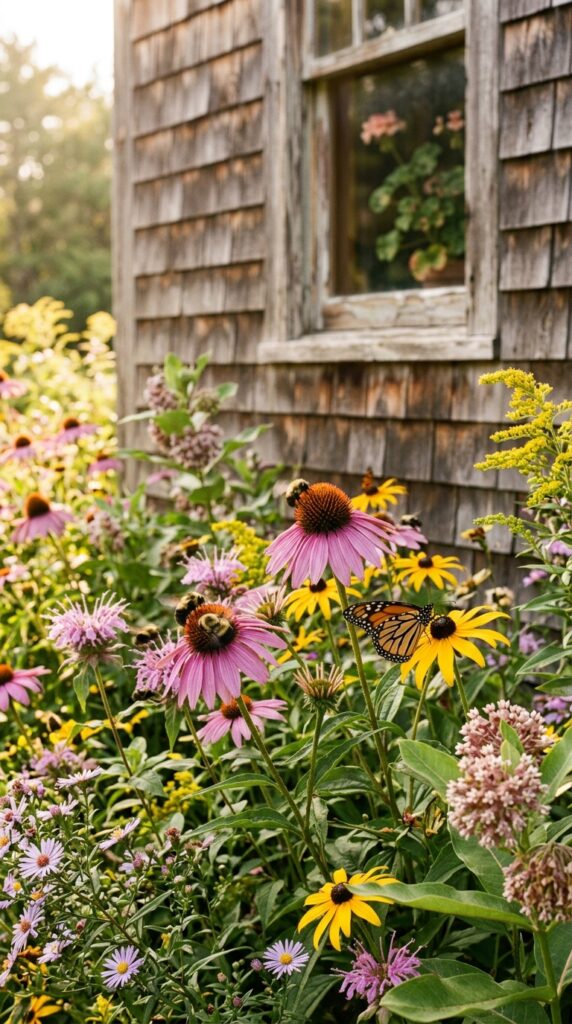
A pollinator bed is the most rewarding kind of flower garden because something is always visibly happening, bees, butterflies, hummingbirds, the occasional praying mantis. Lean heavily on natives for your region; they’ll outperform exotics with half the effort. Echinacea, monarda, milkweed, asters, goldenrod, and yarrow are reliable backbones. Plant in drifts of three or five rather than one of everything, otherwise it reads as messy instead of meadow. The honest constraint: this style looks scruffy by traditional standards, especially in late fall when you’re supposed to leave seed heads up for birds. If you have HOA neighbors who notice everything, add a tidy edge of clipped grass or a low metal border to signal “intentional.” That small frame changes everything.
7. The Shaded Woodland Bed
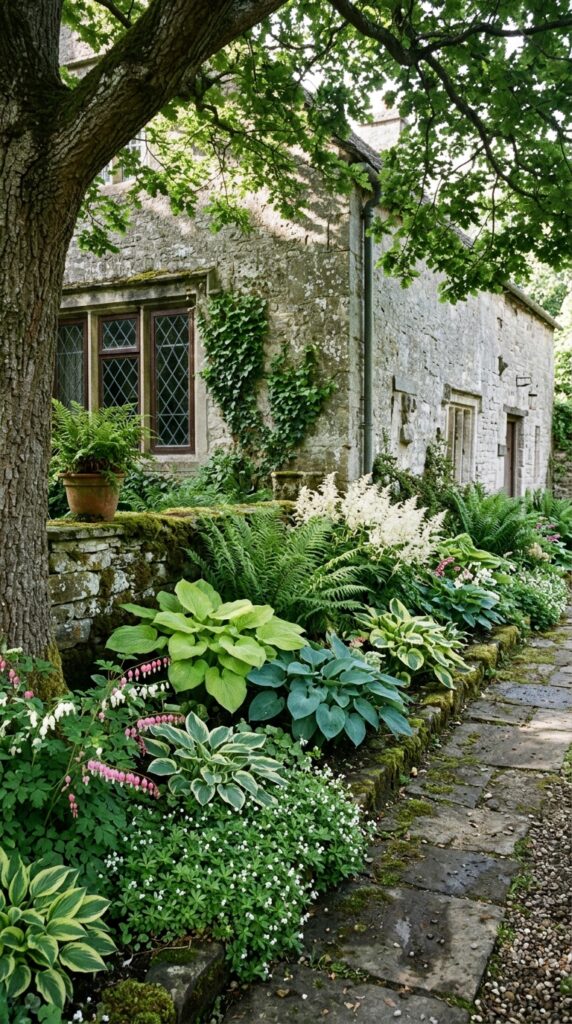
If your house faces north or sits under big trees, stop fighting for sun-loving roses and lean into the shade. A woodland bed is calmer, cooler, and easier than most people expect. Build it on foliage first: hostas, ferns, heucheras, brunnera. Then add shade-tolerant flowers like astilbe, bleeding heart, foxglove, and hellebores for late-winter blooms when nothing else is happening. Texture is everything here since flowers are fewer and shorter-lived. The watch-out is slugs. They love hostas with the same passion you do, so plan on copper tape, beer traps, or simply choosing thicker-leafed varieties. A shaded bed feels like a small forest and that’s exactly the point.
8. The Renter-Friendly Container Border
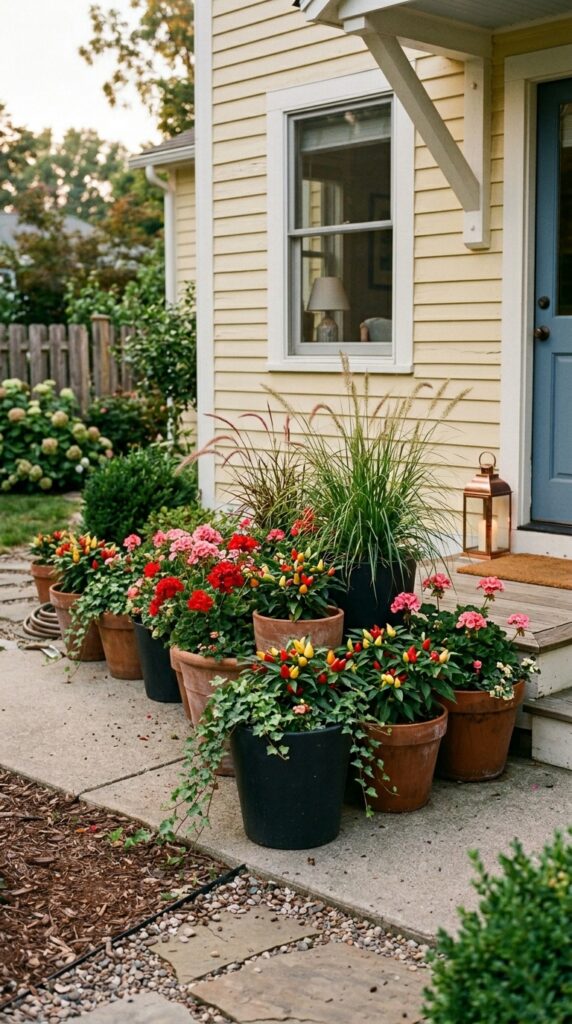
Renting doesn’t mean giving up on a flower bed along your house, you just build it in pots. Line up a varied collection of containers along the foundation: different heights, similar materials. Stick to two or three pot finishes, terracotta and matte black is a combo I keep returning to, and it’ll look composed instead of chaotic. Plant each pot with the “thriller, filler, spiller” formula if you want quick wins: something tall, something mounded, something trailing. Use self-watering inserts or drip irrigation if you can; pots dry out fast in summer and a forgotten week can wipe out the whole display. When you move, you take it all with you. That’s the real win.
9. The Edible Flower Bed
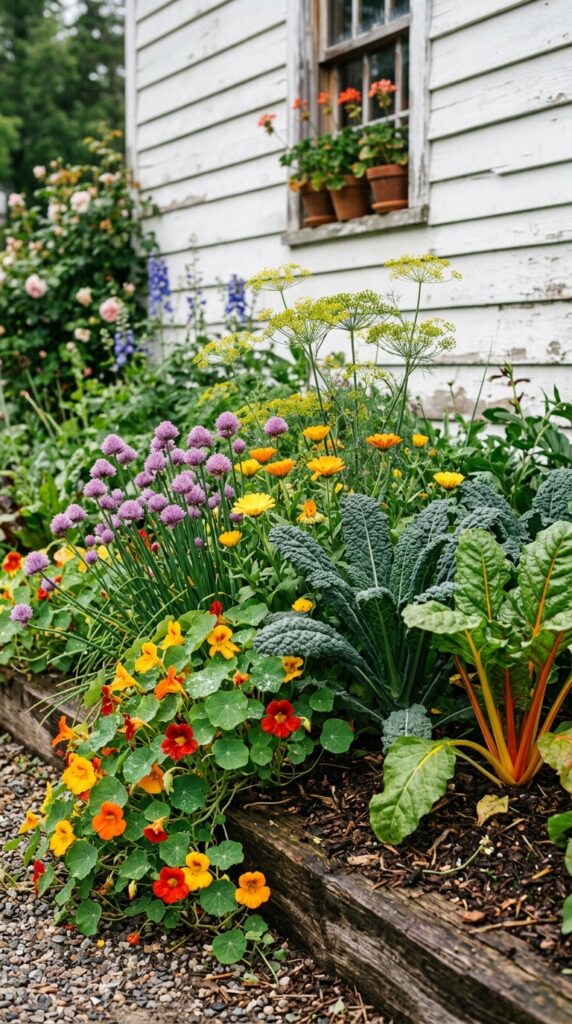
The edible flower bed is having a moment, and rightfully so, why not have a bed that feeds you and looks beautiful? Nasturtiums, calendula, borage, chive blossoms, and dill flowers are all genuinely pretty and genuinely edible. Mix them with structural edibles like rainbow chard, purple kale, and bronze fennel for foliage drama. Keep the bed close to the kitchen door if you can, because the whole point is grabbing a handful while you cook. The honest trade-off is that edibles look ratty after harvest, so you’ll need to plan for replanting mid-season or accept some scruffy weeks. Worth it the first time you toss nasturtium petals on a salad.
10. The Color-Blocked Statement Bed
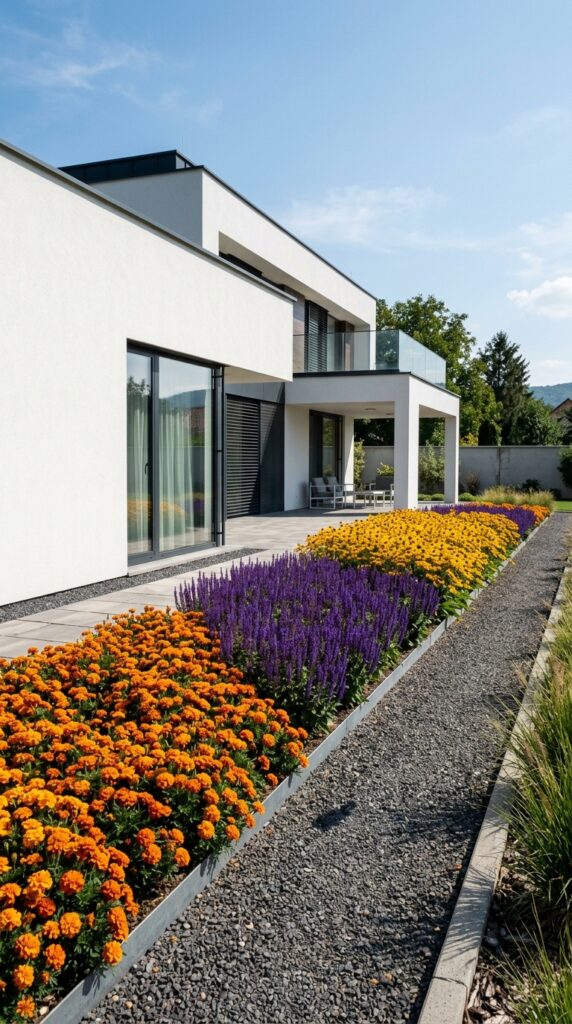
If your house has clean modern lines, a fussy cottage bed will look out of place. Color-blocking is the answer. Pick three or four colors and plant them in big confident drifts, not little dotted clumps. Think a sweep of orange marigolds next to a block of purple salvia next to a band of chartreuse euphorbia. The graphic effect mirrors the architecture and looks intentional from the street. Stick to one bloom shape per block to keep it crisp. The constraint here is that you really do need scale; small color-blocked beds just look like mistakes. If your bed is under six feet long, this isn’t the look. Larger beds, though, become genuinely striking.
11. The Vertical Climber Wall
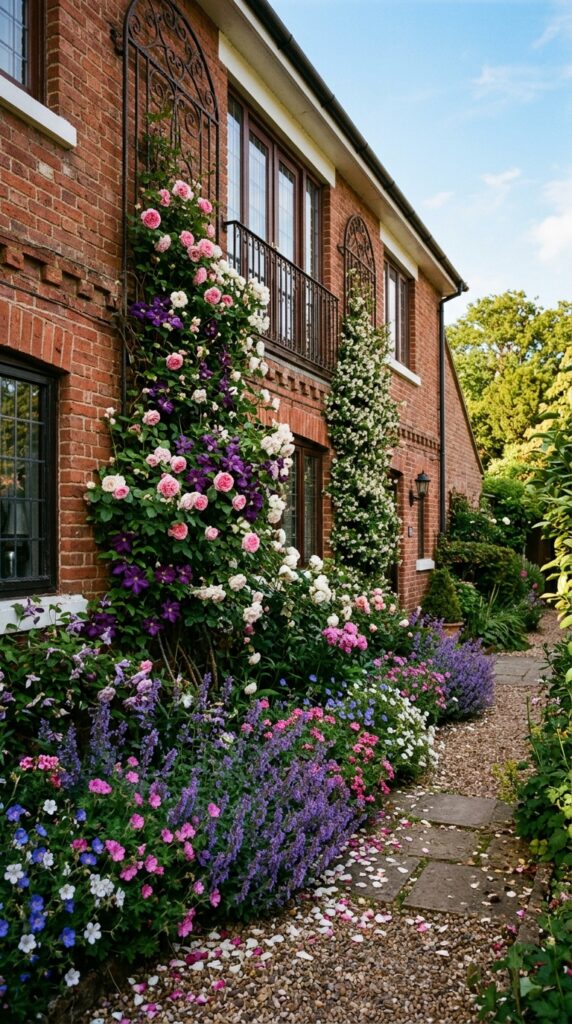
When your bed is narrow but your wall is tall, build up. A vertical climber wall takes a strip of soil maybe two feet deep and turns it into a story-tall display of flowers. Mount sturdy trellises directly into the masonry or set free-standing iron supports a few inches off the wall to allow airflow. Climbing roses, clematis, jasmine, and honeysuckle are the workhorses. Pair two climbers per trellis with overlapping bloom times so you get a longer show. Underplant with low mounding perennials like catmint or hardy geraniums to soften the base. The watch-out is weight: mature climbers get heavy, and a flimsy trellis will pull away from the wall in a storm. Invest in real hardware. The wall becomes a feature instead of a backdrop.
12. The Low-Maintenance Gravel and Grass Bed
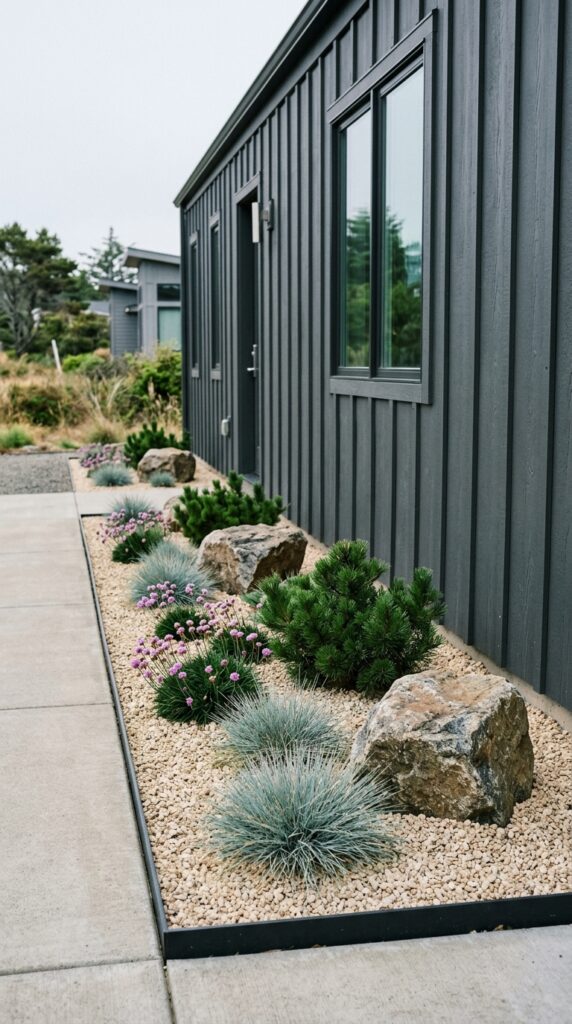
This is the bed for the person who wants their house to look great with maybe four hours of yard work a year. Lay down quality landscape fabric, top with several inches of pea gravel or decomposed granite, and plant sparingly. Blue fescue, sea thrift, sedum, dwarf conifers, and the occasional ornamental allium are all you need. The aesthetic is calm, modern, and a little Scandinavian. A few well-placed boulders or weathered logs add weight and keep it from looking sparse. The honest trade-off: this bed will never feel lush or romantic, and weeds do eventually find a way through gravel no matter what anyone tells you. But for sheer return on effort, nothing else comes close. Set it up well once, and it serves you for years.
A flower bed along the house isn’t just landscaping, it’s the first impression of your home, the thing you see when you pull into the driveway, and the small daily pleasure of catching a bloom you forgot you planted. The best bed isn’t the most expensive or the most elaborate; it’s the one that fits your house, your climate, and the amount of time you actually have. Maybe that’s a wild pollinator meadow, maybe it’s a tidy row of containers, maybe it’s a single drift of lavender that smells like summer every time you walk past. Pick the idea that made you pause while reading, the one that felt like your house, and start there. We hope you’re walking away with at least one fresh idea, a few practical pointers, and the small itch to dig. Bookmark us, come back when you’re ready for the next project, and happy planting.