There’s a particular kind of envy that hits when you drive past a house with flower beds that look effortless. Not manicured to within an inch of their lives, not hospital-tidy, just… alive. Loose, layered, generous. The kind of garden that makes you slow the car down. Here’s the secret most homeowners don’t realize: those beds usually require less work than the sad row of marigolds someone replants every May.
Low maintenance doesn’t mean low impact. It means choosing the right plants, the right structure, and the right rhythm so the garden mostly takes care of itself once it’s established. I’ve pulled together twelve flower bed ideas that lean into that philosophy, each with a slightly different mood and use case. Whether you’re working with a shady side yard, a sun-blasted curb strip, or a tiny patch by the mailbox, there’s something here worth stealing. Grab a coffee, and let’s get into it.
1. The Drought-Tolerant Gravel Garden
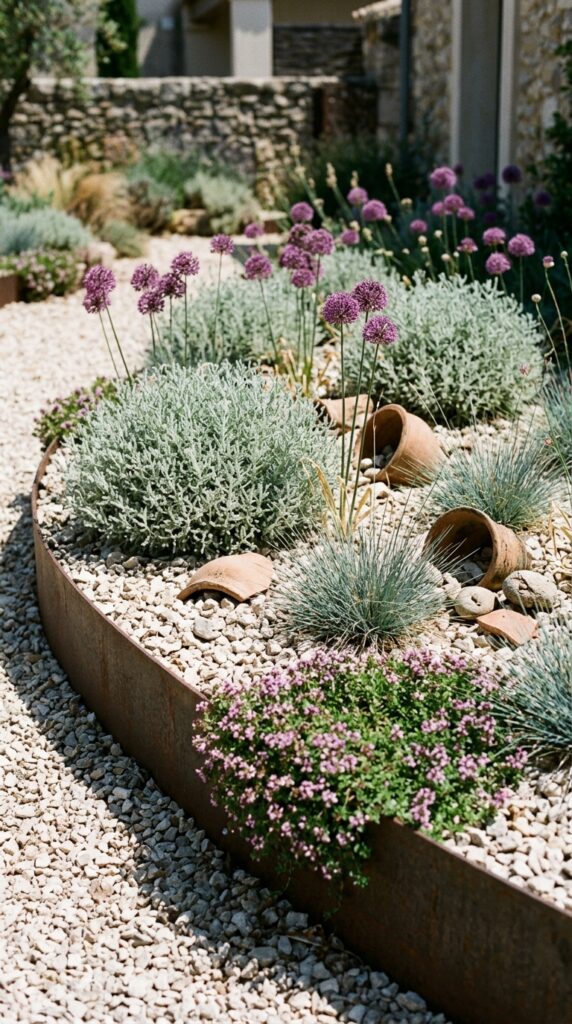
Gravel gardens have this slightly architectural feeling that I love, especially when the rest of the yard is doing the lush green thing. The gravel acts as a living mulch, suppressing weeds and reflecting heat back to plants that actually want it.
The trick is choosing plants that thrive in lean, sharp-draining soil. Think Mediterranean: lavender, santolina, sea holly, alliums, ornamental oregano. Skip anything that whines about dry feet. Lay landscape fabric only at the edges, not under the whole bed, because plants need to self-seed and spread to look natural.
One thing to watch: gravel gardens can look thin and apologetic in year one. Plant more densely than feels right, and let the plants knit together. Refresh the gravel every three or four years.
If you forget to water for a week, this garden will not punish you. That alone earns it a spot on the list.
2. The Native Pollinator Meadow Bed
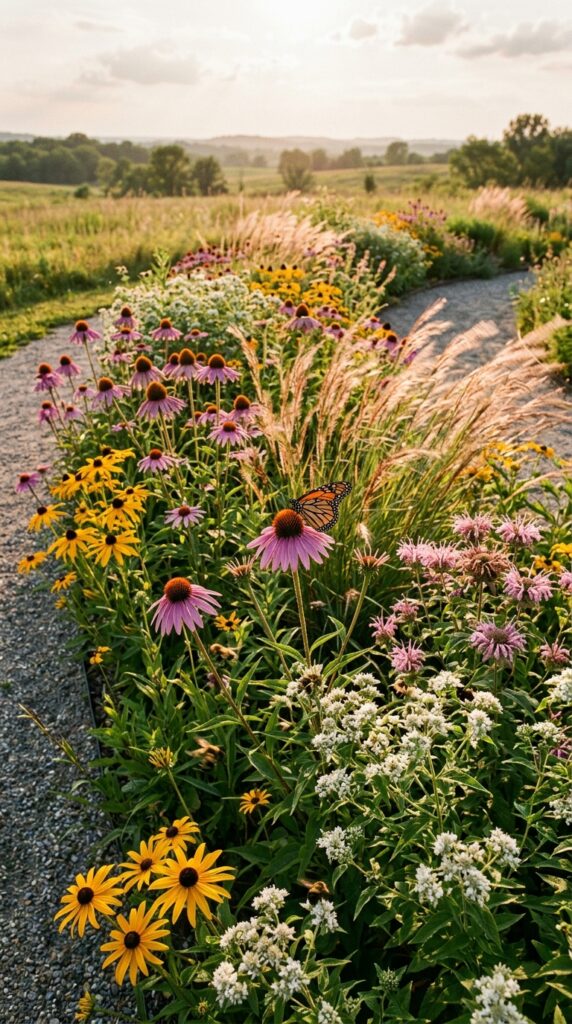
If you want a flower bed that does something beyond looking pretty, this is the one. A native pollinator bed feeds bees, butterflies, and birds, and once it’s rooted in, it basically runs itself.
Choose plants native to your specific region, not just “native-ish.” Local extension offices have lists worth bookmarking. Aim for a mix of bloom times so something is flowering from May through October. Coneflowers, asters, milkweed, goldenrod, and native grasses are reliable backbones.
Here’s the catch: native beds look messy to neighbors trained on clipped boxwoods. A tidy mowed edge or a low metal border signals “this is intentional,” which makes a surprising difference in how people read the space.
Skip the urge to deadhead in fall. Leave the seed heads standing for winter interest and bird food.
This bed gives more than it takes, and it gets better every year.
3. The Evergreen-Anchored Perennial Bed
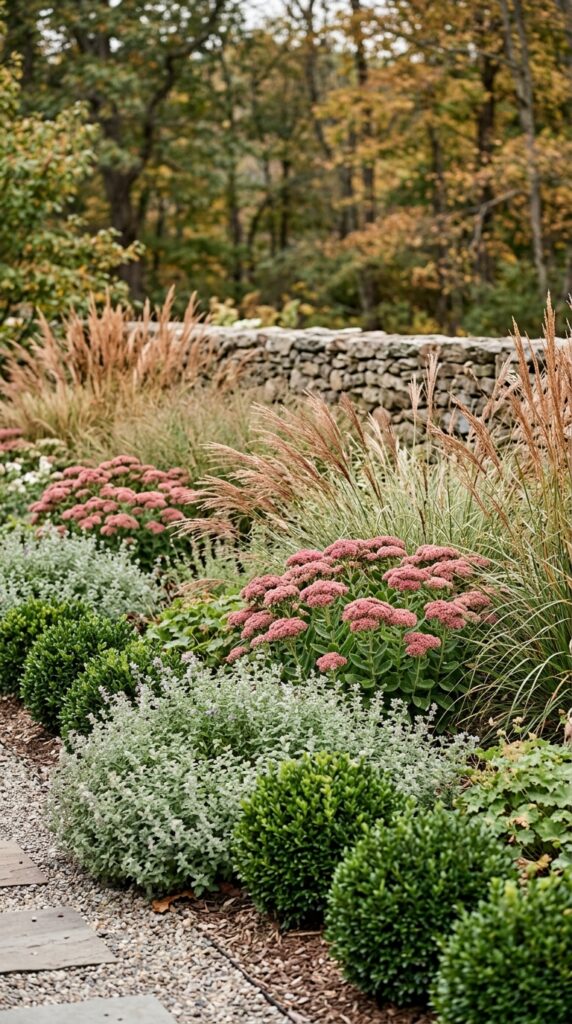
The smartest low-maintenance beds always have evergreen bones. When the perennials die back in winter, the evergreens keep the bed from looking like a graveyard.
Boxwood, dwarf yew, hebe, or even a small mounding pine can do the job. Place them at intervals, almost like punctuation, then weave perennials around them. The evergreens give your eye something to land on year-round, and they hide the awkward dormant phase of everything else.
That said, don’t overdo it. Three or four evergreen anchors in a mid-sized bed is plenty. More than that and it starts looking like a hedge maze had a baby with a flower garden.
The payoff is huge. Your bed will look intentional in February, which is when most gardens look tragic.
4. The Self-Seeding Cottage Bed
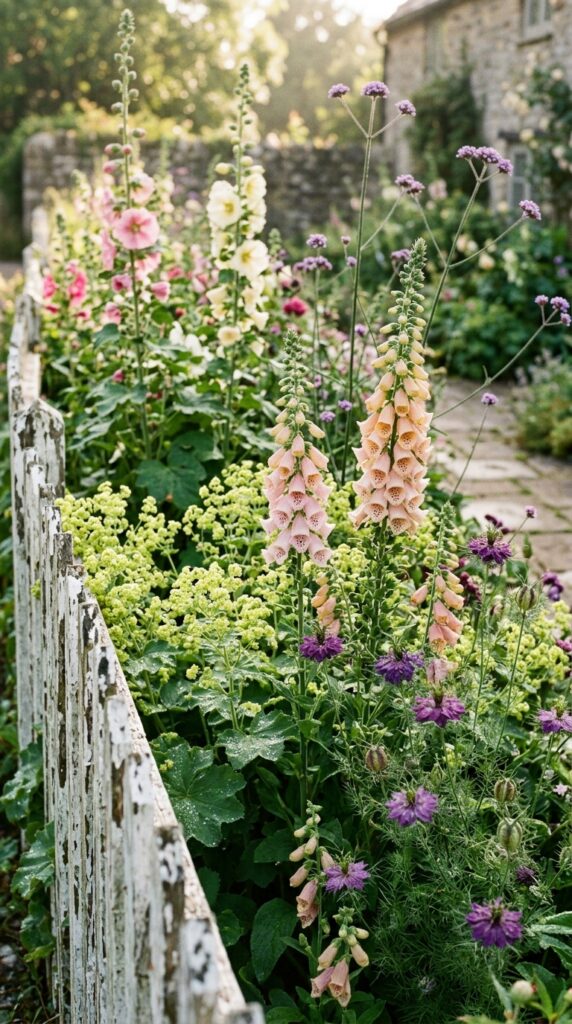
Cottage gardens get a reputation for being high maintenance, but the secret is letting plants do their own thing. Self-seeders fill gaps, replace themselves year after year, and create that lovely tumbled look you can’t fake with annuals from a flat.
Start with foxgloves, larkspur, love-in-a-mist, calendula, poppies, and hollyhocks. Plant them once, let a few go to seed, and they’ll show up where they want to. Your job becomes editing, not planting.
The constraint here is patience. Year one looks sparse. Year two, things start showing up in unexpected spots. By year three, you’ll be pulling extras to give to friends.
If you mulch heavily every spring, you’ll smother the seedlings. Use a lighter hand or skip mulch in the self-seeding zones entirely.
It’s a garden that gets more charming the less you control it.
5. The Modern Monochrome Bed
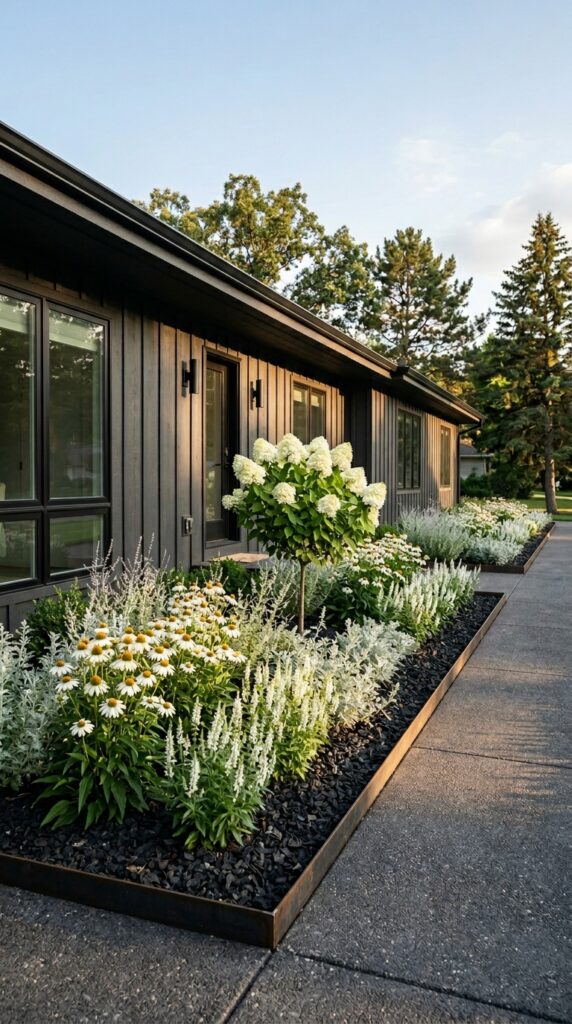
Monochrome beds are wildly underused, and I think it’s because people assume they’ll look boring. They don’t. They look intentional and grown-up, and they make a small space feel curated rather than chaotic.
Pick one color and commit. White is the easiest because almost every plant family has a white variety, and white reads beautifully at dusk. But a soft yellow bed or an all-purple bed can be equally striking. The key is varying texture and height so your eye still has somewhere to travel.
Watch out for foliage clashing. A monochrome flower bed needs harmonious leaves too, or it looks accidentally patchy. Lean into silvers, deep greens, and chartreuse for contrast.
This is the move if you want minimal maintenance and maximum visual calm.
6. The Shady Woodland Bed
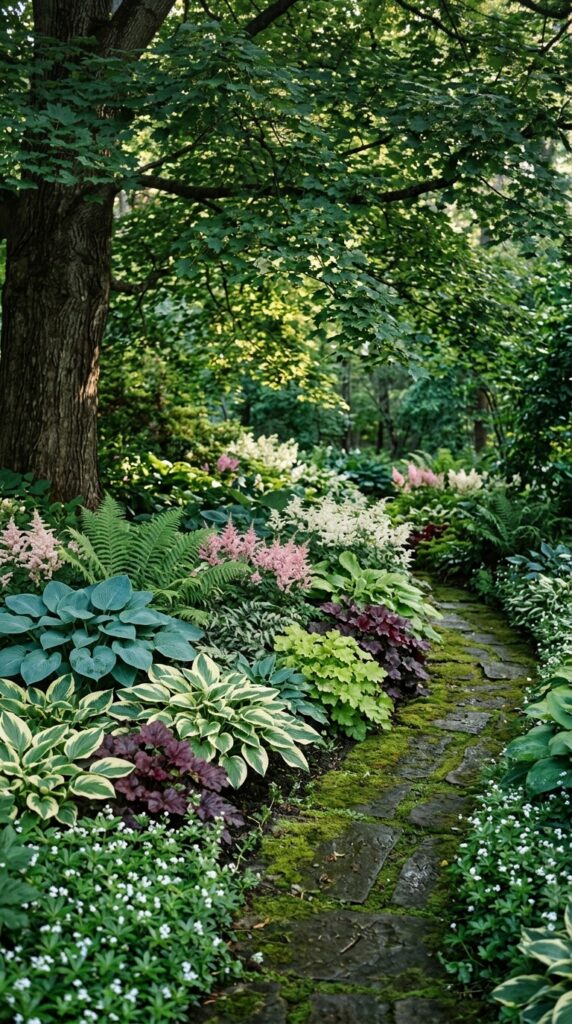
Shade is treated like a problem, but it’s actually one of the easiest places to make a beautiful bed because shade plants tend to be tough, slow-growing, and forgiving.
Build around foliage first, flowers second. Hostas, ferns, heuchera, and brunnera give you a tapestry of leaf shapes and colors that holds up all season. Then layer in astilbe, bleeding heart, and Japanese anemone for blooms.
Here’s the trick: shade beds need contrast in leaf size. Pair big-leaved hostas with feathery ferns and small-leaved ground covers. Without that variation, everything blurs into a green smear.
One constraint to keep in mind: dry shade under big trees is brutal. Stick with epimedium, hellebores, and barrenwort if you’re battling tree roots.
A good shade bed feels like a secret room in the garden.
7. The Curb Appeal Mailbox Garden
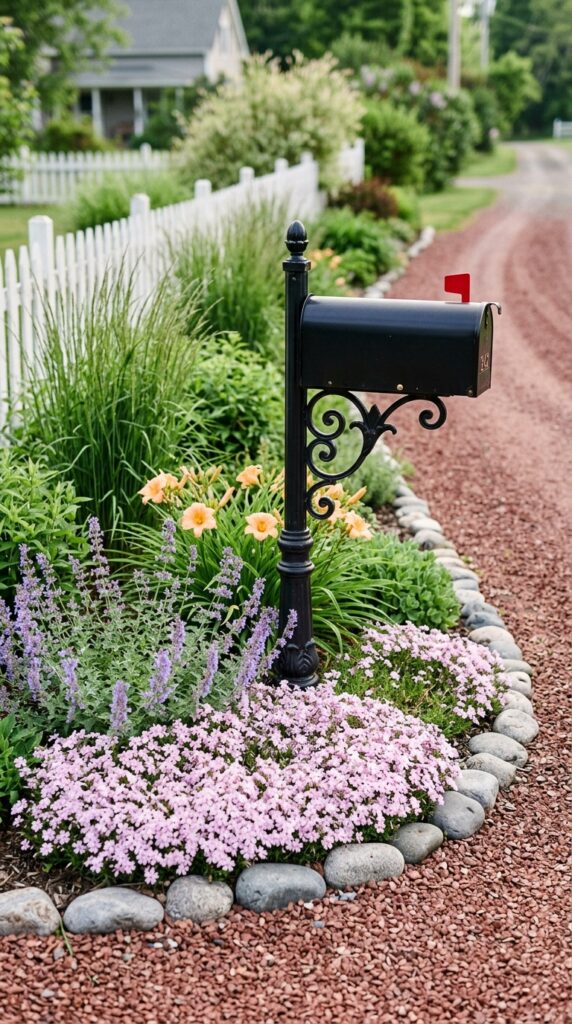
The mailbox bed is the most overlooked square footage in American yards. People plant one petunia and call it done, when this little patch is the first thing visitors see.
Keep the scale right. A circular bed about four to five feet across is plenty. Plant a low ground cover at the front edge, mid-height bloomers in the middle, and one taller anchor plant or grass at the back. Daylilies, catmint, sedum, and creeping phlox are tough enough to handle road salt and lawnmower abuse.
Avoid anything thorny or floppy near the mailbox itself. The mail carrier will not thank you for roses scratching their arm.
A small, well-styled mailbox bed punches way above its weight in curb appeal. It’s the garden equivalent of a clean entryway.
8. The Raised Bed Border
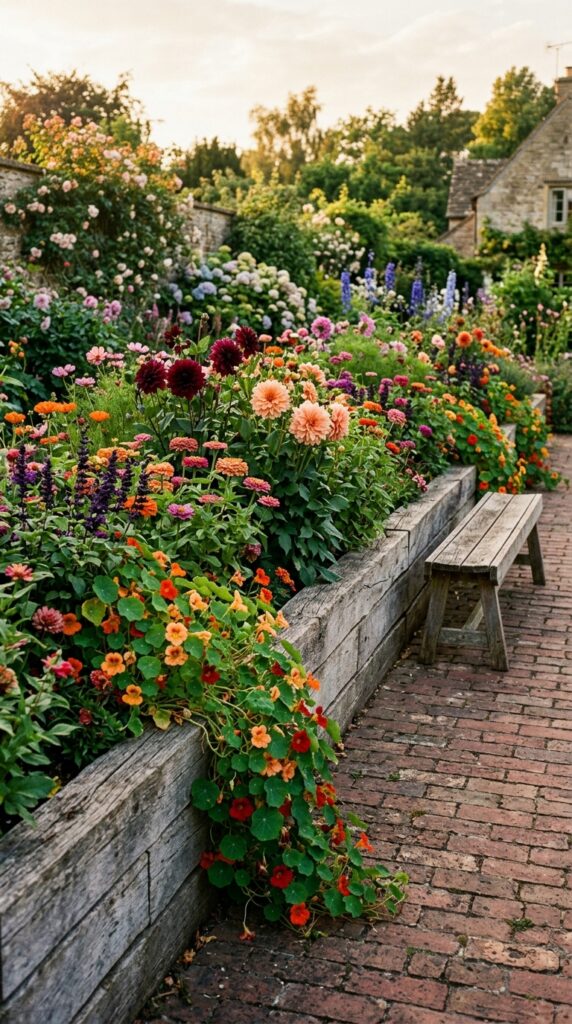
Raised beds aren’t just for vegetables. A raised flower border solves about eight problems at once: bad native soil, poor drainage, back pain from bending, and the visual flatness of beds at ground level.
Build them between twelve and eighteen inches high. Any taller and they start looking like planters; any shorter and they don’t really save your back. Oak, cedar, or weathered steel all age beautifully. Skip pressure-treated pine if you can swing it, because it always looks like construction leftovers.
The trade-off is upfront cost and labor. Building raised beds is a weekend project, not an afternoon. But once they’re in, you control the soil completely, which means fewer weeds and happier plants.
For low maintenance, fill them with perennials anchored by a few self-seeding annuals. Done.
9. The Stone-Edged Herb and Flower Bed
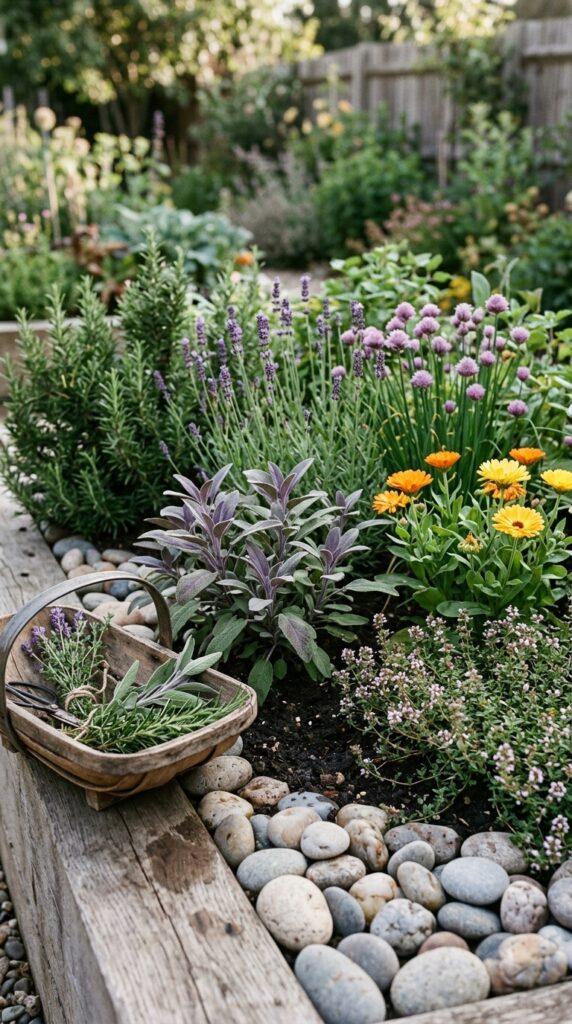
I’m a big believer in beds that earn their keep. Mixing herbs with flowers gives you a bed you actually use, and most culinary herbs are gorgeous in bloom anyway.
Lavender, sage, rosemary, and thyme are the obvious starters, but don’t overlook chives with their pom-pom purple flowers, oregano that explodes into a haze of pink, and bronze fennel that looks like smoke. Tuck in calendula and nasturtiums for edible flowers.
Stone edging keeps the whole thing looking grounded and slightly old-world. Use stones you can actually find locally, because trucked-in decorative rock always looks transplanted.
The watch-out: most culinary herbs need real sun and sharp drainage. If your soil is heavy clay, amend it generously or build the bed up.
A bed that smells incredible every time you brush past it is hard to beat.
10. The Layered Foundation Planting
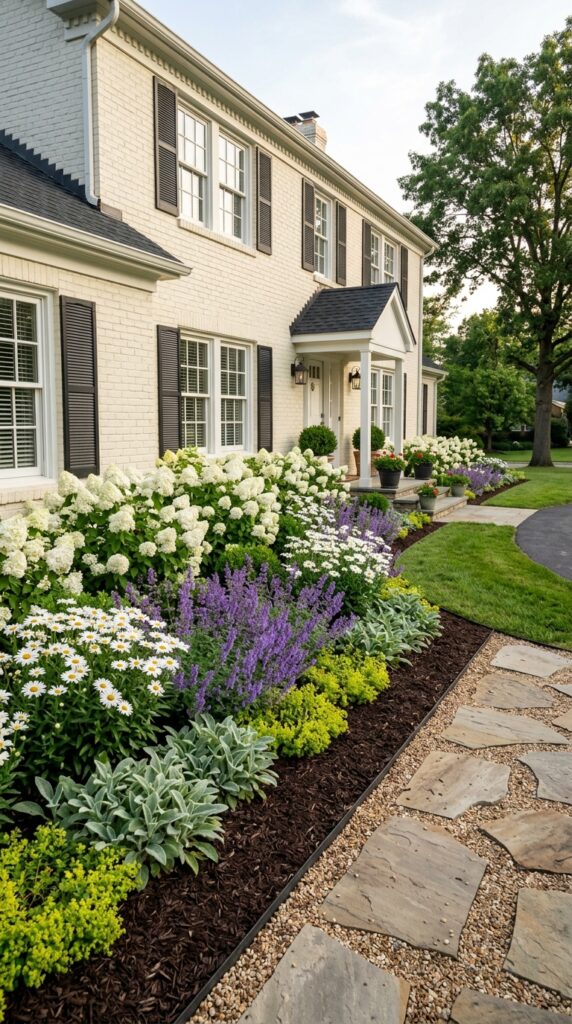
The strip of dirt along the front of the house is where most landscaping goes to die. Either it’s three sad shrubs spaced like prison guards, or it’s an overgrown jungle eating the windows.
Layer it instead. Tallest plants in the back near the foundation, mid-height in the middle, low spreaders at the front. Keep everything well below the windowsills so light still reaches the house. Dwarf hydrangeas, catmint, daisies, and sedum make a reliable, classic combination.
Avoid the trap of planting everything at the same height. Foundation beds need vertical rhythm or they look like a hedge.
One real constraint: leave a foot of breathing room between plants and the house wall. Crowded foundations trap moisture and invite pests.
Done well, this bed makes a house look polished without trying too hard.
11. The Container-Cluster Flower Bed
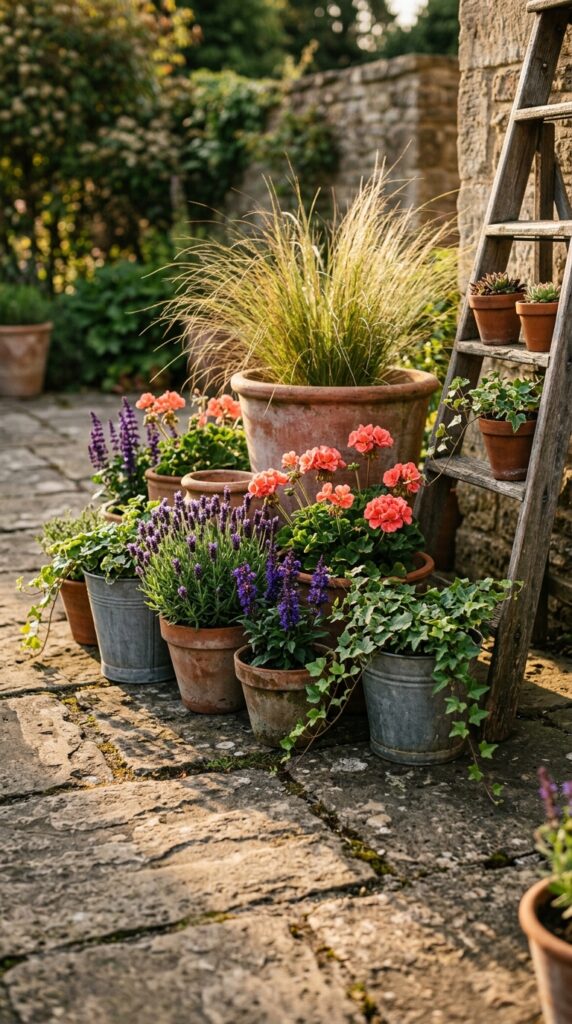
This one’s for renters, balcony gardeners, and anyone who can’t or won’t dig up their yard. A grouped container arrangement reads as a flower bed when it’s done with intention, and you can take it with you when you move.
Cluster pots in odd numbers, vary the heights dramatically, and stick to a tight color palette. Mixing too many container materials makes it look like a yard sale; aim for two materials max, like terracotta and zinc, or stone and wood.
Use self-watering containers if you tend to forget. Drip irrigation on a timer is even better.
The constraint is real: containers dry out fast, especially in summer. Smaller pots need daily watering in heat, which defeats the low-maintenance promise. Go big on pot size.
A well-clustered container bed has all the charm of an in-ground garden, none of the digging.
12. The Wildflower Carpet Bed
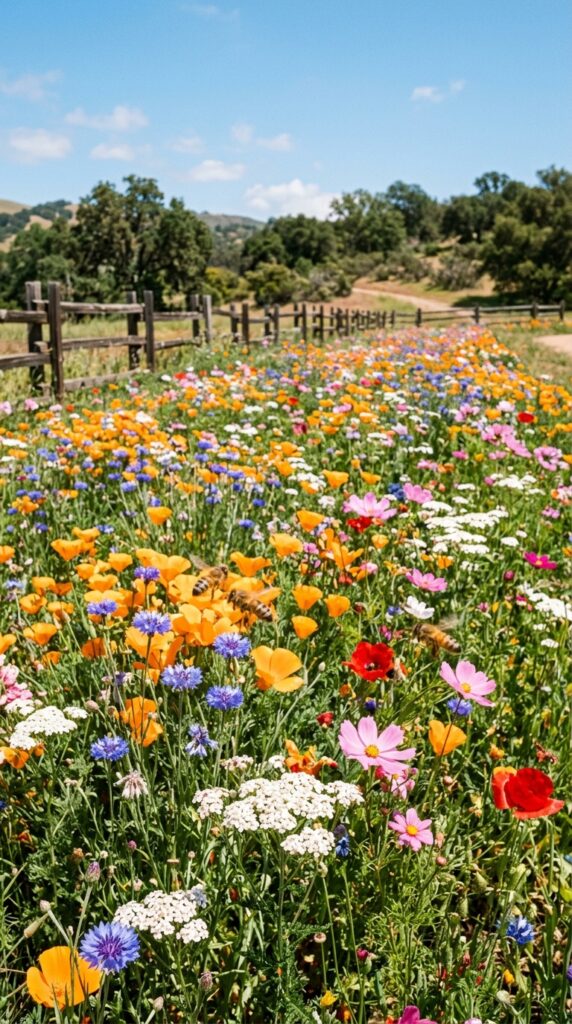
If you want maximum impact for minimum effort, scatter a wildflower seed mix over prepared soil and let nature handle the rest. Done right, this is the easiest beautiful flower bed on the entire list.
Choose a regional wildflower mix rather than a generic one. Prep the soil by clearing existing growth and raking it loose. Scatter seed in fall or early spring, press it in lightly, water once, and walk away.
The honest trade-off: wildflower beds look stunning for about six to eight weeks, then get scraggly. Plan to mow it down in late summer and let it reseed for next year, or overseed with a fall mix for a second wave.
This isn’t a bed for control freaks. It changes year to year depending on which seeds win.
For a side yard or a back fence line, it’s pure magic.
Summary
A garden doesn’t have to be a second job. The beds that impress most aren’t the ones tended every weekend with a measuring tape; they’re the ones built on smart plant choices, good bones, and a willingness to let things grow into themselves. Pick the idea that fits your space, your climate, and your honest energy level. Start smaller than you think. One well-planted bed beats three half-finished ones every time.
If you took something useful from this, bookmark our site and come back when you’re ready to tackle the next corner of your yard. We dig into real, lived-in decor and garden ideas that work for actual humans, not magazine shoots. Whether it’s the front porch, the back patio, or that awkward strip beside the driveway, there’s always a smarter way to make it beautiful. Thanks for reading, and happy planting.