There’s a particular kind of patio I keep coming back to in my head — the one that looks like someone lives in it, not stages it. Not the glossy magazine version with a $4,000 sectional and a pergola that needed permits. The real one. The one where the chairs don’t quite match, the lanterns were thrifted, and somehow it still feels like the best seat in the neighborhood.
Good outdoor design isn’t about budget. It’s about restraint, texture, and being honest about how you actually use the space. Most people overspend on the wrong things (looking at you, fancy patio heaters) and underspend on the parts that matter most — lighting, soft surfaces, and a little greenery that doesn’t look like it came from a gas station.
So if you’ve got a small concrete slab, a tired wooden deck, or just a patch of yard you keep meaning to deal with, here are twelve ideas that punch way above their price tag.
1. Layered String Lights Over a Simple Seating Nook
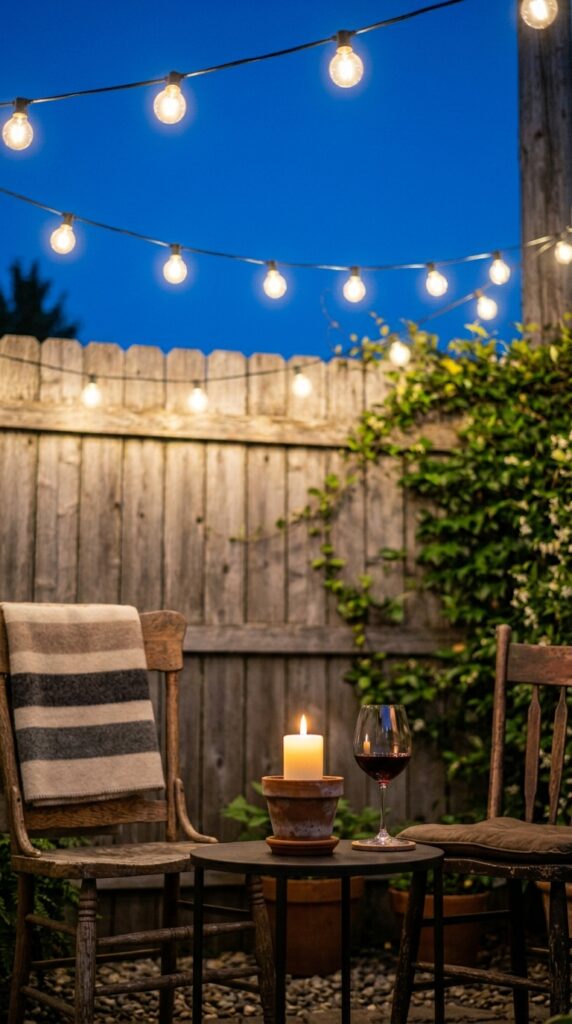
Honestly, if you only do one thing on this list, do this. Nothing transforms a patio faster than overhead lighting — and string lights are absurdly cheap for the impact they deliver.
Here’s the trick most people miss: don’t string them in a single boring line. Layer them. Run two or three swags at slightly different heights to create a soft canopy effect. The criss-cross is what makes it feel intentional instead of leftover-from-a-graduation-party.
Go for warm white bulbs only — anything cool-toned looks clinical outdoors. And if you can swing it, get the heavy-duty kind with replaceable bulbs. The dollar-store sets die after one summer and you’ll regret the false economy.
One thing to watch: anchor points. Renters, use removable adhesive hooks rated for outdoor use rather than drilling into siding. Takeaway — lighting is the cheapest luxury your patio will ever wear.
2. Thrifted Rattan and Wicker, Refreshed
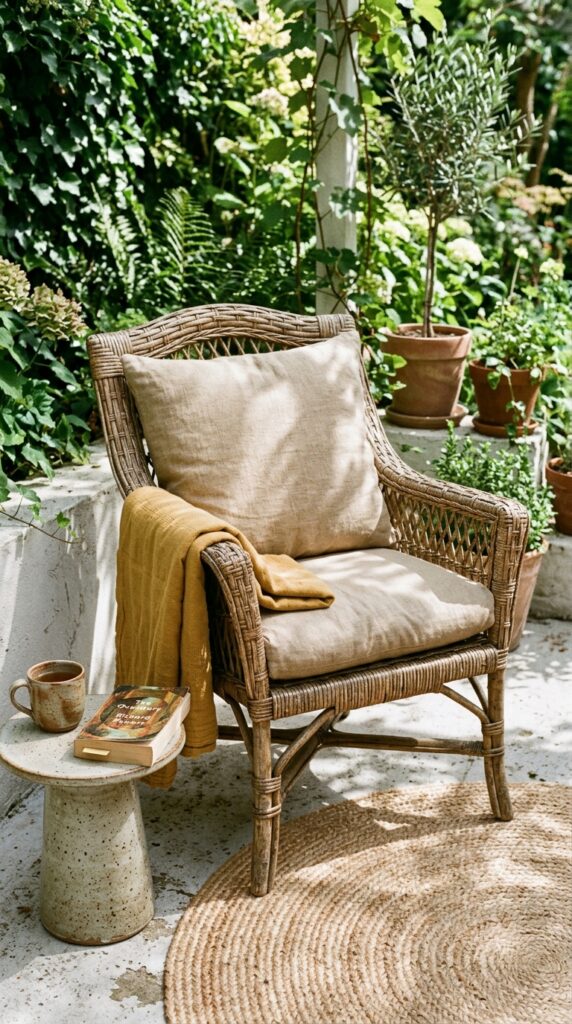
Rattan is the cheat code of budget outdoor styling. Estate sales, marketplace listings, alleyway giveaways — once you start looking, it’s everywhere. People are constantly trying to get rid of grandma’s old porch set.
The catch: most of it looks tired. A quick sand and a couple of light coats of outdoor spray paint in a chalky white, soft black, or muted sage will make it look like something you’d see in a design magazine. Skip glossy finishes — matte reads expensive.
Throw a thick linen-blend cushion on top (those should be your splurge), and you’ve basically built a $600 chair for under $80. Watch out for true wicker that’s already splitting — once it starts unraveling, it’s a losing battle. Real rattan with intact weave is what you want. Quick takeaway: refurbish, don’t replace.
3. A Painted Concrete Floor That Acts Like a Rug
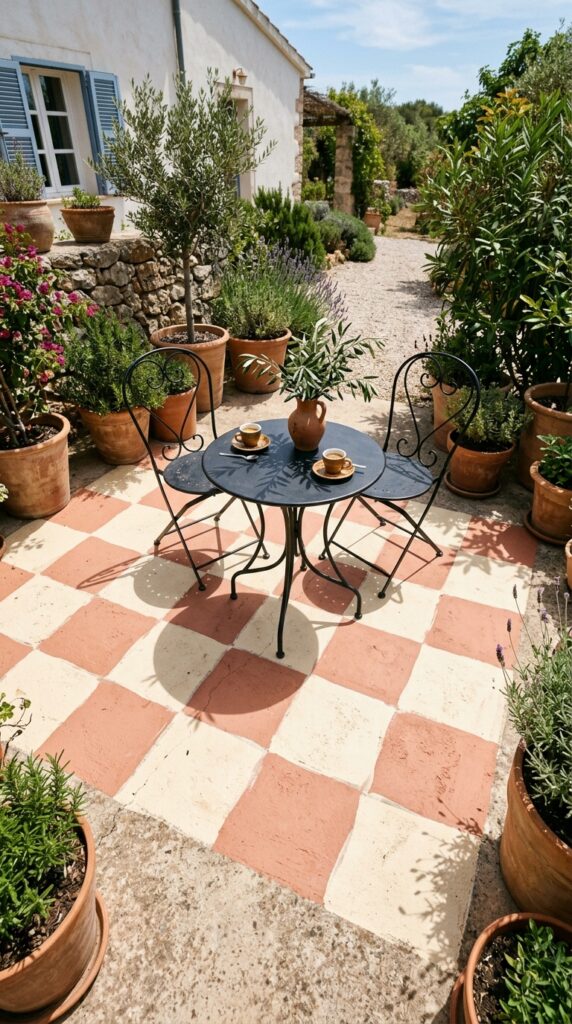
If your patio is a sad grey concrete slab, this idea is borderline magical. Outdoor floor paint plus a stencil — or just painter’s tape and patience — can give you a custom “rug” that costs about $40 total and lasts years.
Stick to two colors max. Checkerboards, oversized stripes, and simple geometric shapes always read better than anything fussy. And use muted tones: terracotta, off-white, soft black, dusty olive. Nothing screams “I tried” like neon outdoors.
The constraint here is prep work. You have to clean and prime the concrete properly or it’ll peel by August. Don’t skip it. If you hate maintenance, this isn’t your move — expect to touch it up every couple of seasons. But for the visual punch? Absolutely worth it. Quick takeaway: paint replaces what an outdoor rug can’t afford to be.
4. The Outdoor Sofa, DIY Pallet Edition
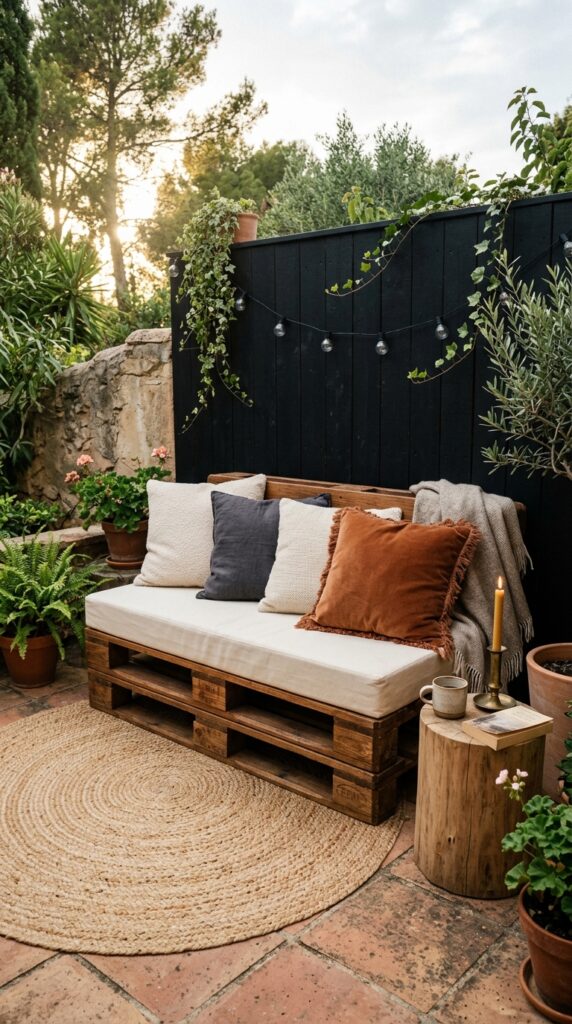
I know — pallet furniture has a reputation. But done right, it actually looks expensive in a slightly raw, design-school way. Done wrong, it looks like a frat house. The difference is in the finish.
Sand the pallets until they’re genuinely smooth (splinters in summer feet are a dealbreaker). Stain them — don’t leave them raw. And invest in proper cushion foam with a removable, washable cover. The cushion is what people will see and feel; the wood underneath is just the bones.
Stick to a low profile. Tall pallet builds always look clunky. Two stacked pallets max. If you share the space with kids or pets, round any sharp corners with a sander. Quick takeaway: pallets become furniture only when you stop treating them like pallets.
5. A Privacy Screen Made from Hanging Textiles
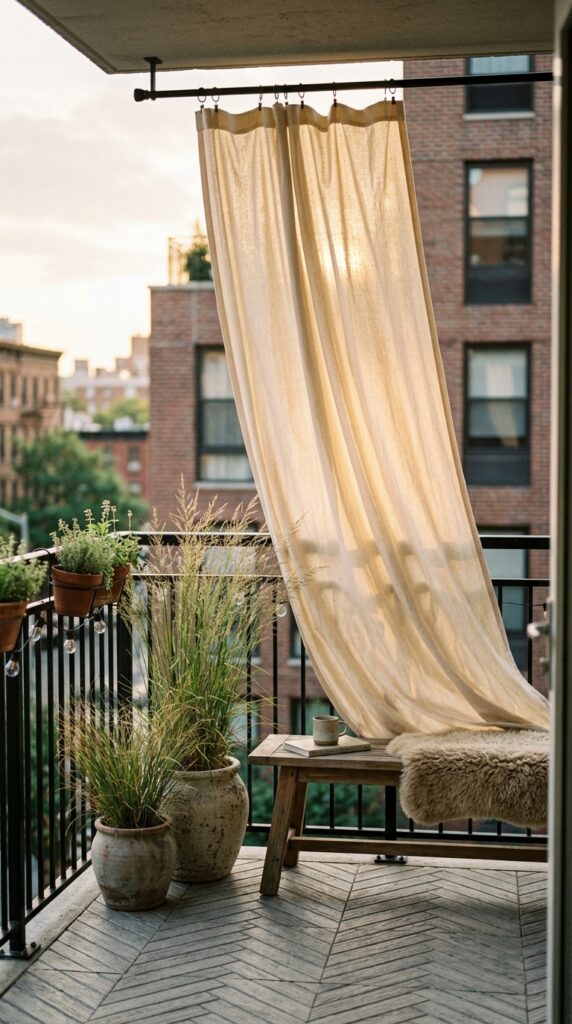
Privacy fences are expensive. Outdoor curtains are not. And honestly, they look better — softer, warmer, more hotel-courtyard than suburban-stockade.
Heavy canvas drop cloths from a hardware store work shockingly well as DIY outdoor curtains. They’re already weatherproof-ish, they take dye beautifully if you want a color, and a pack costs less than dinner. Hang them on a black metal rod or even galvanized pipe.
The watch-out: wind. If you live somewhere gusty, you’ll need tiebacks or weighted hems, otherwise your “elegant flowing drape” becomes a sail. Stitch small fishing weights into the bottom seam if you sew, or clip them on with curtain rings if you don’t. Quick takeaway: fabric solves what fencing can’t afford to.
6. Terracotta Everything
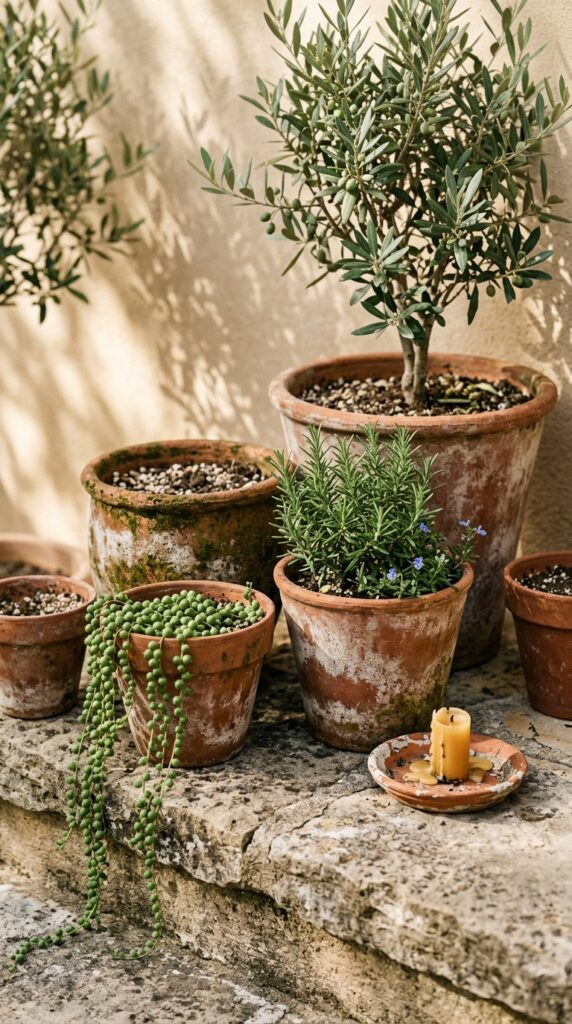
Plastic pots will betray you. They fade, they crack, they always look cheap no matter how nice the plant inside is. Terracotta, on the other hand, gets better with age. The patina, the salt streaks, the moss — all of it adds character.
Buy them in bulk from a garden center at the end of the season when prices drop. Mix sizes. Cluster them in odd numbers (threes and fives always look more natural than pairs).
Want them to age faster? Brush diluted yogurt or buttermilk on the outside and leave them somewhere shady. Within weeks they’ll start developing that beautiful weathered look that takes pots in Provence about thirty years to grow naturally.
The constraint: terracotta dries out fast. Thirsty plants will struggle. Pair with drought-tolerant picks like rosemary, lavender, sage. Quick takeaway: clay outclasses plastic at every price point.
7. The Single Statement Tree
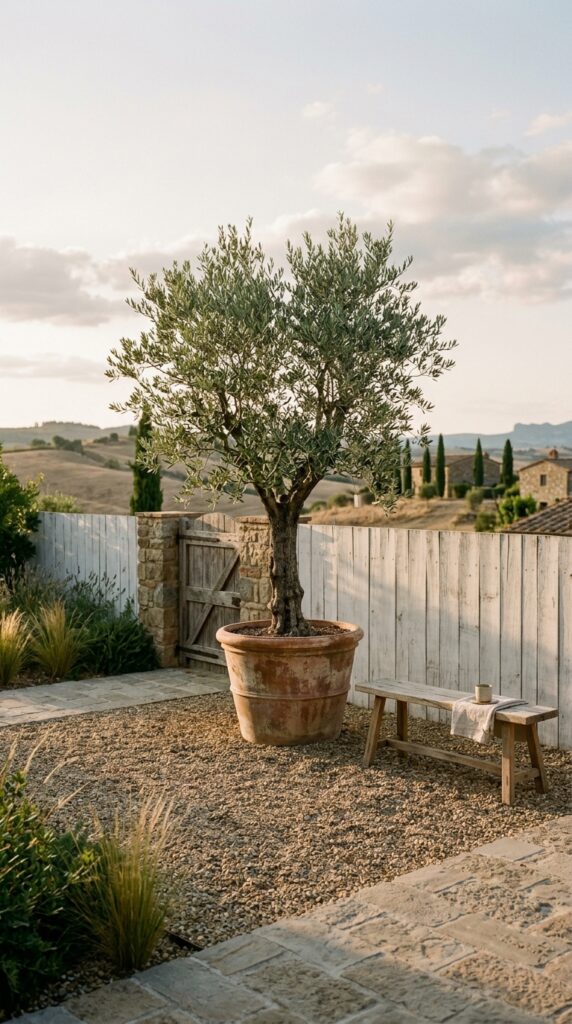
Here’s a take that might be unpopular: most patios have too many small plants and not enough big ones. A scattering of tiny succulents looks busy. One six-foot olive tree, fig tree, or Japanese maple in a generous pot looks intentional.
A single statement tree anchors the whole space. It draws the eye, gives you actual shade, and instantly makes the patio feel established — like it’s been there for years.
Buy the biggest pot you can afford and the smallest tree that fits it. The tree will grow into the pot over a couple of seasons, and meanwhile the pot does the visual heavy lifting. If you’re in a cold climate, dwarf varieties or cold-hardy options like a small dogwood will survive winter better.
Watch out for under-potting — too small a pot, and the tree stresses every August. Quick takeaway: one big plant beats ten little ones.
8. A Cozy Outdoor Rug Layer
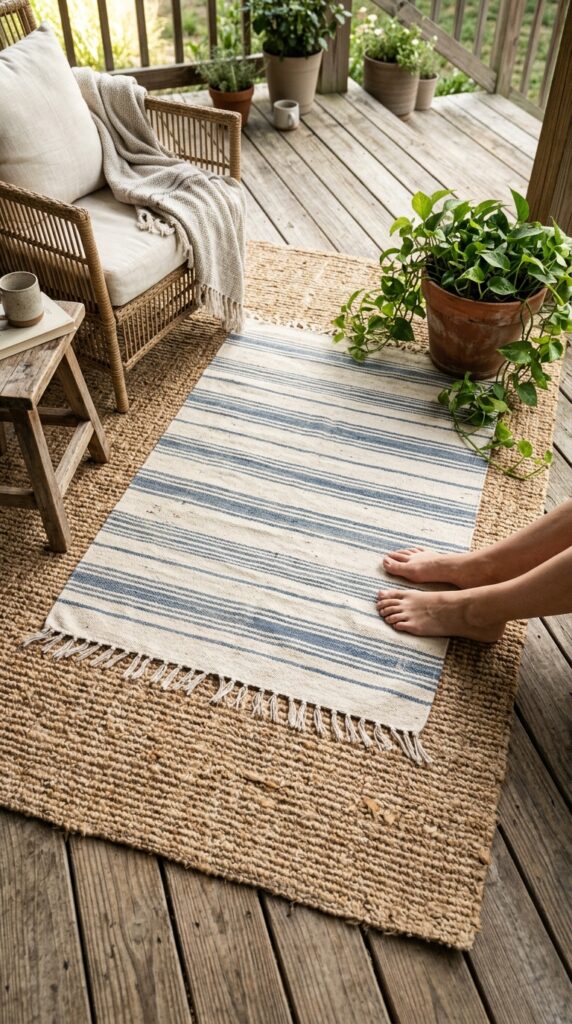
A good outdoor rug does for a patio what a great rug does for a living room — it grounds everything. Suddenly, your random furniture feels like a space.
The trick is layering. A budget jute or polypropylene base rug (cheap, durable, washable) plus a smaller flat-woven cotton or vintage-style rug on top creates that collected, slightly bohemian feel that reads way more expensive than it is.
Buy bigger than you think. The most common rug mistake — indoor or out — is going too small. Your front chair legs should at least touch the rug, ideally sit on it.
Watch-out: cheap outdoor rugs hold moisture and grow mildew underneath, especially on wood decks. Pick one up every couple of weeks to let the deck breathe, or it’ll stain. Quick takeaway: a rug turns a patio into a room.
9. A Vintage Mirror Outdoors (Yes, Really)
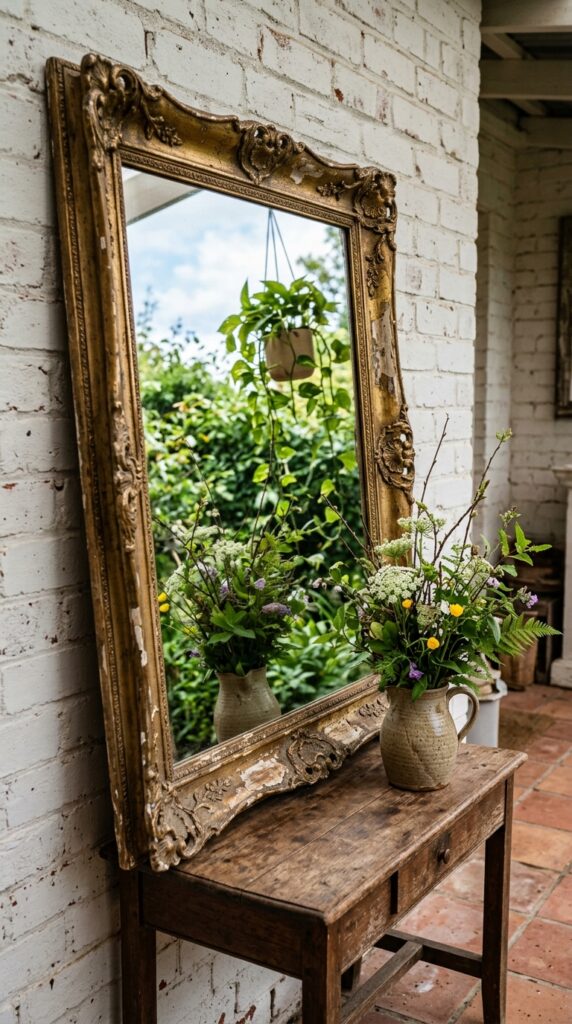
This is the trick that separates people who decorate a patio from people who style one. An outdoor mirror — especially a thrifted, slightly battered one — adds depth, light, and a bit of unexpected glamour to the most ordinary backyard.
Lean it against a wall rather than hanging it. It feels more relaxed and lets you move it around. Look for old mirrors at flea markets and estate sales — the more weathered the frame, the better it’ll look outdoors. Spray-painted gold from a thrift store works too.
The watch-out: direct sun on a mirror can occasionally start fires (genuinely — especially with concave shapes). Position it under cover or where it reflects greenery, not the sky. Quick takeaway: mirrors aren’t just for indoors, and outside they look unexpectedly luxe.
10. The DIY Bar Cart or Drinks Station
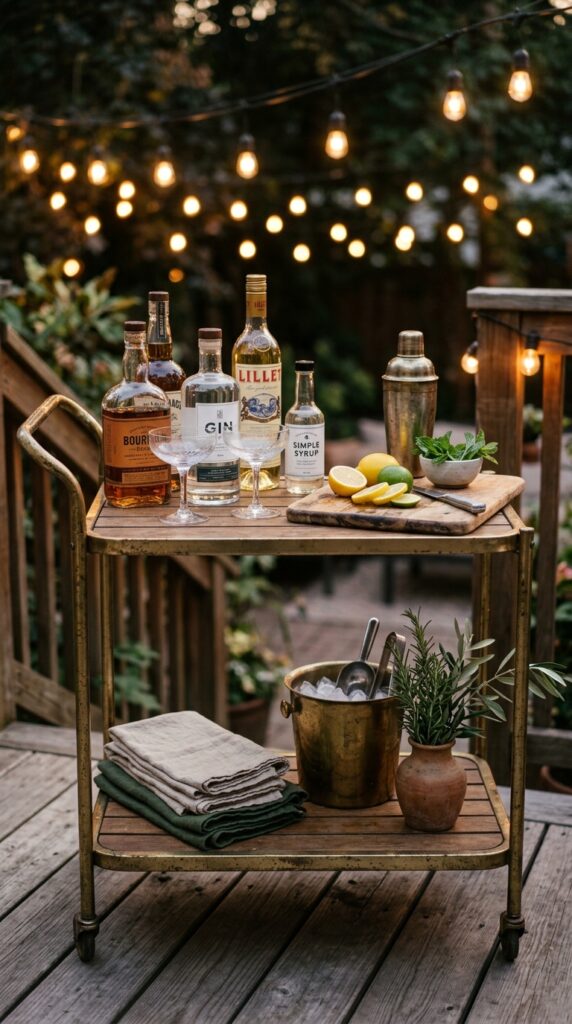
A drinks station is the most underrated piece of patio furniture. It signals “we hang out here” louder than almost anything else, and you can build one out of practically anything.
A thrifted brass bar cart is the dream find — and they show up at estate sales constantly. But a small wooden side table, a stacked vintage crate, or even a repurposed plant stand works just as well. Style it with: a few good glass bottles, a small ice bucket, cloth napkins (not paper), and one fresh element — citrus, herbs, flowers.
The constraint: keep it covered or bring the contents in when not in use. Outdoor weather is brutal on glassware and metal. A simple linen drop cloth over the whole thing protects everything between gatherings. Quick takeaway: a small drinks setup makes a patio feel hosted.
11. Built-In Bench Seating Along a Fence
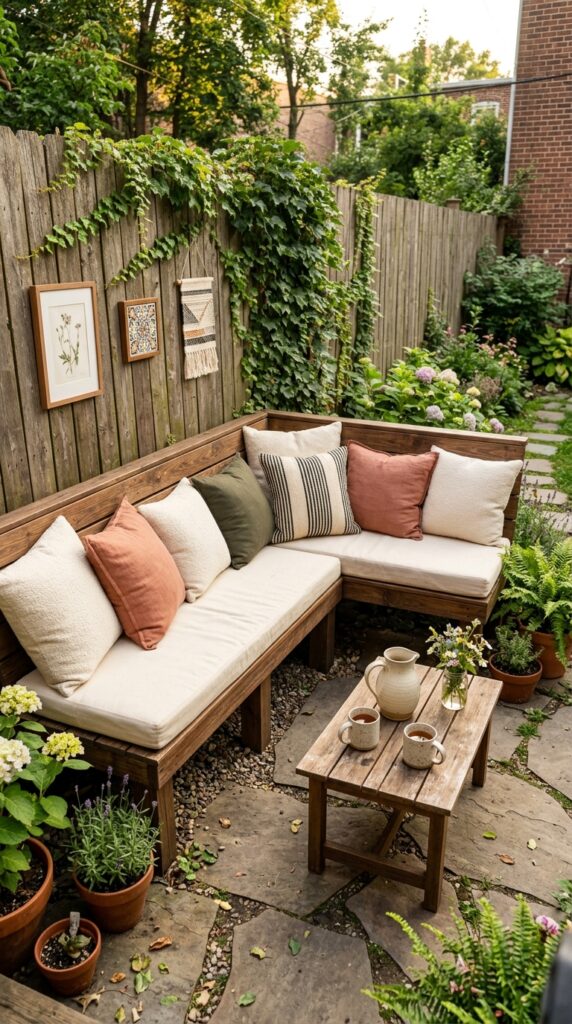
If you have an awkward corner, a fence line, or a deck edge, built-in bench seating is the move. It’s cheaper than buying outdoor sofas, lasts longer, and instantly makes a small space feel architectural and intentional.
The build itself is mostly basic carpentry — 2×4 frame, plywood top, deck screws. There are dozens of free plans online, and most cost under $200 in materials for a generous L-shape. Hinge the seat tops and you’ve got hidden storage for cushions and tools.
The investment goes into cushions and pillows. Get custom foam cut at an upholstery shop and wrap it in heavy outdoor canvas. Mix your throw pillow textures aggressively — boucle, linen, waffle, stripes — that’s where it stops looking like a deck project and starts looking designed.
Watch out: don’t build it permanent if you rent. Quick takeaway: seating that hugs the perimeter opens up the middle.
12. A Tiny Outdoor Vignette You Style Like Indoors
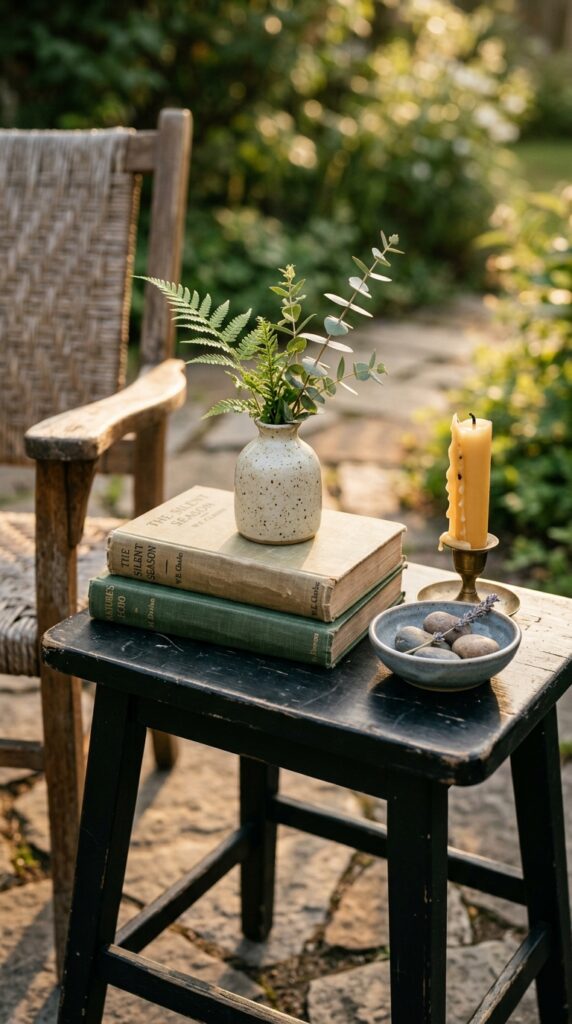
This is the part most people forget — small moments. A patio without vignettes looks like outdoor furniture sitting in a yard. A patio with them feels like a home.
Pick one or two surfaces — a side table, a step, the corner of a bench — and style them like you would an indoor shelf. Stack two books, add a candle, a small vase with foraged branches, maybe a stone or a bowl. The rule is texture variation: something soft, something hard, something natural, something living.
Keep it edited. Three to five objects, max. More than that and it starts to look like clutter rather than styling.
Watch out for things that won’t survive weather — paper books fade, real candles melt in summer heat. Use weatherproof versions where possible. Quick takeaway: small details are what people notice last and remember most.
Final Thoughts
The best patios I’ve ever seen weren’t expensive — they were considered. Someone thought about how the evening light hit the seating area. Someone painted a fence black instead of replacing it. Someone hung curtains instead of building walls. Those are the moves that separate a generic backyard from one you actually want to spend time in.
You don’t need a contractor, a pergola permit, or a Saturday spent at a big-box home store to make this happen. You need a clear eye, a few good textures, decent lighting, and the patience to let it come together over a season or two rather than a single weekend.
If you walked away with one thing from this article, let it be this: warmth beats polish, every single time. A slightly mismatched patio with great light and soft cushions will always feel better than a magazine-perfect one that nobody actually sits in.
We hope you found something here that made you see your own backyard a little differently. Bookmark us, come back when you’re ready to tackle the indoors next, and remember — good design isn’t about money. It’s about taste, and taste is free. Welcome to the kind of decor advice that actually respects your wallet and your eye.