Designing a kids bedroom is one of those weirdly tricky projects that looks easy and absolutely isn’t. You want it playful but not chaotic, functional but not sterile, durable but not ugly, and ideally something the kid won’t outgrow in eighteen months. Throw in storage demands, sleep needs, a homework corner, and the occasional Lego avalanche, and suddenly the “fun” room becomes a spatial puzzle.
The good news? You don’t need a designer-level budget or a Pinterest-worthy square footage to get this right. What you need is a clear sense of what your kid actually does in the room, where the visual noise lives, and which pieces are worth investing in versus swapping out every couple of years. The twelve ideas below lean practical, a little opinionated, and grounded in real-life kid messiness, not staged perfection.
1. Build the Room Around a Soft, Grown-Up Color Palette
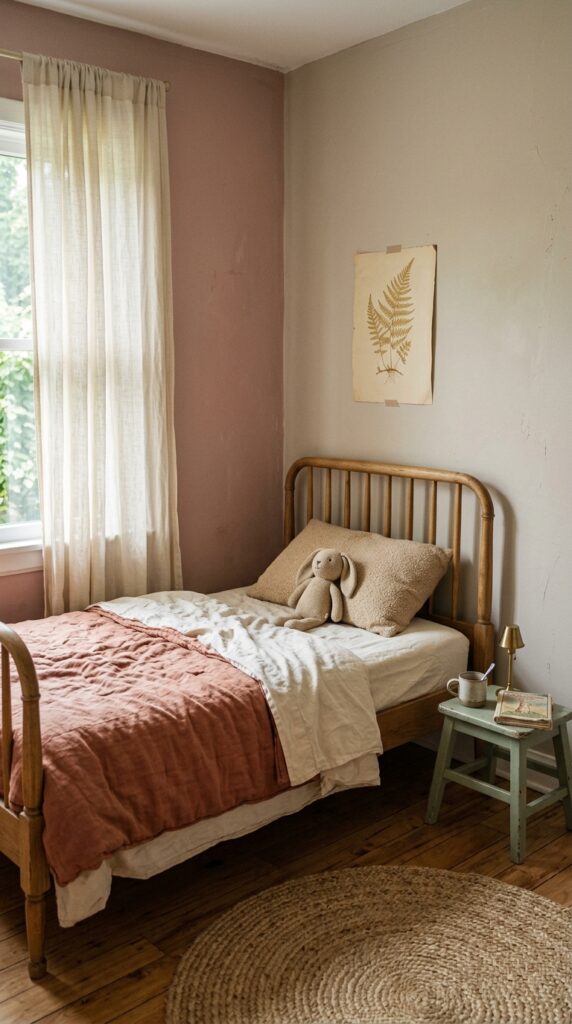
The fastest way to make a kids room feel intentional is to ditch the candy-colored cliché. Bright primaries are exhausting on the eyes, especially in smaller rooms where every surface bounces light back. Instead, lean into chalky, muted tones — dusty rose, sage, putty, warm clay — and let the toys be the loud thing. A few moves that work: paint walls in a matte chalk finish (it hides scuffs better than satin), choose bedding in washed cottons or linen, and pick one accent texture like boucle or jute to keep it from feeling flat. Skip the matchy bedding sets sold as “kids collections” — they age the room instantly. One watch-out: very pale walls with kids under five are a bad idea unless you genuinely enjoy repainting. Go a shade or two deeper than you think. A grown-up palette grows with the kid. That’s the whole point.
2. Use a Statement Wall Treatment Instead of a Theme
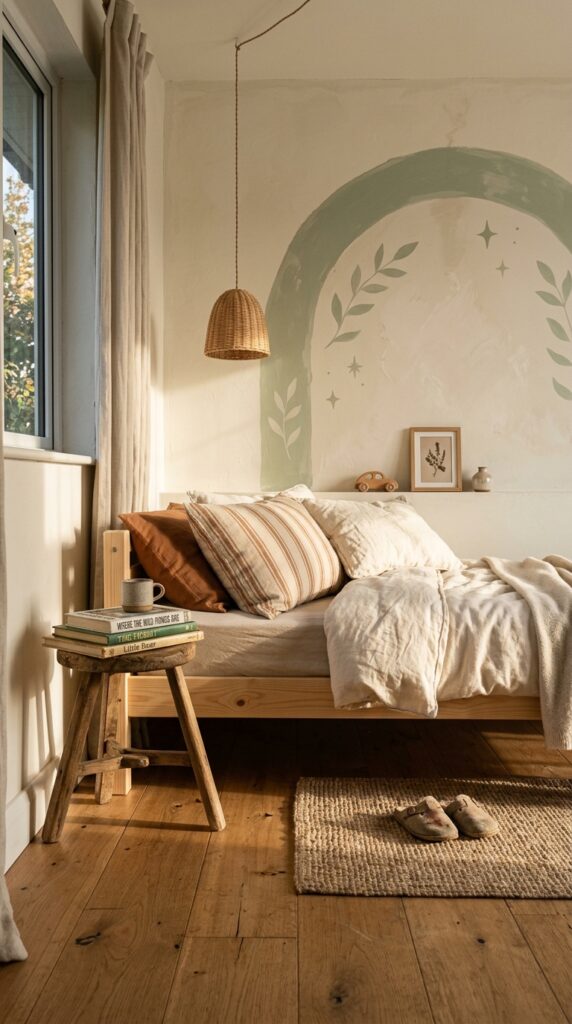
Here’s the trick I keep coming back to: themed bedrooms (jungle, space, princess, dinosaur — pick your poison) are a fast-track to redecorating in two years. A statement wall treatment, on the other hand, gives you the wow factor without locking you into a phase. Try a hand-painted arch behind the bed, a chunky picture-rail moulding painted in a contrasting tone, or vertical tongue-and-groove panelling halfway up the wall. Limewash and clay paint add depth without committing to a pattern. If you’re a renter, peel-and-stick murals have come a long way — the matte ones look almost painterly now. The constraint? Pick one wall and stop there. Treating all four walls is what tips a room from “elevated” into “claustrophobic theme park.” A great wall treatment carries the design weight so the rest of the room can stay calm.
3. Invest in a Real Bed, Not a Novelty One
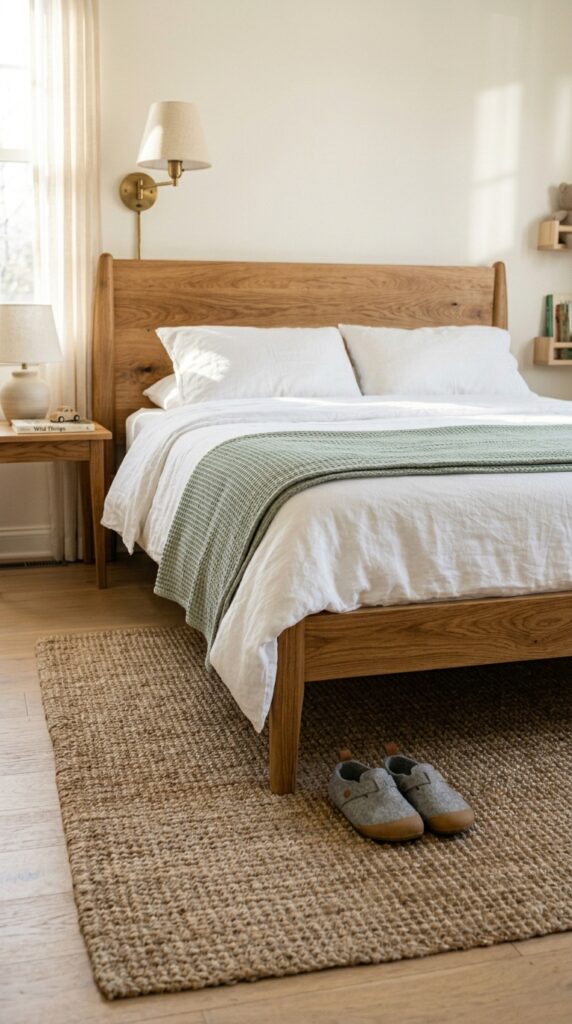
Race-car beds and castle bunks photograph well and deliver maybe eight months of joy before the kid wants something else. A simple, well-made wooden bed in oak, pine, or walnut will look good when they’re four, fourteen, and possibly when they move out and inherit it. Look for low-profile platform beds (safer for younger kids, no falling-from-height issues), rounded corners, and a headboard you can lean against for reading. Avoid MDF frames painted in trendy colors — the paint chips, the particle board sags, and you’ll replace it. The trade-off: a solid wood bed costs more upfront. But amortized over ten years of use, it’s cheaper than three novelty beds in a row. Buy the bed once. Save the budget for the fun stuff like textiles and lighting.
4. Layer Lighting in Three Distinct Zones
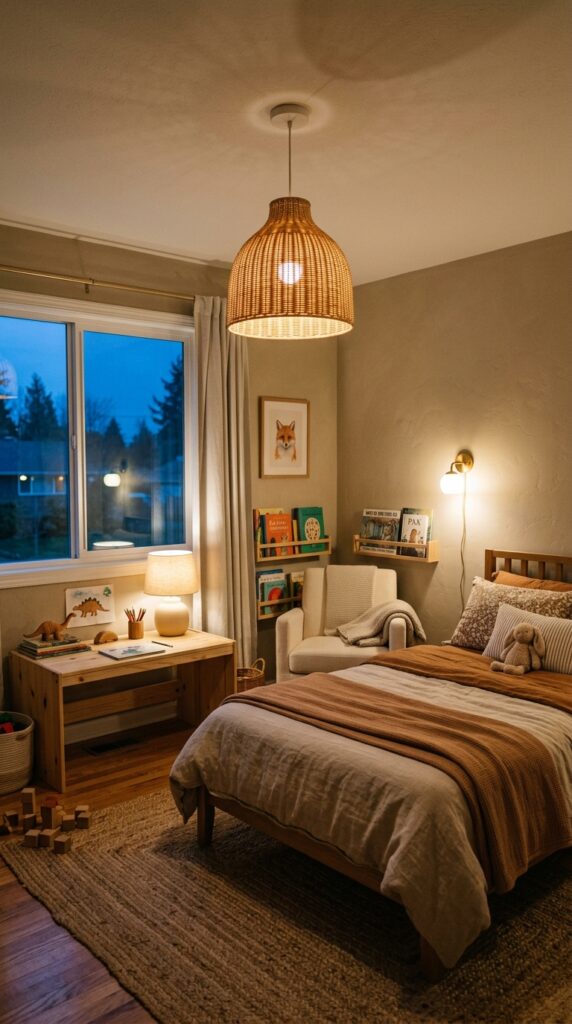
Single overhead lighting is a crime in a kids room. It’s harsh for play, terrible for winding down, and actively unhelpful at homework time. You need three layers: ambient, task, and what I’d call mood lighting. Start with a soft overhead — a woven pendant or a fabric drum shade diffuses the glare. Add a wall-mounted swing-arm sconce by the bed for reading (saves nightstand space and there’s no cord for little hands to yank). Then a warm dimmable lamp on the desk for homework, plus a small nightlight that’s actually warm-toned, not that horrible blue-white LED. Skip anything with a cool color temperature above 3000K. It makes everyone look sick and ruins the mood. Good lighting is invisible labor. You only notice when it’s wrong.
5. Make Storage Look Like Furniture, Not Plastic Bins
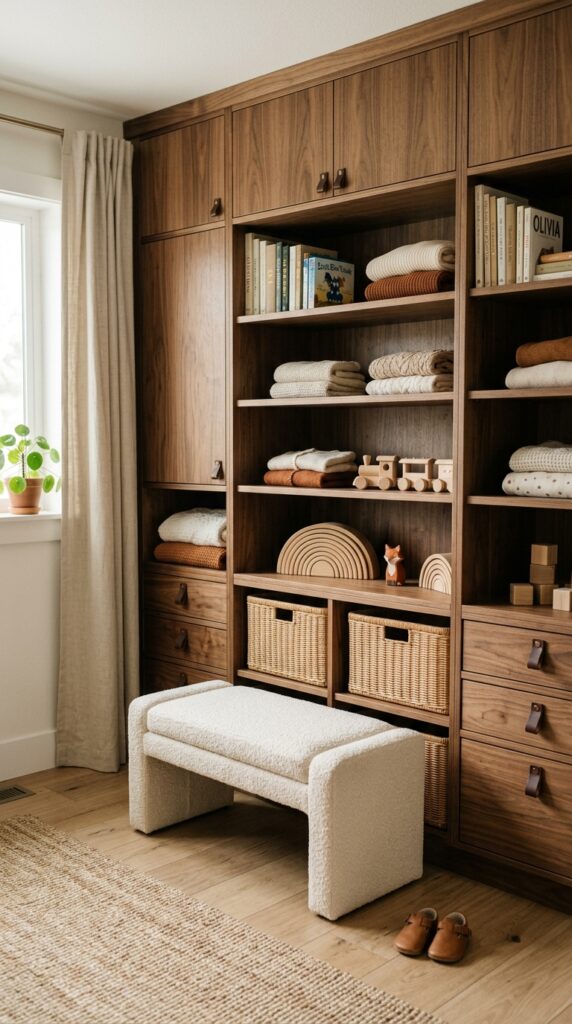
The single biggest visual upgrade you can make in a kids room is hiding the storage. Plastic bins in primary colors are functional but they shout, and they shout constantly. Closed cabinetry, woven baskets, fabric-front drawers, or even a long low credenza will quiet a room instantly. A few specifics: under-bed drawers are gold for shoes and out-of-season clothes. Open shelving with woven baskets handles toys without the visual noise. A hinged-lid bench at the foot of the bed doubles as seating and a stuffed-animal graveyard. The watch-out: don’t go fully closed-storage. Kids need to see some of their stuff to actually play with it. Aim for roughly 70 percent hidden, 30 percent visible. Storage that looks like furniture is the difference between “kid’s room” and “room that happens to belong to a kid.”
6. Carve Out a Real Reading Nook
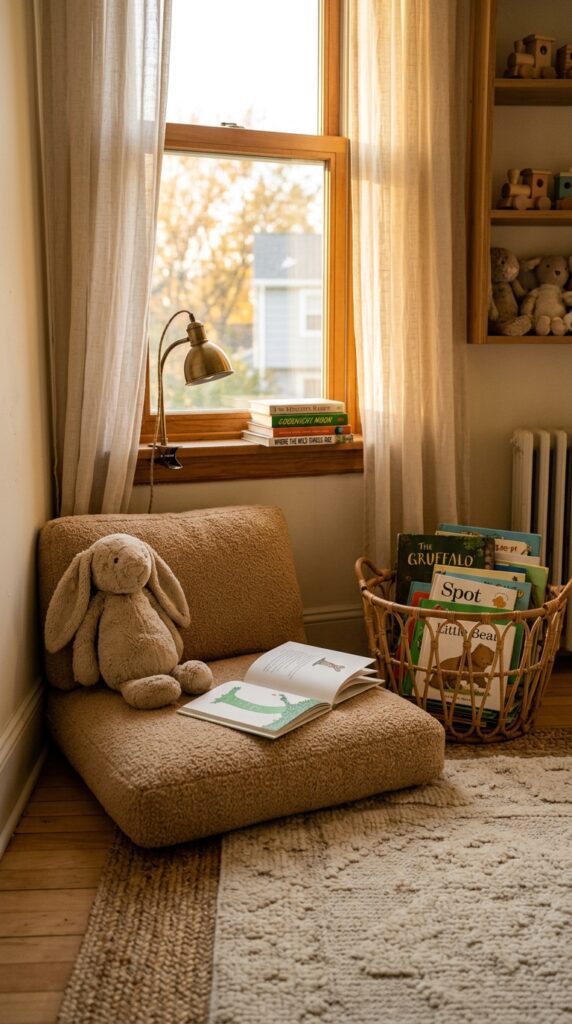
Reading nooks are the most underrated thing in kids’ room design. Carve out even a tiny corner with a floor cushion, a shelf, and a clip light, and suddenly the room has a second function beyond sleeping and toy storage. The formula: pick the corner with the best natural light, layer two rugs (jute base, soft wool on top) for that sink-in feeling, add a chunky floor cushion or a small armchair scaled for kids, and keep the books at their eye level. A single wall-mounted picture ledge holds maybe ten books face-out and makes choosing one feel exciting. If the room shares with siblings, the nook can act as a soft boundary between two zones — no wall needed. A reading corner is small square footage doing big emotional work. Don’t skip it.
7. Pick Textiles That Can Take a Beating
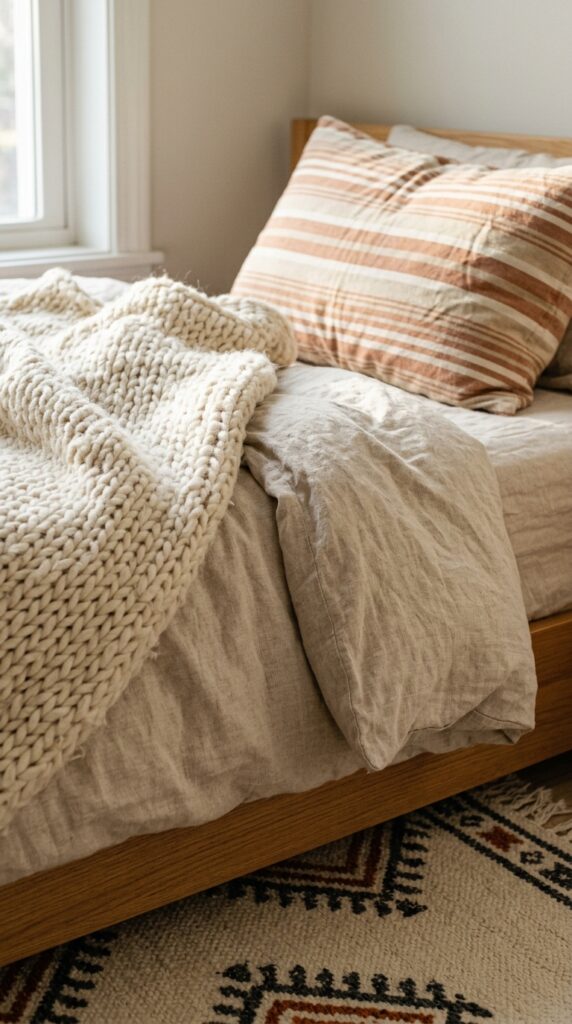
White bedding in a kids room is a romantic idea and a practical disaster. So is silk, velvet on the bed, and anything dry-clean only. Stick to washed cotton, linen, and wool — fabrics that look better with wear, not worse. A few specifics worth knowing: linen hides wrinkles and stains better than crisp percale. Flatweave wool rugs handle spills and vacuum easily. Boucle is surprisingly forgiving on cushions if you pick a darker shade. Avoid long-pile shag rugs unless you enjoy archaeological digs for missing puzzle pieces. The constraint: anything with a “spot clean only” tag is going home with you for one wash and then living in the donate pile. Read labels. Buy textiles that earn their keep. Pretty is great, but pretty-and-washable is the only way this works.
8. Use a Low Desk for Homework and Drawing
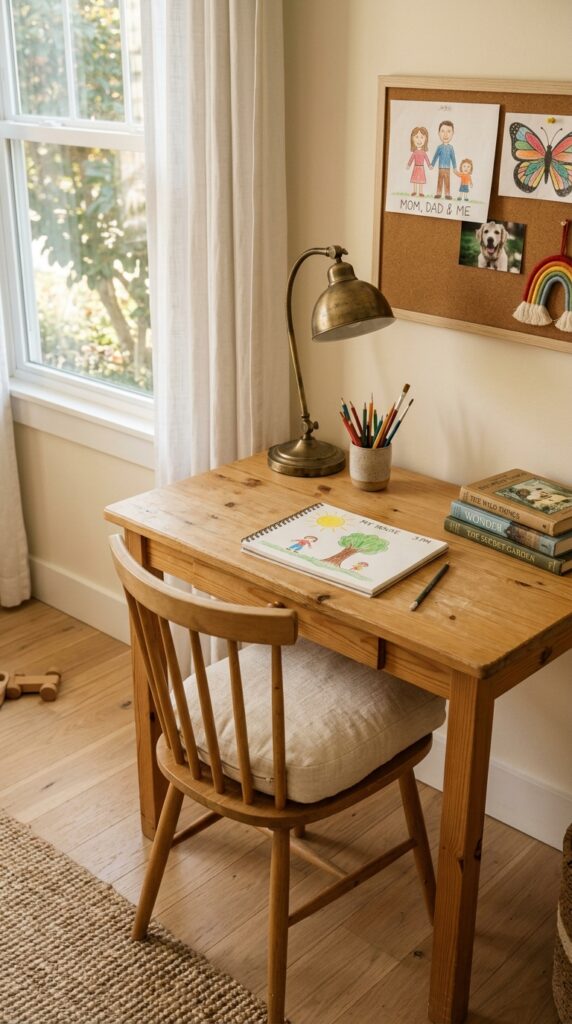
A dedicated desk, even a small one, transforms a kids bedroom from purely a sleeping space into something that supports independent focus. The trick is scale — full-size adult desks dwarf younger kids and make the room feel office-like. Look for a desk in solid wood, around 90 to 110 cm wide, with a single shallow drawer. Pair it with a chair their feet can actually touch the floor in (dangling legs ruin focus, ergonomics aside). Add a single task lamp with a warm bulb, a small corkboard or magnetic strip, and resist the urge to fill the surface with organizers — empty space is what makes a desk usable. One thing to watch: don’t position the desk facing a wall in a windowless corner. Kids stare into space; let them stare at something better than drywall. A small desk done well outlasts every “kids’ study set” you’ll be tempted to buy.
9. Hang Art at Kid Height
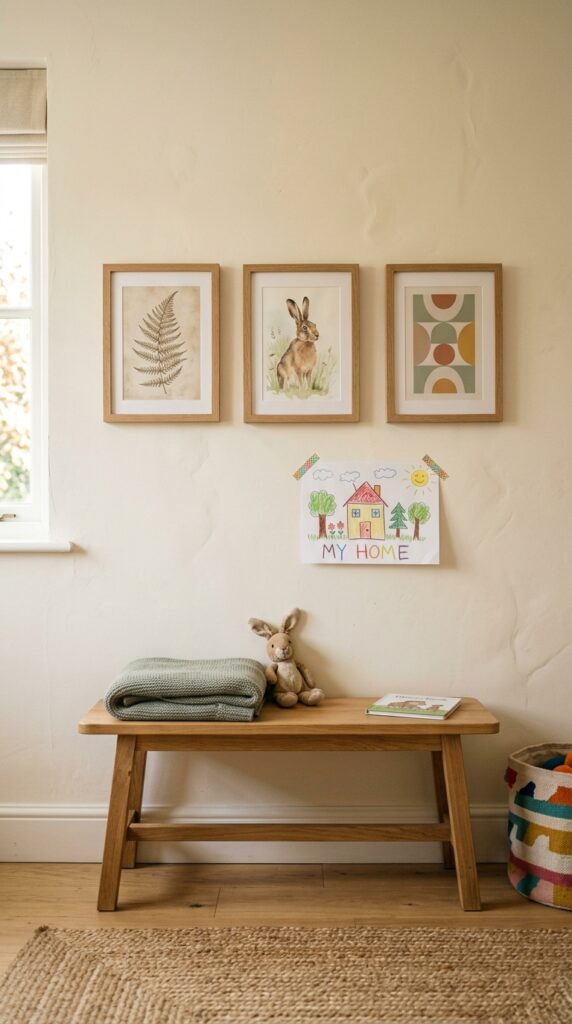
Most parents hang art at adult eye level, which means kids never actually see it. Drop the gallery wall down. Hang frames at around 90 to 110 cm from the floor — kid eye level — and watch them actually engage with what’s on the wall. Mix framed prints with their own drawings (cheap thin black or natural wood frames make even crayon scribbles look intentional). Keep the palette tight — three or four colors max across the whole wall — so it reads as cohesive rather than chaotic. The watch-out: avoid glass frames in toddler rooms. Acrylic looks nearly identical and won’t shatter when something inevitably gets thrown. Art at their height tells kids the room is genuinely theirs, not just a small version of a grown-up’s room.
10. Add One Unexpected Vintage Piece
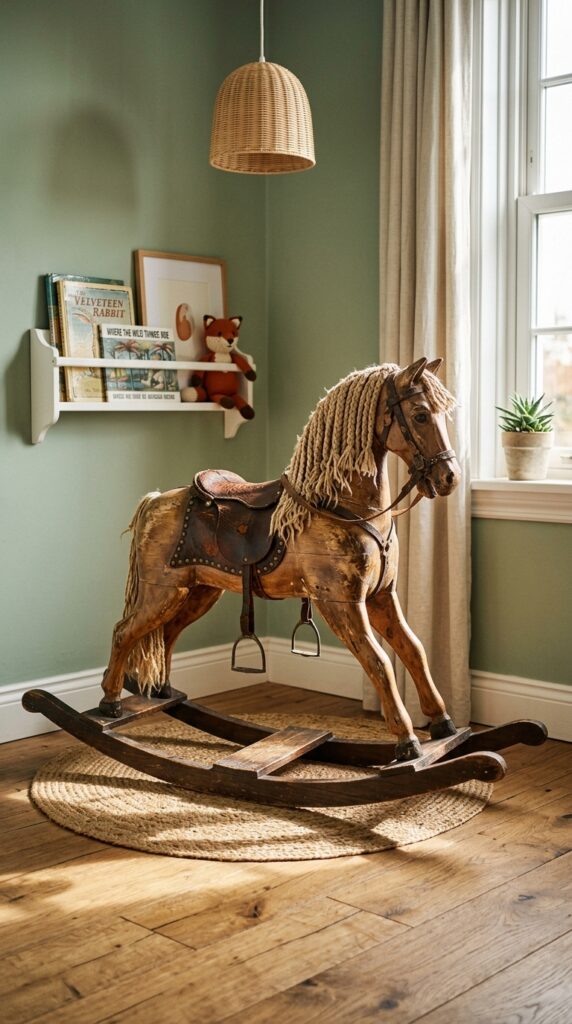
A single vintage piece is the easiest way to keep a kids room from looking like it was unboxed yesterday. A flea-market wooden rocking horse, an old school chair, a chippy painted dresser, a brass desk lamp from the 70s — anything with patina adds soul instantly. Where to look: estate sales, marketplace listings, your parents’ attic. Refinish lightly if needed but don’t strip the character out. A few scuffs and a worn finish are exactly what you want. The constraint: one vintage piece, maybe two. More than that and it tips into “set design,” which reads staged rather than collected over time. Vintage adds the layer that catalog furniture can’t fake — actual time. Worth the hunt.
11. Zone a Shared Room Without Building a Wall
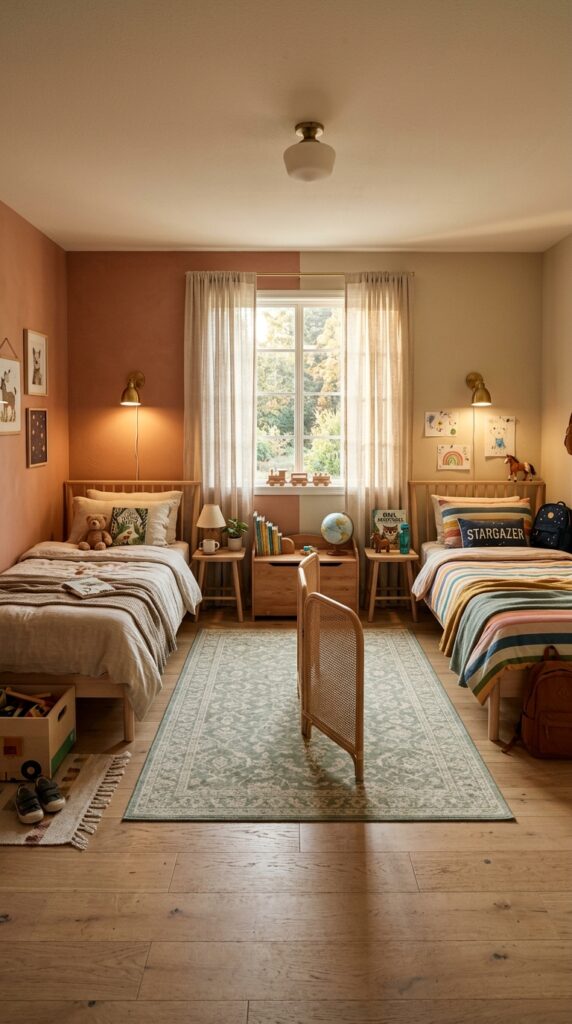
Shared rooms are the puzzle most parents underestimate. Two kids, one space, two personalities — and ideally no nightly negotiations about whose side of the room is whose. The fix isn’t drywall, it’s visual zoning. Try painting two adjacent walls in slightly different tones, anchoring each bed with its own rug, and giving each kid a dedicated wall sconce and shelf. A low woven screen or a tall plant works as a soft divider without making the room feel chopped up. Skip the bunk-bed-as-default move if the ceiling height allows for two singles — kids actually sleep better with their own defined space. The watch-out: make sure each zone has equal storage and equal light. Inequity is what starts the fights. A well-zoned shared room respects both kids as individuals while keeping the space feeling whole.
12. Leave Room for the Kid’s Personality to Show Up
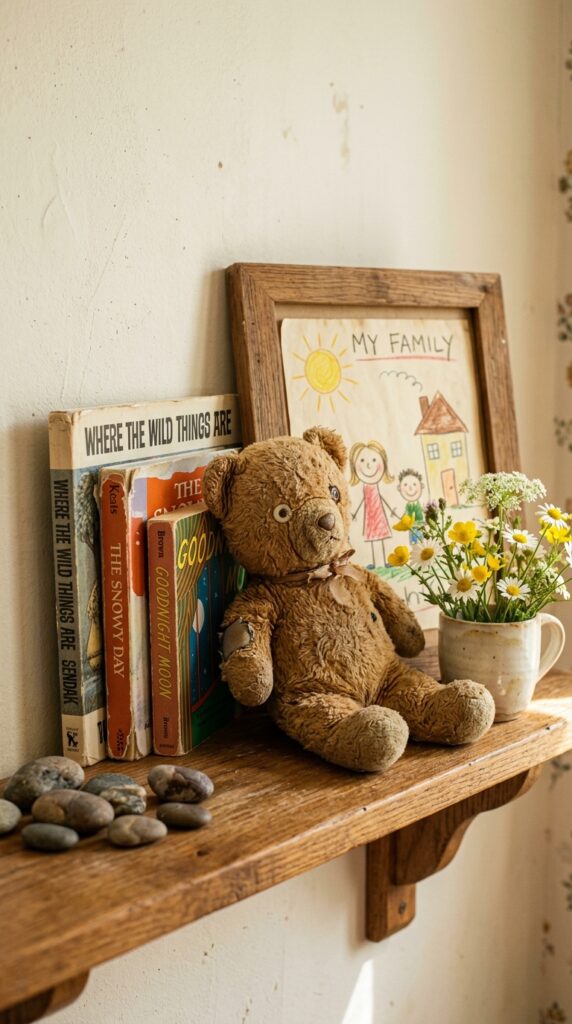
Here’s the thing about kids rooms: the most beautifully designed ones almost always have something a little wrong with them. A drawing taped crooked. A weird collection of rocks on the windowsill. A stuffed animal that doesn’t match anything. Leave room for that. Build the bones — palette, bed, lighting, storage — beautifully, then step back and let the kid layer their personality on top. A picture ledge with rotating drawings, a shelf for “treasures,” a corkboard for whatever obsession they’re cycling through this month. The constraint: don’t over-style. A magazine-perfect kids room with no evidence of an actual kid living there is the fastest way to make the space feel cold. The best kids rooms are 80 percent designer, 20 percent chaos. That last twenty is what makes it home.
Final Thoughts
A great kids bedroom isn’t about following the latest trend or spending a fortune on novelty furniture that’ll be obsolete by the next birthday. It’s about building a space that respects the kid as a person with taste, opinions, and changing needs — while quietly handling the practical realities of mess, growth, and shared living. Start with a calm palette, invest in real furniture, layer in good lighting, and leave room for personality to show up. Every idea here is meant to be mixed, matched, and adapted to your space, your kid, and your patience for repainting. The best rooms feel collected, not decorated — like they grew slowly and intentionally rather than arriving in a single delivery truck. Bookmark this one, screenshot the bits that fit, and come back when you’re ready to tackle the next room. There’s always another corner to rethink, and we’ll be here when you do. Hopefully you walked away with at least one idea worth trying tonight.