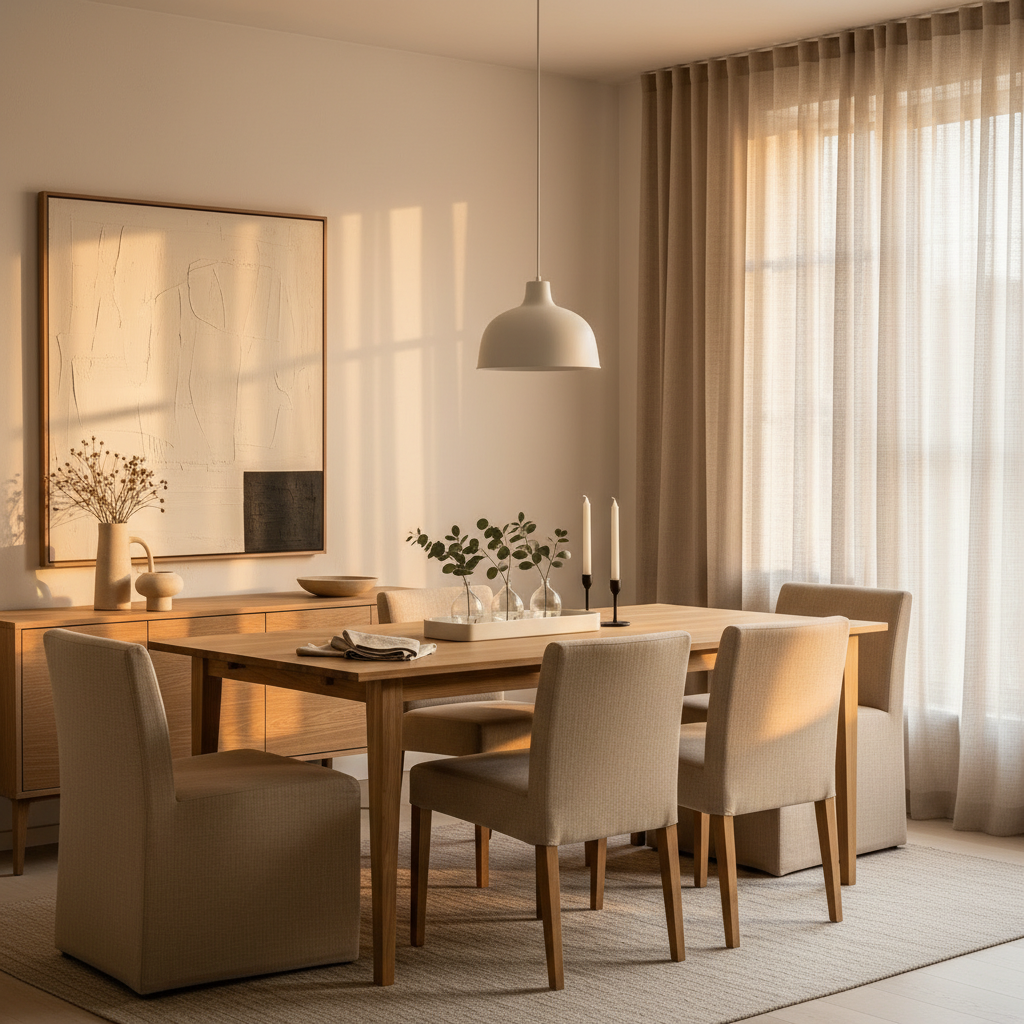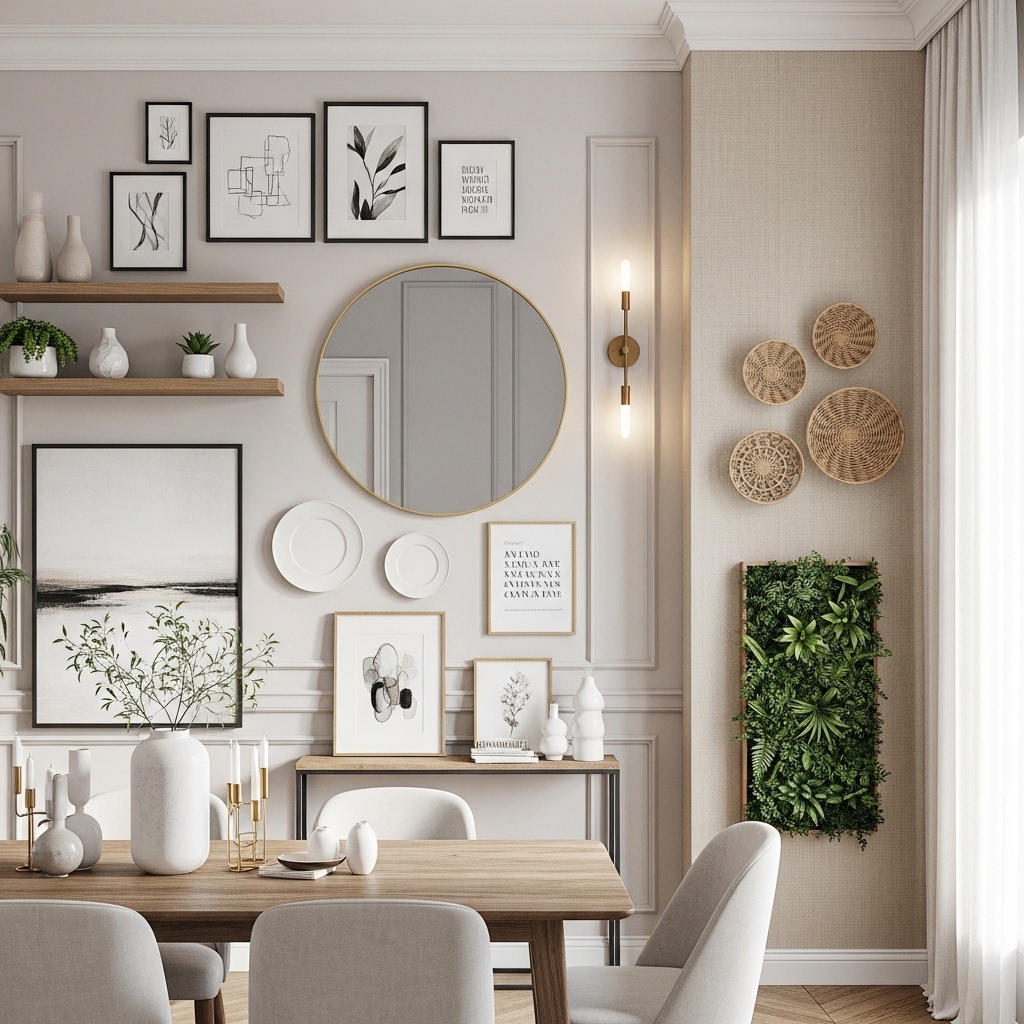
Living small doesn’t mean living less. Honestly, some of the most beautiful homes I’ve ever stepped into were one-bedroom apartments where every inch had been thought about, fussed over, and styled with intent. There’s something almost romantic about a small space done well, the way a good outfit fits, where nothing feels excessive but everything feels considered.
The trick with a one-bedroom isn’t to mimic a larger home in miniature. It’s to lean into what small spaces do best: warmth, intimacy, layered texture, and a sense that someone actually lives there. Whether you’re renting your first place, downsizing, or just trying to make 600 square feet feel like a sanctuary, these twelve ideas focus on real changes you can pull off without ripping out your kitchen or fighting with your landlord. Let’s get into it.
1. The Soft Neutral Palette That Actually Has Depth
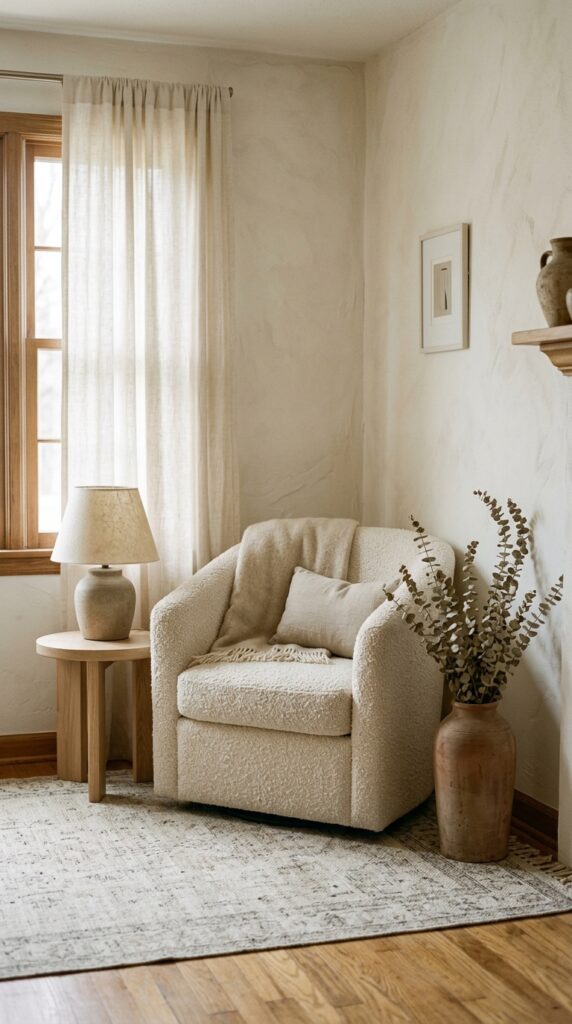
People hear “neutral” and think boring. Done badly, sure, it is. The fix isn’t more color, it’s more texture. In a small apartment, a tonal palette opens up the room visually because your eye isn’t bouncing between contrasts and trying to map out hard boundaries.
Mix three or four undertones in the same family. Pair a chalky white wall with oat linen, raw oak, and a touch of warm cream wool. Add one rough texture (a jute basket, a chunky throw) for every smooth one (glass, ceramic). Limewash paint, even a renter-friendly peel-and-stick version, gives walls subtle movement that flat paint can’t fake. Watch out for cool grey undertones if your apartment faces north, though, they’ll make the place feel like a dentist’s waiting room. Stick to warm whites and creams when natural light is limited.
The takeaway: neutrals work when they’re layered, not when they’re matched.
2. Curtain-Divided Sleeping Nooks
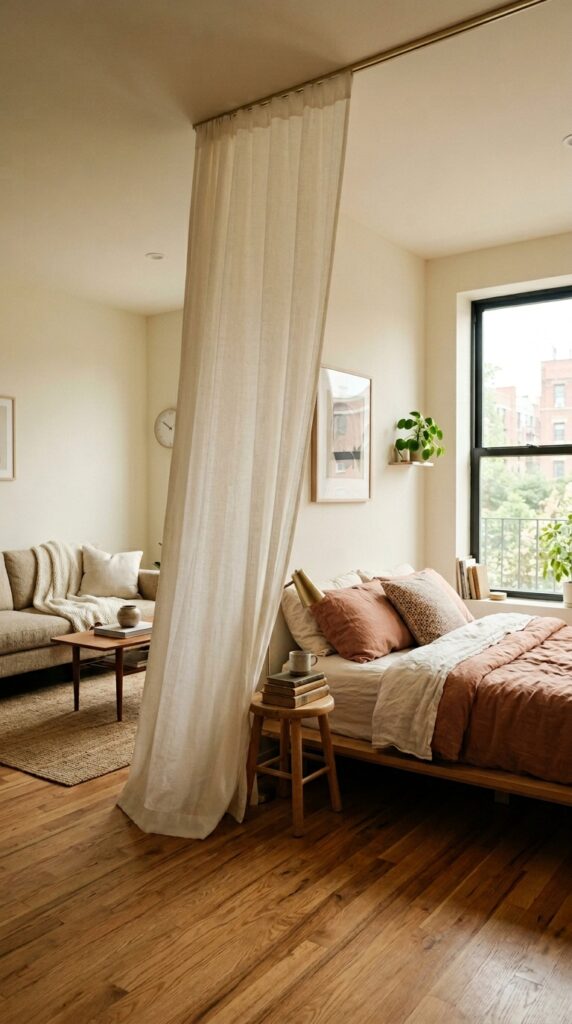
If your bedroom and living room are basically the same room, a fabric divider is the cheapest, prettiest fix going. Forget bookshelf room dividers, they block light and feel like cubicle walls. A floor-to-ceiling curtain in linen or muslin softens everything and gives you actual privacy when you want it.
Mount the track on the ceiling, not the wall, so the curtain spans edge to edge and feels architectural. Use a fabric heavy enough to drape (bottom-weight linen or washed cotton) but light enough to glow when sunlight hits it. Keep the color tonal with your walls so it disappears when open. Skip blackout fabric here, it kills the softness and the whole point.
One catch: this only works if your ceilings are at least eight feet. Lower than that and the curtain swallows the room.
The takeaway: a curtain creates a bedroom without building one.
3. The One-Wall Statement Paint Move
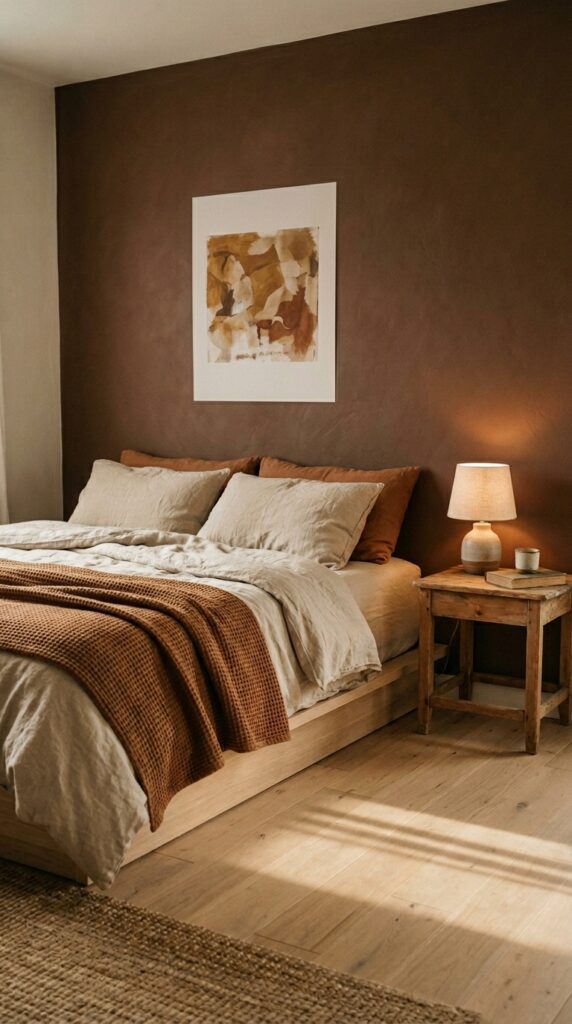
Painting one wall sounds dated until you actually do it well. The trick is choosing a color with weight, a deep clay, a smoky olive, a chocolate brown, not the sad lavender accent walls of 2008. In a small apartment, a moody wall behind your bed makes the room feel intentionally cocooning instead of accidentally cramped.
Pick a matte or eggshell finish, never satin (too shiny, cheapens fast). Carry the color slightly onto the ceiling edge if you’re brave, it tricks the eye into thinking the room is taller. Keep the rest of the walls warm white so the color reads as a hug, not a hit. Renters: this is one weekend and a bucket of repainting paint when you leave. Worth it.
The watch-out: don’t put the dark wall opposite a window. Backlight will make the color look flat and grey.
The takeaway: one strong wall beats four timid ones.
4. Multipurpose Furniture That Doesn’t Look Like It
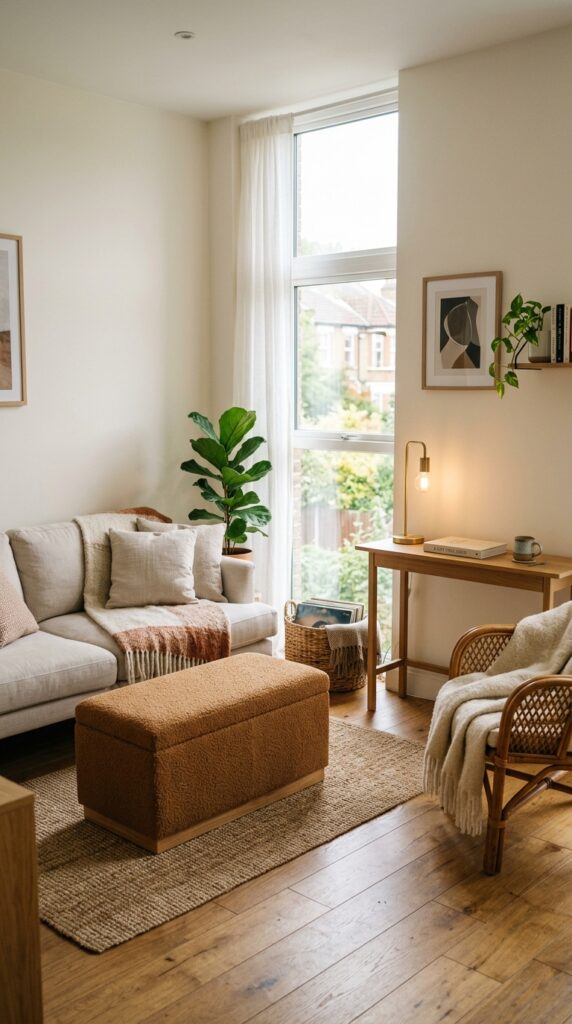
The phrase “multipurpose furniture” usually conjures up sad sleeper sofas and ugly storage cubes. Don’t do that to yourself. The good version means buying pieces that earn their square footage and look like real furniture.
A storage ottoman in a beautiful boucle becomes a coffee table, footrest, and hidden bin for blankets. A slim console behind your sofa moonlights as a desk during the day. A bench at the foot of the bed hides shoes and seasonal clothes. Look for solid materials, oak, walnut, real wool, because cheap multipurpose pieces date instantly. If something has to do two jobs, it should at least look gorgeous doing one.
Don’t overdo it, though. Three multitasking pieces in a small room and everything starts feeling like an IKEA catalog from 2014.
The takeaway: function disguised as good design always wins.
5. Mirrors Placed Like You Mean It
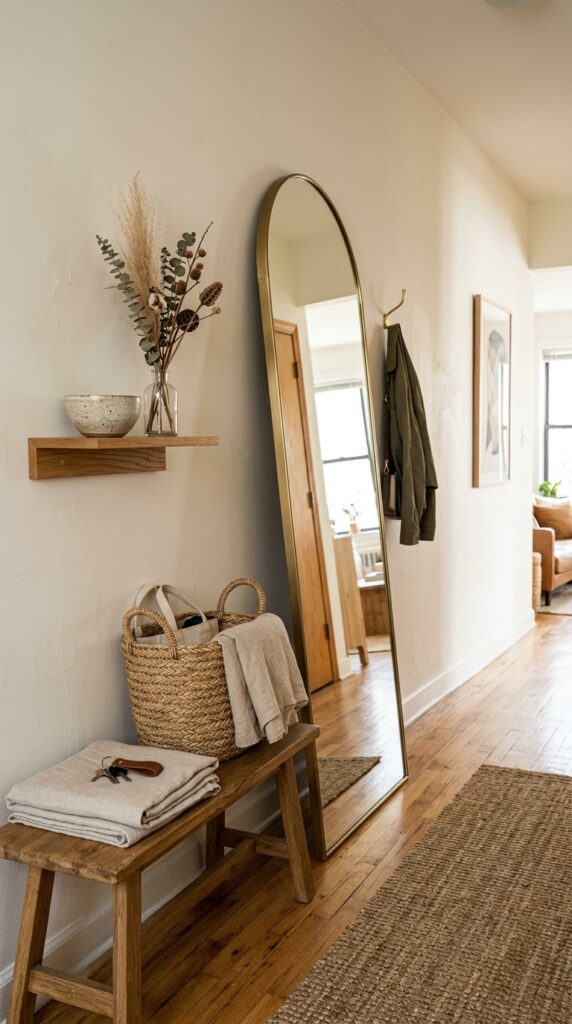
Everyone knows mirrors make rooms feel bigger. Almost no one places them well. A mirror only does its job if it’s reflecting something worth reflecting, a window, a piece of art, a pretty corner, not a blank wall or your messy kitchen counter.
Lean a tall floor mirror opposite (or perpendicular to) your largest window to double the daylight. Hang a smaller mirror across from a piece of art to deepen the gallery feel. In an entryway, a slim arched mirror stretches a tight hallway visually and gives you a last-look spot before heading out. Avoid mirrored furniture though, it photographs cute and looks dated in person within a year.
One real warning: never hang a mirror facing your bed if you find it unsettling. Plenty of people do.
The takeaway: mirrors are a tool, not a decoration.
6. Layered Lighting Beyond the Overhead
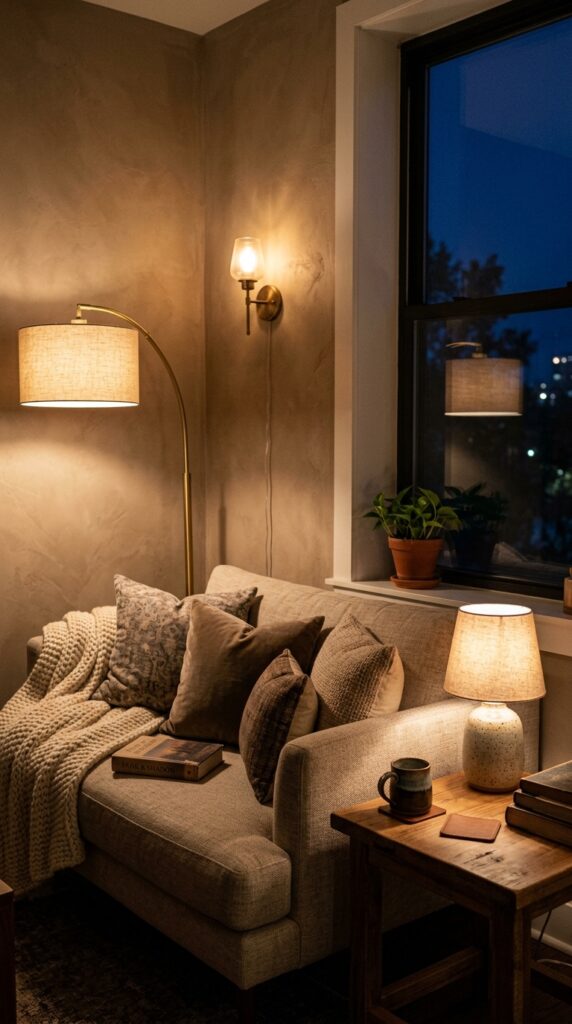
The single overhead light most rentals come with is a crime against ambiance. If you change one thing in your apartment, change this. Multiple light sources at different heights make a small space feel layered and grown-up instantly.
Aim for at least three light sources per room: one floor lamp, one table lamp, one wall sconce or string of fairy lights. Use warm bulbs (2700K, never daylight white) and put everything on dimmers if you can. Plug-in sconces are renter gold, no electrician required, just a cord cover. Avoid mixing cool LED light with warm light in the same room. It looks chaotic and unflattering.
If you can only afford one upgrade, get a beautiful lamp with a linen or parchment shade. It changes the room.
The takeaway: light is decor, not utility.
7. The Vertical Storage Trick That Reads as Styling
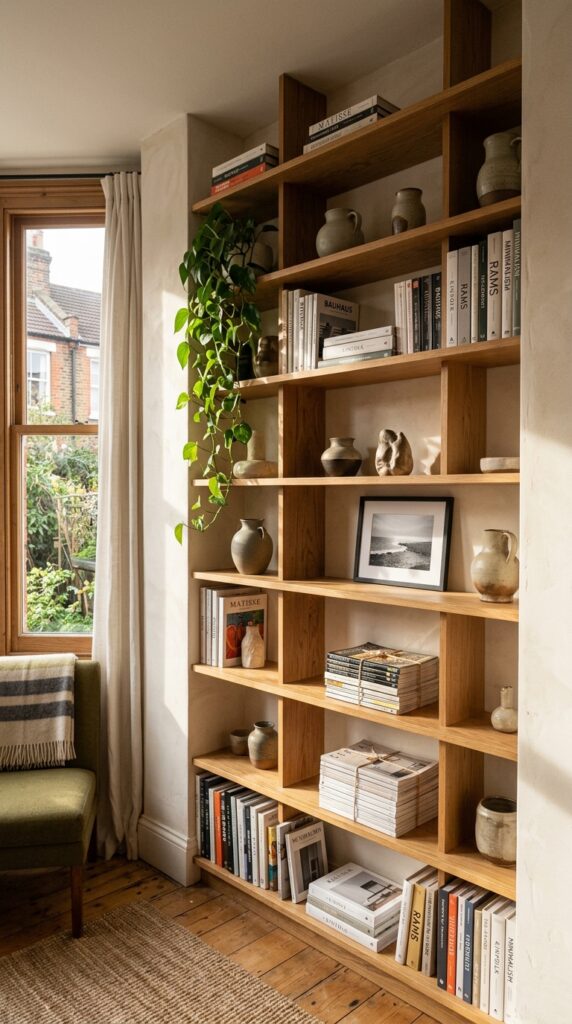
The mistake people make in small apartments is storing things horizontally, in chests and low cabinets, when the unused real estate is up. Floor-to-ceiling shelving turns a wall into both storage and visual interest, and your eye reads vertical lines as ceiling height.
Style it like a curated bookshelf, not a stockpile. The rule of thirds works: roughly one-third books, one-third objects (ceramics, framed art, baskets), one-third negative space. Mix horizontal book stacks with vertical ones. Add one trailing plant per shelving unit, never more, or it tips into chaotic. Open shelving demands editing, though. If you’re a maximalist hoarder, closed cabinets will save your sanity.
Watch the dust factor. Open shelves above the kitchen are a grease-trap nightmare. Keep them in living and bedroom zones.
The takeaway: your walls are storage you haven’t used yet.
8. Textiles That Do the Heavy Lifting
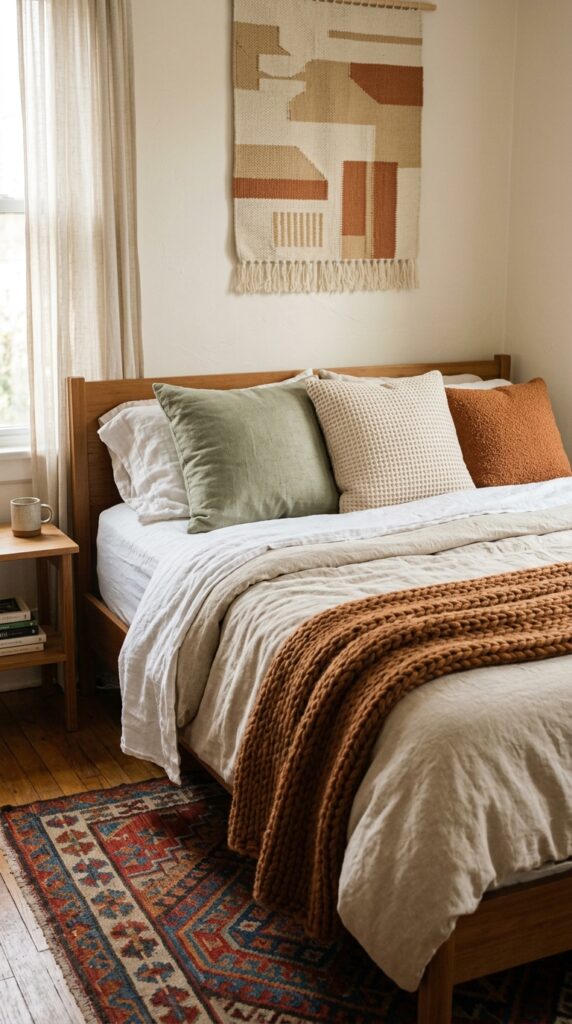
In a small space, fabric does more decorative work than furniture. A room with three good textiles, a heavy curtain, a layered bed, a textured rug, will always feel more designed than a room full of trendy furniture and bare windows.
Mix at least three textures on the bed alone: linen, waffle cotton, chunky wool. Use one oversized rug instead of two small ones, even if it goes partly under the sofa. Hang a wool or jute wall hanging behind the bed if you don’t want to commit to art. And invest in real curtain length, hem them so they kiss the floor. Anything shorter looks like rented pants.
Avoid synthetic blends if you can. They pill, they shine wrong, and they always look slightly off in photos.
The takeaway: fabric is the fastest path to feeling expensive.
9. The Tiny Reading Corner Nobody Expects
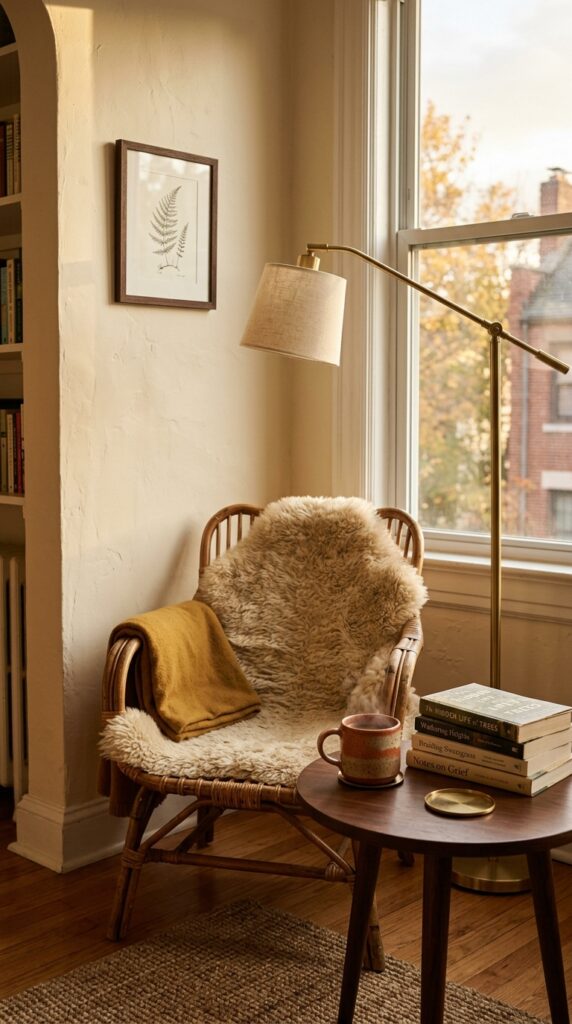
Even a tiny apartment can have a “third place” beyond the bed and sofa. A reading corner sounds twee until you have one and realize it’s where you actually wind down. All you need is a chair, a lamp, and a tiny table, roughly four square feet of dedication.
Pick a chair with personality, vintage rattan, a curvy boucle, a leather sling, something not from your sofa’s family. The light source matters more than the chair, though. A slim arc floor lamp tucks behind without eating space. Add a sheepskin or wool throw for cold nights. Keep the styling minimal, books and a mug, anything more reads as set dressing.
The catch: don’t put it next to your TV. The point is escape, not multitasking.
The takeaway: a single chair can change how you live in a space.
10. Smart Plant Placement (Not a Jungle)
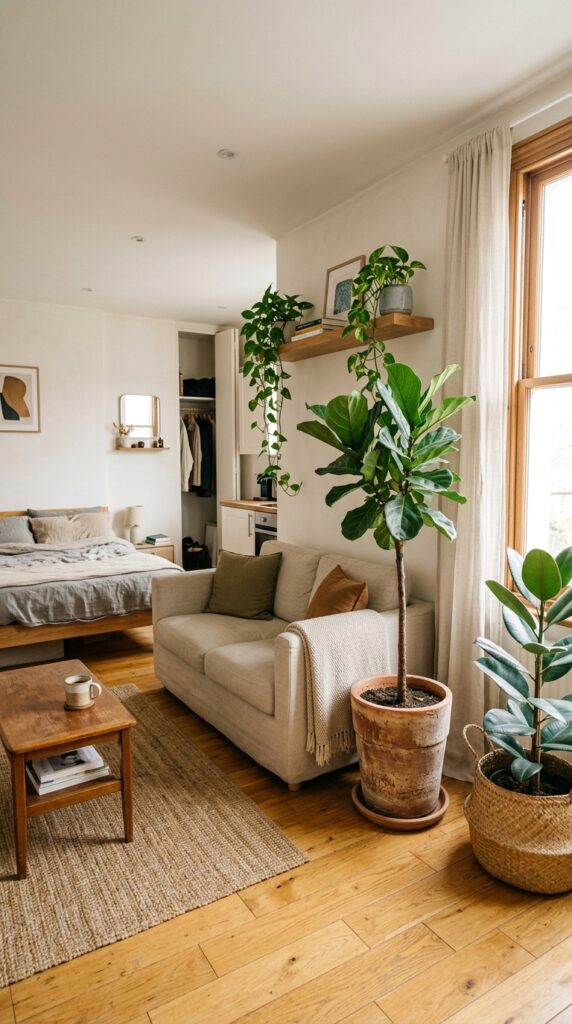
The “more plants the better” approach is exhausting in a small space, both visually and to maintain. A few well-placed plants do more for a room than a botanical jungle. Three is usually the magic number in a one-bedroom: one tall, one trailing, one mid-size.
The tall plant goes in an empty corner to add height, a fiddle-leaf, a rubber plant, an olive tree if you have light. The trailing one (pothos, philodendron) sits high on a shelf where it can drape. The mid-size lives on a side table or floor in a textured planter, terracotta, ceramic, woven basket. Skip plastic pots. They cheapen everything.
Watch out for low-light apartments. A dying plant tanks the whole room’s mood. Be honest about your light and pick accordingly.
The takeaway: three real plants beat ten struggling ones.
11. The Renter-Friendly Wall Treatment
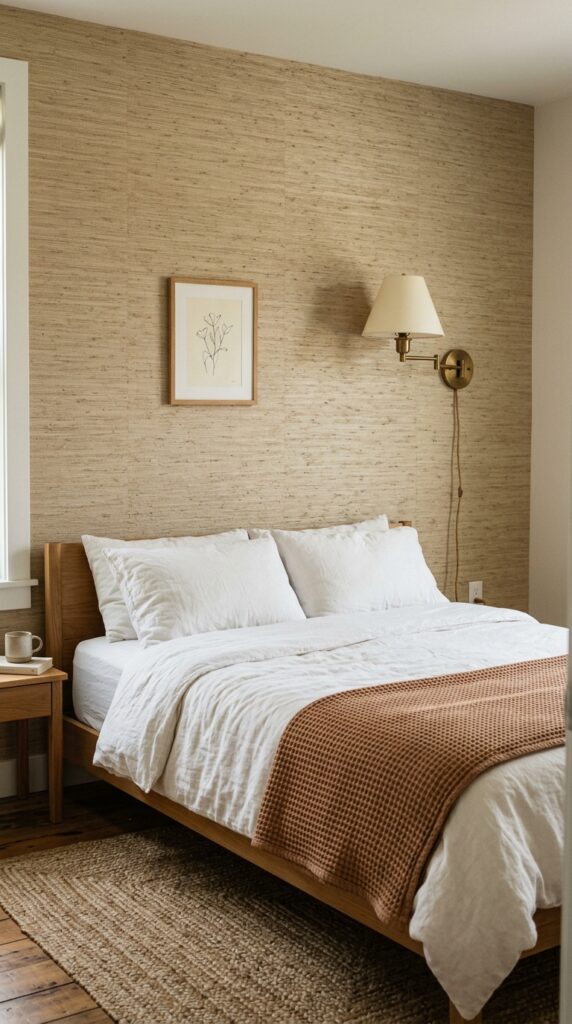
Renters get told over and over that they “can’t really decorate.” Nonsense. The peel-and-stick world has gotten genuinely good in the last few years, especially the textured wallpapers that mimic grasscloth, plaster, or linen. Done in a single accent space, behind the bed, in the entryway, they transform a rental.
Choose textured prints over busy patterns; they age better and don’t compete with your furniture. Plug-in wall sconces with fabric cords give you the look of hardwired lighting without a single hole drilled. Removable peel-and-stick floor tiles can hide ugly bathroom or kitchen vinyl. Test a small patch first, some textures don’t adhere well to glossy or recently painted walls.
One trade-off: peel-and-stick anything is more work to remove than to install. Budget the patience.
The takeaway: rented doesn’t have to mean temporary-looking.
12. The Styled Vignette That Makes a Room Feel Finished
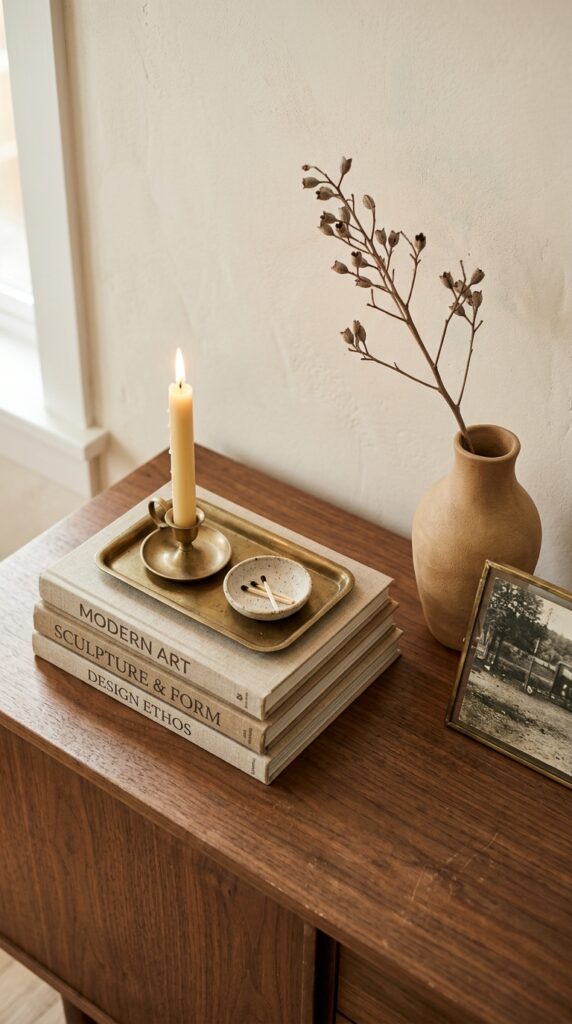
A styled vignette, a tiny, intentional grouping of three to five objects, is the thing that separates a “decorated” apartment from one that just has furniture in it. It’s the magazine touch, and it costs almost nothing.
Build one on every flat surface that gets seen: a console, a coffee table, a nightstand, a bathroom shelf. The formula is simple: something tall (vase, candle, lamp), something flat (stack of books, tray), something sculptural (ceramic, small bowl, framed art). Vary heights, mix materials, leave breathing room. Refresh seasonally, swap dried branches for fresh foliage, change the candle scent.
Don’t over-style though. Five vignettes in one room reads as cluttered, not curated. Pick three surfaces, max.
The takeaway: small, considered moments are what make a room feel like yours.
Final Thoughts
A one-bedroom apartment isn’t a compromise, it’s a canvas. The constraints actually do you a favor: they force you to choose better, edit harder, and pay attention to texture, light, and proportion in ways a larger space lets you ignore. The best small homes feel composed, lived-in, and personal, not like they’re auditioning for someone else’s taste.
If you take only a few things from this article, let it be these: light layering changes everything, textiles make a room feel expensive faster than furniture does, and a single styled vignette can turn an apartment into a home. The rest is just patience and the willingness to live with a space long enough to know what it actually needs.
Decorating a small apartment is one of the most rewarding design exercises there is. You learn what you actually love, what you can live without, and how much warmth a room can hold when every piece in it earns its place. Bookmark this page, come back when you’re stuck, and remember: the best small homes are the ones that feel honestly, unapologetically yours. We’ll keep sharing the real stuff, no fluff, just decor that actually works.