There’s a specific kind of magic that happens when you walk into a laundry room and can’t immediately tell it’s a laundry room. No detergent jugs lined up like soldiers, no wire shelving sagging under the weight of cleaning supplies, no rogue ironing board leaning in the corner. Just clean lines, beautiful materials, and a sense that someone took the time to think this through. The secret is almost always the cabinetry.
Cabinets do the heavy lifting in any laundry room — they’re what separates a space that feels considered from one that feels like a closet someone gave up on. The right cabinet choice hides every ugly thing you own while still looking like a piece of furniture you’d be proud of. Below are twelve cabinet ideas I keep coming back to, ranging from full custom builds to renter-friendly tricks. Some are weekend projects, others are real investments. Pick what fits.
1. Floor-to-Ceiling Flat-Panel Cabinets
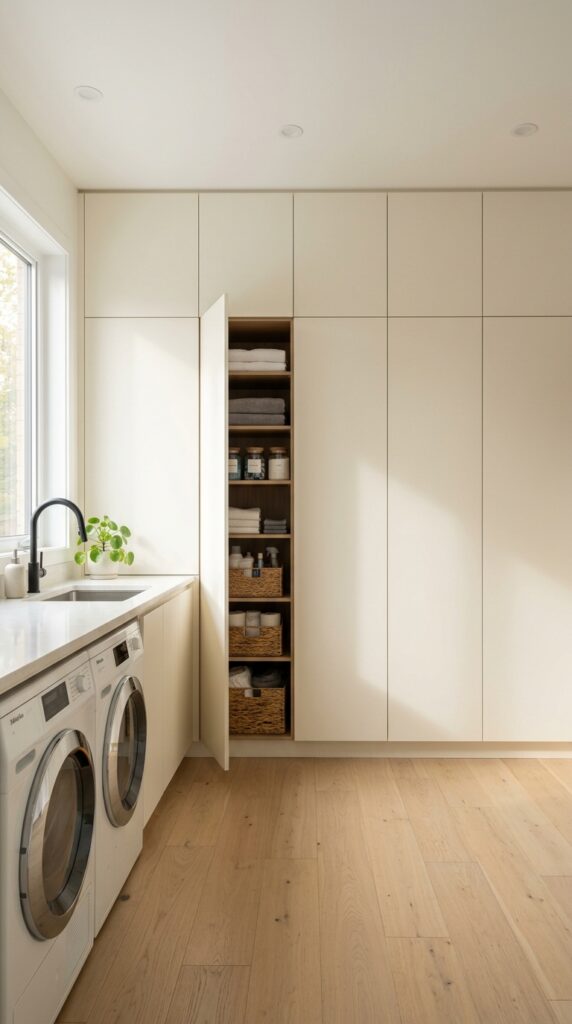
Flat-panel cabinets that run all the way to the ceiling are the move when you want the room to feel architectural rather than utilitarian. There’s no shaker detail, no decorative trim, no visual noise — just a quiet plane of cabinet faces that read as a single built-in wall. Done well, you almost forget there’s storage at all.
Push-to-open hardware (or barely-there finger pulls) takes this even further. Without visible knobs or handles, the cabinets look more like furniture than fixtures. Soft matte finishes age better than glossy ones, and warm off-whites or muted earth tones feel more grown-up than pure white.
The constraint: flat panels show every imperfection. If your walls aren’t square or your ceiling sags slightly, the cabinets will reveal it ruthlessly. Hire a careful installer. The takeaway? When you want everything hidden and nothing distracting, flat-panel floor-to-ceiling is unbeatable.
2. Shaker Cabinets in a Saturated Color
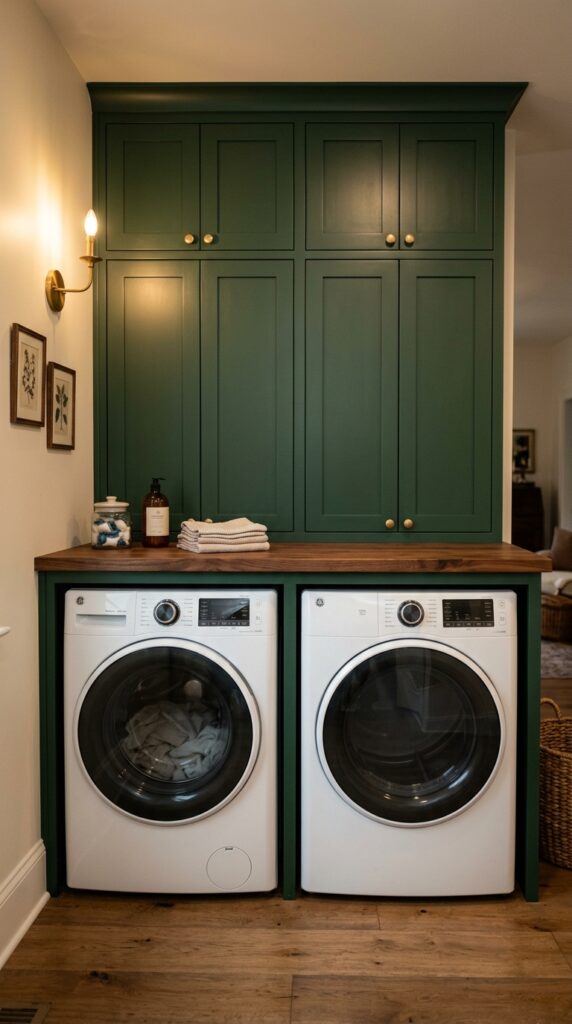
Shaker cabinets are the workhorse of cabinet design for a reason — they look right in almost any style of home, they age well, and they don’t go out of fashion. The trick to making them feel current is skipping builder-grade white and committing to a saturated paint color. Forest green, ink blue, oxblood, charcoal. Anything with conviction.
Use unlacquered brass or aged bronze hardware to warm up the deeper colors. Stick to simple knobs or slim cup pulls — chunky modern hardware fights the traditional shaker frame. Paint the inside of the cabinets the same color for that luxe, unexpected detail when someone opens a door.
One watch-out: dark cabinet colors need good lighting, or the room reads as gloomy. Add task lighting under upper cabinets. Quick takeaway: shaker plus saturated color equals timeless without feeling tired.
3. Glass-Front Upper Cabinets
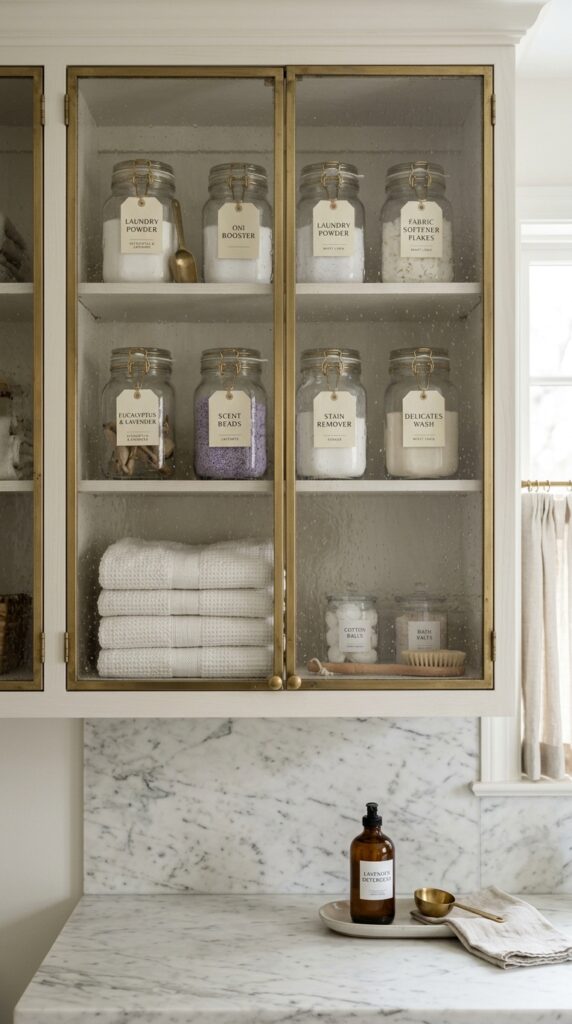
Glass-front cabinets are a bit of a flex — they only work if what’s inside is genuinely worth seeing. But when you commit to keeping the contents tidy, they bring a layer of visual interest that solid cabinets just can’t match. They also break up long runs of cabinetry that might otherwise feel heavy.
Use them sparingly, just one or two upper sections. Seeded or fluted glass hides minor messiness while still showing texture and depth. Stock the inside with matching glass jars, folded white linens, and a few stoneware pieces — anything cohesive in palette and material. Avoid plastic packaging at all costs.
The trade-off: glass-fronts demand discipline. If your laundry products live in their original bottles, this isn’t your move. The takeaway? Glass works when the inside is styled like a still life. Otherwise, stick with solid doors.
4. Beadboard Cabinet Fronts for Texture
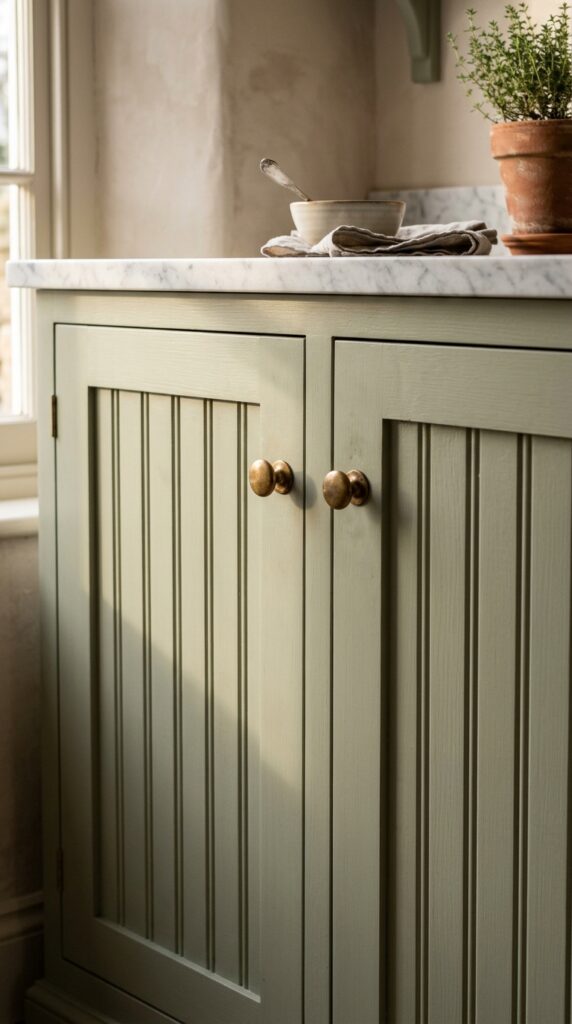
If flat-panel feels too sleek and shaker feels too expected, beadboard is the underdog answer. The vertical grooves add gentle texture without going full farmhouse, and they catch light in a way that flat surfaces never do. There’s a softness to beadboard that suits laundry rooms perfectly — it nods to traditional architecture without feeling like a costume.
Paint it in muted earth tones for the most flattering effect — sage, mushroom, warm cream, dusty blue. Pair with simple round knobs or small cup pulls. Beadboard panels also work beautifully as the back wall inside open shelving sections, adding depth even where there’s no cabinet door.
The constraint: beadboard grooves collect dust and lint. You’ll need to wipe them down more often than flat surfaces. If you hate detailed cleaning, skip this. Otherwise, takeaway: beadboard adds quiet texture that reads as character, not clutter.
5. Mixed Open and Closed Storage
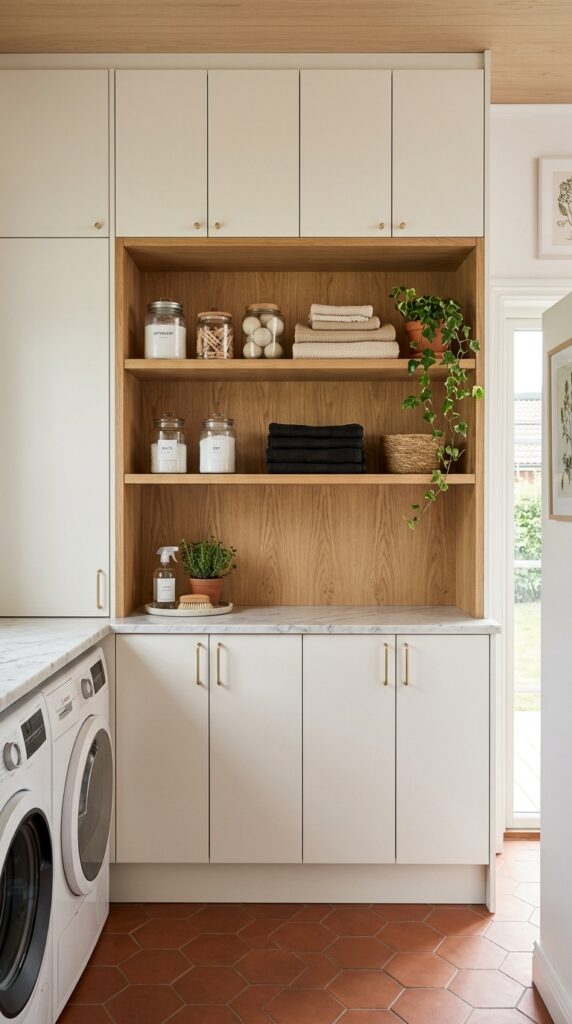
A wall of solid cabinets can feel oppressive in a small laundry room. Breaking up the run with a section of open shelving — usually two or three shelves at eye level — gives the room breathing space and a place for the prettier, more accessible items to live. Closed cabinets handle the ugly stuff; open shelves handle the styled stuff.
The trick is treating the open section like a frame. Use the same wood species or finish that appears elsewhere in the room. Style the shelves with intention: matching jars, folded linens, one organic element. Leave plenty of negative space.
Watch out for putting the open section near the dryer vent — lint settles fast there. Locate it elsewhere along the wall if possible. Quick takeaway: closed for function, open for beauty. The combination beats either one alone.
6. Tambour Cabinet Doors That Slide Up
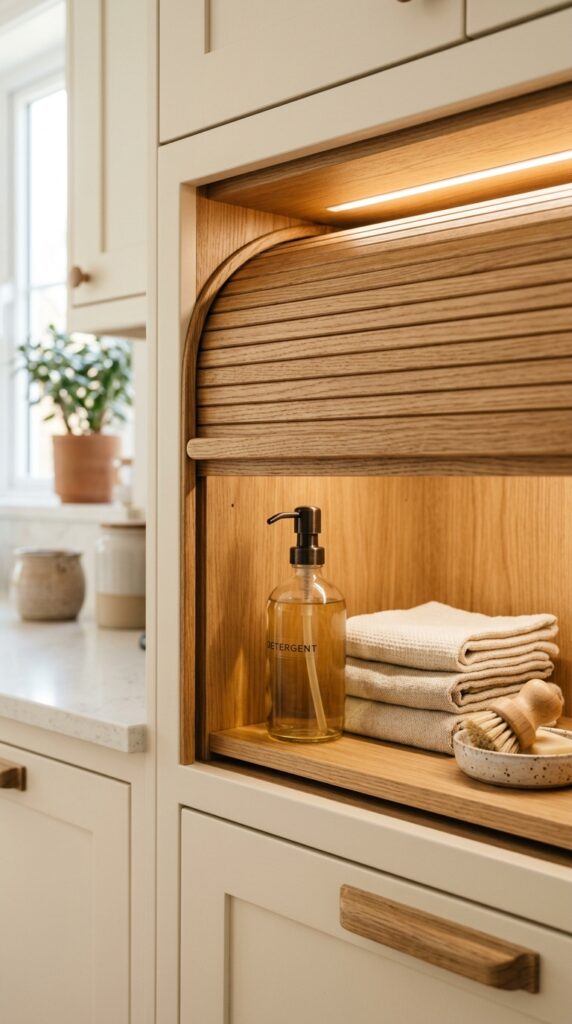
Tambour doors — those slatted wood doors that roll up and out of sight — are having a moment, and for good reason. They hide messy zones (the iron, the steamer, a small sink area) without the swing radius of a regular door. They also add an architectural detail that feels designed without trying too hard.
Use them on a single feature cabinet rather than a whole wall. They work beautifully framing a small “appliance garage” where your steamer or hand vacuum lives. Natural wood tambours add warmth in a room that might otherwise lean cold. Painted versions look cleaner but lose some of the texture appeal.
The constraint: tambour doors are mechanically more complex and cost more than standard doors. They also can’t run floor-to-ceiling — the mechanism needs space at the top to coil. The takeaway? Use one well-placed tambour as a hero detail, not as the whole story.
7. Inset Cabinets for an Heirloom Feel
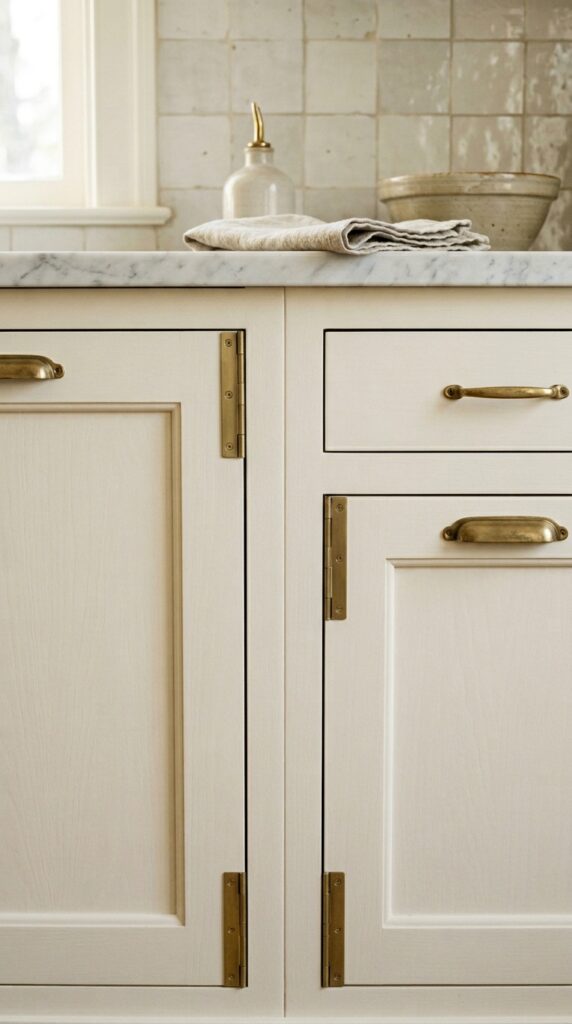
Inset cabinets — where the door sits flush inside the face frame rather than on top of it — are the construction style that quietly signals real craftsmanship. They cost more, take longer to build, and require careful execution, but the result is cabinetry that feels like furniture rather than something assembled from a flat-pack.
The reveal lines around each door create a subtle architectural rhythm that overlay cabinets just can’t replicate. Pair with unlacquered brass knife hinges (the small exposed ones), traditional cup pulls, and either painted or stained finishes — both work. Inset suits classic, heirloom-style spaces best.
The trade-off is real: inset cabinets cost roughly 20–30% more than overlay versions, and they’re less forgiving of seasonal wood movement. If your house has dramatic humidity swings, doors may stick. Quick takeaway: if you want cabinetry that feels considered and lasts decades, inset is worth the splurge.
8. Painted Interiors for a Luxe Surprise
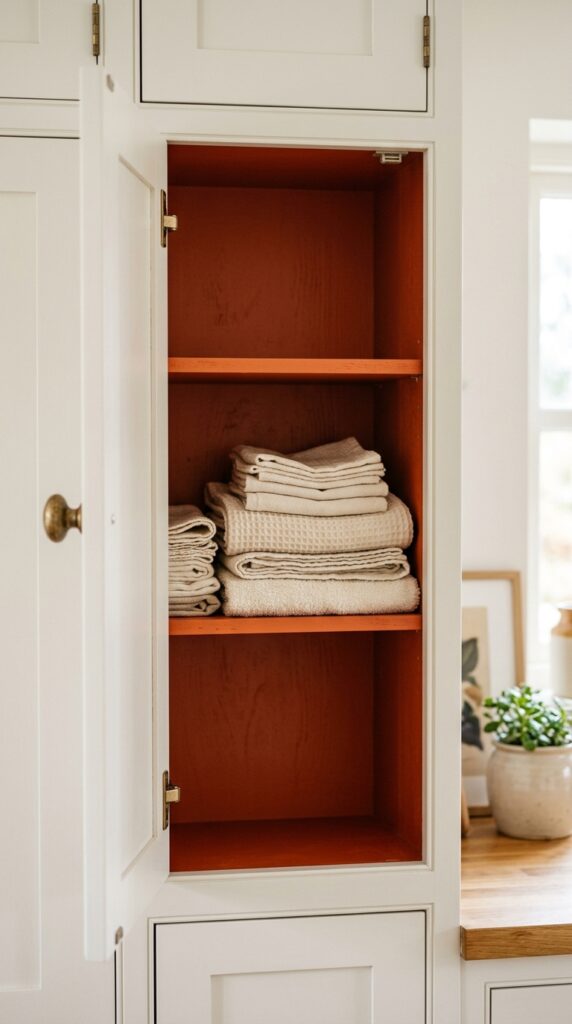
Painting the inside of your cabinets a different color than the outside is one of those small, almost reckless details that completely changes how a space feels. From the outside, the room reads as calm and quiet. Open a door, and there’s a flash of unexpected color — terracotta, deep blue, mustard, oxblood. It’s the kind of thing that makes guests laugh out loud.
This works best with a few cabinets, not all of them. Painted interiors lose their punch when overdone. Pick a color that contrasts the exterior in saturation, not just hue — a soft white outside paired with a rich, deep color inside. Stick to satin or eggshell finishes; matte interiors scuff fast.
The watch-out: painted cabinet interiors are harder to clean than melamine ones. If you’re storing messy bottles, the paint will scratch over time. Takeaway: do this on the cabinets you open most, where the surprise gets the most use.
9. Cabinet Doors That Hide the Appliances
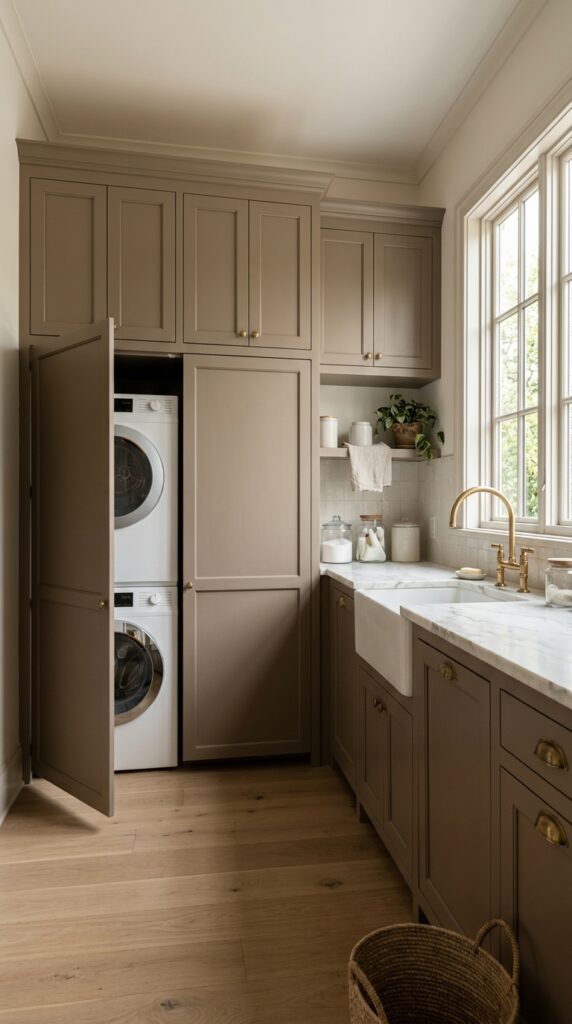
Hiding the washer and dryer behind cabinet doors is a luxury move that turns the laundry room into something closer to a butler’s pantry. When the doors are closed, the wall reads as one continuous architectural feature rather than a utility station. It’s especially powerful in spaces where the laundry shares a room with another function — a mudroom, a kitchen alcove, a hallway.
You’ll need front-loading machines for this to work, and the cabinet depth has to accommodate appliance depth plus ventilation. Bi-fold or pocket doors are smart so you don’t need to swing wide doors open every time.
The trade-off is significant cost — custom cabinetry around appliances isn’t cheap, and you lose some flexibility if you ever need to swap out the machines. Quick takeaway: the most luxurious laundry rooms hide that they’re laundry rooms at all. This is how.
10. Drawer-Front Cabinets for Easier Access
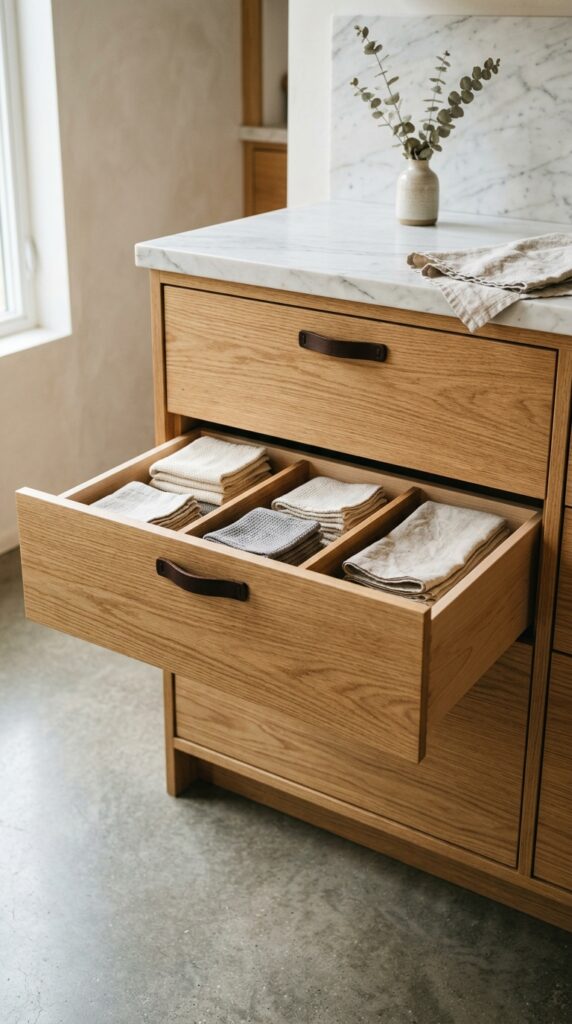
Replacing lower cabinets with deep drawers is one of the smartest upgrades you can make in a laundry room. Cabinets with shelves force you to crouch, reach to the back, and inevitably forget what’s there. Drawers slide everything into view at once. No more buying duplicate bottles of stain remover.
Stick to deep drawers — 10 to 12 inches — that can accommodate detergent jugs upright and folded linens flat. Use simple wooden dividers to create zones. Soft-close runners are non-negotiable; cheap runners squeak and sag within a year. Recessed leather pulls or slim cup pulls keep the drawer fronts looking calm.
The watch-out: drawers cost noticeably more than basic cabinets, especially with quality runners. If budget is tight, prioritize drawers in the most-used base section and use standard cabinets elsewhere. Takeaway: pull-out beats reach-in every single time, no exceptions.
11. Reeded or Fluted Cabinet Faces
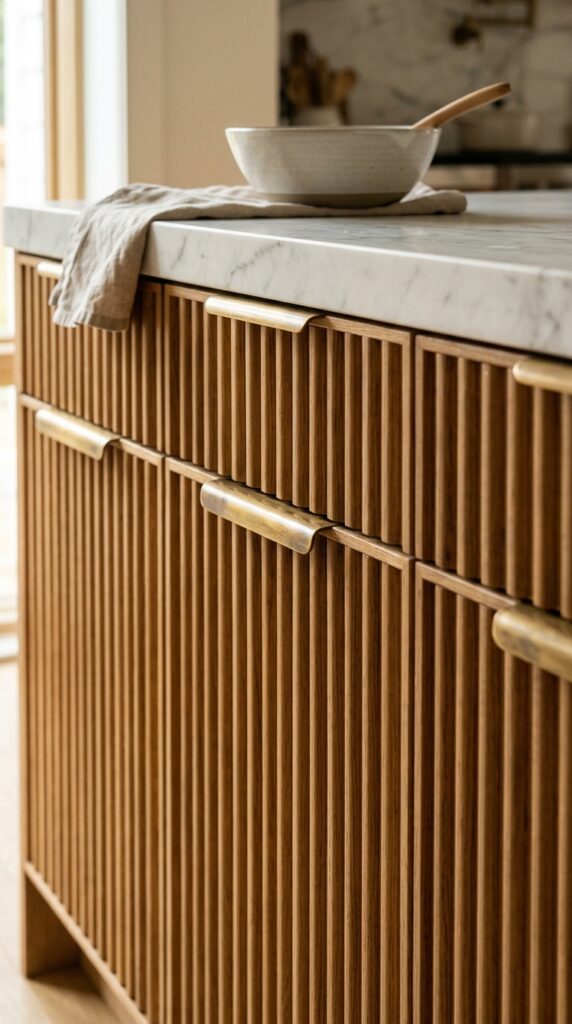
Fluted or reeded cabinet fronts are the texture trend that’s quietly become a classic. The vertical grooves add a soft, repetitive rhythm that catches light differently throughout the day, giving cabinetry a sculptural quality that flat panels can’t match. They feel rich without feeling fussy.
Natural wood fluting reads warmer and more organic; painted fluting reads more architectural and formal. Either works in a laundry room, depending on the rest of the palette. Pair with simple, slim hardware — anything chunky competes with the fluted texture. Fluted glass cabinet inserts are a related move worth considering.
The constraint: fluting collects dust in the grooves and is harder to clean than smooth surfaces. A soft brush works better than a wet rag. The trade-off is real if you have allergies. Quick takeaway: fluted fronts add depth and quiet drama. Use them where you’ll see them most.
12. A Hidden Pantry-Style Cabinet
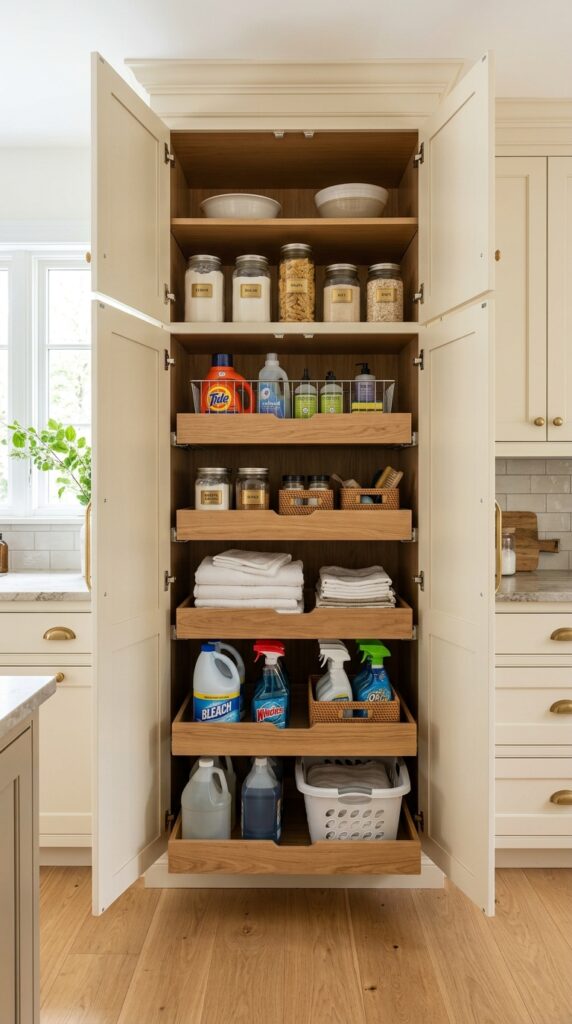
The single best cabinet investment in a laundry room is one tall pantry-style unit dedicated entirely to laundry storage. Inside, pull-out drawers, narrow vertical dividers for ironing boards, hooks for tools, and shelves at the right heights for detergent jugs. Outside, it looks like just another flat-panel or shaker cabinet door blending into the rest of the wall.
Customize the inside ruthlessly to your real habits. Vertical dividers for trays and boards. A tall section for the broom and mop. A pull-out hamper at the bottom. Adjustable shelves for everything else. Don’t waste space on standard pantry organizers; build it for laundry specifically.
The trade-off: a custom pantry cabinet is one of the priciest single elements in a laundry room. But the function-per-square-foot return is enormous. Takeaway? One well-designed hidden pantry cabinet does more work than an entire wall of mediocre storage.
Final Thoughts
The right cabinetry is the foundation of every laundry room that actually feels good to walk into. It’s the difference between a space that hums quietly in the background and one that reminds you, every single time you open the door, of all the chores you haven’t done. Cabinets do the heavy lifting that no amount of pretty styling can fake.
The best move you can make is to pick the cabinet idea that solves your biggest visual frustration — whether that’s hiding the appliances, replacing wire shelving, or finally putting an end to that pile of detergent bottles on the dryer. Start there. The rest of the room will follow naturally, layer by layer, until the whole space feels like it belongs.
Save this article and come back when you’re ready to tackle the next layer of your laundry room transformation. We’ll keep showing up with practical, beautiful ideas for the rooms you live in every day, because the spaces that work hardest deserve to look the best, too. Remember where you found these — and tell a friend.