There’s something quietly radical about giving your driveway a second life. Most of us treat that strip of concrete as purely functional, somewhere to park, somewhere to drag the trash bins. But a thoughtfully designed hopscotch can turn it into the most charming corner of your property, a place where neighbors linger, kids tumble out of the car laughing, and your morning coffee suddenly has a view worth lingering over. The trick is treating it as a real design project, not a quick weekend doodle. Palette, finish, scale, and a little restraint can elevate a hopscotch from kid-craft to a legitimate outdoor styling moment that the whole household actually enjoys. What follows are twelve ideas, ranging from permanent and ambitious to renter-friendly and removable, that will make you see your driveway completely differently.
1. The Earthy Terracotta Grid
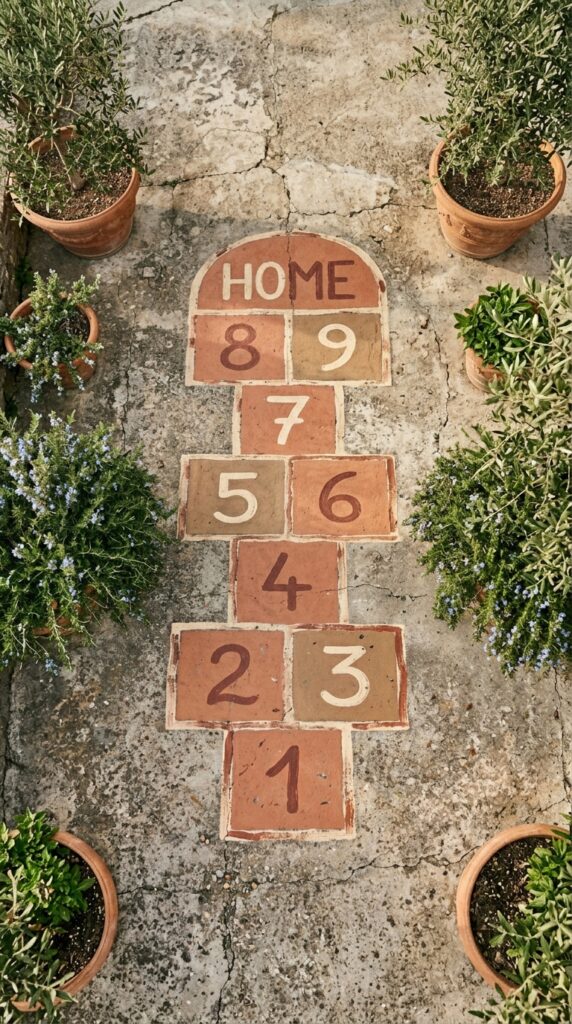
If your home leans warm, brick, sandstone, painted stucco, a terracotta palette will look like it was always meant to be there. Earthy tones age beautifully outdoors and forgive the inevitable dust, leaf litter, and tire scuffs in a way that crisp white never will. Stick to a tight family of three shades: a deep rust, a softer clay, and a creamy off-white for the numbers. Use exterior masonry paint with a matte finish, gloss reads cheap on concrete. Frame the grid with weathered terracotta planters holding olive, rosemary, or lavender for instant Mediterranean texture. One thing to watch: terracotta paint can look muddy in heavy shade, so test a square in the actual spot before committing. The takeaway? When in doubt, borrow your palette from the earth itself.
2. Scandi-Minimalist Black and White
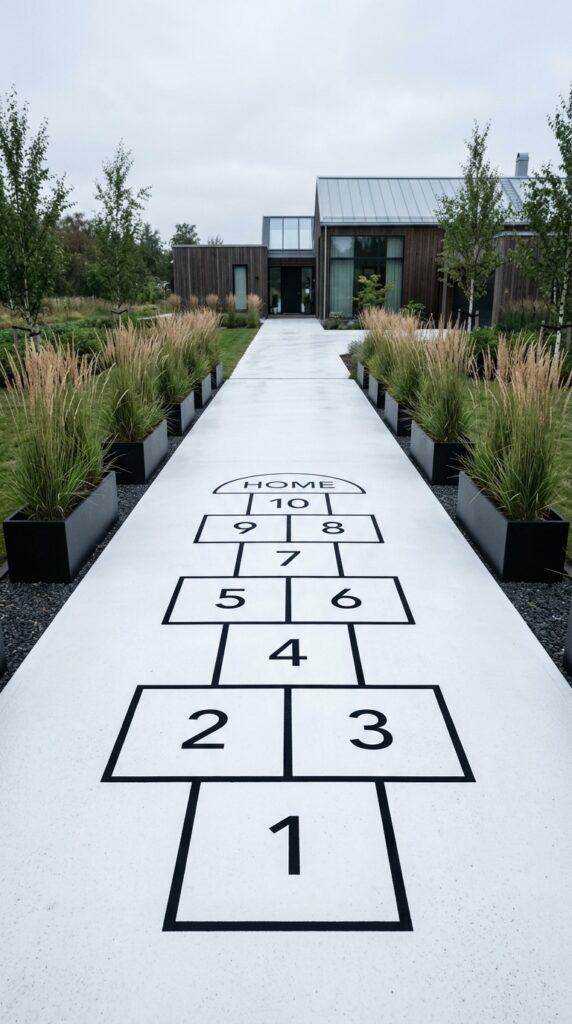
For modern homes, especially anything with black window frames or a flat-roofed silhouette, a stripped-back monochrome hopscotch reads like architecture rather than play equipment. Use only two colors: a clean charcoal black and the natural concrete (or a very pale grey wash if your driveway is stained). Choose a sans-serif numeral, something honest and structural, and paint clean unfilled outlines instead of solid blocks. The negative space is what makes it feel grown-up. Pair with two oversized matte black planters and ornamental grasses for movement. Skip this one if your driveway is cracked or patchy, the minimalism amplifies every flaw rather than hiding it. Quiet confidence, no apologies.
3. Pastel Watercolor Wash
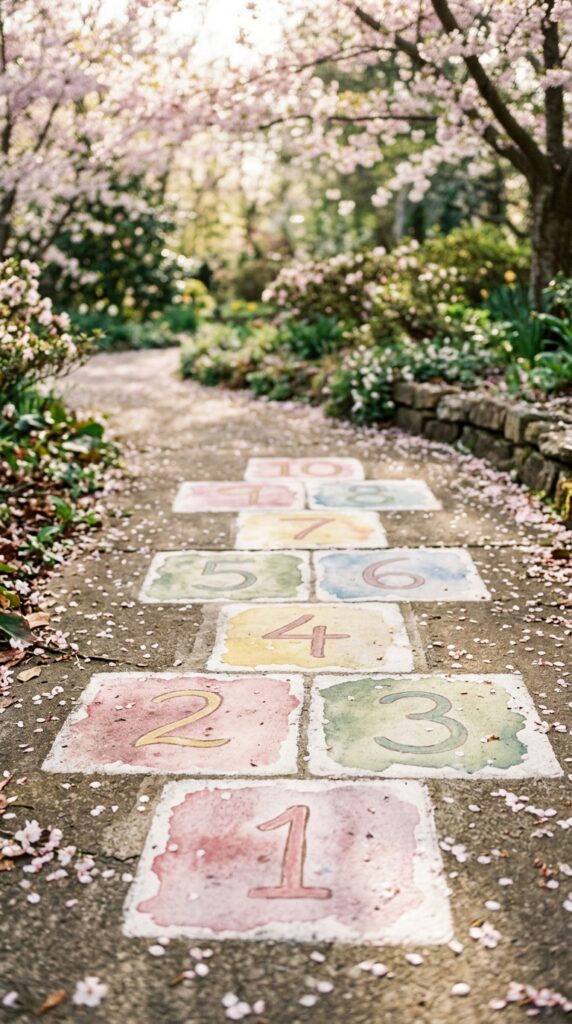
A watercolor-style hopscotch is unexpectedly sophisticated when the colors are dusty rather than candy-bright. Think vintage children’s book illustration, not playground. Layer translucent washes of exterior paint thinned with the manufacturer’s recommended additive, letting the edges feather slightly into the concrete. Pick four pastels that share an undertone, all warm or all cool, otherwise it goes muddy fast. Hand-letter the numbers in a slightly darker version of each square’s color so they whisper rather than shout. Watch out for high-traffic driveways: thin washes wear faster than solid paint, so reserve this for guest parking or a side path. Soft, but never saccharine.
4. Bold Geometric Color Block
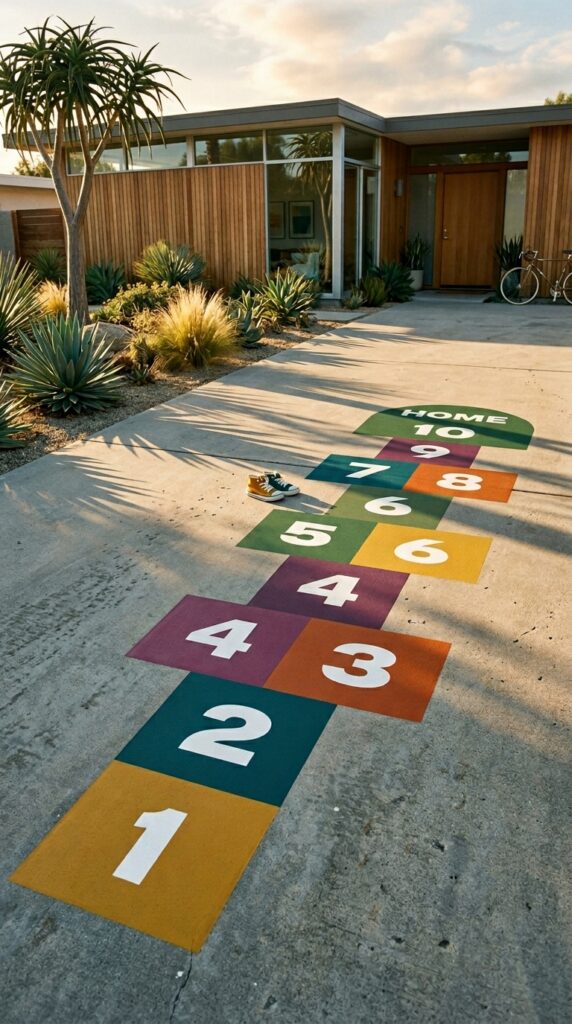
Color blocking is the move if you want personality without going twee. Pick five or six saturated tones from a curated palette, mustard, plum, teal, burnt orange, forest green, and commit to one color per square with absolutely no blending or gradients. The key is choosing shades that feel adult: muted, slightly desaturated, never primary. White or black numbers work best here because anything else competes. Keep the grid lines sharp with painter’s tape and a small foam roller. The constraint: this style demands a clean concrete surface, every chip and crack will read as part of the design. Loud, but in the way a great rug is loud.
5. Stencil-Lettered Vintage Style
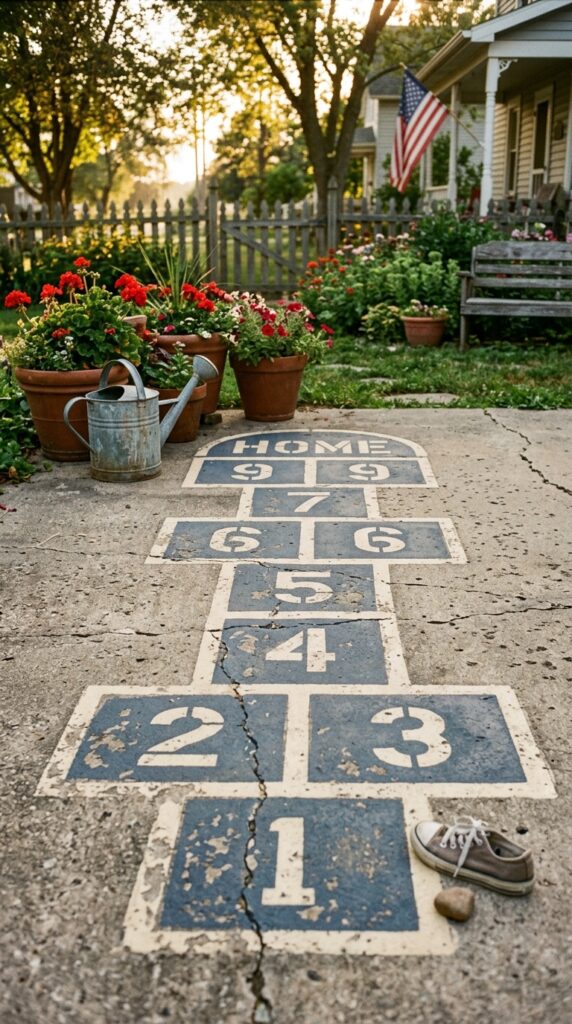
There’s a real charm in numbers that look like they were painted on a 1940s gymnasium floor. A stencil approach gives the hopscotch instant heritage, and it works beautifully with traditional homes, cottages, and anything farmhouse-adjacent. Buy or cut chunky serif or military-style stencils, then deliberately apply the paint a little unevenly so it looks aged from day one. Stick to two colors max, a deep navy on cream is foolproof, and seal with a matte concrete sealer to lock in that worn-in look. The trade-off: this style is harder to refresh later because perfect crispness would ruin the effect. Charming, like a well-loved jacket.
6. Floral and Botanical Borders
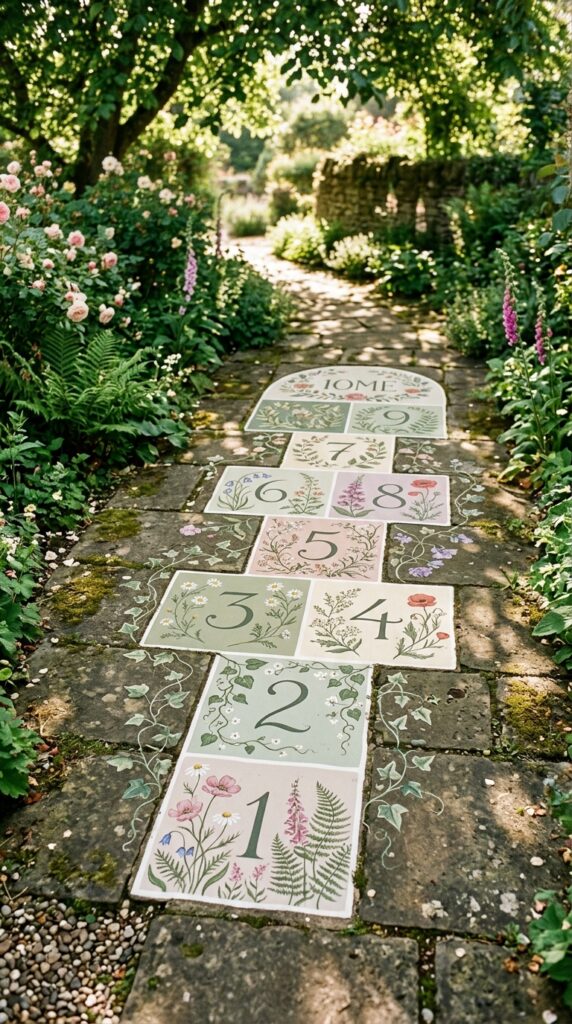
If your front yard already leans cottage-garden, lean further. Painting fine botanical details, ferns, daisies, climbing sweet pea, around and between the squares turns a hopscotch into a piece of folk art. Keep the squares themselves quiet (cream, soft sage, or unpainted concrete) so the illustrations get to be the star. Use exterior acrylic paint and a small artist’s brush, and be willing to spend a real afternoon on it. Designer rule: odd numbers of motifs always look more natural than even ones. The watch-out is commitment, this is not a weekend project, and removing it later means repainting the whole driveway. Worth every minute if you love a hand-touched home.
7. Permanent Inlaid Tile Hopscotch
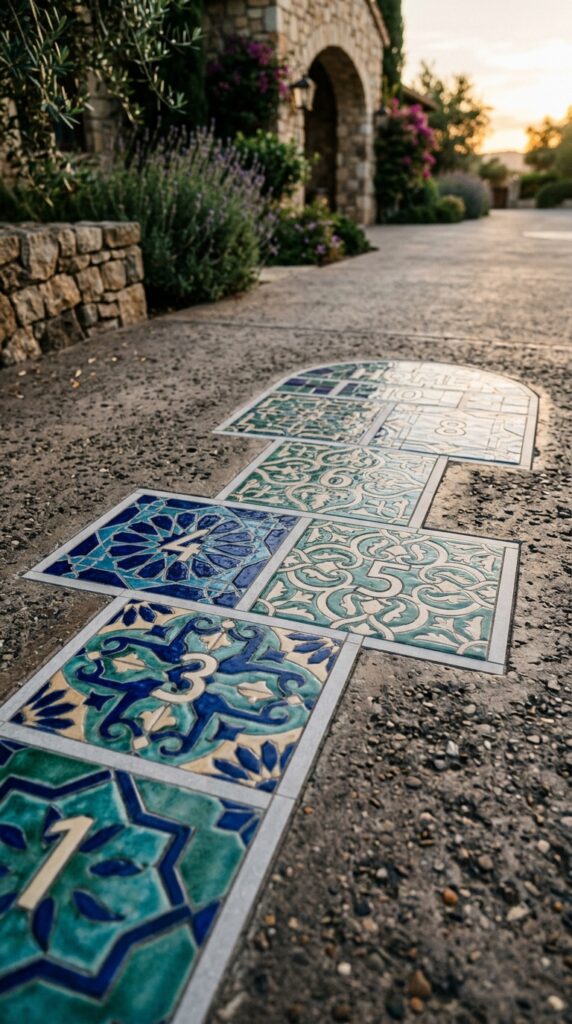
For homeowners ready to invest, an inlaid tile hopscotch is genuinely transformative, and frankly, a feature buyers notice. Small format porcelain or stone mosaic, set flush into the concrete during a partial driveway redo, gives you a hopscotch that lasts decades and reads as architecture. Choose tiles in a tight palette of three or four glazed colors with subtle pattern variation, and let the numbers be formed from contrasting tile rather than paint. Hire a mason unless you genuinely know what you’re doing, the sub-base prep matters. Constraint: this is the most expensive option here, and it’s permanent, so be sure of your palette. The reward is a driveway that feels designed, not decorated.
8. Removable Vinyl Decal Set
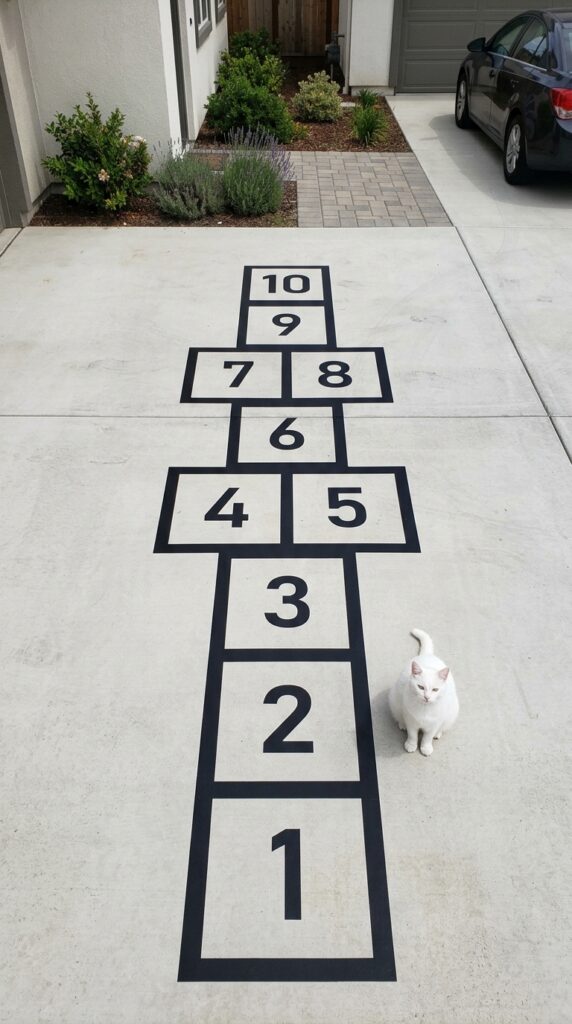
Renters and the commitment-shy, this is your option. Outdoor-rated vinyl decals (the kind made for driveways and parking lots) give you a crisp, professional-looking hopscotch with zero paint and zero permanence. They peel up cleanly when you move, and you can swap palettes seasonally if you’re the type. Order custom shapes and numbers from a sign-maker rather than buying a generic kit, the difference in quality is enormous. Keep the design simple, vinyl handles flat color far better than gradients or fine detail. The watch-out: vinyl needs perfectly clean, dry concrete to adhere, and it’ll lift in extreme heat if your driveway gets full afternoon sun. Practical, polished, and surprisingly chic.
9. Chalk Paint for Seasonal Changes
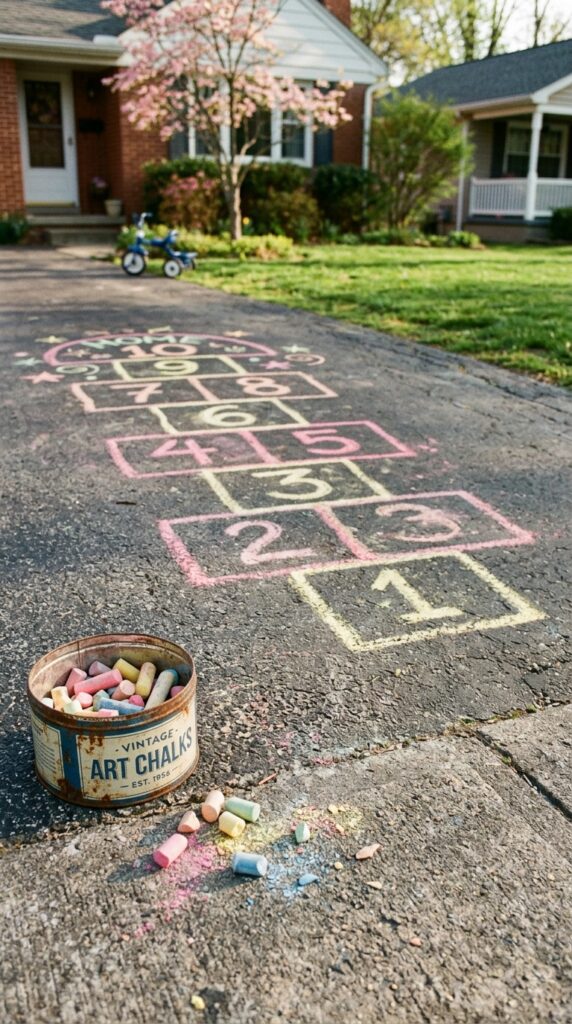
If you genuinely love change, traditional sidewalk chalk and modern washable chalk paints let you redesign your hopscotch with the seasons. Spring pastels, autumn rust and gold, winter icy blues, the driveway becomes a small canvas you revisit four times a year. Modern liquid chalk paint stays put through light rain but washes away with a hose, so you get permanence-ish without the regret. Stock a good variety of jumbo chalks in a vintage tin or wire basket near the door so refreshing the design becomes a five-minute ritual rather than a project. Constraint: this won’t survive heavy rain or snow, so anyone in a wet climate will be redrawing constantly. Fleeting, and that’s the point.
10. Glow-in-the-Dark Magic
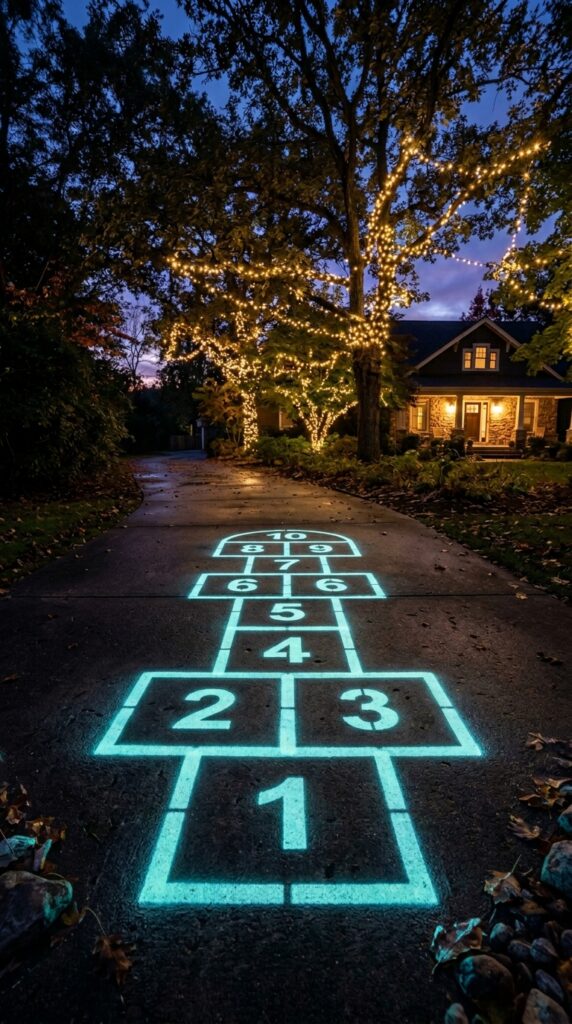
This one feels like a small miracle the first time you see it. Layered over a daytime design, glow-in-the-dark exterior paint charges in sunlight and casts a soft eerie glow for hours after dark. It’s not a primary look, it’s an enchantment that reveals itself in the evening. Apply two or three coats over white or pale base squares for the strongest glow, the brighter the base, the better the effect. Pair with subtle solar path lights or fairy lights in the surrounding shrubs for a layered nighttime garden feel. Watch out: cheap glow paints fade fast, splurge on the marine-grade or industrial versions designed for outdoor use. Pure delight, with very little effort.
11. Driftwood and Stone Natural Edge
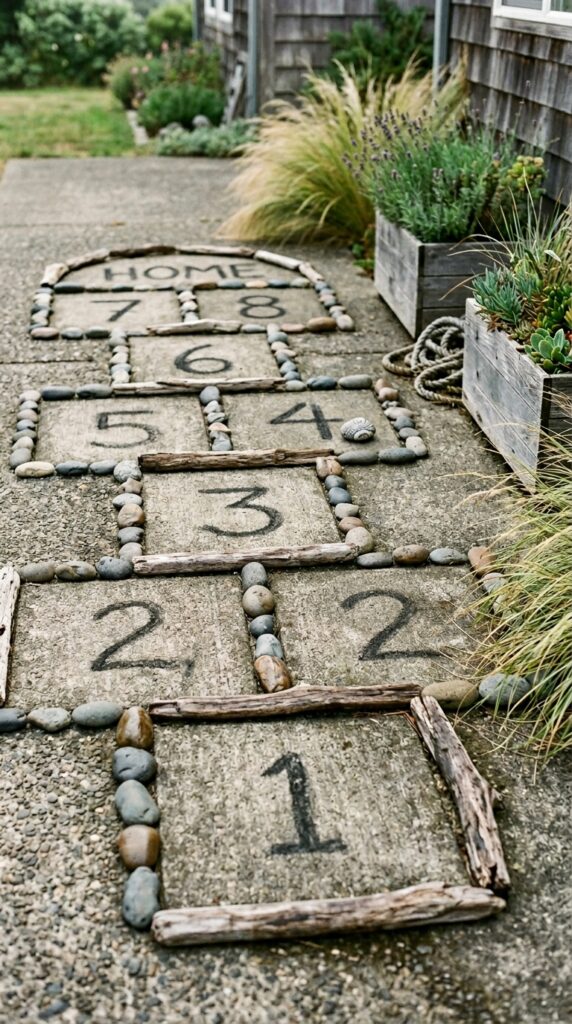
For homes that lean coastal, Japandi, or quietly natural, swapping painted lines for actual material gives the hopscotch a sculptural, almost installation-like quality. Smooth river stones, pieces of driftwood, or small slabs of slate form the grid borders, while the numbers stay simple, hand-painted in charcoal directly on the concrete. The texture contrast against smooth concrete is what sells it. Use a clear concrete adhesive to anchor the stones permanently, or arrange them loose if you want flexibility (and don’t mind resetting after a windy night). The constraint: this style needs a calm, uncluttered surrounding palette, busy landscaping fights it. Less hopscotch, more landscape art.
12. Whimsical Storybook Theme
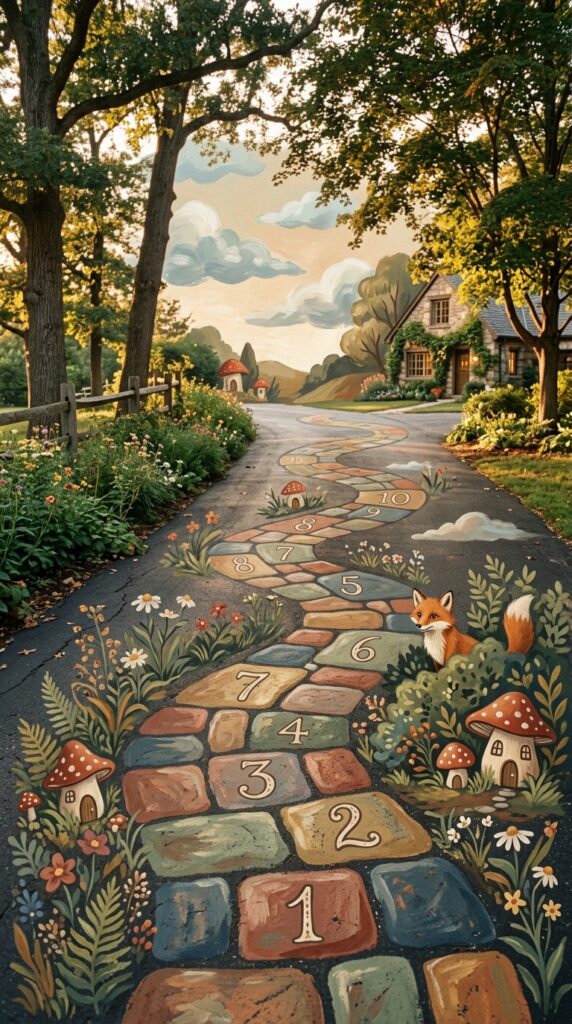
Save this one for last because it’s the most ambitious and the most memorable. Treating the hopscotch as a tiny illustrated world, where the squares become stepping stones through a painted landscape of clouds, fields, mushrooms, or sleeping foxes, turns the driveway into a piece of family folklore. Commission a local muralist if painting isn’t your strength, the difference between charming and chaotic comes down to draftsmanship. Stick to a vintage muted palette to keep it tasteful: dusty greens, faded blues, soft ochres, never neon. Watch out: this is the hardest style to maintain, every touch-up has to match the original artist’s hand. But it’s the kind of detail children remember their whole lives.
A driveway hopscotch sounds like a small thing until you actually live with one, and then you realize how many small joyful moments it generates: the kids who slow down on their bikes to play a quick round, the neighbor who finally stops to chat because the design caught their eye, the way arriving home feels just slightly more cheerful. The best version is the one that fits your house, your climate, and your appetite for upkeep. Renters should lean into vinyl and chalk paint; committed homeowners can play with tile, stone, and full murals. Either way, the through-line is the same: treat the project with real design intention, restraint with color, attention to scale, the right materials, and the result will feel intentional rather than improvised. We hope this gave you a few ideas you genuinely hadn’t considered, and that next time you pull into your driveway, you see a canvas instead of just concrete. Come back anytime for more small ways to fall in love with the home you already have.