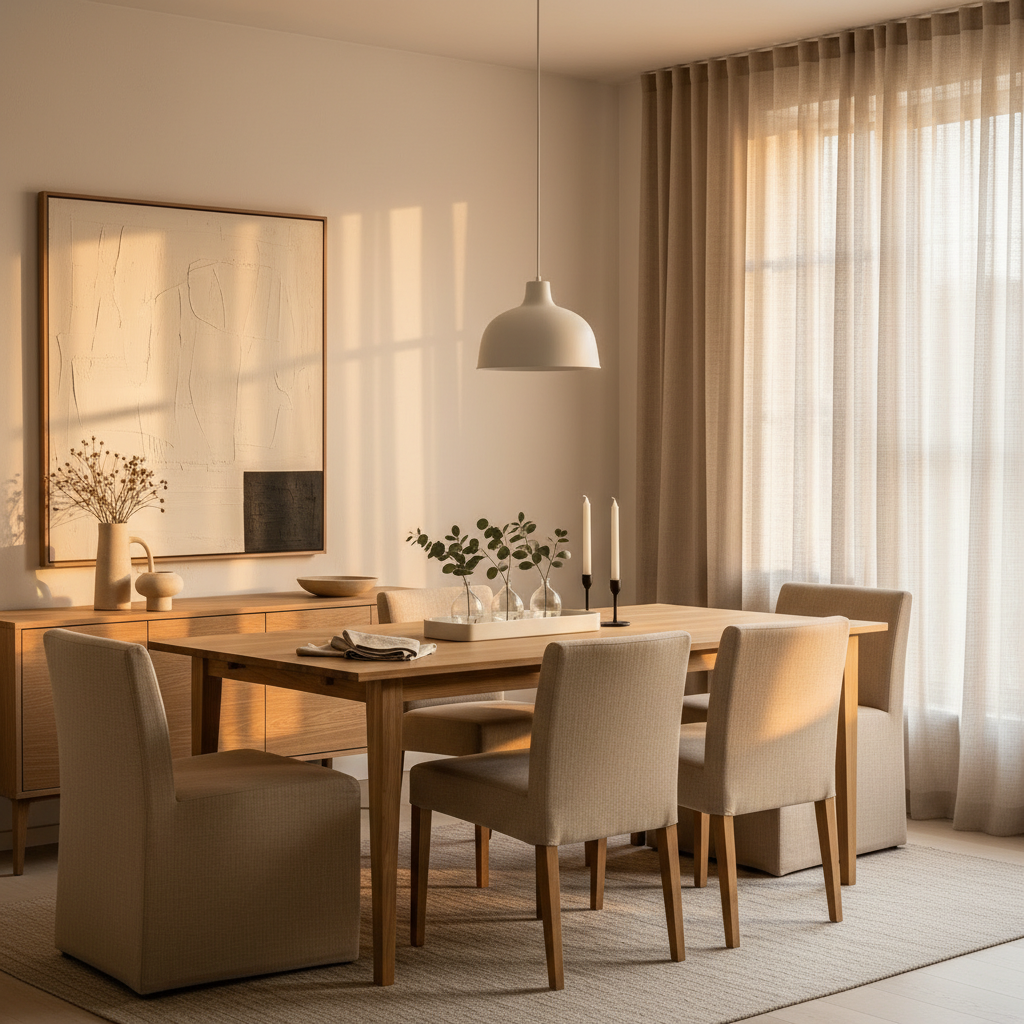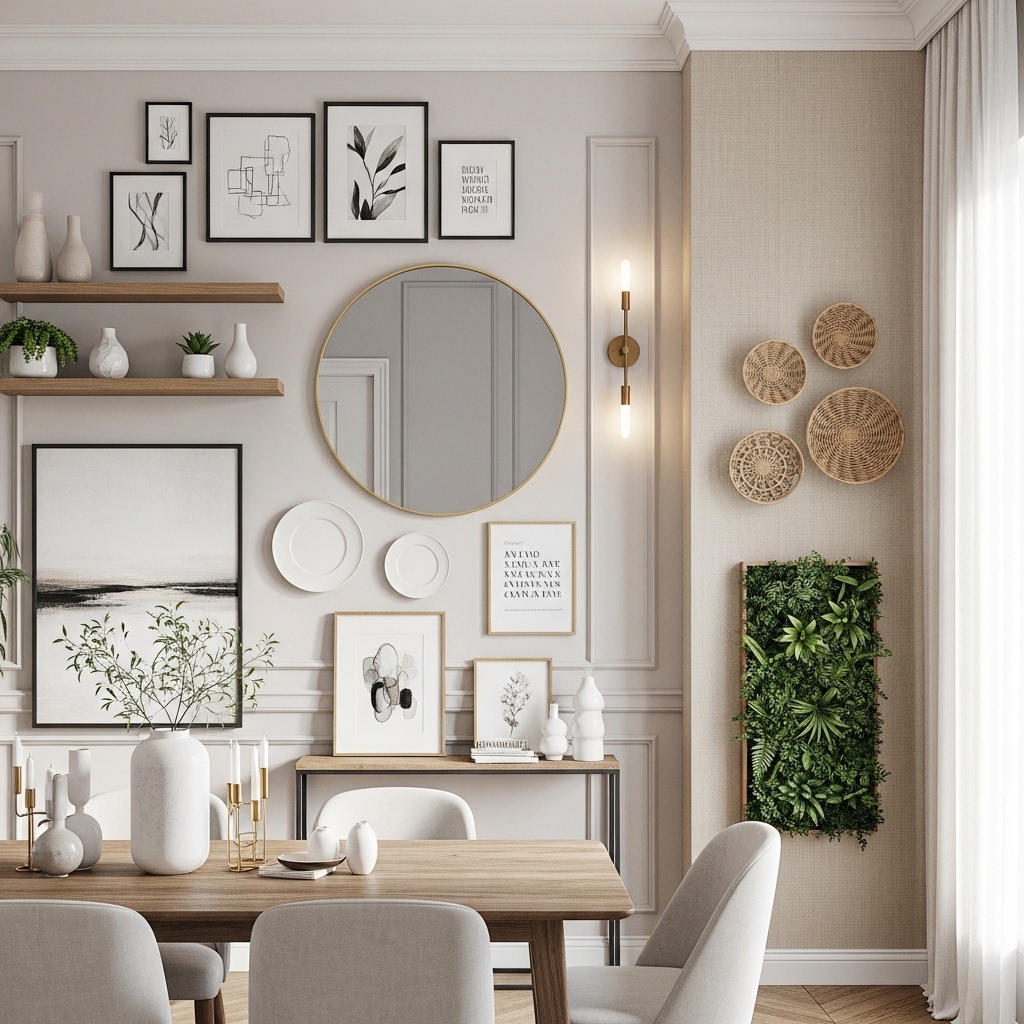
The dining room is one of those spaces that almost every home has and almost nobody treats seriously enough. It’s where people linger after dinner, where conversations stretch past midnight, where the good dishes finally come out. And yet most dining rooms are styled once — usually when the furniture arrives — and then quietly forgotten.
That’s a shame, because the dining room is actually one of the most forgiving rooms in the house to decorate. You’re not sleeping in it, working in it, or bathing in it. You’re eating, talking, and occasionally hosting. Which means you have enormous creative freedom — and very little excuse for boring. The ideas in this article range from the simple and immediate to the slightly more committed. Some cost almost nothing. Some require a weekend. All of them are worth it.
Whether your dining room is a dedicated formal space or a corner of an open-plan kitchen, these twelve ideas will give you something specific and actionable to work with. Let’s get into it.
1. Set the Tone with a Statement Wall Color
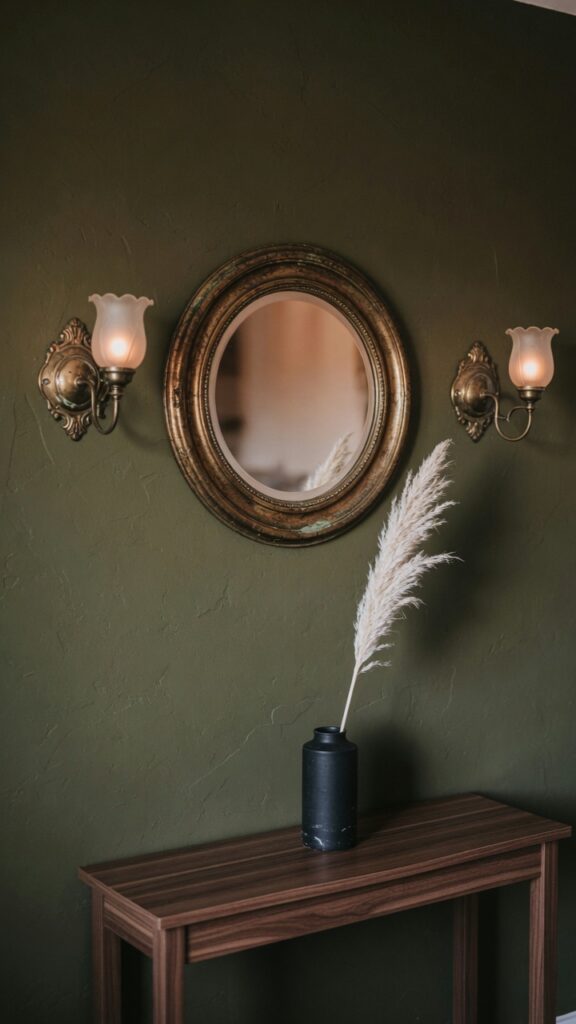
Paint is the single cheapest, highest-impact thing you can do in a dining room — and yet most people default to agreeable greige and call it a day. Don’t. The dining room is one space where you can afford to go bold because you’re not staring at it all day.
Deep tones work particularly well here: forest green, slate blue, terracotta, warm charcoal. They create a sense of enclosure that actually makes people feel more relaxed and stay at the table longer. There’s a reason candlelit restaurants paint their walls dark.
Stick to matte or eggshell finishes — they absorb light softly and hide imperfections far better than satin. If your room faces north and gets cold natural light, lean warm: dusty terracotta, warm taupe, olive. South-facing rooms can handle cooler tones without feeling icy.
One thing to watch: very dark walls in a room under 10×12 feet can feel heavy rather than dramatic. Balance it with lighter furniture and reflective surfaces like mirrors or brass hardware to keep the space breathing.
2. Layer Your Lighting Like a Pro
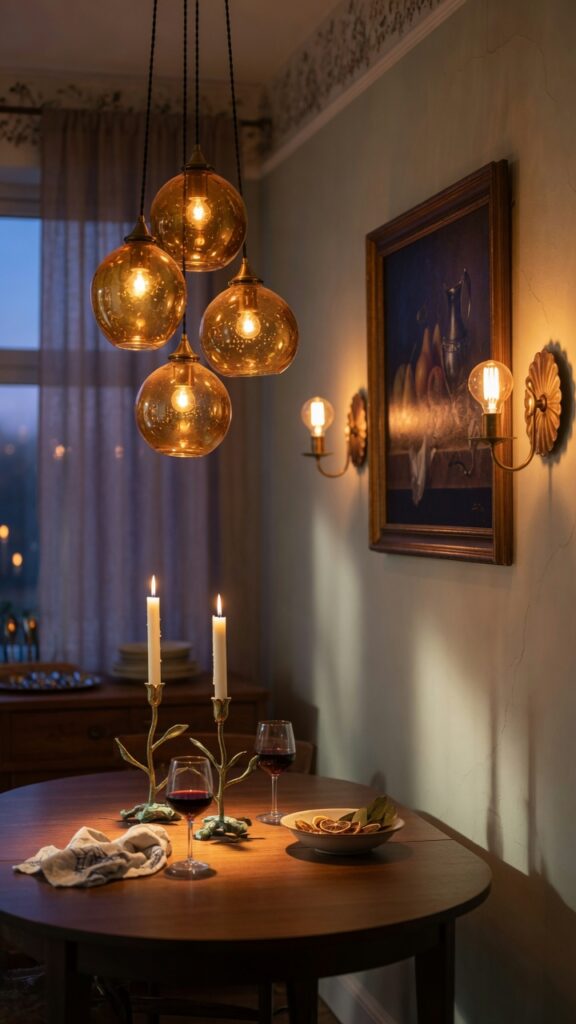
Here’s something most dining room makeovers get completely wrong: they hang one pendant light and stop there. Good lighting in a dining room isn’t about a single statement fixture — it’s about building layers.
Start with your ambient layer: a chandelier or cluster of pendants hung 30–34 inches above the tabletop. Then add accent lighting — a pair of wall sconces on either side of a piece of art, or a picture light aimed at a gallery wall. Finally, bring in the atmosphere layer with candles. Always candles.
A dimmer switch is non-negotiable. If you’re renting and can’t change wiring, plug-in sconces exist and actually look intentional when styled well. The goal is to be able to dial the mood down to about 30% for dinner.
Skip cool-toned bulbs entirely. Stick to 2700K–3000K warm white LEDs and your food will look more appetizing, your guests will look better, and the whole room will feel warmer without touching the thermostat.
3. Choose a Rug That Grounds the Whole Room
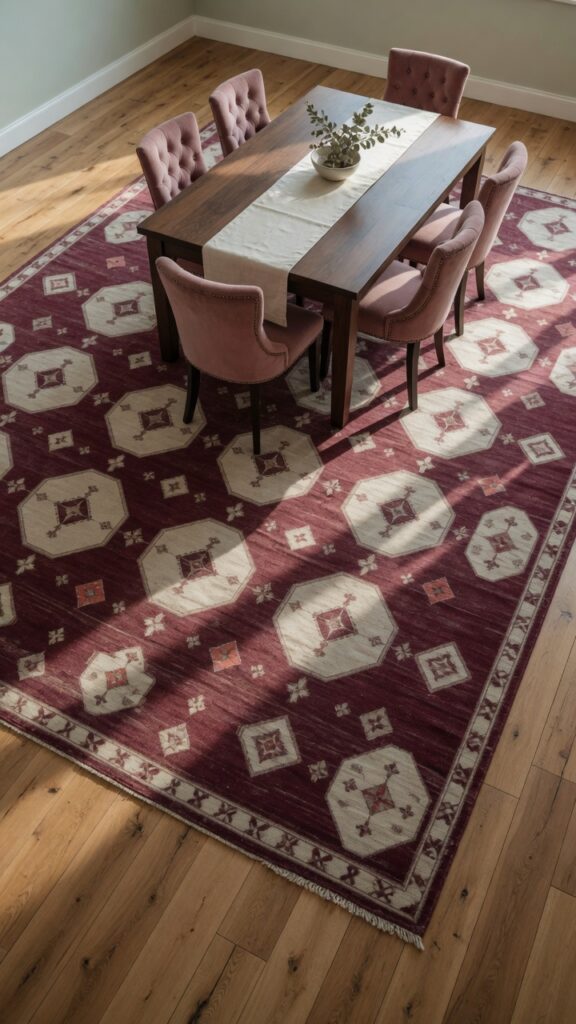
The rug question in a dining room divides people — some think it’s impractical, others swear by it. The truth is it depends entirely on which rug you choose. A flat-weave wool or low-pile synthetic? Absolutely practical. A plush shag? Skip it entirely — you’ll be pulling crumbs out of it for years.
Size is where most people go wrong. The rug needs to be large enough that all chair legs remain on it even when chairs are pulled out. Add at least 24 inches to the length and width of your table. If your table is 72 inches long, you want at least a 9×12 foot rug. A rug that’s too small doesn’t ground anything — it just looks like it wandered in from another room.
Pattern-wise, busier rugs forgive spills far better than solids. Vintage-style or geometric patterns in muted tones — ochre, burgundy, navy, cream — add warmth and history without competing with the rest of the room. Natural fiber rugs like jute look beautiful but stain easily; pair them only with very relaxed, casual dining spaces.
4. Mix Chair Styles for a Curated, Collected Look
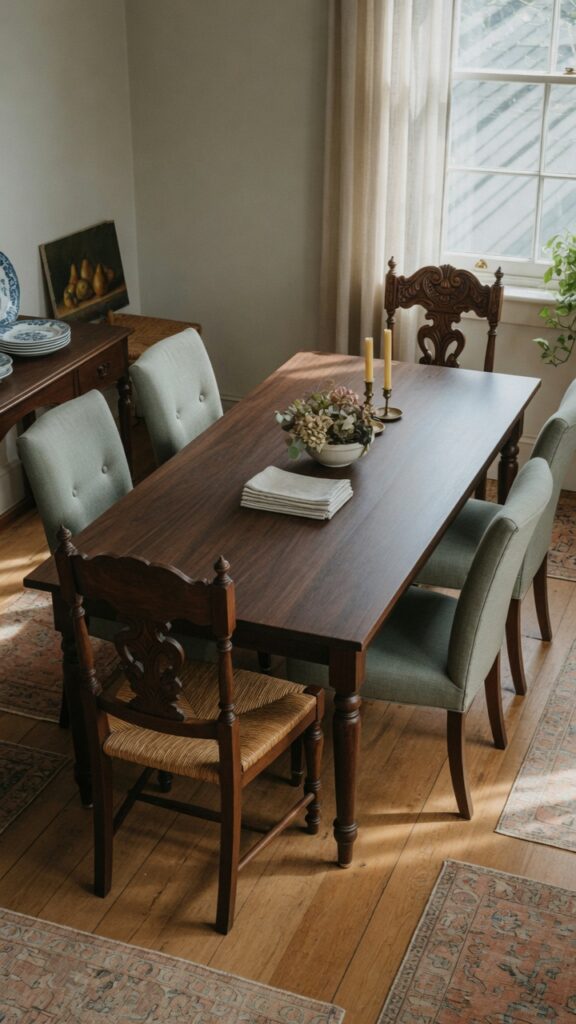
Matching chair sets are perfectly fine. But a thoughtfully mixed dining set looks like something you built over time — like someone actually lives here. The trick is to mix intentionally, not randomly.
The most reliable approach: keep one consistent element across all chairs. That might be the leg finish — all brass, all dark walnut, all matte black — or the seat height, or a shared upholstery color. Vary the silhouette, keep the thread, and the arrangement reads as deliberate rather than thrown together.
Armchairs at the head of the table is one of those moves that immediately elevates a dining room. It feels both generous and a little grand, and it’s surprisingly affordable since you only need two.
If you share the space with young children, opt for performance fabrics. Crypton and Sunbrella weaves now come in genuinely beautiful textures that you’d never guess were family-proof. Boucle looks wonderful but pills and stains — save it for adult-only households.
5. Style a Sideboard That Actually Works
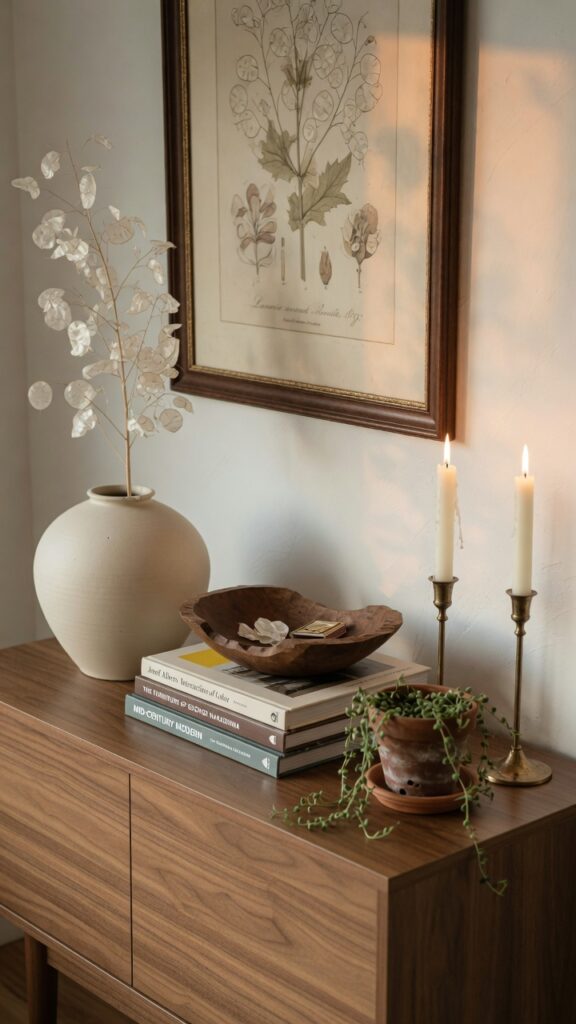
A sideboard earns its place ten times over — storage, display surface, and major visual anchor all in one. But the styling is where most people either nail it or lose the plot entirely.
The best sideboard vignettes follow an invisible structure: vary height, vary texture, vary material. One tall item — a lamp, a large vase, a tall plant. One mid-height piece — art leaning against the wall, a stack of books. One low element — a bowl, a candle tray, a small sculpture. That rhythm creates visual interest without tipping into clutter.
Keep functional items here too. A drinks tray, serving pieces, extra napkins folded into a basket. A sideboard that looks beautiful and serves a real purpose at dinner parties is the dream.
As for what hangs above it: one large statement piece almost always beats a gallery wall in this spot. An oversized botanical print, an abstract canvas, a vintage architectural poster. If the sideboard is long, the artwork should be at least two-thirds its width — anything smaller floats awkwardly in the space above.
6. Bring in Texture with Textiles
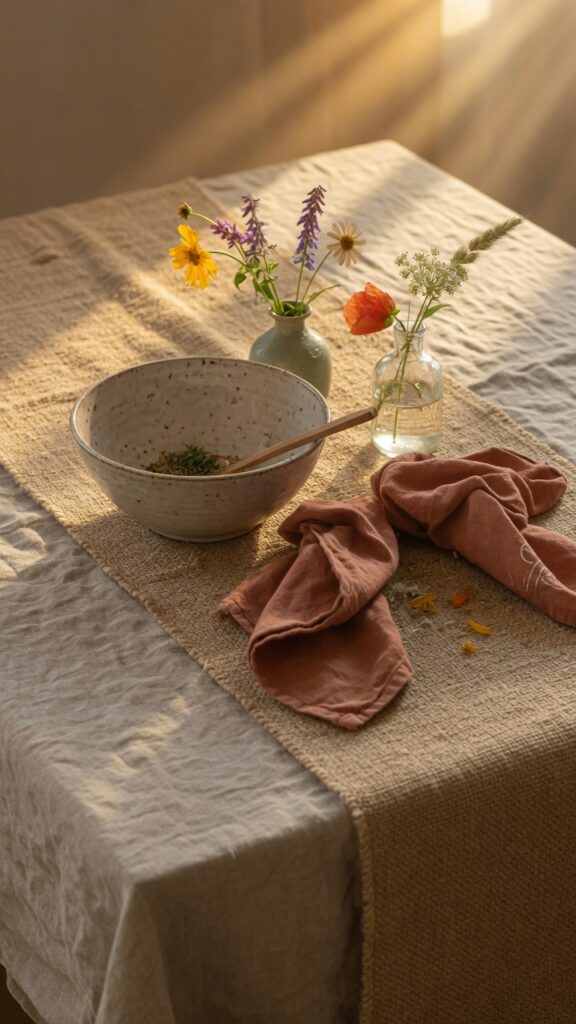
Textiles are the fastest way to shift the mood of a dining room without touching the walls or furniture — and they’re endlessly swappable with the seasons. The problem is most people treat them as an afterthought rather than a design layer.
Start with a tablecloth or table runner as your base. Washed linen is the gold standard: it gets softer with every wash, photographs beautifully, and reads as both casual and considered. If linen feels high-maintenance, go for a cotton-linen blend — similar drape, much easier to care for.
Napkins are where you can introduce a second color or pattern without risk. A stone beige tablecloth with terracotta or dusty sage napkins adds warmth without visual noise. If your dining chairs are already upholstered in a solid color, napkins are the one place you can sneak in a subtle stripe or botanical print.
Avoid polyester entirely — it wrinkles badly, pills quickly, and looks cheap under candlelight. Change your table textiles seasonally: linen and cotton for spring and summer, heavier cotton twill or washed velvet for autumn and winter.
7. Create a Gallery Wall That Feels Intentional
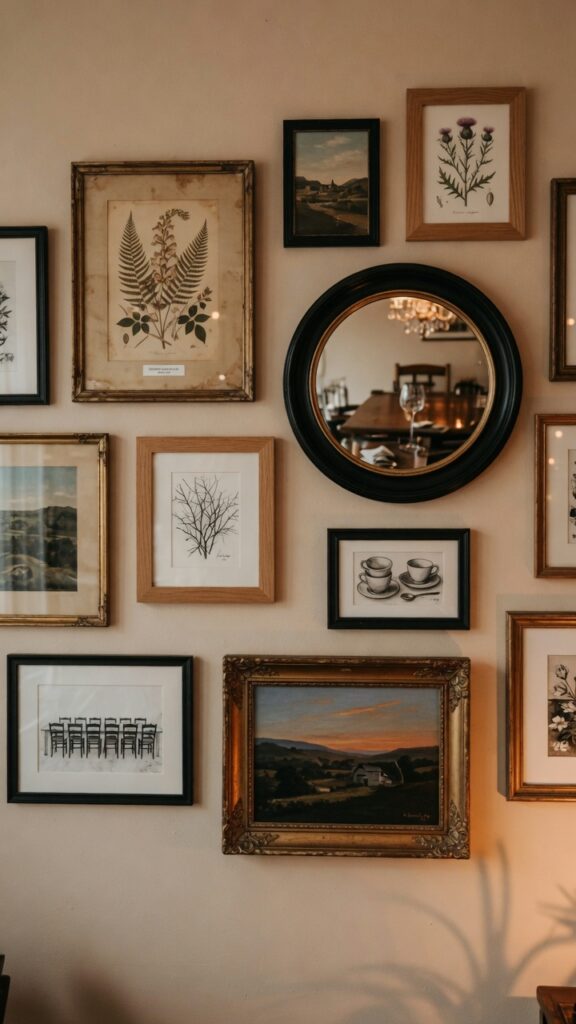
Gallery walls get a bad reputation because people hang them too small, too high, or with no visual logic connecting the pieces. Done right, a gallery wall in a dining room is one of the most personal and powerful things you can do with a wall.
The key is establishing a common thread — and it doesn’t have to be the frames. It can be the subject matter (all botanicals, all vintage maps, all architectural drawings), the color palette (warm sepia tones, black and white, all with a touch of ochre), or the mood. Mix frame finishes only if you’re confident — beginners should stick to two complementary finishes at most.
Lay the whole arrangement out on the floor before hanging a single nail. Live with it for a day. The classic mistake is hanging everything too high — aim to center the overall composition at eye level, roughly 57–60 inches from floor to center, not each individual piece.
Adding one three-dimensional element — a small shelf, a decorative plate, a convex mirror — breaks the flatness and makes the whole wall feel more alive and less like a print collection.
8. Use Mirrors to Amplify Light and Space
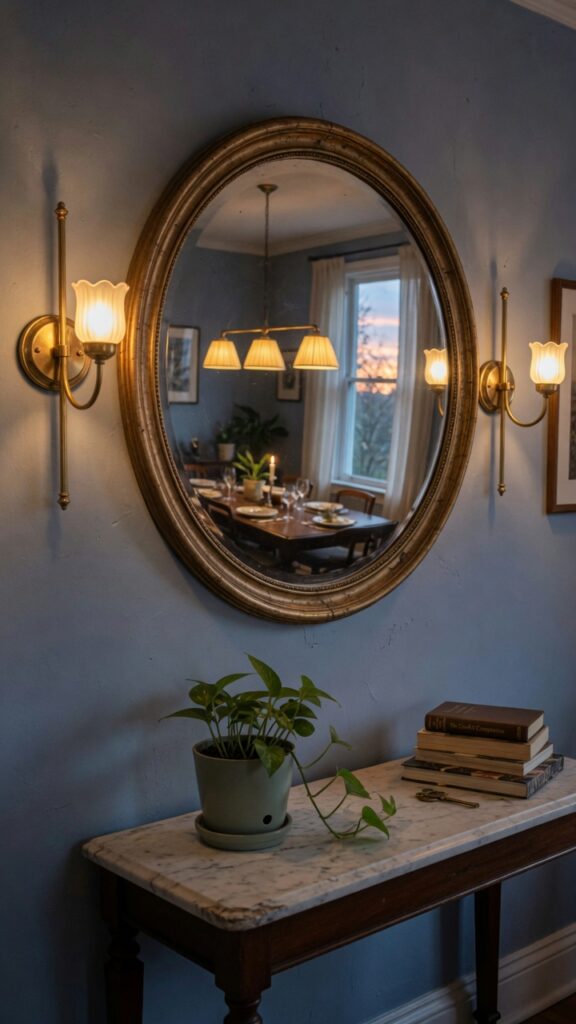
Mirrors in dining rooms are one of those designer tricks that sounds obvious until you actually see it done well — and then you understand immediately why every beautiful restaurant has at least one.
The function is simple: mirrors double the perceived size of a room and amplify whatever light you have. In a north-facing dining room that never gets direct sun, a well-placed mirror opposite the window is the closest thing to adding a second window without calling a contractor.
Round mirrors tend to work better here than rectangular ones, which can read more like a bathroom. The convex bull’s-eye mirror — that classic dome-shaped piece with a brass or dark frame — is endlessly versatile and looks good against almost any wall color.
One thing to watch: position the mirror so it reflects something beautiful. A mirror that bounces back a cluttered kitchen doorway or a dark hallway defeats the purpose. Choose its location deliberately so it amplifies light and a flattering view. For renters, adhesive mirror tiles in a deliberate grid or arch shape can look genuinely architectural rather than temporary.
9. Bring Plants Into the Dining Equation
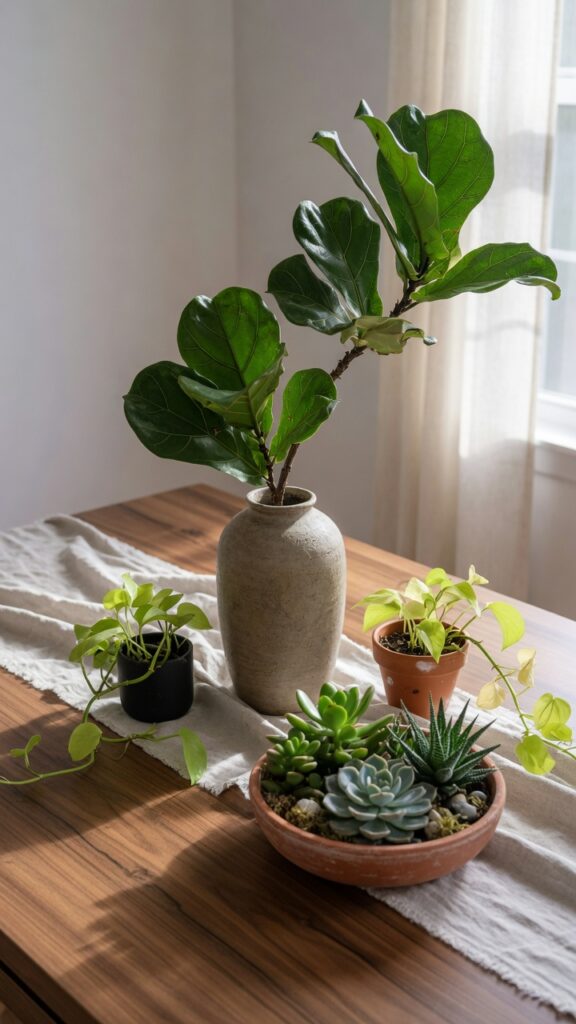
Plants in the dining room look effortless when they work and chaotic when they don’t. The difference is usually scale and placement.
One large plant does more than five small ones. A fiddle-leaf fig, an olive tree, or a tall rubber plant in the corner of a dining room becomes an architectural element — it fills vertical space, softens hard corners, and makes the whole room feel alive. You don’t need a collection. You need one confident statement.
For the table itself, keep centrepieces low enough to see over during conversation — roughly 10–12 inches is the practical maximum. A low terracotta bowl with trailing succulents, a bud vase with a single eucalyptus stem, or a small sculptural cactus reads as intentional rather than fussy.
If your dining room doesn’t get great light, lean toward pothos, ZZ plants, cast iron plants, or snake plants. They stay lush even in dim rooms. Avoid demanding plants like fiddle-leaf figs in low-light spaces — a struggling plant looks considerably worse than no plant at all.
10. Style the Table Between Meals
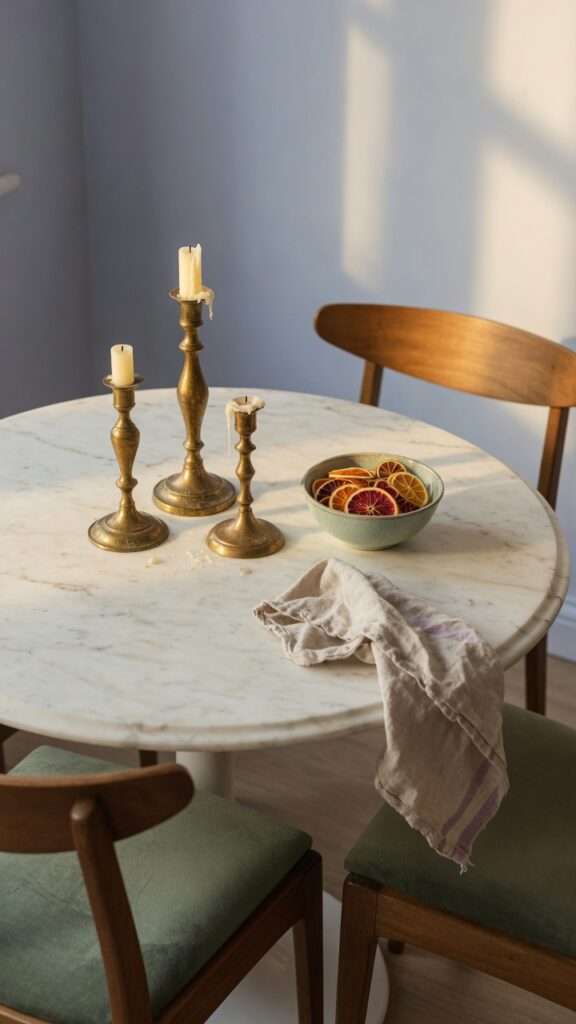
This is the detail most people skip entirely — and it’s the reason some dining rooms feel curated while others feel like furniture sitting in a box. A styled table between meals takes five minutes and completely changes how the room reads.
You don’t need a formal arrangement. The goal is to suggest that the table is lived in, not staged. A cluster of three or five mismatched candlesticks at different heights, a single low ceramic bowl, and a casually folded linen napkin. Odd numbers always look more natural than even ones.
Seasonal swaps keep it interesting without effort: dried seed pods and terracotta in autumn, simple white candles and greenery in winter, small bud vases with fresh flowers in spring. If you genuinely have no time for maintenance, a single beautiful piece — a sculptural wooden bowl, an oversized ceramic platter — does the job year-round.
Avoid the artificial fruit bowl. It reads as filler. Everything on the table should be beautiful or useful, and ideally both.
11. Get the Curtains Right
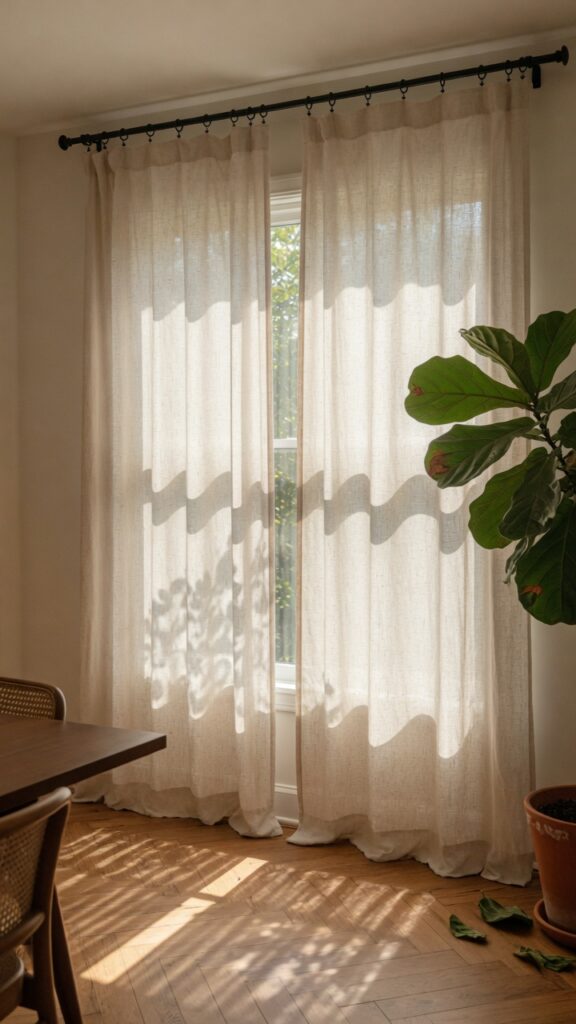
Curtains are one of those things people either get completely right or embarrassingly wrong — and the mistakes are almost always the same ones. Too short, too narrow, too lightweight, or hung too low.
The rule is simple and non-negotiable: hang your rod as close to the ceiling as possible and let the curtains reach the floor. This makes ceilings look taller, windows look bigger, and the whole room feel more considered. Curtains that hover above the floor or stop at the window frame look like an afterthought regardless of what they cost.
For fabric, linen and linen blends are the dining room’s best friend — casual enough for daytime, elegant enough for evening, and they filter rather than block light. Go for a slightly off-white or warm natural tone rather than stark white; stark white reads clinical, especially against warm wood tones.
Panel width matters too: curtains should be 2–2.5 times the width of the window when gathered. Flat, skimpy panels with no fullness look perpetually half-done. If you’re renting and can’t install a new rod, clip-ring curtains on a tension rod at ceiling height can work surprisingly well for very little money.
12. Master the Art of the Centerpiece
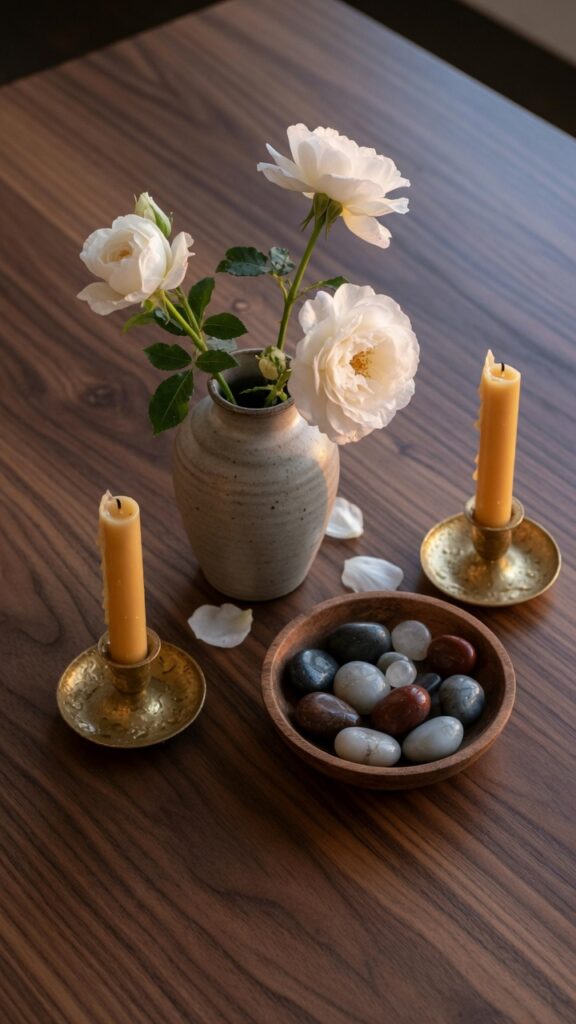
The centerpiece conversation always ends up in the same place: what looks good and doesn’t block eye contact across the table? The answer is simpler than it sounds once you stop treating centerpieces as decoration and start treating them as a composition problem.
Height is the critical variable. Anything above 12 inches starts to fragment conversation. The solution isn’t to go flat — it’s to go tall but slender. A single stem in a narrow-necked vase, a pair of taper candles, three slender candlesticks at staggered heights. These add vertical interest without blocking sight lines.
Fresh flowers are the obvious choice but require upkeep. Dried botanicals have gotten genuinely beautiful in recent years: dried lunaria, bunny tails, cotton stems, pampas grass. They work in any season and last for months. A single dried white amaranth in a matte vase costs almost nothing and looks as considered as a fresh arrangement.
For dinner parties, always light the candles. Not just for ambiance — candlelight at the center of a table creates a visual focal point that makes the whole arrangement feel composed. An unlit candle is just decor. A lit one is an experience.
A Dining Room Worth Coming Back To
The best dining rooms aren’t the ones with the most expensive furniture or the most elaborate styling. They’re the ones where people want to linger. Where the light is right, the chair is comfortable, and the whole space feels like someone actually thought about it.
What you’ve read here isn’t a checklist to complete all at once. Pick two or three ideas that resonate with your space and your budget — maybe a wall color and a rug, or a sideboard refresh and better curtains. Build from there. The rooms that feel the most genuinely considered are usually built up over time, one good decision layered on top of another.
The practical details matter as much as the aesthetic ones. A rug that’s the right size. Lighting on a dimmer. Curtains that actually reach the floor. These aren’t small things — they’re the difference between a dining room that looks finished and one that just looks furnished. Come back when you’re ready for the next layer. There’s always another idea worth trying.