Industrial design used to mean cold concrete, unforgiving steel, and that one Edison bulb dangling from a wire like it had something to prove. We’ve moved on. The version I love now (and the one I’ll talk you through here) keeps the bones — the brick, the beams, the black metal — but layers in the kind of warmth that makes you actually want to sit down and stay awhile.
This isn’t about gutting your space or pretending you live in a Brooklyn warehouse. Most of these ideas work in rentals, suburban builds, and small apartments too. Some are weekend projects, some are just a smarter way to shop. The thread running through all of them is balance: hard meets soft, raw meets refined, dark meets light. Pick the ones that fit your space and your patience level. You don’t need every idea — you need the right three or four.
1. Soften Exposed Brick With A Heavy Linen Sectional
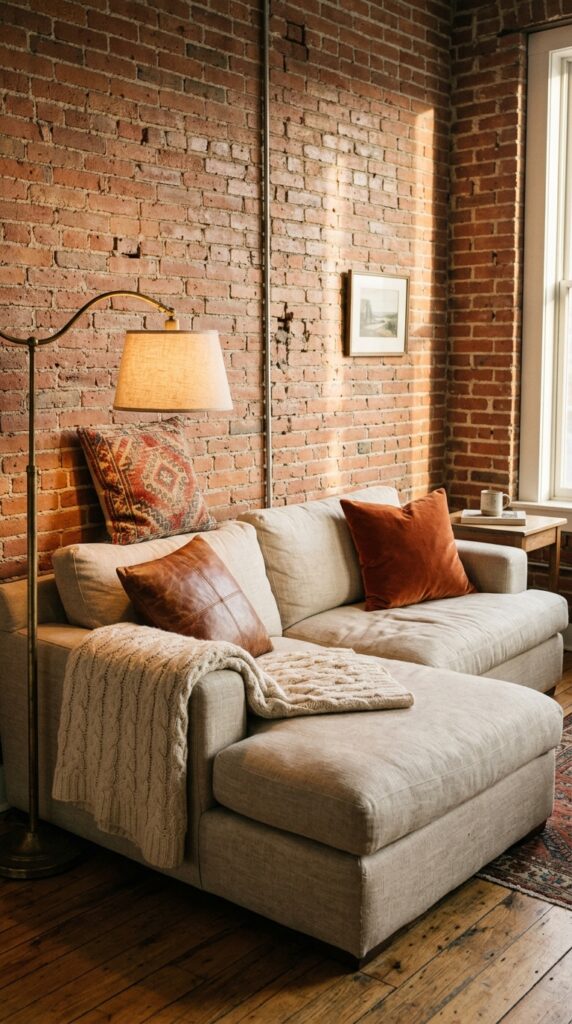
Brick walls are the easiest cozy industrial flex — but a leather Chesterfield against raw brick can read more cigar lounge than home. The fix is fabric weight. A deep, low-slung sectional in heavyweight linen or washed cotton softens all that texture without fighting it.
A few things that actually matter here. Go for warm neutrals (oatmeal, putty, warm grey) rather than stark white, which tends to look chalky against brick. Pick a sectional with a generous seat depth — at least 24 inches — because shallow seats kill the lounge factor. Layer two contrasting throw textures, like nubby bouclé and smooth cotton, so the eye has somewhere to rest.
Watch out: linen wrinkles. If you can’t make peace with that, look at washed cotton-linen blends instead.
The point is to give the brick something soft to lean into, not to compete with it.
2. Trade Edison Bulbs For Sculptural Pendant Lighting
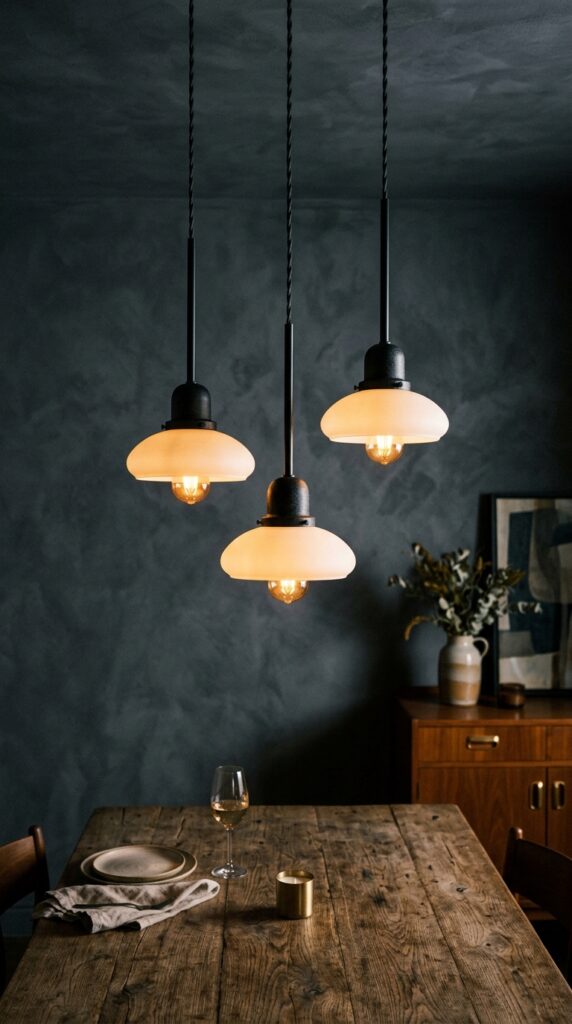
Bare Edison bulbs were charming for about fifteen minutes in 2015. The cozy industrial look has matured, and the lighting needs to catch up. Sculptural pendants in blackened steel, brushed brass, or frosted opal glass do the heavy lifting now.
Here’s the trick: hang in odd numbers (three is the sweet spot over a dining table or kitchen island), and stagger the heights by four to six inches if you want it to feel intentionally collected rather than showroom. Always put them on a dimmer. Always. A 2700K bulb at 40% brightness is the difference between “industrial” and “interrogation room.” Mix metals if your hardware allows — blackened steel with a touch of aged brass reads collected, not matchy.
One thing to watch: oversized pendants in low-ceiling spaces will eat the room. Measure twice.
Lighting is the fastest way to warm up an industrial shell without buying a single piece of furniture.
3. Layer A Vintage Persian Rug Over Concrete Floors
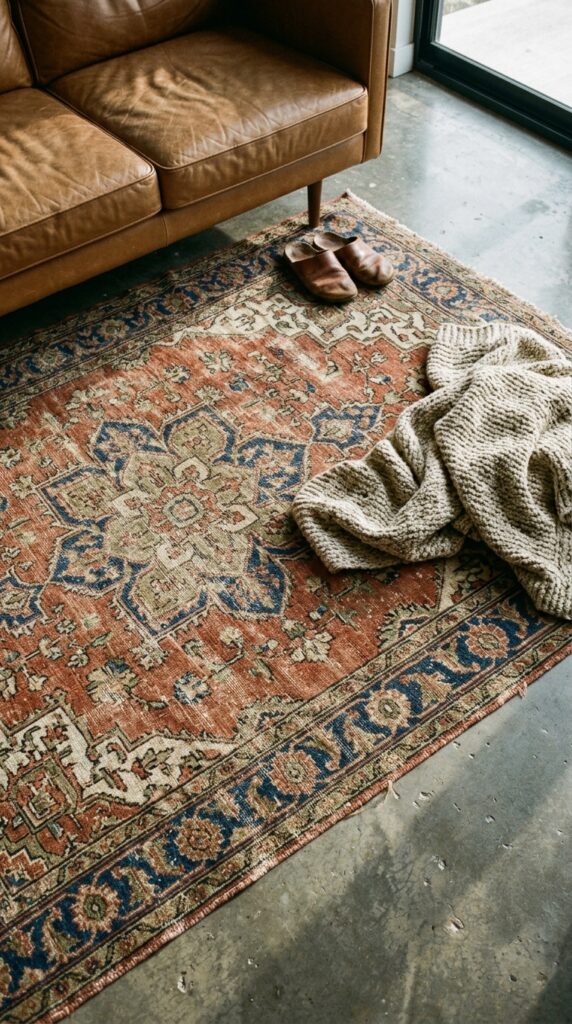
Concrete floors are stunning until you live on them. They’re cold underfoot, they echo, and they make every dropped wine glass a tragedy. A faded vintage Persian or Turkish rug fixes all three problems and instantly humanizes the space.
Go for low-pile, naturally aged pieces — the more worn, the better. The slightly muted reds, indigos, and ochres play beautifully against grey concrete and black metal. Size matters more than pattern: your rug should be large enough that the front legs of all major seating sit on it. Smaller rugs make rooms look chopped up and unfinished.
Skip this if you have pets that view fringe as a snack. Or commit to a fringe-trimmed flatweave instead.
The contrast of something handmade and centuries-old against raw modern materials is what makes the whole room finally click.
4. Use Warm Wood Tones To Break Up The Black Metal
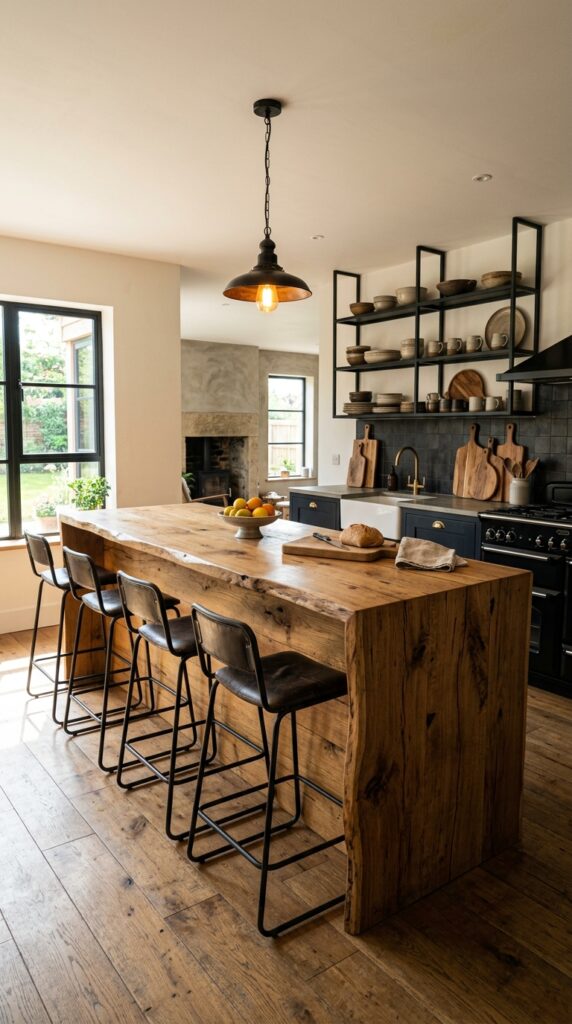
If your space is heavy on black metal — shelving, window frames, light fixtures, stair railings — it will read cold fast. The antidote is wood, and not just any wood. You want warm undertones: smoked oak, walnut, reclaimed pine with visible grain, or even cherry if you’re feeling brave.
Three places where this swap makes the biggest difference: the dining table, open shelving, and the coffee table. These are the largest horizontal surfaces in most homes, so warming them up shifts the whole room’s temperature. Live edges and visible knots are good — they keep things from feeling too polished.
Avoid orange-toned woods like honey oak unless you’re committed to a 90s revival. They fight everything else.
A 70/30 split — 70% warm wood and natural materials, 30% black metal — is a reliable starting ratio.
5. Add A Statement Plaster Or Lime Wash Wall
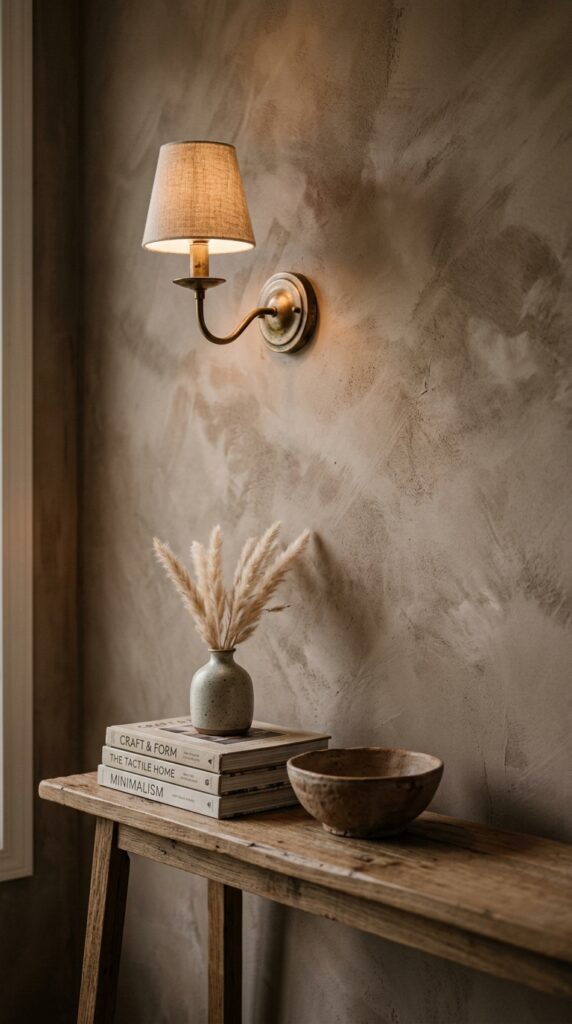
Flat painted walls are the silent killer of cozy industrial. They’re too perfect, too smooth, too apartment-complex. Lime wash and Roman plaster finishes add the kind of subtle, cloudy depth that makes a wall look like it’s been there for decades, even if you applied it last weekend.
Stick to warm, dusty tones: mushroom, terracotta, smoky taupe, or a deep moody clay. One accent wall is plenty — usually behind the sofa or the bed. Apply with a wide brush in irregular X-strokes for that organic, hand-finished look. Most lime washes are renter-unfriendly to remove, so confirm your situation first. Some newer paint-based lime wash imitators are forgiving and wash off.
Worth knowing: this finish photographs better than it sometimes looks in person. In dim rooms, it can read flat. Pair with good lighting.
It’s the closest you’ll get to a centuries-old European feel without the centuries.
6. Mix Caramel Leather With Cream Bouclé
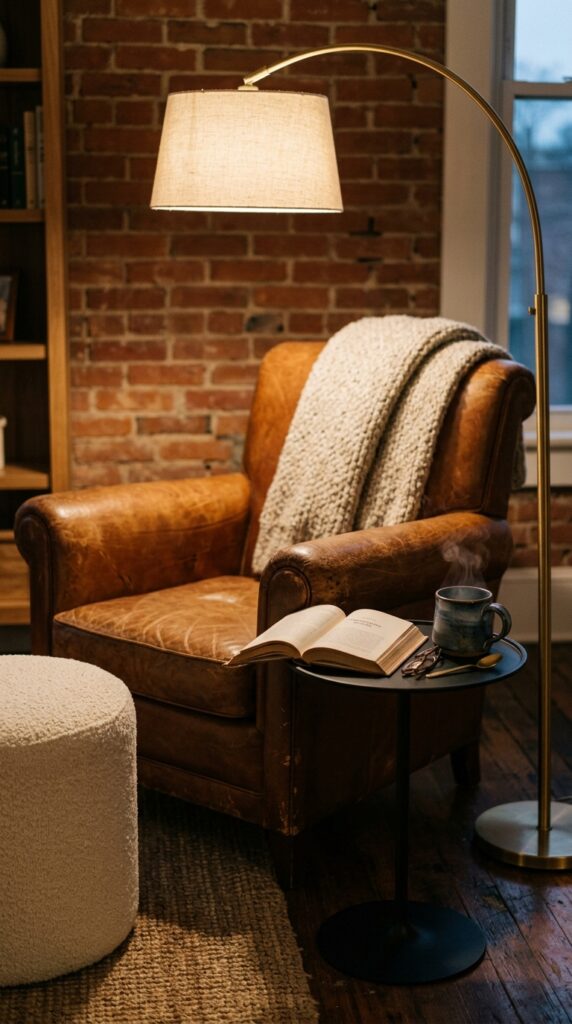
This is one of those combinations that sounds odd until you see it — and then you can’t unsee it everywhere. Aged caramel leather brings the patina and warmth; cream bouclé brings the softness and texture. Together, they make industrial spaces feel inhabited rather than staged.
A few practical notes. The leather should look like it’s lived a little. New, shiny leather reads stiff. Look for vintage finds, secondhand shops, or pieces specifically labeled “distressed” or “antiqued.” For bouclé, weight matters more than color — heavy, nubby textures hold up better and look more expensive than fluffy synthetic versions.
Don’t put cream bouclé in a household with toddlers, dogs, or anyone who eats pasta on the couch. You will regret it.
The contrast in textures is what makes the pairing feel rich, not the colors themselves.
7. Layer Lighting At Three Different Heights
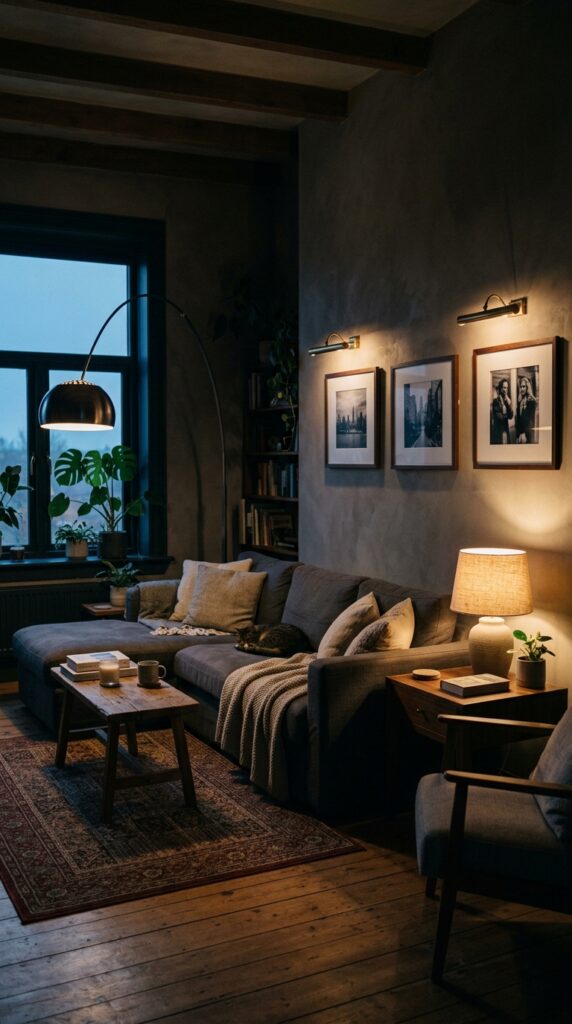
Overhead lighting alone is what makes industrial spaces feel like a parking garage. The cure is layering — light at three heights: floor (lamps, sconces near the ground), mid (table lamps), and overhead (pendants, picture lights, ambient).
Plug-in wall sconces are the most underused tool here. They give you the look of hardwired lighting without the electrician bill, and they pull light off the ceiling so the whole room feels softer. Picture lights above artwork are another easy win — they create intimacy by drawing the eye to specific spots rather than flooding everything evenly. Use bulbs in the 2200K to 2700K range for that warm, candlelit feel.
One thing to watch: too many lamps in a small room becomes visually busy. Three to four light sources per room is usually right.
When in doubt, light it like a hotel bar.
8. Bring In Heavy, Textured Curtains
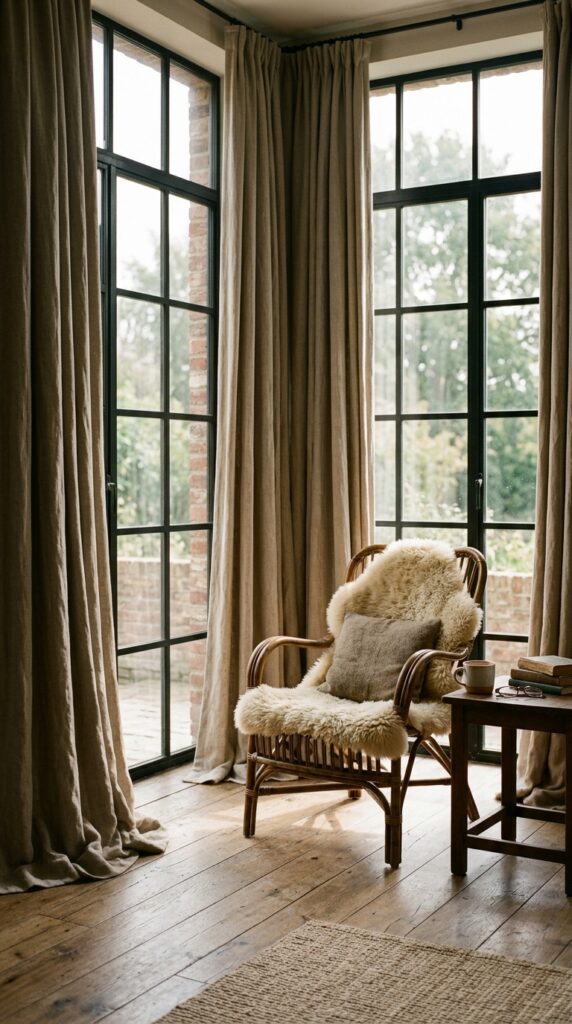
Bare windows in industrial spaces look unfinished. So do thin, sheer panels — they read more dorm room than design magazine. What you want is weight. Heavy linen, raw cotton, or wool blend curtains in floor-puddling lengths instantly soften hard architecture.
Hang the rod high and wide — at least four inches above the window frame and extending six to ten inches past each side. This makes ceilings look taller and windows look bigger. Always. Stick to warm, muted tones: putty, oatmeal, dusty rust, or a deep moody olive. Avoid bright whites; they fight the warmth of the rest of the palette.
Skip this if your windows are oddly shaped or you genuinely need blackout — heavy linen lets a surprising amount of light through.
Curtains are the textile equivalent of a deep breath. Industrial rooms desperately need them.
9. Style Open Shelving With Restraint, Not Stuff
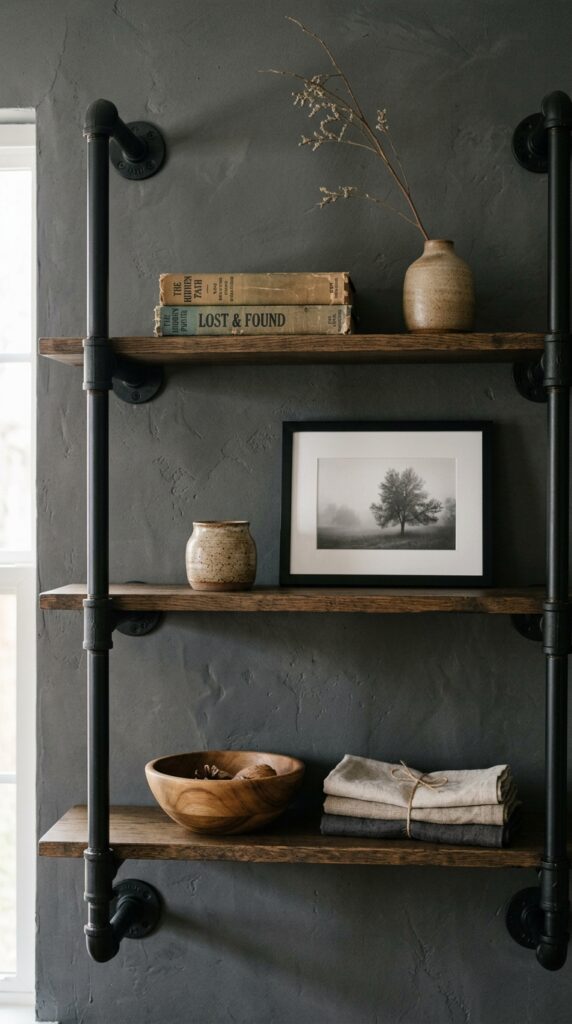
Industrial-style open shelving — black pipe, raw steel, suspended wood — looks incredible empty in a Pinterest photo and like a yard sale once you actually use it. The mistake is treating shelves like storage. They’re staging.
Follow a loose rule: each shelf should be about 60% styled, 40% empty. Group objects in odd numbers, vary heights, and mix materials (ceramic, wood, paper, metal, glass). Lean a small piece of art rather than hanging it. Stack books horizontally and vertically. Leave breathing room.
Watch out for too many small objects — they look like clutter from across the room. A few larger, sculptural pieces always beat a dozen tiny ones.
If a shelf needs storage, designate the bottom one for baskets and put the pretty stuff up high.
The goal is a shelf that looks composed, not curated to within an inch of its life.
10. Anchor The Room With One Oversized Plant
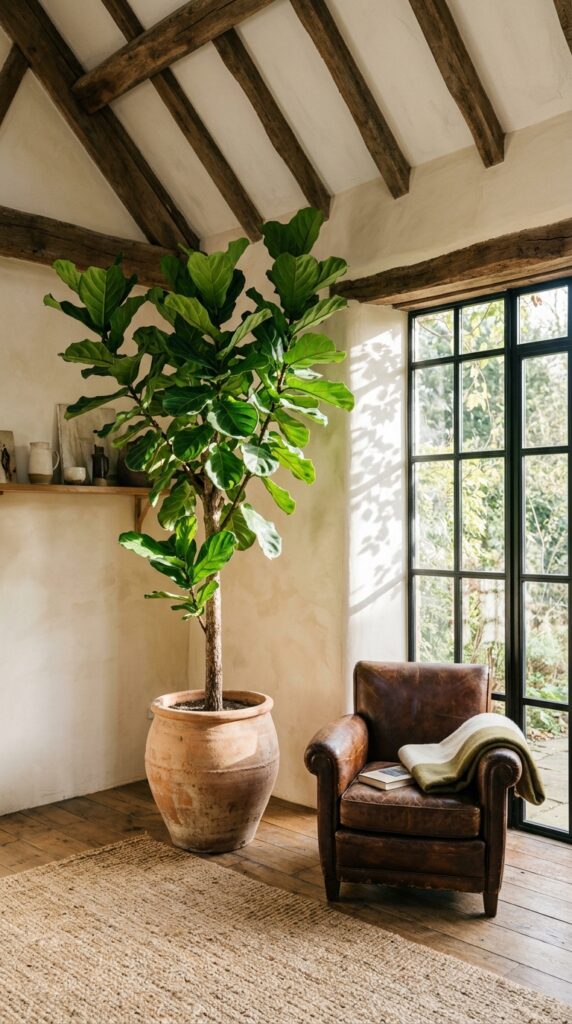
A dozen small plants on every surface looks like a plant nursery, not a home. One genuinely oversized plant — six feet or taller — does more for a room than a forest of pothos.
Best options for cozy industrial spaces: fiddle-leaf fig, olive tree, bird of paradise, or a tall rubber plant. Skip the cheap plastic pot. Spend on a hand-thrown terracotta, aged brass, or natural rattan planter — the vessel matters as much as the plant. Place it in the corner that feels emptiest, ideally near a window where it can throw interesting leaf shadows on the wall.
Be honest about your light. Fiddle-leafs throw tantrums in low-light apartments. Olive trees need bright direct sun. If you’re lighting-challenged, a tall faux from a quality maker is genuinely fine.
One big plant equals presence. Ten small plants equal maintenance.
11. Swap Hardware For Aged Brass Or Blackened Bronze
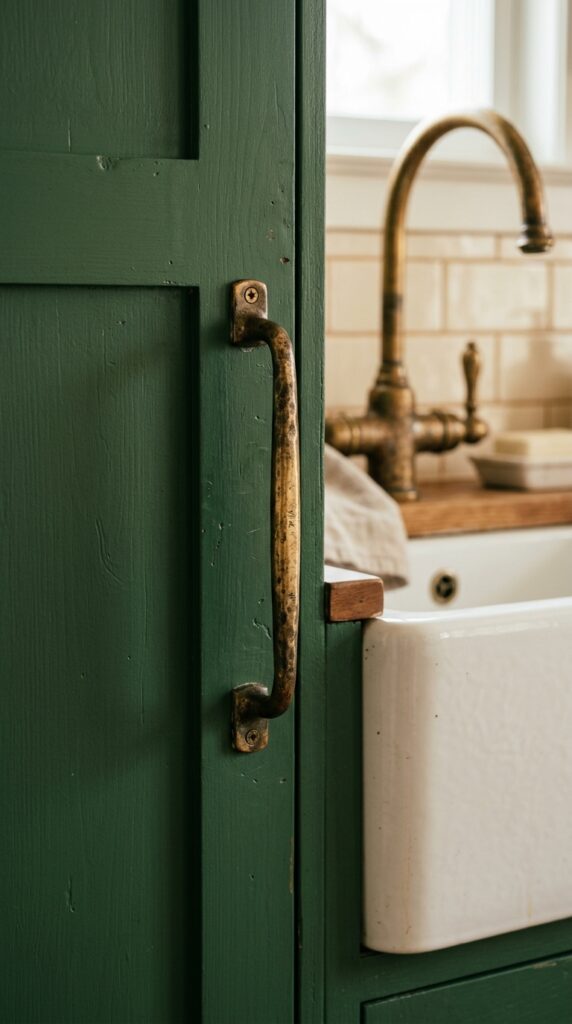
If your kitchen or bathroom feels stuck in builder-grade purgatory, the fastest fix is hardware. Swapping out shiny chrome or polished nickel for aged brass, blackened bronze, or unlacquered brass instantly adds warmth and age.
Unlacquered brass is the dark horse here — it patinas naturally over time, developing a soft, irregular finish that looks expensive because it actually is the real thing. Match metals across one room (don’t mix three finishes in one kitchen), but feel free to vary across rooms. Cabinet pulls, faucets, drawer knobs, and even toilet paper holders are all fair game.
This is renter-friendly if you keep the original hardware in a labeled bag. Swap back when you leave.
A $200 weekend hardware swap punches well above its weight. It’s the cheapest “renovation” you’ll ever do.
12. Add A Throw, A Sheepskin, And A Worn Leather Pouf
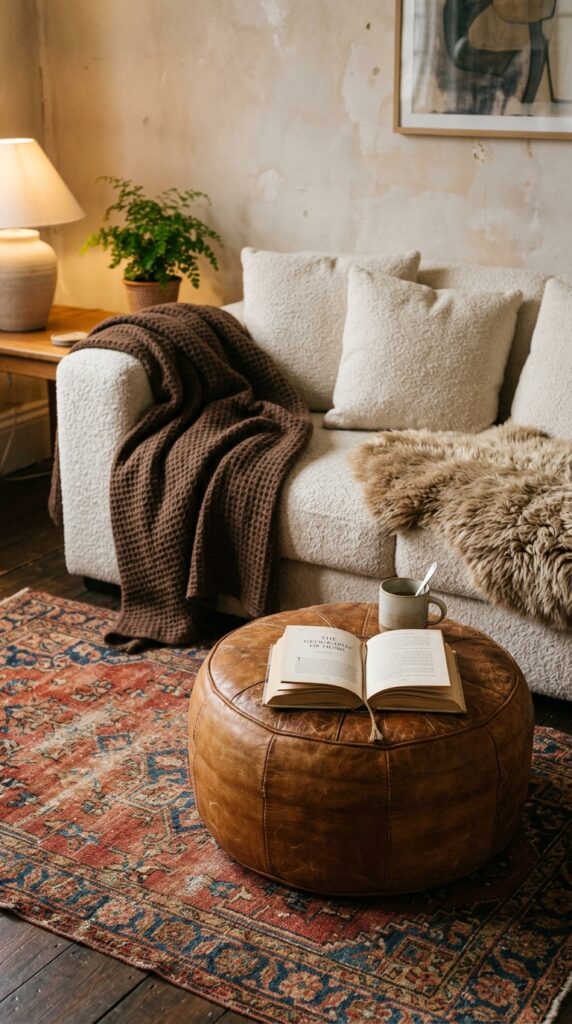
The fastest way to take any industrial-leaning room from “nice” to “I never want to leave” is texture layering at sitting height. A throw, a sheepskin, and a leather pouf — those three pieces, together — do something almost embarrassing in how reliably they work.
The throw should be heavy and visibly textured: chunky knit, waffle weave, or mohair. Sheepskins are best in natural ivory or warm caramel — dyed colors look synthetic. The leather pouf should look used; a brand-new shiny pouf doesn’t have the same effect. Place the pouf where you’d actually use it: in front of a chair, beside the sofa, or under a window for spontaneous seating.
Watch the color story: stick to a tight palette of warm neutrals so the layers feel collected, not chaotic.
This is the final 5% that separates a styled room from a real one.
Final Thoughts
Cozy industrial done right isn’t a style — it’s a tension. Hard against soft, raw against refined, old against new. The rooms that work are the ones where you can feel both sides of that tension in every direction you look. A brick wall meets a heavy linen sectional. A blackened steel pendant glows over a reclaimed oak table. A worn leather chair sits on a vintage rug that’s older than your grandparents.
You don’t need to do all twelve of these things. Honestly, three or four well-chosen moves will completely shift how a space feels. Start with lighting and textiles — they’re the lowest-commitment, highest-impact changes. Then layer in the rest as you find pieces you actually love.
If something here gave you an idea you hadn’t thought of, or made you look at a corner of your home differently, that’s the win. Save this one, come back to it when you’re staring at that one room that just isn’t working yet, and let me know which idea finally made it click.