I remember the first time I tried to grow flowers in containers. I bought six petunias, three geraniums, and a bag of cheap potting soil. By July, the petunias were stringy, the geraniums had stopped blooming, and the soil had turned into a compacted brick that repelled water like a Teflon pan. It looked like a sad little memorial to my optimism. Nobody tells you that most container flowers peak in June and then phone it in for the rest of the summer.
The internet will tell you to “deadhead regularly” and “use a balanced fertilizer.” That’s like telling someone to “breathe” and “stay alive.” It’s technically correct but useless without specifics. The real problem is that most flowers genetically slow down after their first flush. You need plants that are built to keep pumping out blooms despite neglect, heat, rain, and your busy schedule. After ten years of testing (and killing) dozens of varieties on my own deck and balcony, I’ve learned which ones actually deliver a full season of color without turning into a full-time job.
Below are the sixteen flowers I trust most. Some are classics I’ve fought with and finally tamed. Others are underdogs that surprised me. Every one of them has earned its spot by proving it can bloom from late spring until the first hard frost — as long as you understand one or two non-negotiable rules. I’ll tell you what they need, where they fail, and which ones are worth your money.
1. Calibrachoa (Million Bells)
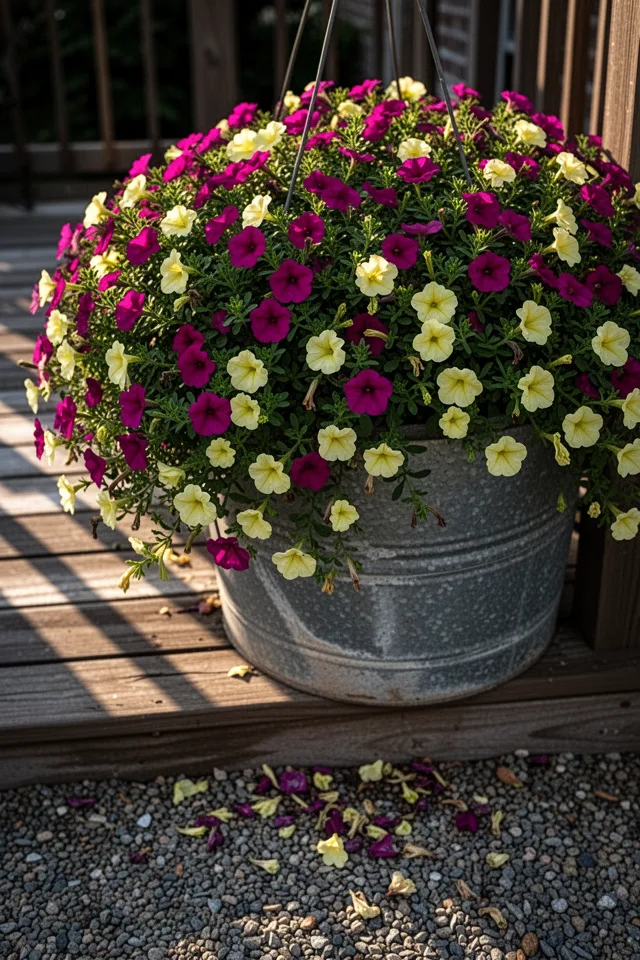
Calibrachoa is the flower that made me forgive petunias for all their drama. Unlike standard petunias, which get leggy and sticky by midsummer, million bells produces hundreds of small, trumpet-shaped flowers that just keep coming. The growth habit is naturally dense and trailing, so you don’t need to pinch or shape much. I’ve had a single plant in a 12-inch pot bloom from May through November with maybe two haircuts total.
The trade-off? They are heavy feeders. If you skip fertilizer for two weeks, the bloom count drops noticeably. Use a water-soluble fertilizer every seven to ten days, or mix a slow-release granular into the soil at planting time. I prefer the liquid approach because I can see the response — the leaves darken, new buds appear within days. A six-pack of plants runs about $6 to $10 at a nursery, but because one plant fills a small pot, you can get away with fewer.
Calibrachoa doesn’t need deadheading — the old flowers drop cleanly. That’s the kind of low-maintenance behavior I can respect.
2. Lantana
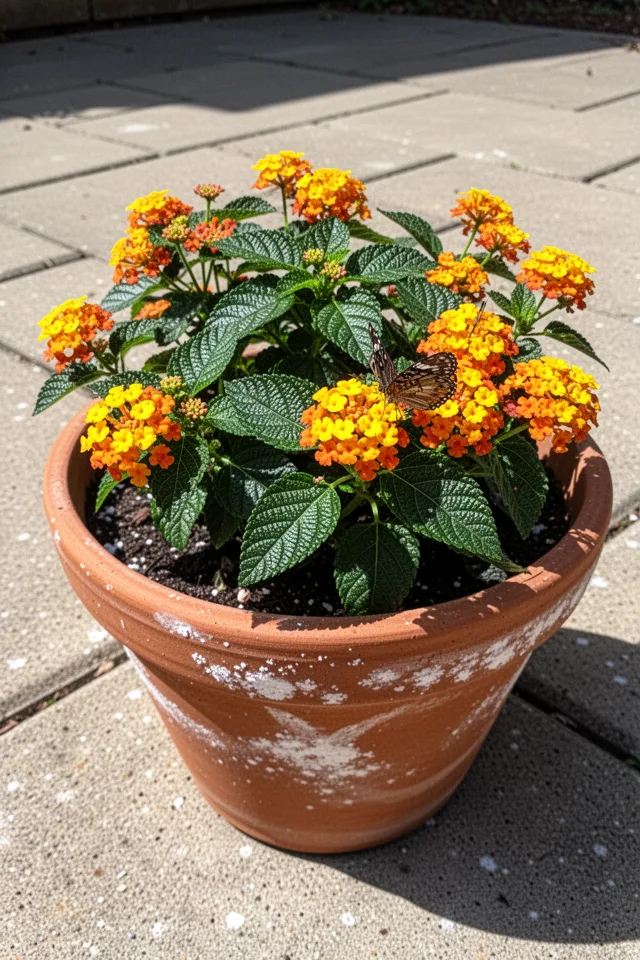
Lantana is the flower for people who forget to water. I put two plants in a large urn on my south-facing balcony one year, then left for a long weekend during a heatwave. I came back expecting crispy corpses. They were fine. More than fine — they had grown six inches and put out twice as many blooms. Lantana thrives on neglect. It doesn’t mind humidity, it doesn’t mind drought, and it keeps blooming until frost. The flower clusters are small globes of yellow, orange, pink, or red, often with multiple colors on the same plant.
The catch? It can get leggy if you don’t prune it. By midsummer, the branches start reaching out instead of staying compact. Give it a hard trim — cut back by about a third — and it will bush out again within two weeks. Also, every part of this plant is mildly toxic, so keep it away from pets who like to chew. Cost is modest: a four-inch pot runs about $4 to $6, and it will fill a 10-inch pot by August.
Lantana is the only flower I’ve ever seen bloom in 95-degree heat while the soil was cracked dry. It’s basically a succulent in disguise.
3. Angelonia (Summer Snapdragon)
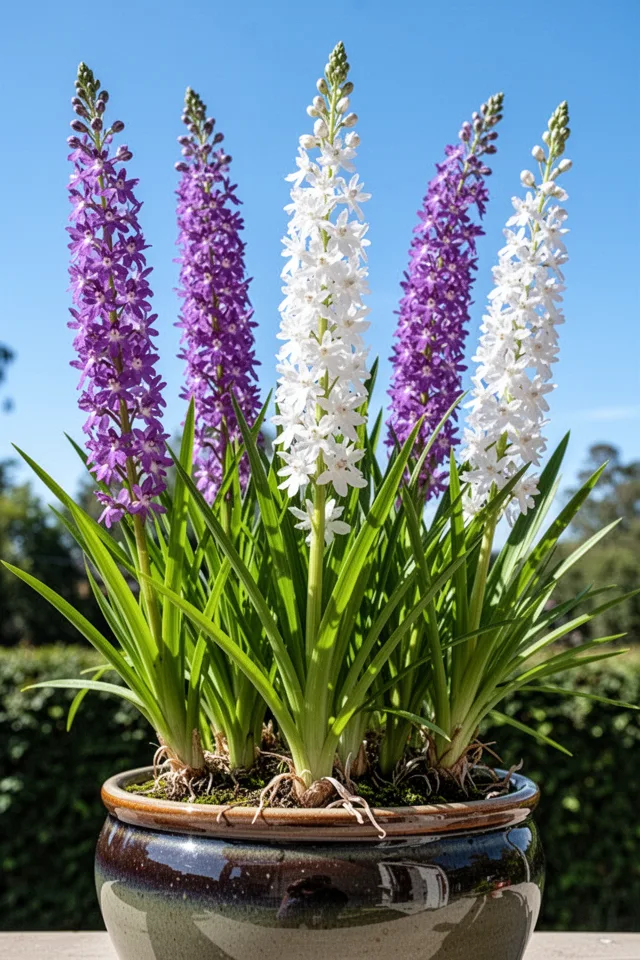
Angelonia replaced snapdragons in my garden for good reason: real snapdragons peter out in the heat. Angelonia loves it. The flowers look like miniature snapdragons but grow on upright spikes that keep extending throughout the season. They don’t get floppy, they don’t need staking, and they add a vertical element that most container flowers lack. I plant them behind trailing verbena or calibrachoa for a layered effect.
The trick is to cut the spikes back after the first flush of flowers. If you let them go to seed, the plant thinks its job is done. Snip the spike down to the leaves, and within a week a new one emerges. I’ve done this three or four times in a season. Angelonia also tolerates low humidity better than most annuals — it’s a good choice for dry interior climates. One thing: it looks a bit stiff if you plant it alone. It needs a partner to soften its upright habit. Cost is around $5 to $8 for a four-inch pot.
Angelonia is the flower that keeps standing up straight while everything around it collapses in the heat. I call it the stoic bloom.
4. Zinnia (Dwarf Varieties)
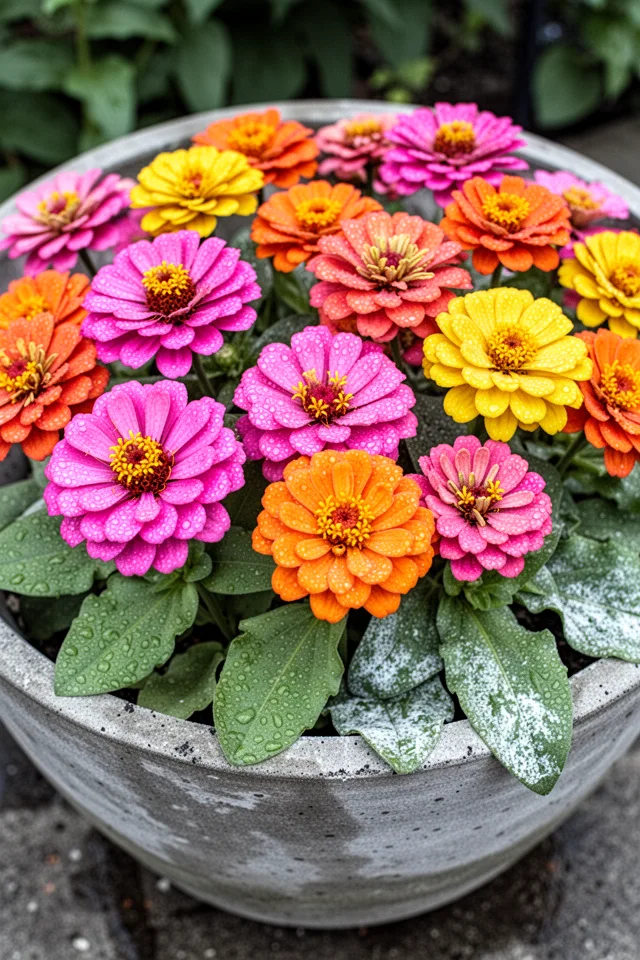
Zinnias are the easiest flower to grow from seed, and the dwarf varieties — like ‘Zahara’ or ‘Thumbelina’ — are perfect for containers. They bloom within a month of seeding and don’t stop until frost. The flowers are big, bold, and ridiculously satisfying. I grow them in wide shallow bowls because they don’t need deep root space. The ‘Zahara’ series is particularly good because it resists powdery mildew, which is the main disease that kills zinnias in humid weather.
The real issue with zinnias is that they need consistent deadheading. If you let spent flowers turn into seed heads, the plant stops producing. On a small container, this isn’t a big chore — you can pinch off the old blooms every few days while you water. But if you’re gone for two weeks, you’ll come back to a plant that’s sulking. Also, the stems can get a bit weak in shade, so give them full sun. A packet of seeds costs about $3 to $5, and you’ll have more plants than you know what to do with.
Zinnias are the only flower where I feel like I’m cheating — they grow so fast from seed that you can start new batches in June and have replacements ready by July.
5. Portulaca (Moss Rose)
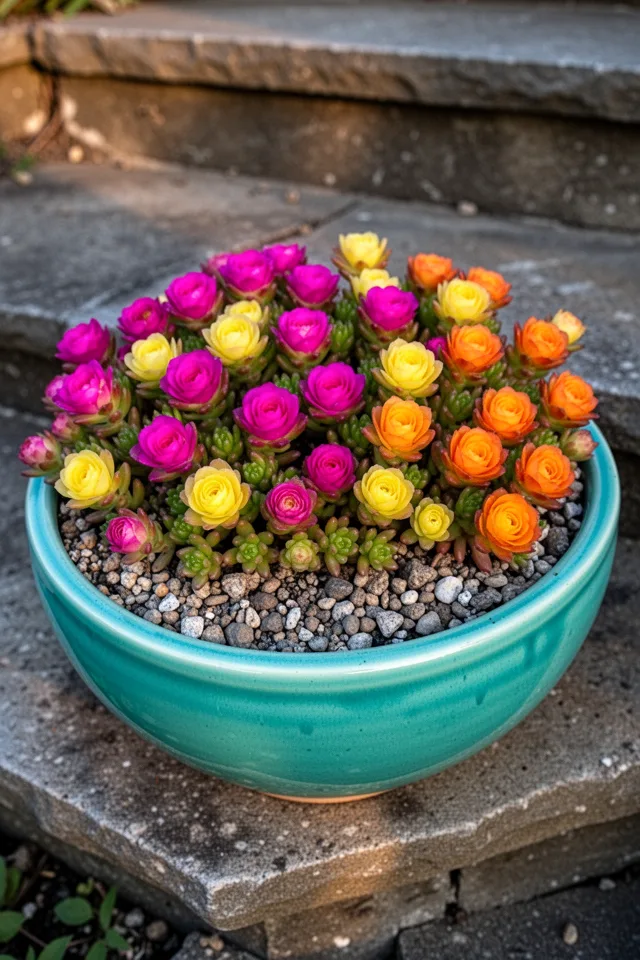
Portulaca is my go-to for places that fry. I have a west-facing wall that bakes in the afternoon — nothing else survives there except portulaca. The leaves are succulent, storing water like a camel, and the flowers open in the morning and close at night. They bloom consistently from June to October, even in the most punishing conditions. I use them as a groundcover in large rectangular pots or as spillers from tall urns.
The flowers can be a bit shy on cloudy days — they need direct sunlight to open fully. Also, the look is low and spreading, so if you want height, you need to pair it with something upright. Portulaca self-cleans, meaning the old flowers drop off without needing deadheading. Another pro: it doesn’t need much fertilizer. I feed it once a month with a half-strength dissolved feed, and it’s happy. A six-pack of plants costs about $5 to $8. But honestly, seeds are even cheaper — around $2 a packet — and they sprout in days.
Portulaca is the flower that made me stop worrying about watering. It will forgive you. Repeatedly.
6. Verbena (Trailing)
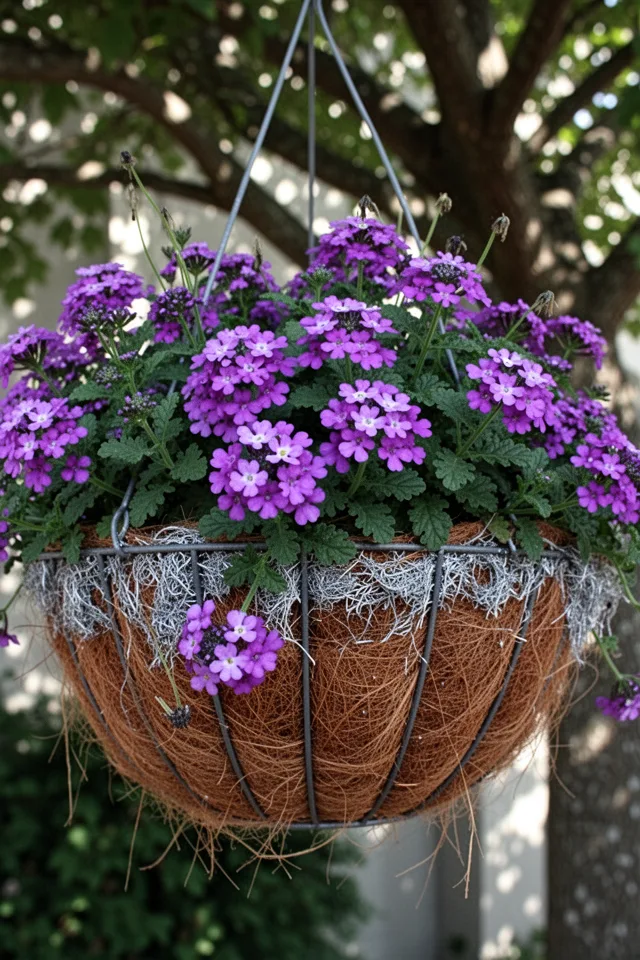
Trailing verbena is a workhorse in my container garden. The flowers come in deep purple, pink, red, and white, and they cover the plant for months. I love the ‘Superbena’ series — the flowers are larger and the plants are more disease-resistant. Verbena is perfect for hanging baskets and window boxes because the stems trail over the edge, creating a curtain of color.
The downside is that verbena can get leggy and thin at the base if you don’t prune it. About once a month, I cut the stems back by half. It sounds harsh, but it works — within a week, new growth emerges from the center. Also, verbena is prone to powdery mildew in humid climates, especially if the leaves stay wet. Water at the soil level, not overhead. I recommend ‘Superbena Verbenas’ which run about $8 to $12 for a hanging basket start. They’re worth the extra money for the disease resistance.
Verbena needs a haircut every month. Give it one, and it will reward you with twice the flowers. Neglect it, and it turns into a sad, stringy mess.
7. Scaevola (Fan Flower)
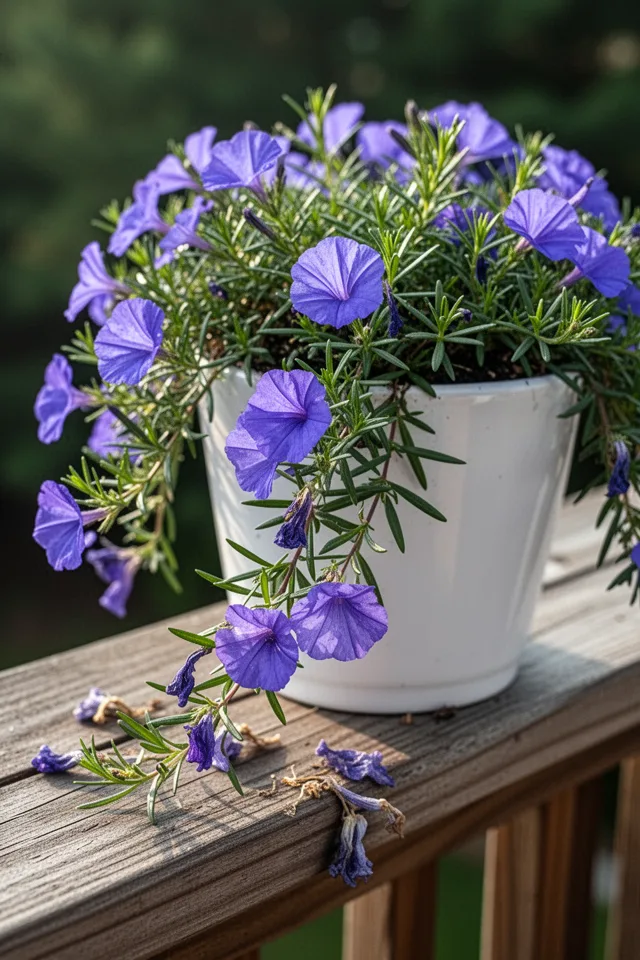
Scaevola is one of those flowers that looks exotic but is surprisingly tough. The blooms are shaped like fans — hence the name — and they’re usually in shades of blue and purple. I grow the ‘Whirlwind’ series, which is compact and self-cleaning. The flowers never stop coming from spring through fall. It’s also remarkably heat-tolerant; I’ve seen it bloom in temperatures that made my thermometer stop working.
Scaevola needs consistent moisture — it’s not as drought-tolerant as portulaca or lantana. If it dries out too much, the leaves yellow and the flower buds drop. I water mine every other day in summer. It’s also not frost-tolerant at all, so bring it inside if you get an early cold snap. Cost is moderate: a four-inch pot is $6 to $9, and it will trail about two feet by the end of the season.
Scaevola is the blue flower you want for hot, sunny spots — it doesn’t fade to gray like some blues do in full sun.
8. Cuphea (Cigar Plant)
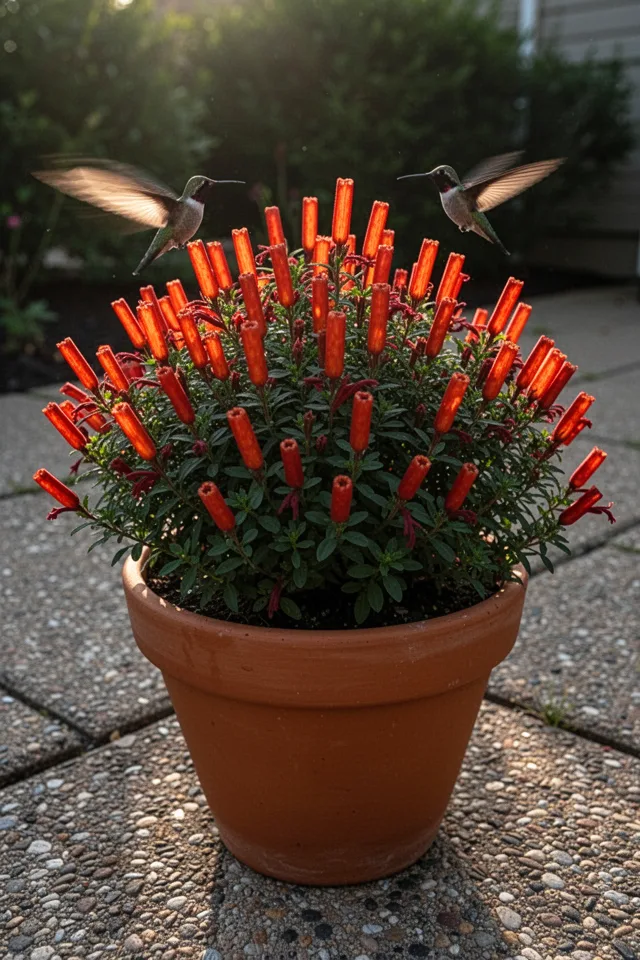
Cuphea is a hummingbird magnet. The flowers are tubular, bright orange or red, with a tiny black tip that looks like a cigar ash. They bloom continuously from late spring until frost, and the hummingbirds will fight over them. I put a cuphea in a hanging basket near my kitchen window, and I’ve watched three hummingbirds at once sipping from it. The plant itself is compact and bushy, with no deadheading needed.
The catch is that cuphea can get a bit gangly by late summer. I prune it back by about a third in early August to keep it looking fresh. Also, it is not cold-hardy at all — treat it as an annual unless you live in zone 10 or 11. Another tip: the flowers produce a lot of nectar, which can stain surfaces if the pot is overhead. I place mine where drips won’t matter. A four-inch pot is $5 to $8. Well worth it for the wildlife show.
If you want hummingbirds, just plant cuphea. It’s like a neon sign that says ‘Free Nectar Here.’
9. Pentas (Starflower)
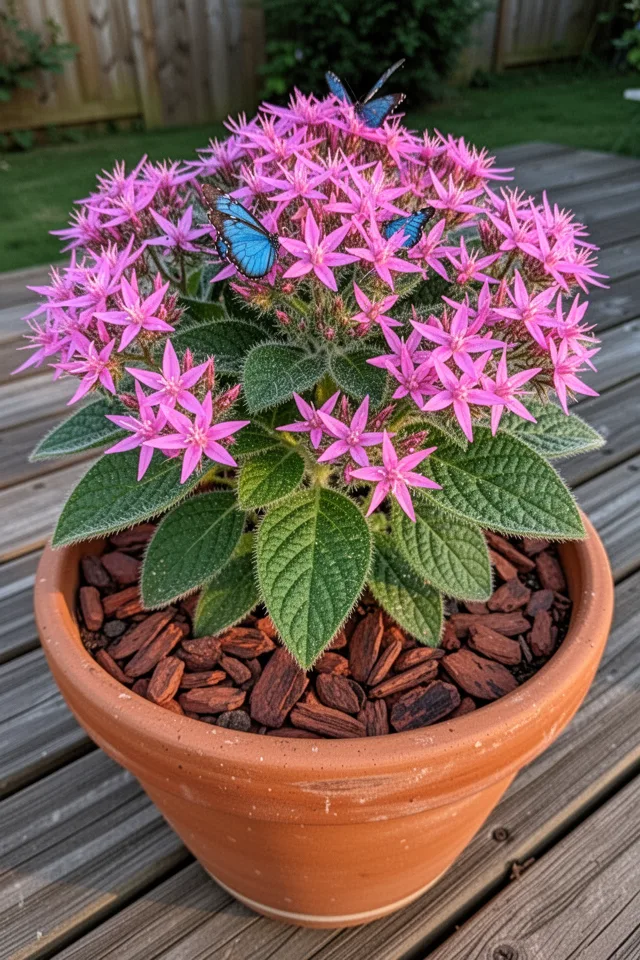
Pentas is the flower for butterfly lovers. The clusters of small star-shaped blooms come in pink, red, white, and purple, and they attract butterflies like crazy. I’ve counted six monarchs on a single pot. Pentas bloom non-stop from spring through fall, even in high heat and humidity. They’re a staple in tropical gardens but work perfectly in containers in cooler climates.
The main drawback is that pentas are very cold-sensitive. They’ll die at the first hint of frost, so you need to either bring them indoors or treat them as annuals. Also, they can become leggy if not pruned. About every two months, I cut the stems back to encourage bushier growth. They’re also heavy feeders — a slow-release granular at planting helps. A six-pack of pentas costs around $6 to $10 at nurseries, or you can start them from seed (though seed-grown plants take longer to bloom).
Pentas are like candy for butterflies. If you want a pot that’s alive with wing movement all summer, this is your plant.
10. Bidens (Tickseed)
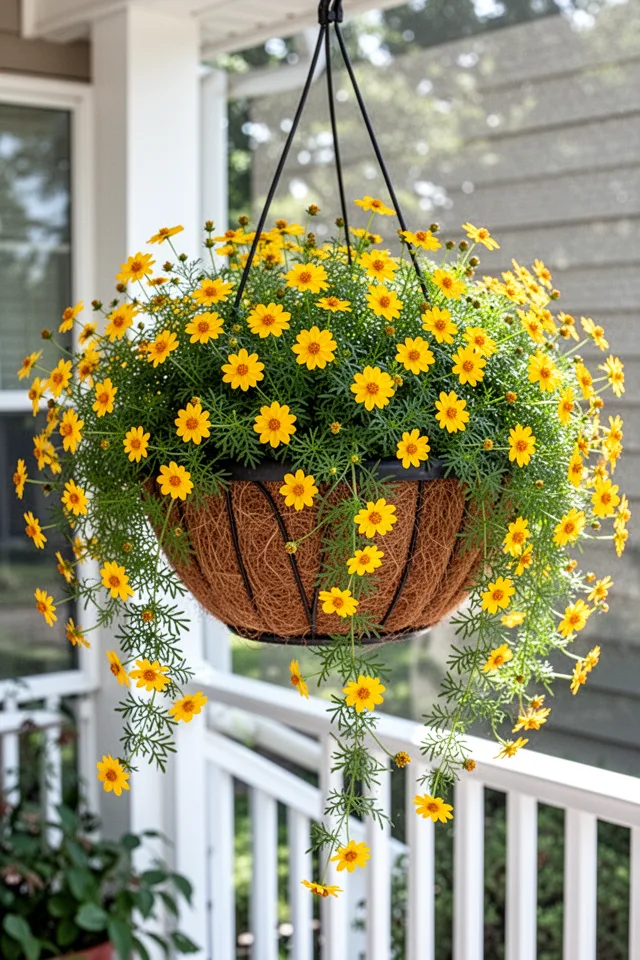
Bidens is one of those flowers that is perpetually cheerful. The yellow daisy-like blooms are modest in size but profuse. I use it as a spiller in mixed containers, where it softens the edges and adds a constant bright note. It doesn’t need deadheading — the flowers fall off on their own. I’ve had a bidens plant in a hanging basket bloom from May to November without a single human intervention beyond watering and fertilizing.
The warning: bidens can be invasive if planted in the ground. The seeds spread aggressively. But in a container, it’s contained. Also, it needs full sun to bloom well — in shade, it gets leggy and sparse. It’s not particularly picky about soil, but it does need consistent moisture. Let it dry out and the leaves look sad quickly. A four-inch pot is about $4 to $6. Cheap and reliable.
Bidens is the plant that keeps churning out flowers like a happy yellow machine. No drama, just blooms.
11. Osteospermum (African Daisy)
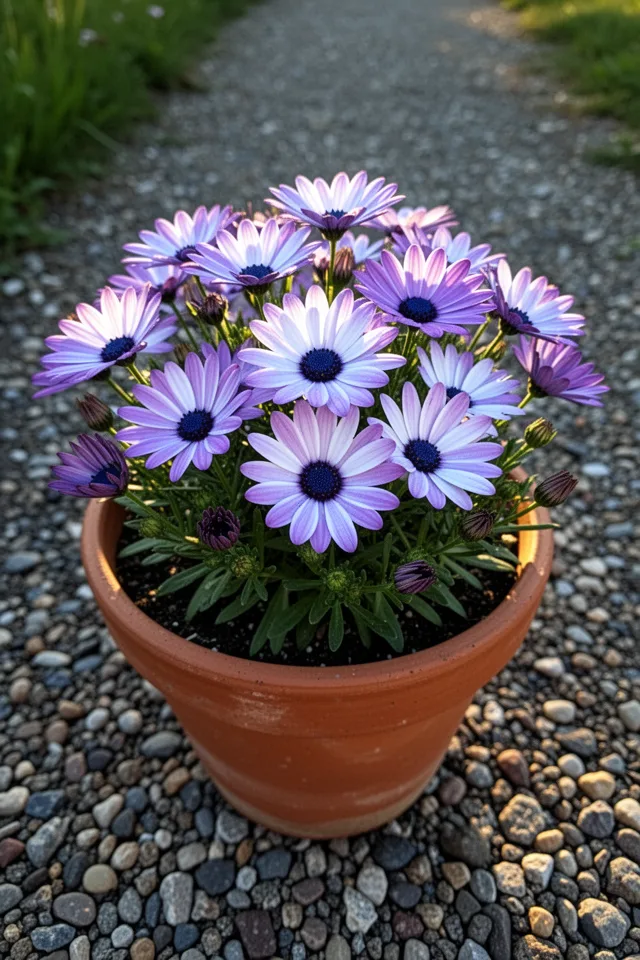
Osteospermum is a bit different from the others on this list because it prefers cooler weather. It blooms heavily in spring and fall, but can slow down during the hottest part of summer. However, with the right care — afternoon shade, consistent moisture, and a little deadheading — it can push through the heat and keep going. I grow the ‘FlowerPower’ series, which has better heat tolerance. The petals are often spoon-shaped, giving them a quirky look.
The catch: if you live in a place with scorching summers, osteospermum will likely stop blooming in July and August. It’s not a continuous bloomer in extreme heat. But if you have a cooler microclimate or can provide shade midday, it’s worth it. Also, the flowers close at night and on cloudy days — some people find that annoying. I find it charming. A four-inch pot is about $5 to $9. Expect to replace it if your summer is brutal.
Osteospermum is a spring and fall star. If you want a flower that announces the seasons, this is it. But don’t expect a nonstop summer show in Phoenix.
12. Fuchsia (Trailing)
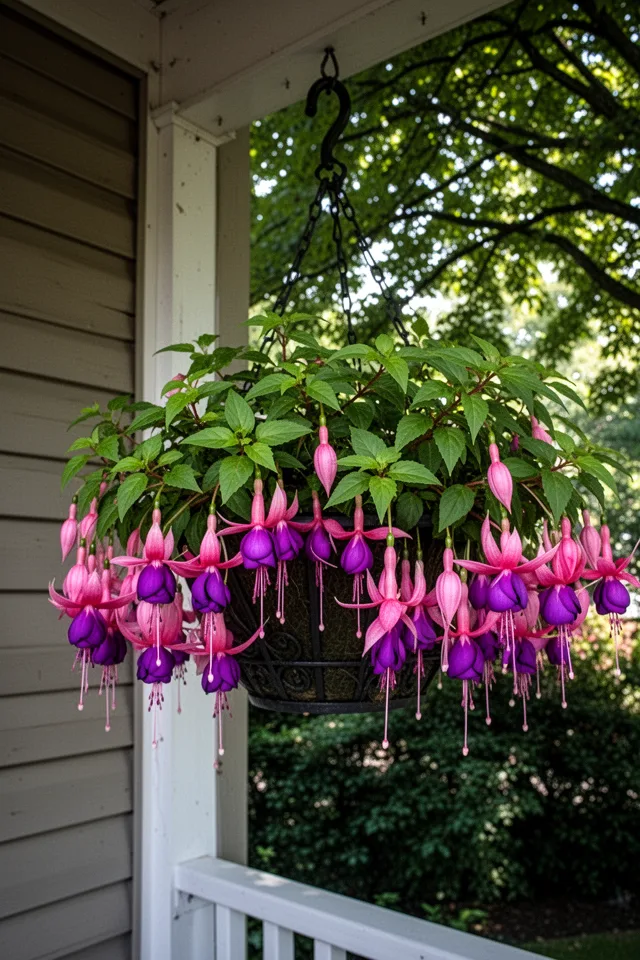
Fuchsia is the flower for shade. If you have a north-facing balcony or a covered porch that gets no direct sun, fuchsia will reward you with elegant, pendulous blooms that last from late spring through fall. The flowers are like little ballerinas — layers of petals in pink, purple, red, and white. I use trailing varieties in hanging baskets, and they create a stunning waterfall effect. The key is shade and moisture. Fuchsia cannot handle hot afternoon sun.
The downside: fuchsia is high-maintenance. It needs consistent moisture — every day in hot weather — and it’s prone to fuchsia mites and rust. Also, the flowers drop quickly, leaving a mess on the ground below. I’ve learned to accept the cleanup as part of the deal. Another trick: buy the ‘Delta’ or ‘Alegria’ series, which are more heat-tolerant. Cost is higher than most: a hanging basket start can run $12 to $18. But the visual payoff is immense in a shade garden.
Fuchsia is not for the hands-off gardener. It’s a commitment. But if you give it the care it demands, it becomes the most dramatic plant in your collection.
13. New Guinea Impatiens
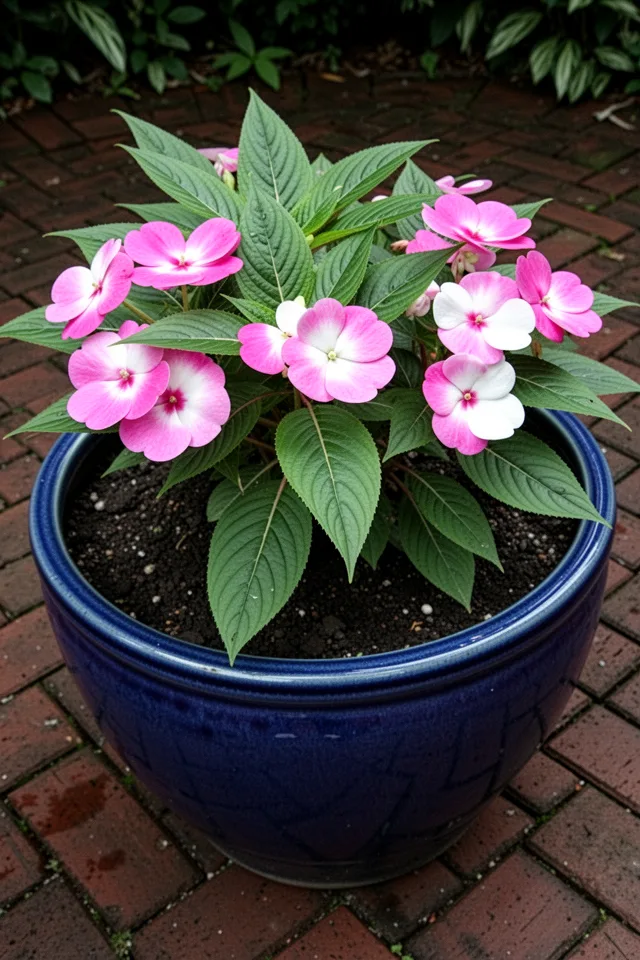
New Guinea impatiens are an upgrade from the old standard impatiens. They have larger flowers, bigger leaves, and better disease resistance. Most importantly, they tolerate more sunlight than the common variety, though they still prefer partial to full shade. I use them in pots on my north-facing deck where almost nothing else blooms. They start flowering early and keep going until frost. The leaf patterns are also attractive — some have variegated foliage.
The problem: downy mildew devastated standard impatiens in many regions. New Guinea impatiens are less susceptible, but not immune. To reduce risk, space them well, water at the base, and avoid wetting the leaves. Also, they are not drought-tolerant at all — in a container, they need watering daily in summer. A four-inch pot is $5 to $9. I recommend the ‘SunPatiens’ series, which are actually a cross with New Guinea — they can handle even more sun.
New Guinea impatiens are the way to get big color in shade without the mildew nightmares of old-style impatiens.
14. Wax Begonia
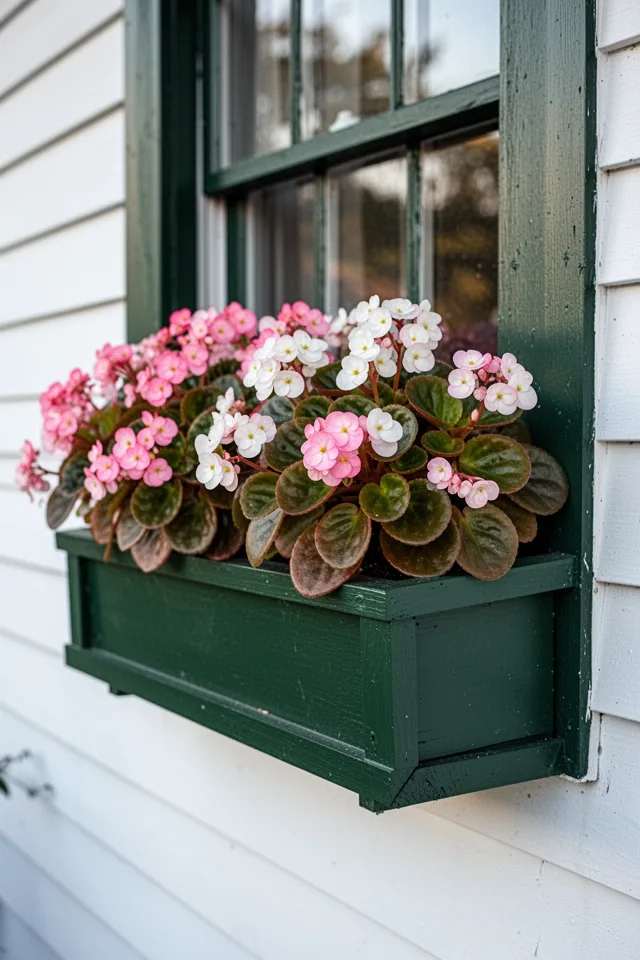
Wax begonias are reliable to the point of being boring — which is exactly what I need in some spots. They bloom continuously from spring to frost, and the waxy leaves stay attractive even when the plant isn’t flowering. They’re also one of the few flowers that do well in both sun and shade (though they prefer partial shade). I use them in window boxes where I want a guaranteed, low-maintenance presence.
The downside: the flowers are not particularly showy. They’re small, and they can get lost if you’re looking for drama. Also, they are prone to leaf spot if overhead watering hits the leaves. I water the soil directly. Another issue: in deep shade, they become leggy and flowers are sparse. They need at least a few hours of morning sun. Cost is very low: a six-pack is $4 to $7. For the price, you get incredible endurance.
Wax begonias are the dependable friend who shows up every time. They won’t steal the show, but they’ll never let you down.
15. Salvia (Annual, e.g., ‘Regal Blues’)
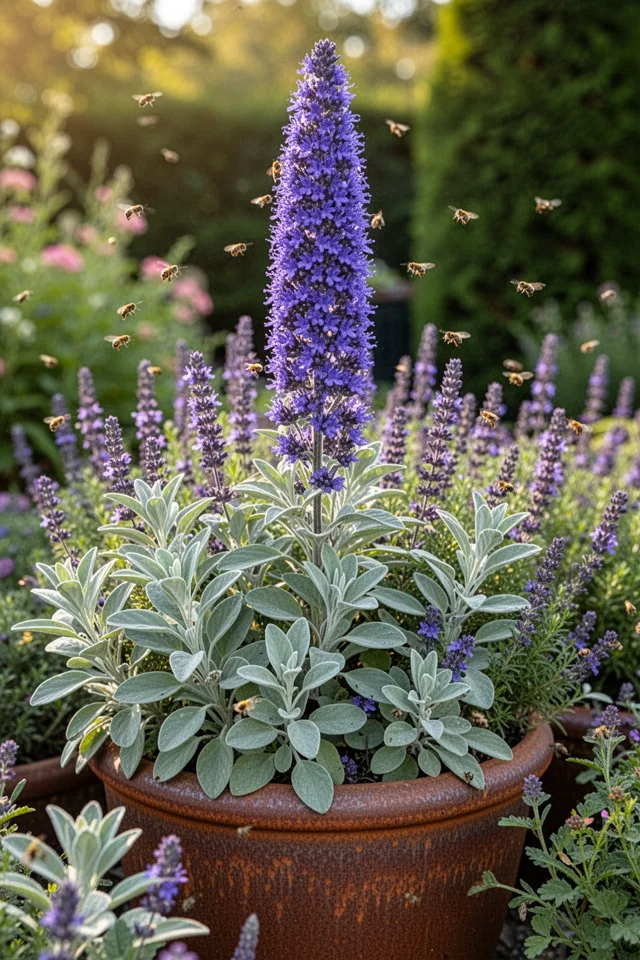
Salvia adds vertical spikes and a different texture to container gardens. I grow annual varieties like ‘Regal Blues’ or ‘Victoria Blue’, which bloom non-stop until frost. They attract bees, butterflies, and the odd hummingbird. The spikes grow 12 to 18 inches tall, and they keep emerging from the center as long as you cut the old ones back. I plant them in the middle of mixed pots, surrounded by lower-growing flowers.
The catch: they need deadheading. If you let the spikes go to seed, the plant will slow down. I cut the spike off at the base as soon as the flowers start to fade. Also, salvias can get floppy if they get too much shade or too much nitrogen. I feed them with a low-nitrogen fertilizer (like a bloom booster) to keep the flower production up and the foliage compact. A four-inch pot is about $5 to $8. For the height and pollinator value, it’s a steal.
Salvia spikes are the exclamation points in a container garden. They give the composition structure other flowers can’t.
16. Cleome (Spider Flower)
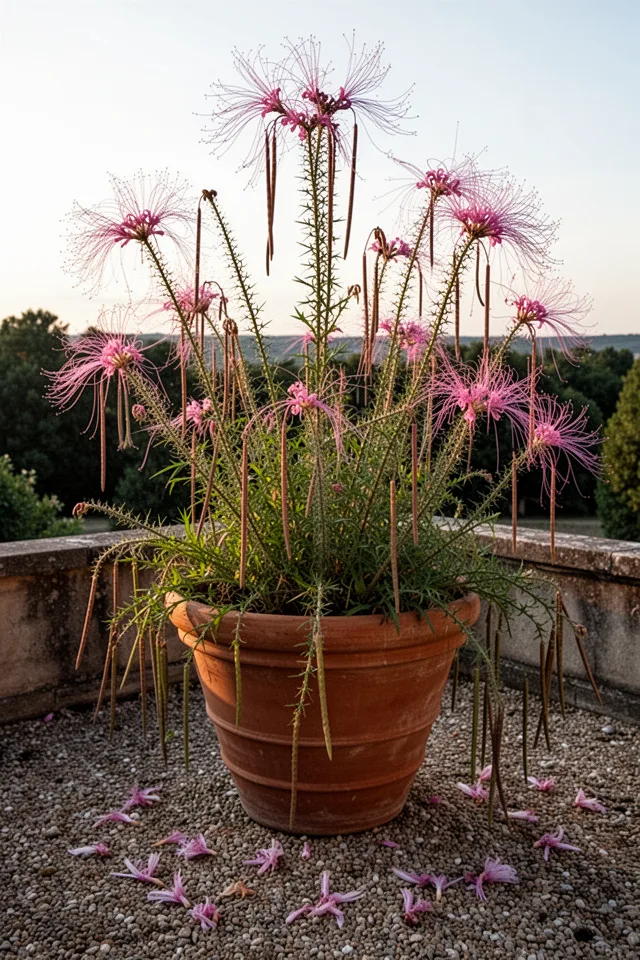
Cleome is a late bloomer — literally and figuratively. It takes a while to get going from seed, but once it does, it becomes a towering, airy structure with distinctive ball-shaped flower heads that turn into long seedpods. It self-sows readily (sometimes too readily in the garden), but in a container, it’s contained. The flowers are exotic-looking, with long stamens that give them a spider-like appearance. I grow ‘Queen Mix’ which includes pink, white, and purple.
The biggest issue: cleome grows tall — up to 4 feet in a large container — so it needs a big pot and possibly a stake. The stems are slightly prickly, so keep it away from high-traffic areas. Also, it’s not for small spaces; it needs room to spread. But as a specimen plant in a large urn, it’s dramatic and unusual. It also blooms continuously from late June until frost. I start seeds indoors in early April for earlier blooms. A seed packet is $3 to $5. Very cost-effective for such a statement plant.
Cleome is the wild child of container gardening. It takes over, it’s a bit spiky, but everyone stops to ask what it is.
Conclusion
After years of trial and error, I’ve learned that there is no single perfect flower for every container. The right choice depends on your light, your climate, and how much time you want to spend pruning and fertilizing. But the sixteen plants above have proven themselves to me in real conditions — on a windy balcony, against a punishing south wall, in damp shade. They bloomed when others gave up.
If I had to pick just one to start with, I’d go with calibrachoa (Million Bells). It forgives the occasional missed watering, it doesn’t need deadheading, and it blooms like a maniac from spring through frost. Pair it with a time-release fertilizer at planting, and you’re golden. For shade, choose New Guinea impatiens or fuchsia. For heat, lantana or portulaca. Mix and match based on your specific conditions.
Planting a container garden that lasts all season is not about luck. It’s about choosing the right genetics and then getting out of their way (with occasional fertilizer and a pair of pruning shears). The rest is just patience — and the pleasure of watching something you planted keep giving, week after week, long after the garden center has switched to mums and pumpkins.