I remember the exact moment I realized my bedroom felt like a hotel lobby instead of a sanctuary. The walls were a safe “agreeable gray,” the bedding was crisp white linen, and the lighting was a single overhead fixture on a dimmer that went from “surgical suite” to “slightly less surgical suite.” I had followed every minimalist, airy, bright-room trend, and the result was a room that looked great in real estate photos but felt terrible at 10 PM when I actually wanted to unwind. Romantic and moody does not mean dark and depressing. It means the room wraps around you like a heavy velvet robe instead of a starched sheet.
Most advice on romantic bedrooms is useless. “Add candles and soft pillows” — thank you, I never thought of that. “Use warm lighting” — that is not an idea, that is a basic requirement. The real problem is that people confuse romantic with feminine, or moody with gloomy. They buy one burgundy throw pillow and call it a day. True romantic moodiness comes from layering: light that lives in the shadows, textures that beg to be touched, and colors that feel like deep water or old wine. It requires restraint, not more stuff.
I have lived through the mistakes. The too-dark walls that made the room feel like a cave, not a cocoon. The candles that smoked up my white ceiling. The cheap “velvet” that felt like plastic. These twenty-five ideas come from those failures and the fixes that followed. Some are under $20. Some are serious investments. All of them have a point of view. You will not find “add a plant” or “declutter” as standalone advice here. Let’s get into the real work of making a bedroom feel like an embrace.
1. Charcoal Limewash Walls That Breathe And Shift
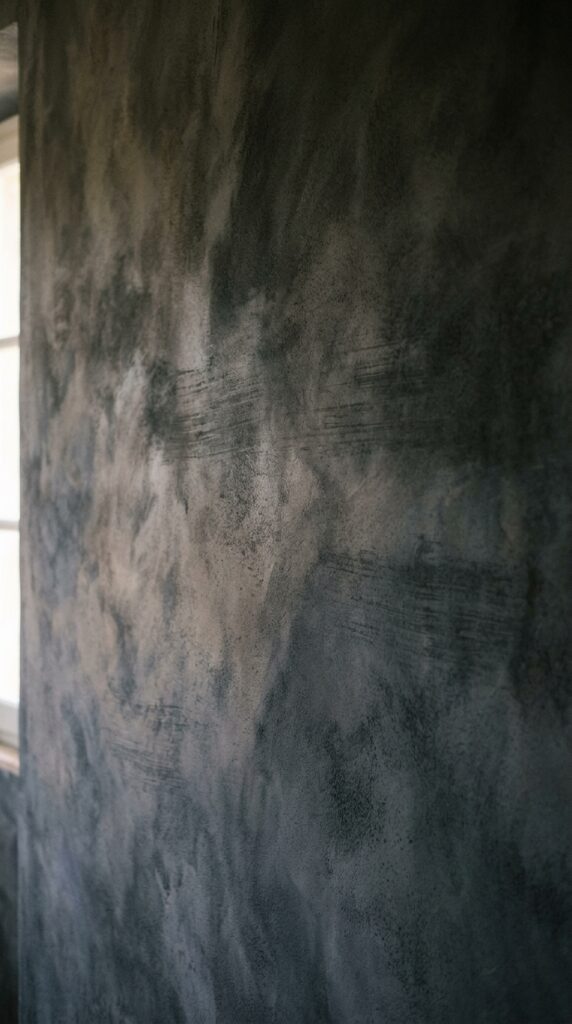
Flat paint in a dark color looks dead. It absorbs light uniformly and creates a black hole effect that shrinks a room. Limewash is different. The mineral pigments reflect light unevenly, so the wall seems to shift throughout the day — lighter near the window, deeper in the corners. I painted my bedroom with charcoal limewash from a small brand, and the room stopped feeling like a box. It felt like being inside a storm cloud, in the best way.
The application is messy and requires two to three thin coats with a wide brush, not a roller. You will get splatter on your floors and your arms. But the result has a texture that cannot be faked. Budget around $80 to $150 for a gallon, enough for one accent wall or a small room. Do not buy the premixed “limewash effect” paint from big-box stores — it is just tinted latex with sand in it. Real limewash needs to breathe, so it works best on walls that are not already sealed with glossy paint. One trade-off: limewash is not scrubbable. If you touch it with a damp cloth, you will lift pigment. Accept the marks or seal it with a matte wax (which changes the finish).
Limewash looks best when you apply it imperfectly. Visible brush strokes and uneven coverage are features, not bugs. If you want uniformity, choose a different wall treatment.
2. Floor-To-Ceiling Velvet Drapes That Pool On The Floor
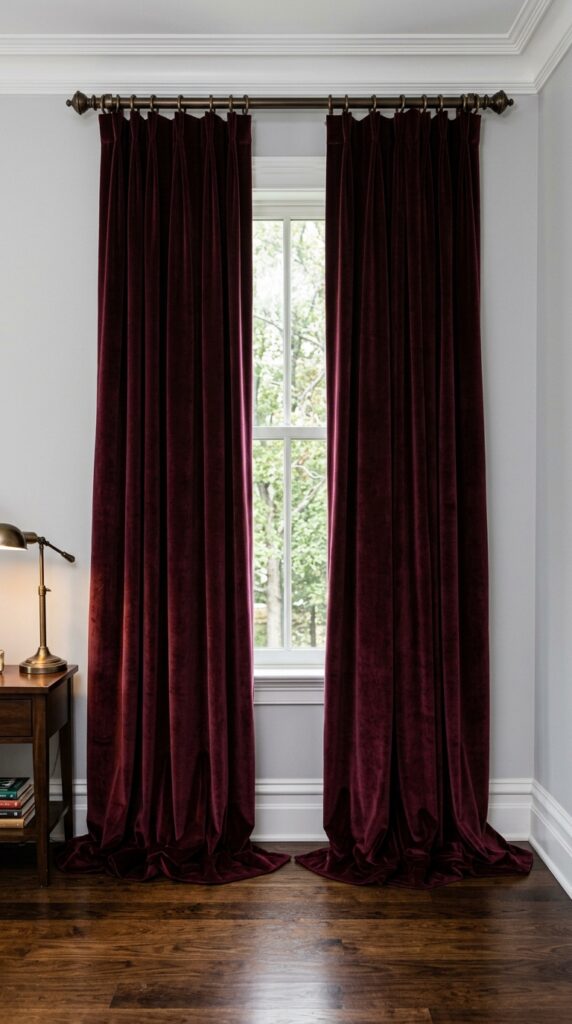
Cheap curtains that hover two inches above the floor destroy a moody room instantly. They look like they are afraid to commit. Velvet drapes that start at the ceiling and puddle on the floor create a sense of height and enclosure that no other window treatment can match. I installed 96-inch velvet panels on a rod mounted two inches from the ceiling, and the room immediately felt taller and more intimate. The sound dampening was an unexpected bonus — less street noise, more silence.
Real velvet is expensive and heavy. A pair of panels for a standard window will run $150 to $400. Faux velvet is cheaper ($50 to $120) and easier to clean, but it does not have the same depth of color or weight. The trade-off is that real velvet wrinkles easily and attracts dust. Either way, buy drapes with a blackout lining. Moody bedrooms need the option of total darkness. Also, expect to wait a week for the wrinkles to fall out after hanging. Do not iron velvet unless you want shiny scorch marks.
Mount the rod so wide that the curtains completely clear the window frame when open. Stacked curtains should sit mostly on the wall, not blocking glass. This makes the window look larger and the light feel softer.
3. Low-Profile Platform Bed With An Upholstered Headboard
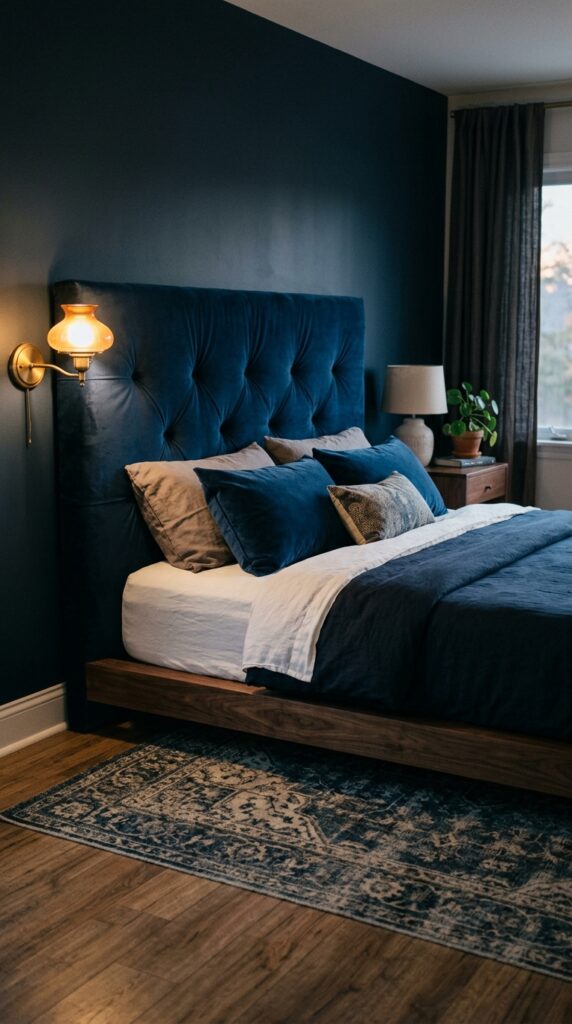
A bed that sits high on metal legs looks like a hospital bed. A bed that sits low — really low, with no visible feet — looks like it grew there. I swapped my standard bed frame for a platform bed with a seven-inch clearance and a tall upholstered headboard, and the entire room calmed down. The visual weight dropped to the floor, which made the ceiling feel higher and the space more grounded. Getting in and out takes a second to adjust to, but that small effort makes the bed feel more like a destination.
Most platform beds are made from cheap MDF wrapped in thin fabric that pills within a year. Look for solid wood construction with high-density foam and a removable, washable cover. Or build your own: a plywood base on 2×4 runners, then a separate headboard attached to the wall. Budget $300 to $800 for a decent upholstered platform bed. The trade-off is storage — no room for under-bed bins. If you need storage, this is not your bed. But if you want moody intimacy, the low profile is worth sacrificing the space.
Choose a headboard height that aligns with your seated reading posture. Too low and it offers no back support. Too high and it overwhelms the room. 42 to 48 inches is the sweet spot for most ceilings.
4. Amber Glass Sconces With Visible Filament Bulbs
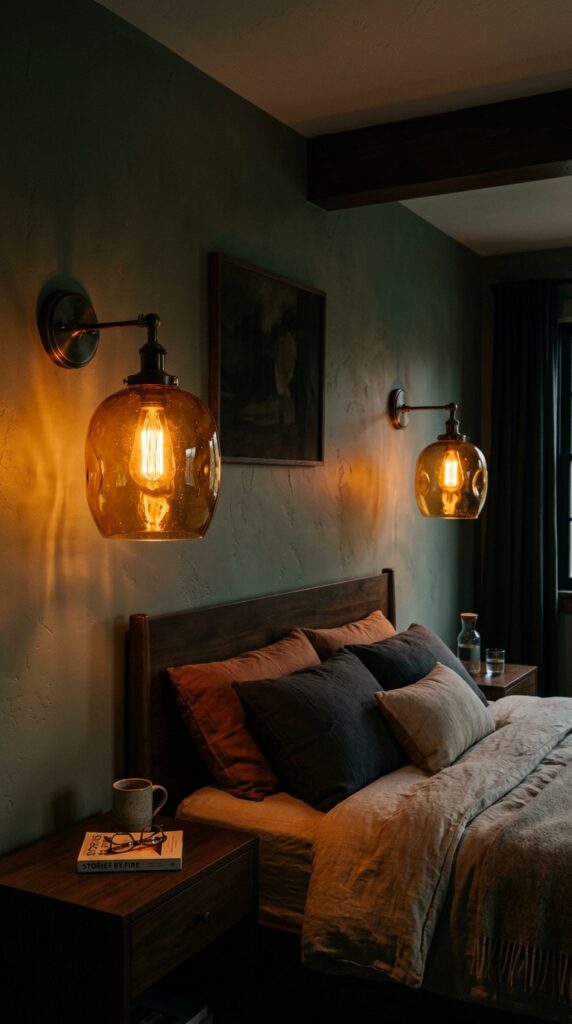
Overhead lighting is the enemy of romance. It flattens faces and creates harsh shadows. Sconces at eye level, especially with amber glass and visible filaments, turn your bedroom into a place where people look better than they do in daylight. I replaced my bedside lamps with hardwired amber sconces, and the difference in how I feel at night is almost embarrassing to admit. The light is so warm and dim that my brain automatically shifts into rest mode.
Look for sconces with bulbs rated at 2200K to 2400K. Most “warm white” bulbs are 2700K, which still has a hint of yellow. 2200K is the color of a candle flame. Also, choose sconces with shades that direct light upward or downward, not straight out. Direct glare is painful. Hardwired sconces require an electrician ($150 to $400) unless you are comfortable cutting into drywall. Plug-in versions with cord covers cost less but look less permanent. Budget $80 to $200 per sconce, plus bulbs ($10 to $30 each).
Install sconces on a dimmer switch. Full brightness from an amber bulb is still quite dim, but the ability to lower it further — almost to ember level — is the difference between a bedroom and a sanctuary.
5. Sheer Black Or Deep Plum Canopy Draped Asymmetrically
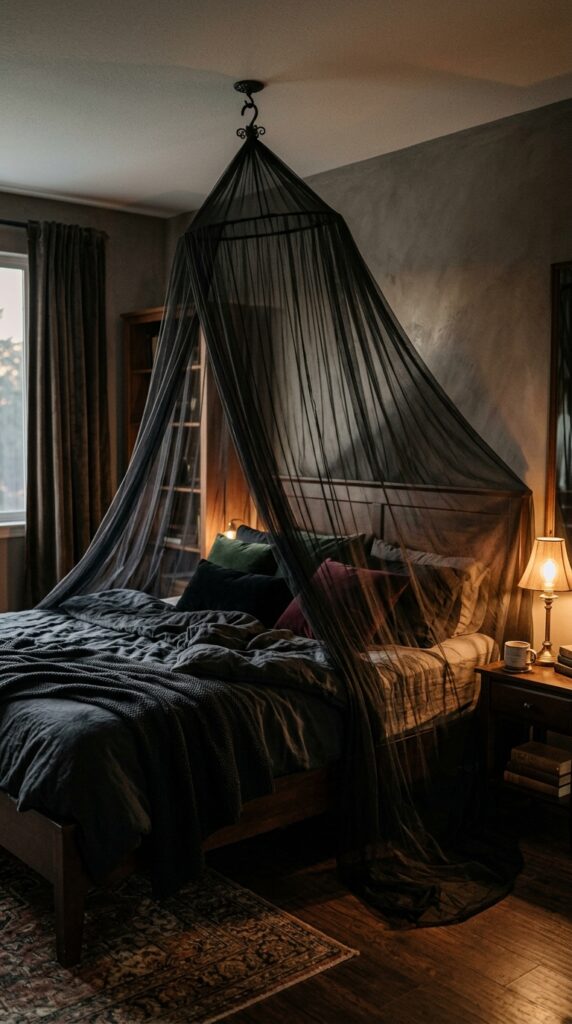
A white canopy over a bed looks like a wedding. A black or deep plum canopy looks like a secret. I installed a single ceiling hook and draped four yards of sheer black voile over it, letting the fabric fall unevenly — more fabric on one side, less on the other. The effect is cocoon-like without feeling claustrophobic. The sheer fabric softens the light hitting the bed and creates a visual boundary that makes the sleeping area feel separate from the rest of the room.
Do not use opaque fabric. A solid canopy will make you feel like you are in a tent, and it will trap heat and dust. Sheer voile or chiffon in a dark color gives you the drama without the suffocation. Budget $30 to $80 for fabric, plus $10 for a ceiling hook rated for at least 20 pounds. The installation is simple: screw the hook into a ceiling joist (not drywall alone), then drape. One trade-off: sheer fabric collects dust and needs to be washed every few months. It also looks terrible if you skimp on yardage — four yards minimum for a queen bed.
Drape the canopy so the lowest point is about 18 inches above the floor on the long side. Shorter than that and it looks like a mistake. Longer and it becomes a tripping hazard.
6. Faded Persian Rug Underfoot With Worn Reds And Blues
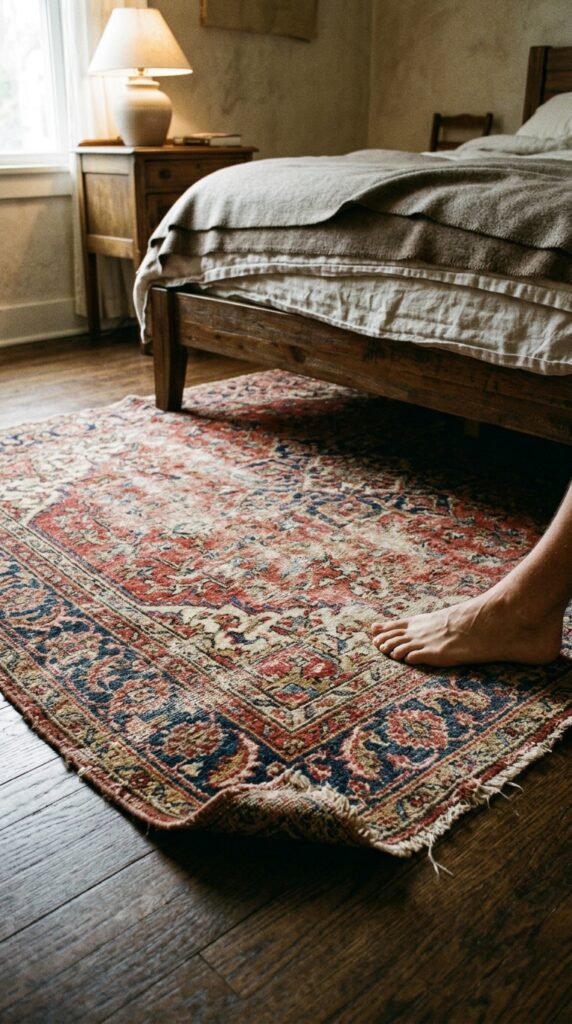
New rugs scream “I just bought this.” Faded Persian rugs whisper “I have been here for decades, and I will be here for decades more.” I found a 5×8 faded Persian runner at an estate sale for $80, and it transformed the cold wood floor into something my feet look forward to touching every morning. The worn spots and uneven dye give the room a sense of age that no amount of new furniture can replicate.
Do not buy a new “vintage-style” rug. The synthetic distressing looks fake and the colors are too uniform. Real vintage rugs have irregularities — a patch that is more faded, a section where the pile is lower, a repair at one edge. Look on Facebook Marketplace, Craigslist, or estate sales. Expect to pay $100 to $400 for a small to medium vintage rug. The trade-off is that vintage rugs often come with smells. You may need to have it professionally cleaned ($50 to $150) or air it out for a week. Also, wool rugs shed for the first few months. Vacuum regularly and accept the fibers.
Put a felt-and-rubber rug pad underneath. Vintage rugs have no nonslip backing and will slide on hardwood. A good pad also adds cushioning and protects the rug’s fibers from abrasion.
7. One Large Dark Oil Painting Of A Stormy Sea Or Overgrown Garden
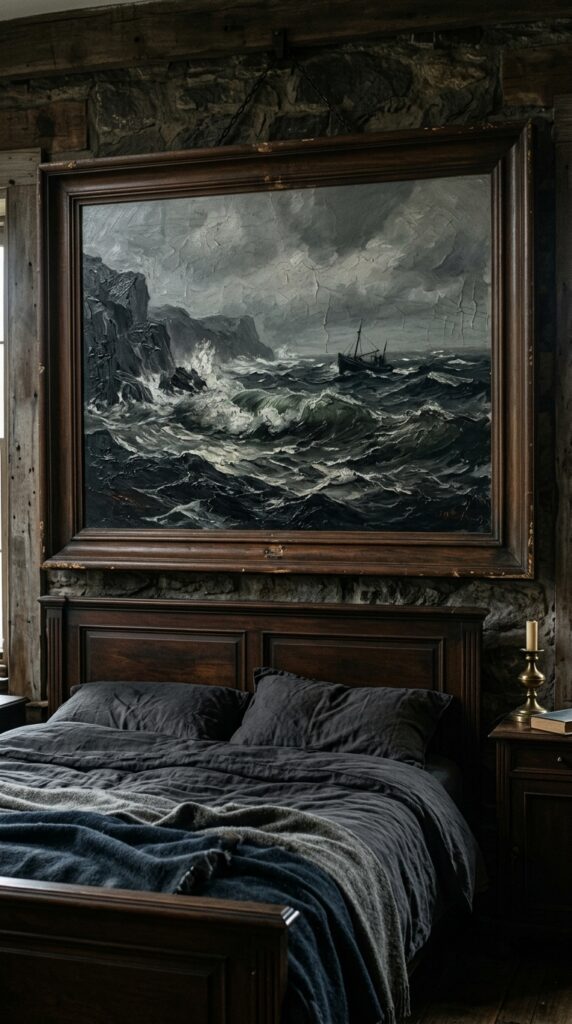
Abstract art is safe. A dark, romantic oil painting with actual subject matter is a commitment. I bought a large canvas of a stormy seascape from a local artist’s estate sale for $200, and it became the emotional anchor of my bedroom. The painting is not cheerful. It does not try to be. But every time I look at it, I feel the room’s mood deepen. The chaos of the waves makes the quiet of the bed feel more peaceful.
You do not need an original oil painting if your budget is tight. High-quality canvas prints of classical Romantic paintings (Turner, Friedrich, or even contemporary dark landscape painters) work well. The key is the frame — a dark, ornate, slightly beat-up frame transforms a print into something that feels authentic. Budget $50 to $150 for a large framed print, or $200 to $1,000 for an original. One warning: do not hang a dark painting on a dark wall. It will disappear. Hang it on a lighter accent wall or a wall with limewash that has contrast.
Position the painting so its center is at 57 inches from the floor — standard gallery height. Hanging it too high makes it feel like a waiting room. Too low and it competes with the bed.
8. Stacks Of Vintage Books As Bedside Tables

Matching nightstands are boring. Stacks of vintage books with character are not. I replaced my generic nightstand with a stack of old hardcovers — a 1940s poetry anthology, a worn copy of Wuthering Heights, and a dark green book of Victorian ghost stories — and the room gained an instant intellectual romance that no piece of furniture could replicate. The stack is exactly the right height for my lamp, and the uneven tops add texture.
The practical reality: a book stack is not a stable surface for a heavy lamp or a full glass of water. Use it only for lightweight items like a small lamp (under five pounds) and a phone. If you need real storage, this is not for you. Also, books collect dust between the pages and the covers. Expect to wipe them down weekly. Budget $10 to $50 for a stack from a thrift store or library sale. Look for cloth-bound books from the early to mid-20th century — they have the best colors and textures. Avoid modern paperbacks; they look cheap.
Choose books with similar heights (within an inch) so the stack is stable. Place a small piece of felt between each book cover to prevent them from sticking together over time.
9. Dried Floral Arrangements In Dark Ceramic Vessels
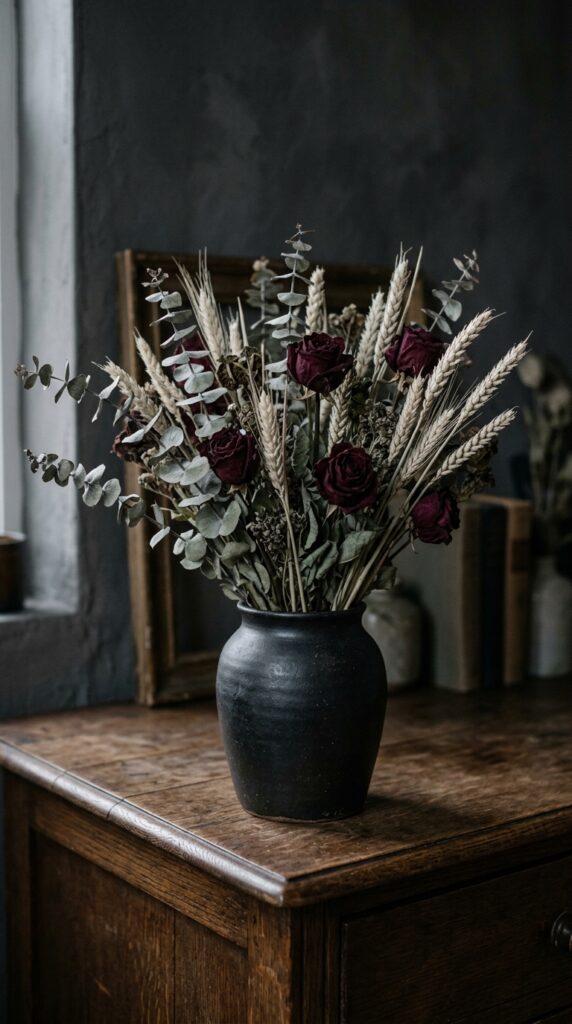
Fresh flowers are bright, cheery, and die in a week. Dried flowers are moody, permanent, and require zero maintenance beyond dusting. I switched to dried arrangements two years ago, and I have never looked back. A bundle of dried eucalyptus, a few preserved deep red roses, and some bleached grasses in a nearly-black ceramic vase — the arrangement costs about $40 and has looked exactly the same for twenty-four months.
The key is choosing the right palette. No bright pinks or yellows. Stick to deep burgundies, muted mauves, dusty greens, beiges, and blacks. Also, cheap dried flowers from craft stores are dyed in unnatural colors and feel crunchy. Spend a little more on preserved flowers from a florist or a specialty online shop. Expect to pay $30 to $80 for a medium arrangement. One downside: dried flowers are fragile. They will shed small bits if you handle them roughly. And they are a fire hazard if placed too close to a candle. Keep them at least a foot away from any open flame.
Spray your dried arrangement with a clear, matte, UV-protectant sealer. This prevents fading and makes the flowers less brittle. One light coat from 12 inches away does the trick.
10. Wall-Mounted Candelabra With Dripless Taper Candles

Electric lights are predictable. Candlelight moves. I installed a simple wrought iron candelabra on the wall next to my bed, and on nights when I want true romance, I light the candles and turn off everything else. The flicker makes faces look softer, skin look warmer, and time slow down. There is no LED bulb that replicates this effect.
Real candles mean real fire. You cannot leave them unattended, and you need to trim the wicks to prevent smoking. Dripless tapers are essential — otherwise, you will be scraping wax off your floor and furniture. Look for beeswax or high-quality paraffin candles labeled “dripless.” Budget $30 to $80 for the candelabra, and $10 to $20 per pair of candles. The trade-off is maintenance and safety. If you have pets or children, or if you are forgetful, this is not for you. Consider flameless LED tapers in warm colors (2200K) as a compromise — they have improved significantly, though they still do not flicker as organically.
Mount the candelabra at least 36 inches away from any curtains or canopy fabric. I learned this the hard way when a draft blew a curtain into a flame. No damage, but a lesson remembered.
11. Textured Throw Blanket In Wine Or Charcoal Chenille
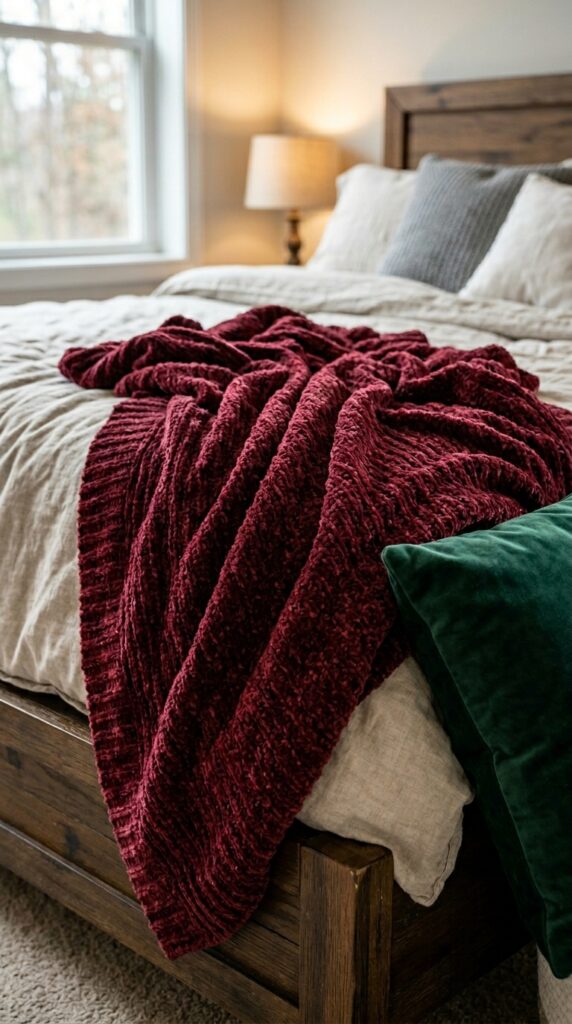
A single throw blanket can change the entire mood of a bed. Not a fleece blanket from a drugstore — those look like camping gear. A chenille or chunky knit throw in a deep, saturated color adds texture and weight. I added a wine-colored chenille throw to my all-white bedding, and suddenly the bed looked like something from a painting instead of a catalog.
Chenille is soft but delicate. It snags easily on jewelry or rough nails. If you have cats, skip chenille — their claws will pull loops. Chunky knit wool throws are more durable but heavier and can be scratchy against bare skin. Budget $40 to $120 for a quality throw. The trade-off: cheap chenille (under $30) is usually polyester that flattens and pills within months. Look for cotton or cotton-blend chenille. Also, dark colors will transfer dye to light sheets during the first few washes. Wash separately in cold water with a color catcher sheet.
Drape the throw asymmetrically — more fabric on one side of the foot of the bed, less on the other. Symmetrical draping looks staged. Asymmetrical looks lived-in.
12. Floor Lamp With Smoked Glass And Visible Amber Filament
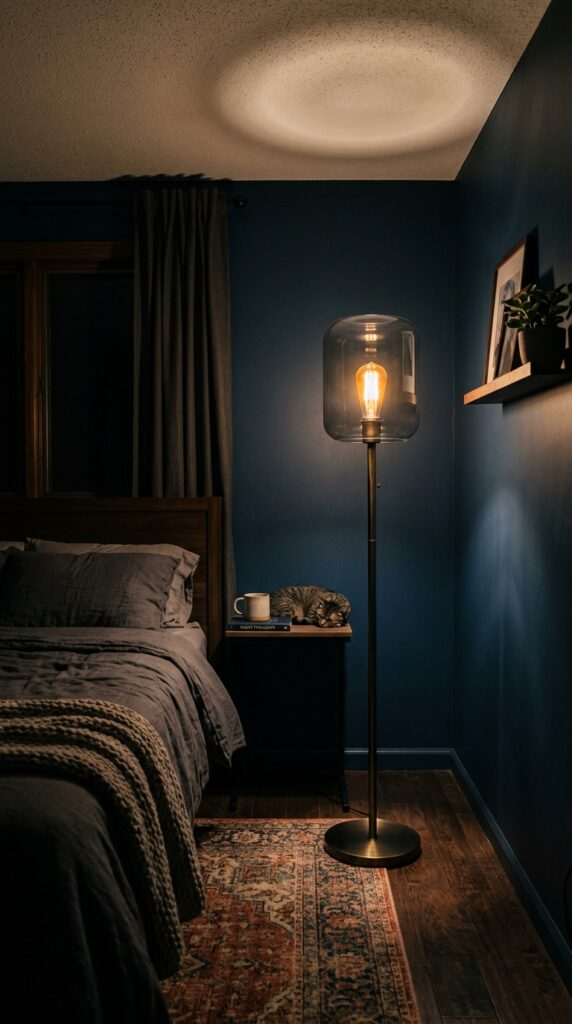
Task lighting has its place, but mood lighting is what makes a bedroom romantic. A floor lamp with a smoked glass shade and a low-wattage amber bulb creates a pool of light that never feels harsh. I placed one in the corner opposite my bed, and it transformed the room’s evening atmosphere. The lamp is too dim to read by comfortably, but it is perfect for undressing, talking, or just sitting in the dark without being fully in the dark.
Look for a lamp with a shade that directs light upward or diffuses it through a textured surface. Avoid lamps with exposed bulbs pointing downward — those create glare. Smoked glass, opal glass, or linen shades work best. Budget $60 to $200. The bulb is as important as the lamp: use a 40-watt equivalent (or lower) with a color temperature of 2200K to 2400K. One trade-off: floor lamps take up floor space. In a small bedroom, consider a plug-in wall lamp instead.
Place the floor lamp behind a chair or in a corner, not next to the bed. Bedside lighting should be closer and warmer. Floor lamps work best as secondary, ambient sources.
13. Vintage Iron Bed Frame With Chipped Black Paint
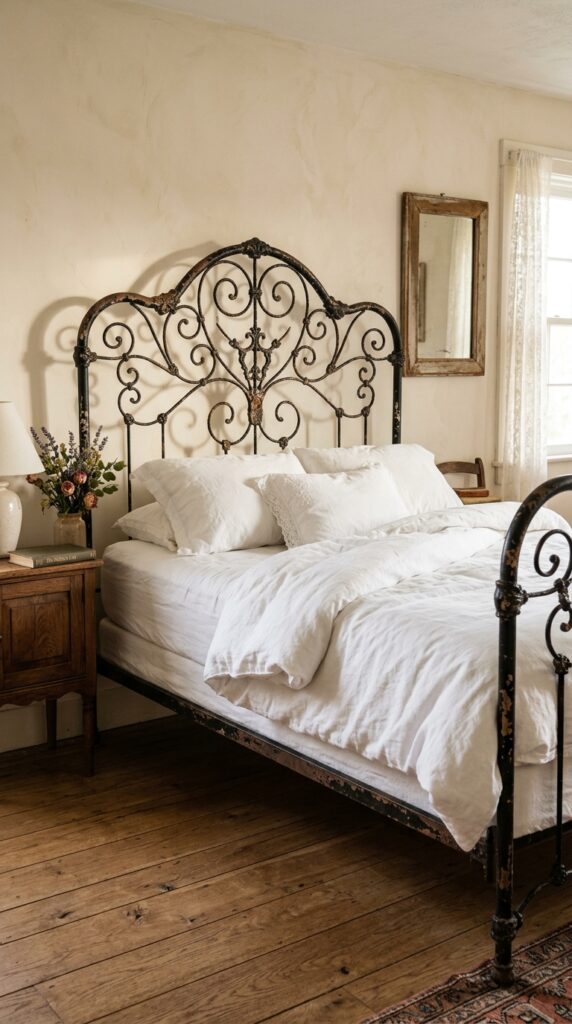
A new iron bed frame is fine. A vintage iron frame with chipped paint is poetry. I found a 1940s iron bed at an architectural salvage yard for $150, and it had the perfect amount of wear — the black paint was flaking in soft patches, revealing a warm rust color underneath. It looked like it had survived decades of love. I did not repaint it. The imperfections are the beauty.
The search for a vintage iron bed takes patience. Check Craigslist, Facebook Marketplace, estate sales, and salvage yards. Expect to pay $100 to $400 for a full-size or queen. The trade-off is assembly and stability. Vintage frames often come with mismatched or missing hardware. You may need to buy replacement bolts or have a welder fix a loose joint. Also, iron beds are heavy — expect to need two people to move it. If you cannot find a vintage piece, buy a new one and distress it yourself with sandpaper and a wire brush. Budget $200 to $500 for a new iron bed. The distressed finish will look fake for the first year, then age naturally.
Apply a clear matte wax over the chipped paint to prevent rust from spreading and to stop flakes from ending up on your floor. Rub it in with a cloth every six months.
14. Wall Of Mismatched Antique Mirrors Reflecting Dim Light
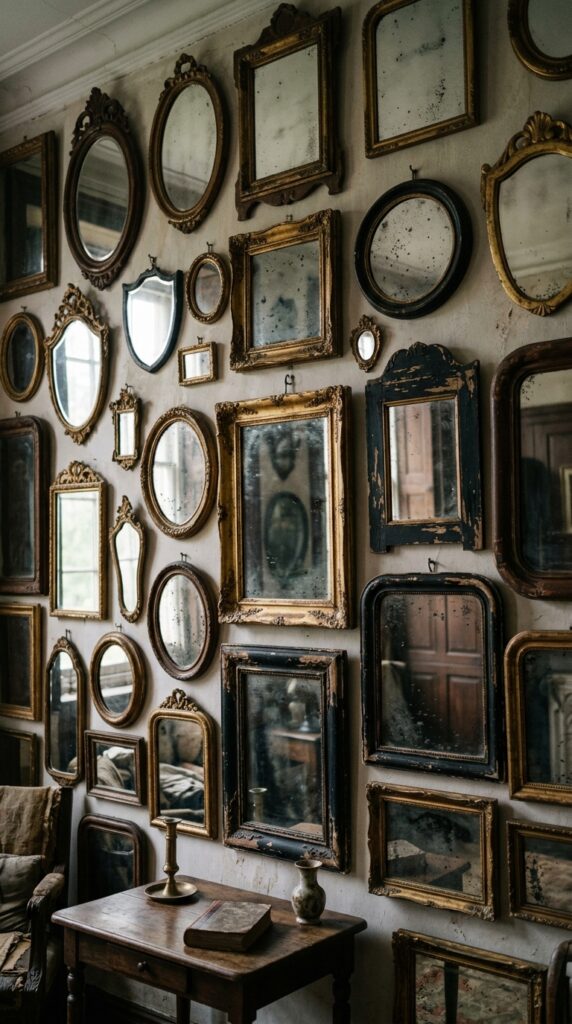
One large mirror is practical. A cluster of small, mismatched antique mirrors is romantic. I started collecting old mirrors at thrift stores — a tarnished gold oval here, a black rectangular one there — and hung them in a loose grid on one wall. They catch light from different angles and reflect fragments of the room. The effect is like looking through a memory. None of the mirrors is perfect. That is the point.
Look for mirrors with character: cloudy silvering, chips in the glass, frames with missing finish. Avoid perfectly clear modern mirrors — they clash with the mood. Budget $5 to $30 per mirror at thrift stores and estate sales. You can also buy reproduction antique-style mirrors online, but they lack the authentic wear. The trade-off is that hanging multiple mirrors is a project. You need to plan the layout on the floor first, then transfer to the wall. Use picture-hanging hooks rated for the weight of each mirror. One warning: old mirrors can have mercury backing, which is toxic if broken. Handle with care and do not hang them where they might get hit.
Leave at least two inches of wall space between each mirror. Too close and they feel cluttered. Too far and they lose the cluster effect. Two to four inches is the sweet spot.
15. Low-Hanging Crystal Chandelier With Dimmers
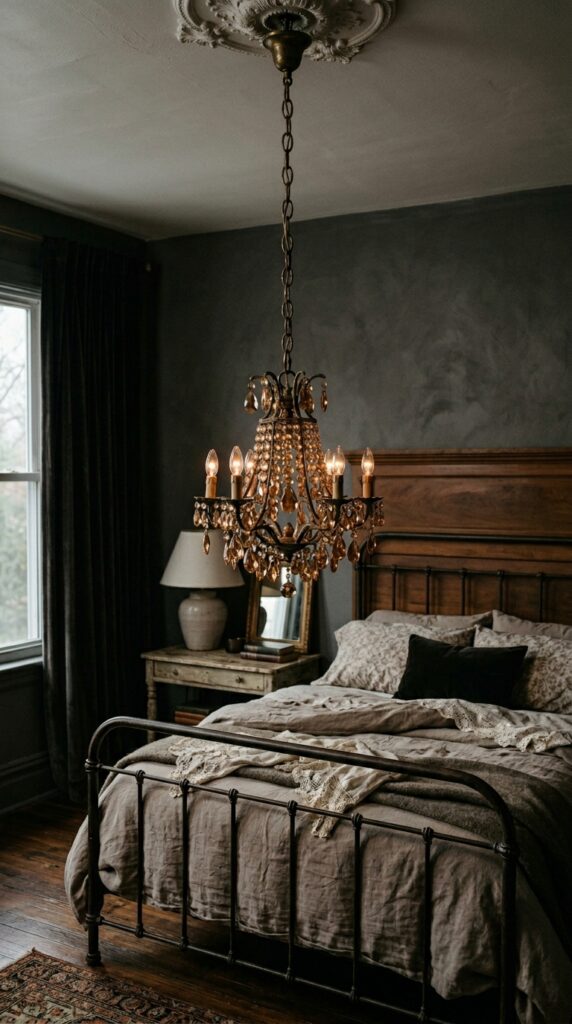
Chandeliers are usually reserved for dining rooms and entryways. A chandelier in a bedroom — especially one hung low, almost intimately — changes the entire hierarchy of the room. I installed a small, secondhand crystal chandelier and lowered it to 78 inches from the floor (standard is 84 to 96 inches). The crystals hang within arm’s reach of the bed. On low dimmer settings, the light fractures softly across the ceiling like stars.
The installation is not trivial. You need a ceiling box rated for the chandelier’s weight (often 50+ pounds), and you may need to reinforce the joist. This is usually a job for an electrician ($200 to $500). Also, a chandelier in a bedroom with a ceiling fan will look ridiculous. Choose one or the other. Budget $100 to $400 for a small chandelier (secondhand is better), plus installation. One trade-off: cleaning crystals is a nightmare. If you are not willing to spend an afternoon every six months wiping each crystal, buy a chandelier with fewer facets or a simpler design. Also, do not hang a chandelier in a room with low ceilings (under eight feet). You will hit your head.
Replace the standard bulbs with candle-tip bulbs in 2200K. The warmer color transforms a chandelier from “wedding reception” to “Victorian romance.”
16. Leather Or Velvet Ottoman At The Foot Of The Bed
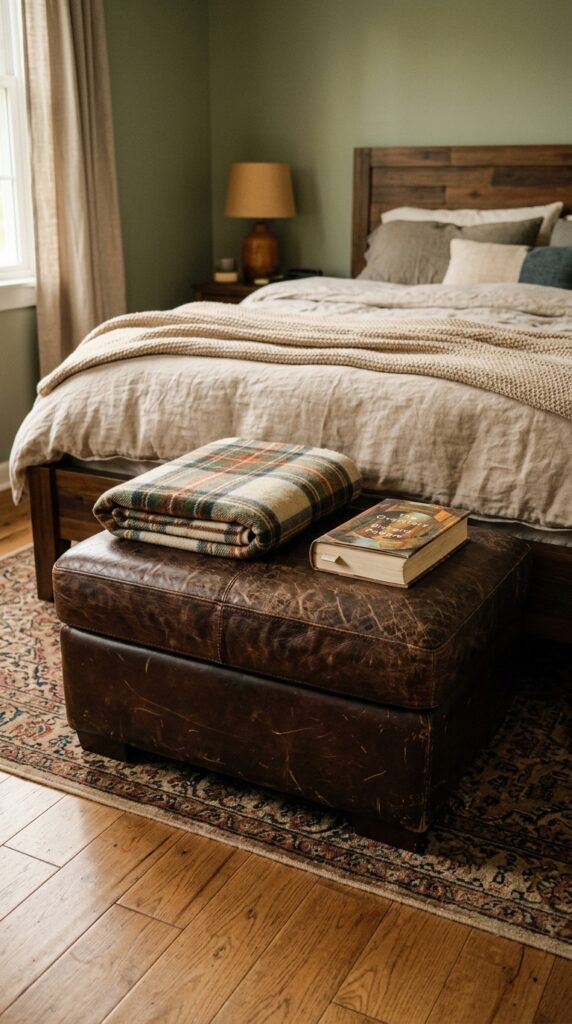
The foot of the bed is often empty space. A leather or velvet ottoman fills that void and gives you a place to sit while putting on shoes or a surface for a tray of morning coffee. I found a worn leather ottoman at an antique shop for $60, and it has become the most used piece of furniture in my bedroom that is not the bed. The dark brown leather has scratches and a deep patina that no new piece could match.
If you buy new, look for an ottoman with a low profile — no more than 18 inches tall. Taller than that and it competes with the bed visually. Velvet is softer and more romantic, but it shows every footprint and spills. Leather is more practical and ages better. Budget $80 to $250 for a new ottoman, or $40 to $100 for a vintage piece. The trade-off is that an ottoman at the foot of the bed can become a clutter magnet — jackets, bags, mail. Be disciplined, or it will ruin the mood.
Choose an ottoman that is slightly narrower than your bed. A width of 75% of the bed’s width leaves walking space on both sides. Too wide and the room feels cramped.
17. Dark Stained Faux Ceiling Beams For Depth
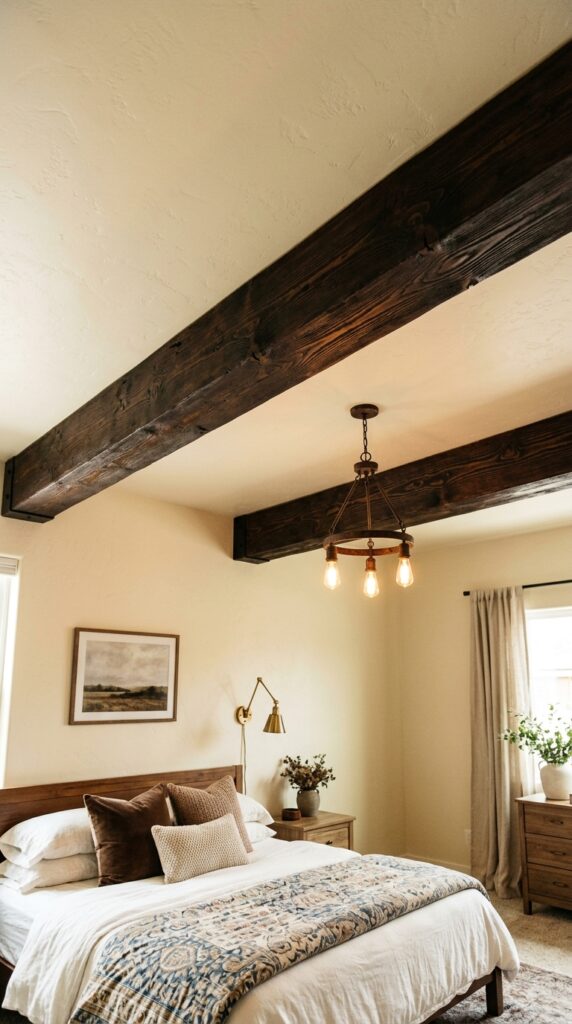
White ceilings feel open and airy — the opposite of moody. Dark beams pull the ceiling down visually, creating a sense of enclosure. I installed hollow faux beams from a home improvement store, stained them dark espresso, and mounted them across my bedroom ceiling. The effect was immediate: the room felt shorter but warmer, like a cottage rather than a box. The beams also disguise ugly ceiling textures and imperfections.
Faux beams are lightweight polyurethane that looks like wood from the floor. They cost $80 to $150 per beam and require a helper to install (they are awkward to hold up while screwing). Real wood beams are heavier, more expensive ($200 to $500 each), and require structural reinforcement. The trade-off is that faux beams look fake up close — the grain is printed, not carved. But from six feet away, most people cannot tell. Do not install beams on a ceiling lower than eight feet. You will feel claustrophobic.
Space the beams so they divide the ceiling into thirds or halves. Random spacing looks amateur. Symmetry reads as intentional.
18. Amber Glass Carafe With Cut Crystal Tumbler On Nightstand
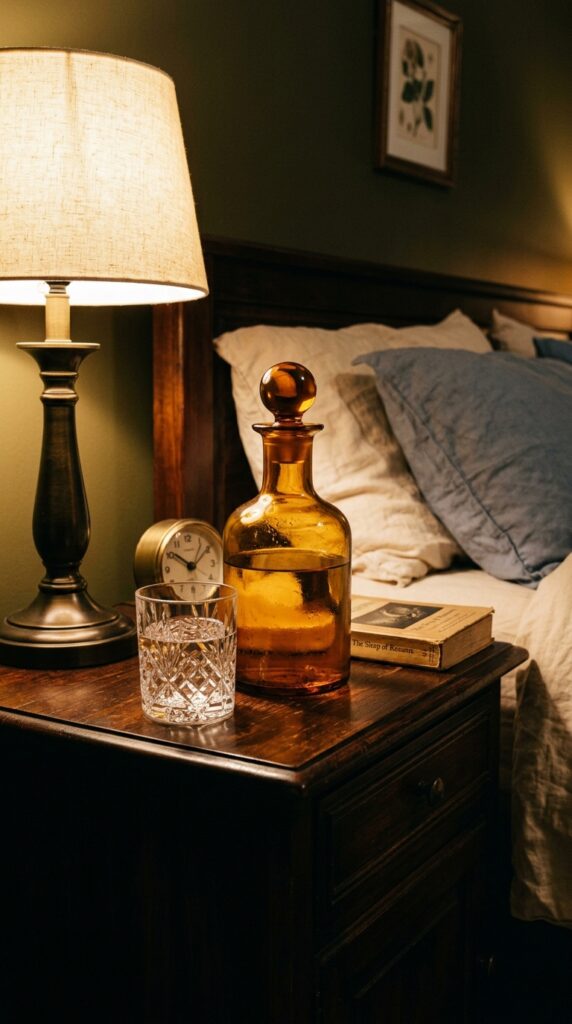
Plastic water bottles on a nightstand are anti-romantic. A beautiful glass carafe and tumbler say that you care about the small rituals of the bedroom. I bought an amber glass carafe from a vintage shop for $12, and it has become one of my favorite objects. Filling it with water each night feels like a ceremony. The color of the glass — deep honey or dark amber — looks beautiful in low light, and the weight of the crystal tumbler is satisfying in the dark.
You can find amber glass carafes new for $20 to $50, or vintage for $10 to $30. Look for ones with a wide mouth so they are easy to clean. Avoid carafes with plastic stoppers — they look cheap. Glass or cork stoppers only. The trade-off is that glass breaks. If you are clumsy or have carpet that hides shards, consider a brushed metal carafe instead. But the glass is worth the risk for the way it glows.
Wash the carafe and tumbler by hand. Dishwashers will cloud crystal over time and can cause thermal stress cracks in vintage glass.
19. Heavy Linen Bedding In Unbleached Natural Or Deep Taupe
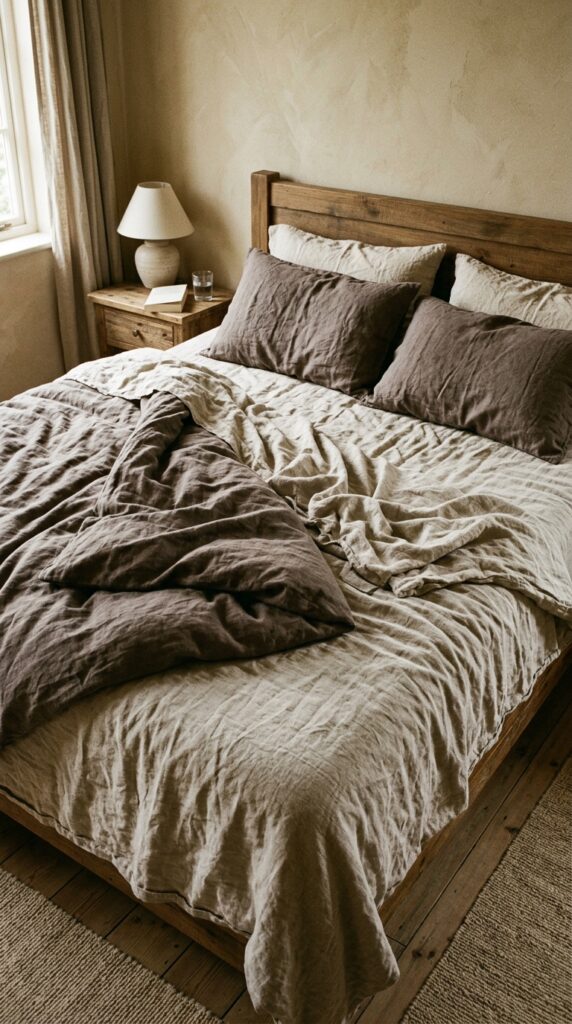
Crisp, ironed white sheets are for hotels. Wrinkled, heavy linen is for bedrooms where you actually sleep. I switched to 100% linen sheets two years ago, and I cannot go back. The fabric is breathable in summer, warm in winter, and gets softer with every wash. The natural, unbleached color — a warm, slightly gray beige — has a quiet romance that white or bright colors lack. And the wrinkles are not a flaw; they are the entire point.
Linen is expensive. A full set (fitted sheet, flat sheet, two pillowcases) costs $150 to $400. Cheap linen (under $100) is usually a cotton-linen blend that does not have the same weight or breathability. The trade-off is that linen wrinkles almost immediately after making the bed. If you need crisp corners and smooth surfaces, buy percale cotton instead. But for moody romance, the wrinkles are essential. Also, linen takes longer to dry than cotton. Factor that into your laundry routine.
Wash linen in cold water and tumble dry on low. High heat will weaken the fibers and cause shrinkage. And never use fabric softener — it coats the fibers and reduces breathability.
20. Single Large Floor Cushion In Crushed Velvet For A Reading Nook
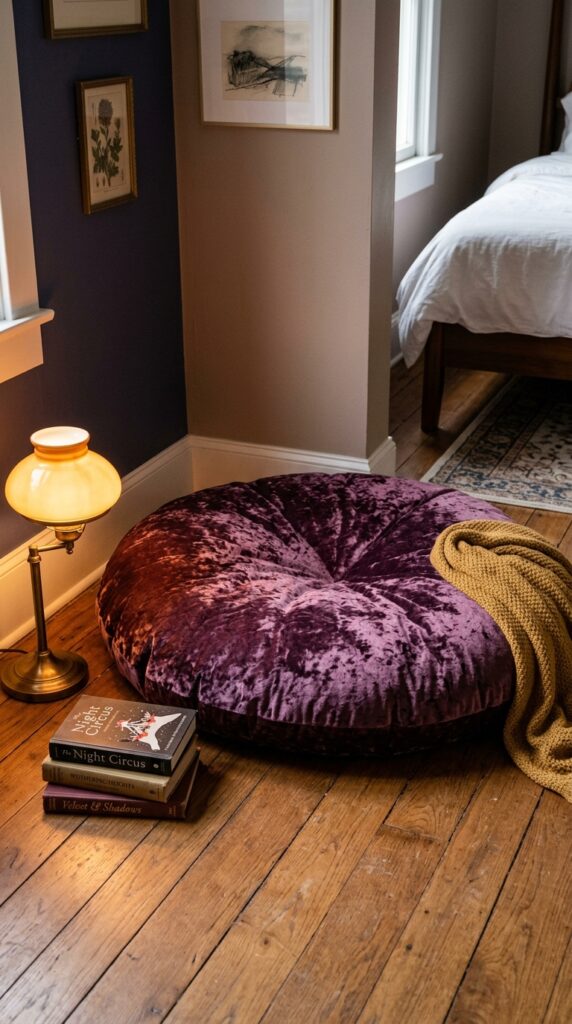
A reading nook does not need a chair. A floor cushion creates a different kind of intimacy — lower, closer to the ground, more like a nest than a seat. I bought a single oversized floor cushion in crushed plum velvet, and it has become my favorite spot to read before sleep. The crushed texture catches the light in a way that flat velvet cannot, and the deep color absorbs rather than reflects.
Look for floor cushions filled with foam or a foam-bead blend. Beanbag-style cushions look juvenile. Crushed velvet is beautiful but shows every wrinkle and indentation from sitting. It also attracts lint and pet hair. Budget $50 to $150 for a quality floor cushion. The trade-off is that sitting on the floor requires getting up from the floor. If you have knee or back issues, this is not for you. Also, crushed velvet is not washable. Spot clean only.
Place the floor cushion on a small rug to define the zone. A cushion directly on hardwood slides around. A rug gives it traction and adds another layer of texture.
21. Wall Niche With A Single Dramatic Object Lit From Below
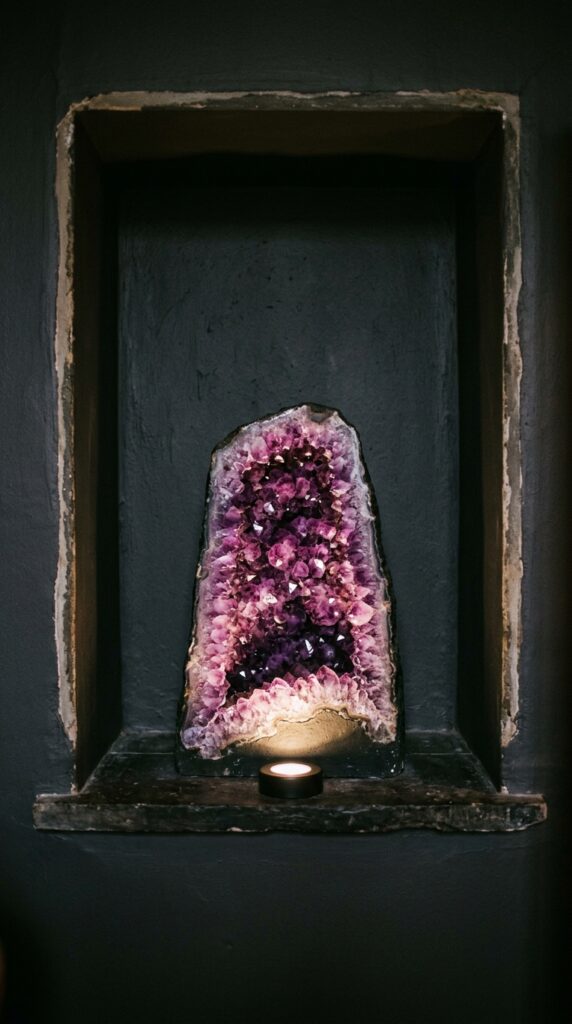
Clutter kills romance. A single, beautifully lit object in a wall niche creates a moment of focus that makes the whole room feel curated. I have a shallow niche in my bedroom wall that originally held an ugly medicine cabinet. I removed the door, painted the interior dark charcoal, installed a battery-powered puck light at the bottom, and placed a large amethyst geode inside. The upward lighting makes the crystals glow. It is the first thing I see when I walk in.
If you do not have a niche, you can create one with a shadow box or a deep floating shelf with a lip. The key is lighting from below — that is what makes it feel special. Top lighting would be ordinary. Budget $20 to $50 for a puck light (wireless with a remote is easiest), plus the object. Geodes cost $30 to $200 depending on size. Other dramatic objects: a single large shell, a piece of petrified wood, a small sculpture. One trade-off: battery-powered lights need battery changes. Hardwired is better but requires an electrician.
Keep the niche otherwise empty. A single object is a statement. Two objects is a collection. Three is a shelf. Restraint is the luxury here.
22. Worn Cashmere Throw Draped Over A Chair
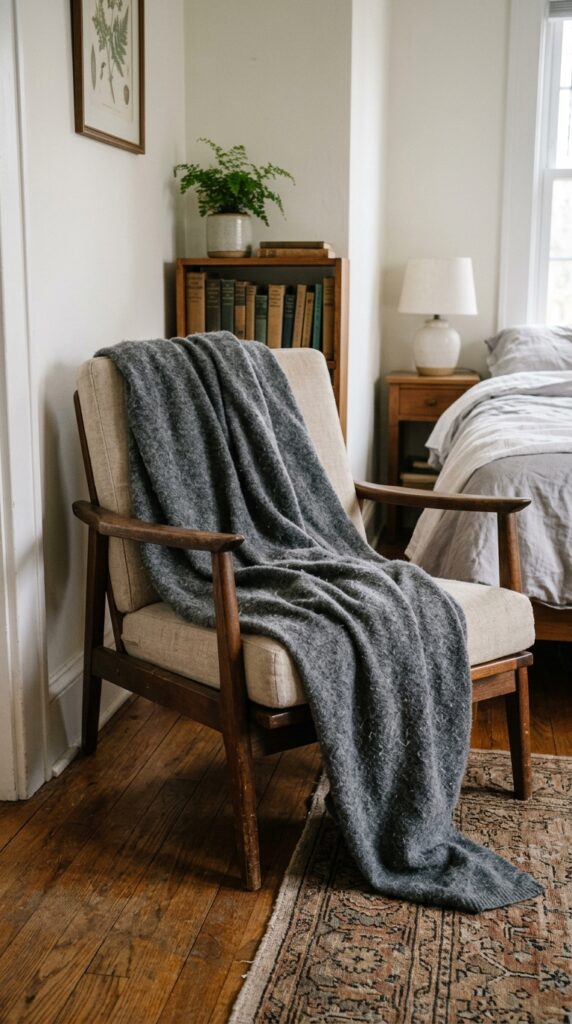
New cashmere is stiff. Worn cashmere — washed many times, slightly pilled, a little thin in places — is one of the most romantic textures in existence. I bought a used cashmere sweater at a thrift store for $8, cut it along the seams, and sewed the pieces into a small throw blanket. It is not perfect. The edges are a little uneven. But the fabric feels like nothing else. I drape it over the chair in the corner, and the room feels more lived-in and more luxurious at the same time.
You can buy new cashmere throws for $150 to $400, but they will not have the same softness for at least a year of use. Secondhand is the move. Look for cashmere sweaters at thrift stores (check the men’s section for larger pieces) and repurpose them. Or buy a used cashmere blanket on eBay or Poshmark. Budget $20 to $60 for secondhand cashmere. The trade-off is that cashmere requires careful washing (hand wash cold, lay flat to dry) and moths love it. Store it in a cedar chest or with lavender sachets during warm months.
Do not drape cashmere over a chair with sharp wooden armrests. The fibers will snag. Use a chair with upholstered or rounded arms.
23. Oil Diffuser With Sandalwood And Patchouli (No Vanilla)
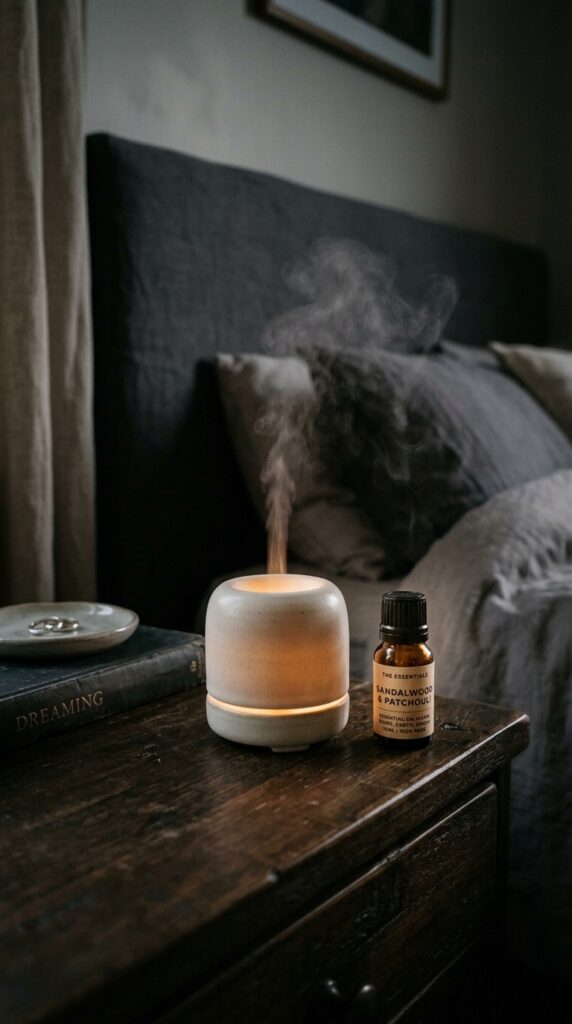
Scent is the most underrated element of a moody bedroom. Vanilla and lavender are overused and feel generic. Sandalwood and patchouli — earthy, woody, slightly smoky — create a base note that lingers without announcing itself. I run an ultrasonic diffuser with three drops of sandalwood and two drops of patchouli every evening. The scent is not sweet. It is not floral. It smells like old books, forest floor, and something slightly sacred.
Avoid synthetic fragrance oils and cheap diffusers that overheat. Ultrasonic diffusers ($20 to $60) are quiet and safe. Essential oils vary widely in quality: do not buy the $5 bottles at the grocery store. Look for therapeutic-grade oils from reputable brands. Budget $30 to $80 for the diffuser, and $10 to $25 per oil bottle. One trade-off: some people find patchouli overwhelming or reminiscent of head shops. Start with one drop and adjust. Also, essential oils can damage wood finishes if spilled directly. Use a coaster under the diffuser.
Do not run the diffuser all night. Two hours before bed is enough to scent the room. Continuous use can cause excess humidity and mold around the diffuser.
24. Dark Wainscoting With Mood Wallpaper Above
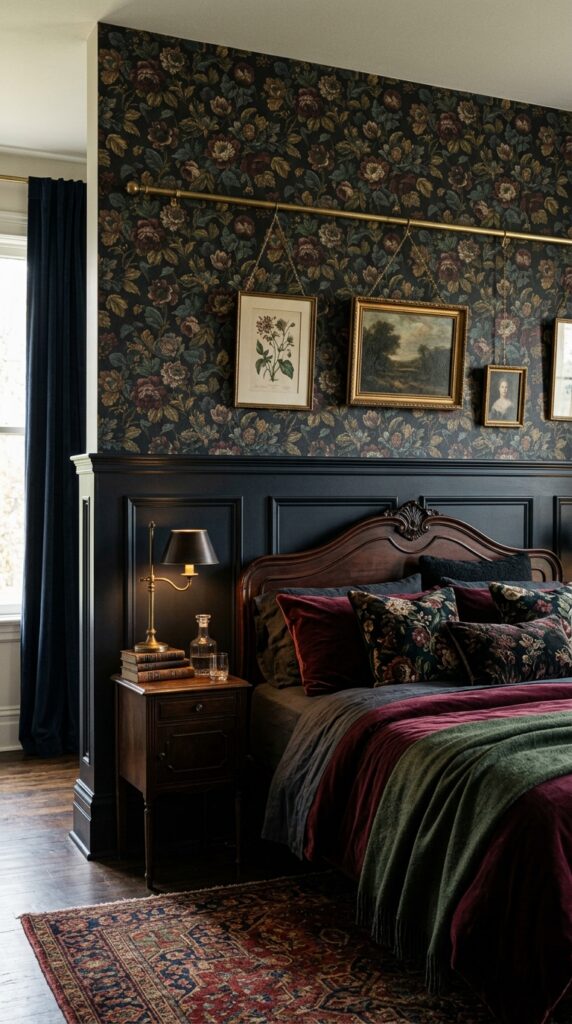
One wall treatment is fine. Two is a statement. Wainscoting — beadboard, board-and-batten, or flat panel — painted a dark color, combined with a moody wallpaper above, creates a room-within-a-room feeling. I installed flat-panel wainscoting up to 36 inches, painted it almost-black navy, then added a dark floral wallpaper above. The brass picture rail between them catches the light. The room feels like a Victorian library, but in the best way.
This is not a weekend project. Wainscoting requires measuring, cutting, nailing, caulking, and painting. Wallpaper requires alignment and patience. Expect to spend $200 to $500 on materials (wainscoting kits, paint, wallpaper) plus a week of labor. The trade-off is that this treatment is permanent and expensive to reverse. If you rent, skip it. If you own and love dark romance, this is one of the most impactful changes you can make.
Keep the wainscoting height consistent with other architectural details in your home. Standard is 32 to 36 inches, but matching existing chair rail heights creates cohesion.
25. Sheer Canopy Draped Asymmetrically From A Single Hook
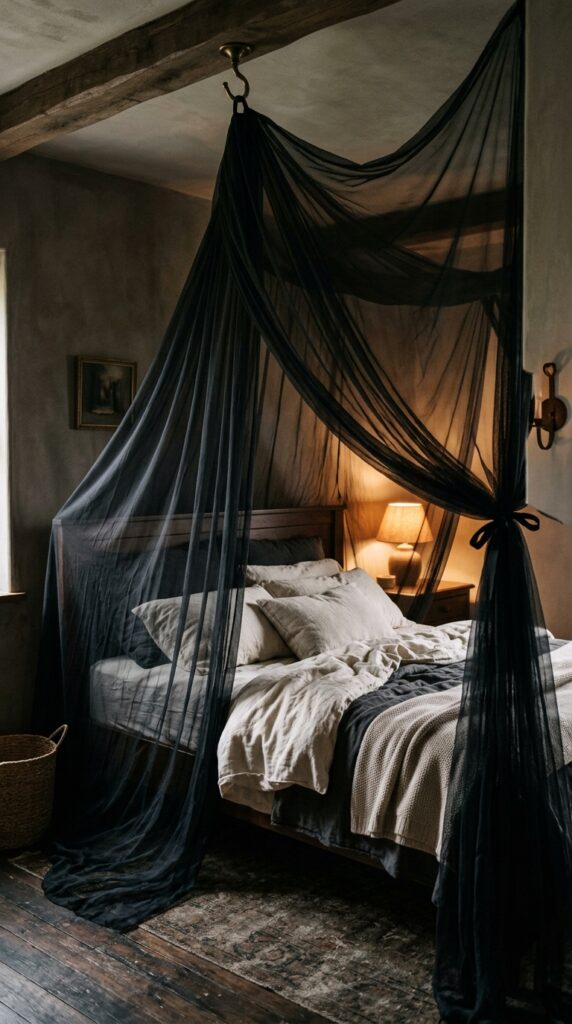
I included a canopy earlier, but this version is different: asymmetrical, from a single hook, using sheer black fabric. It creates a diagonal swoop across the bed rather than a symmetrical frame. I installed one hook 12 inches from the corner of the bed, draped six yards of sheer black voile over it, and let the fabric fall unevenly. The effect is less “princess” and more “womb.” The fabric softens the corner of the room and makes the bed feel like a hideaway.
The same rules apply as the earlier canopy: sheer fabric only, dark color, at least four yards for a queen bed. The asymmetrical drape is easier to achieve than a balanced one because there is no need to measure or adjust. Just hook and let gravity do the work. Budget $30 to $80. One caution: a single hook must be anchored into a ceiling joist. Drywall anchors will pull out over time. And if you have a ceiling fan, position the hook so the fabric does not blow into the blades.
Wash the canopy fabric before hanging it. The first wash softens the fabric and removes the chemical sizing that makes new voile feel stiff. Hang it damp for fewer wrinkles.
Twenty-five ideas, and the through-line is simple: romance is not about adding more things. It is about adding the right things — darkness that feels safe, textures that demand to be touched, and light that refuses to be harsh. You do not need to do all of these. Pick three. Start with the limewash walls, the amber sconces, and the heavy linen bedding. Those three will shift your room from a place you sleep to a place you want to be in after dark. Then add one more — the vintage rug, the dried flowers, the candelabra. The room will tell you when it is done. It will feel like an exhale. That is the mood you are chasing, and it is closer than you think.