There’s something about a thoughtfully planted corner that completely changes the personality of a house. Not the pristine catalog kind, but the lived-in, layered sort that hints at someone who actually pays attention. Corner flower beds are honestly one of the most underrated curb appeal moves out there. They soften hard property lines, draw the eye toward your entry, and frame your house the way good lighting frames a portrait.
The thing is, corners are tricky. They’re often shaded on one side and baked on the other, surrounded by fences, sidewalks, or both. So what works in the middle of your yard usually flops in the corner. Below are twelve ideas that actually hold up, whether you’ve got a tight city lot or a sprawling country property. Some are renter-friendly, some are weekend projects, and a few are full-on transformations. All of them are designed to make your corner the part of the yard that strangers stop to compliment.
1. The Layered Cottage Corner
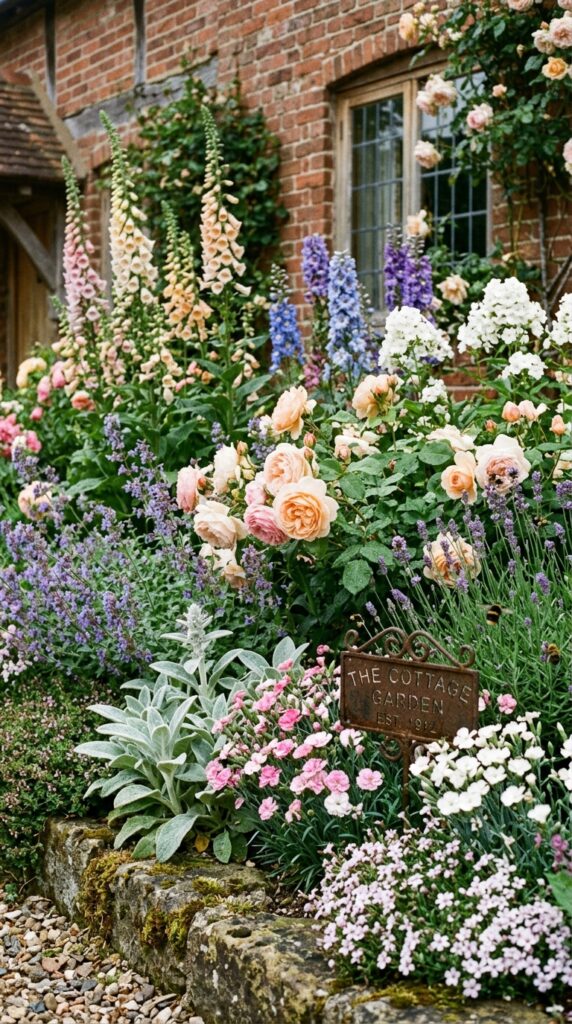
If you want a corner that looks like it has been there for decades, the layered cottage approach is your friend. The whole idea is loose abundance, not military rows. Plant tall structural blooms like foxgloves or hollyhocks at the back, mid-height roses and salvia in the middle, and let creeping things tumble at the front edge.
Three quick tips that actually matter here. First, plant in odd-numbered groups of three, five, or seven. It looks more natural than pairs. Second, repeat at least one color across all three layers so the eye travels smoothly. Third, leave gaps for self-seeders like nigella or California poppies to fill in over the seasons.
One watch-out: cottage gardens look messy if you skip deadheading. Skip this style if you hate weekend pruning. But when it works, it’s pure magic. Aim for controlled chaos, not actual chaos.
2. Modern Monochrome White Corner
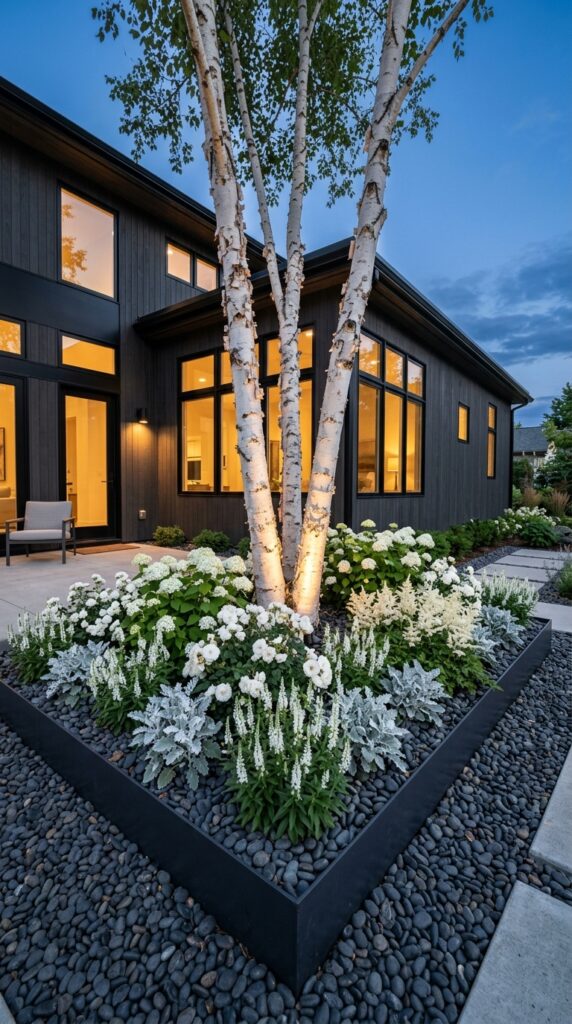
A monochrome white corner bed is one of those moves that looks expensive even when it isn’t. White flowers reflect light, glow at dusk, and read as deeply intentional. They also pair beautifully with modern homes where colorful blooms can feel busy.
Stick to two or three white-flowering plants and one silvery foliage plant. Repetition is what makes monochrome work. Mix flower shapes, daisy-form, spike-form, mounded-form, so the bed has variety even without color contrast. Use dark mulch or charcoal gravel underneath. White against dark looks crisp and intentional rather than washed out.
The constraint here is honest: white blooms show every brown petal. If you’re not the deadheading type, this look gets sad fast. But for an evening-focused yard or a north-facing corner that needs brightening, almost nothing beats it. Less color, more impact.
3. Drought-Tolerant Mediterranean Corner
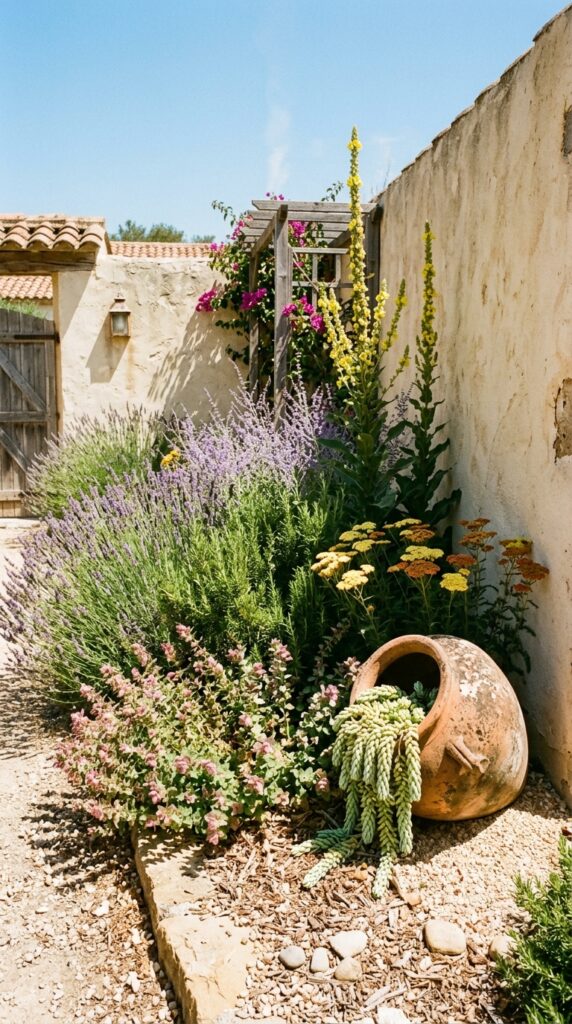
If you live somewhere hot, dry, or just hate watering, a Mediterranean-inspired corner is a no-brainer. Lavender, rosemary, Russian sage, yarrow, and ornamental oregano all thrive on neglect, smell incredible, and bring pollinators in droves. The silver-and-purple palette also looks fantastic against warm-toned homes, stucco, brick, or sandy stone.
A few things to get right. Drainage is everything. These plants will rot in heavy clay, so amend with gravel or build the bed up slightly. Use decomposed granite or pale gravel as mulch instead of dark bark. It looks more authentic and reflects heat away from roots. Plant in clusters of one variety rather than dotting them around.
Watch out for spreading mint family plants. Russian sage especially can take over if you let it. Cut everything back hard in early spring. The payoff is a corner that looks effortless even in August.
4. The Pollinator Powerhouse Corner
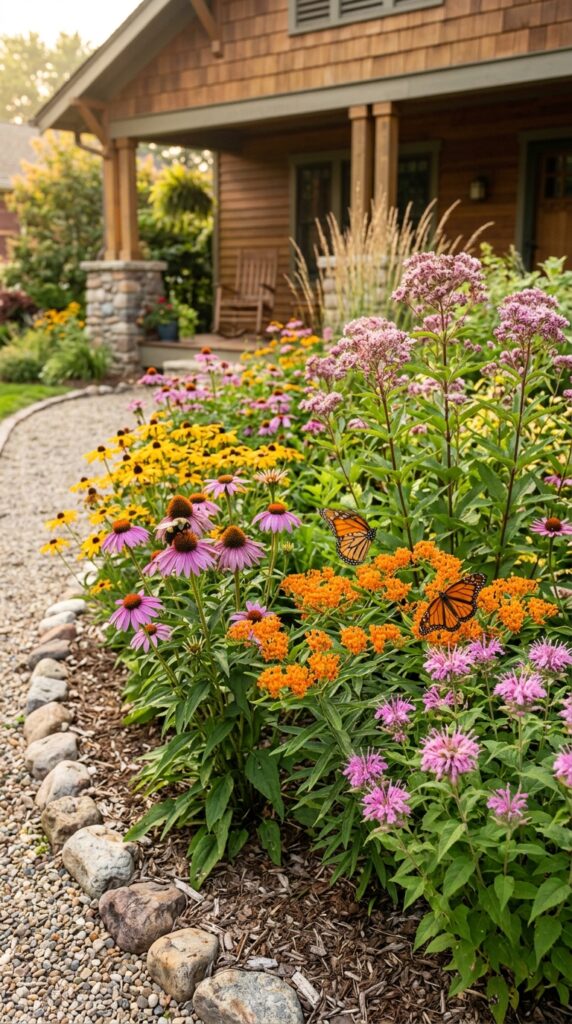
There’s no quicker way to make a corner feel alive than to plant for pollinators. A buzzing, fluttering corner reads as healthy and intentional, even if you didn’t think much about design. Native plants do most of the heavy lifting, and once established, they barely need you.
Build around three or four native heavy-hitters: coneflower, black-eyed Susan, bee balm, and milkweed. Add a native grass like little bluestem for movement and winter structure. Skip the heavily hybridized double-flower varieties because pollinators can’t access the nectar.
The honest trade-off: pollinator beds look a little wild. If your neighbors are the manicured-lawn type, they may notice. A clean edge or a simple sign helps signal intention. But if you don’t mind a slightly untamed look, this is the corner that earns the most compliments and supports the local ecosystem at the same time. A small win that feels big.
5. Evergreen Structure Corner
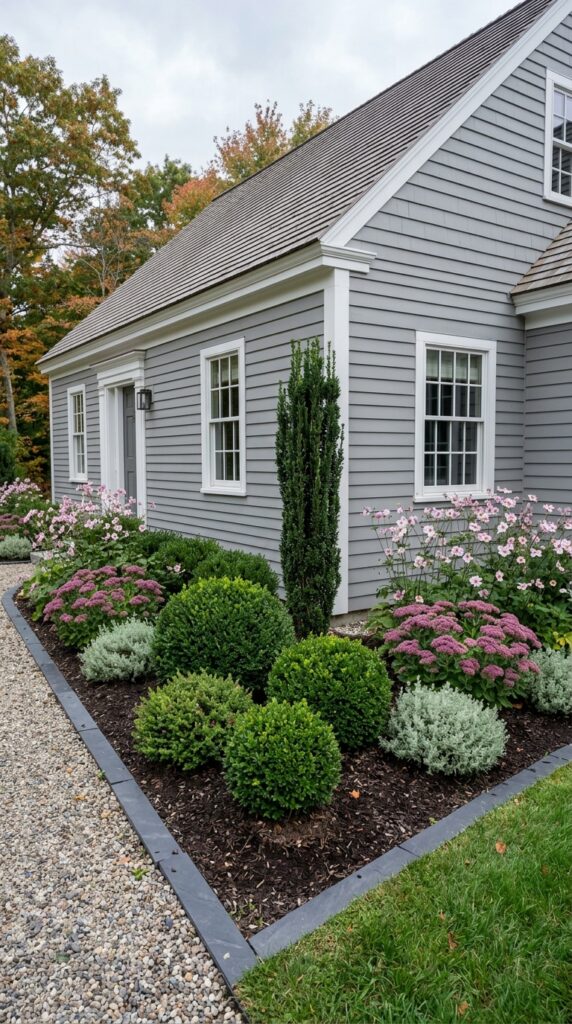
Some corners need to look good in February as much as in June. That’s where evergreen structure comes in. The idea is to design the corner around plants that hold their shape year-round, then let seasonal flowers come and go around them.
Use clipped boxwood, dwarf yew, or small conifers as the bones. Add one or two evergreen perennials like hellebores or heuchera for ground-level interest. Then layer in just a few seasonal bloomers, tulips in spring, salvia in summer, sedum in fall, so the corner always feels styled.
The drawback: structural plants are slow growers and pricier upfront. You’re paying for permanence. But the payoff is a corner that never has a bad month, even when bare branches and brown lawns surround it. This is the sophisticated, grown-up version of a flower bed.
6. Tropical Lush Corner
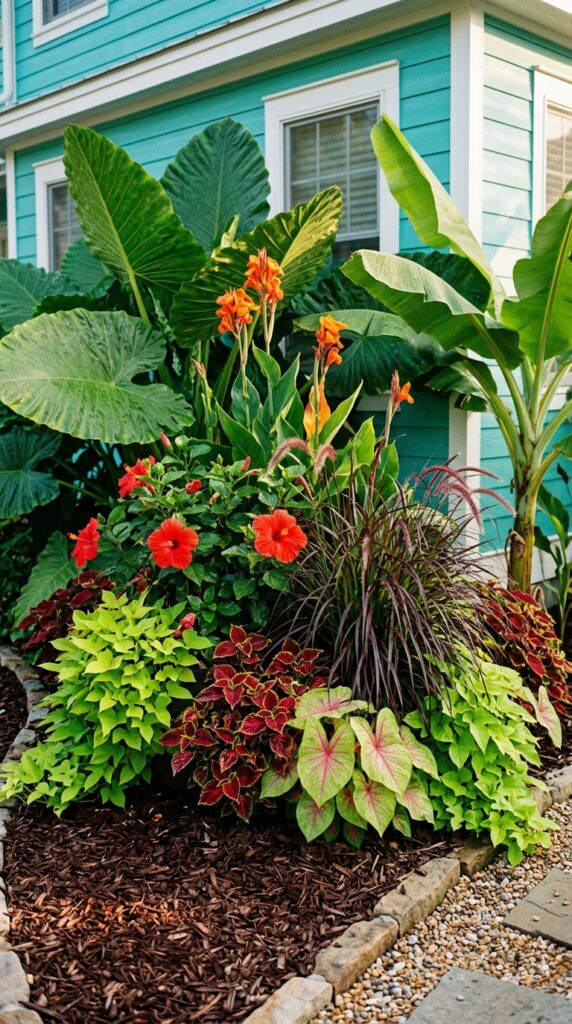
A tropical corner is for people who want maximum drama. Big leaves, hot colors, and fast growth make this style wildly satisfying in a single season. Even in cooler climates, you can pull it off with annuals and tender perennials that get tossed at frost.
Three plants do most of the work: elephant ears for the giant leaf moment, canna lilies for vertical color, and sweet potato vine for the chartreuse spill at the front. Add a banana plant if you want to commit fully. Use rich, dark mulch to make all that color pop.
Heads up: tropicals are thirsty. They want water, food, and heat, and they pout when they don’t get it. If you travel a lot in summer or hate watering, this isn’t your style. But if you love a corner that looks like a vacation, it’s hard to beat.
7. Renter-Friendly Container Corner
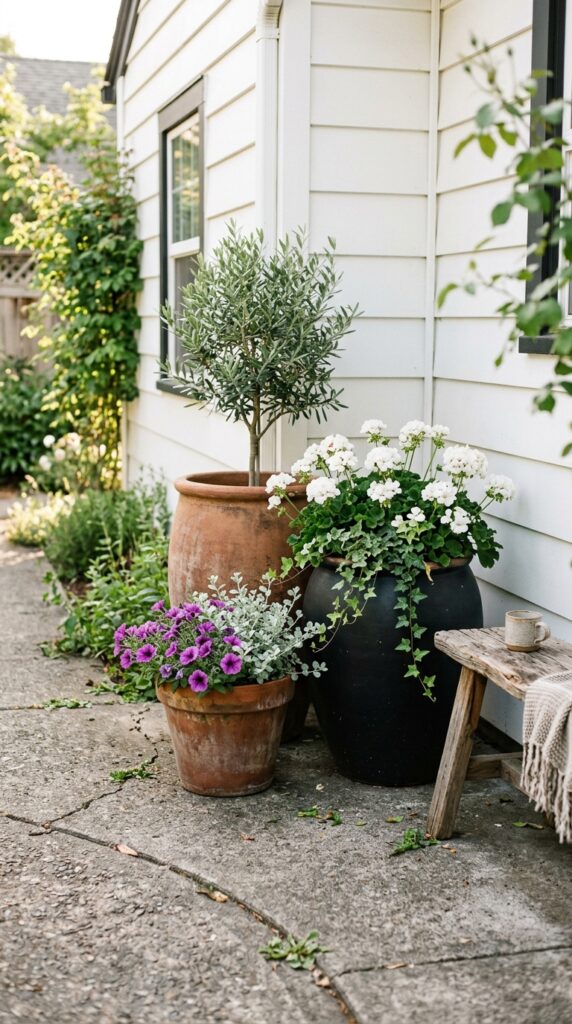
Not everyone owns the dirt they live on. If you rent, or just hate digging, a container corner gives you all the impact with zero commitment. Group three or more large pots in varied heights at the corner, plant them densely, and you’ve got a flower bed without ever breaking ground.
The rule of three works brilliantly: one tall pot, one medium, one low. Mix materials but stay within a tight color range. Aged terracotta with matte black, or soft cream with weathered concrete. Stuff each pot more densely than you think, the “thriller, filler, spiller” formula still earns its keep.
The catch: pots dry out fast, especially terracotta in summer. Self-watering inserts or a drip line make a huge difference. When you move, the whole corner moves with you. That kind of flexibility is rare and worth a lot.
8. Cool-Tone Shade Corner
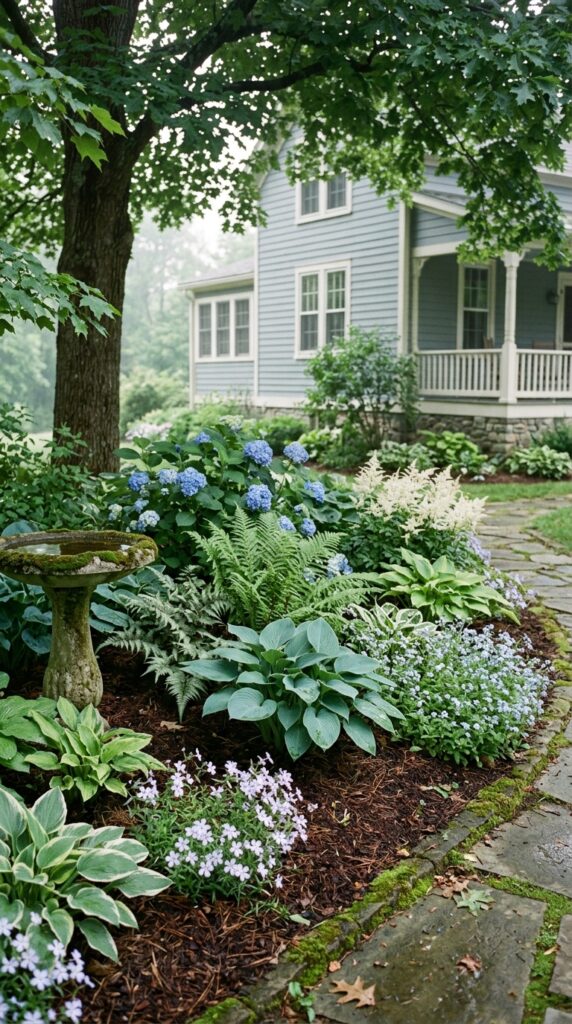
Shaded corners are a gift, not a problem, but you have to lean into them. Forget sun-loving annuals and instead embrace the cool, lush, woodland-garden look. Hostas, ferns, hydrangeas, astilbe, and heuchera all thrive where lawn refuses to grow.
Stick to a cool palette of blues, whites, soft purples, and silver foliage to amplify the calm shady mood. Mix leaf shapes generously, hostas have those broad paddle leaves, ferns bring lacy texture, heucheras add ruffled rosettes. That contrast is what makes a green-heavy bed interesting.
The challenge is slugs. Hostas are slug candy. Use crushed eggshells, copper tape, or iron-phosphate pellets early in the season. And don’t expect riotous blooms here. This is a corner about texture, layering, and serenity. Some of the most beautiful gardens I’ve ever seen had barely any flowers at all.
9. Wildflower Meadow Corner
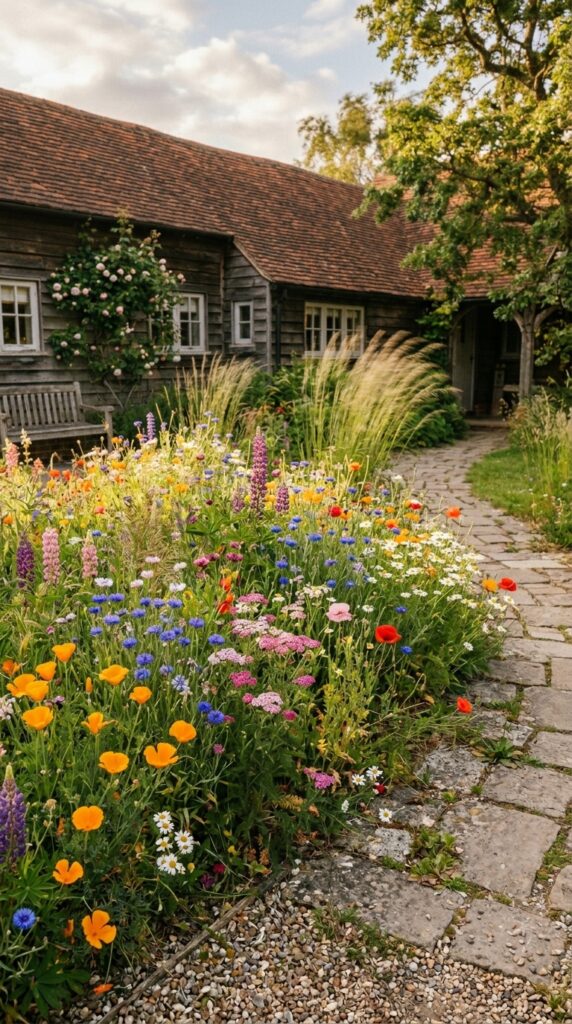
A wildflower meadow corner is the lazy gardener’s secret weapon. Sprinkle a regional wildflower seed mix in early spring, water it for a few weeks, and walk away. By midsummer you’ve got a corner that looks like a slice of countryside. It’s especially great for awkward sloped corners where mowing is a nightmare.
Choose a seed mix specific to your region. The big-box-store generic mixes are full of non-natives that bloom once and die. Prep matters: clear existing weeds, scatter seeds onto bare soil, and rake them in lightly. Resist the urge to plant in rows because that’s not how meadows work.
The trade-off is appearance early on. For the first six weeks it looks like a vacant lot. After that, it’s gorgeous, but it’s never neat. If you need tidy, look elsewhere. If you want low effort and high charm, this is it.
10. Symmetrical Formal Corner
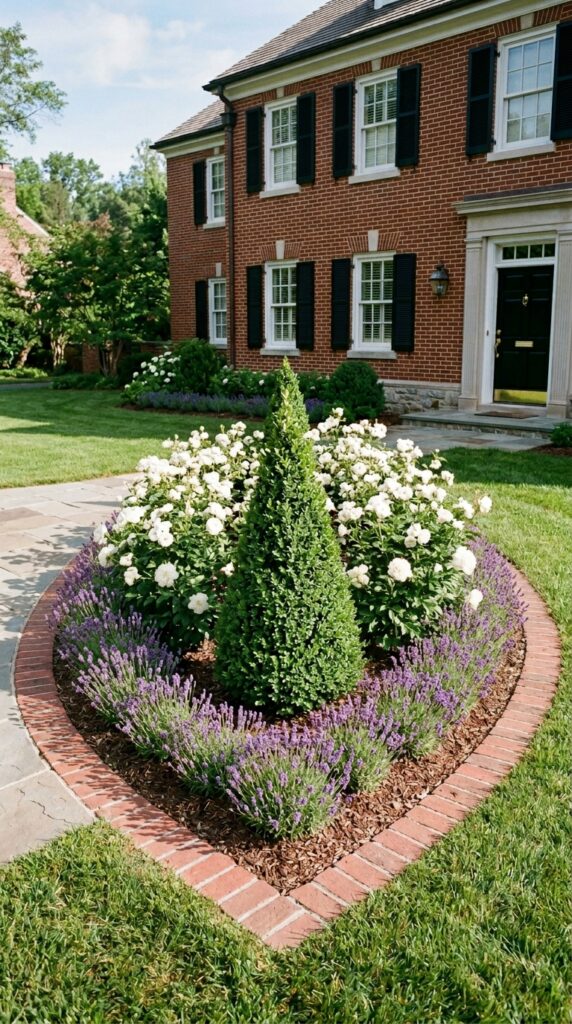
Some homes call for something more tailored. Colonials, brick traditionals, and stately Tudors look strange with loose cottage planting and shine with formal symmetry. A symmetrical corner is built around mirrored geometry, with one or two anchor plants flanked by matching elements on either side.
Pick one strong anchor like a pyramidal boxwood or topiary form. Mirror everything else, two boxwood balls, two rose bushes, two lavender drifts. Keep the color palette tight, two or three colors maximum. Edge the bed cleanly with brick, stone, or dark steel for a sharp finish.
This style is unforgiving. One dead plant in the symmetry breaks the whole effect, so be ready to replace promptly. It also requires regular pruning to keep shapes crisp. But for the right house, nothing else hits quite the same. Disciplined, classic, and quietly impressive.
11. Edible Ornamental Corner
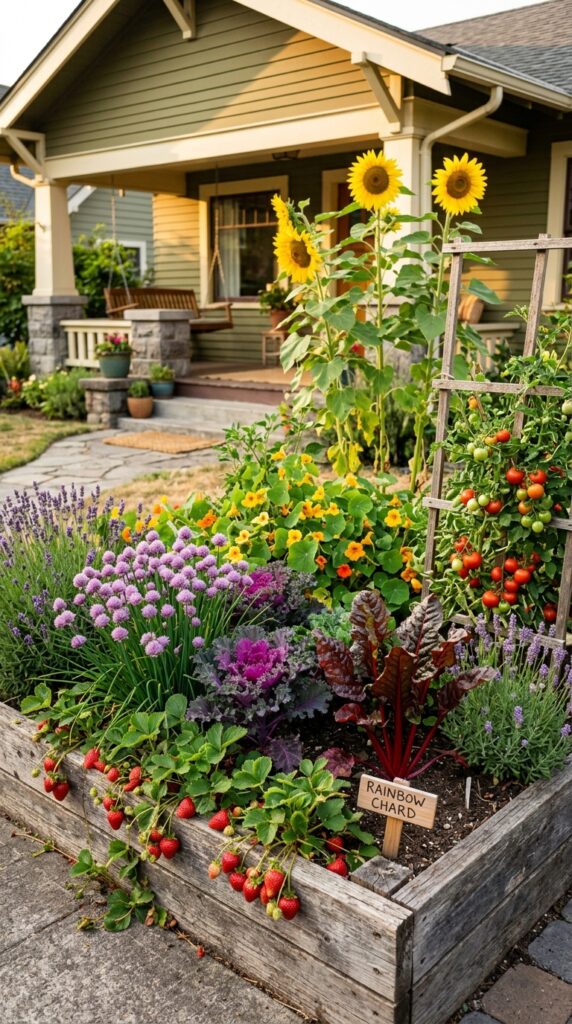
The edible-ornamental corner is gardening’s best two-for-one. With the right plants, you get curb appeal and dinner. Rainbow chard, purple kale, nasturtiums, chives, strawberries, and herbs are all genuinely beautiful, plus they earn their square footage.
Layer like you would any other bed. Tall sunflowers or pole beans on a trellis at the back. Mid-height chard, kale, and flowering herbs in the middle. Strawberries, thyme, and trailing nasturtiums spilling over the front. Tuck in some marigolds or calendula for both color and pest control.
The watch-out: edibles attract critters. Rabbits and deer will treat your corner like a buffet, so build in deterrents from the start. Also, vegetables look best when freshly harvested, so don’t let them go to seed and turn brown. A corner that feeds you and looks great doing it. Hard to argue with that.
12. Twilight Corner With Landscape Lighting
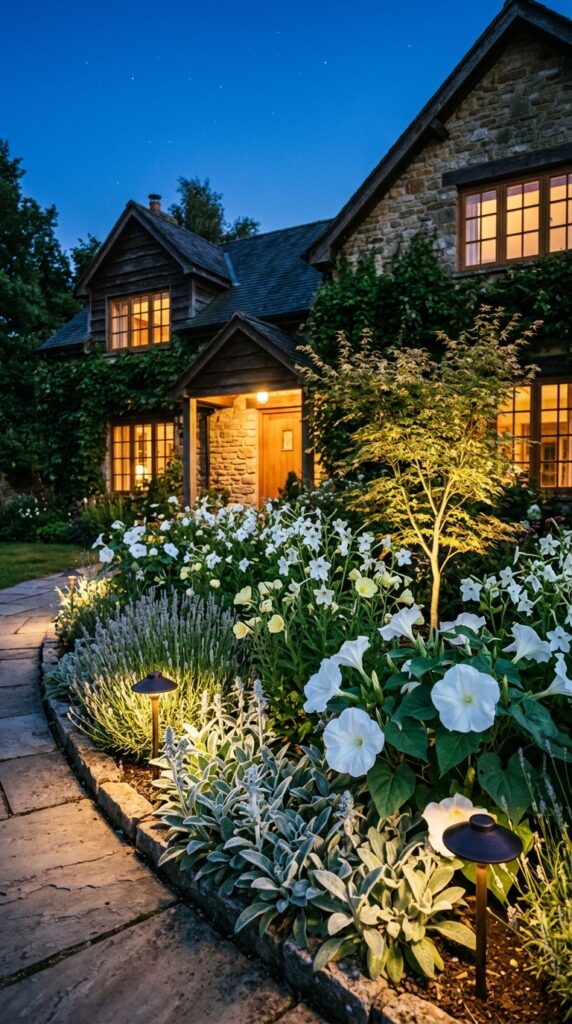
A corner that glows after dark is something most people never think about. But here’s the trick: with a few well-placed lights and the right plants, your corner becomes the most beautiful part of the yard at twilight. It’s also when most guests actually arrive.
Choose plants with pale blooms or silvery foliage. Moonflower, white nicotiana, lamb’s ear, dusty miller, and white hydrangea all glow at dusk. Add solar or low-voltage uplighting at the base of one anchor plant or a small tree. Path lights along the nearby walkway add warmth without overdoing it.
One mistake to avoid is overlighting. The Vegas-strip look kills the magic. Aim for two or three soft pools of light, not a runway. Keep bulbs warm-toned, around 2700K, never cool blue. A corner that performs from morning to midnight feels twice the size for half the money.
Final Thoughts
A great corner flower bed is one of those small details that quietly tells the world you care about your space. It doesn’t take a designer’s budget or a landscape architect on speed dial. It takes paying attention to your light, your soil, your style, and choosing plants that earn their spot. Whether you go full cottage chaos, formal symmetry, or a renter-friendly cluster of pots, the goal stays the same: turn the corner of your yard into the moment of your house.
If you take just one thing from this article, let it be this: layered planting beats single rows every time. Tall in the back, mid in the middle, spilling at the front. That formula works for every style on this list. Bookmark this page, save your favorite ideas, and come back next time you’re staring at a bare corner wondering where to start. We’re always digging up fresh, practical decor and garden ideas you can actually use, so stick around. Your curb appeal upgrade is closer than you think.