There’s something about retro bedrooms that pulls you in immediately. Maybe it’s the warmth of wood tones we abandoned for a decade of cool greys, or the confidence of a mustard armchair that doesn’t apologize for existing. The trick, though, is bringing those vintage cues into a space that still feels like it belongs in this decade — not a movie set, not your grandmother’s guest room. After redecorating my own bedroom three times in the last five years (yes, really), I’ve landed on a handful of retro directions that genuinely work without tipping into costume. These twelve ideas lean into the textures, palettes, and silhouettes that defined the 60s and 70s, but each one is filtered through a calmer, more modern lens. Pick one, mix two, or go full immersive — your call.
1. The Warm Earthy Palette With A Modern Hand
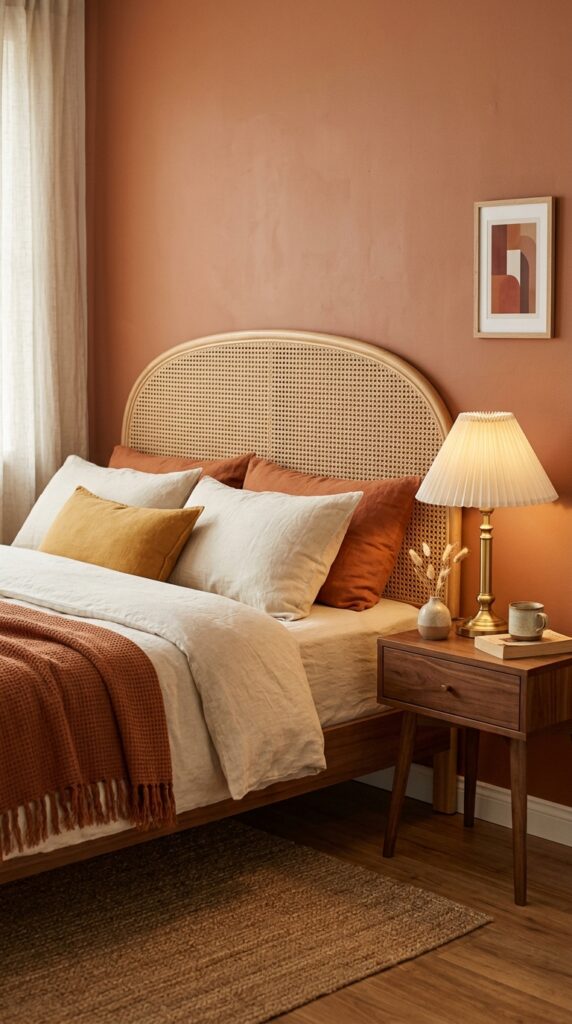
Forget beige. The retro palette I keep coming back to is rust, ochre, cinnamon, and a chalky cream — colors that look like a desert at sunset rather than a nicotine-stained ceiling. The modern twist? Restraint. Pick two warm tones and let cream do the heavy lifting so the room doesn’t feel like a 1974 catalog spread.
A few things that genuinely help: paint just one wall in terracotta or burnt sienna instead of the whole room, swap stark white bedding for unbleached linen, and add ochre only in textiles you can swap out — pillows, a throw, a lampshade.
Watch out for shiny finishes here. Glossy rust paint reads like a pumpkin. Matte and chalk finishes are the difference between cozy and costume.
If your room gets cold north light, this palette will save it.
2. Mid-Century Wood Furniture, Modern Bedding
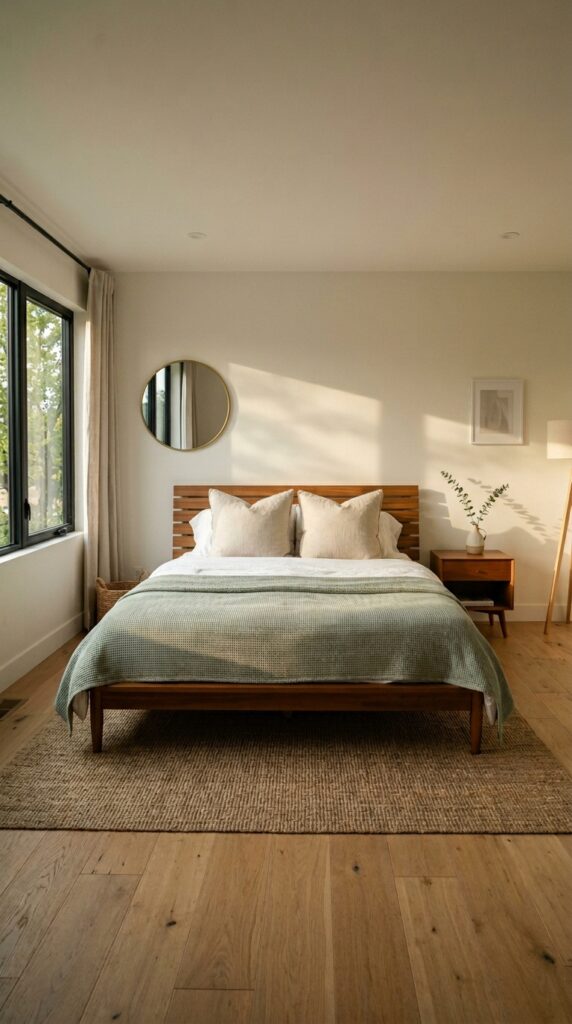
Mid-century wood furniture does most of the work in a retro bedroom — but only if you let it breathe. Pair a teak or walnut bed frame with bedding that feels current: white percale, washed linen, a single muted blanket. The contrast between the warm wood and quiet textiles is what keeps it from looking themed.
Skip the matchy-matchy bedroom set. One hero piece (the bed) plus one supporting piece (a dresser or nightstand in the same wood family) is plenty. A third pulls it toward showroom territory.
The watch-out: orange-toned wood can fight with warm walls. Cool greys and soft sages flatter teak best.
A wood bed plus modern bedding ages beautifully. You won’t redo it in two years.
3. The Pattern-On-Pattern Bedroom (Done Carefully)
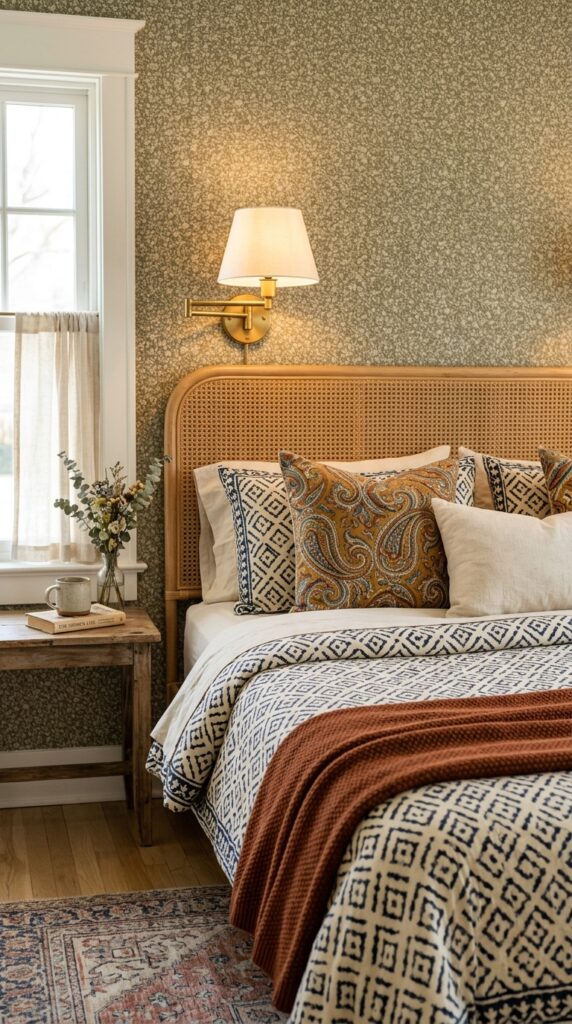
Pattern mixing is where retro bedrooms either soar or crash. The rule I follow: vary the scale, anchor the palette. A small geometric, a medium paisley, and a large floral can all live together — as long as they share two colors.
Three quick tips. Pick one neutral that runs through every pattern (usually cream or oatmeal). Use solids in between — a plain pillow or throw to give the eye a rest. And keep the wall pattern smaller than the bedding pattern, or it’ll fight for attention.
This look can feel loud in small rooms. If your bedroom is under 120 square feet, limit pattern to textiles only and keep walls solid.
Pattern done right feels collected, not decorated.
4. A Statement Headboard That Does All The Talking
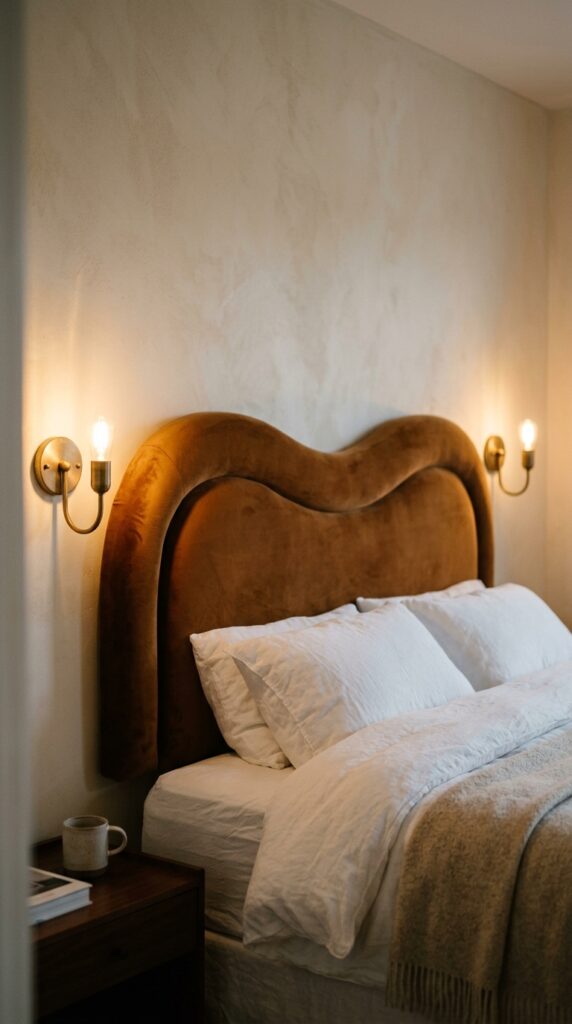
If you only invest in one retro element, make it the headboard. A curved velvet, channel-tufted, or rattan headboard instantly signals era without committing the rest of the room to it. The modern part is keeping everything else around it quiet — plain bedding, simple sconces, a clean wall.
Three shapes worth considering: an arched velvet panel (very 70s lounge), a low slatted wood frame (mid-century calm), or a woven cane half-moon (warm and textural).
Mount sconces on the wall instead of using table lamps — it frees up your nightstand and reinforces the architectural feel.
The watch-out: oversized headboards in small rooms can make ceilings feel lower. Measure the wall, then size the headboard at roughly two-thirds its width.
One strong piece beats five medium ones.
5. Brass, Glass, And Smoked Tones
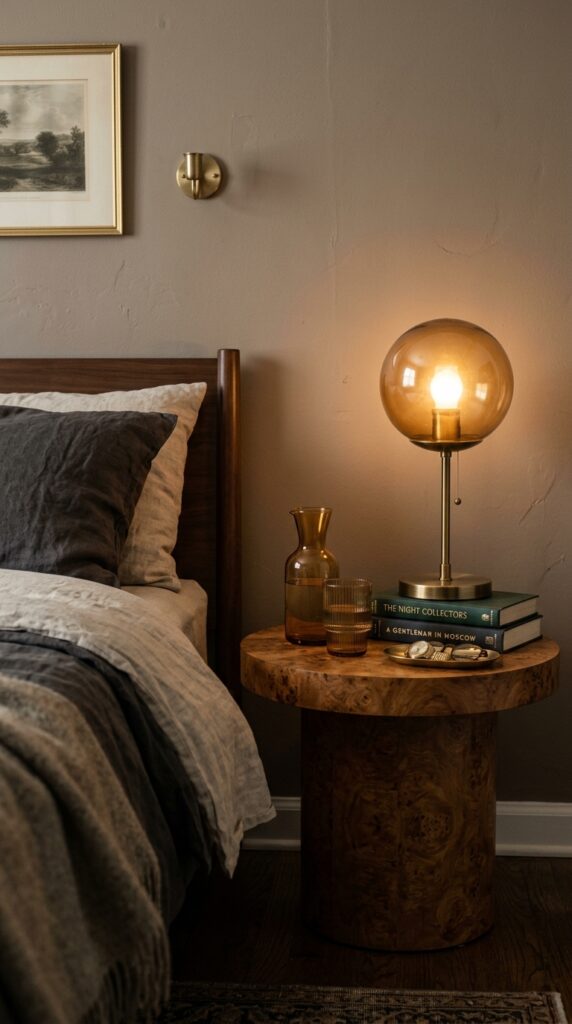
The 70s loved smoked glass and warm brass, and honestly, it still looks incredible. The trick to making it feel modern is using these finishes in small, intentional doses — not slathering brass across every drawer pull and lamp base.
Some easy entry points: a smoked-glass water carafe on the nightstand, a brass picture frame leaning on the dresser, an amber pendant light over the bed. Mix brass with one other warm metal (bronze works) but keep silver and chrome out of the mix.
One thing to watch: shiny polished brass reads dated fast. Brushed or aged brass has more depth and won’t fight your other finishes.
These materials catch lamplight like nothing else. Your room will look better at night.
6. The Retro Color-Drenched Room
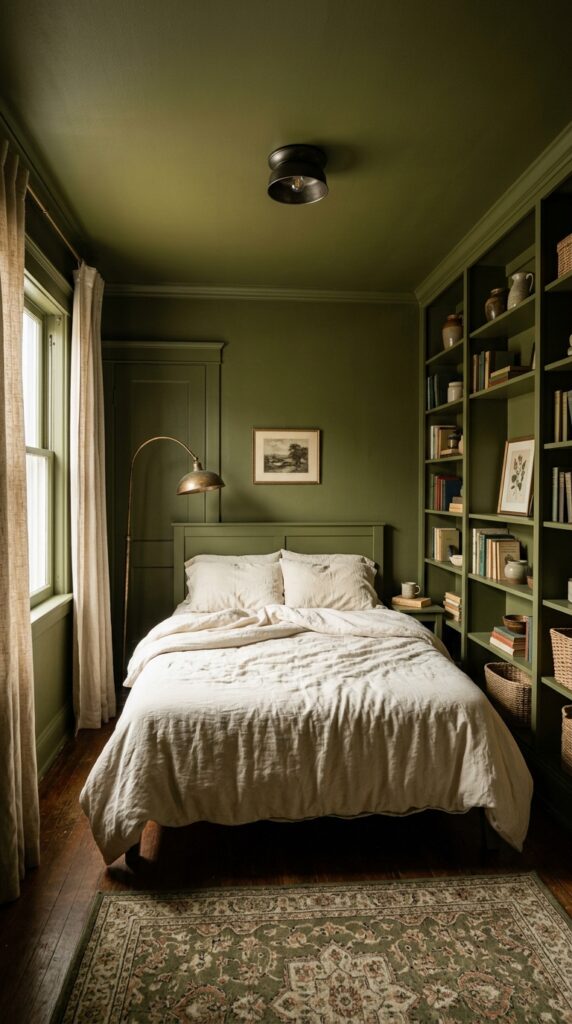
Color-drenching — painting walls, ceiling, and trim the same shade — feels distinctly modern, but the colors that work best are pulled straight from a 70s mood board: olive, oxblood, mustard, terracotta. The effect is enveloping rather than loud.
A few practical pointers. Choose a matte or eggshell finish; gloss makes the saturation feel plasticky. Keep furniture light or wood-toned to give your eye somewhere to rest. And add one piece of art with a contrasting color so the room doesn’t read like a tunnel.
Skip this if you hate repainting. Color-drenching is a commitment, especially with darker shades that need three coats.
For renters: ask if the landlord allows it before falling in love.
A drenched room feels like a hug. Choose a color you can live with for years.
7. Vintage Rugs Layered Over Modern Floors
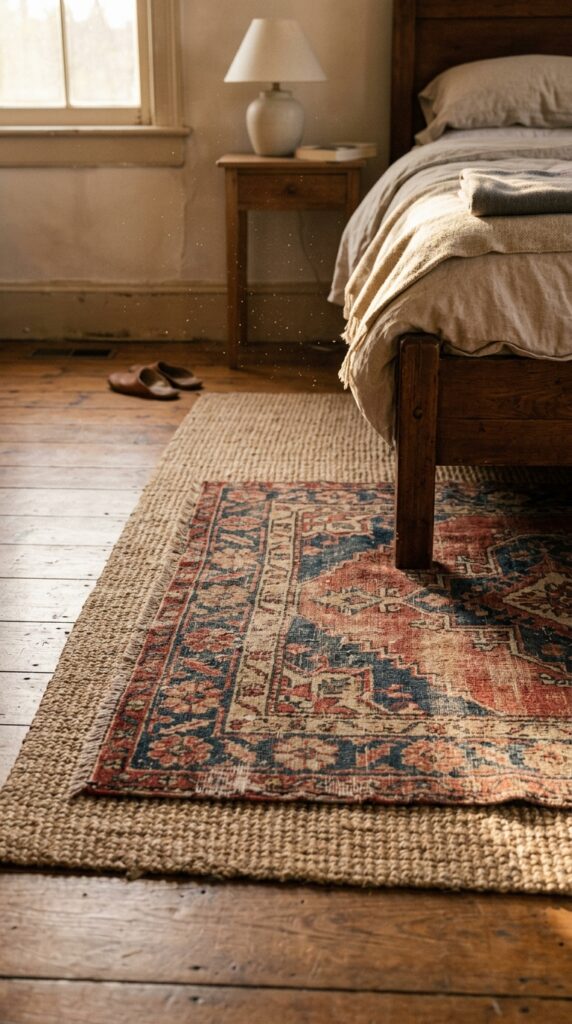
A worn vintage rug instantly grounds a bedroom in a way new rugs simply can’t. The faded reds and indigos of an old Turkish or Persian rug carry visual depth that mass-produced rugs spend years trying to imitate.
Layer it over a larger natural-fiber rug — jute, sisal, or wool — to add scale and protect it. This is also a clever trick for renters: the bottom rug stays put, and the vintage one moves with you.
Look for low-pile vintage rugs near the bed. High-pile ones look beautiful but trap dust and feel weird under bare feet at 6 a.m.
The watch-out: real vintage rugs cost real money. Faded “vintage-style” rugs from reputable makers can look authentic at a fraction of the price.
A worn rug makes a new room feel like it has a history.
8. Curved Furniture Silhouettes
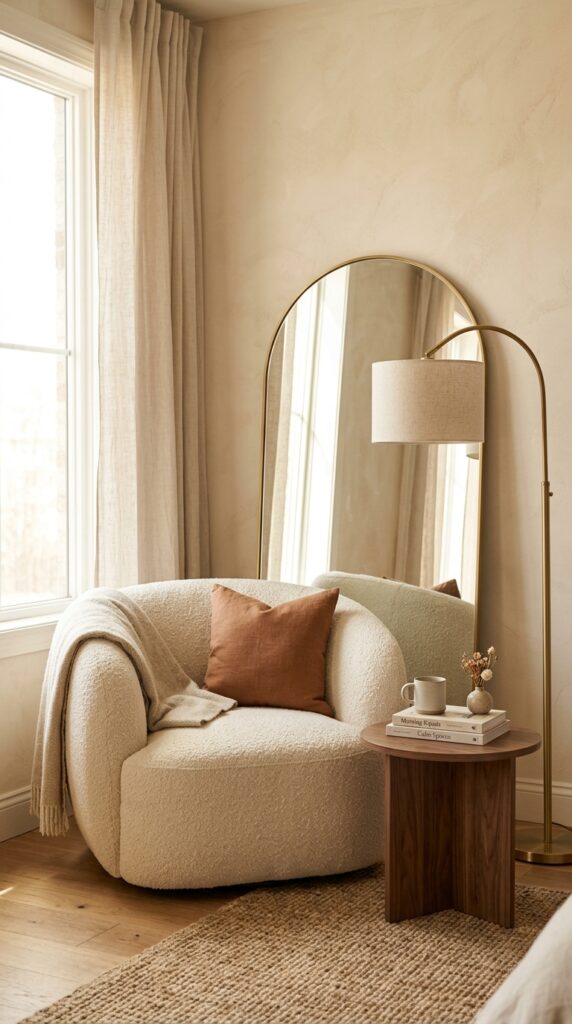
Sharp lines feel cold in a bedroom. The 70s knew this — every chair, headboard, and mirror had a curve. Bringing soft silhouettes back into the bedroom is one of the easiest ways to make it feel inviting without going full retro.
Look for an arched mirror, a kidney-shaped accent chair, a round nightstand instead of a square one. Even a curved-edge bedframe softens the entire room.
Don’t overdo it. Three curved pieces is plenty — more than that and the room starts to feel like a cartoon.
If you share the space, curved corners are also genuinely safer at night. No more shins versus sharp dresser edges.
Curves make a bedroom feel calmer. Your nervous system notices, even if your eyes don’t.
9. Wood Paneling — But The Modern Kind
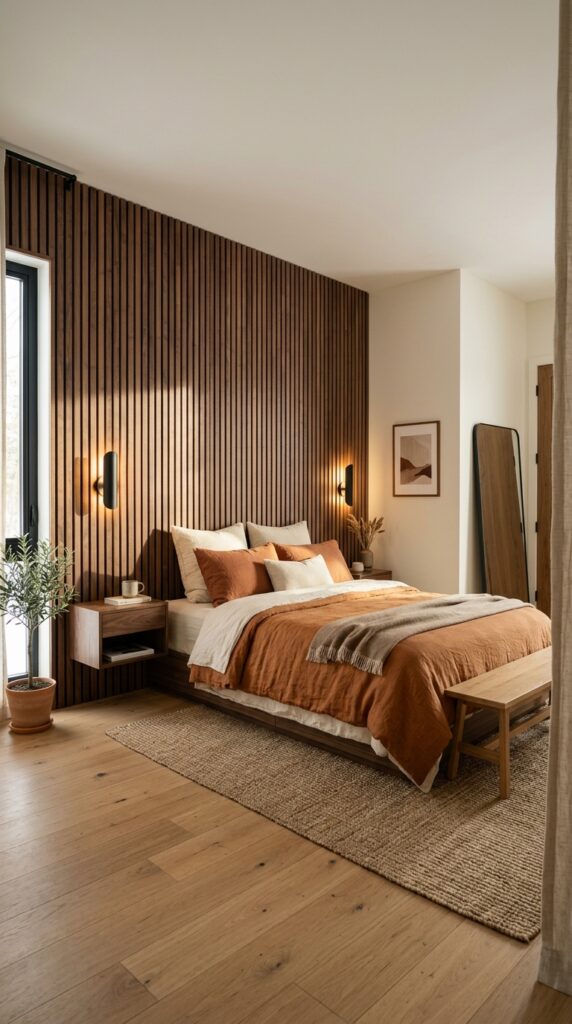
70s wood paneling has a bad reputation, mostly because of the dark, glossy versions that lined basements. The modern take — vertical slats, lighter wood tones, used on one wall only — looks architectural rather than dated.
A slatted accent wall behind the bed is the easiest entry point. It adds texture, warmth, and a subtle headboard effect without needing actual furniture. Walnut, oak, and warm ash all work; avoid orangey pine.
For renters, peel-and-stick slatted panels exist and surprisingly don’t look terrible if you pick a quality one.
The watch-out: slats collect dust. Plan on running a microfiber cloth over them once a month.
A wood wall changes the entire mood of a room without changing the layout.
10. Lighting That Acts Like Sculpture
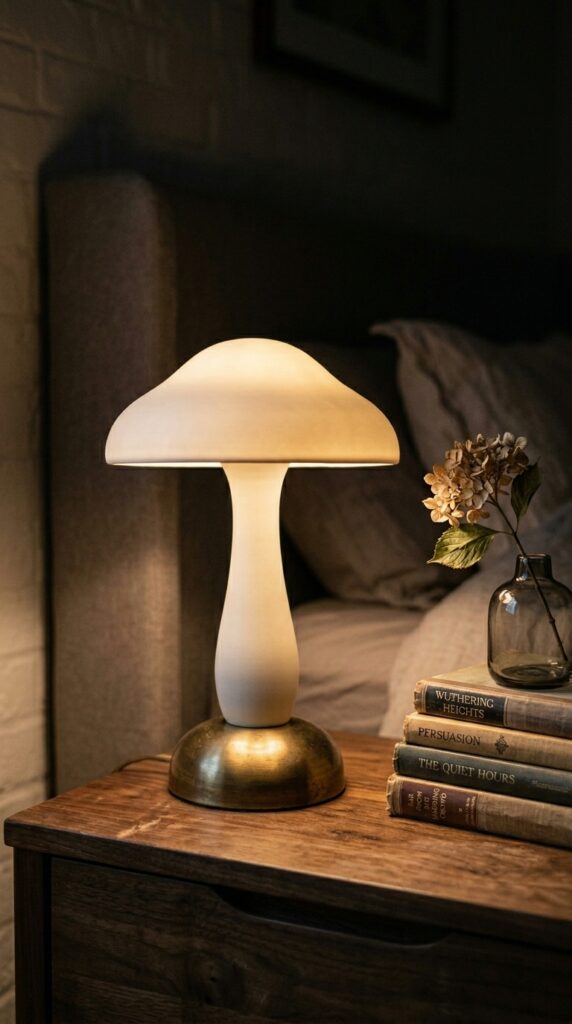
Retro lighting is finally back, and a mushroom lamp on the nightstand might be the single best small upgrade you can make. The shapes from this era — mushroom, globe, arc, flying saucer — read as sculpture during the day and function beautifully at night.
Layer three light sources: an overhead (ideally on a dimmer), a bedside lamp, and one accent light, like a small floor lamp in the corner. Avoid relying only on a ceiling light — bedrooms need glow, not glare.
Warm bulbs only. 2700K or lower. Cool white in a bedroom is a crime.
The watch-out: vintage-style lamps with original wiring can be a fire risk. Buy reproductions or rewire before plugging in.
Good lighting fixes more bedrooms than good furniture does.
11. A Reading Nook With Retro Soul
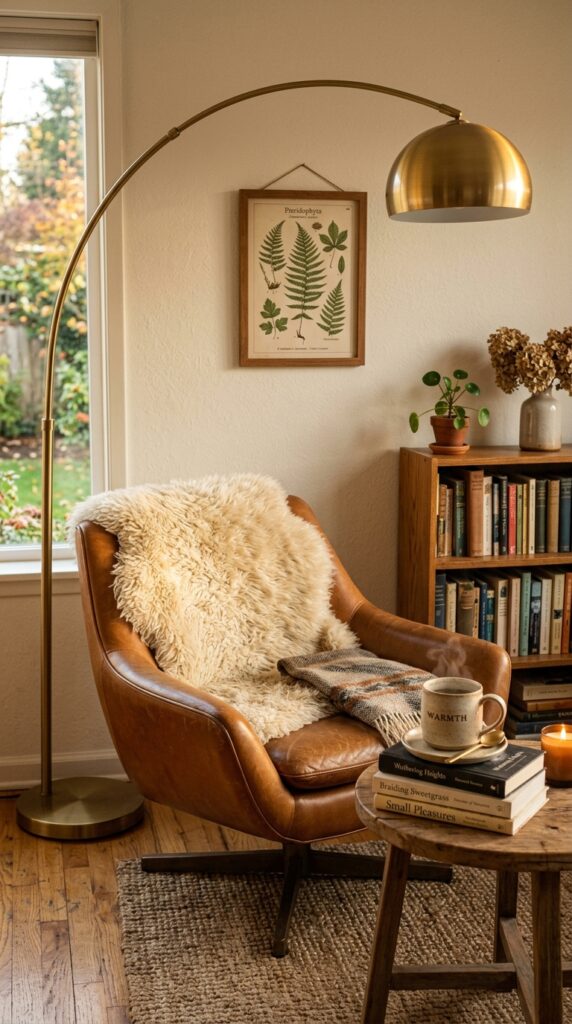
Bedrooms shouldn’t only be for sleeping. A small reading nook — even just a chair and a lamp in the corner — adds an entire dimension to the room and gives you somewhere to land that isn’t the bed.
Pick a chair with retro DNA: a curved leather lounge, a low boucle armchair, or a rattan tub chair. Add a tall arc lamp so you don’t need a side table for lighting, and a small footstool if there’s space.
Place the nook near a window if you can. Natural light during the day, lamp glow at night.
The watch-out: don’t shove the chair into a corner just because it fits. Pull it out at a slight angle so it feels intentional.
A nook is permission to slow down inside your own home.
12. Styling The Bedroom Vignette Like A Real Home
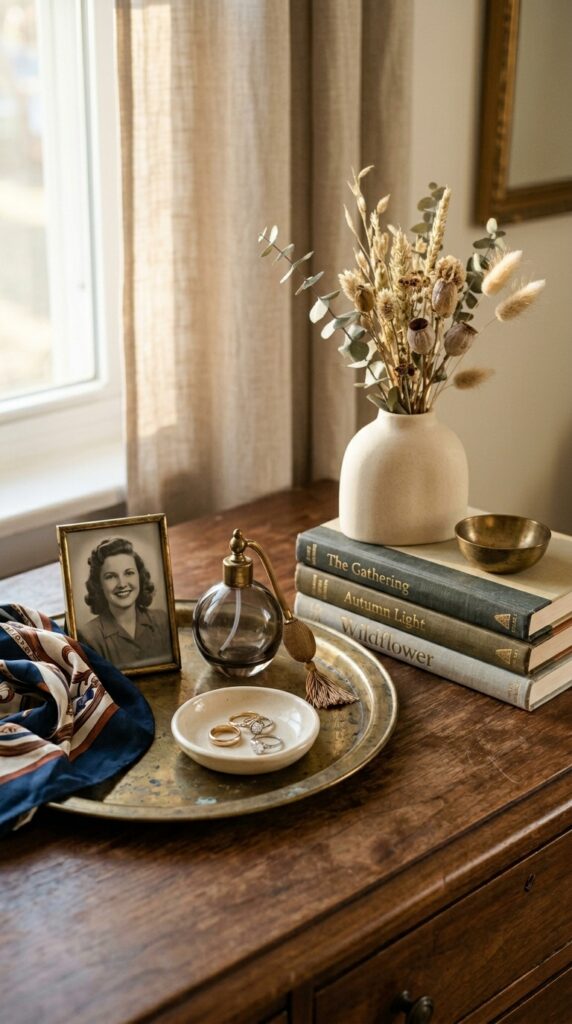
The final layer is styling — the small stuff that makes a bedroom feel lived-in rather than staged. Retro-inspired vignettes work because they assume you actually use the space.
A few things that always work: a tray on the dresser to corral small objects, a stack of books used as a riser, one ceramic piece with imperfect curves, and something dried or living. Keep groupings in odd numbers, vary the heights, and leave breathing room around them.
The watch-out: don’t style every surface. One curated vignette beats four cluttered ones.
A real bedroom has a half-empty water glass on the nightstand. Lean into that energy.
A styled vignette is the difference between a room and a home.
Bringing It All Together
Retro bedrooms work best when you stop treating “retro” as a costume and start treating it as a vocabulary. You don’t need every idea on this list — in fact, please don’t. Pick the two or three that match how you actually live: maybe it’s the curved headboard and the warm earthy palette, or the wood paneling paired with sculptural lighting and a vintage rug. The goal is a bedroom that feels collected over time, even if you pulled it together over a weekend.
The best retro-modern bedrooms share one quiet quality: restraint. One bold wall, one statement piece, one sculptural lamp — surrounded by calm. That’s the whole formula.
Whatever you choose, take your time. Live with one change before adding the next. Bedrooms are the most personal room in any home, and the rooms that feel best are the ones their owners weren’t rushing to finish. Bookmark this if it helped, and come back the next time you’re staring at a blank wall wondering where to start. We’ll be here.