There’s a particular kind of relief that comes from sitting outside and not feeling watched. Whether it’s the upstairs neighbor’s window, a busy sidewalk, or just that one corner of the yard where everyone seems to glance, a good privacy screen turns an exposed patch of garden into somewhere you actually want to spend time. And here’s the thing — a privacy screen doesn’t have to look like a fortress. The best ones feel less like barriers and more like backdrops, soft and intentional and a little bit beautiful.
I’ve designed and lived with a lot of outdoor spaces, and I’ve learned that privacy is rarely about height alone. It’s about layering, texture, scale, and choosing materials that age well. Below are twelve privacy screen ideas that genuinely look as good as they perform — for renters, for homeowners, for tiny balconies and sprawling yards alike. Some are weekend projects. Some are weekend daydreams. All of them earn their place.
1. Horizontal Cedar Slat Screen With Soft Spacing
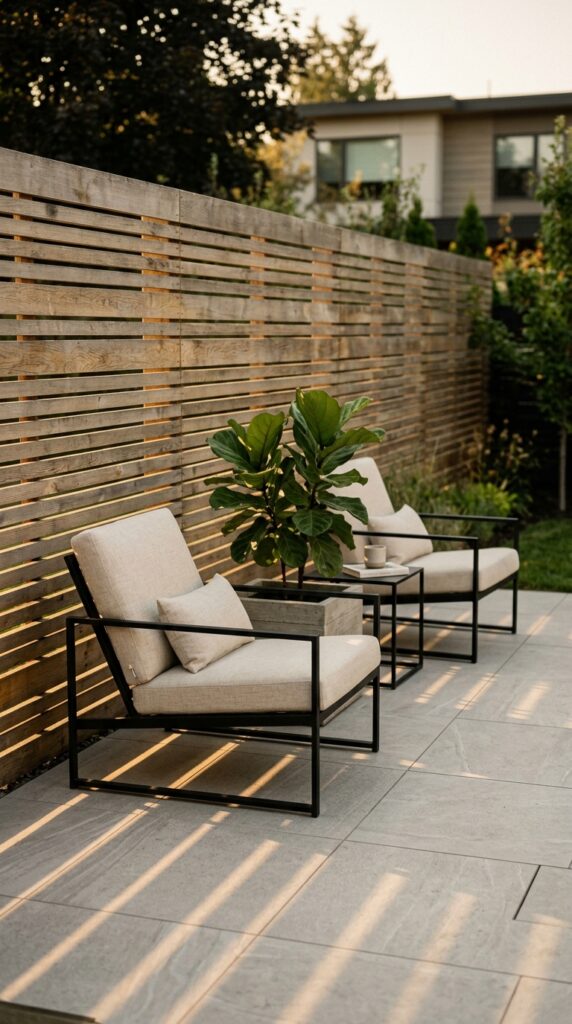
Horizontal cedar slats are the privacy screen everyone seems to land on eventually, and for good reason. They feel modern without trying too hard, they age beautifully, and they offer that perfect filter between fully open and completely walled-off.
The trick most people miss is the spacing. An inch and a half between slats is the sweet spot — wide enough to let light and breeze through, tight enough that nobody can actually see you eating dinner. Use untreated western red cedar if you want that natural silvering over time, or seal it once a year if you prefer the warm honey tone to stay. Mount slats to vertical posts set in concrete footings at least two feet deep so the whole thing doesn’t lean after a windy season.
The watch-out: cheap pine slats warp within a year. Spend the extra on cedar or ipe and it’ll outlast everything else in the yard. Quietly architectural, endlessly adaptable.
2. Tall Ornamental Grasses As A Living Screen
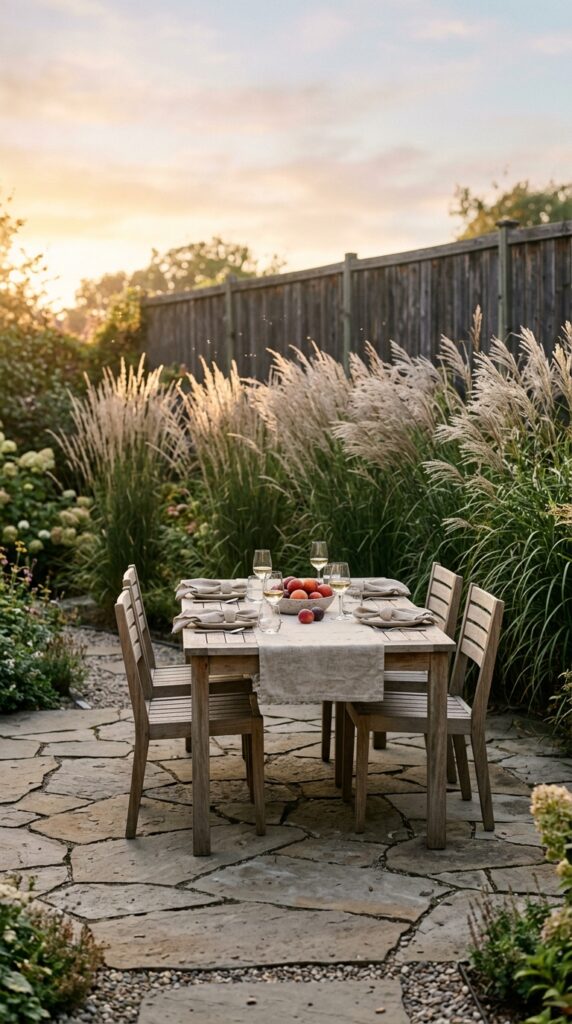
If you have the patience for a season or two, ornamental grasses make the most beautiful privacy screen in the entire garden. They move, they catch light, they whisper in the breeze — none of which a fence will ever do.
The trick is choosing varieties that actually grow tall enough. Feather reed grass, miscanthus, and switchgrass all hit five to seven feet by their second year and stay upright through winter. Plant them in a single row about eighteen inches apart for that solid mass-of-green effect, and mulch heavily the first year while they establish. Skip the fussy ornamentals here — you want workhorses.
The honest constraint: privacy isn’t year-round. Most ornamental grasses go dormant and need to be cut back in early spring, leaving you exposed for a few weeks. Pair them with one evergreen element — a hedge, a small fence — to bridge the gap. Living, moving, alive.
3. Layered Bamboo Screen In Tall Planters
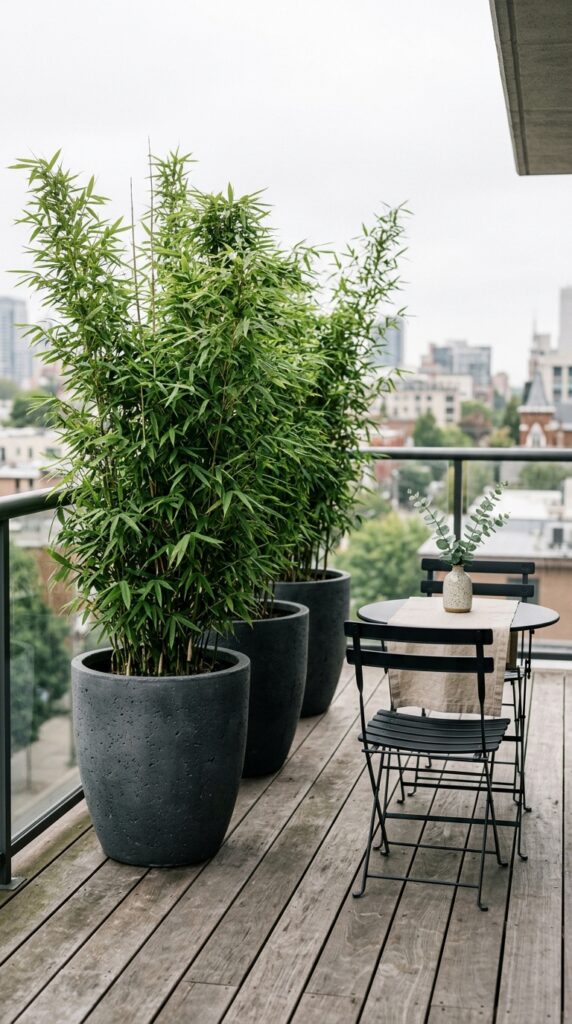
For renters and balcony dwellers, bamboo in tall planters is basically a cheat code. You get instant height, lush greenery, and a screen that you can technically take with you when you move (though good luck — it gets heavy).
Choose clumping bamboo, not running bamboo. This part is non-negotiable. Running bamboo will absolutely escape and become your downstairs neighbor’s problem within two seasons. Varieties like fargesia or bambusa are well-behaved and stay where you plant them. Use planters at least twenty inches deep and wide so roots have room, and water consistently — bamboo hates drying out.
The watch-out: those big planters need real drainage. Drill extra holes if you have to, and lift them off the ground with pot feet so water doesn’t pool underneath and rot your deck. Lush, instant, and surprisingly portable for what it delivers.
4. Outdoor Curtain Panels For Soft Romantic Privacy
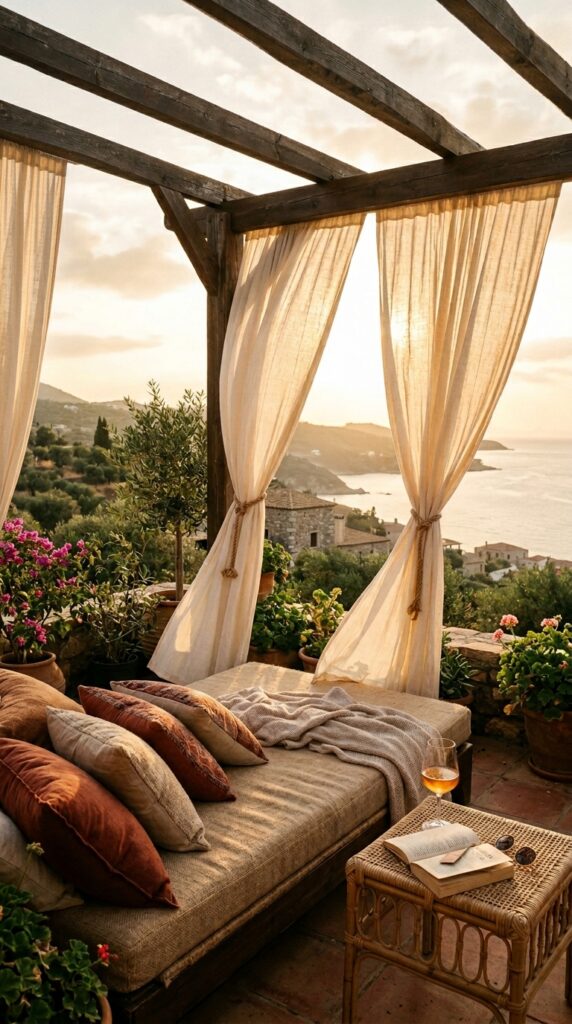
If you want privacy that feels romantic rather than practical, outdoor curtain panels are unmatched. They soften everything — light, sound, sightlines — and turn a basic pergola or covered patio into something genuinely atmospheric.
Buy actual outdoor fabric, not indoor curtains pretending to be brave. Look for fade-resistant, mildew-resistant fabric in cream, oatmeal, or sand tones — anything darker bleaches blotchy in full sun. Use weighted hems or sew small chains into the bottom so panels hang properly instead of flapping like flags. And install them on sturdy outdoor curtain rods or thick stainless cable, never plastic.
The watch-out: even the best outdoor fabric needs occasional washing and proper storage in the off-season, otherwise it greys and grows mildew. If you’re not willing to take them down for winter, this might frustrate you. Soft, slow-living, and incredibly photogenic.
5. Mixed Evergreen Hedge With Flowering Layer
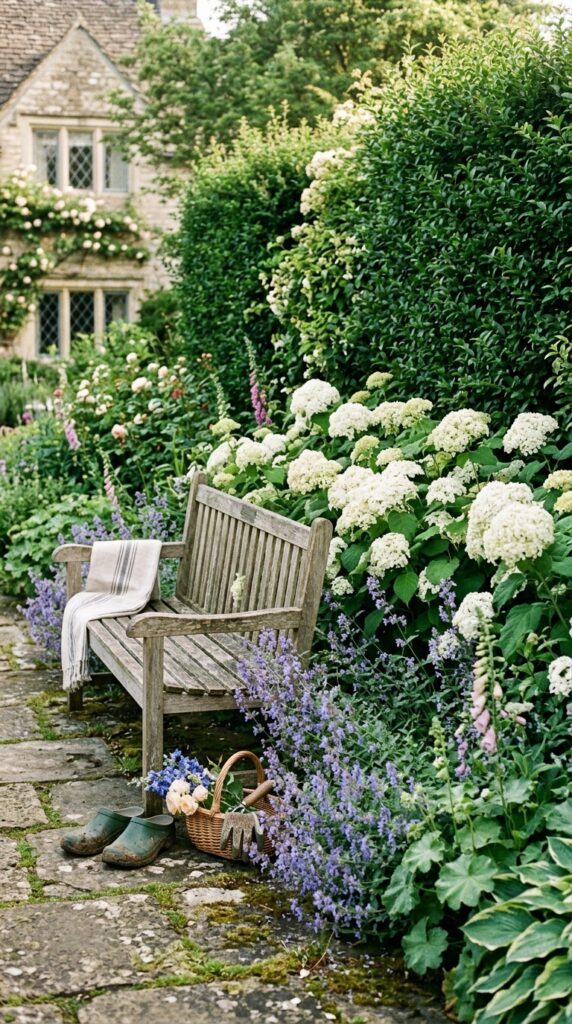
A single hedge of one species is fine. A layered hedge of two or three is unforgettable. The depth and texture you get from mixing evergreens with flowering layers makes the boundary feel intentional rather than utilitarian.
Plant your tallest evergreens (privet, yew, or holly) in a single row at the back for year-round structure. In front, layer flowering shrubs like hydrangea, mock orange, or viburnum that bring seasonal interest. At the base, fill in with low perennials — catmint, lamb’s ear, geraniums — to soften where the hedge meets the ground. The whole thing reads designed, not generic.
The watch-out: this needs space. You’ll want at least three to four feet of depth front-to-back to layer properly. In a narrow side yard, stick with a single-species hedge instead. Worth the wait, worth the planning, worth the slight extra effort every spring.
6. Reclaimed Wood Pallet Wall With Climbing Vines
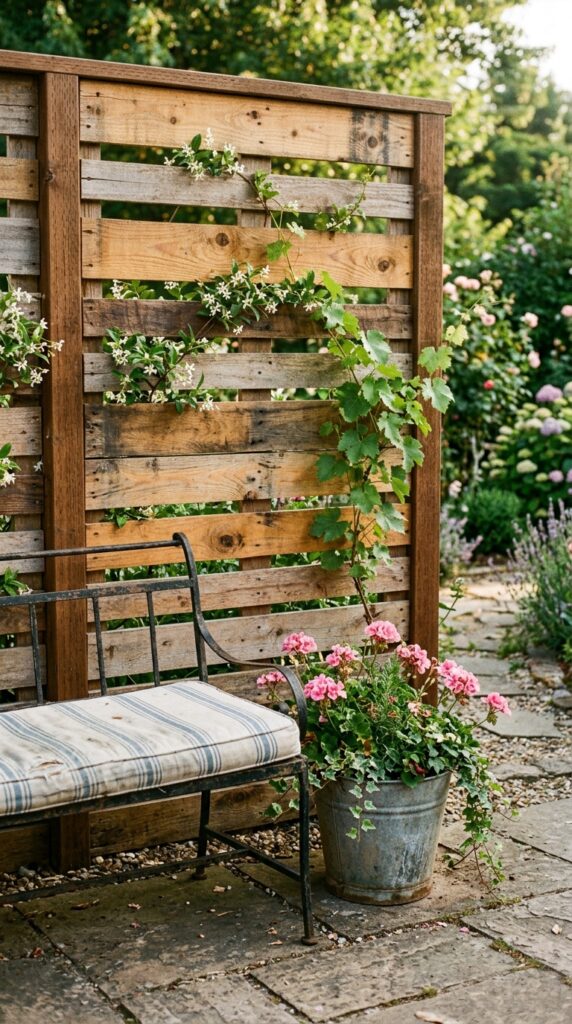
Reclaimed pallet wood gets a bad reputation, mostly because people slap it together and call it done. But built properly — sanded, sealed, mounted on a real frame — it makes a privacy wall with incredible character that store-bought screens simply can’t match.
Source heat-treated pallets only (look for “HT” stamped on the wood) since chemically treated pallets can off-gas. Sand thoroughly, seal with an outdoor-grade matte sealant in a clear or warm walnut tone, and vary the plank widths intentionally for that mixed-tone effect. Mount the whole thing to a proper pressure-treated frame, not directly to a fence — pallets are heavy and need real structural support.
The watch-out: pallet wood splinters as it ages. If kids or pets brush past it constantly, this isn’t the right choice. Otherwise, it’s affordable, distinctive, and ages into something genuinely beautiful with vines.
7. Black Metal Frame With Wire Mesh Panels
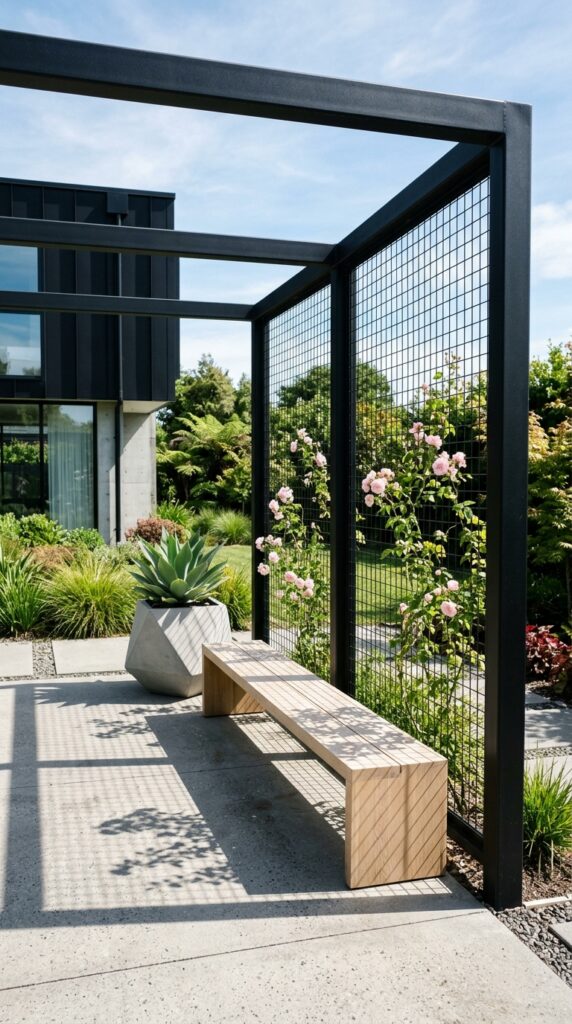
For modern homes that need privacy without losing that clean architectural edge, black powder-coated metal frames with wire mesh panels are the move. They’re substantial without being heavy, and they double as a trellis once you train climbers up them.
Specify powder-coated steel rather than raw iron — powder coating actually lasts outdoors, especially in humid climates. Use a fine wire mesh (around two inches square) so vines can grip easily and small details look refined from a distance. Pair with structural climbers like climbing roses, jasmine, or even kiwi vine for fast coverage.
The watch-out: black absorbs heat, which can scorch tender new vine growth in full afternoon sun. Place this on an east or north-facing edge, or accept that you’ll lose some leaves the first summer. Modern, sharp, and surprisingly forgiving once it’s established.
8. Vertical Garden Wall With Pocket Planters
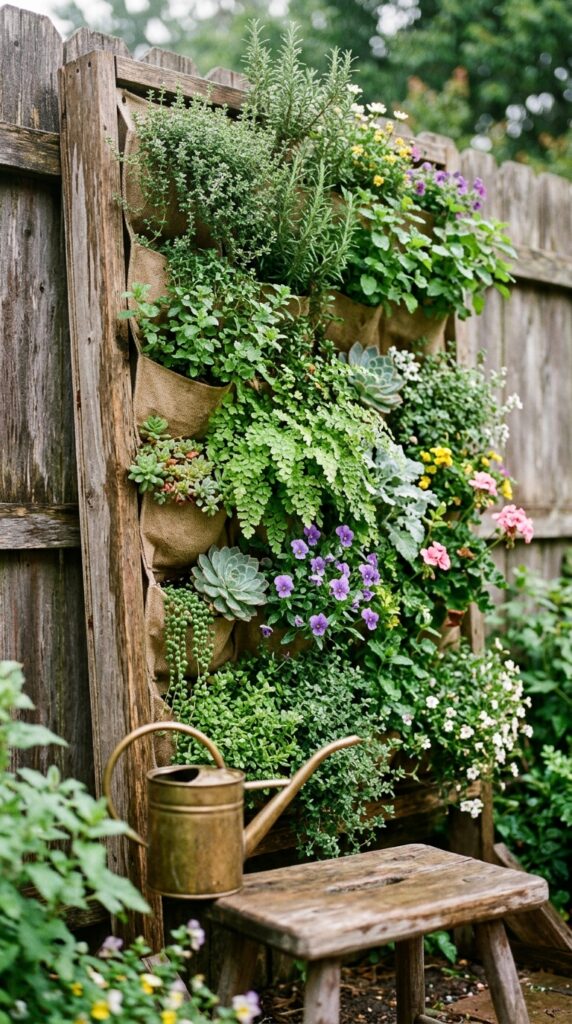
Vertical gardens are having a moment for a reason — they pack maximum greenery into minimum footprint and turn a flat fence into a living wall. For tiny patios, side yards, or balconies, this is one of the most efficient privacy moves you can make.
Use proper UV-resistant fabric pocket planters (the cheap ones rot in one season), and mount them to a wooden frame held off the fence by an inch or two for airflow. Plant trailing varieties along the top — sweet potato vine, trailing rosemary, ivy — and structural plants like ferns, heucheras, and small succulents in the middle and lower rows.
The watch-out: vertical gardens dry out fast. Without a drip irrigation system, you’re looking at twice-daily watering in summer. If you can’t commit, scale back to a smaller version or skip this one. The visual payoff is genuinely stunning when it works.
9. Layered Outdoor Sheer And Bamboo Roller Combo
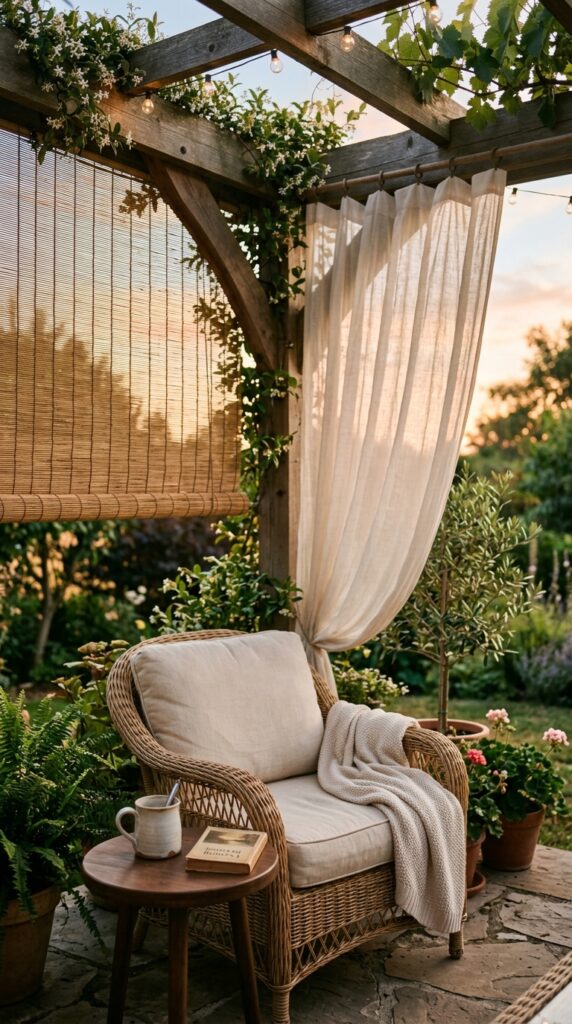
This is for the people who want to control their privacy by the hour. Layering a bamboo roller blind with a sheer outdoor curtain gives you four different settings — fully open, partially screened, light-filtered, and completely private — without committing to any of them permanently.
Mount the bamboo roller to the pergola or eave first, then hang the sheer curtain on a separate rod about six inches in front. Use a natural-toned bamboo (avoid the orange-stained ones that look cheap) and a cream or oatmeal sheer in real outdoor fabric. The textural contrast between woven bamboo and soft draped fabric is what makes this feel designed rather than fussy.
The watch-out: more layers means more maintenance. Both elements need cleaning, and the bamboo will eventually crack after a few seasons of weather. Plan to replace the roller every three years. Adjustable, atmospheric, and worth the upkeep.
10. Stacked Planter Wall With Trailing Greenery
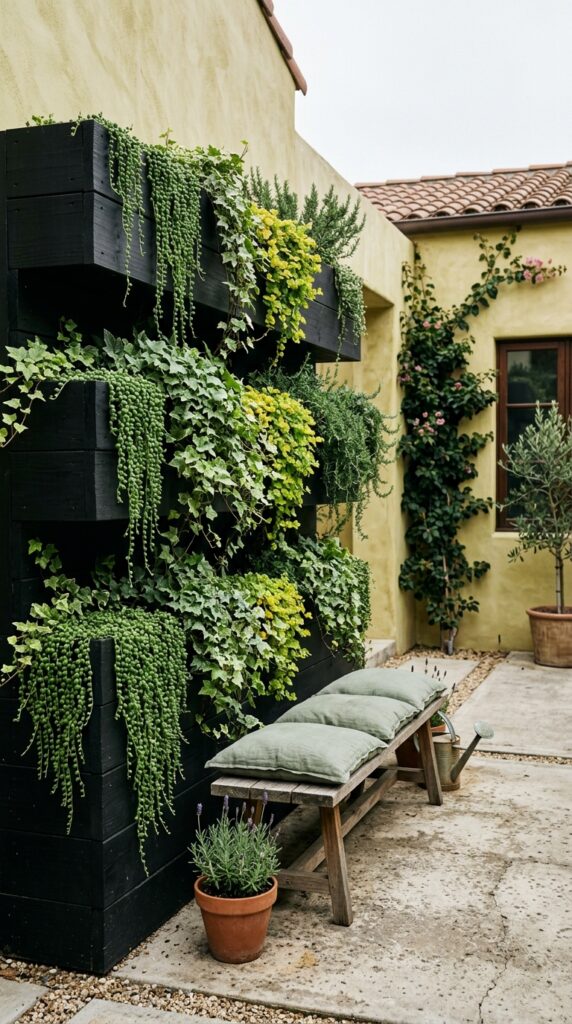
A stacked planter wall is the most architectural way to do a green privacy screen. The repeating tiers give you immediate visual structure, and the trailing plants soften the geometry so it doesn’t feel cold or commercial.
Build planter boxes from cedar or composite decking material, paint them in a single moody tone (matte black, deep charcoal, or olive green), and stagger the heights so plants can cascade naturally. Mix trailing varieties for texture — silver-grey string of pearls, deep green ivy, soft chartreuse creeping jenny. Use deep boxes (at least ten inches) so roots have room to thrive.
The watch-out: stacked planters dry out faster than ground beds, especially the upper tiers. Drip irrigation isn’t optional here. If you’re against irrigation, scale back to a single tier instead. Architectural, lush, and surprisingly low-fuss once the system is in.
11. Woven Willow Hurdle Panels For Cottage Charm
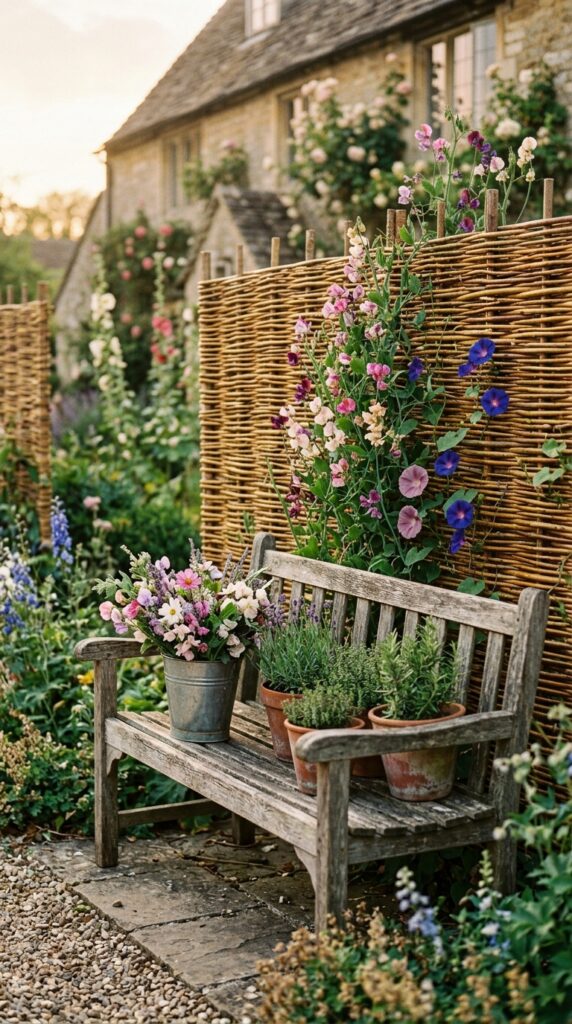
Willow hurdles are the privacy screen for anyone who’s ever been romanticized by an English garden book. They’re handmade, deeply textural, and bring this immediate sense of warmth and history that no factory-produced fence can replicate.
Buy from a real willow weaver if you can find one — the quality difference between hand-woven hurdles and mass-produced versions is enormous. Install them between sturdy wooden posts (don’t try to make them freestanding), and treat them with a clear matte preservative once a year to extend their life. Pair with cottage-garden classics like climbing sweet peas, hollyhocks, and lavender at the base.
The watch-out: willow lasts about five to seven years before it really starts to fall apart. Treat it as a beautiful semi-permanent feature rather than a forever fence. Worth every penny for the right garden.
12. Pergola-Topped Privacy Corner With Climbers
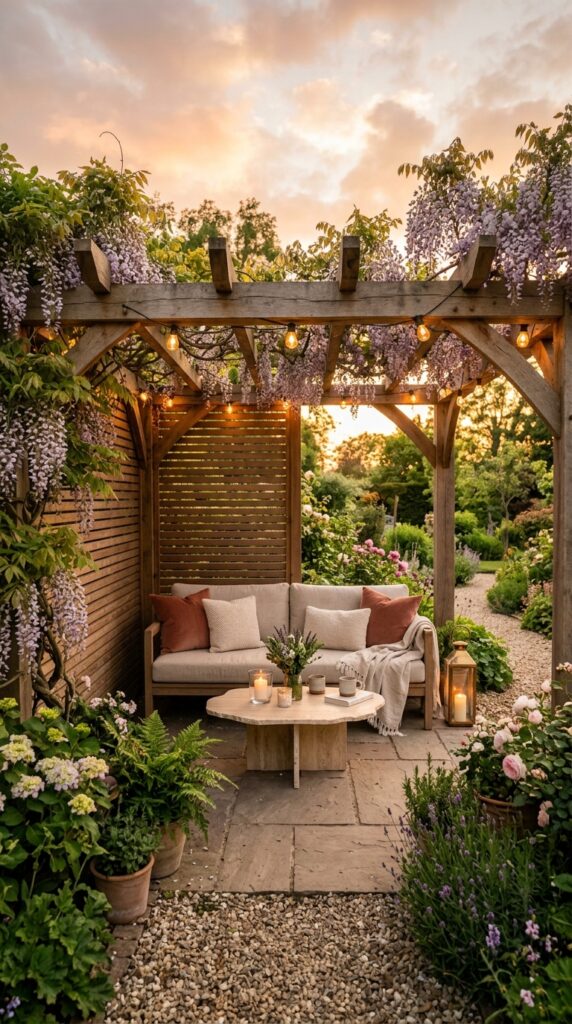
If you only do one thing on this list, do this. A pergola-topped privacy corner with climbing vines is the difference between a yard you sit in occasionally and an outdoor room you basically live in from May to October.
Build with proper hardwood beams and use real horizontal cedar slats on at least two sides for privacy. Train wisteria, climbing roses, or grapevine across the top for that filtered, dappled light effect by year three. Add string lights, a real outdoor sofa with proper performance fabric cushions, and a low coffee table. Treat it like a small indoor living room, just outside.
The watch-out: wisteria is gorgeous but ferocious — prune twice a year or it’ll lift the whole structure off the ground. Choose grapevine if that intimidates you. Build it well and you’ll genuinely never want to leave.
Final Thoughts
A garden privacy screen is one of those projects that seems small until you actually live with it. Then suddenly the corner you avoided becomes your favorite spot. The balcony you never used becomes the place you have your morning coffee. The patio that felt exposed turns into the room you didn’t know your house was missing.
What I hope you take away from these twelve ideas is that privacy doesn’t have to mean walls. The best screens layer plants and structure, soften with textiles and texture, and age into something better over time. Whether you go big with a pergola corner or simple with a row of bamboo in tall planters, the goal is the same — a space where you can finally exhale.
Save this page, send it to whoever shares your outdoor space, and come back when you’re ready to start. We love hearing which idea you tried, which plants thrived, and how your garden feels different now that it finally feels like yours. Outdoor living, done thoughtfully — that’s what we’re here for.