There’s something quietly frustrating about a house corner that’s just… there. Not ugly, not beautiful — just a patch of grass that trails off into nothing, or worse, a bare strip of mulch with one lonely shrub planted dead center like a mistake. Front-of-house corners are one of the most underused opportunities in residential landscaping, and honestly, most homeowners don’t realize how dramatically a well-planted corner can change the entire feel of a home’s curb appeal. A corner isn’t just an edge. It’s a transition point, a framing device, a chance to give your home a sense of arrival. When done right, it makes the whole house look more intentional — like someone actually thought about it. These twelve ideas range from low-maintenance naturalistic plantings to bold architectural statements, so whether you’re working with a tiny bungalow lot or a sprawling colonial, there’s something here that’ll make you see your corners differently.
1. Layered Evergreen Foundation Planting
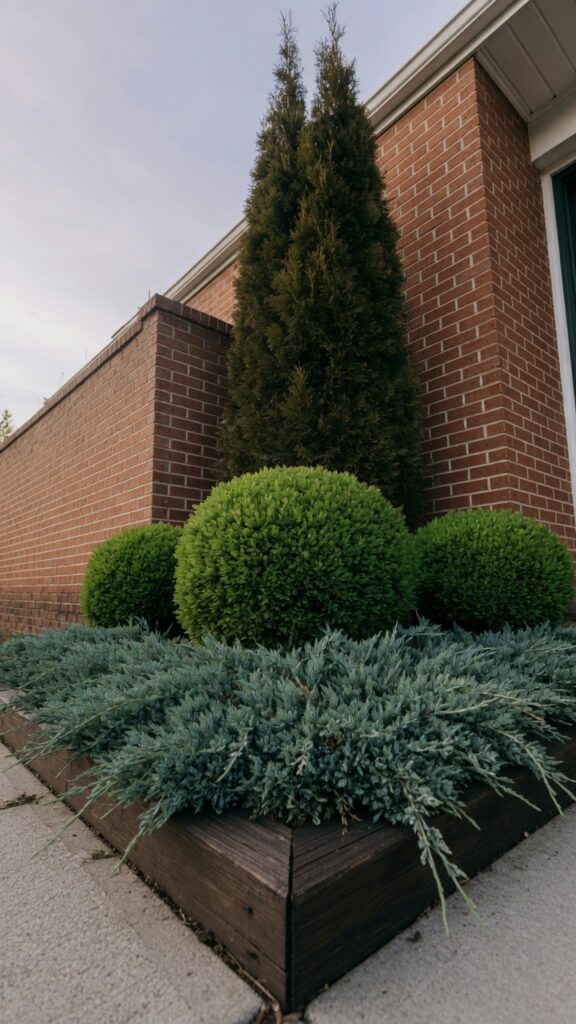
If you want one approach that almost never fails, this is it. Layered evergreens give a corner structure in every season — no bare sticks in February, no looking abandoned in November. The key is actually committing to three distinct height tiers: a tall vertical element at the back (arborvitae, columnar yew, or a slender holly), a rounded mid-layer shrub in the middle (boxwood, inkberry, or dwarf nandina), and something low and spreading at the front that softens the border edge. That front layer is where most people cut corners — don’t. It’s what makes the whole thing feel finished. One thing to watch: if your corner gets fewer than four hours of direct sun, skip the boxwood and go with soft shield fern or hellebores for the mid-layer. Full-shade evergreen layering is completely doable, just requires different plant choices. Also, keep the back vertical element at least three feet from the foundation wall — roots and moisture need room. Crisp dark mulch between the layers, kept at two inches, does more visual work than you’d expect.
2. Ornamental Grass Statement Corner
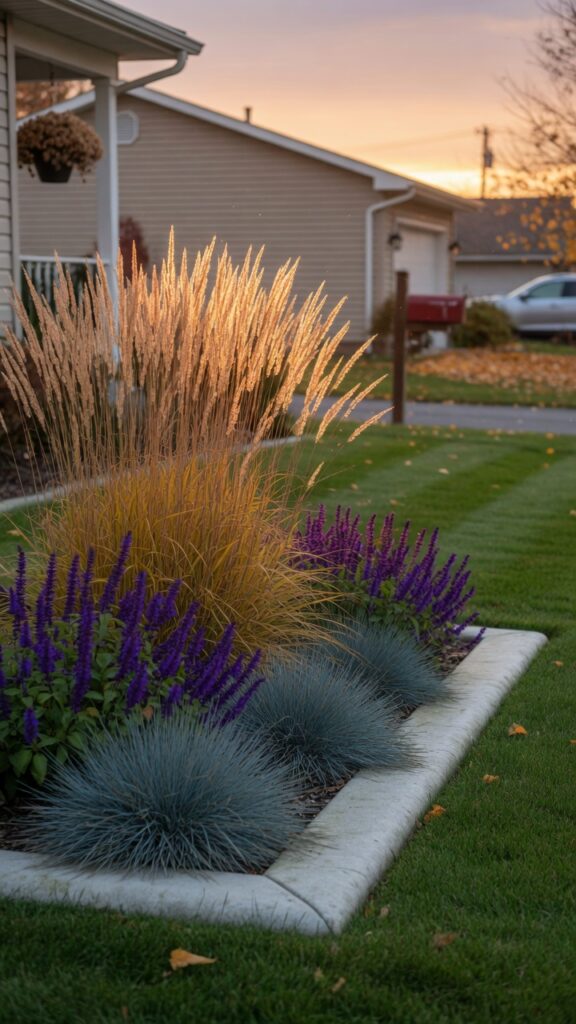
Ornamental grasses do something most shrubs can’t: they move. On a breezy afternoon, a corner planting of Karl Foerster feather reed grass becomes genuinely beautiful in a way that static boxwood never will be. The trick is pairing the vertical grass with something that provides contrast in texture and scale — blue fescue mounds work brilliantly because the color contrast alone (blue-gray versus warm gold) reads from the street. Add one flowering perennial like Russian sage or purple coneflower and the corner has something happening from spring through fall. That said, this look can feel too wild for certain home styles. Skip it if your house has very formal architecture — a Georgian colonial or a symmetrical Tudor doesn’t pair naturally with ornamental grasses at the corners. Cut the grasses back hard in late winter (six inches from the ground), and they’ll flush back thicker every spring. Don’t be precious about it.
3. Stone-Bordered Cottage Garden Corner
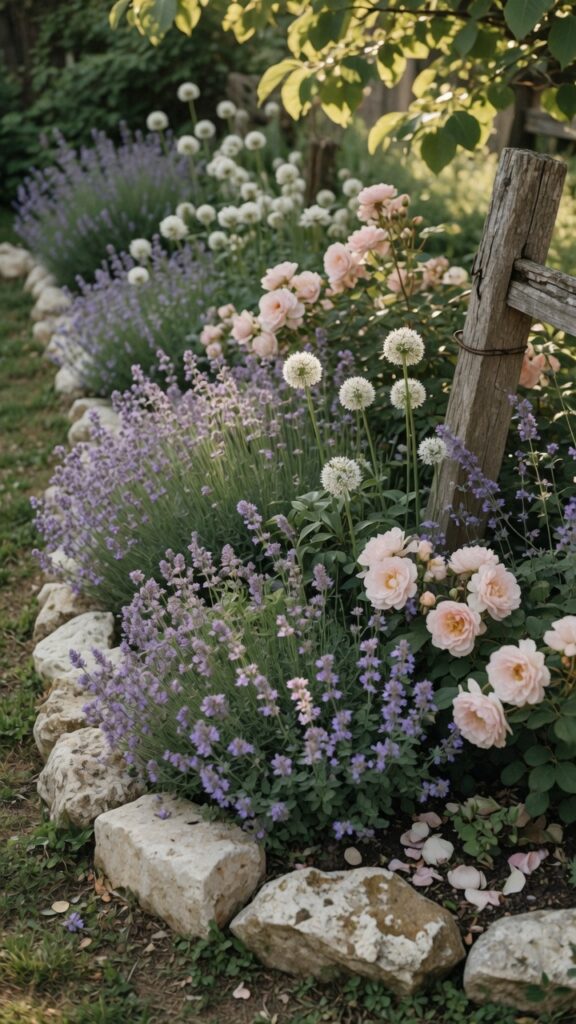
The cottage garden corner is the one that stops people on their walks. It’s abundant, slightly unruly in the best way, and when it’s blooming, it looks like something out of an English countryside novel. The key to pulling this off without it looking messy is the stone edging — those irregular limestone or fieldstone borders act as the visual container that justifies the looseness inside. Without a strong border, a densely planted corner just looks like you forgot to weed. Lavender and catmint are your best friends here because they bloom long, smell incredible, and both tolerate drought once established. One honest constraint: this style requires more maintenance than it looks. Deadheading, occasional division, and keeping the stone border free of grass encroachment takes real time each season. If you travel a lot in summer or genuinely hate gardening tasks, choose a different approach. But if you enjoy spending Sunday mornings in the garden with coffee, this one rewards you constantly.
4. Dramatic Vertical Accent with Columnar Trees
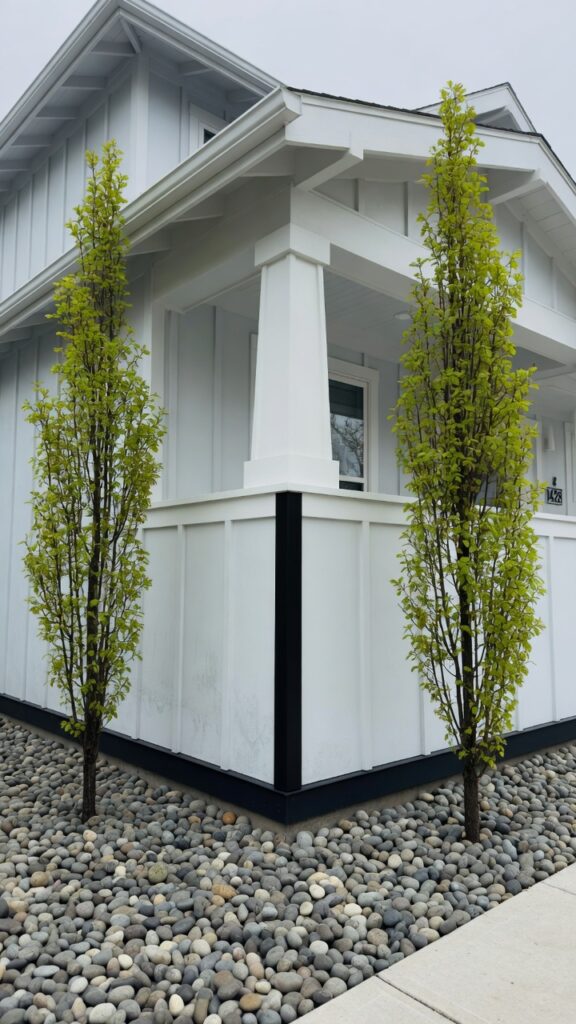
Sometimes a corner doesn’t need a garden — it needs a vertical exclamation point. A pair of columnar trees like Emerald Green arborvitae, Sky Pencil holly, or columnar English oak can frame a corner with architectural authority that no flowering shrub can match. This works especially well on modern homes, craftsman bungalows, or any house with strong horizontal lines that need vertical counterbalance. The river rock mulch beneath them is intentional — it reads as deliberate minimalism rather than laziness, and it cuts your maintenance nearly to zero once the trees are established. One thing to watch: columnar trees have a narrower root zone than their spread suggests, but they still need consistent moisture in their first two years. Plant them in fall if possible, when root establishment is easier. Also, verify your utility lines before planting anything tall — that overhead wire situation is more common than people remember until it’s too late.
5. Pollinator-Friendly Wildflower Corner
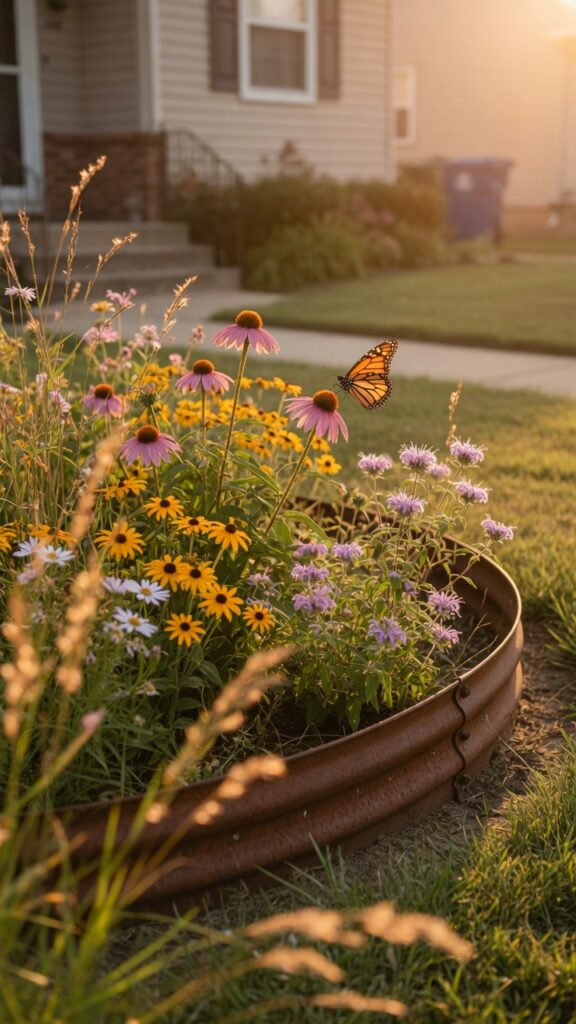
This is the corner that becomes a whole conversation. Plant it with native wildflowers — black-eyed Susans, purple coneflowers, Joe Pye weed, and native asters — and by mid-summer it will be alive with pollinators in a way that genuinely surprises people. There’s real ecological value here beyond aesthetics, which matters more than it used to. The design challenge is making it look intentional rather than abandoned. That rusted Corten steel border does the heavy lifting — it signals to neighbors and passing strangers that this is a garden choice, not neglect. A small wooden sign that says “pollinator garden” doesn’t hurt either, especially in neighborhoods with active HOAs. Honest caveat: the first year looks thin. Native plants spend their first season establishing roots rather than putting on a show. Year two and beyond, they explode. If you can’t mentally handle a quiet first season, seed in some fast-growing annual zinnias to fill the gaps while the perennials establish.
6. Raised Corner Bed with Timber Edging
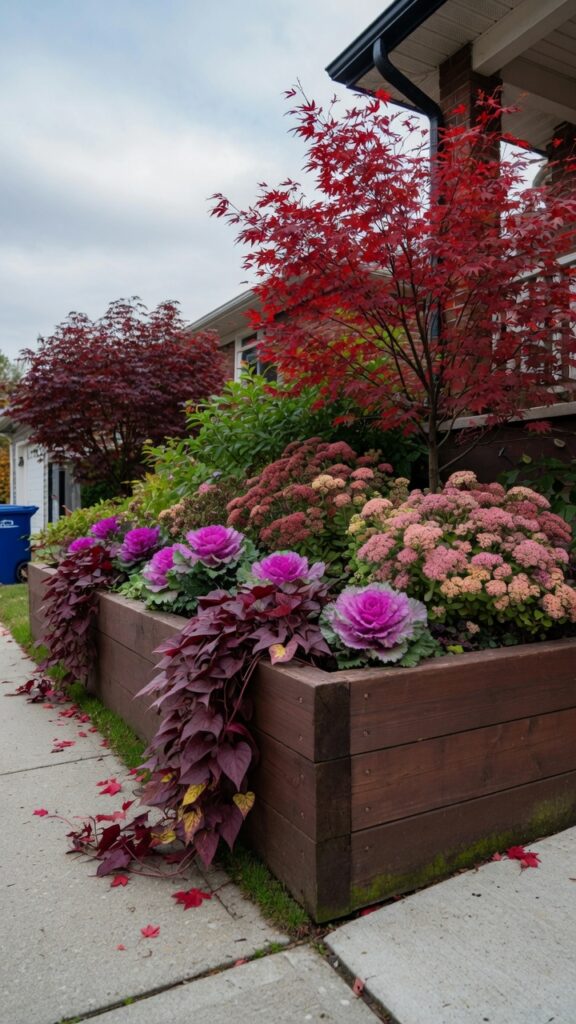
Raising the corner bed by even ten or twelve inches changes the entire dynamic of how the planting reads from the street. It adds dimension, makes the plants feel more curated, and — practical bonus — dramatically improves drainage, which matters enormously if your corner tends to collect water after rain. Dark-stained cedar timber is the classic choice: affordable, workable, and warm-toned enough to complement most home exteriors. Avoid pressure-treated timber directly against edible plants, but for purely ornamental beds, it’s fine. The plant combination in a raised bed should lean into contrast: pair something with fine texture (ornamental grasses or sedum) against something bold-leaved (elephant ear, Japanese maple, or ligularia). The height difference you’ve already created structurally should be echoed in the planting. One constraint: raised beds in a hot, sun-baked corner will dry out faster. You’ll either need a drip irrigation line tucked in at planting time or a commitment to deep watering twice a week in summer.
7. Japanese-Inspired Minimalist Corner
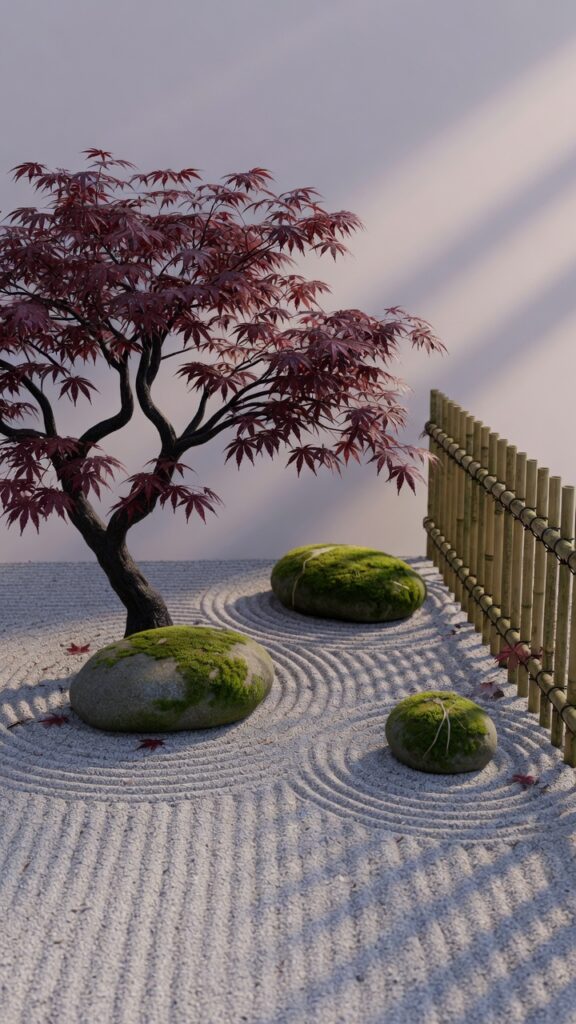
If the rest of your landscaping is already busy, a Japanese-inspired corner becomes a visual breath. The design philosophy here borrows from karesansui — the dry garden tradition — where negative space is as important as what’s planted. The Japanese maple is the non-negotiable centerpiece: its layered branching, seasonal color change, and sculptural winter silhouette mean it earns its spot year-round. The raked gravel should be decomposed granite or pea gravel in a muted tone — avoid white marble chips, which read as too bright and too cheap in this context. Three stones, asymmetrically placed, is the correct number; four feels cluttered, two feels unresolved. This style suits modern, contemporary, and craftsman homes well. It genuinely struggles against a Victorian or Tudor facade where the restraint reads as emptiness. Also, Japanese maples need protection from afternoon sun in hot climates — a west-facing corner with brutal summer heat will scorch the leaves. Morning sun only in zones 7 and above.
8. Foundation-Hugging Shade Corner
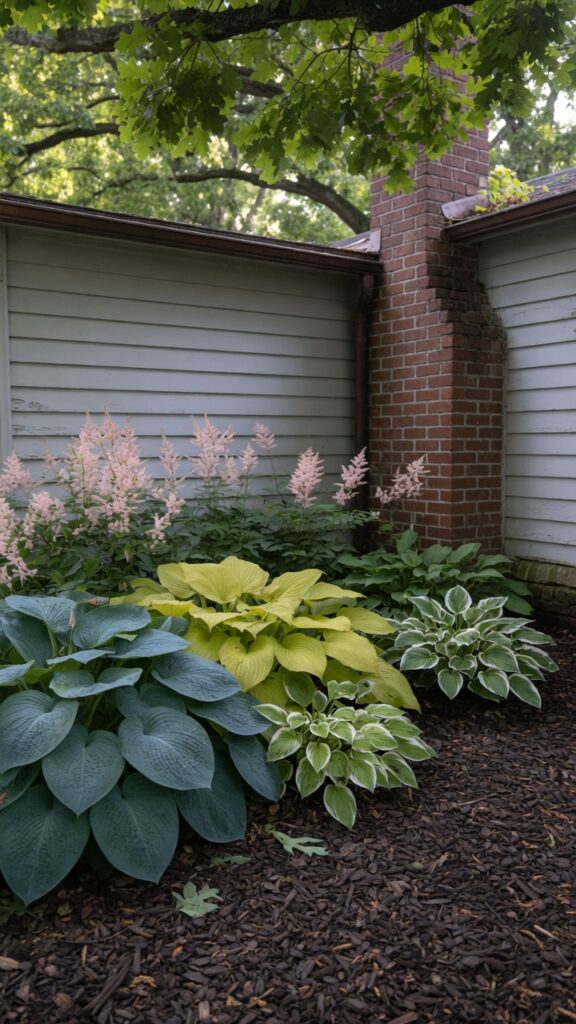
Shady corners are often treated like a problem to solve. They’re actually an opportunity most people ignore. If your corner sits beneath an overhang, a mature tree canopy, or between two structures that block sun, lean into the shade plants that genuinely thrive there rather than fighting it with sun-lovers that slowly deteriorate. Hostas are the anchor plant for this situation — not because they’re boring, but because the variety in size and leaf pattern is extraordinary. Mix the large blue-green Halcyon with the smaller chartreuse Sum and Substance and the variegated Patriot, and you have genuine visual complexity without a single flower. Astilbe adds vertical interest and soft color in early summer. Hellebores give you winter and early spring bloom. This type of planting almost maintains itself once established — the dense canopy of hosta leaves shades out most weeds. The main enemy is slugs. A ring of coarse sand or crushed eggshell around the hostas helps considerably, or an occasional iron phosphate bait application.
9. Seasonal Container Vignette Corner
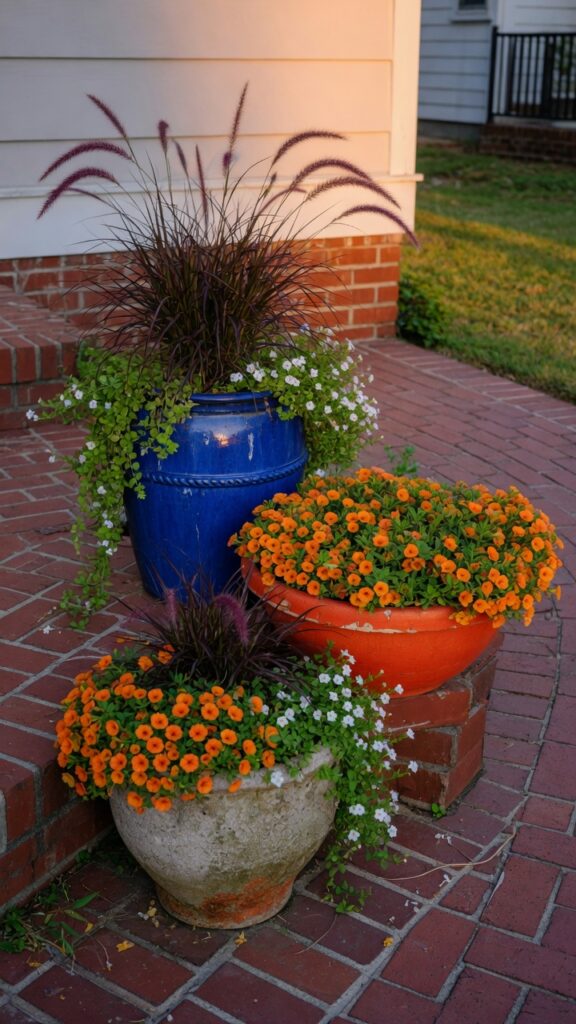
Not every corner needs to be a permanent garden installation. If you’re renting, if you move frequently, or if you simply want the flexibility to change things seasonally, a composed container vignette is genuinely satisfying and surprisingly high-impact. The rule is: never use just one pot. Groupings of three in different heights and materials create the visual weight that makes a corner look intentional. Vary your pot materials deliberately — a glazed ceramic next to an unglazed terracotta next to a concrete planter gives textural interest that matching pots can’t. The planting formula that works every time is: one thriller (tall, dramatic — fountain grass, canna, or elephant ear), one filler (mounding — petunias, calibrachoa, or lantana), one spiller (trailing over the edge — sweet potato vine, bacopa, or creeping jenny). Swap the plants seasonally: asters and ornamental kale in fall, pansies and evergreen branches in winter. The corner stays alive year-round with minimal construction. Containers dry out fast, though — daily watering in summer heat is a real commitment.
10. Edible Landscape Corner
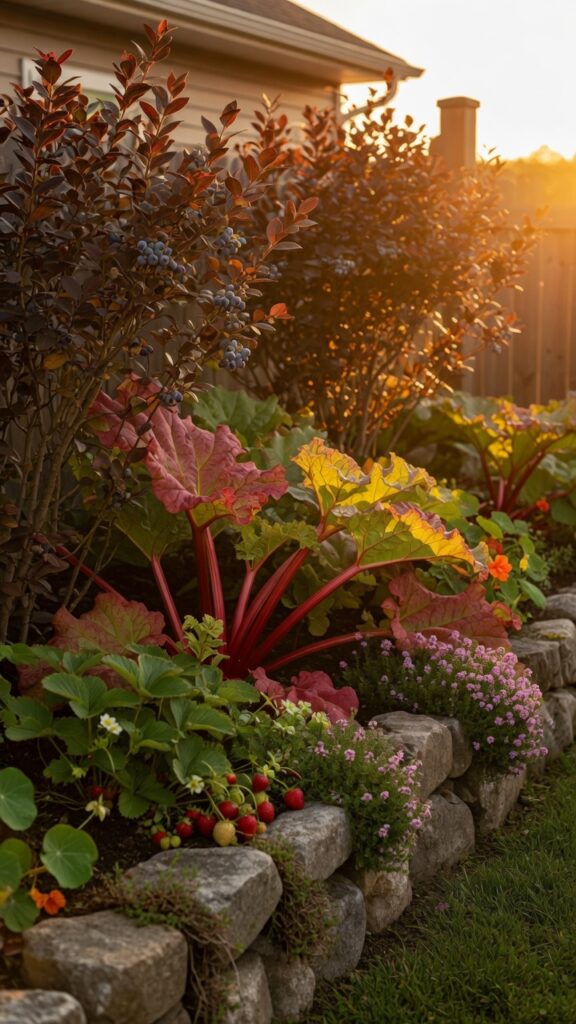
Here’s an idea that still surprises people even though it shouldn’t: your front corner can grow food and look beautiful simultaneously. The edible landscape movement has been building for years, and the plants that work best in corners — blueberry shrubs, rhubarb, dwarf fruit trees, currants, and herbs like rosemary and thyme — have genuine ornamental value beyond their harvest. Blueberry bushes, in particular, are underrated landscape plants: spring flowers, summer fruit, and spectacular red-orange fall foliage that rivals any ornamental shrub. The key to making an edible corner look like a design choice rather than a kitchen garden that escaped is the same as always: strong edging, varied heights, and intentional plant combinations. One constraint worth mentioning: if your neighborhood has an HOA, check the guidelines before planting a food garden in the front yard. Some organizations still have rules about this, though they’re increasingly being challenged and changed.
11. Drought-Tolerant Xeriscape Corner
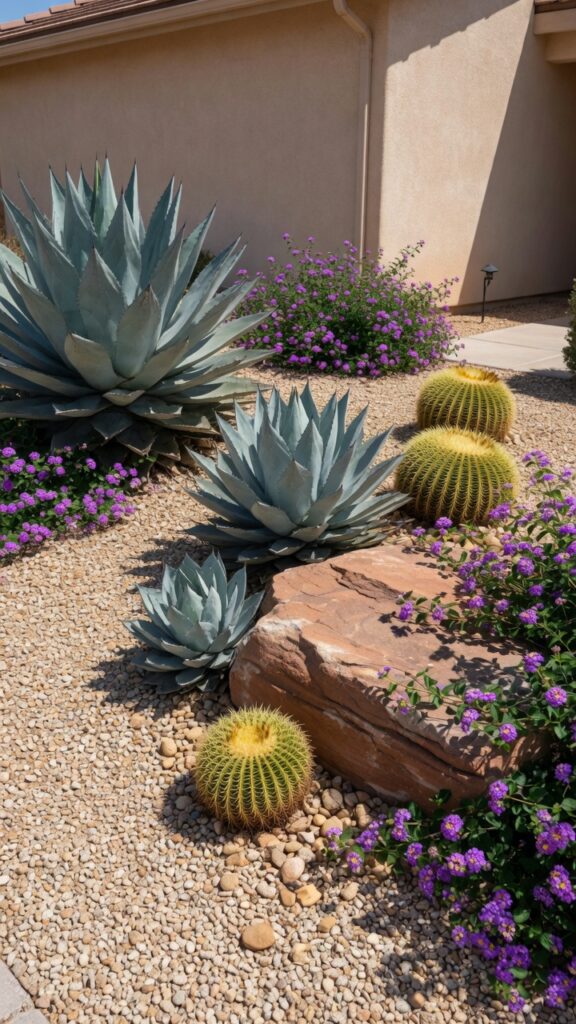
If you live in a water-stressed climate — much of the American West and Southwest, or anywhere with genuine summer drought — a xeriscape corner isn’t just environmentally responsible, it’s also genuinely beautiful in a way that lush grass never manages in dry heat. The palette of colors in drought-tolerant plants — silver-blue agave, golden barrel cactus, terracotta red yucca blooms, purple sage — is rich and distinctive. The gravel mulch should be chosen to complement the home’s exterior tone: warm buff or tan gravel for adobe or stucco walls, darker decomposed granite for stone facades. A single large flat boulder placed asymmetrically anchors the whole composition and reads as sculpture. One honest note: if you’re in the Pacific Northwest or a genuinely rainy climate, succulents and cacti won’t thrive outside, and this aesthetic won’t translate. This is a climate-specific idea, not a universal one. Work with your regional plant palette, not against it.
12. Flowering Shrub Corner for Four-Season Interest
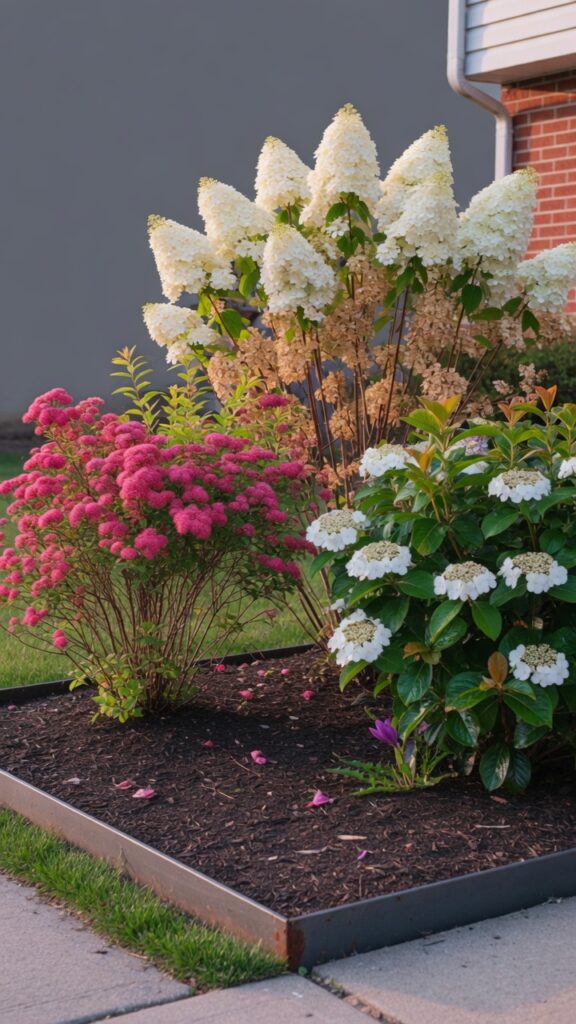
This is the corner for people who want maximum beauty with realistic maintenance. Flowering shrubs — hydrangeas, spireas, viburnums, weigelas, and native iteas — give you seasonal bloom, interesting foliage, and in many cases, attractive seed heads or berries that carry visual interest into fall and winter. The design approach is the same as the evergreen layering idea at the start of this list, but now you’re choosing plants for their flower rather than their year-round greenness. The winning combination for a typical corner: one large-scale shrub at the back (PeeGee hydrangea or viburnum), one medium flowering shrub on each flank (spirea or weigela), and a low ornamental at the front edge (dwarf astilbe or creeping phlox). Stagger bloom times so something is flowering from April through September. One thing to watch: hydrangeas planted in too much shade will produce leaves but almost no flowers. They need at least four to six hours of sun. If your corner is north-facing and shaded, substitute oakleaf hydrangea — it’s the one hydrangea variety that genuinely thrives in lower light.
Your front corners are doing one of two things right now: they’re either quietly dragging down your home’s curb appeal without you fully realizing it, or they’re working hard to make your house look polished, intentional, and alive. The gap between those two outcomes isn’t money — it’s mostly just attention and the right plant combination. The ideas in this list span every climate, style, budget, and maintenance tolerance, but they all share one underlying principle: a corner with a clear design concept, a strong edge, and plants chosen for layered height and seasonal interest will always look better than a corner treated as an afterthought. Start with one corner this season. Pick the approach that fits your climate, your time, and your home’s character, and commit to it fully. The results tend to be fast, visible, and honestly a little addictive. Once one corner looks right, the other ones start bothering you in a way they never did before — and that’s exactly where you want to be.