Round tables possess a quiet magic that rectangular ones rarely capture. They encourage easy conversation, eliminate awkward head-of-table hierarchy, and fit gracefully into tighter dining spaces without dominating the room. After years of styling real homes—small apartments, family houses with kids constantly circling the table, and open-plan spaces where the dining area doubles as a homework zone—I’ve learned that decorating around a round table isn’t about following rigid trends.
It’s about understanding scale, embracing texture, and making choices that feel practical for daily life rather than just Instagram-worthy. Whether your room gets harsh northern light, you rent and can’t paint, or you simply hate visual clutter, these ideas respect those realities.
Here are 12 thoughtful, distinct ways to make your round dining table the warm, welcoming centerpiece it deserves—without wasting money on pieces that won’t last or styles that quickly feel dated.
1. Ground the Space with a Generous Round or Curved Rug
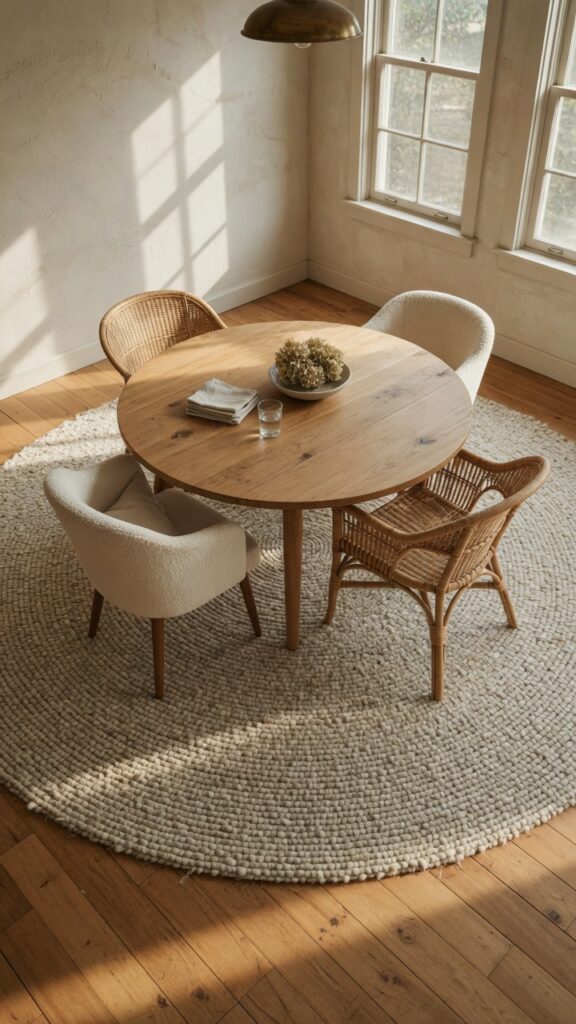
Nothing makes a round table feel more like an afterthought than when it appears to float in the middle of a sea of floor. I’m opinionated about this: always use a rug, and make it round or softly curved to echo the table’s shape rather than contrast it. The rug should extend at least 24 to 30 inches beyond the table’s widest point so chairs stay fully supported even when pulled out for seating or conversation. Wool-blend or low-pile jute options handle real-life spills and traffic far better than plush shag that traps every crumb. In rooms with north-facing windows that feel cooler, warmer-toned jute or sisal adds instant coziness without absorbing too much light.
One constraint to watch: a rug that’s too small instantly makes the entire arrangement look unstable and temporary—like the table is balancing on a tiny mat. If custom sizing feels expensive, layer a large round jute base with a smaller decorative wool top for added texture and depth. The result is a grounded, intentional space where the round table becomes the natural heart of the room instead of an awkward centerpiece.
2. Install a Low-Hanging Statement Chandelier for Intimacy
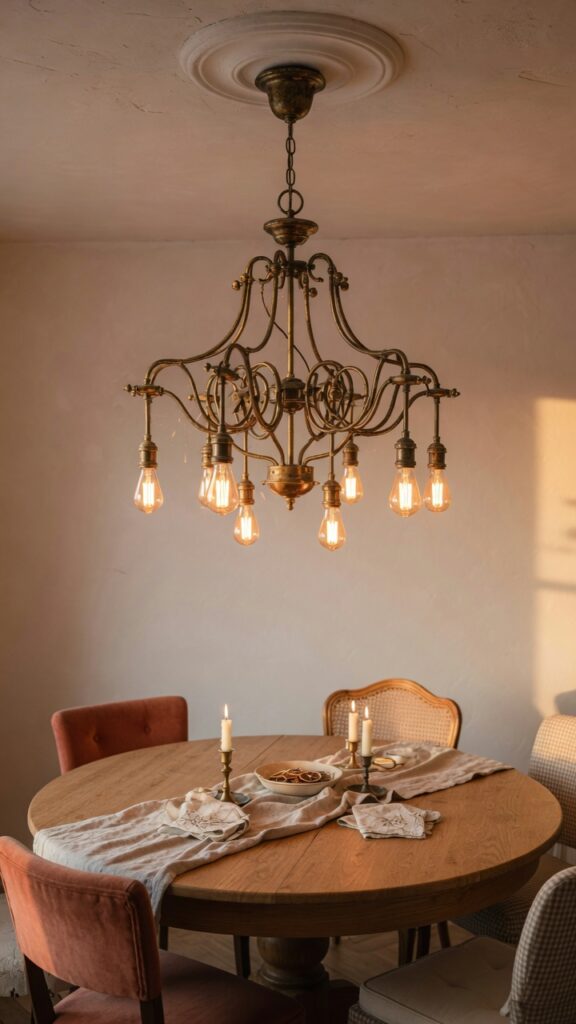
Ceiling height and fixture scale are make-or-break for round tables. I strongly prefer one substantial, low-hung chandelier or pendant centered directly above the table—it reinforces the circular shape and creates an intimate “canopy” that draws people together. Hang it roughly 30 to 36 inches above the tabletop so seated guests can maintain easy eye contact without bumping heads or blocking views. Aged brass or matte black finishes are more forgiving than polished chrome, hiding fingerprints and wear from family use. In lower-ceiling rooms, opt for a wide, shallow drum shade or a cluster of smaller pendants arranged in a loose circle rather than a single tall fixture.
One thing to watch: fixtures hung too high create harsh overhead shadows that make everyone look unflattering and turn the space cold. If you rent or dislike permanent changes, a plug-in pendant with a ceiling hook works beautifully. The trick turns the round table into a glowing focal point that feels both dramatic and welcoming at the same time.
3. Mix Chair Styles for Personality Without Chaos
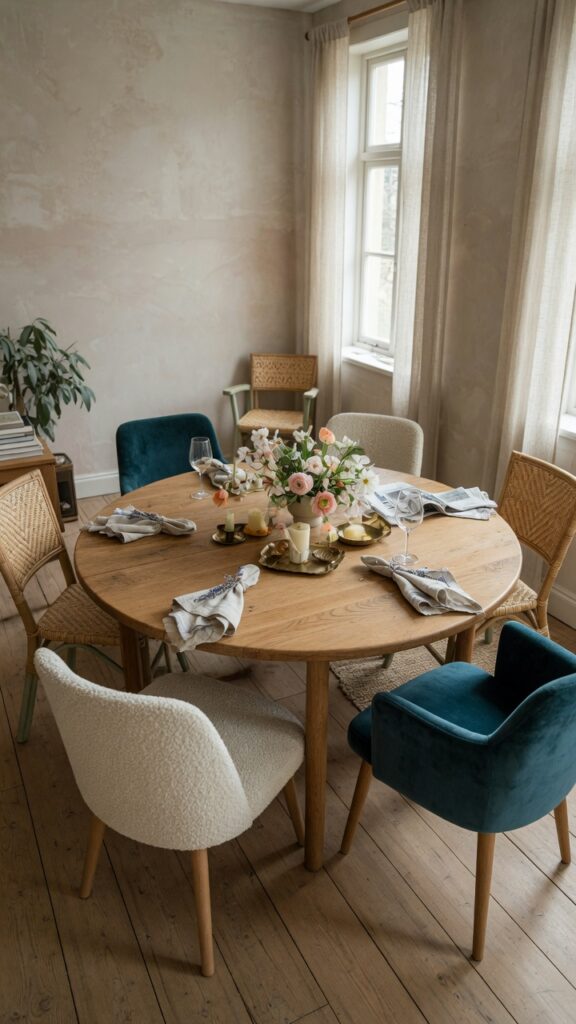
Uniform matching chair sets can make a round table feel stiff and corporate. My favorite approach is thoughtful mixing—pairing different styles and materials that share a common thread like color family or leg shape keeps the look cohesive yet personal. Try two boucle chairs for softness, two velvet ones for richness, and two rattan for lightness and breathability. Keep heights consistent so the table edge lines up comfortably for everyone. This mix works especially well in shared family spaces where different body types and preferences come into play. One constraint: too many wildly different chairs can quickly tip into visual chaos, particularly in smaller rooms. Limit yourself to two or three styles maximum and repeat each at least twice.
If you hate repainting or permanent changes, this is a renter-friendly way to add personality. The payoff is a dining area that feels collected over time rather than bought in one go—much more interesting to live with day after day.
4. Layer Textiles with a Tablecloth, Runner, and Napkins
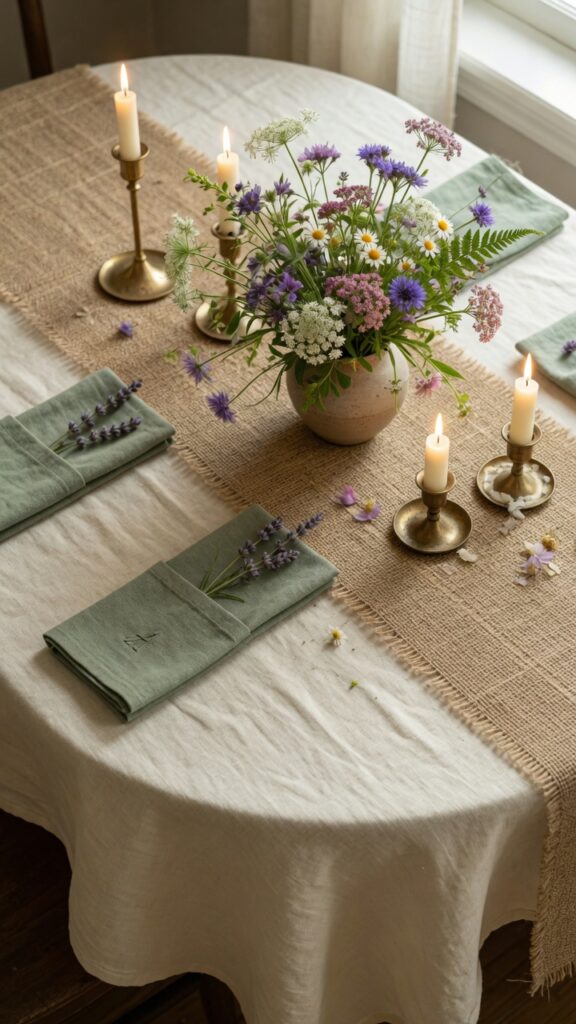
Bare wood is lovely, but layering textiles adds instant softness and sound absorption that round tables desperately need in open-plan homes. Start with a full round tablecloth in linen or cotton for everyday durability—avoid anything too stiff or formal. Then add a narrower runner across the diameter for visual interest and to protect the cloth from hot dishes.
Cloth napkins in complementary tones tie everything together and feel far more civilized than paper. I love natural fibers because they soften with washing and develop character over time. In homes with kids or frequent spills, choose machine-washable options and keep a spare set handy.
Watch out for overly long drops that pool on the floor and become tripping hazards, especially with a round shape. This approach works beautifully for renters since textiles are easy to swap seasonally. The layers turn an ordinary meal into something a little more considered without requiring constant effort.
5. Create Balance with an Oversized Centerpiece
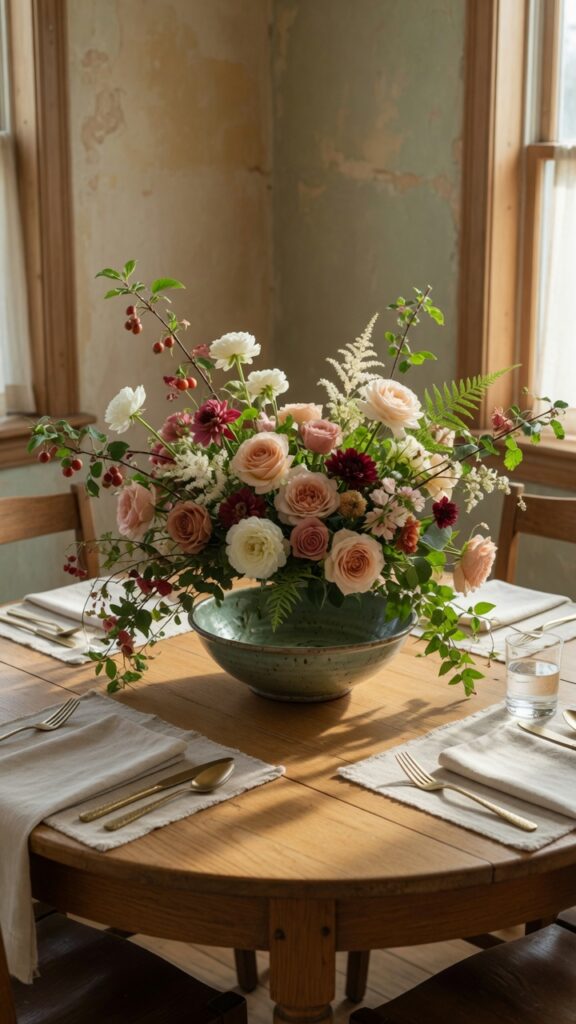
Round tables shine when the centerpiece respects the curve instead of fighting it. I’m firmly against tall arrangements that force people to crane necks or shout across the table. Instead, go low and wide—an oversized shallow bowl or tray filled with flowers, greenery, fruit, or even a collection of candles that spreads outward. Keep the height under 12 inches so conversation flows freely.
Fresh seasonal blooms are lovely, but I often use dried grasses or preserved eucalyptus for longevity in busy households. One practical rule: the centerpiece should occupy no more than one-third of the table’s diameter to leave plenty of surface for serving dishes and elbows.
In smaller rooms this prevents the table from feeling overcrowded. If you hate weekly flower shopping, a sculptural bowl with collected objects (sea glass, candles, small books) offers similar impact with zero maintenance. The result keeps the round table feeling abundant and alive rather than empty or blocked.
6. Use Wall Treatments to Frame the Table
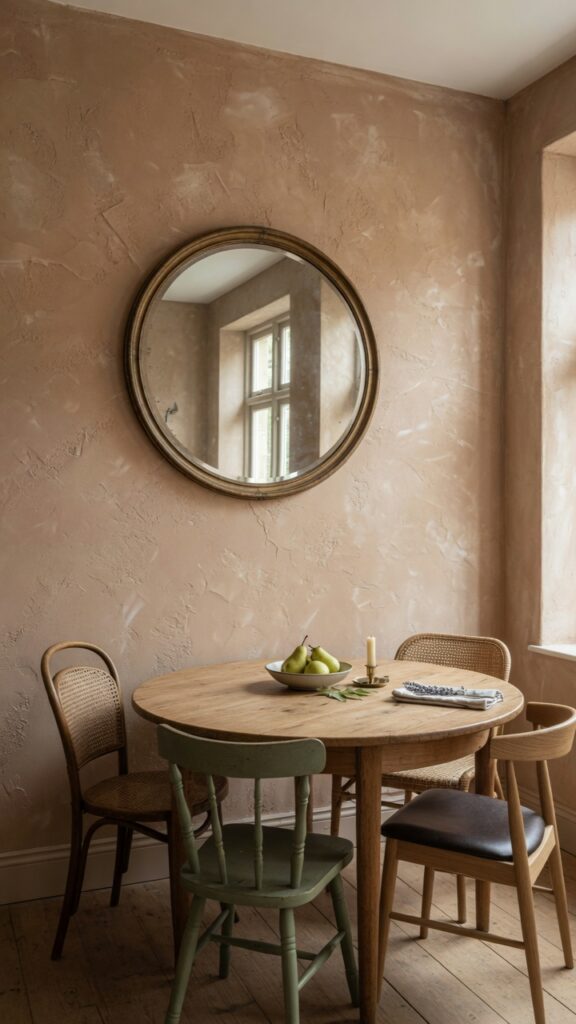
Don’t neglect the walls around a round table—they become the visual frame for the entire setup. Textured plaster, limewash paint, or even removable wallpaper on the accent wall opposite the main entry creates instant depth and interest.
I particularly love matte limewash in warm neutrals because it shifts subtly with the light throughout the day and hides imperfections better than flat paint. In rooms that face north and feel cooler, deeper terracotta or warm beige tones add unexpected warmth without making the space dark. One thing to watch: overly busy patterns or dark colors can make a small dining area feel cave-like.
If you’re renting or change your mind often, peel-and-stick wallpaper or a large removable mural offers flexibility. A well-treated wall makes the round table pop as the focal point instead of disappearing into bland surroundings. It’s one of those background choices that quietly elevates everything else in the room.
7. Incorporate Natural Elements and Organic Textures
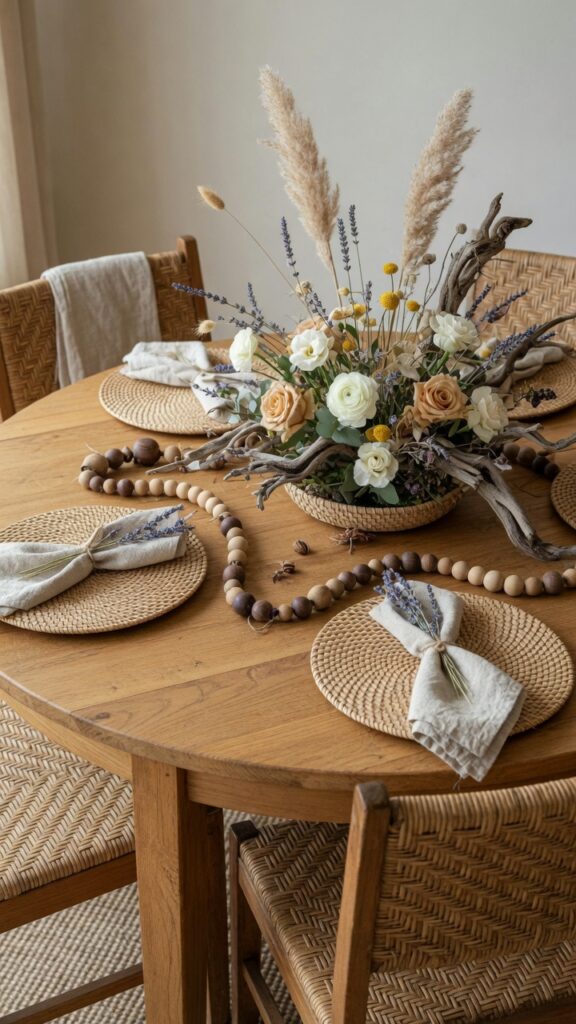
Bringing organic textures to a round table prevents it from feeling too polished or cold. Rattan placemats or chargers, wooden bead runners, linen with visible weave, and even small elements like driftwood or dried botanicals add warmth and tactility that people instinctively respond to.
I mix these with smoother ceramics and brass for contrast—too much of any single texture can feel one-note. This approach shines in homes where the dining area opens to outdoor spaces or kitchens with lots of natural light. One constraint: in very humid climates, avoid excessive dried grasses that can shed or attract moisture issues.
For renters, these elements are inexpensive and easy to rotate seasonally. The combination of natural materials makes even simple weeknight dinners feel more connected to the seasons and far less sterile than all-smooth modern styling.
8. Play with Color Through Chairs and Accessories
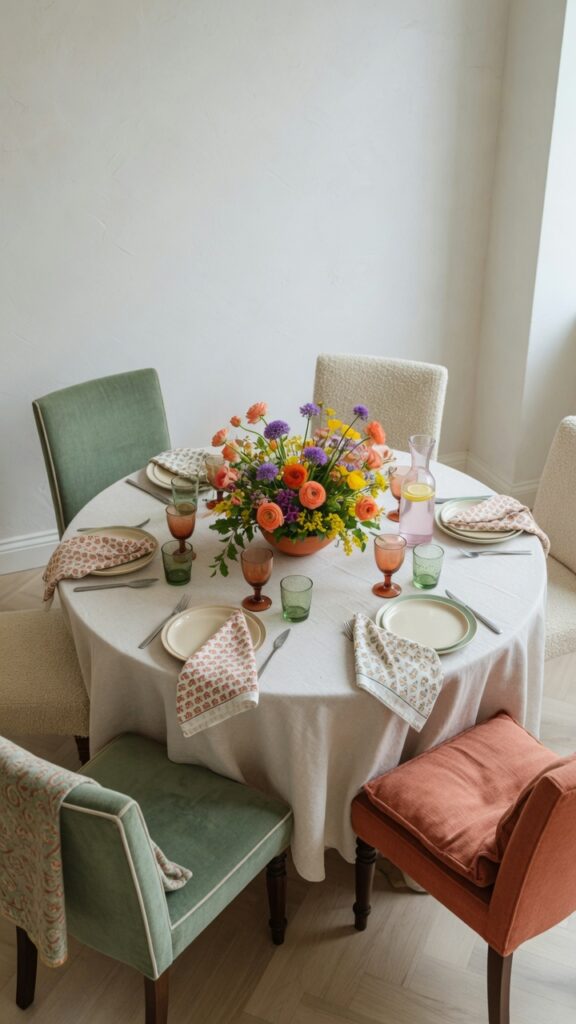
Color is one of the easiest ways to give a round table personality without committing to permanent changes. Instead of painting the whole room, introduce color through chair upholstery, napkins, glassware, or even a bold table runner.
I like pulling two or three tones from the room’s existing palette and repeating them thoughtfully—perhaps deep teal velvet on two chairs, sage linen on others. This keeps the circular arrangement feeling harmonious rather than scattered. In open-plan homes where the dining area is visible from the living room, repeating these colors creates flow.
Watch out for using too many bright saturated hues at once; they can feel loud and visually noisy around a round shape. If you’re hesitant about color, start with accessories that are easy to swap. The right palette turns a plain round table into a confident, joyful spot that reflects your taste without overwhelming the space.
9. Optimize Layout for Flow and Conversation
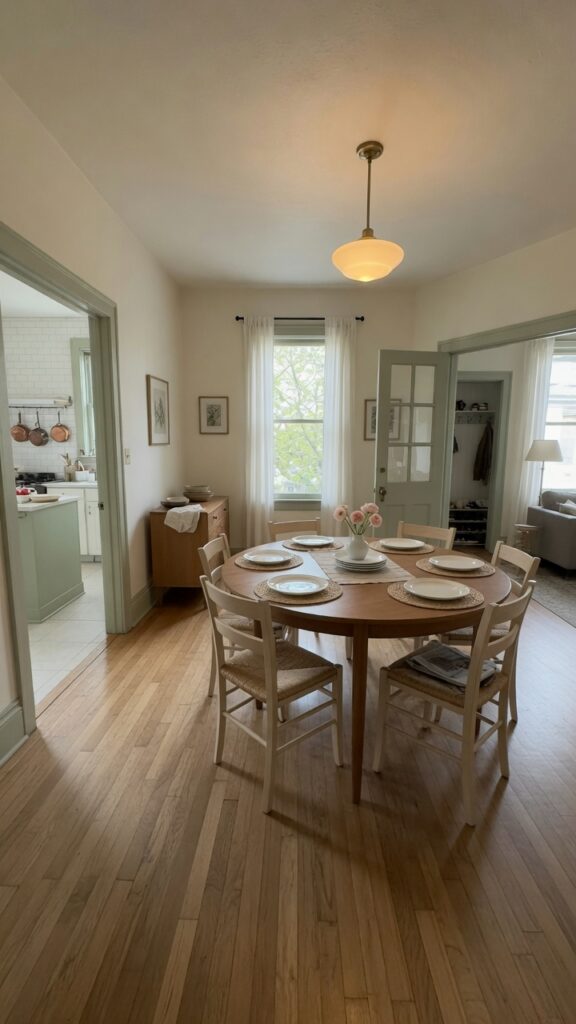
Round tables are naturally sociable, but poor placement can ruin the advantage. Position the table so there’s comfortable walking space—ideally 36 to 48 inches of clearance around the full circumference for pulling out chairs and serving. In smaller rooms, floating the table slightly away from walls rather than pushing it into a corner often improves flow surprisingly well.
I always sit in every chair during styling to check sightlines and elbow room. One practical rule: avoid placing the table directly under an air vent or in the main walkway from kitchen to living area. If your space is tight, consider a pedestal base table that offers more legroom than four-legged designs. This layout consideration makes daily use far more pleasant and prevents the round table from becoming a bottleneck during gatherings. Good flow turns the dining area from a static display into a functional, inviting hub.
10. Add Reflective Surfaces for Light and Depth
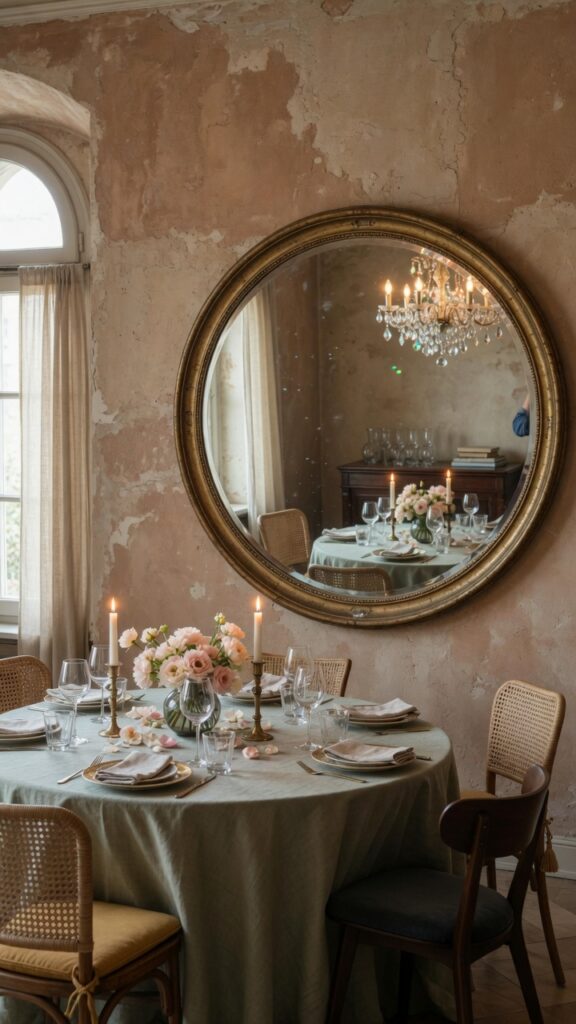
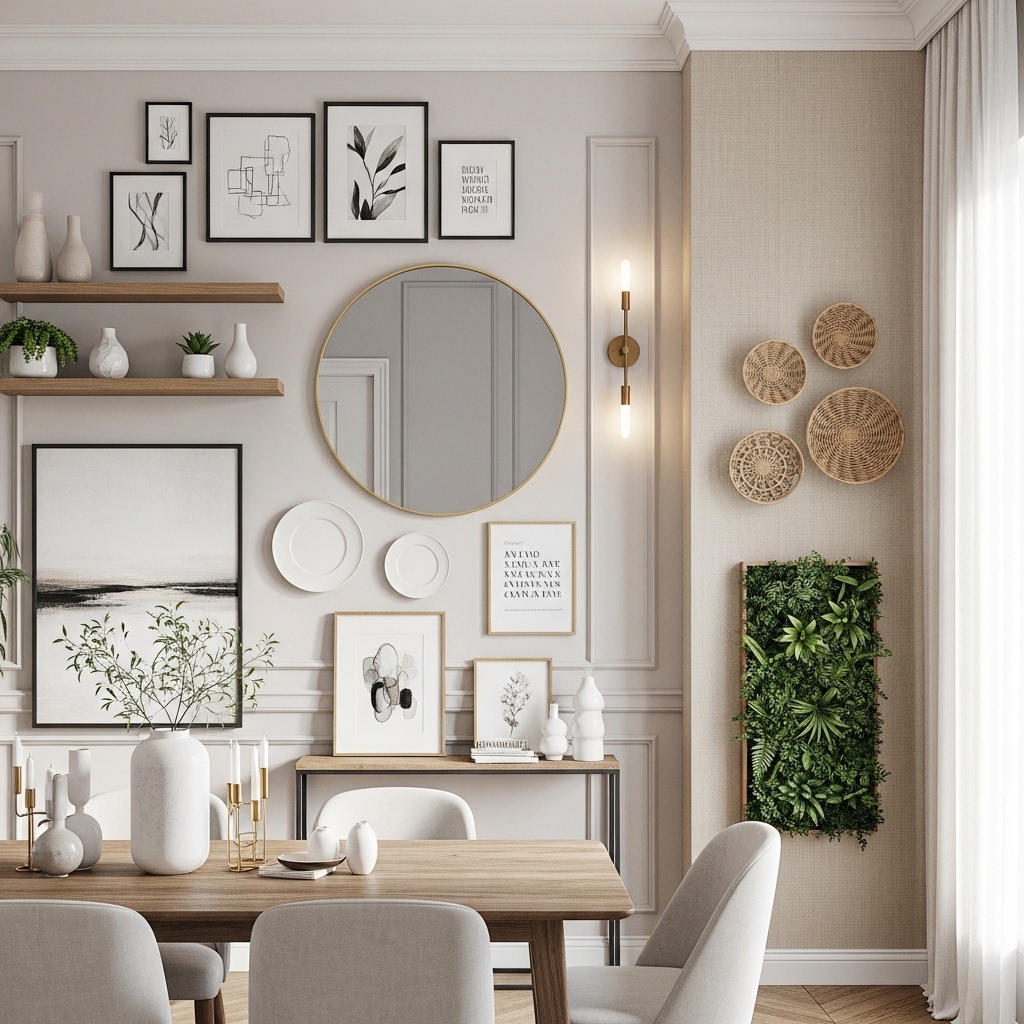
Mirrors and other reflective surfaces are magic around round tables, especially in rooms that lack natural light. A generously sized round or softly arched mirror positioned behind the table bounces light around the space and visually doubles the room’s depth. It also creates beautiful reflections of the centerpiece and chandelier that make the table feel more dynamic.
I prefer aged or antiqued mirrors over perfectly clear ones because they add character and soften harsh light. In north-facing dining rooms this trick is particularly effective for warming up the atmosphere. One thing to watch: avoid placing mirrors where they reflect busy or unattractive areas like cluttered counters.
For renters, a large leaning floor mirror or removable wall mirror offers flexibility. The added light and depth make the round table feel more expansive and lively even on the grayest days.
11. Embrace Minimal Styling for Modern Calm
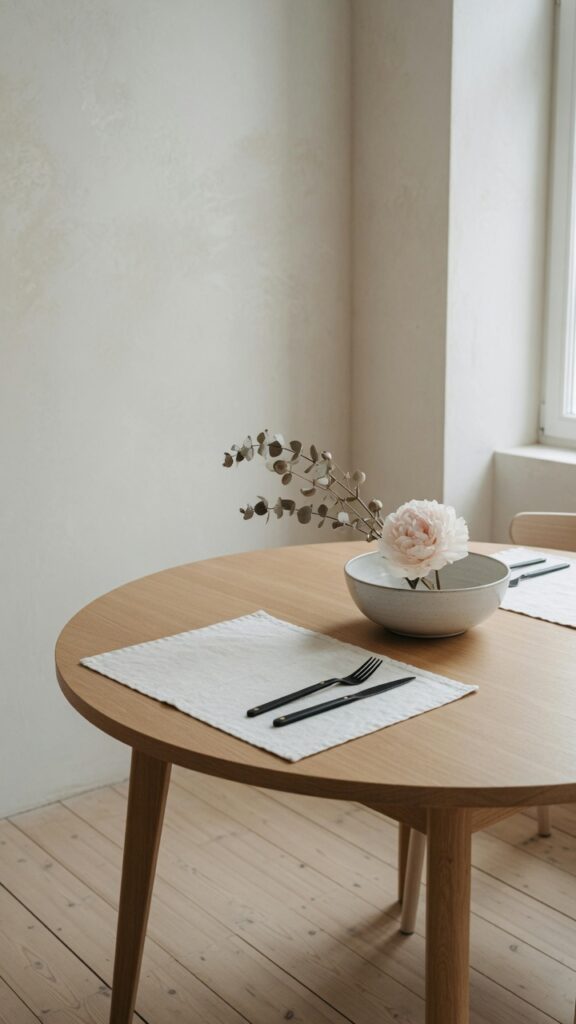
Not every round table needs layers of pattern and color. Sometimes the most striking look is deliberate minimalism—letting the beautiful curve and material of the table itself take center stage. Use only a few carefully chosen objects: a single low bowl with one or two sculptural elements, simple placemats, and perhaps a couple of candles. This approach works wonderfully in contemporary homes or open-plan spaces where the dining area needs to feel calm rather than busy.
I find it particularly practical for people who dislike constant rearranging or dusting. One constraint: minimal styling shows every speck of dust or scratch, so choose durable materials and keep a quick daily wipe routine. If your lifestyle is hectic, this restraint creates a peaceful visual reset every time you enter the room. The simplicity highlights the inherent elegance of the round table shape in a way that feels quietly confident.
12. Seasonal Swaps and Flexible Renter-Friendly Touches
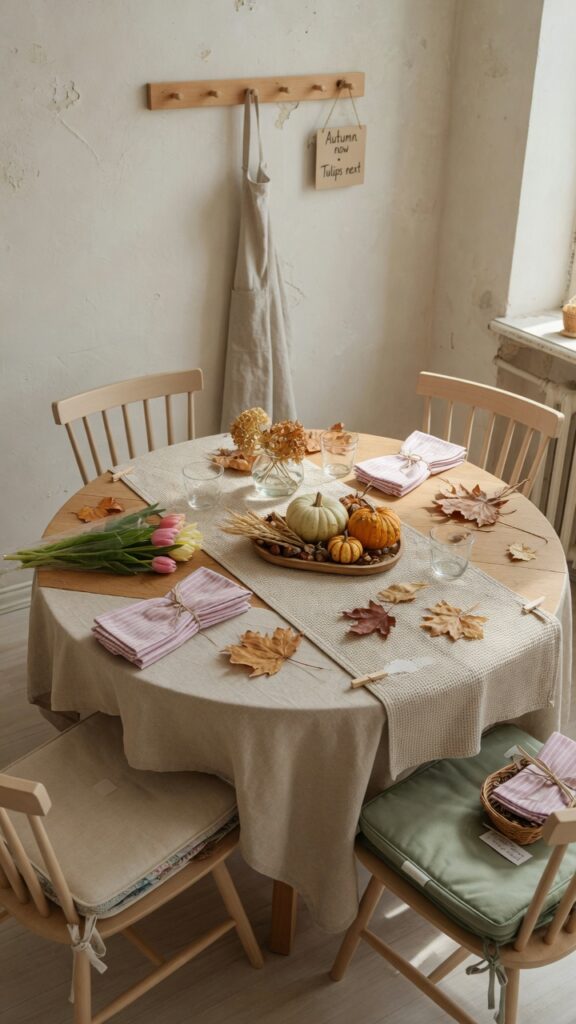
The beauty of a round table is how easily it adapts to seasons and changing tastes—especially valuable for renters or anyone who gets bored easily. Keep the big investments neutral (table, rug, main chairs) and layer in affordable, washable swaps: seasonal runners, clip-on chair cushions, changeable centerpieces, or even temporary wallpaper on one wall. I rotate tablecloths and napkins with the calendar—warm terracotta linens in winter, lighter sage and ivory in summer.
This keeps the space feeling fresh without major expense or effort. One practical note: choose machine-washable fabrics and store off-season items in labeled bins to make swaps painless. If you hate commitment, this modular approach lets you experiment freely. The round table becomes a living, evolving element of your home rather than a static piece of furniture, which is exactly how good design should feel in real life.