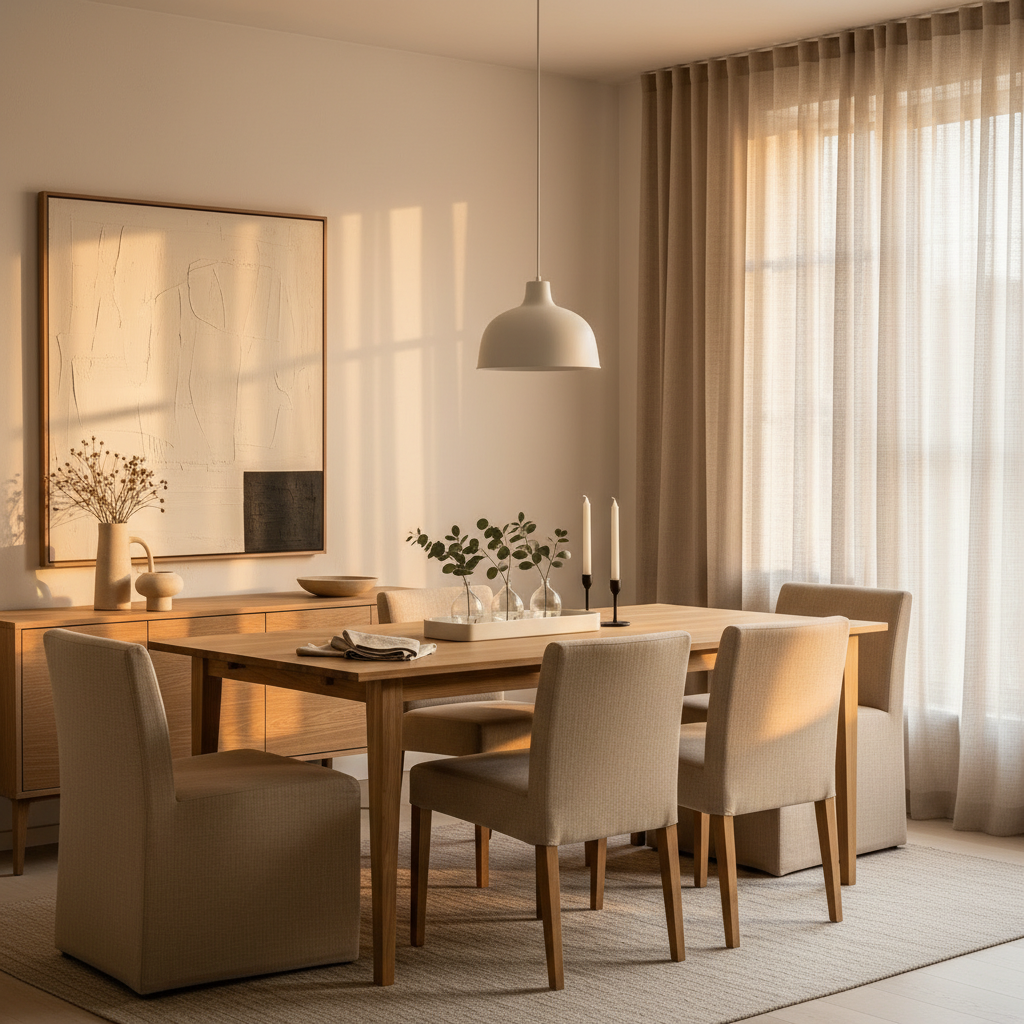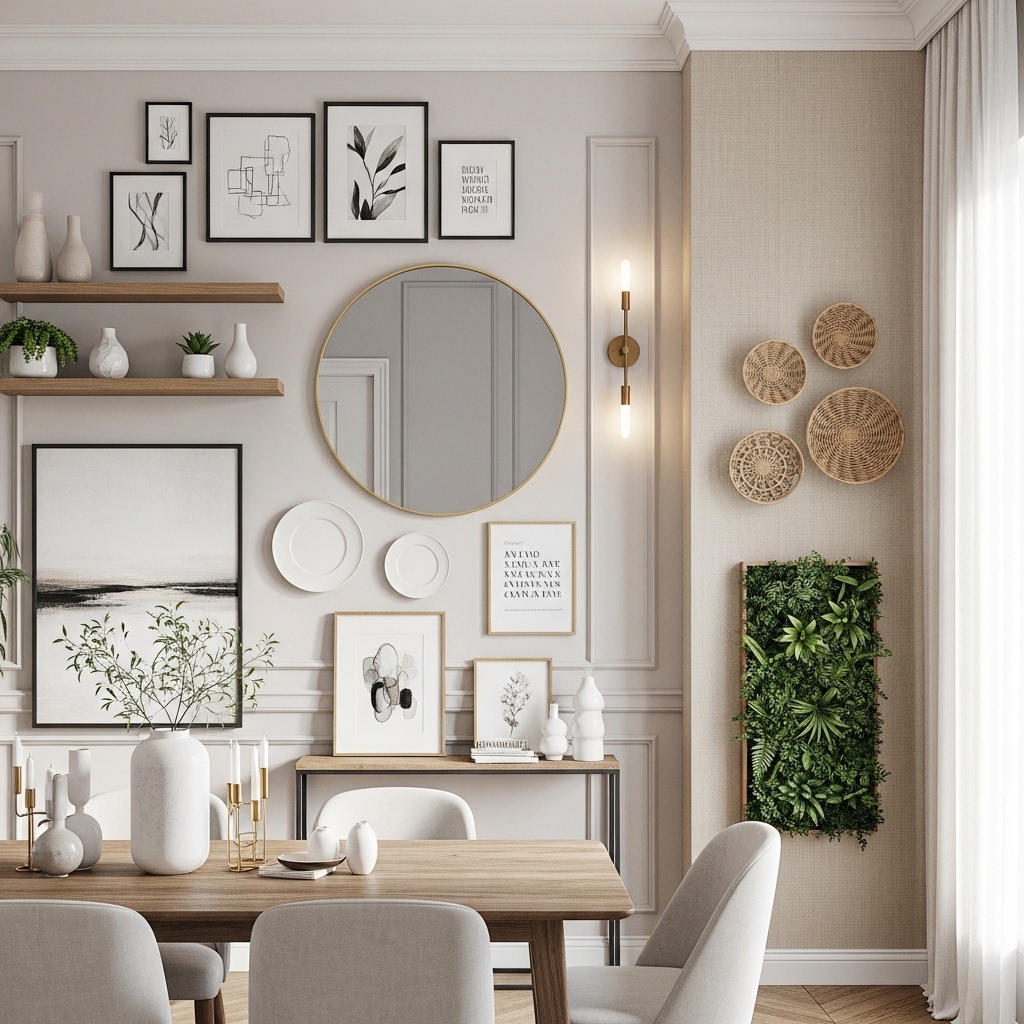
A dining room sideboard is one of those pieces that quietly carries the entire mood of the space. It’s not the star like the dining table, but when it’s styled well, everything around it feels more intentional. When it’s not… the whole room can feel slightly off, even if you can’t quite explain why.
The trick with sideboard decor isn’t filling it. It’s editing it. You’re creating a moment—a visual pause between meals, conversations, and everyday chaos. That balance between beauty and function is what separates something that looks “decorated” from something that feels genuinely elegant.
You don’t need a dozen expensive objects. You need the right mix of height, texture, and breathing room. Some contrast. A bit of personality. And most importantly, restraint.
These ideas aren’t about copying a look—they’re about understanding what makes a sideboard feel calm, layered, and elevated… without trying too hard.
1. Anchor the Space With One Oversized Artwork
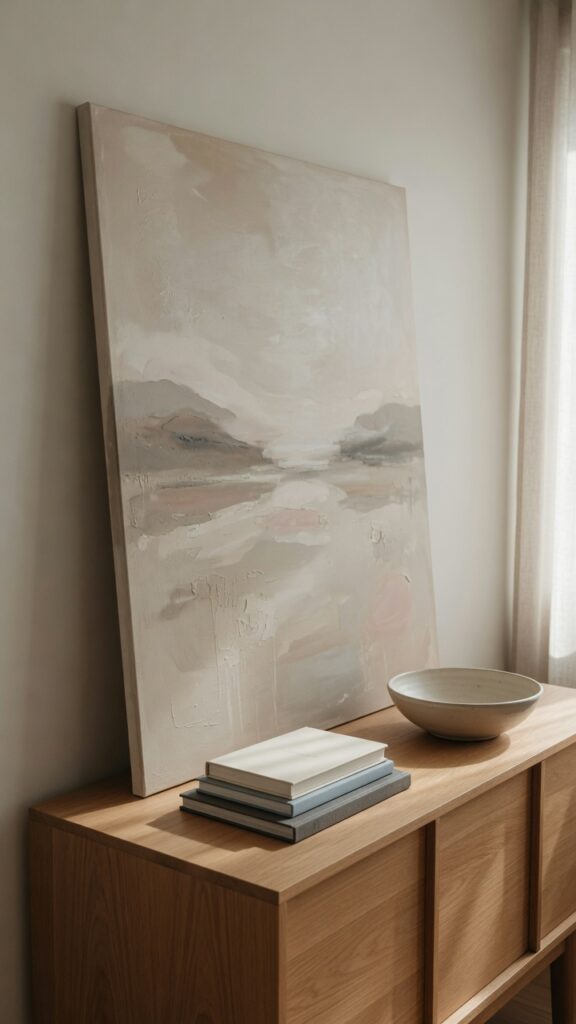
If there’s one shortcut to making a sideboard look expensive, this is it. One oversized artwork does more than ten small objects ever could. It gives the eye somewhere to land—and that alone creates calm.
Leaning the piece instead of hanging it keeps things relaxed and slightly undone. It works especially well if you hate committing to nail holes or like to switch things around. Stick to abstract or subtle landscapes if you want a timeless feel.
Keep everything else intentionally low. A shallow bowl, a couple of books, maybe one small object. Let the artwork carry the weight.
One thing to watch: scale matters. Too small and it looks apologetic. Too busy and it overwhelms.
When the art is right, you barely need anything else.
2. Use Symmetry With a Pair of Lamps
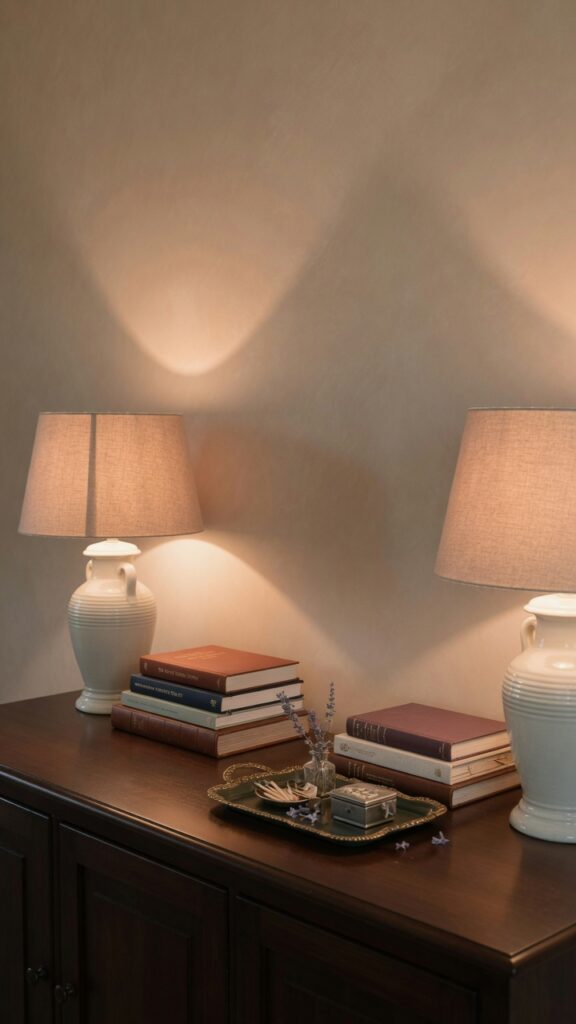
Symmetry has a way of making things feel instantly grown-up. Two lamps—same height, same shape—create structure without feeling rigid.
This setup works beautifully if your dining room is used at night. The soft glow from both sides adds warmth that overhead lighting never quite achieves. Linen shades are your best friend here—they diffuse light and keep things soft.
Break the symmetry slightly in the middle. Stack books off-center, add a tray, or a low object so it doesn’t feel too perfect.
One thing to watch: bulky lamps on a small sideboard can crowd the space fast. Always check proportions.
This is elegance that feels calm, not staged.
3. Create a Layered Mirror Moment
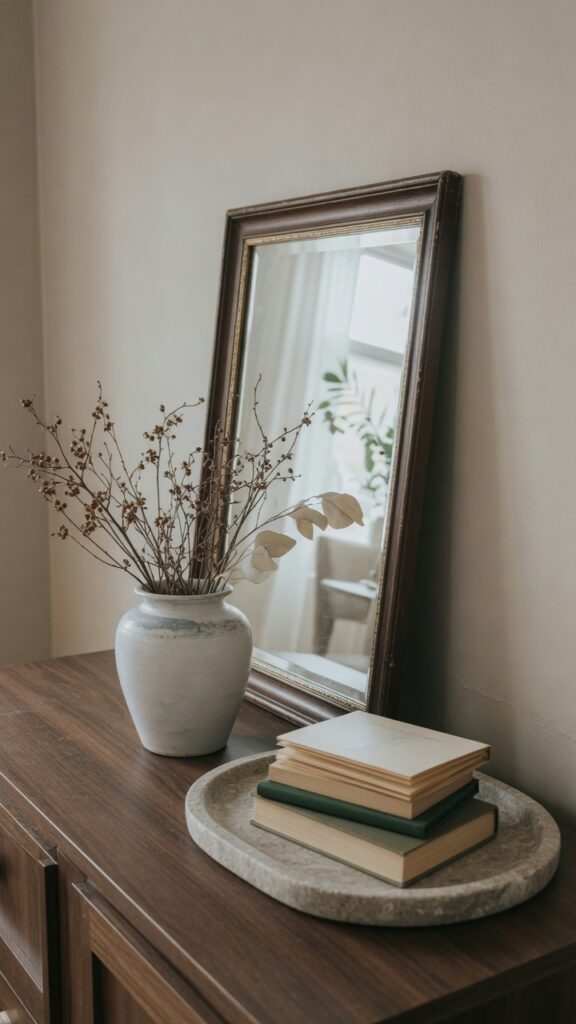
Mirrors on sideboards are underrated. They bounce light, open up the space, and quietly double the visual impact of everything around them.
Lean a mirror casually instead of mounting it—it instantly feels more relaxed. Then layer objects in front: a vase, books, maybe a small tray. This creates depth without clutter.
Choose a frame that complements the room. Dark wood grounds the look. Brass warms it. Black keeps it modern.
If your dining room is small or a bit dim, this trick works overtime. It adds brightness without adding more stuff.
One thing to watch: don’t overcrowd the reflection. Too many objects and it starts to feel busy.
A mirror doesn’t just decorate—it multiplies the elegance.
4. Keep It Tonal With Warm Neutrals
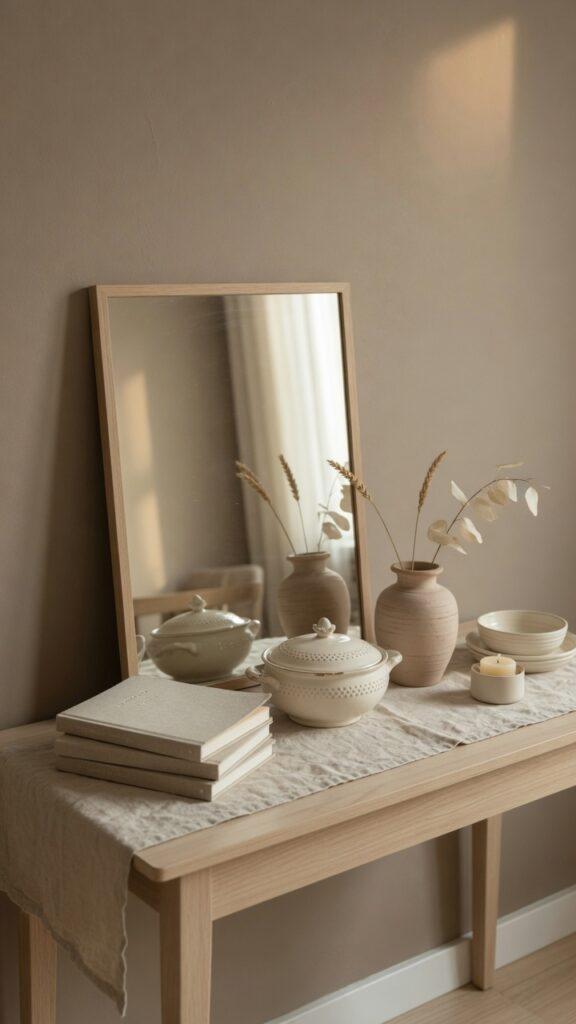
Sometimes color is the problem, not the solution. A tonal palette—creams, beiges, soft browns—can feel incredibly refined when done right.
The key is texture. If everything is the same shade, the interest has to come from materials. Linen, ceramic, wood, plaster—they all catch light differently.
This works especially well in dining rooms that already have strong features like bold chairs or patterned rugs. It gives the eye a place to rest.
Add just a hint of contrast—a darker tray, a black book spine—so it doesn’t fall flat.
One thing to watch: too many identical tones can look dull. Variation is everything.
Quiet palettes often feel the most luxurious.
5. Add Height With Sculptural Branches
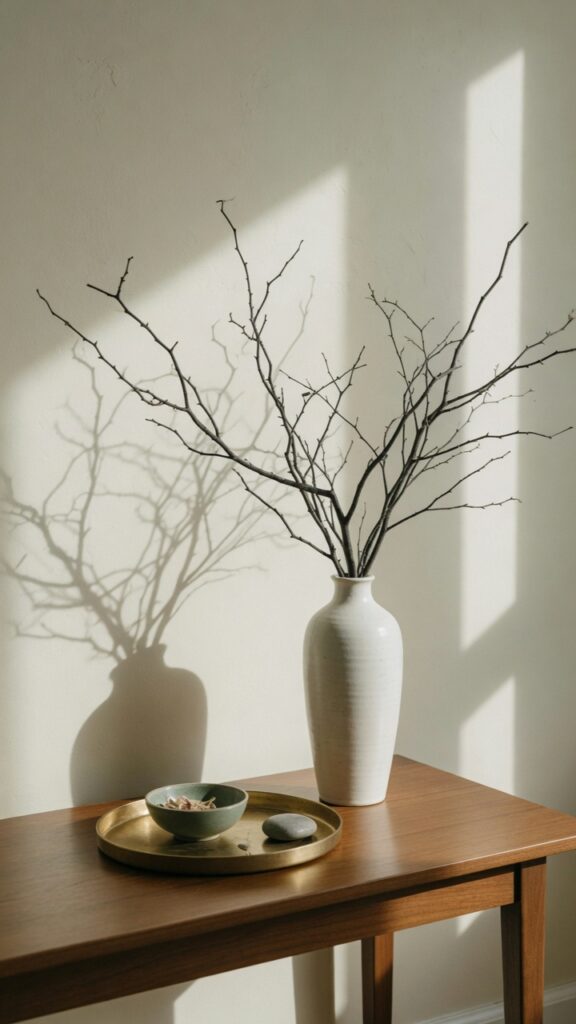
If your sideboard feels flat, it probably needs height. And nothing does that better than branches.
Skip the busy flower arrangements. Go for something architectural—olive branches, eucalyptus, or even bare stems. They add movement without clutter.
Use a substantial vase so it doesn’t tip visually. Matte ceramics or stone finishes usually look more elevated than glossy ones.
Keep everything else low so the branches can stand out.
This is also a great option if you like switching things seasonally—just swap the stems.
One thing to watch: messy or drooping branches ruin the effect quickly.
Simple, tall, and intentional—that’s the formula.
6. Introduce a Tray for Structure
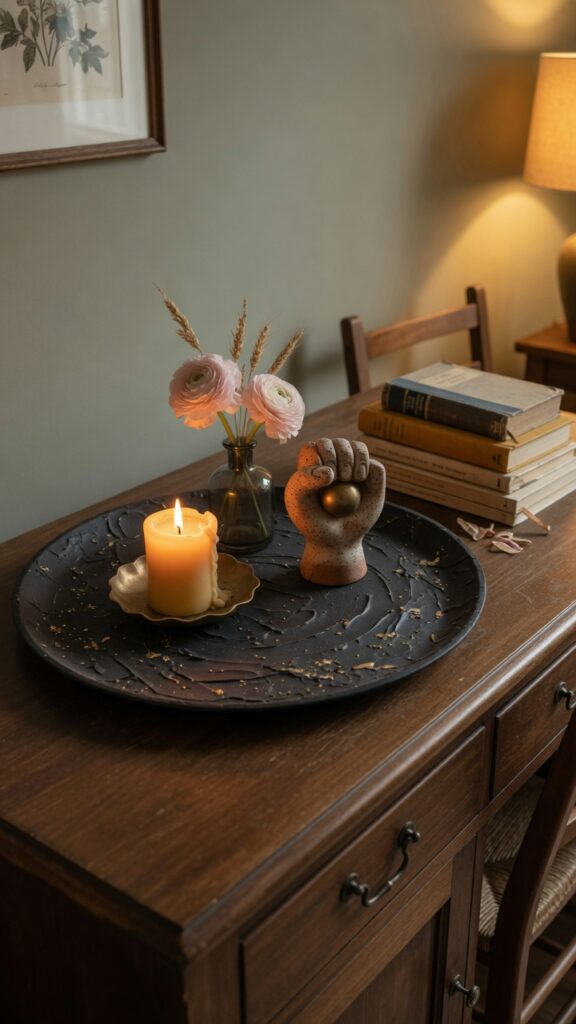
A tray is like a quiet organizer for your sideboard. It groups items so they feel deliberate instead of scattered.
Choose a tray with texture—wood, stone, or metal with a soft finish. Then place a few essentials inside: a candle, a small vase, maybe a decorative object.
It’s especially useful if your sideboard tends to collect random items. The tray creates a boundary.
Don’t overfill it. Three to five objects is usually enough.
This works beautifully in real homes where things aren’t always perfectly styled.
One thing to watch: too many small items can feel cluttered even inside a tray.
A tray turns everyday objects into a composition.
7. Mix Materials for Subtle Contrast
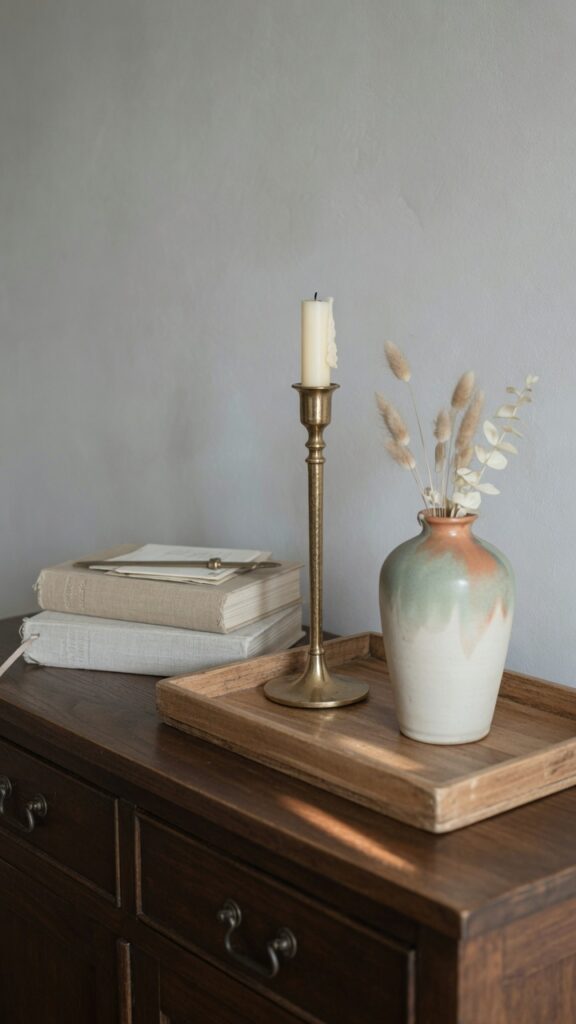
Elegant spaces rarely rely on one material. They mix—carefully.
Combine something smooth with something textured. Something matte with something slightly reflective. That contrast is what gives depth.
A ceramic vase next to a brass object. Linen books stacked under a glass piece. Wood grounding everything.
The key is restraint. You don’t need every material in the room represented here.
Repeat finishes subtly elsewhere in the room so it feels cohesive.
One thing to watch: too many shiny surfaces can feel overwhelming.
Material contrast is quiet—but powerful.
8. Repeat One Accent Color
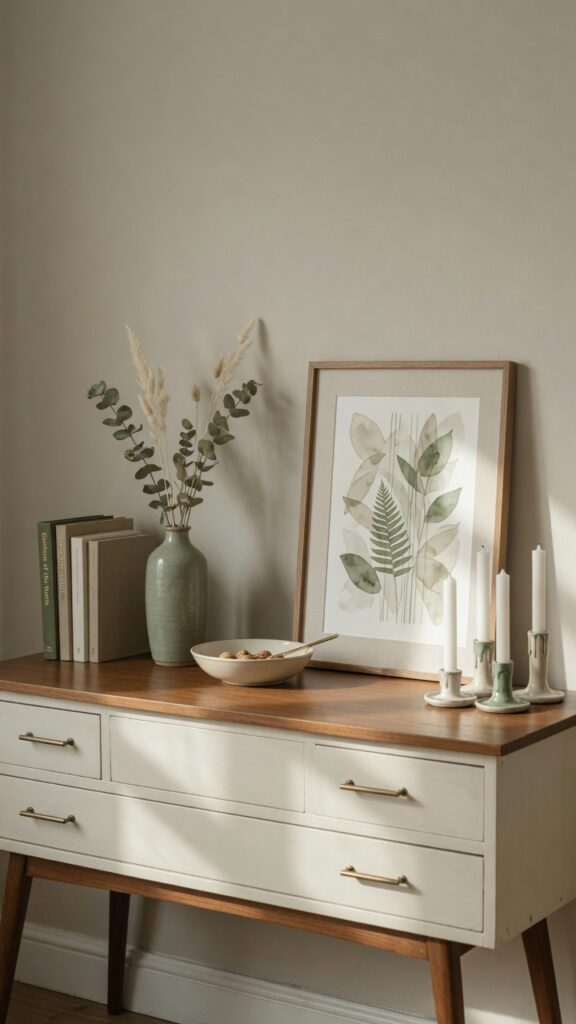
Color works best when it’s intentional. Pick one accent and repeat it.
A muted green, deep blue, or earthy clay tone can tie everything together. Use it in small doses—a vase, a book, a subtle detail in art.
This creates rhythm without overwhelming the space.
If your dining room already has color, echo it here instead of introducing something new.
Keep the rest of the palette calm so the accent doesn’t compete.
One thing to watch: too many colors break the effect instantly.
Repetition is what makes it feel designed.
9. Add One Bold Sculptural Piece
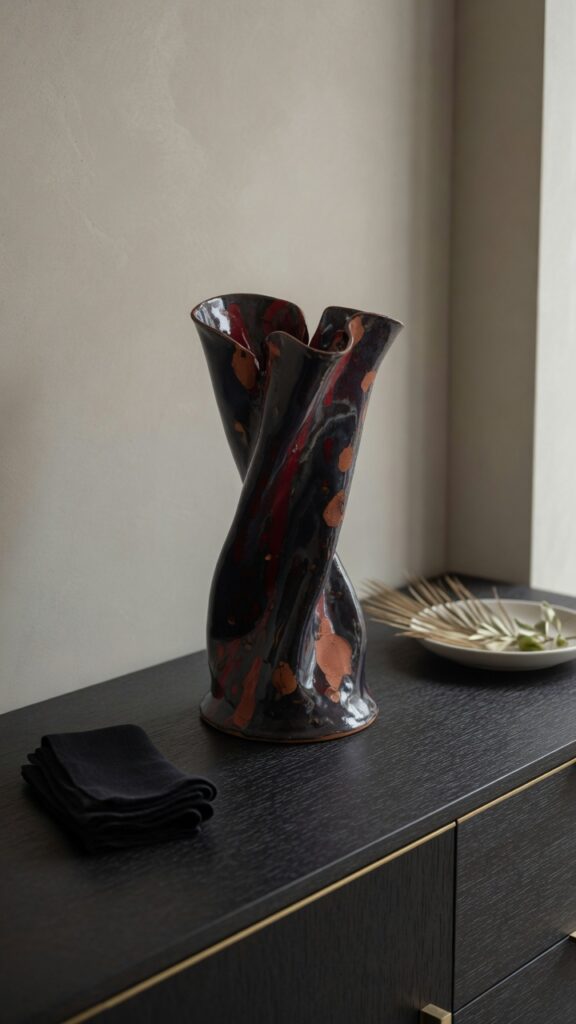
Sometimes one strong piece is enough.
A sculptural object—something with an interesting shape—can carry the entire setup. It adds personality without needing much else.
Keep the surrounding items minimal so it stands out.
This works especially well in modern or transitional dining rooms.
If you’re unsure what to add, start here instead of buying multiple small items.
One thing to watch: too small and it disappears.
Go bold, then keep everything else quiet.
10. Use Books to Ground the Styling
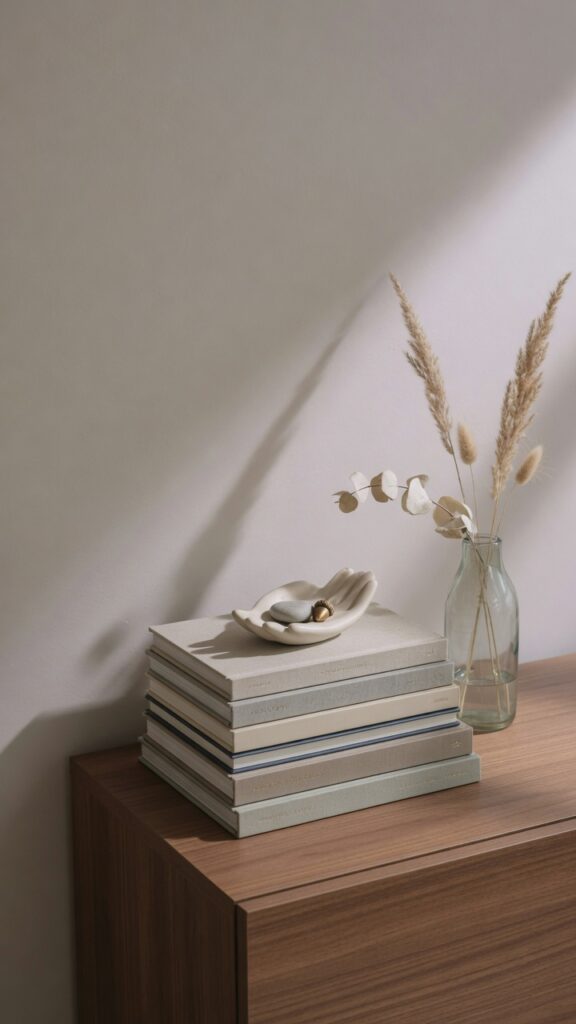
Books are the easiest way to add structure.
They create levels, add weight, and make everything feel more grounded. Stack them horizontally and use them as a base for smaller objects.
Choose covers that fit your palette. Neutral tones usually work best.
They also add a lived-in feel without clutter.
If you want a quick update, swap out the top book for something seasonal.
One thing to watch: overly colorful spines can disrupt a calm palette.
Books are simple—but incredibly effective.
11. Let Lighting Set the Mood
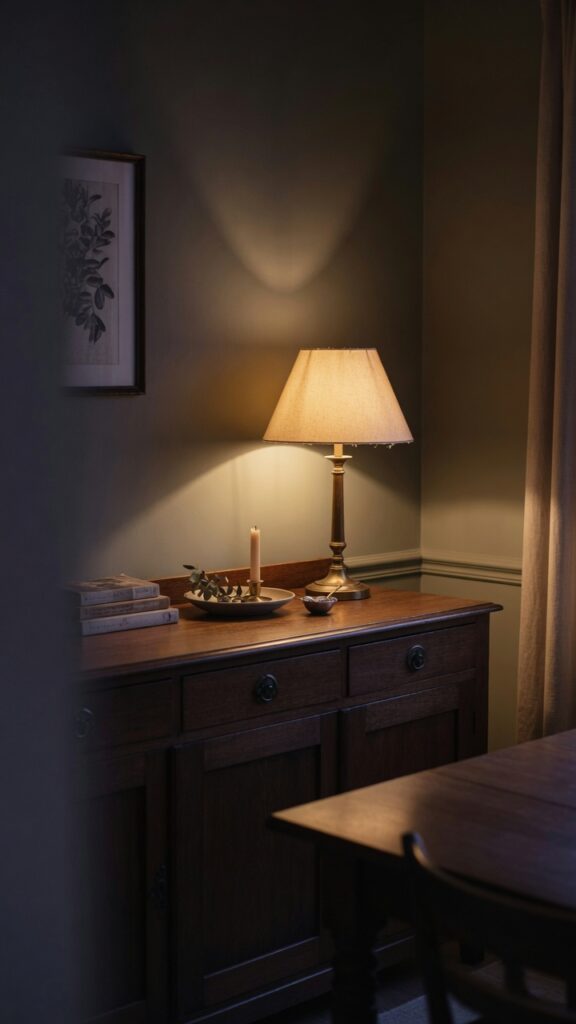
Sideboards aren’t just for daytime styling. At night, lighting changes everything.
A single lamp can create a soft pool of light that makes the room feel intimate. Much better than relying only on overhead fixtures.
Warm bulbs are essential. Cool light kills the mood instantly.
This is especially useful if your dining room doubles as a workspace or gathering spot.
Keep the lamp proportional to the sideboard—too small looks awkward.
One thing to watch: harsh lighting ruins even the best styling.
Good light makes everything look better.
12. Leave Space—It’s Part of the Design
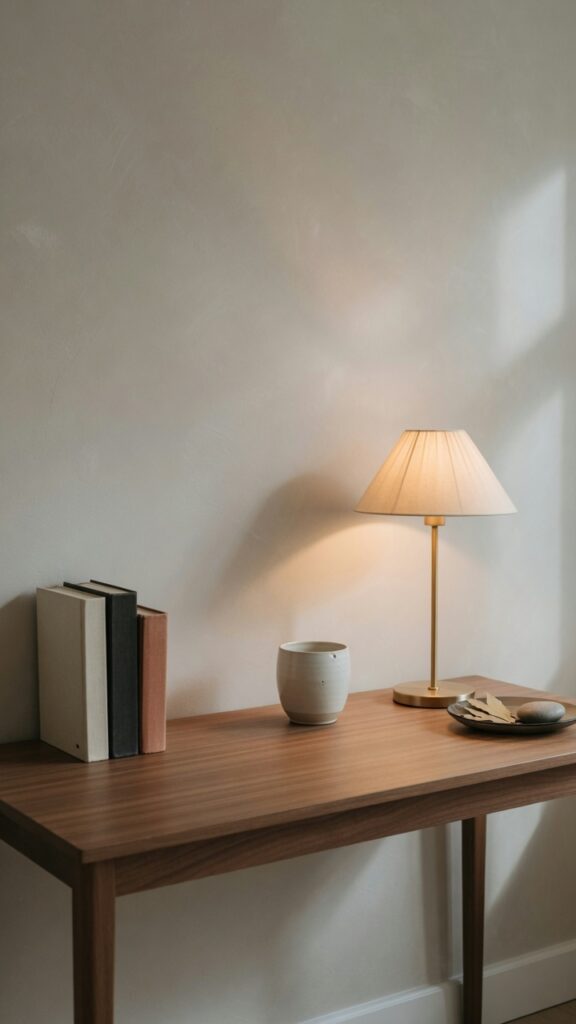
Here’s the part most people get wrong: you don’t need to fill the space.
Empty space is what makes everything else look intentional. Without it, even good decor feels crowded.
Edit ruthlessly. Remove one or two items and see how it feels.
This is especially important in smaller dining rooms where visual clutter builds quickly.
If you share the space, leaving room also makes it more practical.
One thing to watch: too empty can feel unfinished—balance is key.
Elegance often comes from what you leave out.
Conclusion
A beautifully styled sideboard isn’t about buying more—it’s about choosing better. The right balance of height, texture, and restraint can completely shift how your dining room feels.
What most people miss is that elegance isn’t loud. It’s subtle. It shows up in the spacing between objects, the softness of light, the way materials work together without competing.
If you take one thing from this, let it be this: edit more than you add. Start with fewer pieces, focus on quality, and let each element have a reason to be there.
Because when a sideboard is done right, it doesn’t just look good—it quietly makes the whole room feel complete.