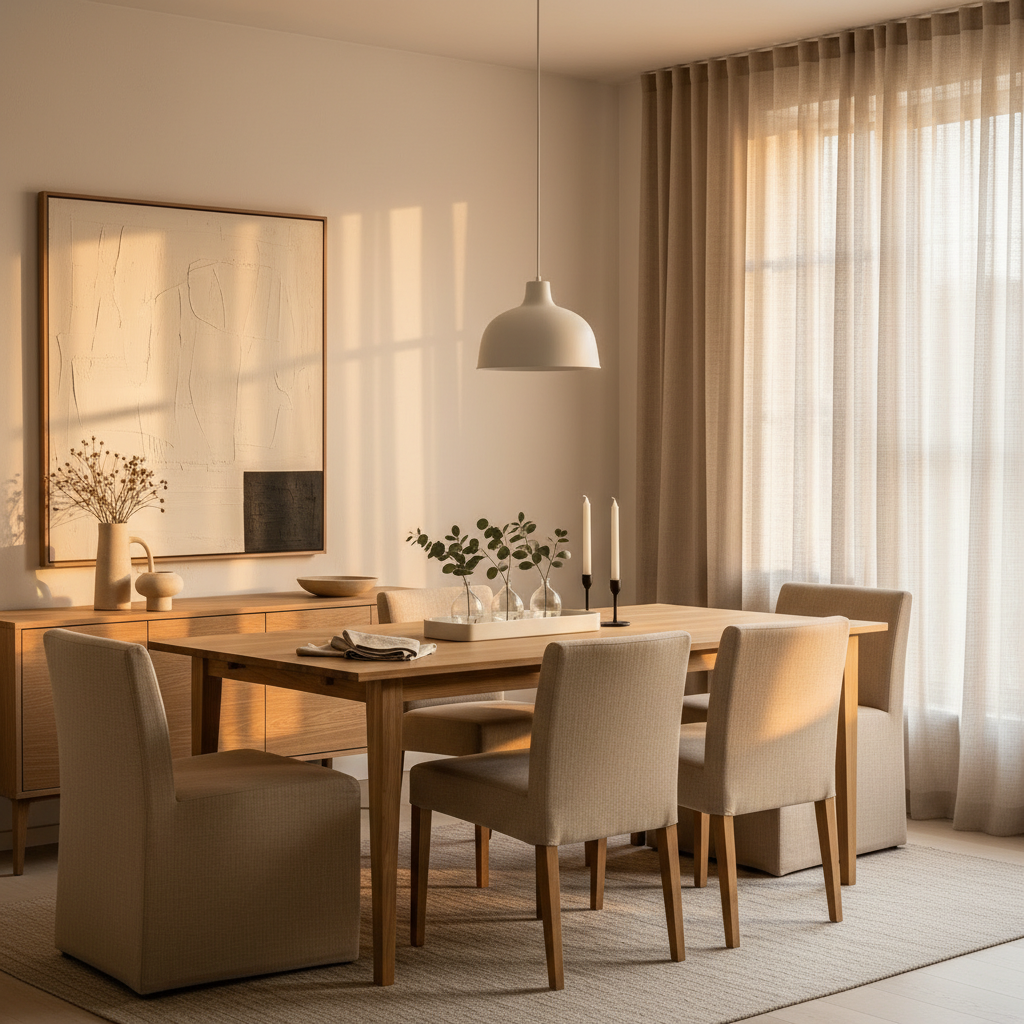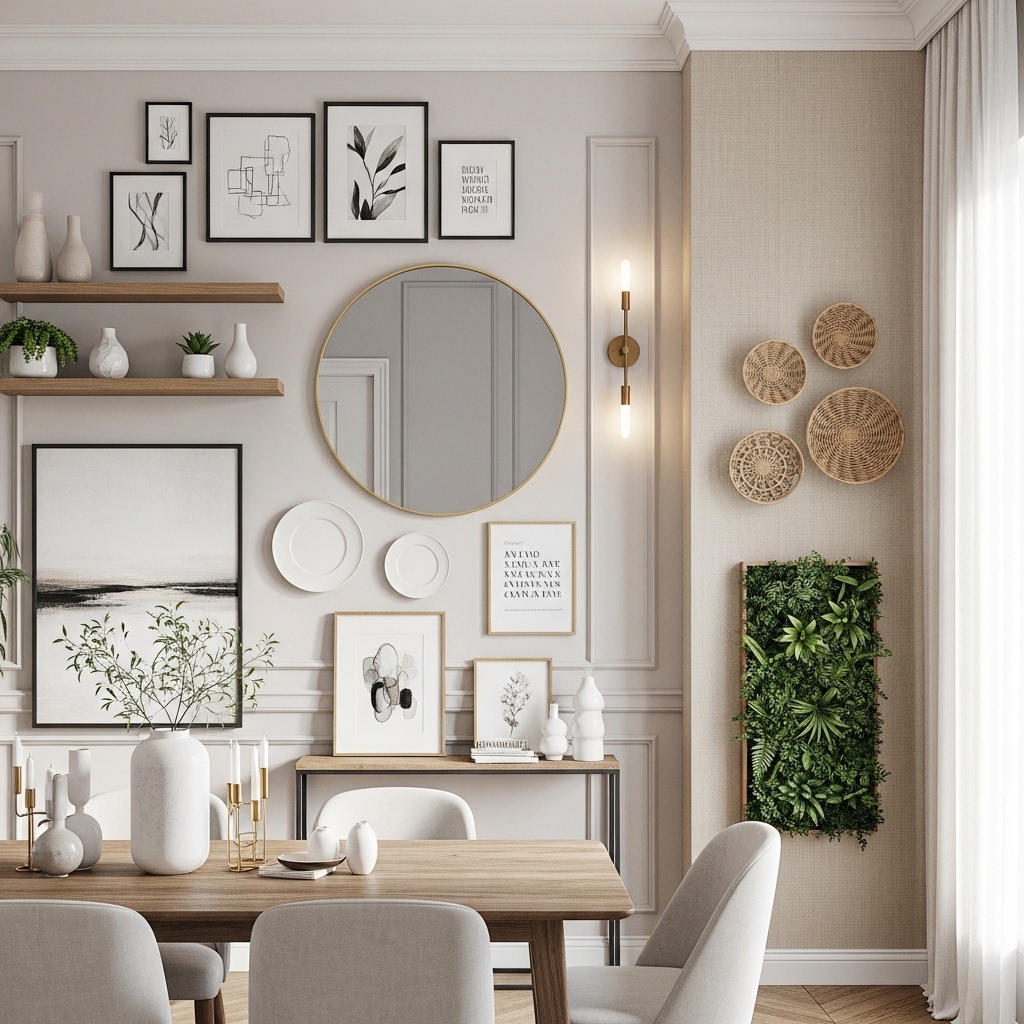
Glass dining tables are weirdly misunderstood. People either treat them like fragile showroom furniture (no one breathe near it) or they give up and let it become a fingerprint museum. The truth is: glass is a “multiplier.” It makes the room feel bigger, brighter, cleaner—especially in modern homes where you’re already leaning into open space and crisp lines. But it also amplifies whatever choices you make around it, good and bad. The goal isn’t to pile décor on top of the glass. The goal is to give the table context—texture underneath, warmth nearby, and a few intentional objects that look good even when you’re not hosting a dinner party.
Below are 12 distinct, practical ways to style a glass dining table so it feels modern and welcoming. Pick two or three ideas that match how you actually live, and your dining room will stop feeling like a glass box and start feeling like a room.
1. Anchor the Table With a Rug That’s More Texture Than Pattern

A glass table without a rug can feel like it’s levitating—and not in a cool way. The rug is what makes the dining zone feel intentional, especially in open-plan layouts where the table otherwise looks like it wandered in.
- Choose texture first: chunky wool, a tight flatweave with raised stitching, or a subtle looped weave. Texture “warms” glass visually.
- Size it correctly: chairs should stay on the rug when pulled out. If you hear chair legs catching edges daily, you’ll start resenting your décor.
- If your room faces north: lean warmer (sand, oatmeal, warm greige) so the glass doesn’t read icy.
One thing to watch: high-pile rugs look plush but trap crumbs and pet hair like it’s their job. If you eat here often, flatter weaves are your sanity saver. The takeaway: let the rug do the cozy work so the glass can stay light and modern.
2. Make the Chairs the “Statement,” Since Glass Is the Neutral
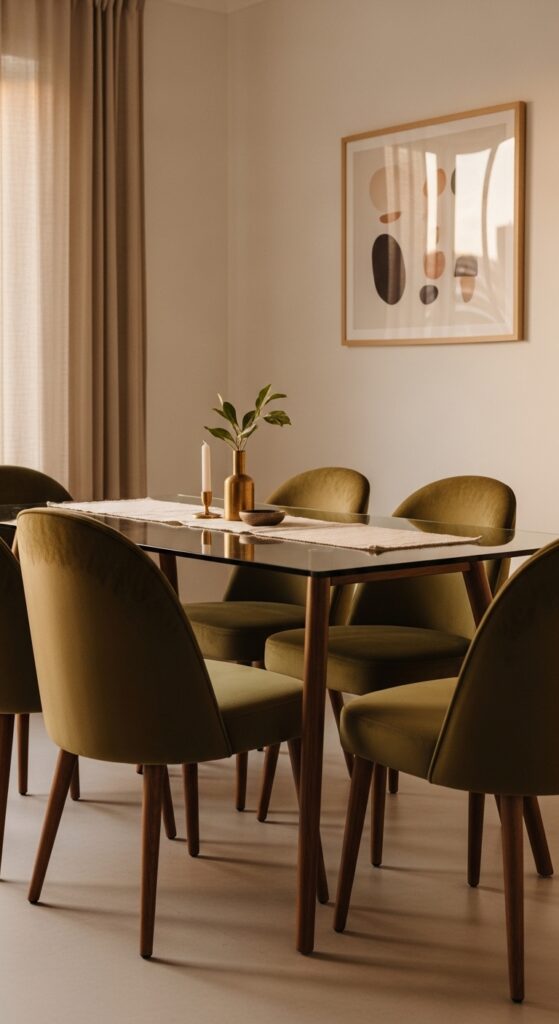
Here’s the honest truth: a glass tabletop doesn’t give you much “body.” So your chairs need to. If your chairs are too airy or flimsy, the whole setup can feel like a temporary rental, even if it isn’t.
- Pick a tactile upholstery: velvet for warmth, linen for relaxed ease, performance fabric if you’re spill-prone.
- Go sculptural: curved backs or thicker frames look especially good against transparent glass.
- Unify the legs: all black metal or all warm wood keeps the look clean, not chaotic.
Watch out for chairs that match your floor too closely. Light chairs on light floors + glass table can disappear into visual nothingness. Add contrast—darker chairs, or a rug that frames the set. The takeaway: when the table is visually “quiet,” the seating gets to have personality.
3. Use a Long, Low Centerpiece That Doesn’t Block Conversation
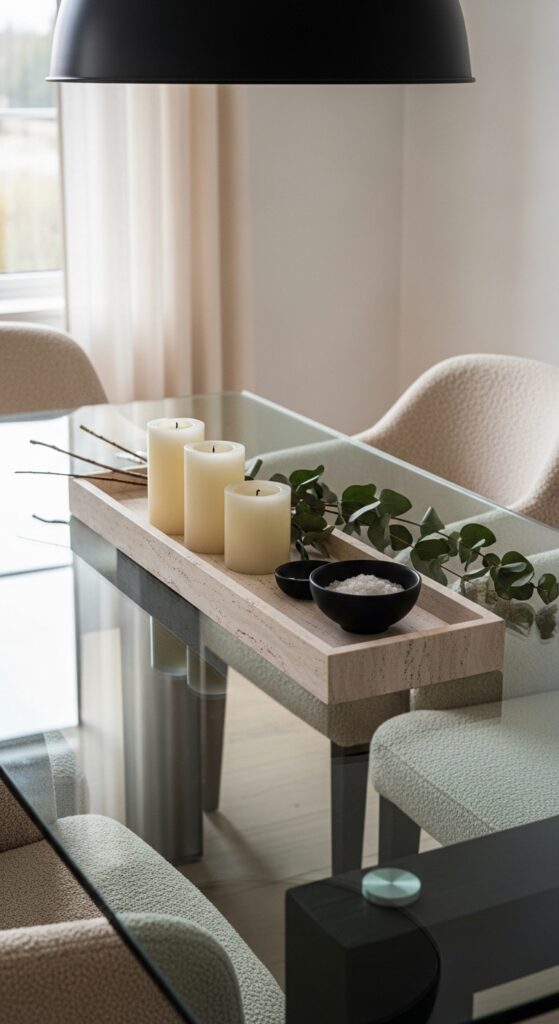
Tall centerpieces look dramatic on social media and annoying in real life. If you actually eat at your dining table, keep the centerpiece low and linear so everyone can see each other without playing peekaboo around a vase.
- Start with a tray: travertine, matte ceramic, smoked wood, or even a simple stone slab. It creates a “zone” on the glass.
- Use the rule of three: three candles, three small vessels, or three grouped objects reads effortless.
- Add one organic element: a few olive branches or eucalyptus stems—nothing fluffy or overdone.
Watch out for tiny objects scattered across glass; they look like clutter and highlight fingerprints. Keep it contained in one strip down the center. The takeaway: low, long styling makes glass feel elegant and functional.
4. Soften the Shine With a Linen Runner (Wrinkles Welcome)
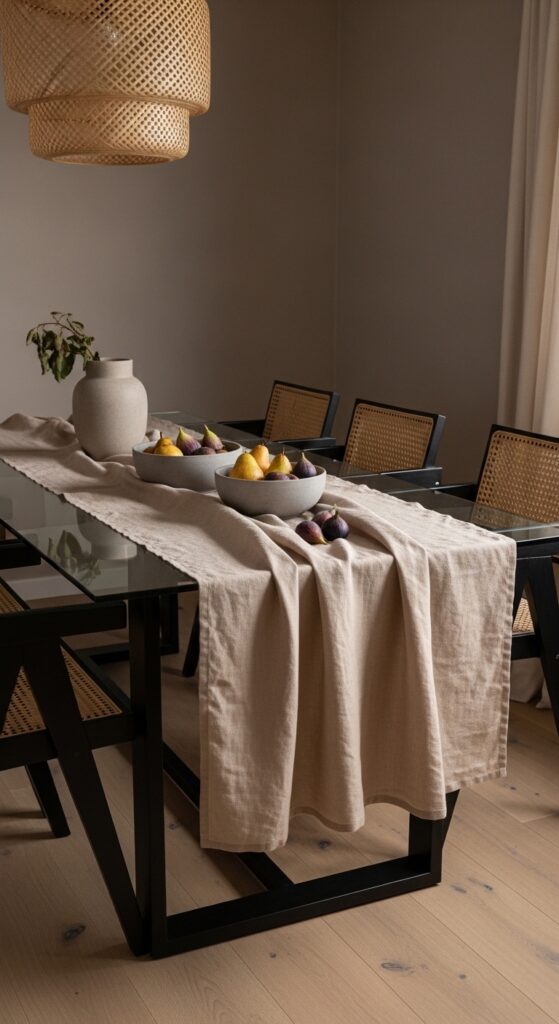
A runner on a glass table is like a matte topcoat on glossy nails—it takes the edge off. Linen is especially good because it adds softness without trying too hard.
- Keep it narrow: you want to still see the glass edges so the table feels airy.
- Choose weighty linen: washed linen drapes better and doesn’t slide around when someone bumps the table.
- Let it be casual: slightly wrinkled linen reads modern and lived-in, not formal dining-room stiff.
Watch out for runners that are too short; they look accidental. Ideally, it should end with a confident drop (or stop neatly before the edge, but on purpose). The takeaway: one strip of linen makes a glass table feel warmer and more forgiving instantly.
5. Do a “One Material Moment” in a Mostly Monochrome Palette
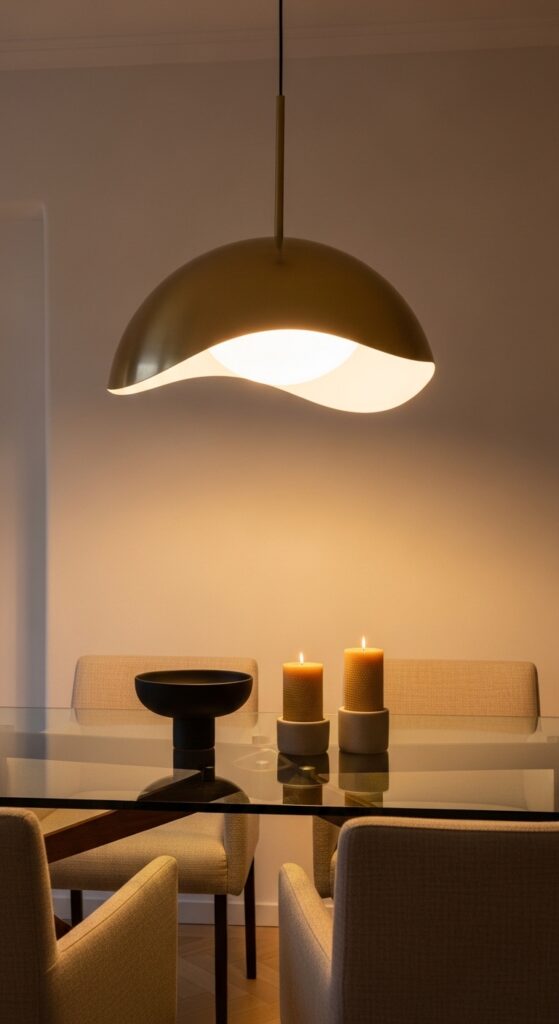
If you want modern without the “cold showroom” vibe, try monochrome styling with one standout material that carries the whole look. Glass is perfect here because it doesn’t compete.
- Pick a tight palette: black/charcoal/cream, or sand/mushroom/white.
- Choose one hero object: plaster vase, honed stone bowl, matte ceramic sculpture—something with weight and texture.
- Repeat one accent: a matching candle color or a similar matte finish elsewhere in the room keeps it cohesive.
Watch out for stark white under harsh daylight. If your dining area gets intense sun, soften with warmer whites and creamy neutrals so the glass doesn’t feel clinical. The takeaway: keep the palette quiet, make one object the star, and the whole table feels styled without looking “decorated.”
6. Hang the Pendant Lower Than You Think (And Warm Up the Bulbs)
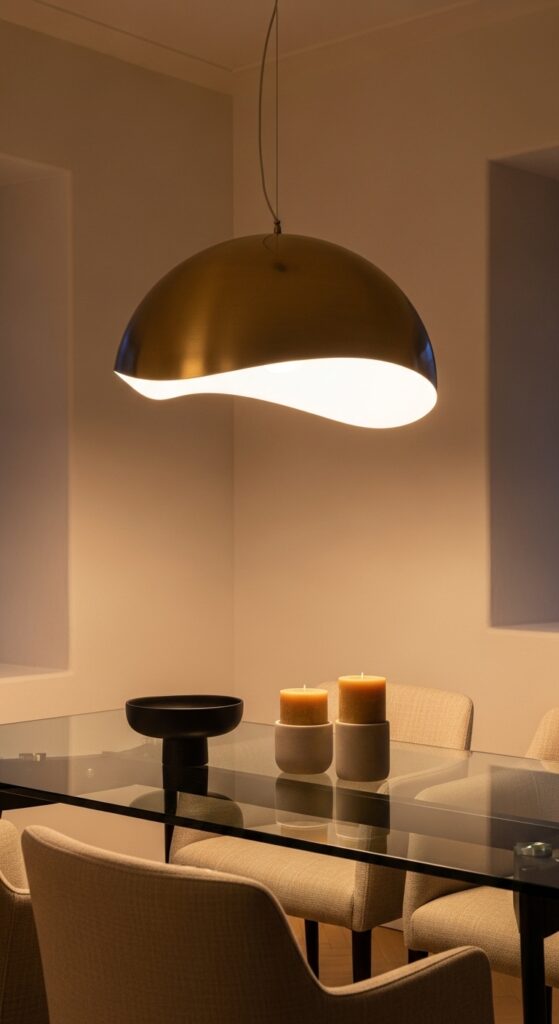
Glass tables really rely on lighting to feel finished. Without a good pendant, the table can look like an afterthought.
- Go wide, not tall: wide fixtures feel modern and help visually “cap” the table.
- Lower it for intimacy: not so low you bonk heads, but low enough that the table feels anchored.
- Use warm bulbs: cool light makes glass look sharp and slightly harsh; warm light makes it feel inviting.
Watch out for clear glass pendants over glass tables. Too much transparency can make everything feel slippery and visually busy. If you love clear fixtures, balance them with matte elements—plaster walls, linen chairs, or a textured rug. The takeaway: good lighting turns glass from “pretty” into “purposeful.”
7. Add a Sideboard in Warm Wood to Counterbalance the Coolness
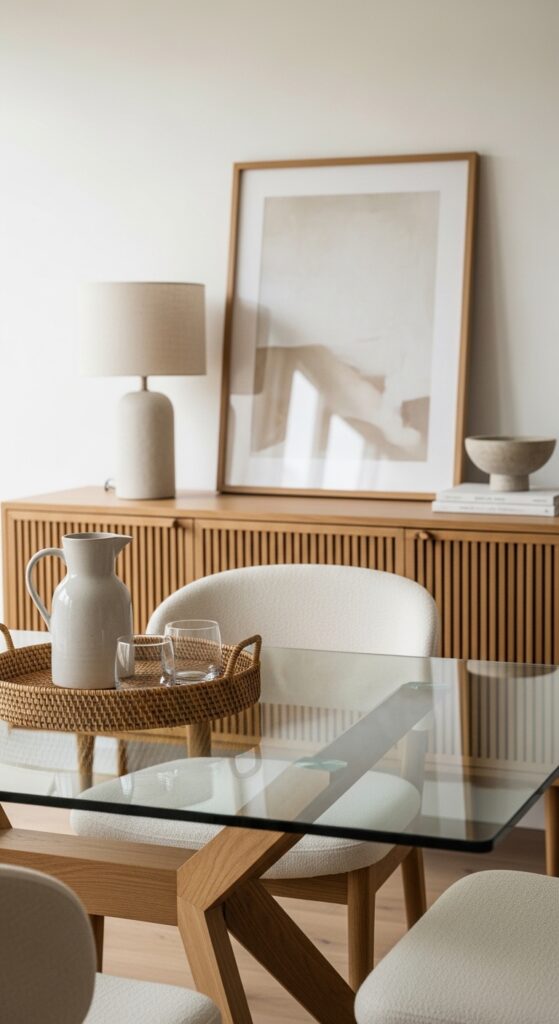
A glass table benefits from a nearby “grounding” piece—something solid, warm, and not transparent. A sideboard is the best version of that because it’s both practical and beautiful.
- Choose visible grain: oak, walnut, ash—natural wood adds warmth immediately.
- Style it simply: a lamp with a linen shade (cozy!), one large art piece, and one tactile object like rattan or ceramic.
- Use it for storage: keep placemats, candles, and serving pieces off the glass tabletop when not in use.
Watch out for too many wood tones competing. Two wood tones can look layered and intentional; three can look accidental unless you’re very deliberate. The takeaway: wood nearby makes a glass table feel like it belongs in a home, not a catalog.
8. Try the “Two-Vase” Setup for Easy, Always-Works Styling
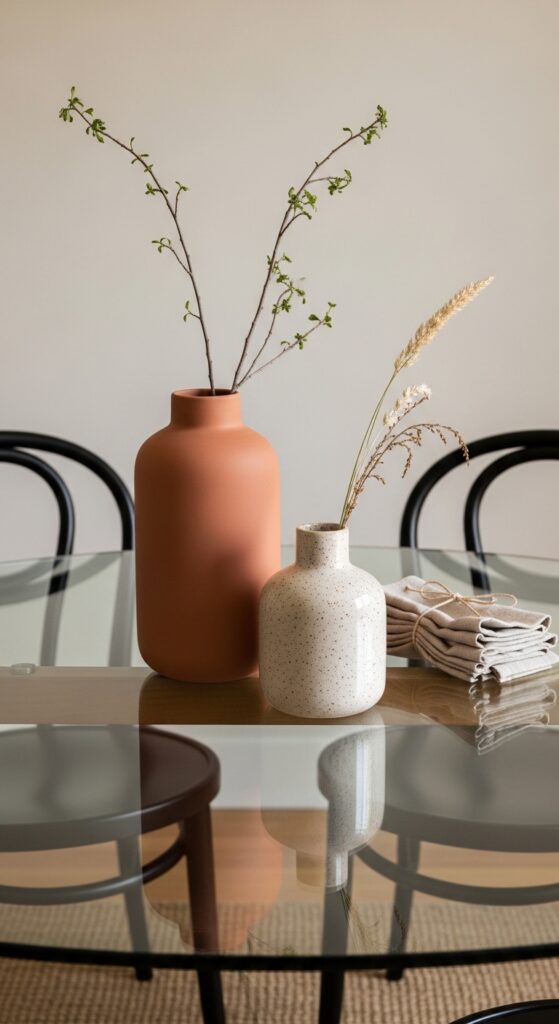
Some centerpieces look great once and then feel like a chore. The two-vase setup is the opposite: flexible, relaxed, and refreshable.
- Mix heights: one taller, one shorter—instant balance without fuss.
- Mix finishes, not chaos: terracotta + speckled cream, plaster + ribbed ceramic, smoky glass + stoneware.
- Keep stems airy: branches, grasses, a few bold blooms—avoid anything overly fluffy or dense.
Watch out if you’re tight on space: two vases can feel like clutter on a smaller table. In that case, scale down the vessels and keep them off-center, closer together, like a little duo rather than two separate “things.” The takeaway: two vessels, minimal stems, and you look like you tried—without actually trying that hard.
9. Upgrade the Backdrop With Renter-Friendly Wall Texture
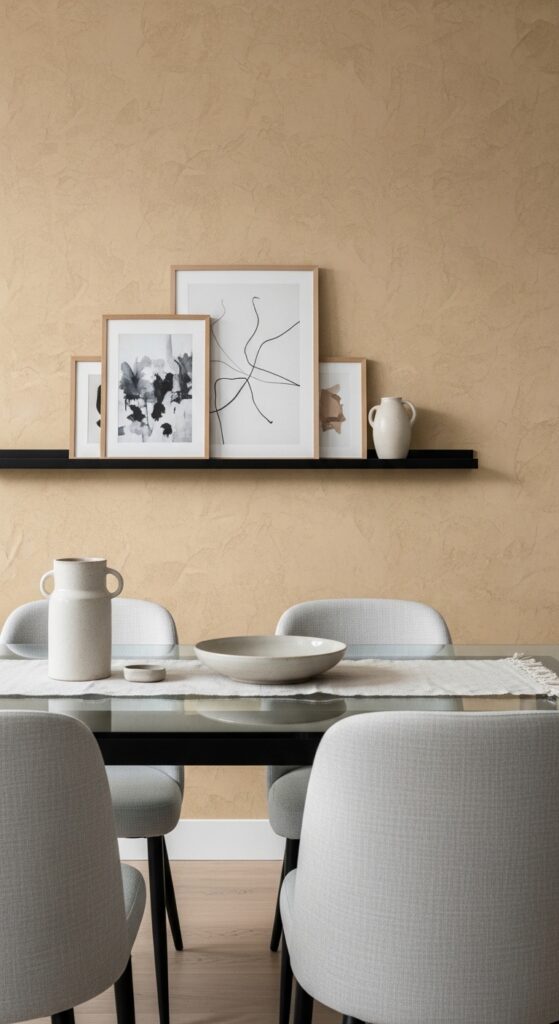
If your glass table feels “too modern” or too bare, it might not be the table. It might be the wall behind it. Glass looks best when there’s something tactile in the background to balance the transparency.
- Use removable wallpaper: plaster-look texture, subtle grasscloth, or soft linen-like patterns work well.
- Keep the color calm: warm sand, mushroom, soft clay—textures read better when the palette isn’t yelling.
- Add a picture ledge: renter-friendly, easy to rearrange, and it avoids a million nail holes.
Watch out for shiny wallpaper finishes. Glass already reflects; glossy walls will double the glare. If your dining room gets lots of direct sun, matte textures are your best friend. The takeaway: change the wall and the whole table suddenly looks more intentional.
10. Style Place Settings Like a “Soft Grid,” Not a Formal Tablescape

You don’t need a full tablescape to make a glass table look finished. You need repeatable pieces that feel calm and tactile—especially if your dining table doubles as a work zone or homework station.
- Choose matte plates: stoneware is ideal because it softens the glass shine.
- Repeat a napkin color: linen in clay, rust, or olive adds warmth without clutter.
- Use a center tray: it corrals candles or condiments and keeps the table looking organized.
Watch out for overly shiny chargers and mirrored accessories. Glass + gloss + metal can create a busy reflection party, and not the fun kind. If you love metallics, keep them brushed or antique-finish. The takeaway: a simple “grid” of matte essentials makes your table look styled even on a random Tuesday.
11. Add Black Accents to Give the Glass a Visual “Frame”
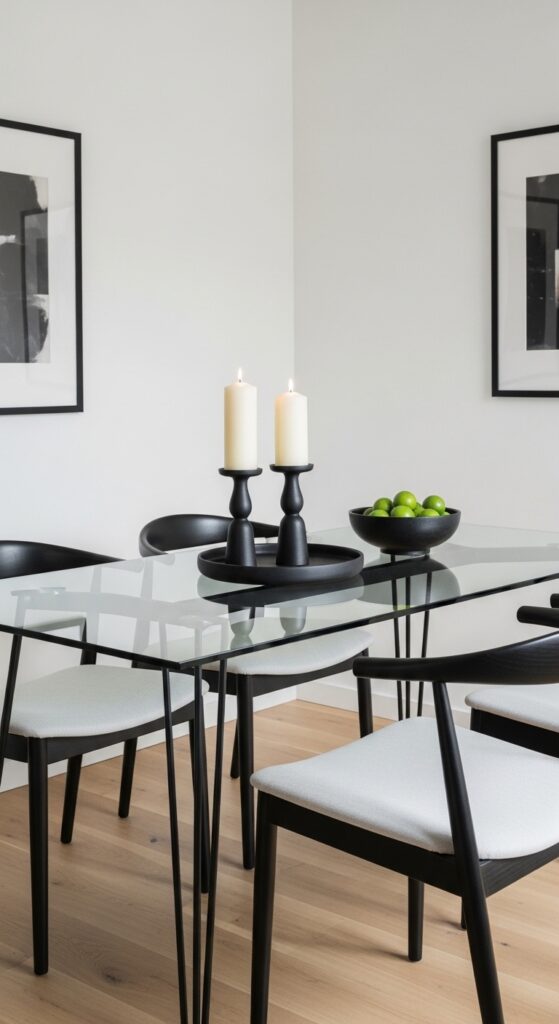
Glass can look a little too floaty if nothing anchors it. Black accents work like a frame: they outline the dining area and make the glass feel confident instead of delicate.
- Echo the table base: if the base is black, repeat it with a tray, candlesticks, or a picture frame nearby.
- Choose matte or satin black: glossy black plus glass can read harsh.
- Balance with warmth: linen seats, a woven rug, or warm wood keeps it inviting.
Watch out for “peppering” the room with lots of tiny black items. A few larger pieces look intentional; lots of small ones can look like visual clutter. The takeaway: black details give glass structure and a modern edge without adding more stuff.
12. Go Seasonal the Grown-Up Way: Citrus, Branches, and Stone
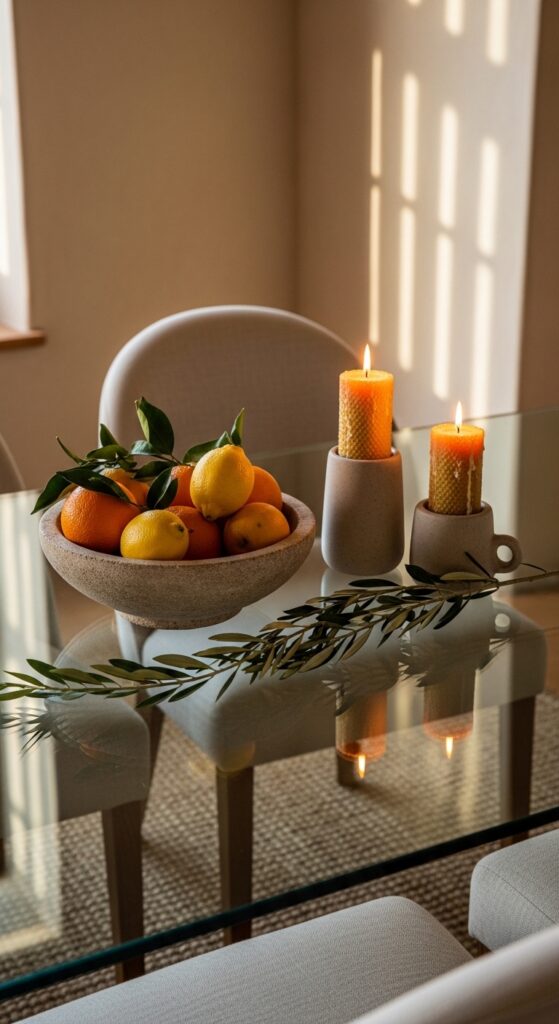
Seasonal décor doesn’t need pumpkins wearing hats or glittery anything. On a glass table, the best seasonal styling is simple, edible, and easy to clear away when you actually need the table.
- Use a heavy bowl: stone, ceramic, or carved wood—weight matters on glass.
- Choose graphic “nature”: citrus, pears, pomegranates, or a bundle of herbs looks modern and fresh.
- Add thick candles: chunky beeswax or stout pillars feel grounded and cozy.
Watch out for shedding materials—dried leaves, flaky branches, glittery faux stems—because glass shows every speck. Keep it clean and simple so it looks intentional, not messy. The takeaway: seasonal styling works best on glass when it feels natural, restrained, and a little sculptural.
Conclusion
A glass dining table doesn’t need a lot of décor—what it needs is the right supporting cast. When you add texture underfoot, warmth nearby, and a few matte, substantial pieces on top, the table stops feeling “cold” and starts feeling modern in the best way: light, clean, and calm. If you remember one thing from this page, make it this: glass amplifies your choices. So choose fewer objects, choose better materials, and prioritize comfort where it counts—chairs you actually want to sit in, lighting that flatters at night, and textures that make the room feel lived-in. Do that, and your dining room won’t just look styled—it’ll feel like your favorite place to gather, even when there’s nothing on the table but a bowl of fruit.