Minimalist dining rooms get misunderstood. People assume “minimal” means blank walls, cold lighting, and furniture that feels more like sculpture than something you’d actually sit on for Sunday dinner. But true minimalism isn’t empty — it’s intentional. It’s choosing fewer pieces and making sure each one earns its place.
Dining rooms, in particular, benefit from this restraint. They’re already busy spaces: chairs moving, dishes clinking, conversations overlapping. When the walls are calm, the whole room breathes.
That said, minimalist wall decor still requires thought. Scale, texture, proportion — they matter even more when you don’t have layers of decor to distract from mistakes.
If you’re craving a dining room that feels clean but not sterile, pared-back but still warm, these twelve minimalist dining room wall decor ideas will help you find that balance.
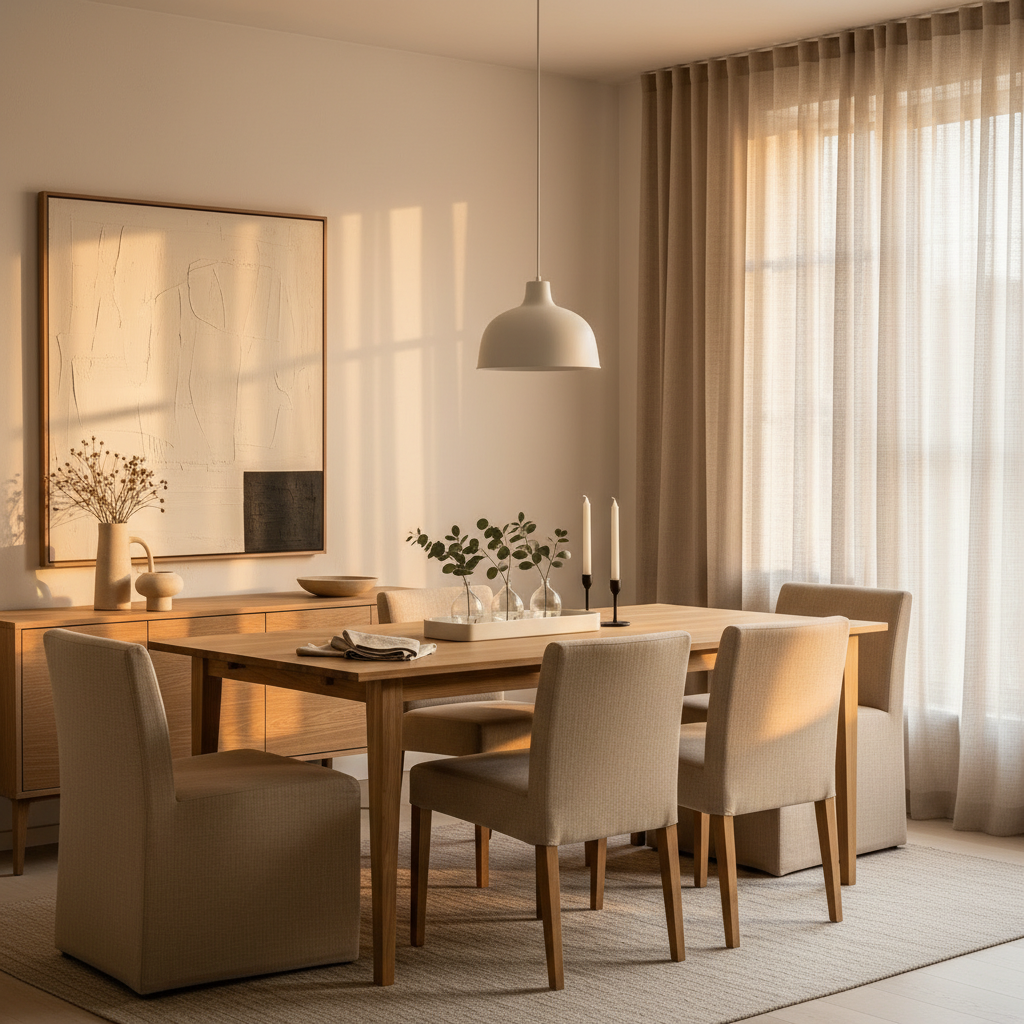
1. Hang One Oversized Piece of Art

If you want minimalist impact without overthinking it, go big.
One oversized artwork creates focus and eliminates the temptation to add smaller frames around it. Aim for a piece that spans at least two-thirds of your dining table’s width. Smaller pieces tend to feel lost in minimalist spaces.
Choose neutral or tonal artwork — abstract shapes, soft landscapes, or textured canvas. The goal isn’t visual noise; it’s quiet presence.
Keep frames simple: slim black, oak, or even frameless.
One watch-out: art hung too high instantly ruins the effect. Keep the center roughly at eye level.
One piece. Properly scaled. That’s enough.
2. Add a Subtle Plaster Finish
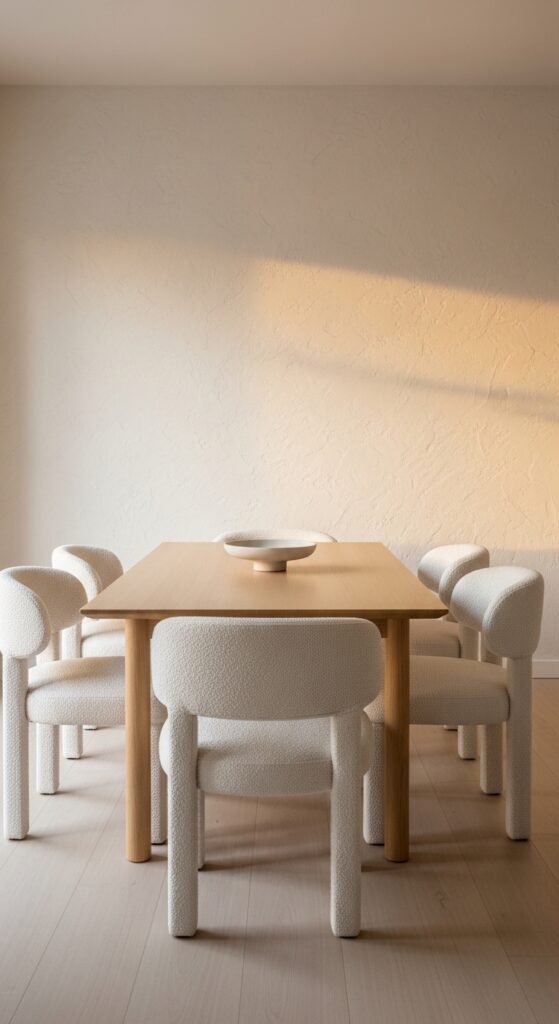
Minimalism thrives on texture over decoration.
Instead of hanging art, consider a subtle plaster or limewash finish. It adds depth without clutter. The wall becomes the decor.
Warm tones — creamy whites, soft beige, muted taupe — feel far more inviting than stark white.
If repainting feels overwhelming, even a feature wall behind the table can shift the mood dramatically.
One thing to watch: heavy texture can feel rustic if overdone. Keep it refined and subtle.
When the wall itself carries interest, you don’t need much else.
3. Install Slim Picture Frame Molding
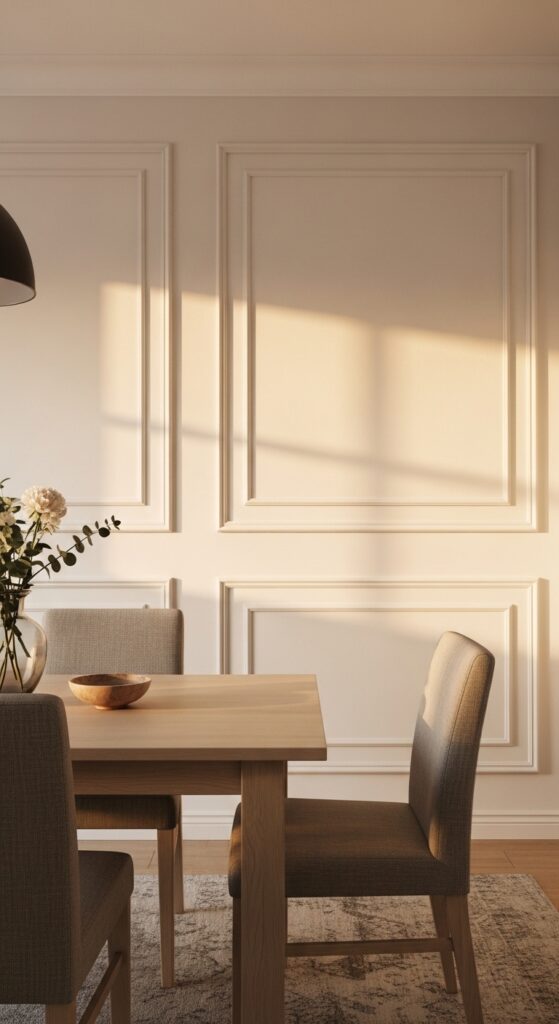
Architectural detail is minimalist gold.
Slim picture frame molding painted the same color as the wall adds dimension without introducing visual clutter. It feels intentional, not decorative.
Keep proportions balanced — larger panels for taller ceilings, smaller rectangles for standard heights.
Avoid overcomplicated layouts. Clean geometry always wins in minimalist spaces.
This works beautifully if you dislike swapping art frequently.
Structure without excess keeps things interesting.
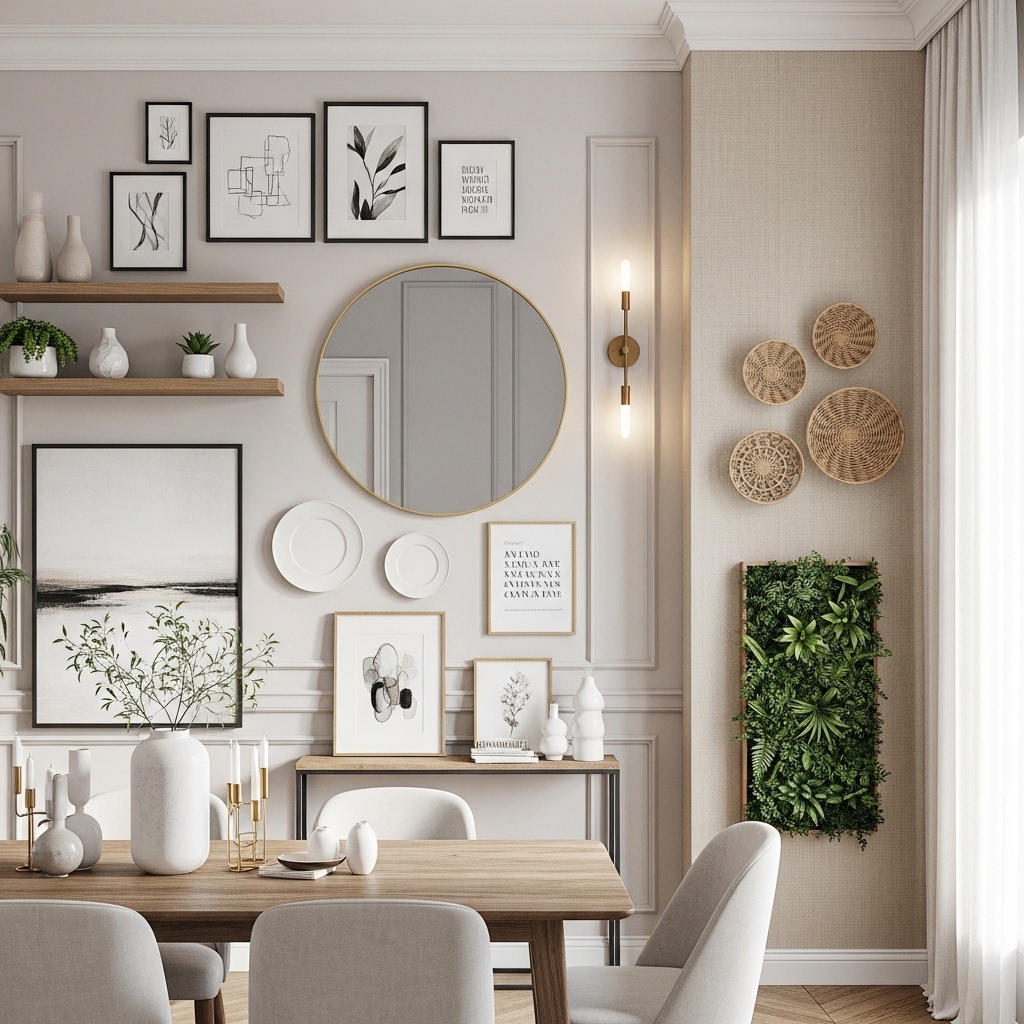
4. Center a Round Mirror

Mirrors are minimalist staples for a reason.
A single round mirror softens straight lines and reflects light, making the room feel larger. Choose thin metal frames — brass or matte black — to keep it modern.
Size matters. The mirror should feel generous, not timid.
Position it thoughtfully so it reflects something pleasant — a window, pendant light, or artwork.
Skip ornate frames; they fight the minimalist aesthetic.
A well-placed mirror quietly elevates everything around it.
5. Use a Neutral Wallpaper With Subtle Pattern
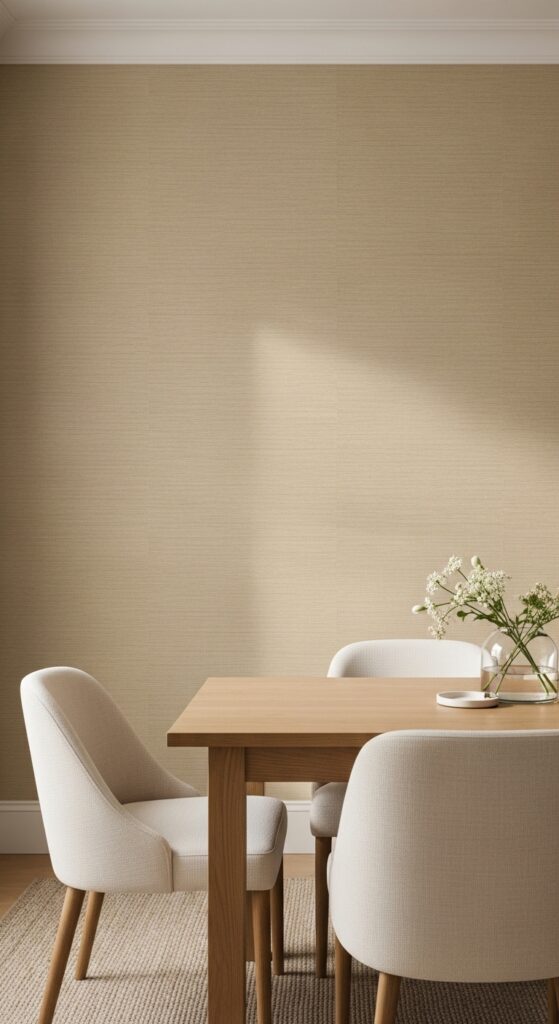
Pattern can exist in minimalist spaces — but quietly.
Grasscloth or soft tonal wallpaper adds depth without demanding attention. Stick to muted palettes: beige, soft gray, pale olive.
Use it on one focal wall if you’re cautious.
Avoid busy florals or high-contrast prints. They quickly overwhelm.
One caution: grasscloth can be delicate in high-traffic homes.
Texture without chaos is the minimalist sweet spot.
6. Hang Linear Wall Sconces
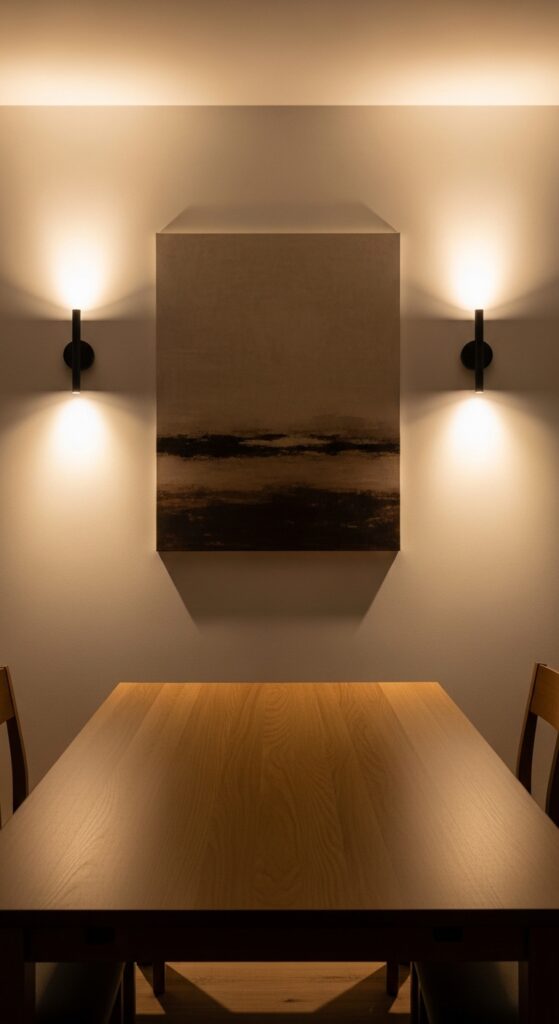
Lighting can double as decor.
Install slim, modern wall sconces on either side of a mirror or artwork. They add warmth and symmetry.
Choose clean lines — matte black or brushed brass finishes feel current.
Keep bulbs warm-toned to maintain intimacy.
Avoid ornate shapes; minimalism prefers simplicity.
Functional lighting with sculptural appeal keeps walls purposeful.
7. Embrace Negative Space
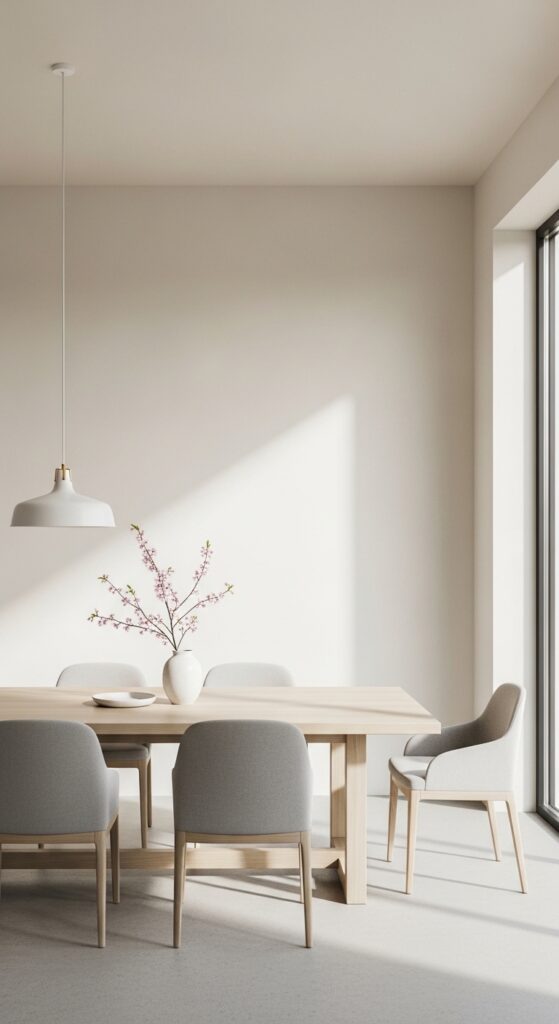
Sometimes the best decor is none.
Leaving a wall blank can feel bold — and beautifully calm. If your dining room already features interesting furniture or lighting, you may not need wall decor at all.
Balance is key. The table, rug, and lighting must feel substantial enough to anchor the room.
This approach works best in rooms with architectural features or textured walls.
One watch-out: too much emptiness in a poorly lit space can feel stark.
Negative space is a design choice, not an oversight.
8. Add a Single Floating Shelf
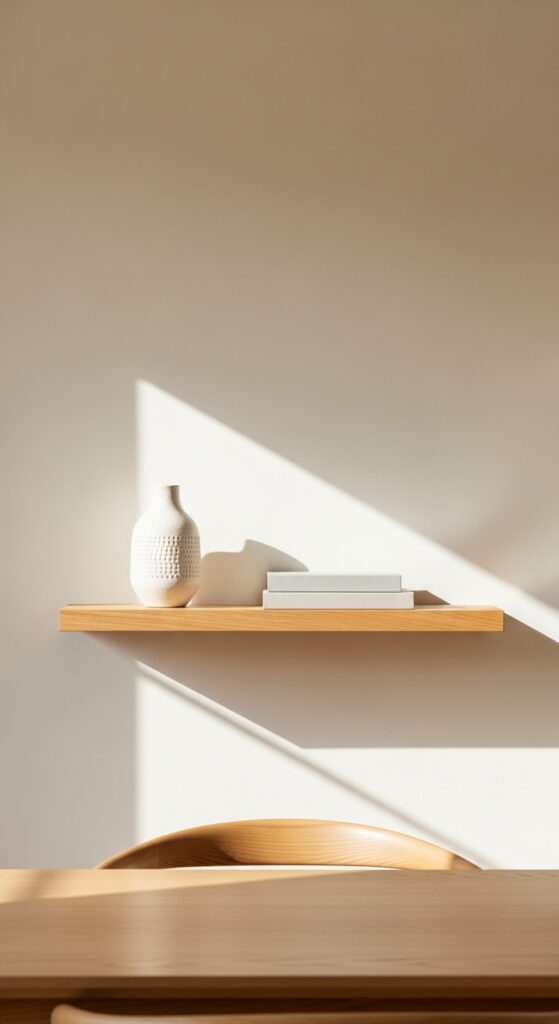
One shelf can be enough.
Install a slim floating shelf and style it sparingly — a ceramic vessel, a small stack of books, perhaps one framed print.
Keep spacing generous. Clutter defeats the purpose.
Match the shelf finish to your dining table for cohesion.
Avoid multiple shelves unless the wall is large and proportionally balanced.
Minimal shelves, maximal restraint.
9. Lean Art Against the Wall

Leaning art feels relaxed but refined.
Place a large frame on a console or directly on the floor if scale allows. It creates depth without committing to nails.
Layer a smaller frame in front for dimension.
This works beautifully for renters.
Watch stability — secure pieces discreetly if needed.
Casual doesn’t mean careless.
10. Paint a Soft Accent Wall

Minimal doesn’t mean colorless.
A soft accent wall — sage, muted blue, or warm taupe — can define the dining area without clutter.
Keep the tone subtle. Deep, saturated hues may feel heavy in small spaces.
Balance with lighter furniture.
Color can replace decor entirely.
11. Frame Textural Fabric Panels
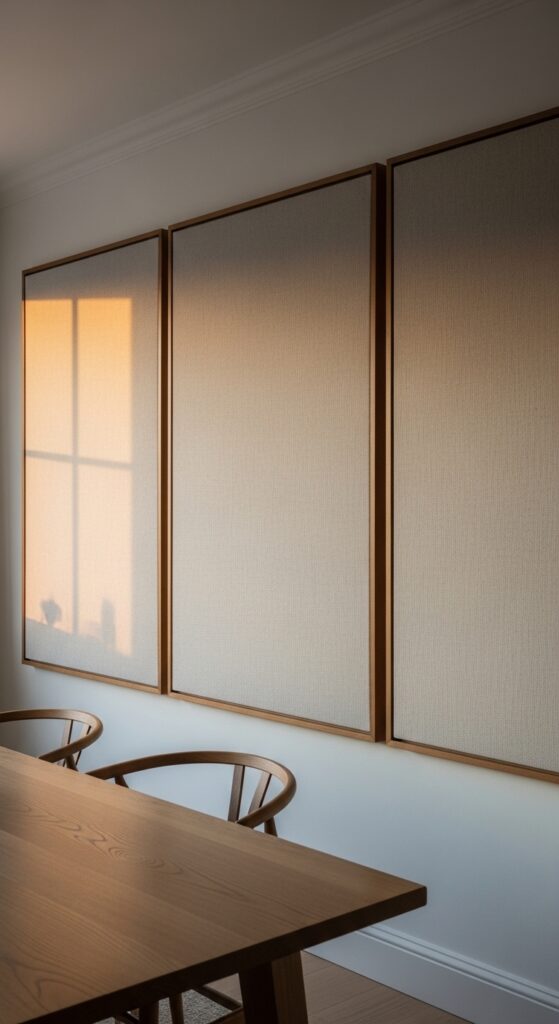
Fabric as art feels quietly luxurious.
Frame neutral linen or woven textile panels for texture-driven decor. They absorb sound and add softness.
Stick to large frames for scale.
Avoid bright fabrics; keep it tonal.
Texture framed simply feels elevated.
12. Keep It Symmetrical and Simple
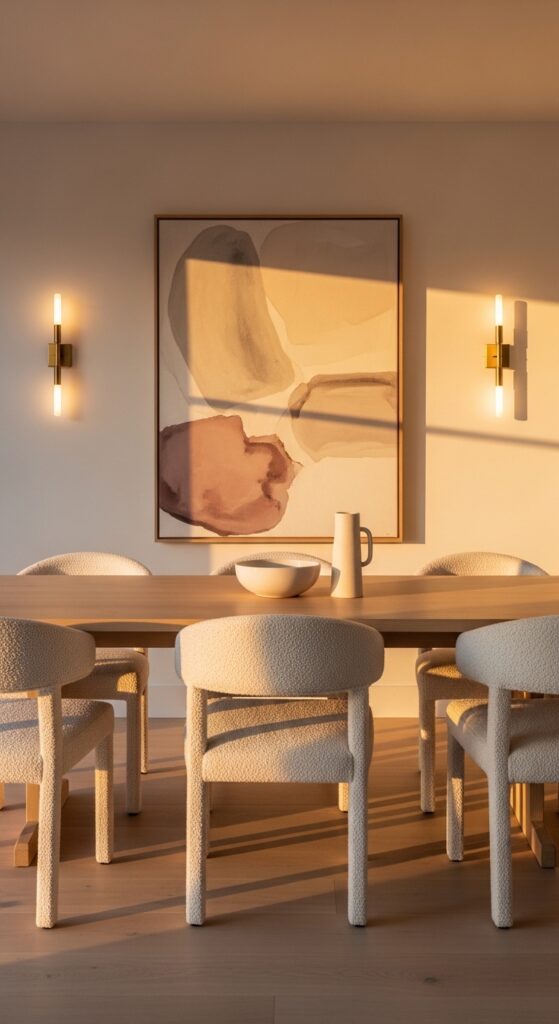
Symmetry makes minimalism feel intentional.
Center artwork above the table and flank it with identical sconces or small frames.
Keep proportions aligned with the table width.
Skip extra objects around it.
Balanced simplicity reads polished every time.