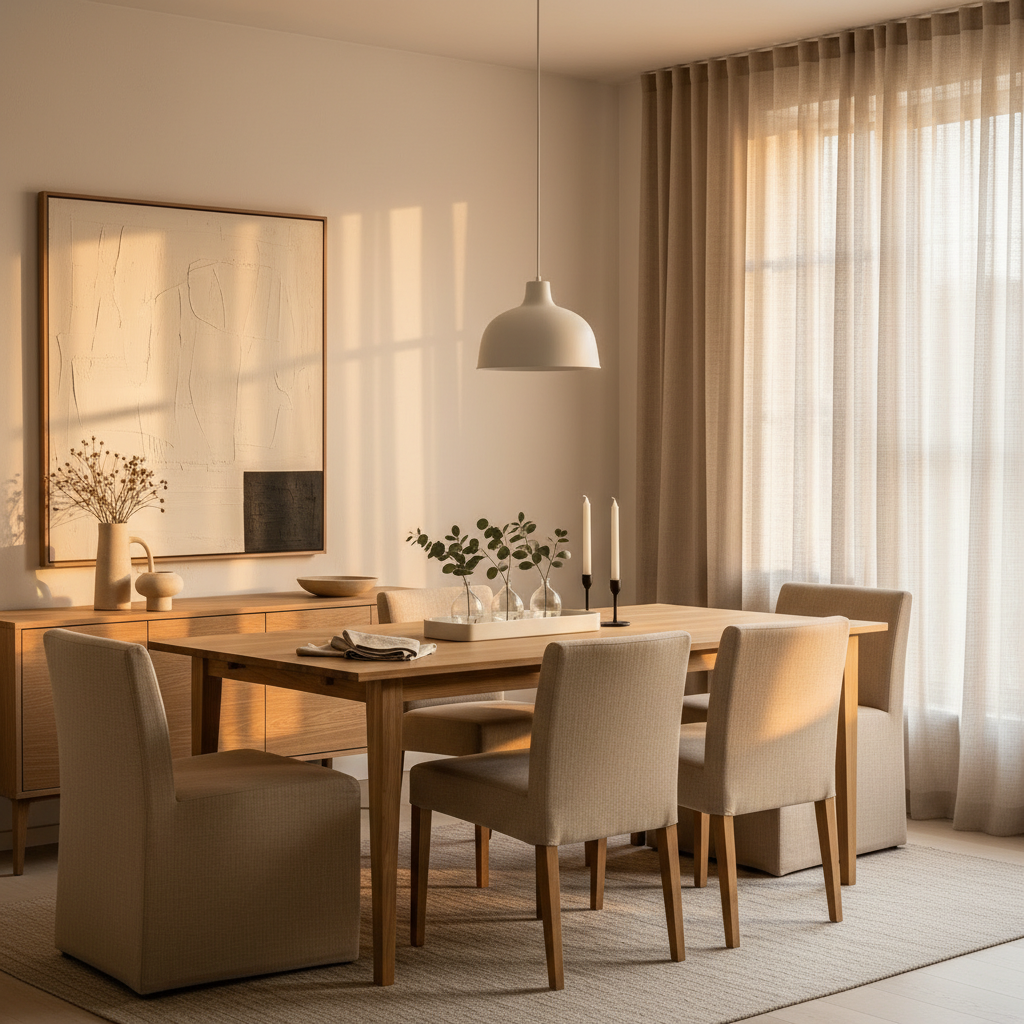
Dining rooms deserve more than blank drywall and a shrug. This is where birthdays are celebrated, takeout containers are quietly judged, and guests inevitably linger long after dessert. And yet, it’s often the most neglected room when it comes to wall decor.
Elegant doesn’t mean fussy. It doesn’t require gilded frames or complicated installations. Most of the time, it’s about proportion, restraint, texture, and knowing when to stop. A dining room should feel intentional but relaxed — like you care, but you’re not trying too hard.
Below are twelve wall decor ideas that genuinely elevate a dining space. Some are bold. Some are subtle. All of them are practical enough to live with.
1. Oversized Statement Art
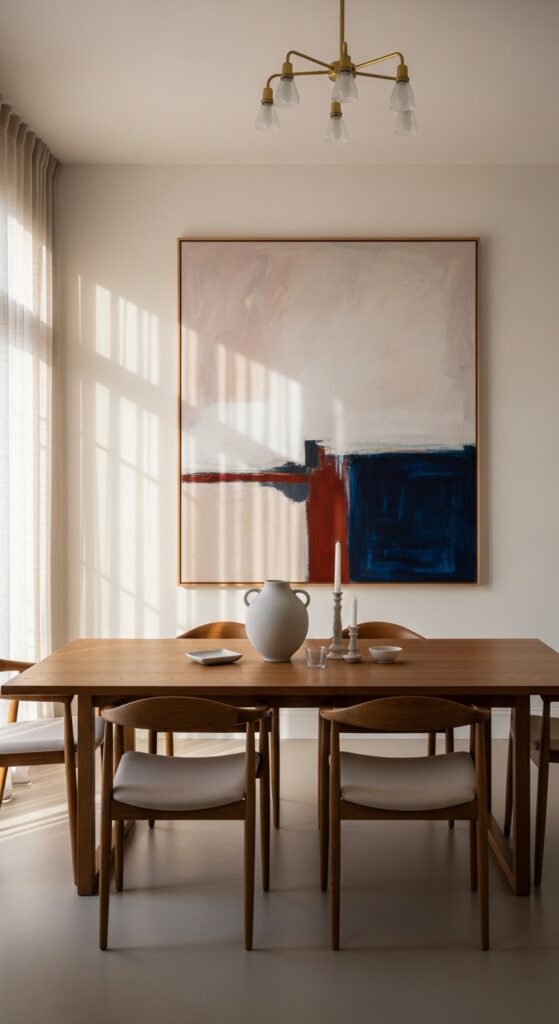
If you do one thing, make it big.
An oversized piece of art instantly elevates a dining room because it removes visual clutter. Instead of multiple frames fighting for attention, one large canvas commands the wall with quiet confidence.
Here’s the trick: scale matters more than content. Aim for art that’s at least two-thirds the width of your dining table. Too small and it looks apologetic. Too large and it can overwhelm low ceilings.
Choose colors that echo something in the room — chair upholstery, rug undertones, even a subtle note in your centerpiece. That creates cohesion without feeling matchy.
One watch-out: bold abstract art can feel loud in smaller, darker rooms. If your space faces north, lean toward warmer tones rather than icy blues.
Big art, fewer decisions, instant polish.
2. A Classic Grid Gallery Wall
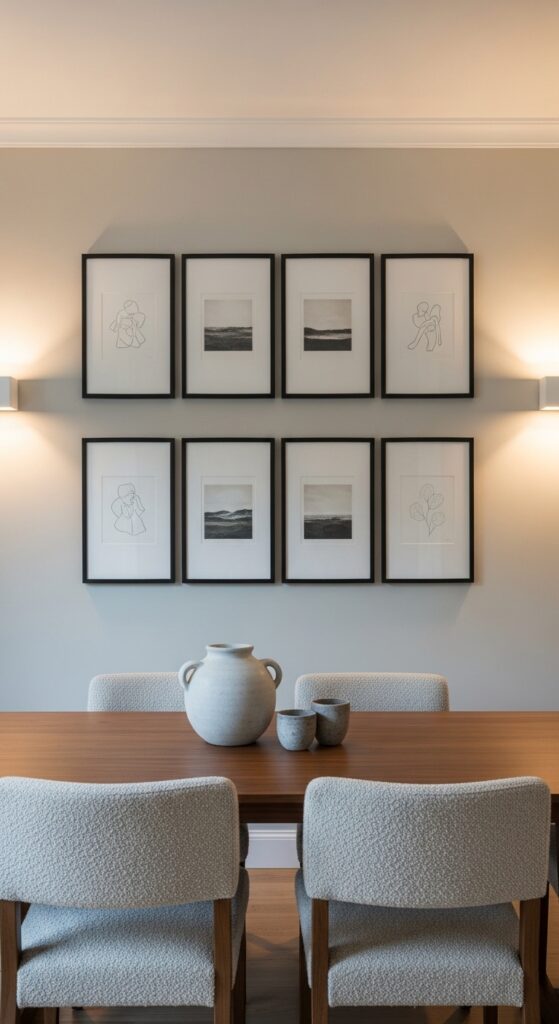
Gallery walls can look chaotic. Or they can look curated. The difference? Structure.
A clean grid layout feels elegant because it’s predictable. Even spacing, identical frames, consistent matting. It reads intentional instead of accidental.
Keep the palette tight. Black frames with white mats are timeless, but warm wood frames can soften a space with oak or rattan furniture. Stick to one frame finish — mixing metals and woods here usually backfires.
Spacing rule: 2–3 inches between frames. Any more and it starts to feel disconnected.
If your dining room is already busy — patterned rug, dramatic light fixture — skip a gallery wall. It thrives in calmer environments.
Orderly art brings quiet sophistication without being showy.
3. Picture Frame Molding

Sometimes elegance isn’t about what you hang — it’s about what you build.
Picture frame molding adds architectural depth without visual clutter. Painted the same color as the wall, it creates shadow lines that feel refined and expensive.
Designer rule: keep proportions in mind. Taller ceilings can handle larger panels. In standard 8-foot rooms, smaller rectangles look more balanced.
You can leave panels empty for a minimalist look, or place one understated piece of art within a central panel for focus.
Watch out for overcomplicating layouts. Too many tiny boxes feel busy. Less is more here.
This works beautifully if you hate constantly rearranging art — it’s a permanent upgrade that still feels soft.
Subtle structure equals instant elegance.
4. A Dramatic Accent Wall in Matte Paint

Paint is underrated.
A matte accent wall in a rich, moody tone — charcoal, forest green, deep navy — can anchor a dining room instantly. It creates intimacy, especially for evening dinners.
Choose matte or eggshell finishes. Glossy paint reflects too much light and can feel harsh under chandeliers.
Keep decor simple on a dark wall. A single framed piece or brass picture light is often enough. Let the color do the work.
One thing to watch: small dining rooms without natural light can feel cave-like with very dark paint. If that’s your space, try a warm mid-tone instead.
Color, when used strategically, is drama without clutter.
5. Oversized Round Mirror

Mirrors aren’t just for entryways.
An oversized round mirror softens all the straight lines in a dining room — table edges, molding, window frames. It also reflects light, making smaller rooms feel larger.
Proportion matters. The mirror should feel substantial — roughly half to two-thirds the width of your table.
Thin metal frames feel modern and light. Chunky carved wood frames lean traditional. Choose based on your chair style and light fixture.
Watch the reflection. If it faces clutter or a blank wall, it won’t add much. Ideally, it reflects a window, greenery, or pendant light.
It’s practical, timeless, and quietly powerful.
6. Textured Wall Panels (Wood or Slat)

Texture adds elegance faster than pattern.
Vertical wood slats create height and warmth at the same time. They’re especially beautiful in modern or Scandinavian-inspired spaces.
Install from floor to ceiling for maximum impact. Stopping halfway up the wall can look unfinished unless paired with trim.
Keep decor minimal against textured walls. Too much art competes with the slats’ rhythm.
One trade-off: wood paneling can darken a room. If yours lacks sunlight, choose lighter oak tones instead of deep walnut.
It’s architectural, tactile, and far more interesting than plain drywall.
7. Large-Scale Wallpaper (Subtle Pattern)
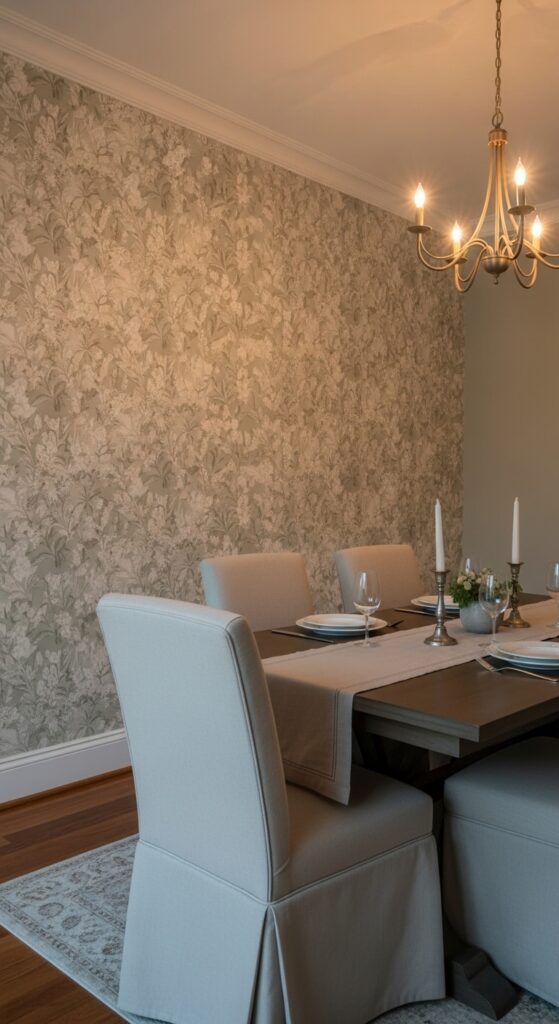
Wallpaper gets a bad reputation — mostly because people choose patterns that shout.
An elegant dining room calls for subtle, large-scale designs. Think soft botanicals, textured grasscloth, or muted geometric patterns.
Bigger patterns actually feel calmer than tiny busy ones. Small prints can look fussy from a distance.
Use wallpaper on one focal wall unless you have a spacious room with high ceilings. Wrapping all four walls in pattern can overwhelm tight spaces.
Watch humidity levels if your dining room connects to a kitchen. Proper ventilation matters.
When done right, wallpaper adds depth and character without clutter.
8. Sculptural Wall Sconces
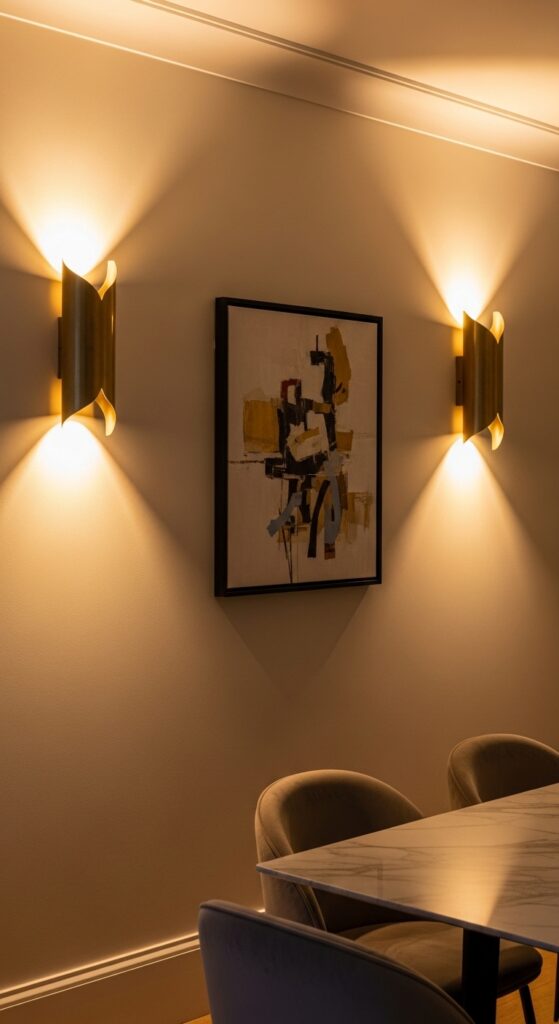
Overhead lighting isn’t enough.
Wall sconces add a layer of warmth that instantly elevates dinner gatherings. They create mood — the kind that makes people linger over dessert.
Install them at eye level or slightly above, spaced evenly from the central focal point (art or mirror).
Choose finishes that echo other metals in the room — if you have brass hardware, stick with brass.
One caution: overly ornate sconces can feel dated. Keep the shape sculptural but clean.
Layered lighting is what separates “nice” from “wow.”
9. Floating Shelves with Edited Styling

Shelves are not storage. They’re storytelling.
In dining rooms, floating shelves work best when styled sparingly. A stack of linen-bound books, one ceramic vessel, maybe a small sculptural object.
Rule of thirds helps here — vary heights and leave breathing room.
Avoid overloading shelves with family photos and random souvenirs. It quickly becomes visual noise.
If you’re a renter, this is a flexible option that can evolve.
Think curated, not cluttered.
10. Statement Tapestry or Textile Art

Textiles on walls are deeply underrated.
A woven tapestry adds softness that framed art simply can’t. It absorbs sound, which helps in echo-prone dining spaces.
Choose neutral tones for elegance. Bright colors can lean bohemian quickly — which is lovely, but not always elegant.
Scale matters again. Small macramé pieces feel casual. Larger woven panels feel intentional.
One thing to consider: dust. Fabric requires occasional vacuuming.
Texture adds warmth that paint alone can’t achieve.
11. Minimalist Plate Wall
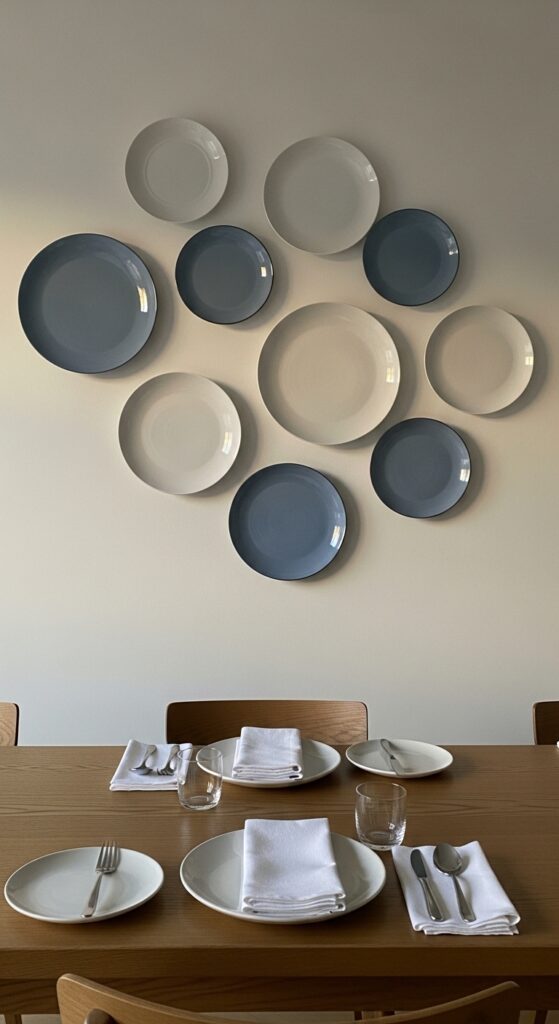
Plate walls can feel dated — unless you keep them restrained.
Use fewer, larger plates instead of dozens of small ones. Stick to one color family — whites, soft blues, muted earth tones.
Arrange loosely but balanced. Lay them out on the floor first before committing.
Avoid overly ornate patterns unless your room leans traditional.
Done simply, this nod to dining tradition feels thoughtful, not kitschy.
12. Floor-to-Ceiling Drapery as Wall Softening

Sometimes the best wall decor isn’t art at all.
Full-height drapery softens hard lines and makes ceilings feel taller. Even if you only have one window, extending curtains across the wall creates architectural drama.
Hang curtains close to the ceiling — never directly above the window frame. Let them kiss the floor.
Choose natural fabrics like linen or cotton blends for an elegant, relaxed feel. Heavy velvet works in formal rooms but can feel intense in small spaces.
Watch proportion. Too short or too skimpy and the effect disappears.
Soft fabric can transform a plain wall into something quietly luxurious.