Your front yard is doing a lot of quiet work every single day. It’s the first thing your neighbors see, the first thing guests experience, and — honestly — the first thing you see when you pull into the driveway after a long day. That curb appeal either lifts your mood or it doesn’t. The good news is that transforming a flat, forgettable front yard into something genuinely beautiful doesn’t require a landscape architect or a five-figure budget. It requires thoughtfulness, a few smart plant choices, and knowing which design moves actually carry visual weight. Whether your yard is a postage stamp of grass or a generous stretch of mixed terrain, these twelve landscaping ideas will give you real, actionable direction — no filler, no vague advice about “adding color.”
1. Lay a Statement Pathway
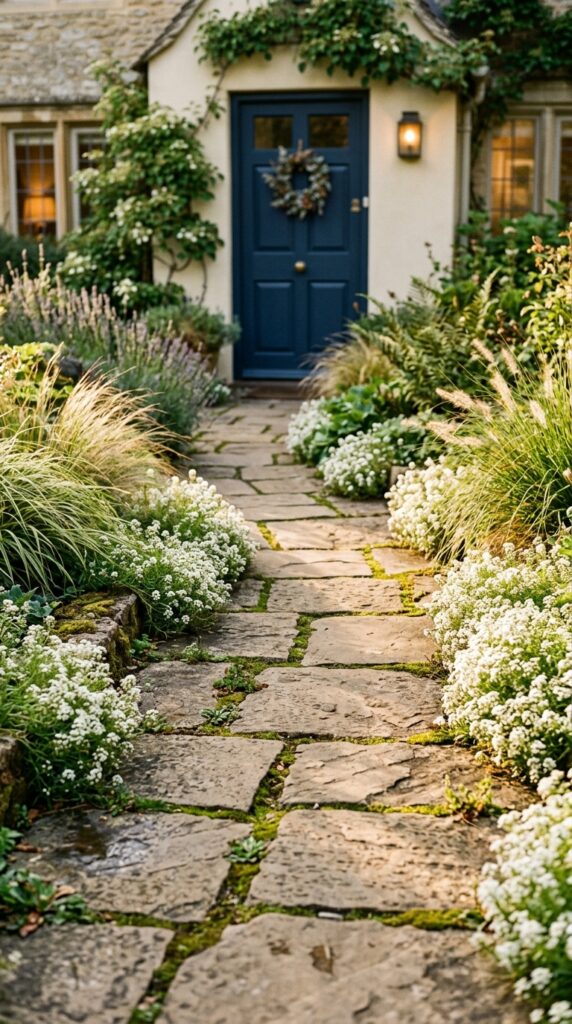
The pathway to your front door sets the entire tone of your yard — and a straight concrete walkway is one of the most missed opportunities in residential landscaping. Swap it for natural flagstone, irregular bluestone, or even reclaimed brick set in a gentle curve, and the whole front yard reads as intentional. The curve matters: it slows the eye, creates a sense of arrival, and makes even a modest yard feel larger. Fill the joints with creeping thyme or Irish moss for a lived-in, organic look that improves with age. One constraint worth noting — irregular stone requires a level base to prevent tripping hazards, so don’t skip the compacted gravel underlayer. If you rent and can’t dig, large stepping stones laid over existing lawn can achieve a similar effect without permanence. The pathway is the spine of your front yard design. Get this right and everything else falls into place around it.
2. Frame the Entry with Tall Planters
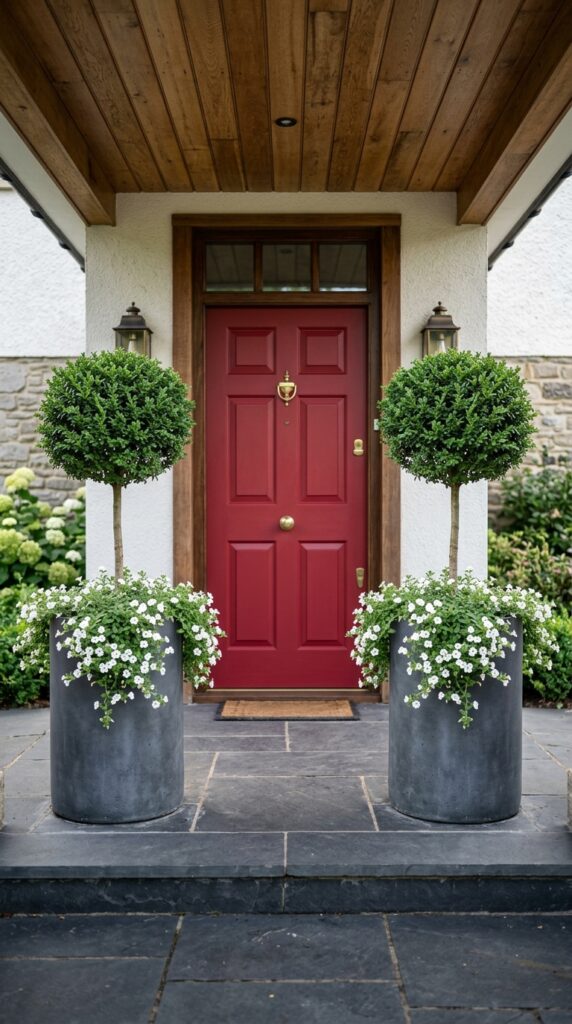
Symmetry reads as sophistication, even in casual settings. A pair of tall planters anchoring your front entry creates an instant sense of formality and intention without touching a single inch of your lawn. The key is scale — go bigger than feels comfortable. Planters that look appropriately sized in a garden center often look apologetically small once placed against a full-size front door. Matte concrete, oxidized zinc, or dark terracotta all work beautifully. For planting, clipped bay laurel or a dwarf conifer gives year-round structure; add seasonal color underneath with petunias in summer, ornamental kale in fall. Avoid matching the planter color to your door — contrast is where the drama lives. Skip this approach if your entry is very narrow; in tight porches, even well-chosen planters can feel cluttered rather than welcoming.
3. Build a Low Garden Bed Along the Foundation
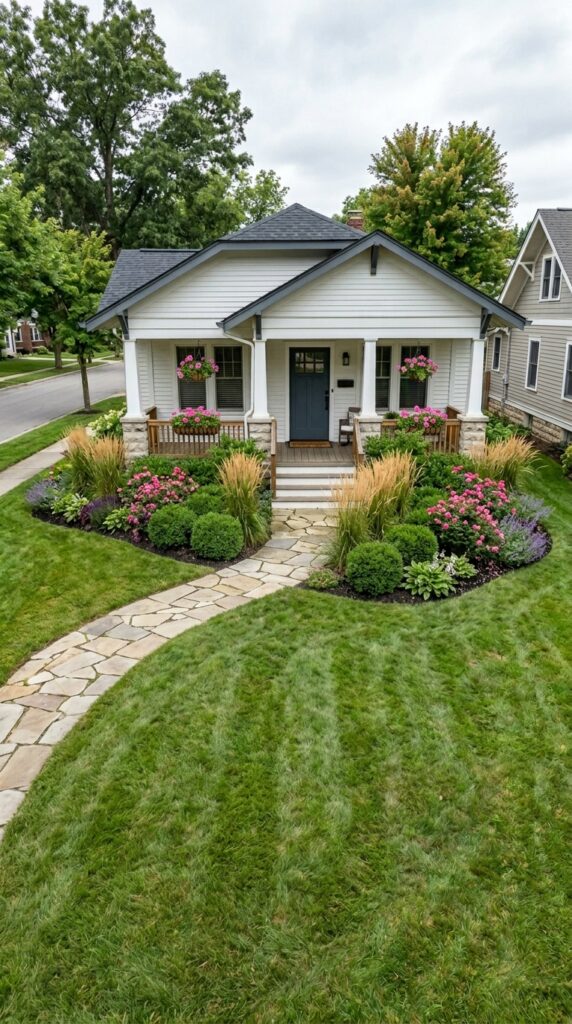
The strip of earth between your home’s foundation and the lawn is prime real estate that most homeowners either ignore or plant with a single row of junipers from 1987. A well-designed foundation bed softens the hard line where house meets ground, adds layered texture, and gives your home a rooted, established look. The design rule here is simple: plant in three layers — low groundcover at the front edge, mid-height flowering shrubs in the middle, and one or two taller structural plants toward the corners. Think creeping phlox, lavender, or liriope at the front; knock-out roses or spirea in the middle; ornamental grasses or a compact viburnum at the ends. Keep the bed at least three feet deep — anything shallower looks like an afterthought. One thing to watch: foundation planting too close to the house can trap moisture. Keep plants six to twelve inches from the siding.
4. Add a Defined Lawn Edge
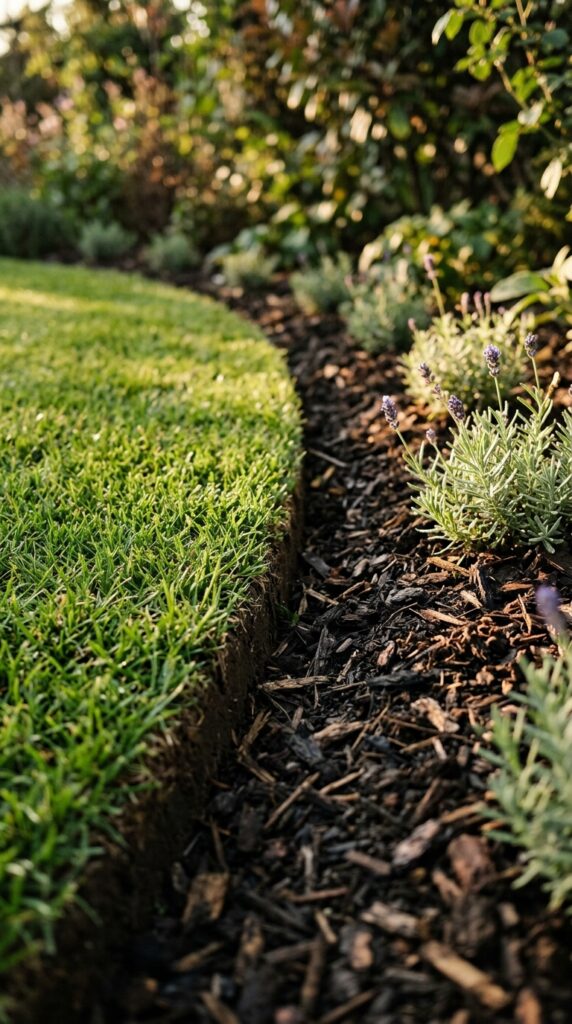
This is one of the highest-impact, lowest-cost upgrades in all of front yard landscaping, and it’s chronically underrated. A cleanly edged lawn looks like it belongs to someone who cares. An unedged lawn — even if it’s healthy and green — looks slightly chaotic. Use a half-moon edger or a spade to cut a clean vertical line between lawn and bed, then remove the soil debris. Following up with a dark mulch (shredded hardwood or black-dyed bark) in your beds deepens the contrast and makes everything pop. Re-edge two or three times per growing season. That said, edging only works if your beds have clear, deliberate shapes — organic curves or clean geometric lines, not accidental wiggles. If your beds are irregular and shapeless, define them first with a garden hose laid out as a guide before you cut.
5. Plant a Focal Tree
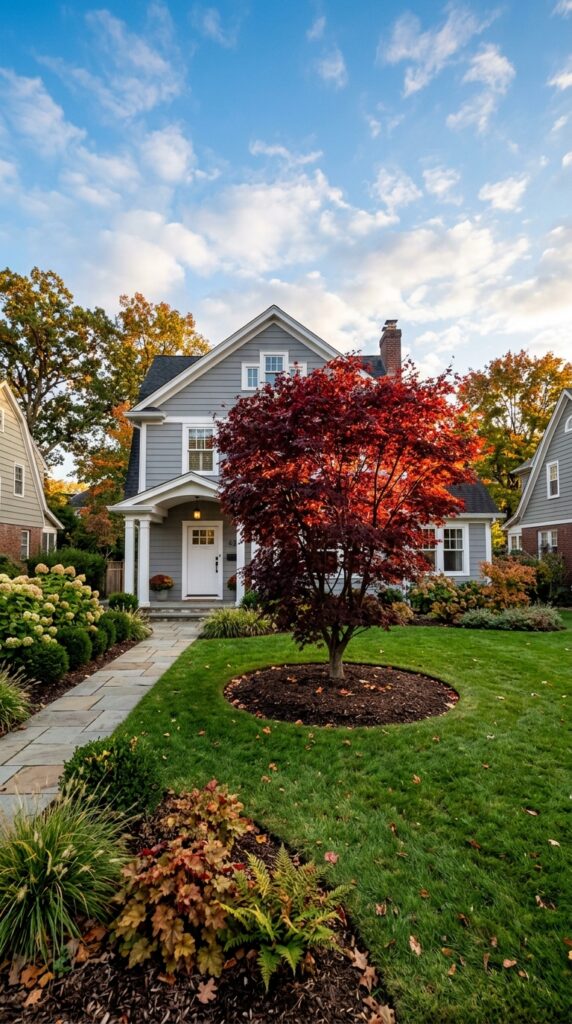
Every well-designed front yard has at least one anchor — a single element that earns a long look. A well-placed ornamental tree does this better than almost anything else. Japanese maples offer year-round interest with dramatic spring color, full summer canopy, and stunning fall foliage. Serviceberry, weeping cherry, and dwarf magnolia are strong alternatives depending on your climate. The placement rule: position your focal tree slightly off-center — never dead-center of the yard, which reads as stiff and municipal. A third of the way across the yard, set back from the road slightly, feels naturally composed. Keep the ground beneath it mulched clean — sod growing up to the trunk looks unkempt and competes with the tree visually. If you have a small yard, choose a variety that tops out at twelve to fifteen feet; oversized trees in small yards create a crowded, oppressive feeling.
6. Use Ornamental Grasses for Movement
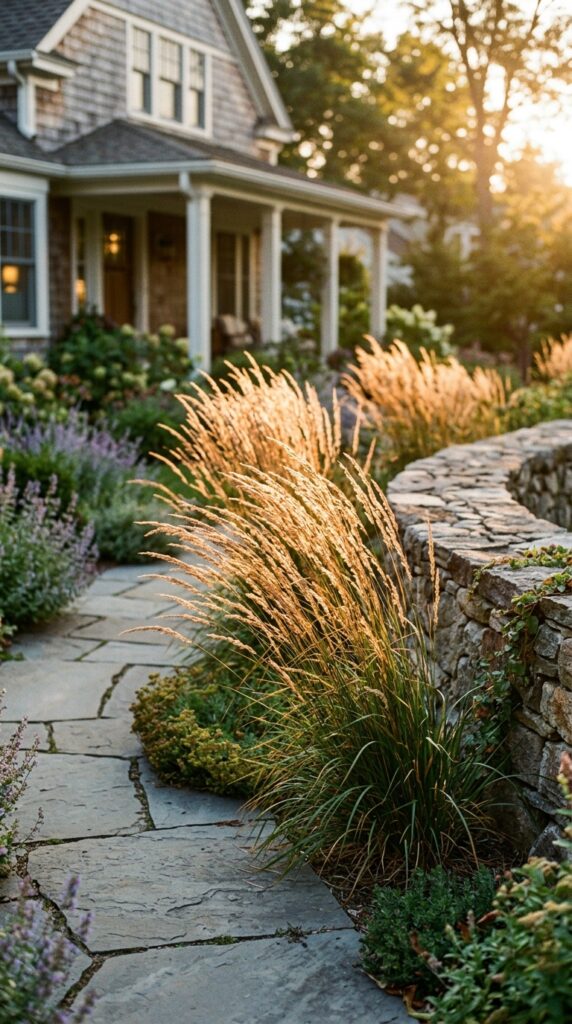
There’s something grasses do that no flowering perennial can replicate — they move. Even a gentle breeze turns a stand of Karl Foerster or Mexican feather grass into something quietly animated, and that movement adds life to a yard in a way that static plants simply don’t. Ornamental grasses also bridge seasons: they look full and architectural in summer, turn wheat-gold in fall, and even hold structure through winter when most of the yard is bare. Plant them in odd-numbered clusters of three or five rather than single specimens, which can look like mistakes. For smaller yards, blue fescue (a compact twelve-inch mound with blue-grey color) adds texture without overwhelming the space. One caveat: some ornamental grasses spread aggressively. Maiden grass and pampas grass can become genuine nuisances — research the spreading habit of any variety before planting in a defined bed.
7. Install Landscape Lighting
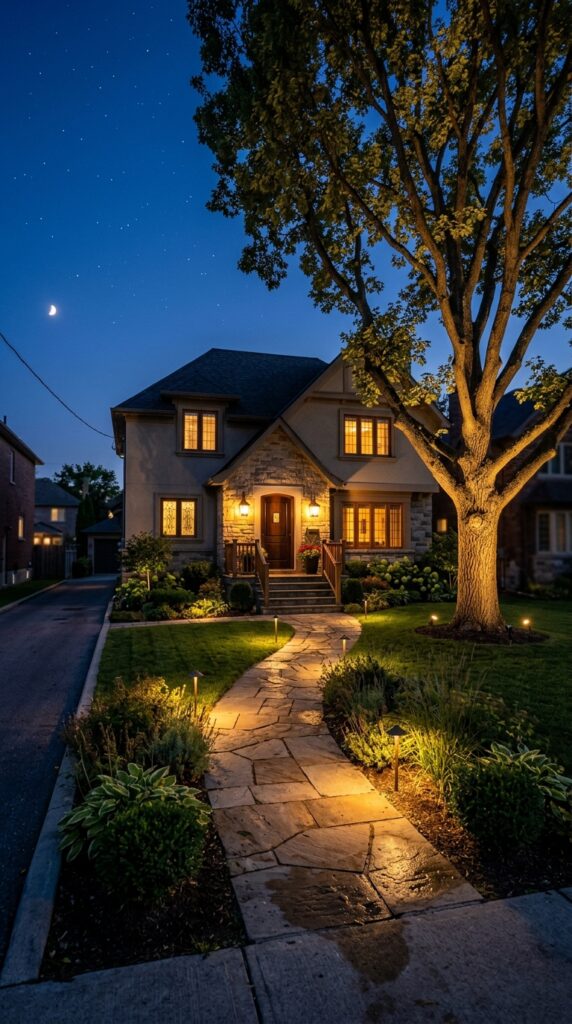
Landscape lighting is the upgrade that completely changes how your home reads after dark — and for most of the year, your home is seen in low light as often as it is in daylight. Path lights along your walkway give structure and safety; uplights placed at the base of a focal tree create drama and depth. Warm-white LEDs (2700K–3000K) are the standard for residential landscaping — cooler temperatures read as clinical and industrial against organic plant material. Hardwire where possible for reliability; solar path lights have improved significantly but still struggle in shaded yards or through winter months. Keep lighting subtle and directional — the goal is to highlight the architecture and plant structure, not to floodlight the entire yard. One thing to watch: overlighting is a real problem and a surprisingly common one. If every inch is illuminated at the same intensity, you lose all sense of depth and drama.
8. Create a Defined Mulch Bed Shape
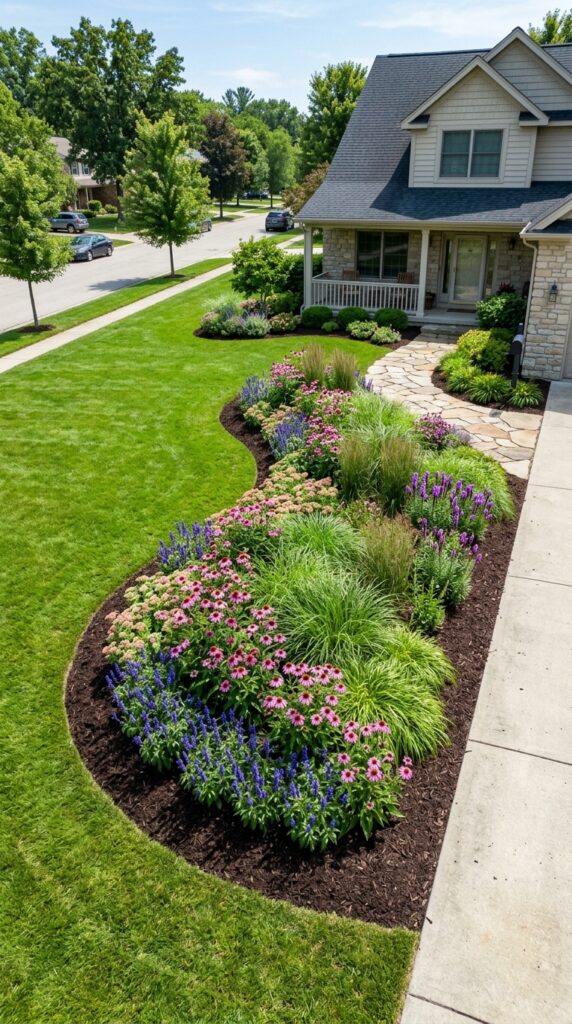
The shape of your planting beds matters as much as what you plant in them. Freeform beds without clear geometry read as messy; beds with strong, confident curves or clean geometric edges read as designed. A kidney or sweeping S-curve works beautifully in most residential yards — organic enough to feel natural, structured enough to look intentional. Mark your shape with spray paint or a garden hose first and walk away. Come back after an hour and look at it from the street; this distance check always reveals whether the shape is actually working. Once cut, apply a two-to-three inch layer of dark shredded hardwood mulch. Beyond aesthetics, mulch suppresses weeds, retains moisture, and regulates soil temperature — it’s doing real work, not just looking good. Avoid volcano mulching around tree bases (piling it against the trunk) — this is one of the most common and damaging landscaping mistakes homeowners make.
9. Add a Low Retaining Wall or Garden Border
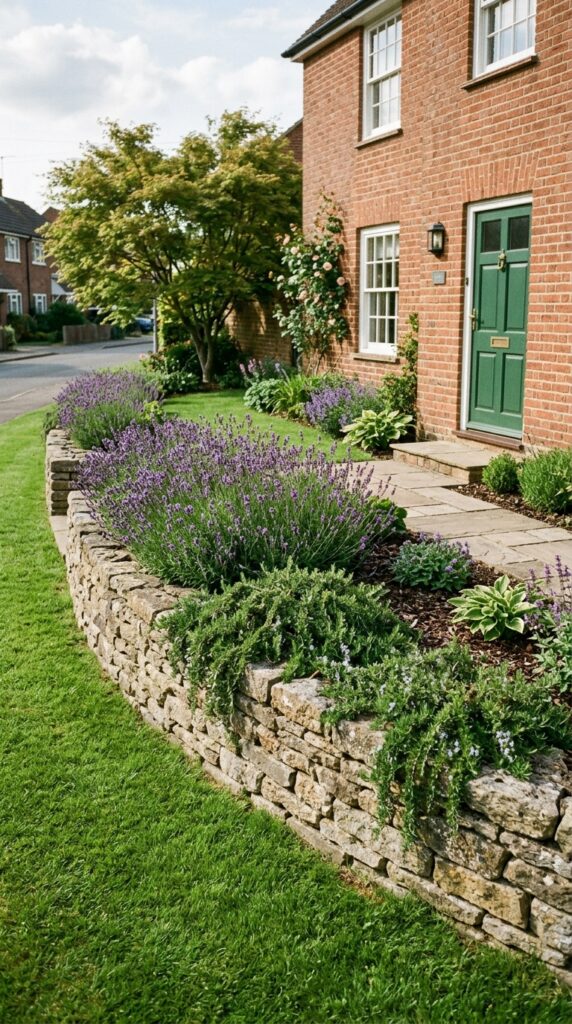
If your front yard has any slope at all — even gentle — a low retaining wall is both practical and beautiful. It defines space, creates visual levels, and gives you a raised planting bed that drains well and displays plants at a more visible height. Dry-stacked natural stone looks the most timeless and pairs with almost every architectural style. Concrete block retaining systems are more affordable and structurally reliable for taller walls, but they require a facing material — stone veneer, stucco, or even painted wood — to look finished. Even a flat yard benefits from a low decorative border: steel edging, Belgian block, or a single course of natural stone can separate lawn from bed in a way that feels architectural rather than purely practical. Keep walls under two feet without engineering consultation; anything taller needs proper drainage planning and in many areas a building permit.
10. Choose a Bold Front Door Color
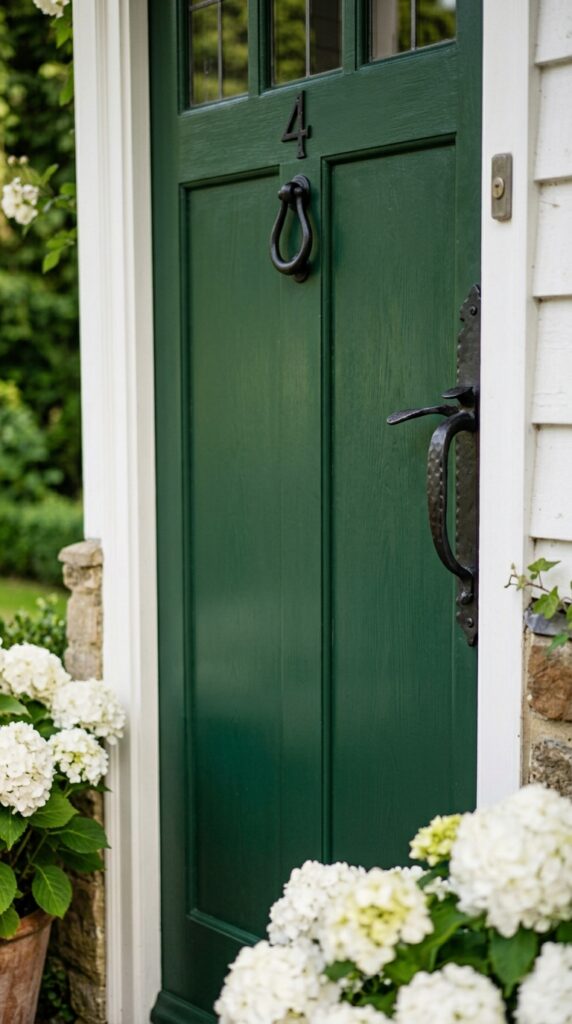
Technically this is architecture rather than landscaping, but it belongs in the conversation because nothing affects curb appeal faster. Your front door is the face of your home — and painting it a genuinely committed color costs about forty dollars and an afternoon. Deep forest green, navy, burgundy, mustard, and matte black are all strong choices that read as confident without being aggressive. The rule is to go darker or more saturated than feels safe. Pale, hedged-bet colors like greige or pale sage tend to disappear against most exteriors. Pair a bold door with simple, high-contrast hardware in matte black or unlacquered brass. Satin or semi-gloss finish holds up far better than flat for a door surface. The surrounding trim should be crisp white or very light — it frames the door the way a mat frames a painting. This single change can visually transform the entire front of your home.
11. Layer Plants by Season
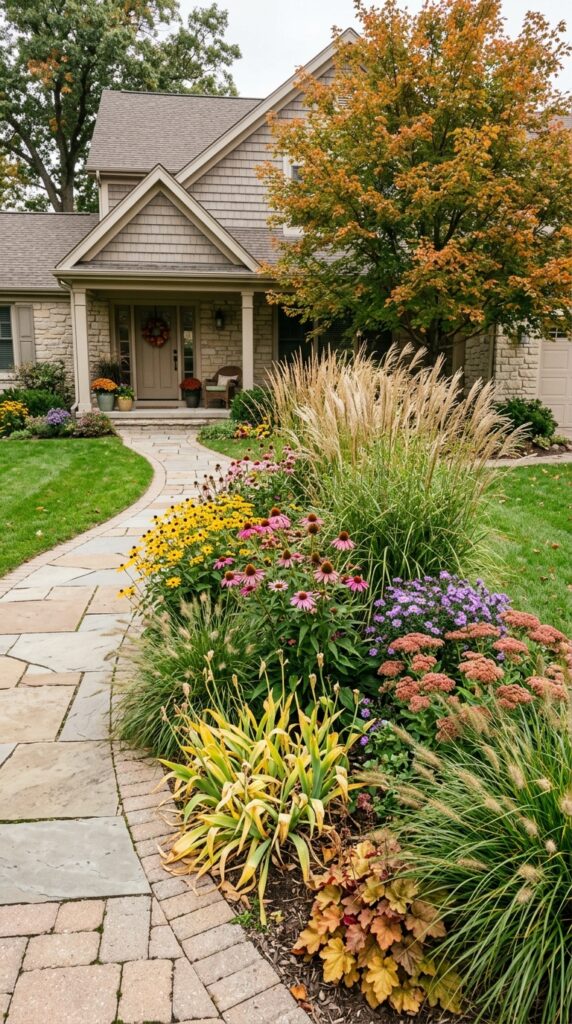
The amateur planting approach is to buy what’s blooming at the garden center in May, install it, and wonder why the yard looks bare by August. The better approach is to design for all four seasons simultaneously, layering plants so that something is always doing something interesting. Start with winter structure — evergreen shrubs, ornamental grasses left standing, sculptural seed heads. Add spring bulbs (tulips, alliums, daffodils) for early-season color. Follow with summer perennials like coneflower, black-eyed Susan, and salvia. Finish with fall-interest plants: asters, ornamental kale, and grasses that turn copper and gold. The planting secret most designers don’t say out loud: mass your plantings. Three of one plant looks intentional; one each of ten different plants looks like a clearance sale. Restraint in variety, generosity in quantity — that’s the formula for a front yard that looks designed rather than collected.
12. Define the Mailbox or Address Area
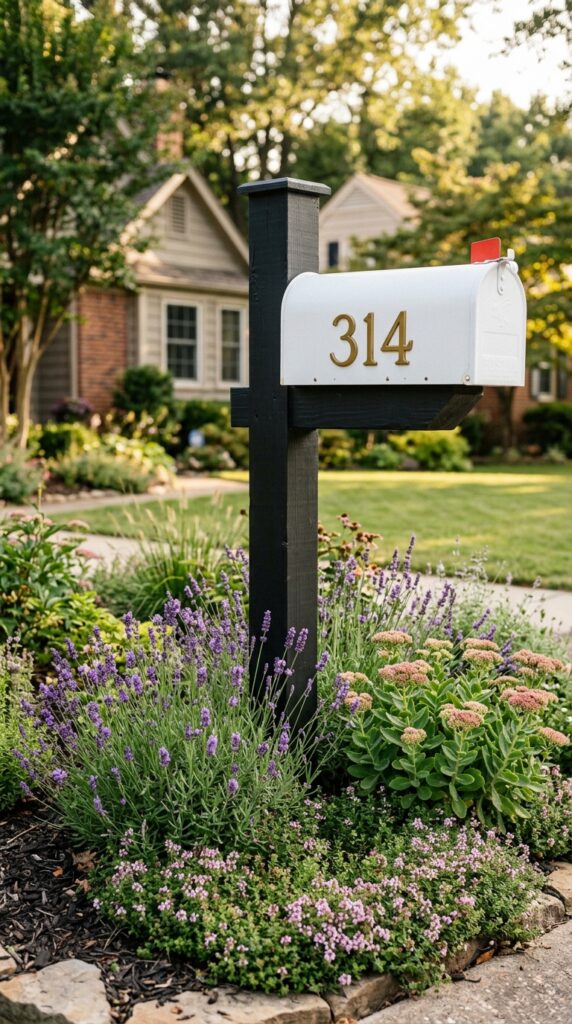
The mailbox area is almost universally neglected, which makes it an easy win. A post-mounted mailbox surrounded by a small, well-planted vignette — even just eighteen inches of planting radius — elevates the entire streetscape view of your home. Paint the post a color that ties to your front door or trim. Choose low-maintenance, drought-tolerant plants for the base: sedum, creeping thyme, lavender, and ornamental grasses all thrive in the typically lean, dry soil around a mailbox post. Add a small solar spotlight aimed at the house number so your address is legible at night — functional and polished at once. Keep it tidy; a neglected mailbox garden with dead annuals or sprawling weeds does more harm than no planting at all. Commit to the maintenance or keep it simple with perennials that largely take care of themselves. A clean, intentional mailbox area tells visitors — before they’ve even reached your door — that the rest of the property has been thought about too.
Your front yard doesn’t need a complete overhaul to earn genuine curb appeal. It needs deliberate choices — a pathway that curves with purpose, plants layered for every season, lighting that flatters rather than floods, and small finishing touches like a bold door color or a dressed-up mailbox area. The ideas in this guide all share one quality: they work with what’s already there, building on structure and material rather than starting from scratch. Pick two or three that resonate with your home’s style and your own maintenance reality, execute them well, and you’ll be surprised how dramatically the street view of your home shifts. Landscaping is slow design — some of it won’t fully read until next spring. But that patience is part of what makes a front yard feel genuinely loved rather than just recently decorated. Start one corner at a time. The curb appeal will follow.