There’s a particular kind of pride that comes from pulling into your own driveway and genuinely loving what you see. Not the obsessive, never-satisfied kind — the quiet, settled kind. The kind that comes from a front yard that looks intentional, welcoming, and a little bit like you. The good news? You don’t need a landscape architect or an unlimited budget to get there. Front yard landscaping is one of those rare home projects where even small, well-placed changes make a dramatic difference. A tidy border here, a statement planter there, the right tree in the right spot — these things compound. This guide covers twelve genuinely doable ideas, ranging from weekend afternoon projects to slightly more committed upgrades. Each one has been chosen because it works across different house styles, climates, and budgets. Whether your front yard is a postage stamp or a sprawling quarter-acre, there’s something here that will change how your home reads from the street.
1. Define Your Pathway With Edging That Means Business
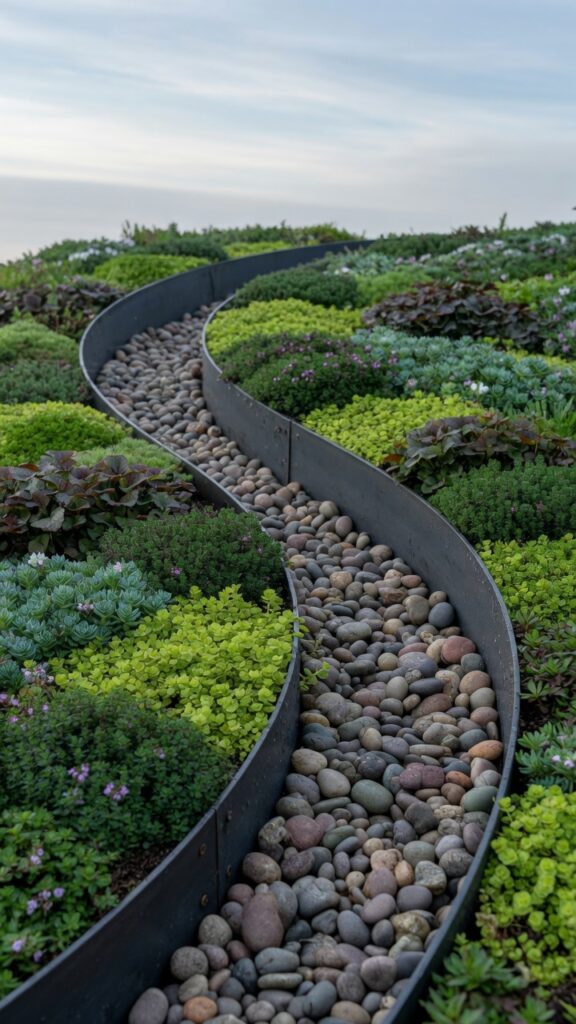
Here’s a truth most people overlook: it’s not the plants that make a front yard look polished — it’s the lines. Clean, deliberate edging transforms even a modest planting bed into something that looks designed rather than grown by accident. Steel edging is the current favorite for a reason. It’s thin, nearly invisible, holds curves beautifully, and doesn’t heave or crack the way plastic does after a few seasons. That said, if your home leans more traditional or cottage-style, natural stone or brick soldier-course edging will feel more appropriate and just as effective.
The trick is consistency. Edge everything — the lawn border, the pathway, the base of the beds — so the whole yard reads as one considered composition rather than a collection of separate projects. Use a half-moon edger or a flat spade to cut a crisp, slightly angled trench before installing anything. Refresh that cut every spring. One thing to watch: curved pathways need gentle, sweeping arcs. Tight, wobbly curves look nervous. If in doubt, go straighter than you think.
Good edging is invisible work that makes everything else look better. It’s the underlining that makes the sentence land.
2. Layer Your Planting Beds Like a Pro
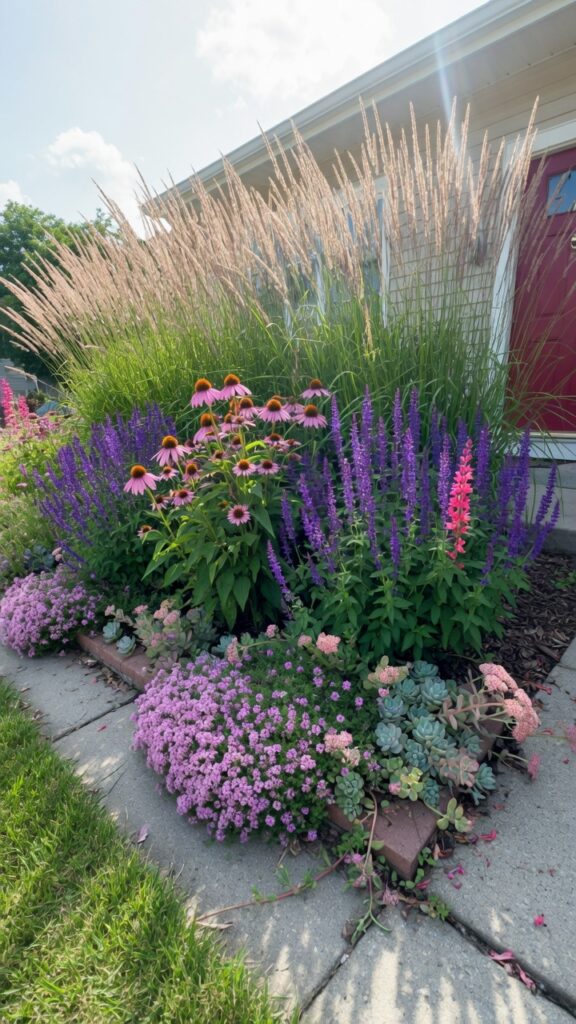
Flat planting beds — where everything sits at roughly the same height — are the number one reason front yards look unfinished. Layering changes everything, and the formula is simpler than it sounds: tall at the back, medium in the middle, low at the front edge. That’s it. What you plant within each tier depends on your climate and sun exposure, but the structure stays constant.
For the back tier, ornamental grasses like Karl Foerster or maiden grass bring movement and height without blocking windows. Mid-tier workhorses include coneflowers, black-eyed Susans, salvia, and Russian sage — all relatively low-maintenance and long-blooming. At the front, stick to creeping plants: thyme, ajuga, sedum, or low ornamental grasses that spill softly over your edging.
If your home faces north and the bed gets limited sun, swap in hostas, astilbe, and ferns. They layer just as beautifully in shade. One constraint worth naming: resist the urge to plant in single-species rows. Odd-numbered groupings of three or five look far more natural than rigid lines. Mix textures — fine, feathery grasses next to broad, flat hosta leaves — and suddenly your bed looks like it cost twice what it did.
The goal isn’t a flower garden. It’s a composition.
3. Add a Statement Tree for Year-Round Structure
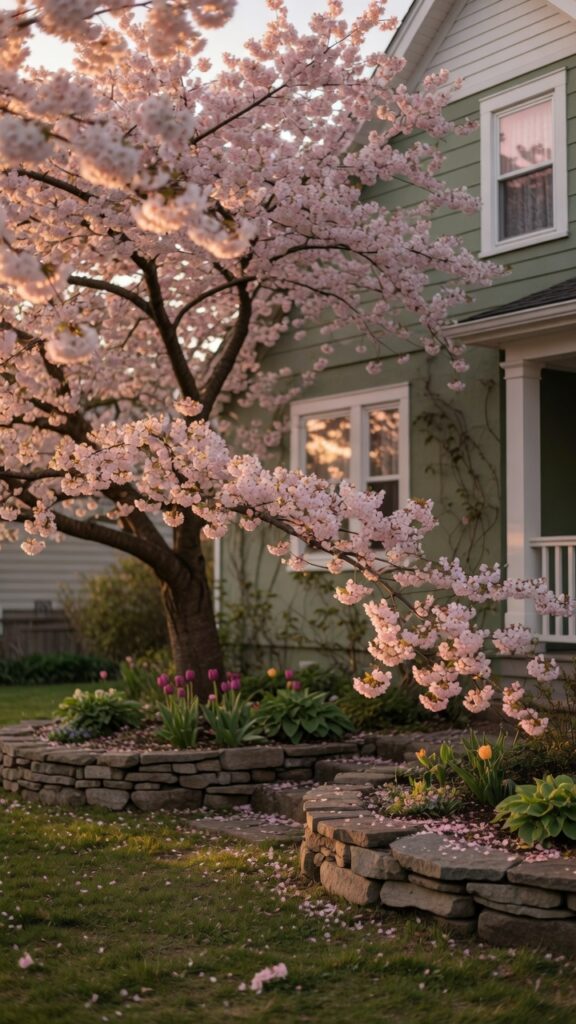
One well-chosen tree does more for curb appeal than almost any other single element. It gives the yard a focal point, provides seasonal interest across all four seasons, frames the house without hiding it, and creates the kind of maturity that takes decades to fake. The key word is well-chosen. The wrong tree — too large, too messy, poorly placed — becomes the yard’s biggest problem.
For most residential front yards, ornamental trees are the safer, smarter bet. Japanese maples offer stunning fall color and sculptural winter branching. Ornamental cherry and crabapple trees give you a show-stopping spring bloom. Serviceberry works beautifully in smaller yards and offers berries, fall color, and attractive bark. Crape myrtle is unbeatable in warmer climates for summer color and multi-season interest.
Placement matters enormously. As a rule, position the tree off-center rather than dead-center in the yard — asymmetry reads as more natural and sophisticated. Keep it at least ten to fifteen feet from the foundation and the street. And think about scale: a tree that looks perfect at planting can overwhelm a small facade in fifteen years. Research mature height before you dig.
A great tree is the gift that keeps giving — every single season.
4. Use Mulch as a Design Element, Not an Afterthought
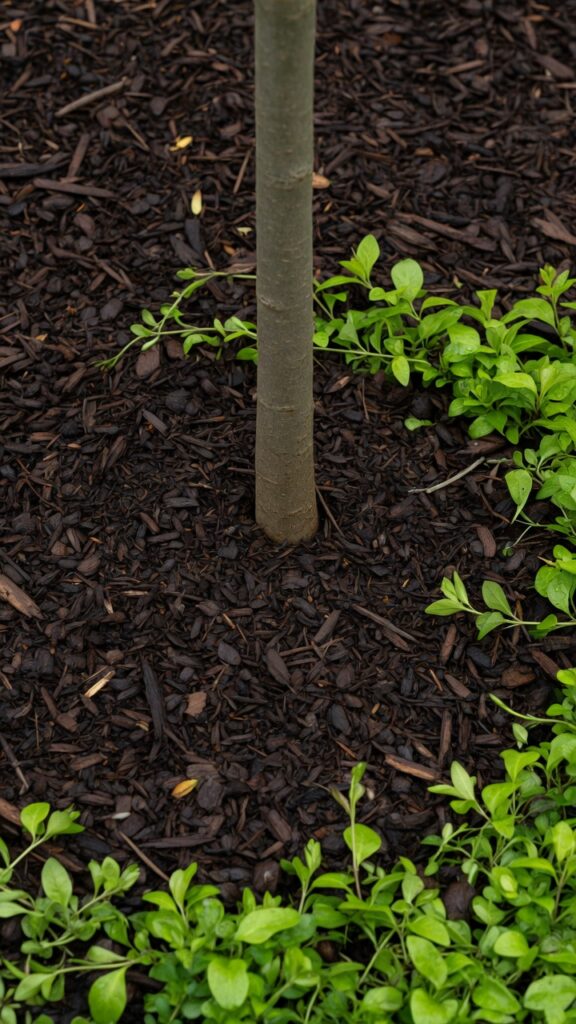
Mulch is one of the most underrated front yard tools, and most people treat it as an obligation rather than an opportunity. Fresh, dark mulch — applied correctly — makes plants pop, suppresses weeds, retains moisture, and gives the entire yard a groomed, finished look that nothing else can replicate so cheaply or quickly.
The type matters. Shredded hardwood or bark mulch in a deep espresso brown works with almost every house color and plant palette. Dyed black mulch can look sharp but sometimes reads as too harsh, especially in sunny yards. Red mulch is generally worth skipping — it fights with most plant colors and fades to a strange orange. Natural wood chip mulch has a more rustic feel, better suited to cottage or woodland-style landscapes.
Apply two to three inches deep — enough to suppress weeds, not so much that you’re smothering root zones or creating vole habitat. Keep mulch pulled back an inch or two from plant stems and tree trunks. That volcano-of-mulch-around-the-tree look is not only unattractive, it actively kills trees over time. Refresh once a year, ideally in spring, for that just-installed look. One bag of fresh mulch does more for your curb appeal per dollar than almost anything else on this list.
5. Flank Your Front Door With Planters
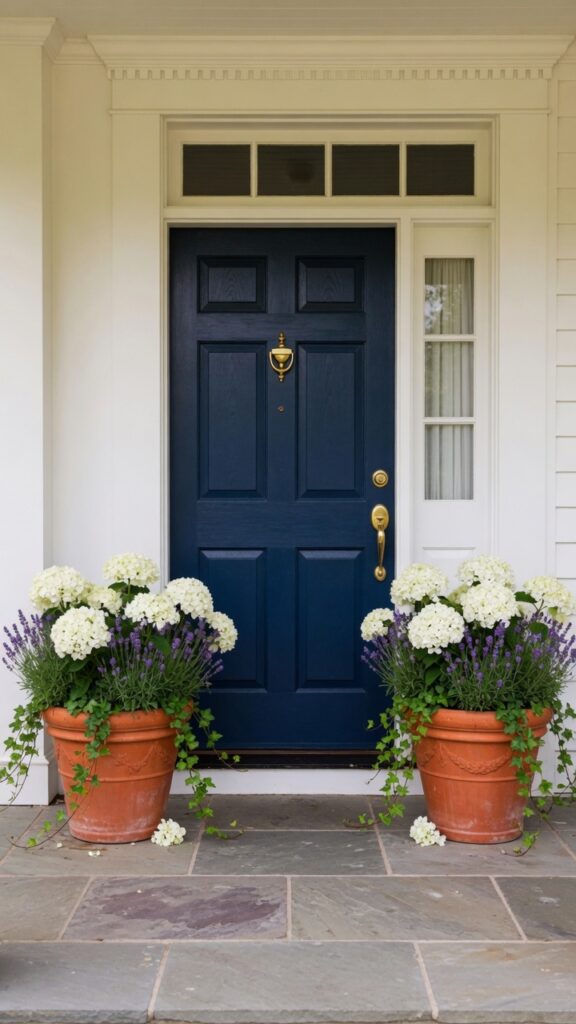
The front door is the face of your home, and planters are the earrings. They’re one of the fastest, most flexible upgrades you can make — no digging, no permanent commitment, and completely swappable with the seasons. Done well, a pair of flanking planters transforms a plain entry into something genuinely welcoming.
Scale is everything here. Most people choose planters that are too small, and the result looks timid. Go bigger than feels comfortable. For a standard eight-foot entry, planters at least sixteen to twenty inches in diameter look proportionate. Taller urns — twenty-four to thirty inches — work beautifully on steps or raised porches where height reads well.
For planting, use the classic thriller-filler-spiller formula: one dramatic upright plant (thriller), a mid-height mounding plant to fill the middle, and something trailing to spill over the edges. In summer, try a tall ornamental grass or spike plant as the thriller, with petunias or impatiens as filler, and sweet potato vine trailing out. In fall, swap to ornamental kale, mums, and trailing ivy. In winter, tuck in evergreen branches, pine cones, and birch twigs.
Match the planter material to your house style — glazed ceramic for modern homes, aged terracotta or cast stone for traditional ones.
6. Create a Simple Rock or Gravel Garden Zone
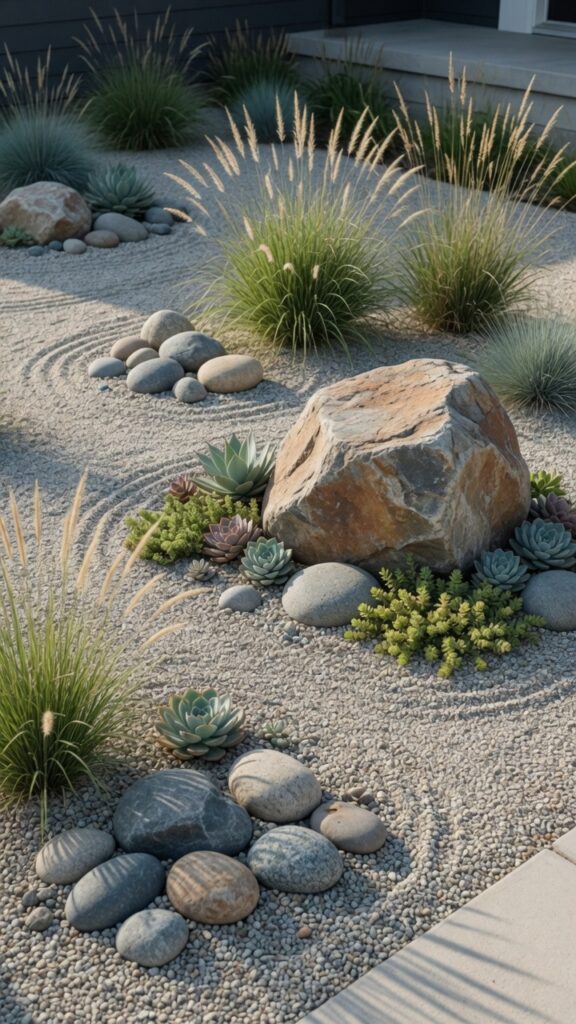
Lawns are maintenance, water, and time. A well-designed gravel or rock garden zone is the opposite — low effort, high visual return, and increasingly stylish rather than merely practical. This isn’t about replacing your entire lawn with gravel (though you can). It’s about creating a defined zone that reduces turf area and adds textural contrast.
The key to rock gardens that look designed rather than neglected is plant selection and negative space. Don’t fill every inch. Let the gravel or rock breathe between plants — that breathing room is what gives the garden its modern, clean quality. Structural plants work best: ornamental grasses, agave, yucca, lavender, Russian sage, or low-growing junipers.
Layer rock sizes for natural realism. A single type of identically sized gravel looks manufactured. Mix a few larger boulders or river stones with a finer gravel base. Decomposed granite in warm tan or grey tones tends to blend better with plant colors than stark white gravel, which can feel glaring in direct sun.
Install landscape fabric underneath — but use the woven, permeable type, not plastic sheeting, which kills soil biology and eventually buckles into an ugly mess. Skip this idea if your yard has significant slope; gravel migrates on grades and becomes a maintenance headache.
7. Install Low Landscape Lighting
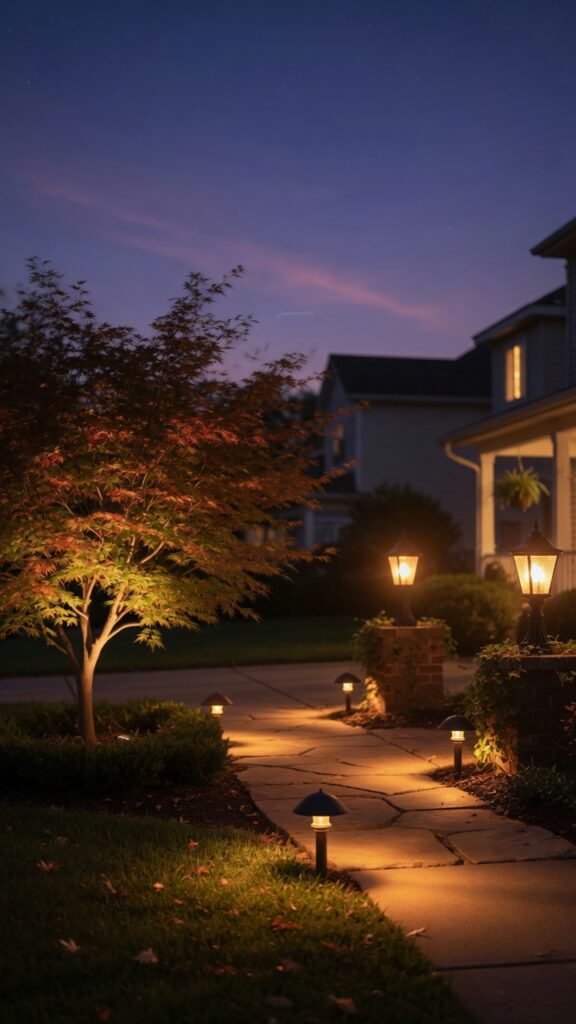
Landscape lighting is one of those upgrades that photographs well, feels luxurious, and actually costs less than most people assume — especially with modern solar and low-voltage LED options. What it does for a front yard at dusk is transformative. It shifts the home from invisible to welcoming, and adds a layer of dimension and drama that daylight can’t quite achieve.
The best front yard lighting setups have three layers: pathway lighting (low, spaced along walkways), uplighting (aimed up at trees or architectural features), and accent lighting (on planters, door surrounds, or garden beds). You don’t need all three immediately. Start with pathway lights and one uplight on your best tree — that alone will make an enormous difference.
Go for warm white bulbs, always. Cool white landscape lighting looks institutional and harsh. Warm white (around 2700–3000K) reads as inviting and residential. For fixtures, choose styles that disappear in daylight — simple, low-profile, matte black or bronze housings that don’t draw attention during the day so the light itself can do the talking at night.
One watch-out: more lights does not mean better. Over-lit front yards look like parking lots. Restraint creates atmosphere.
8. Plant a Flowering Hedge for Privacy and Polish
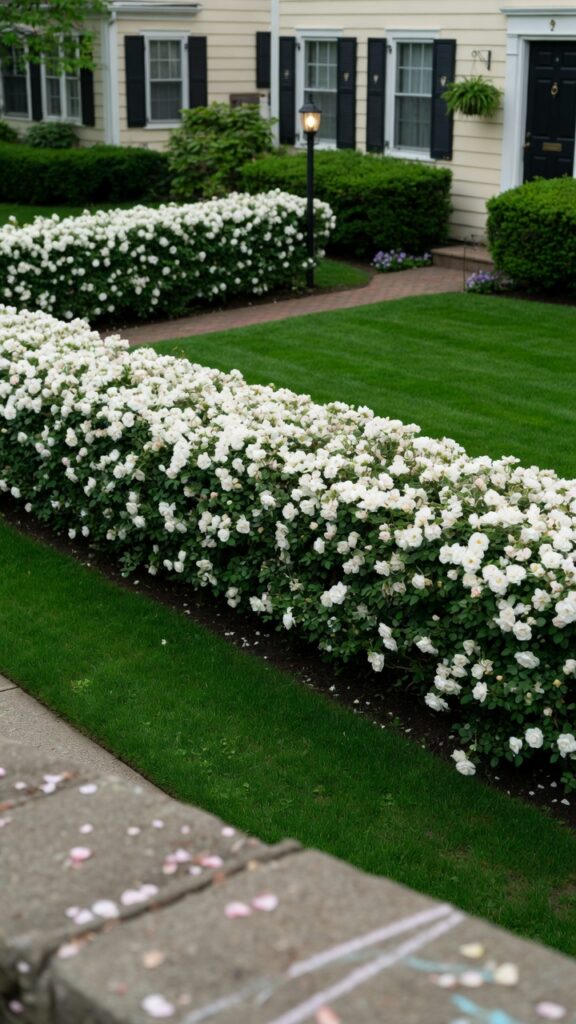
Privacy doesn’t have to mean a wooden fence. A well-chosen flowering hedge delivers both structure and beauty — something a fence simply can’t do. For front yards specifically, a hedge that blooms is the smarter play: it gives you a living boundary that contributes to the streetscape rather than closing it off.
Knockout roses are the reliable choice — disease-resistant, continuous-blooming from spring through frost, and available in red, pink, coral, and white. For a more architectural hedge, consider inkberry holly (evergreen, great for wet sites), Little Lime hydrangea (soft lime-to-pink blooms, tidy habit), or dwarf English boxwood for a classic formal look.
The critical rule: decide before planting how you want the hedge to look at maturity, and choose accordingly. A hedge that needs constant trimming to stay in bounds is a hedge that will eventually look ragged. Match the plant’s natural size to the space. Space plants properly at planting — it feels sparse at first, but crowding plants creates competition and disease pressure.
A flowering hedge is patience rewarded. It gets better every single year.
9. Upgrade Your Mailbox and House Numbers
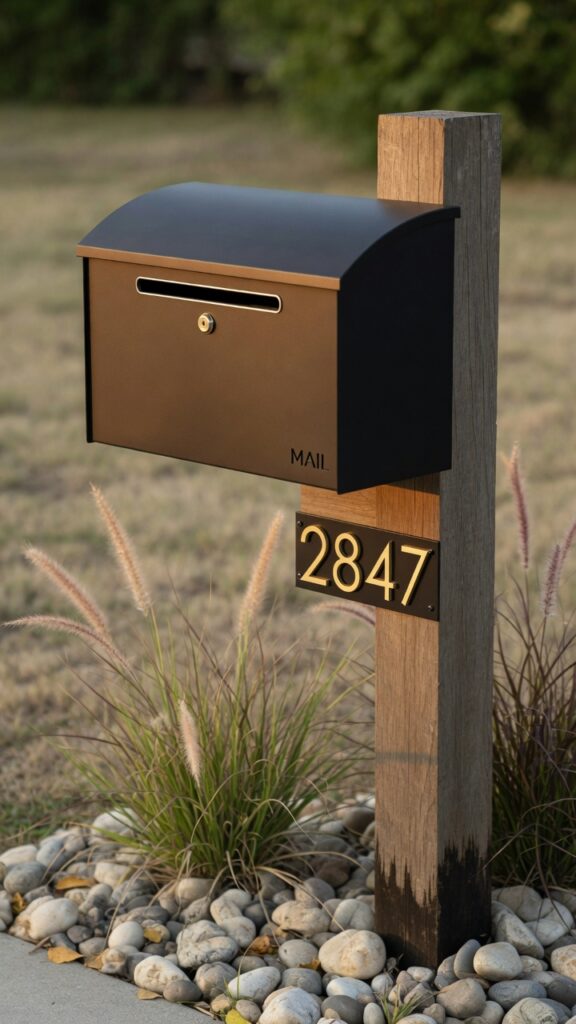
This is the easiest win on this entire list and the one most consistently ignored. Your mailbox is one of the first things anyone sees when approaching your home, and a rusted, leaning, plastic-flag-missing mailbox quietly undermines everything else you’ve done in the yard. The same goes for house numbers: if they’re the builder-grade brass stick-ons from 1994, they’re doing your home no favors.
Replacing a mailbox takes about thirty minutes and costs between forty and two hundred dollars depending on the style. For traditional homes, go with a classic arched-top in oil-rubbed bronze or matte black. For modern or farmhouse styles, flat-panel mailboxes in matte black with clean lines look current and sophisticated. Mount it on a substantial post — four-by-four cedar minimum — rather than a skinny metal stake.
For house numbers, scale up. Most people use numbers that are too small to read from the street. Four to six inch numbers in brushed nickel, matte black, or warm bronze are the sweet spot. Mount them on the house near the door and on the mailbox post for full visibility.
Add a small planting at the base of the post — three ornamental grasses and a ring of river rock is enough. The whole thing takes an afternoon and looks like a professional did it.
10. Create a Welcoming Porch Vignette
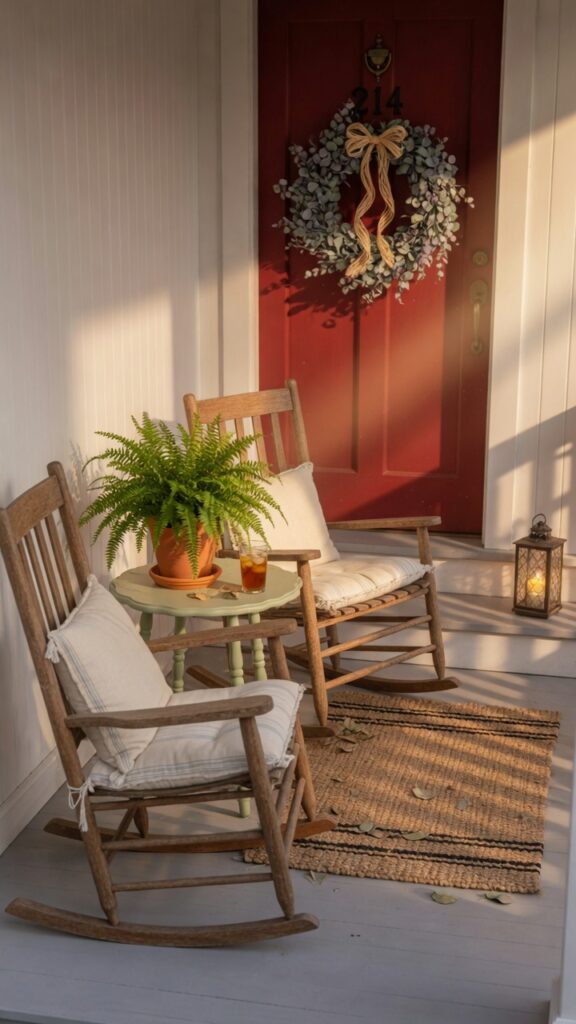
The porch is the transition between the yard and the home, and styling it well signals that someone thoughtful lives here. You don’t need a large porch to make an impact — even a small four-by-six stoop can be layered into something genuinely charming with the right pieces.
Start with seating if the space allows. Two chairs, even small ones, are better than one — they imply hospitality. Natural materials read best outdoors: teak, cedar, woven rattan, or powder-coated steel. Add cushions in a weather-resistant fabric; Sunbrella-type fabrics hold color and resist mildew. Stripe or solid — either works, but avoid overly busy patterns that compete with the surrounding planting.
Layer in accessories with restraint. A good doormat (sisal, coir, or rubber-backed indoor-outdoor) is essential and often neglected. A wreath on the door — eucalyptus, olive branch, or seasonal dried flowers — adds softness without effort. One or two lanterns with real or battery candles extend the welcome into the evening. A single potted plant near the door, something lush and trailing, ties the porch back to the garden.
Skip the ceramic geese and seasonal flag collections. Restraint is the whole move here.
11. Use Ornamental Grasses for Movement and Texture
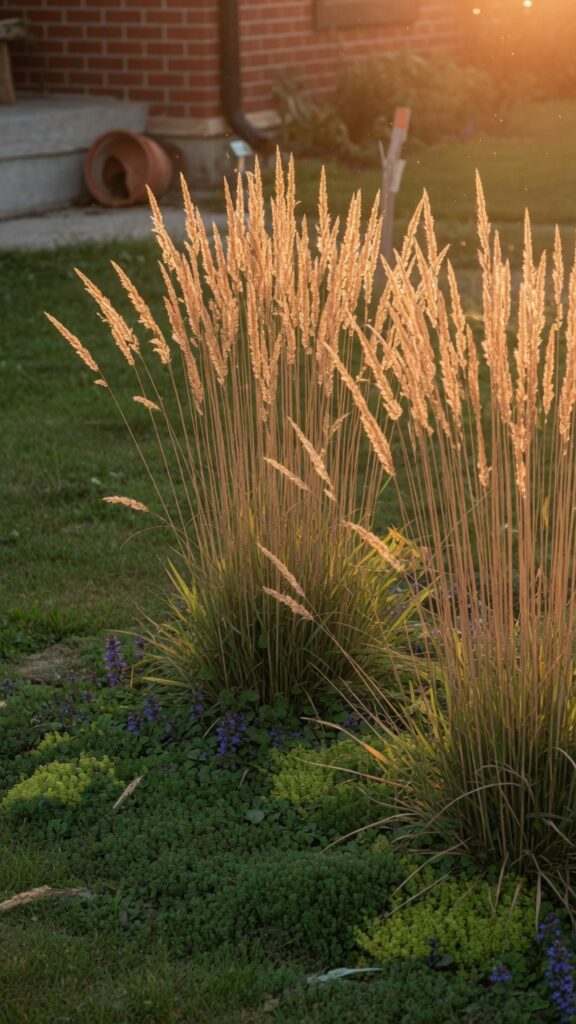
Ornamental grasses are the secret weapon of landscape designers, and they’re wildly underused in residential front yards. They bring something that almost no other plant can: movement. On a breezy day, a stand of ornamental grasses shifts and sways in a way that makes the whole garden feel alive. That kinetic quality is something even expensive hardscaping can’t buy.
Beyond movement, grasses offer exceptional year-round interest. They emerge fresh and green in spring, fill out dramatically through summer, turn golden and russet in fall, and hold their structure through winter — giving the yard texture and form even when everything else has died back. Karl Foerster feather reed grass is the standard for a reason: it’s upright, tidy, blooms earlier than most, and works in full sun to part shade. Muhlenbergia (muhly grass) turns an extraordinary pink-purple in fall. Blue oat grass stays blue-grey all season for a cooler, more contemporary palette.
Use them in masses of three, five, or seven for the most impact. A single grass looks like a mistake; a grouping looks like a decision. One caution: some ornamental grasses spread aggressively. Check whether your variety clumps (well-behaved) or spreads by rhizome before planting near walkways or lawns.
The movement alone is worth it.
12. Refresh Your Lawn Edges and Commit to the Perimeter
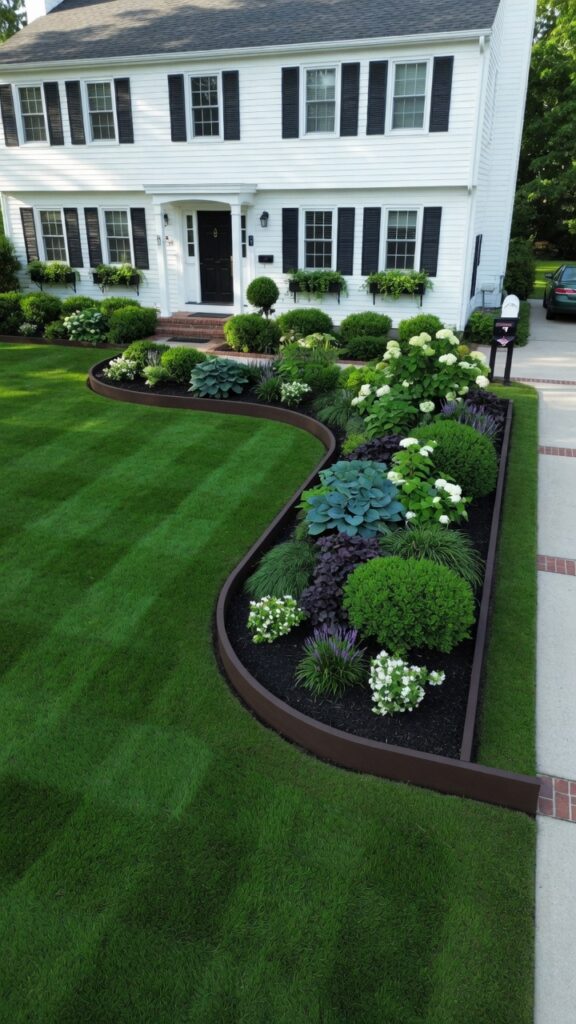
If you do nothing else from this list, do this: edge your lawn. Not once — regularly, as a maintenance habit. Clean lawn edges are the single highest-impact, lowest-cost thing you can do for your front yard’s overall appearance. It’s the landscaping equivalent of making your bed — it makes everything else around it look neater by association.
Use a manual half-moon edger along curved beds for precision, or a rotary string trimmer held vertically for longer straight runs. The goal is a clean, slightly angled cut that creates a shallow trench between the grass and the bed. This trench keeps grass from creeping into the beds and gives the lawn a defined, confident perimeter.
Beyond edging, commit to the corners and transitions of your yard. The spot where the lawn meets the driveway, the place where the sidewalk joins the pathway, the gap between the foundation bed and the steps — these transitional zones are where yards fall apart or come together. Keep them tight, keep them intentional, and keep them consistent.
Mowing height matters too. Cutting grass too short stresses it and invites weeds. Most cool-season grasses look and perform best at three to three-and-a-half inches — taller than most people think. A thicker, slightly taller lawn needs fewer inputs and looks lusher from the street.
A well-edged lawn is the punctuation mark your yard needs. It says: someone pays attention here.
What today’s list really comes down to is this — great curb appeal isn’t about grand gestures or expensive renovations. It’s about layering small, intentional decisions that compound over time. The edging that makes the lawn look tailored. The mailbox that finally matches the house. The ornamental grass that catches the afternoon light and makes you stop for a second on your way inside. These are the details that turn a house into a home that people notice, remember, and feel something about when they pull up.
The best part? Every single idea here is achievable on a real budget, over a real weekend, by a real person who isn’t a professional landscaper. Start with one. Finish it completely before moving to the next. There’s something deeply satisfying about a front yard that you built yourself, piece by piece, season by season — and that satisfaction is visible every single time someone walks up your path.
Come back when you’re ready for the next project. There’s always another layer worth adding.